
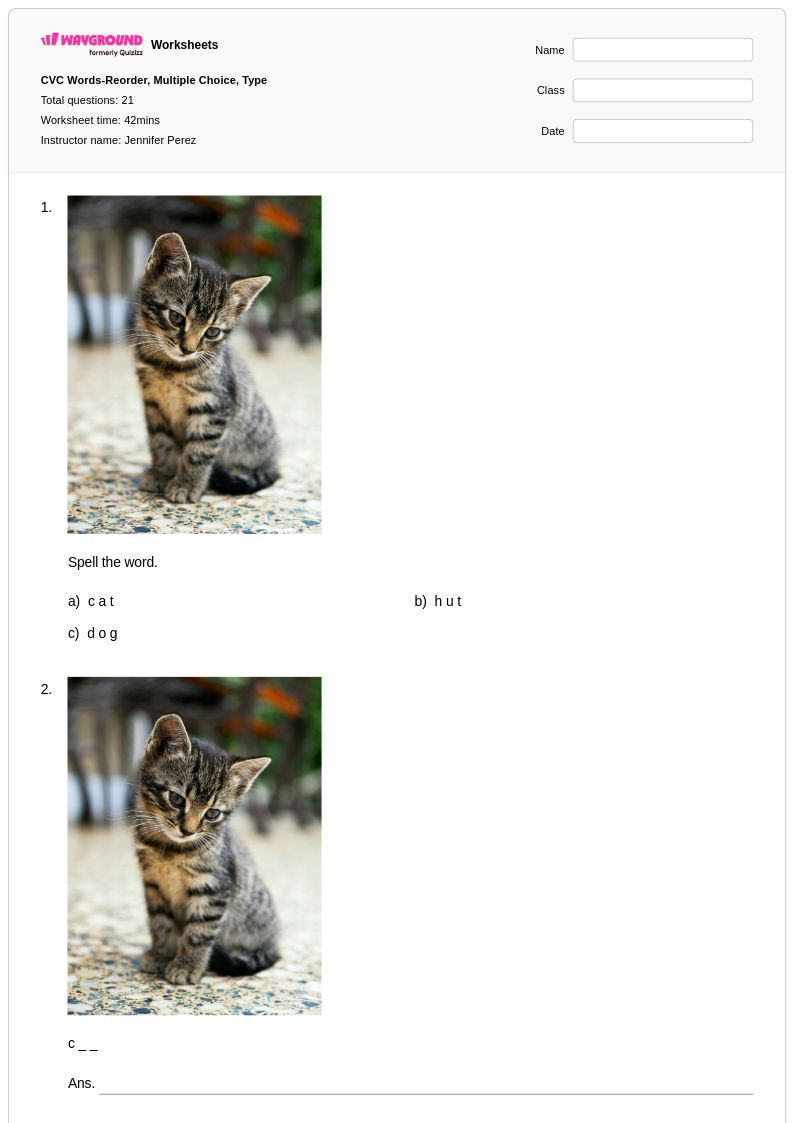
21 Q
1st - 5th
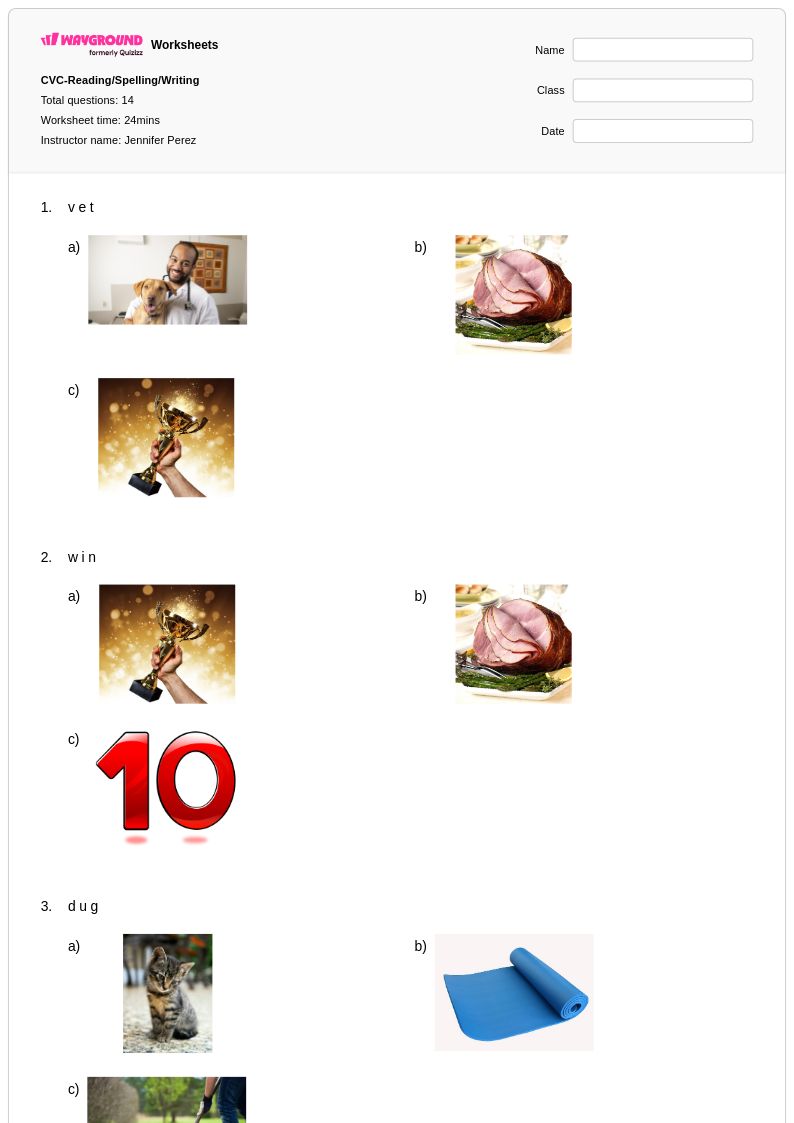
14 Q
1st - 5th
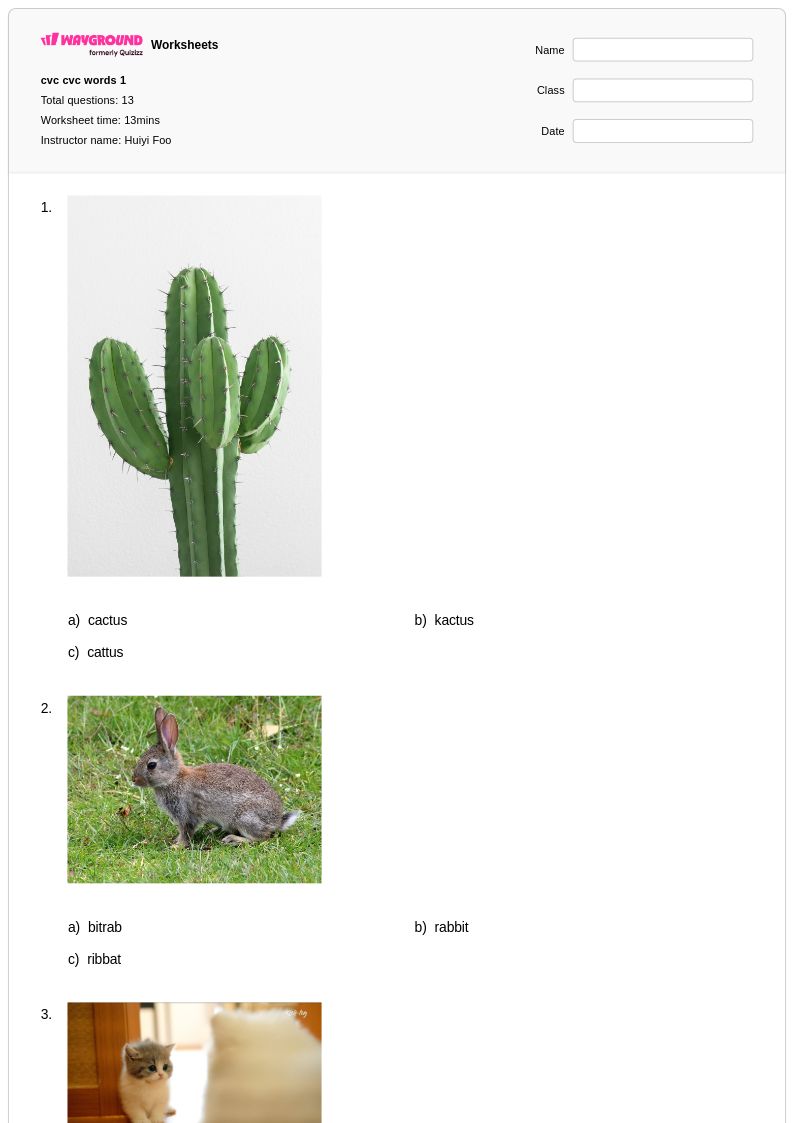
13 Q
3rd
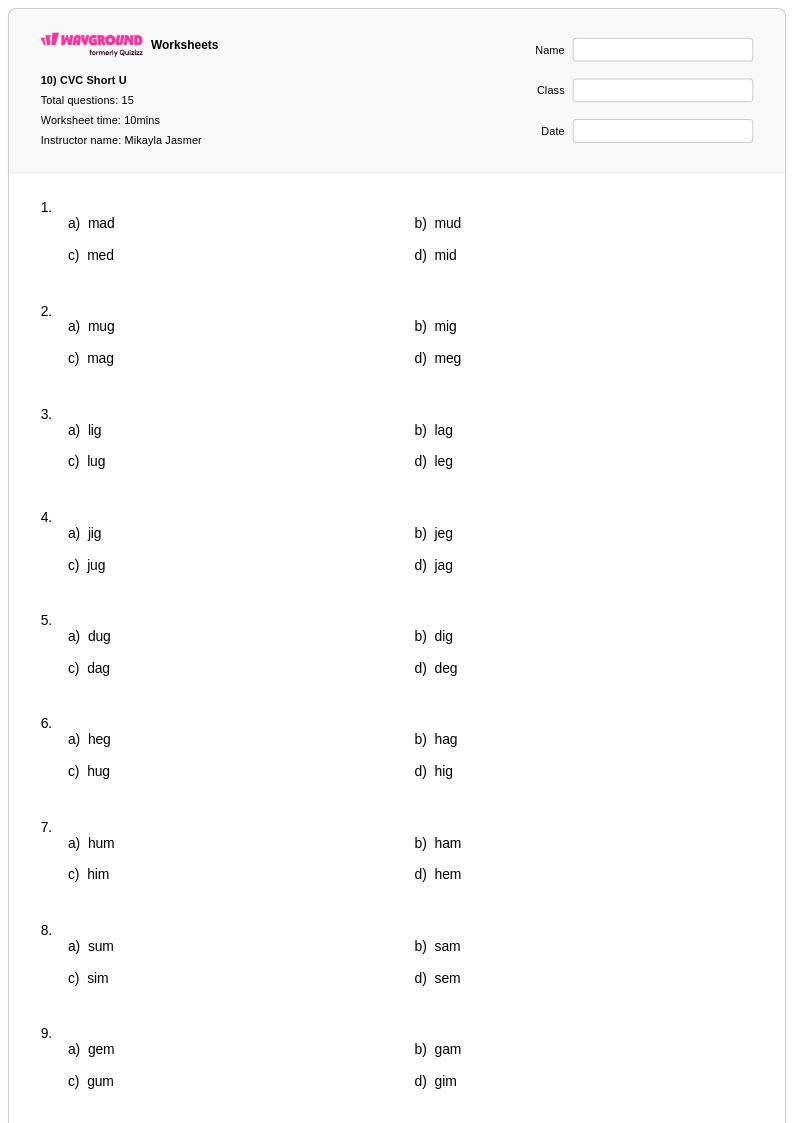
15 Q
1st - 4th
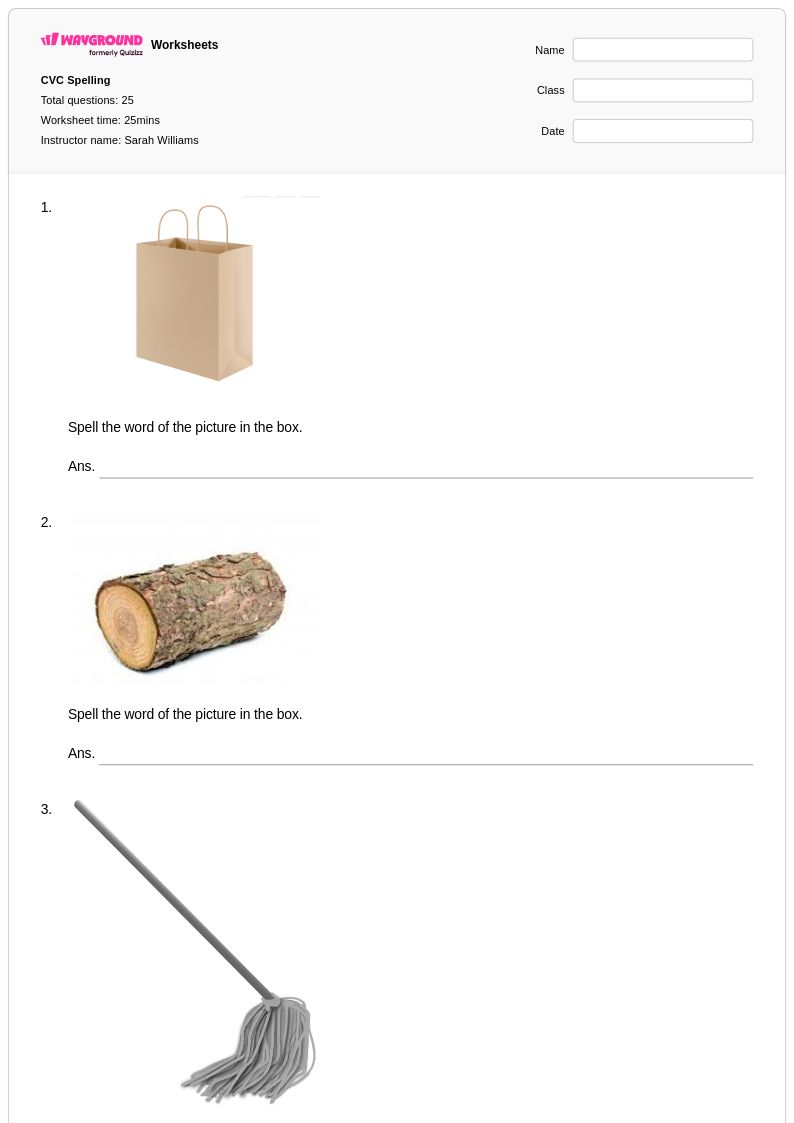
25 Q
1st - Uni
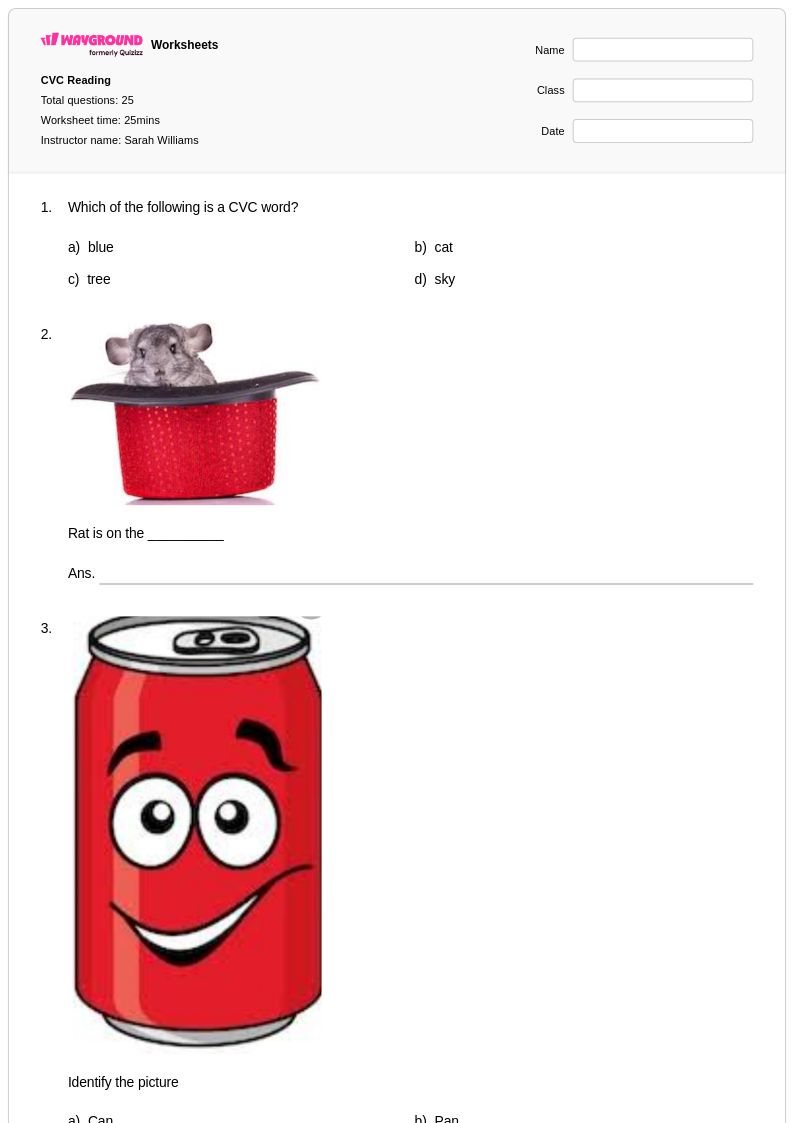
25 Q
2nd - Uni
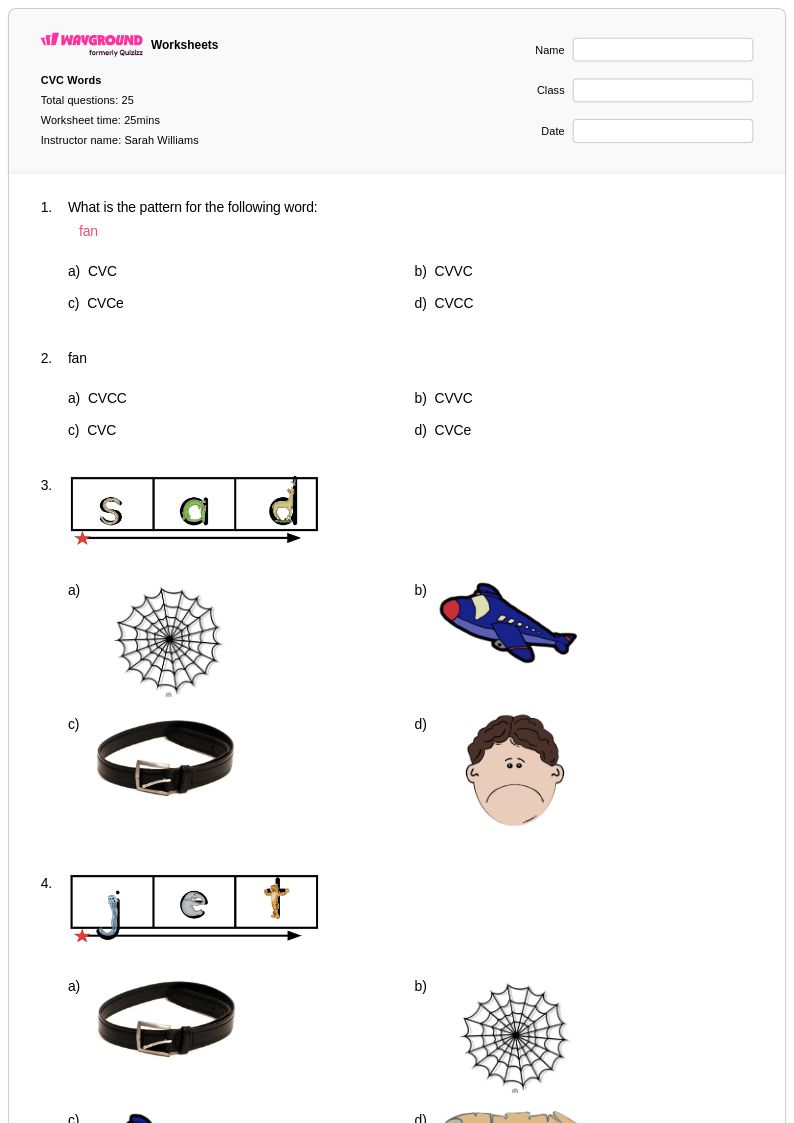
25 Q
3rd - Uni
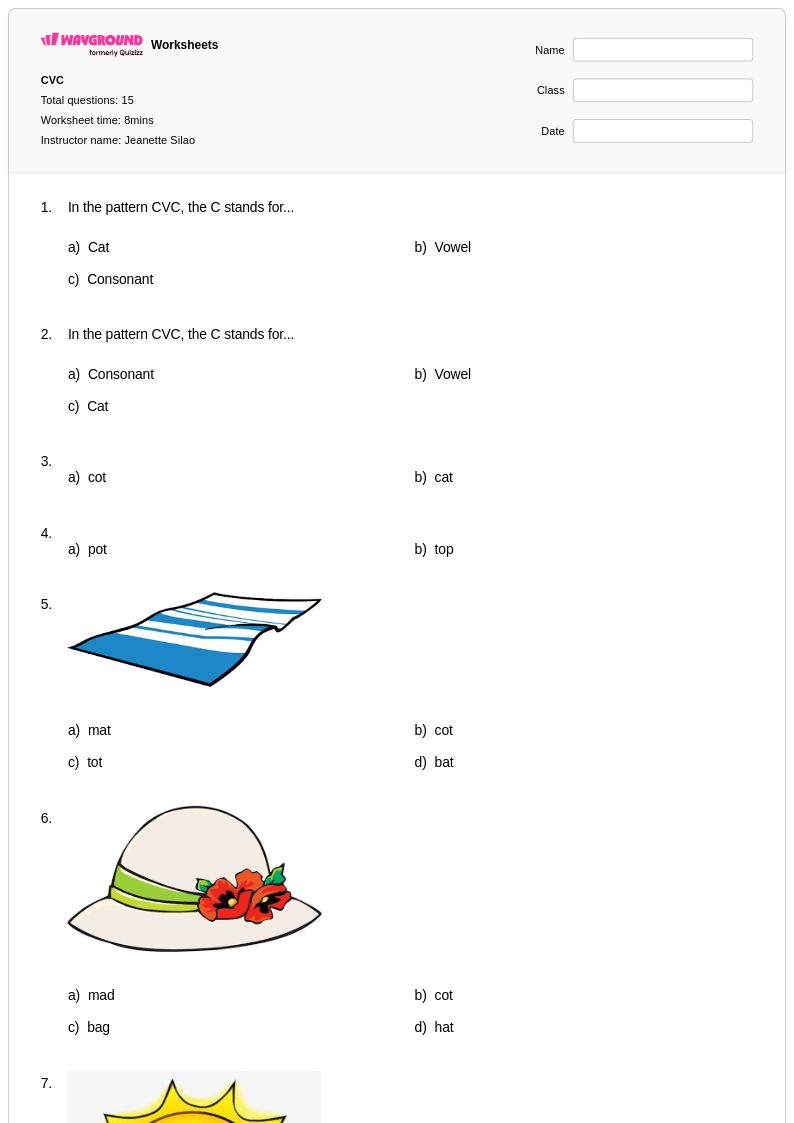
15 Q
3rd
15 Q
2nd - Uni
10 Q
3rd
15 Q
3rd - Uni
25 Q
2nd - Uni
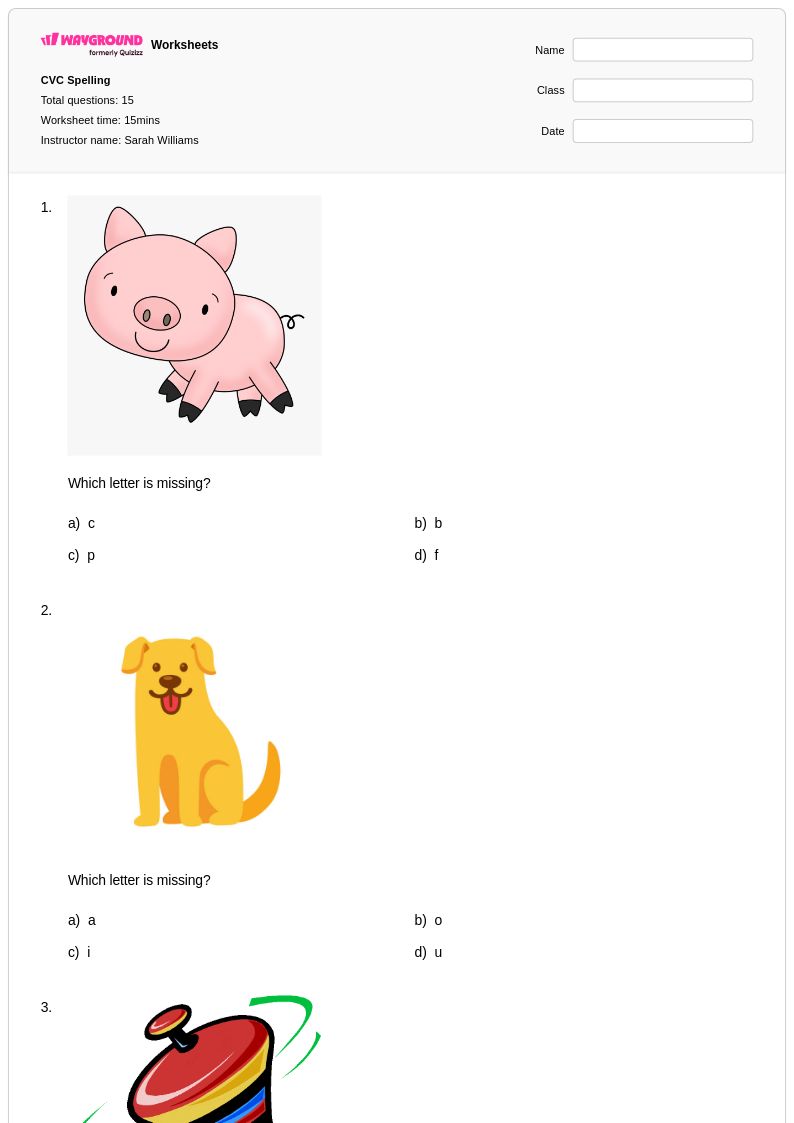
15 Q
1st - Uni
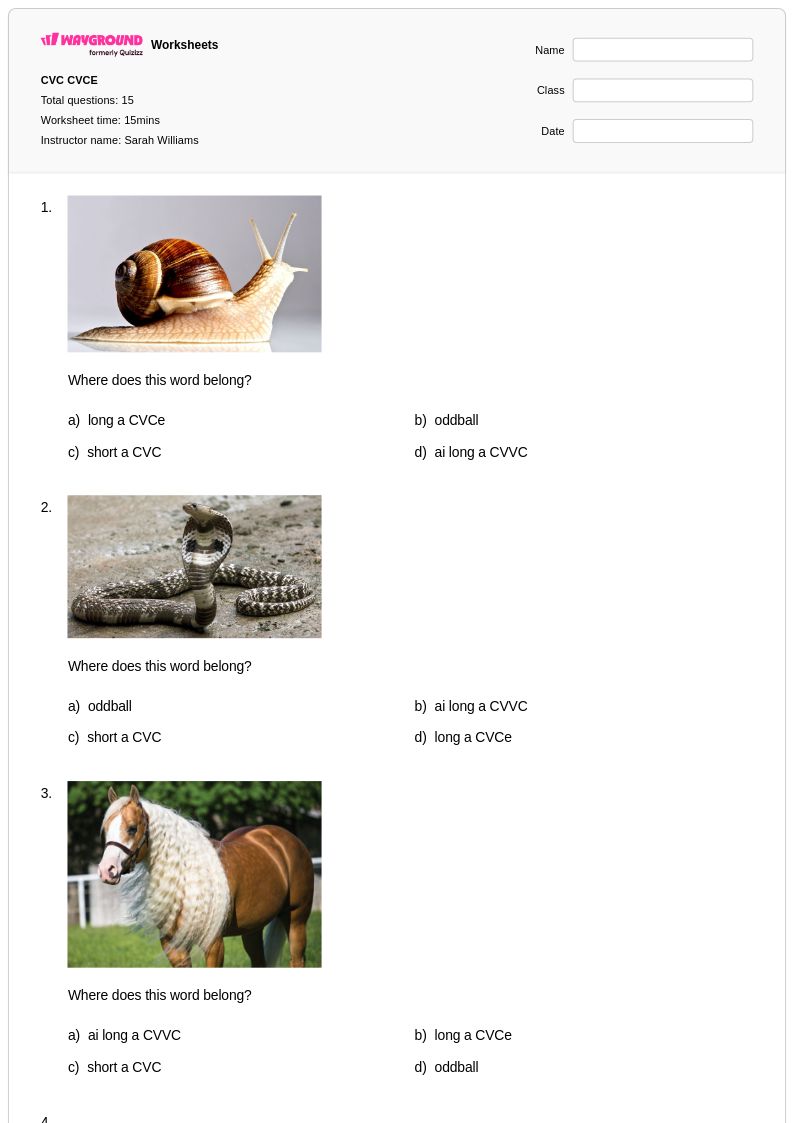
15 Q
2nd - Uni
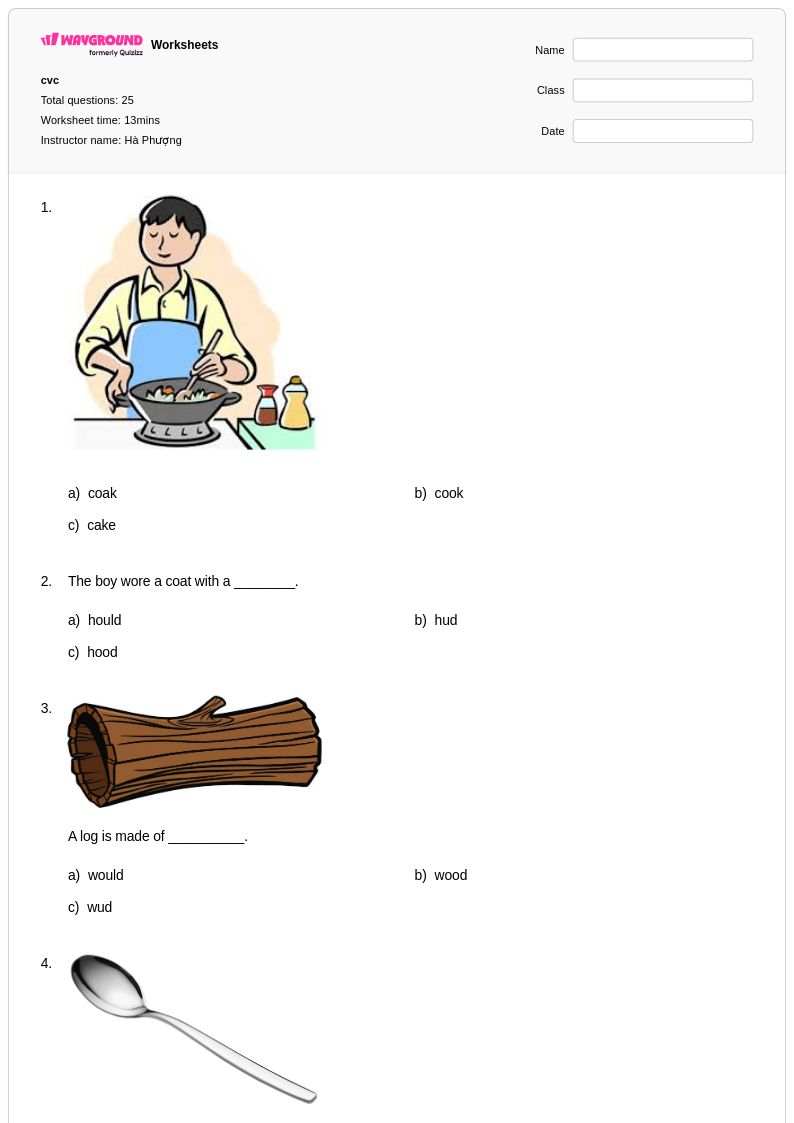
25 Q
3rd - 4th
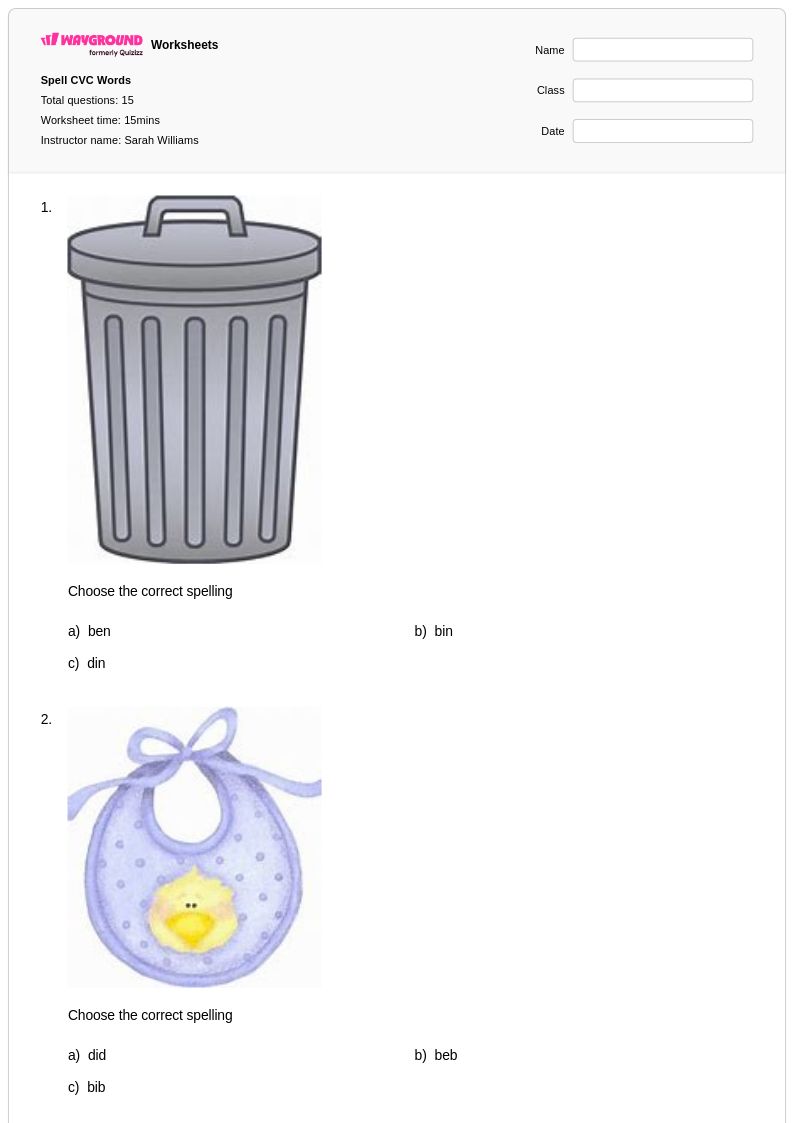
15 Q
1st - Uni
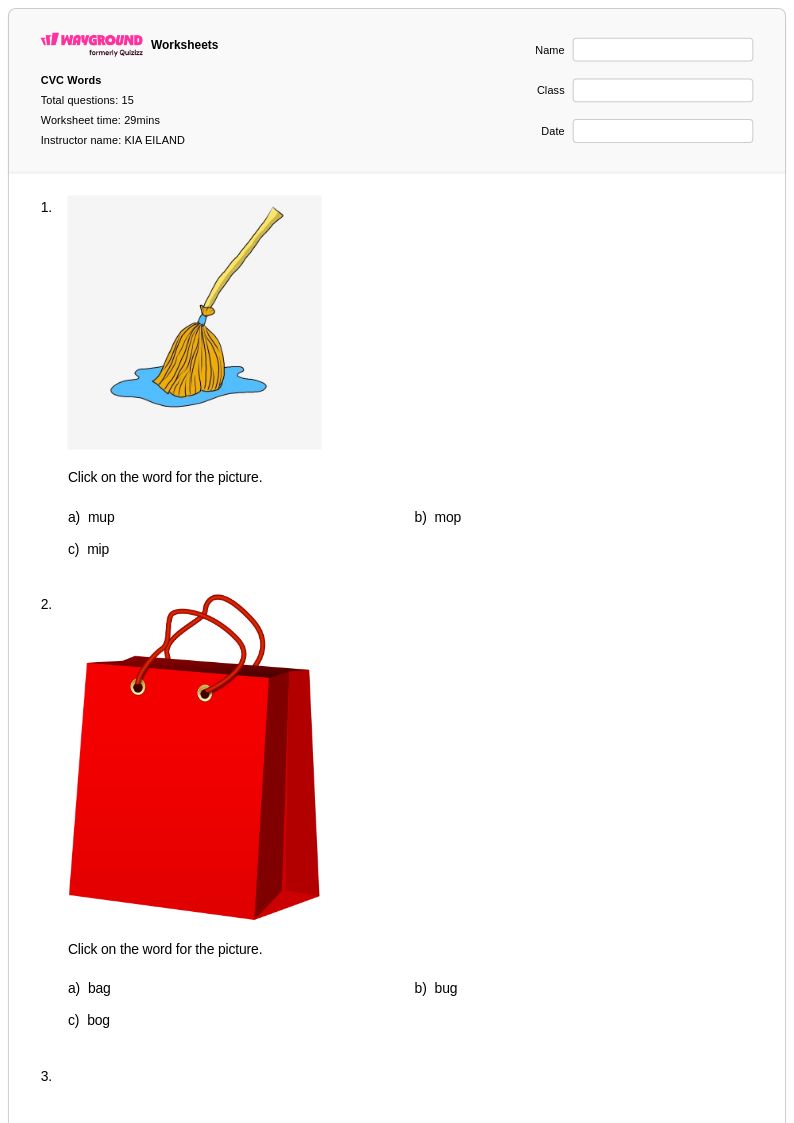
15 Q
1st - 5th
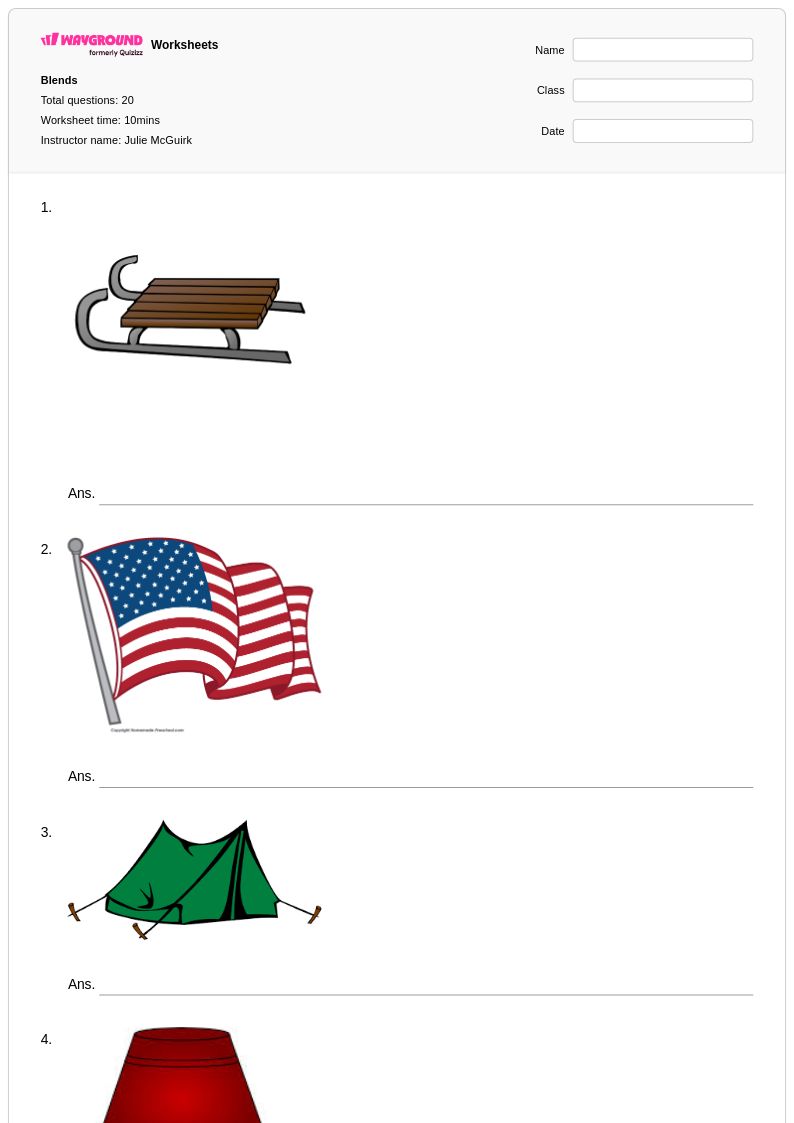
20 Q
1st - 3rd
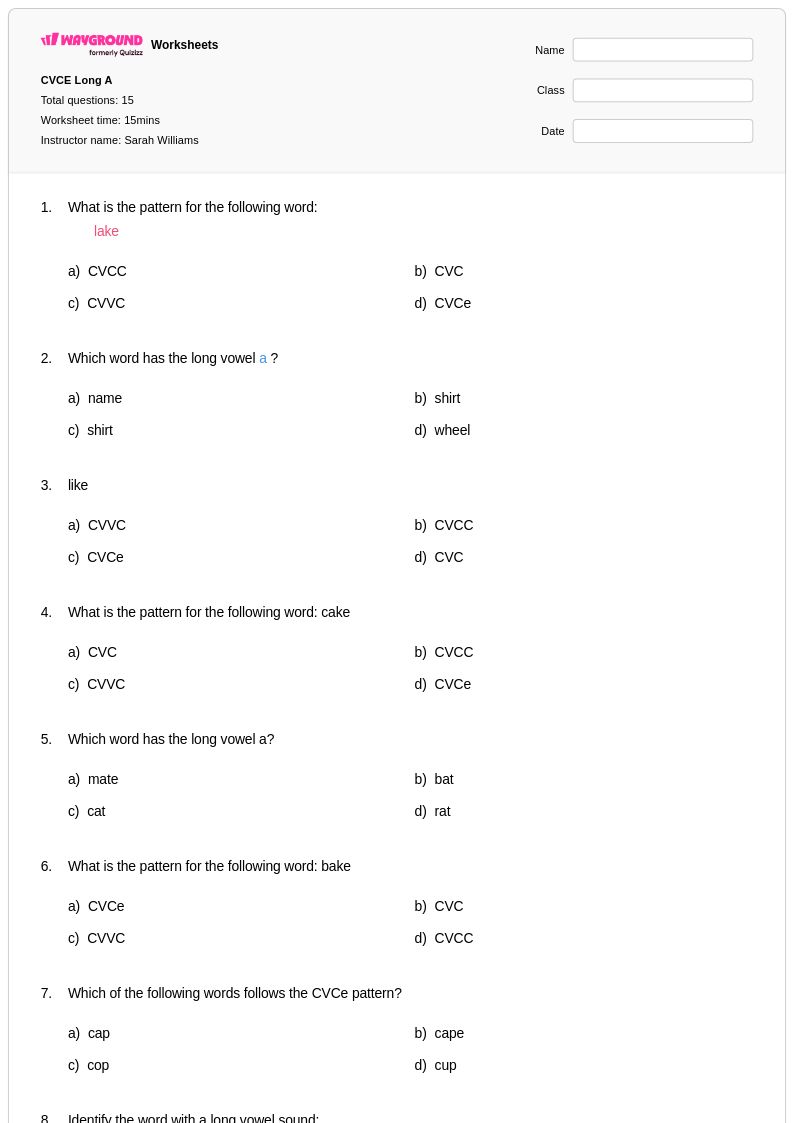
15 Q
2nd - Uni
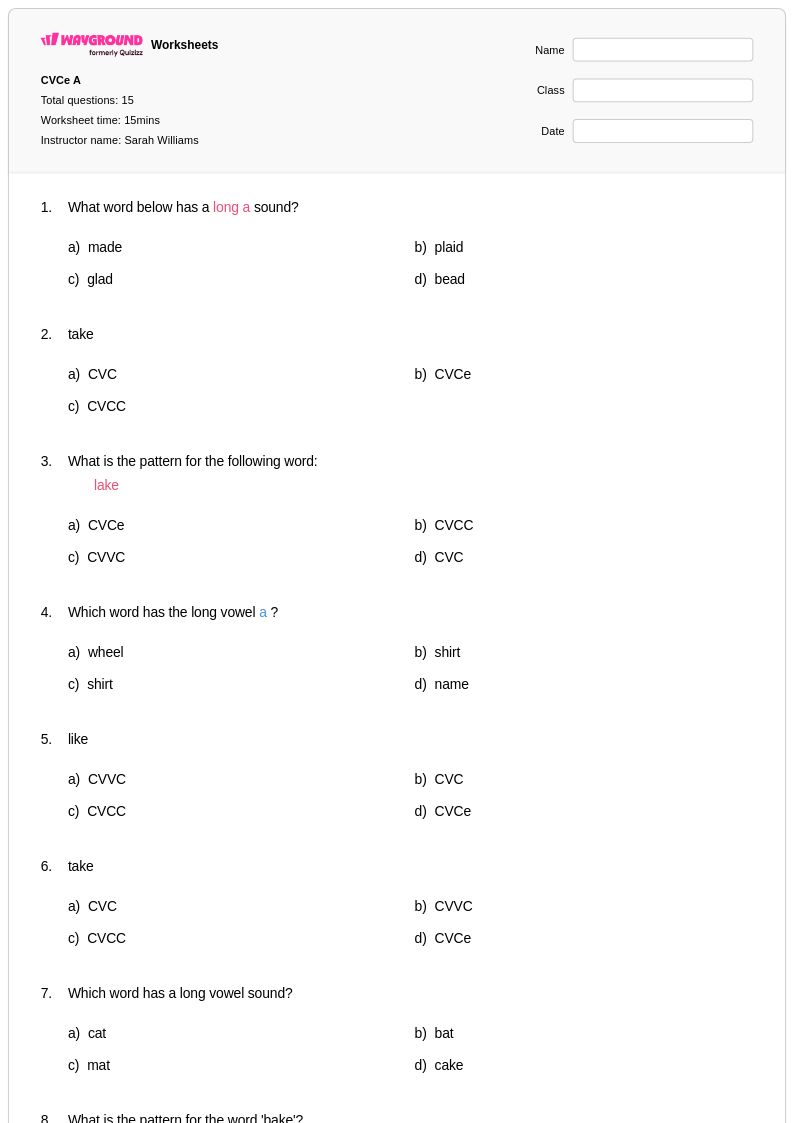
15 Q
2nd - Uni
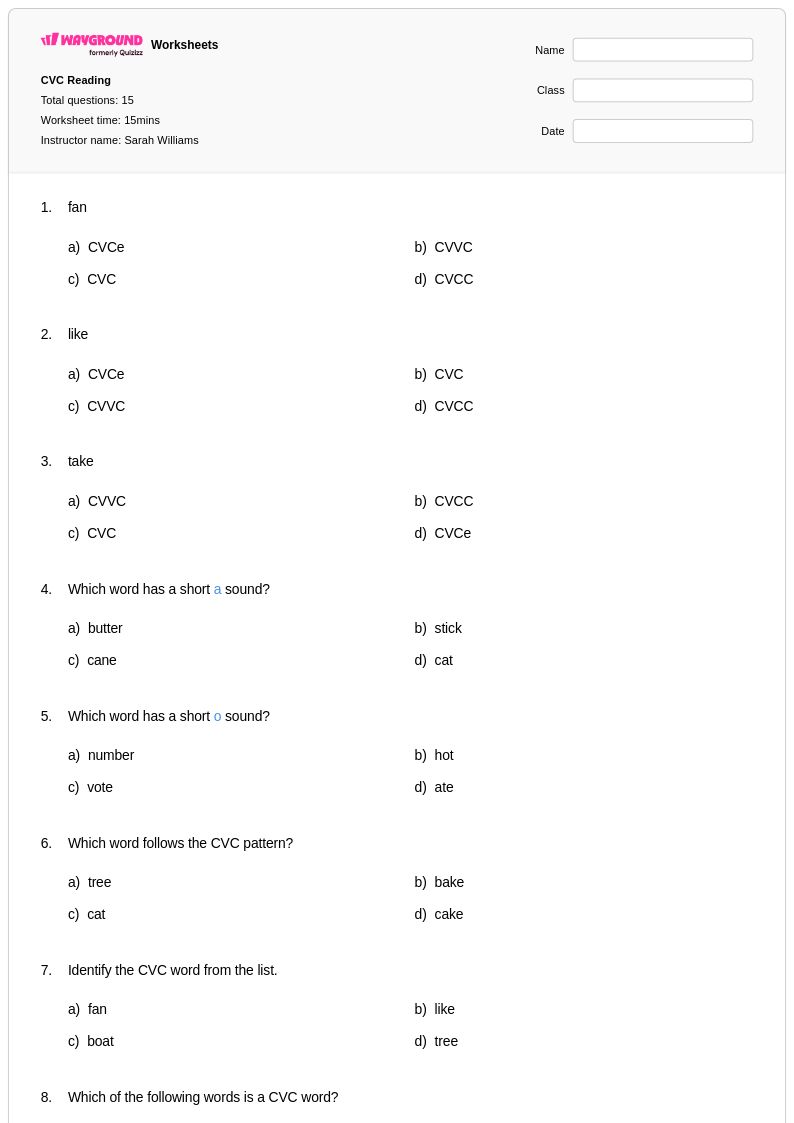
15 Q
2nd - Uni
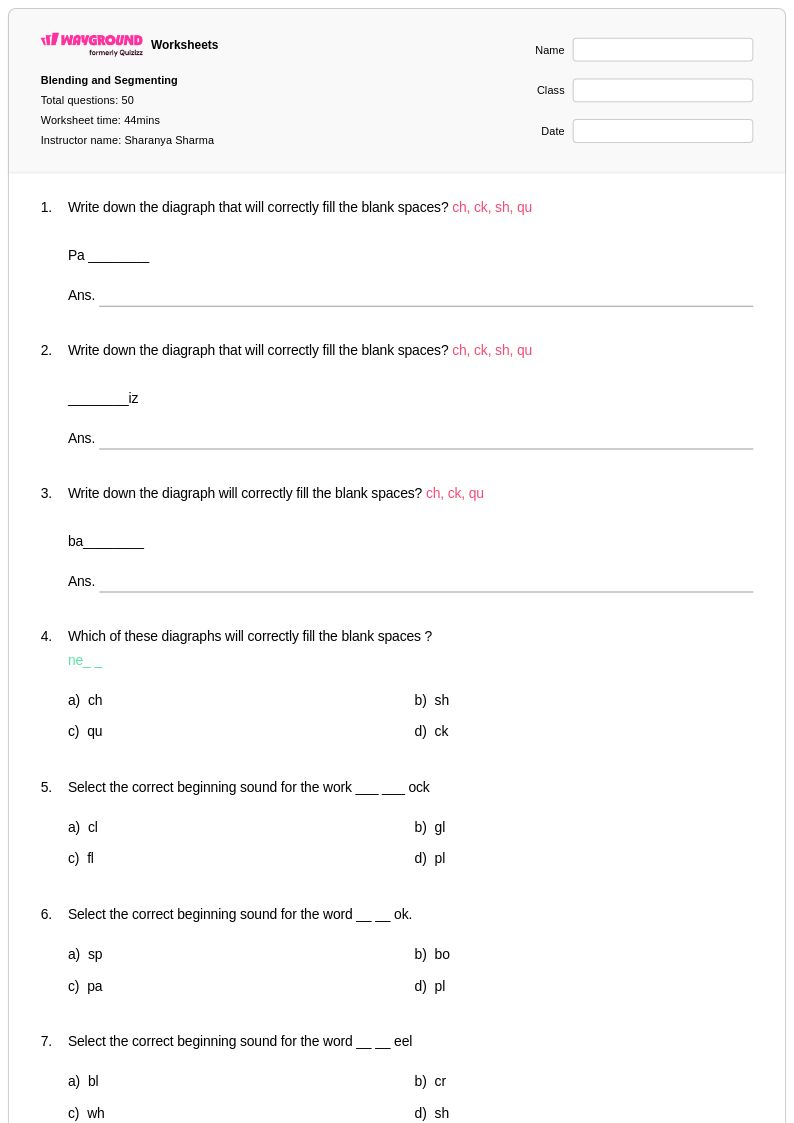
50 Q
1st - Uni
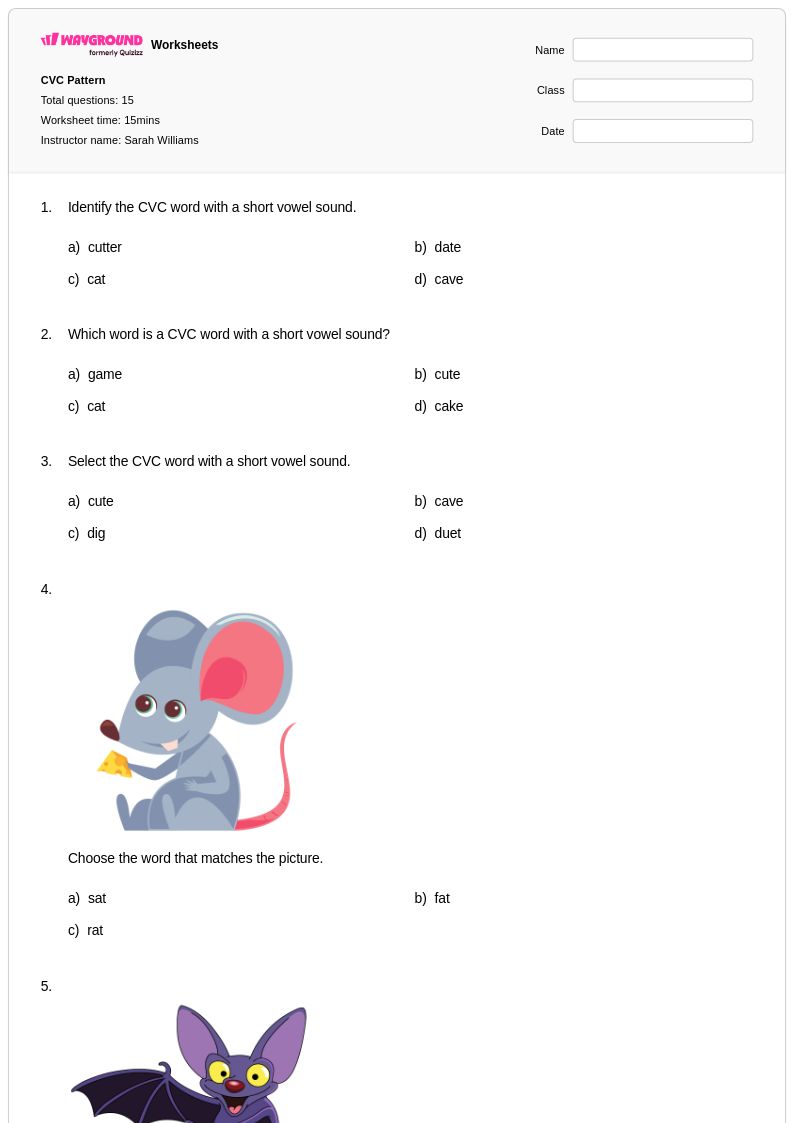
15 Q
2nd - Uni
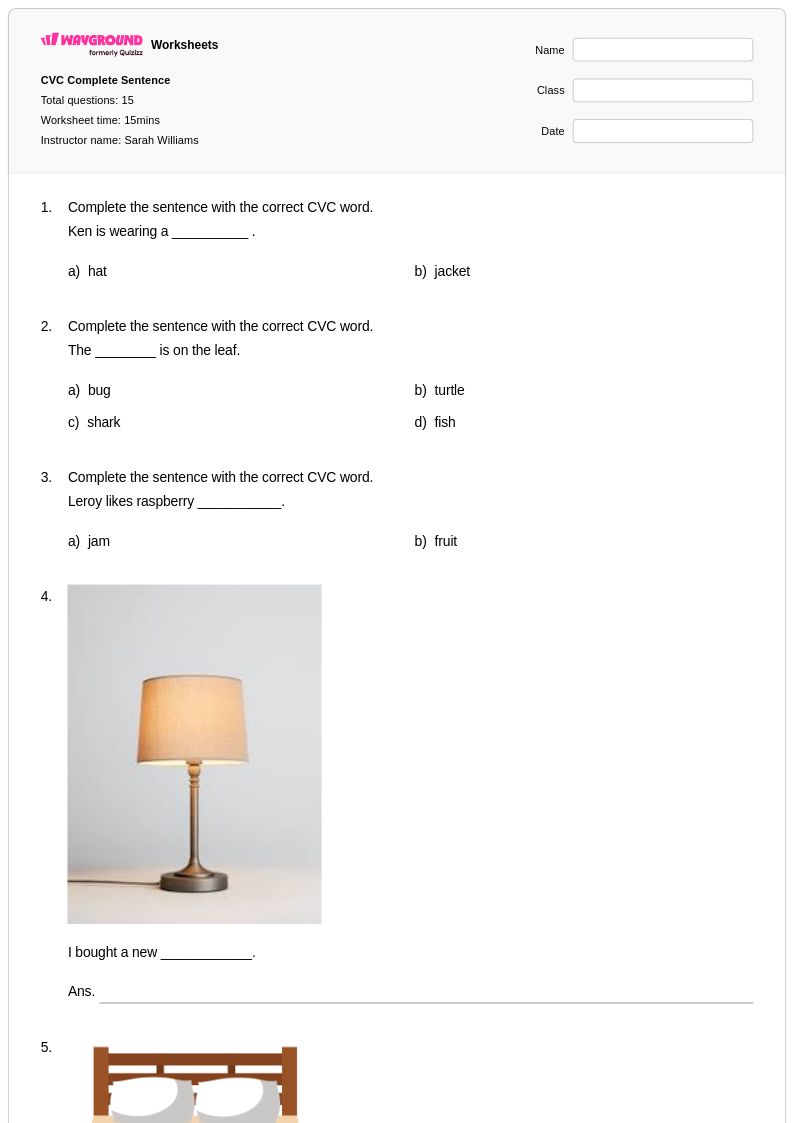
15 Q
2nd - Uni
Explore Cvc Blending Worksheets by Grades
Explore Other Subject Worksheets for class 3
Explore printable Cvc Blending worksheets for Class 3
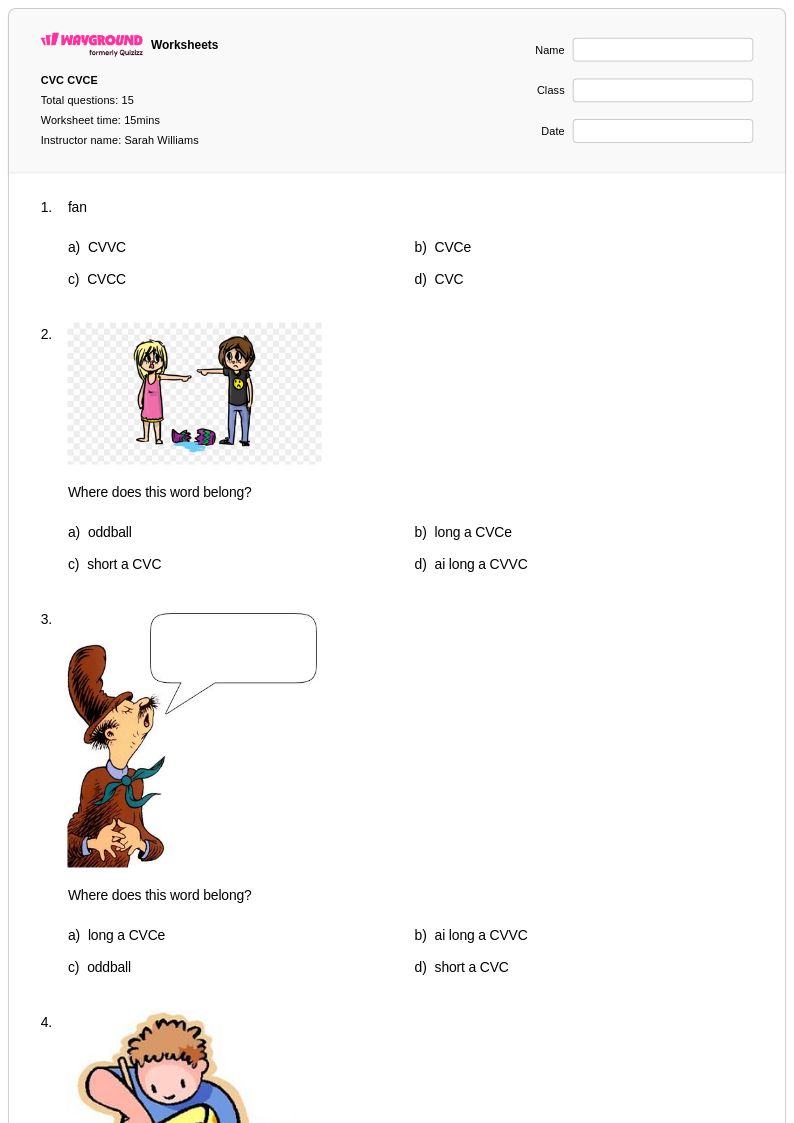
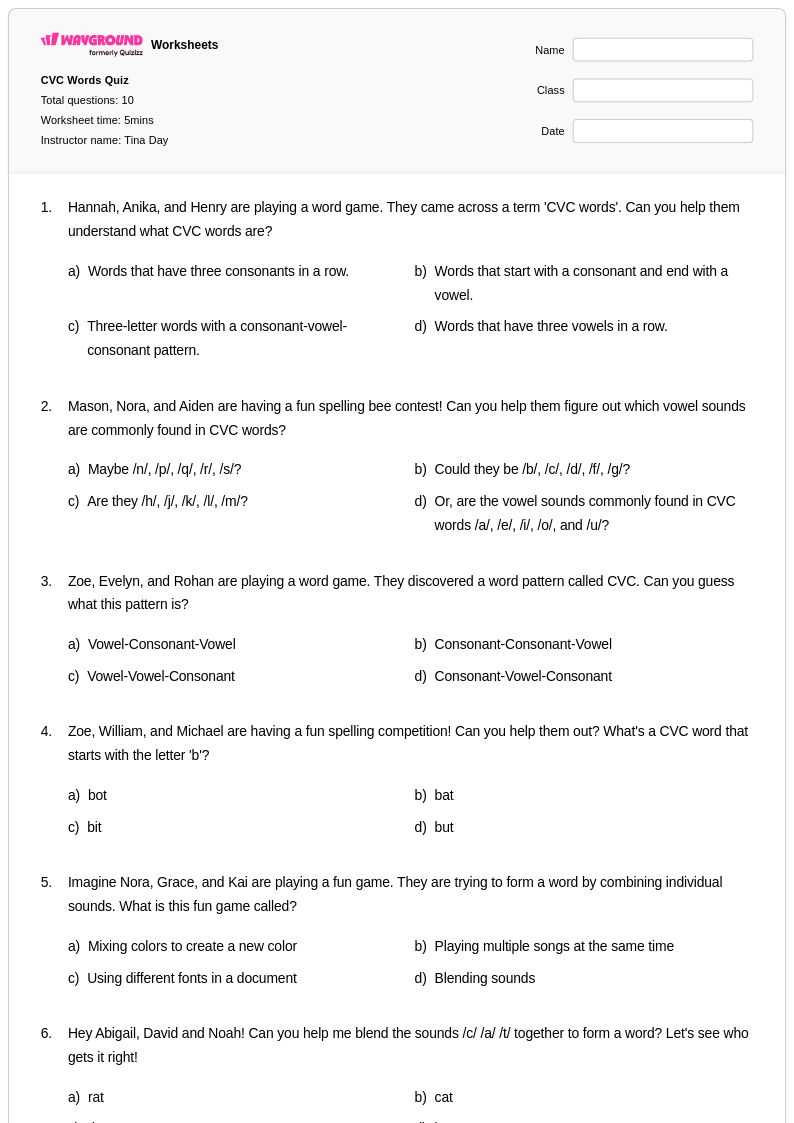
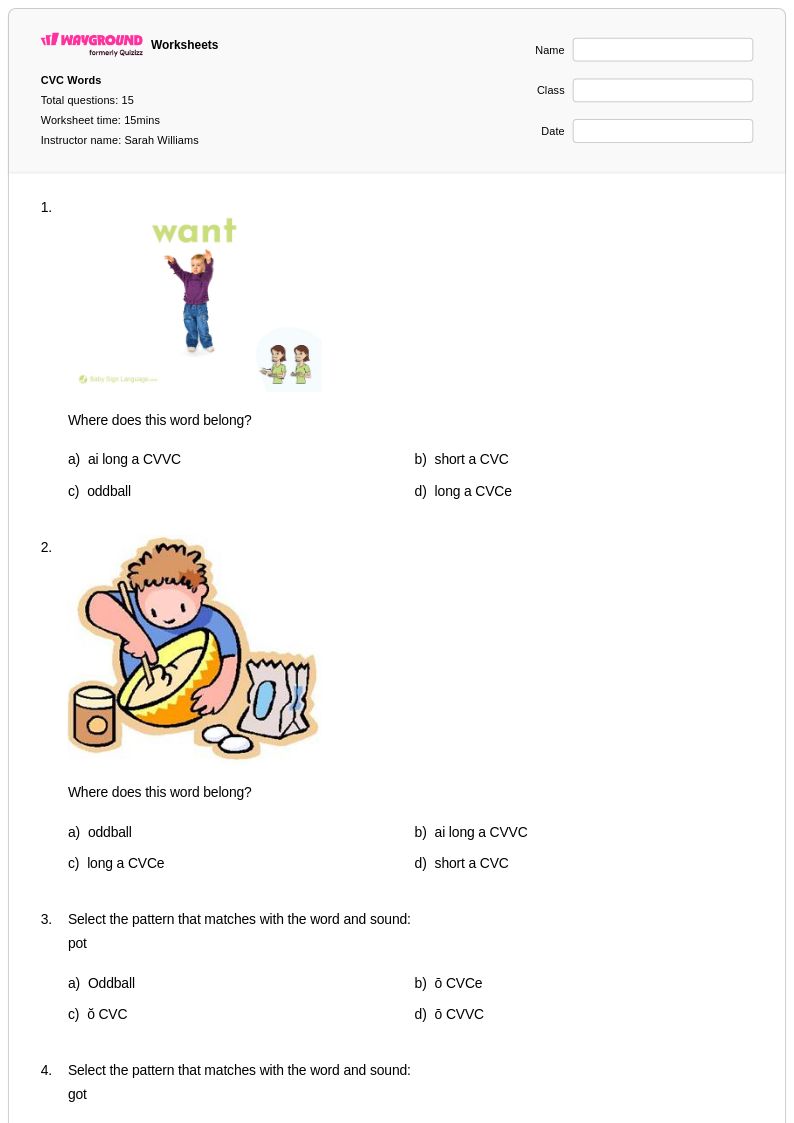
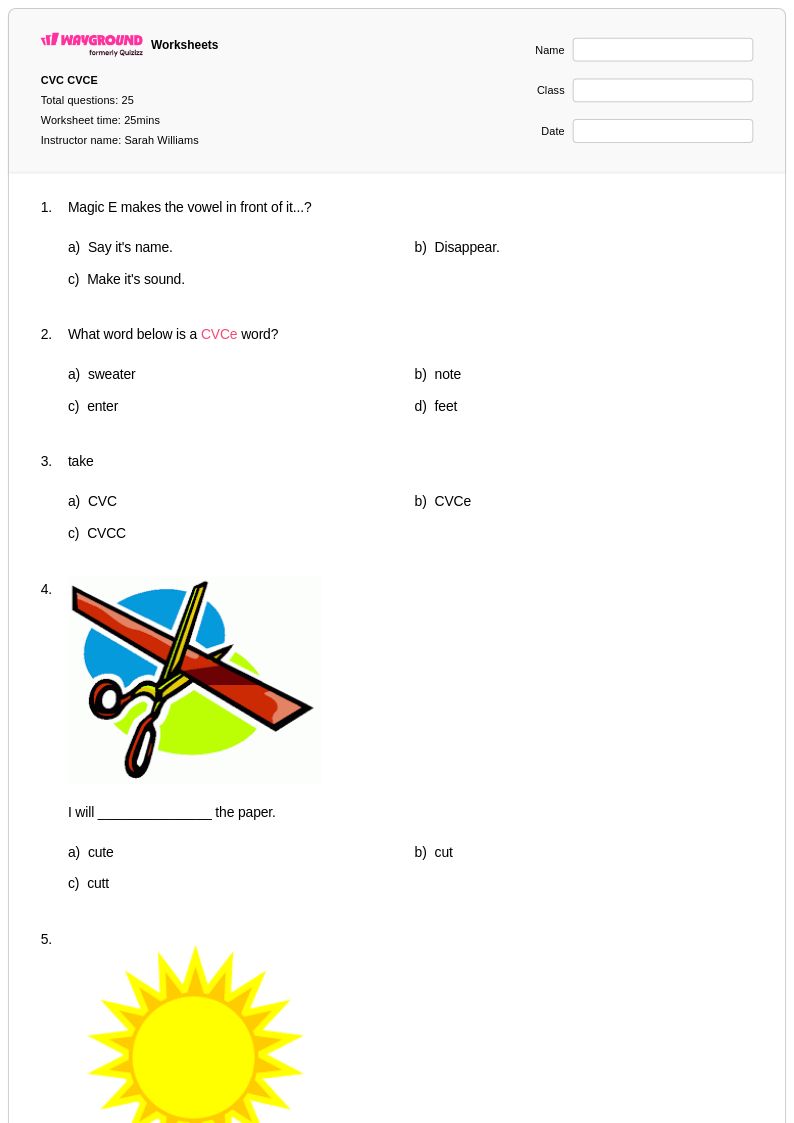
Class 3 CVC blending worksheets available through Wayground (formerly Quizizz) provide essential foundational practice for young readers developing phonemic awareness and decoding skills. These comprehensive printables focus specifically on consonant-vowel-consonant word patterns, helping students master the critical ability to blend individual sounds into recognizable words like "cat," "dog," and "run." Each worksheet systematically strengthens students' capacity to identify beginning and ending consonant sounds while seamlessly connecting them with short vowel sounds in the middle, building the automaticity necessary for fluent reading. The practice problems progress logically from simple three-letter combinations to more complex CVC patterns, and teachers can access complete answer keys in convenient PDF format to streamline assessment and provide immediate feedback during guided practice sessions.
Wayground (formerly Quizizz) empowers educators with an extensive collection of millions of teacher-created CVC blending resources specifically designed to meet diverse Class 3 learning needs. The platform's robust search and filtering capabilities allow teachers to quickly locate worksheets aligned with specific phonics standards and customize materials to match their students' current skill levels, whether for remediation support or enrichment challenges. These differentiation tools enable seamless adaptation of content difficulty, while the flexible availability of both printable and digital PDF formats accommodates various classroom environments and learning preferences. Teachers can efficiently integrate these resources into daily lesson planning, small group instruction, and independent practice time, ensuring consistent skill development in phonemic blending while providing multiple opportunities for students to strengthen their decoding foundation through targeted, engaging practice.
FAQs
How do I teach CVC blending to beginning readers?
What exercises help students practice CVC blending?
What mistakes do students commonly make when blending CVC words?
How do I support struggling readers during CVC blending practice?
How do I use Wayground's CVC blending worksheets in my classroom?
At what reading level should students begin CVC blending practice?