Free Printable Lowercase Letters Worksheets for Kindergarten
Discover free kindergarten lowercase letters worksheets and printables from Wayground that help young learners master alphabet recognition, letter formation, and writing skills through engaging practice problems with answer keys.
Explore printable Lowercase Letters worksheets for Kindergarten
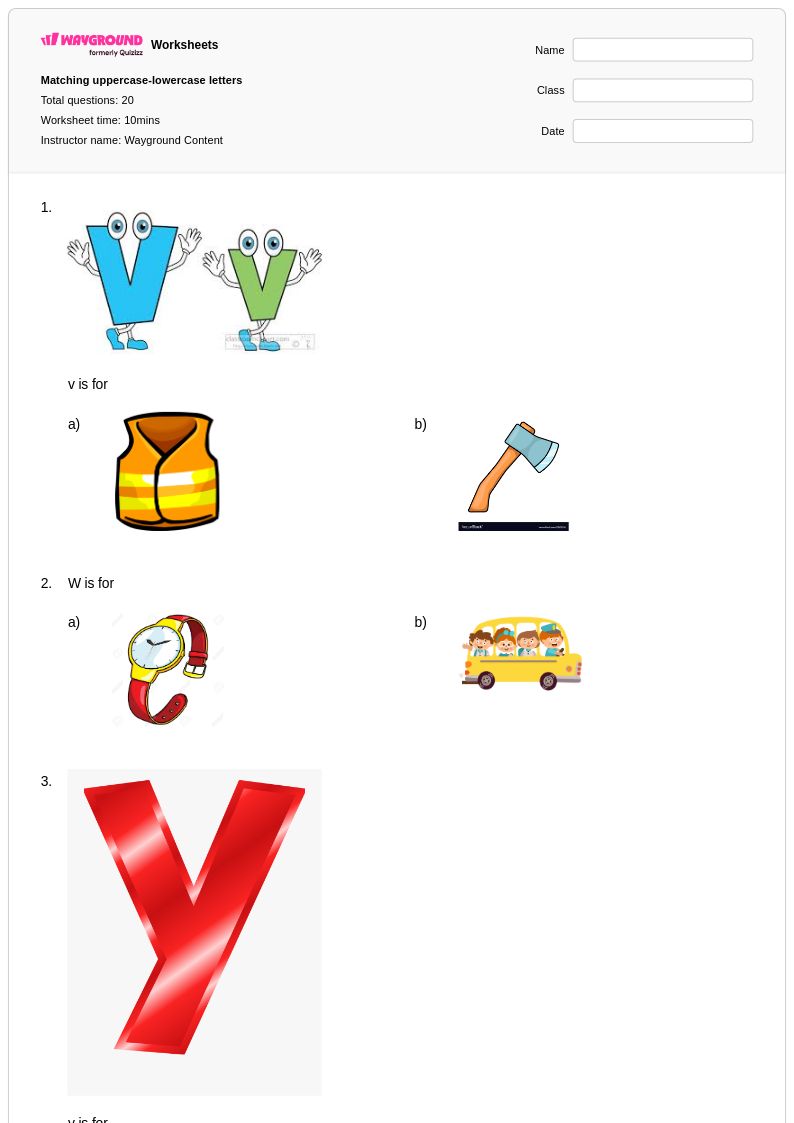
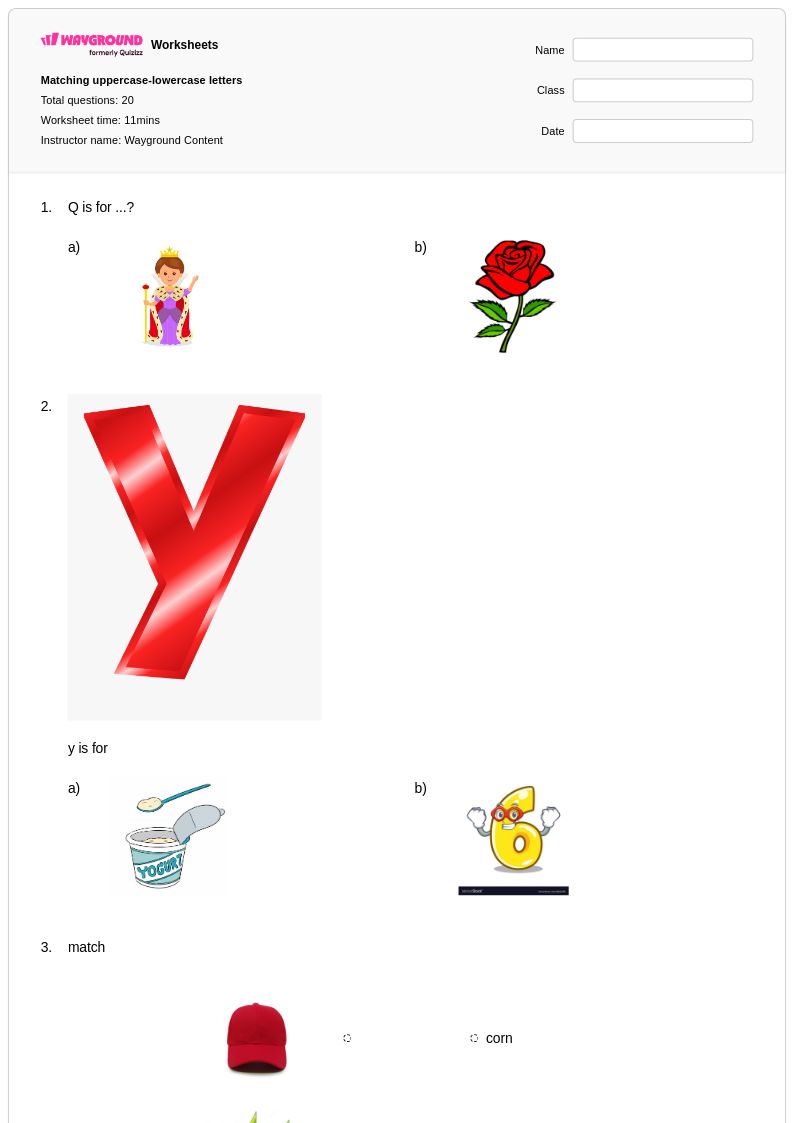
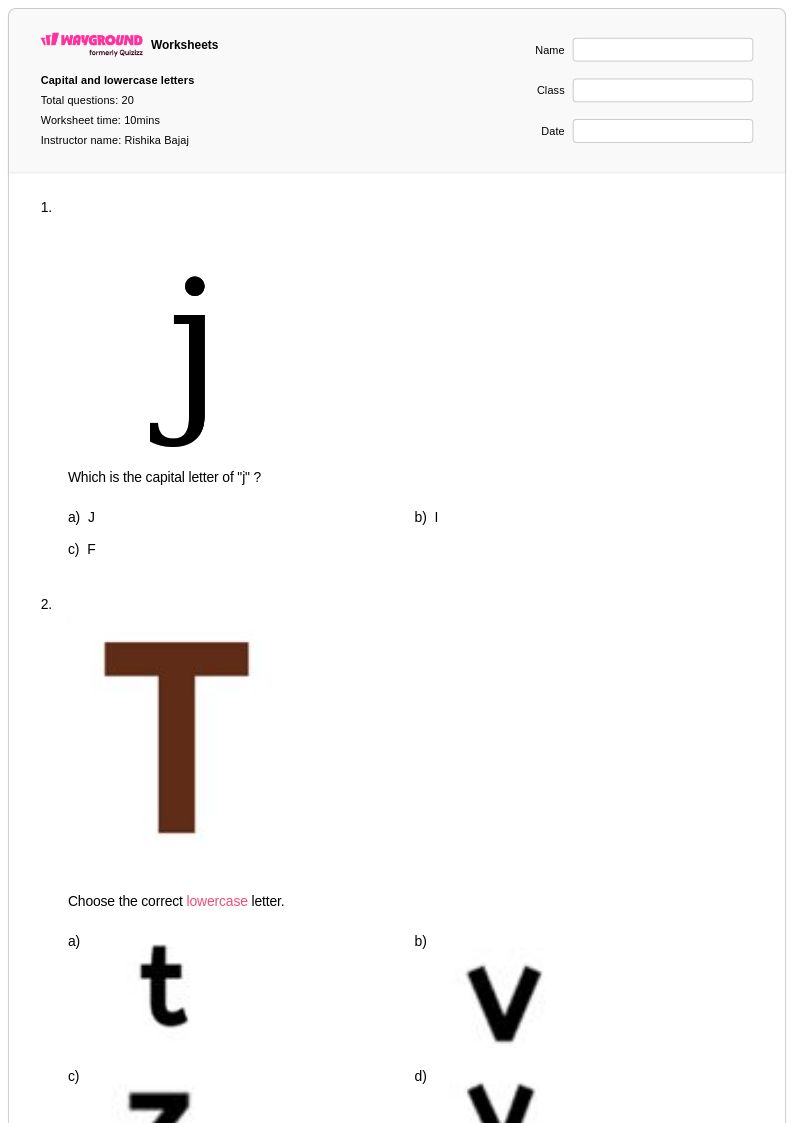
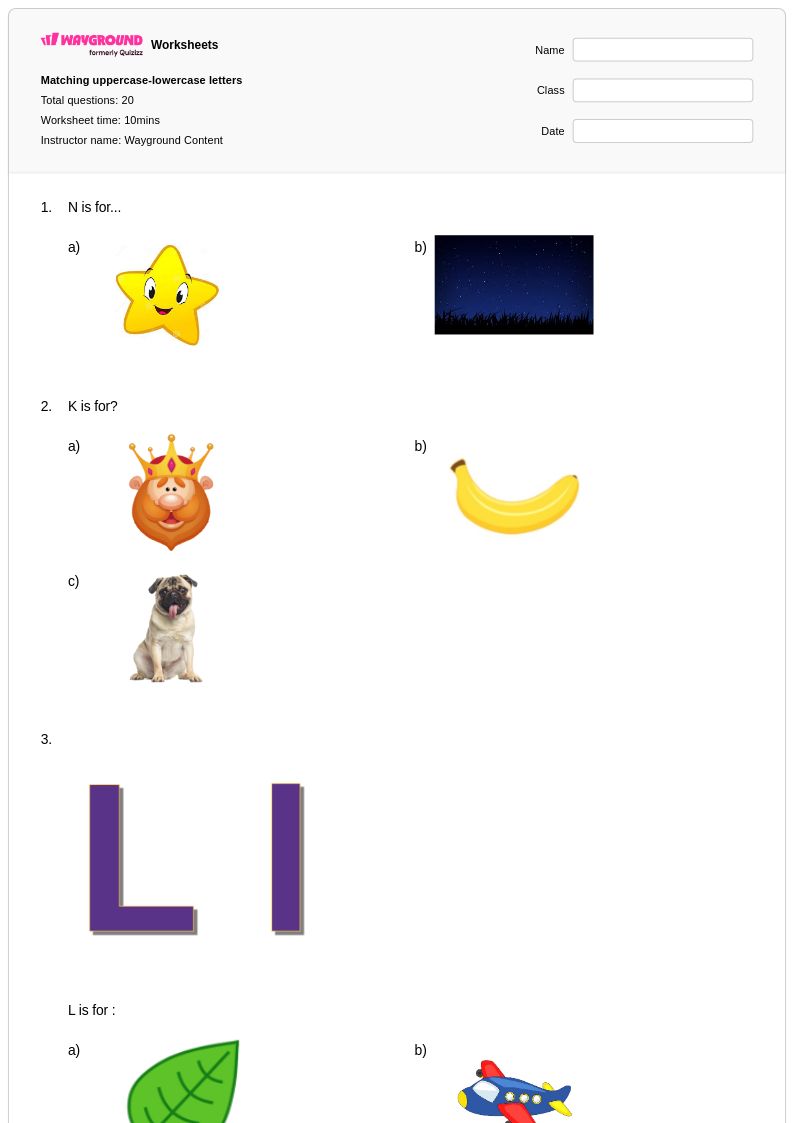
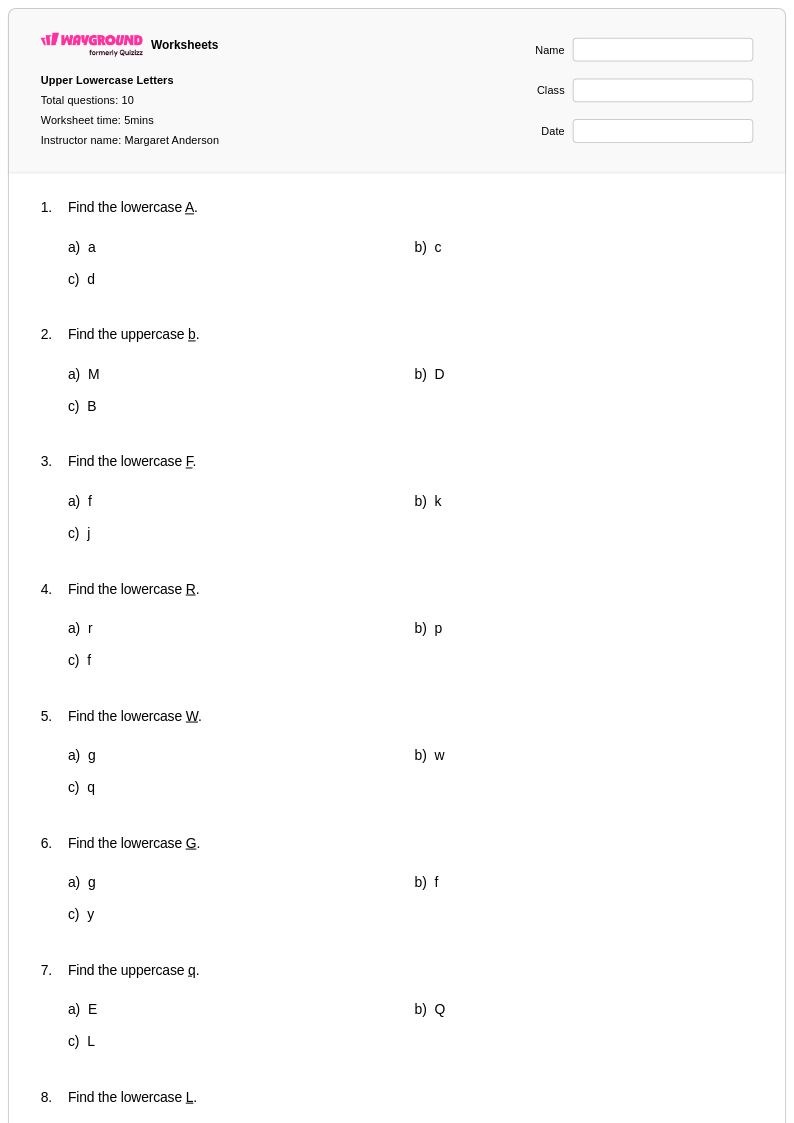
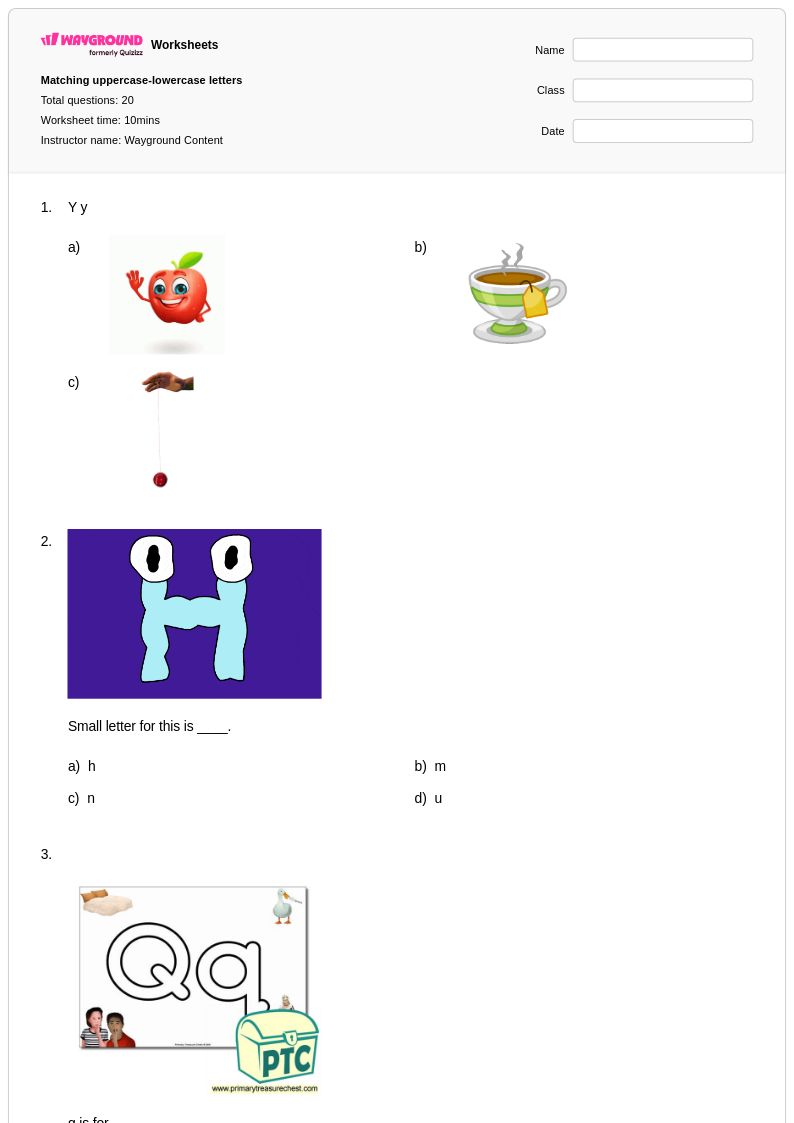
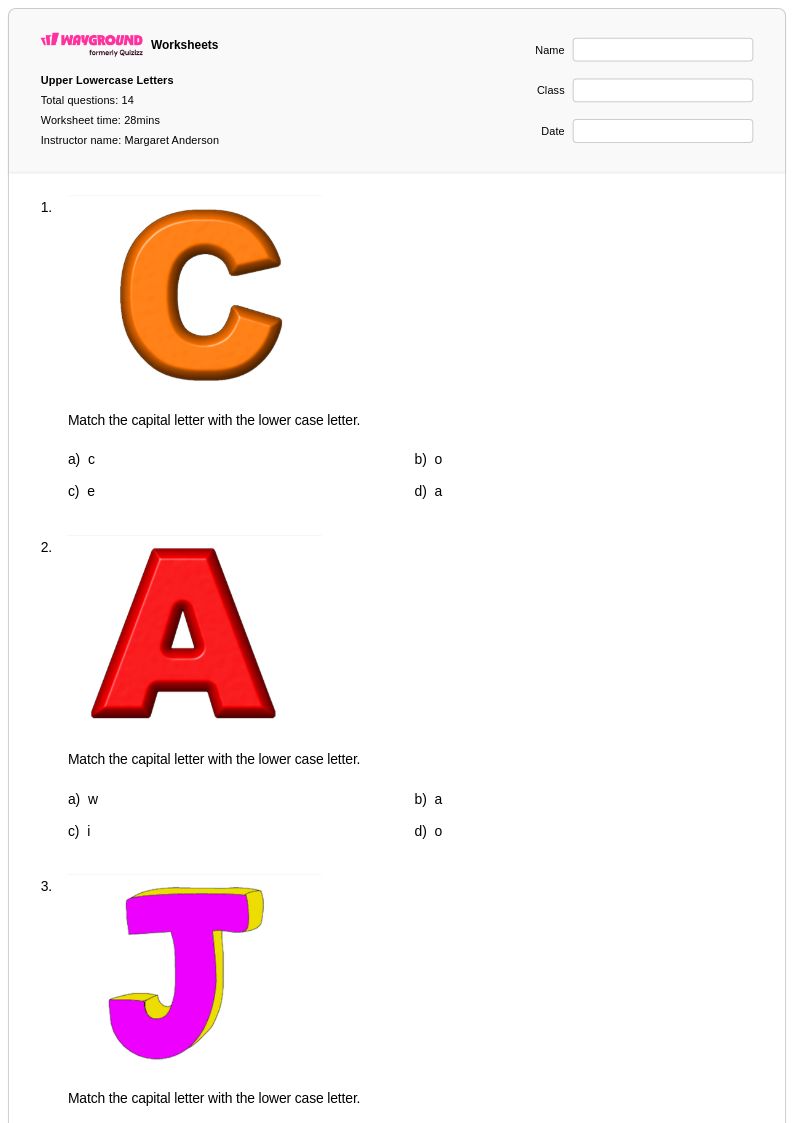
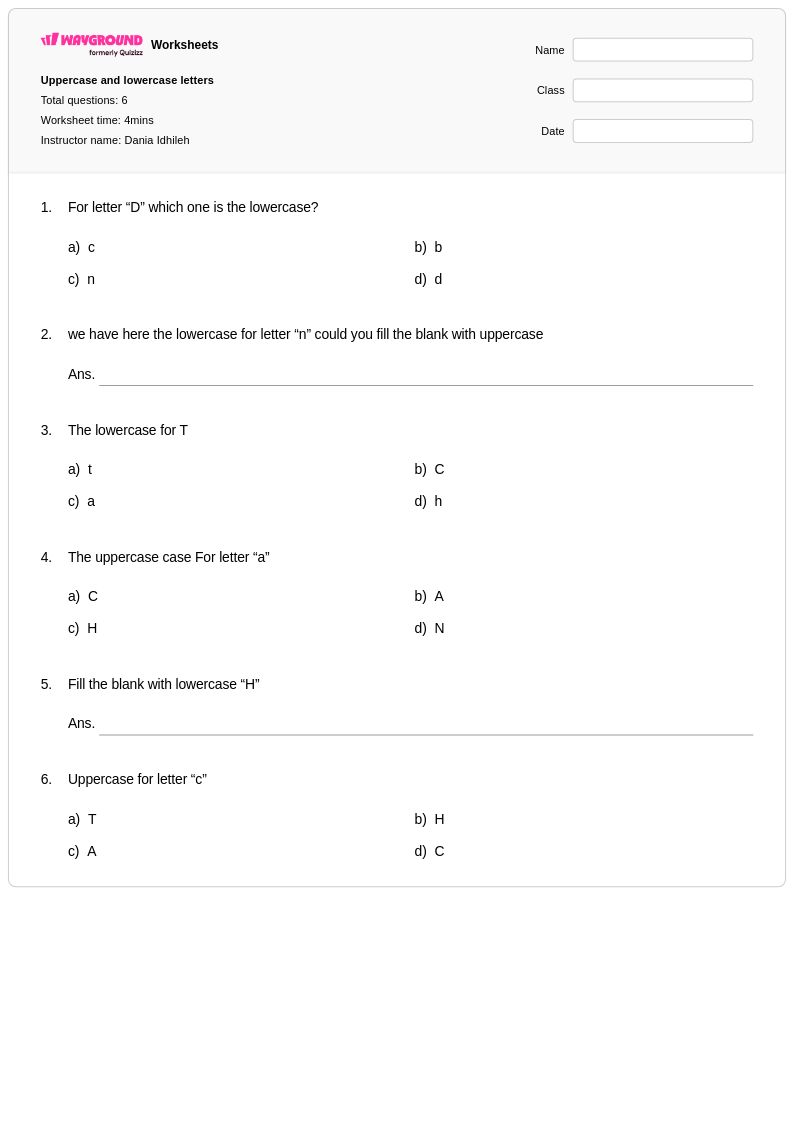
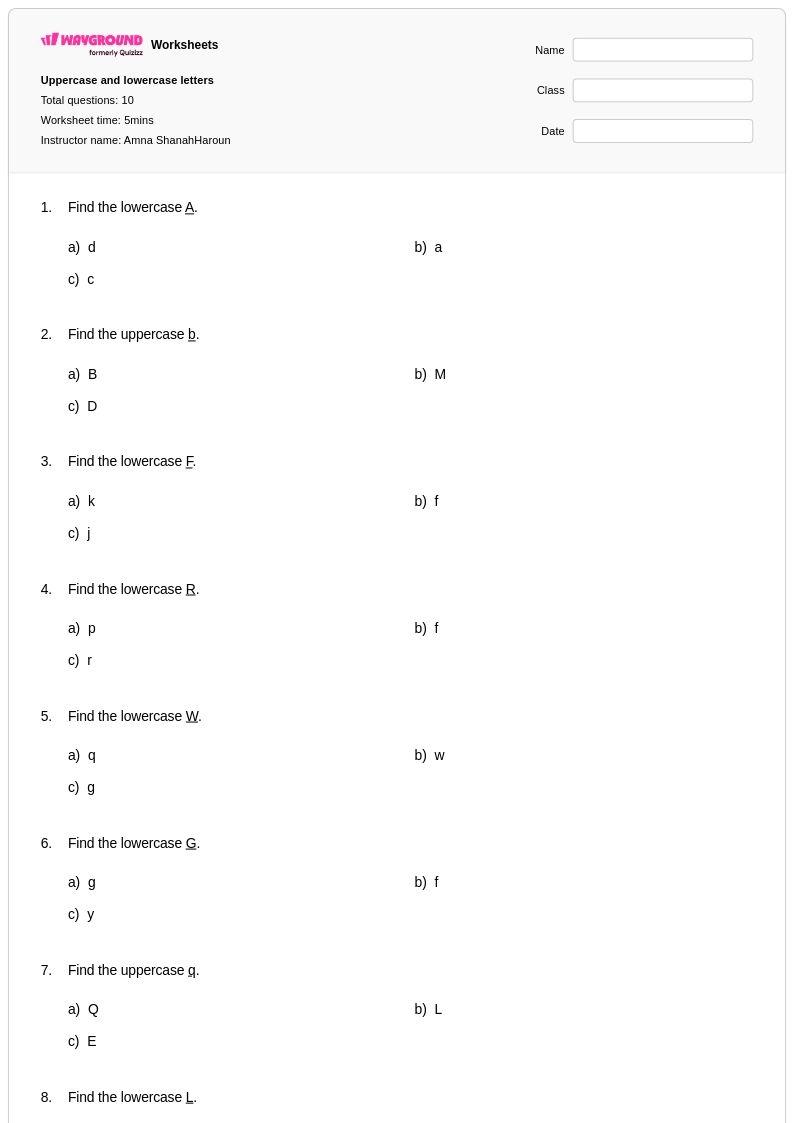
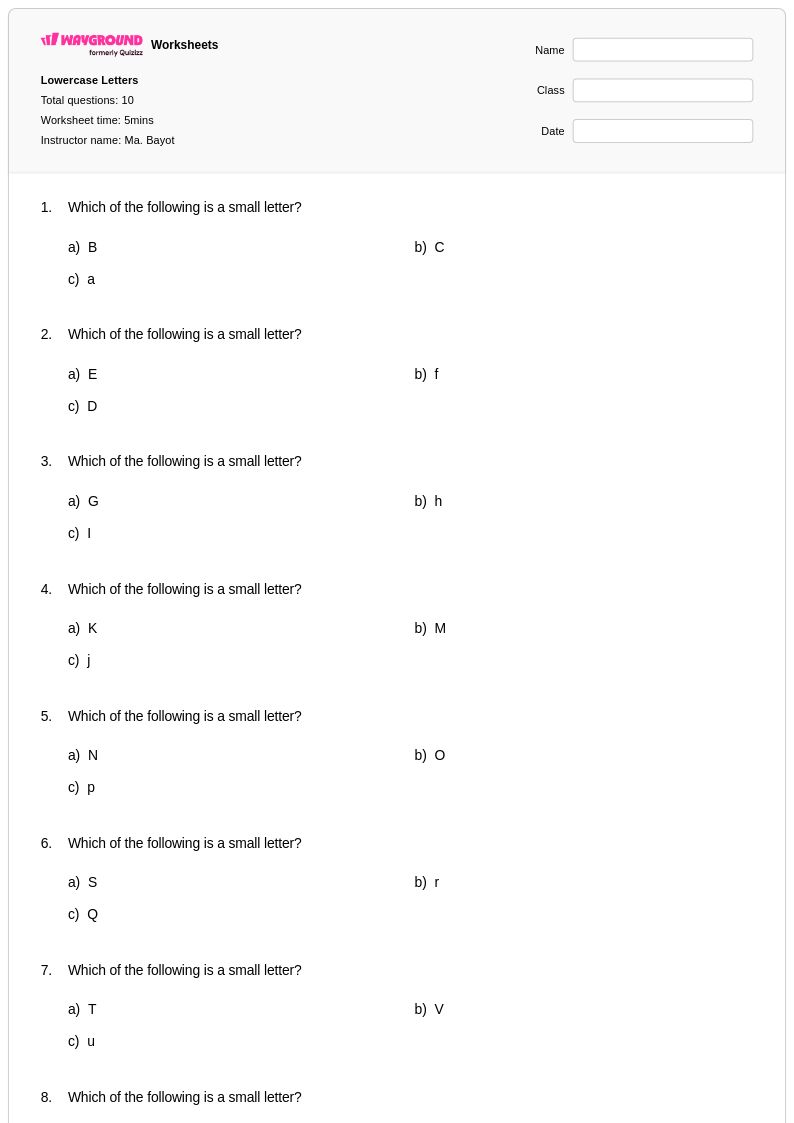
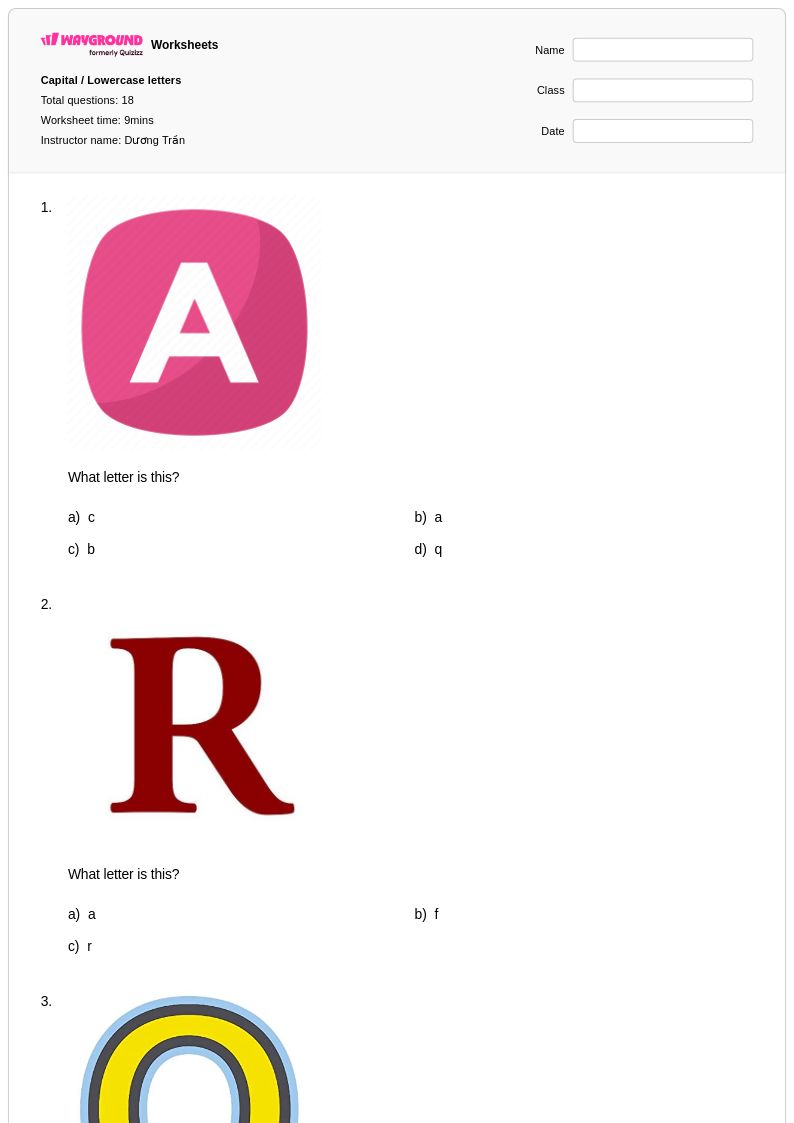
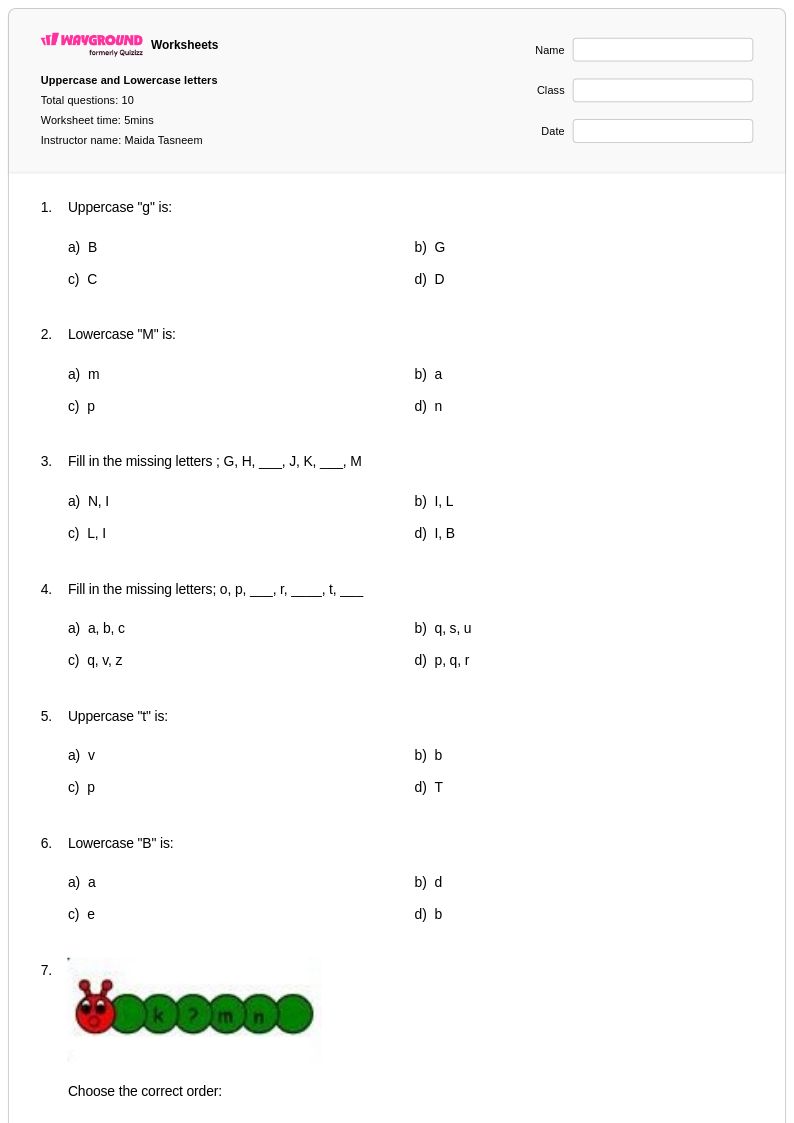
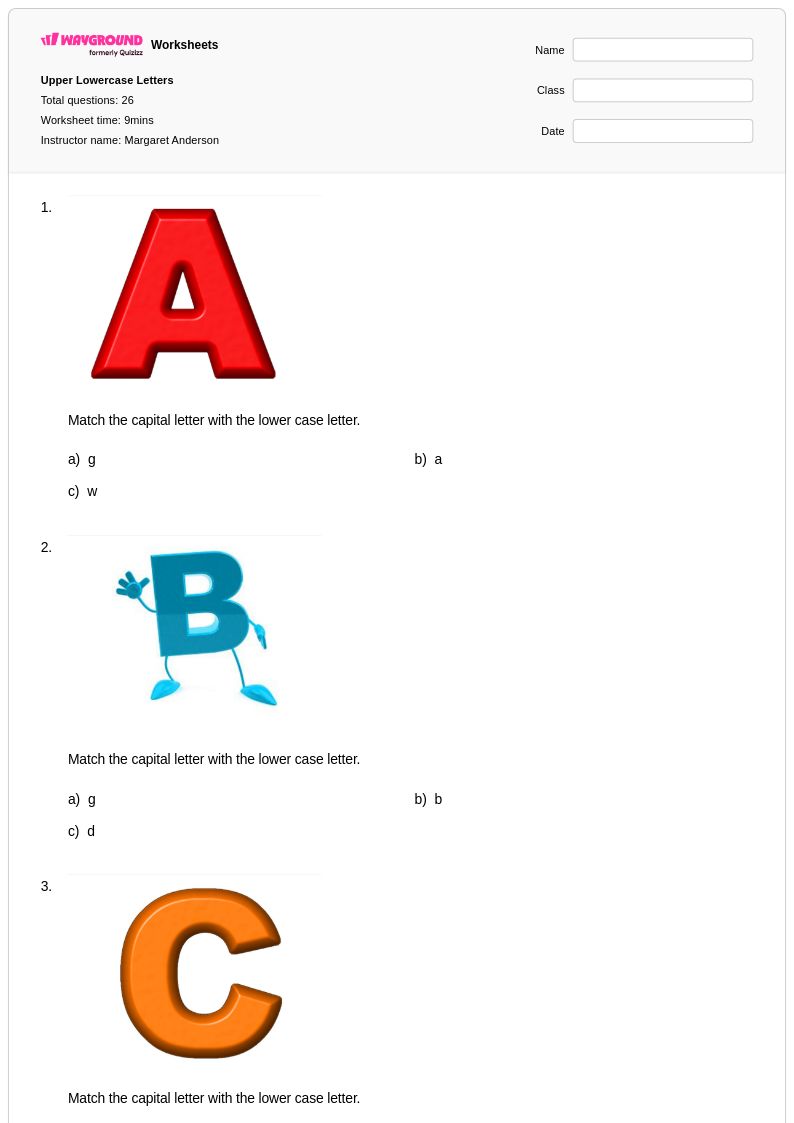
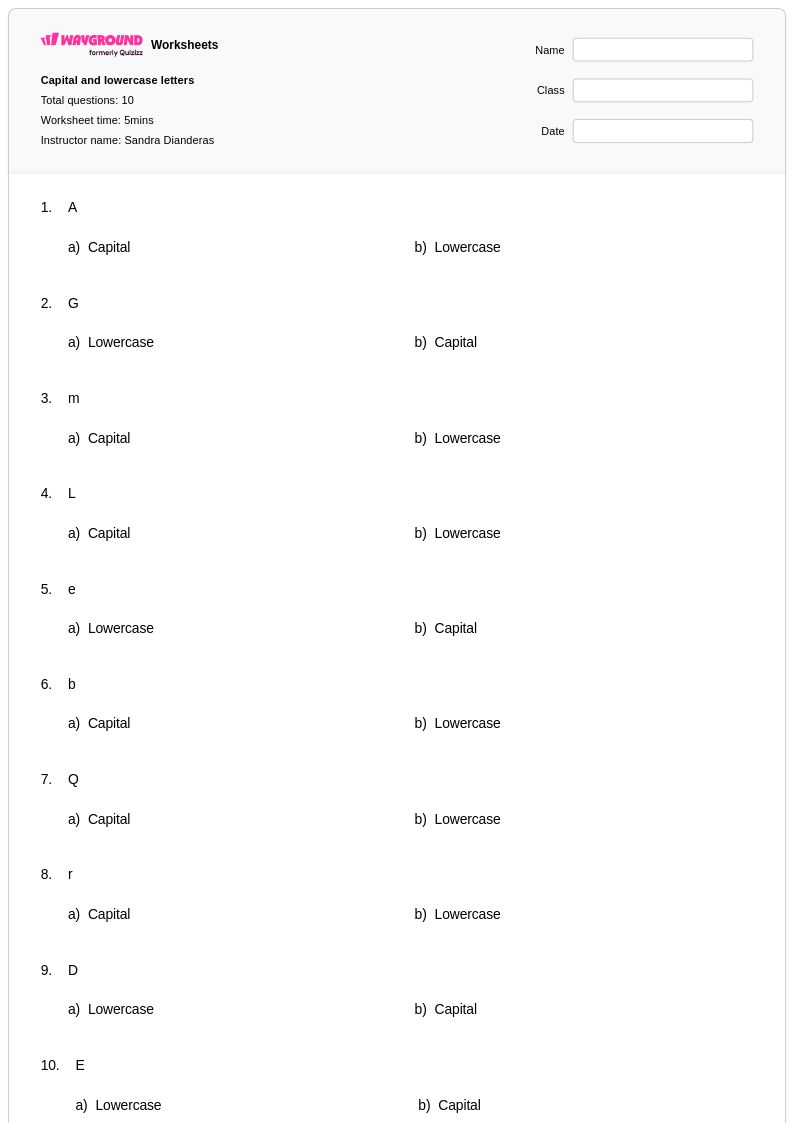
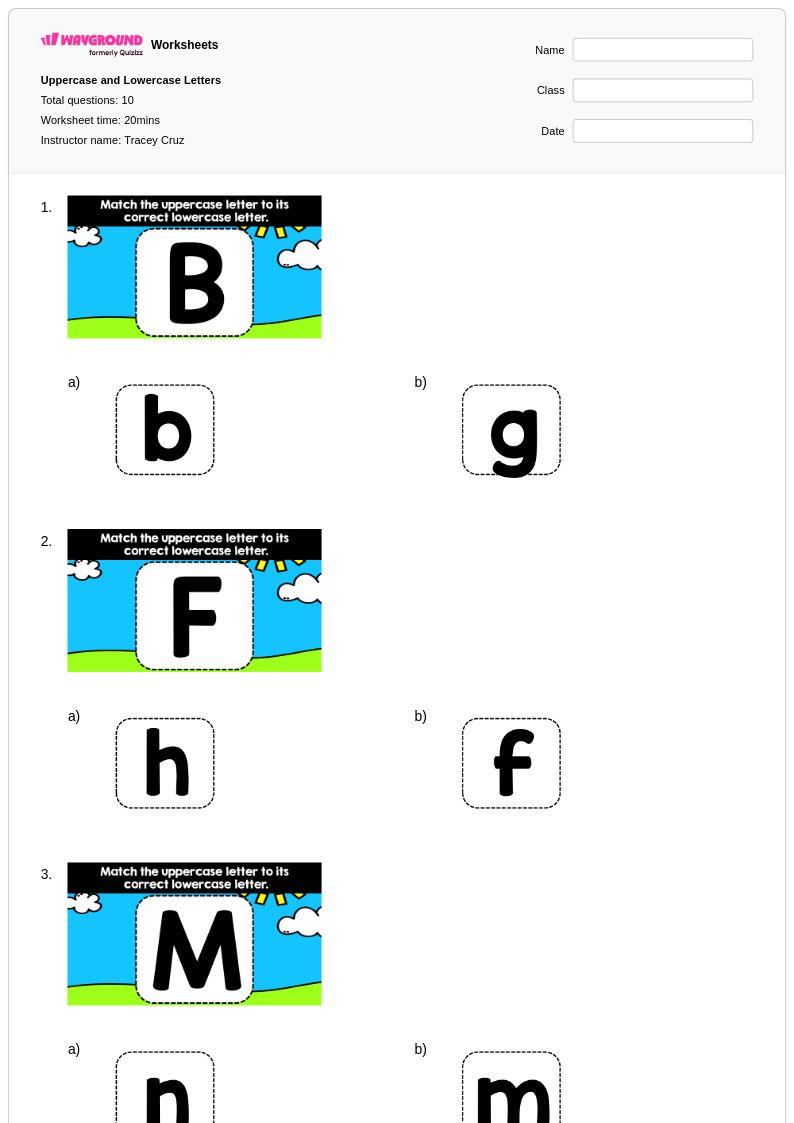
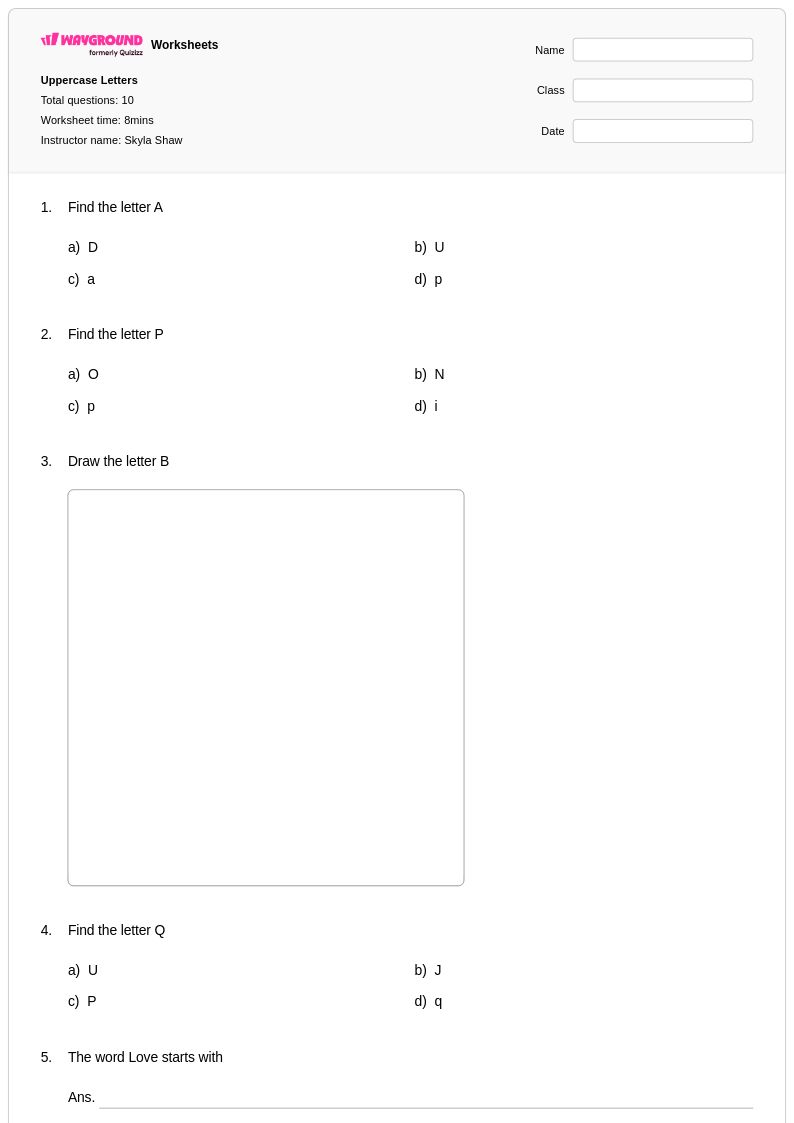
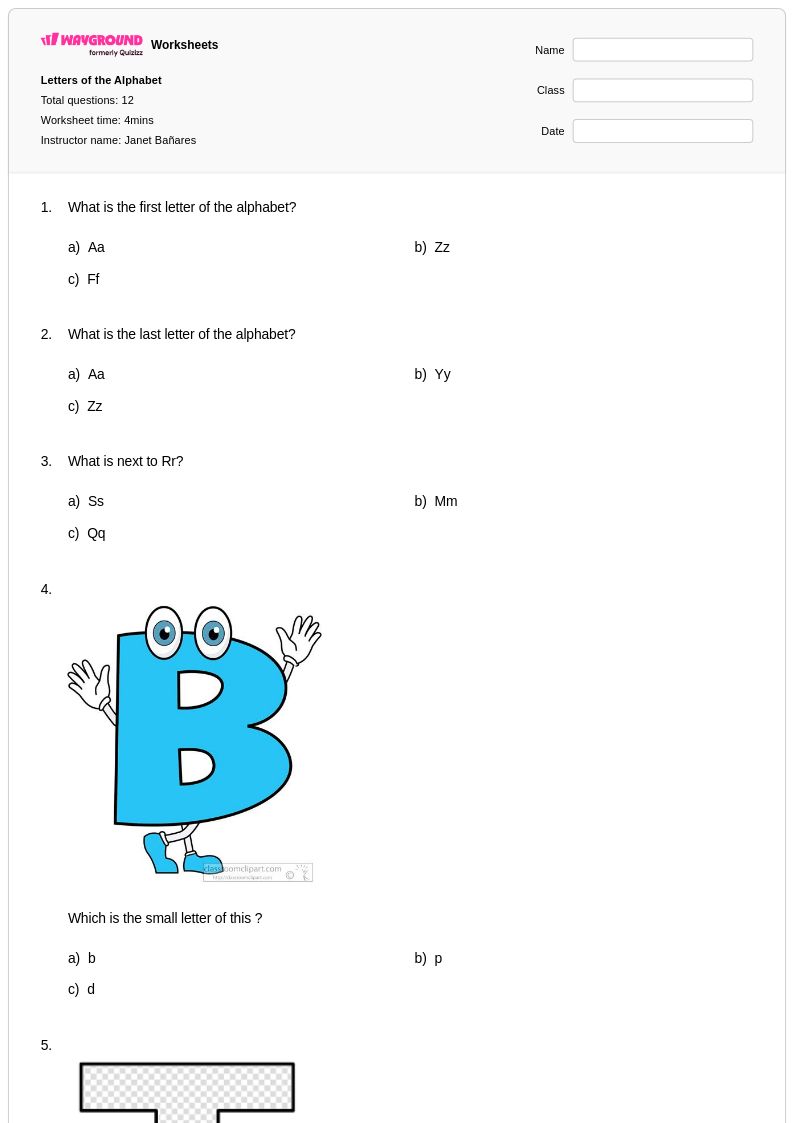
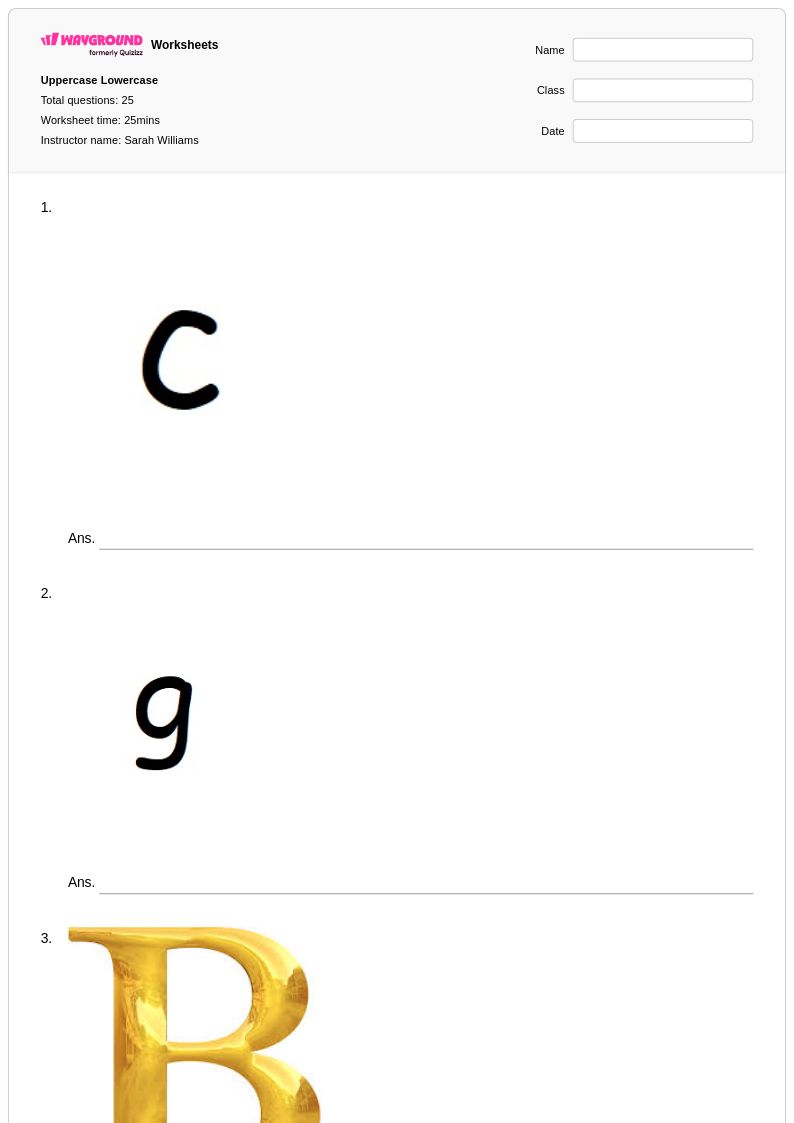
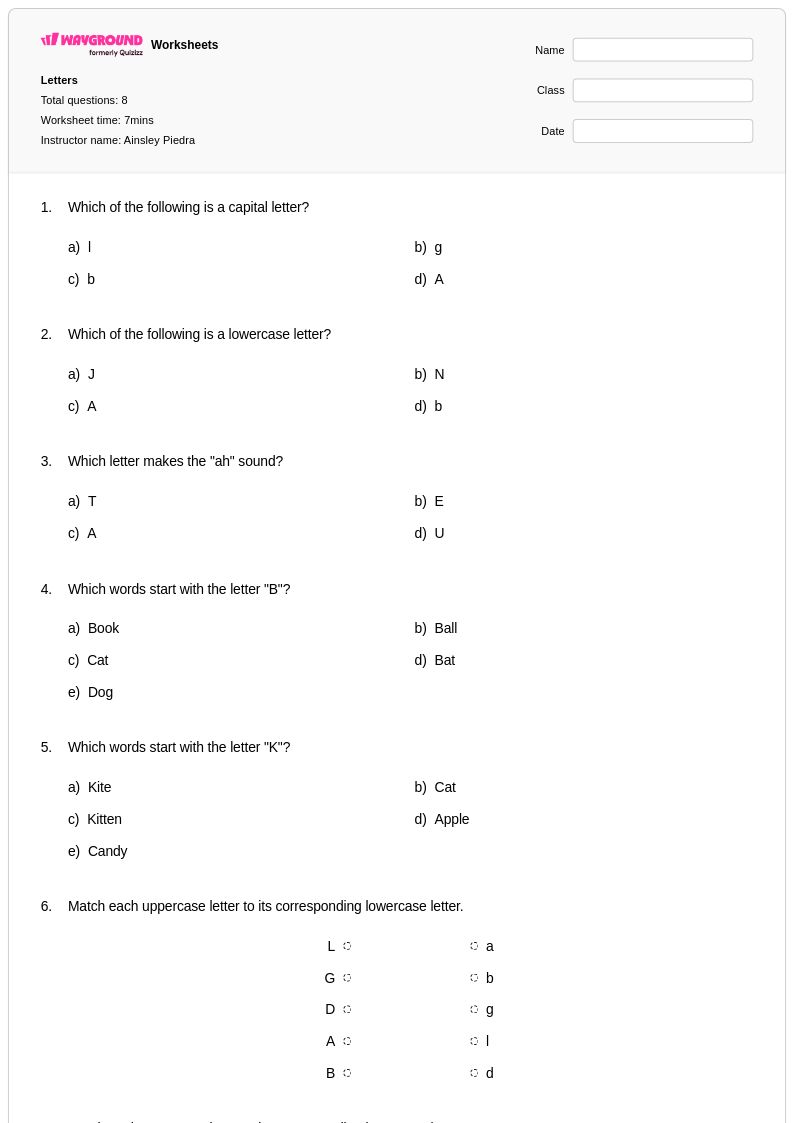
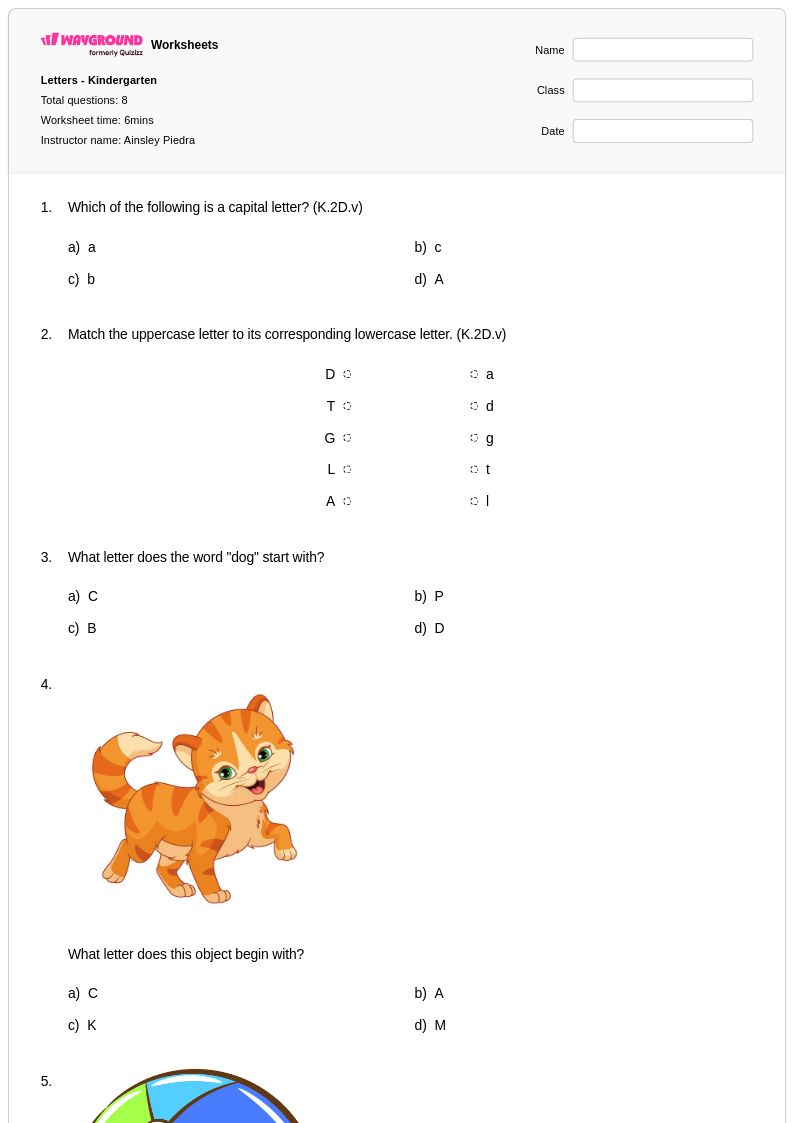
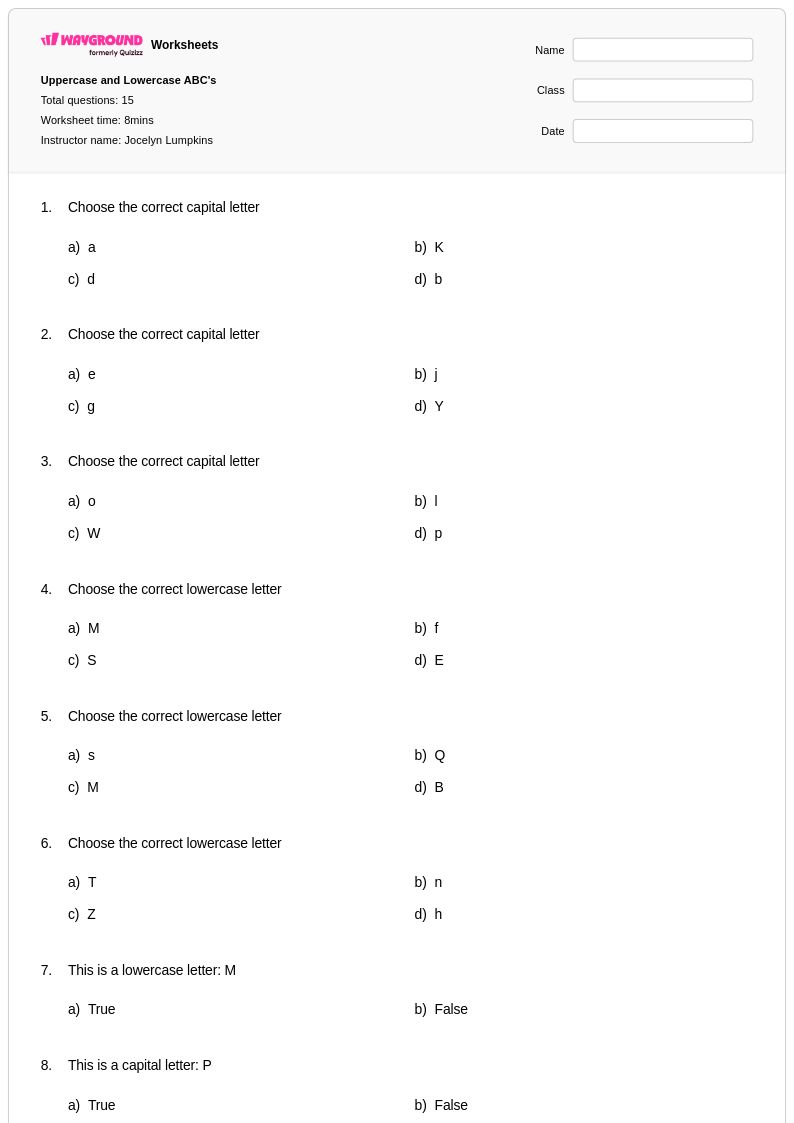
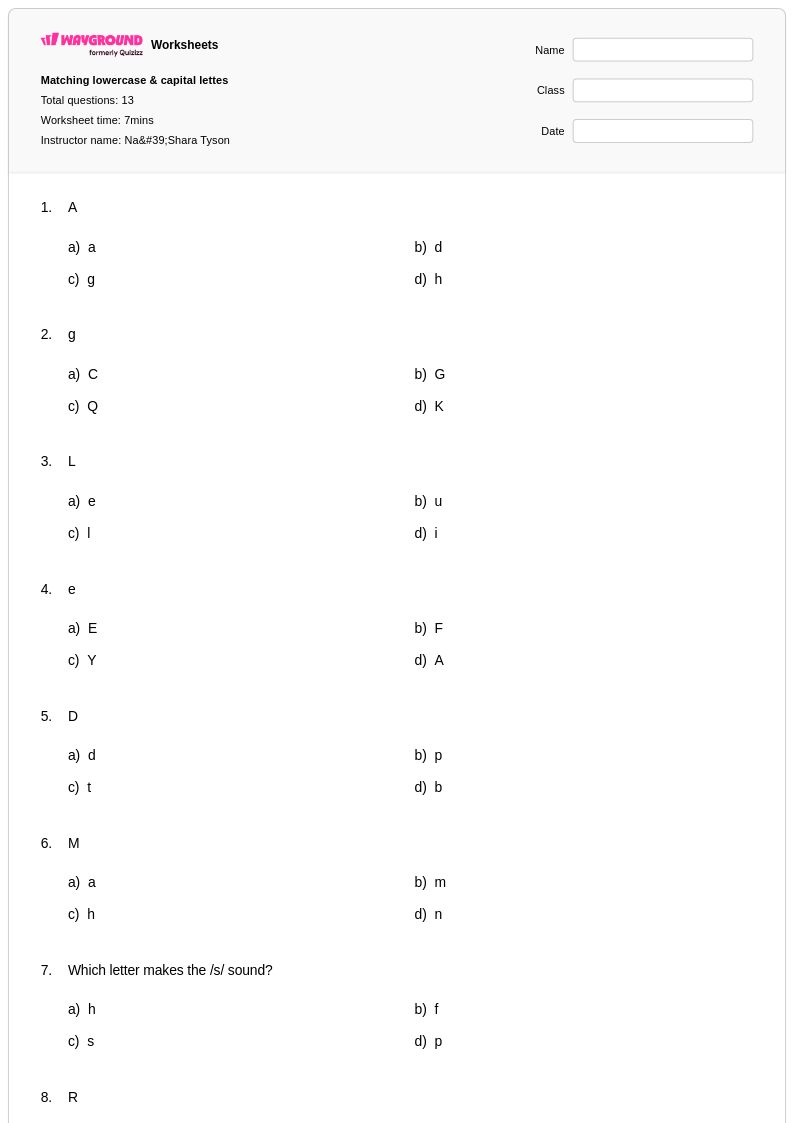
Lowercase letters worksheets for kindergarten students available through Wayground provide essential foundational practice for young learners developing their writing and letter recognition skills. These comprehensive printables focus specifically on helping students master the formation, identification, and proper usage of lowercase letters a through z, which form the backbone of early literacy development. The worksheets strengthen critical pre-reading and writing abilities including proper letter formation, visual discrimination between similar letters, and understanding the relationship between uppercase and lowercase letter pairs. Teachers can access these free resources complete with answer keys, making assessment and progress monitoring straightforward while supporting independent practice that builds confidence in emerging writers.
Wayground's extensive collection of millions of teacher-created lowercase letter worksheets offers educators powerful tools to differentiate instruction and meet diverse kindergarten learning needs. The platform's robust search and filtering capabilities allow teachers to quickly locate materials aligned with specific standards and learning objectives, while customization options enable adaptation of worksheets for remediation, enrichment, or targeted skill practice. Available in both printable pdf format for traditional classroom use and digital formats for technology-integrated learning, these resources streamline lesson planning by providing immediate access to high-quality materials that support systematic phonics instruction. The comprehensive nature of the worksheet library ensures teachers can scaffold learning appropriately, moving students progressively through letter recognition, formation practice, and application activities that build lasting literacy foundations.
FAQs
How do I teach lowercase letters to beginning writers?
Introduce lowercase letters in clusters based on similar stroke patterns rather than alphabetical order — for example, grouping 'c', 'a', 'o', 'e', and 'd' together because they all begin with the same curved stroke. This reduces the number of new motor patterns students need to learn at once. Pair visual modeling with guided tracing before asking students to write independently, and reinforce each letter with its corresponding sound to build phonics connections alongside handwriting fluency.
What exercises help students practice lowercase letter formation?
Tracing activities are the most direct way to build the muscle memory required for consistent letter formation, especially when paired with verbal cues that describe each stroke direction. Follow-up writing practice — where students write letters independently after tracing — helps consolidate the motor pattern. Letter identification exercises that ask students to distinguish lowercase from uppercase also strengthen visual discrimination, which is foundational before fluency can develop.
What mistakes do students commonly make when learning lowercase letters?
The most frequent errors involve letter reversals, particularly with 'b' and 'd', and 'p' and 'q', where students have not yet internalized directional orientation. Students also commonly confuse the relative sizing of letters, placing all characters at the same height rather than respecting ascenders and descenders. Starting strokes from the wrong point on the letter is another widespread issue, which leads to inconsistent formation even when the overall shape looks approximately correct.
How can I help students who confuse lowercase 'b' and 'd'?
A reliable classroom strategy is the 'bed' trick: draw the word 'bed' and show students that the letter 'b' faces right (like the headboard) and 'd' faces left (like the footboard), forming the shape of a bed between them. Consistent verbal directionality cues during writing practice also help, such as 'circle then stick' versus 'stick then circle.' Repeated low-stakes identification exercises — asking students to circle all the 'b's on a page — build automaticity with the distinction before asking them to produce the letters independently.
How do I use lowercase letter worksheets effectively in my classroom?
Lowercase letter worksheets on Wayground are available as printable PDFs for traditional pencil-and-paper practice and in digital formats for technology-integrated classrooms, giving you flexibility in how you assign and collect student work. You can also host them as a quiz directly on Wayground to track student responses in real time. For paper-based use, tracing and writing worksheets work well as warm-up activities or guided practice stations, while digital formats are well-suited for independent or homework assignments.
How do I differentiate lowercase letter practice for students at different skill levels?
For students still developing fine motor control, prioritize tracing worksheets with larger letter models and fewer items per page to reduce fatigue and frustration. Students who have mastered basic formation can move to independent writing practice and letter identification tasks that increase automaticity. On Wayground, teachers can apply accommodations such as read aloud, reduced answer choices, and extended time to individual students, allowing the same worksheet set to serve a range of learners without requiring separate materials for each group.