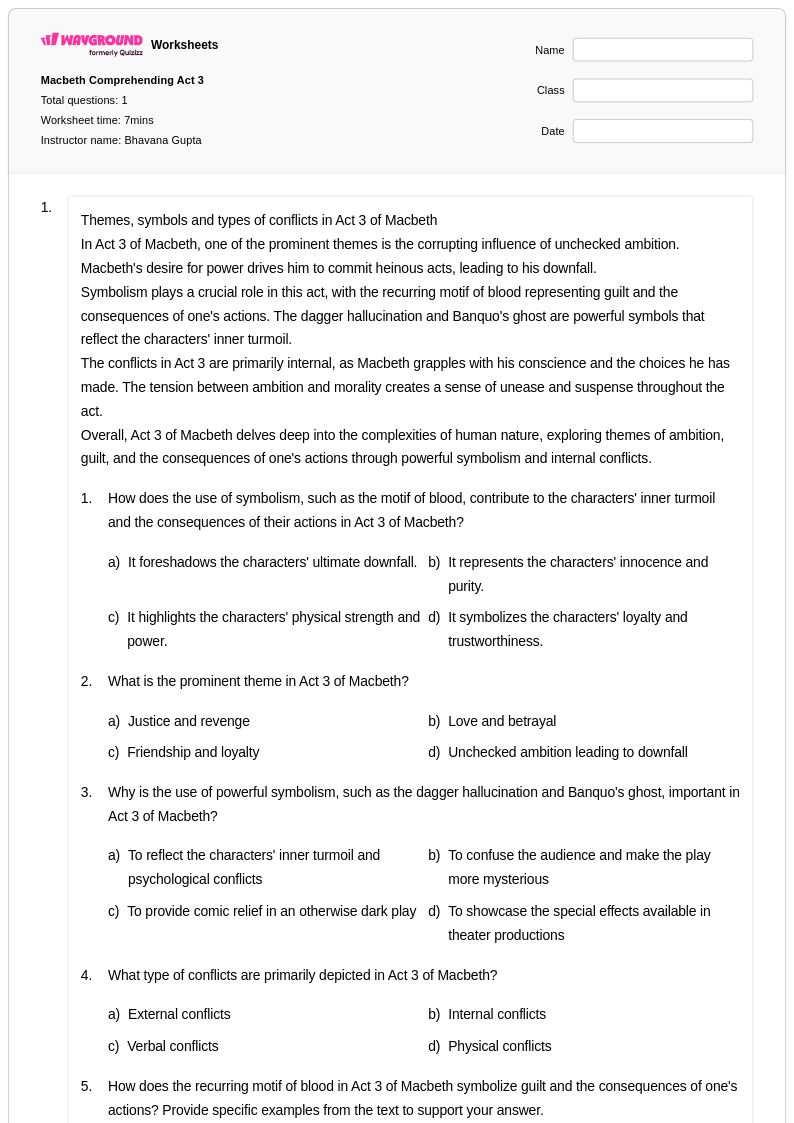
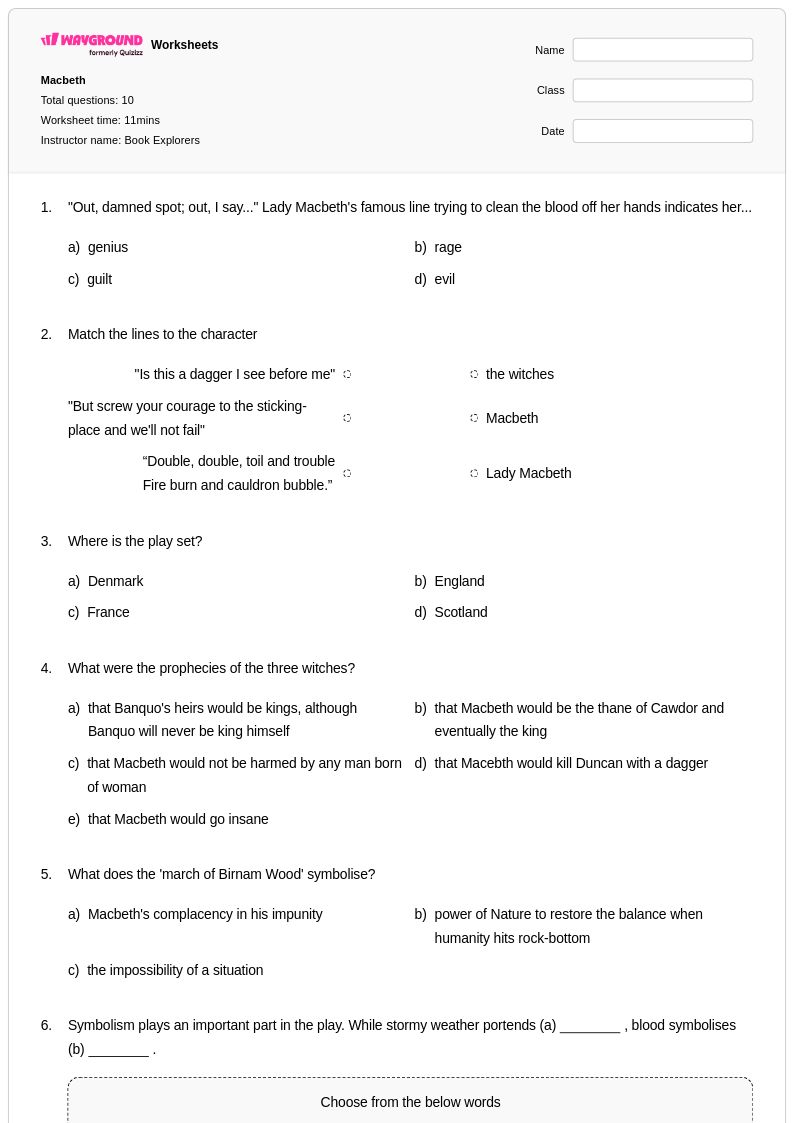
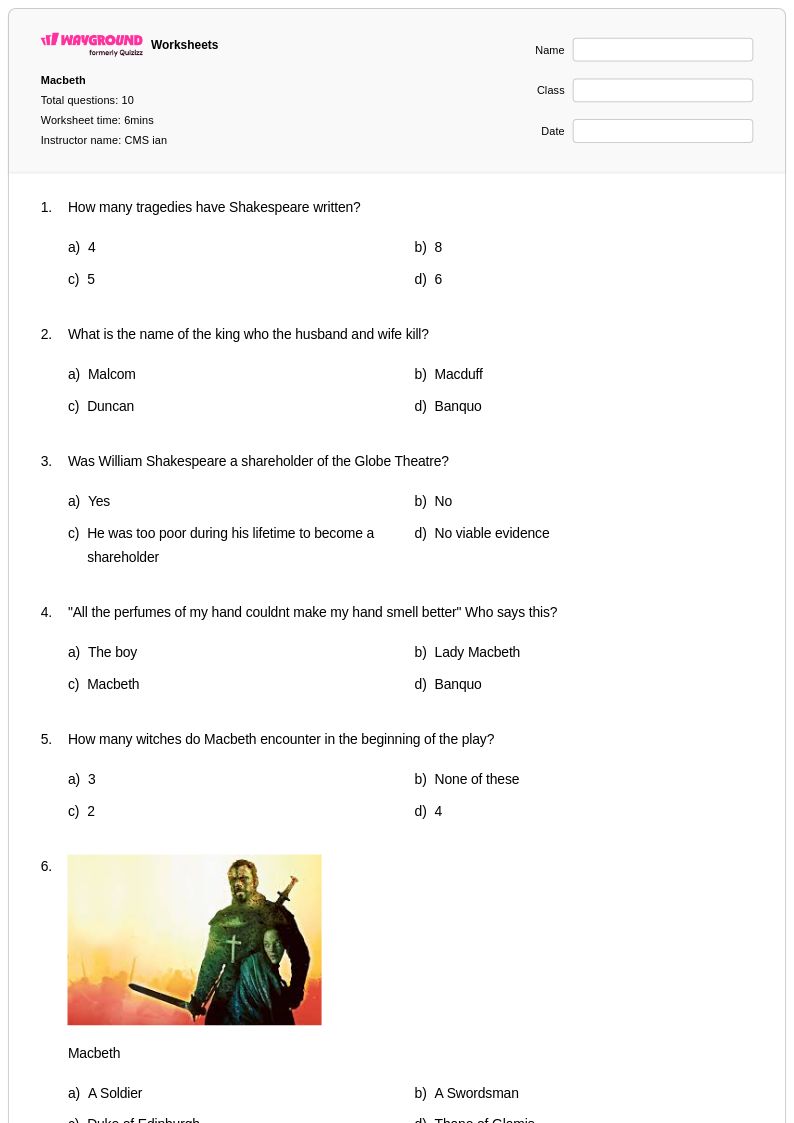
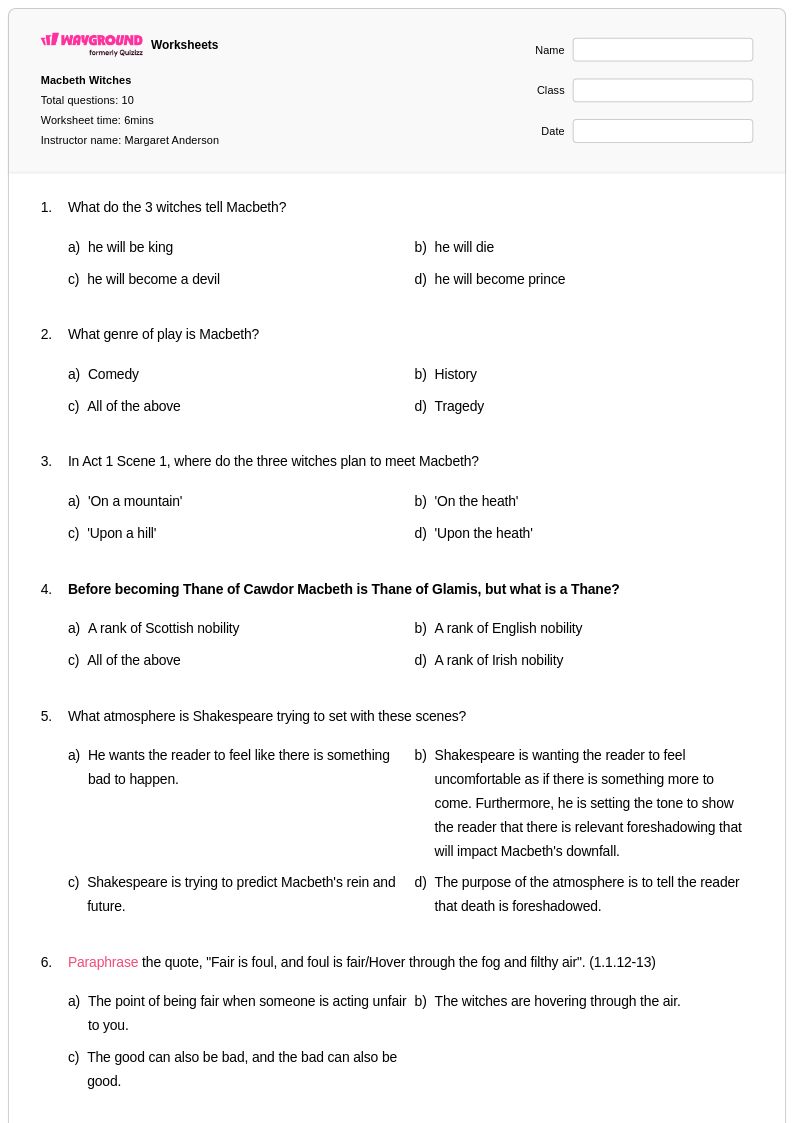
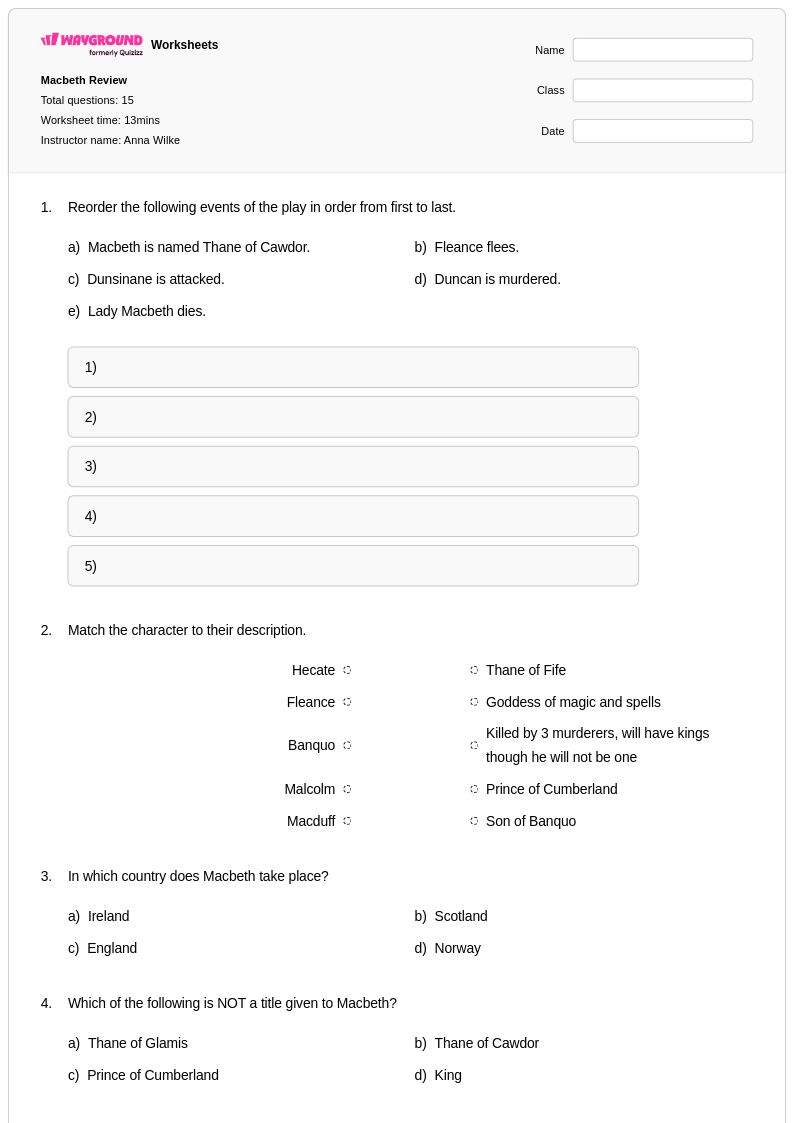
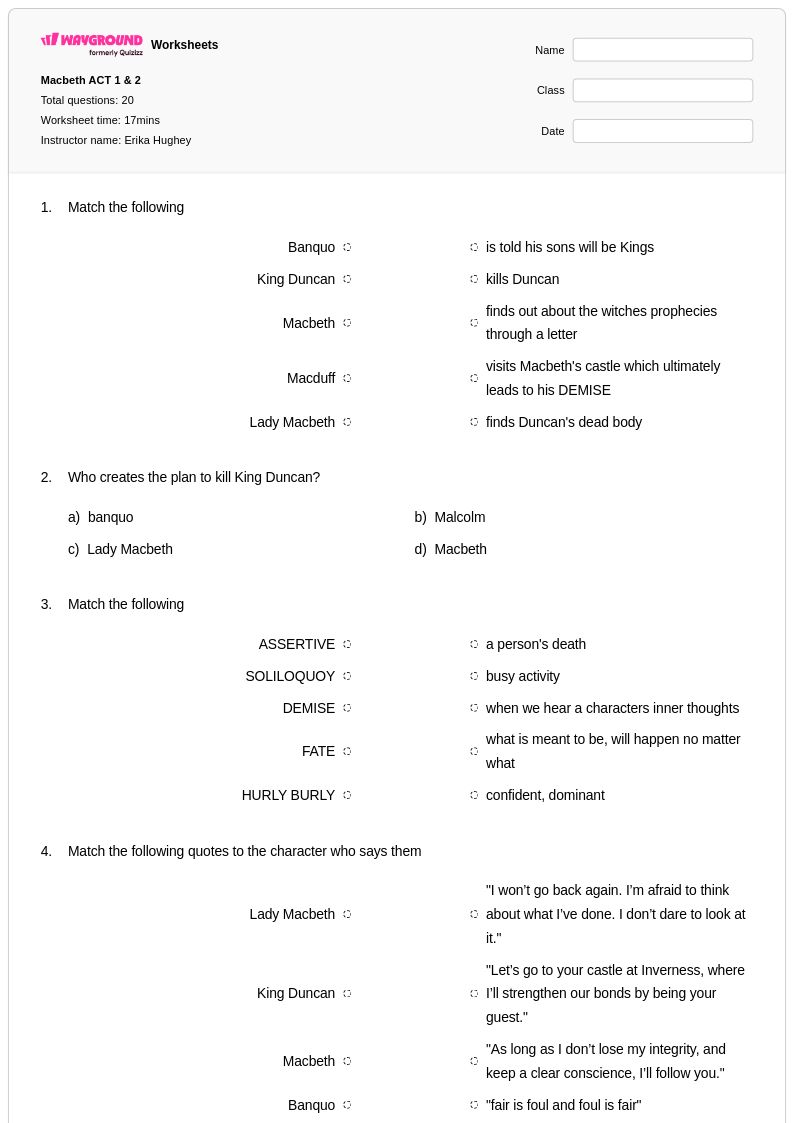
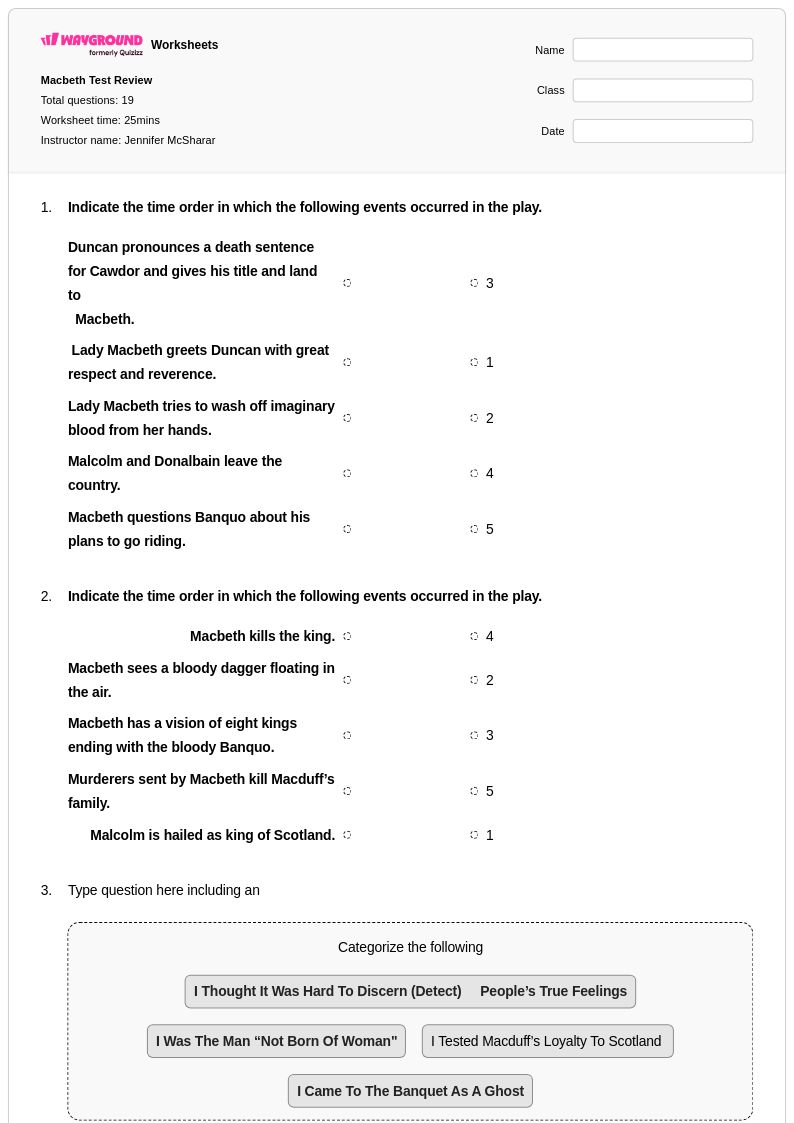
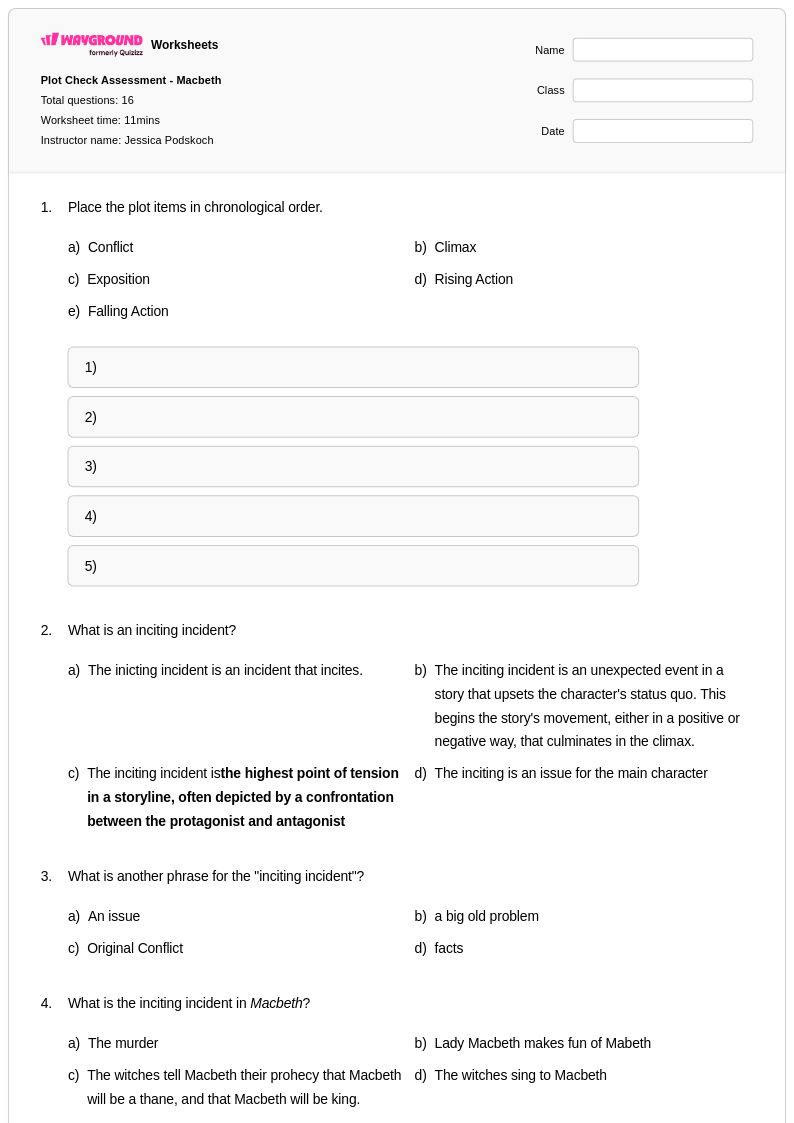
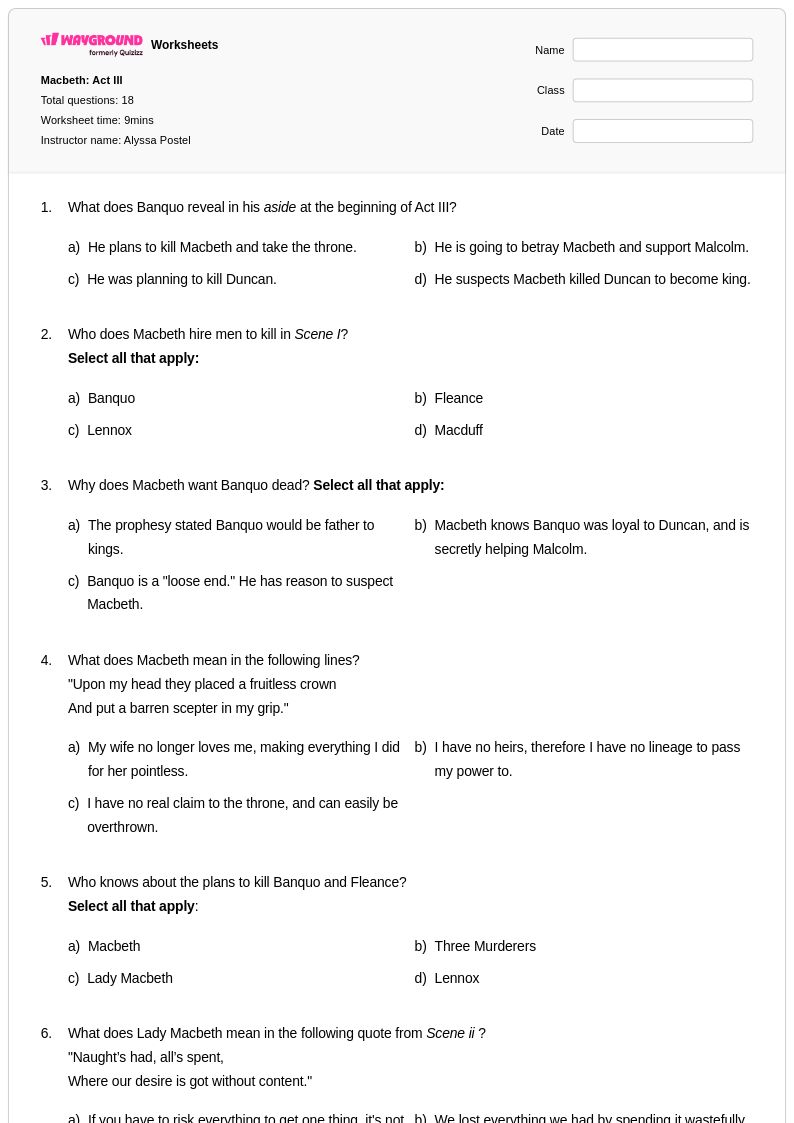
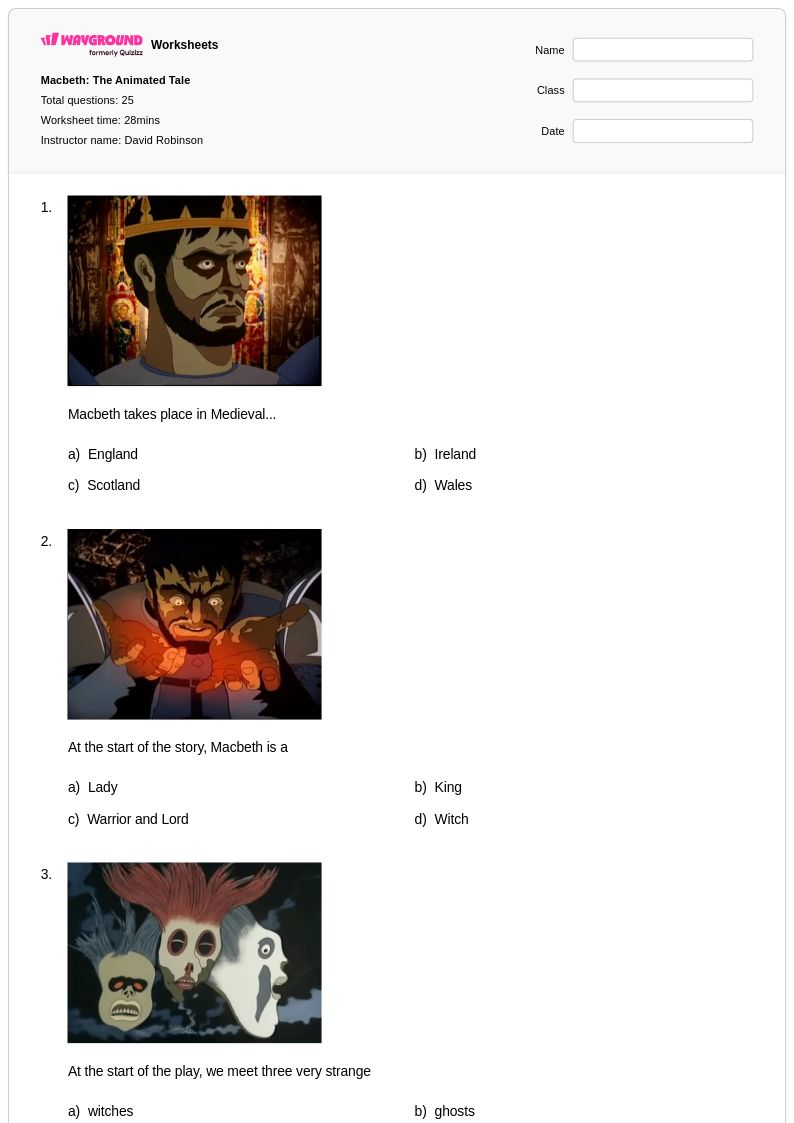
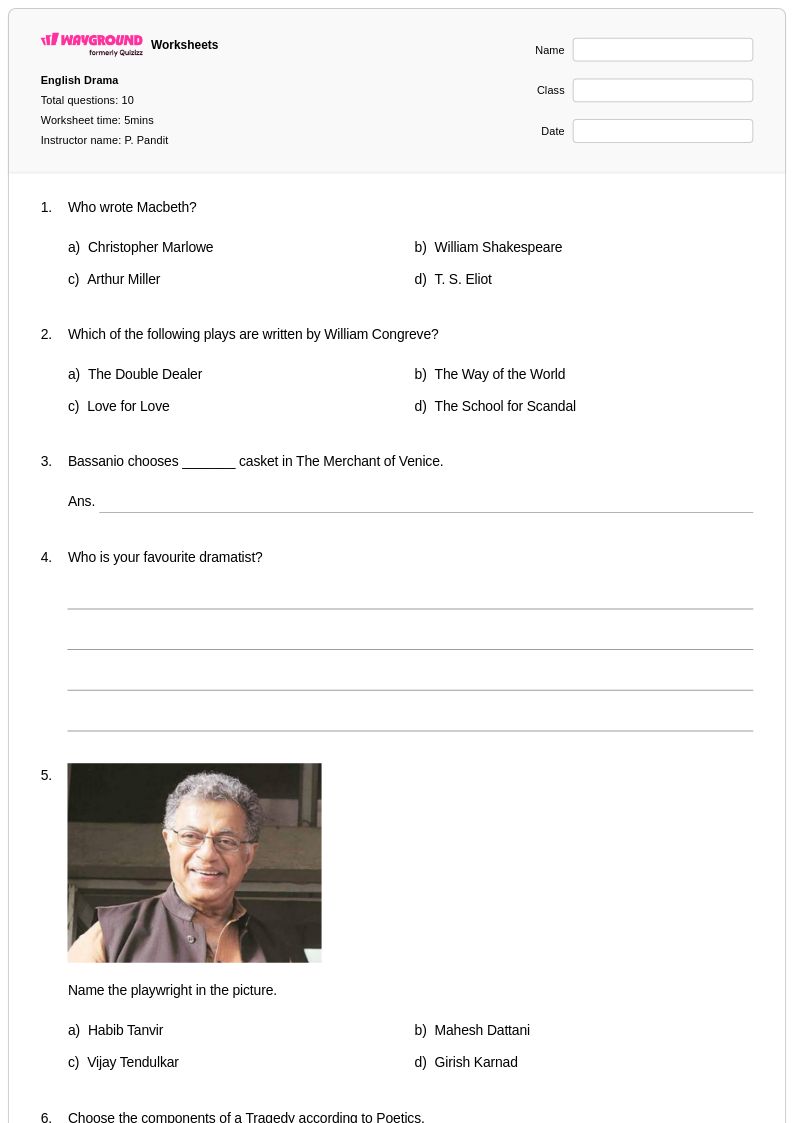
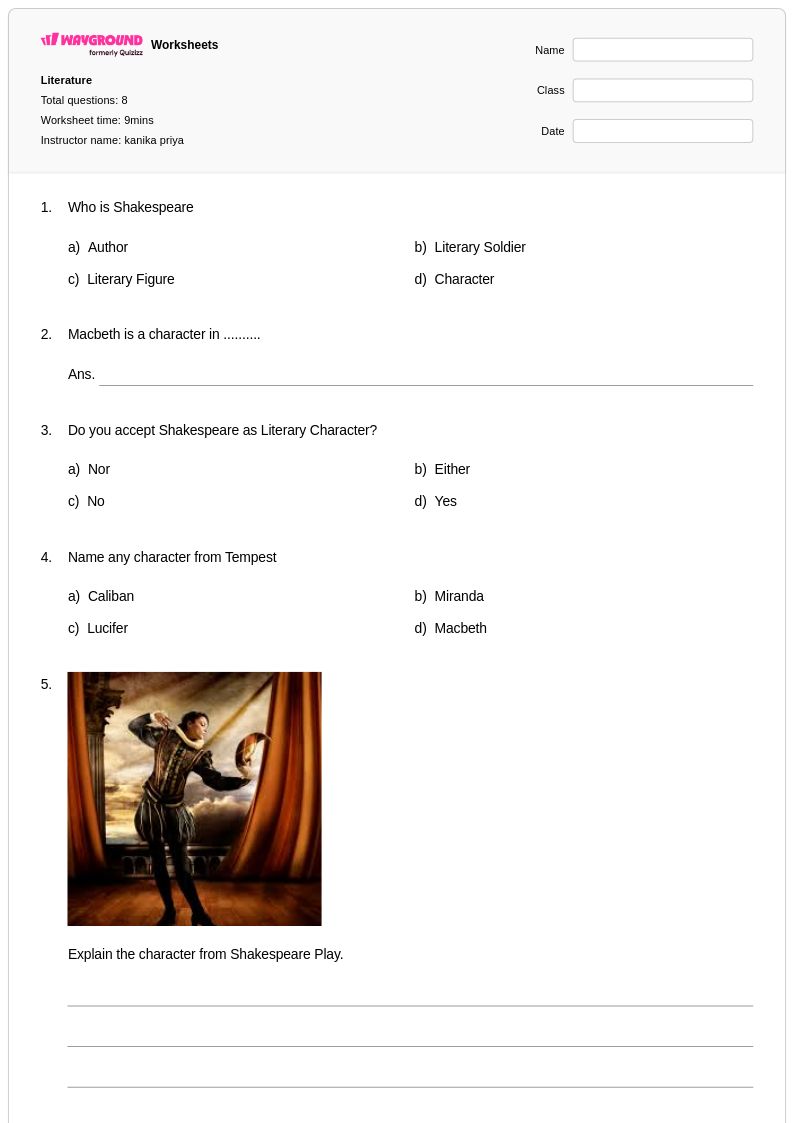
Enhance your students' understanding of Shakespeare's Macbeth with our comprehensive collection of free literature worksheets, featuring engaging printables, practice problems, and detailed answer keys in convenient PDF format.
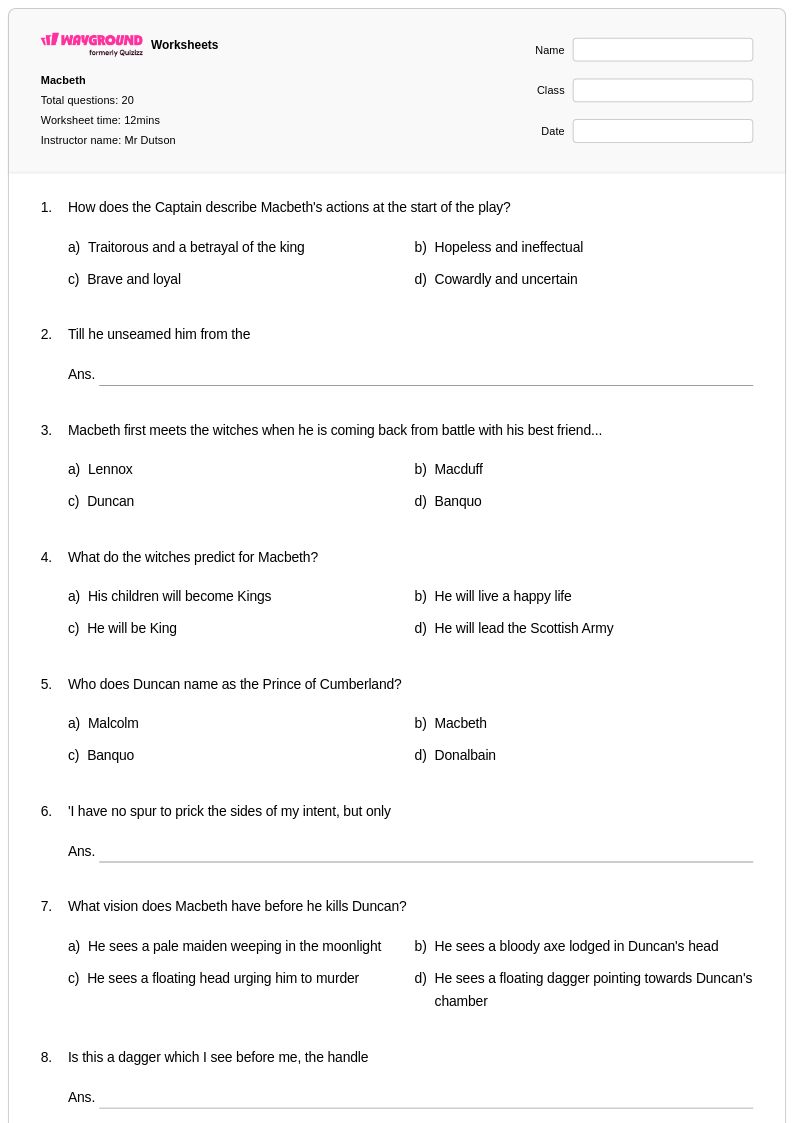
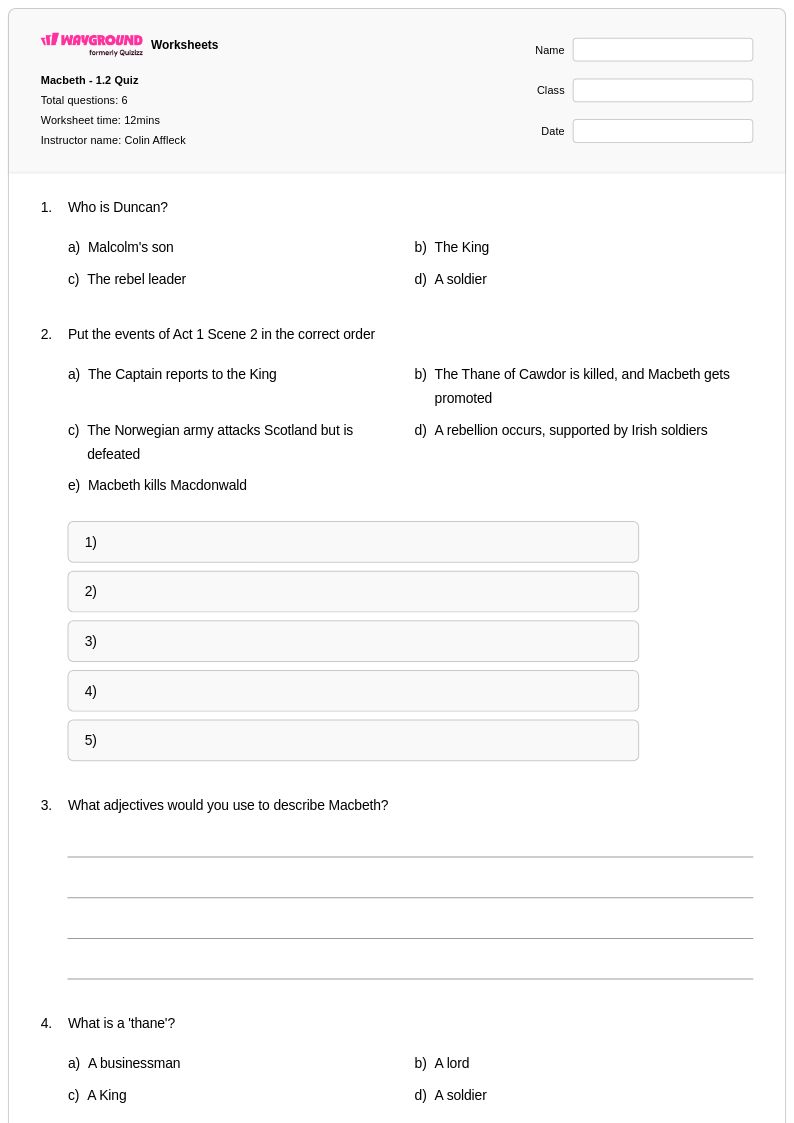
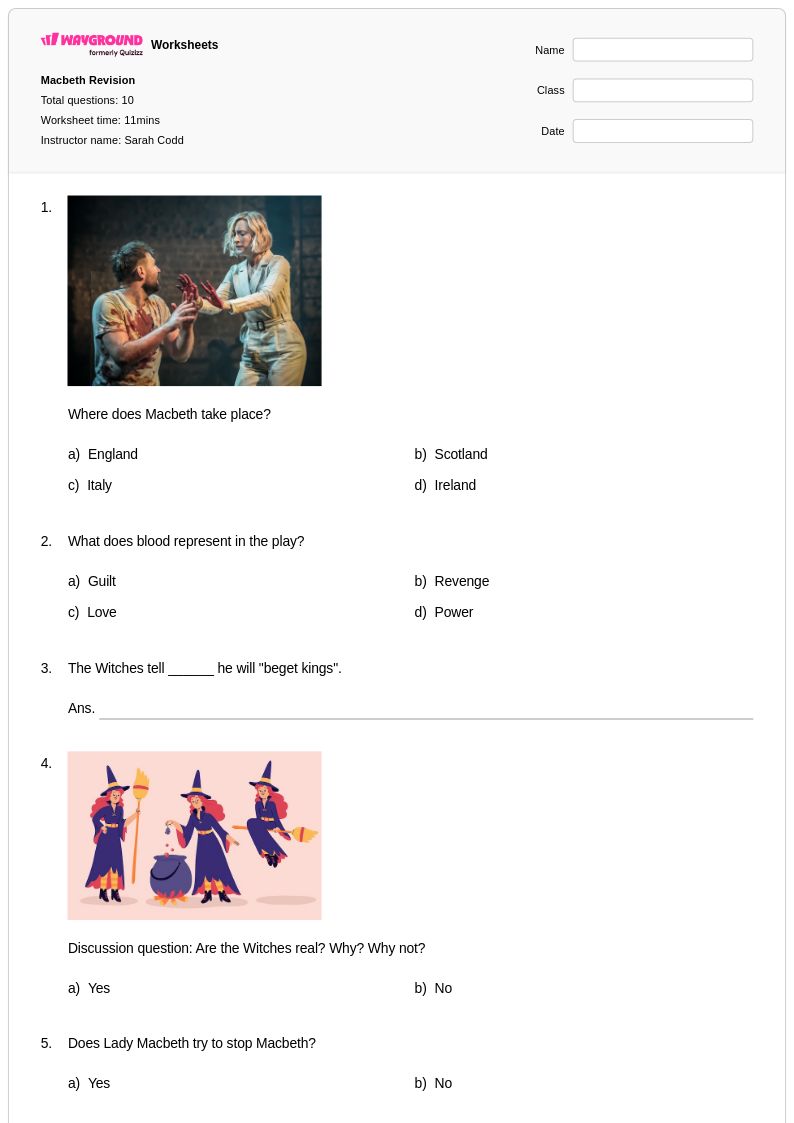
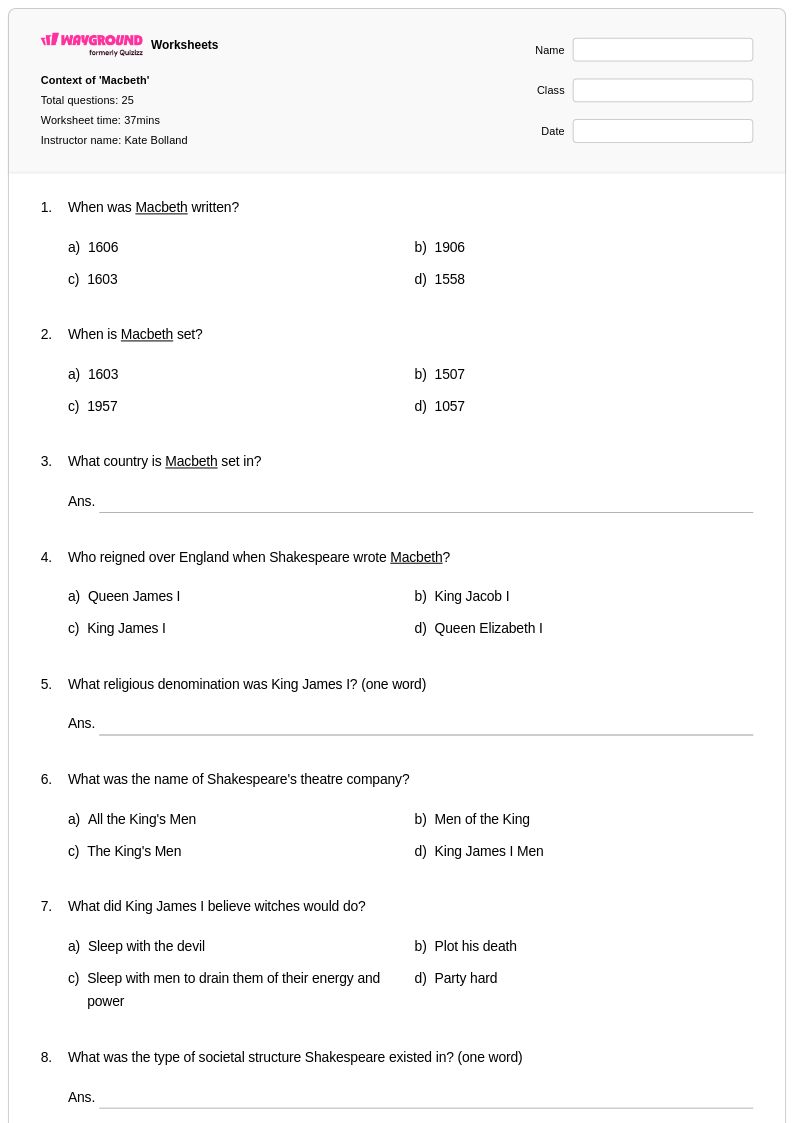
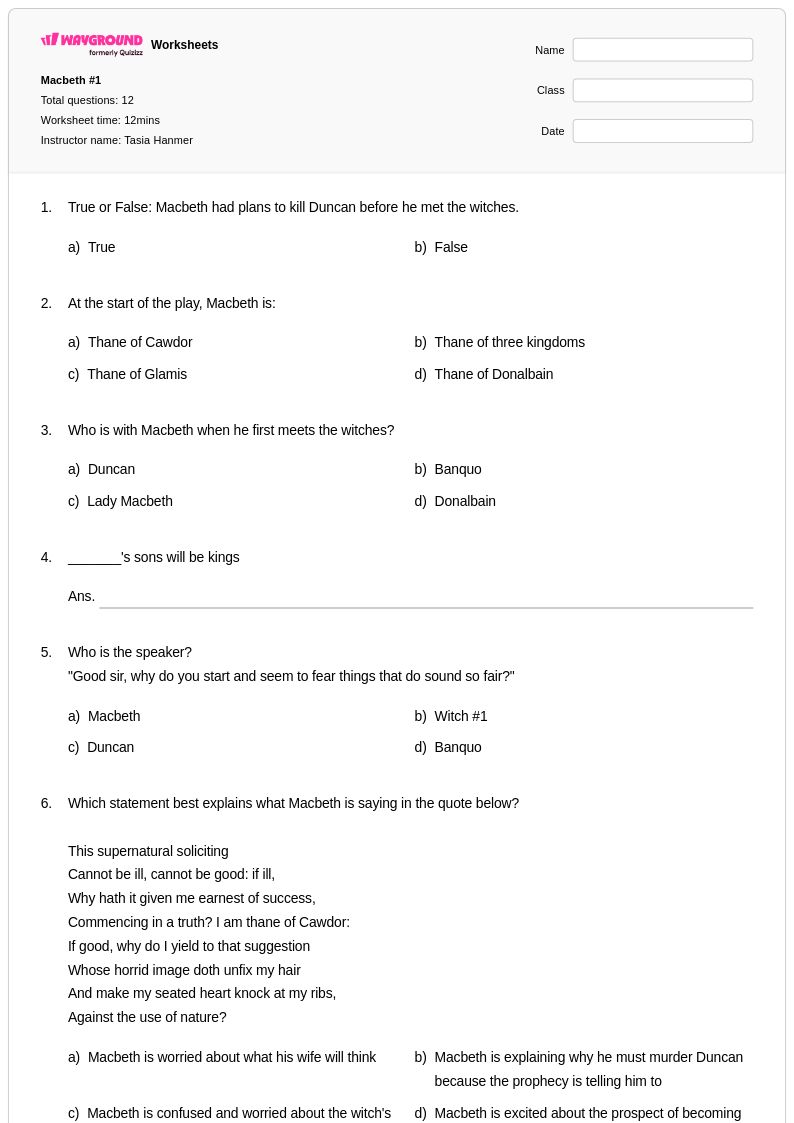
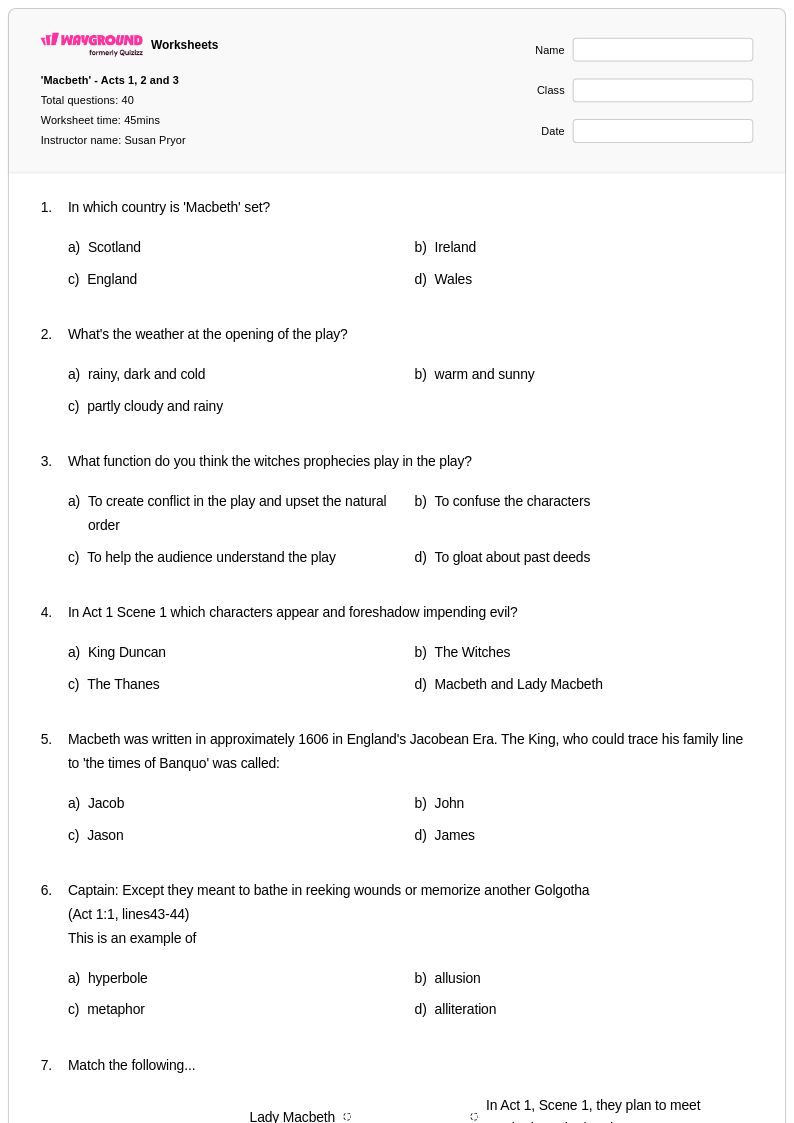
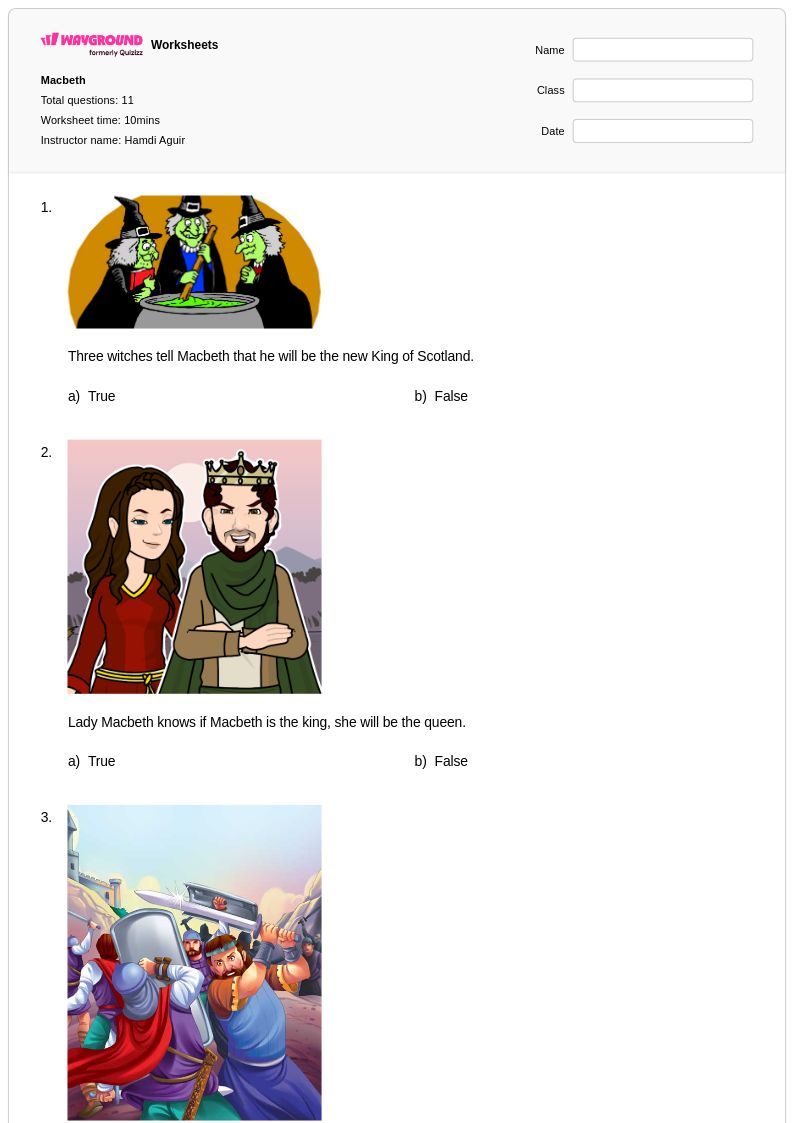
Macbeth worksheets available through Wayground (formerly Quizizz) provide comprehensive resources for analyzing Shakespeare's tragic masterpiece and developing critical literary analysis skills. These educational materials guide students through character development, thematic exploration, plot analysis, and close reading of key scenes and soliloquies from the play. The worksheets strengthen essential skills including textual evidence citation, symbolism interpretation, dramatic irony recognition, and understanding of Shakespearean language and literary devices. Teachers can access complete answer keys alongside these practice problems, with materials available as free printables in convenient pdf formats that support both individual study and collaborative classroom activities focused on this cornerstone of English literature.
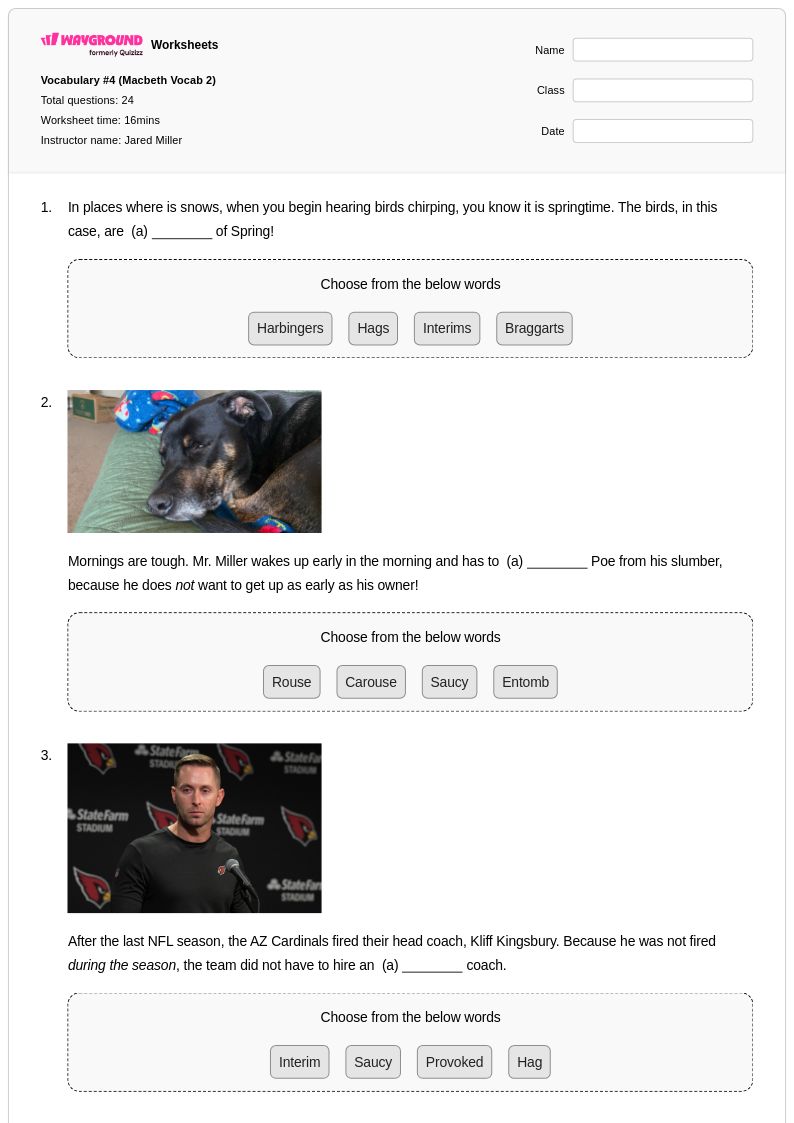
Wayground (formerly Quizizz) empowers educators with an extensive collection of teacher-created Macbeth resources drawn from millions of available materials, featuring robust search and filtering capabilities that allow precise targeting of specific scenes, themes, or analytical approaches. The platform's standards alignment ensures worksheets meet curriculum requirements while differentiation tools enable teachers to customize content difficulty and focus areas to match diverse student needs. These flexible resources are available in both printable and digital formats, including downloadable pdfs, making them ideal for lesson planning, targeted remediation of literary analysis weaknesses, enrichment activities for advanced readers, and systematic skill practice in Shakespearean text comprehension and interpretation across various learning environments.
FAQs
How do I teach Macbeth to high school students?
Teaching Macbeth effectively requires grounding students in Shakespearean language before diving into plot and theme. Start by front-loading key vocabulary and contextualizing the historical setting of 11th-century Scotland and Jacobean-era anxieties about kingship and witchcraft. Close reading activities focused on key soliloquies — such as 'Tomorrow and tomorrow and tomorrow' — help students engage with dramatic irony, ambition, and moral deterioration in a manageable, scene-by-scene structure. Pairing character development tracking with thematic analysis (e.g., the corruption of power, the role of fate versus free will) gives students analytical frameworks they can apply throughout the play.
What are good exercises for practicing literary analysis skills with Macbeth?
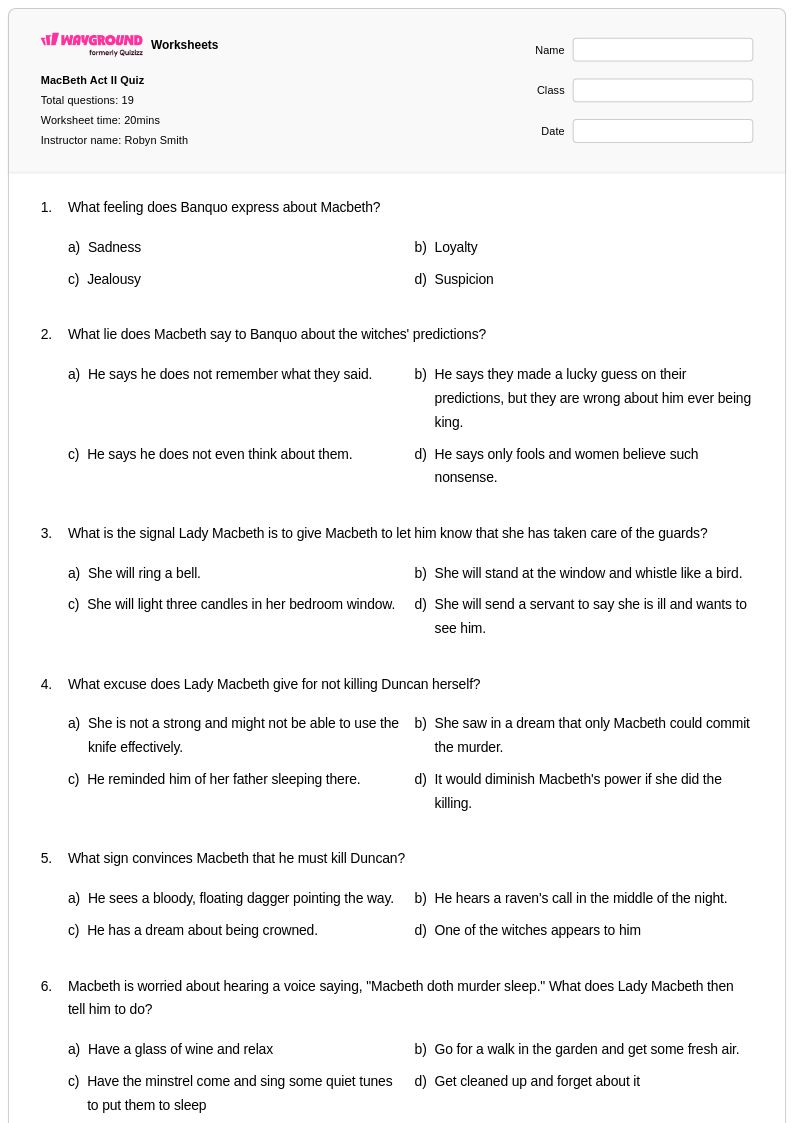
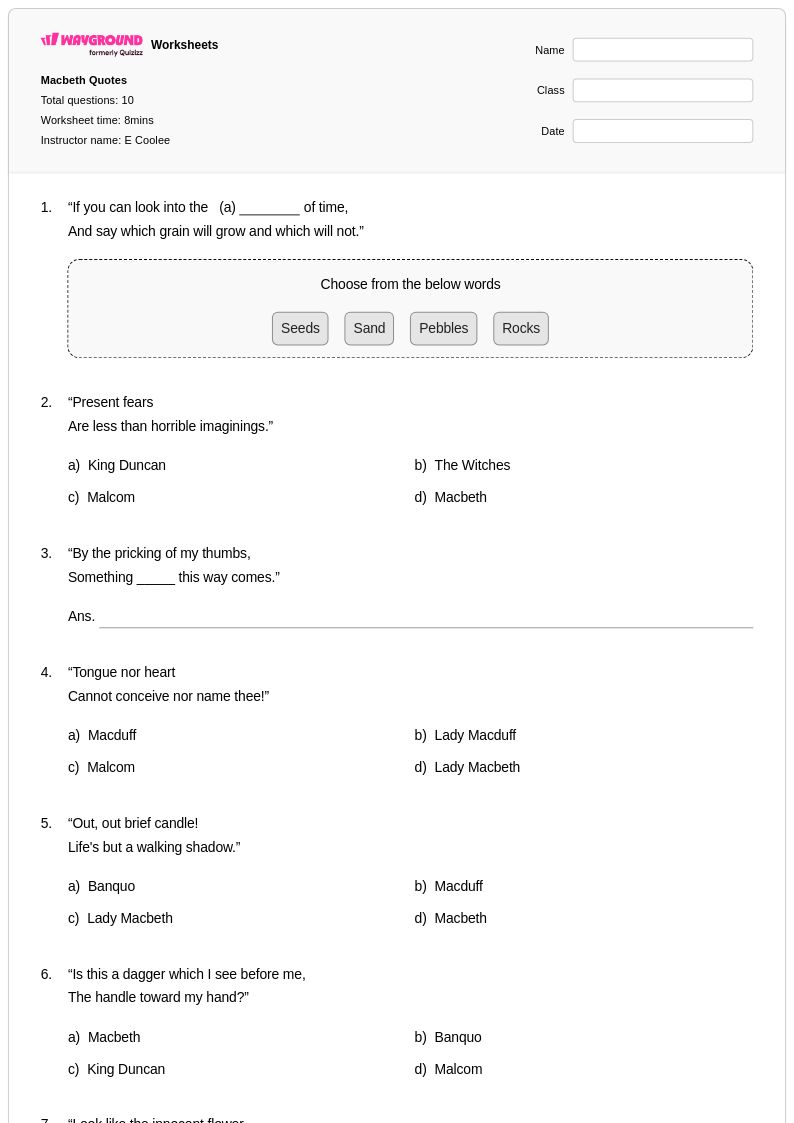
Effective practice exercises for Macbeth include textual evidence citation drills, where students identify and annotate specific lines to support claims about character motivation or theme. Symbolism interpretation tasks — such as analyzing blood, light and darkness, or sleep imagery — build close reading habits that transfer across literary texts. Soliloquy analysis worksheets that ask students to paraphrase, identify literary devices, and explain dramatic function are particularly useful for reinforcing Shakespearean language comprehension. These structured tasks move students from surface-level plot understanding to nuanced literary analysis.
What mistakes do students commonly make when analyzing Macbeth?
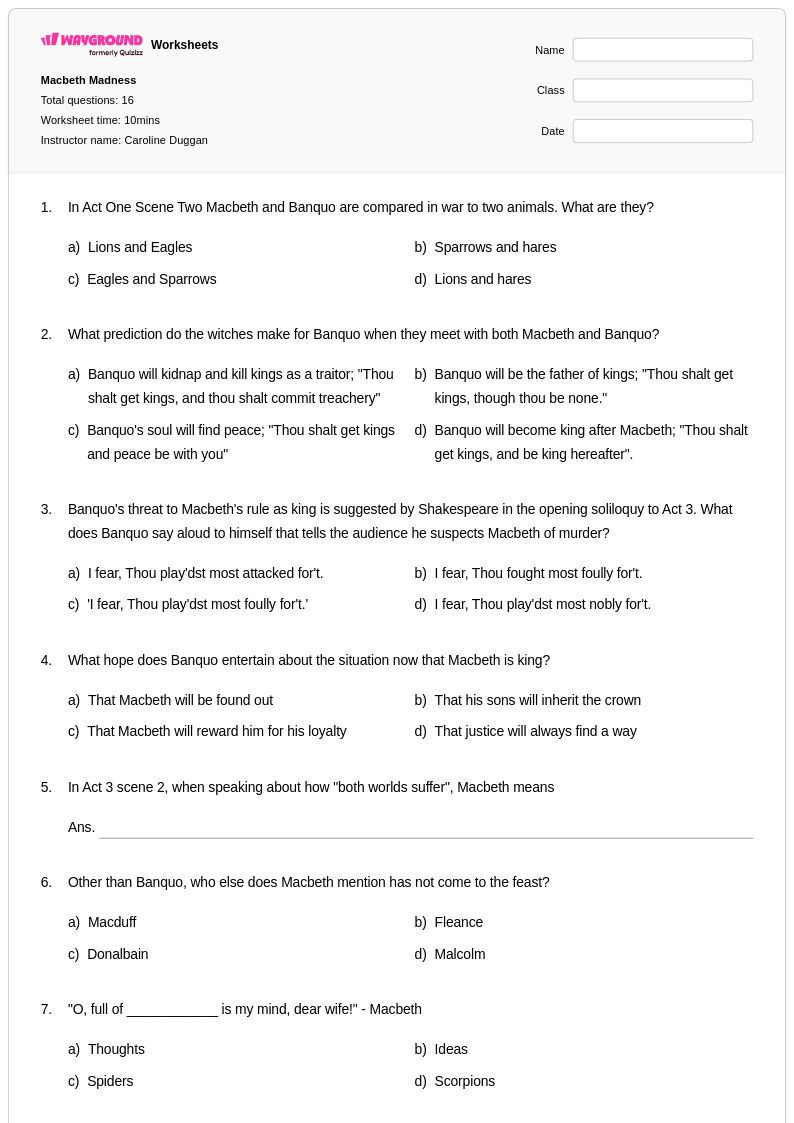
One of the most common errors is treating Macbeth as simply a villain rather than a tragic hero, missing the internal conflict and moral complexity that define his arc. Students also frequently confuse dramatic irony with situational irony, or fail to recognize how Shakespeare uses the witches' equivocation to underscore themes of appearance versus reality. Another persistent misconception is summarizing plot rather than analyzing how specific language choices, imagery, or structure convey meaning. Teachers should build in explicit instruction on the difference between evidence and analysis to address this pattern.
How can I use Macbeth worksheets in my classroom?
Macbeth worksheets on Wayground are available as printable PDFs for traditional classroom use and in digital formats for technology-integrated environments, making them adaptable for both in-person and remote instruction. Teachers can use them for guided close reading during class, independent practice, or as structured homework assignments tied to specific acts or scenes. On Wayground, worksheets can also be hosted as a quiz, allowing teachers to track student responses and identify comprehension gaps in real time. This flexibility makes them useful across lesson planning, targeted remediation, and enrichment for advanced readers.
How do I differentiate Macbeth instruction for students with different reading levels?
Differentiation for Macbeth often involves adjusting text complexity, scaffolding, and task demand simultaneously. For struggling readers, glossed excerpts, guided annotation templates, and reduced-scope analysis questions help build access to the text without removing rigor. On Wayground, teachers can apply student-level accommodations including Read Aloud for students who benefit from audio support, reduced answer choices to lower cognitive load on comprehension checks, and adjustable font sizes and reading themes through Reading Mode. These settings can be applied to individual students while the rest of the class receives standard settings, keeping differentiation unobtrusive and manageable.
What themes in Macbeth are most important for students to understand?
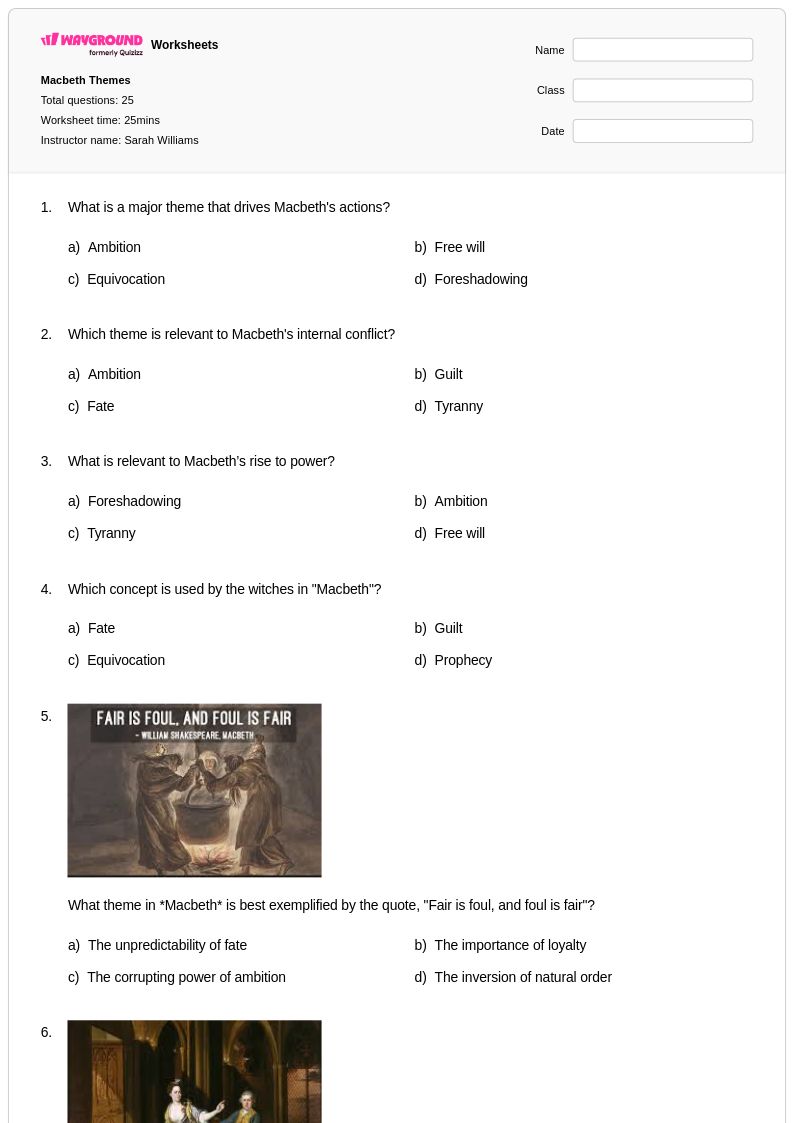
The central themes in Macbeth that warrant the most instructional attention are the corrupting nature of unchecked ambition, the tension between fate and personal agency, and the psychological consequences of guilt. The appearance versus reality theme — most visible in the witches' prophecies and Lady Macbeth's sleepwalking scene — is also critical for understanding how Shakespeare constructs dramatic irony throughout the play. Teaching these themes in tandem with specific textual evidence ensures students develop the analytical depth required for essay writing and higher-order comprehension assessments.