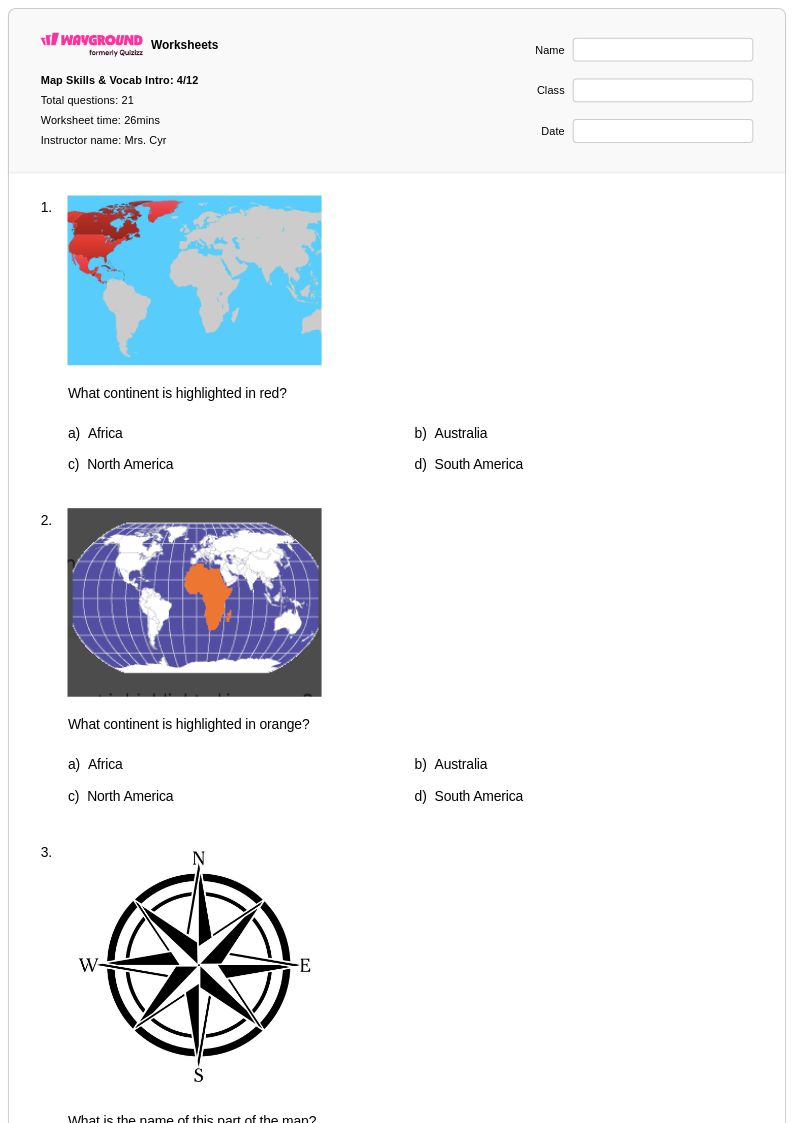
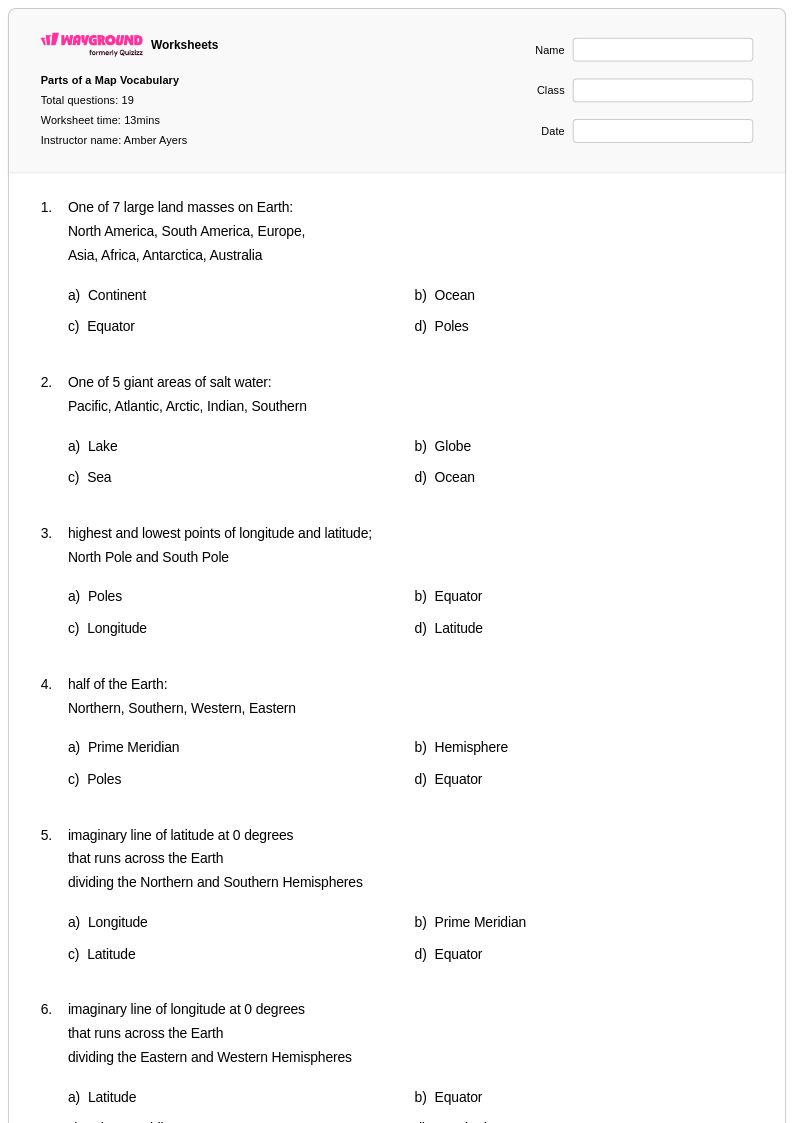
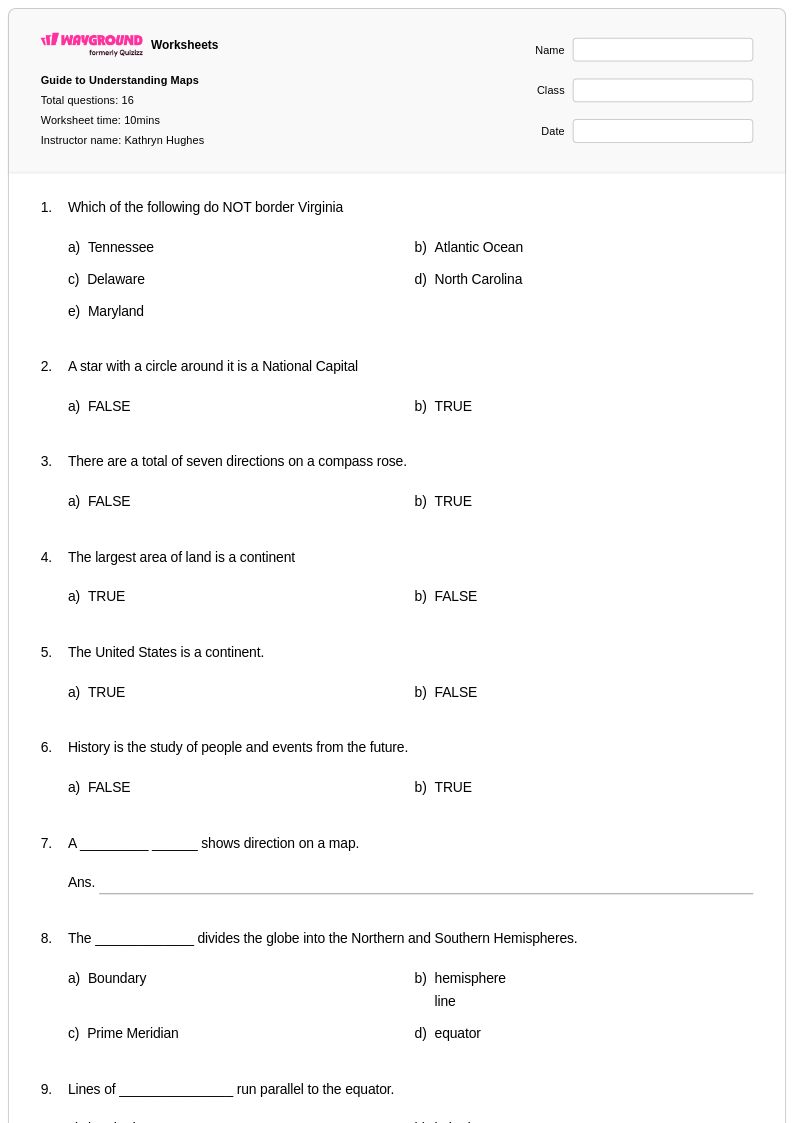
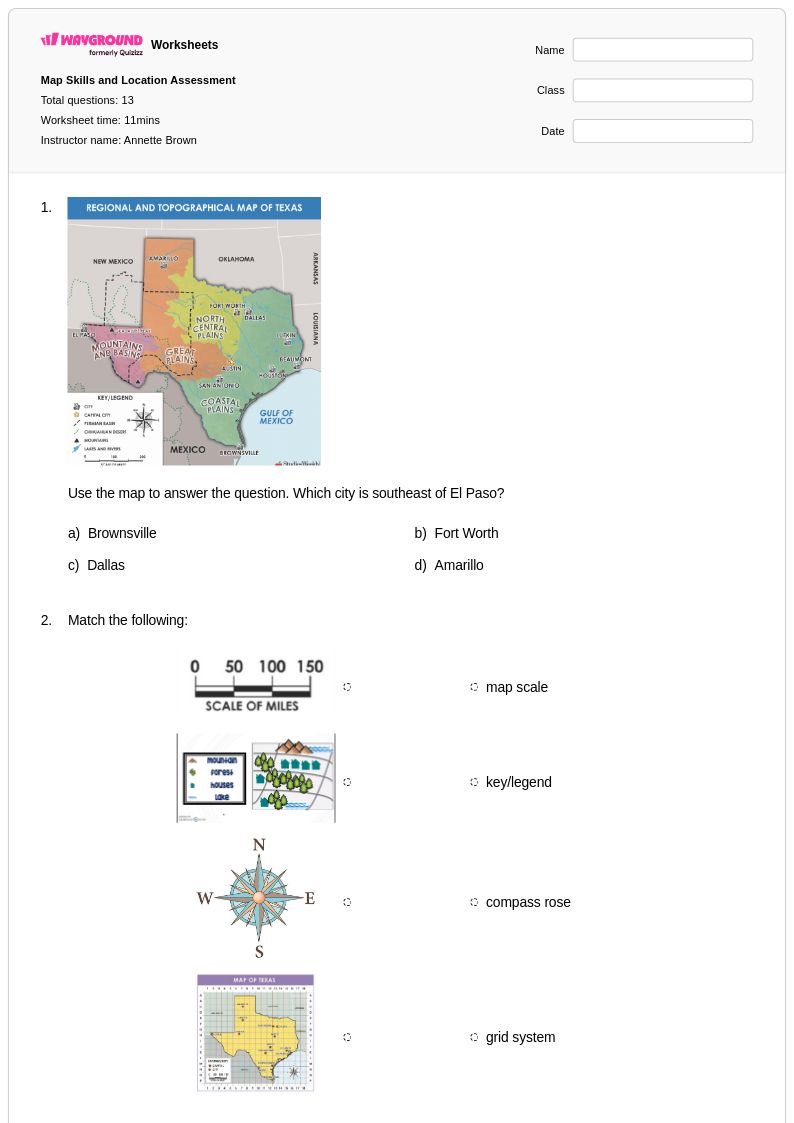
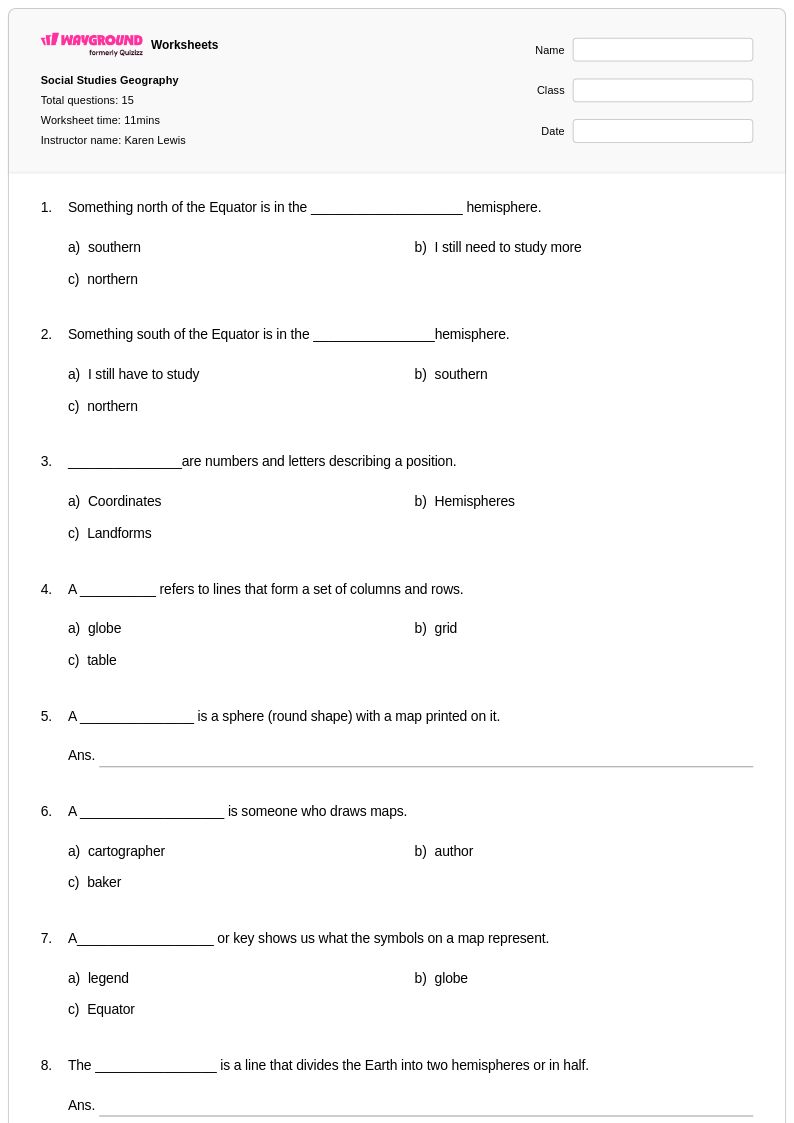
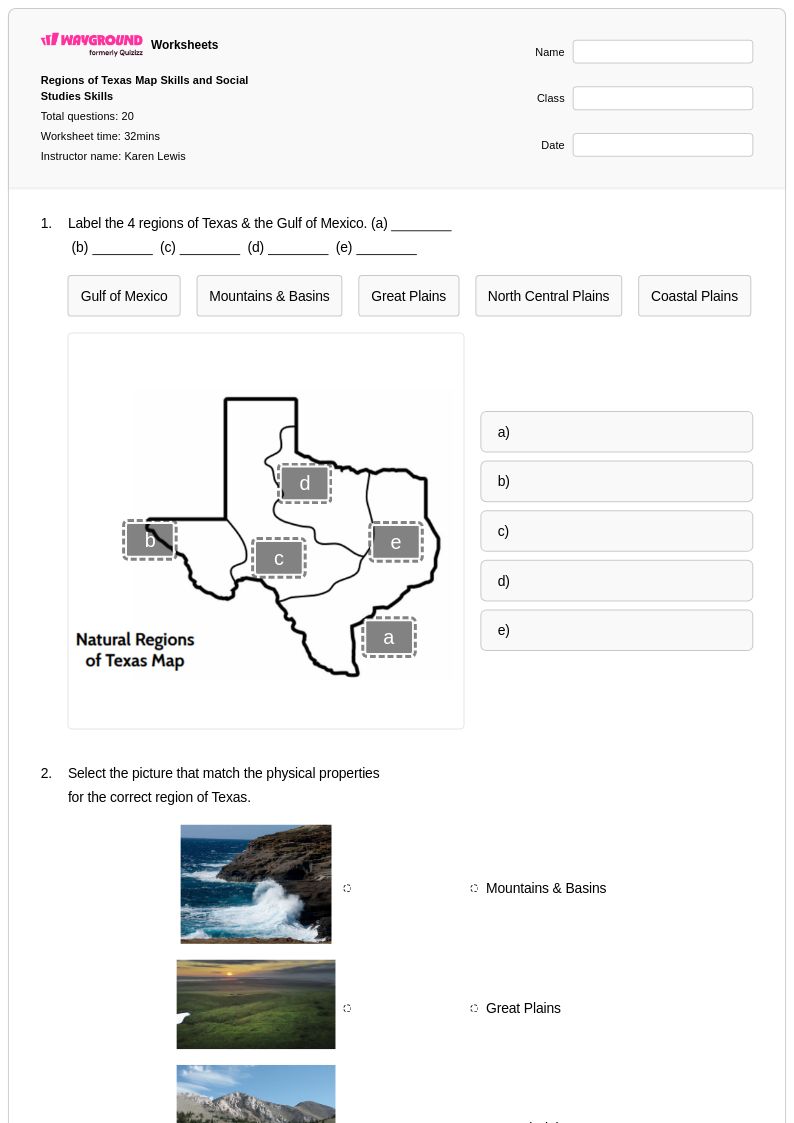
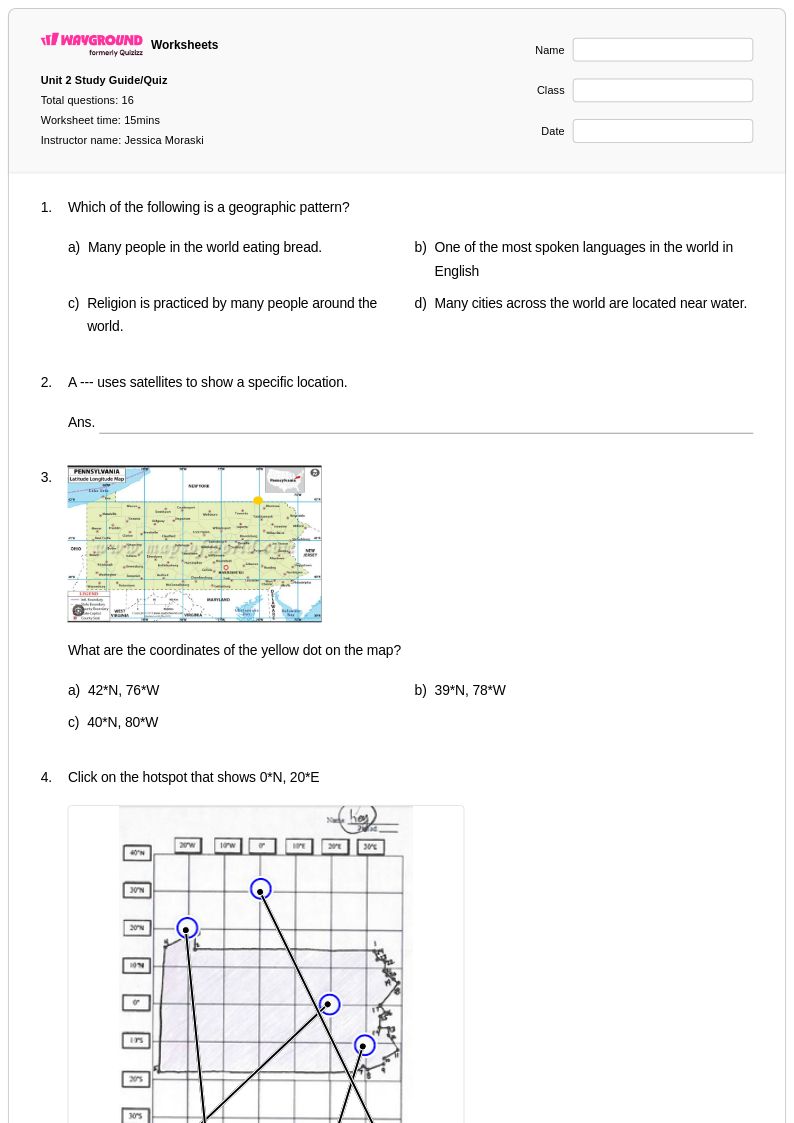
Explore our Class 4 map scale worksheets and printables that help students master measuring distances and understanding scale ratios through engaging practice problems, complete with answer keys and free PDF downloads.
Explore printable Map Scale worksheets for Class 4
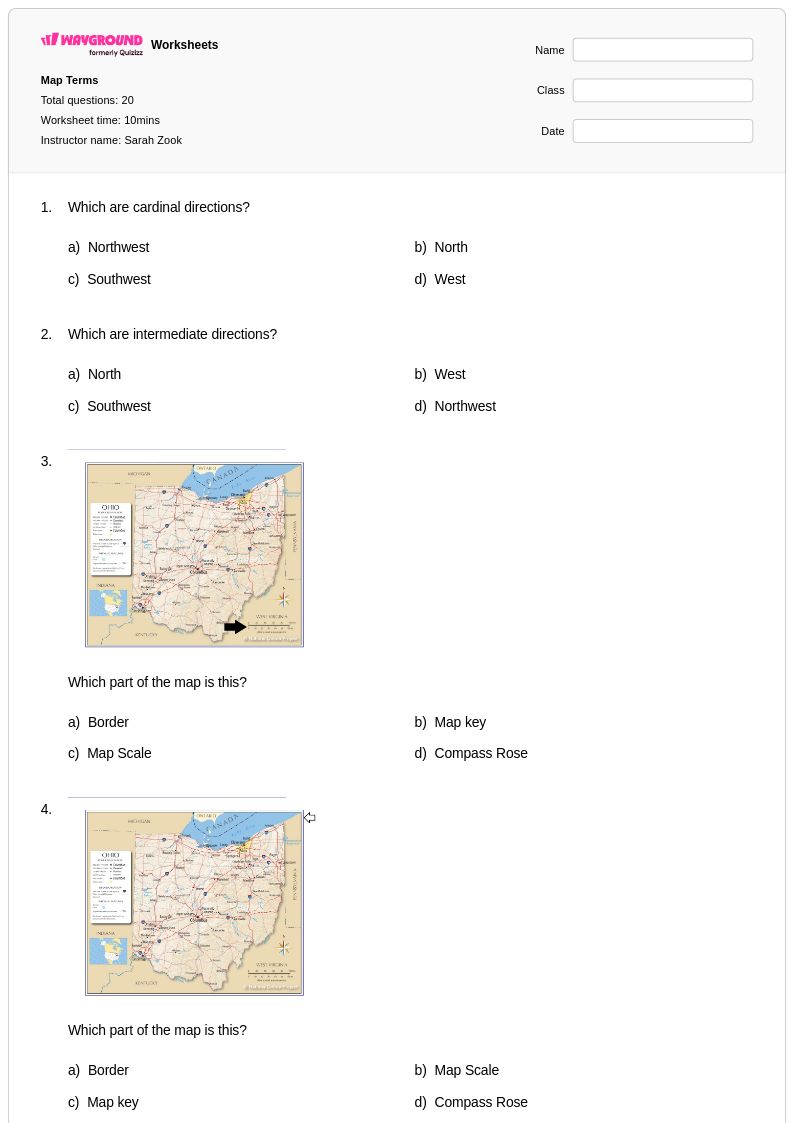
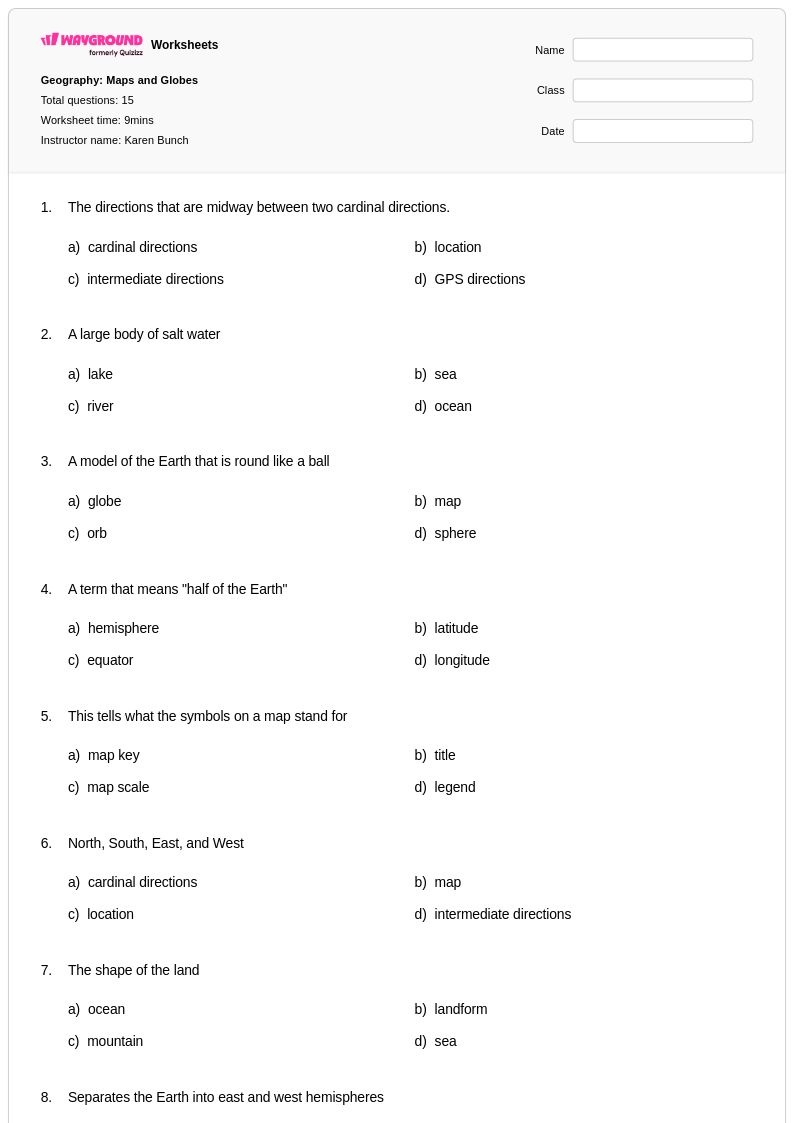
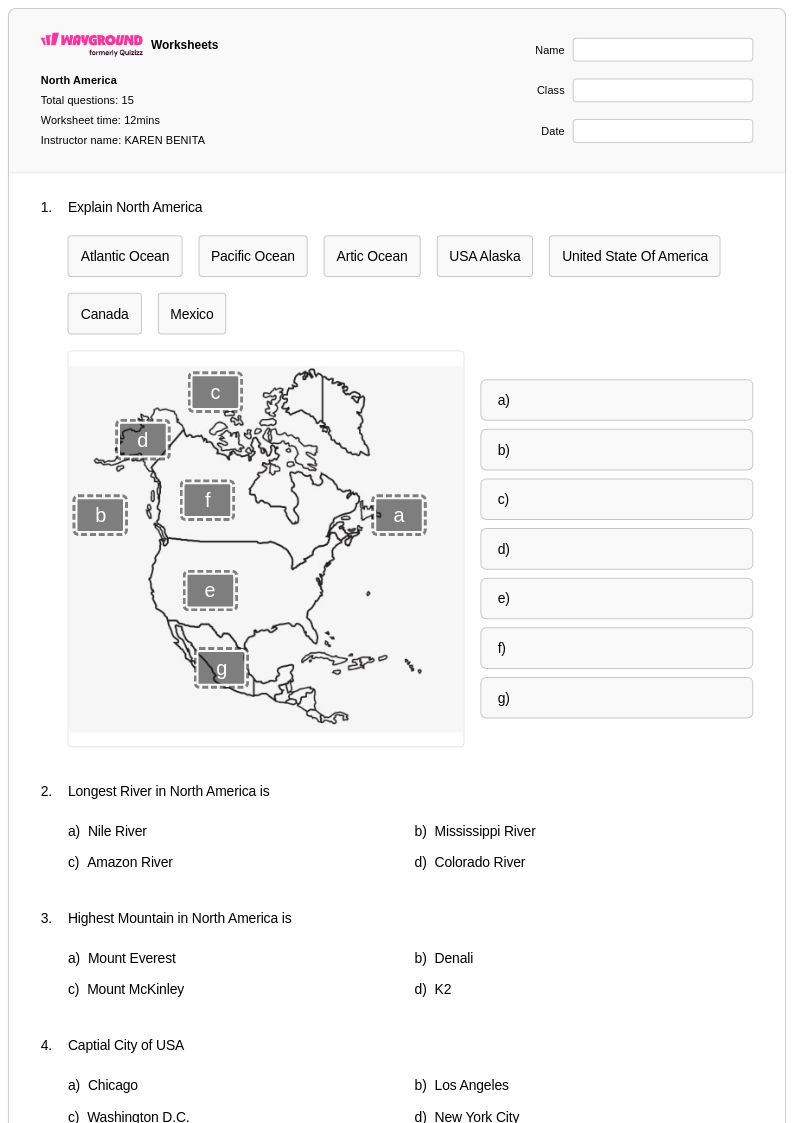
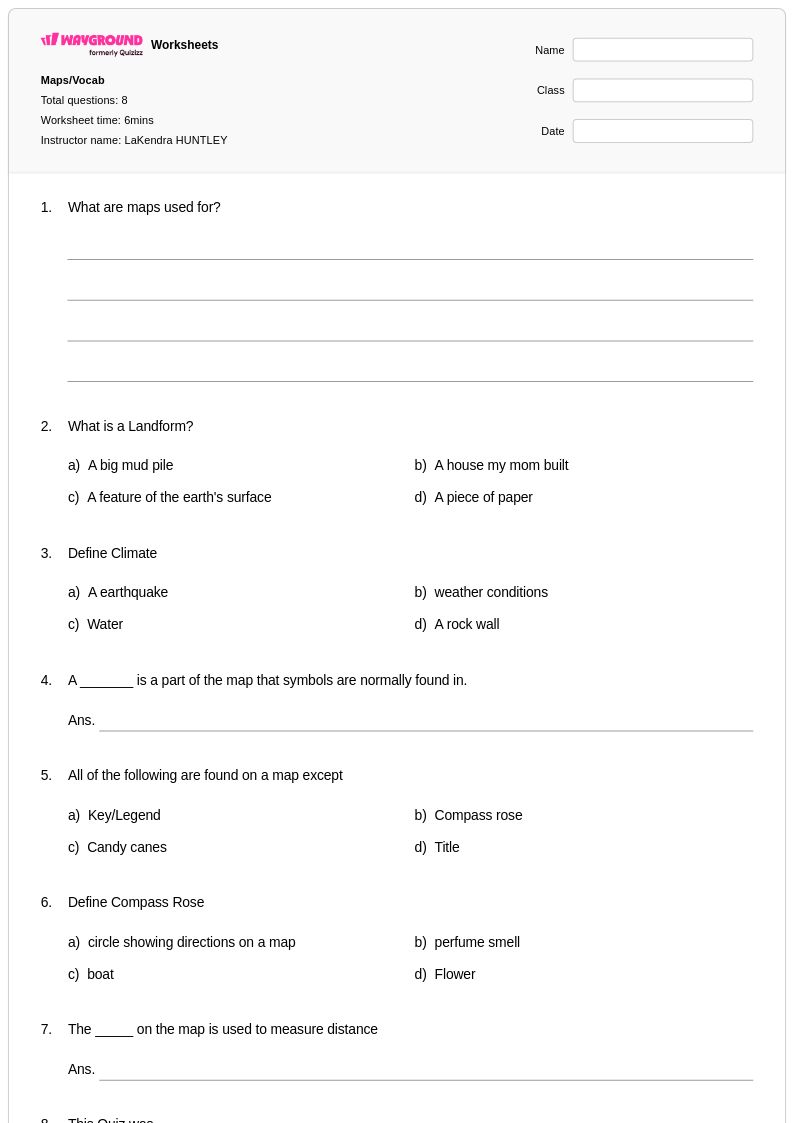
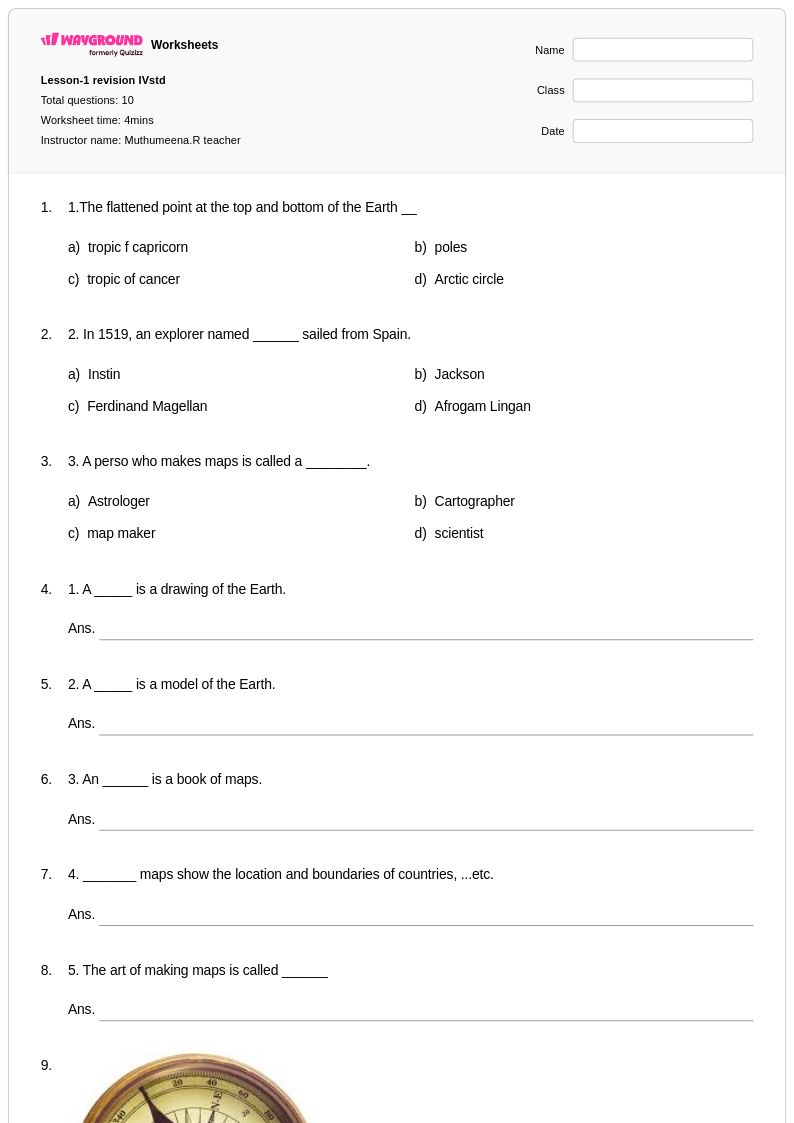
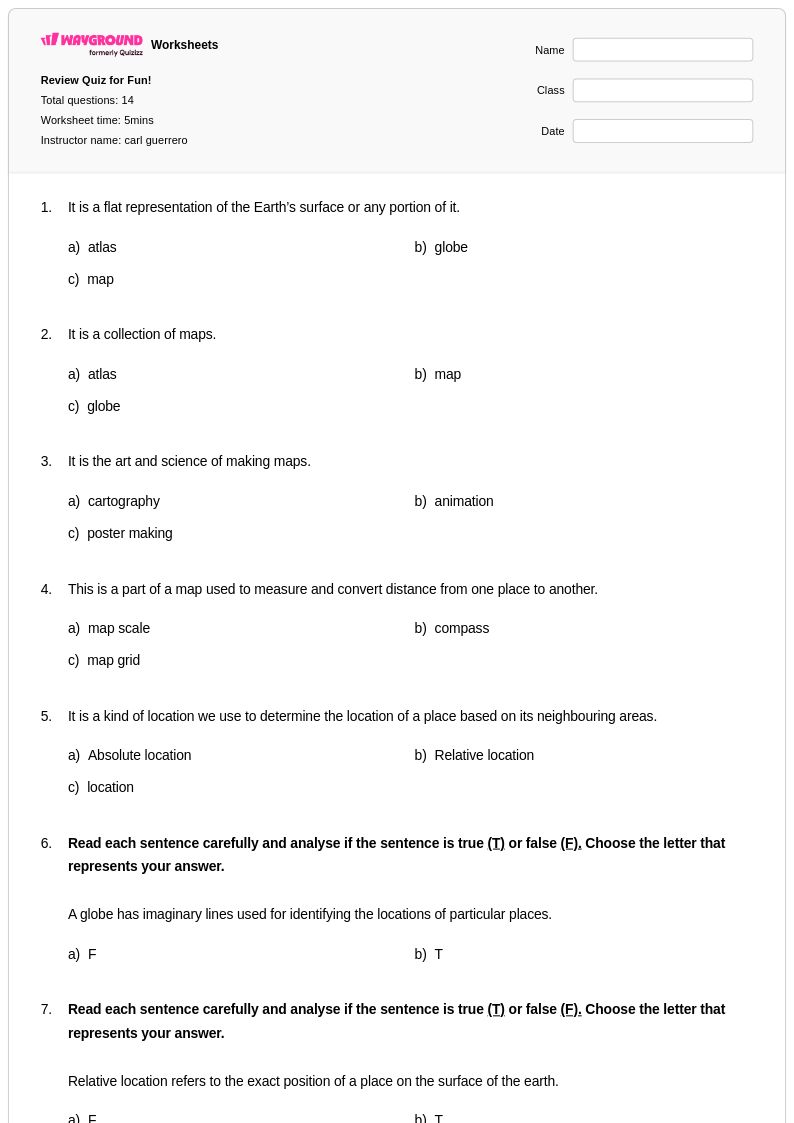
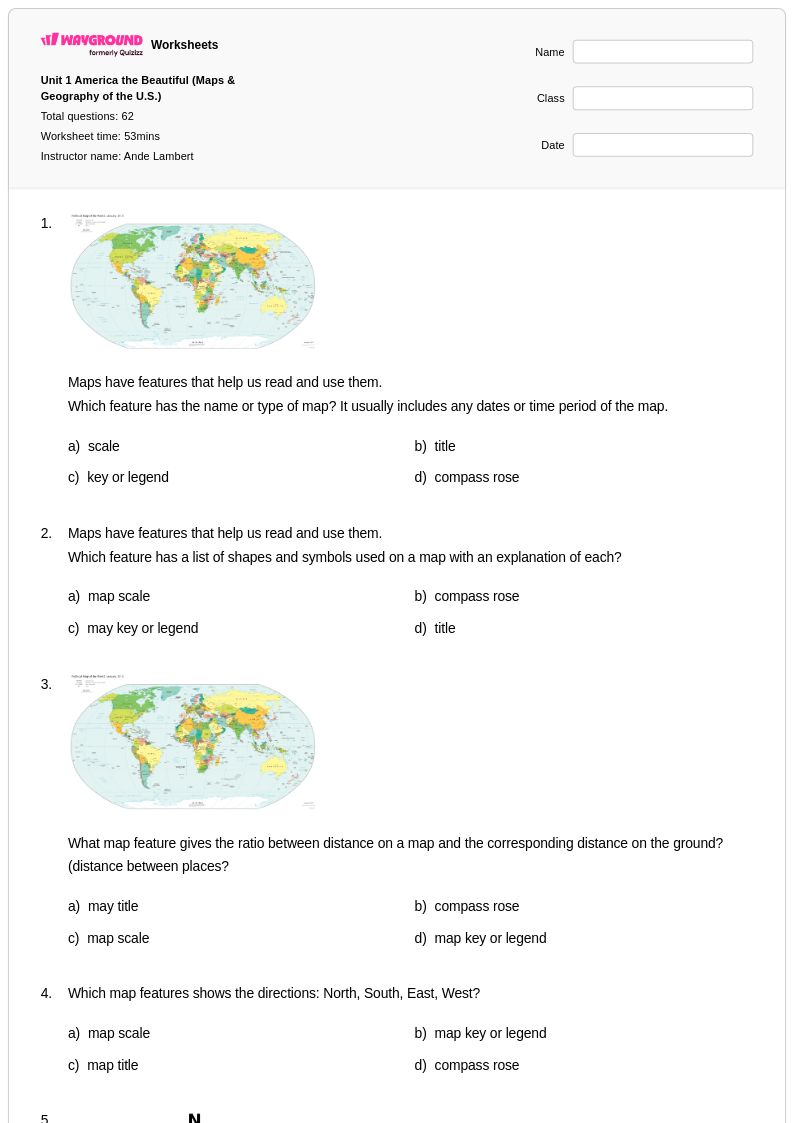
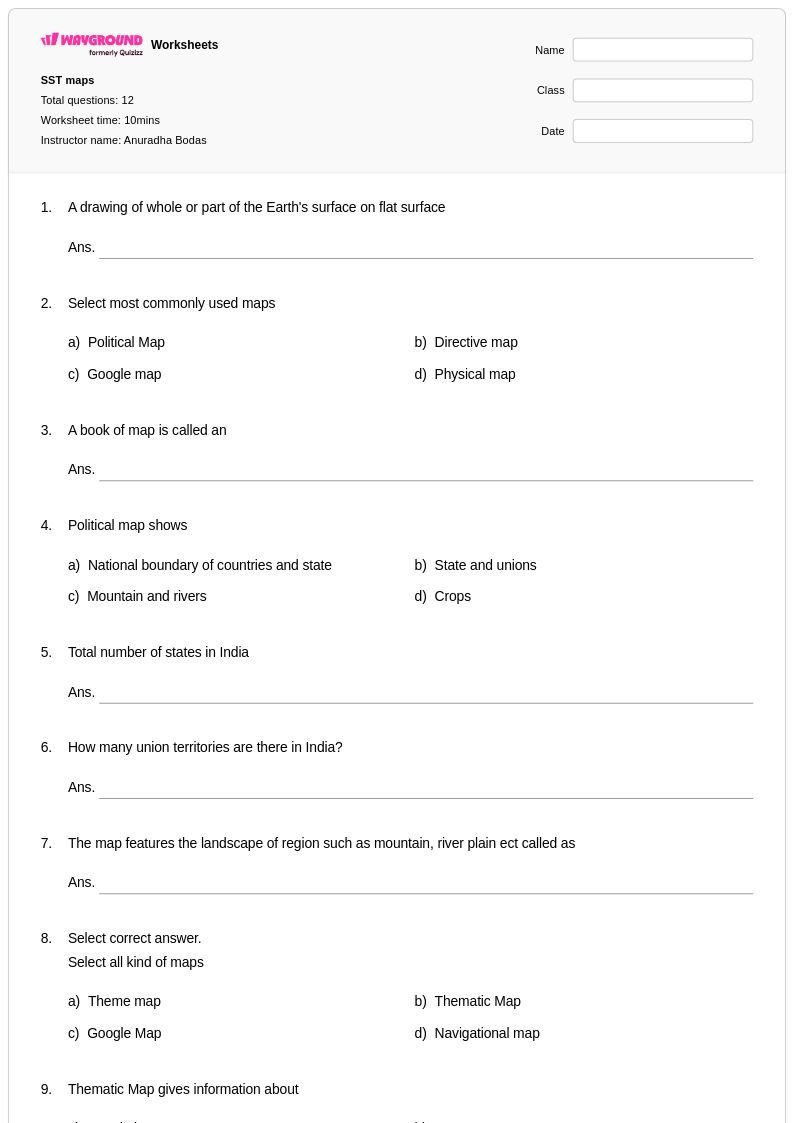
Map scale worksheets for Class 4 students available through Wayground (formerly Quizizz) provide essential foundational training in one of geography's most critical measurement concepts. These comprehensive printables guide fourth-grade learners through understanding how distances on maps relate to actual distances in the real world, building spatial reasoning skills that are fundamental to geographic literacy. Students work through carefully designed practice problems that teach them to interpret scale bars, calculate real distances using map measurements, and compare different types of scales including ratio scales and graphic scales. Each worksheet includes detailed answer keys that help teachers assess student understanding while providing immediate feedback, and the free pdf format ensures easy classroom distribution and home practice opportunities.
Wayground's extensive collection of teacher-created map scale resources draws from millions of educator contributions, offering Class 4 teachers unprecedented access to differentiated materials that meet diverse learning needs. The platform's robust search and filtering capabilities allow educators to quickly locate worksheets aligned with specific standards and learning objectives, while customization tools enable teachers to modify existing materials or create targeted interventions for struggling learners. These digital and printable resources support flexible lesson planning, whether teachers need quick skill reinforcement activities, comprehensive assessment tools, or enrichment challenges for advanced students. The seamless integration of both interactive digital formats and traditional pdf printables ensures that map scale instruction can adapt to any classroom environment while maintaining the hands-on practice essential for developing strong spatial measurement skills.
FAQs
How do I teach map scale to students who struggle with proportional reasoning?
Start by anchoring map scale to something concrete — have students measure a known distance on a printed map (like the distance between two cities) and compare it to the real-world value. Once students see the ratio in action, introduce representative fractions and graphic scales as two different ways of expressing the same relationship. Progressing from visual graphic scales to numerical ratios before introducing multi-step unit conversions helps prevent the cognitive overload that most students hit when all three formats are taught simultaneously.
What exercises help students practice reading and applying map scales?
Effective practice exercises include converting map measurements to real-world distances using representative fractions, calculating travel distances between multiple points on a single map, and comparing large-scale versus small-scale maps showing the same region. Multi-step problems that require students to convert between units — such as centimeters on a map to kilometers in reality — build the layered reasoning that standardized assessments typically target. Map scale worksheets that progress from basic scale reading to complex calculations are especially useful for structured skill development.
What mistakes do students commonly make when working with map scales?
The most common error is confusing large-scale and small-scale maps — students often assume a 'large scale' means a map covers a large area, when in fact a large-scale map (like 1:1,000) shows a small area in great detail. Students also frequently forget to convert units before applying a scale ratio, leading to calculations that are off by a factor of 100 or more. A third common mistake is misreading graphic scales by measuring from the wrong starting point or not accounting for fractional segments.
How can I use map scale worksheets to support students at different skill levels?
For students still building foundational skills, start with graphic scale problems that require only measurement and multiplication before introducing representative fractions. More advanced learners can be challenged with multi-step problems that combine unit conversion, scale calculation, and comparison of different map types. On Wayground, teachers can apply accommodations such as reduced answer choices or read-aloud support to individual students, so the same worksheet can serve the full range of learners in one classroom without requiring separate materials.
How do I use Wayground's map scale worksheets in my classroom?
Wayground's map scale worksheets are available as printable PDFs for traditional classroom use and in digital formats for technology-integrated environments, including the option to host them as a quiz directly on Wayground. Each worksheet includes a complete answer key, making them practical for independent practice, homework, or formative assessment without additional prep. Teachers can filter resources by curriculum standard or learning objective to quickly locate materials that align with their current unit.
How do map scale skills connect to broader geography and math standards?
Map scale sits at the intersection of geography and mathematics, requiring students to apply proportional reasoning, unit conversion, and spatial thinking — all of which appear in both social studies and math standards across middle grades. In geography contexts, scale literacy is foundational to understanding map types, navigation, and geographic analysis. In math contexts, the same skills reinforce ratio and proportion concepts, making map scale an effective cross-curricular topic for reinforcing both subject areas simultaneously.