
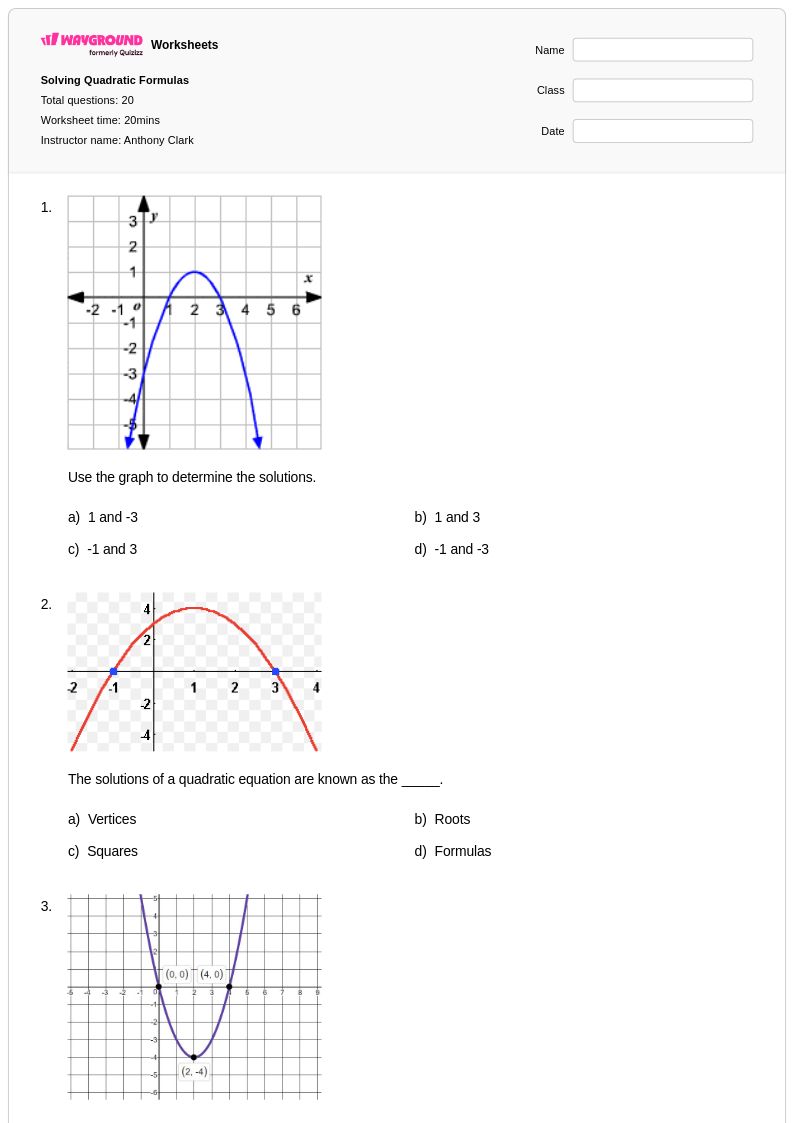
20Q
9th - Uni
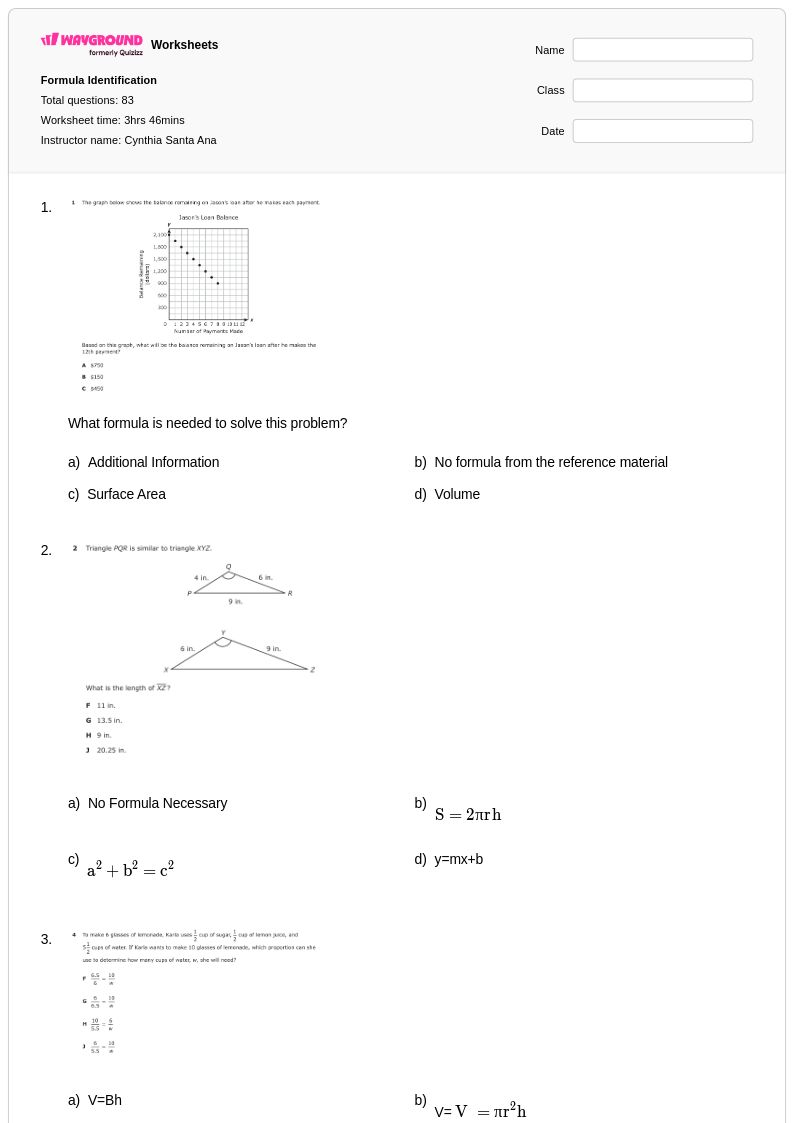
83Q
8th
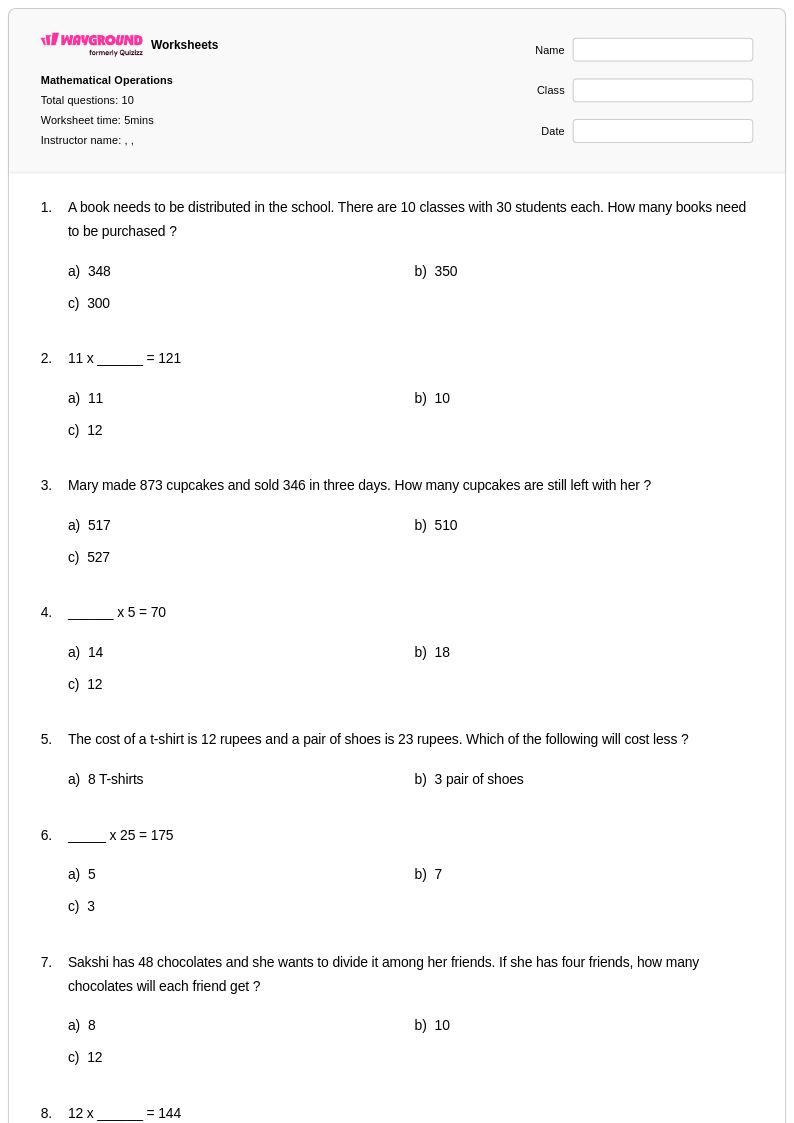
10Q
3rd
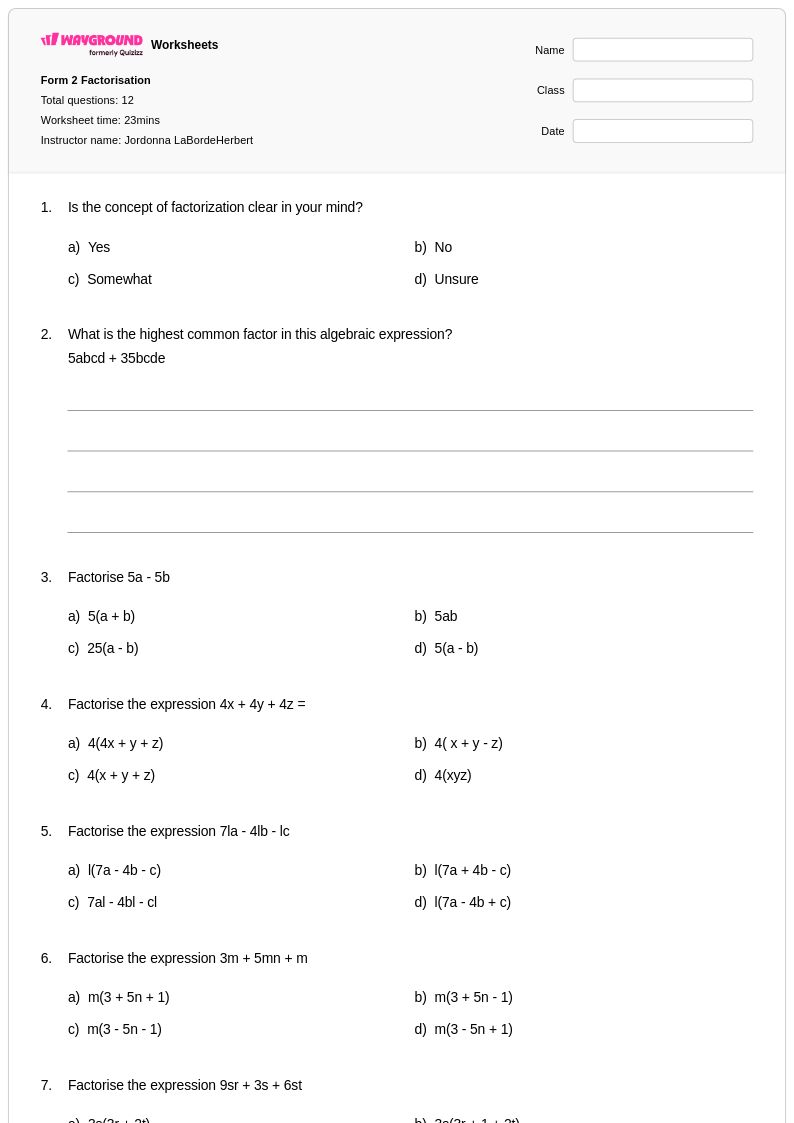
16Q
8th
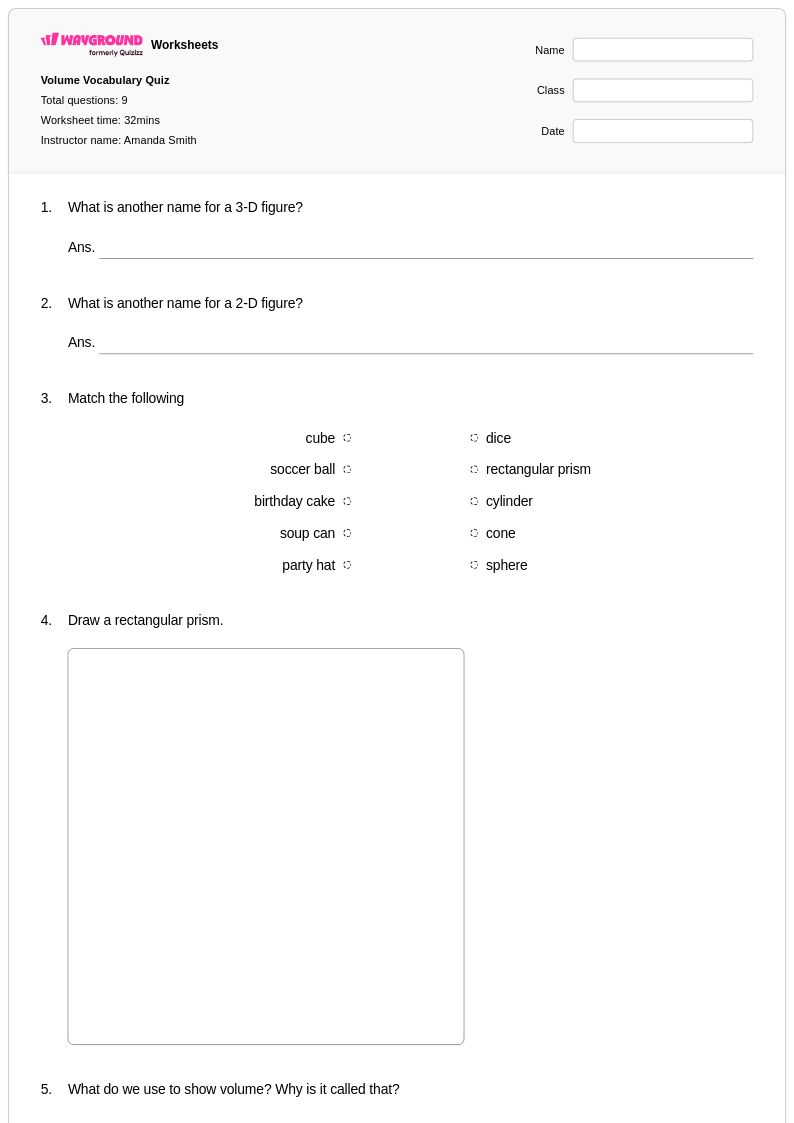
9Q
5th
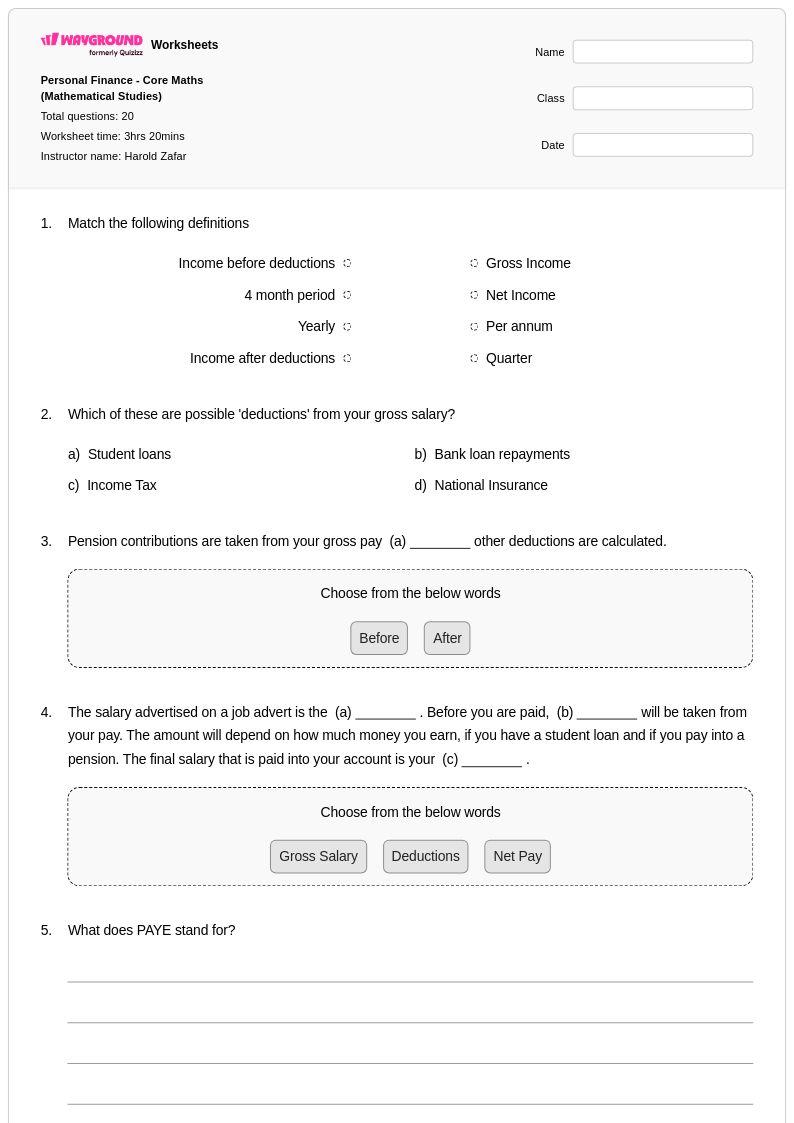
20Q
9th - 12th
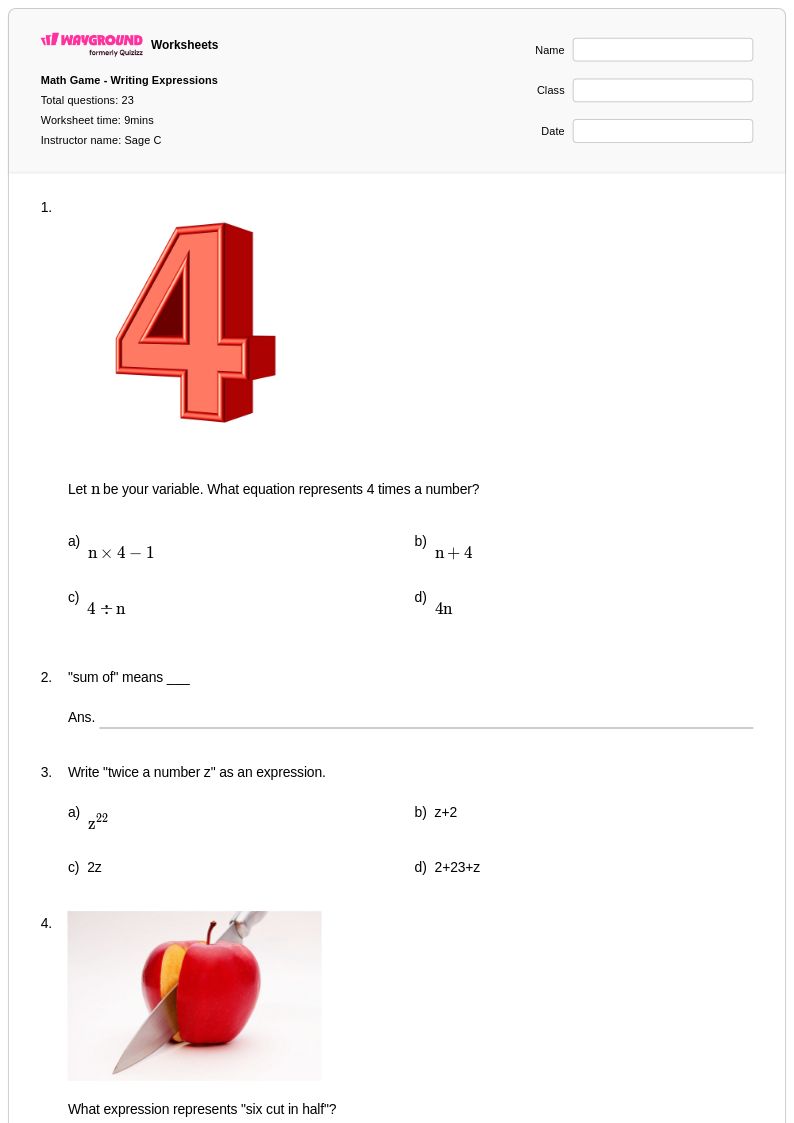
23Q
6th
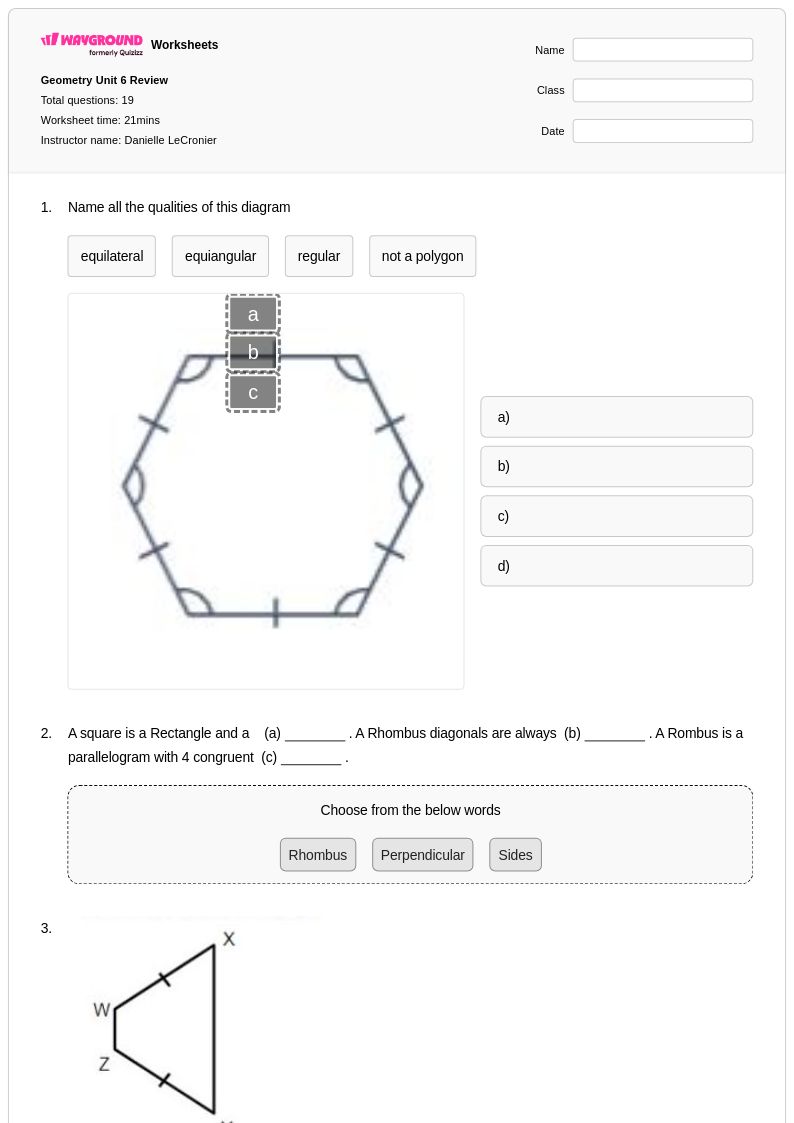
19Q
10th
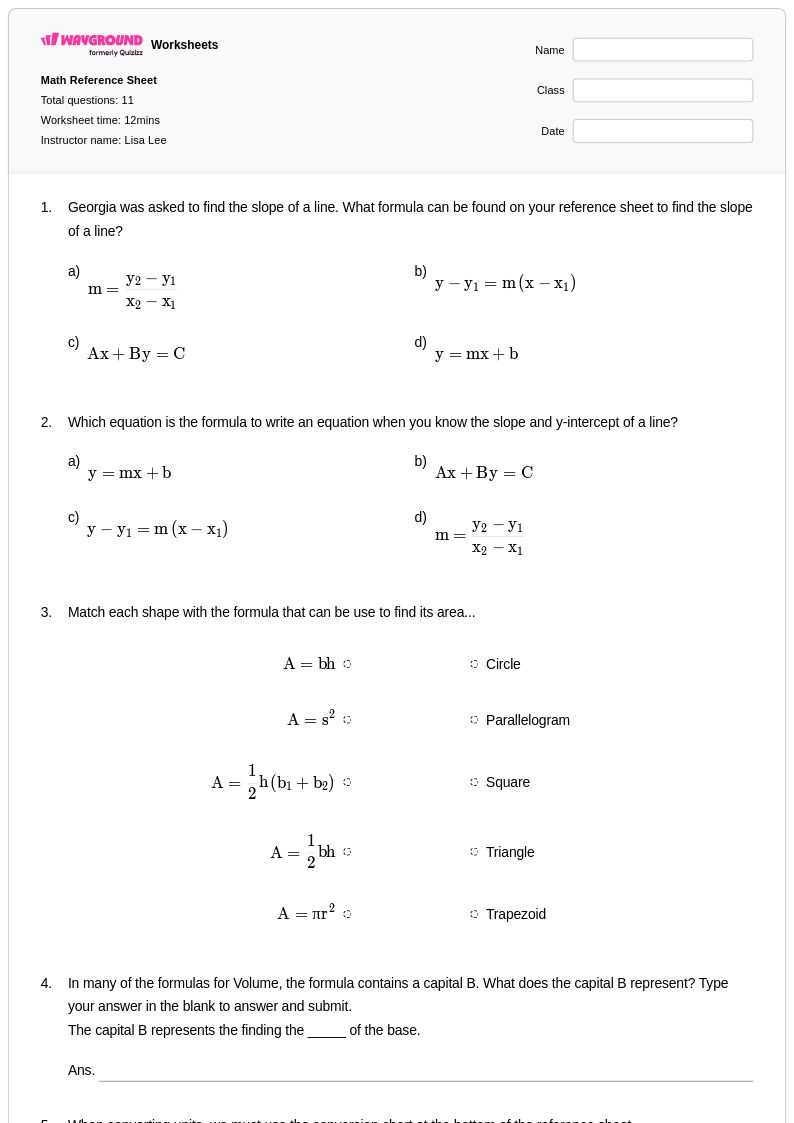
11Q
8th
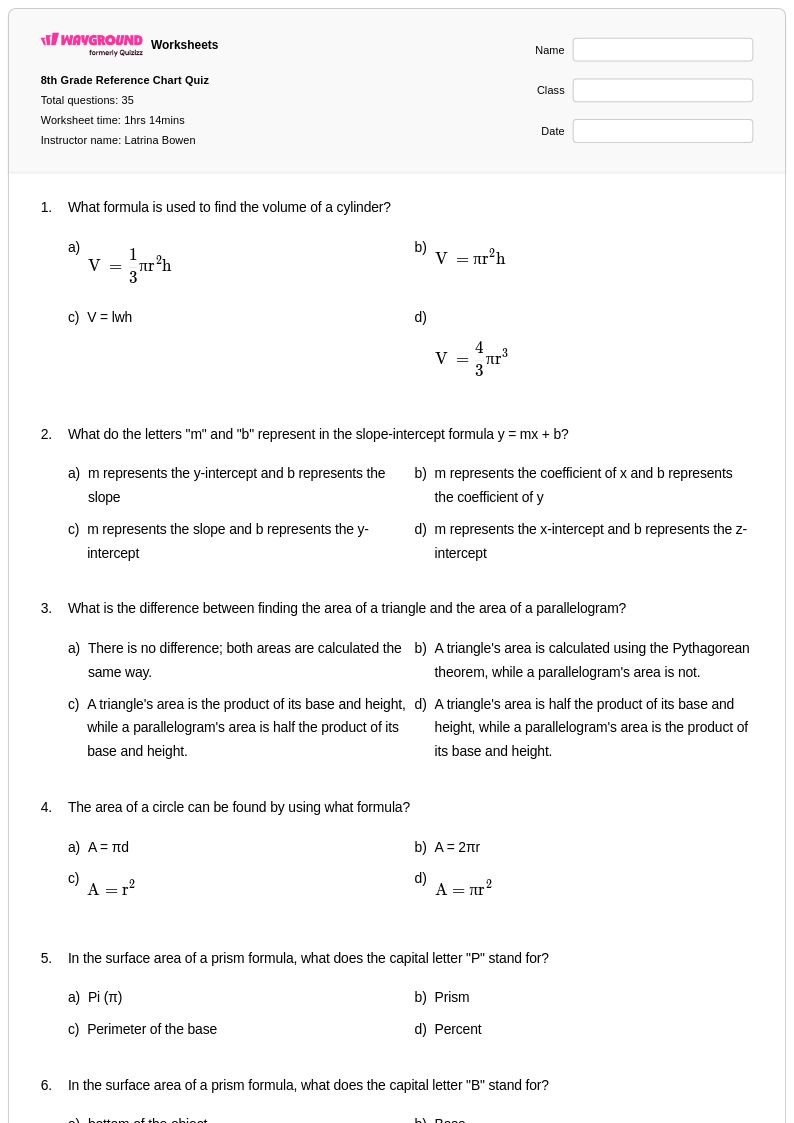
35Q
8th
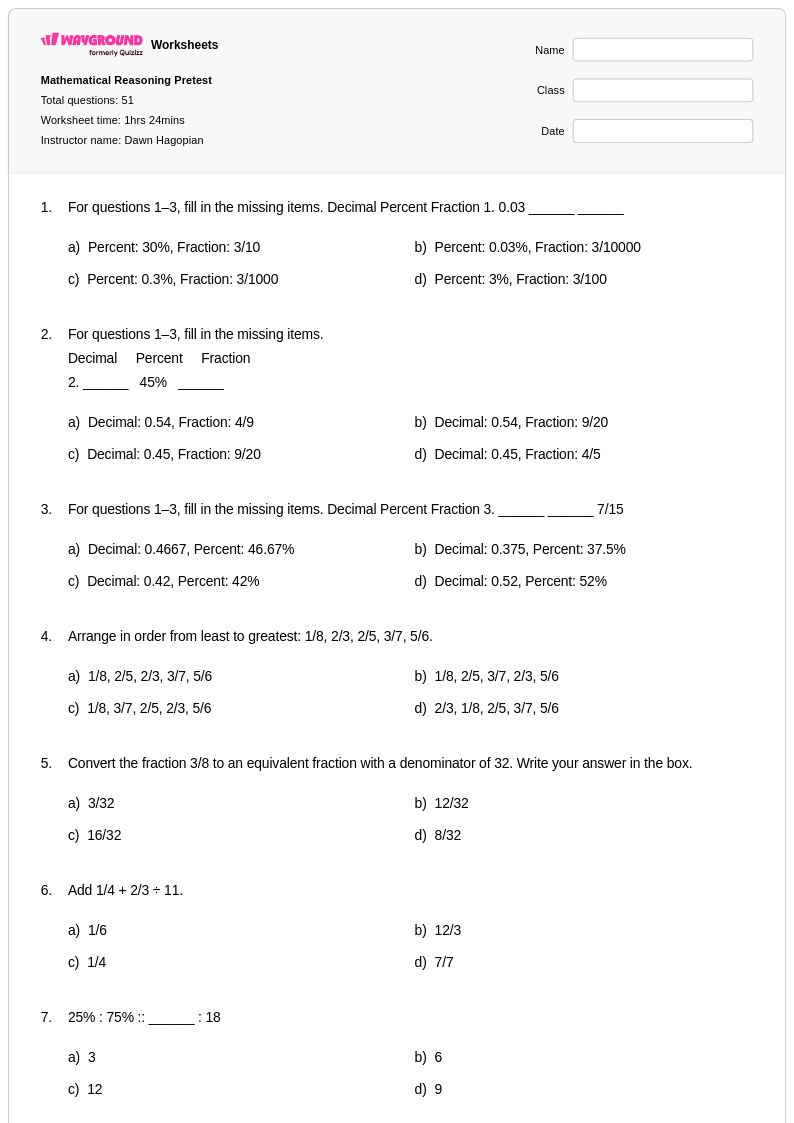
51Q
Uni
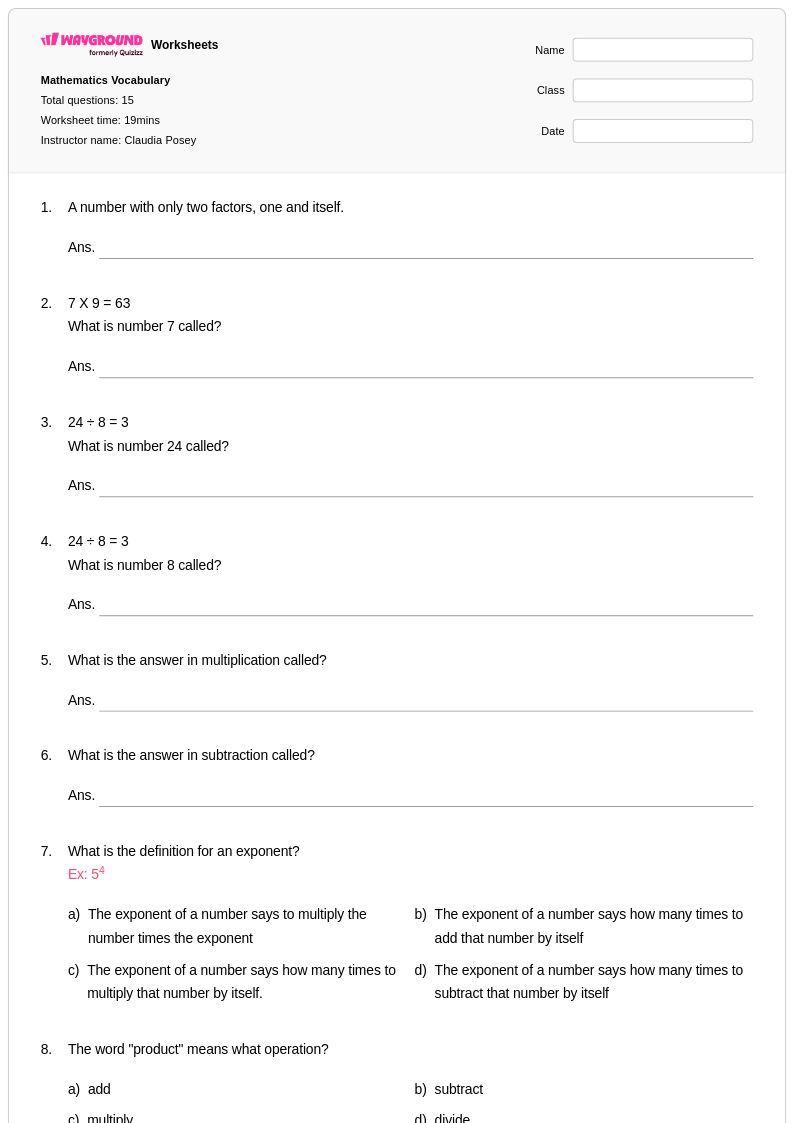
15Q
5th
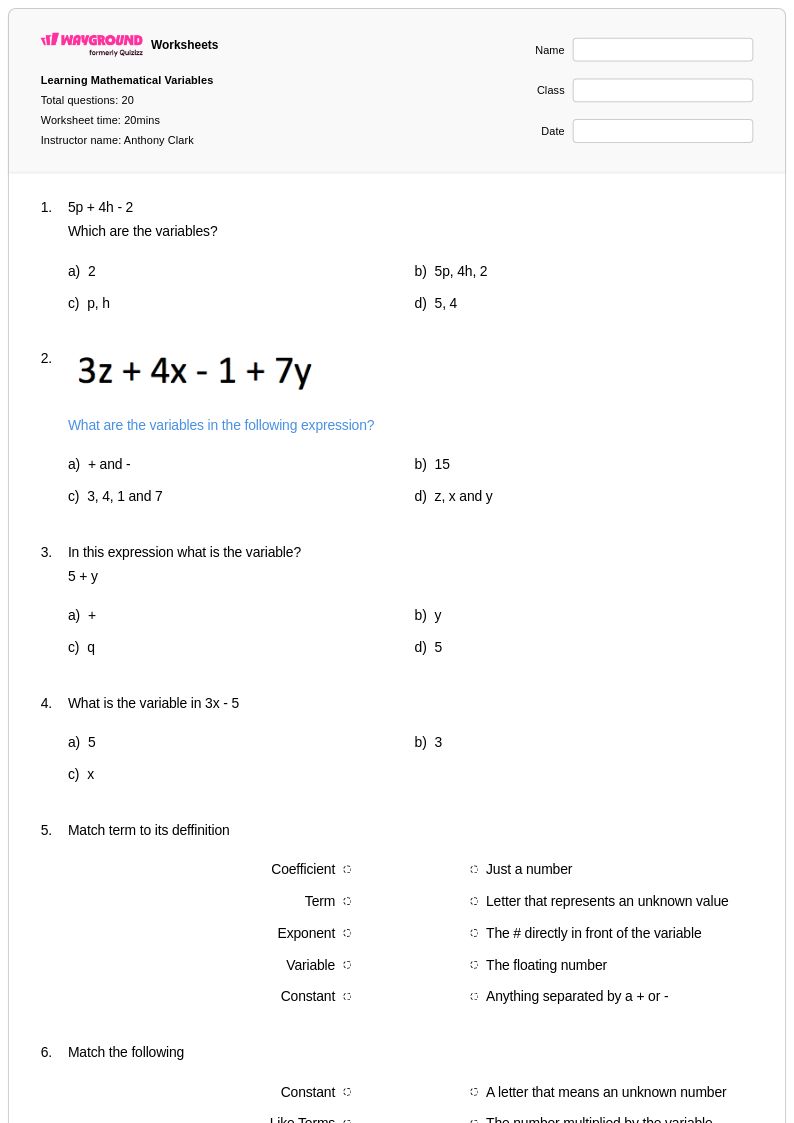
20Q
8th - Uni
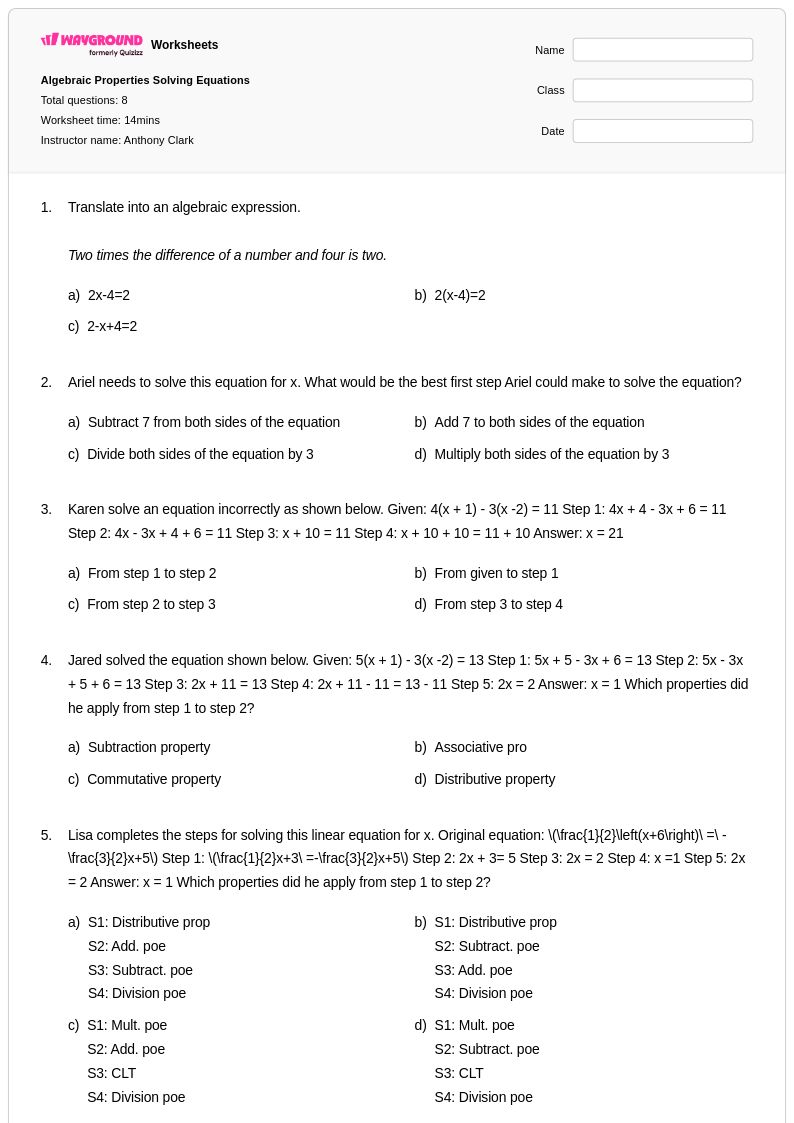
14Q
8th - Uni
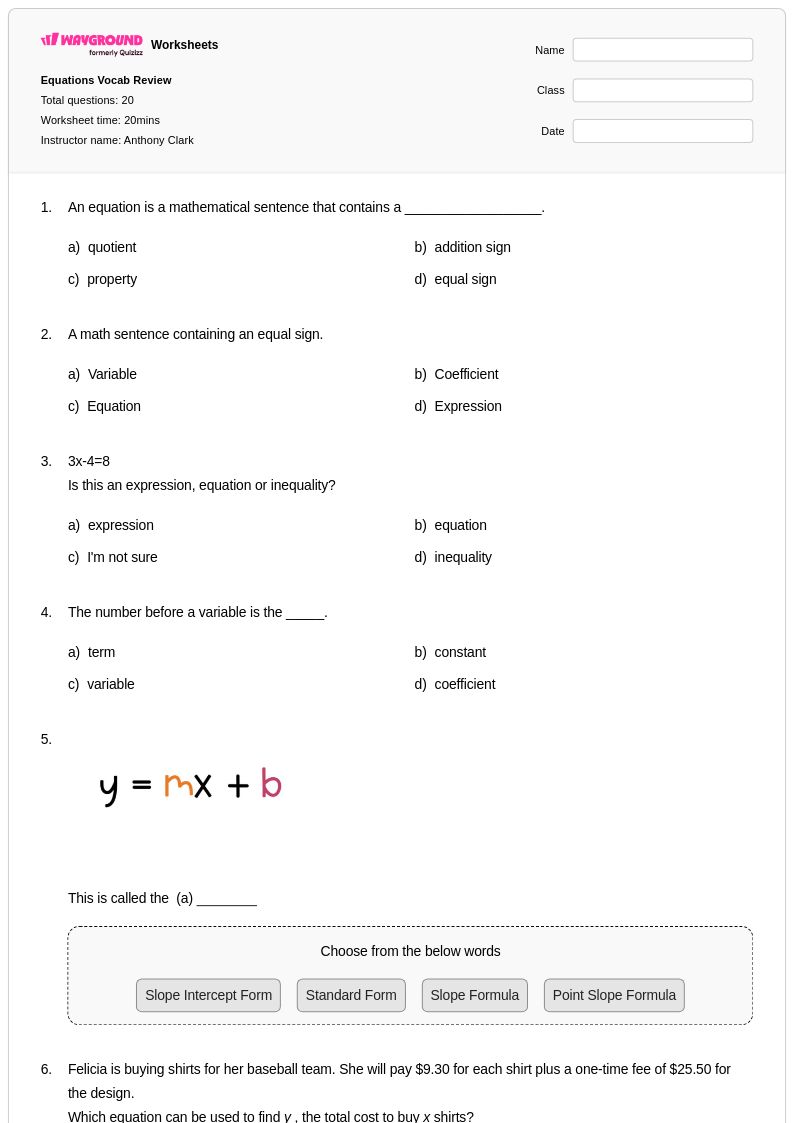
20Q
8th - Uni
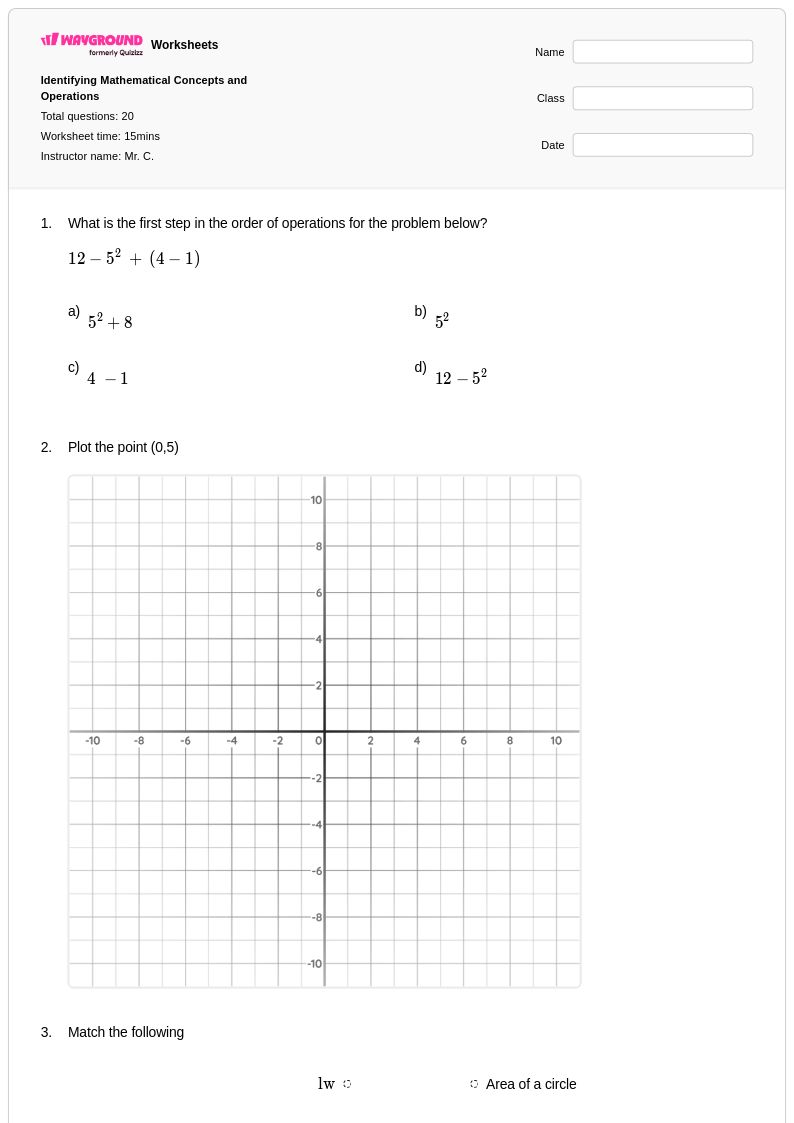
20Q
6th
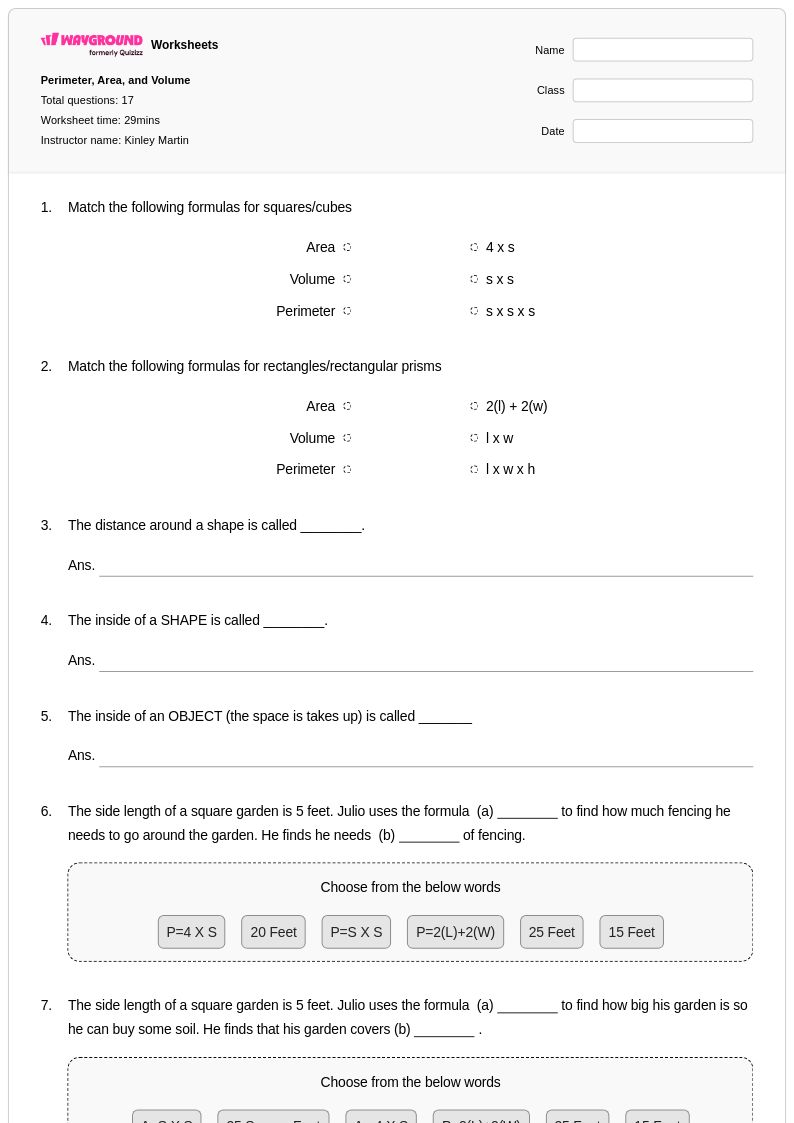
17Q
5th
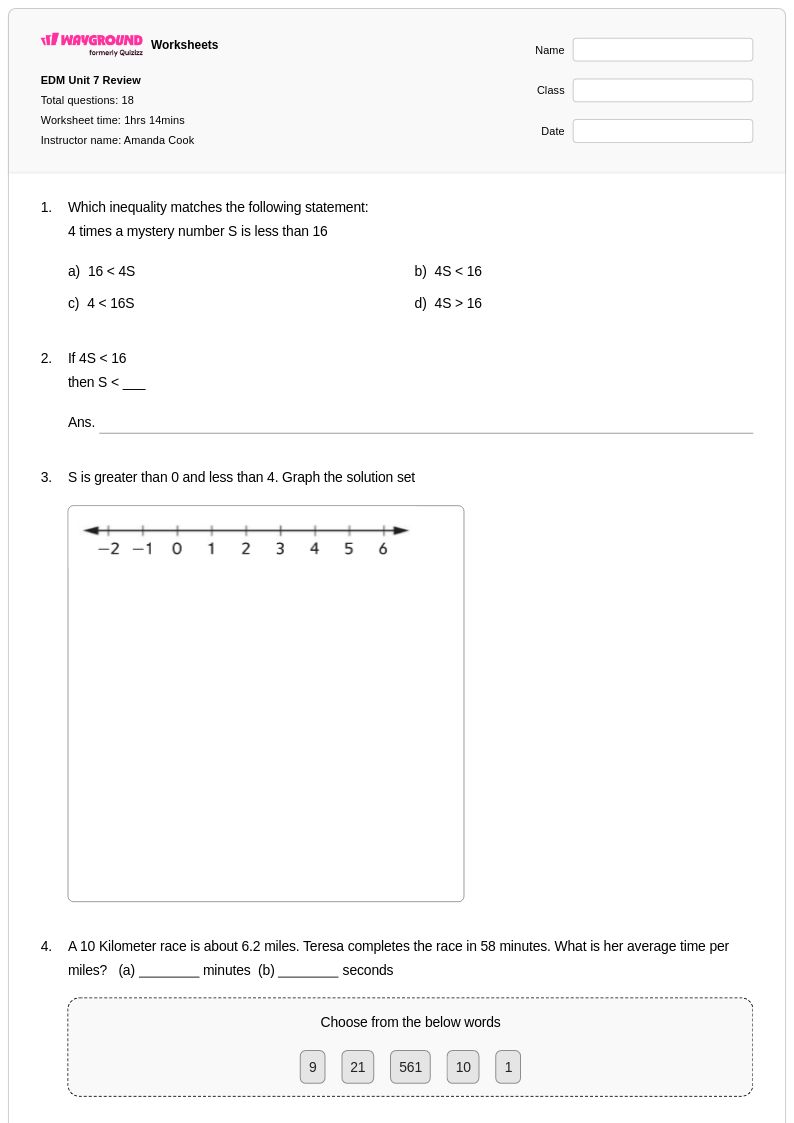
18Q
6th
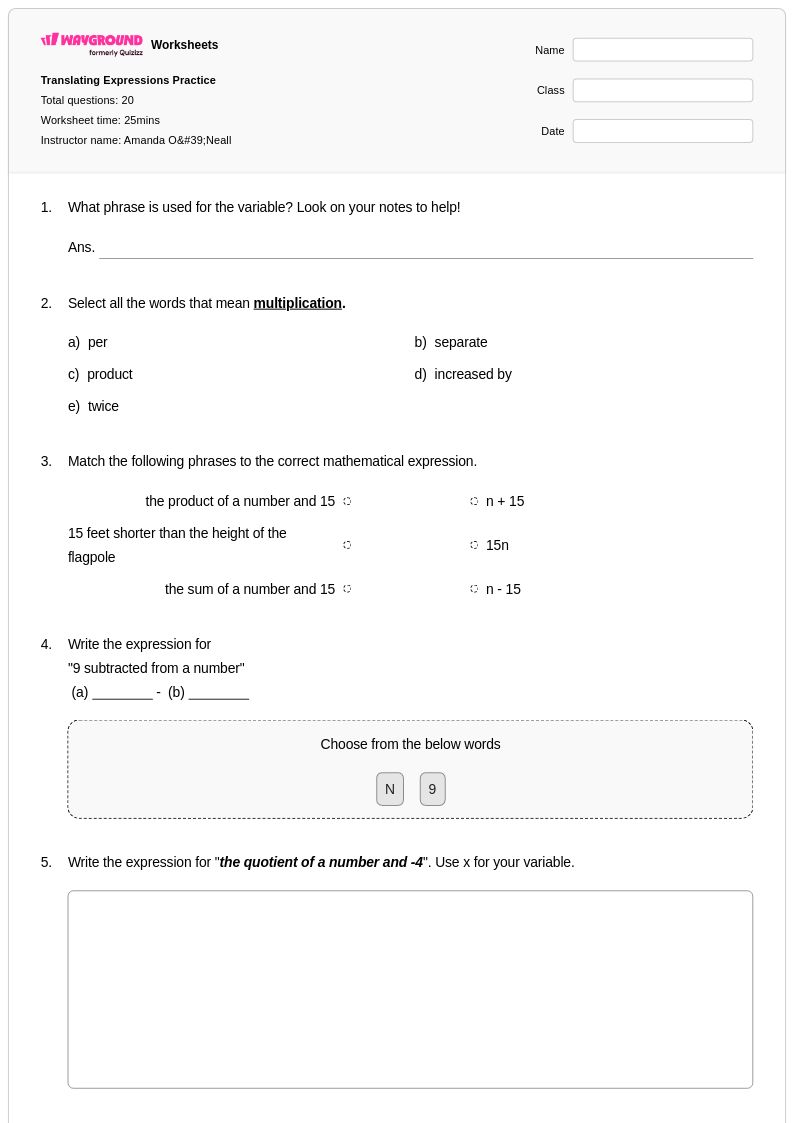
20Q
7th - Uni

13Q
7th
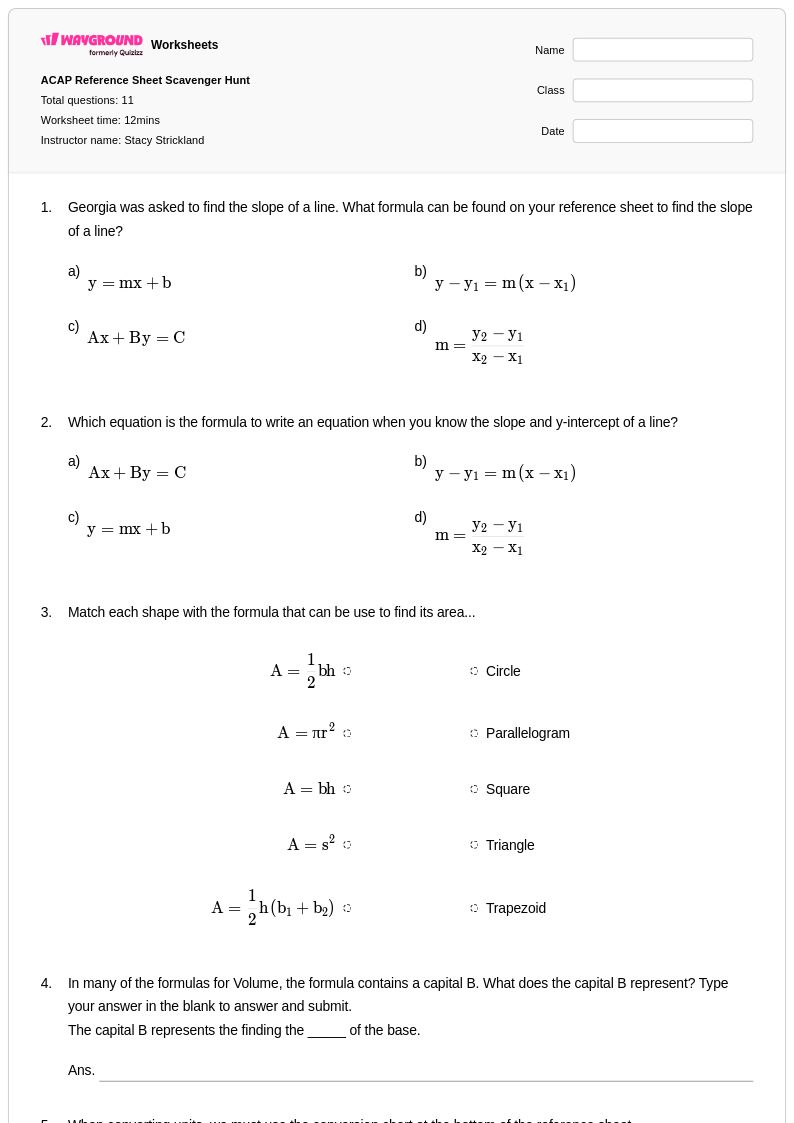
11Q
8th

18Q
10th
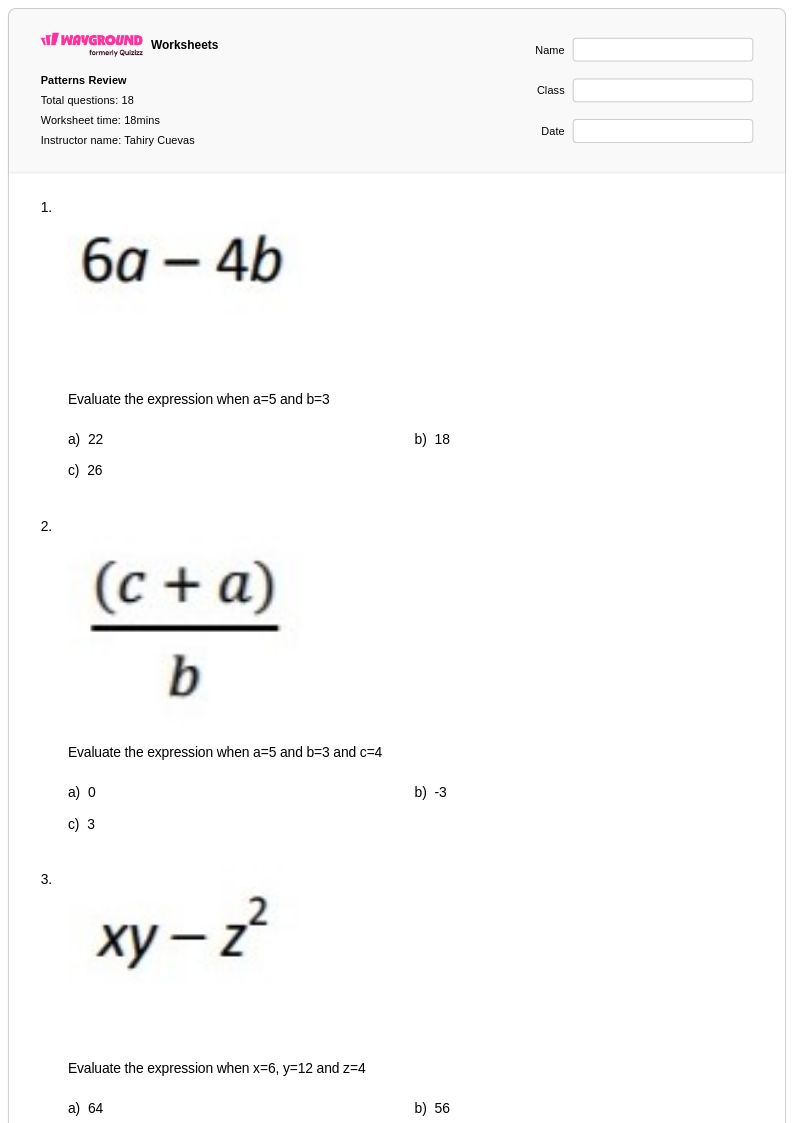
18Q
9th
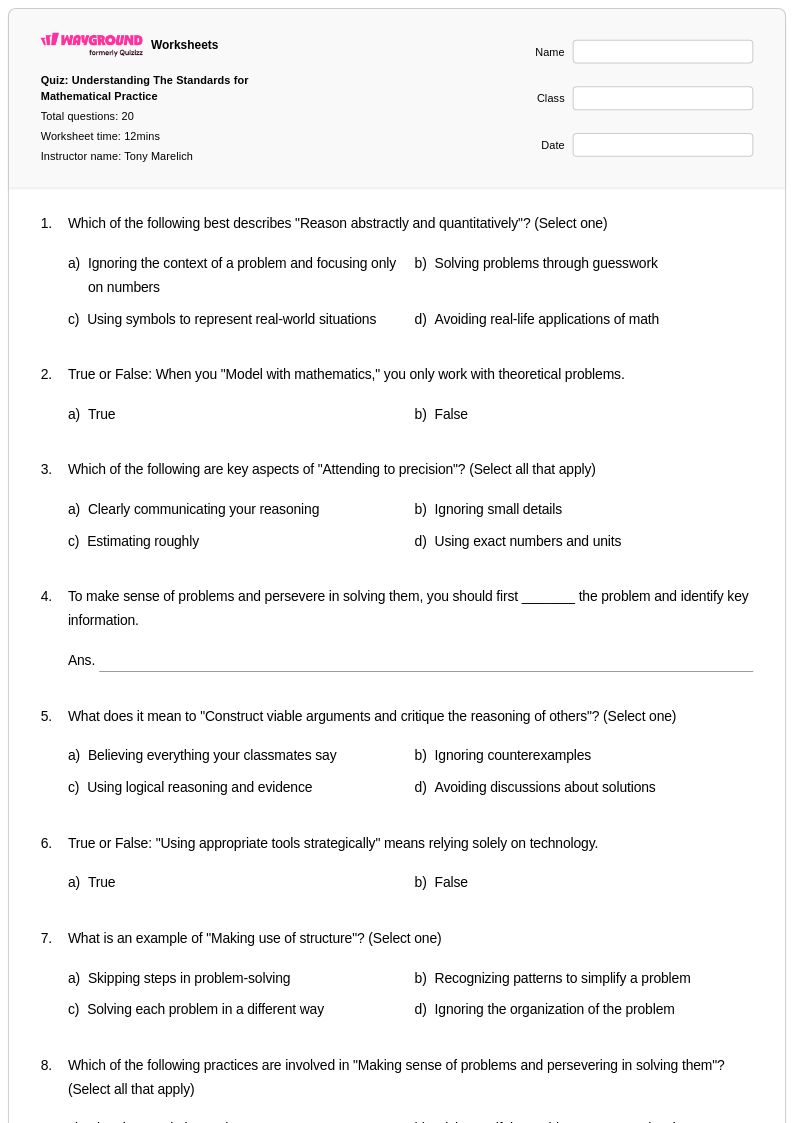
20Q
11th
Explore planilhas por assuntos
Explore printable Mathematical Formulas worksheets
Mathematical formulas serve as the fundamental building blocks of mathematical understanding, providing students with essential tools for solving problems across all areas of mathematics. Wayground's comprehensive collection of mathematical formulas worksheets offers students structured practice with key formulas including area and perimeter calculations, algebraic expressions, geometric relationships, and basic statistical measures. These carefully designed worksheets strengthen students' ability to identify appropriate formulas, substitute values accurately, and apply mathematical reasoning to real-world scenarios. Each worksheet comes with a complete answer key and is available as a free printable pdf, making it easy for educators to incorporate formula practice into daily instruction. The practice problems range from basic formula recognition exercises to more complex multi-step applications that require students to select and combine multiple formulas effectively.
Wayground's extensive library contains millions of teacher-created mathematical formulas worksheets, all easily accessible through advanced search and filtering capabilities that allow educators to find resources perfectly matched to their instructional needs. The platform's robust differentiation tools enable teachers to customize worksheets for varying ability levels, while standards alignment ensures that formula practice directly supports curriculum objectives and learning goals. Whether delivered in traditional printable format or through interactive digital assignments, these resources provide flexible options for classroom instruction, homework assignments, and targeted remediation. Teachers can efficiently plan comprehensive formula review sessions, create enrichment activities for advanced learners, and provide additional skill practice for students who need extra support in mastering essential mathematical relationships and calculations.
FAQs
How can I teach mathematical formulas beyond just memorization?
What kind of practice helps students master mathematical formulas?
What are the most common mistakes students make when using formulas?
How can I use these mathematical formula worksheets with my students?
How do mathematical formulas fit into the Common Core standards?
How can I support diverse learners with these formula worksheets?