
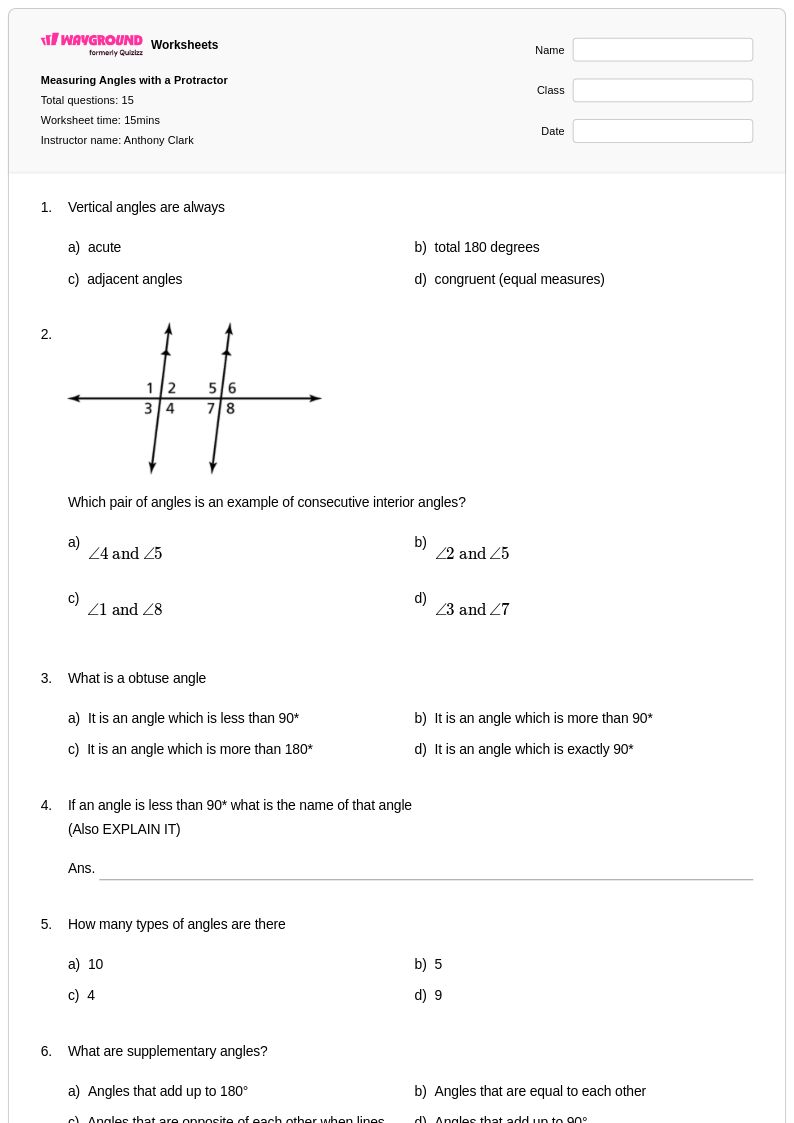
15 Q
4th - Uni
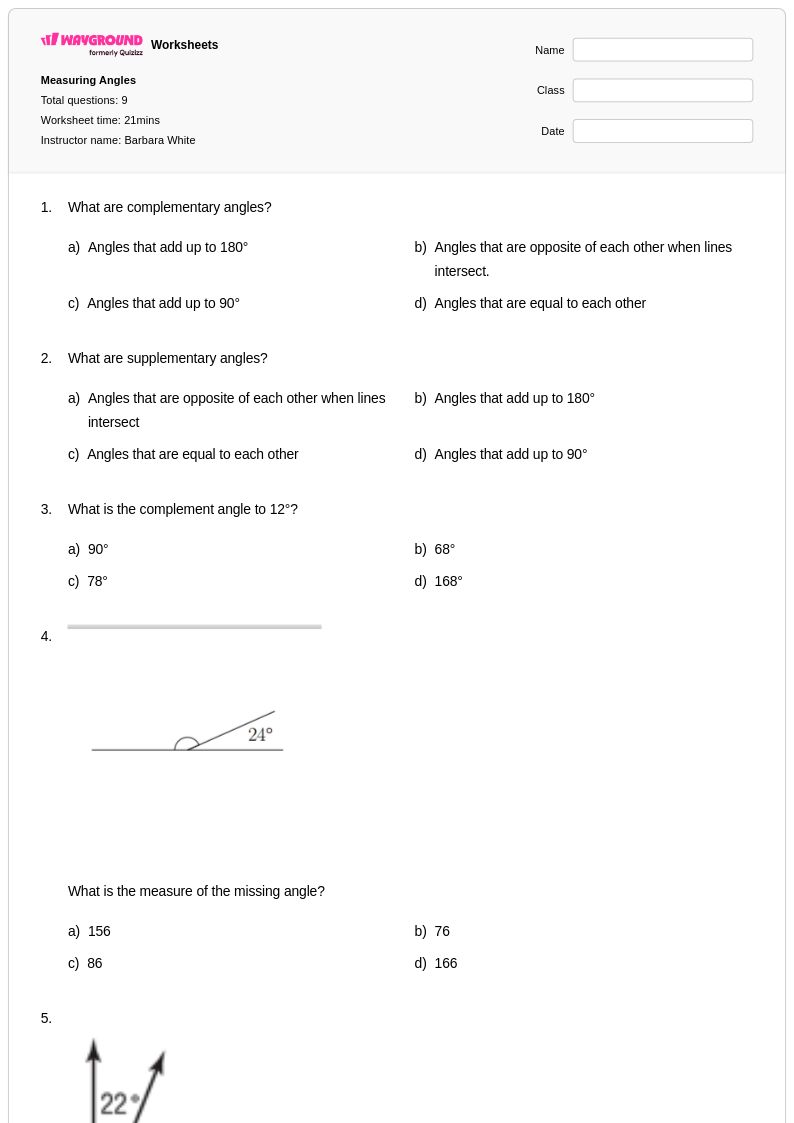
9 Q
8th
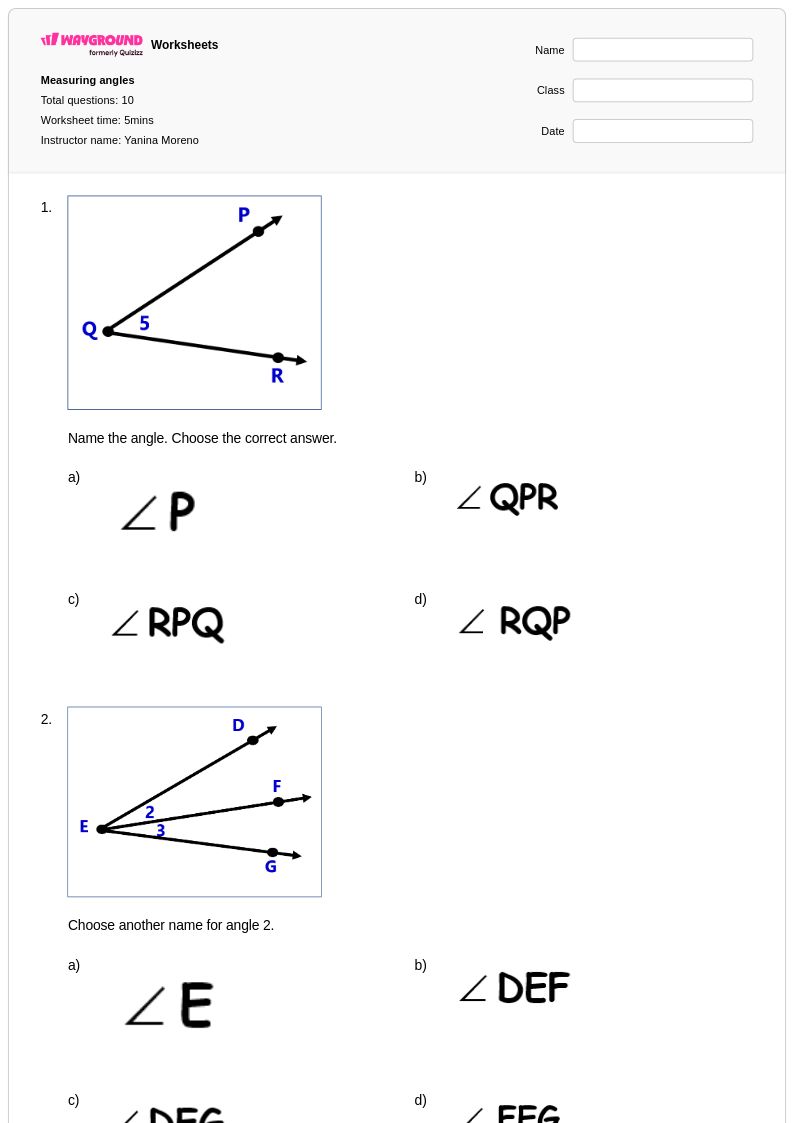
10 Q
8th - 12th
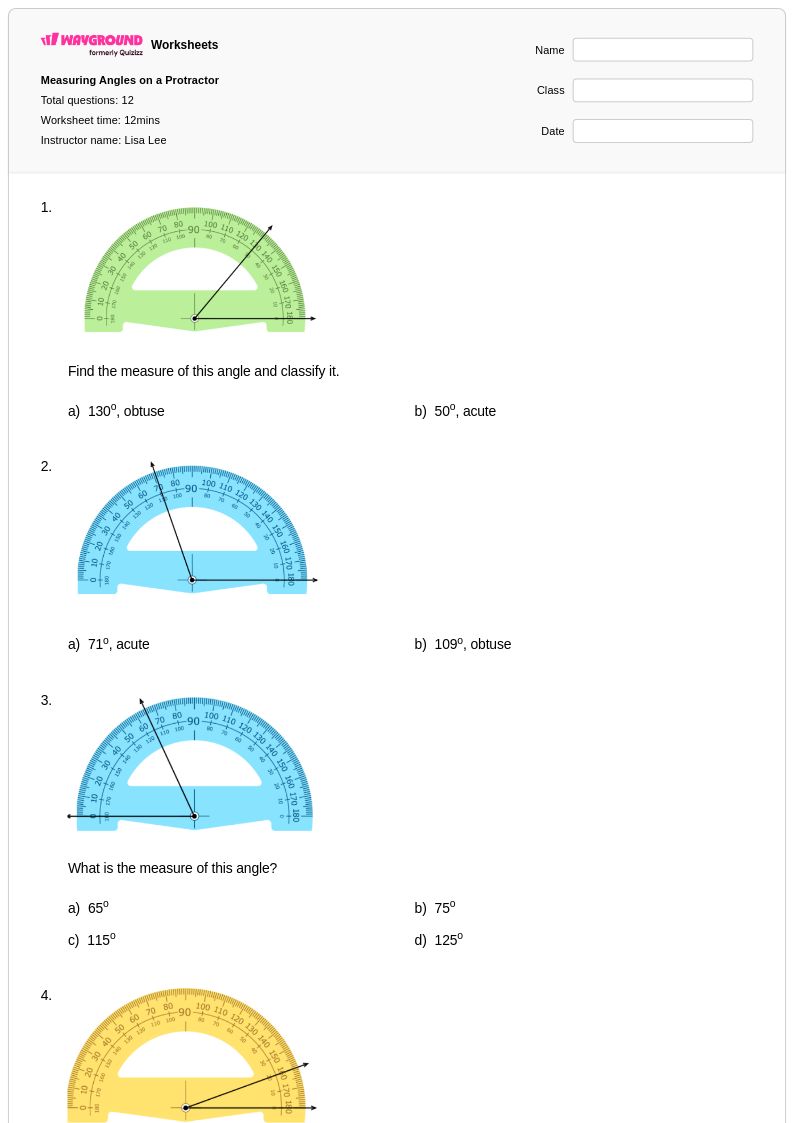
12 Q
4th - 8th
21 Q
7th - 10th
20 Q
4th - Uni
10 Q
4th - Uni
15 Q
5th - 12th
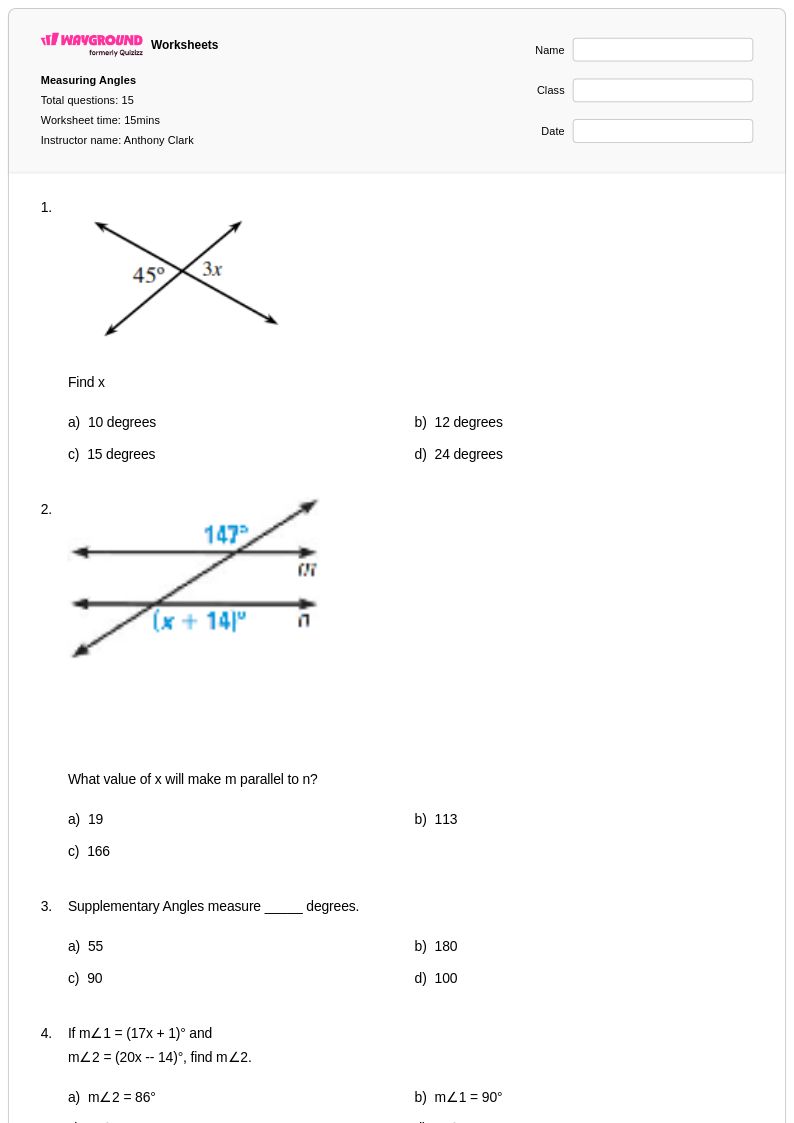
15 Q
8th - Uni
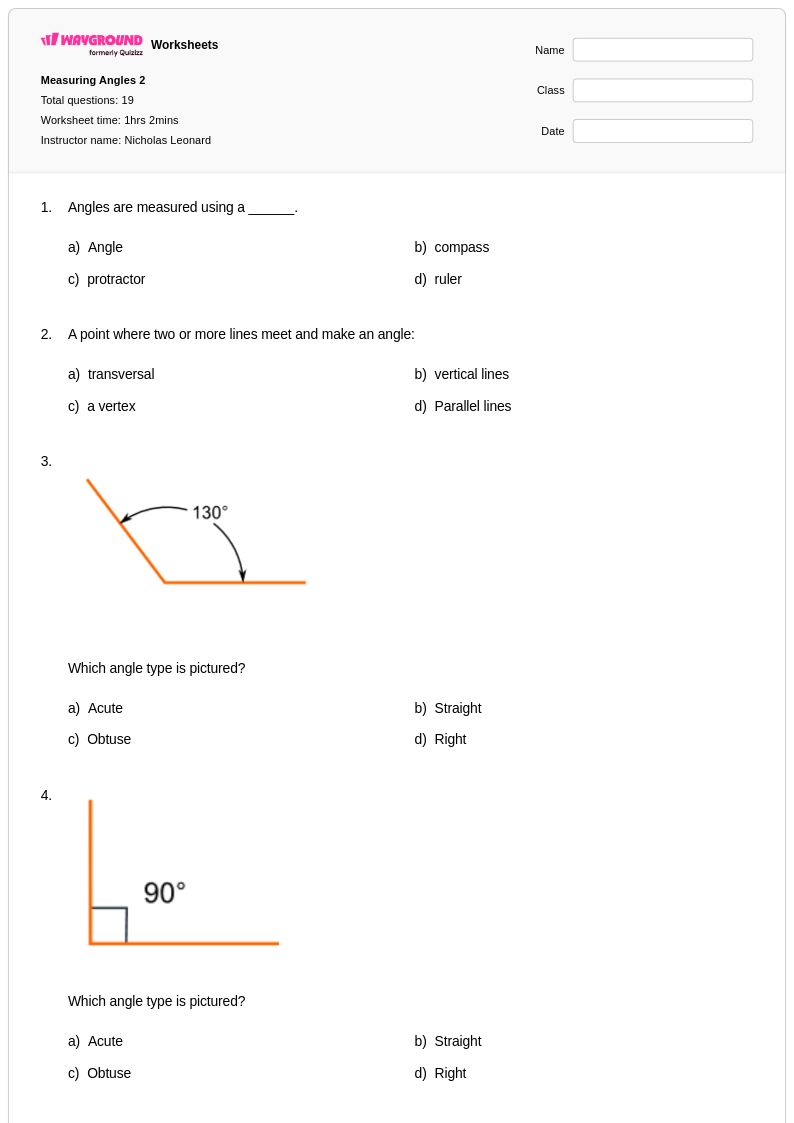
19 Q
4th - 8th
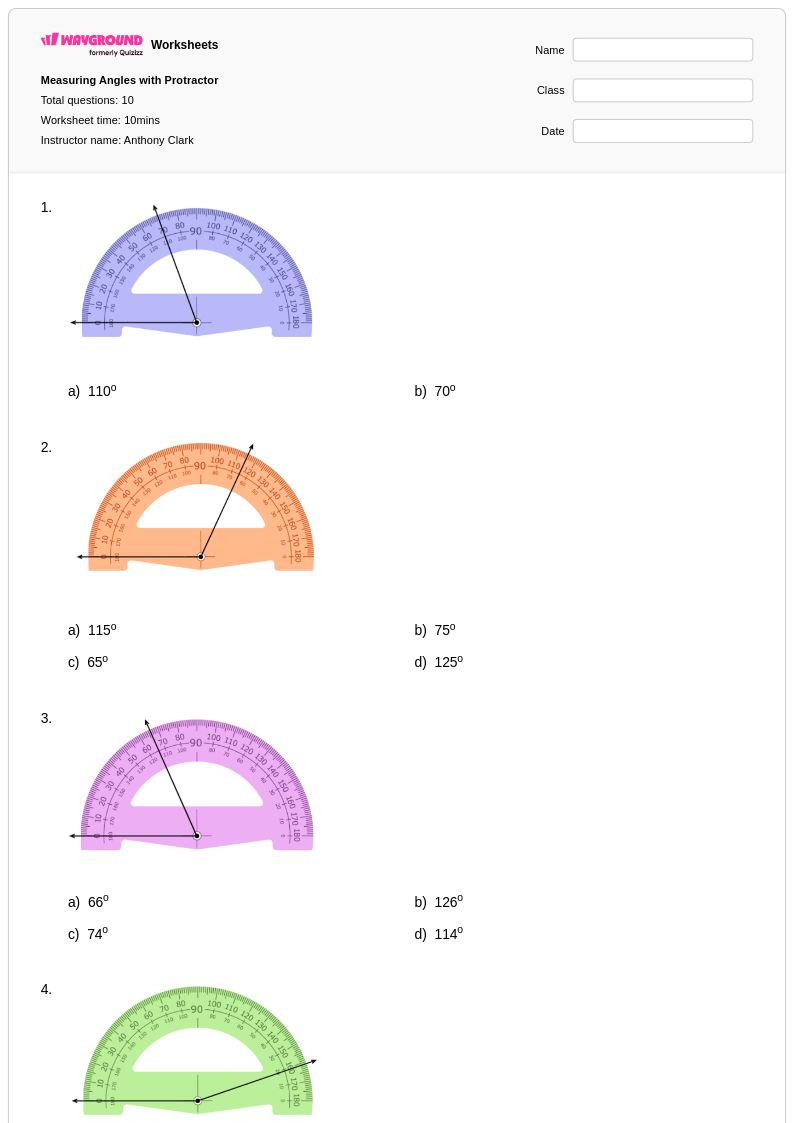
10 Q
4th - Uni
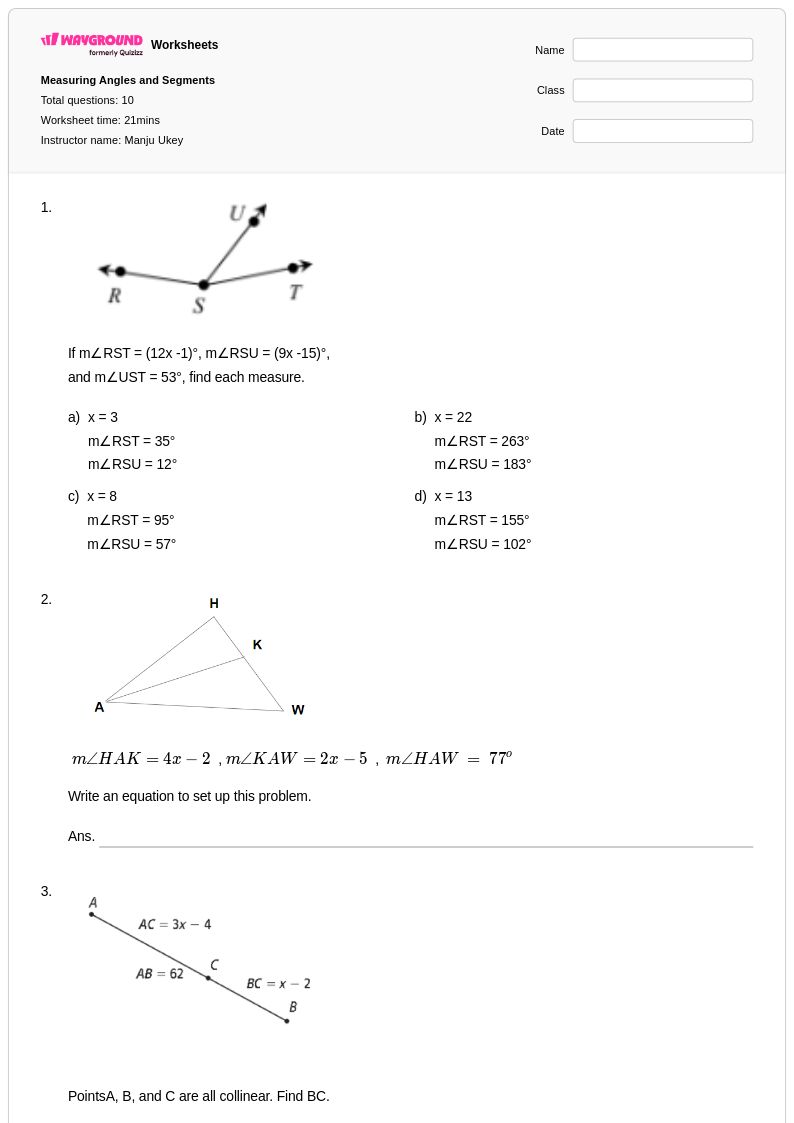
10 Q
7th - 10th
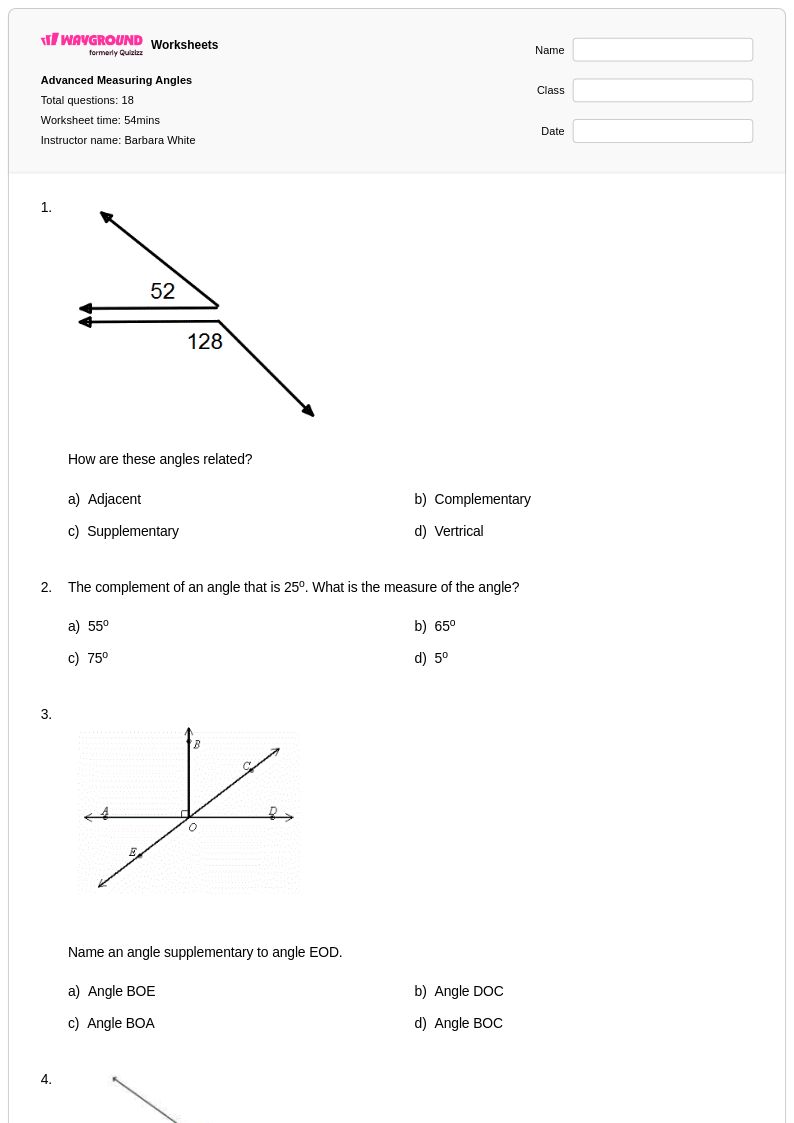
18 Q
7th - 10th
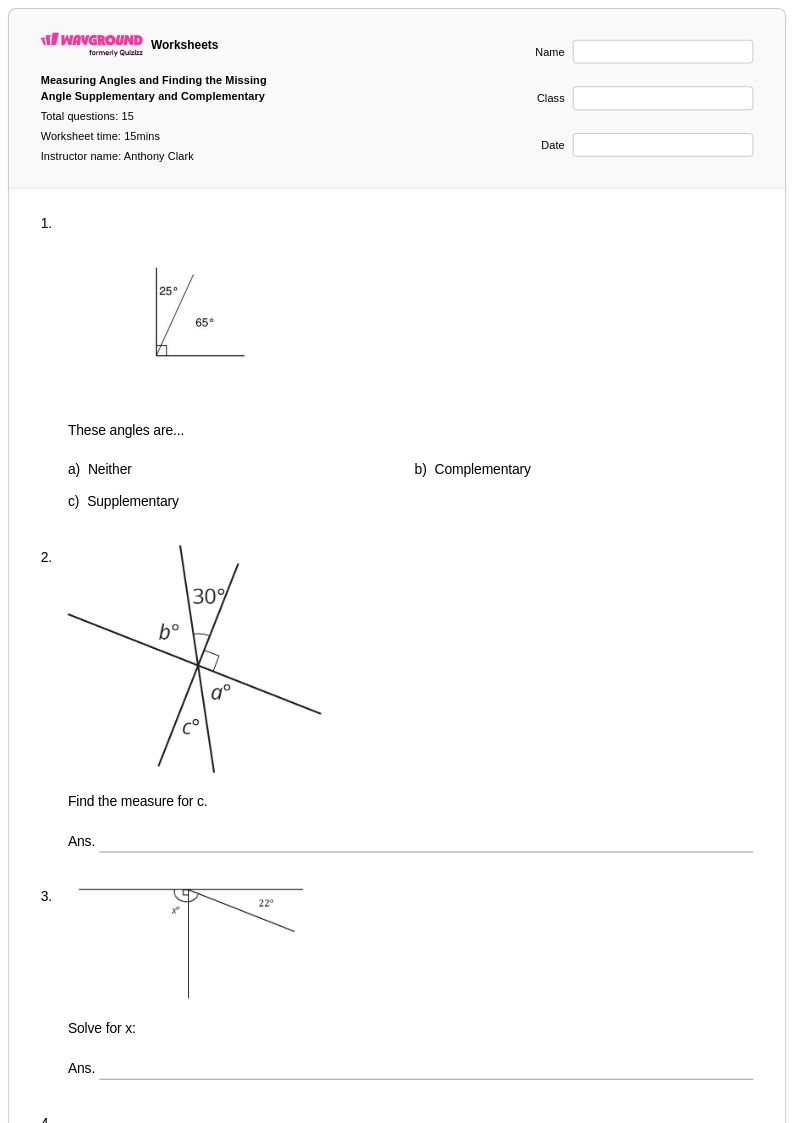
15 Q
7th - Uni
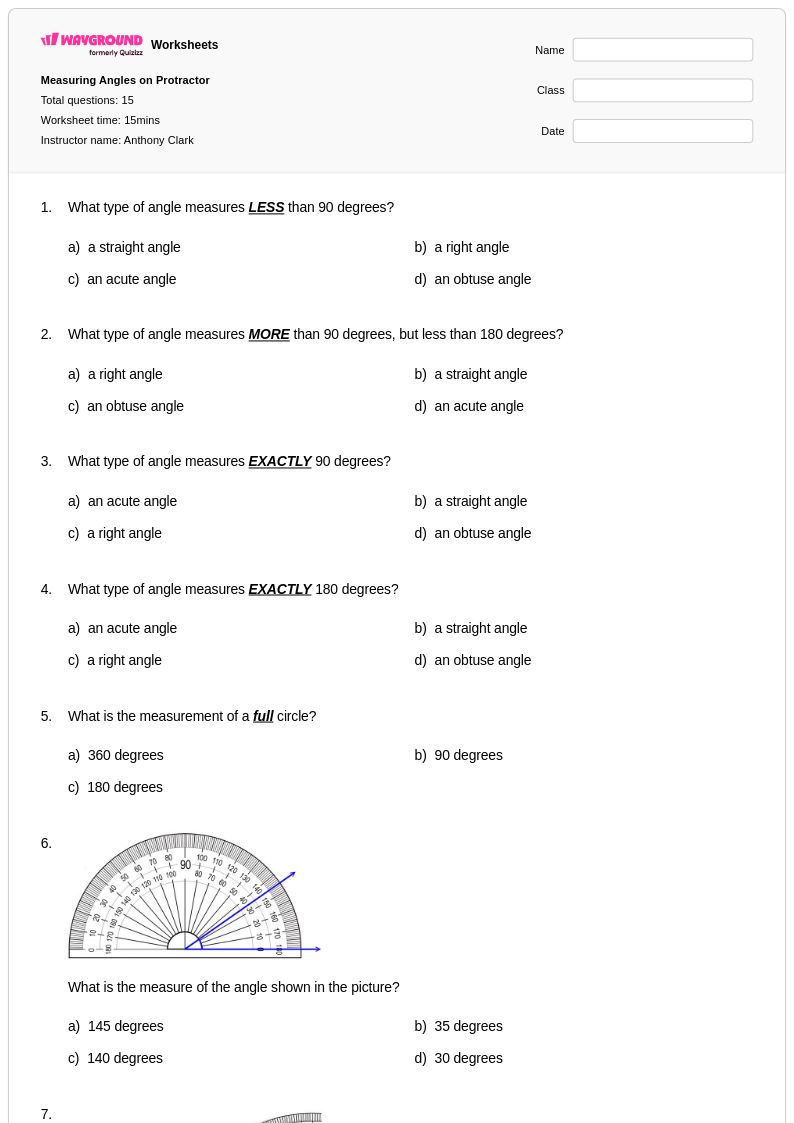
15 Q
4th - Uni
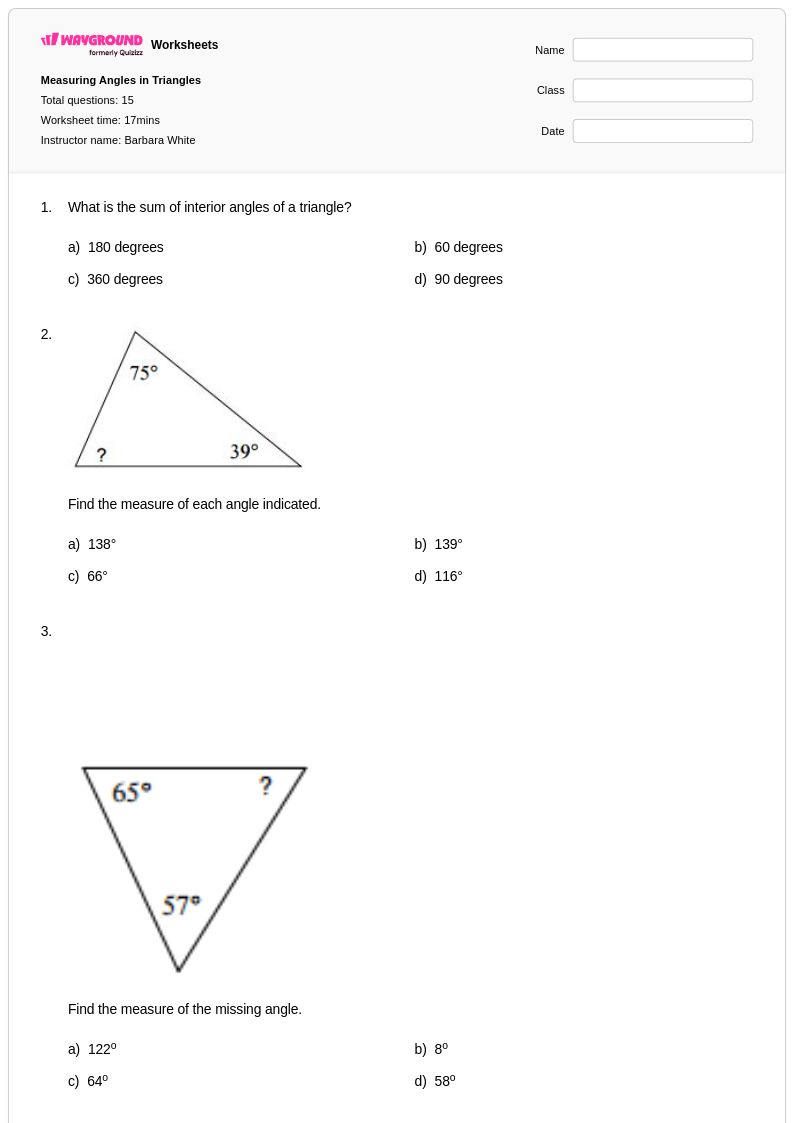
15 Q
6th - 8th
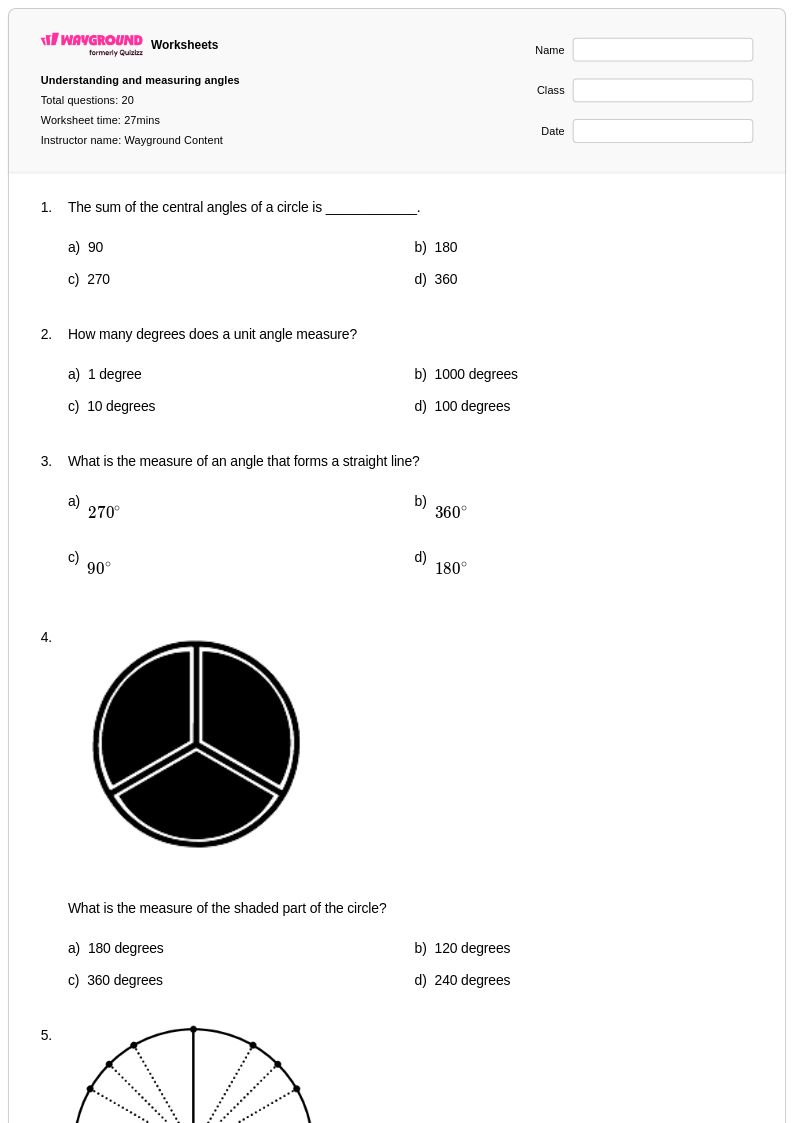
20 Q
4th - 12th
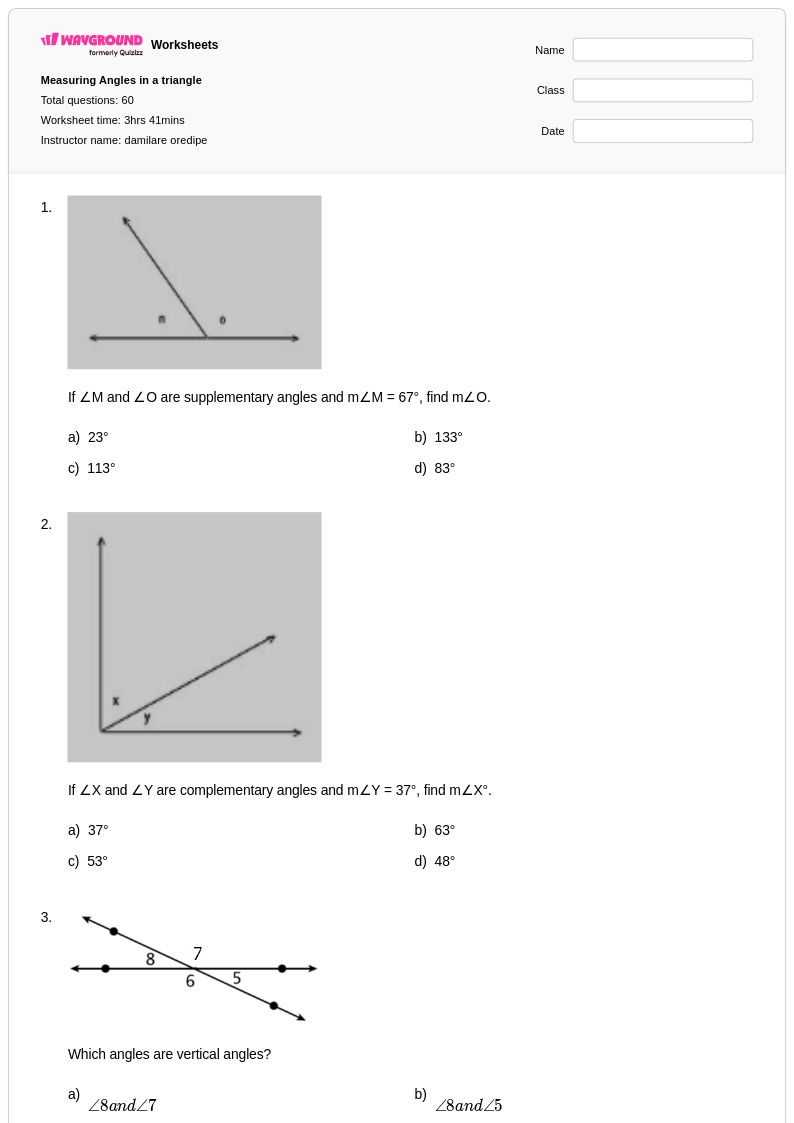
60 Q
8th
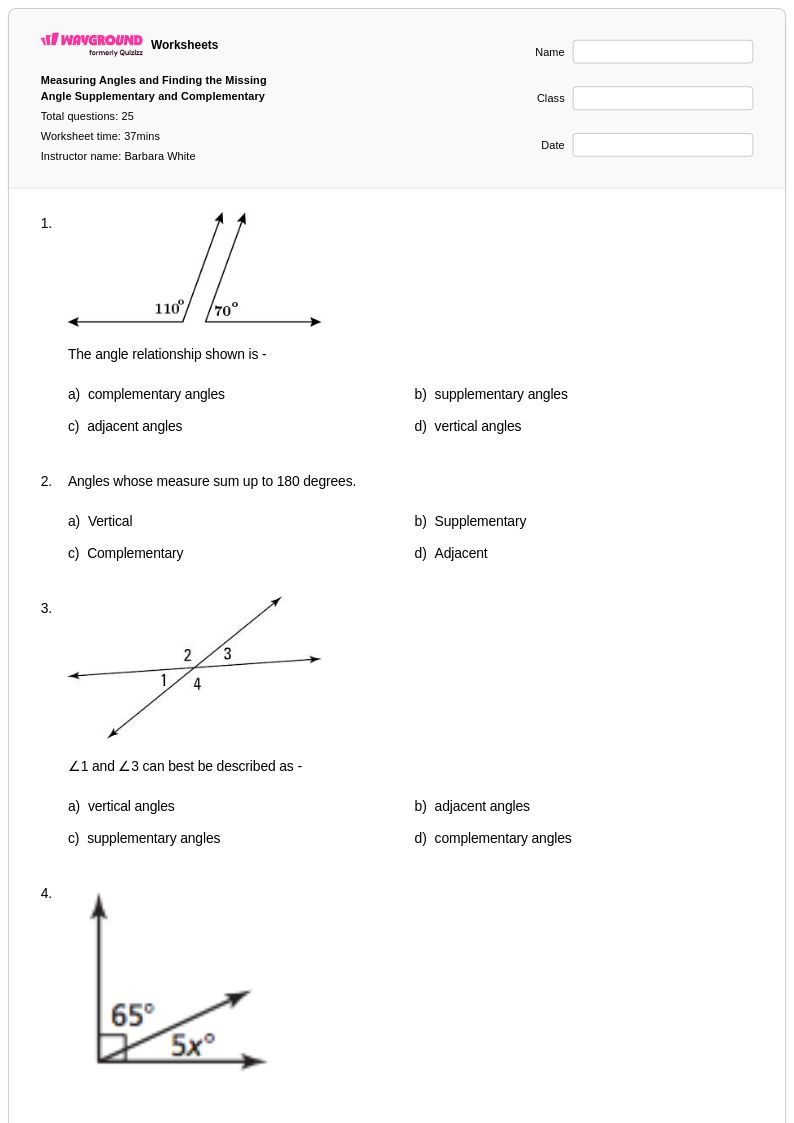
25 Q
6th - 12th
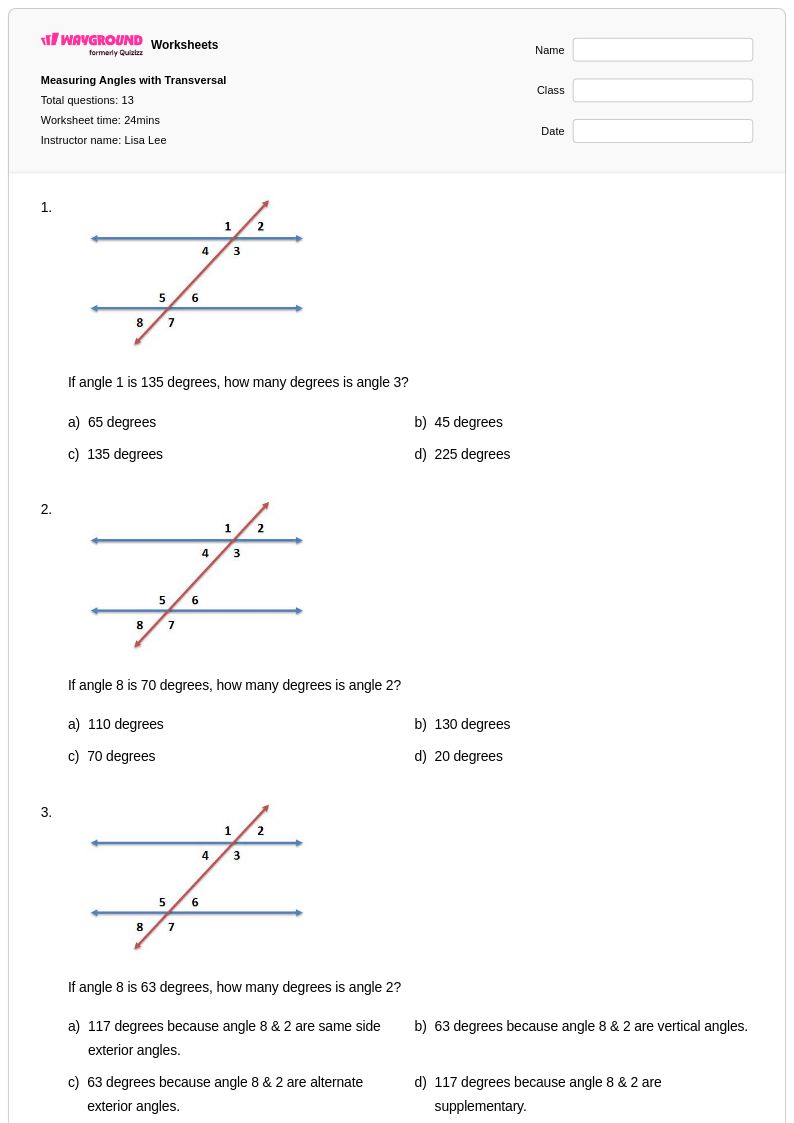
13 Q
8th
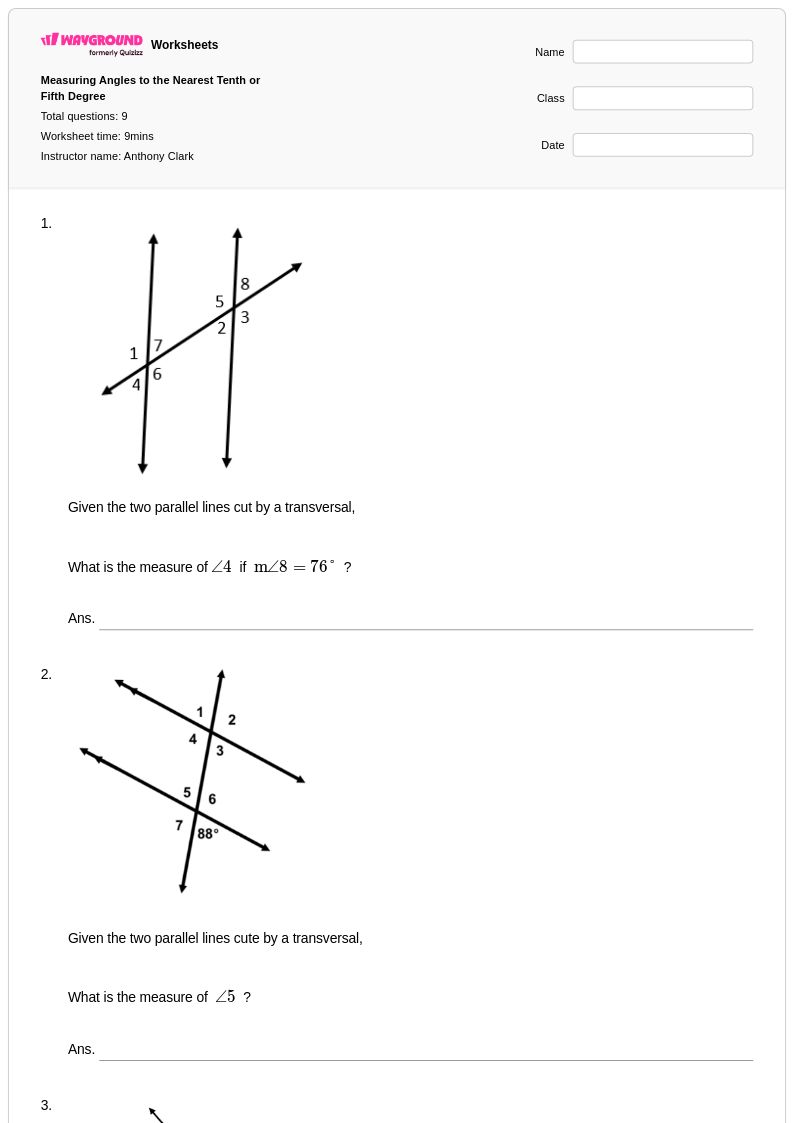
9 Q
8th - Uni
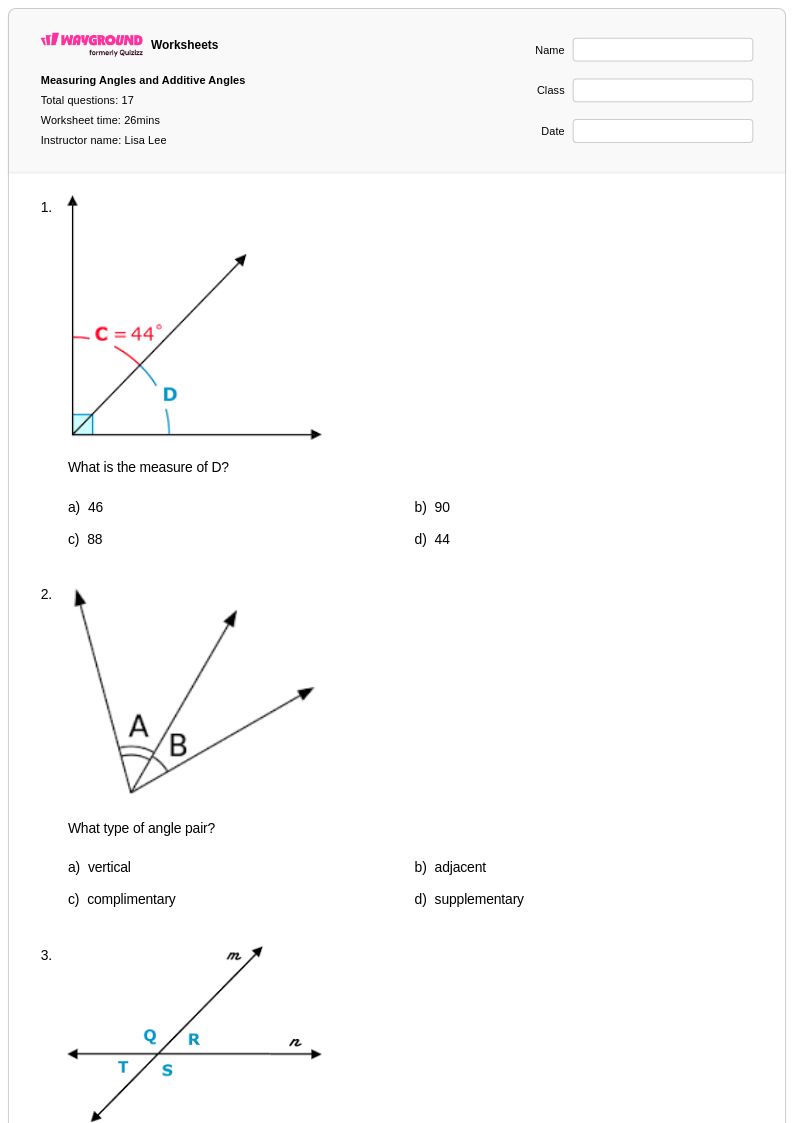
17 Q
8th - 10th
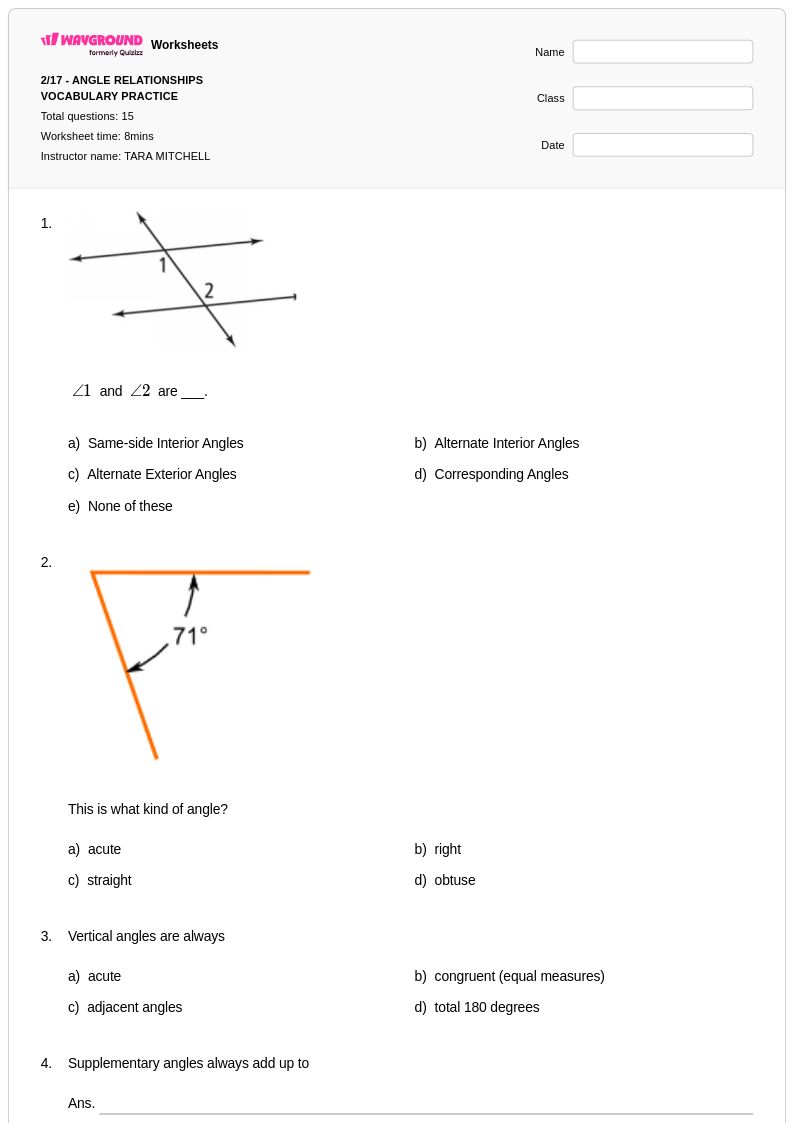
15 Q
8th
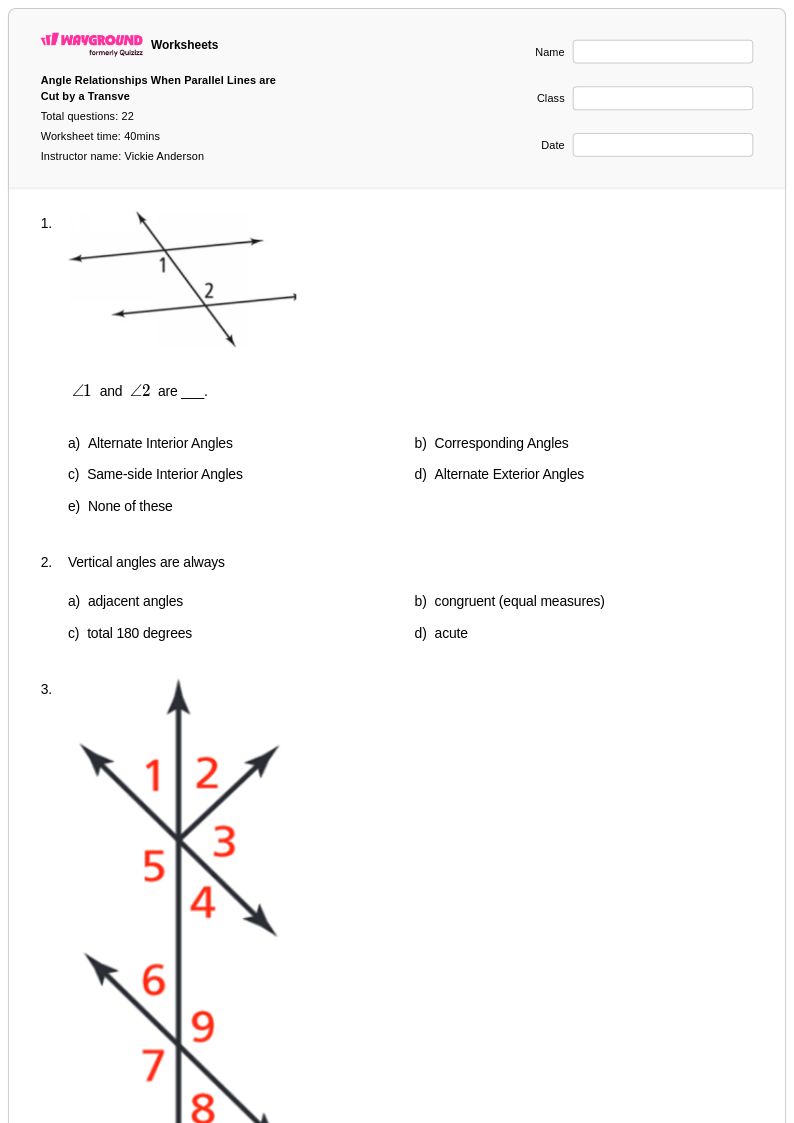
22 Q
8th
Explore Other Subject Worksheets for class 8
Explore printable Measuring Angles worksheets for Class 8
Measuring angles worksheets for Class 8 students available through Wayground (formerly Quizizz) provide comprehensive practice with protractor usage, angle classification, and precise measurement techniques essential for geometric understanding. These carefully crafted resources strengthen students' ability to accurately measure acute, obtuse, right, and straight angles while developing proficiency with both standard and reflex angle measurements. The worksheet collections include varied practice problems that progress from basic protractor reading to complex angle relationships, ensuring students master fundamental measurement skills before advancing to more sophisticated geometric concepts. Each worksheet comes with a complete answer key and is available as a free printable PDF, making it simple for educators to incorporate structured angle measurement practice into their mathematics instruction.
Wayground (formerly Quizizz) empowers teachers with access to millions of educator-created measuring angles worksheets specifically designed for Class 8 mathematics standards. The platform's robust search and filtering capabilities allow instructors to quickly locate resources that align with specific curriculum requirements and learning objectives, while differentiation tools enable seamless customization for students at varying skill levels. Teachers can easily modify worksheets to provide targeted remediation for struggling learners or create enrichment activities for advanced students, with all materials available in both digital and printable PDF formats. This flexibility supports diverse instructional approaches, from traditional paper-based practice to interactive digital assignments, helping educators efficiently plan lessons that build strong foundational skills in geometric measurement while accommodating different learning preferences and classroom environments.
FAQs
How should I teach measuring angles in Grade 8?
What measuring-angles exercises are useful for eighth-grade students?
What errors should I watch for when students measure angles?
How do I assign a Wayground measuring angles worksheet?
How does measuring angles fit into the Grade 8 math curriculum?
Can I differentiate a Grade 8 measuring angles worksheet?
What grade level is this measuring angles worksheet designed for?