Free Printable Mineral Identification Worksheets for Class 7
Discover Class 7 mineral identification worksheets and printables that help students master rock and mineral classification through hands-on practice problems, complete with answer keys and free PDF resources.
Explore printable Mineral Identification worksheets for Class 7
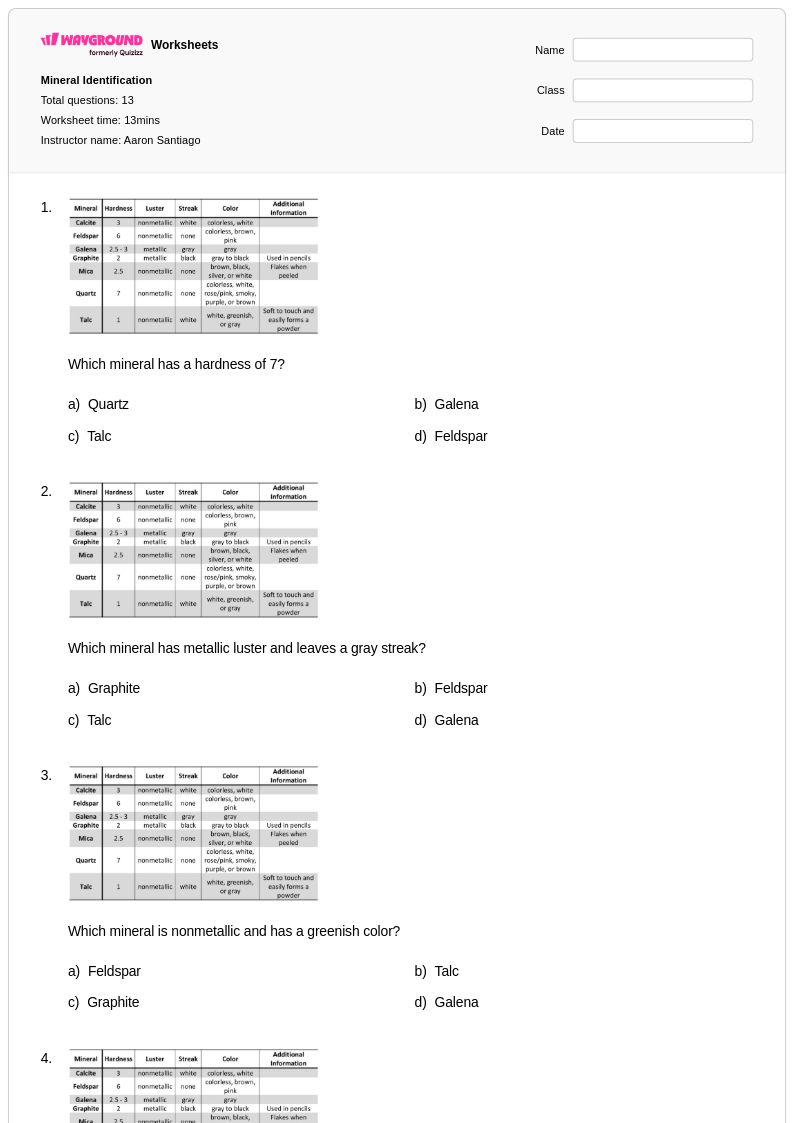
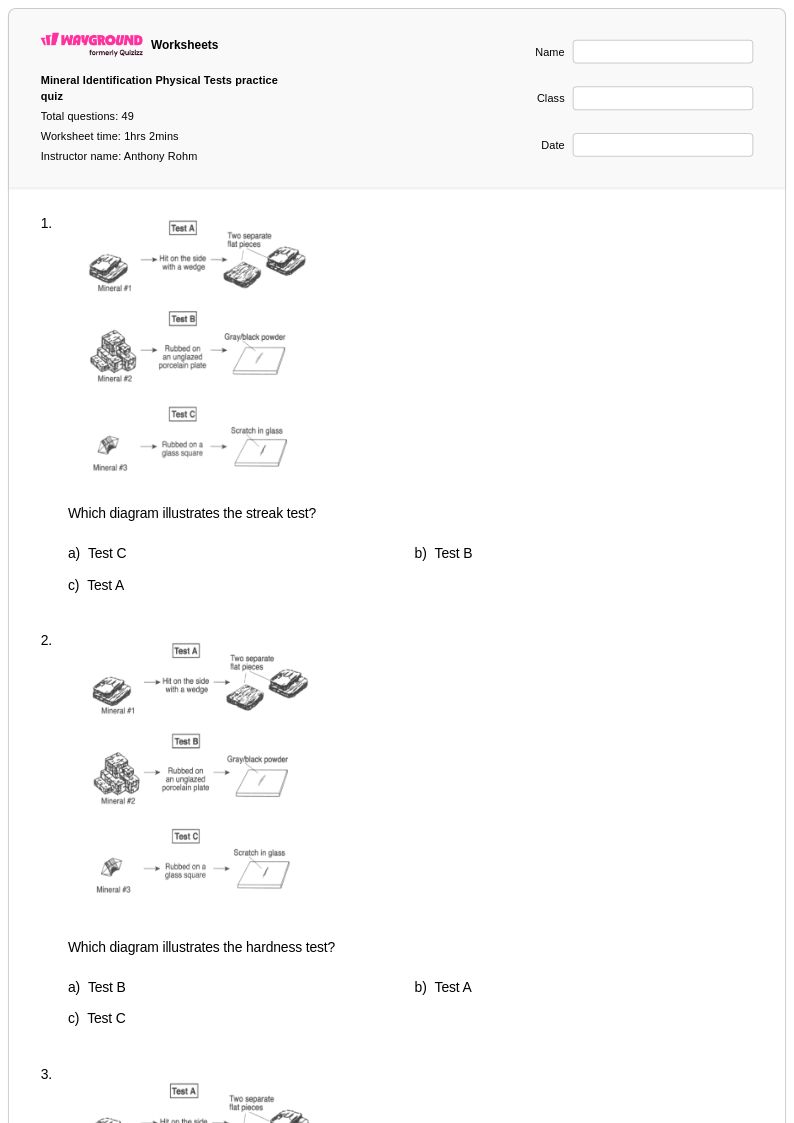
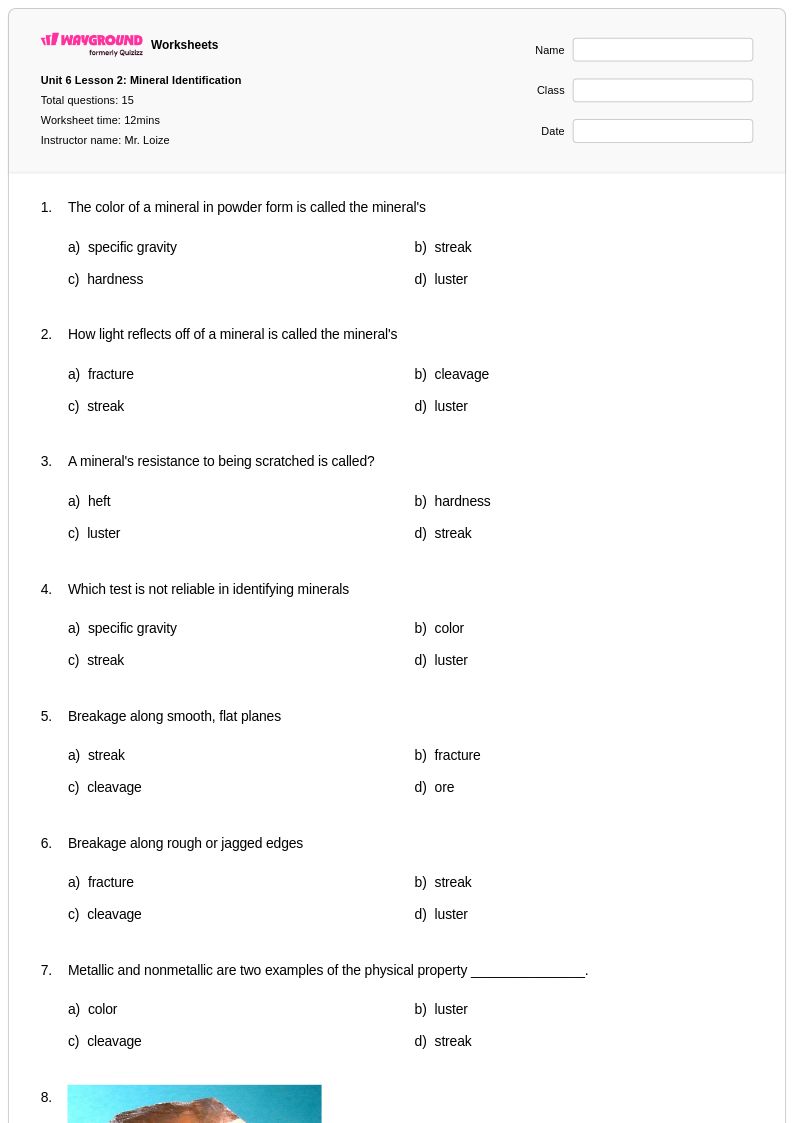
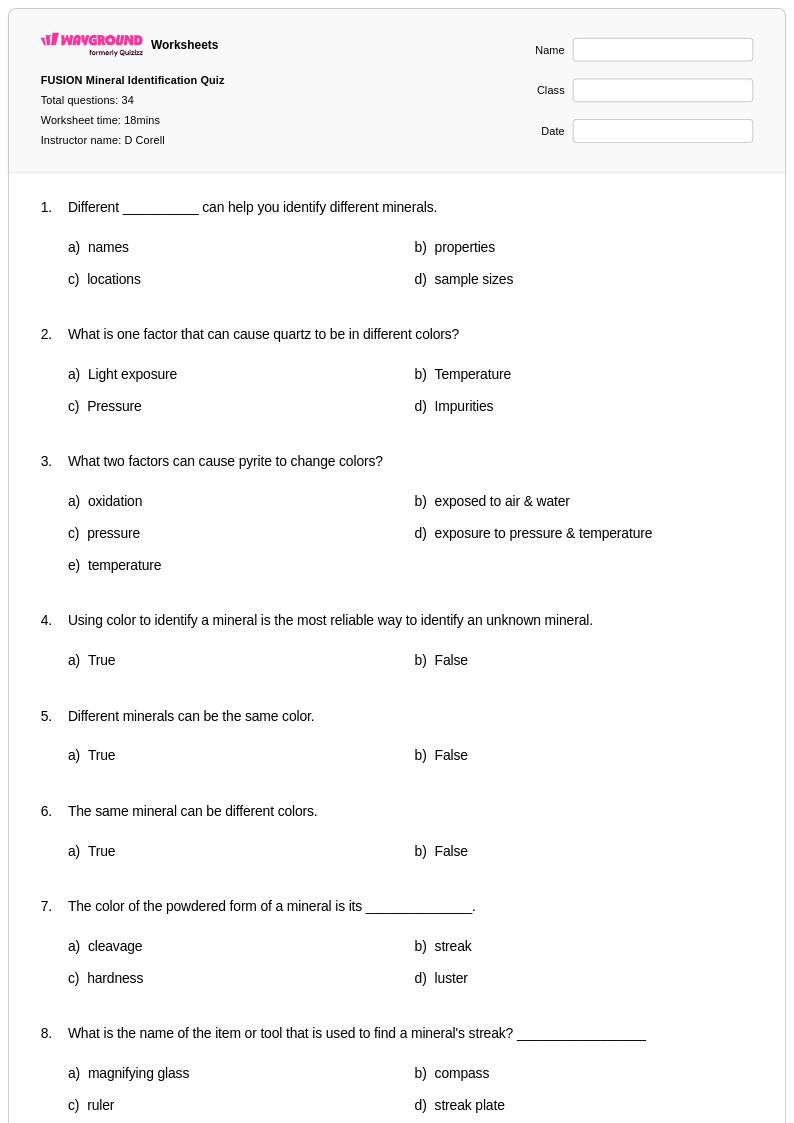
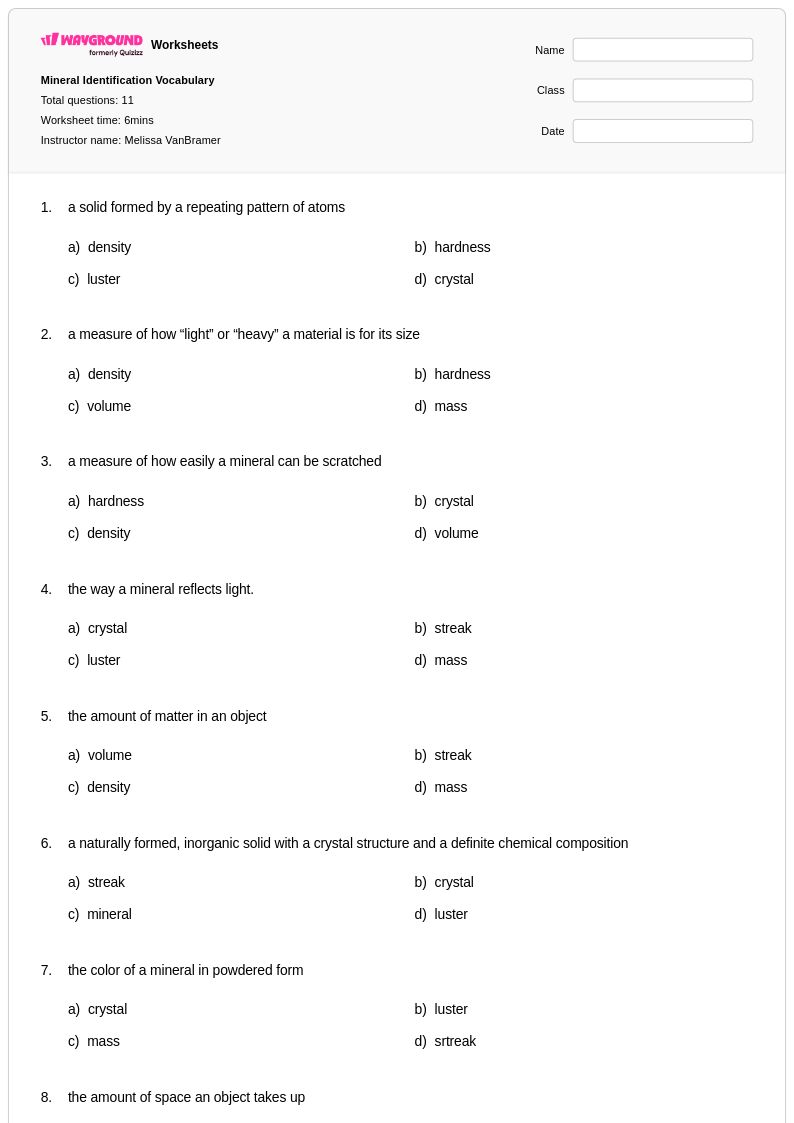
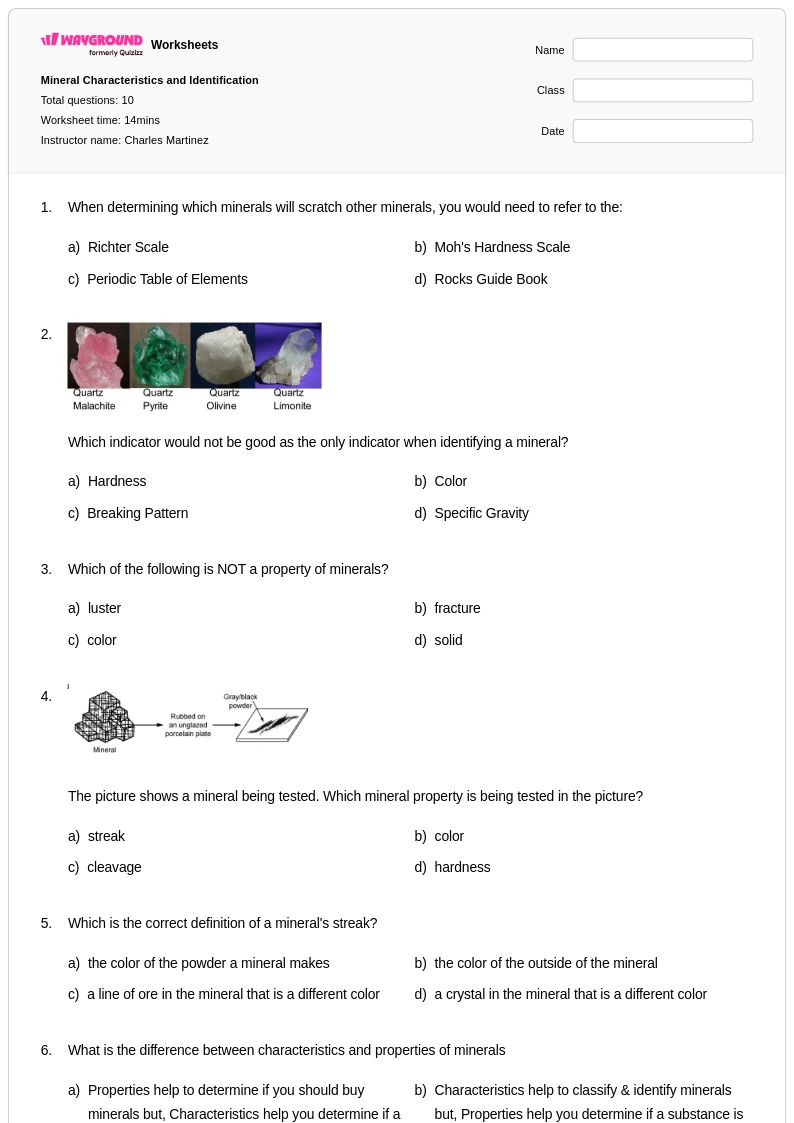
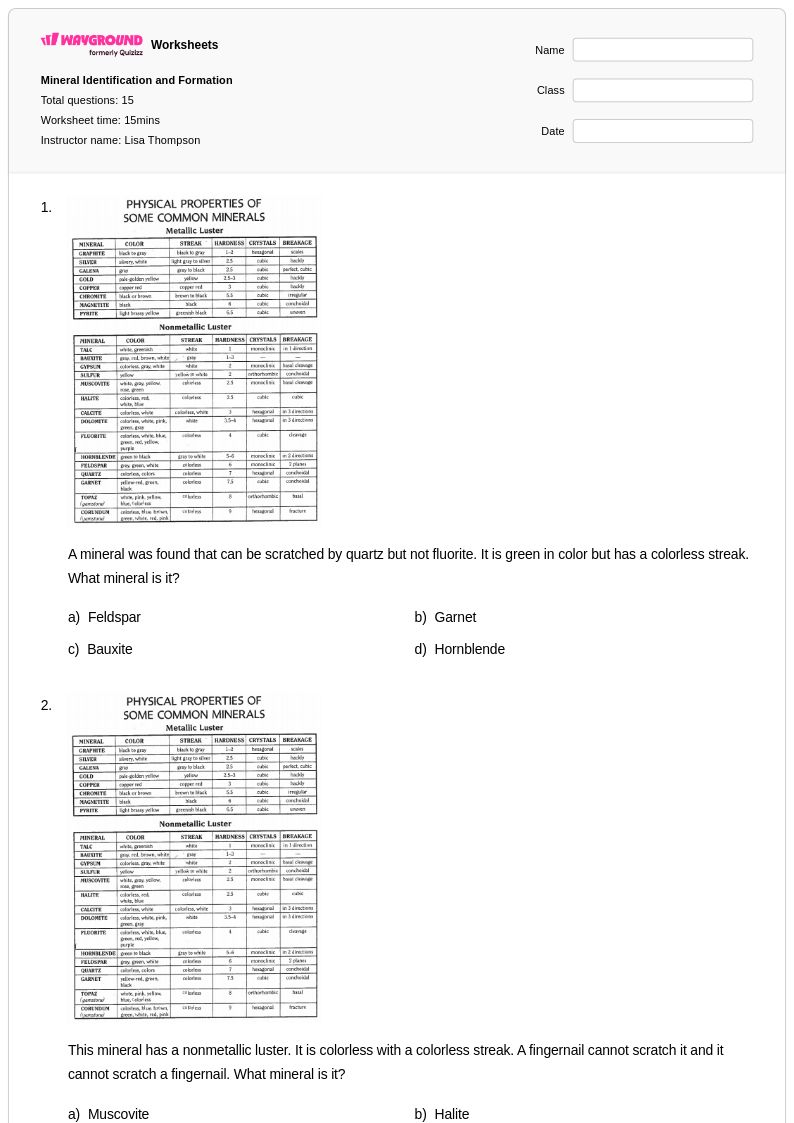
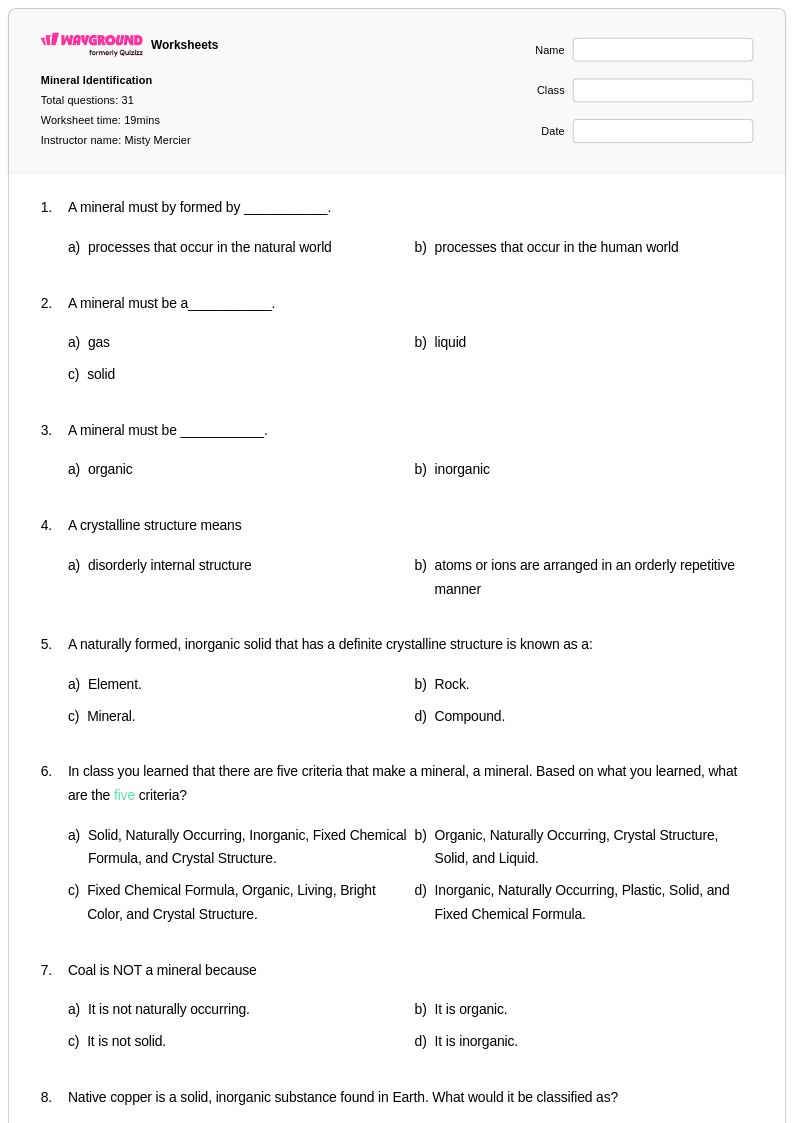
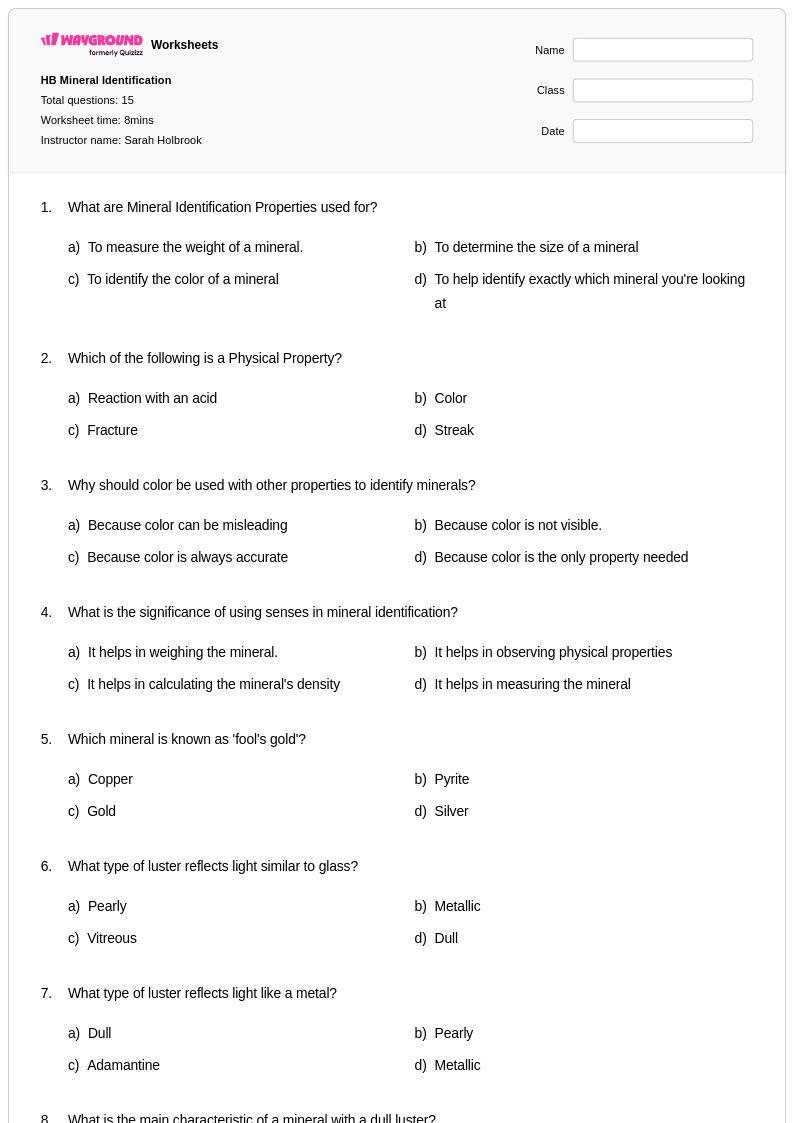
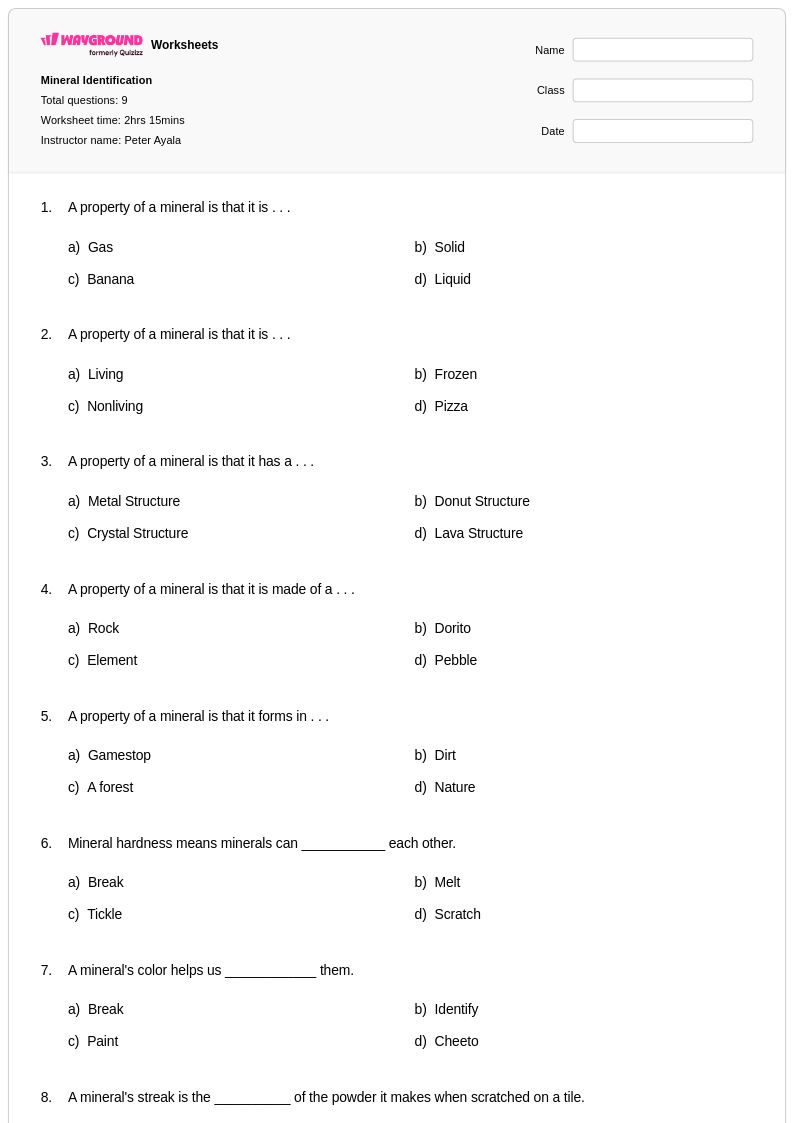
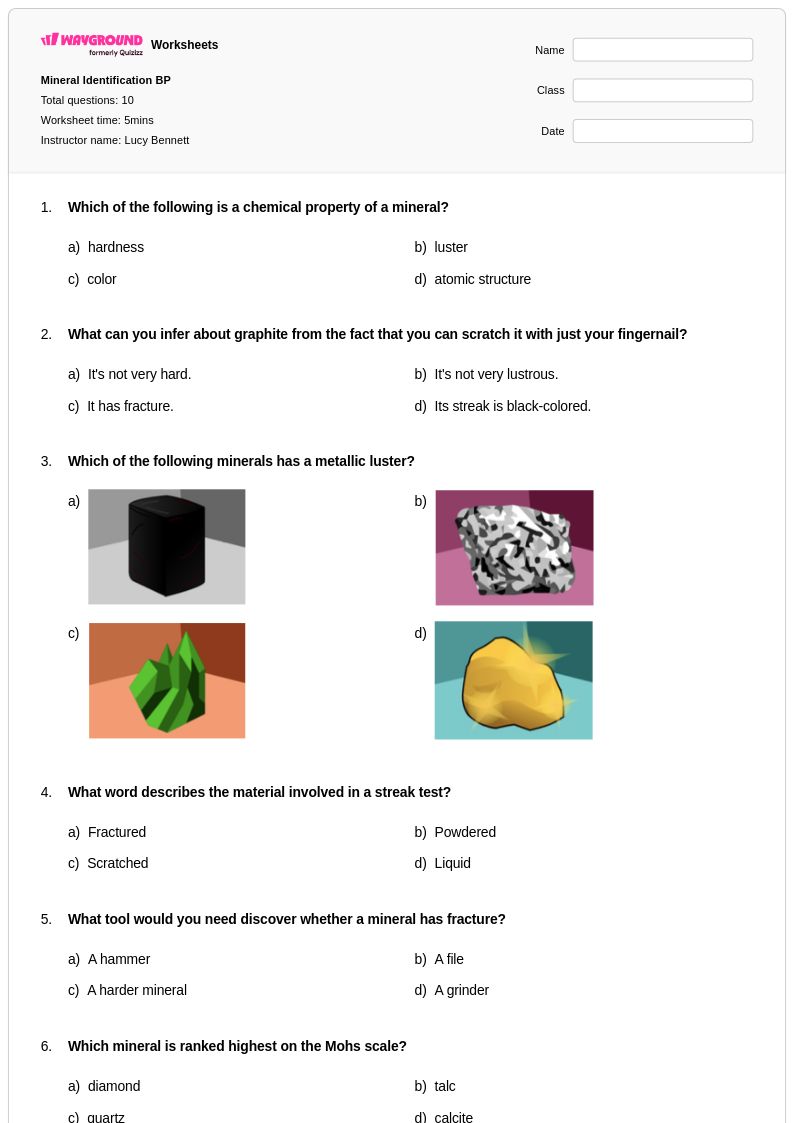
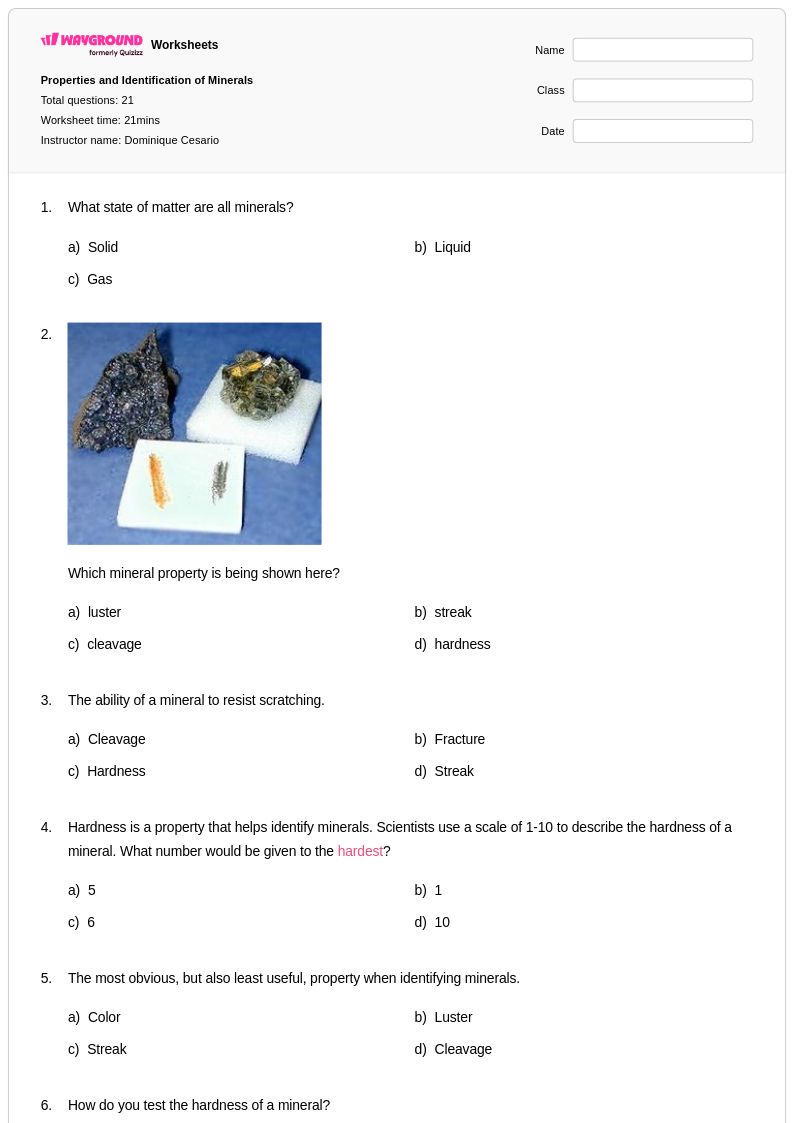
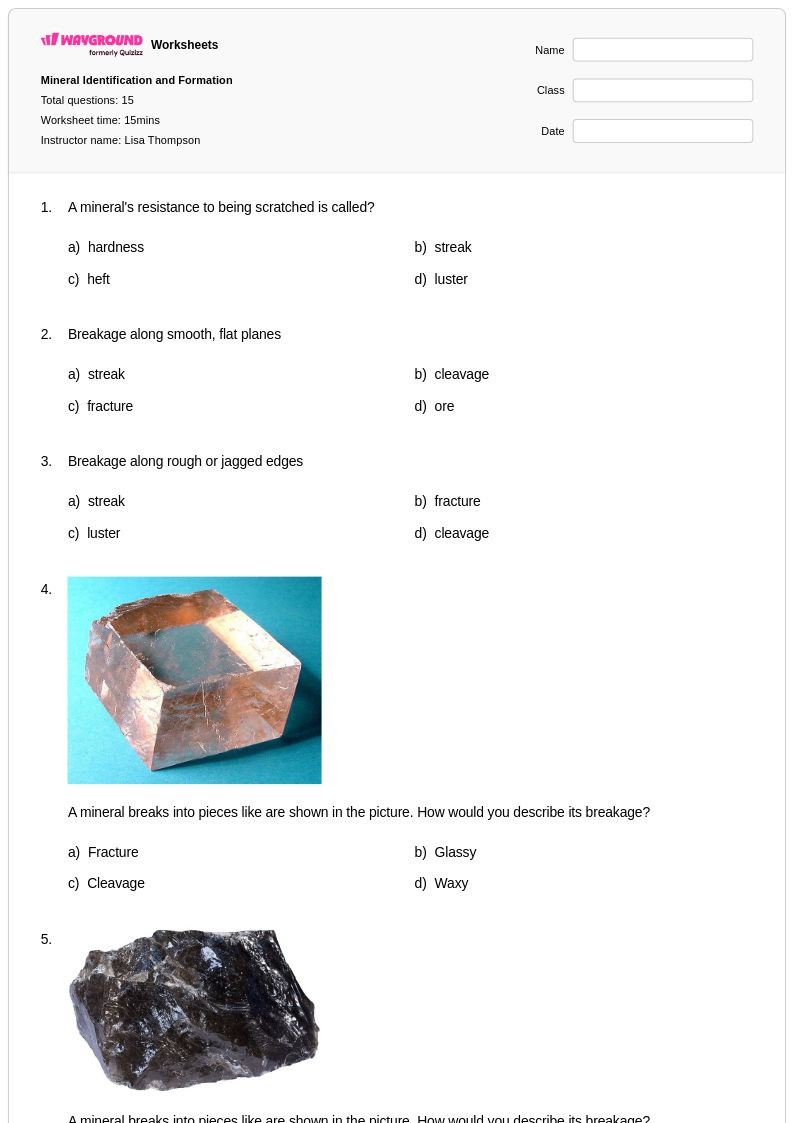
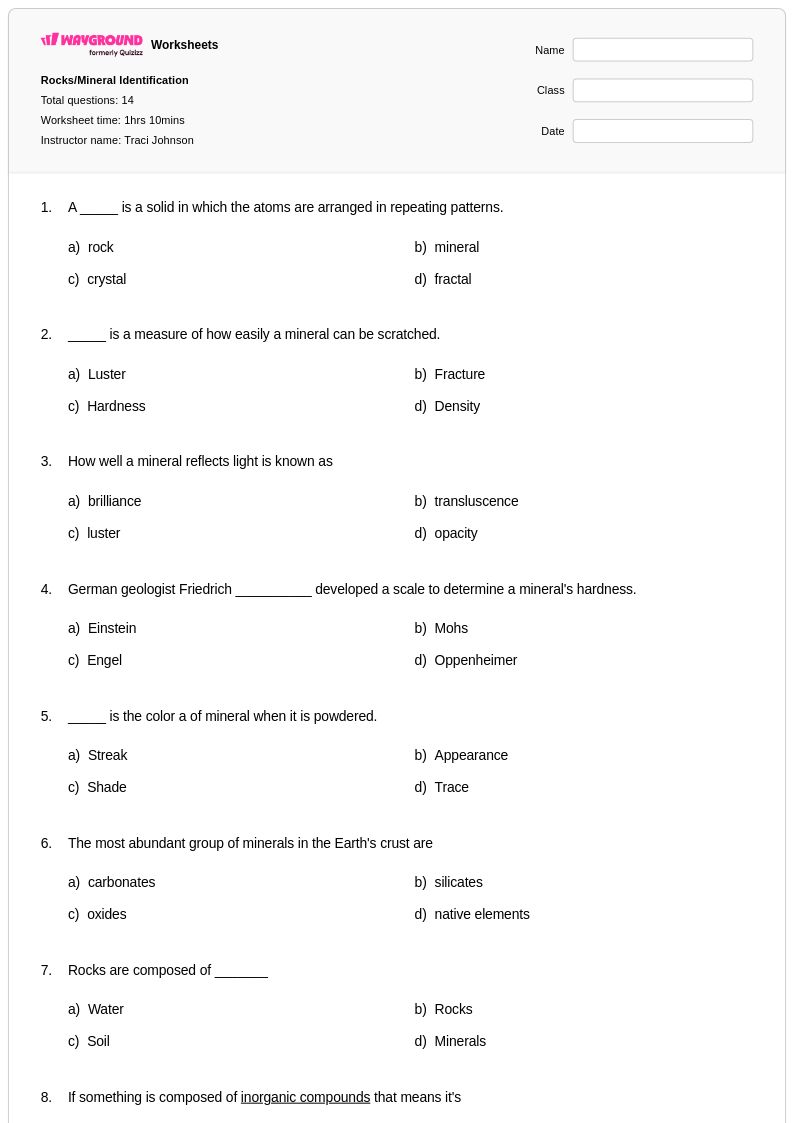
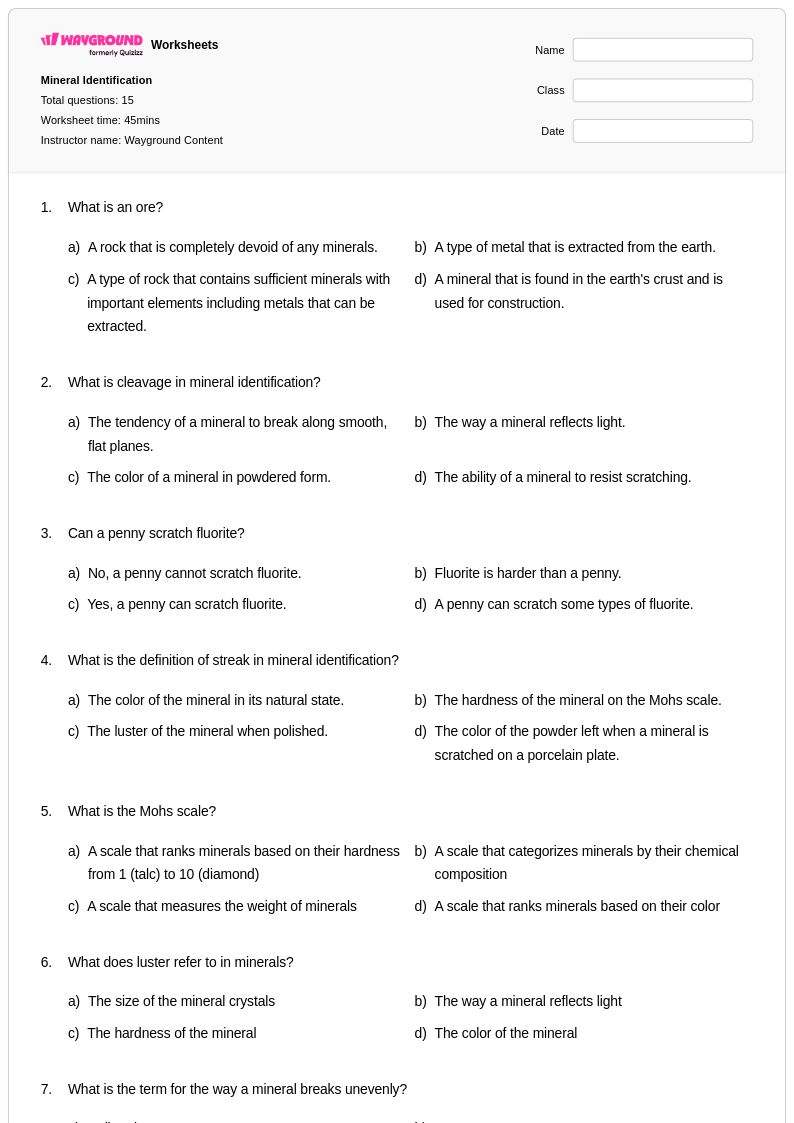
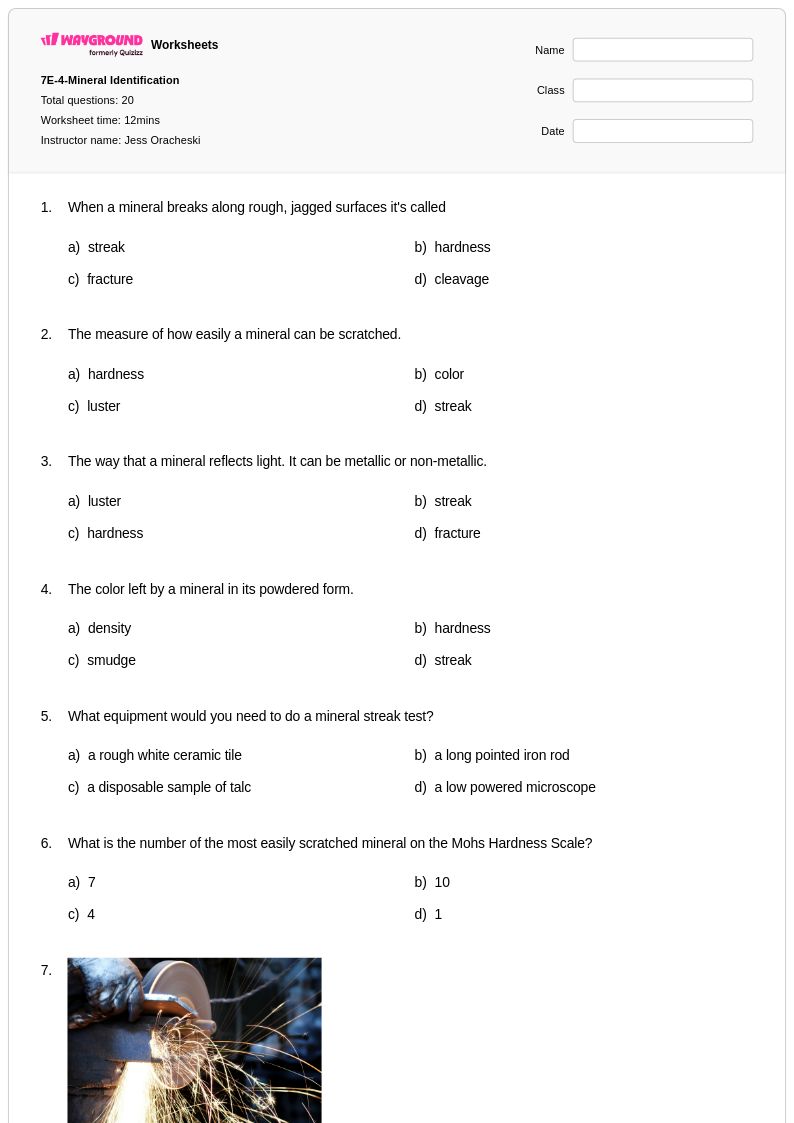
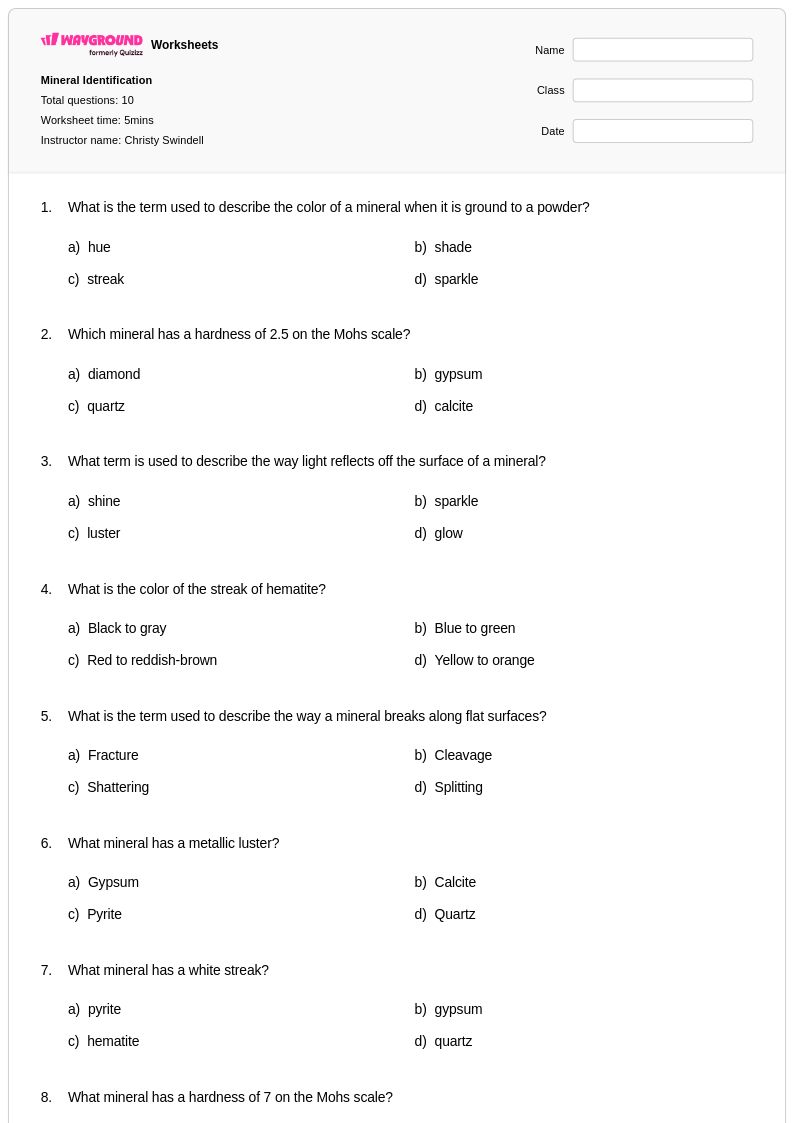
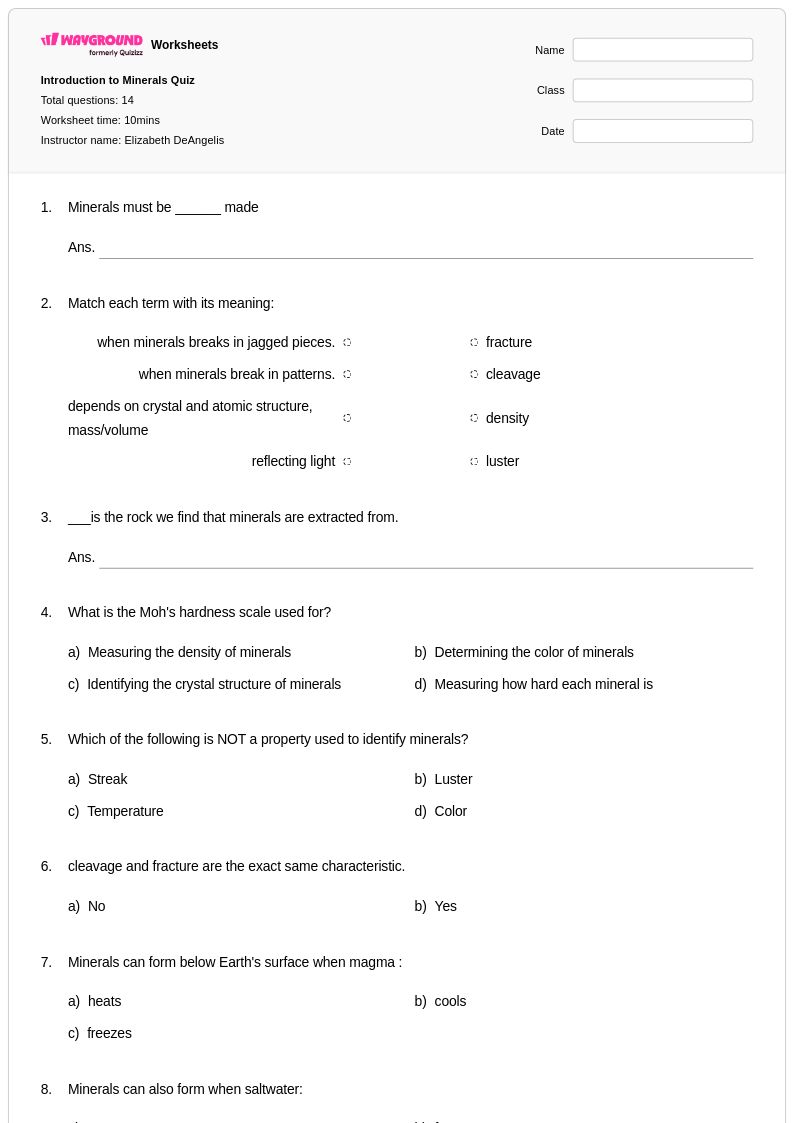
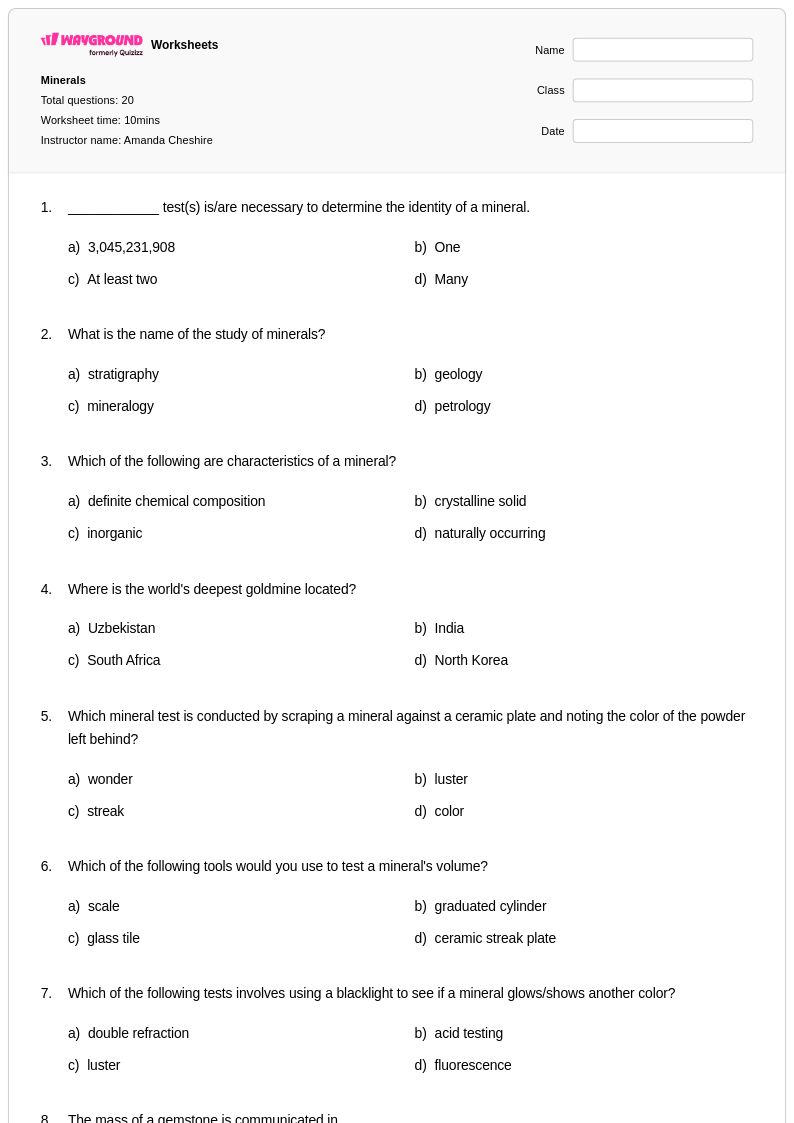
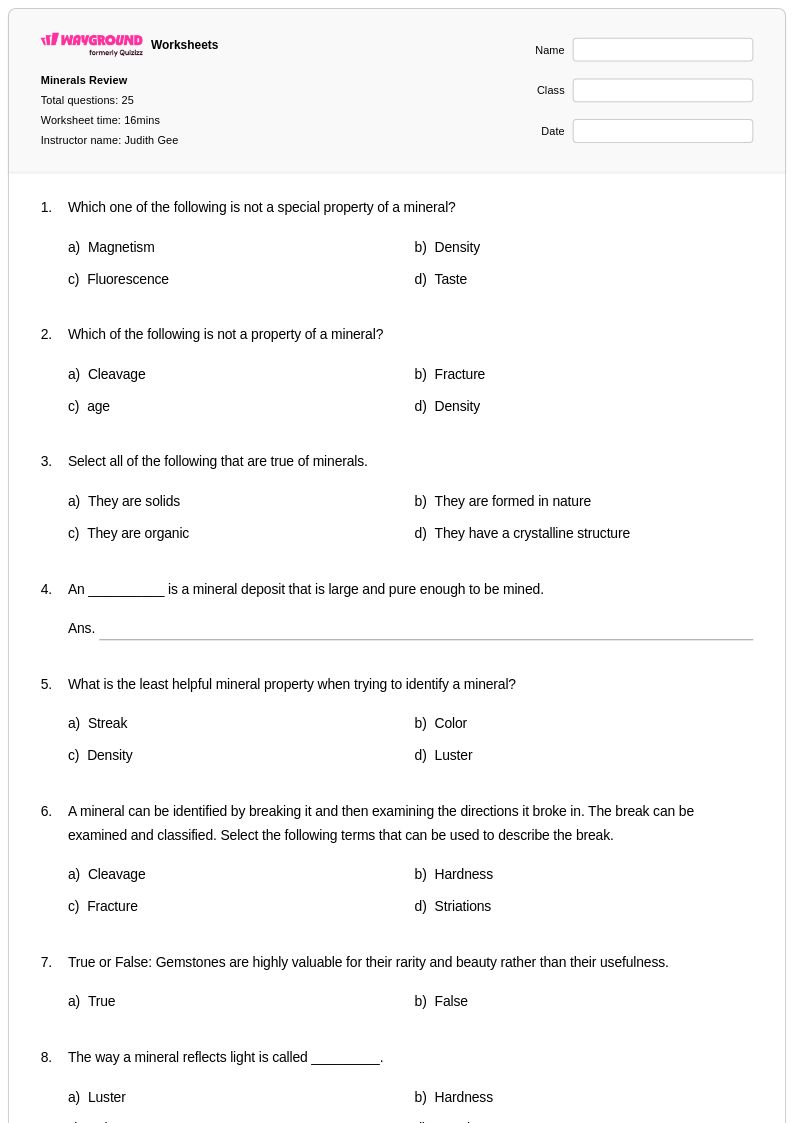
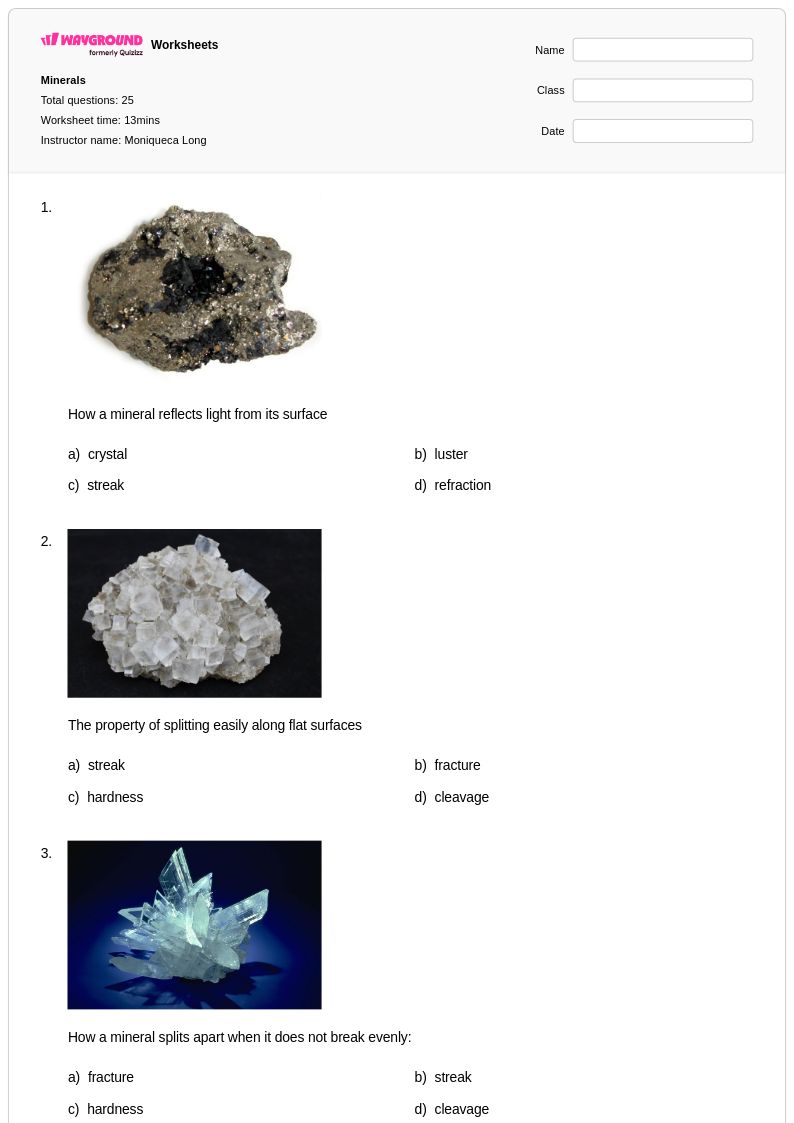
Mineral identification worksheets for Class 7 students through Wayground (formerly Quizizz) provide comprehensive practice in recognizing and classifying Earth's diverse mineral specimens using systematic scientific methods. These carefully designed educational resources strengthen students' observational skills as they learn to identify minerals through physical properties including hardness, luster, color, streak, cleavage, and crystal structure. The worksheet collections feature hands-on practice problems that guide seventh graders through the step-by-step process of using identification charts, conducting simple tests like the scratch test for hardness determination, and applying Mohs hardness scale principles. Each printable resource includes detailed answer keys that help students verify their mineral identification techniques, while free pdf formats ensure accessibility for both classroom instruction and independent study sessions.
Wayground (formerly Quizizz) empowers educators with millions of teacher-created mineral identification resources specifically aligned with Class 7 Earth and Space Science standards, offering robust search and filtering capabilities that allow instructors to locate precisely targeted content for their curriculum needs. The platform's differentiation tools enable teachers to customize worksheets based on individual student readiness levels, providing both remedial support for struggling learners and enrichment opportunities for advanced students exploring complex mineral classification systems. These versatile resources are available in both printable and digital formats, including downloadable pdf versions that facilitate seamless integration into lesson planning, homework assignments, and assessment preparation. Teachers can efficiently address diverse learning needs through the platform's flexible customization options, supporting everything from introductory mineral property exploration to advanced geological identification techniques that build essential scientific inquiry skills.
FAQs
How do I teach mineral identification to students?
Effective mineral identification instruction begins with introducing the key physical properties geologists use: hardness (Mohs scale), streak color, luster, cleavage, fracture, crystal form, and specific gravity. Teachers typically move from direct instruction to hands-on specimen analysis, having students apply each property systematically before reaching a final identification. Building familiarity with identification keys and reference charts early helps students develop the structured, evidence-based reasoning that mineral analysis requires.
What exercises help students practice mineral identification?
The most effective practice exercises ask students to analyze a set of mineral characteristics and use identification keys or flow charts to arrive at a conclusion, rather than simply memorizing mineral names. Worksheets that present physical property data — such as hardness rating, streak color, and luster type — and require students to compare and classify specimens reinforce the systematic process geologists use in the field and lab. Including answer keys allows students to self-assess and correct misconceptions independently.
What mistakes do students commonly make when identifying minerals?
One of the most frequent errors is confusing the color of a mineral with its streak color — students often assume they are the same, but streak is a far more reliable diagnostic property. Students also commonly misapply the Mohs hardness scale, either testing incorrectly or misinterpreting results. Another persistent misconception is treating luster categories as subjective descriptions rather than precise scientific classifications, which leads to inconsistent identifications.
How can I differentiate mineral identification worksheets for students with different learning needs?
For students who struggle with the volume of properties to analyze simultaneously, reducing the number of mineral characteristics presented at once can lower cognitive load and build confidence before increasing complexity. On Wayground, teachers can apply accommodations at the individual student level, including reduced answer choices, read-aloud support for students who benefit from audio, and extended time — all configurable without other students being notified. These settings are saved and reusable across future assignments, making differentiation practical rather than burdensome.
How do I use Wayground's mineral identification worksheets in my classroom?
Wayground's mineral identification worksheets are available as printable PDFs for hands-on laboratory work and in digital formats for technology-integrated or remote learning environments. Teachers can also host the worksheets as an interactive quiz directly on Wayground, giving students immediate feedback while generating data teachers can use for formative assessment. Complete answer keys are included with every worksheet, supporting both independent student practice and teacher-led review.
How does the Mohs hardness scale help students identify minerals?
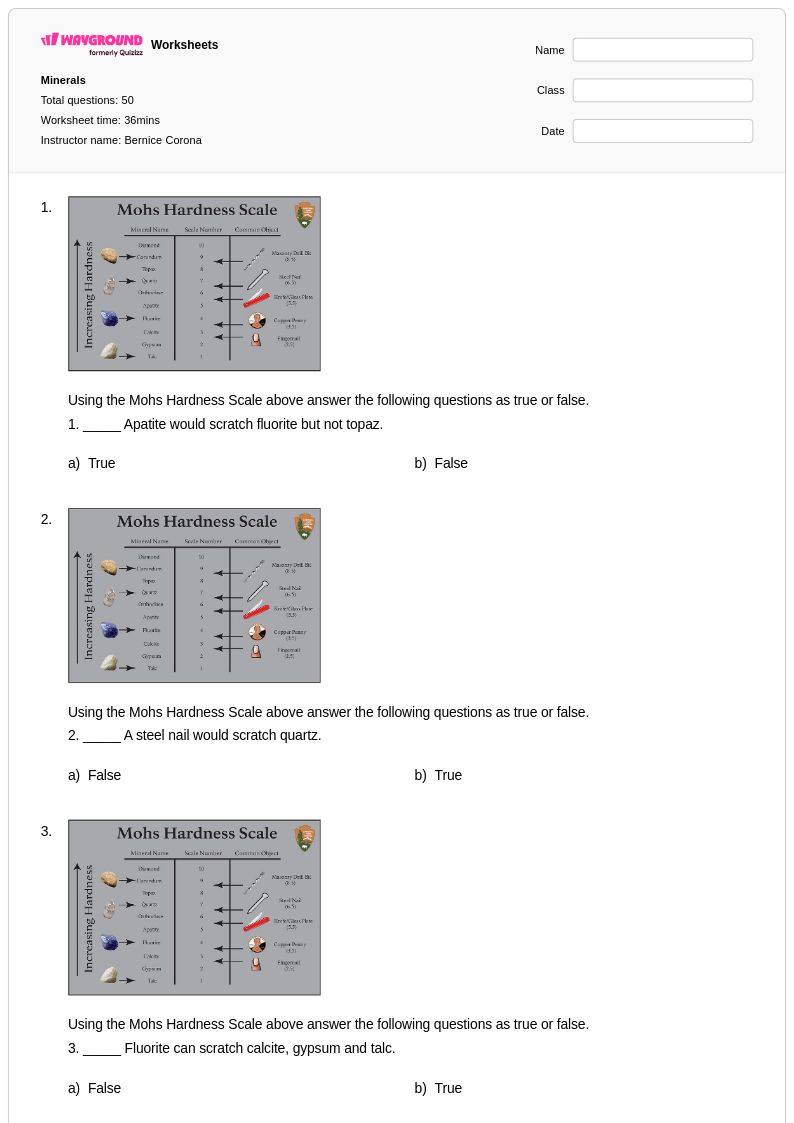
The Mohs hardness scale ranks minerals from 1 (talc) to 10 (diamond) based on their resistance to scratching, giving students a reliable, testable property to narrow down mineral identity. Students can use common reference materials — a fingernail (~2.5), a copper coin (~3.5), a steel nail (~5.5) — to perform scratch tests in the classroom without specialized equipment. Teaching students to use hardness as one of the first diagnostic steps builds the systematic, property-by-property reasoning that accurate mineral identification depends on.