Free Printable Types of Volcanoes Worksheets for Class 7
Class 7 students can explore types of volcanoes through Wayground's comprehensive collection of free worksheets and printables, featuring engaging practice problems and complete answer keys to master Earth and space science concepts.
Explore printable Types of Volcanoes worksheets for Class 7
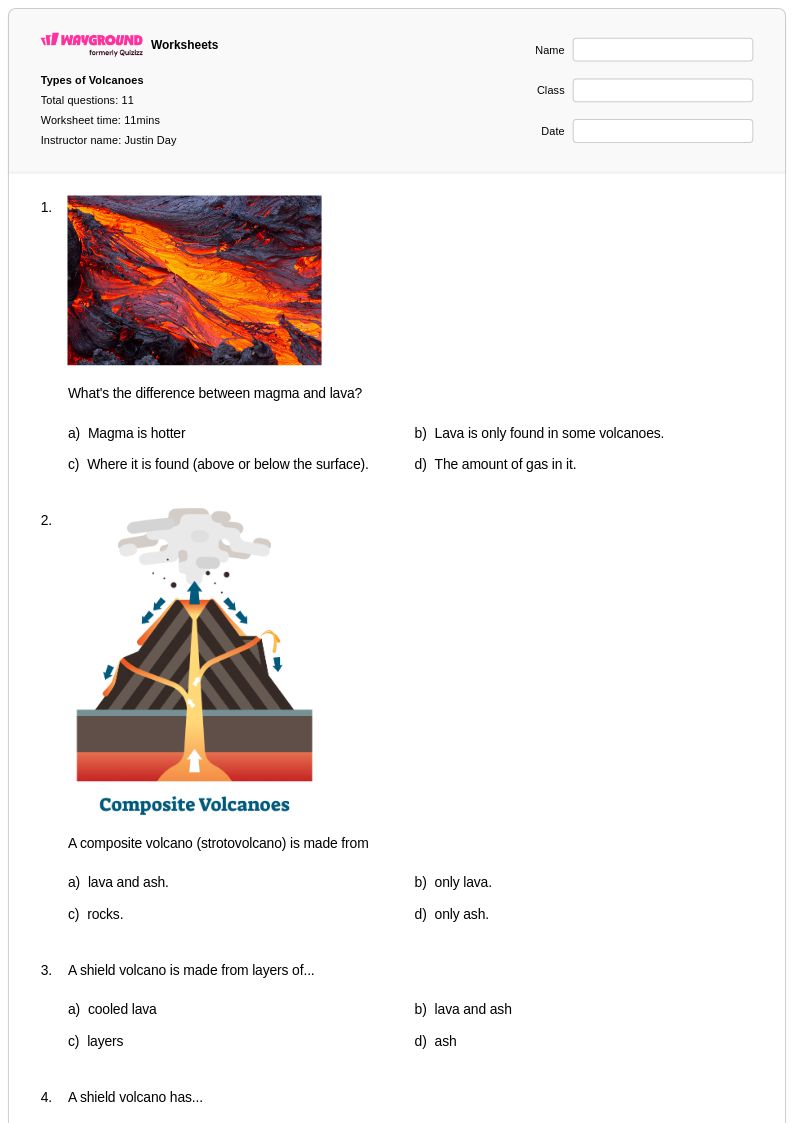
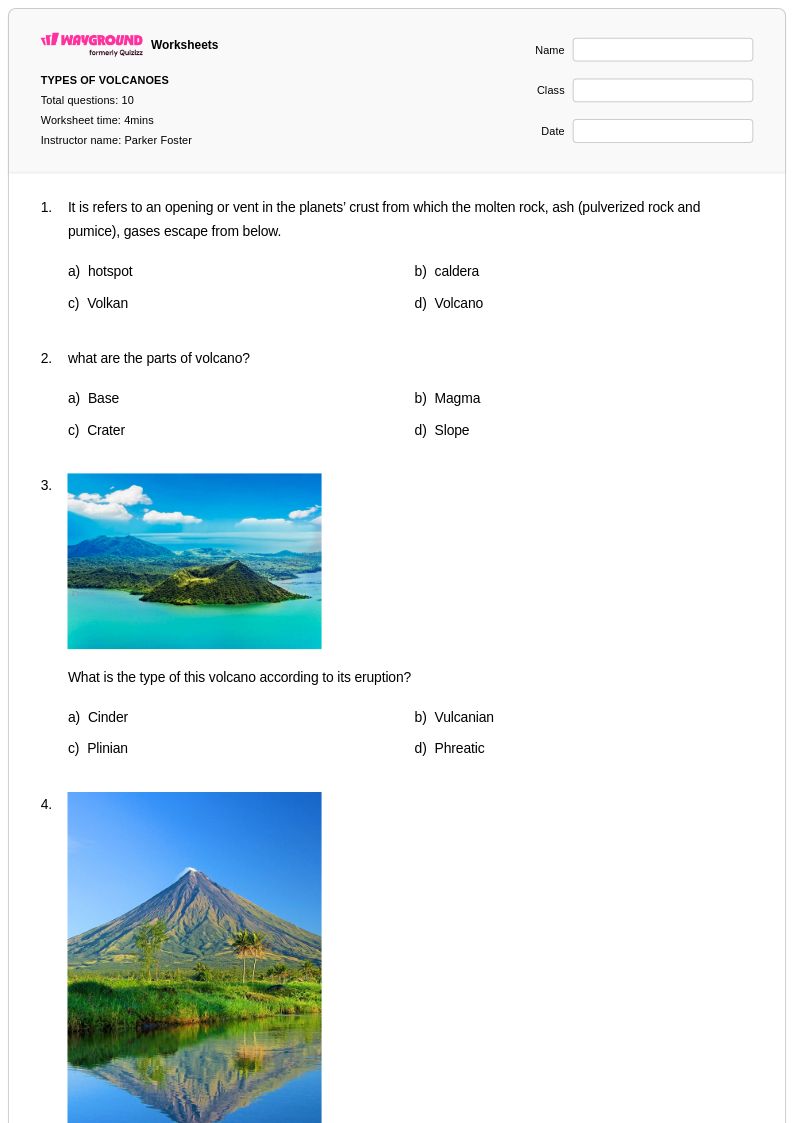
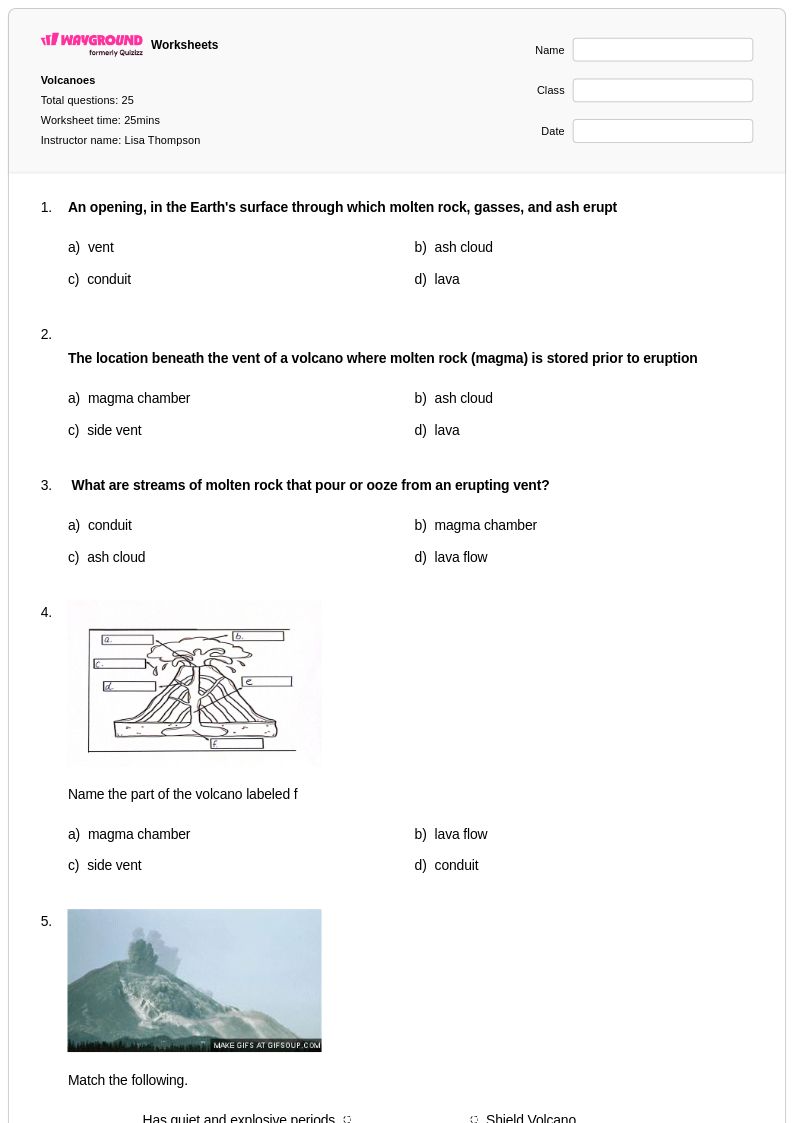
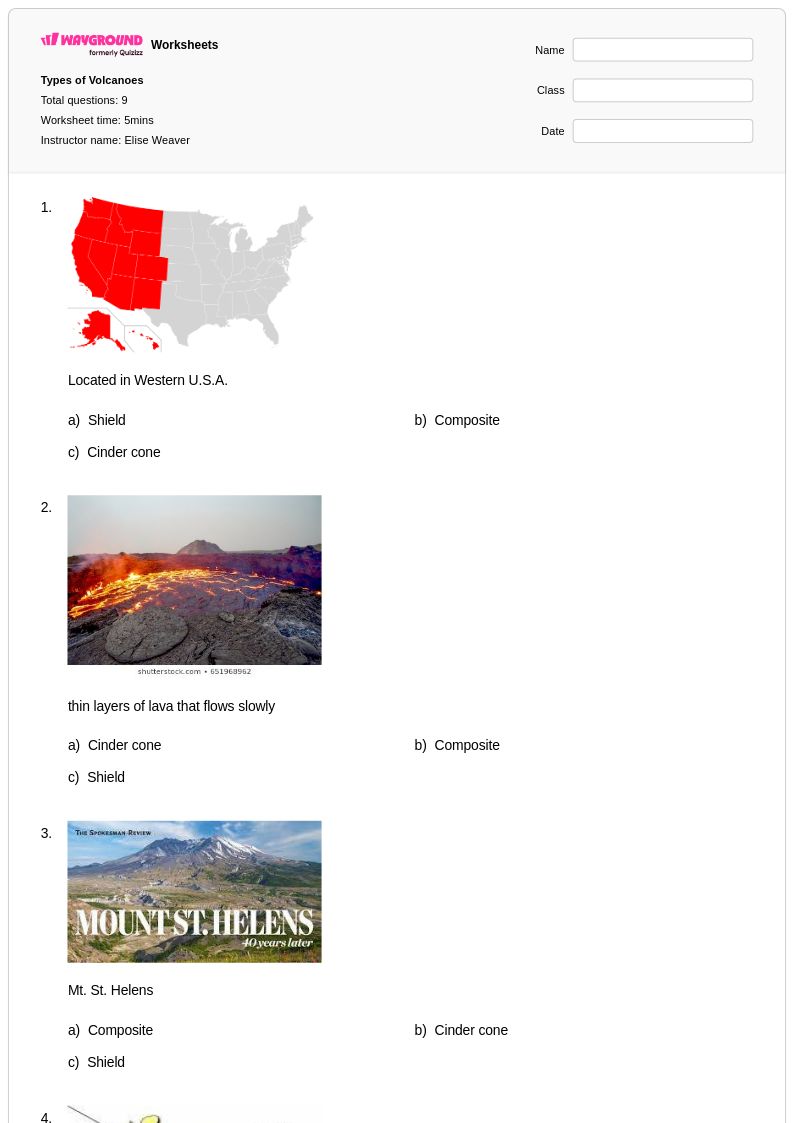
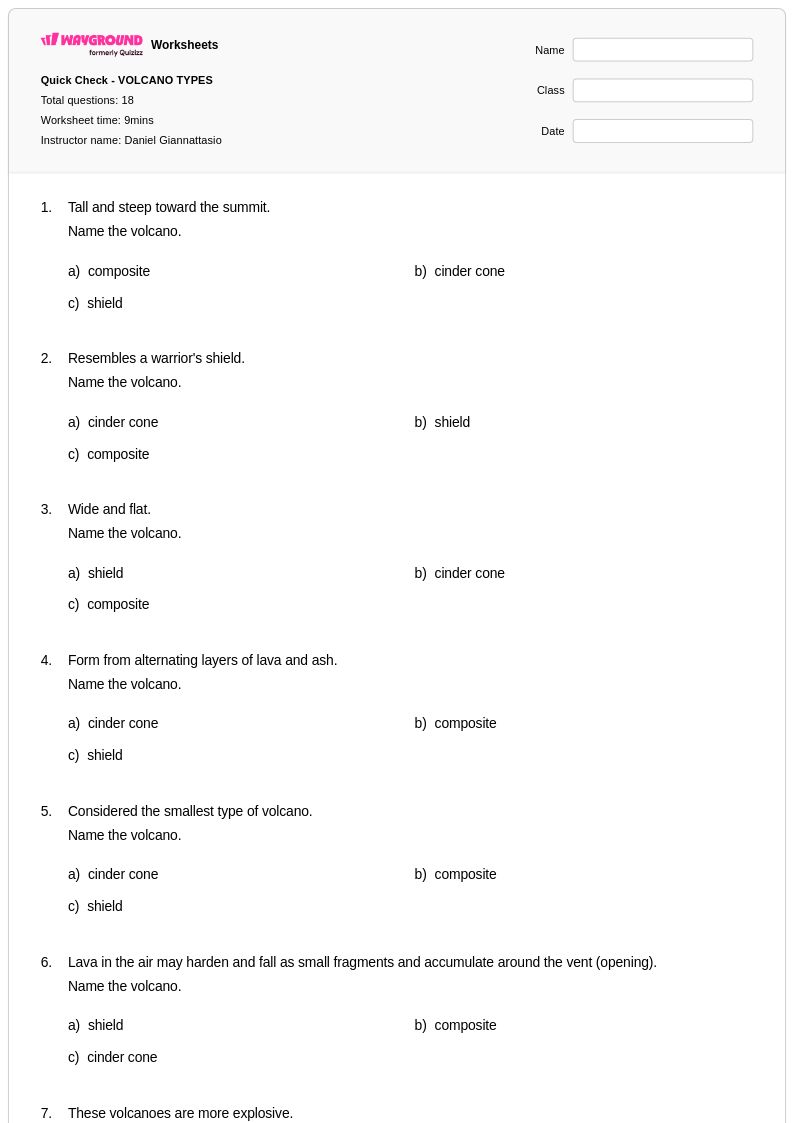
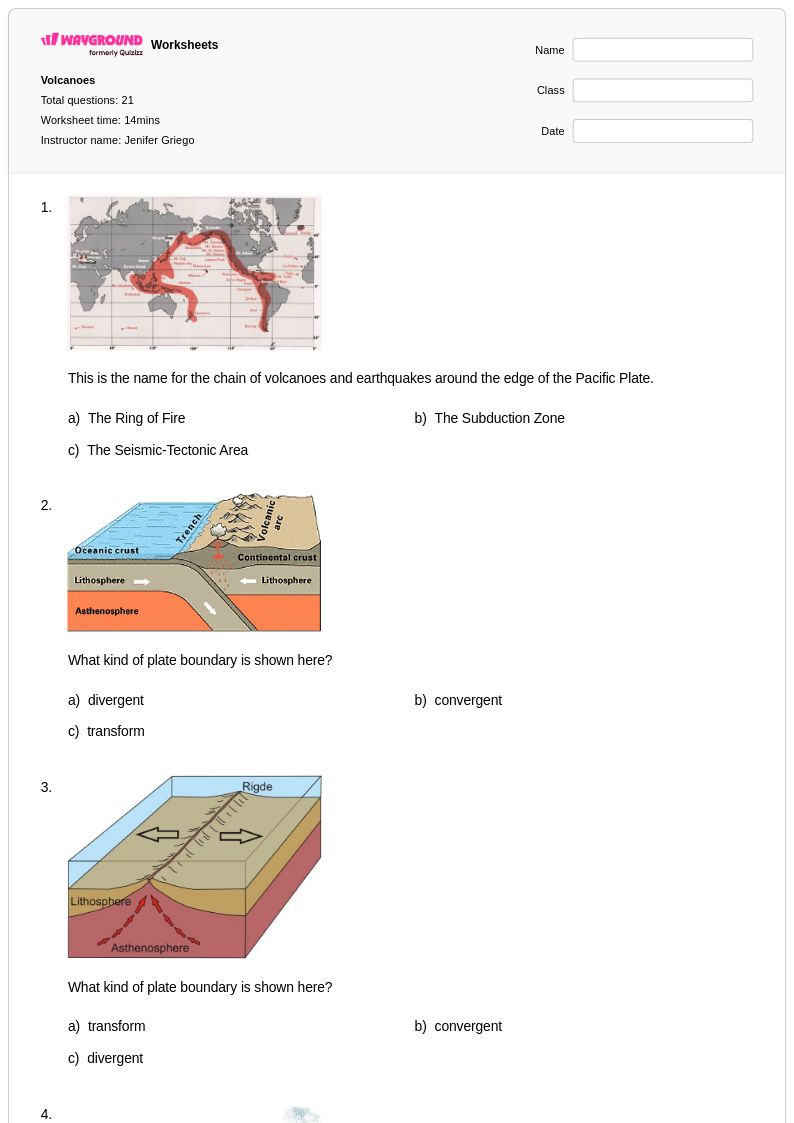
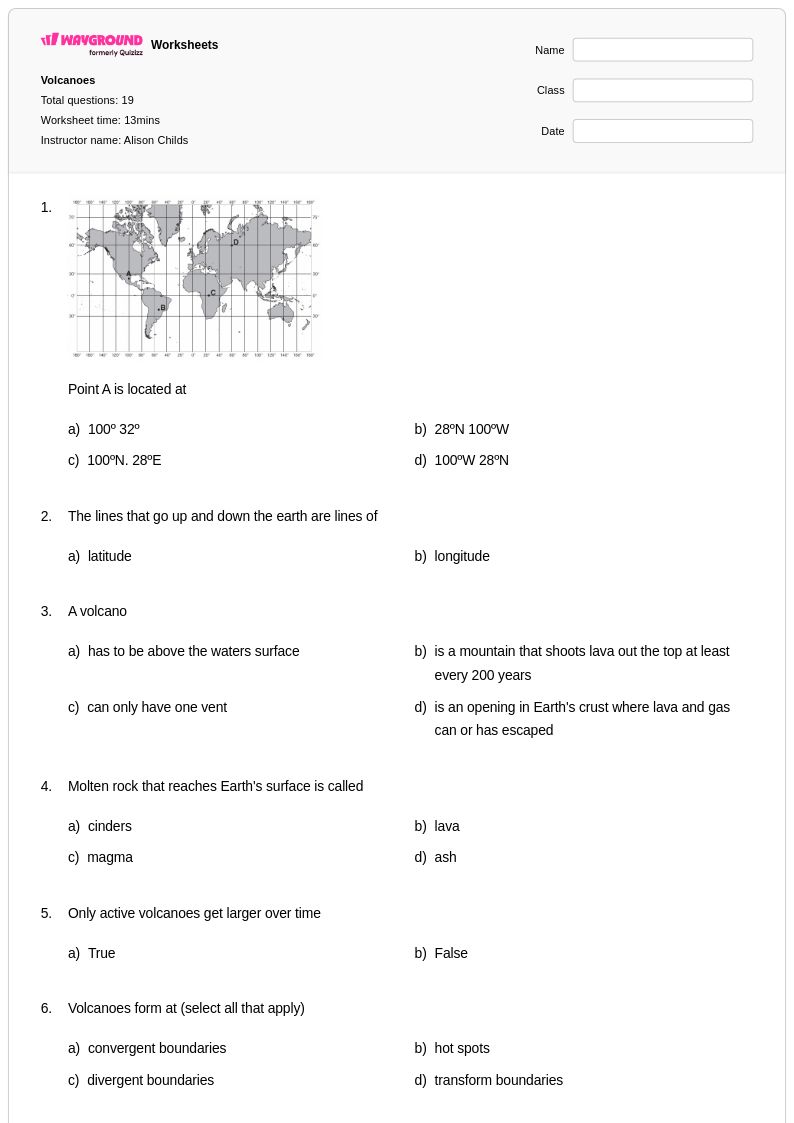
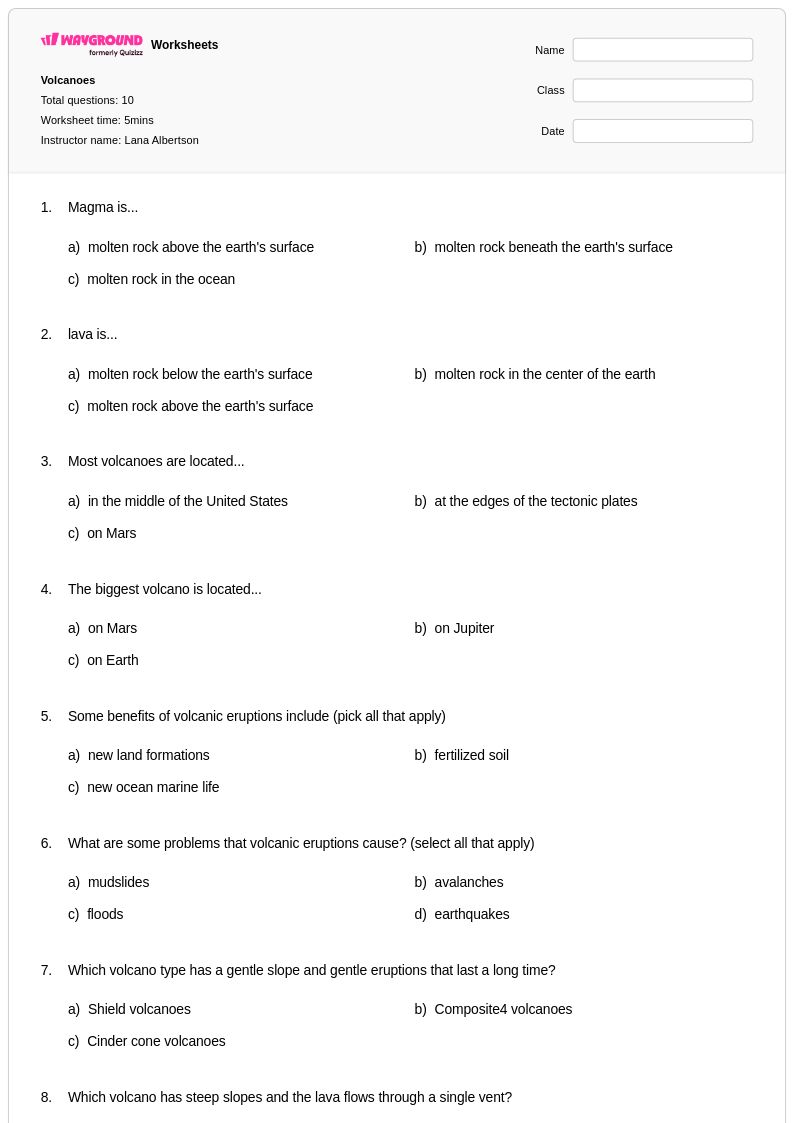
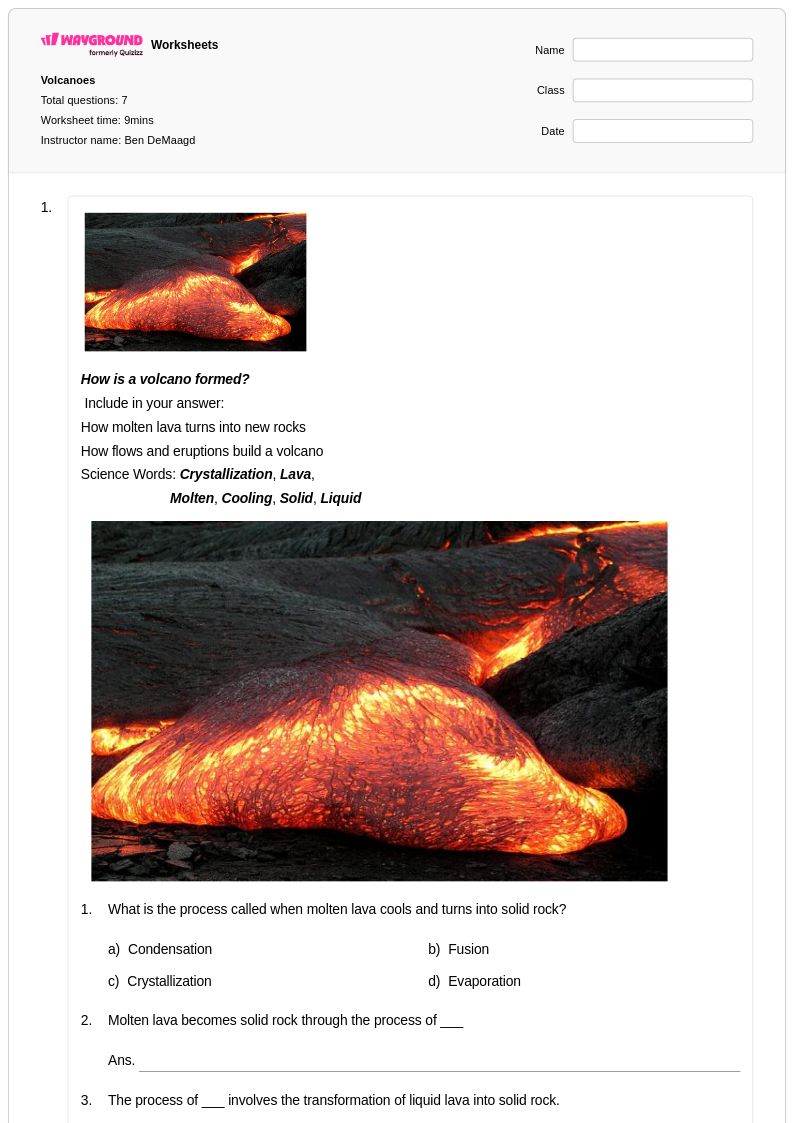
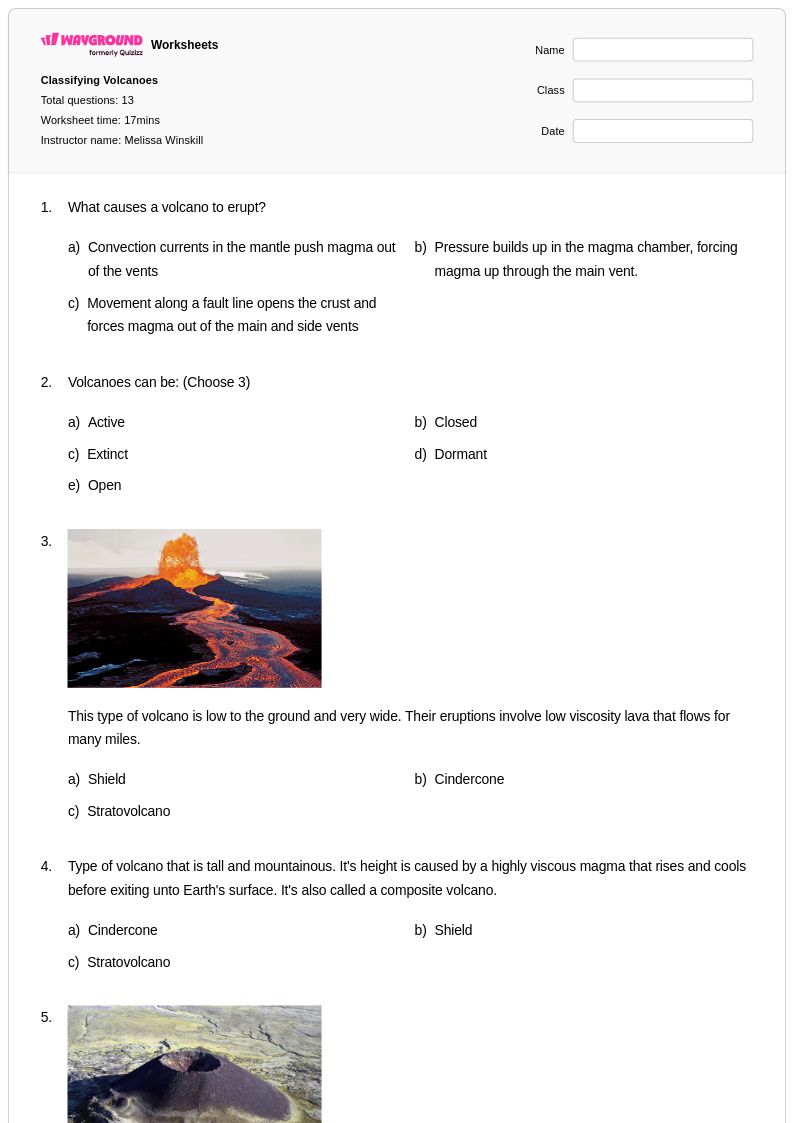
Types of volcanoes worksheets for Class 7 students available through Wayground (formerly Quizizz) provide comprehensive coverage of shield volcanoes, composite volcanoes, and cinder cone volcanoes, helping students master the distinctive characteristics, formation processes, and eruption patterns of each volcanic type. These educational resources strengthen critical thinking skills as students analyze the relationship between magma composition, gas content, and resulting volcanic structures, while developing their ability to classify real-world examples and predict eruption behaviors based on volcano type. The practice problems guide learners through comparative analysis exercises, cross-sectional diagram interpretation, and case study evaluations, with complete answer keys supporting both independent study and classroom instruction. Teachers can access these free printables in convenient pdf format, making it easy to distribute materials that reinforce key concepts about volcanic classification and the geological processes that create these powerful Earth features.
Wayground (formerly Quizizz) empowers educators with millions of teacher-created resources specifically designed for types of volcanoes instruction, featuring robust search and filtering capabilities that allow quick identification of materials aligned with specific learning standards and grade-level expectations. The platform's differentiation tools enable teachers to customize worksheet difficulty levels, modify question formats, and adjust content complexity to meet diverse student needs, whether for remediation support or enrichment challenges. These flexible resources are available in both printable and digital formats, including downloadable pdfs, giving educators the versatility to seamlessly integrate volcano classification activities into traditional classroom settings or remote learning environments. The comprehensive collection supports effective lesson planning by providing ready-to-use materials that reinforce understanding of shield, composite, and cinder cone volcanoes while offering opportunities for skill practice that builds student confidence in Earth and space science concepts.
FAQs
How do I teach the three main types of volcanoes to middle school students?
Start by anchoring each volcano type to a concrete real-world example: Mauna Loa for shield volcanoes, Mount St. Helens for composite volcanoes, and Sunset Crater for cinder cones. Then compare the three types across consistent attributes — slope angle, eruption style, lava viscosity, and size — so students build a mental framework rather than memorizing isolated facts. Using labeled diagrams alongside these comparisons helps students connect structure to formation process, which is the deeper understanding Earth science standards target.
What are the key differences between shield, composite, and cinder cone volcanoes students need to know?
Shield volcanoes are broad and gently sloping, built from low-viscosity basaltic lava that flows easily and produces non-explosive eruptions. Composite volcanoes, also called stratovolcanoes, are steep and symmetrical, formed by alternating layers of lava and ash from explosive eruptions driven by high-viscosity magma. Cinder cone volcanoes are the smallest and simplest type, built from pyroclastic fragments ejected during brief, localized eruptions, resulting in a steep cone shape with a bowl-shaped crater at the top.
What mistakes do students commonly make when classifying types of volcanoes?
The most common error is conflating volcano size with eruption explosivity — students often assume larger volcanoes produce more violent eruptions, when in fact shield volcanoes are the largest yet among the least explosive. Students also frequently confuse composite and cinder cone volcanoes because both appear steep and cone-shaped; the critical distinction is that composite volcanoes are massive structures built over thousands of eruptions, while cinder cones are small and form quickly. A third frequent misconception is treating volcanic classification as purely visual rather than tied to magma composition and eruption behavior.
What worksheet exercises help students practice identifying and comparing volcano types?
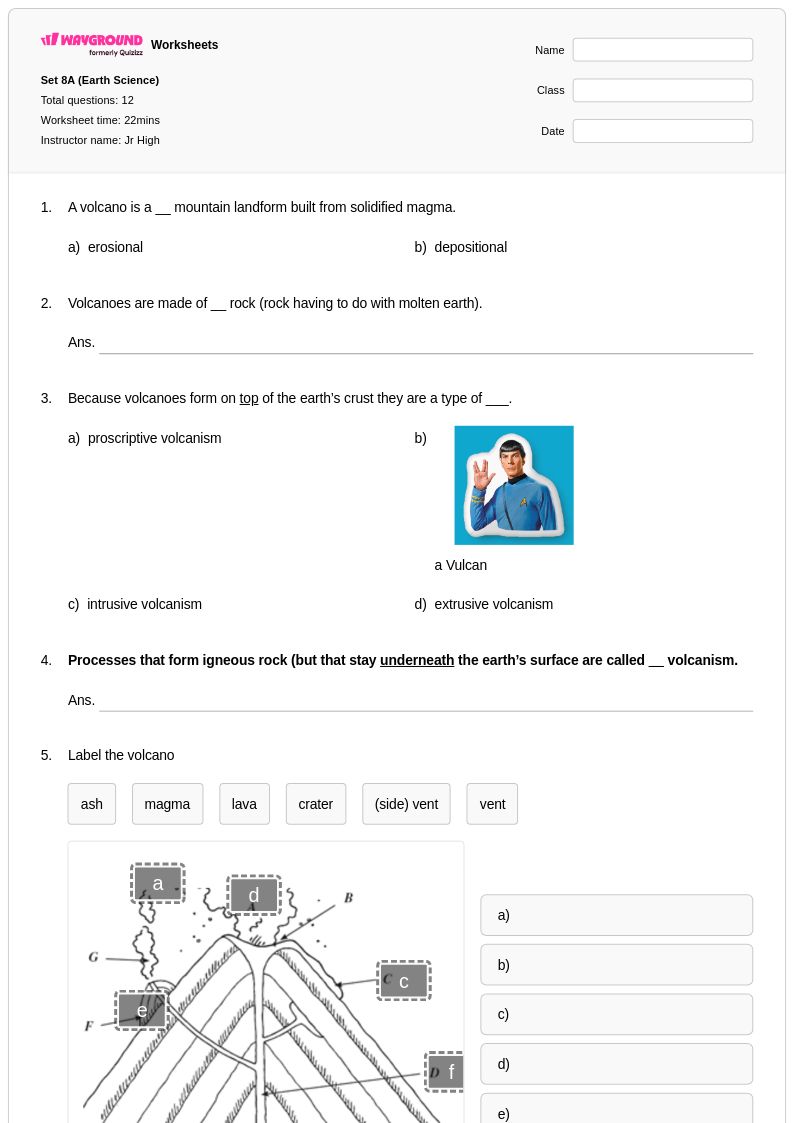
Effective practice exercises include diagram labeling tasks where students identify structural features of each volcano type, comparison charts that require students to fill in eruption style, lava viscosity, and geographic examples side by side, and scenario-based questions where students classify a volcano given a description of its eruption behavior. These formats require students to apply criteria rather than recall definitions, which builds the analytical skills Earth science assessments typically measure.
How do I use types of volcanoes worksheets in my classroom?
Types of volcanoes worksheets on Wayground are available as printable PDFs for traditional classroom use and in digital formats for technology-integrated environments, including the option to host them as a quiz directly on Wayground. Printable versions work well for guided note-taking and small group comparison activities, while digital formats allow for self-paced independent practice with immediate feedback. Each worksheet includes an answer key, so teachers can use them for formative checks, homework, or review stations without additional prep.
How can I differentiate volcano classification instruction for students at different skill levels?
For students who need additional support, reduce the number of volcano types addressed in a single session and use scaffolded graphic organizers that provide partial information before asking students to complete comparisons. For advanced learners, extend the task by asking students to research a specific real-world volcano, classify it, and justify their classification using evidence from eruption history and geological data. On Wayground, teachers can apply accommodations such as reduced answer choices or read-aloud support to individual students during digital assignments, ensuring all learners can access the same core content.