Free Printable Mnemonic Devices Worksheets for Class 11
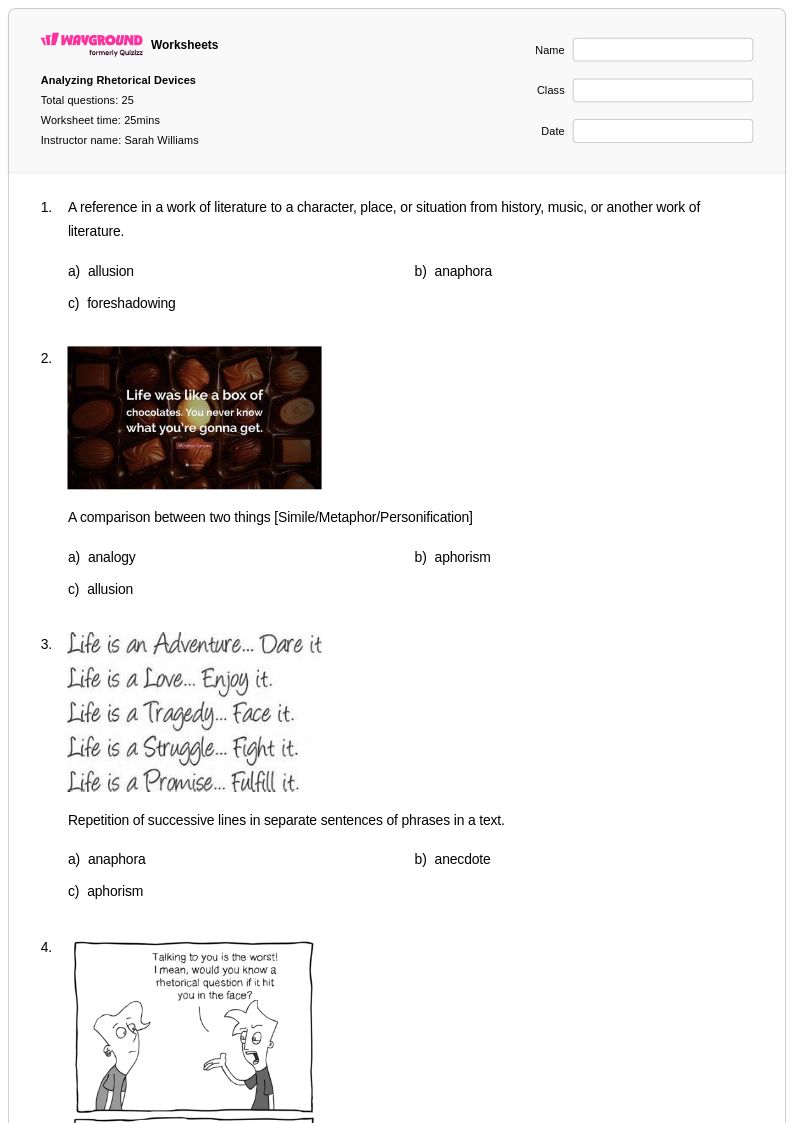
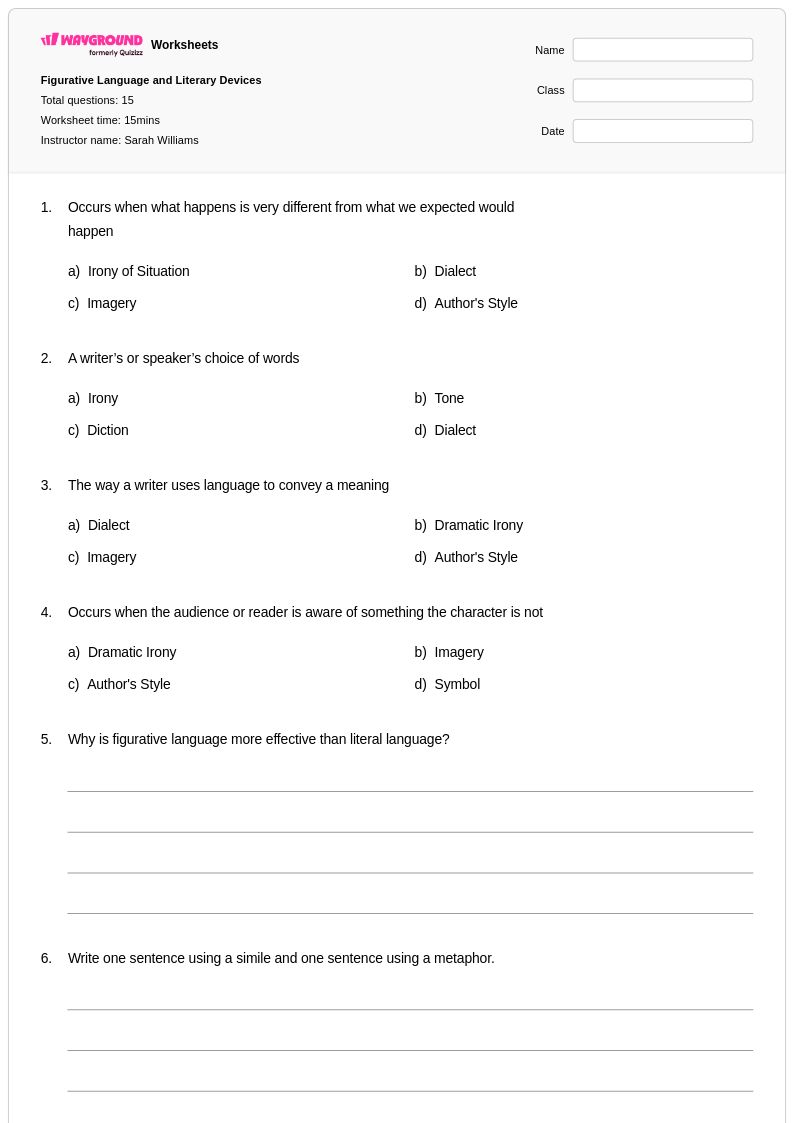
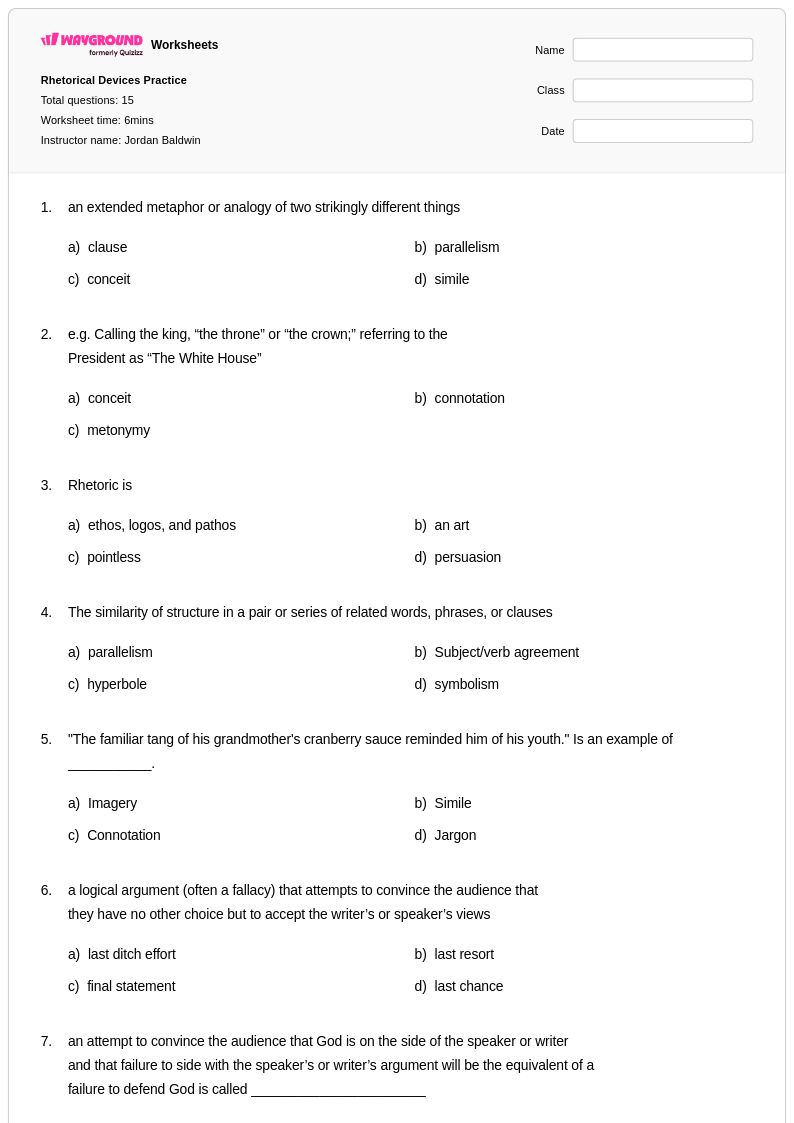
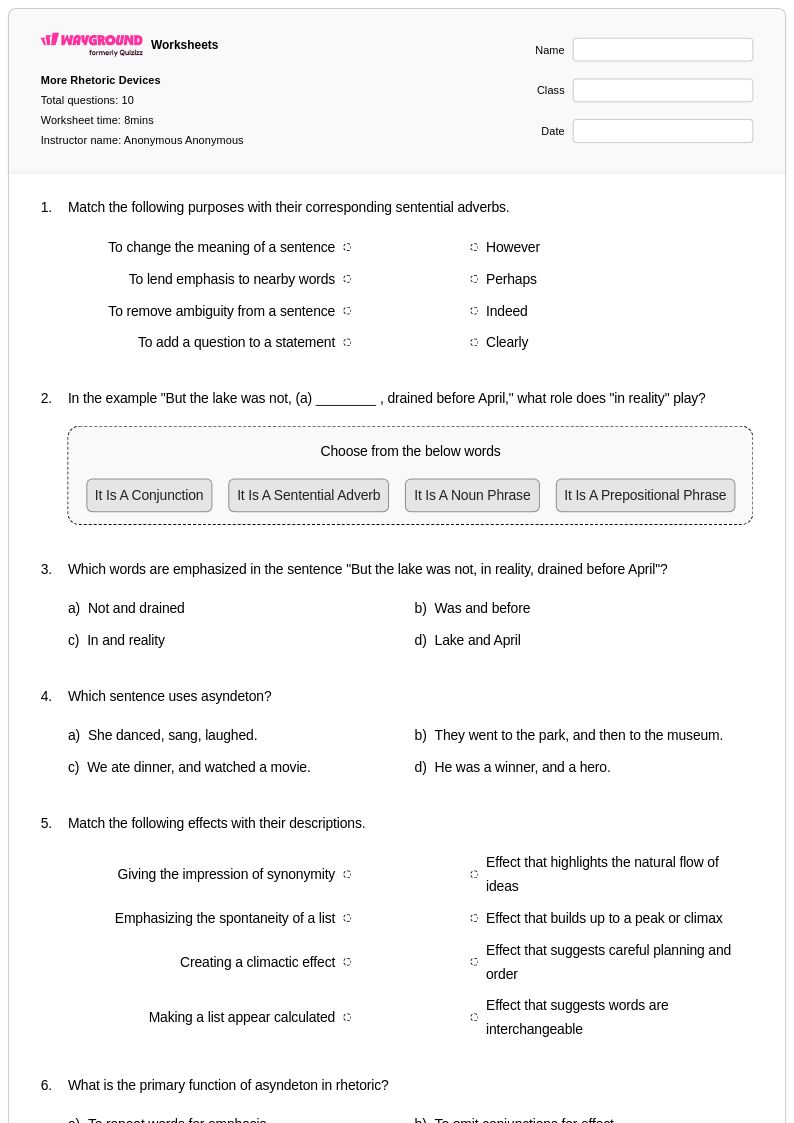
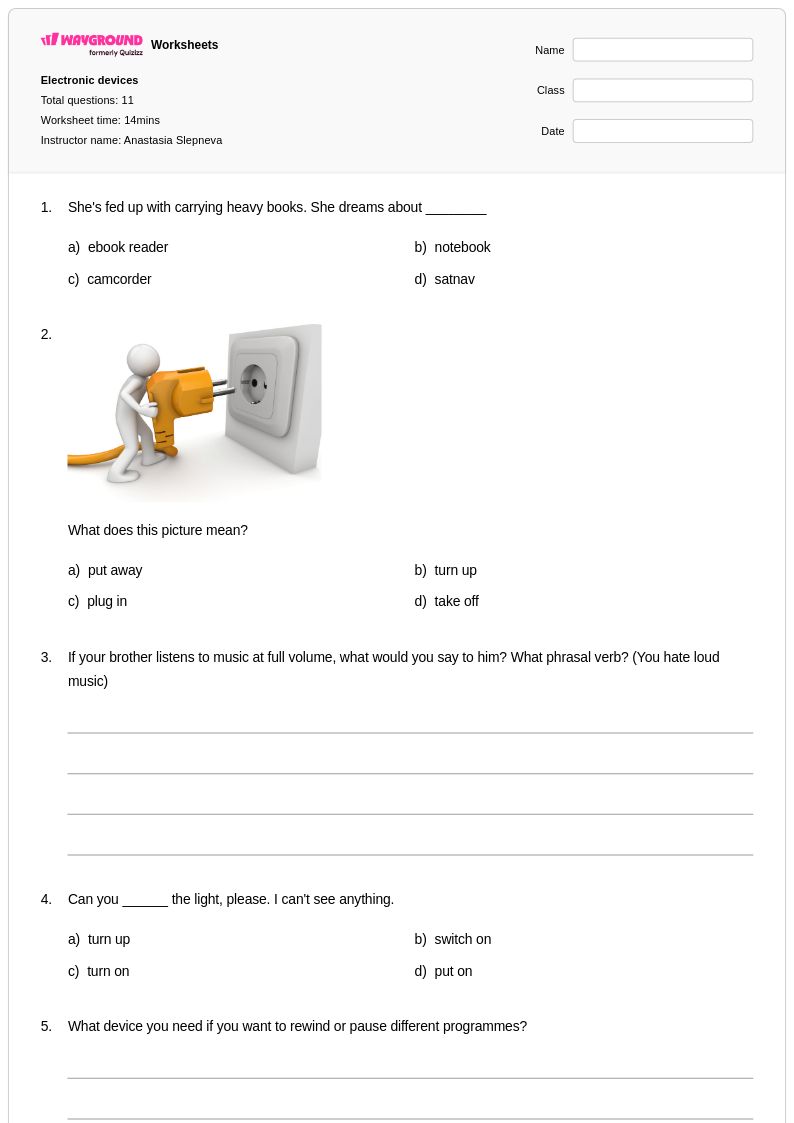
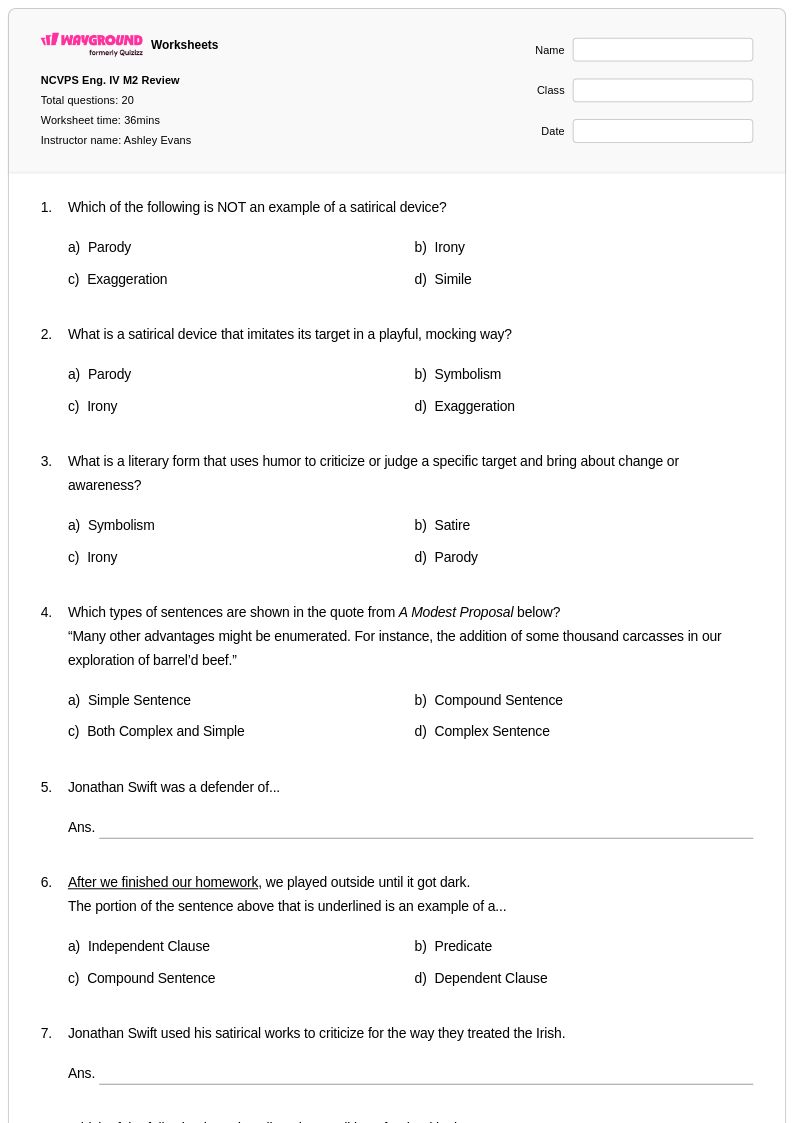
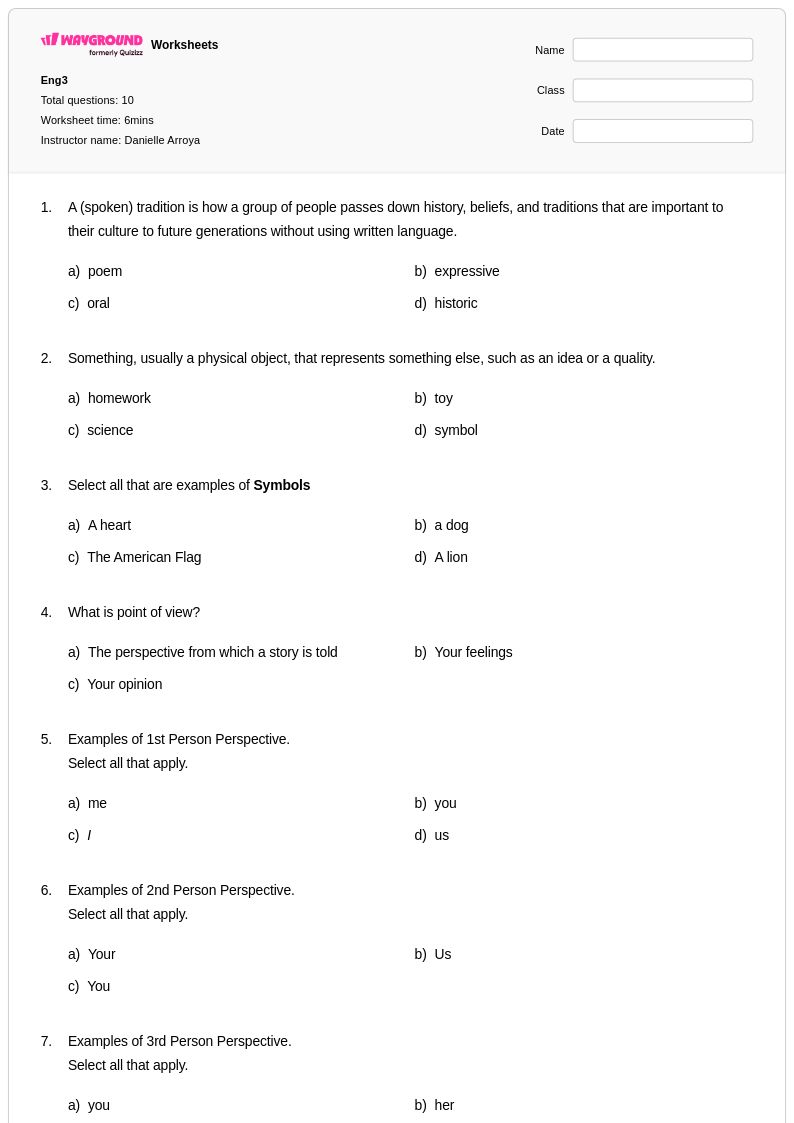
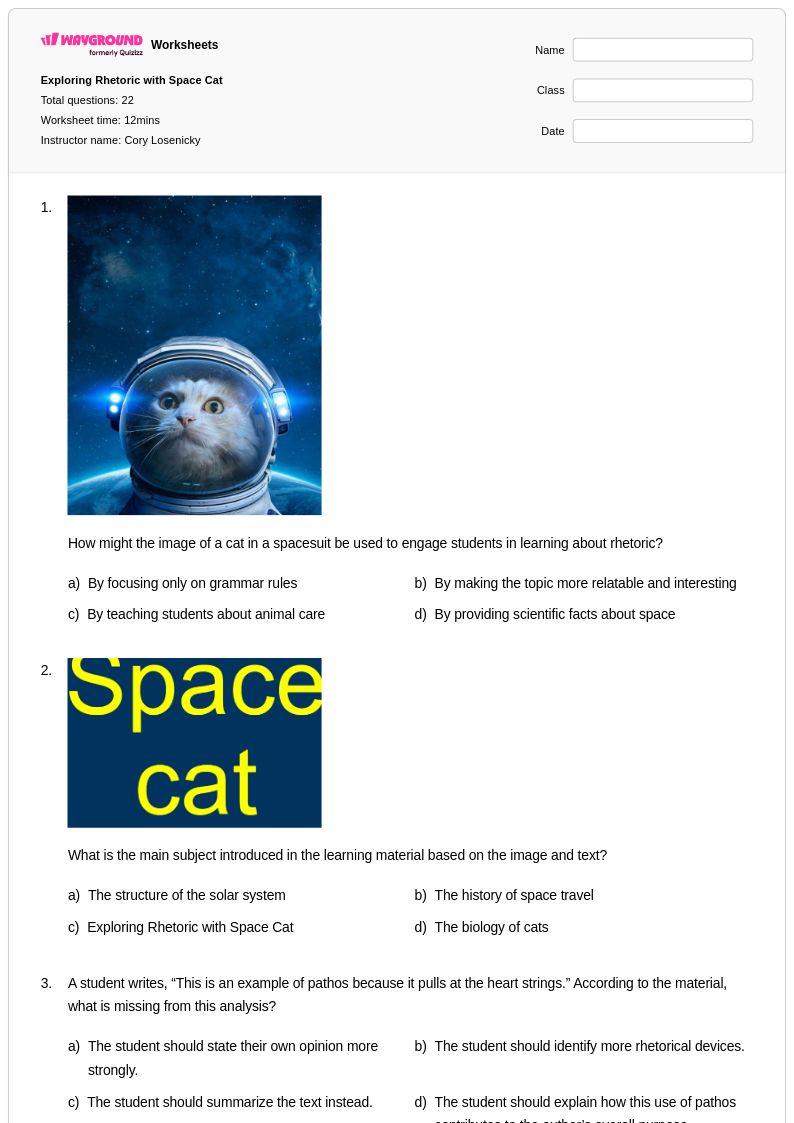
Class 11 mnemonic devices worksheets from Wayground help students master memory techniques and vocabulary retention strategies through engaging printables, practice problems, and comprehensive answer keys designed to strengthen language learning skills.
Explore printable Mnemonic Devices worksheets for Class 11
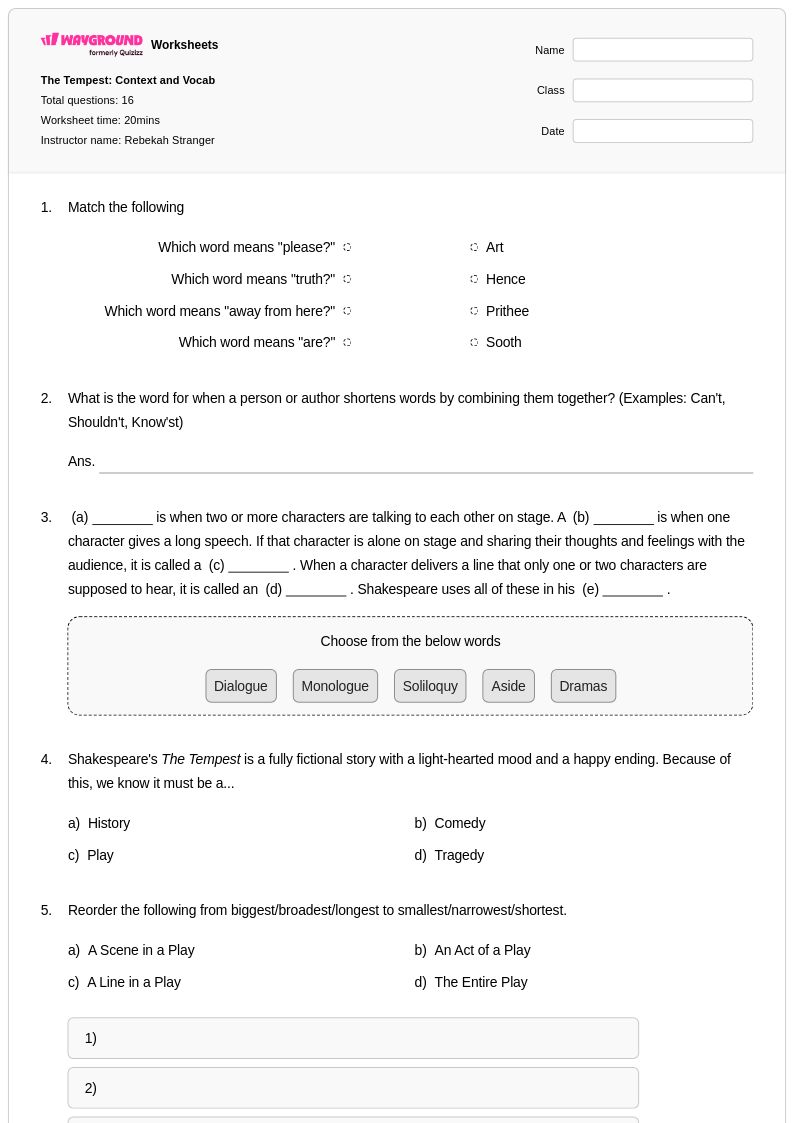
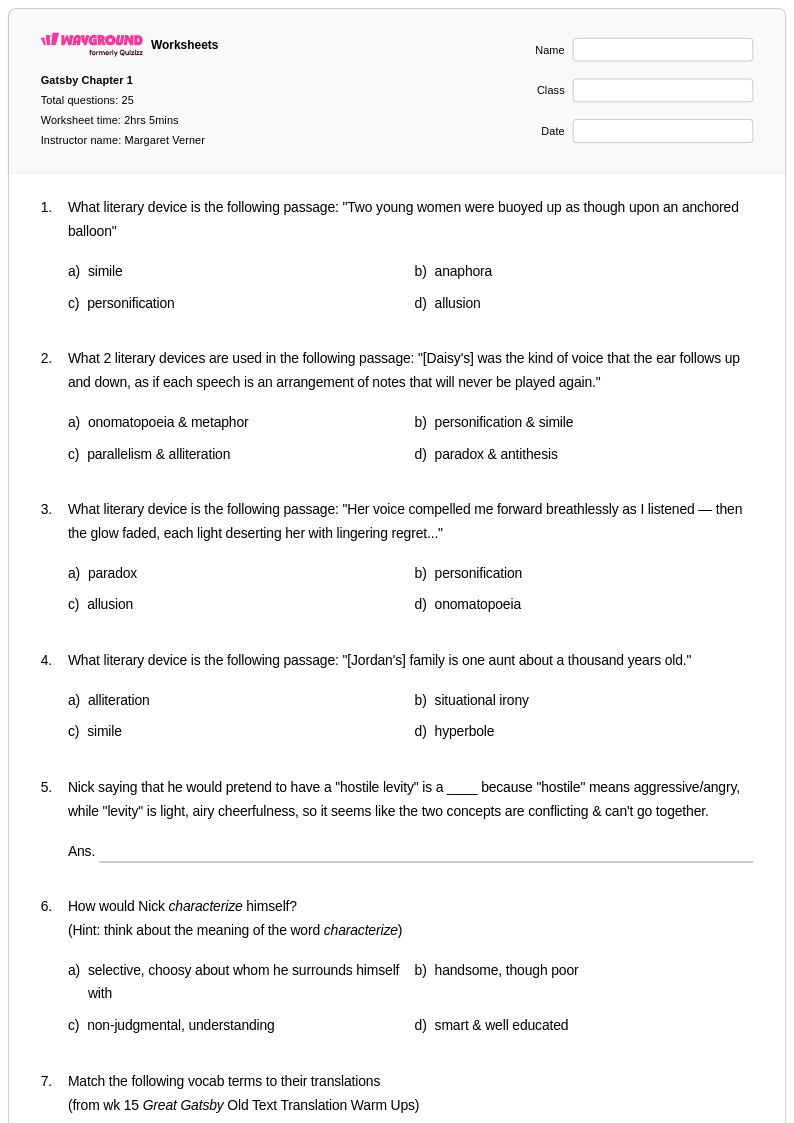
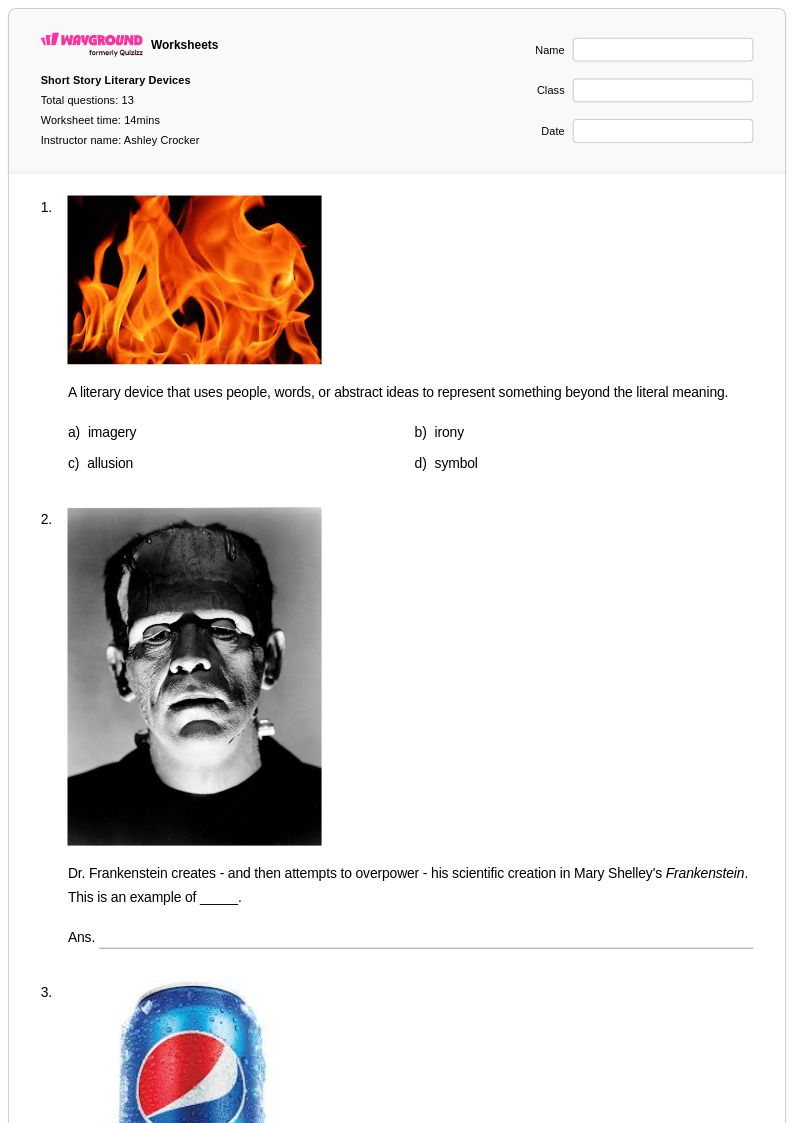
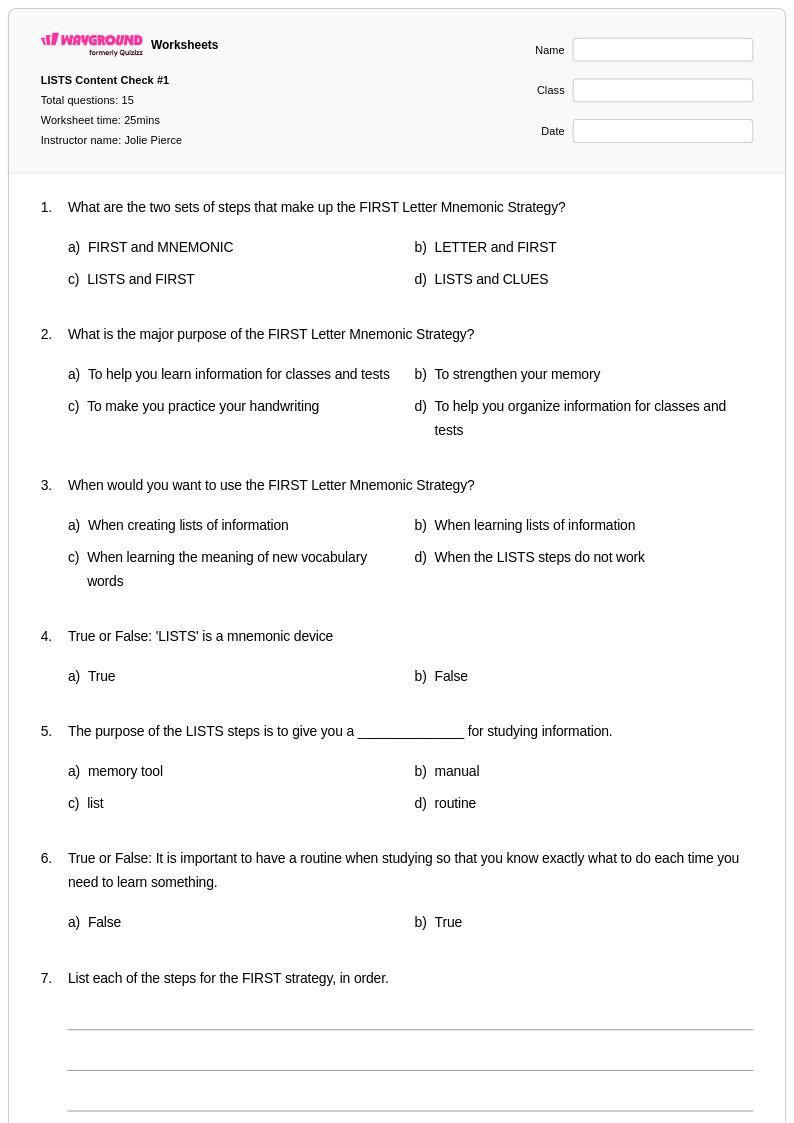
Mnemonic devices worksheets for Class 11 students available through Wayground (formerly Quizizz) provide comprehensive practice in mastering sophisticated memory techniques essential for advanced vocabulary acquisition and retention. These expertly designed worksheets strengthen students' abilities to create and apply acronyms, acrostics, visual imagery, word associations, and rhyme-based memory aids for complex academic vocabulary across multiple disciplines. Students engage with practice problems that challenge them to develop original mnemonic strategies for SAT-level terminology, literary devices, scientific concepts, and historical terms, while also analyzing the effectiveness of existing memory techniques. Each worksheet collection includes detailed answer keys that explain the logic behind successful mnemonic constructions, and the free printable pdf format ensures accessibility for both classroom instruction and independent study sessions.
Wayground (formerly Quizizz) empowers educators with an extensive library of millions of teacher-created mnemonic device worksheets specifically calibrated for Class 11 learning objectives and standards alignment. The platform's robust search and filtering capabilities allow teachers to quickly locate resources targeting specific vocabulary domains, cognitive load levels, and mnemonic technique types, facilitating seamless lesson planning and differentiated instruction. Customization tools enable educators to modify existing worksheets or blend multiple resources to address individual student needs, whether for remediation of foundational memory strategies or enrichment activities involving advanced linguistic mnemonics. Available in both printable and interactive digital formats, these worksheet collections support flexible implementation across diverse learning environments while providing consistent skill practice opportunities that prepare students for college-level vocabulary demands and standardized assessments.
FAQs
How do I teach mnemonic devices to students?
Start by introducing one mnemonic type at a time — acronyms, acrostics, rhymes, or visual associations — so students can build familiarity before combining techniques. Model the construction process explicitly: show students how to take a challenging word list or concept and systematically transform it into a memorable pattern. Once students understand the structure, guided practice with real vocabulary from their current units helps transfer the skill to authentic academic contexts.
What types of mnemonic devices should students learn?
The most broadly applicable mnemonic types for K-12 learners include acronyms (forming a word from initial letters), acrostics (sentences where each word's first letter represents a term), rhymes, and visual associations or word linkages. Each type suits different content: acronyms work well for ordered lists, acrostics for multi-term sequences, and visual associations for foreign language vocabulary or scientific terminology. Teaching students a repertoire of techniques gives them flexibility to choose the best strategy for any subject.
What exercises help students practice creating mnemonic devices?
Effective practice exercises ask students to construct their own mnemonics for given word lists rather than simply memorize teacher-provided ones, because personalized strategies are more memorable. Progressing from simple two-word associations to multi-step mnemonic systems builds both creative thinking and practical memorization skill. Comparing student-created mnemonics with proven approaches — as answer keys can facilitate — helps learners evaluate and refine their own strategies.
What mistakes do students commonly make when using mnemonic devices?
A common error is creating mnemonics that are more complex than the information they are meant to encode, which defeats the purpose of the technique. Students also frequently create mnemonics that are personally unmemorable — for example, using an acronym word they rarely encounter. Teaching students to test their own mnemonics immediately after creating them, by attempting recall without looking at the original material, helps catch ineffective strategies before they become ingrained.
How can mnemonic device practice support struggling learners or students with memory challenges?
Structured mnemonic instruction is especially beneficial for students who have difficulty retaining vocabulary or academic terminology, because it gives them a repeatable strategy rather than relying on rote repetition alone. Starting with highly visual or rhythmic mnemonics — rhymes and picture associations — tends to be more accessible for struggling learners before introducing abstract techniques like acronyms. On Wayground, teachers can use the Read Aloud accommodation so that question prompts are read to students who also have reading difficulties, and Reduced Answer Choices can lower cognitive load for students who become overwhelmed during practice.
How do I use Wayground's mnemonic devices worksheets in my classroom?
Wayground's mnemonic devices worksheets are available as printable PDFs for traditional classroom use and in digital formats for technology-integrated environments, making them suitable for in-class instruction, homework, or learning centers. Teachers can also host a worksheet as a quiz directly on Wayground, giving students an interactive experience while automatically collecting results. Each worksheet includes a comprehensive answer key demonstrating multiple mnemonic approaches, so teachers can use them for direct instruction, independent practice, or self-guided review.