

20 Q
7th

10 Q
7th

20 Q
6th

18 Q
7th

12 Q
6th

20 Q
7th

16 Q
6th - 7th

20 Q
7th

80 Q
7th

25 Q
7th

20 Q
7th - Uni

20 Q
8th - Uni
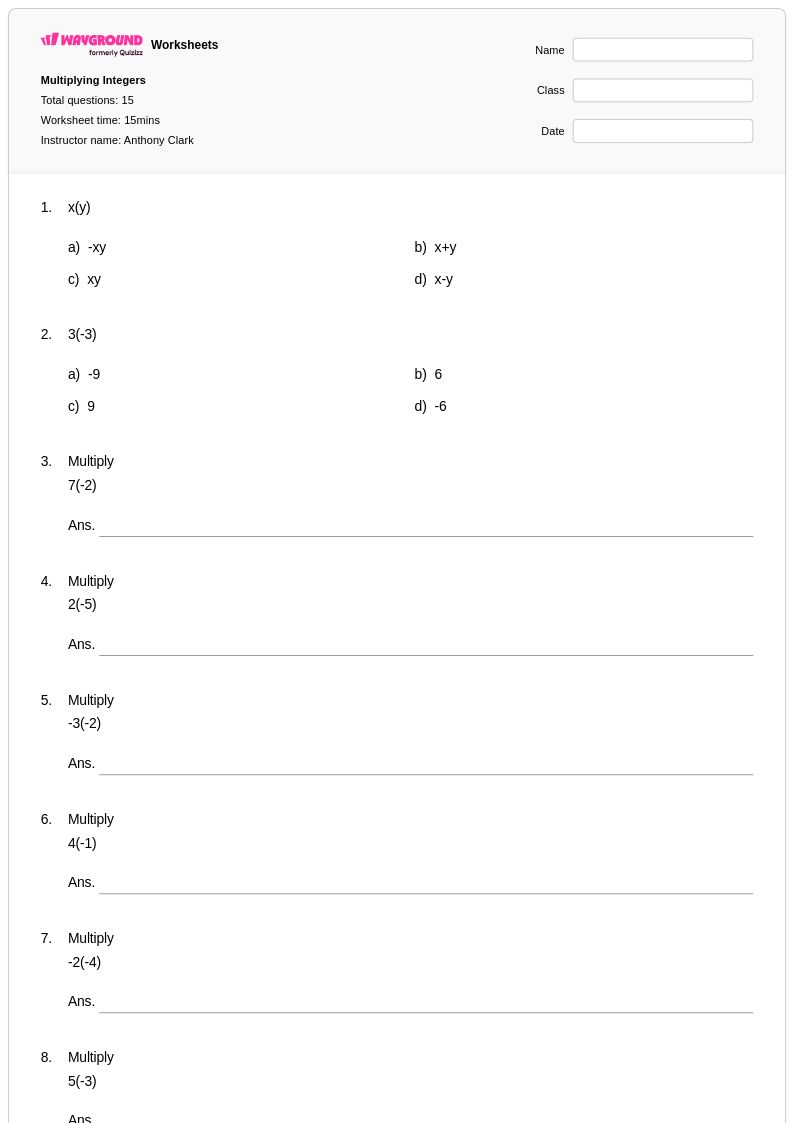
15 Q
7th - Uni

26 Q
7th

25 Q
6th

20 Q
7th

10 Q
6th
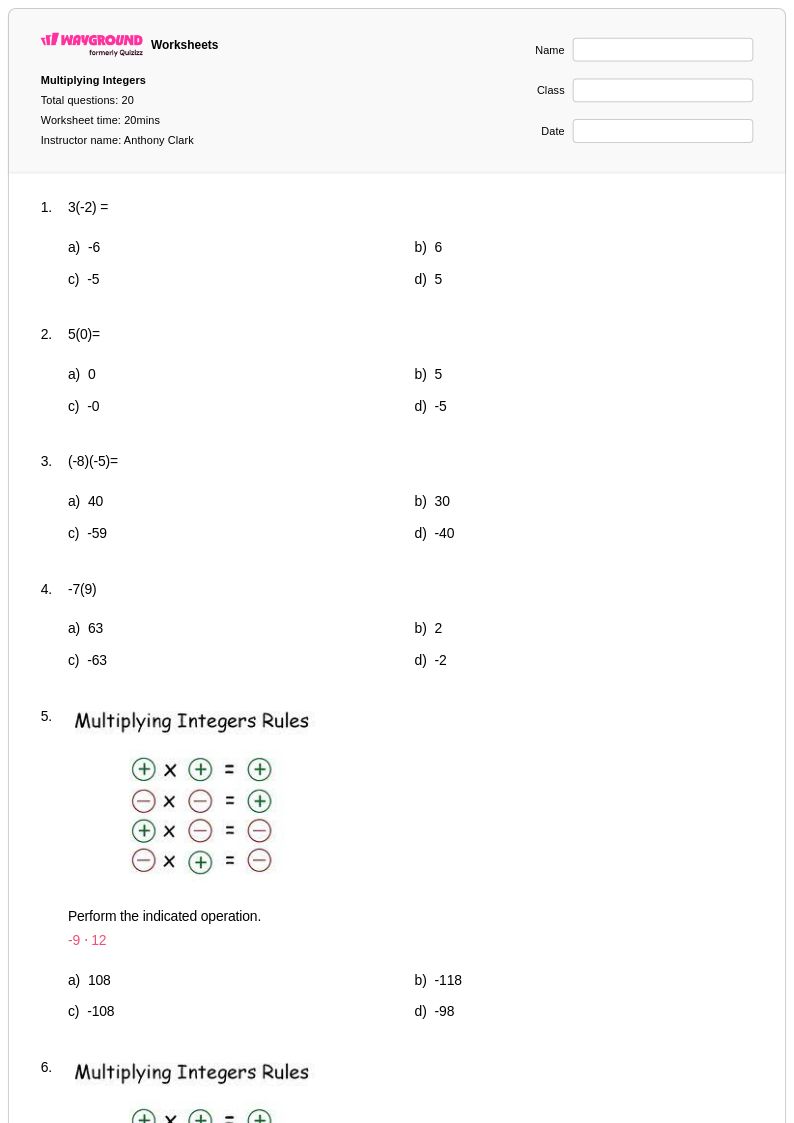
20 Q
7th - Uni

20 Q
6th

20 Q
9th

20 Q
7th
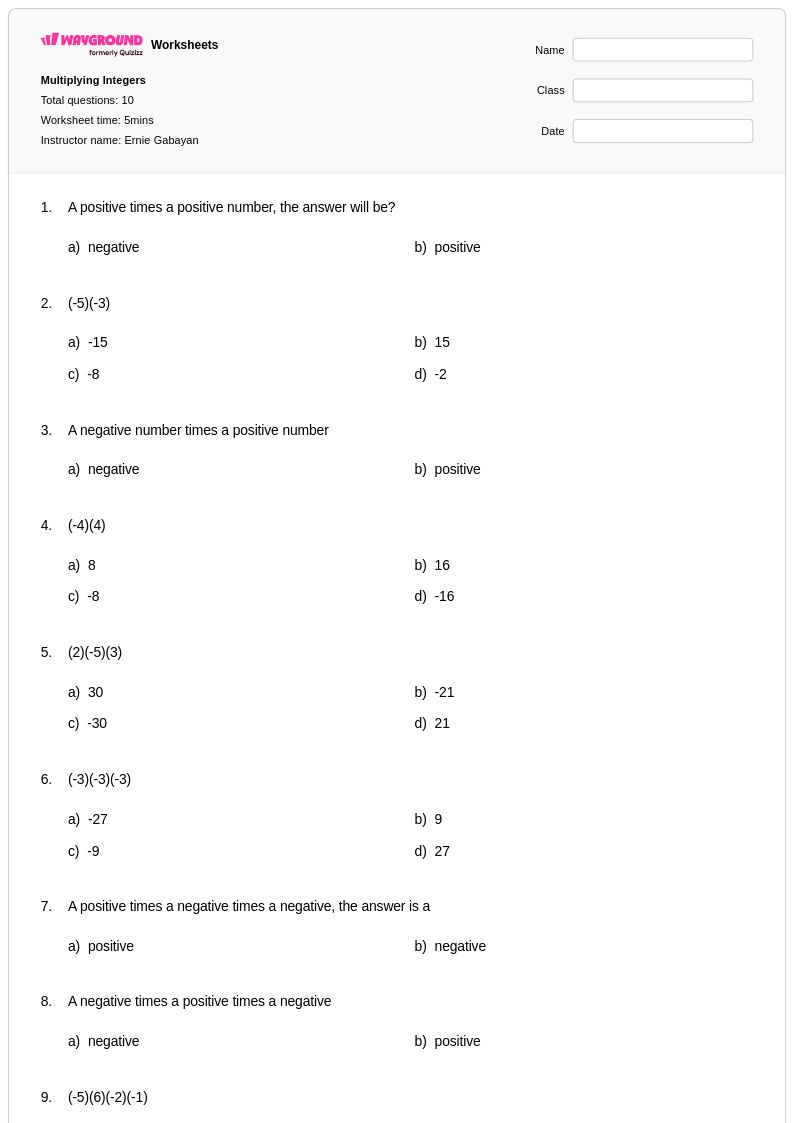
10 Q
6th

8 Q
6th

13 Q
7th
Explore Worksheets by Subjects
Explore printable Multiplying Integers worksheets
Multiplying integers represents a fundamental mathematical skill that bridges basic arithmetic and advanced algebraic concepts, requiring students to master both computational procedures and conceptual understanding of positive and negative number interactions. Wayground's comprehensive collection of multiplying integers worksheets provides educators with expertly crafted practice problems that systematically develop students' ability to apply multiplication rules across various integer combinations, from simple single-digit calculations to complex multi-step expressions involving multiple negative and positive factors. These free printable resources include detailed answer keys that enable immediate feedback and self-assessment, while the pdf format ensures consistent formatting across different devices and printing scenarios, making them ideal for both classroom instruction and independent practice sessions.
Wayground's robust platform, formerly known as Quizizz, empowers teachers with access to millions of educator-created resources specifically designed for multiplying integers instruction, featuring advanced search and filtering capabilities that allow precise targeting of specific skill levels and learning objectives. The platform's standards alignment ensures that worksheet collections directly support curriculum requirements, while built-in differentiation tools enable teachers to customize content difficulty and problem types to meet diverse student needs within the same classroom. These multiplying integers worksheets are available in both printable and digital formats, providing flexibility for traditional paper-based practice, interactive online assignments, or hybrid learning environments, ultimately supporting comprehensive lesson planning, targeted remediation for struggling learners, enrichment opportunities for advanced students, and systematic skill practice that builds computational fluency with integer operations.
FAQs
How do I teach multiplying integers?
What kind of practice is on a multiplying integers worksheet?
What's the most common mistake students make when multiplying integers?
How can I use this multiplying integers worksheet in my class?
How does multiplying integers fit into the math curriculum?