
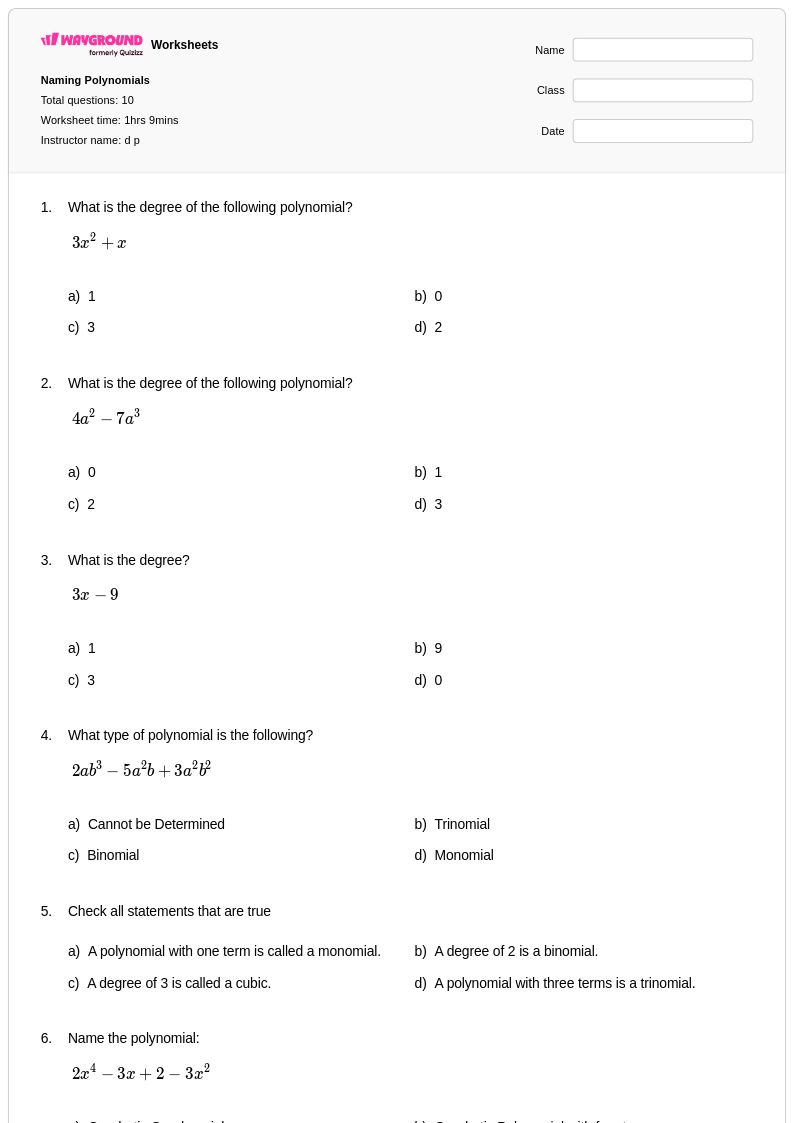
10Q
9th - 10th
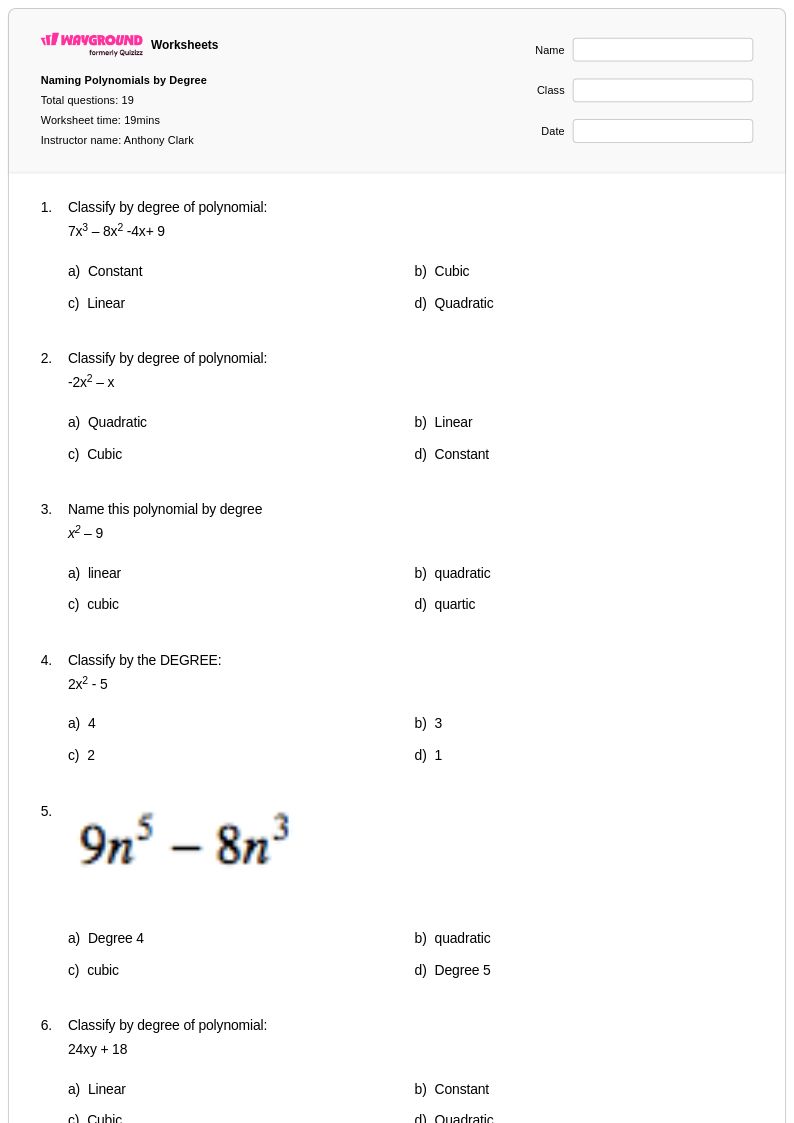
19Q
9th - Uni
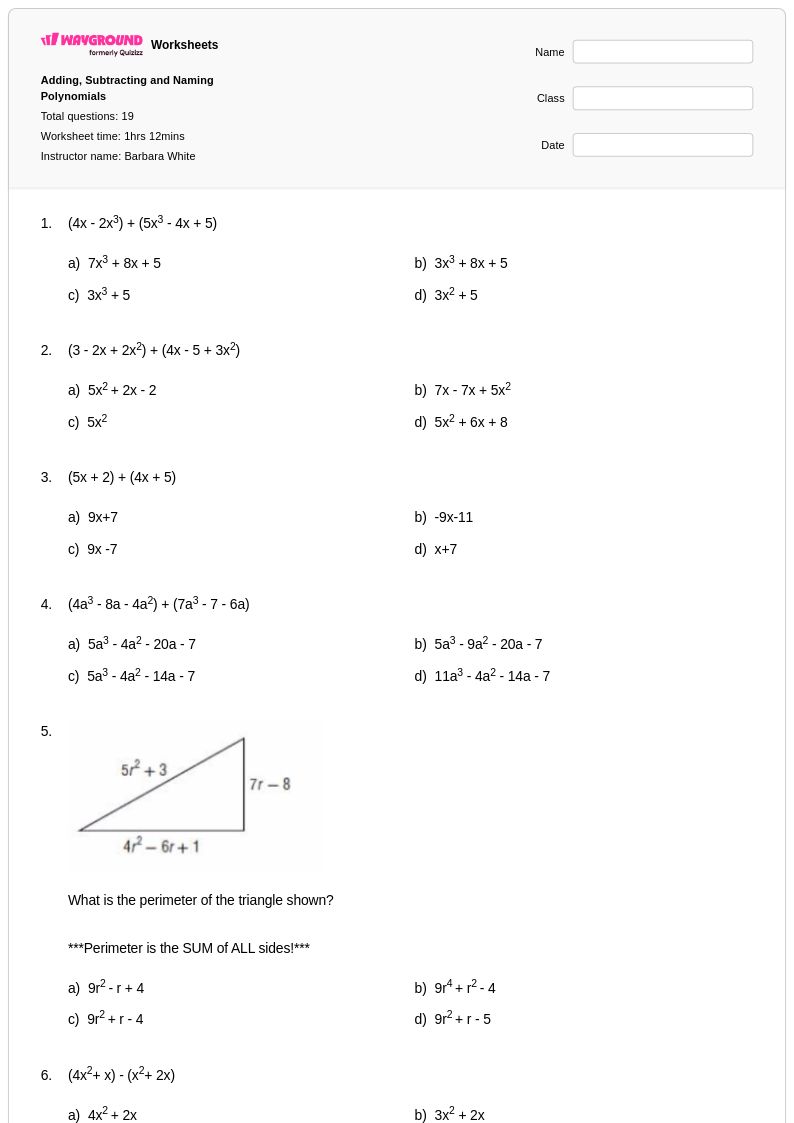
19Q
10th
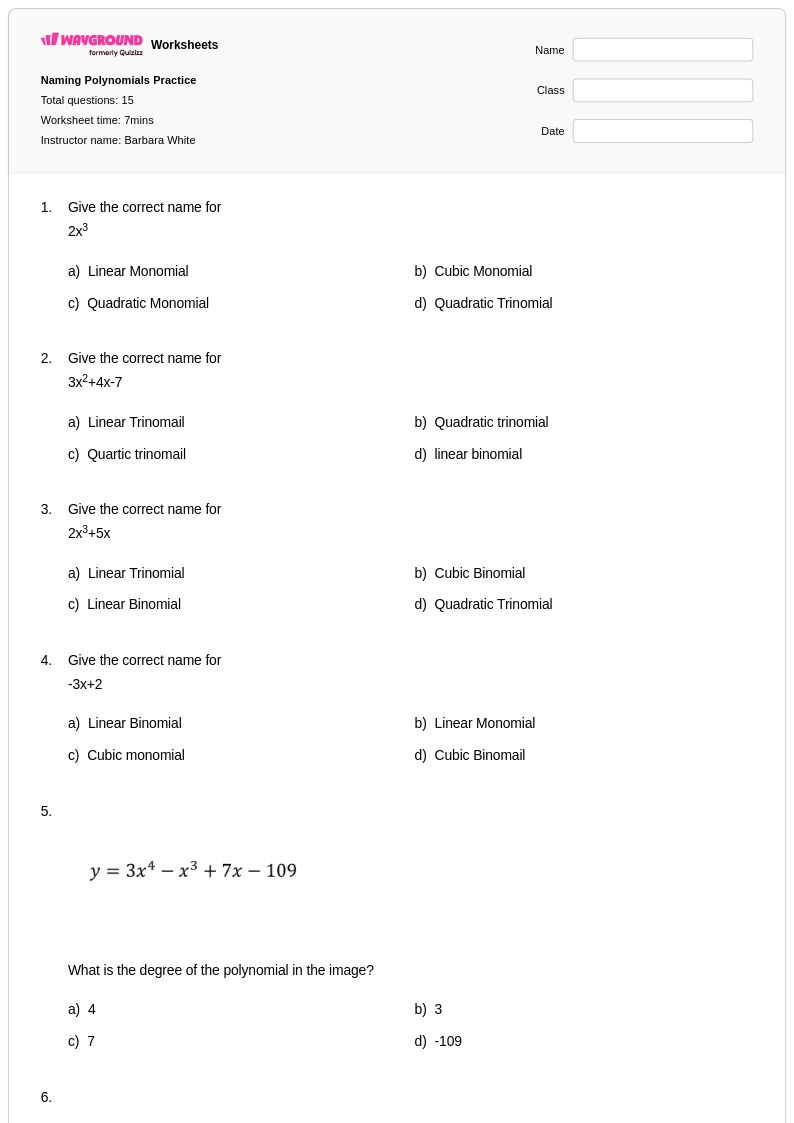
15Q
8th - 12th
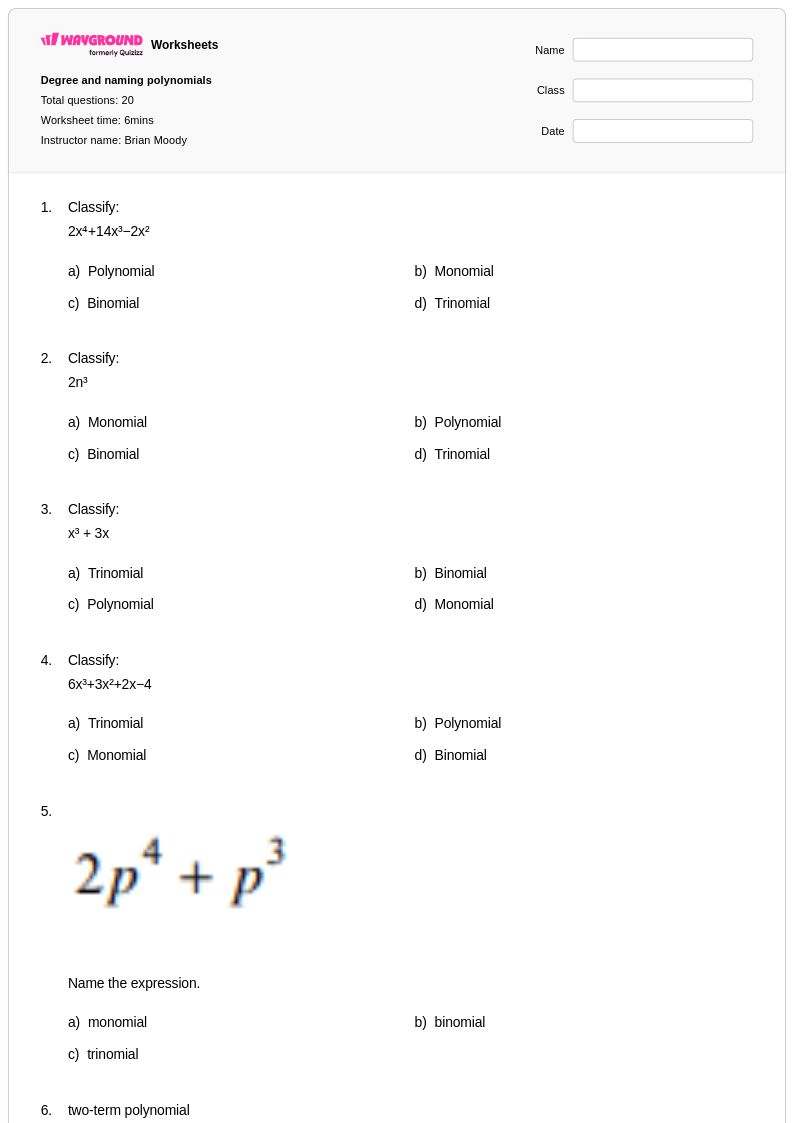
20Q
8th - 10th
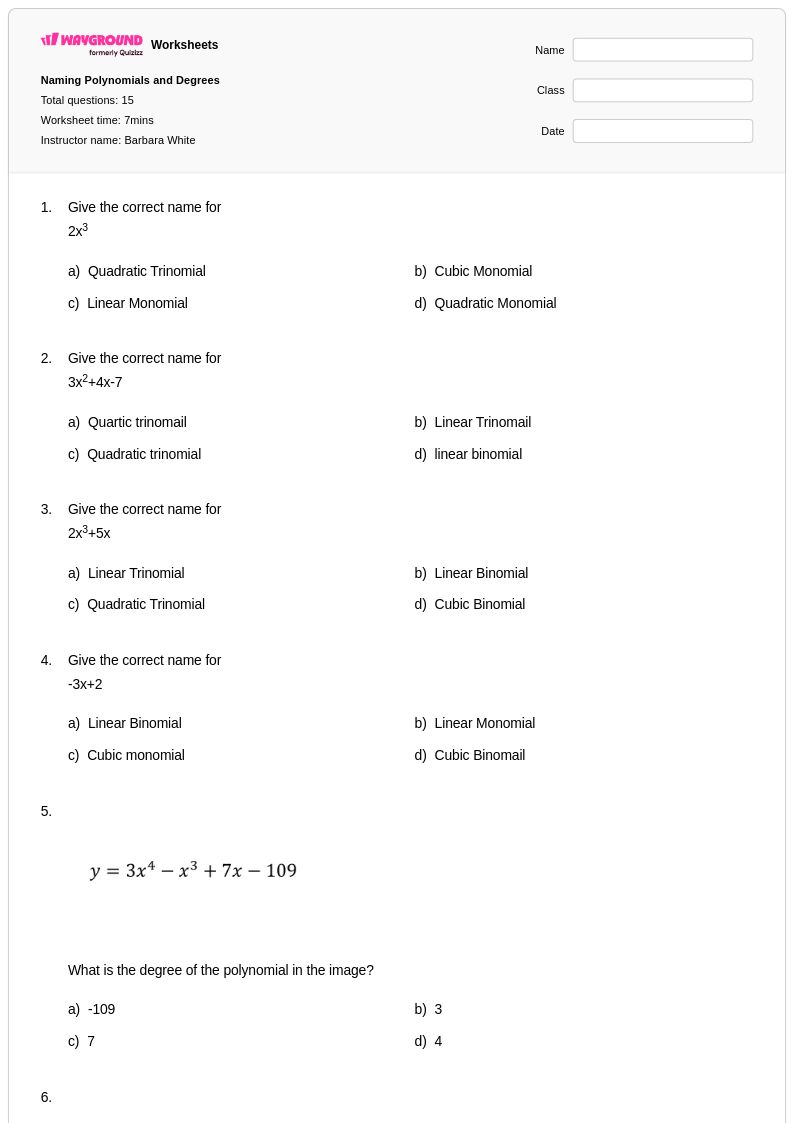
15Q
8th - 12th
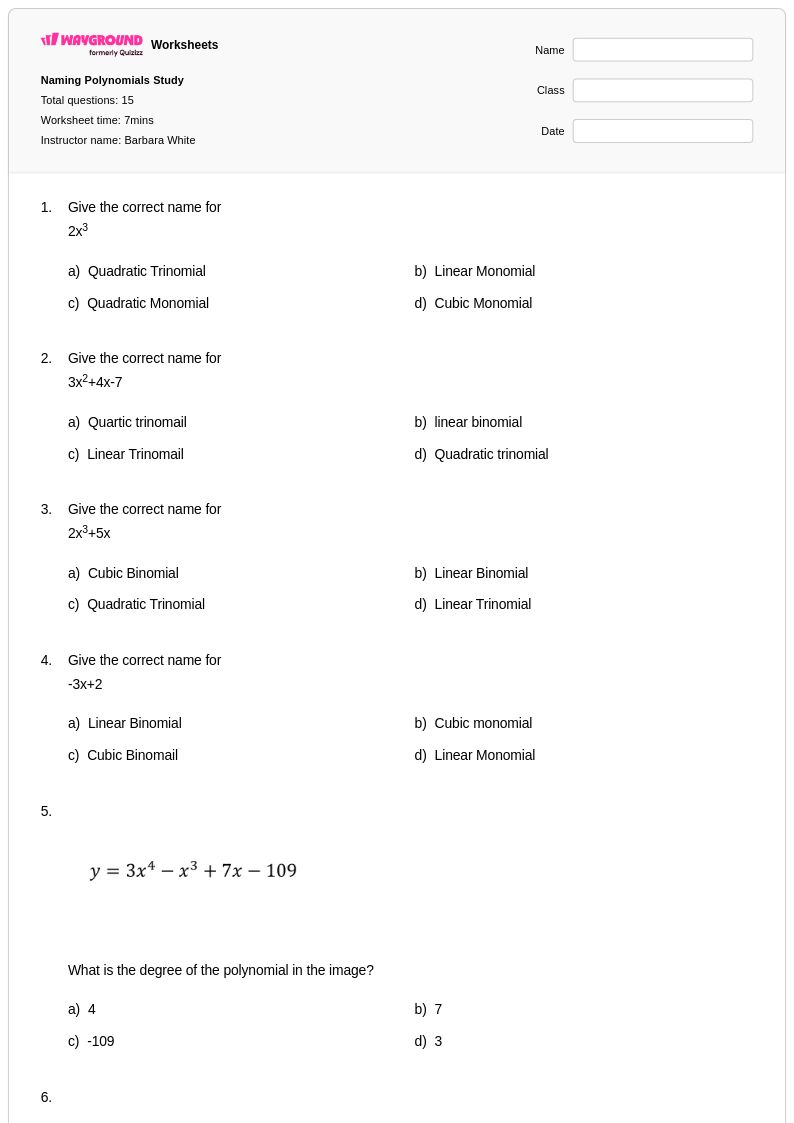
15Q
8th - 12th
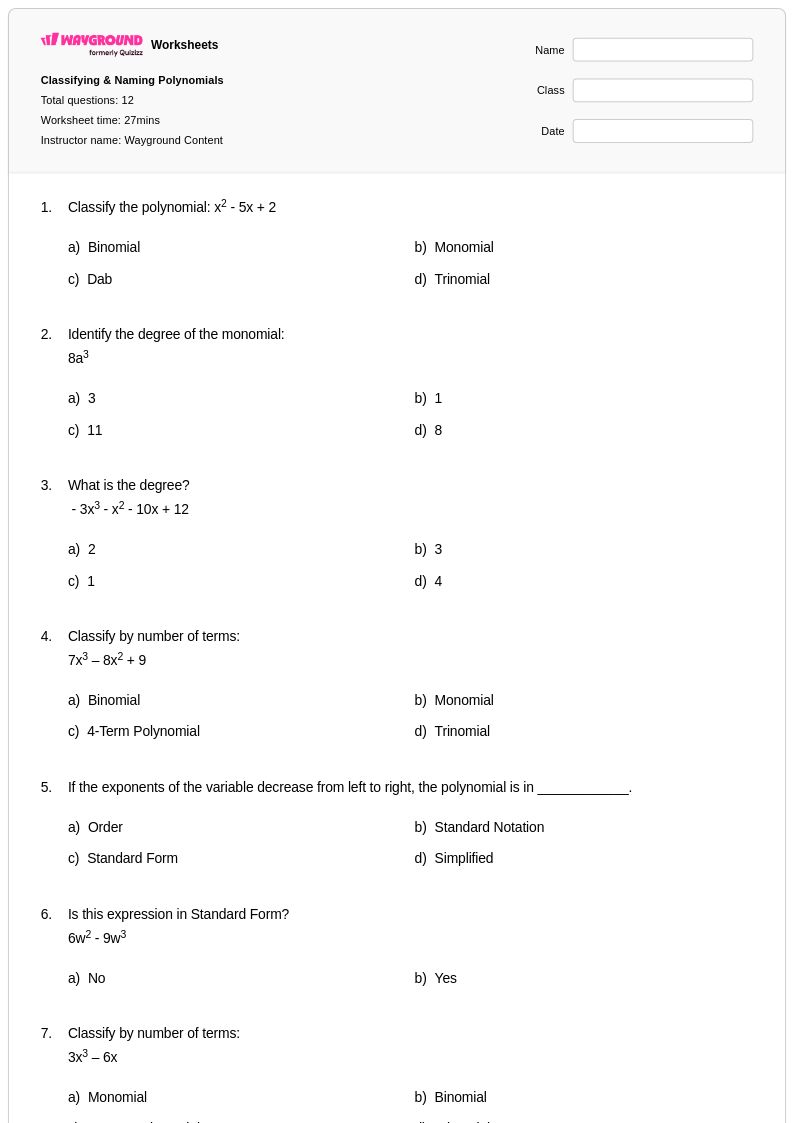
12Q
9th - 12th
15Q
9th - Uni
22Q
7th - 10th
20Q
9th - Uni
18Q
9th - 12th
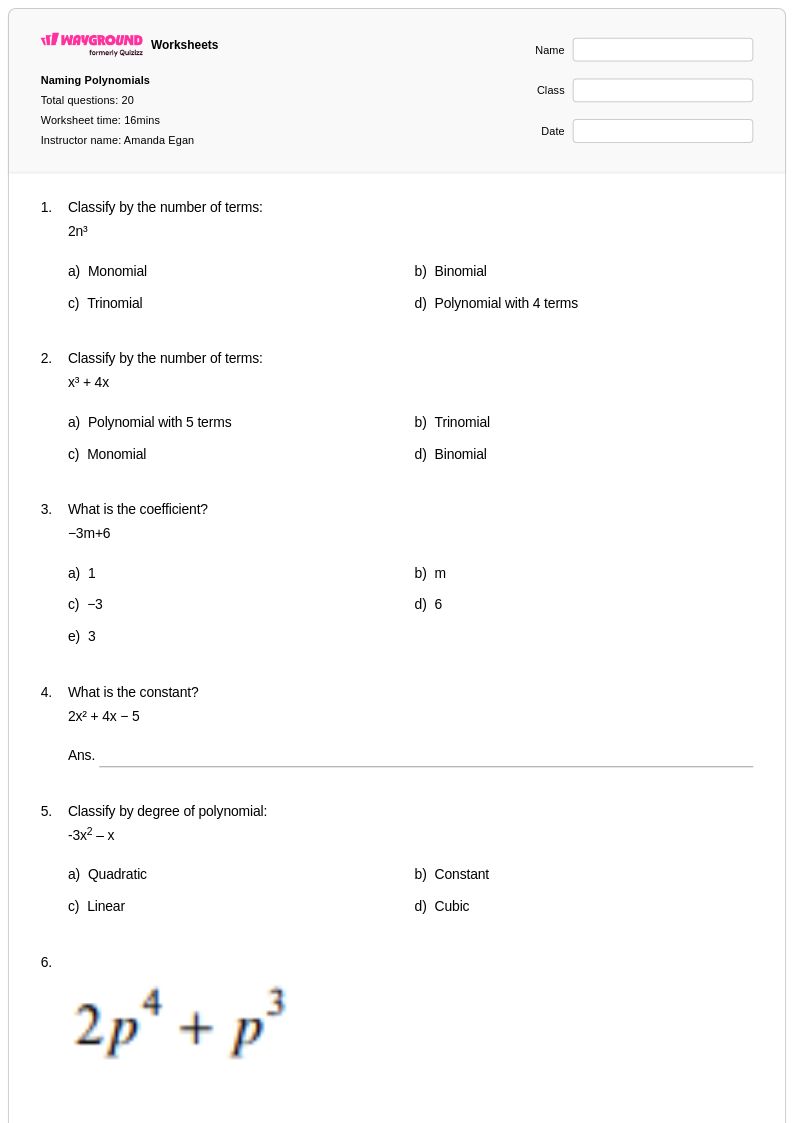
20Q
9th - 12th
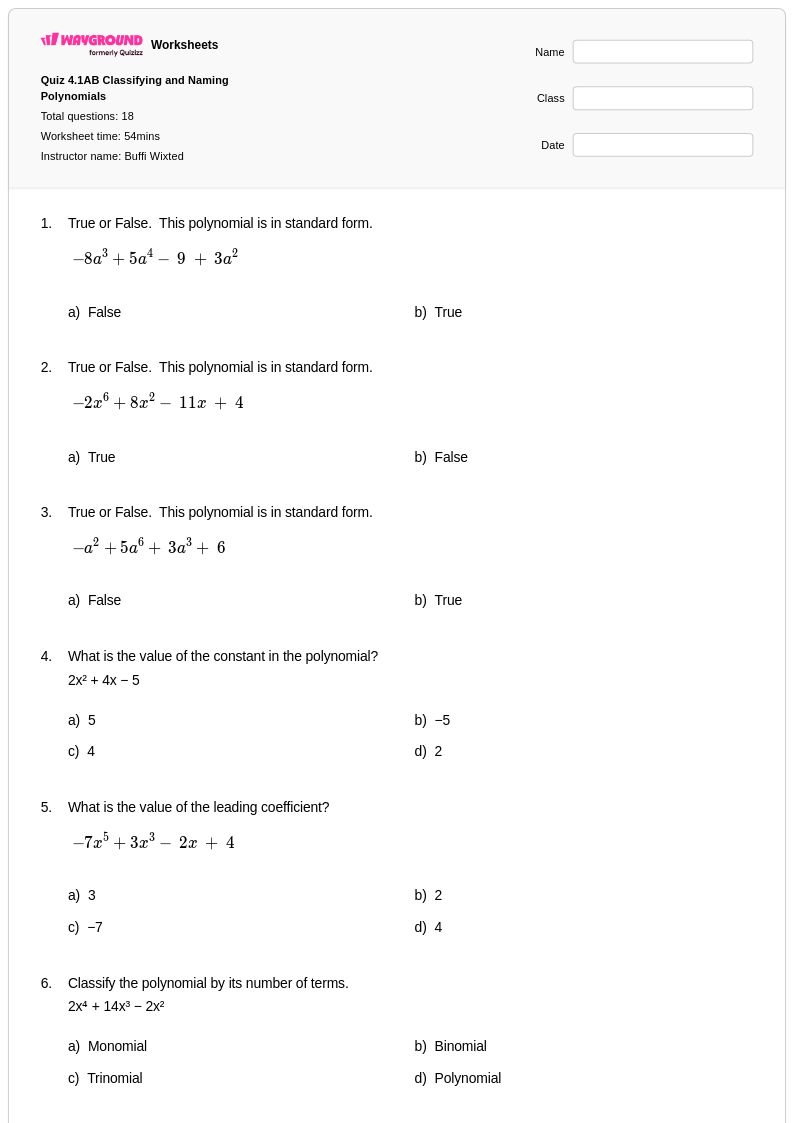
18Q
9th - 10th
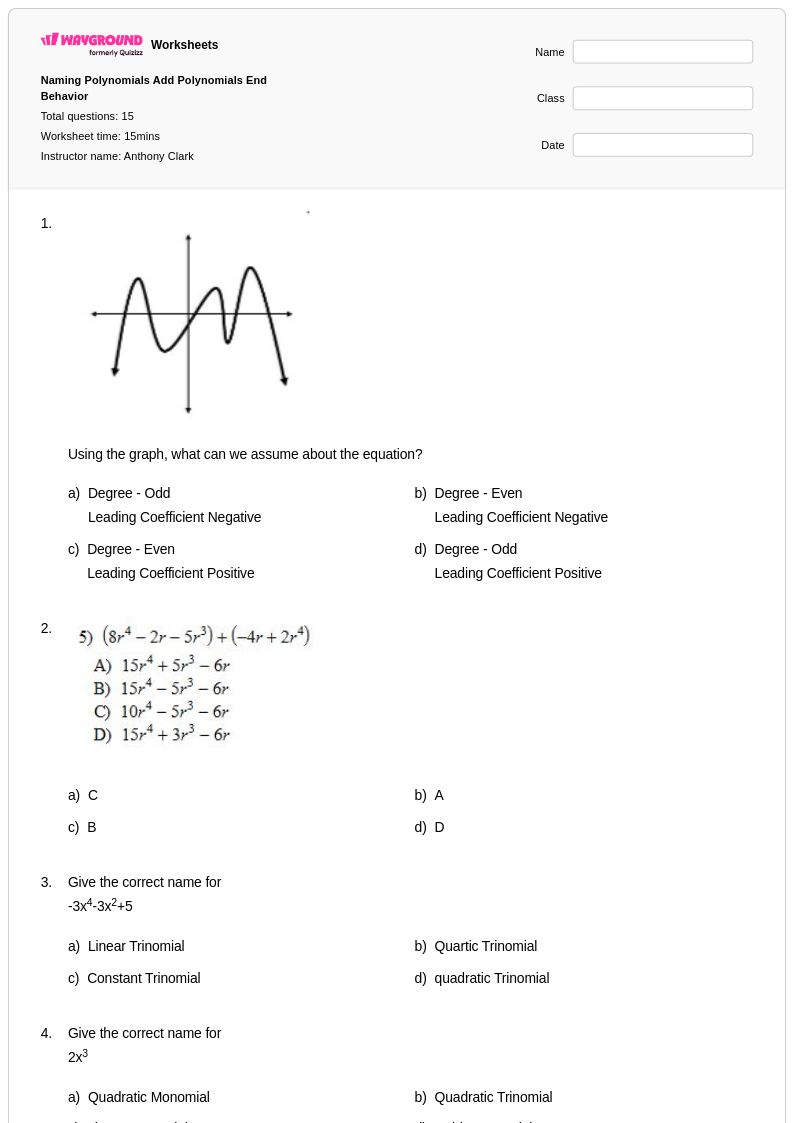
15Q
10th - Uni
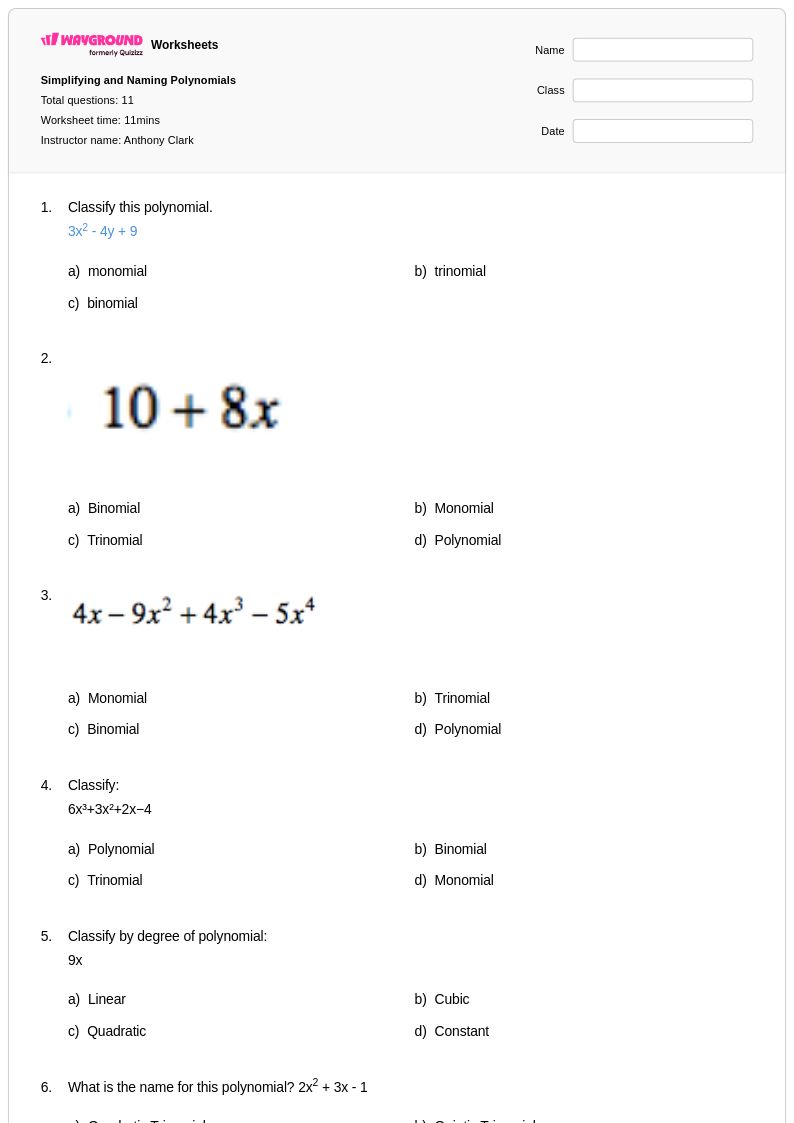
11Q
9th - Uni
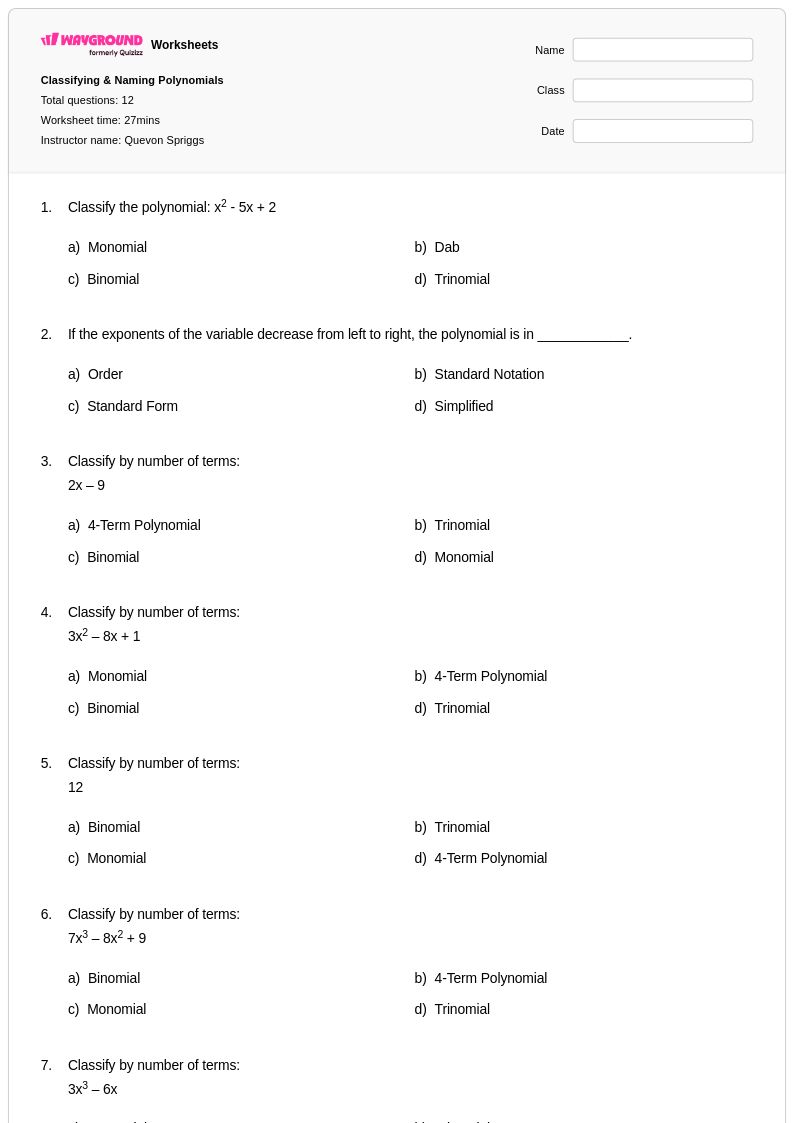
12Q
9th - 12th
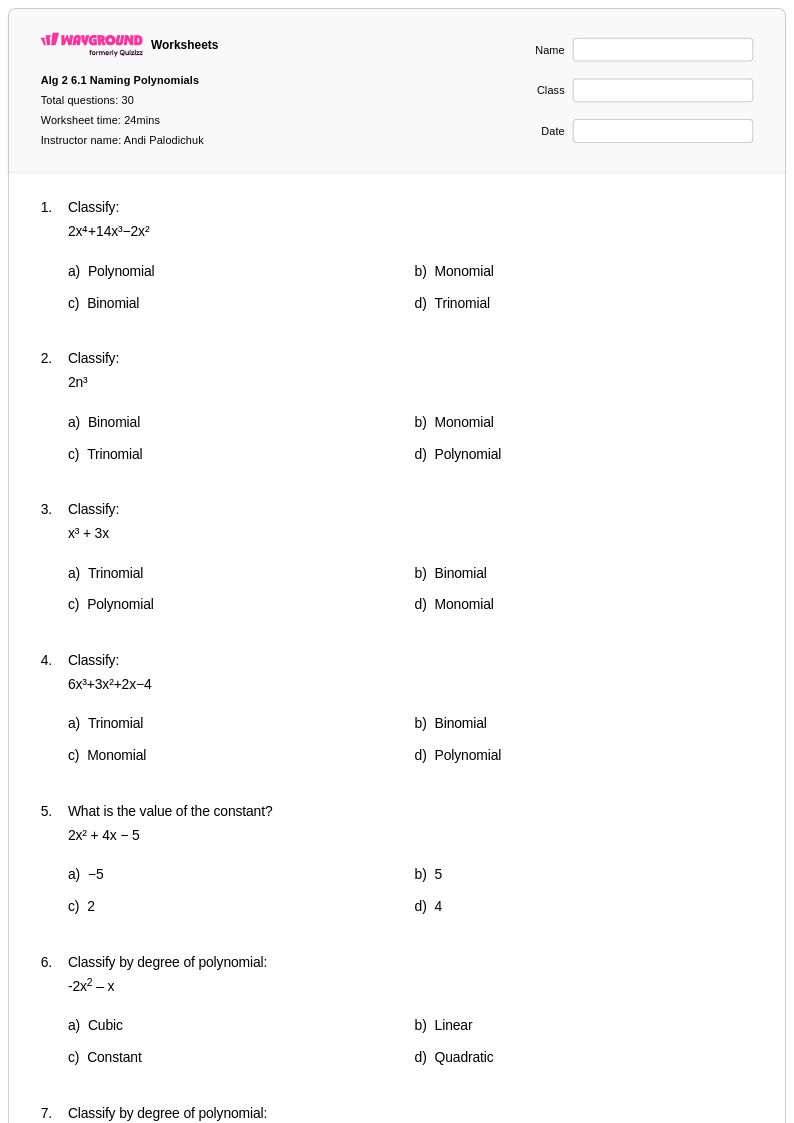
30Q
9th - 12th
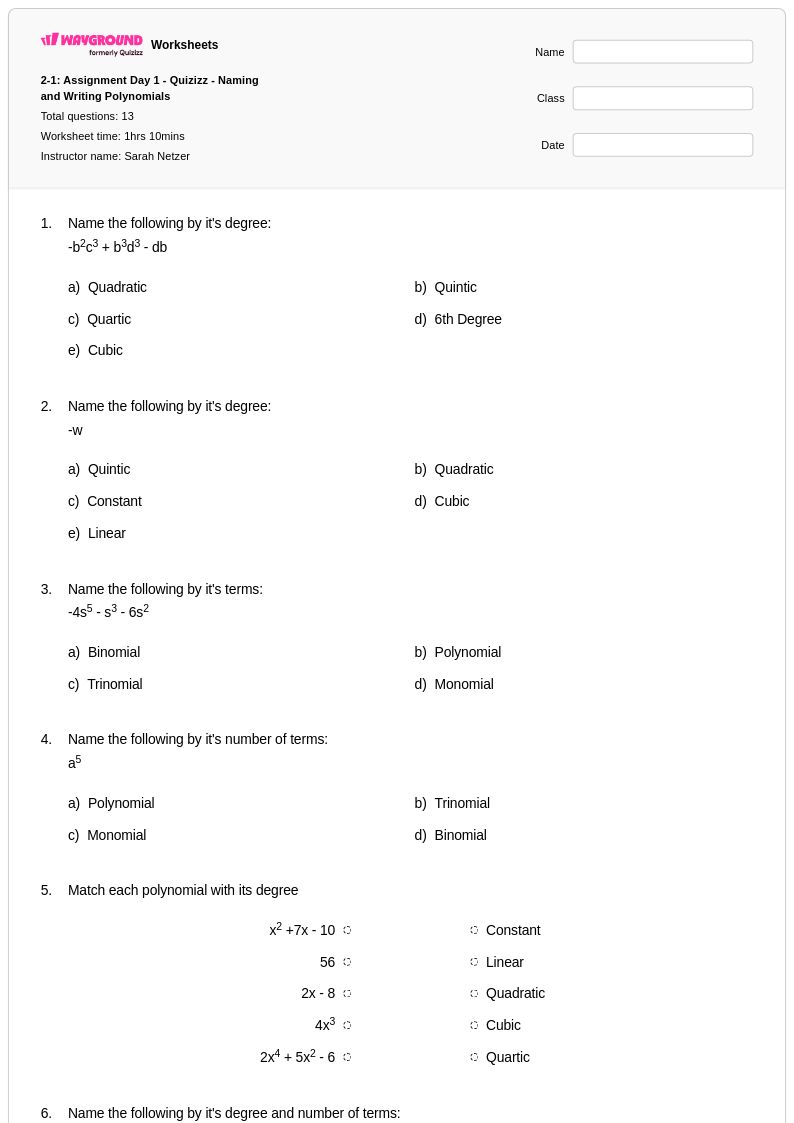
13Q
10th
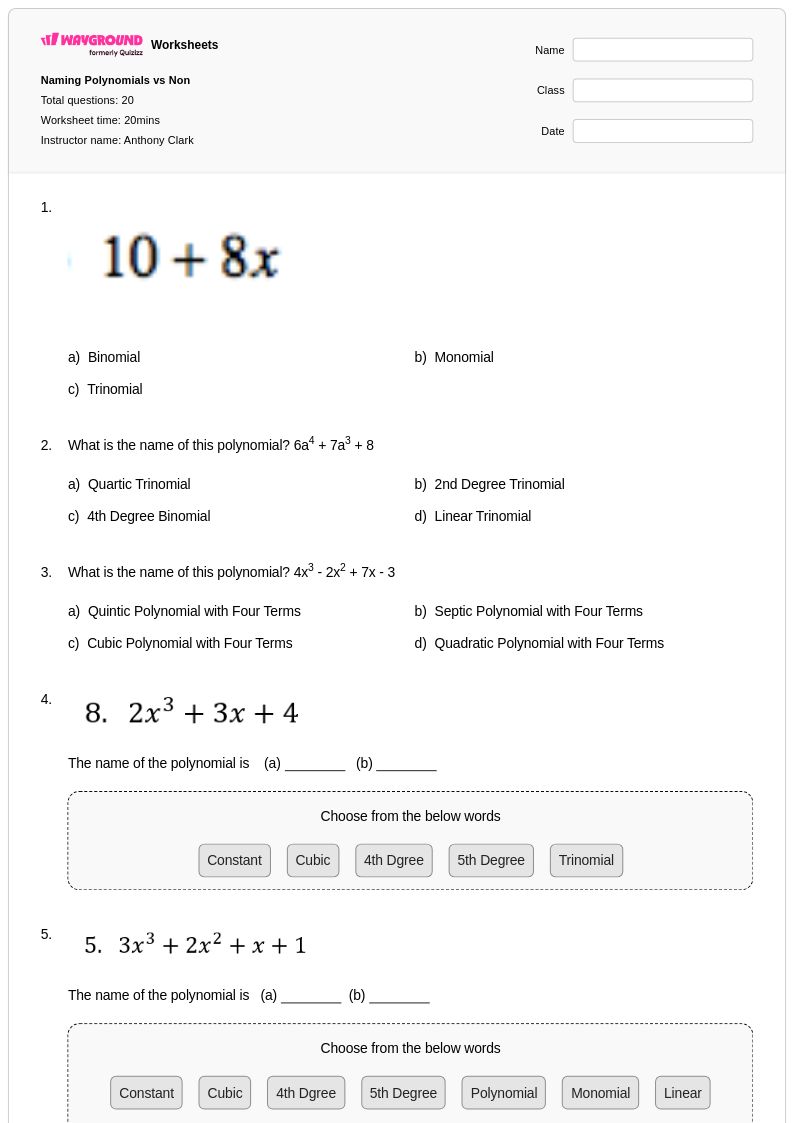
20Q
9th - Uni
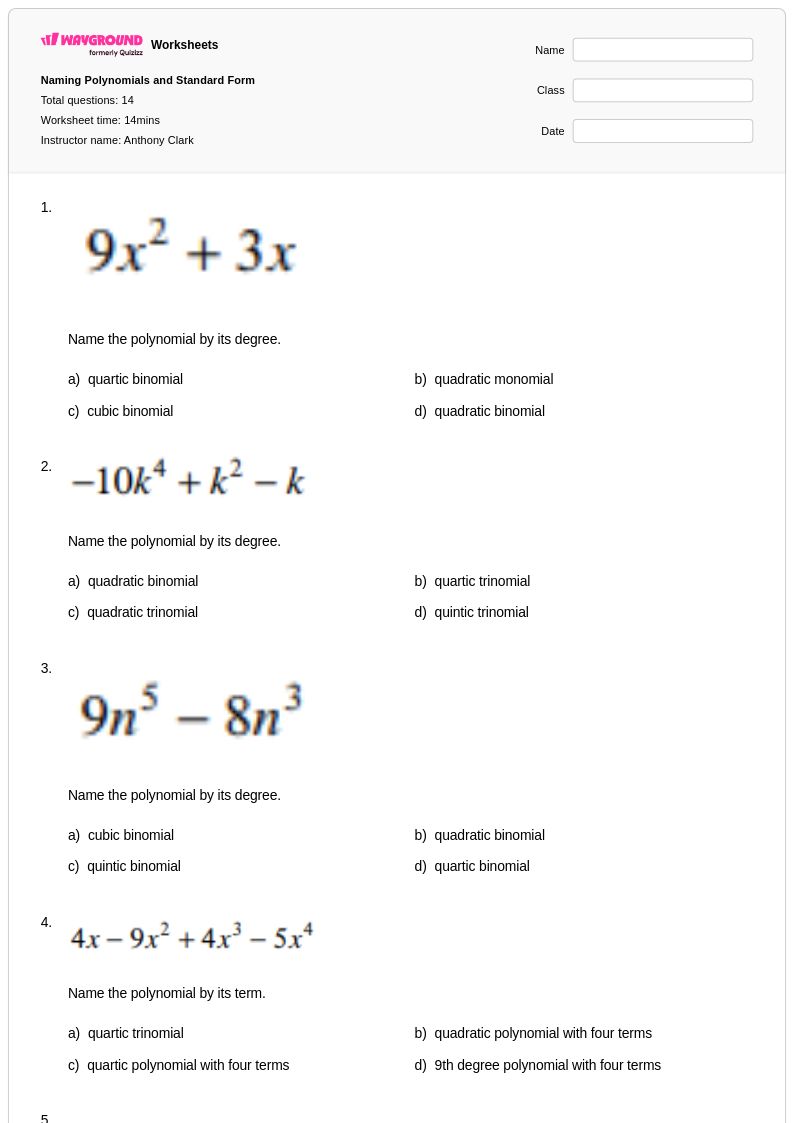
14Q
9th - Uni
Explorar Naming Polynomials hojas de trabajo por grados
Explore otras hojas de trabajo de materias para class 10
Explore printable Naming Polynomials worksheets for Class 10
Naming polynomials represents a fundamental algebraic concept that Class 10 students must master to build a strong foundation for advanced mathematical studies. Wayground's comprehensive collection of naming polynomials worksheets provides students with structured practice in identifying and classifying polynomial expressions by degree, number of terms, and leading coefficients. These carefully crafted practice problems guide students through the systematic process of recognizing monomials, binomials, trinomials, and higher-order polynomials while reinforcing proper mathematical terminology and notation. Each worksheet includes a detailed answer key that allows students to verify their understanding and identify areas requiring additional focus, with printable pdf formats ensuring accessibility for both classroom instruction and independent study sessions.
Wayground's extensive library of teacher-created resources empowers educators with millions of high-quality worksheets specifically designed to address varying skill levels and learning objectives in polynomial classification. The platform's robust search and filtering capabilities enable teachers to quickly locate materials aligned with state mathematics standards while providing differentiation tools that accommodate diverse learning needs within Class 10 algebra courses. Teachers can seamlessly customize existing worksheets or create original assessments using flexible digital tools, then distribute materials in both printable and interactive formats to support comprehensive lesson planning. This versatility proves invaluable for targeted remediation sessions, enrichment activities for advanced learners, and regular skill practice that reinforces conceptual understanding of polynomial terminology and classification systems.