Free Printable Natural Selection and Adaptations worksheets
Explore Wayground's comprehensive collection of free Natural Selection and Adaptations worksheets and printables that help students understand evolutionary processes through engaging practice problems and detailed answer keys.
Explore printable Natural Selection and Adaptations worksheets
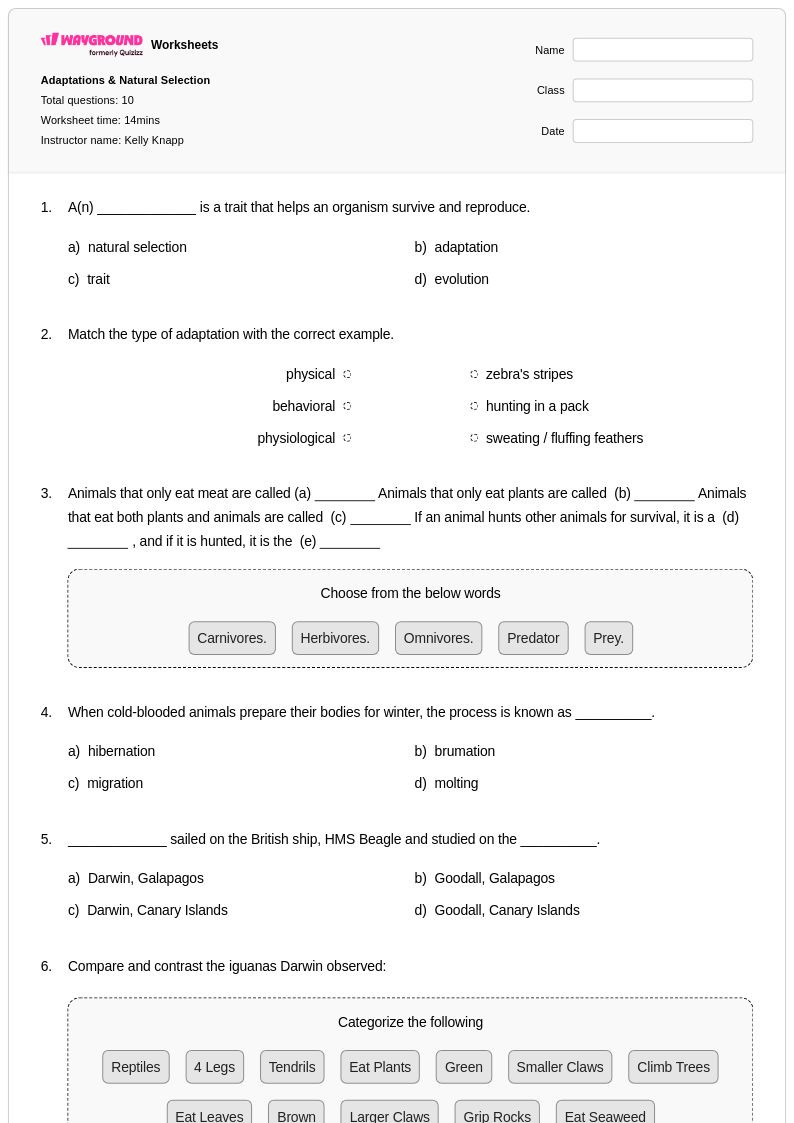
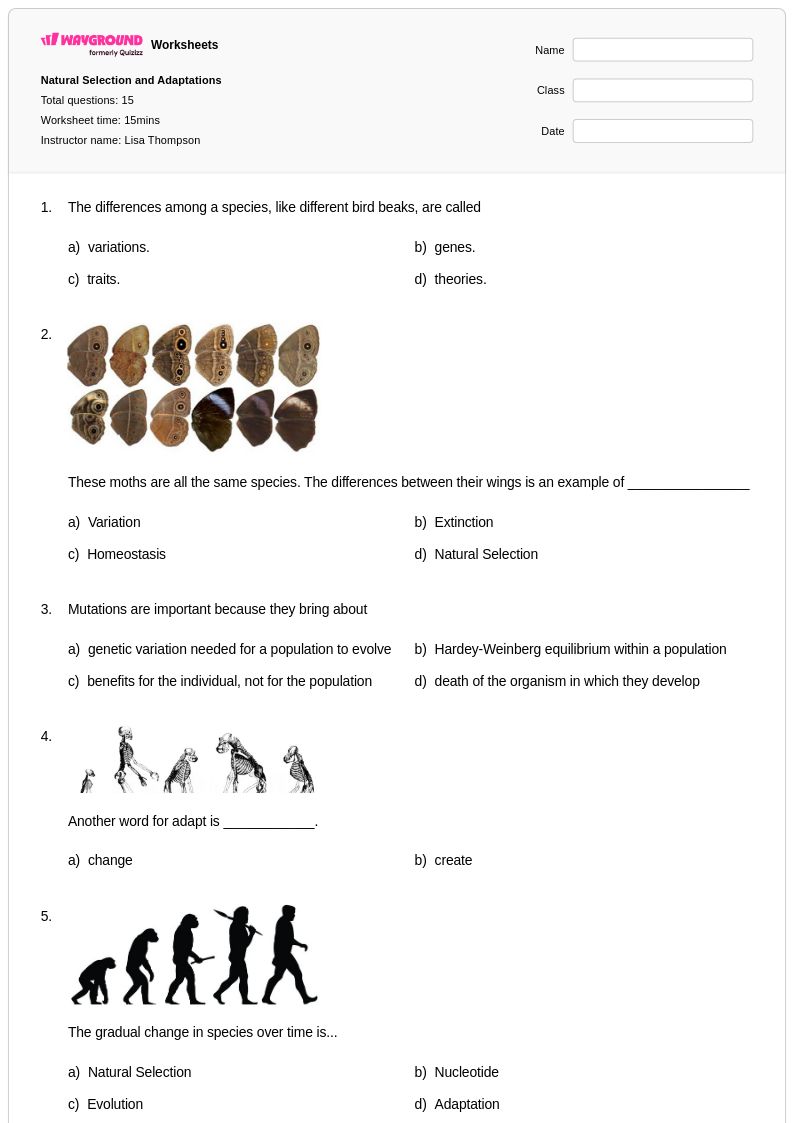
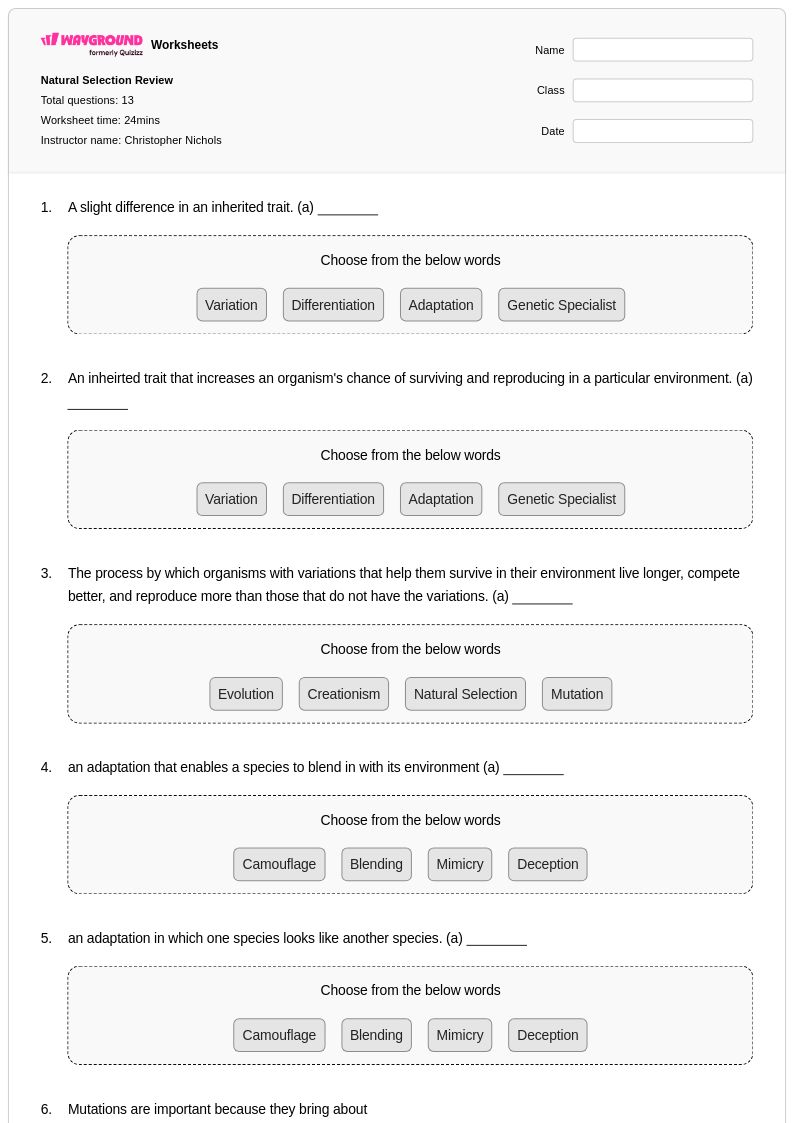
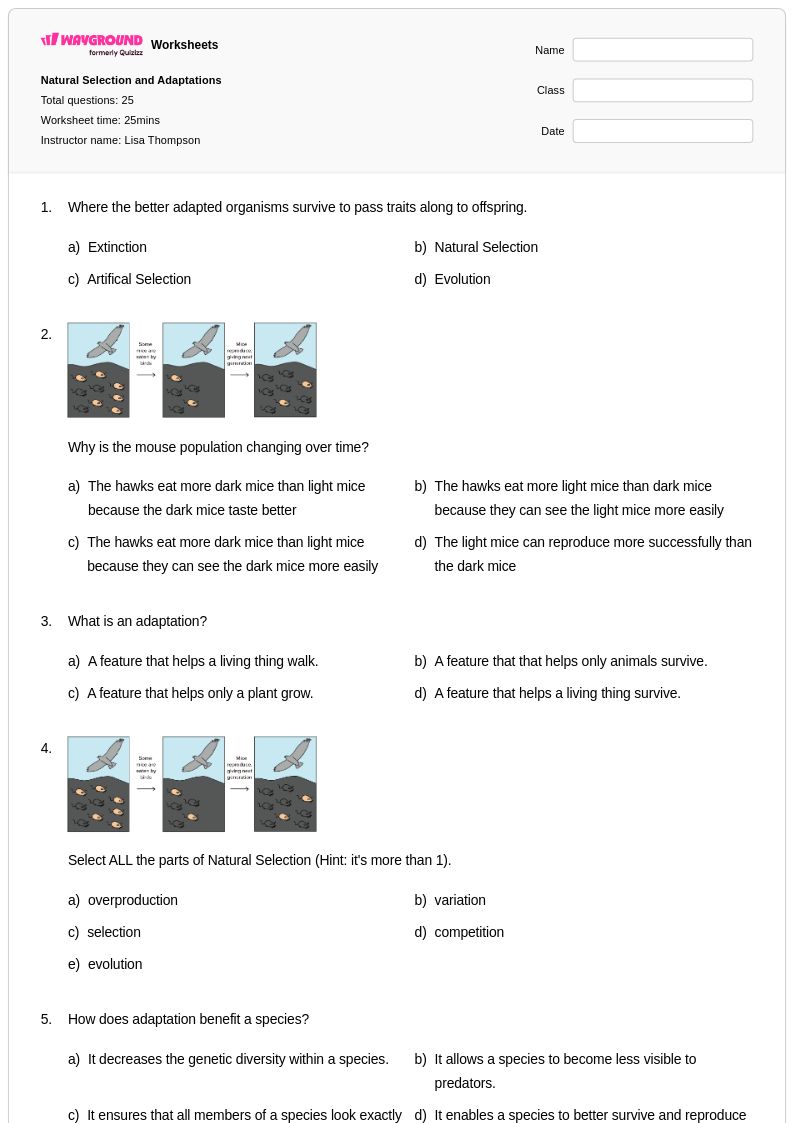
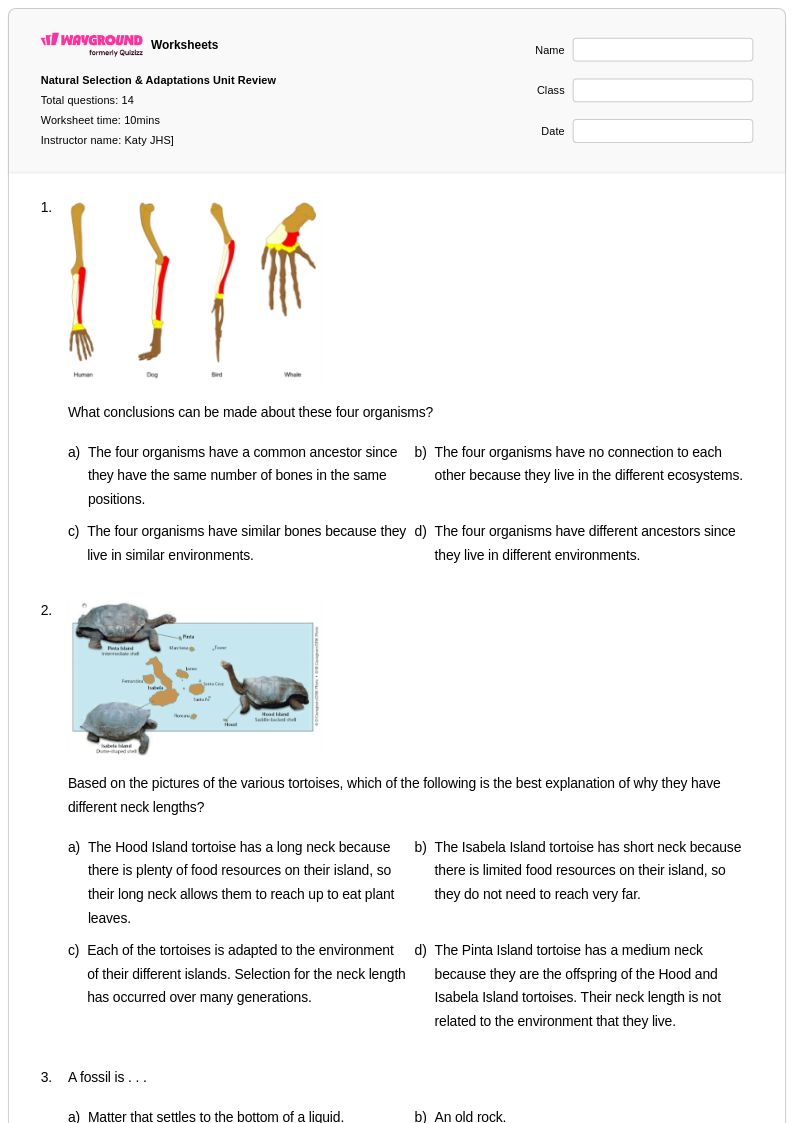
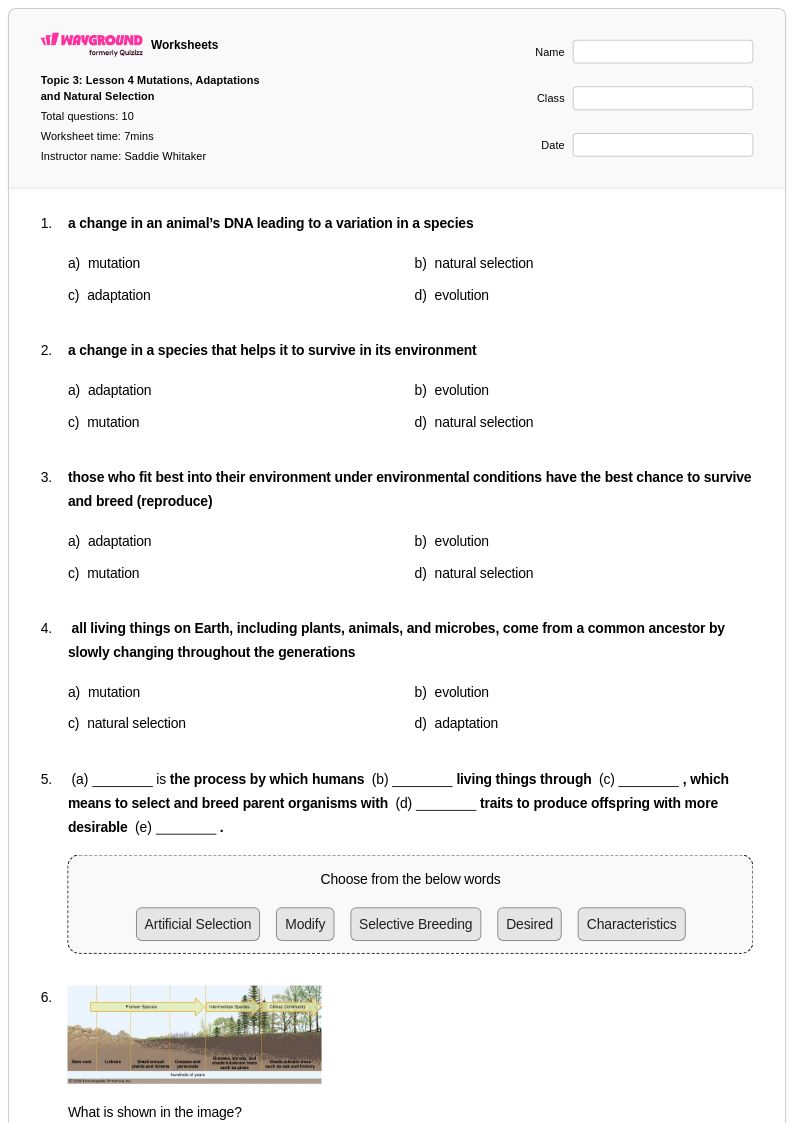
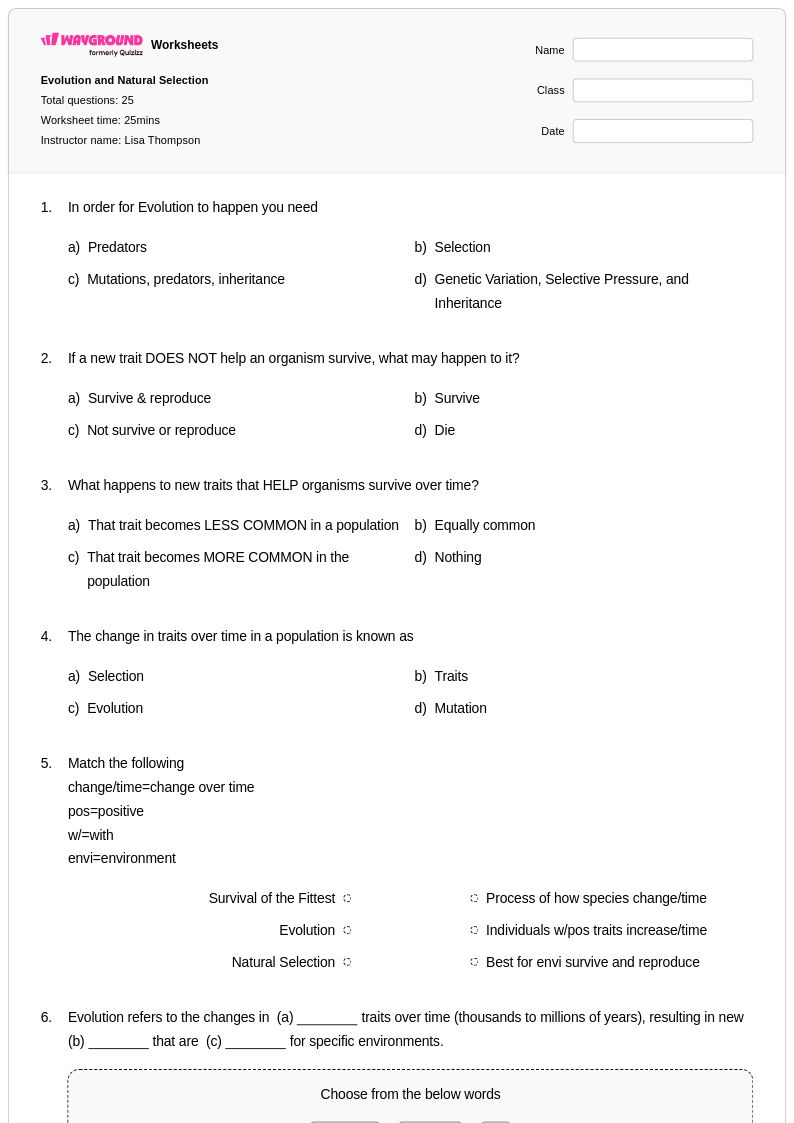
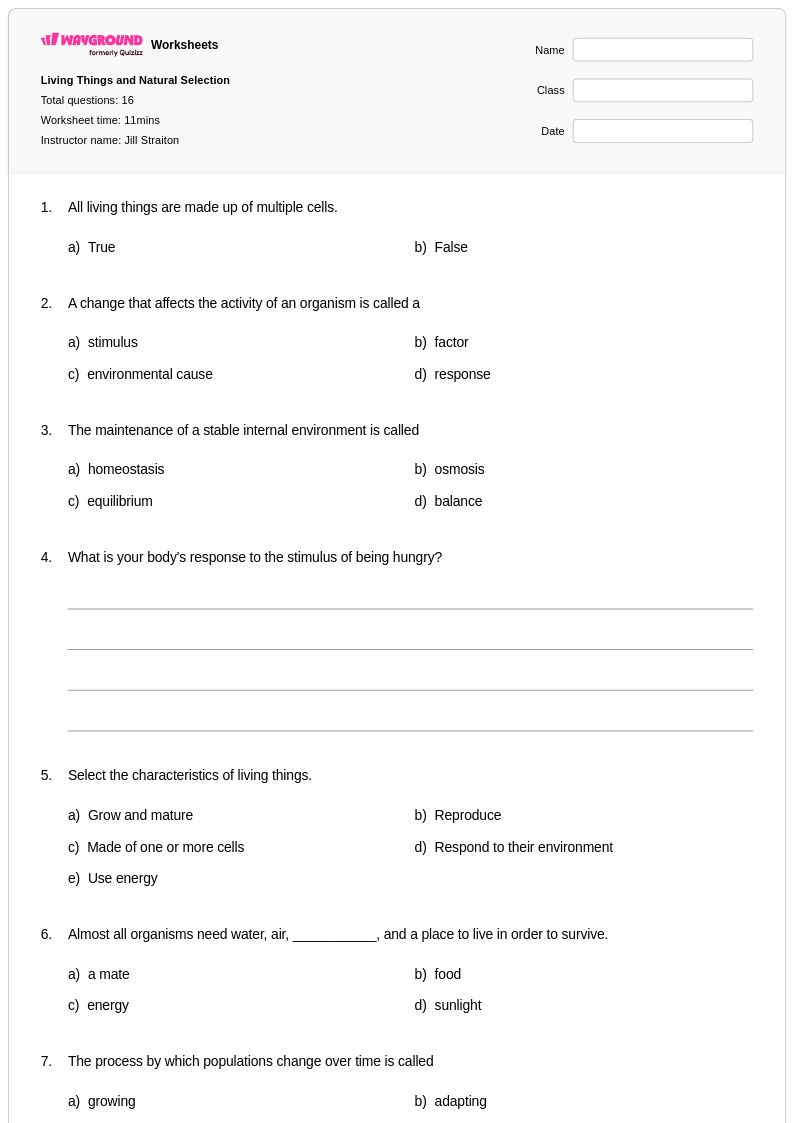
Natural selection and adaptations worksheets available through Wayground (formerly Quizizz) provide comprehensive resources for exploring evolutionary mechanisms and survival strategies across diverse species and environments. These expertly designed materials strengthen students' understanding of key concepts including selective pressures, inherited variations, fitness advantages, and environmental influences on organism traits. The worksheet collections feature detailed practice problems that guide learners through analyzing adaptation examples, comparing structural and behavioral modifications, and evaluating how genetic variations contribute to species survival. Each resource includes comprehensive answer keys and is available as free printable pdf downloads, enabling educators to seamlessly integrate hands-on activities that reinforce critical thinking about evolutionary processes and the relationship between form and function in living organisms.
Wayground (formerly Quizizz) supports science educators with an extensive library of millions of teacher-created natural selection and adaptations resources, featuring robust search and filtering capabilities that allow precise alignment with curriculum standards and learning objectives. The platform's differentiation tools enable teachers to customize worksheet difficulty levels and content focus areas, accommodating diverse learning needs while maintaining academic rigor in evolutionary biology instruction. These flexible materials are available in both printable and digital formats, including downloadable pdf versions, making them ideal for classroom instruction, independent practice, remediation support, and enrichment activities. The comprehensive collection streamlines lesson planning by providing ready-to-use assessments and practice exercises that help students master complex concepts about species adaptation, environmental pressures, and the mechanisms driving evolutionary change.
FAQs
How do I teach natural selection and adaptations in a way students actually understand?
The most effective approach grounds natural selection in concrete, observable examples before introducing abstract mechanisms. Start with familiar species — like peppered moths or Darwin's finches — to illustrate how inherited variations interact with environmental pressures over generations. Once students can trace the logic of survival, fitness, and reproduction in a specific case, they're far better equipped to apply the same reasoning to unfamiliar organisms.
What kinds of practice problems help students understand natural selection?
Students benefit most from problems that require them to analyze adaptation examples, distinguish between structural and behavioral modifications, and evaluate how specific genetic variations confer fitness advantages in a given environment. Comparing two populations under different selective pressures — such as predation versus drought — forces students to apply the concept rather than just recall it. Practice that connects trait variation to survival outcomes builds the cause-and-effect reasoning that defines genuine understanding of evolutionary processes.
What misconceptions do students commonly have about natural selection?
The most persistent misconception is that organisms consciously adapt — that a giraffe 'grows' a longer neck because it needs one. Students often confuse individual change during a lifetime with population-level change across generations. Another common error is treating natural selection as goal-directed or progressive, rather than as a process driven entirely by current environmental conditions and random variation. Correcting these misconceptions requires repeated exposure to examples that emphasize population thinking and the role of pre-existing inherited variation.
How do I differentiate natural selection instruction for students at different levels?
For students who struggle, reduce complexity by focusing on single-trait scenarios with clear environmental pressures and obvious fitness outcomes before introducing multi-variable cases. Advanced students can analyze competing selective pressures, trade-offs in adaptation, or the distinction between convergent and divergent evolution. On Wayground, teachers can apply accommodations such as reduced answer choices to lower cognitive load for individual students, or enable Read Aloud so that text-heavy evolution passages are accessible to students with reading difficulties, without disrupting the experience for the rest of the class.
How can I use natural selection and adaptations worksheets to assess student understanding?
Effective assessment of natural selection requires tasks that go beyond vocabulary recall — look for items that ask students to predict outcomes of environmental change, identify which variation in a population would survive a specific pressure, or explain why a trait that seems disadvantageous persists. Worksheet problems that present novel scenarios, rather than textbook examples, reveal whether students have internalized the mechanism or are pattern-matching from memory.
How do I use Wayground's natural selection and adaptations worksheets in my classroom?
Wayground's natural selection and adaptations worksheets are available as printable PDFs for traditional classroom use and in digital formats for technology-integrated environments, including the option to host them as a live quiz on Wayground. Teachers can use these materials for direct instruction support, independent practice, formative assessment, or remediation. The included answer keys make it straightforward to review responses and identify concept gaps without additional prep time.