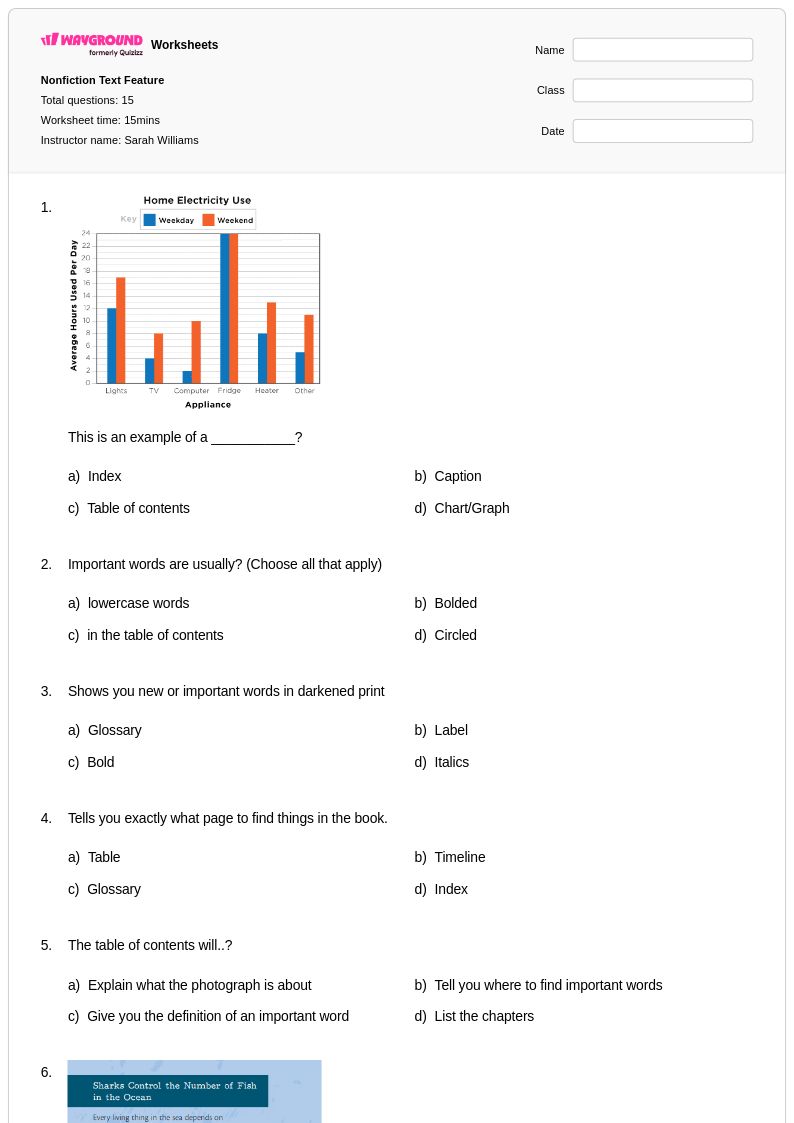
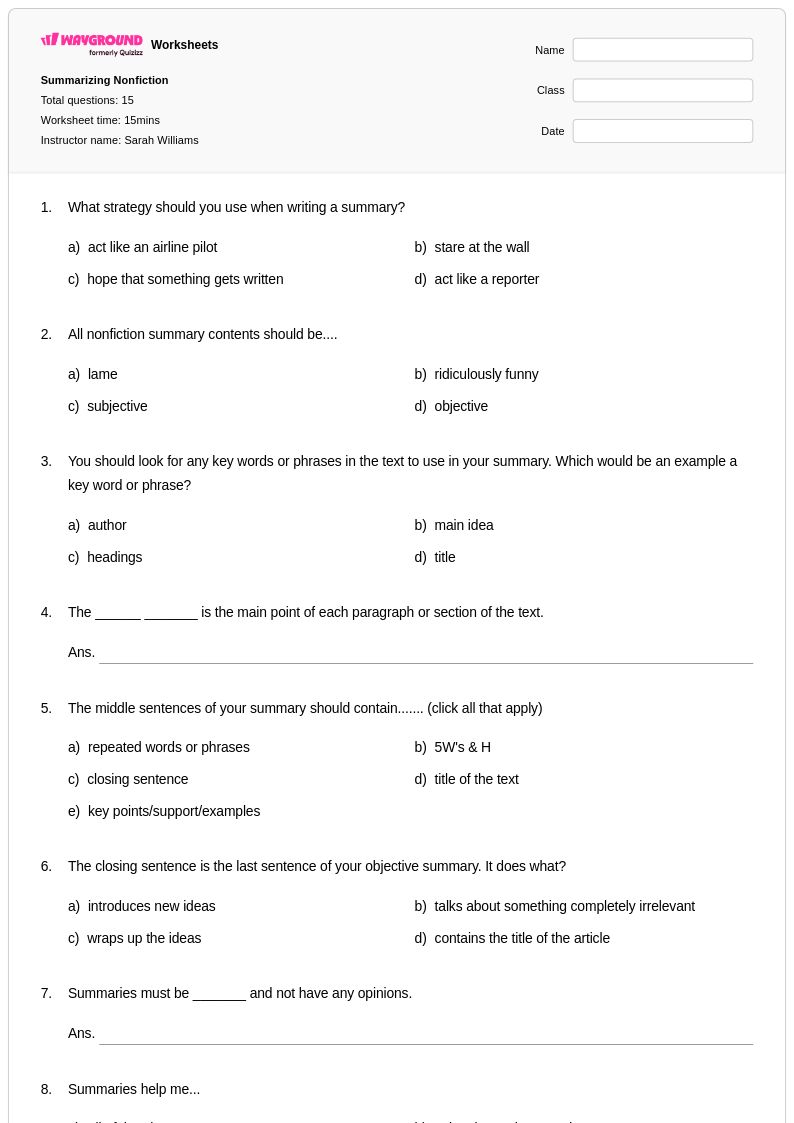
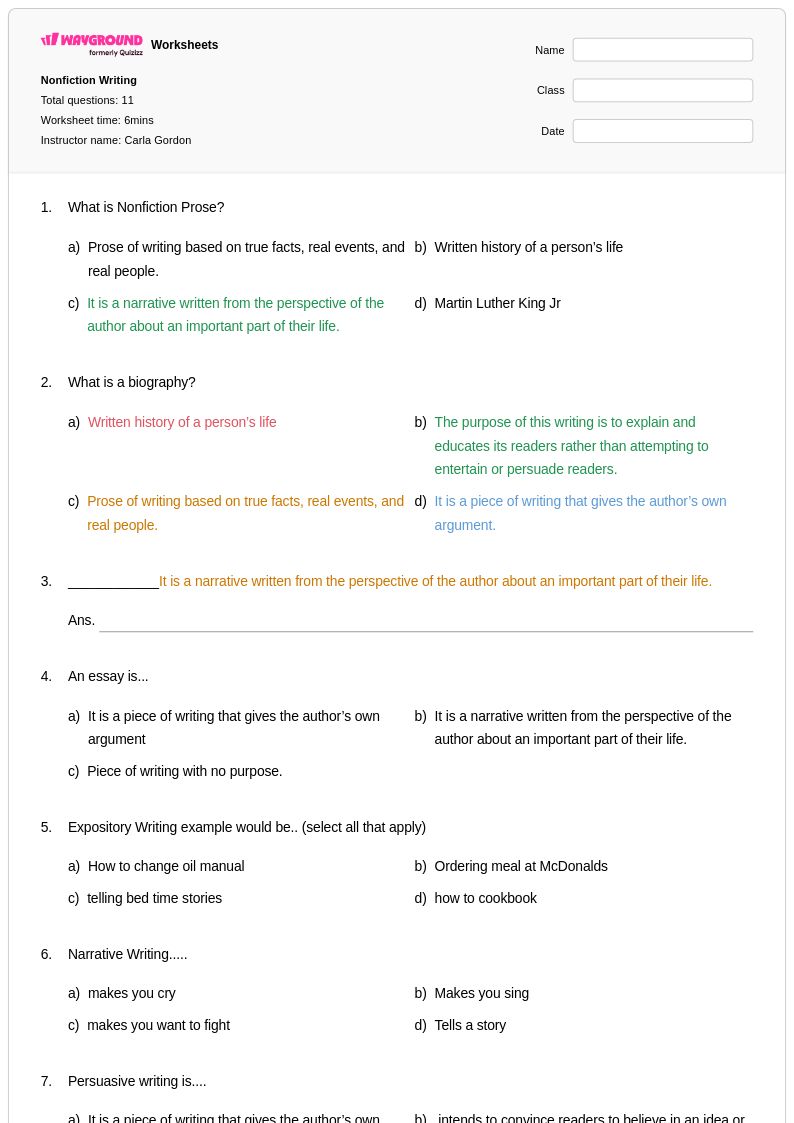
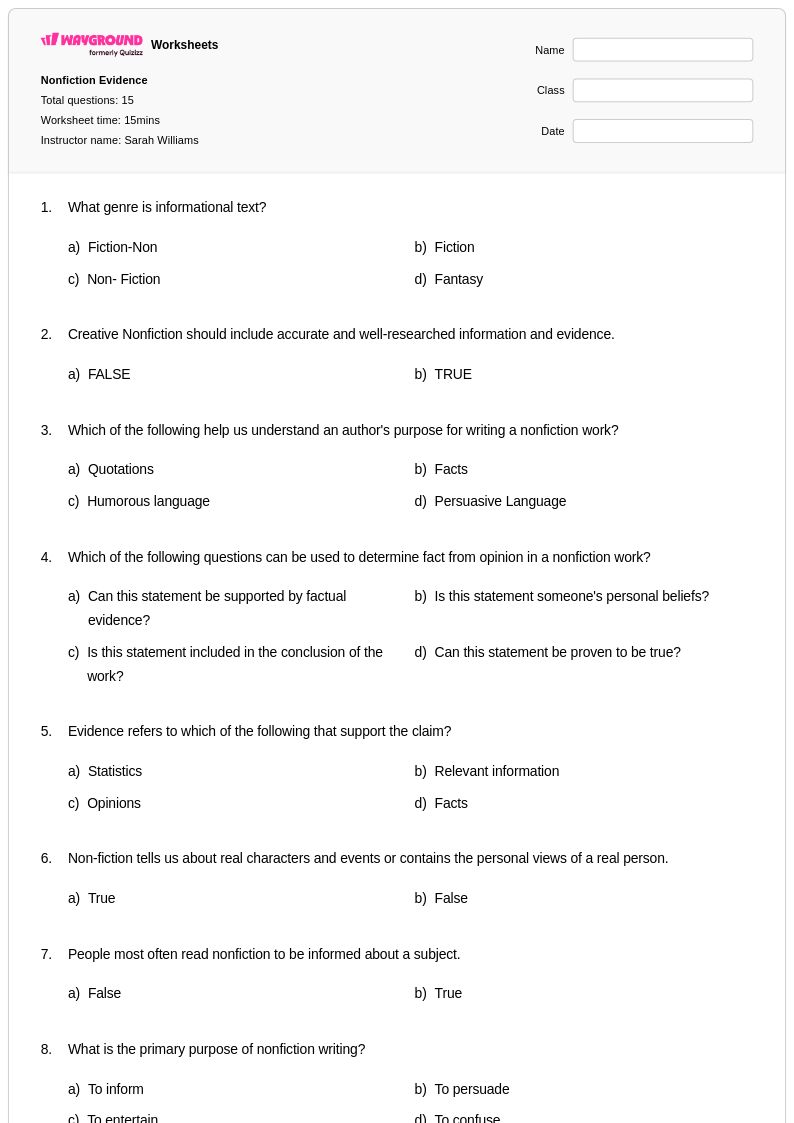
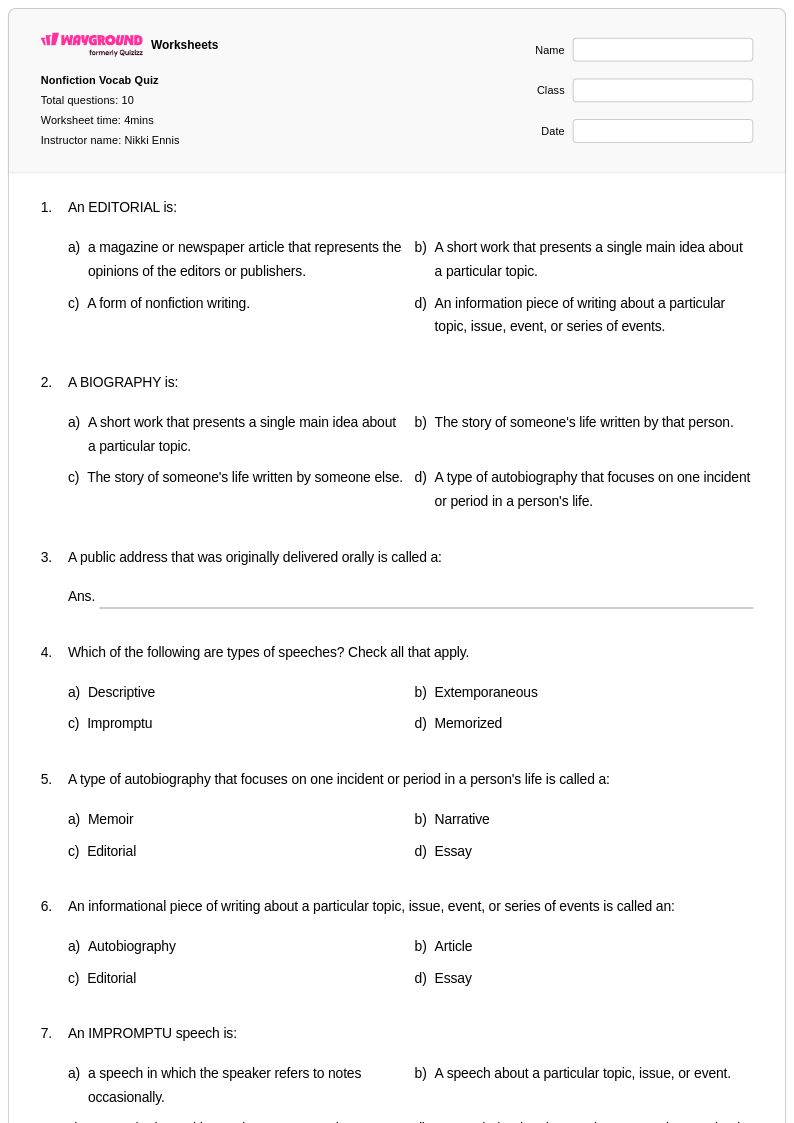
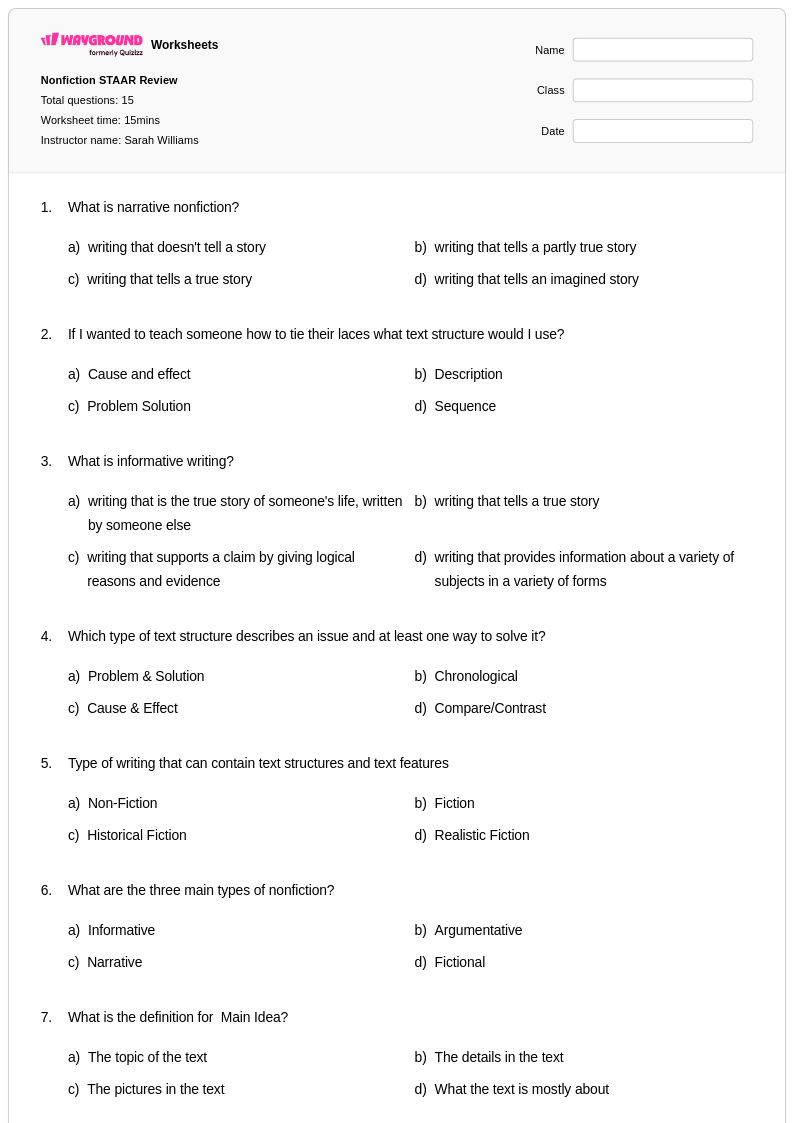
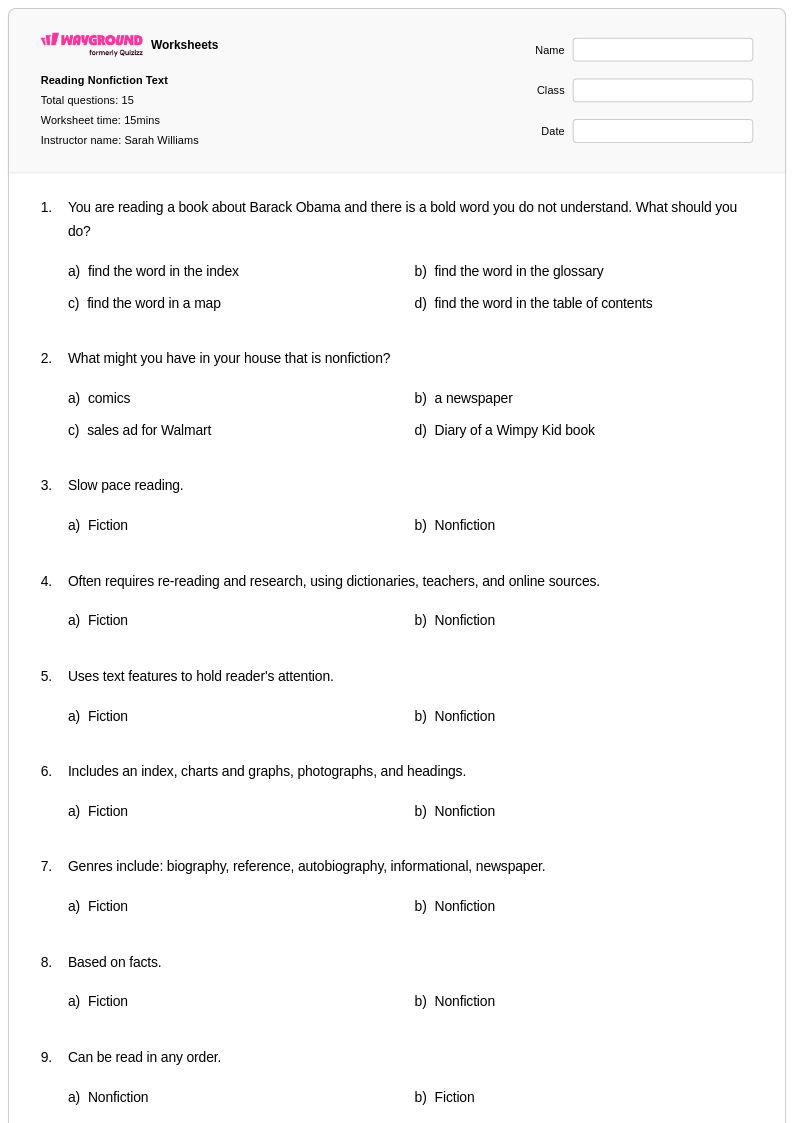
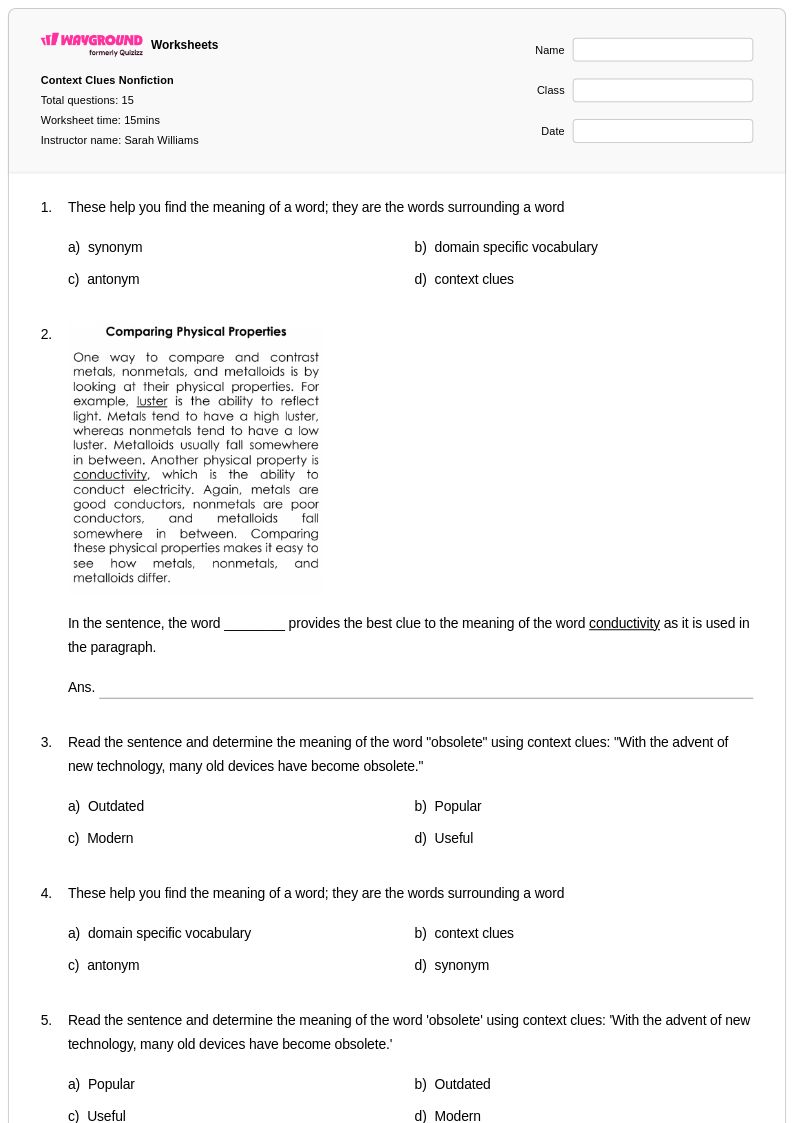
Class 11 nonfiction worksheets and printables help students master critical reading skills through engaging practice problems, free PDF resources, and comprehensive answer keys for effective learning.
Explore printable Nonfiction worksheets for Class 11
Wayground's Class 11 nonfiction worksheets provide comprehensive practice materials designed to strengthen students' analytical and critical reading skills across diverse informational texts. These carefully crafted resources guide eleventh-grade students through the complex world of nonfiction genres, including biographical works, essays, speeches, memoirs, and contemporary journalism, while developing essential skills in identifying author's purpose, evaluating credibility, analyzing rhetorical strategies, and synthesizing information from multiple sources. Each worksheet includes detailed answer keys and is available as free printable PDFs, featuring practice problems that challenge students to examine text structure, assess evidence quality, recognize bias, and understand how authors craft compelling arguments to influence their audiences.
Wayground's extensive collection draws from millions of teacher-created resources specifically aligned with Class 11 reading standards, offering educators powerful search and filtering capabilities to locate precisely targeted nonfiction materials for their classroom needs. The platform's differentiation tools enable teachers to customize worksheets for varying skill levels, ensuring appropriate challenge and support for all learners while maintaining focus on sophisticated nonfiction analysis skills expected at the eleventh-grade level. Available in both printable and digital PDF formats, these resources seamlessly integrate into lesson planning for initial instruction, targeted remediation, advanced enrichment activities, and ongoing skill practice, empowering educators to build students' confidence in navigating the complex informational texts they will encounter in college and professional settings.
FAQs
How do I teach nonfiction reading skills in the classroom?
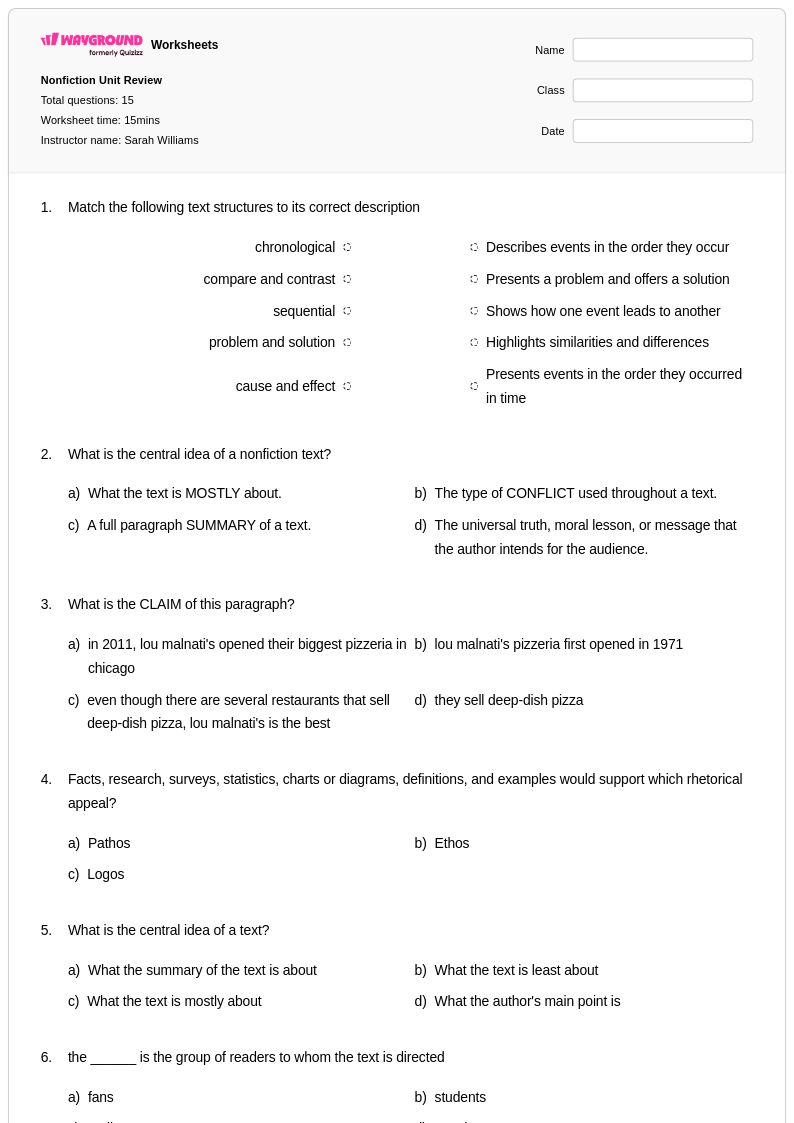
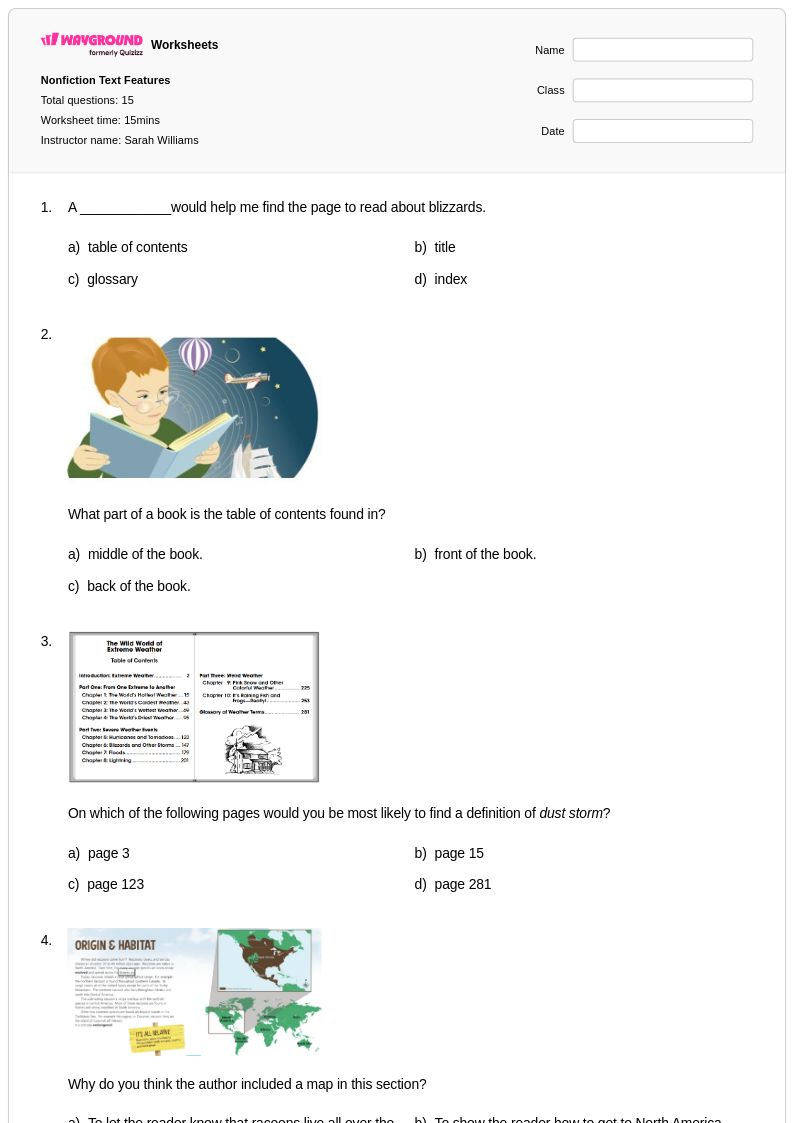
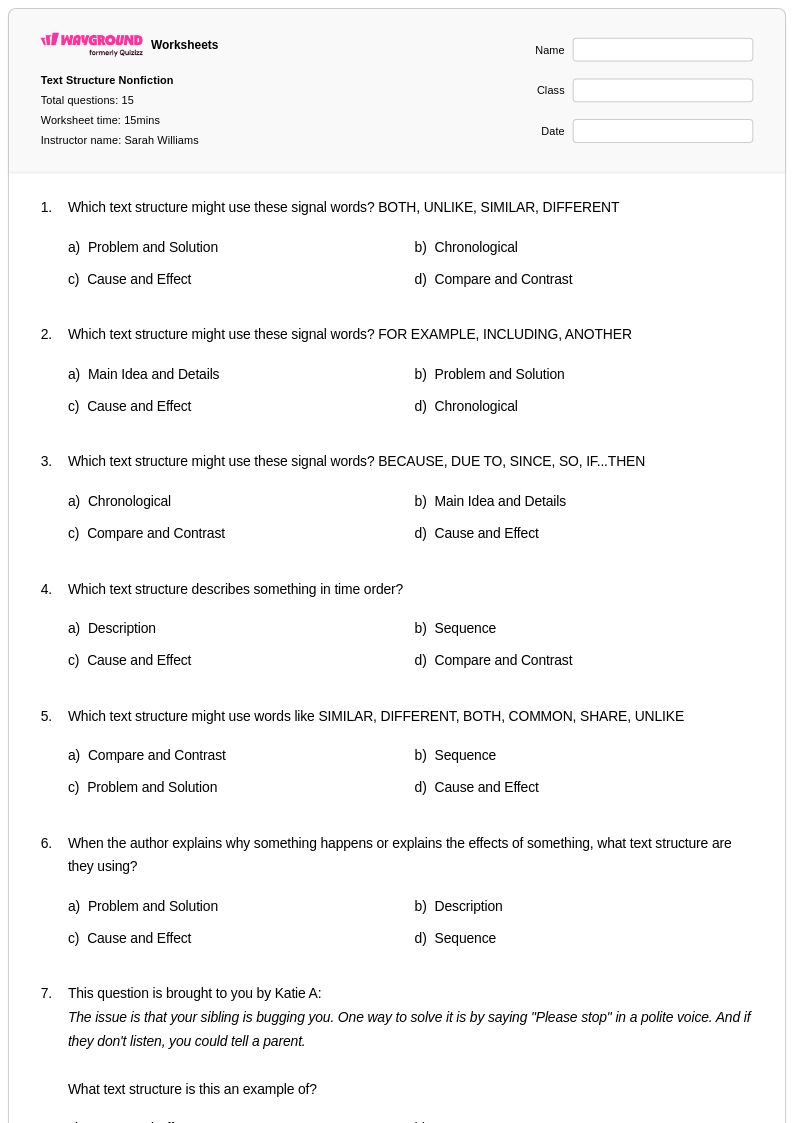
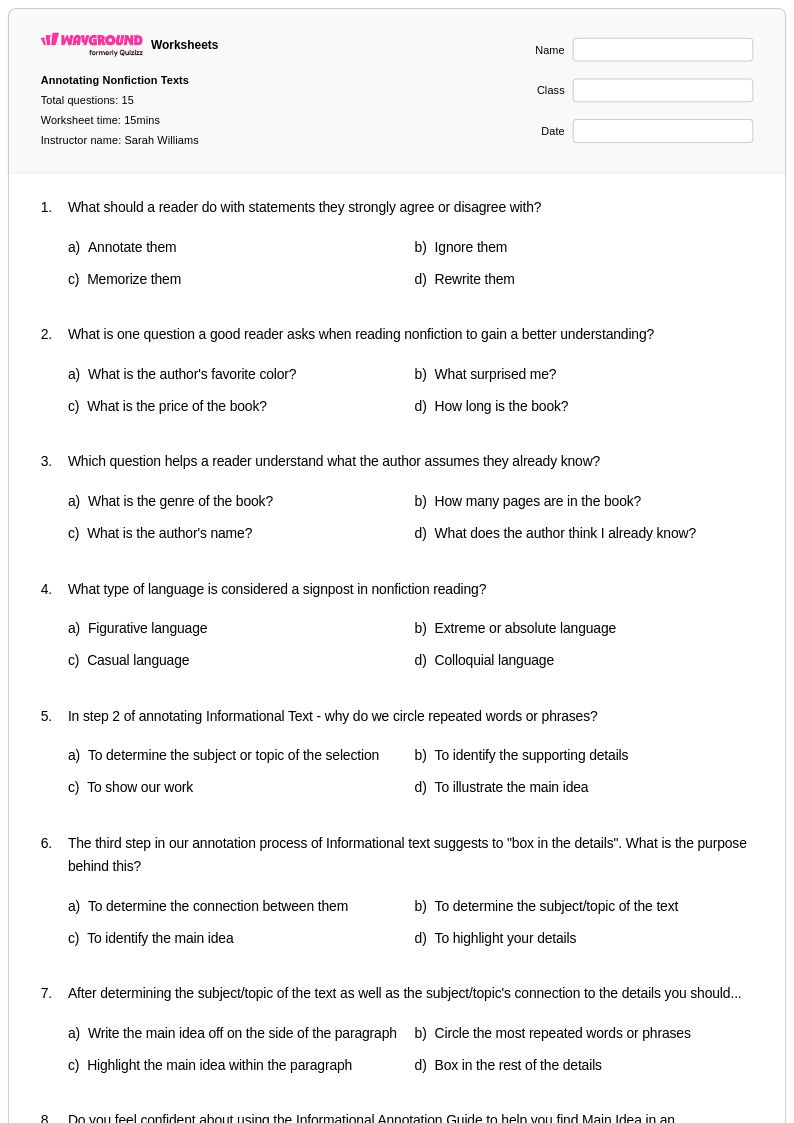
Teaching nonfiction reading effectively means building students' ability to identify text structures such as cause and effect, problem and solution, and compare and contrast before asking them to analyze content independently. Start by modeling how to preview headings, captions, and text features, then guide students through annotating for main idea and supporting details. Gradually release responsibility so students practice these strategies with increasingly complex informational texts, including biographical, scientific, and historical sources.
What exercises help students practice nonfiction reading comprehension?
Effective nonfiction practice exercises include identifying text structure in short passages, distinguishing fact from opinion, analyzing an author's purpose, and evaluating the credibility of a source. Students also benefit from exercises that require them to extract key information and summarize it in their own words. Worksheets that present a range of informational text types, from technical writing to historical documents, help students apply these strategies across contexts rather than in isolation.
What mistakes do students commonly make when reading nonfiction texts?
One of the most common errors is confusing the author's main idea with a supporting detail, particularly in dense informational texts where multiple ideas compete for attention. Students also frequently struggle to distinguish fact from opinion when persuasive language is embedded within otherwise factual content. Another persistent misconception is treating all published or online sources as equally credible, making explicit instruction on evaluating source reliability essential.
How can I help students recognize persuasive techniques in nonfiction?
Teach students to look for loaded language, appeals to authority, and the selective use of statistics as entry points for identifying persuasion in nonfiction texts. It helps to compare two passages on the same topic that take different stances, asking students to annotate where the author's purpose shifts from informing to persuading. Regular practice with editorials, opinion columns, and advocacy documents builds the critical lens students need to read persuasive nonfiction accurately.
How do I use Wayground's nonfiction worksheets in my classroom?
Wayground's nonfiction worksheets are available as printable PDFs for traditional classroom use and in digital formats for technology-integrated learning environments, so they fit a range of instructional setups. Teachers can also host the worksheets as a quiz directly on Wayground, allowing for real-time student submission and built-in answer key support. Each worksheet includes a complete answer key, making them practical for independent practice, guided instruction, or assessment.
How can I differentiate nonfiction reading worksheets for students at different levels?
Differentiation for nonfiction reading can involve adjusting the complexity of the text used, the number of answer choices provided, or the level of scaffolding in the questions. On Wayground, teachers can apply accommodations at the individual student level, including reduced answer choices to lower cognitive load and Read Aloud support for students who need text-to-speech access. These settings can be assigned to specific students without affecting the experience of the rest of the class, making differentiation practical and discreet.