Free Printable Notable Historical Figures Worksheets for Class 9
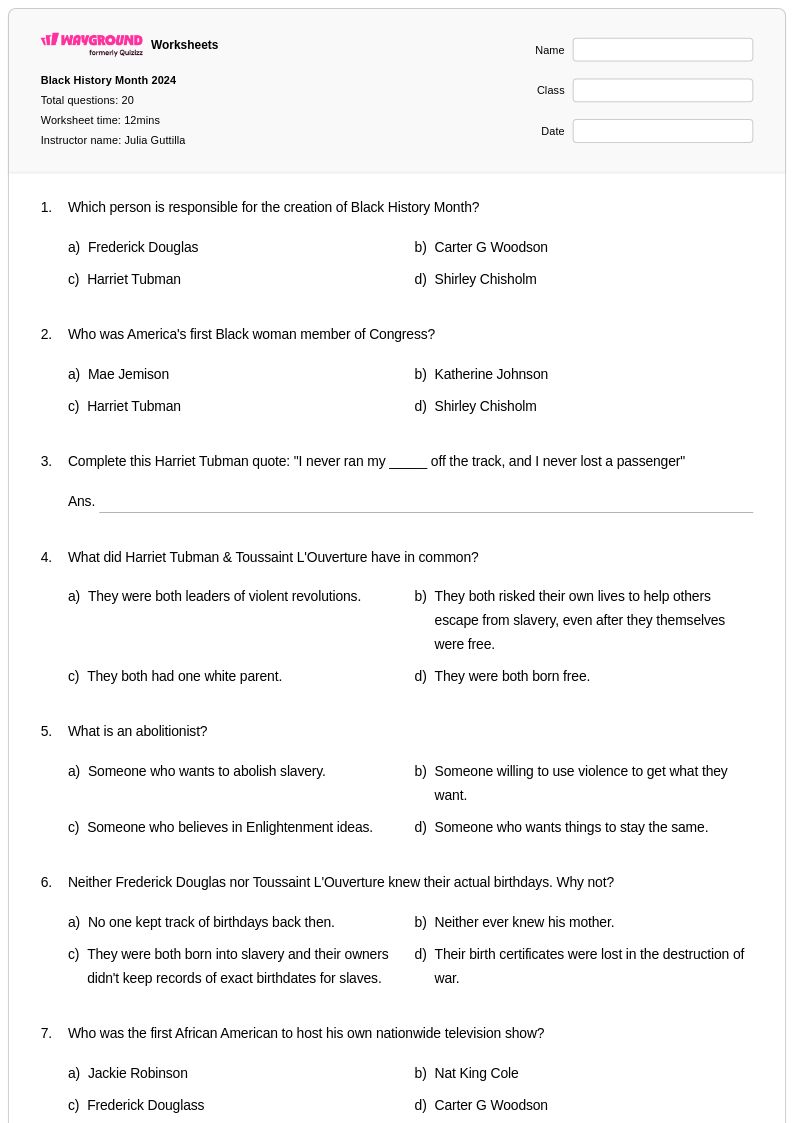
Explore Class 9 notable historical figures through Wayground's comprehensive collection of free worksheets and printables that help students analyze influential leaders, innovators, and changemakers with engaging practice problems and detailed answer keys.
Explore printable Notable Historical Figures worksheets for Class 9
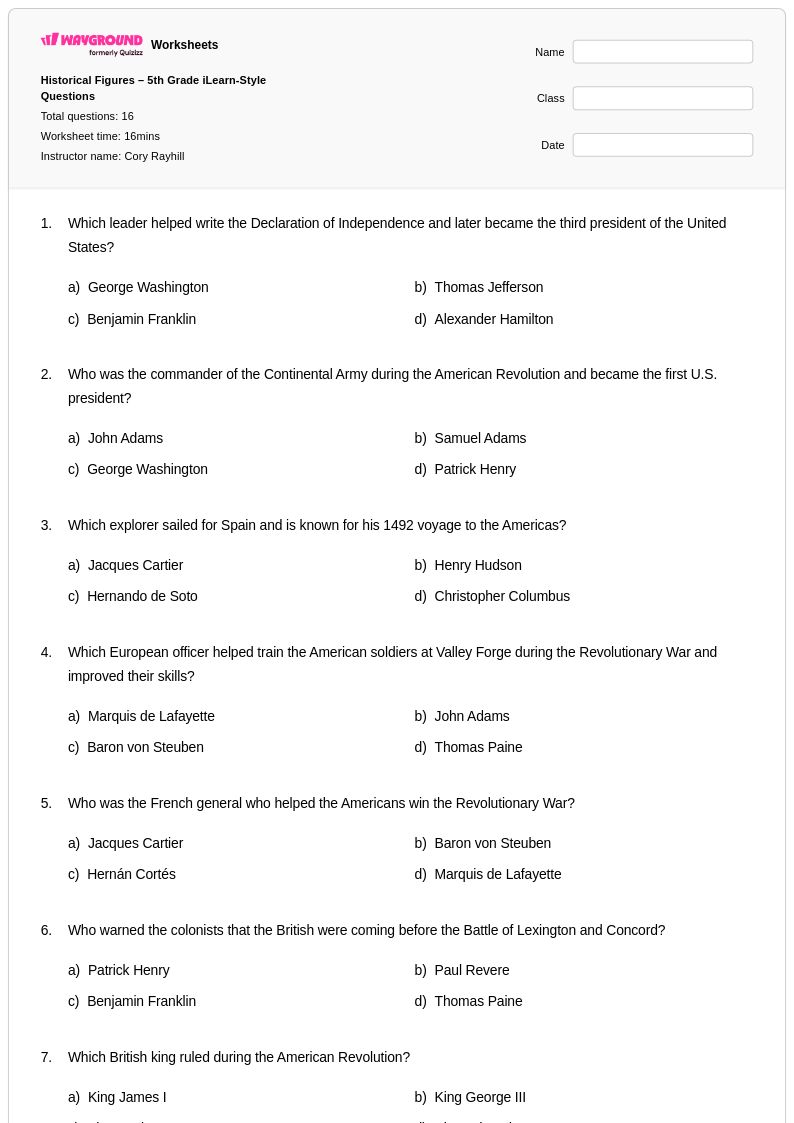
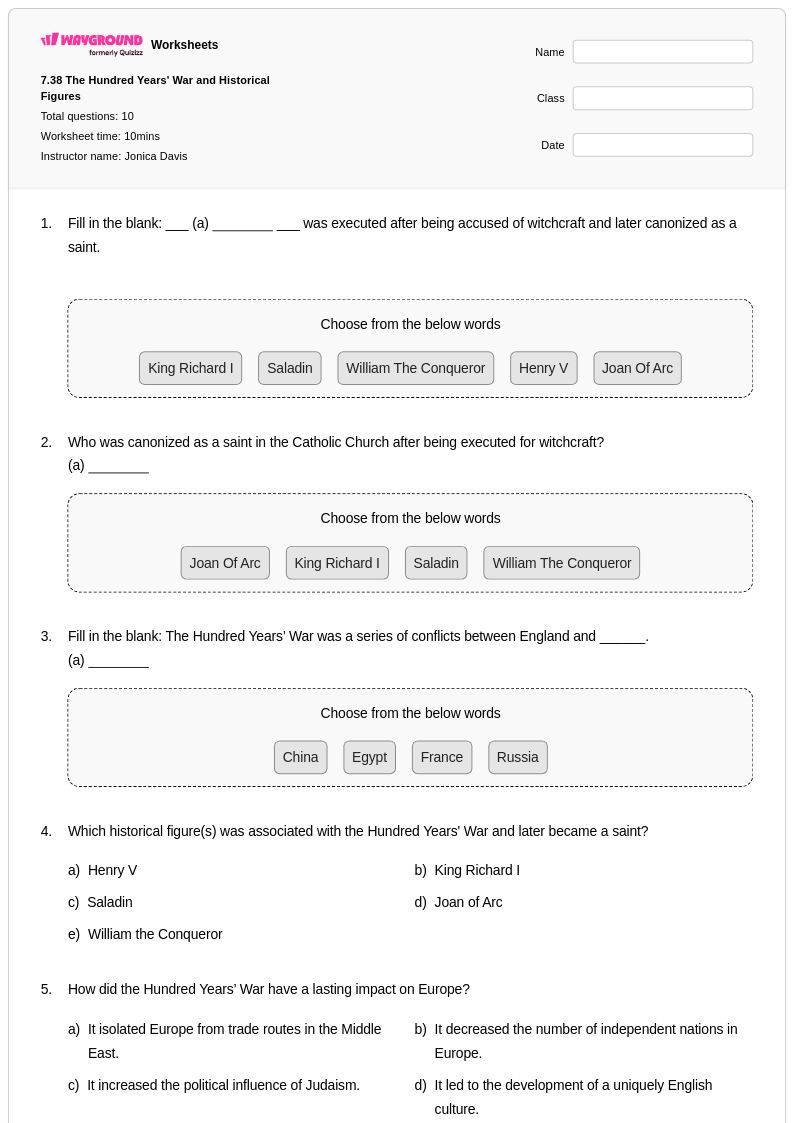
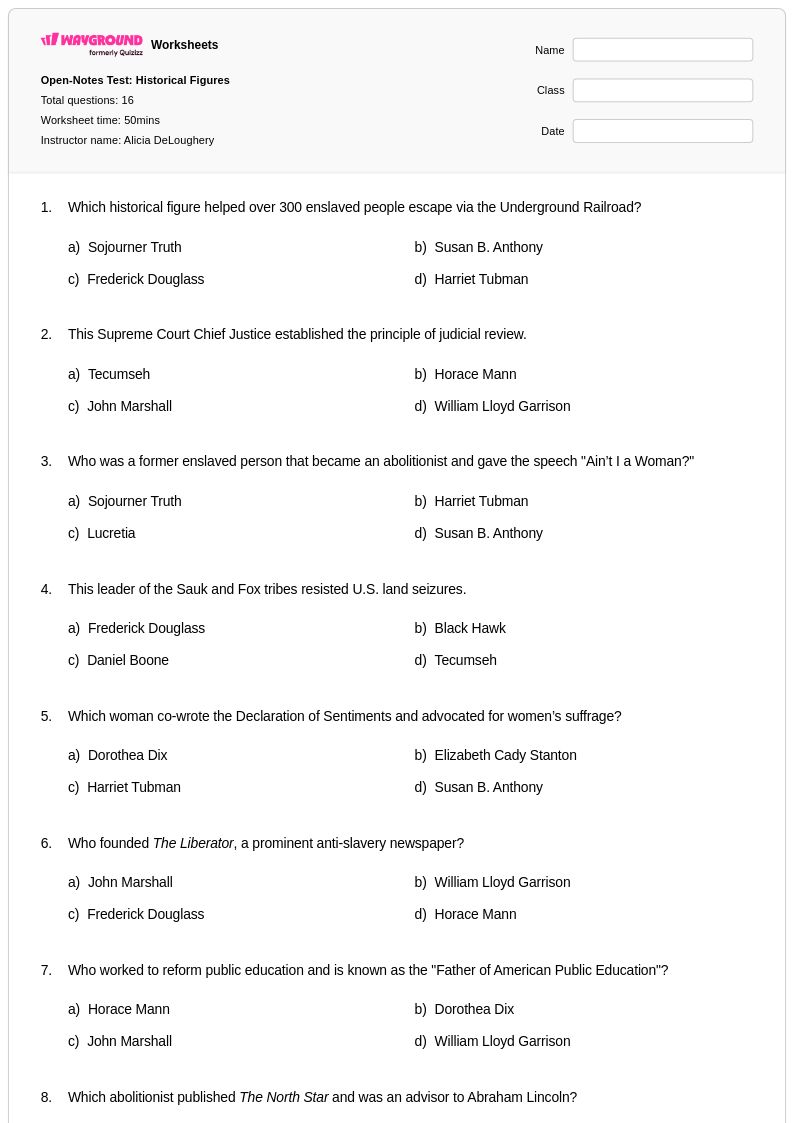
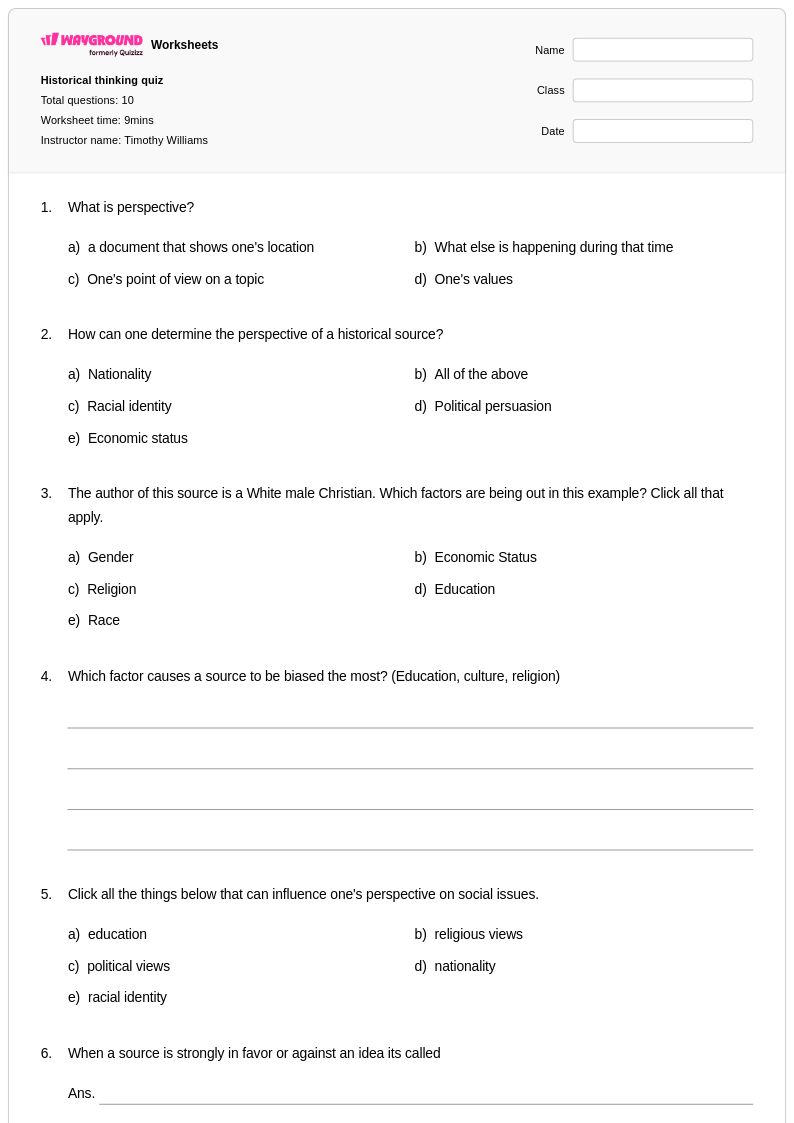
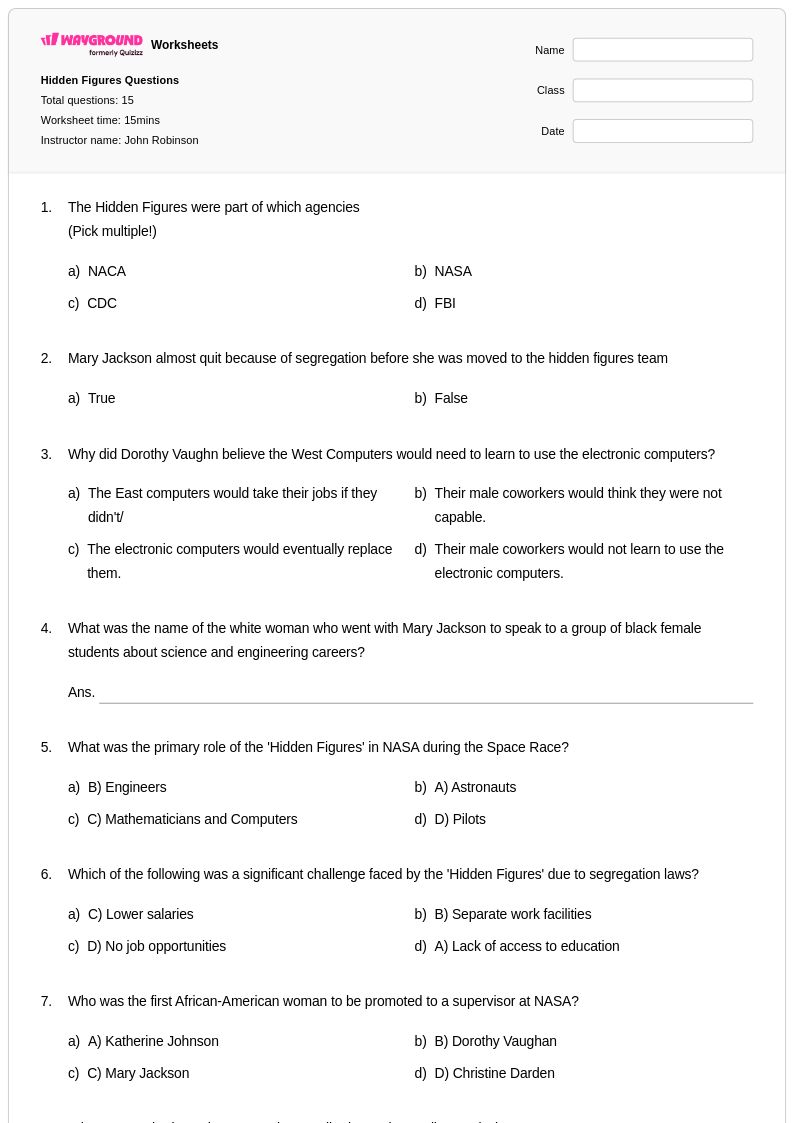
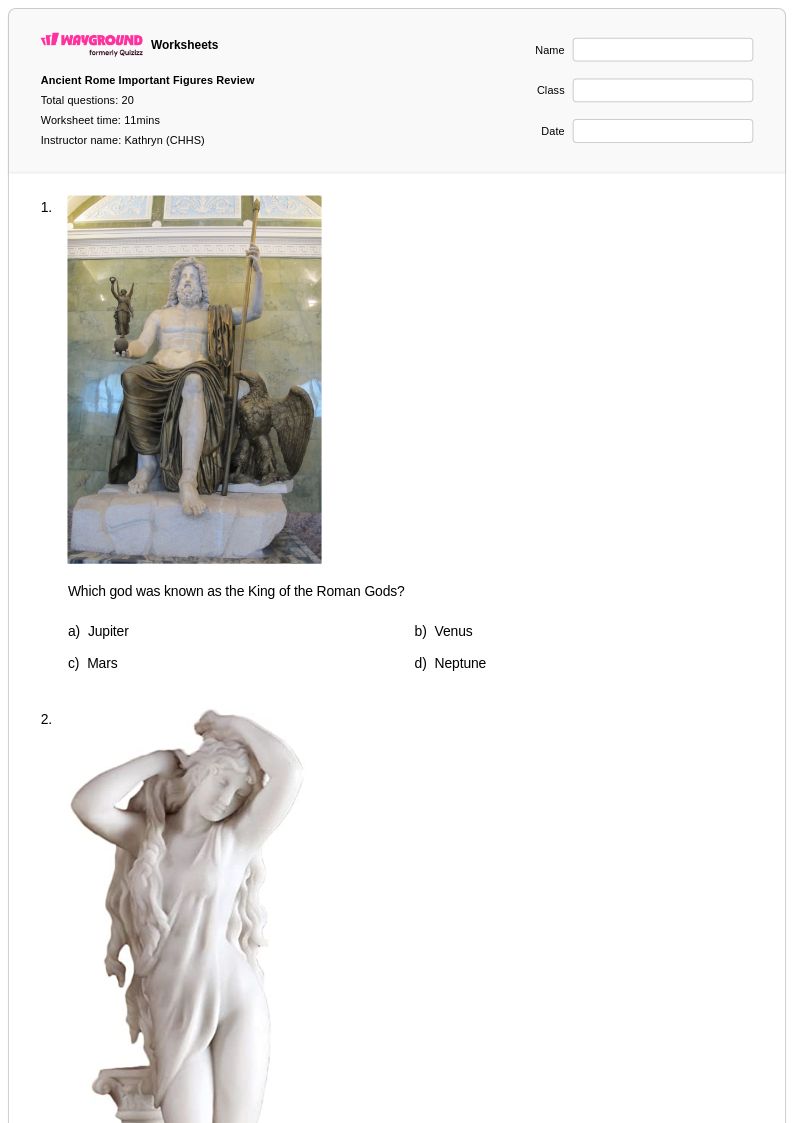
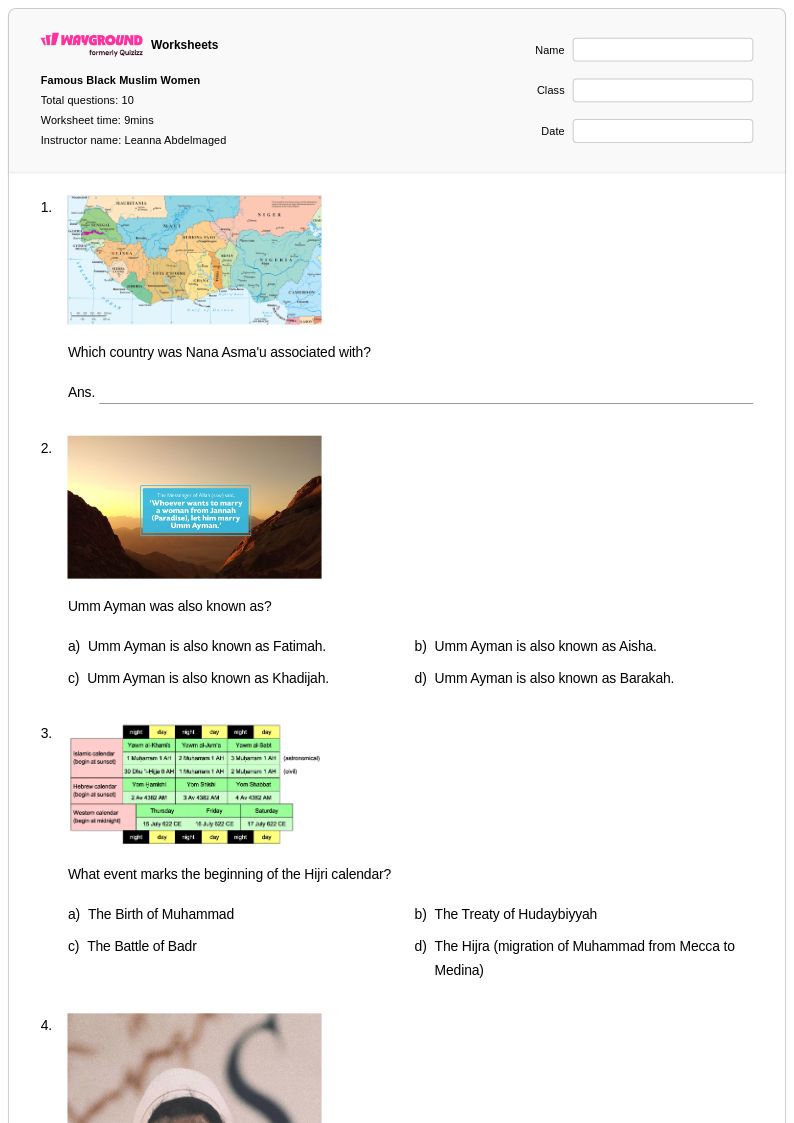
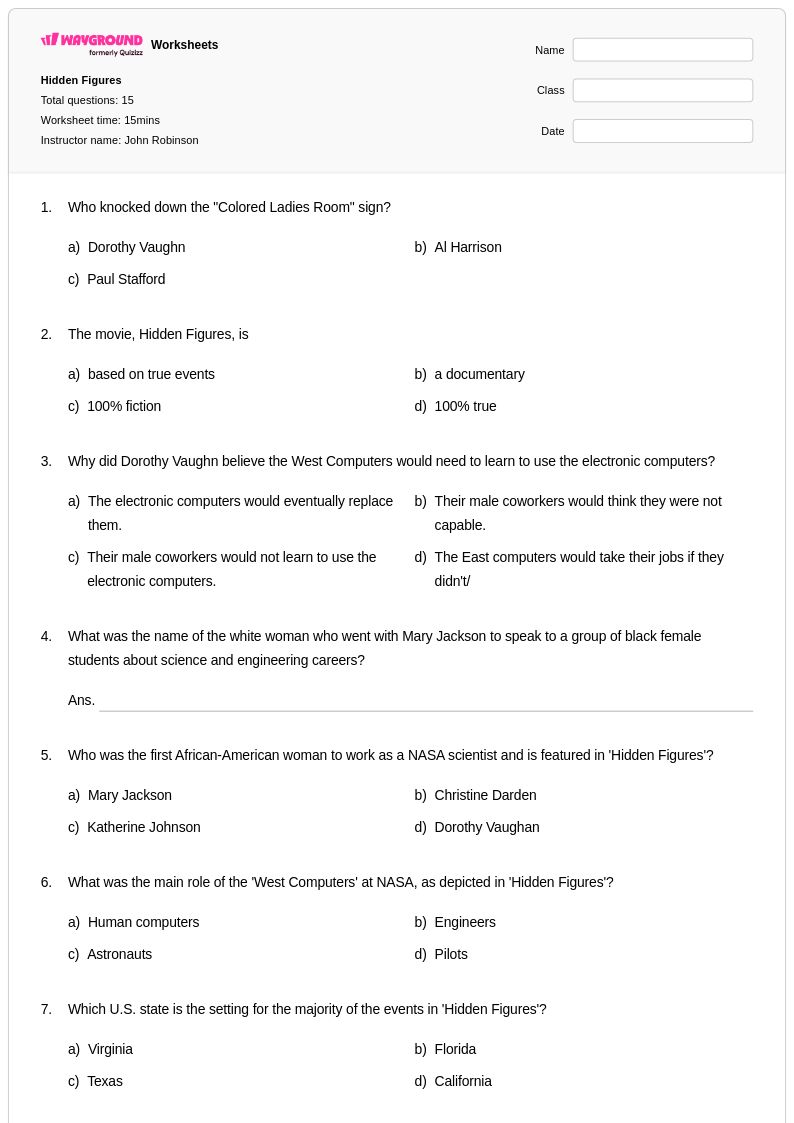
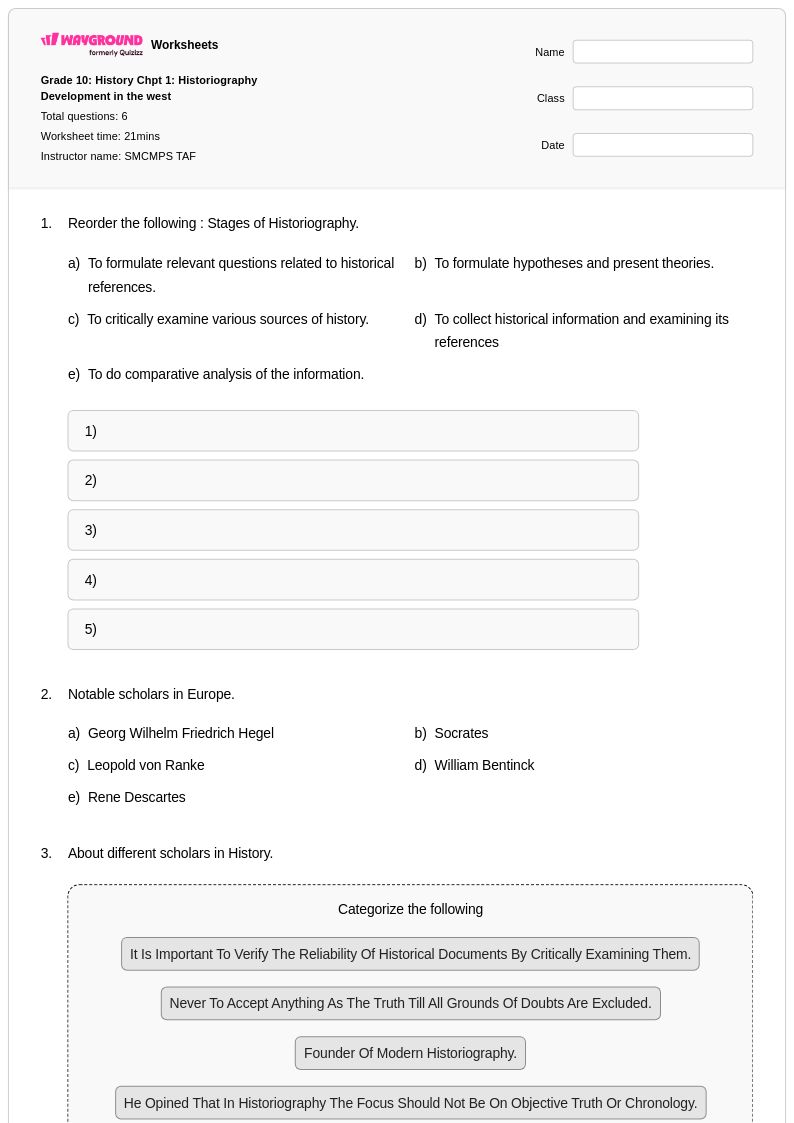
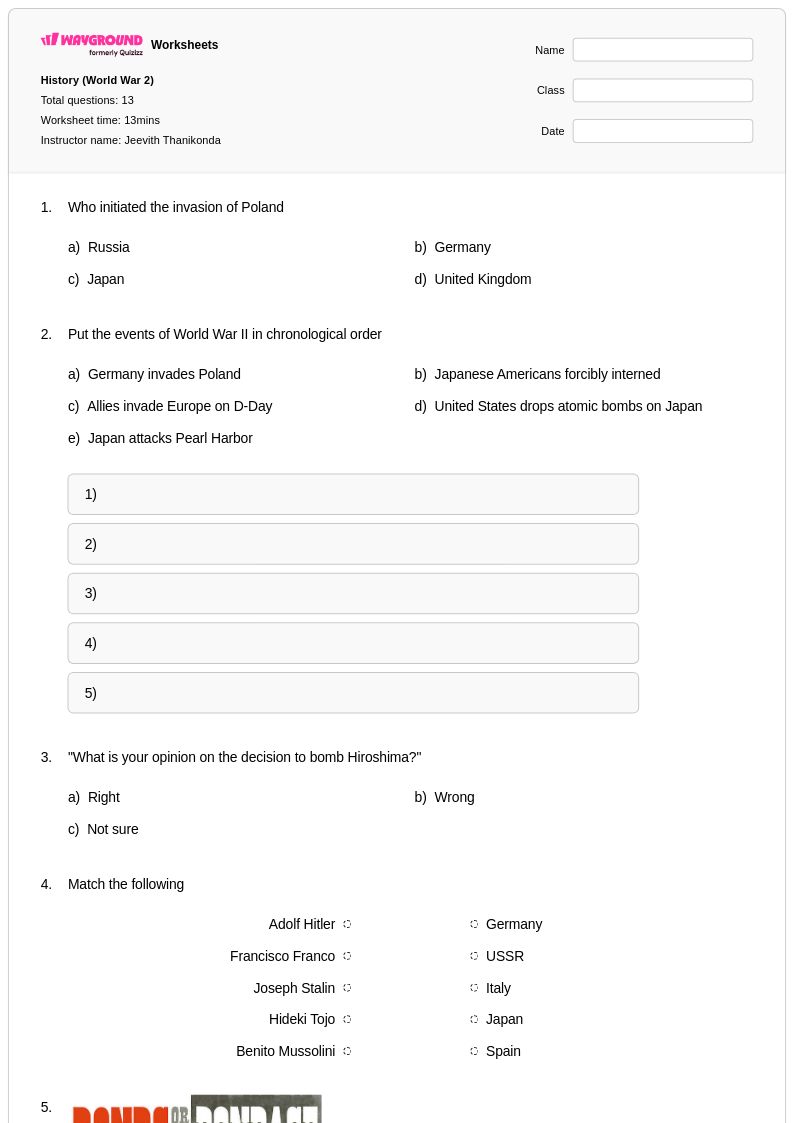
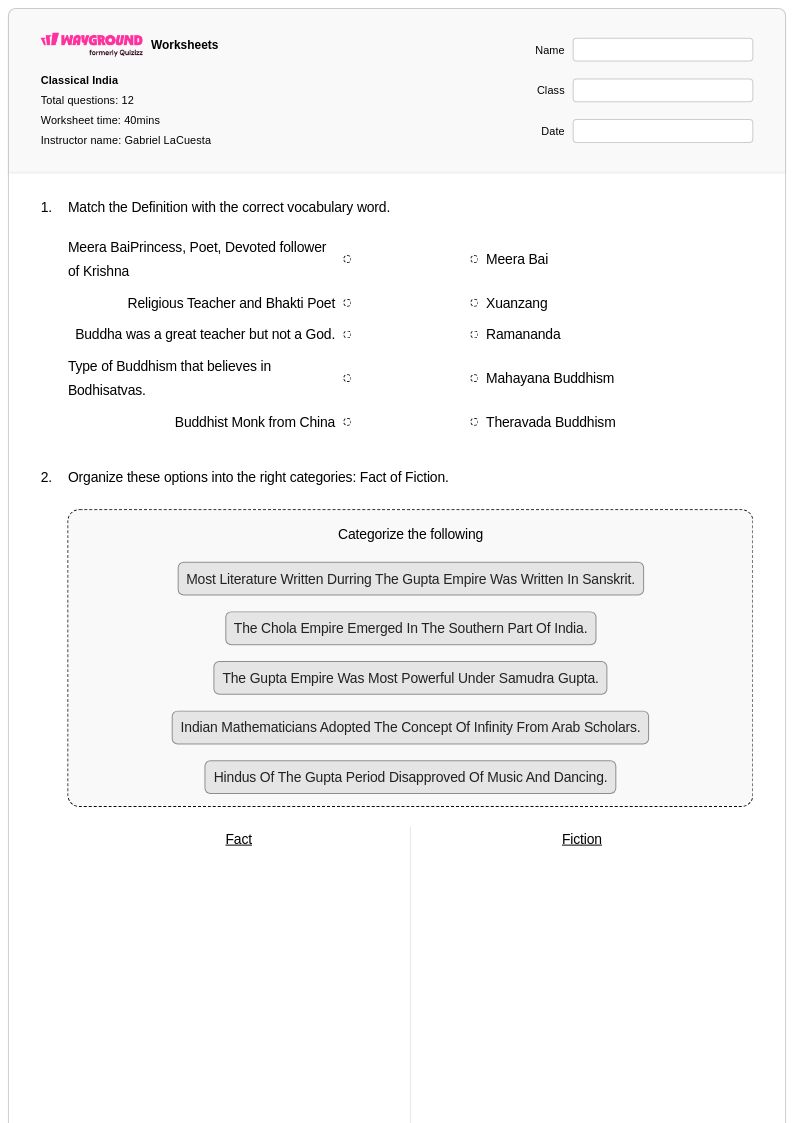
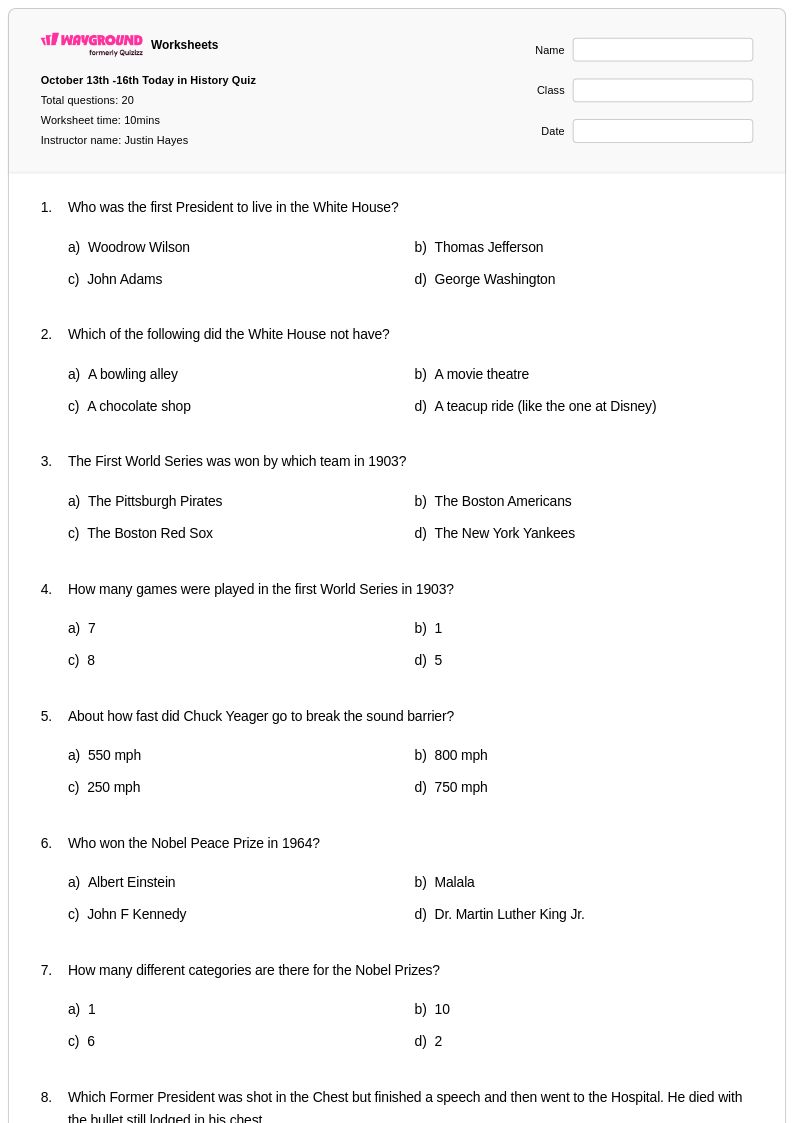
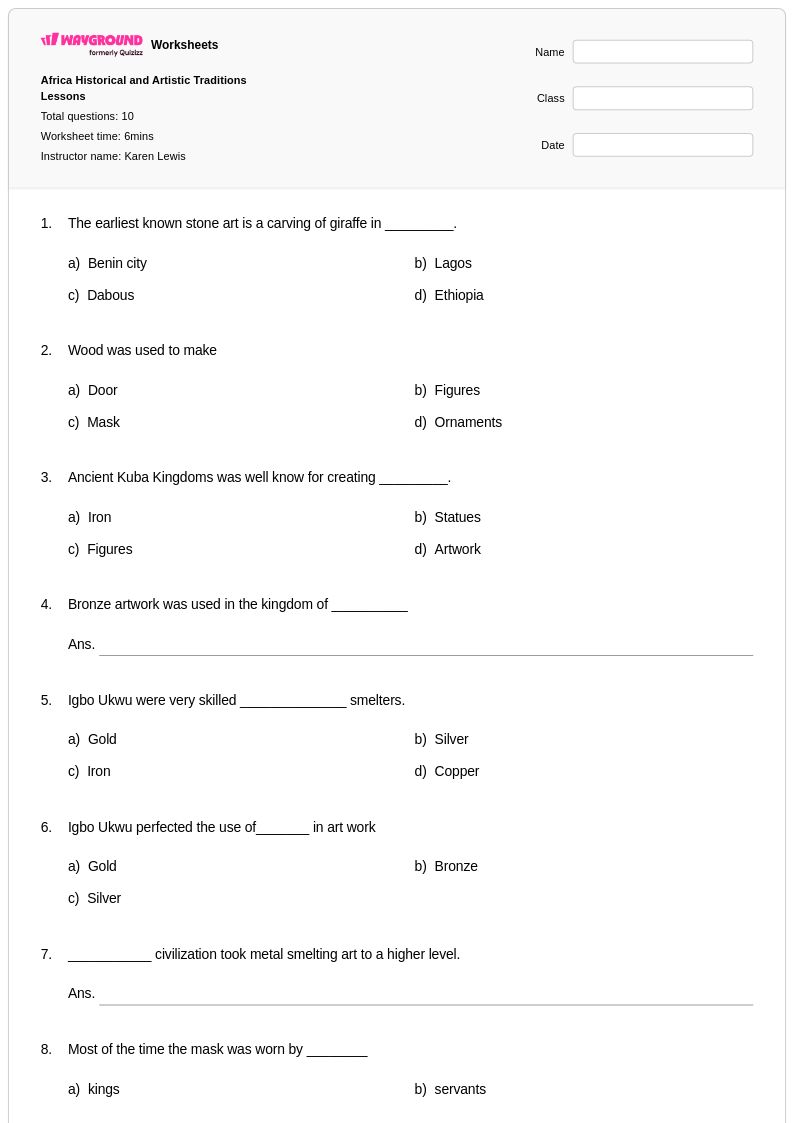
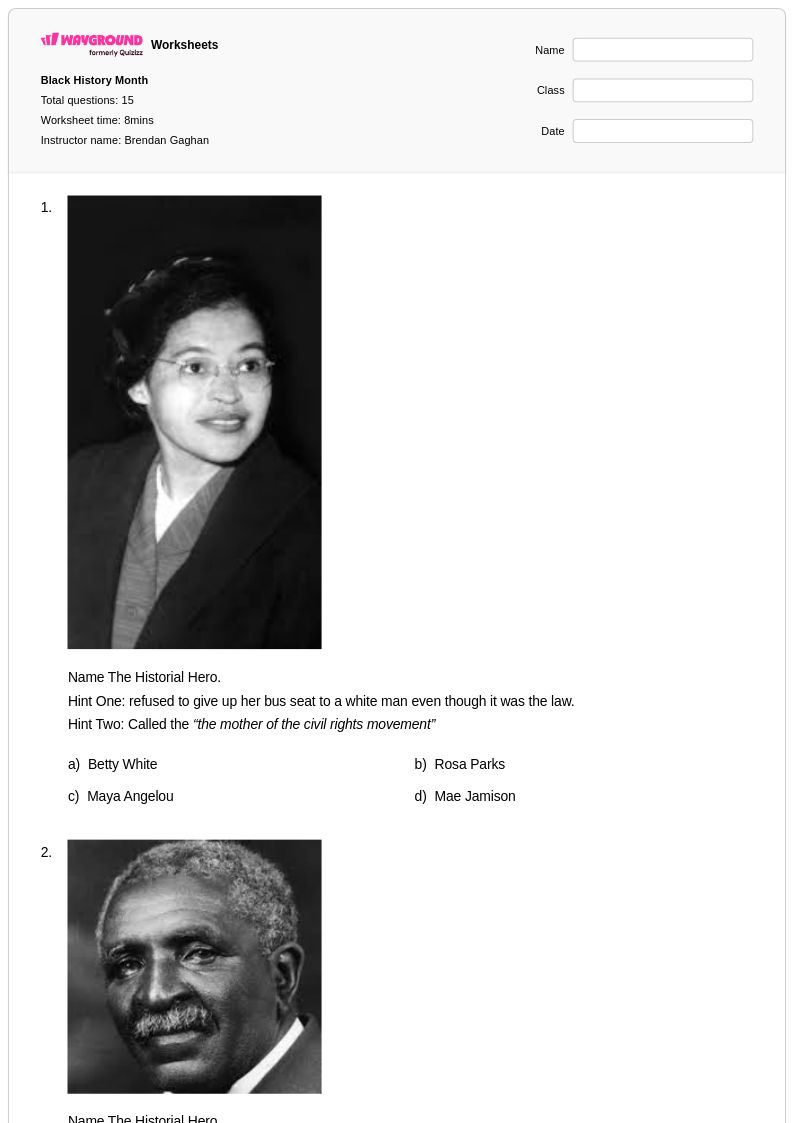
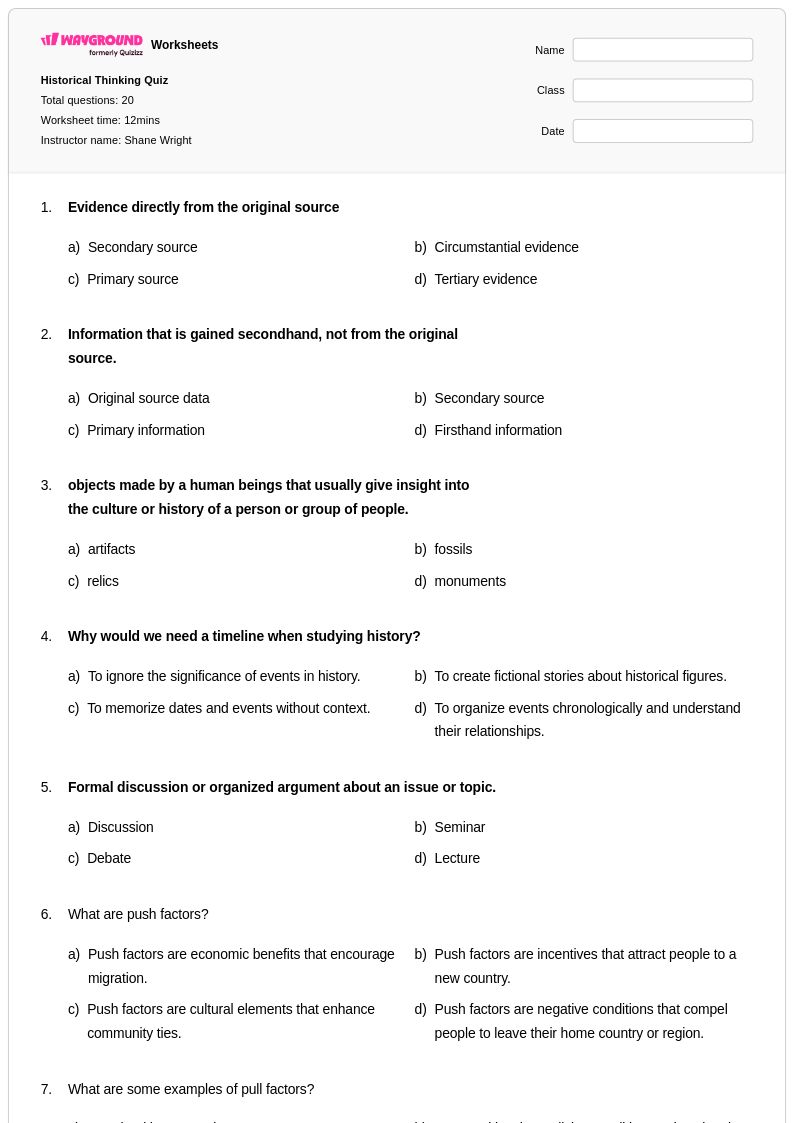
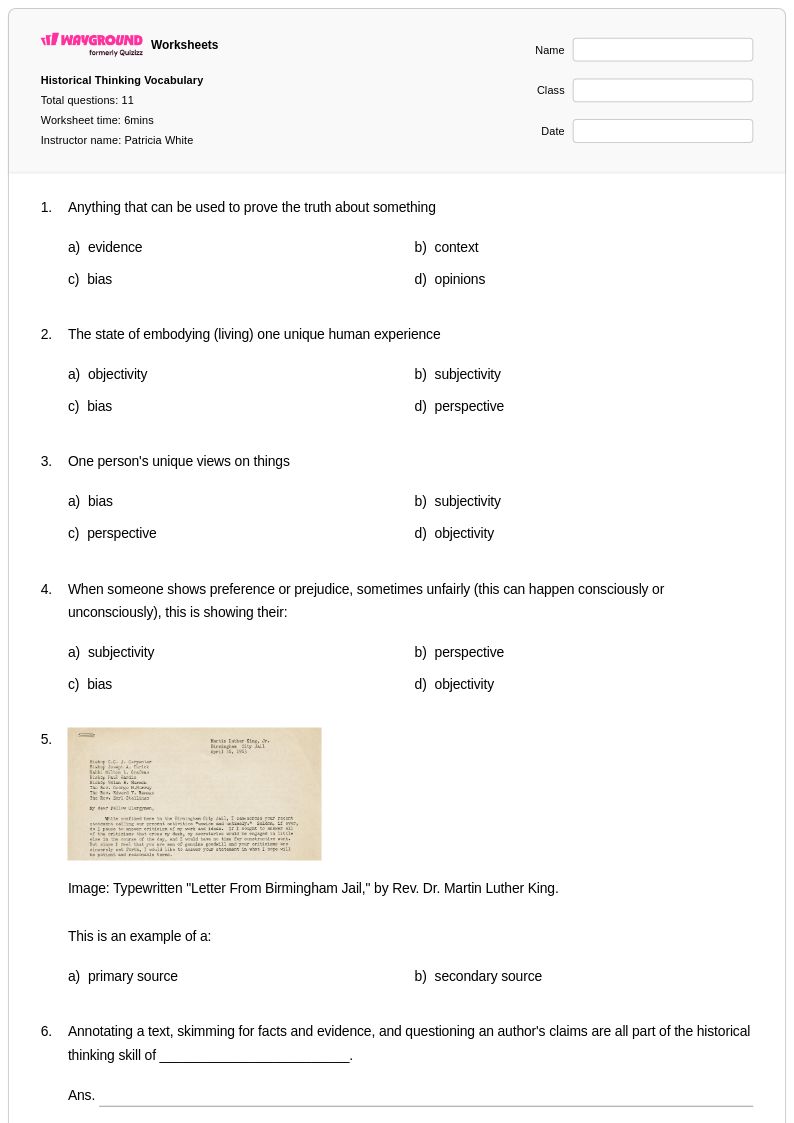
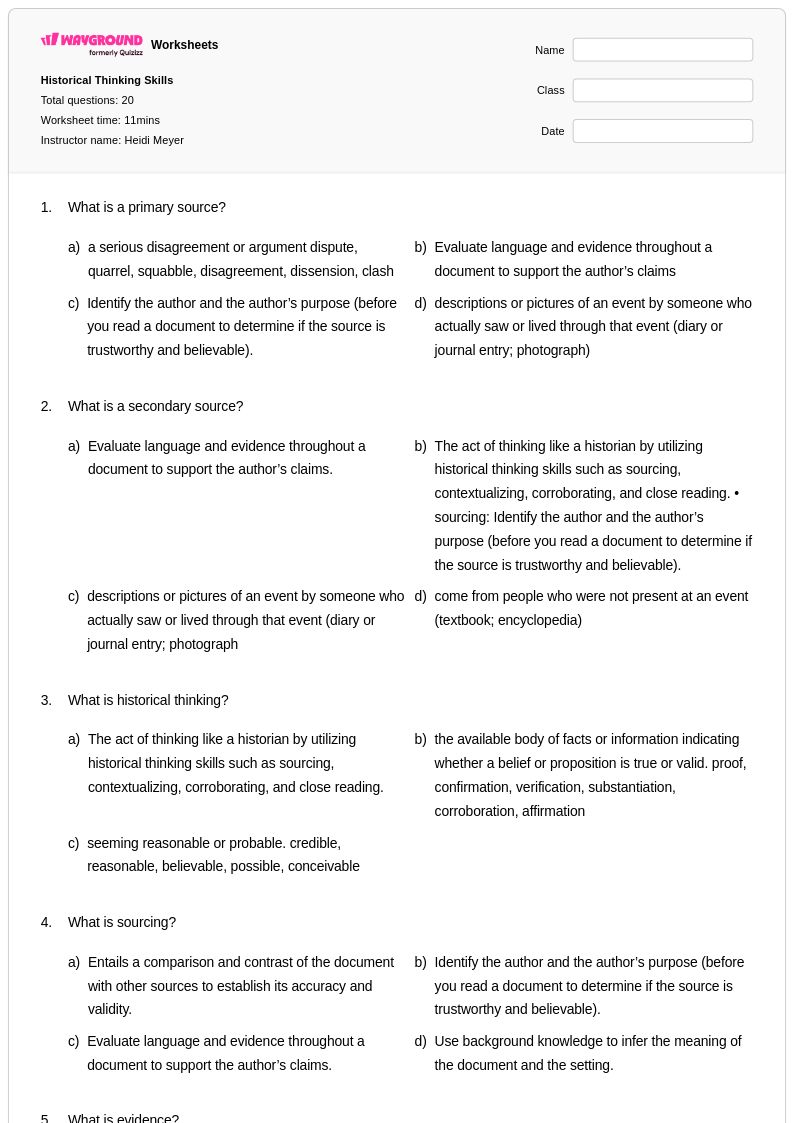
Notable historical figures worksheets for Class 9 students available through Wayground (formerly Quizizz) provide comprehensive exploration of influential individuals who shaped world history across different eras and civilizations. These educational resources strengthen critical thinking skills by encouraging students to analyze the motivations, achievements, and lasting impact of leaders, innovators, reformers, and revolutionaries from ancient times through the modern era. Students engage with practice problems that require them to evaluate primary source documents, compare different historical perspectives, and draw connections between individual actions and broader historical movements. The collection includes free printables with detailed answer keys that support independent learning, while pdf formats ensure easy distribution and accessibility for both classroom instruction and homework assignments.
Wayground's extensive library contains millions of teacher-created resources specifically designed to support Class 9 social studies instruction on notable historical figures, offering educators powerful search and filtering capabilities to locate materials aligned with specific curriculum standards and learning objectives. Teachers can easily differentiate instruction by selecting worksheets that match varying skill levels within their classrooms, while flexible customization tools allow for modifications to meet individual student needs and accommodate different learning styles. The platform's dual availability in both printable and digital pdf formats provides maximum flexibility for lesson planning, enabling seamless integration into traditional classroom settings or remote learning environments. These comprehensive resources prove invaluable for targeted skill practice, remediation support for struggling learners, and enrichment opportunities for advanced students ready to delve deeper into historical analysis and interpretation.
FAQs
How do I teach students about notable historical figures in an engaging way?
Effective instruction on notable historical figures goes beyond memorizing names and dates — it asks students to analyze what drove individuals to act, what obstacles they faced, and what lasting impact they left behind. Start by grounding students in the historical context of a figure's era before introducing biographical details, so they can interpret actions within their social, political, and cultural setting. Using primary sources, comparative analysis across figures, and cause-and-effect frameworks helps students build genuine historical thinking rather than surface-level recall.
What skills do notable historical figures worksheets help students practice?
Worksheets focused on notable historical figures build several interrelated historical thinking skills, including chronological reasoning, cause-and-effect analysis, and the ability to evaluate a person's contributions within a broader historical context. Students practice identifying biographical details, interpreting significant achievements, and assessing lasting legacies — skills that transfer directly to document-based questions and essay writing. Repeated exposure to these tasks strengthens students' ability to connect individual actions to larger historical movements.
What are common mistakes students make when studying notable historical figures?
One of the most frequent errors is presentism — judging historical figures by modern moral standards without accounting for the norms and constraints of their era. Students also tend to oversimplify causation, attributing major historical shifts to a single figure rather than recognizing the broader social, political, and cultural forces at play. Another common misconception is conflating fame with historical significance, which is why it is important to have students explicitly evaluate a figure's contributions and lasting impact rather than simply identify who they are.
How can I differentiate notable historical figures worksheets for students at different skill levels?
Differentiation for this topic can involve adjusting the complexity of the historical figures studied, the depth of analysis required, or the scaffolding provided within the worksheet itself. For students who need additional support, reducing the number of answer choices or providing sentence starters helps lower the cognitive barrier while still engaging them with meaningful content. On Wayground, teachers can apply individual accommodations such as extended time, read-aloud support, and reduced answer choices to specific students, while the rest of the class works with default settings — keeping differentiation seamless and private.
How do I use Wayground's notable historical figures worksheets in my classroom?
Wayground's notable historical figures worksheets are available as printable PDFs for traditional classroom use and in digital formats for technology-integrated or hybrid environments, giving teachers flexibility in how they assign and deliver materials. Teachers can also host worksheets as a quiz directly on Wayground, enabling real-time student responses and automatic grading. Each worksheet includes a complete answer key, making them practical for independent practice, small group work, or formative assessment without additional prep time.
How do I assess student understanding of notable historical figures?
Strong assessment for this topic moves beyond identification questions and asks students to explain significance, compare contributions across figures, or evaluate the long-term impact of a person's actions on society. Look for students' ability to use evidence from biographical details or primary sources to support their reasoning rather than relying on vague generalizations. Common gaps include students who can name a figure's achievements but cannot explain why those achievements mattered in a specific historical context.