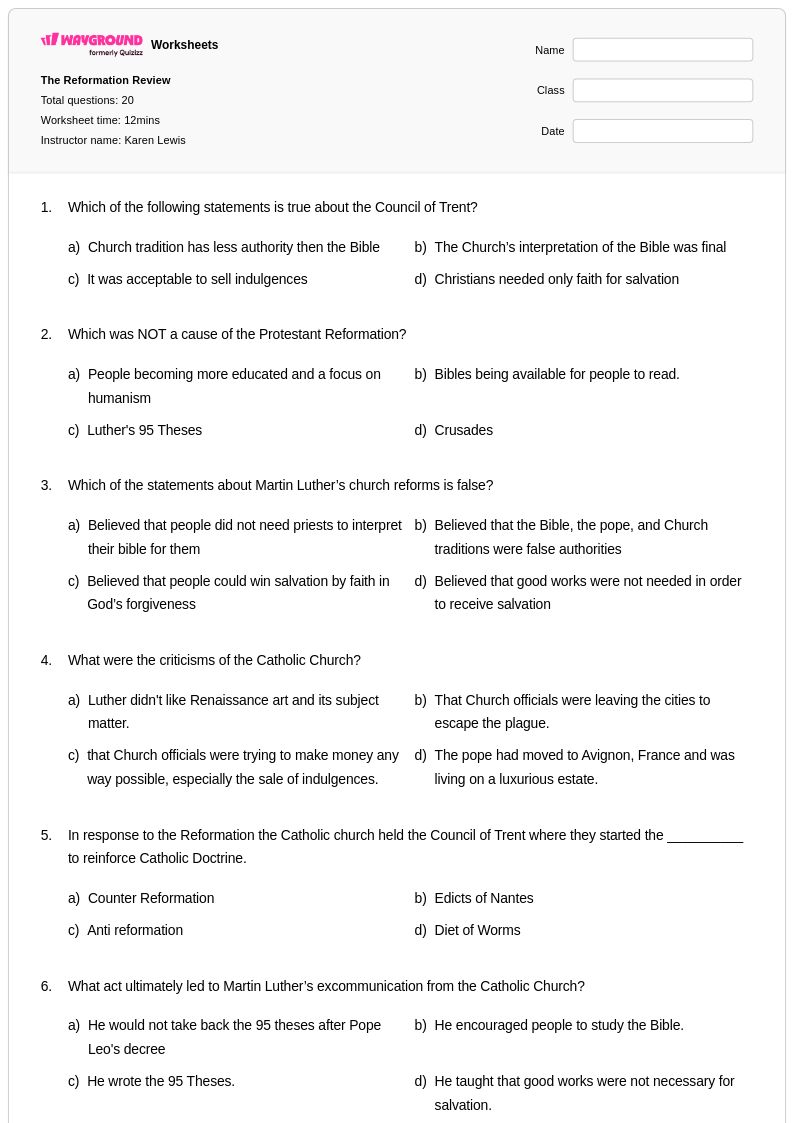
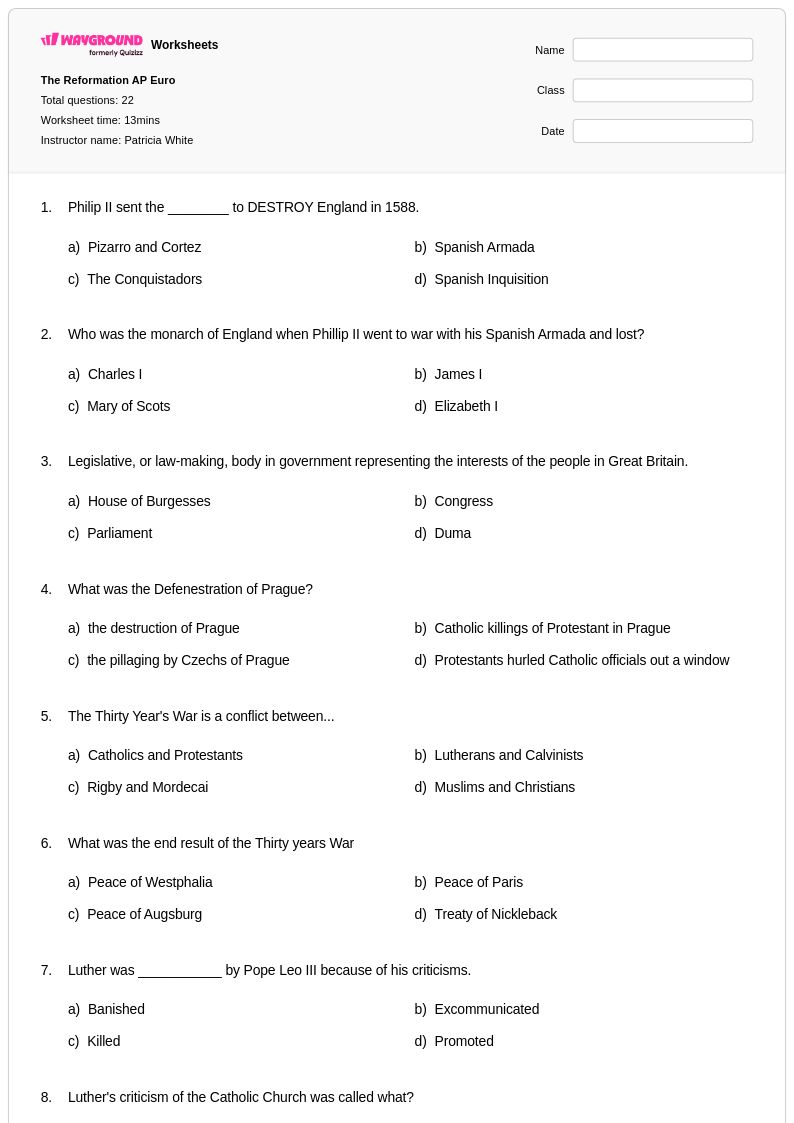
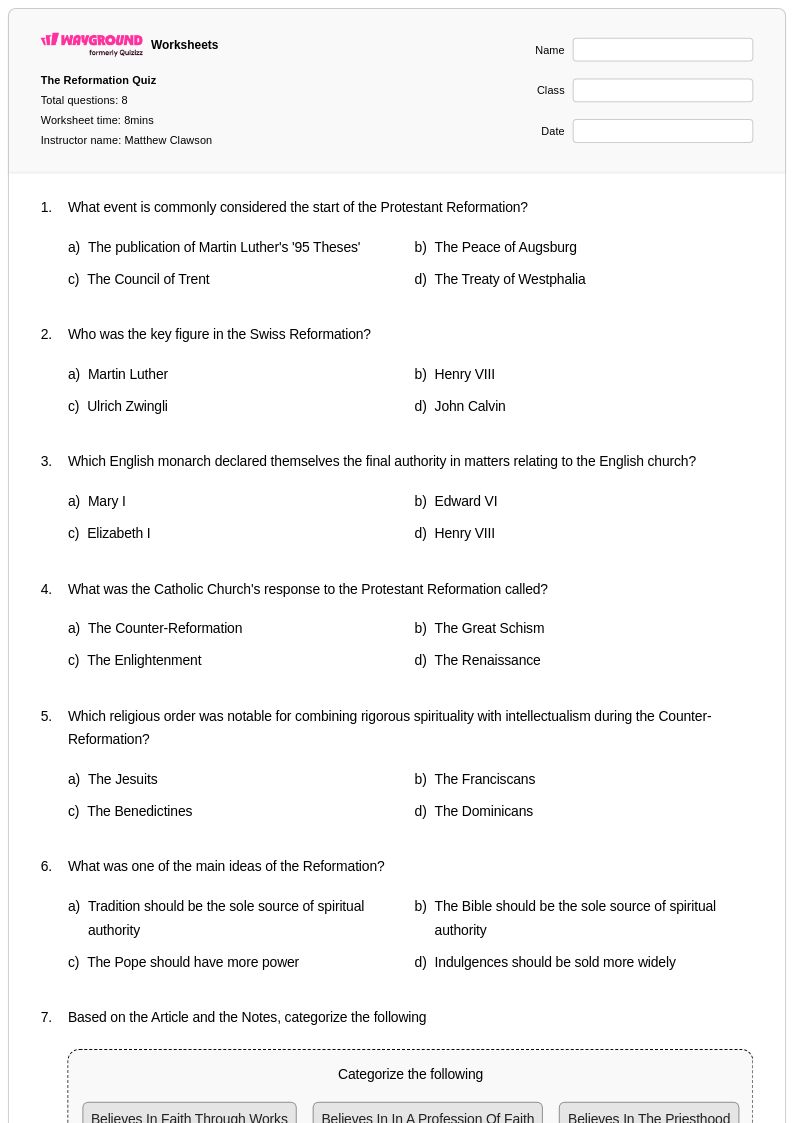
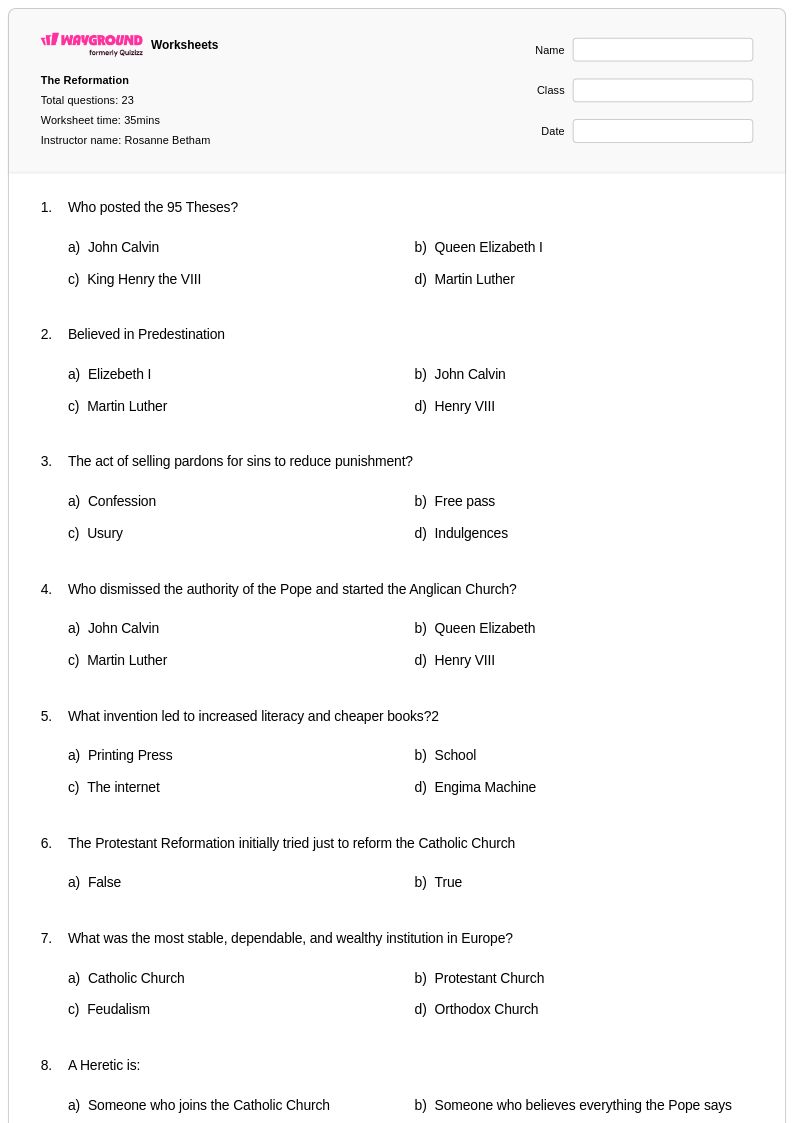
Free Printable The Reformation Worksheets for Class 9
Explore Class 9 Reformation worksheets and printables from Wayground that help students master key concepts about religious reform, Protestant movements, and historical transformations through engaging practice problems with comprehensive answer keys.
Explore printable The Reformation worksheets for Class 9
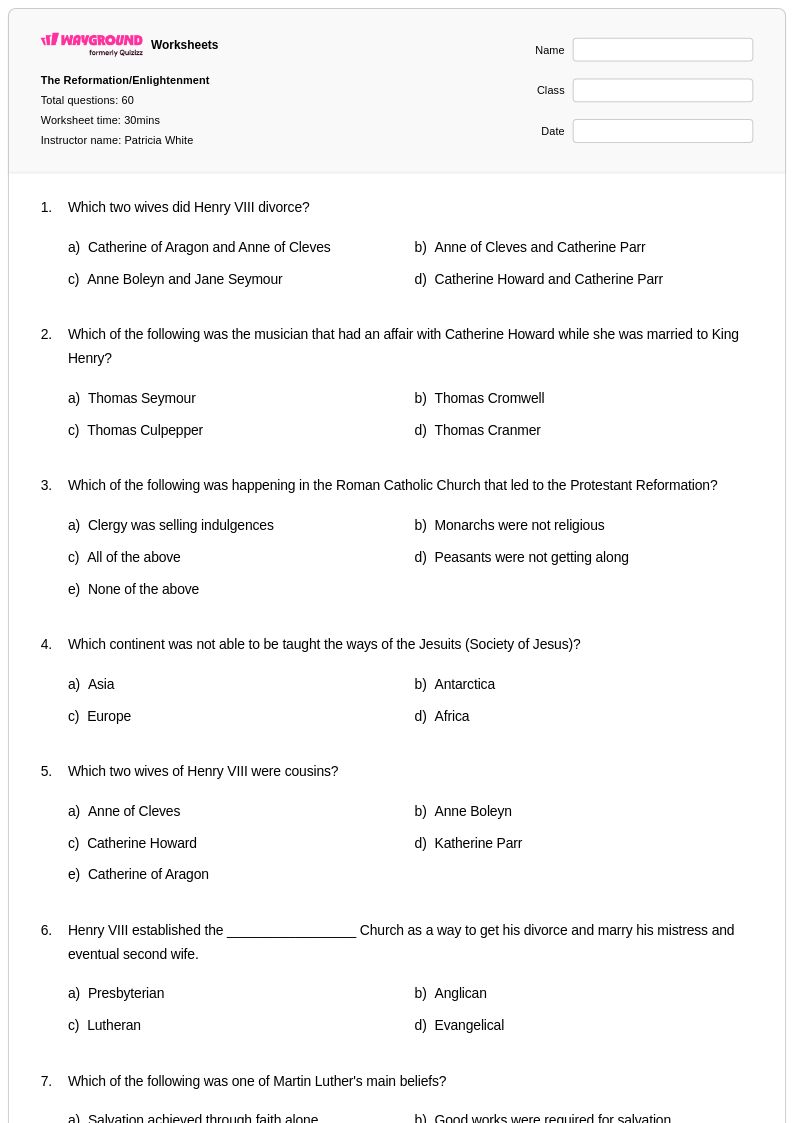
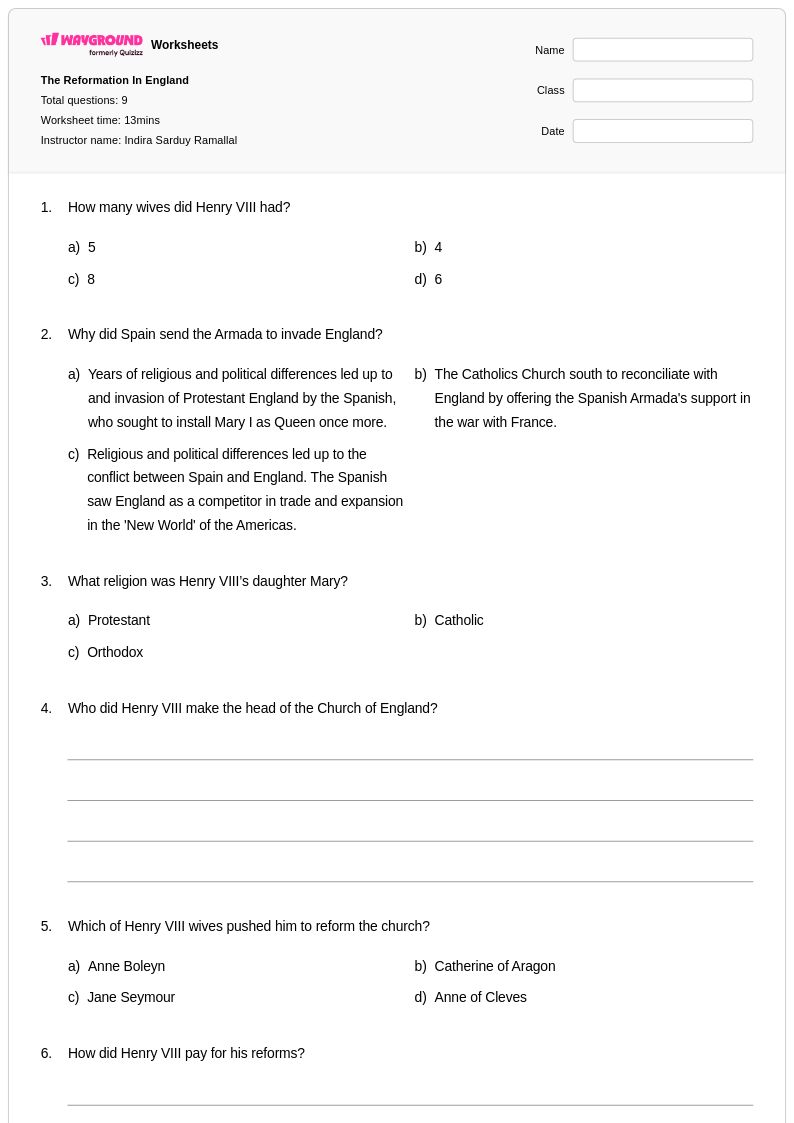
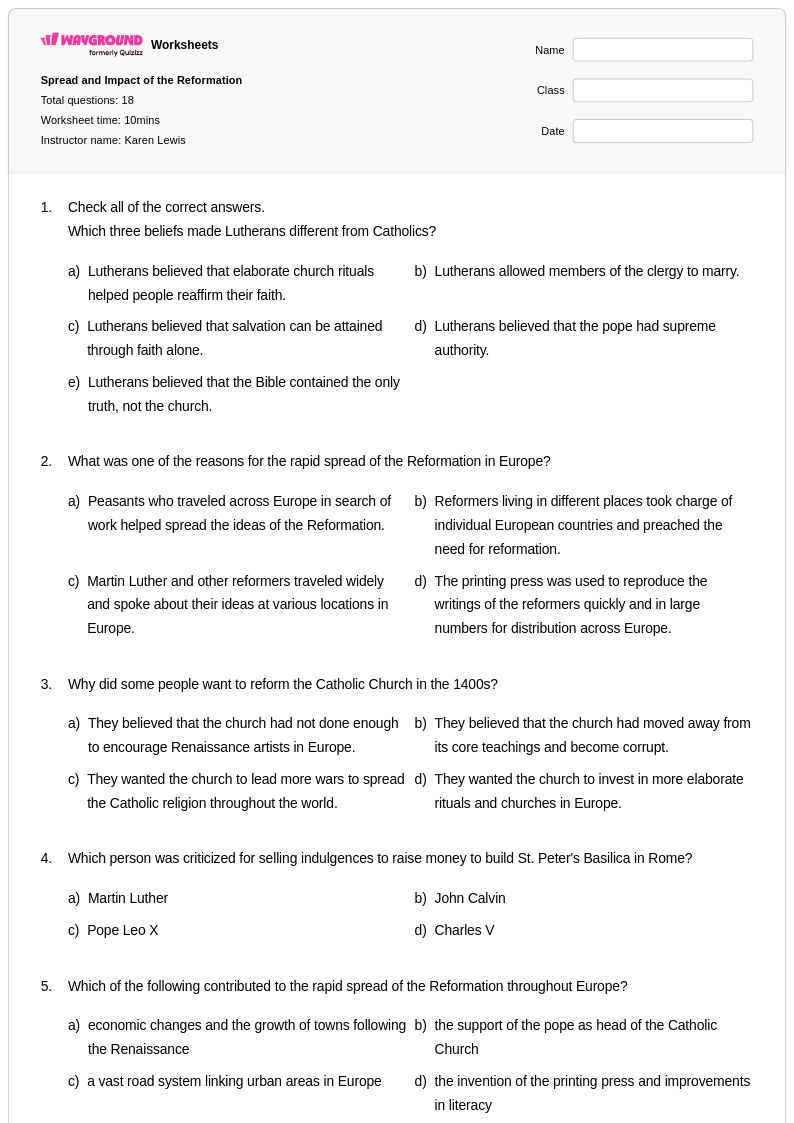
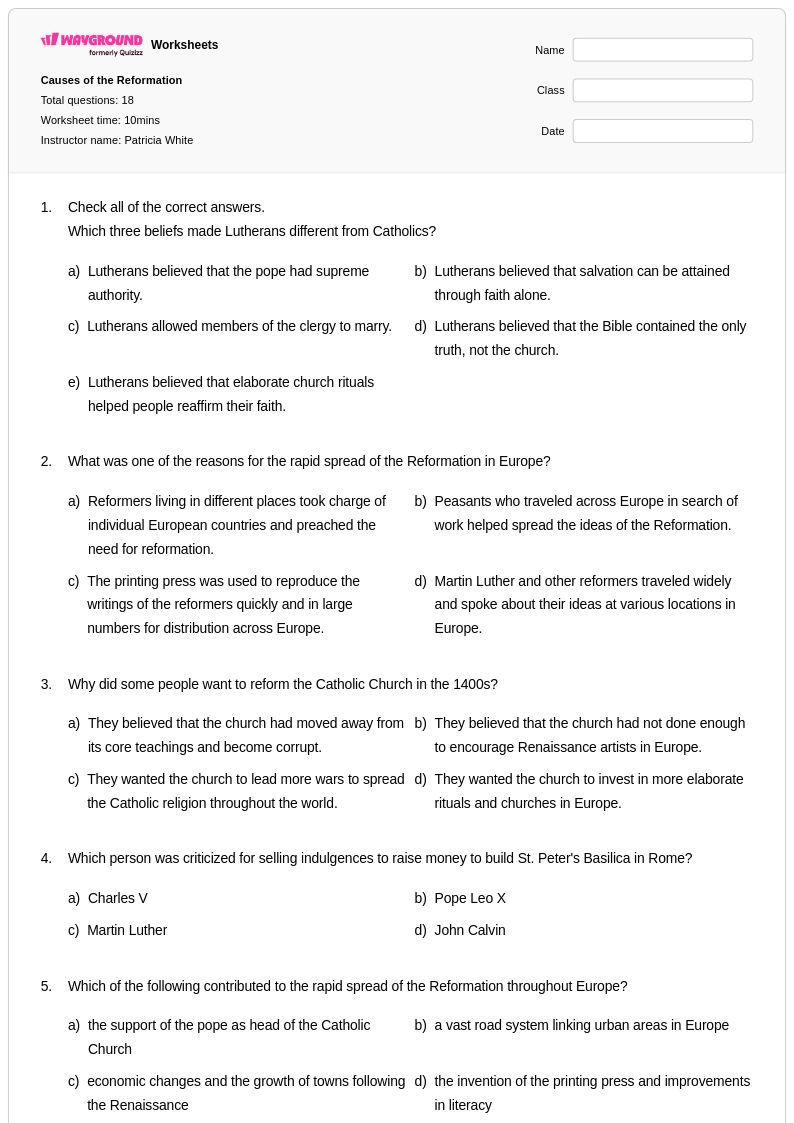
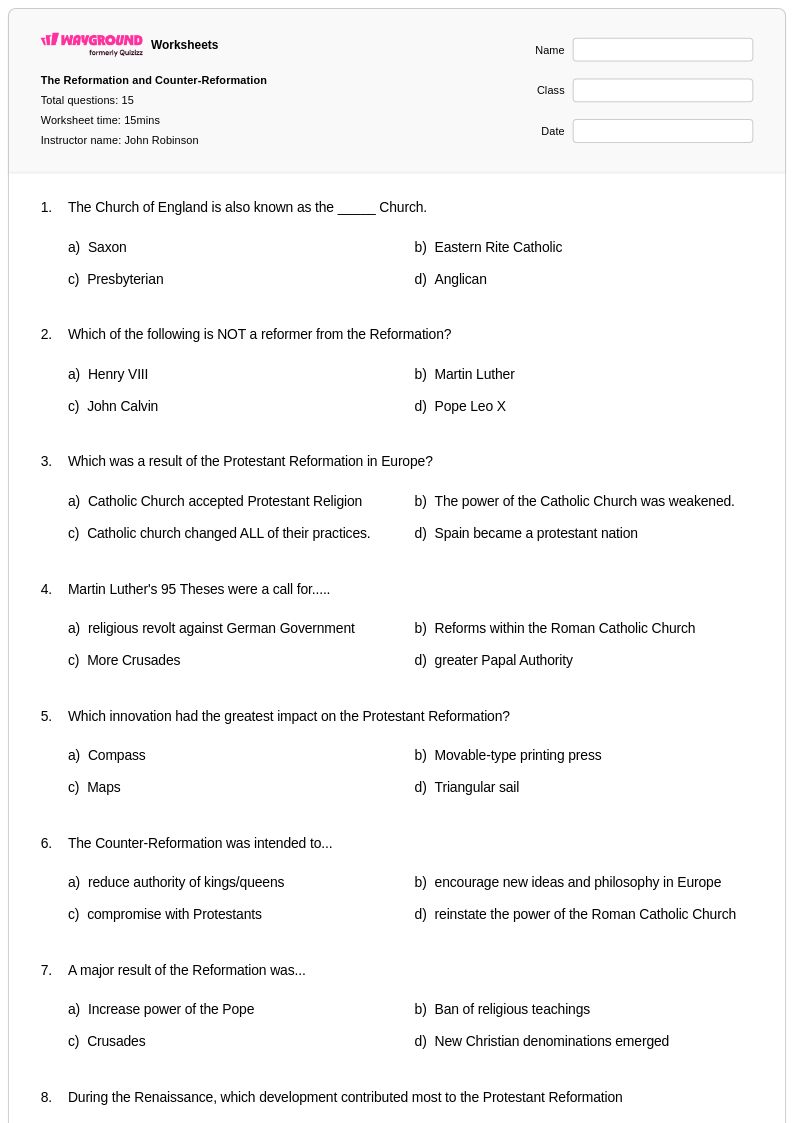
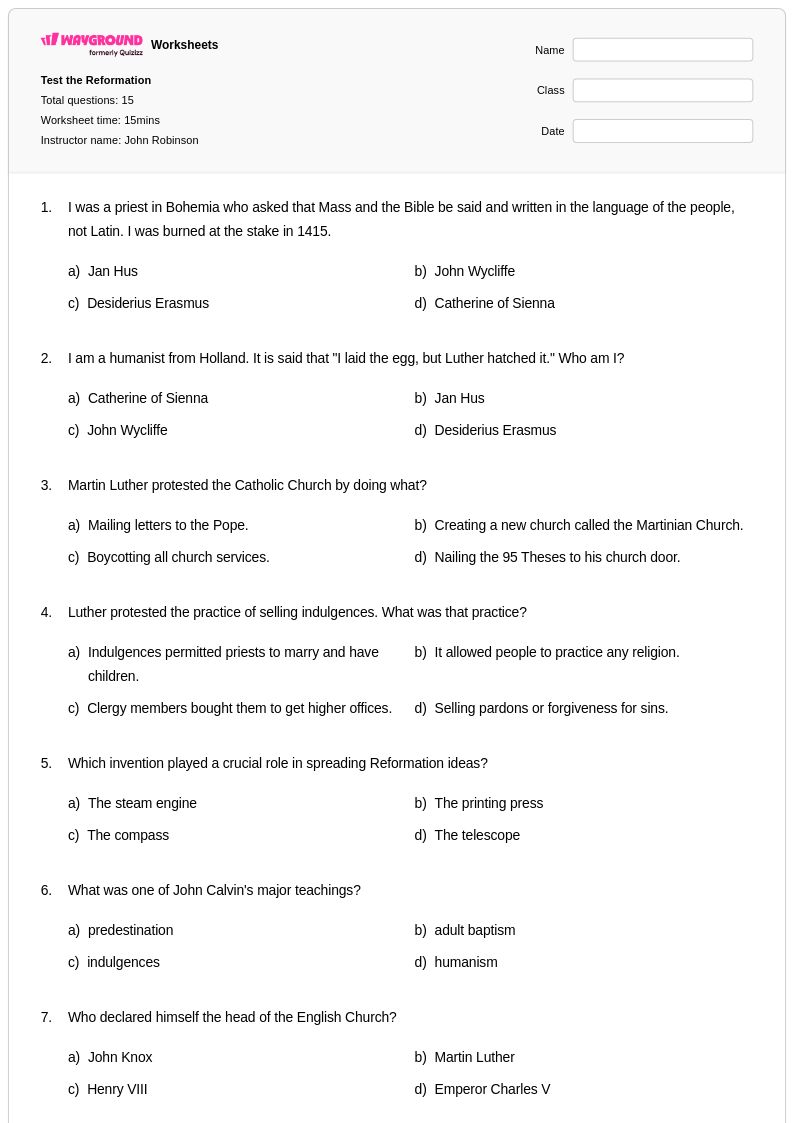
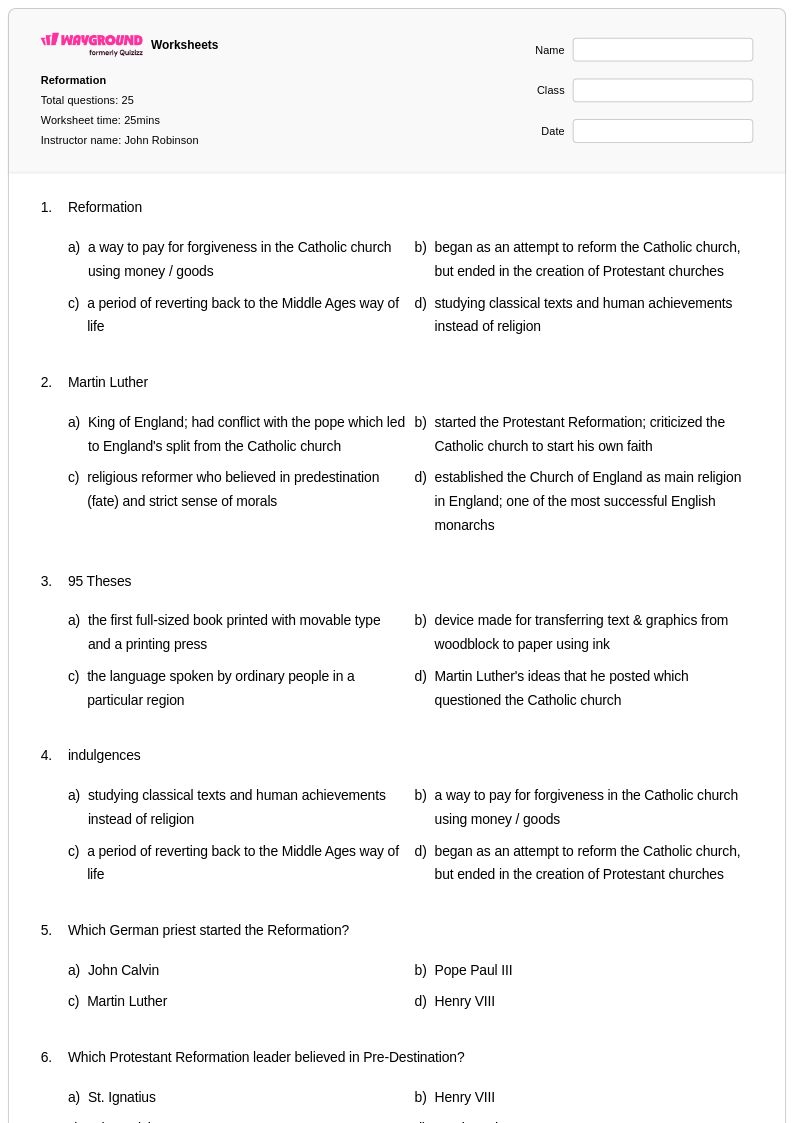
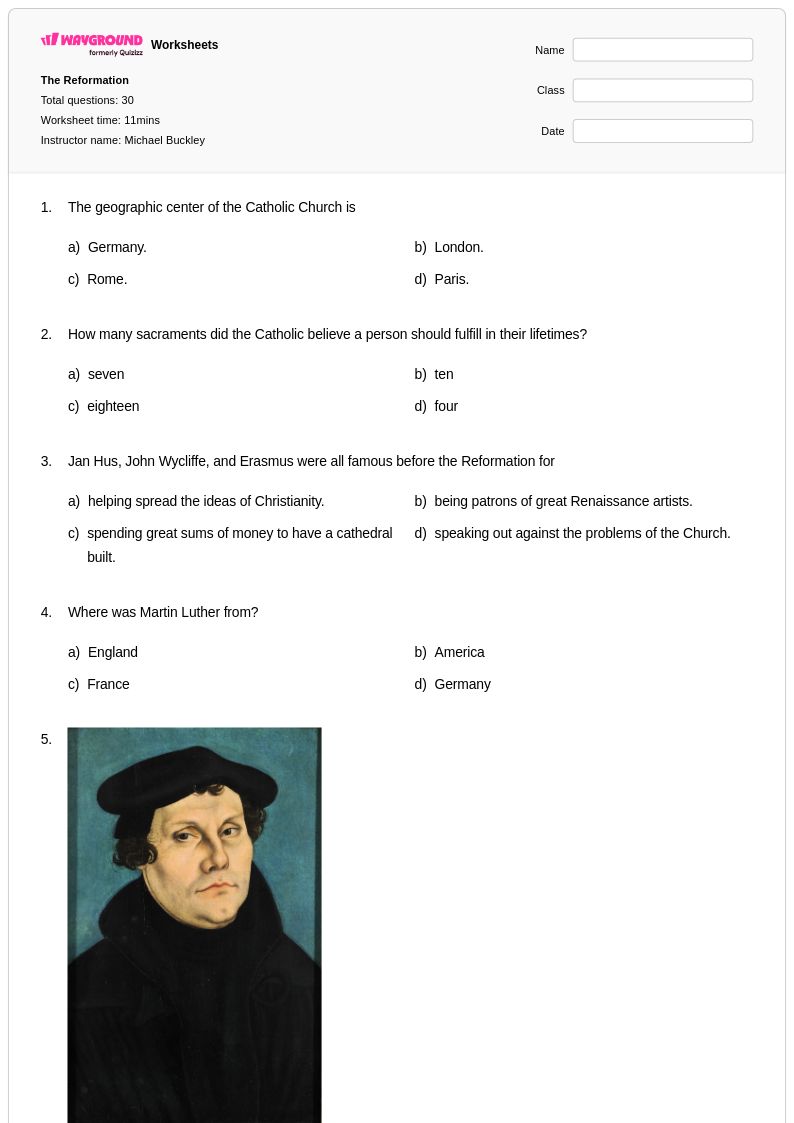
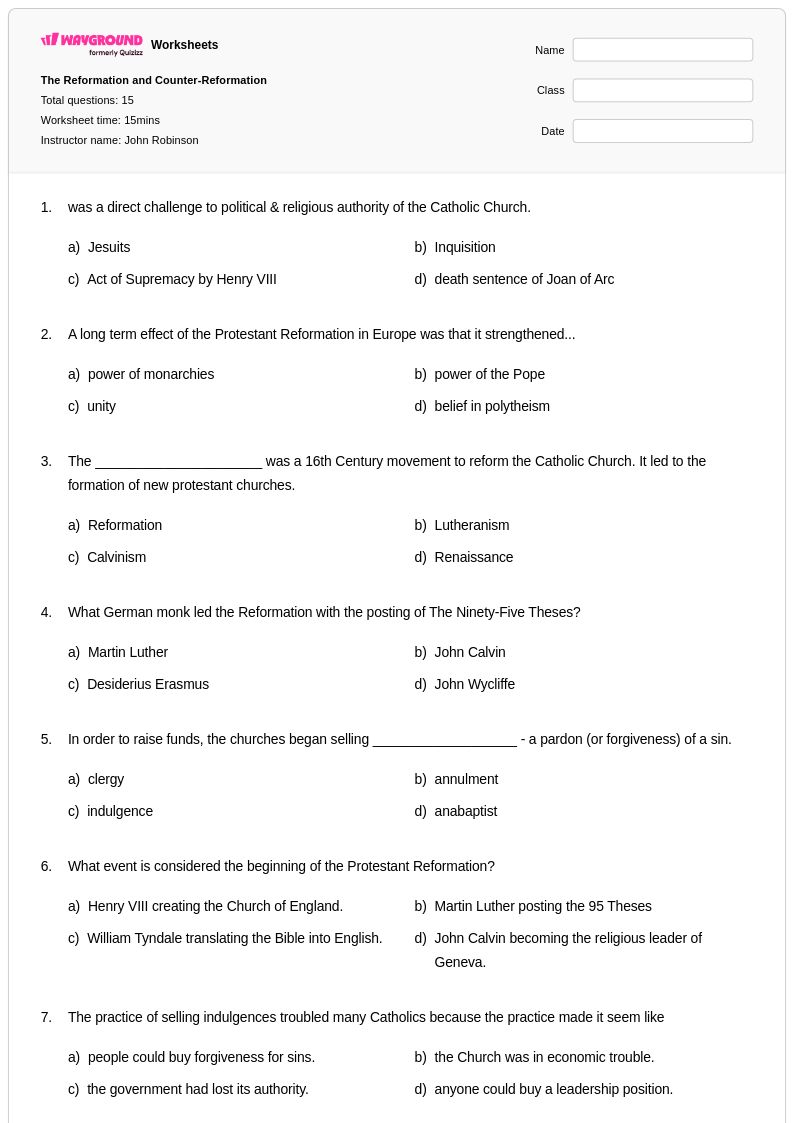
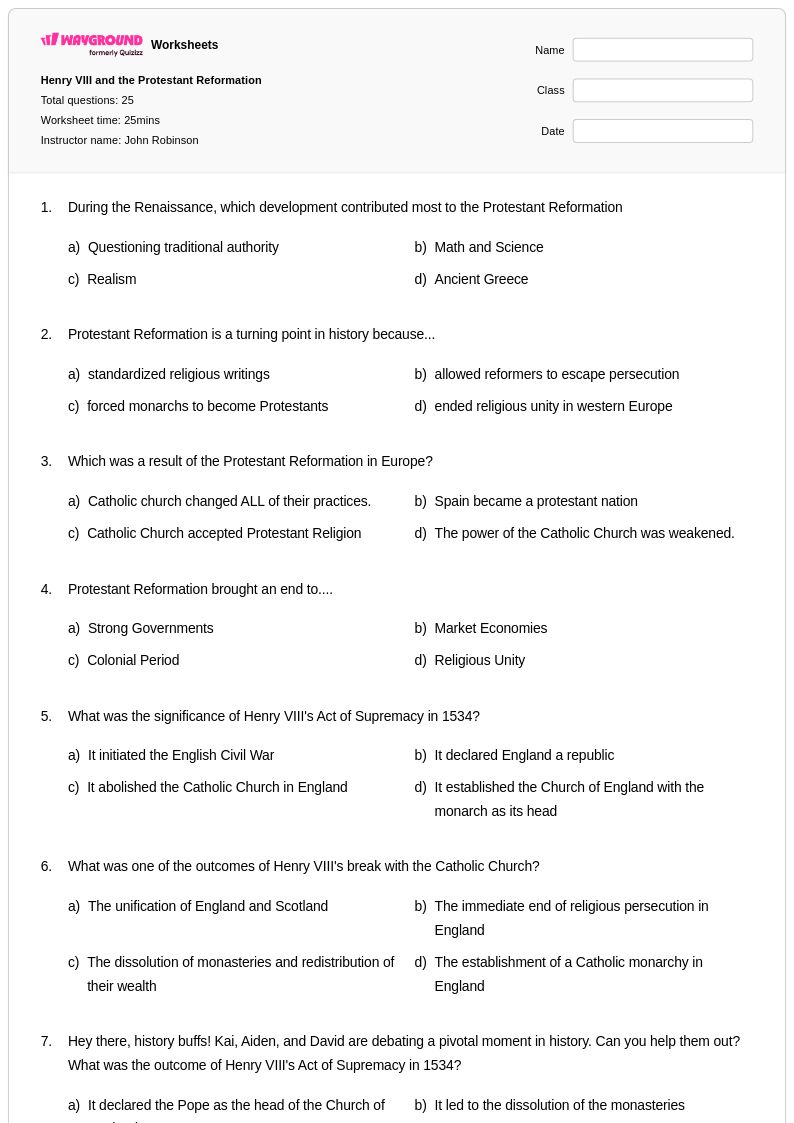
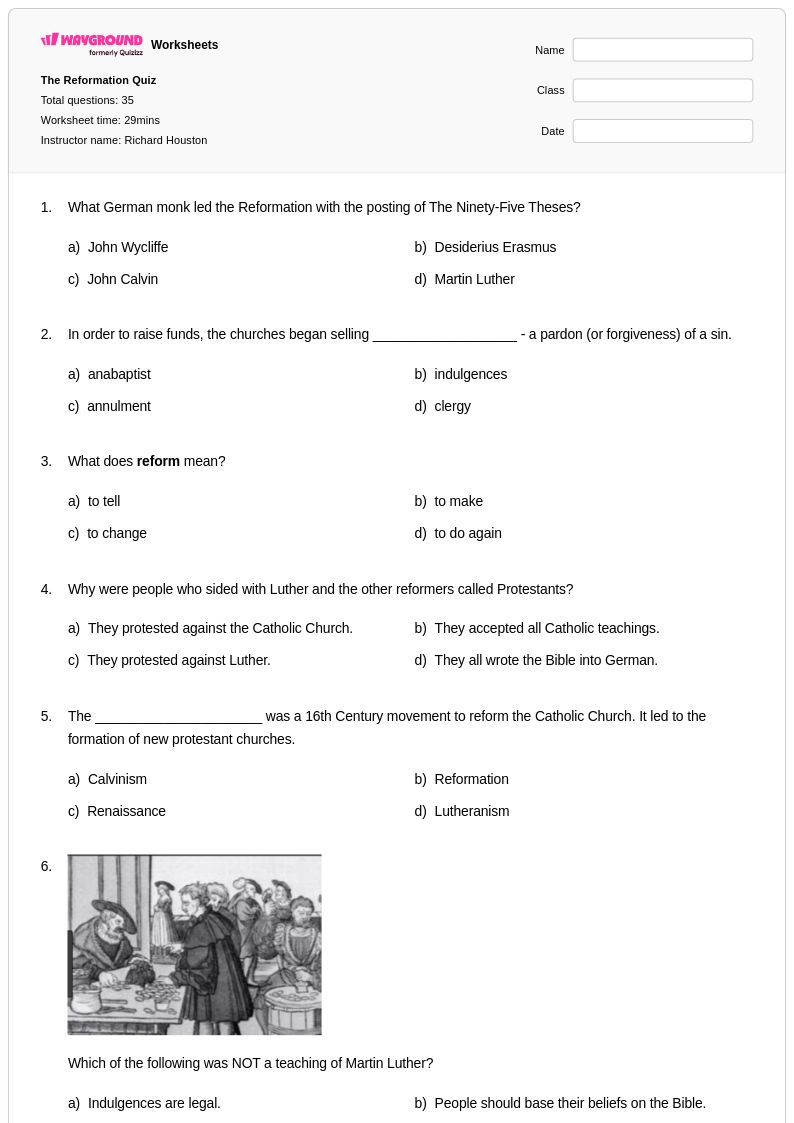
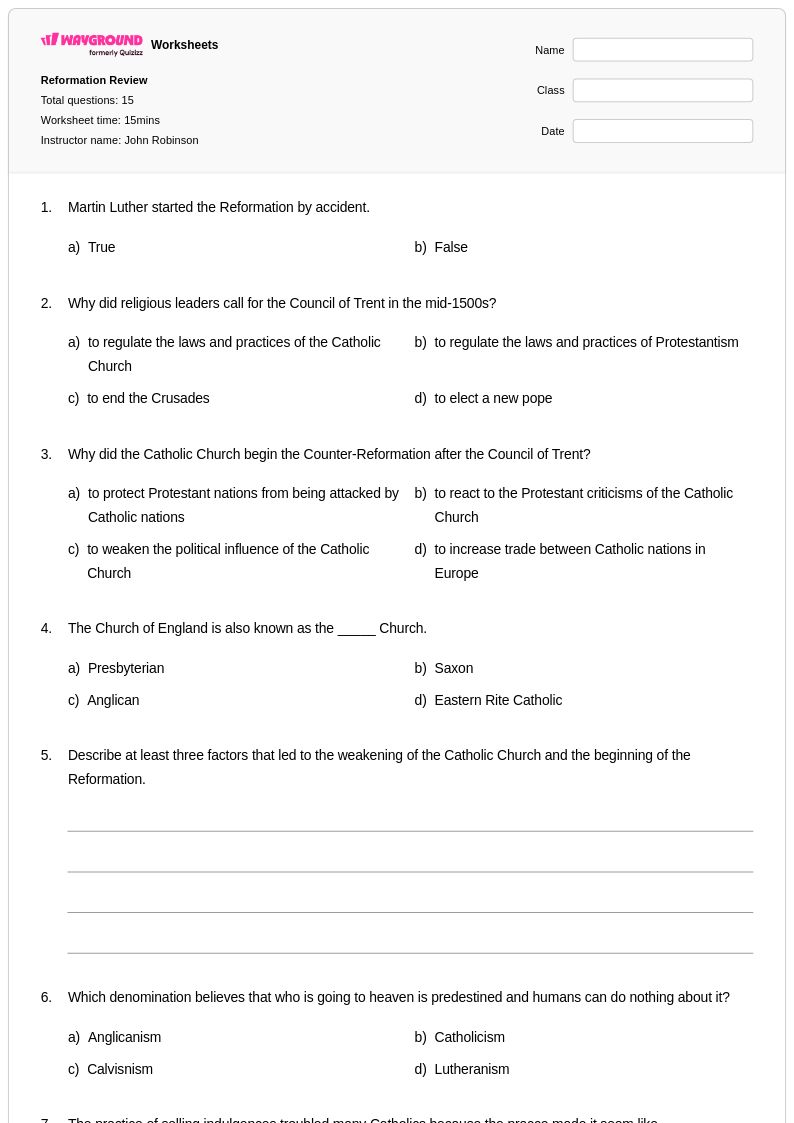
The Reformation worksheets available through Wayground (formerly Quizizz) provide Class 9 students with comprehensive practice materials that explore this pivotal period in European religious and political history. These expertly crafted resources strengthen critical thinking skills as students analyze the complex causes and consequences of the Protestant Reformation, examining key figures like Martin Luther, John Calvin, and Henry VIII, while investigating the Catholic Counter-Reformation's response. The worksheets feature diverse practice problems that challenge students to evaluate primary source documents, compare different Protestant denominations, and assess the long-term impacts of religious reform movements on European society. Each printable resource includes detailed answer keys that support independent learning and self-assessment, while the free pdf format ensures accessibility for all classroom environments.
Wayground (formerly Quizizz) supports educators with millions of teacher-created Reformation resources that streamline lesson planning and enhance instructional effectiveness. The platform's robust search and filtering capabilities allow teachers to quickly locate materials aligned with specific curriculum standards and differentiate instruction based on individual student needs. Teachers can customize worksheets to focus on particular aspects of the Reformation, whether emphasizing theological debates, political ramifications, or cultural transformations across different European regions. The flexible digital and printable formats accommodate various teaching preferences and classroom technologies, while the comprehensive collection supports targeted remediation for struggling students and enrichment opportunities for advanced learners. These tools enable educators to provide consistent skill practice that reinforces understanding of how the Reformation fundamentally reshaped European civilization and established precedents for religious freedom and political reform.
FAQs
How do I teach the Reformation to middle or high school students?
Teaching the Reformation effectively requires anchoring the content in the specific grievances that drove figures like Martin Luther, John Calvin, and Henry VIII to challenge Church authority. Start with the political and economic context of 16th-century Europe before introducing theological disputes like indulgences and salvation by faith alone. Using primary source documents alongside structured comparison activities helps students understand why the movement fractured into distinct Protestant denominations rather than remaining a unified reform effort.
What topics should a Reformation worksheet cover?
A well-designed Reformation worksheet should address the root causes of Protestant reform movements, key figures such as Martin Luther, John Calvin, and Henry VIII, and the Catholic Church's response through the Counter-Reformation. Students should also practice tracing the Reformation's lasting impact on modern religious, political, and cultural institutions. Including primary source analysis and denominational comparison tasks builds the critical thinking skills most assessments require at this level.
What mistakes do students commonly make when studying the Reformation?
Students frequently treat the Reformation as a single unified movement rather than recognizing it as a series of distinct reform efforts with different theological and political motivations. Another common error is conflating Henry VIII's break from Rome with the theological reforms of Luther or Calvin, when Henry's motivations were primarily political and dynastic. Students also tend to overlook the Counter-Reformation, which can lead them to underestimate the Catholic Church's continued influence in post-Reformation Europe.
How can I help students understand the difference between the Protestant Reformation and the Catholic Counter-Reformation?
The clearest approach is to treat the Counter-Reformation as a direct institutional response to Protestant challenges rather than a separate historical event. Have students map specific Protestant critiques alongside the Catholic Church's official responses, such as the Council of Trent's clarifications on doctrine and the founding of the Jesuits. This side-by-side analysis prevents the common misconception that the Counter-Reformation was simply a rejection of Protestantism rather than a genuine internal reform effort.
How do I use Reformation worksheets from Wayground in my classroom?
Wayground's Reformation worksheets are available as printable PDFs for traditional classroom use and in digital formats for technology-integrated learning environments, giving teachers flexibility in how they deploy the materials. You can assign them as independent practice, use them to structure small-group analysis of primary sources, or host them as a quiz directly on Wayground for real-time feedback. Each worksheet includes a complete answer key, which supports both teacher-led review and independent student learning.
How can I differentiate Reformation instruction for students with different learning needs?
For students who need additional support, reducing the complexity of primary source excerpts and providing guided annotation scaffolds can lower the barrier to engagement with dense 16th-century material. On Wayground, teachers can apply individual accommodations such as extended time, read-aloud support for students who need audio assistance, and reduced answer choices to decrease cognitive load on assessments. These settings can be assigned per student without notifying the rest of the class, allowing differentiation to happen seamlessly within a single shared assignment.