
10 Q
1st
18 Q
1st - Uni
10 Q
1st
10 Q
1st
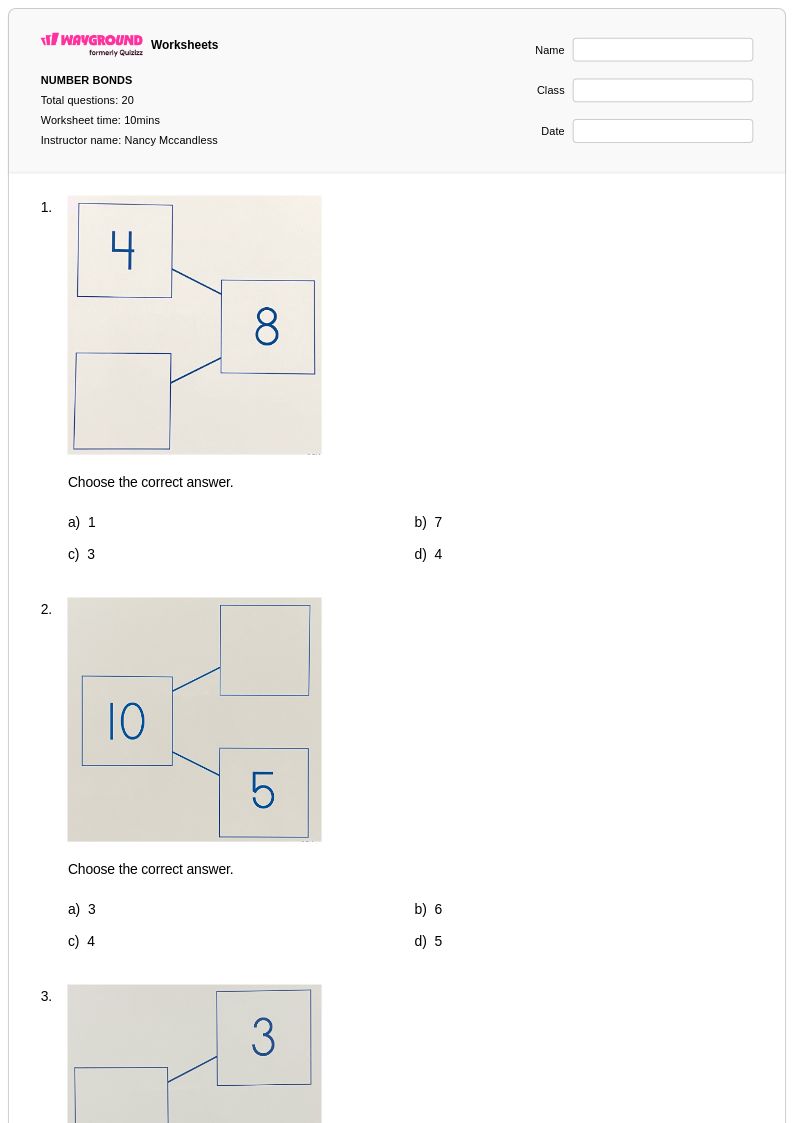
20 Q
1st
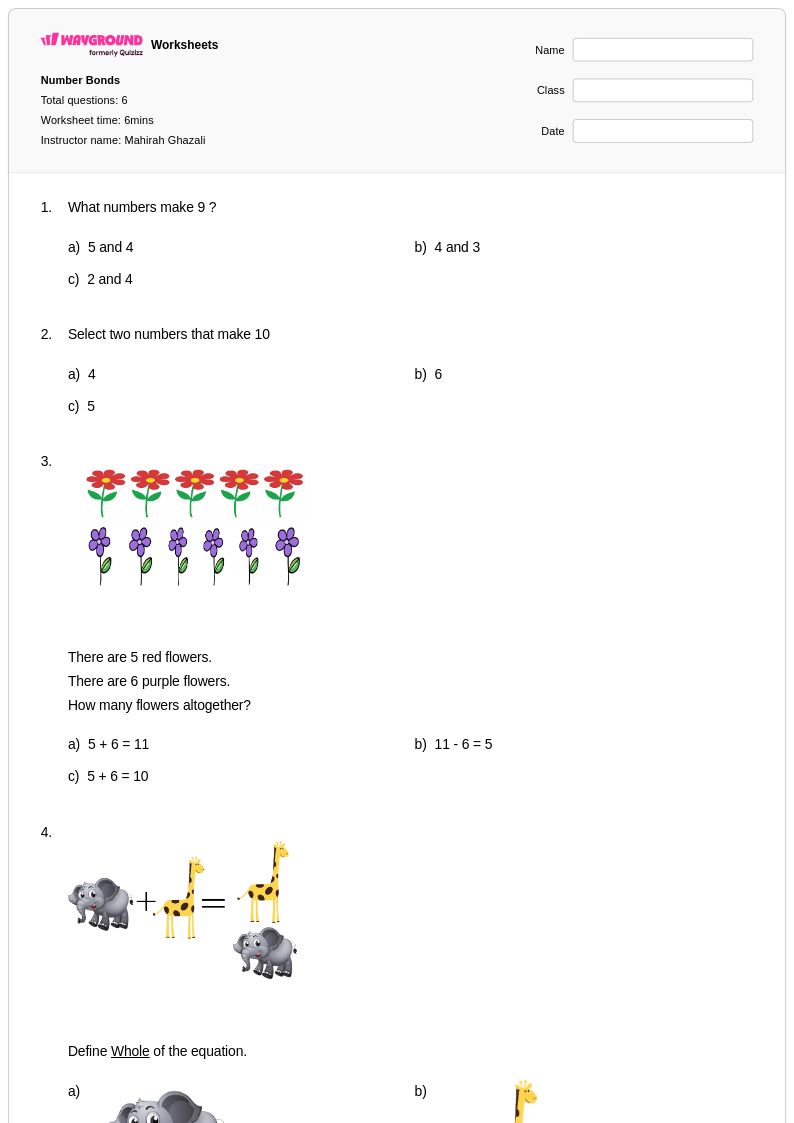
6 Q
1st
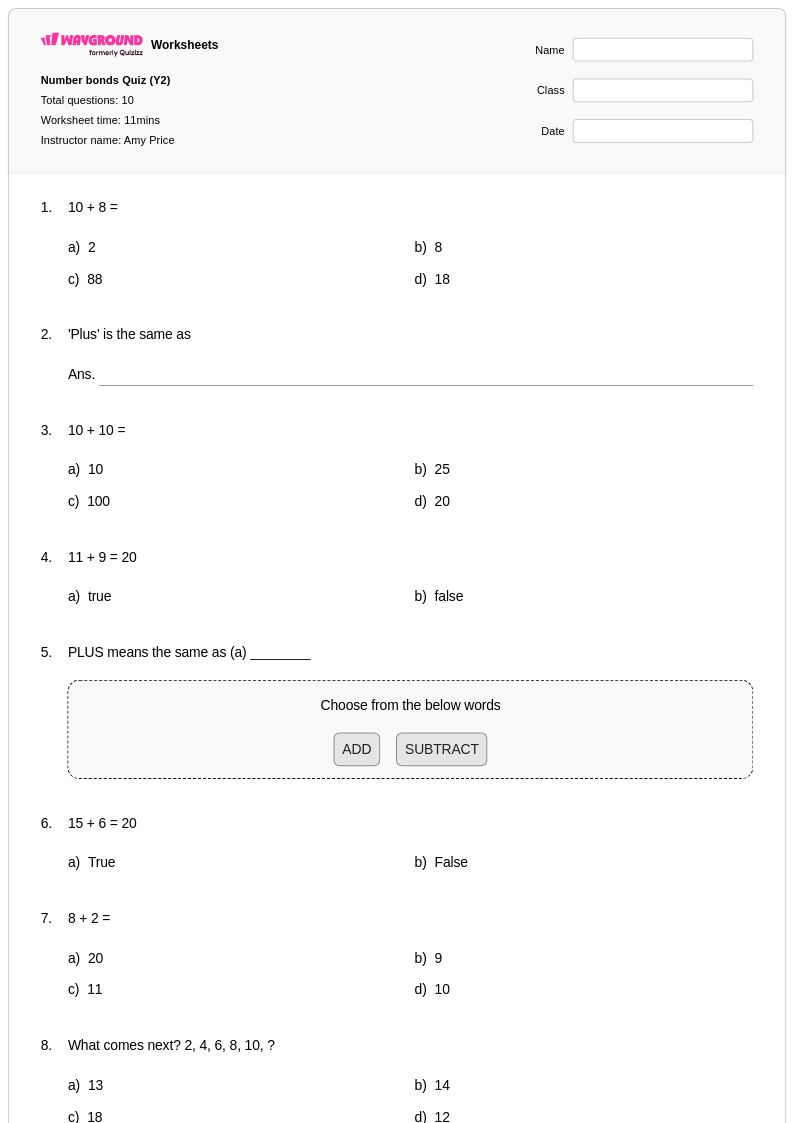
10 Q
1st
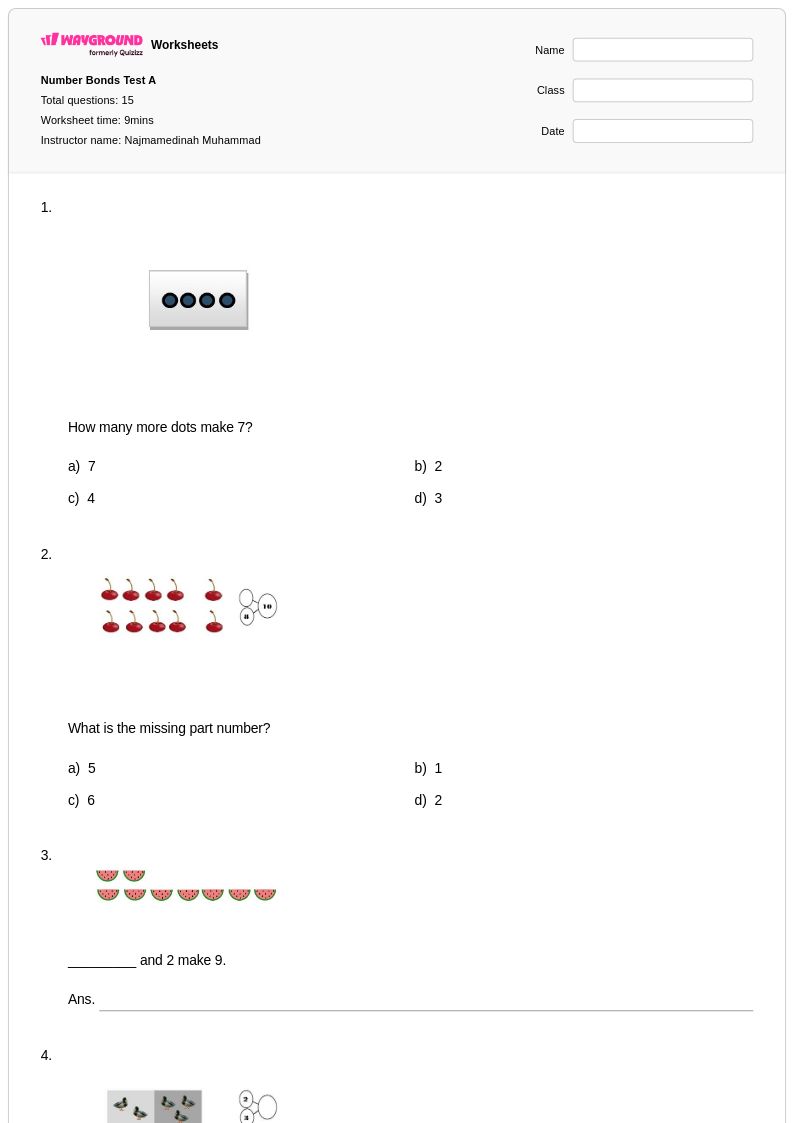
15 Q
1st - 2nd
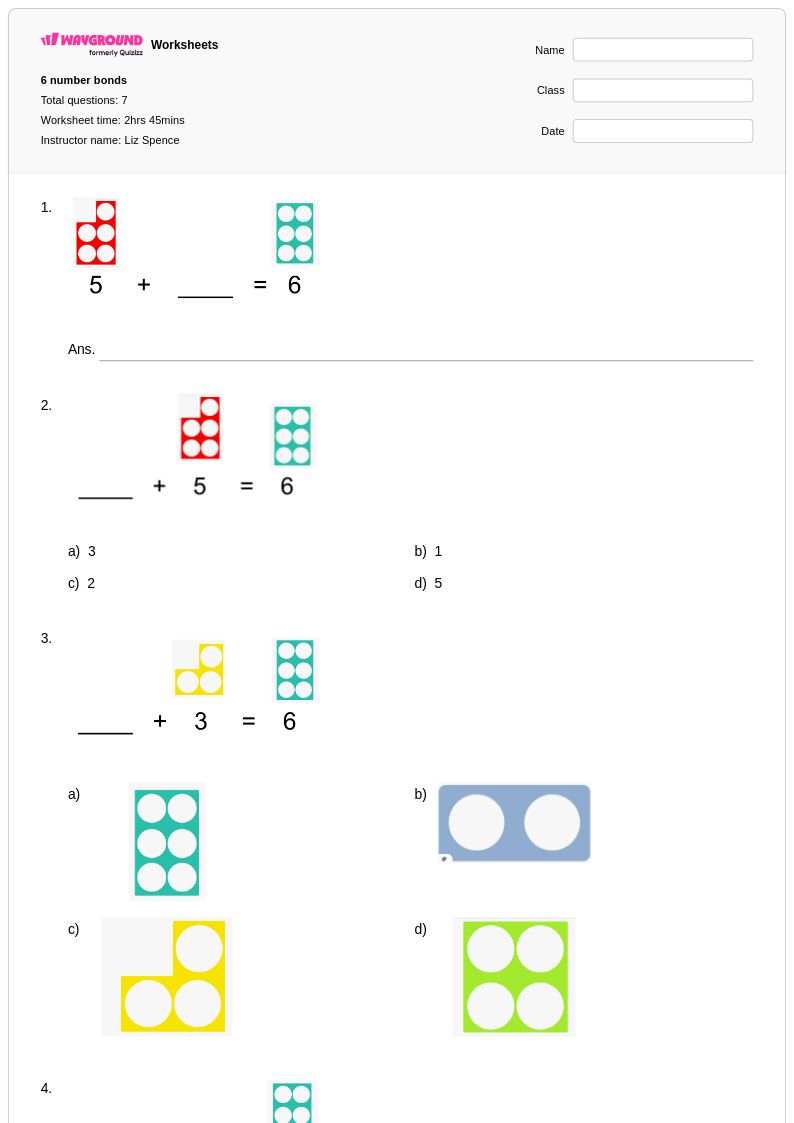
7 Q
1st
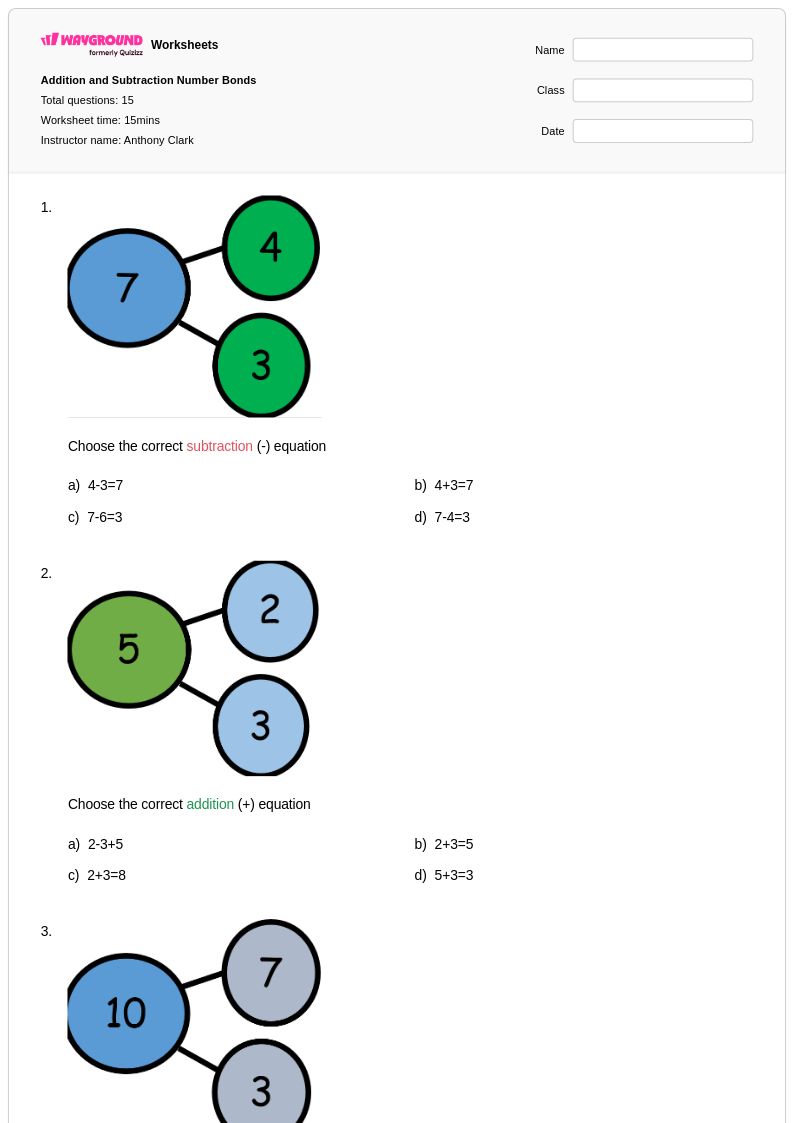
15 Q
1st - Uni
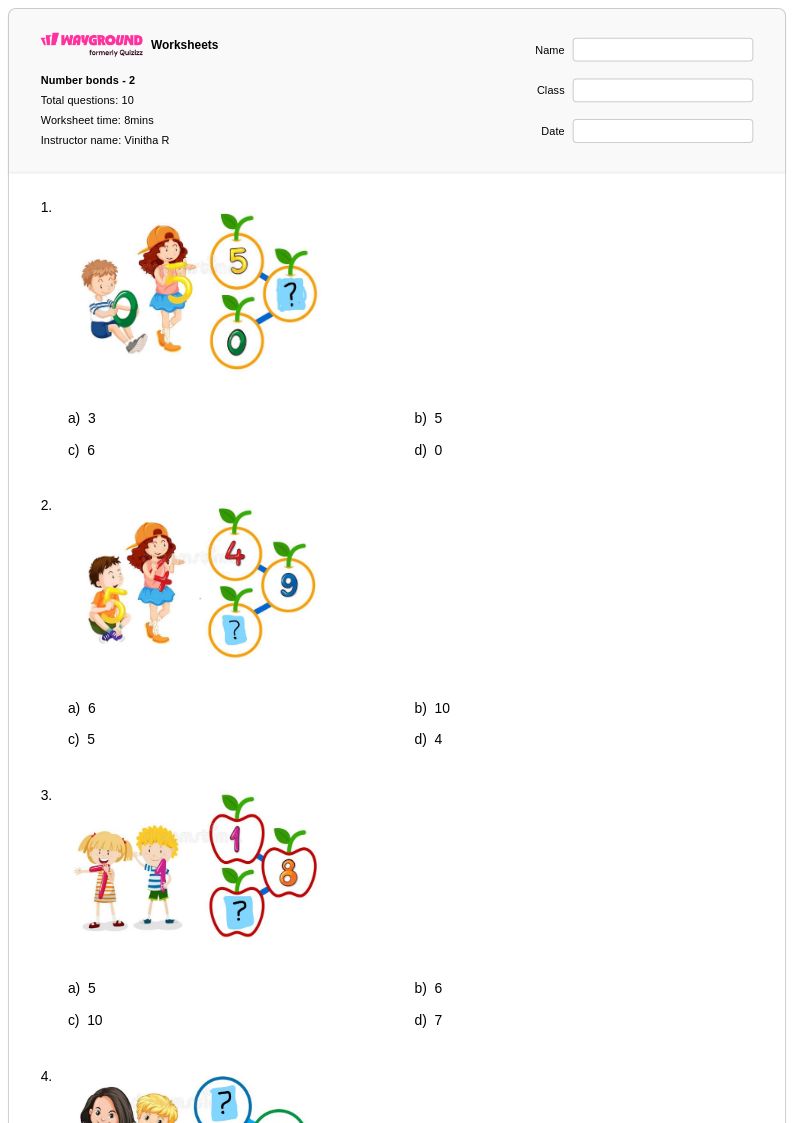
10 Q
KG - 1st
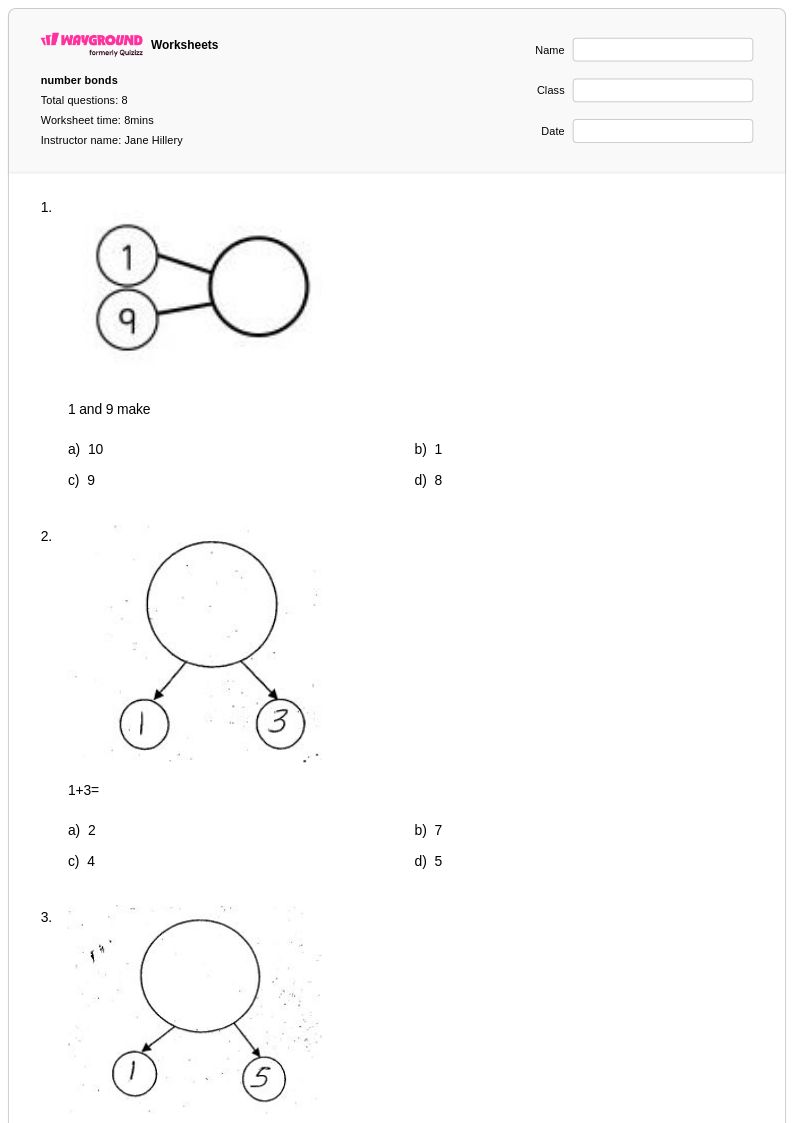
8 Q
1st
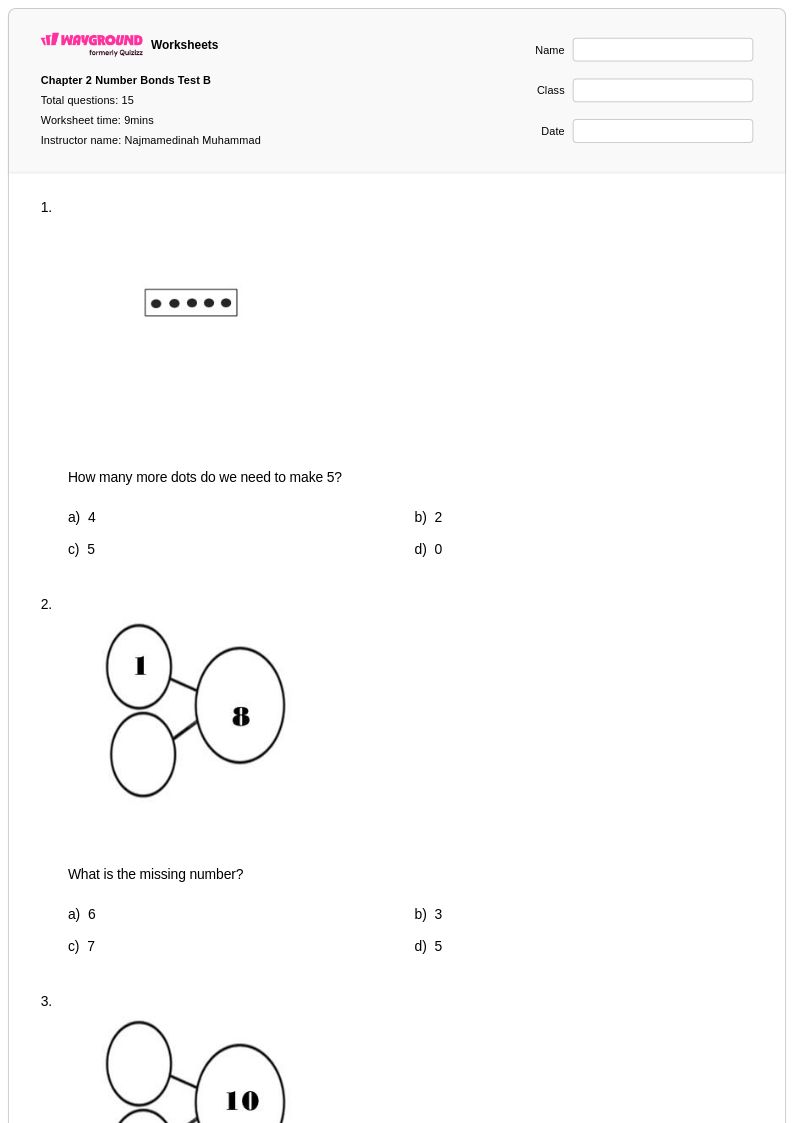
15 Q
1st - 2nd
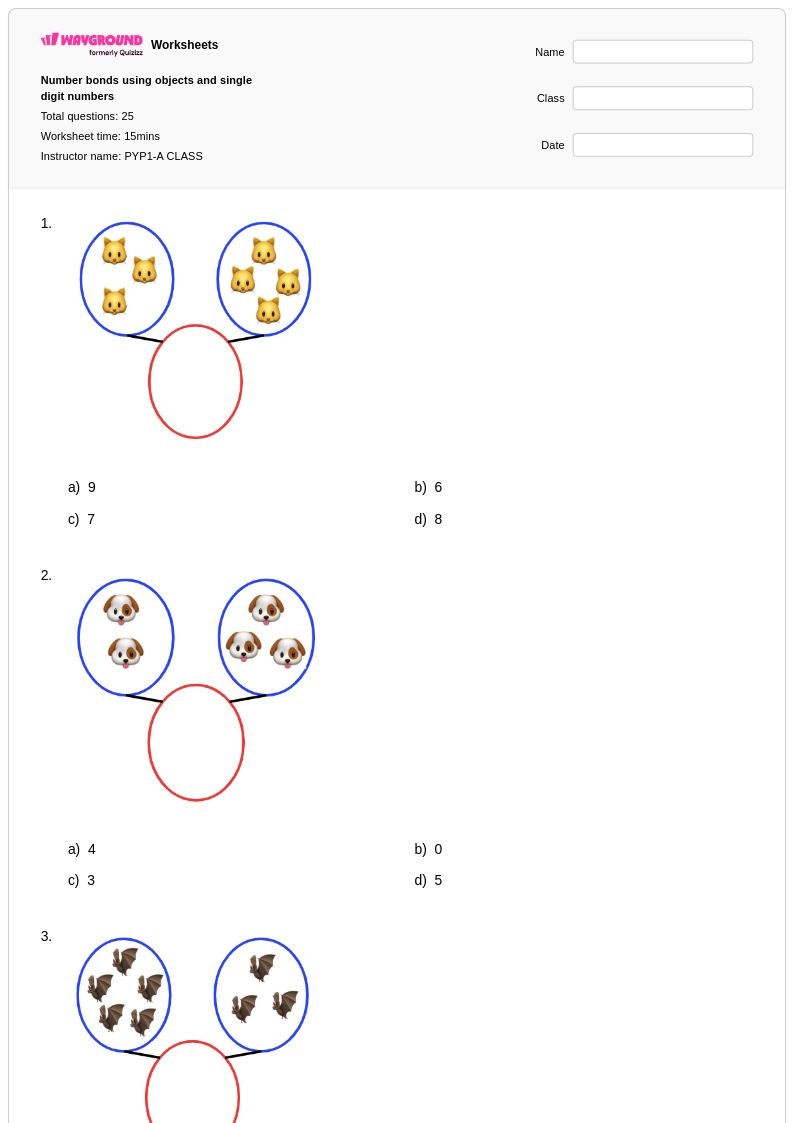
25 Q
1st
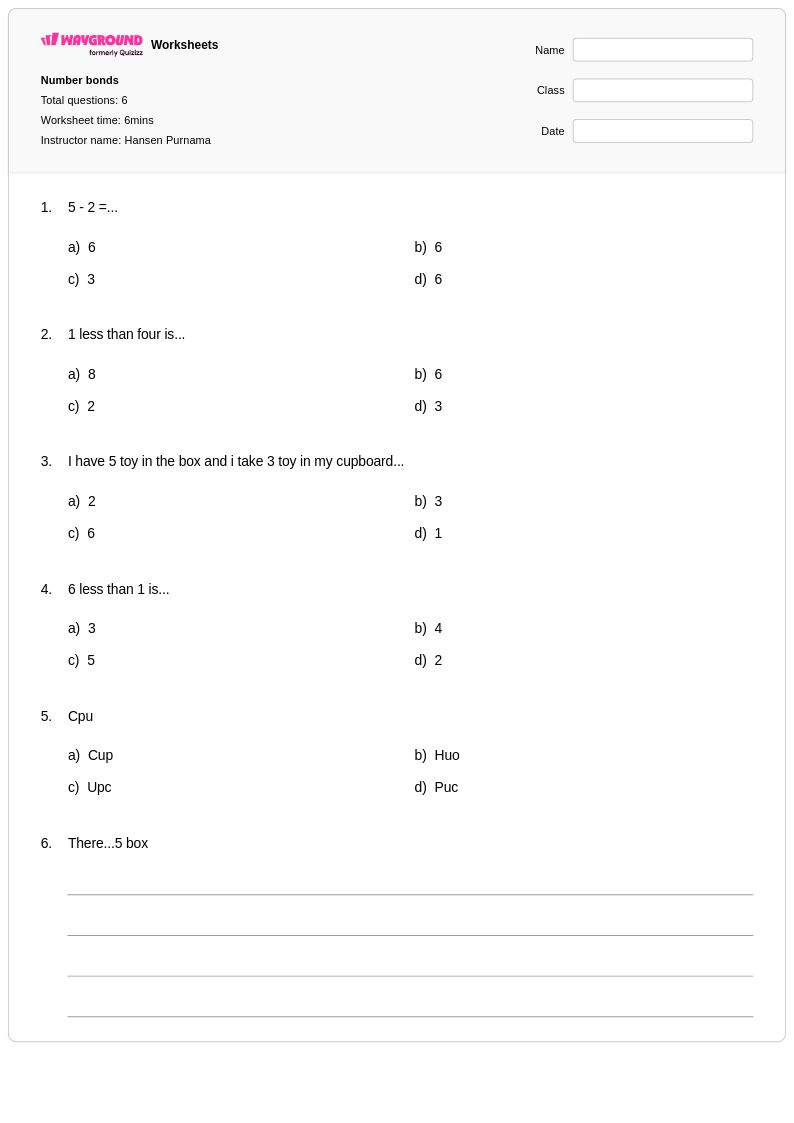
6 Q
1st
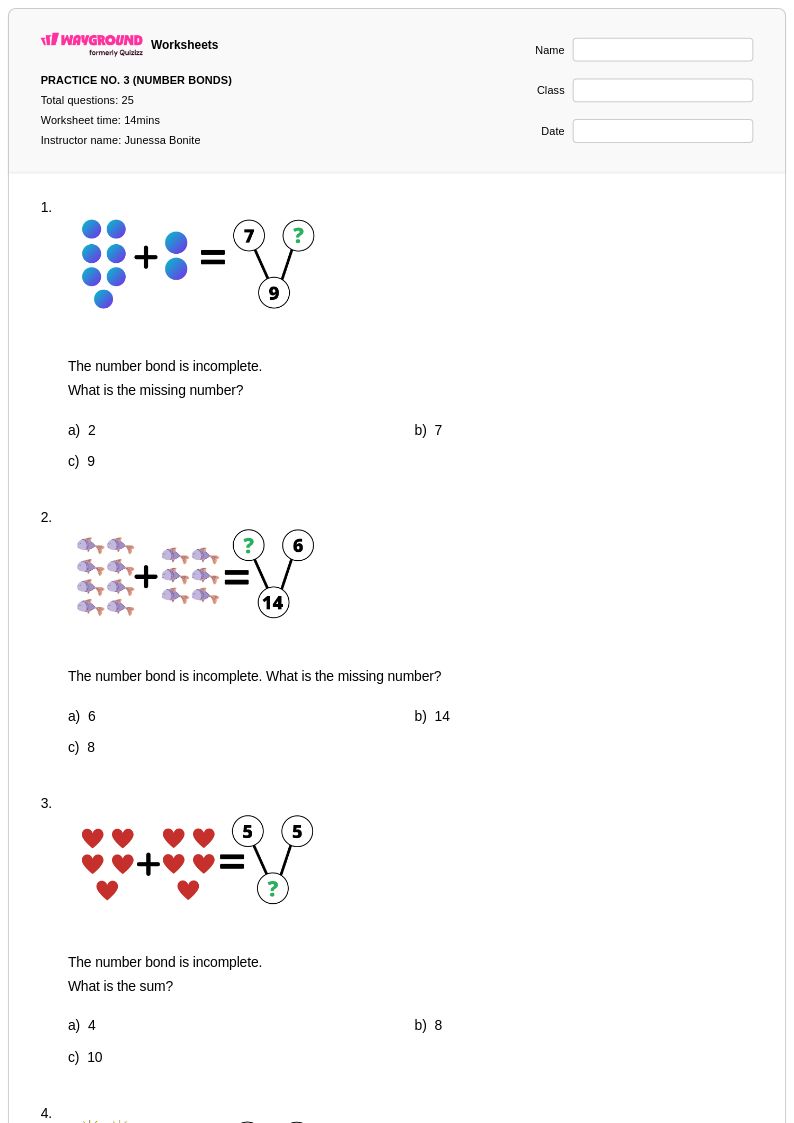
25 Q
1st
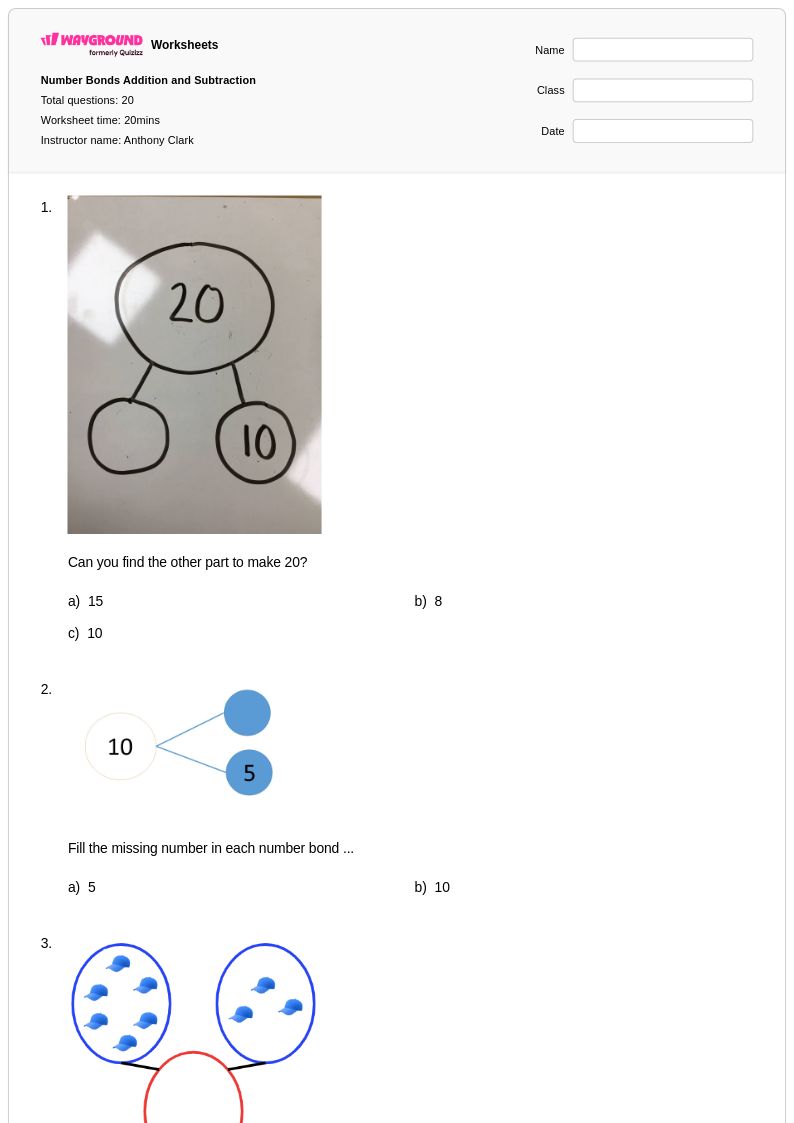
20 Q
1st - Uni
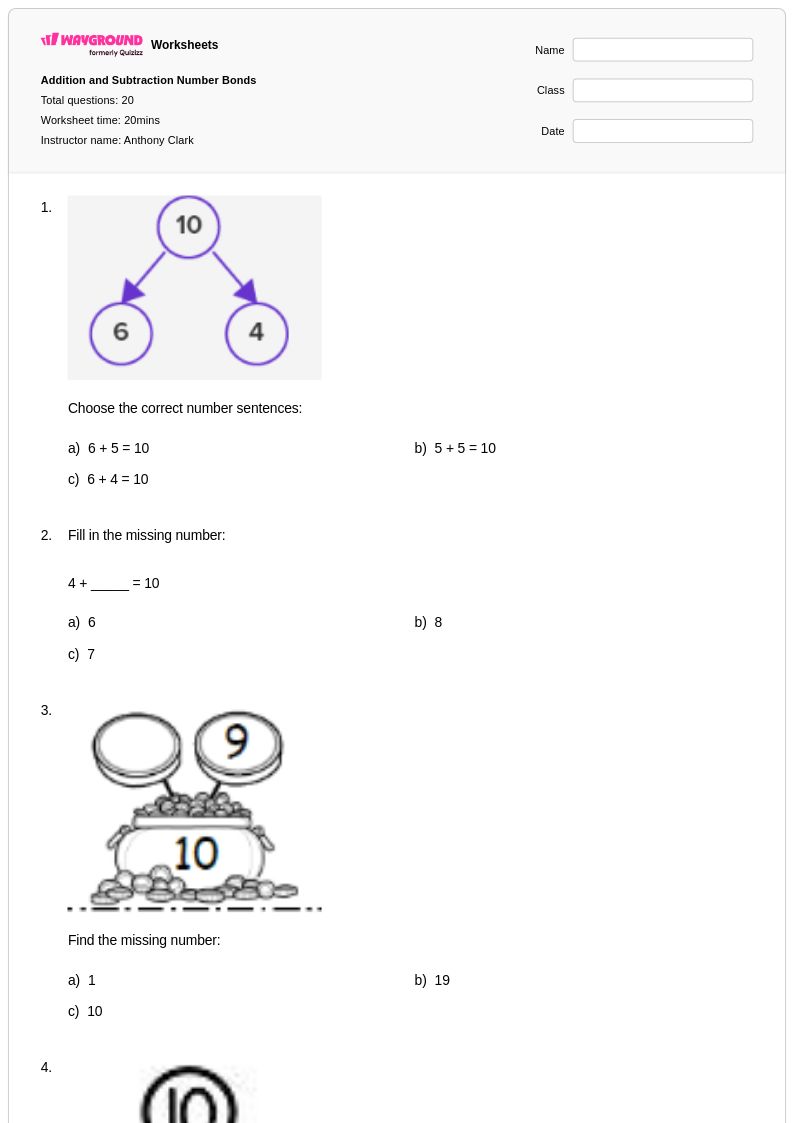
20 Q
1st - Uni
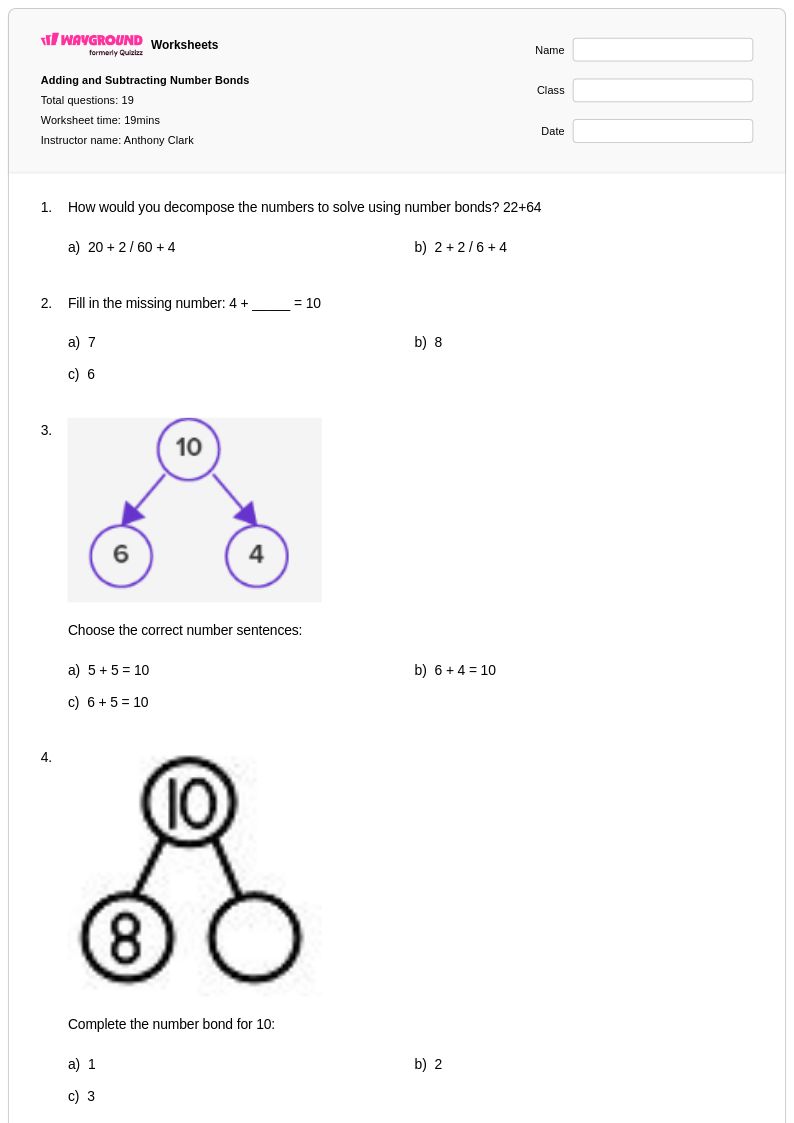
19 Q
1st - Uni
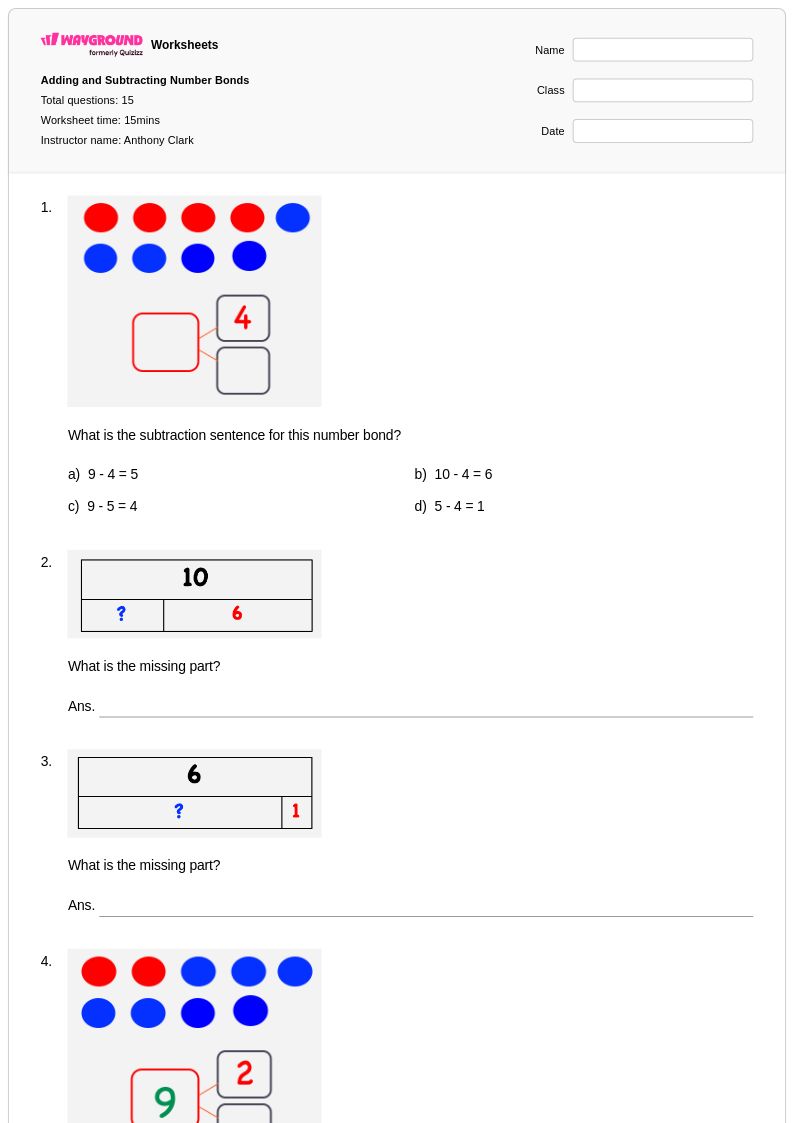
15 Q
1st - Uni
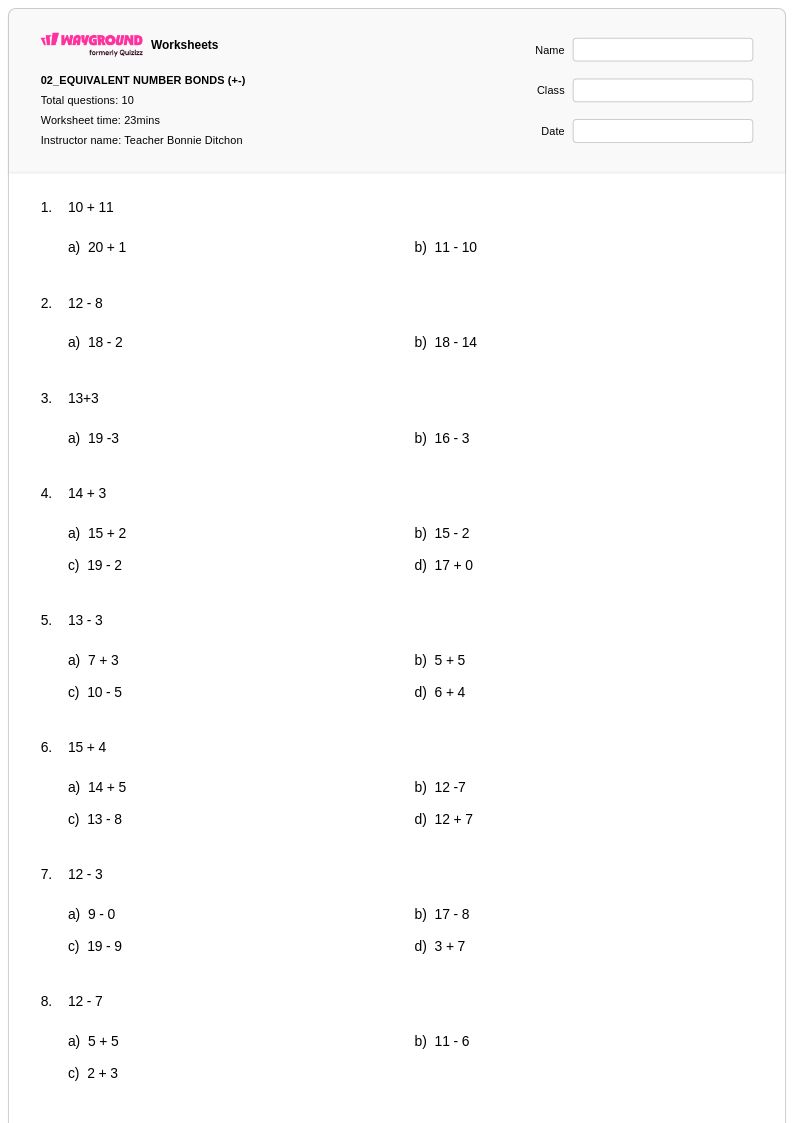
10 Q
1st - 5th
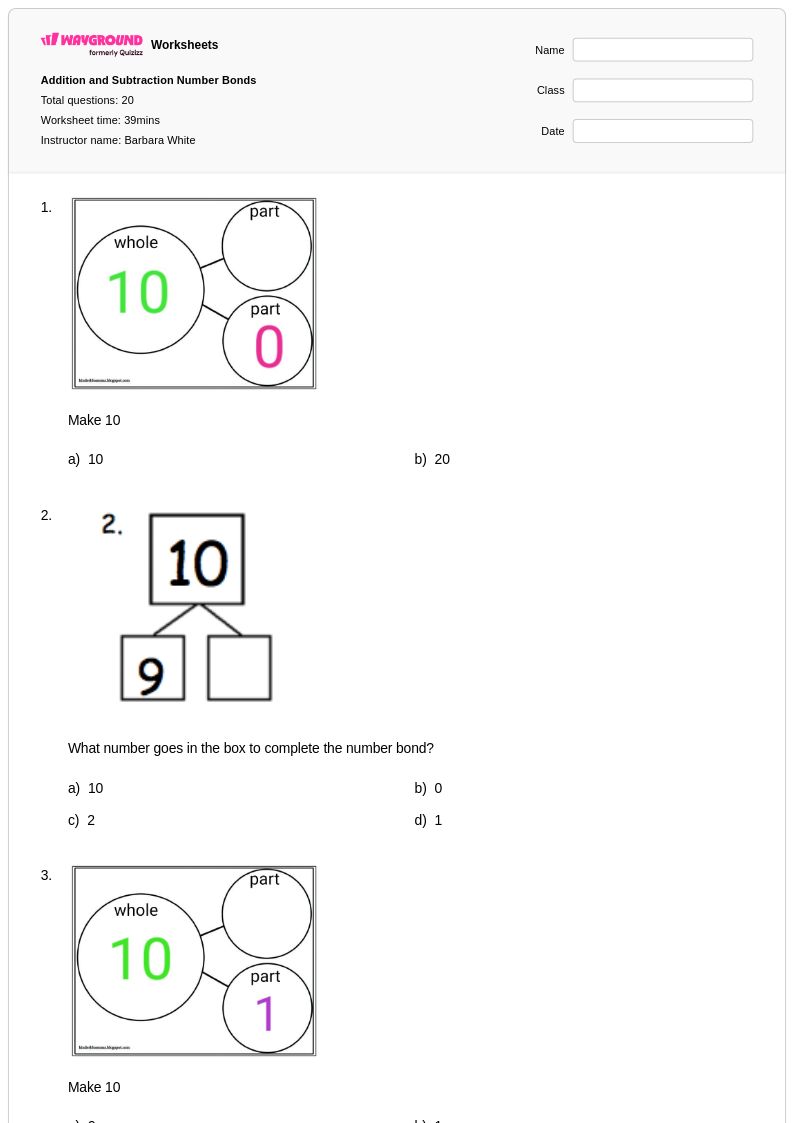
20 Q
1st
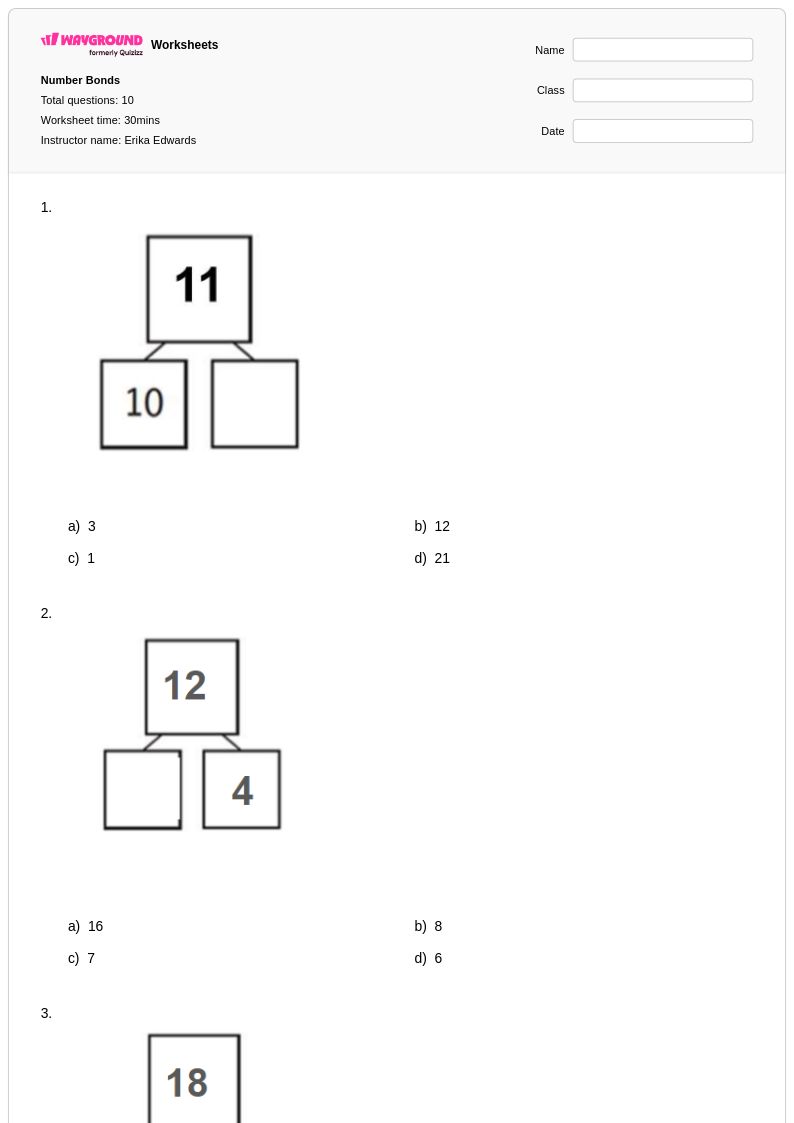
10 Q
1st
Explore Number Bonds Worksheets by Grades
Explore Other Subject Worksheets for class 1
Explore printable Number Bonds worksheets for Class 1
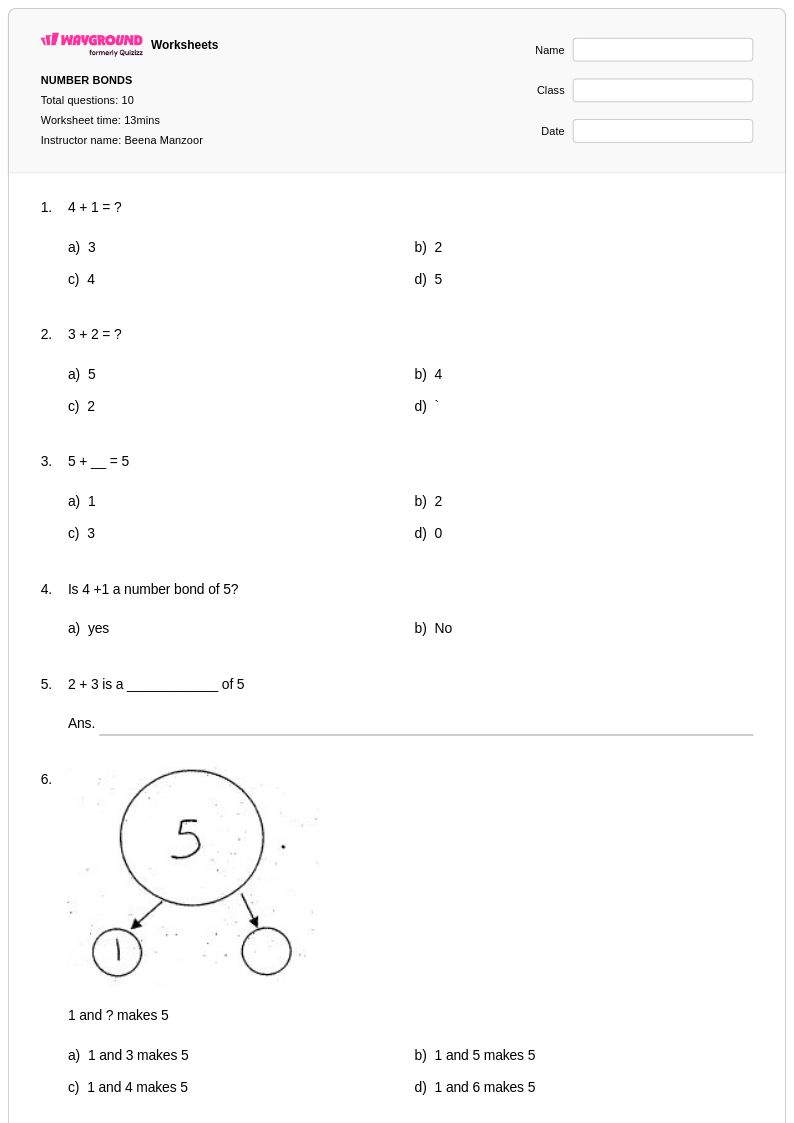
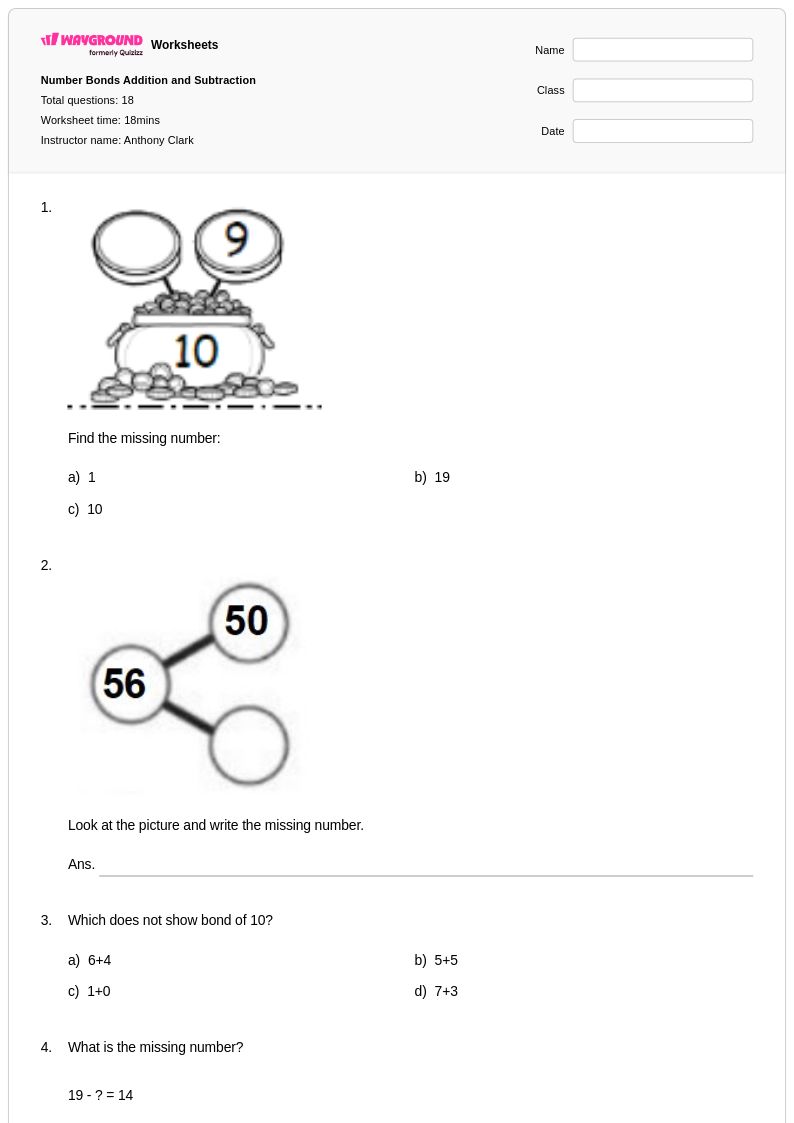
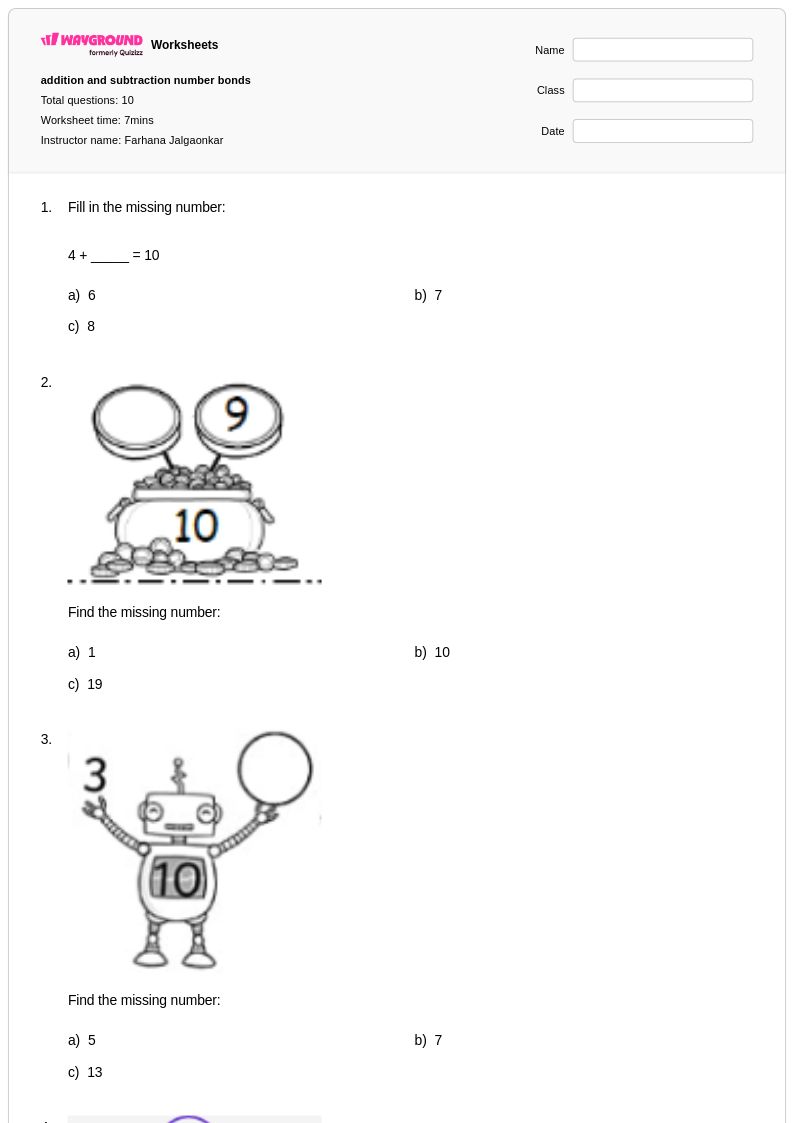
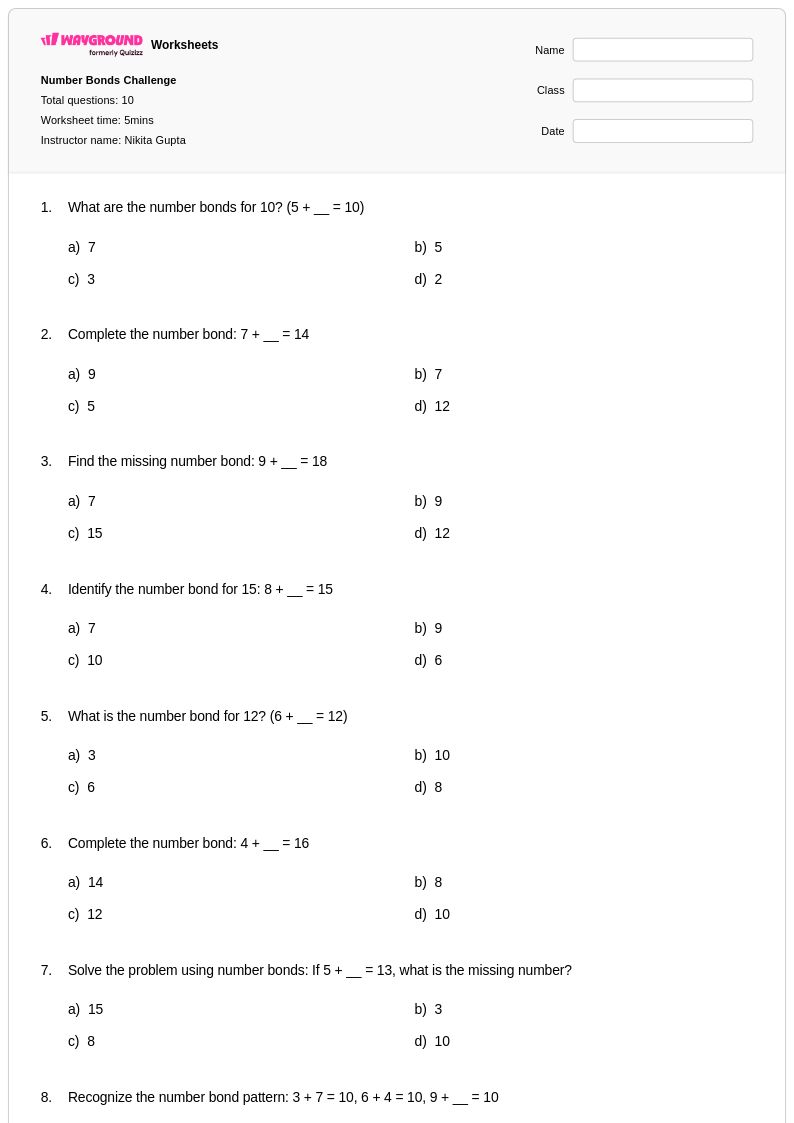
Number bonds worksheets for Class 1 students through Wayground (formerly Quizizz) provide essential foundational practice for understanding how numbers combine to create other numbers within 10. These carefully designed printables help young learners visualize and internalize the complementary relationships between numbers, such as recognizing that 3 and 2 make 5, or that 7 can be broken down into 4 and 3. Each worksheet collection includes comprehensive practice problems that strengthen mental math abilities, develop number sense, and build the conceptual understanding necessary for future addition and subtraction success. Teachers can access these free resources in convenient pdf format, complete with answer keys that streamline assessment and enable immediate feedback during instruction.
Wayground (formerly Quizizz) empowers educators with millions of teacher-created number bond resources that support diverse learning needs in Class 1 mathematics instruction. The platform's robust search and filtering capabilities allow teachers to quickly locate worksheets aligned with specific standards and learning objectives, while differentiation tools enable customization for students requiring additional support or enrichment opportunities. These versatile materials are available in both printable and digital formats, providing flexibility for classroom instruction, homework assignments, and independent practice sessions. The extensive collection supports comprehensive lesson planning by offering varied approaches to number bond concepts, from visual representations using ten frames to abstract numerical relationships, ensuring teachers can effectively address different learning styles while building critical mathematical foundations through targeted skill practice and remediation.
FAQs
What are first graders expected to do with number bonds?
How can I connect number bonds to addition and subtraction for first graders?
What are good practice activities for first-grade number bonds?
What's a common struggle for first graders with number bonds?
How do I use this Grade 1 number bonds worksheet?
How do number bonds fit into the first-grade math curriculum?