
18 Q
1st - Uni
8 Q
1st - 4th
20 Q
KG - 2nd
20 Q
2nd
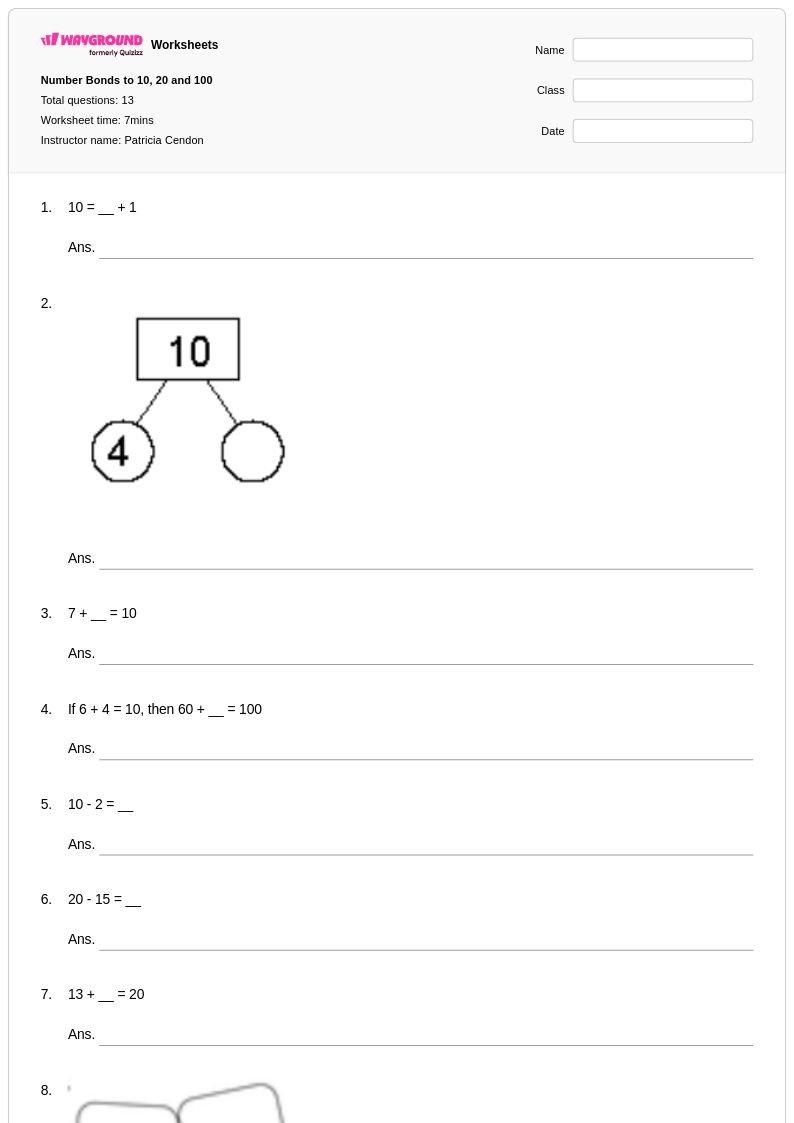
13 Q
2nd - 3rd
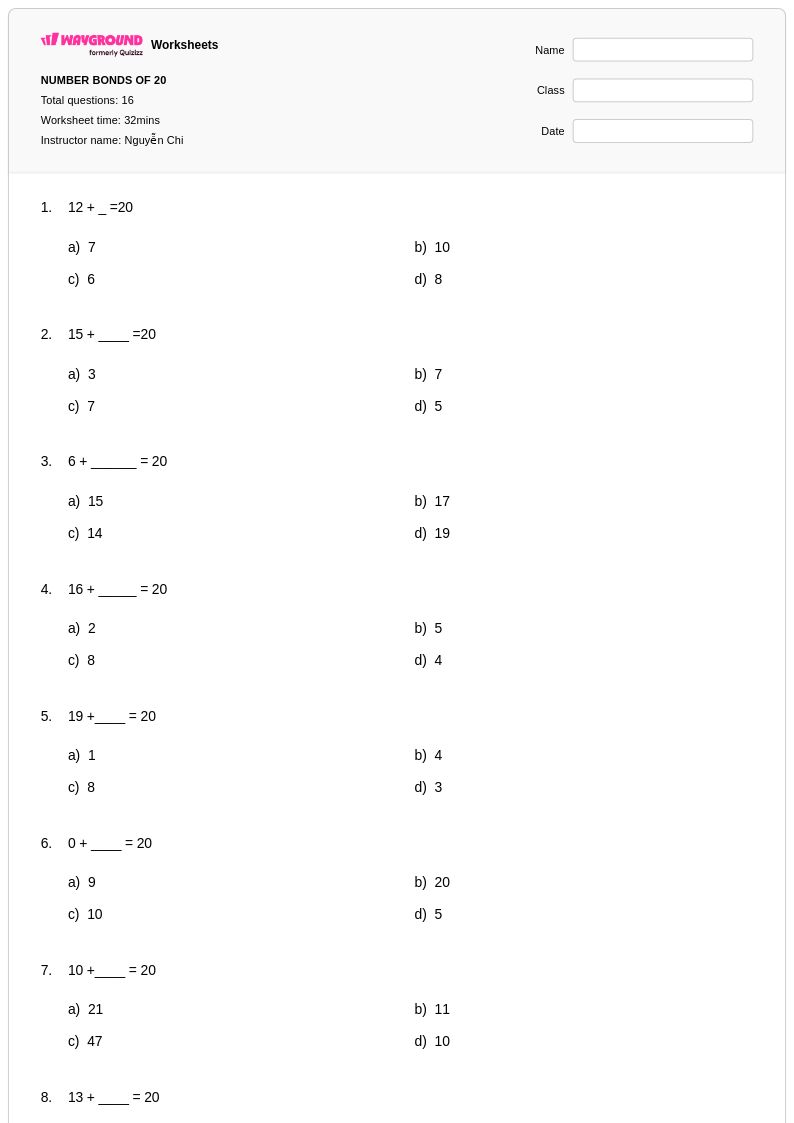
16 Q
1st - 3rd
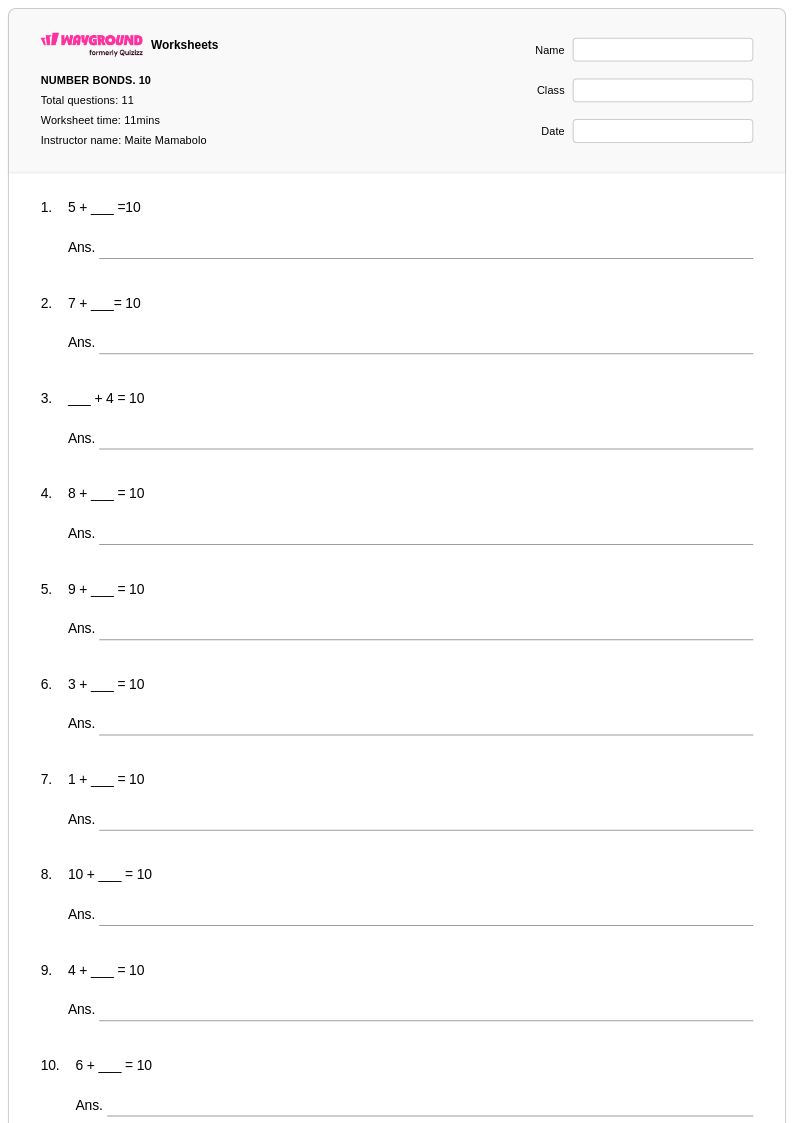
16 Q
2nd
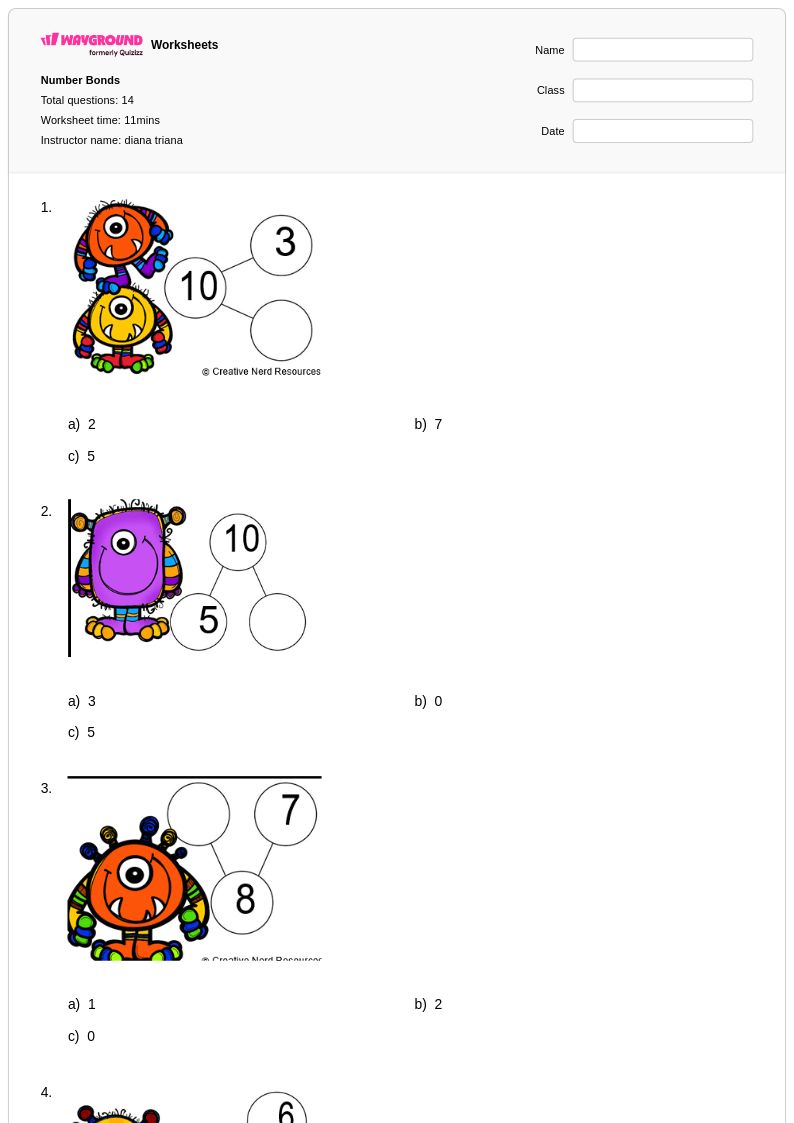
14 Q
KG - 2nd
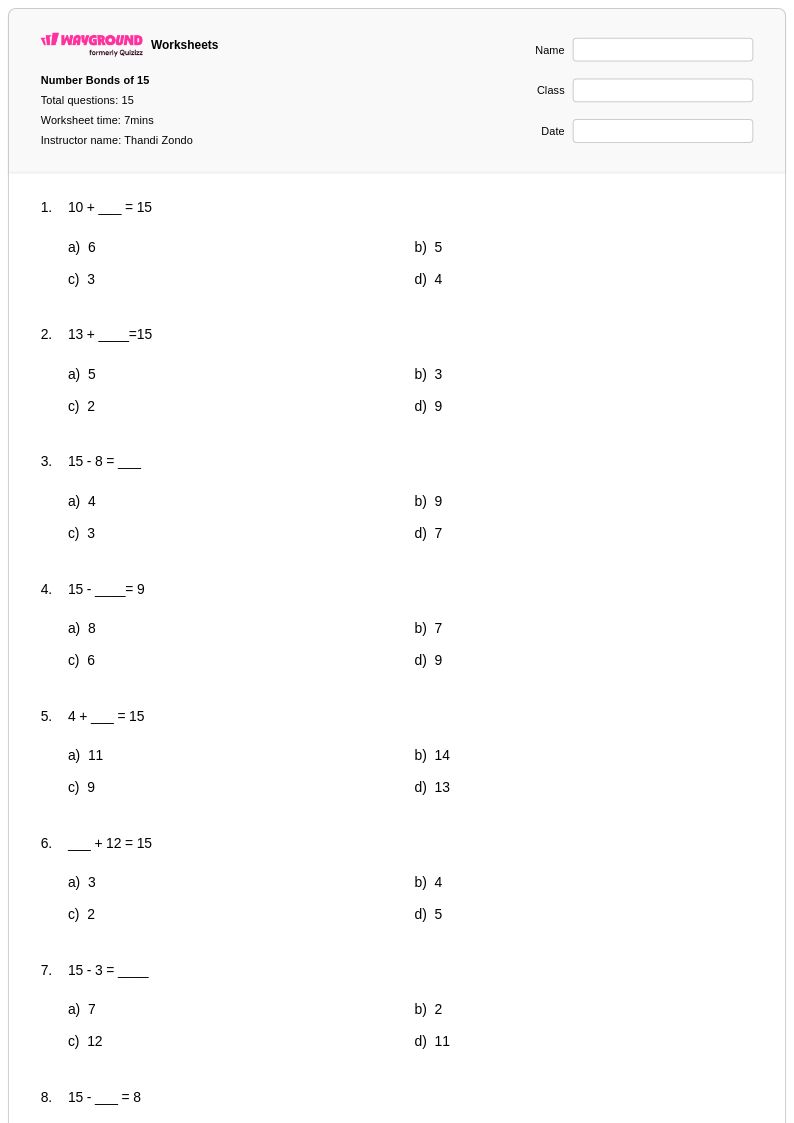
15 Q
2nd - 3rd
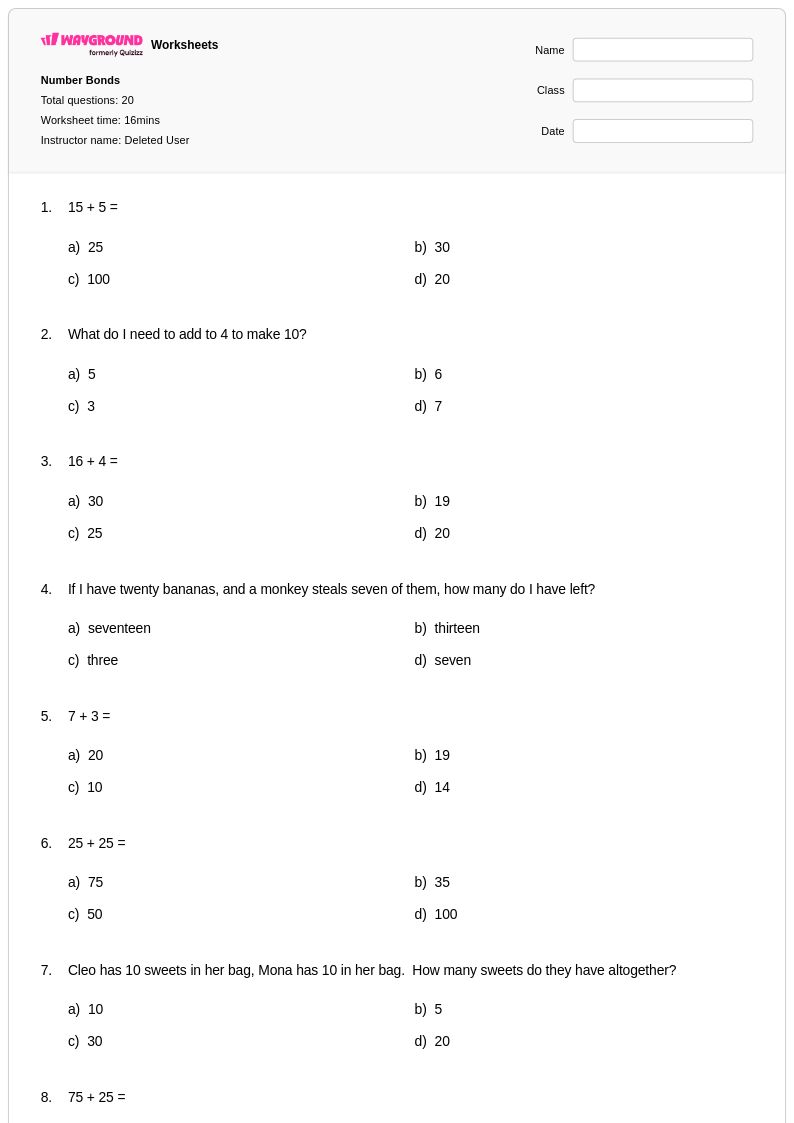
20 Q
1st - 4th
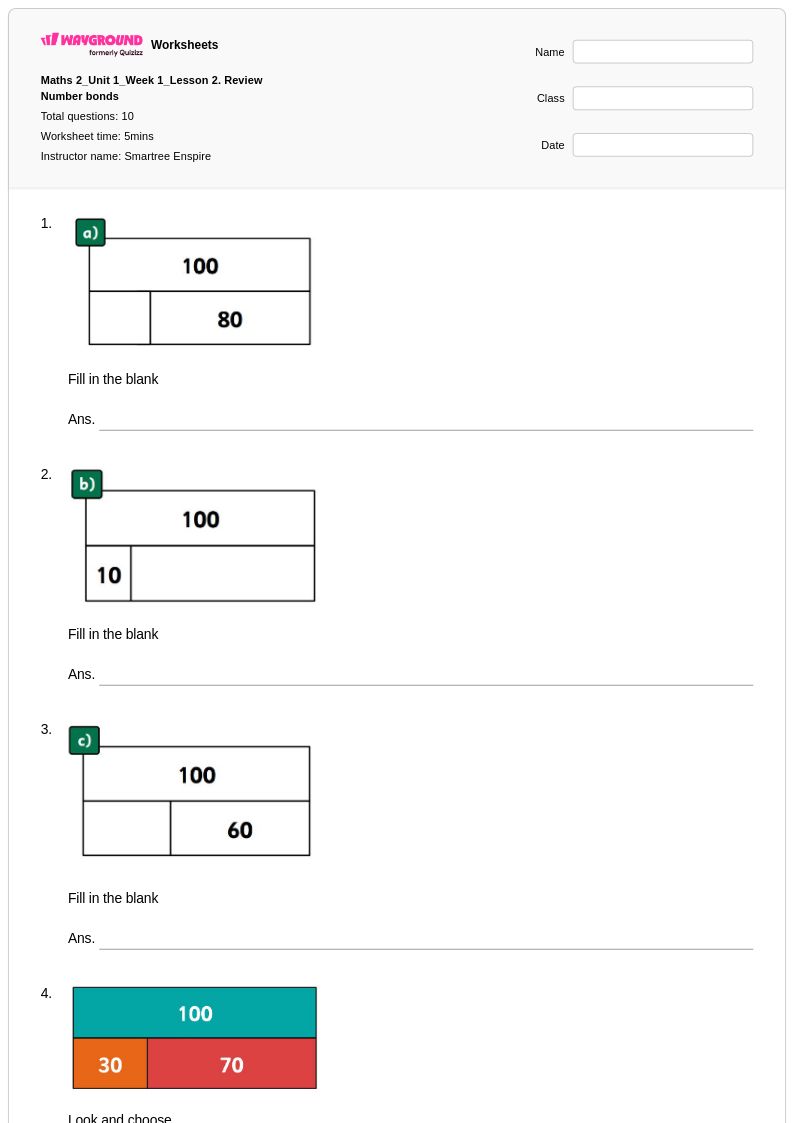
10 Q
2nd
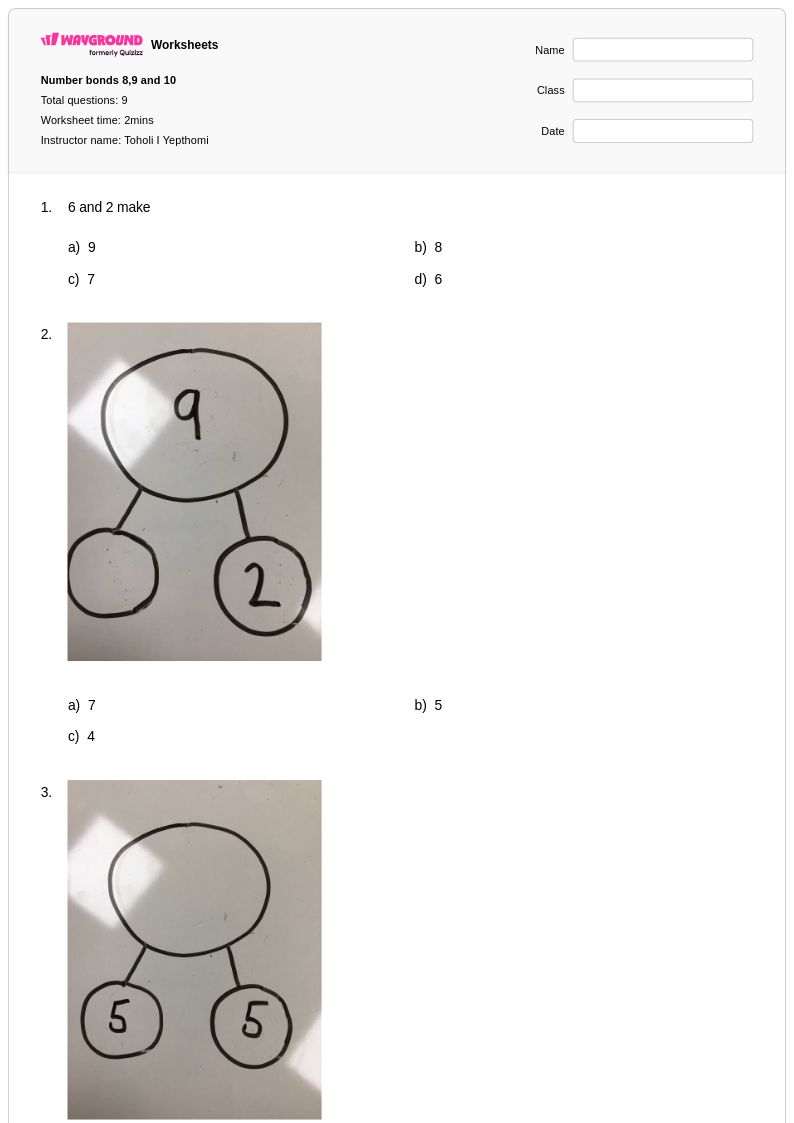
9 Q
KG - 3rd
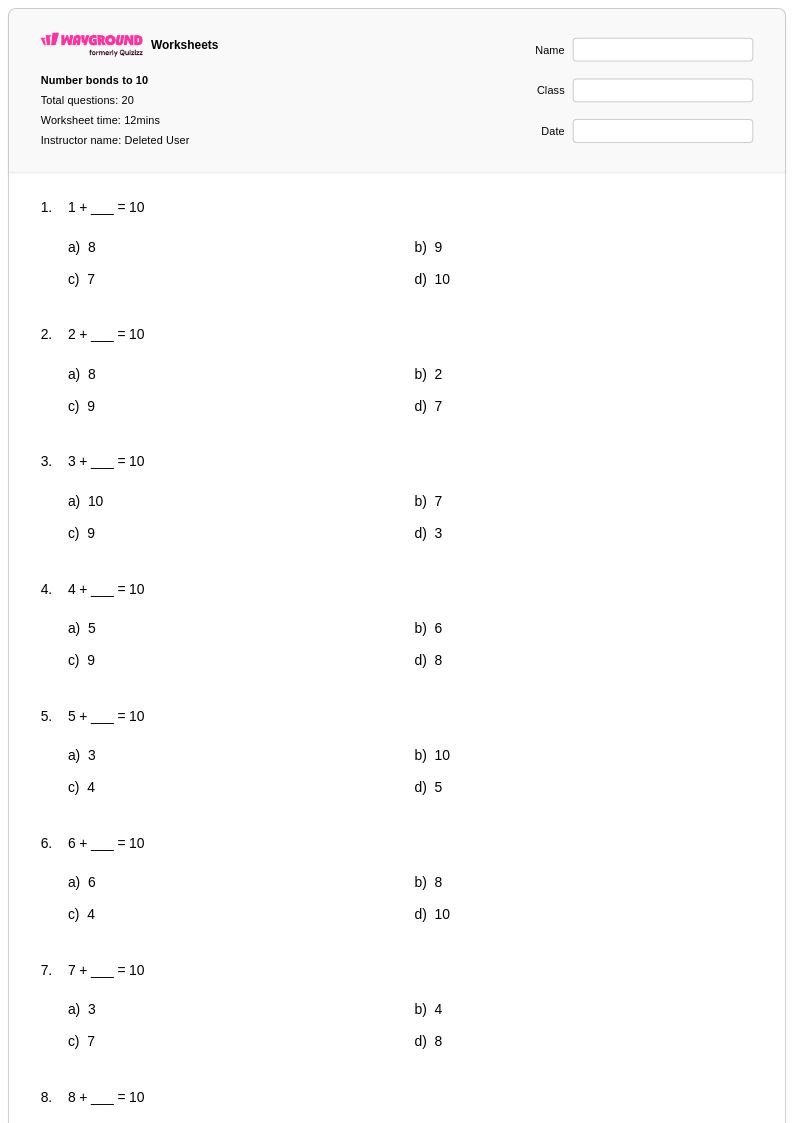
20 Q
KG - 6th
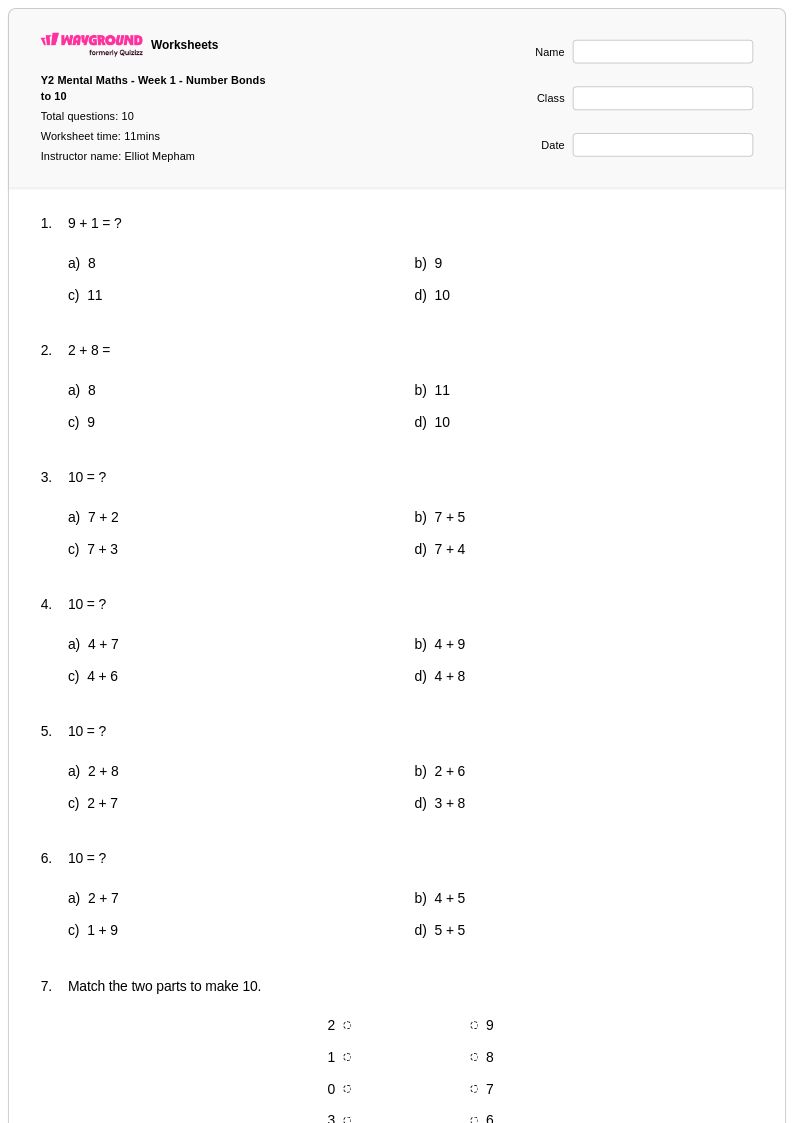
10 Q
2nd
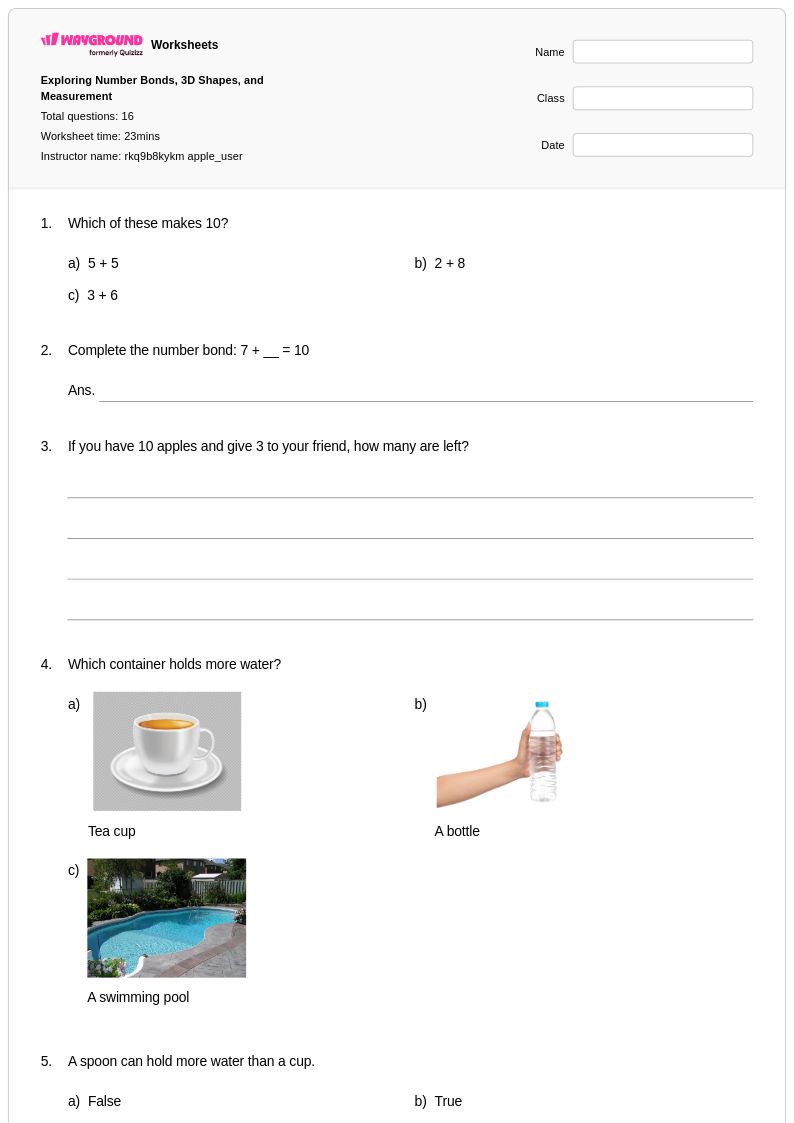
16 Q
2nd
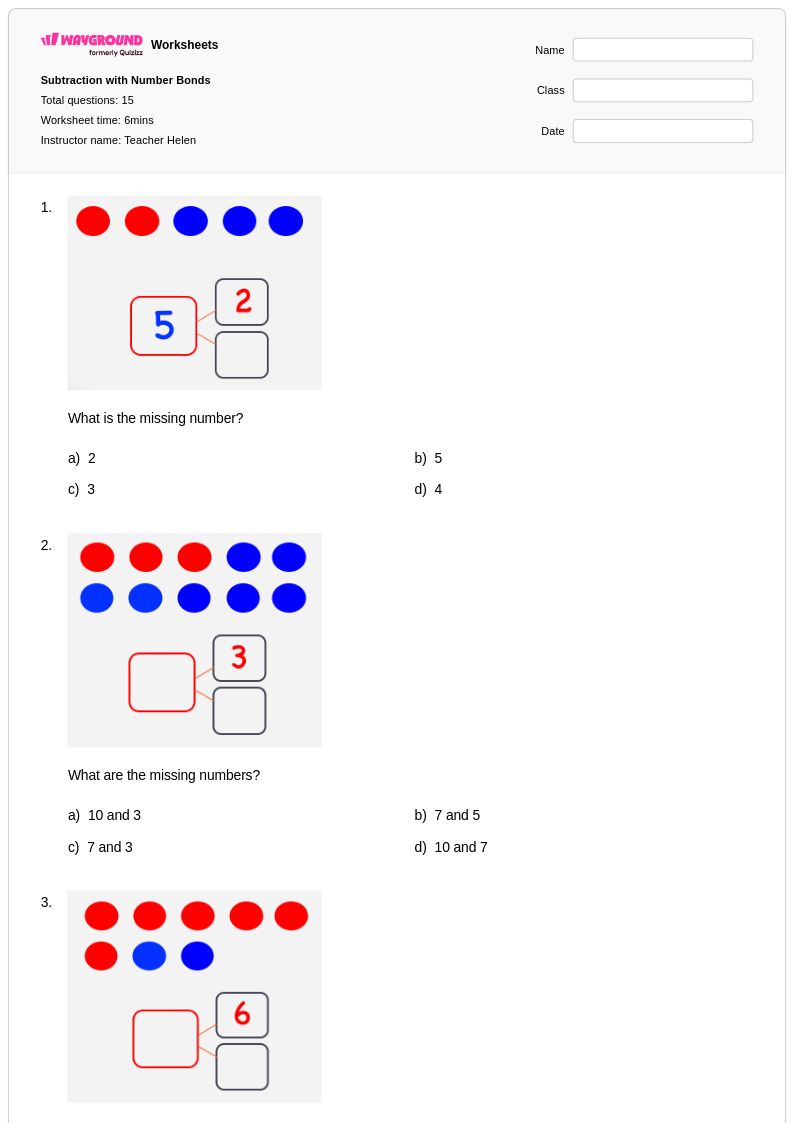
15 Q
2nd
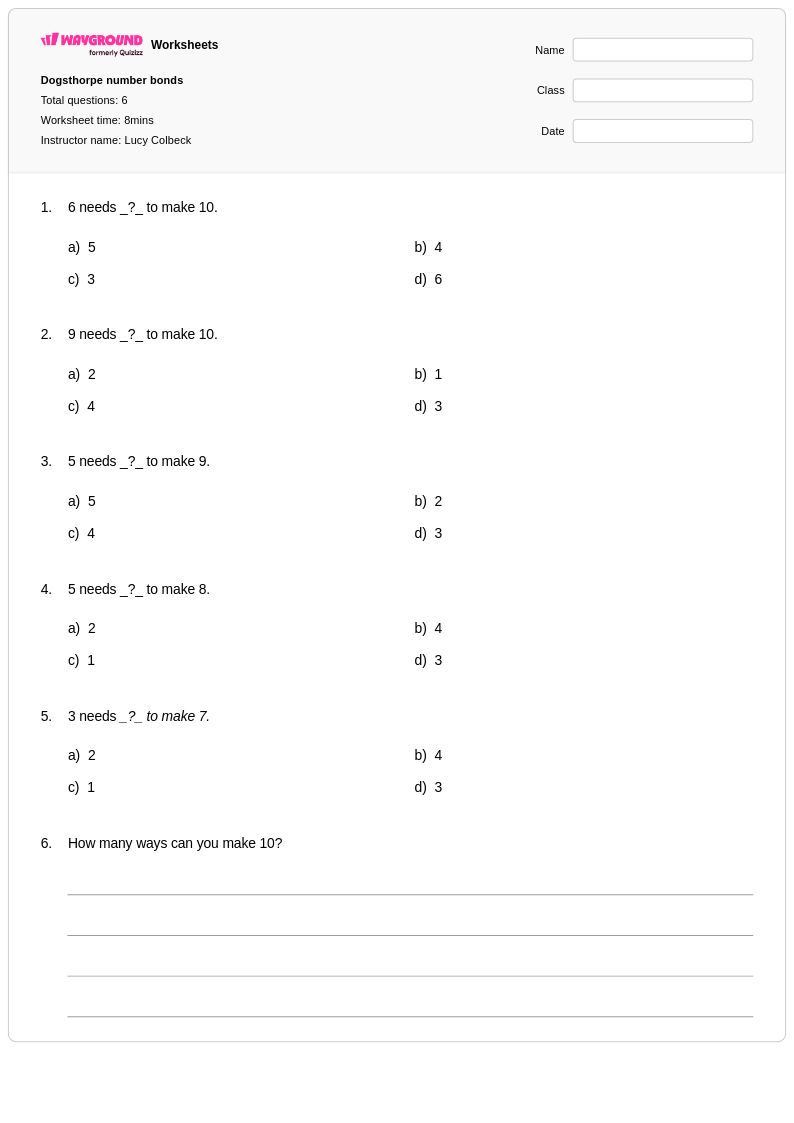
6 Q
2nd
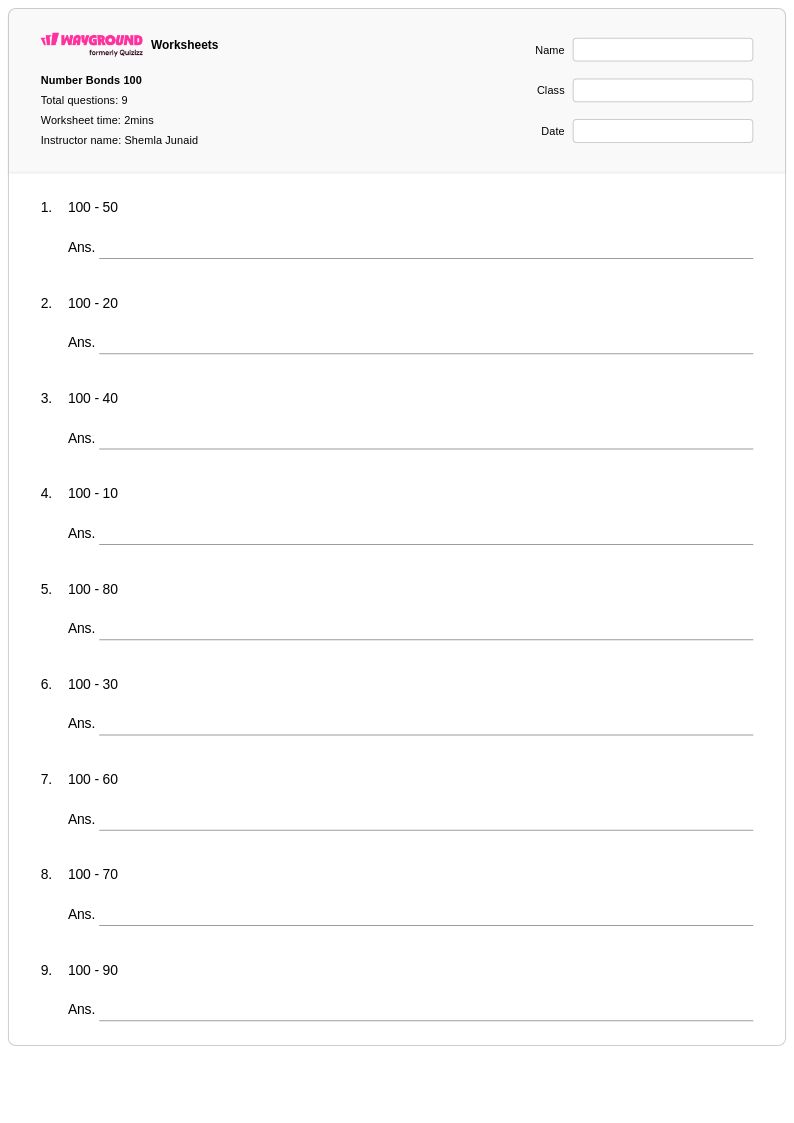
9 Q
1st - 2nd
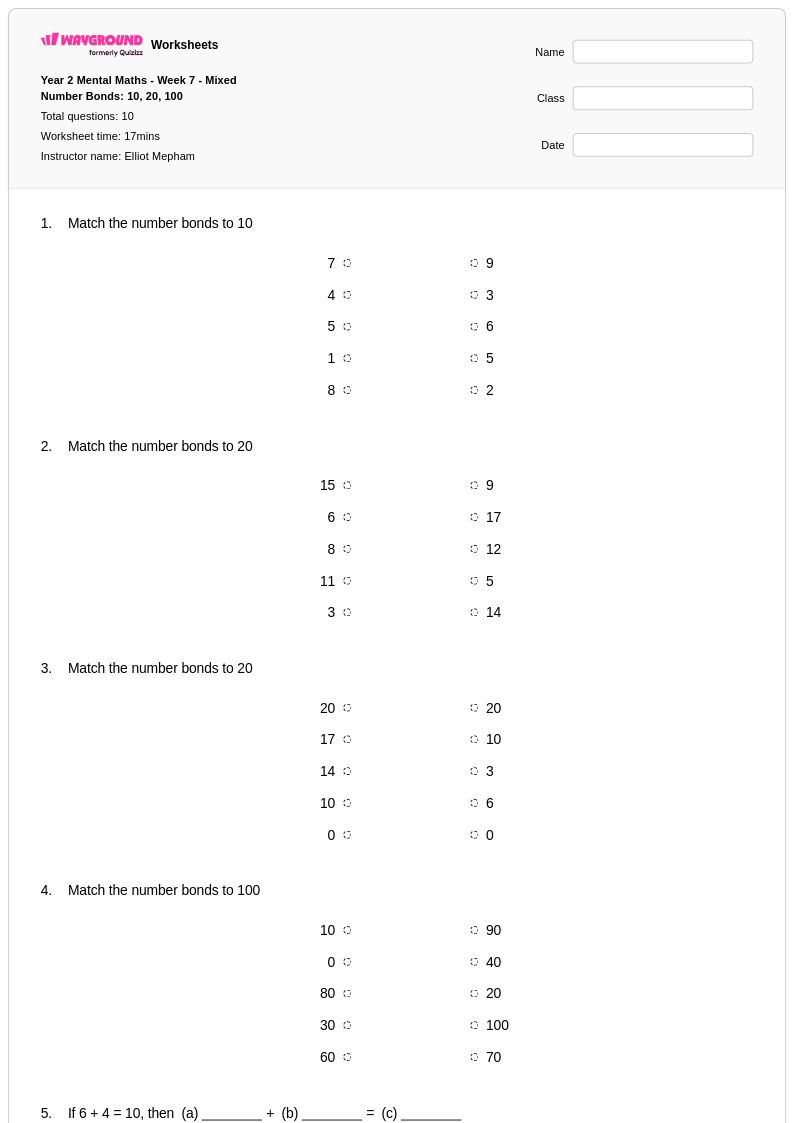
10 Q
2nd
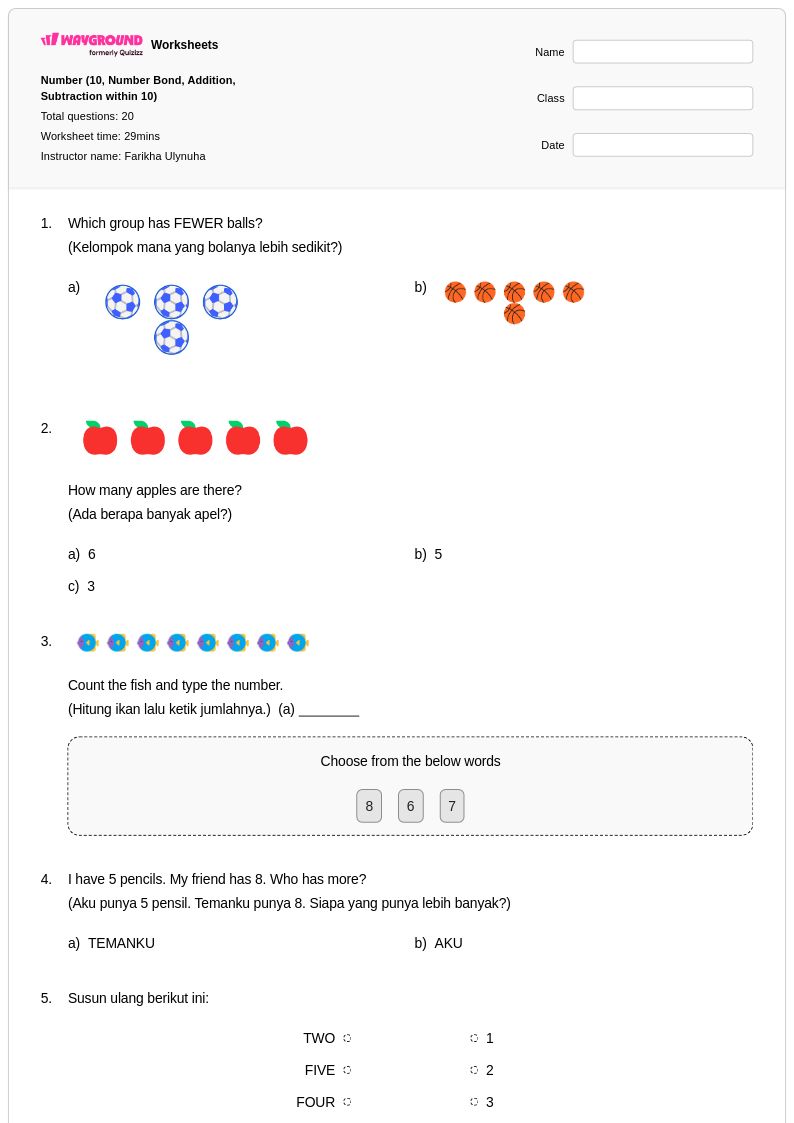
20 Q
1st - 5th
10 Q
2nd
21 Q
2nd
12 Q
2nd
10 Q
2nd
Explore Number Bonds Worksheets by Grades
Explore Other Subject Worksheets for class 2
Explore printable Number Bonds worksheets for Class 2
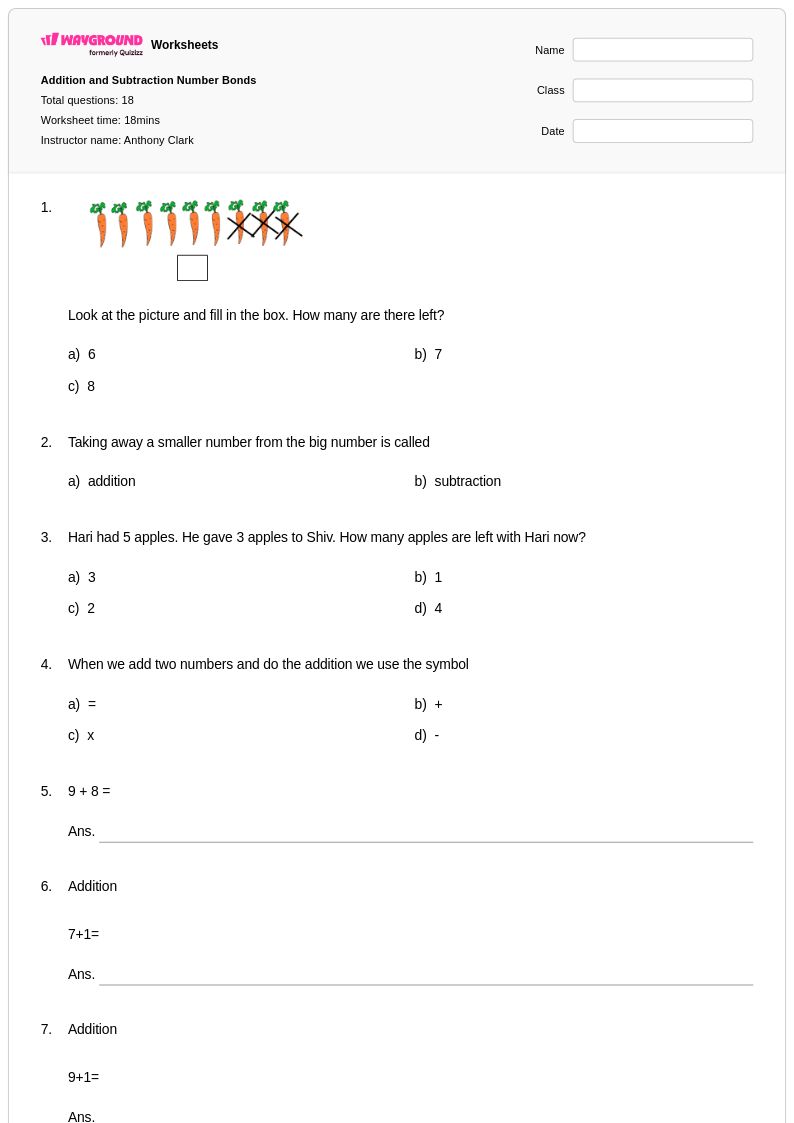
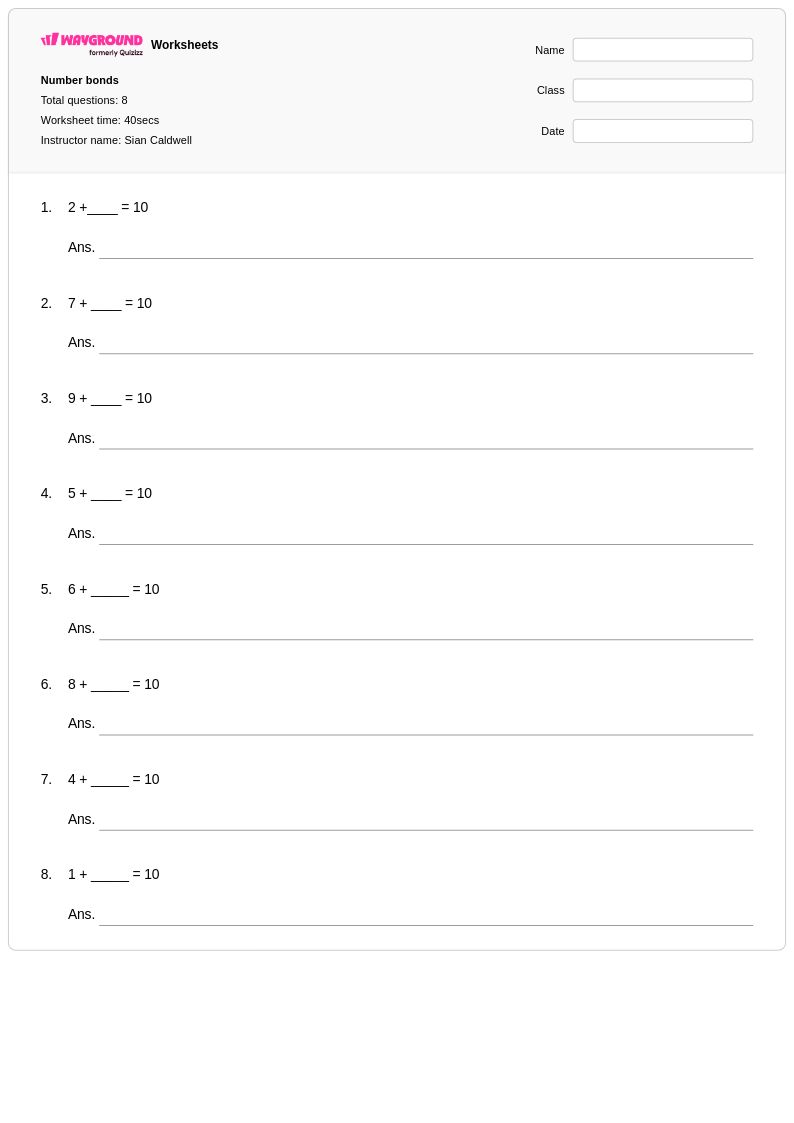
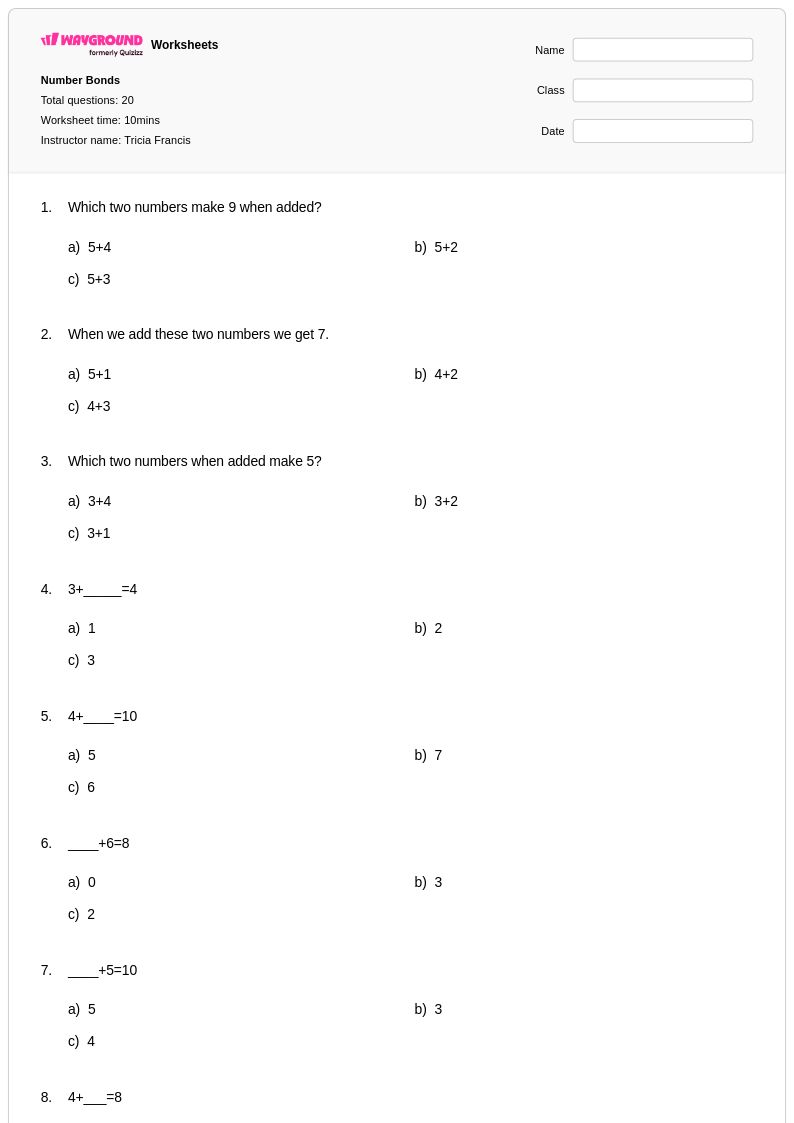
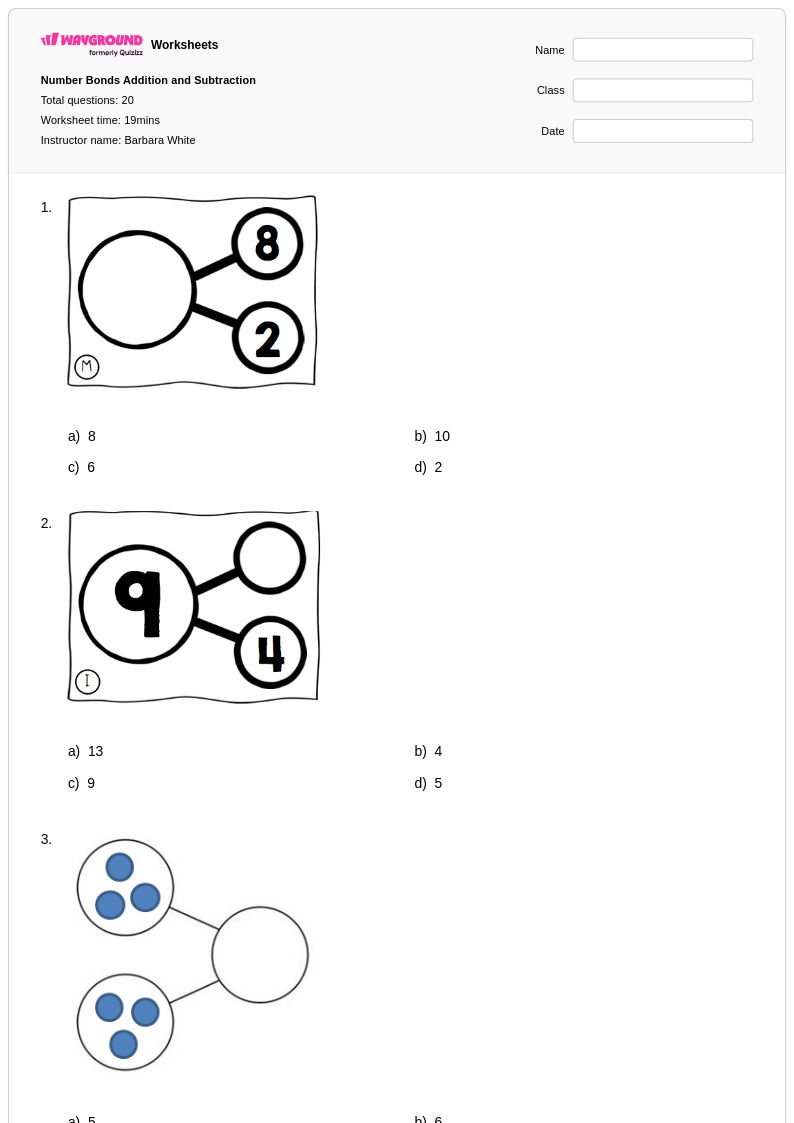
Number bonds worksheets for Class 2 students available through Wayground (formerly Quizizz) provide essential foundational practice for developing computational fluency and number sense. These carefully designed printables focus on helping young learners understand the relationships between numbers and how they combine to form specific totals, particularly emphasizing bonds to 10 and 20. Students work through systematic practice problems that strengthen their ability to quickly recognize number partnerships, such as understanding that 7 + 3 = 10 or that 15 can be decomposed into 8 + 7. Each worksheet includes comprehensive answer keys and is available as free pdf downloads, making it simple for educators to incorporate targeted number bond practice into daily math instruction while building the mental math strategies essential for future success with mixed operations.
Wayground (formerly Quizizz) empowers teachers with access to millions of educator-created number bond resources that streamline lesson planning and differentiated instruction for Class 2 mathematics. The platform's robust search and filtering capabilities allow teachers to quickly locate worksheets aligned with specific standards and learning objectives, while built-in differentiation tools enable seamless customization for students at varying skill levels. Whether delivered as printable pdf worksheets for independent practice or integrated into digital learning environments, these resources support comprehensive remediation for struggling learners and enrichment opportunities for advanced students. Teachers can efficiently organize targeted skill practice sessions, track student progress through systematic number bond development, and ensure that all learners build the strong computational foundation necessary for tackling more complex mixed operations as they advance through elementary mathematics.
FAQs
How are number bonds used in second grade?
How do I teach students to use number bonds for two-digit addition?
What kind of number bond practice is best for second graders?
My second graders know their number bonds to 10, so why are they still struggling with addition?
How can I use this Grade 2 number bonds worksheet with my students?
How can I support struggling students with second-grade number bonds?