
15 Q
2nd - 3rd
20 Q
1st - 4th
5 Q
3rd
5 Q
3rd
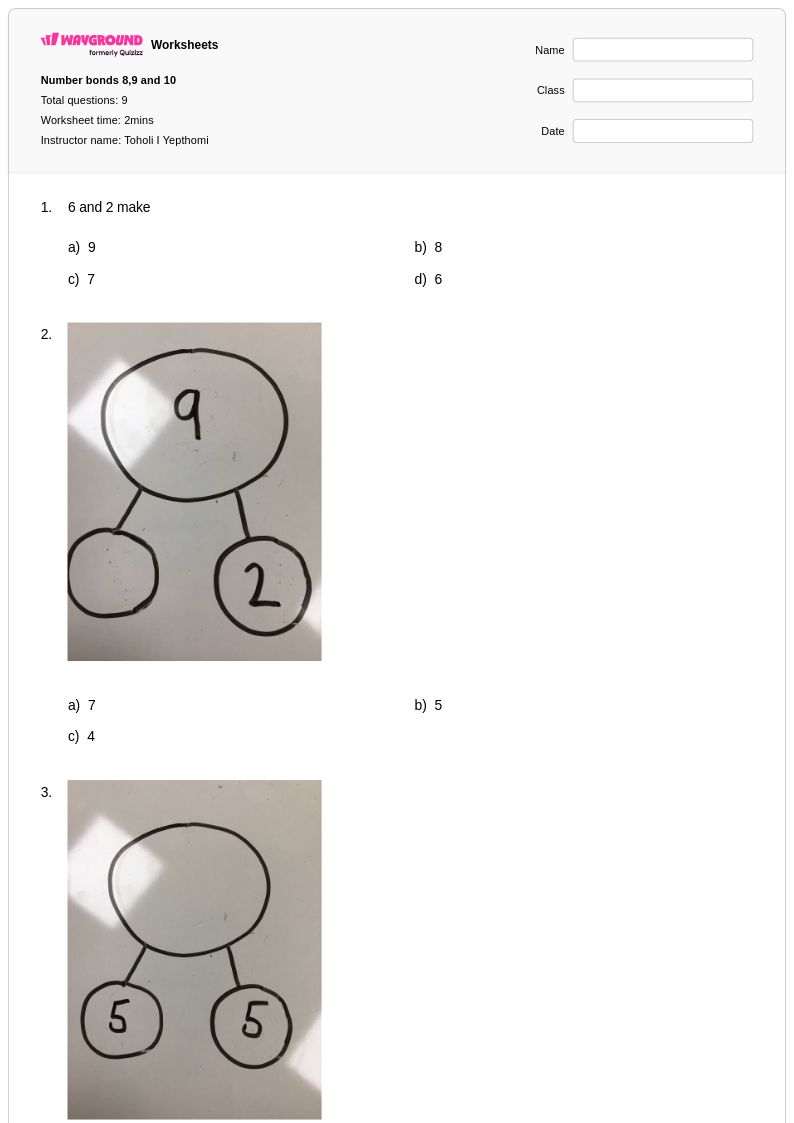
9 Q
KG - 3rd
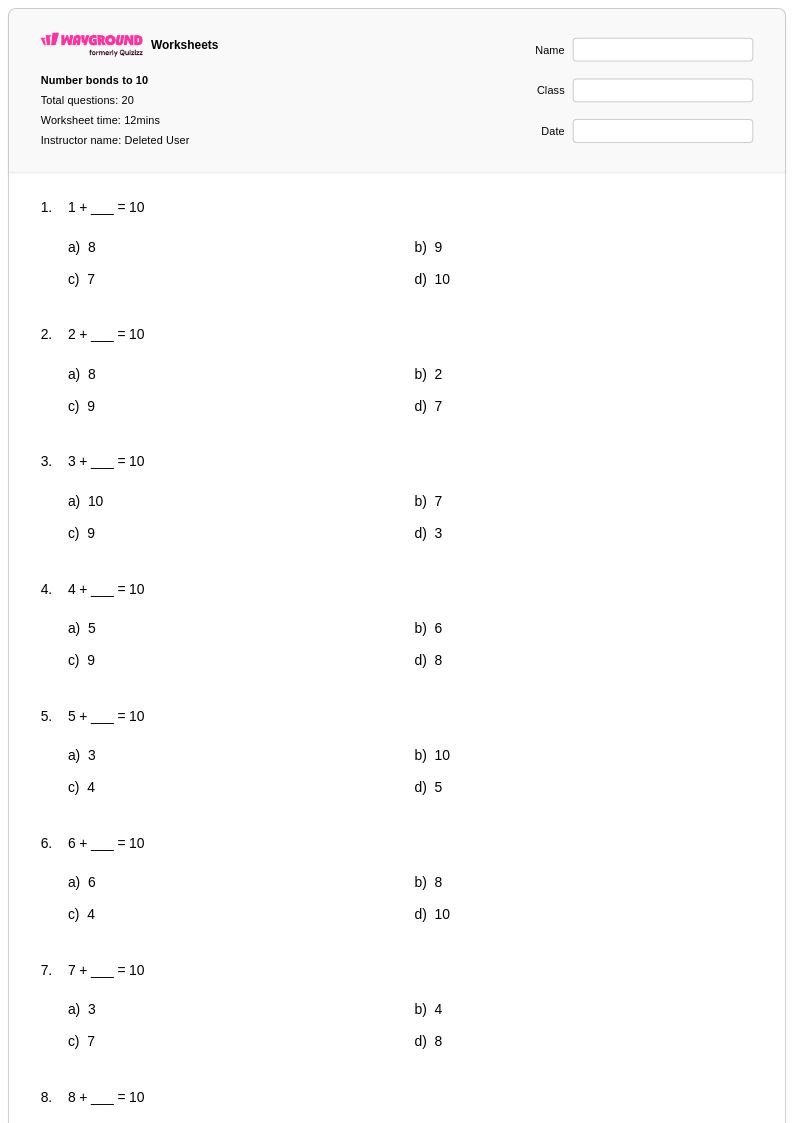
20 Q
KG - 6th
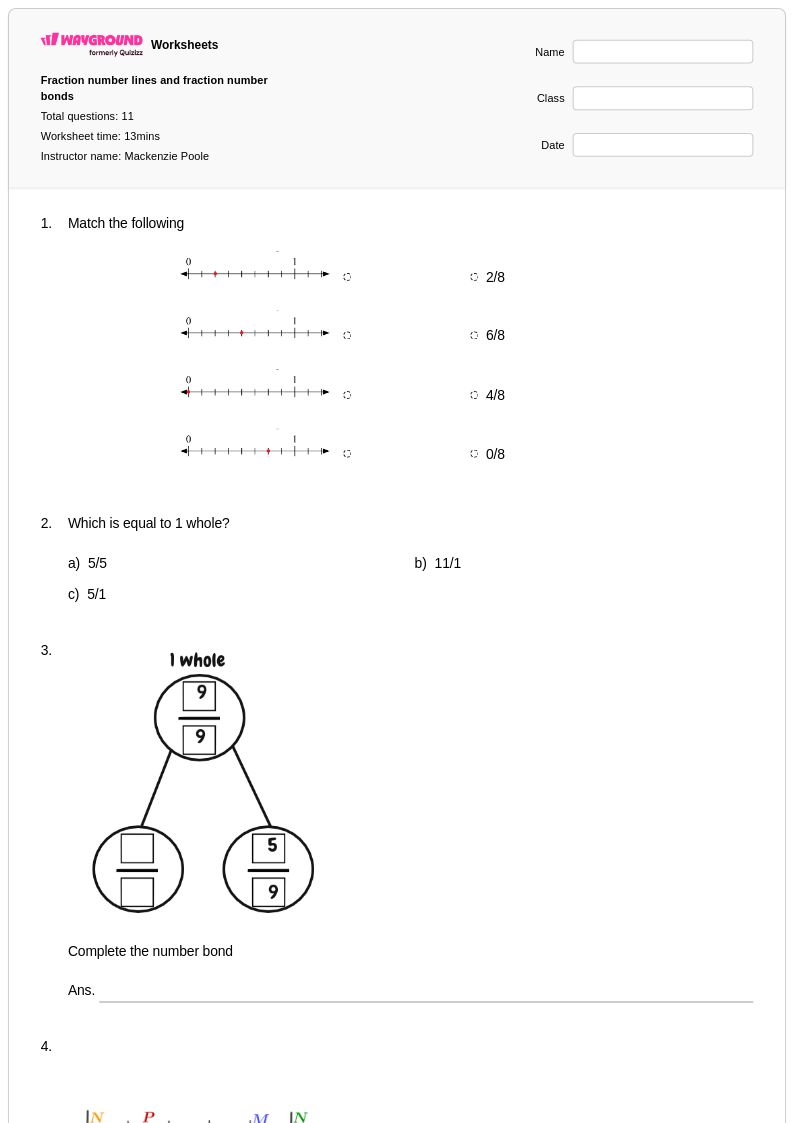
11 Q
3rd
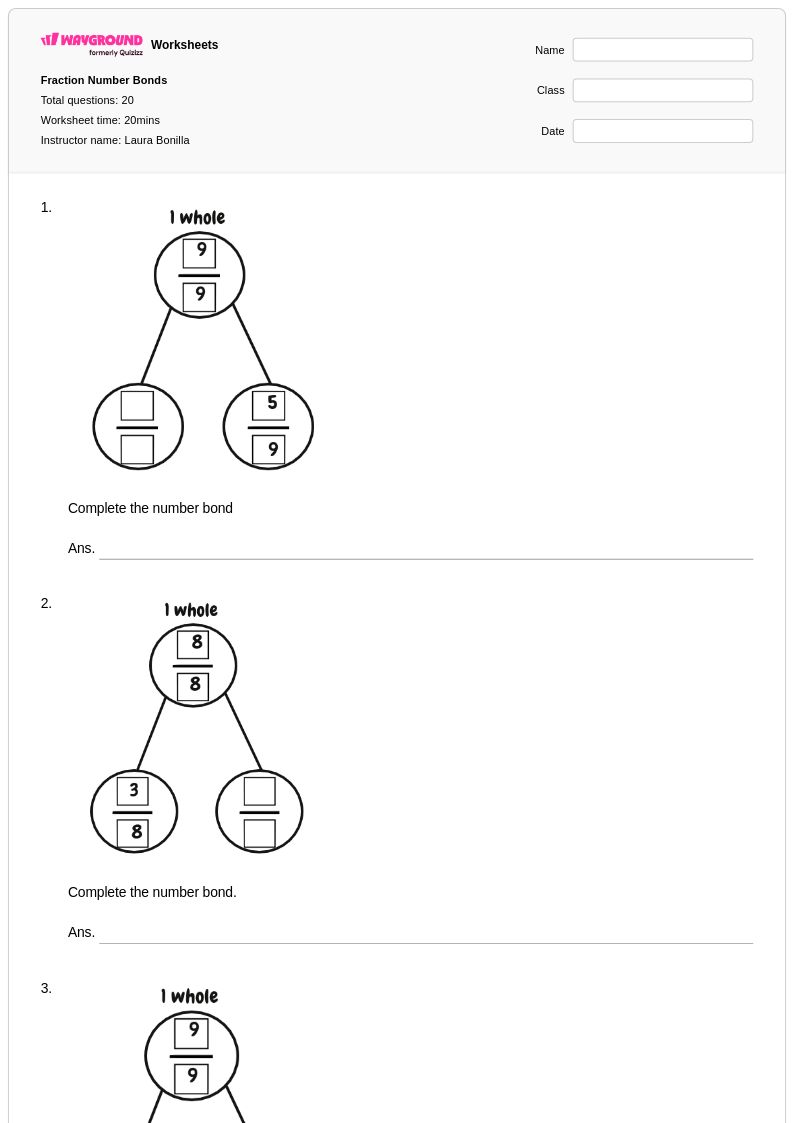
20 Q
3rd
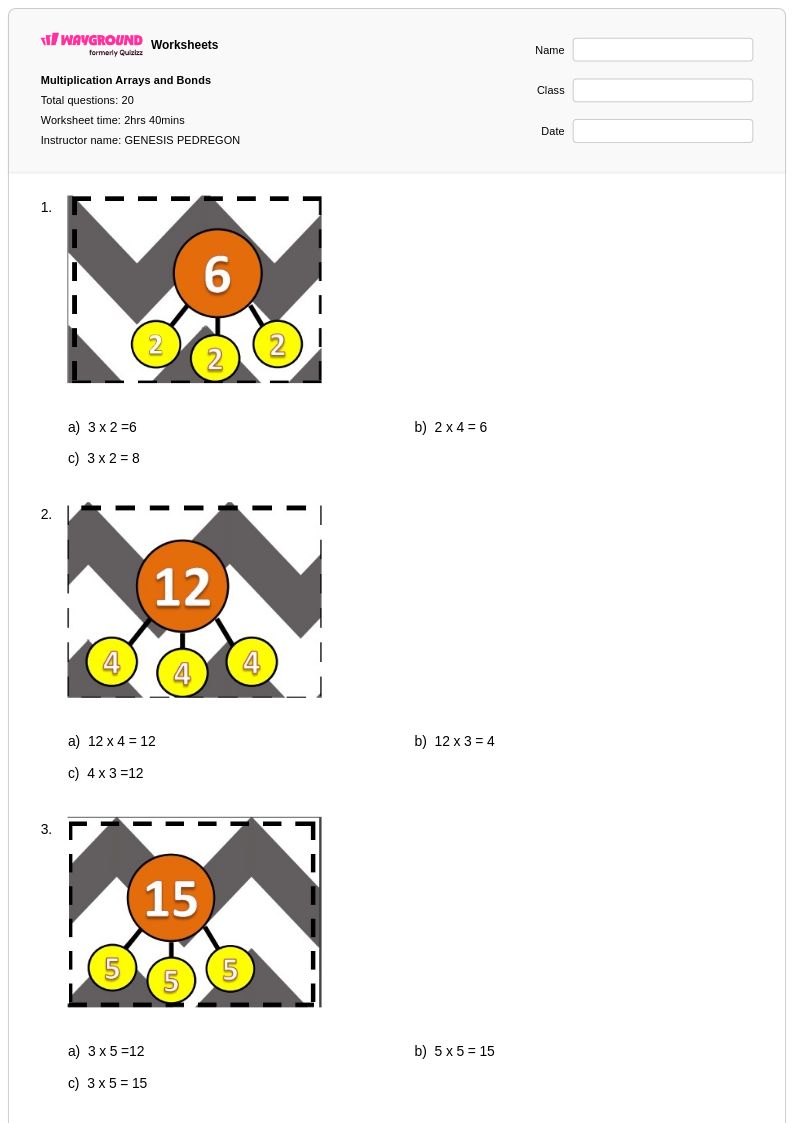
20 Q
3rd
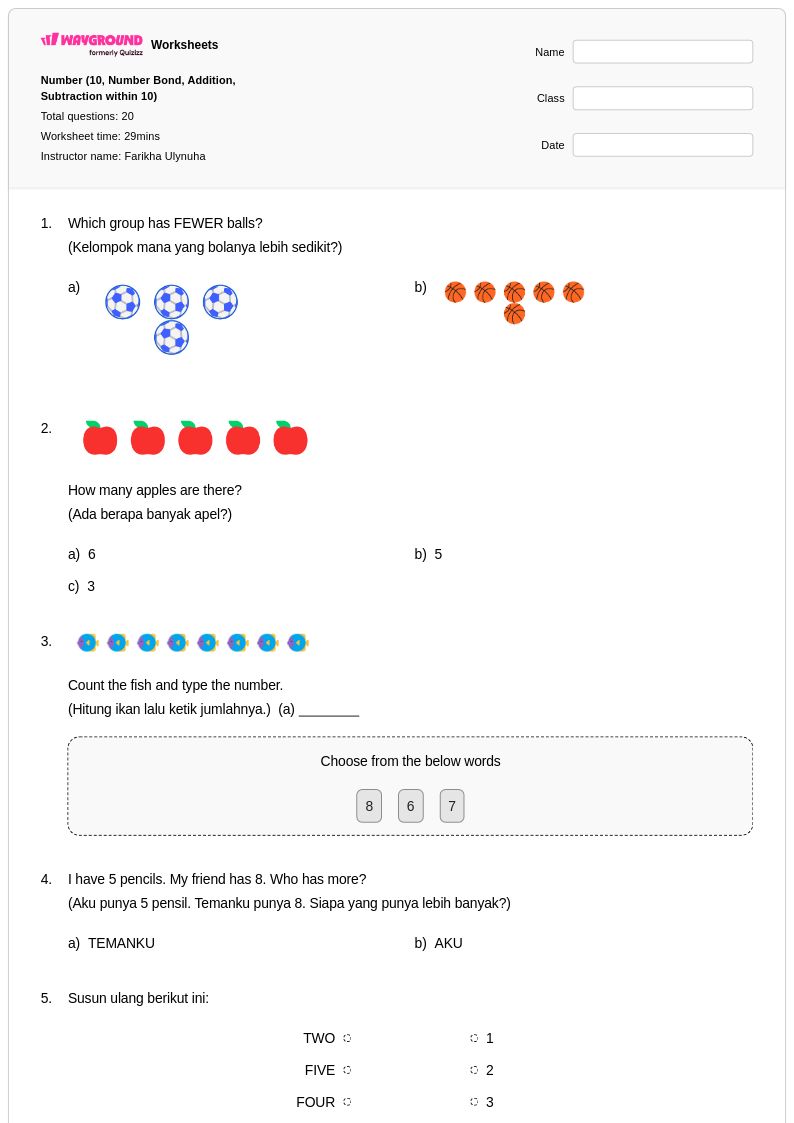
20 Q
1st - 5th
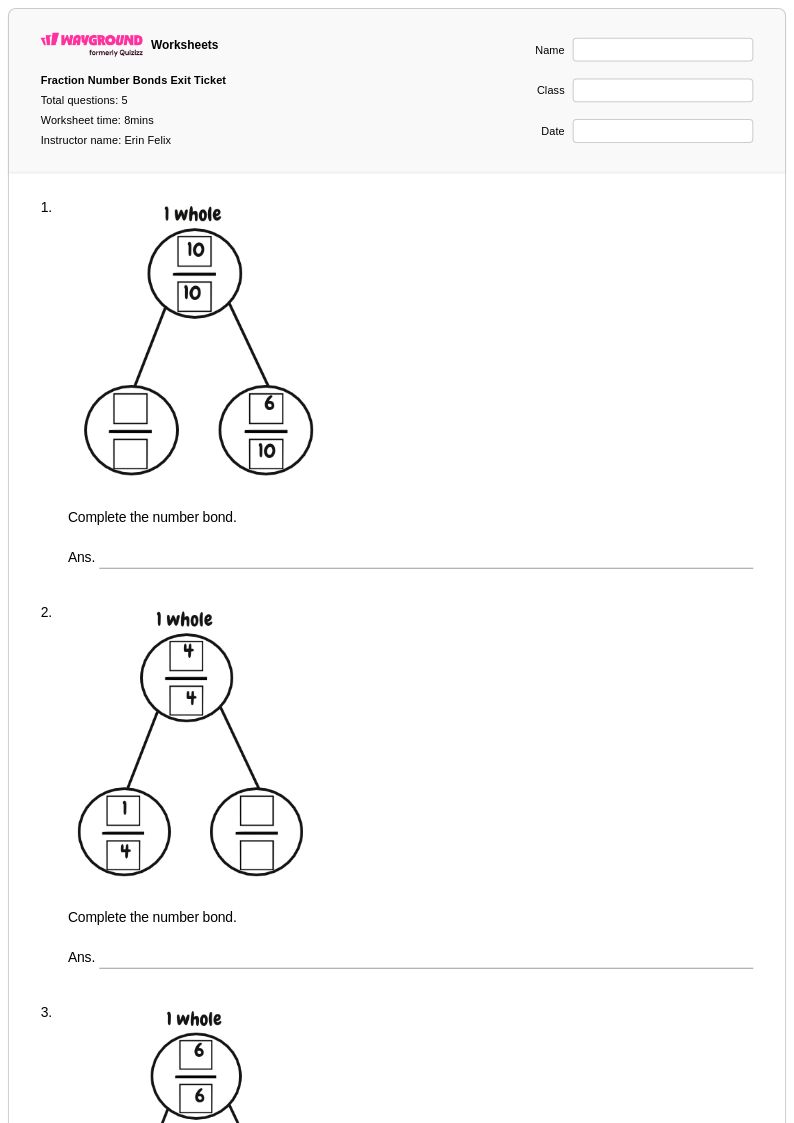
5 Q
3rd
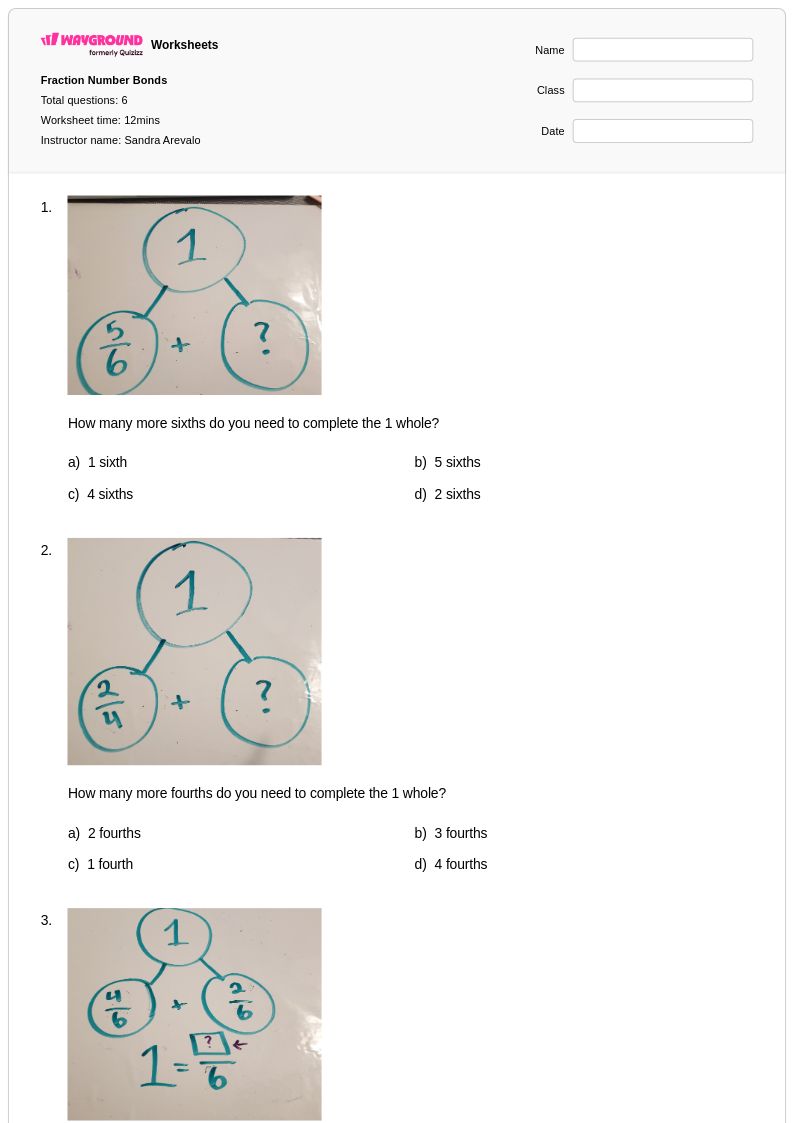
6 Q
3rd
13 Q
3rd
13 Q
3rd
18 Q
3rd
13 Q
3rd
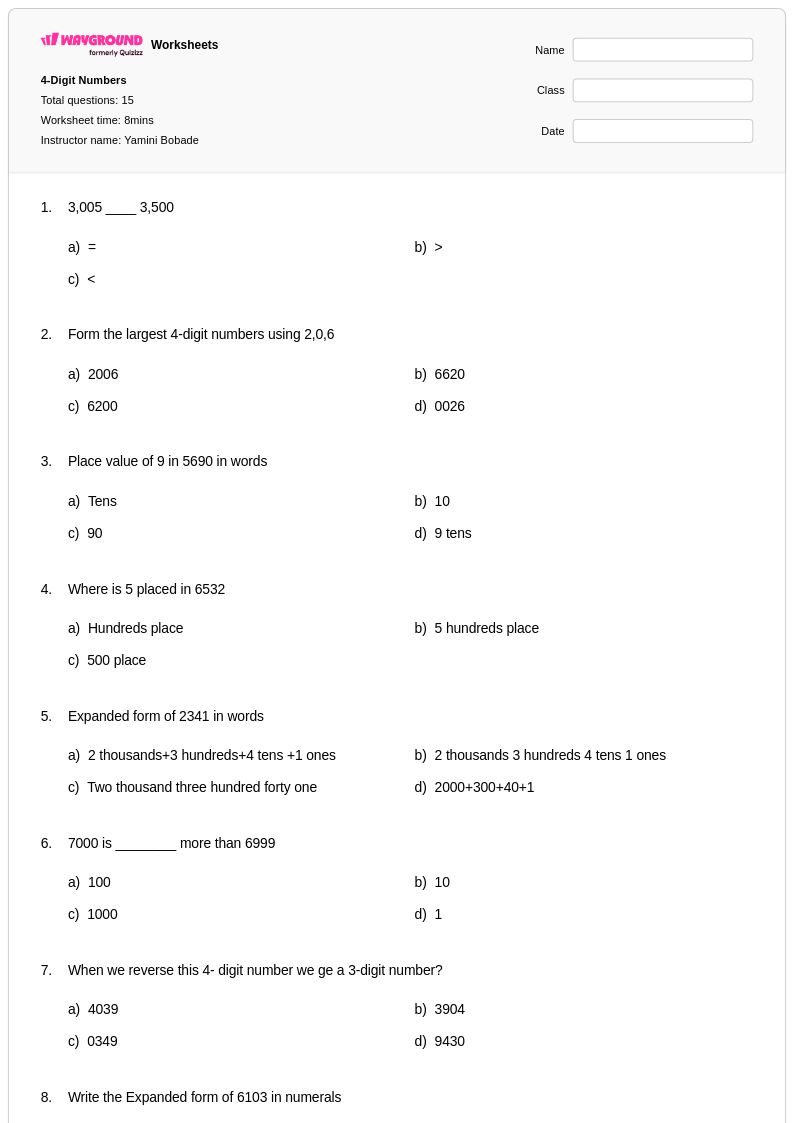
15 Q
3rd - 4th
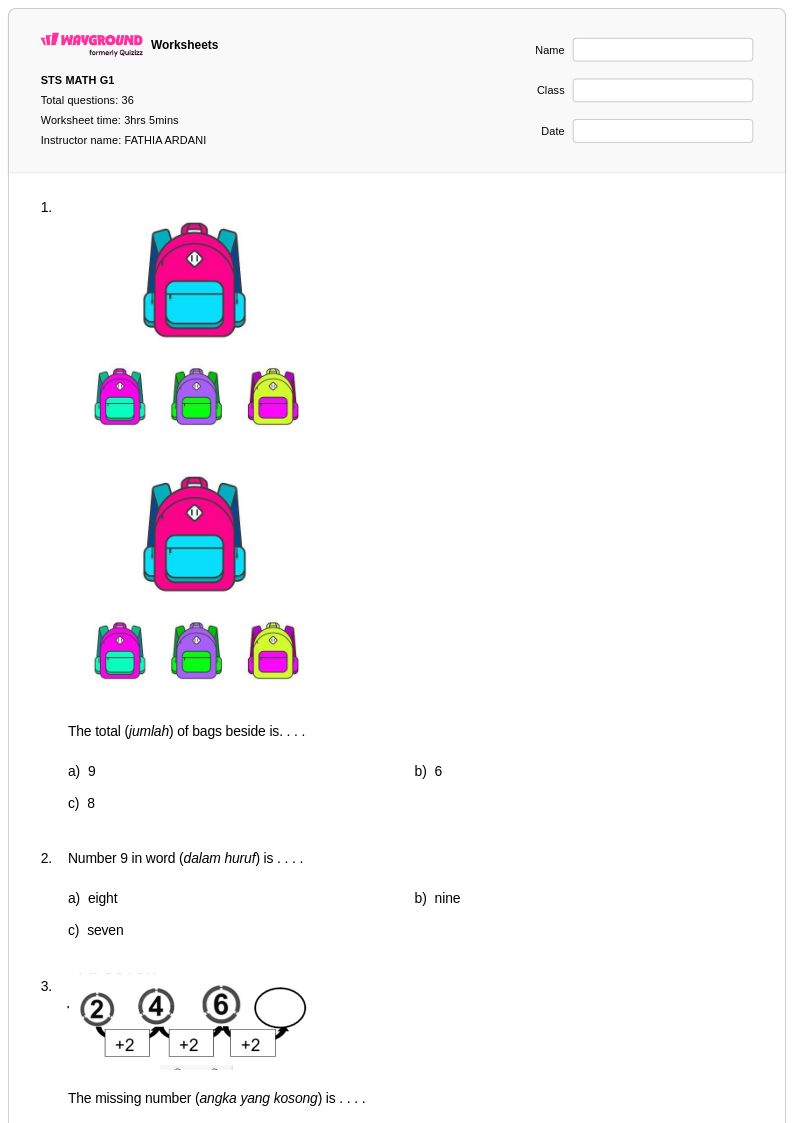
36 Q
1st - Uni
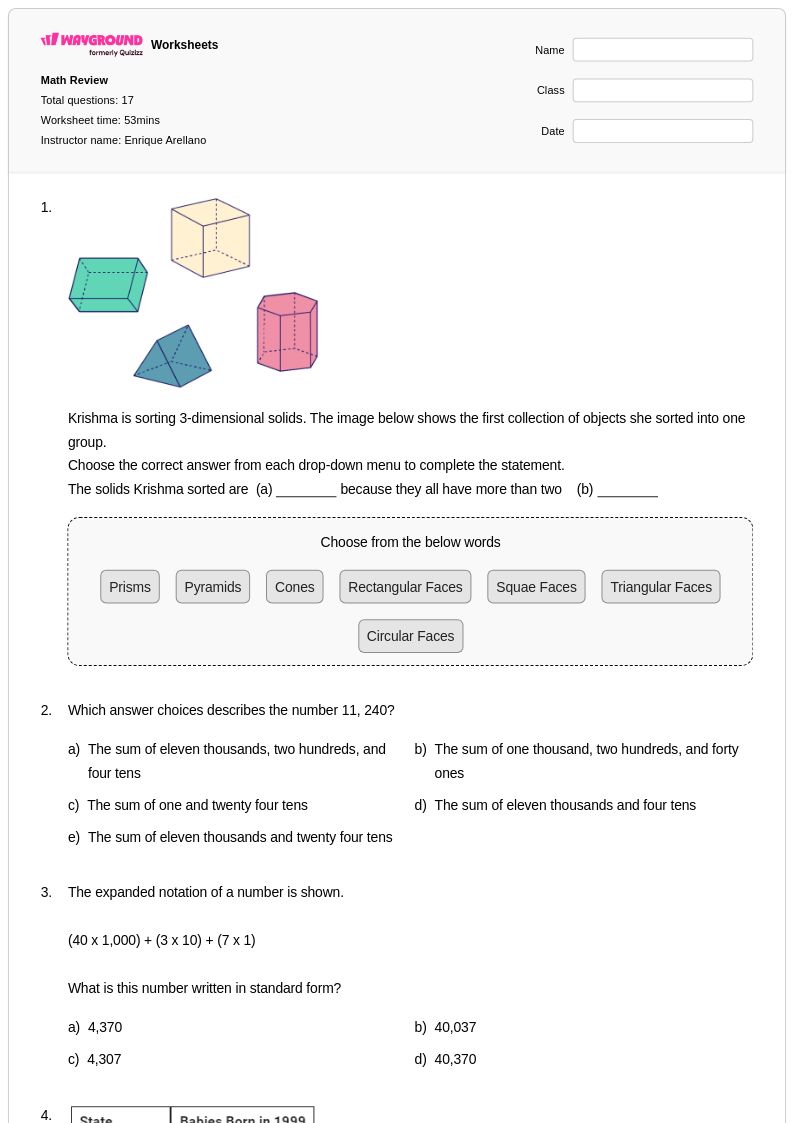
17 Q
3rd
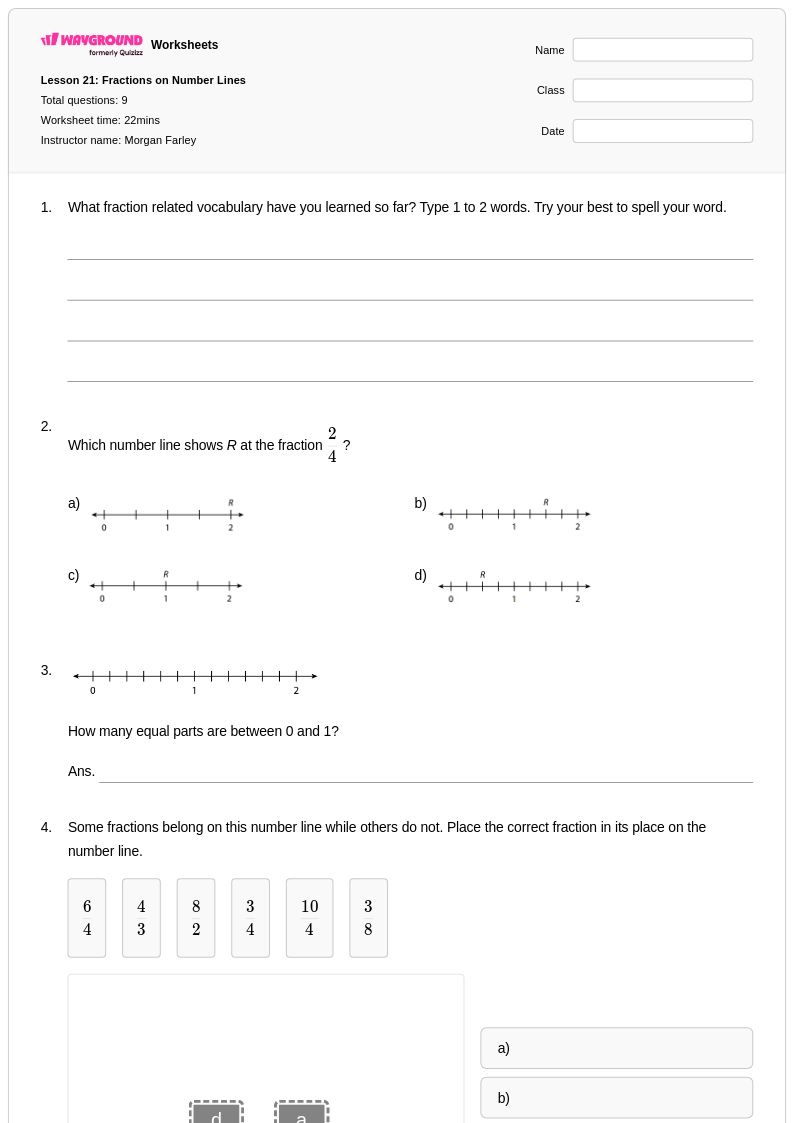
16 Q
3rd
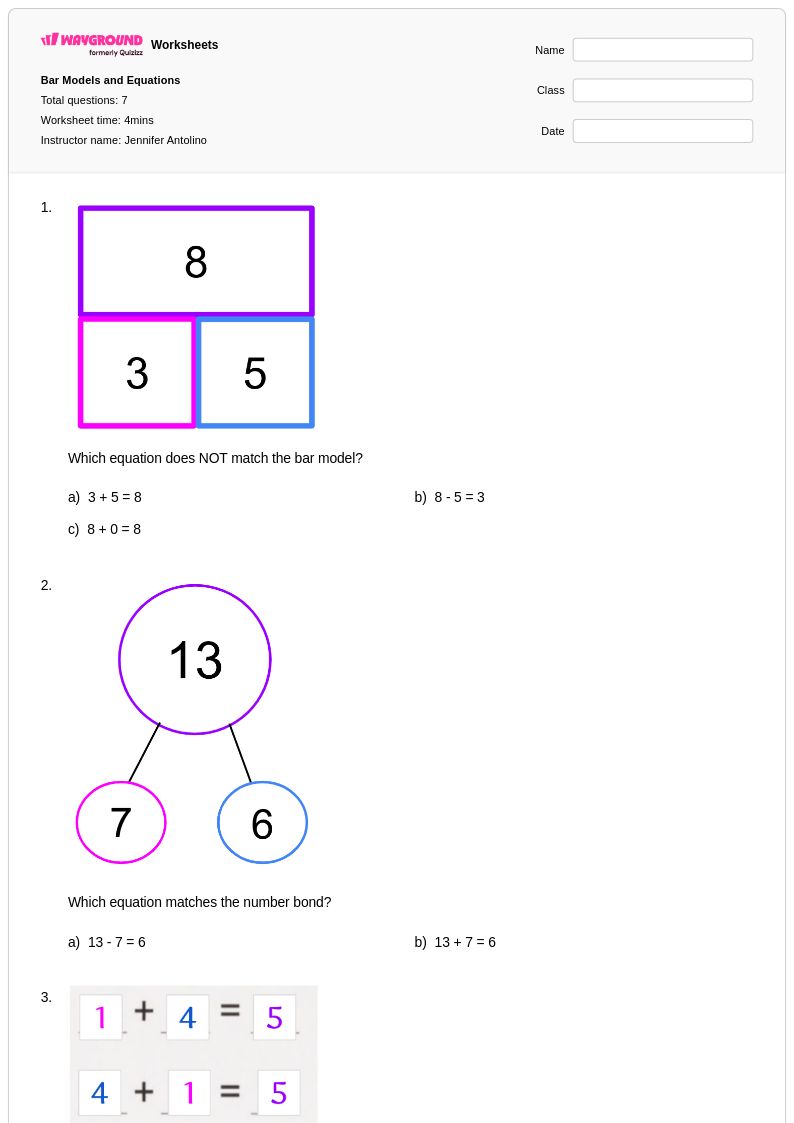
7 Q
1st - 3rd
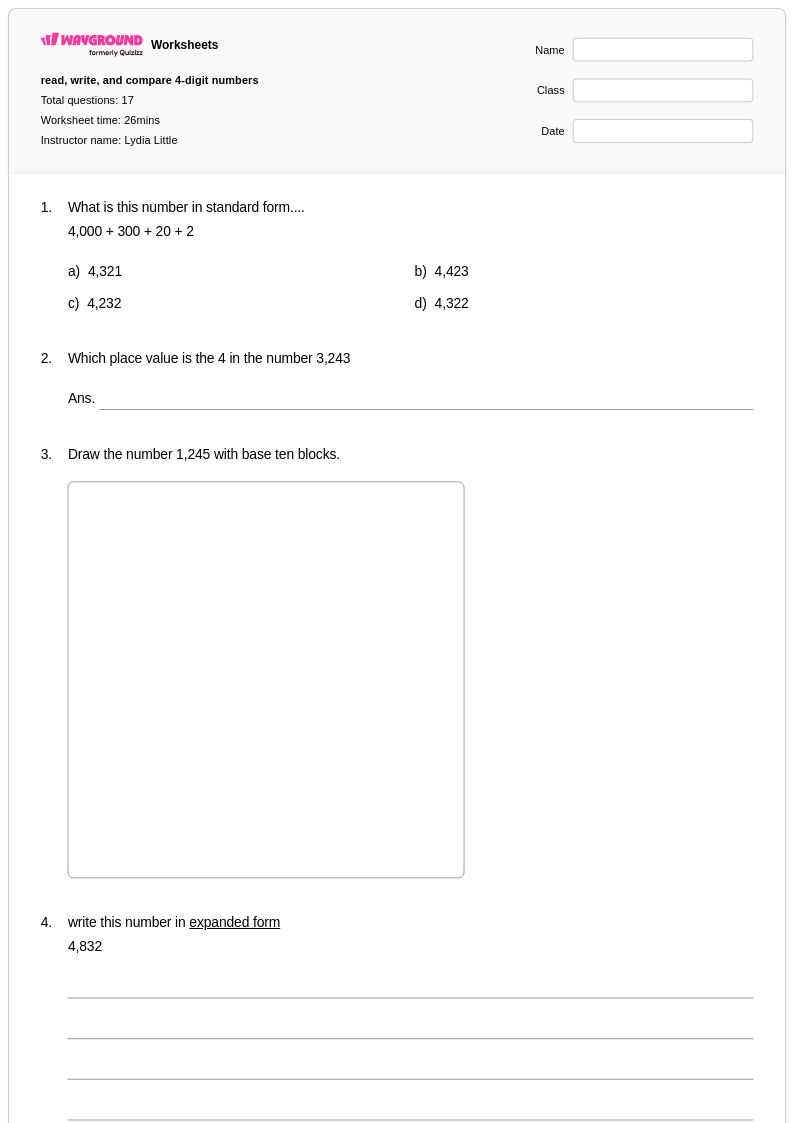
17 Q
3rd
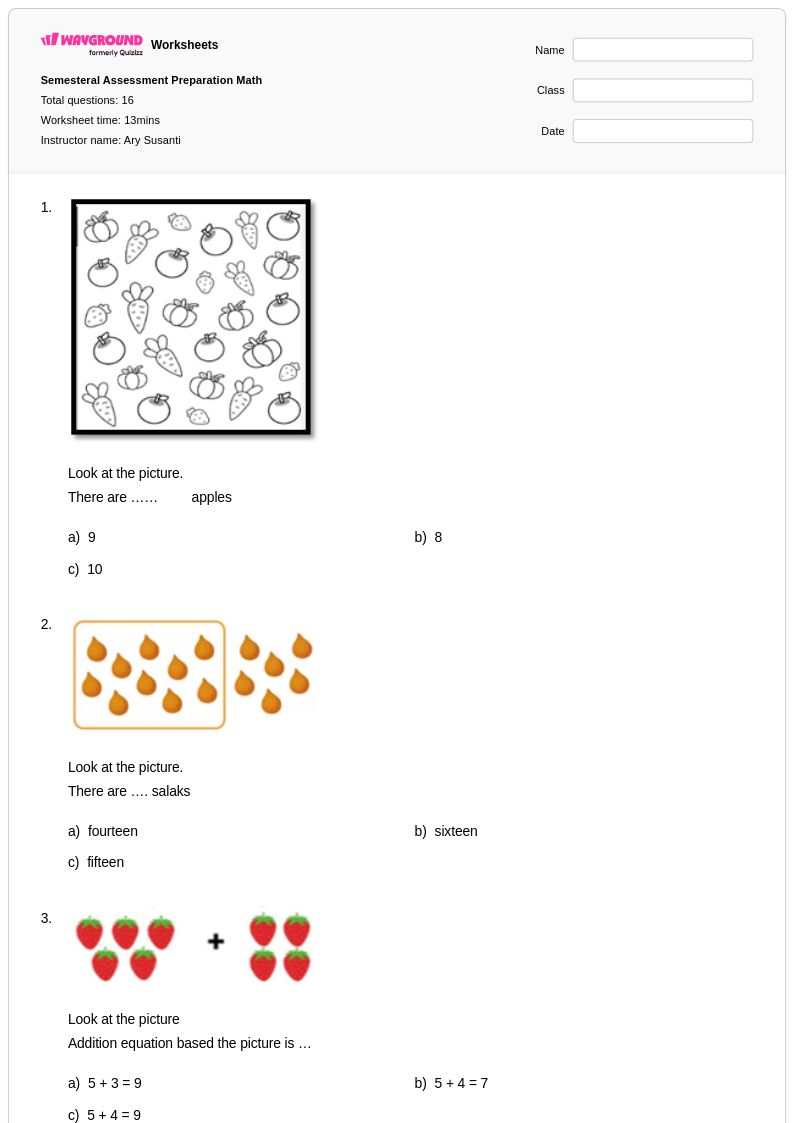
16 Q
1st - Uni
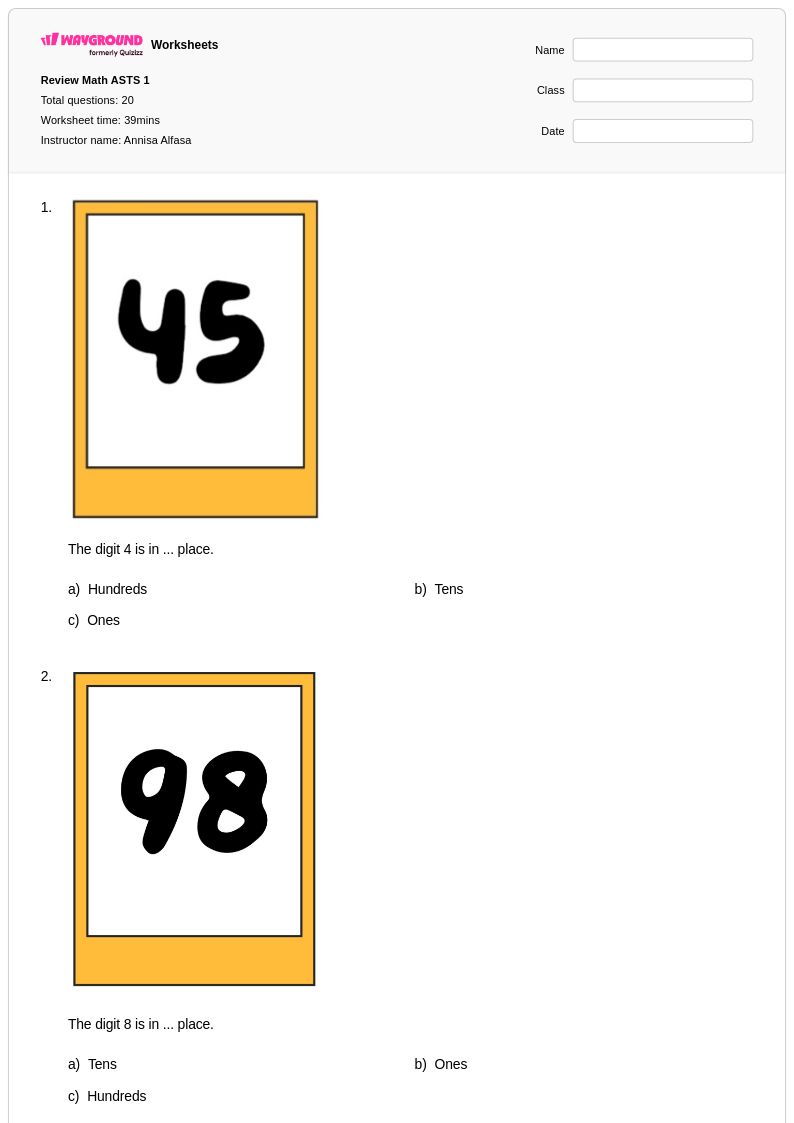
20 Q
2nd - Uni
Explore Number Bonds Worksheets by Grades
Explore Other Subject Worksheets for class 3
Explore printable Number Bonds worksheets for Class 3
Number bonds worksheets for Class 3 students available through Wayground (formerly Quizizz) provide essential practice in understanding the fundamental relationships between numbers and their component parts. These comprehensive resources help third-grade learners develop automaticity with basic addition and subtraction facts by exploring how numbers can be broken down and recombined in different ways. The printable worksheets feature systematically designed practice problems that strengthen mental math skills, number sense, and computational fluency through visual representations, missing addend exercises, and fact family explorations. Each worksheet collection includes detailed answer keys and free pdf downloads, making it simple for educators to implement meaningful number bond practice that builds the foundational skills necessary for more complex mathematical operations.
Wayground (formerly Quizizz) empowers teachers with access to millions of educator-created number bond resources that can be seamlessly integrated into Class 3 mathematics instruction. The platform's robust search and filtering capabilities allow instructors to quickly locate worksheets aligned with specific learning standards and differentiate instruction based on individual student needs. Teachers can customize existing materials or create new practice sets that target particular number bond concepts, whether for whole-class instruction, small group remediation, or independent enrichment activities. The flexible format options include both printable pdf versions for traditional paper-and-pencil work and digital formats for interactive learning experiences, supporting diverse classroom environments and helping educators efficiently plan skill-building activities that meet the varied learning styles and pacing requirements of their third-grade students.
FAQs
Are number bonds still relevant in third grade?
How can I connect number bonds to multiplication and division?
What kind of number bond practice is useful for third graders?
How do I know if a third grader's gaps are related to number bonds?
How can I use this Grade 3 number bonds worksheet?
How does number bond fluency support third-grade math standards?