
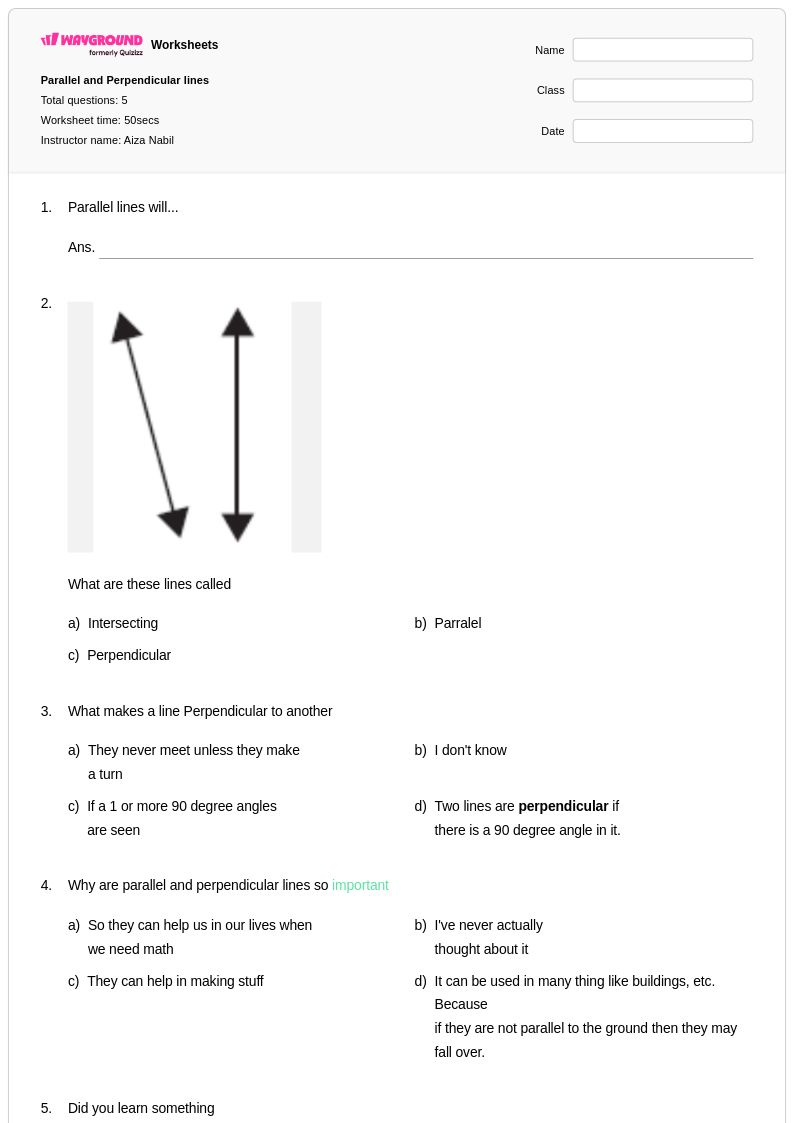
5 Q
3rd - 9th
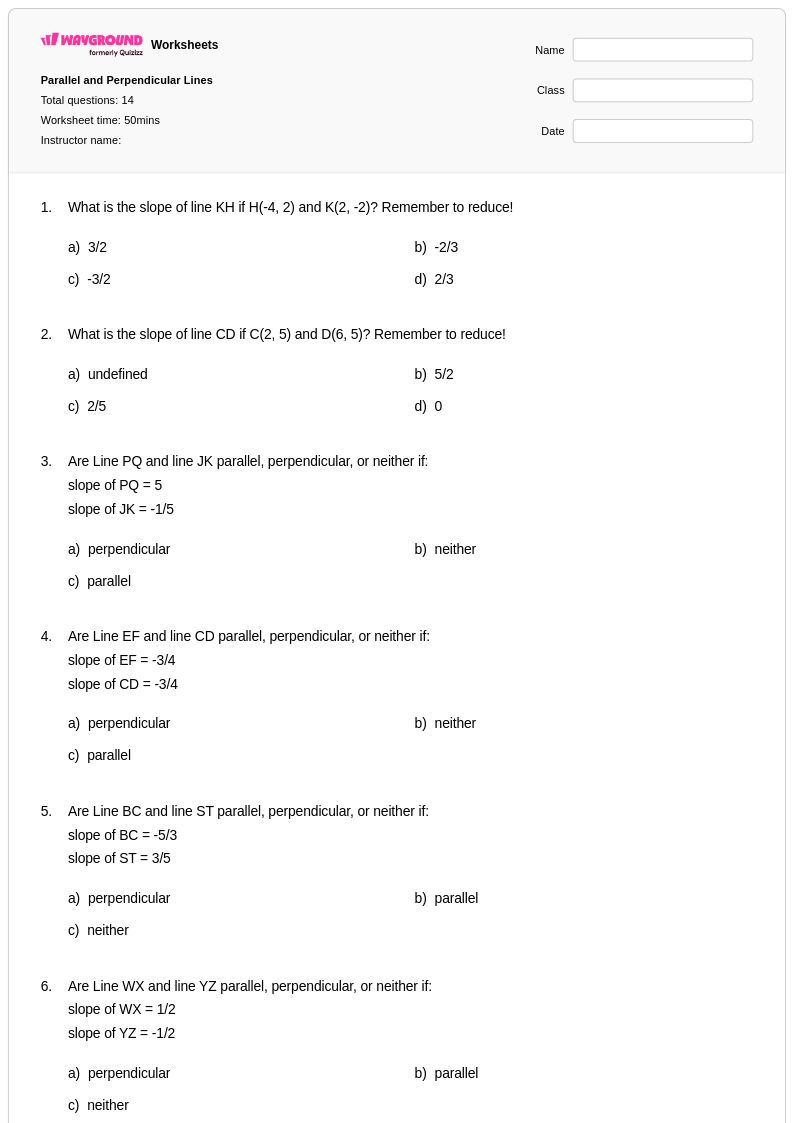
14 Q
6th - 12th
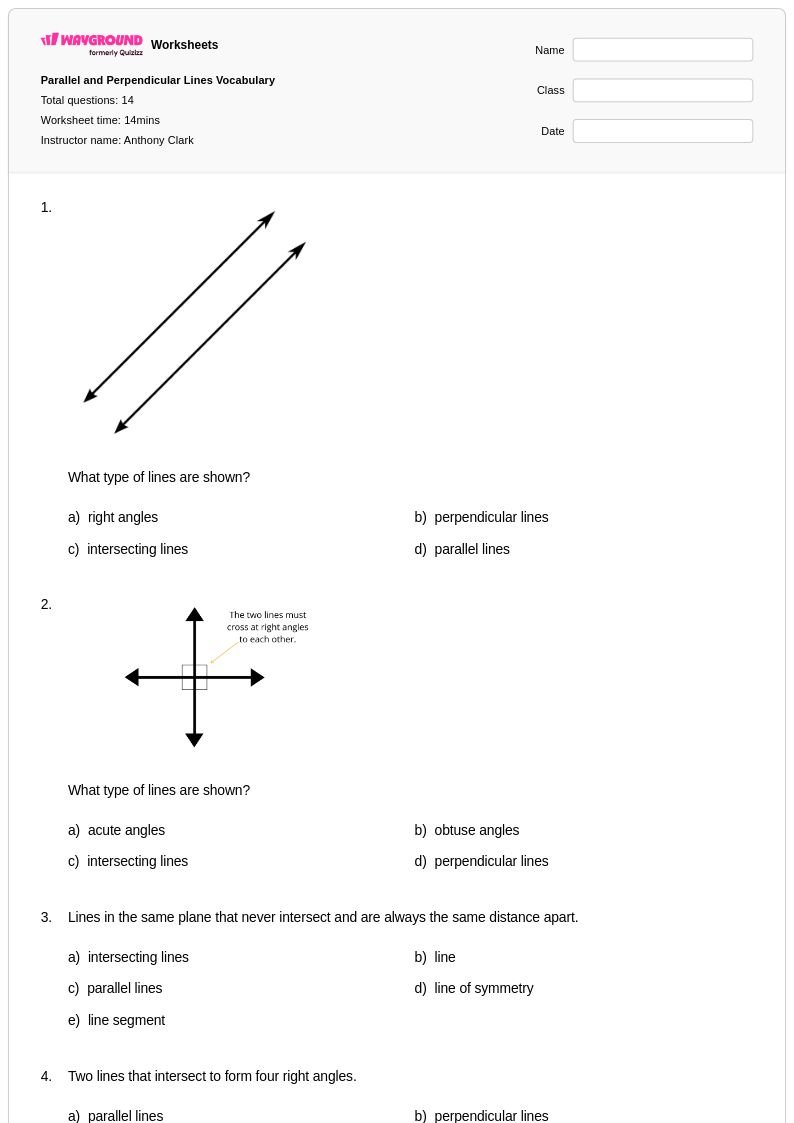
14 Q
4th - Uni
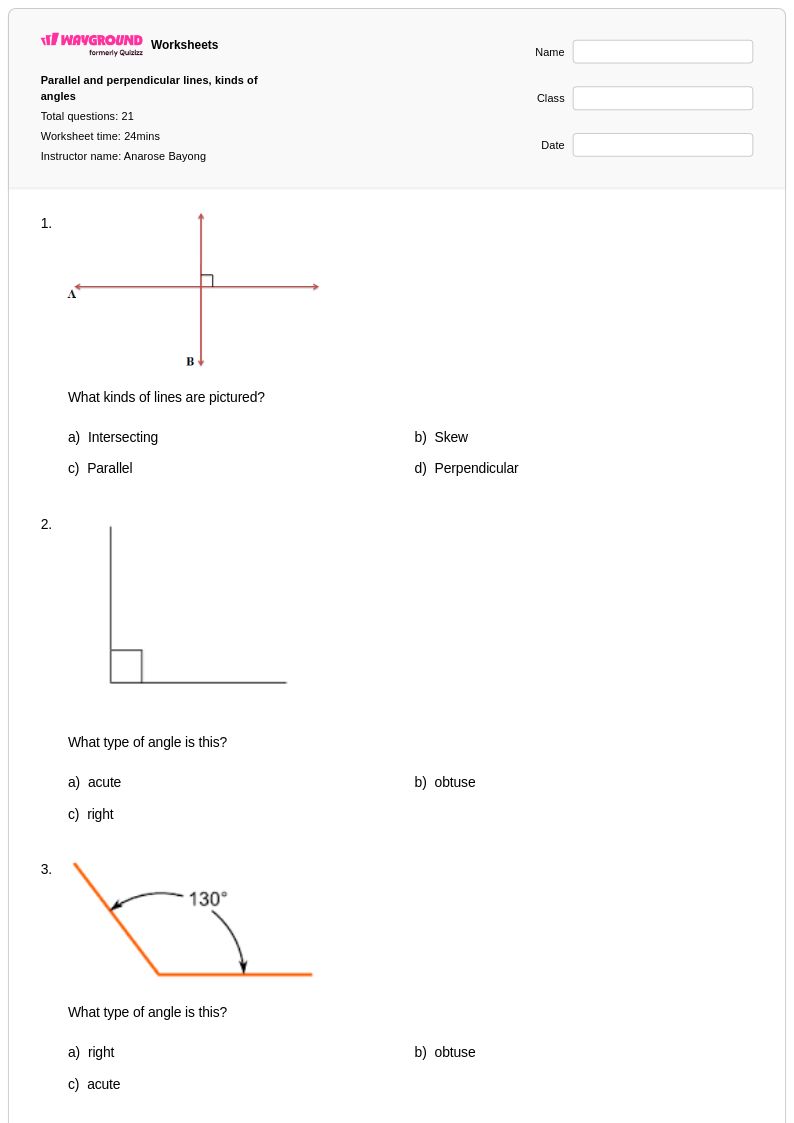
21 Q
5th - 6th
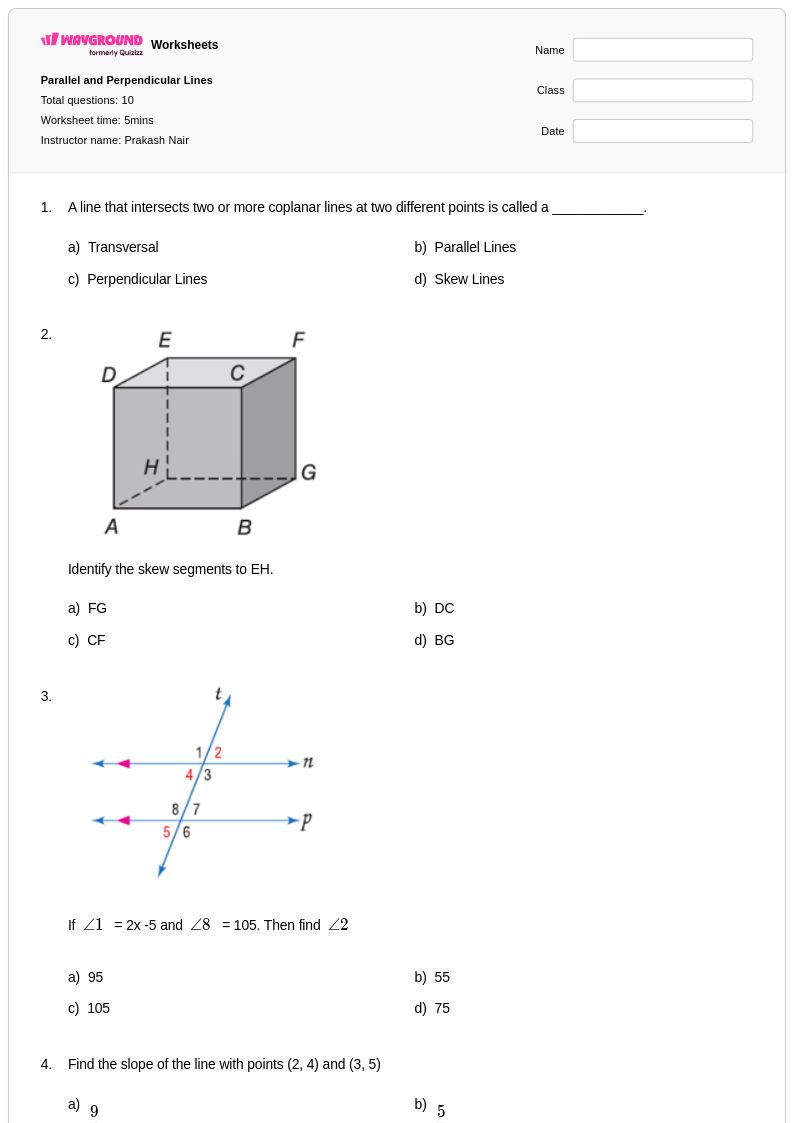
10 Q
6th - 10th
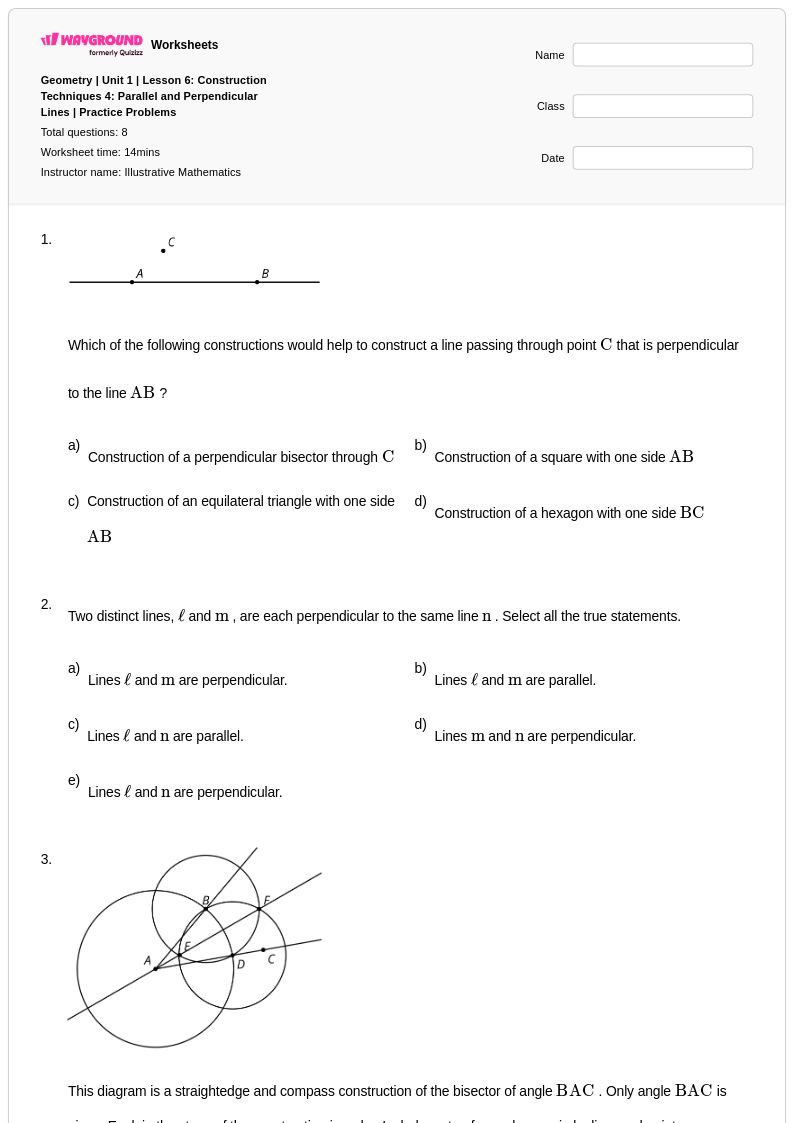
8 Q
6th - Uni
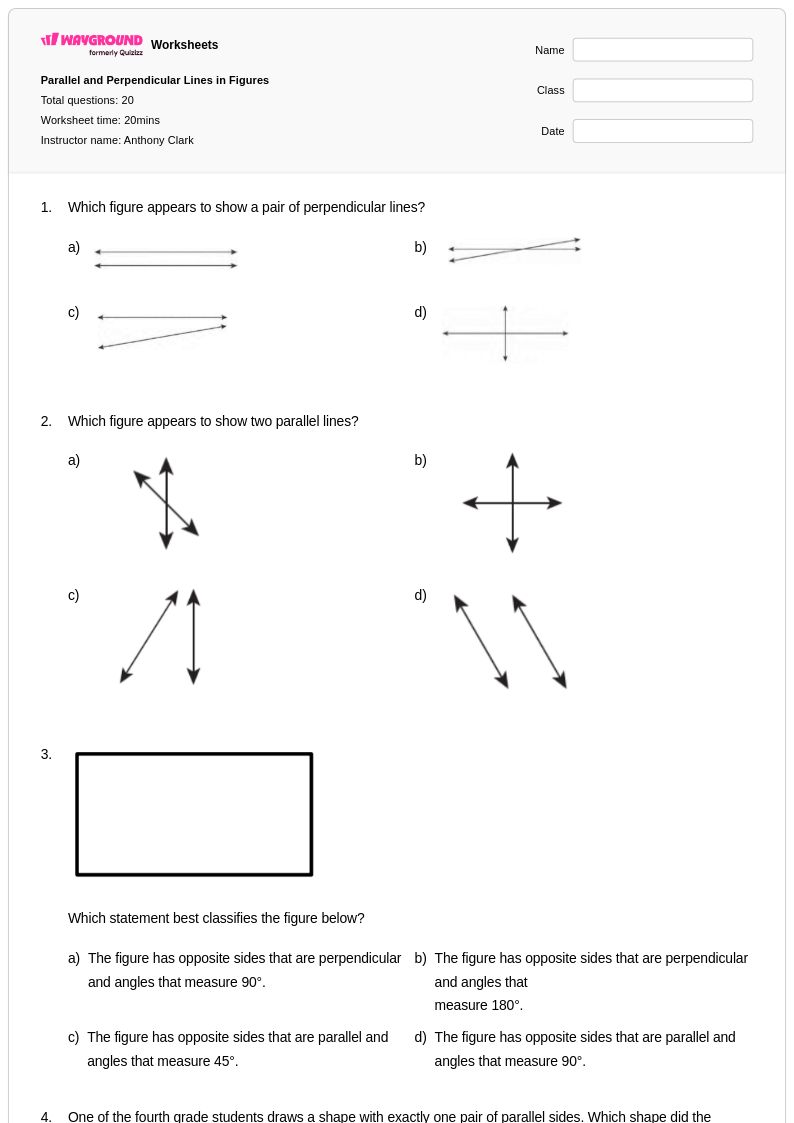
20 Q
4th - Uni

11 Q
1st - Uni

9 Q
6th
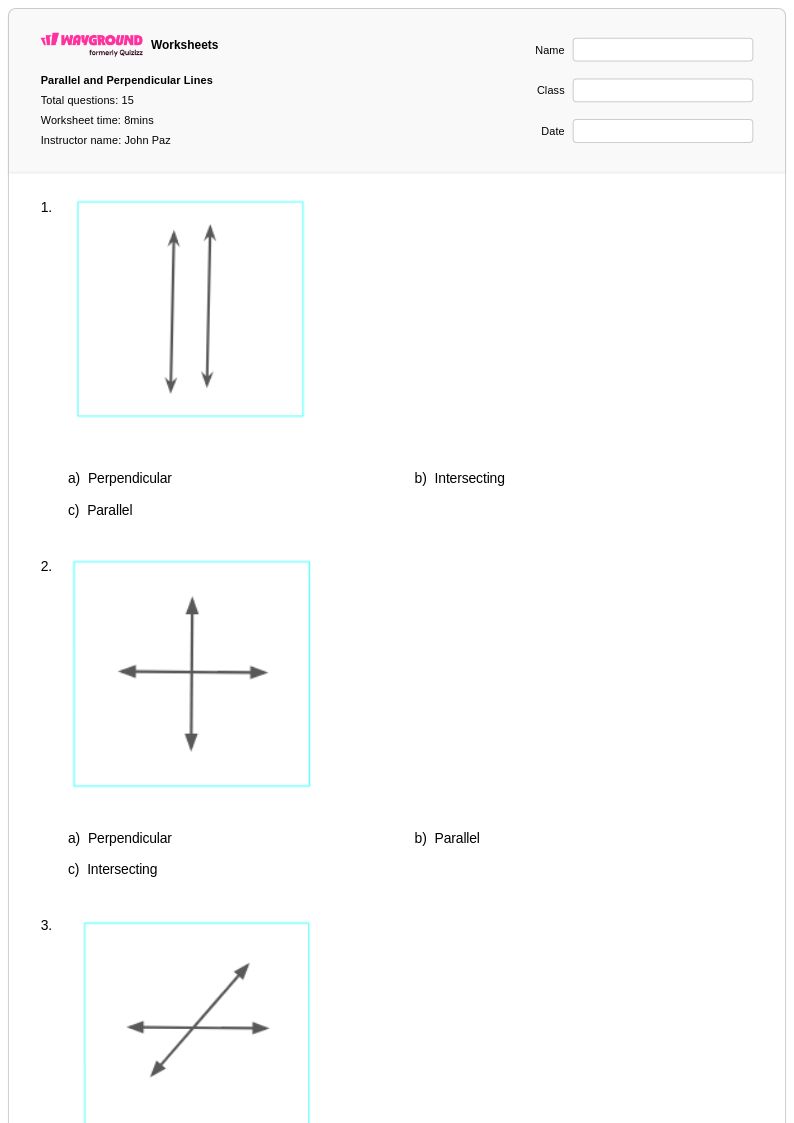
15 Q
4th - 6th
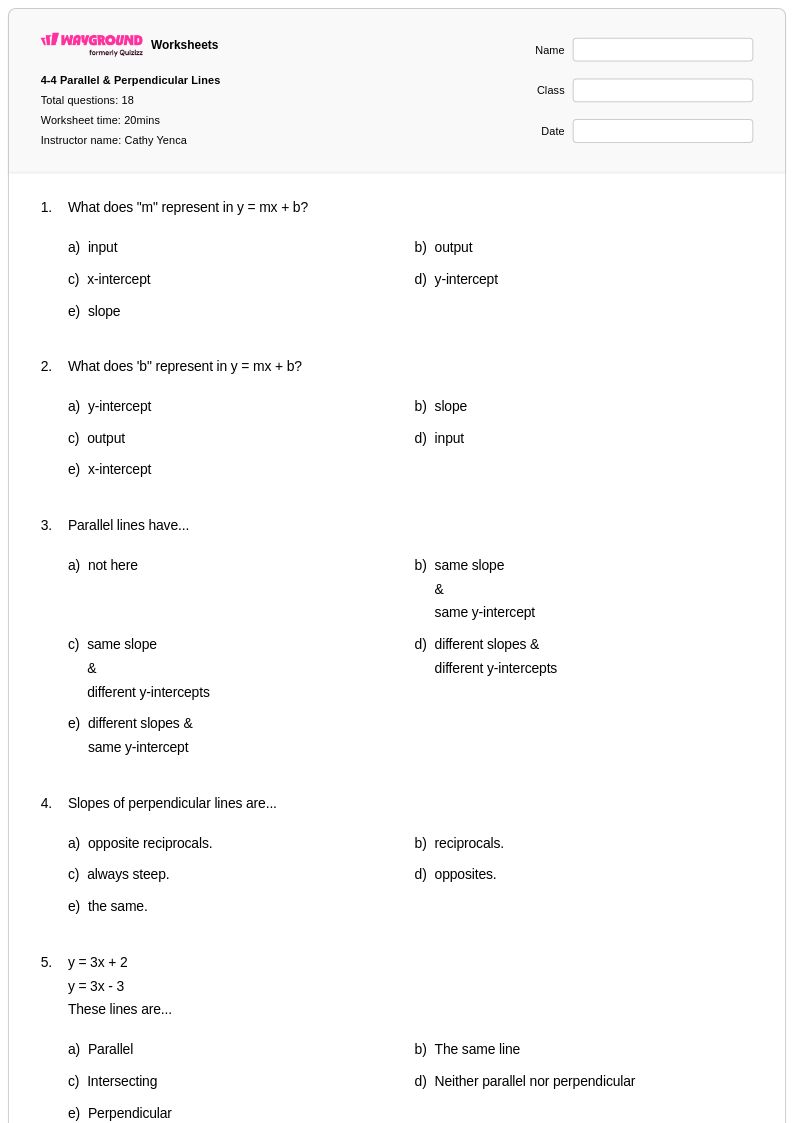
18 Q
6th - 9th
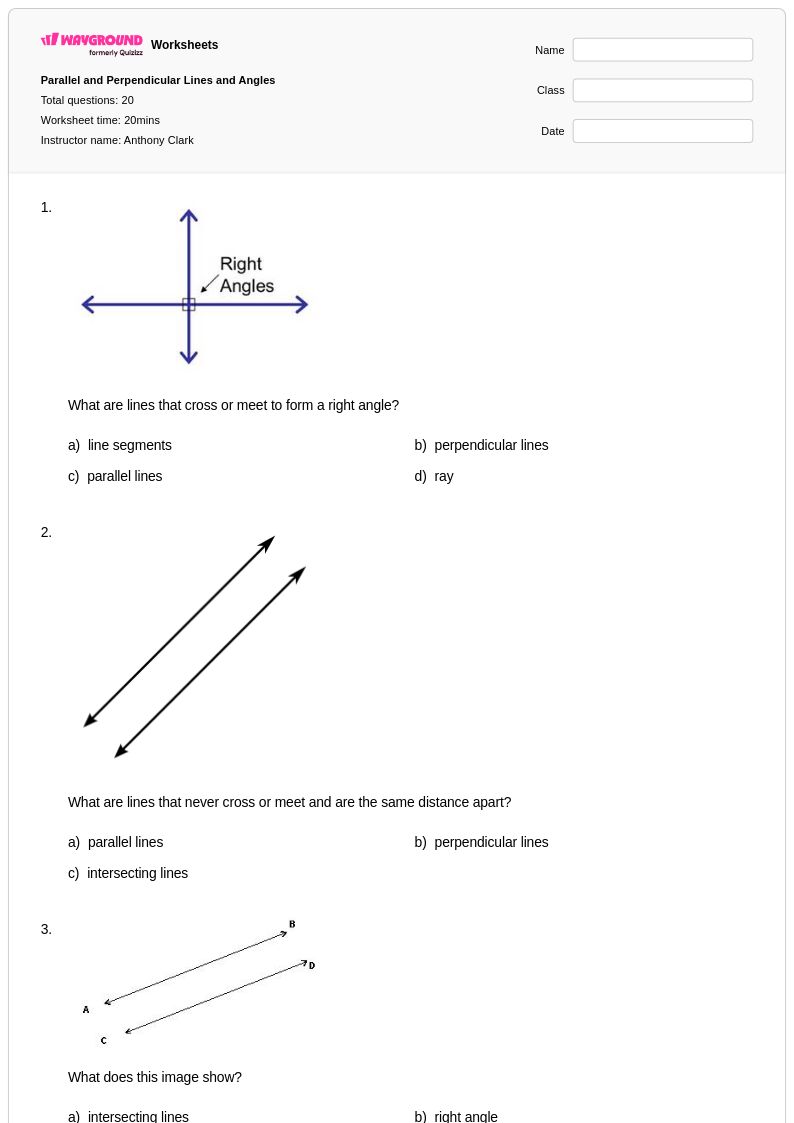
20 Q
4th - Uni
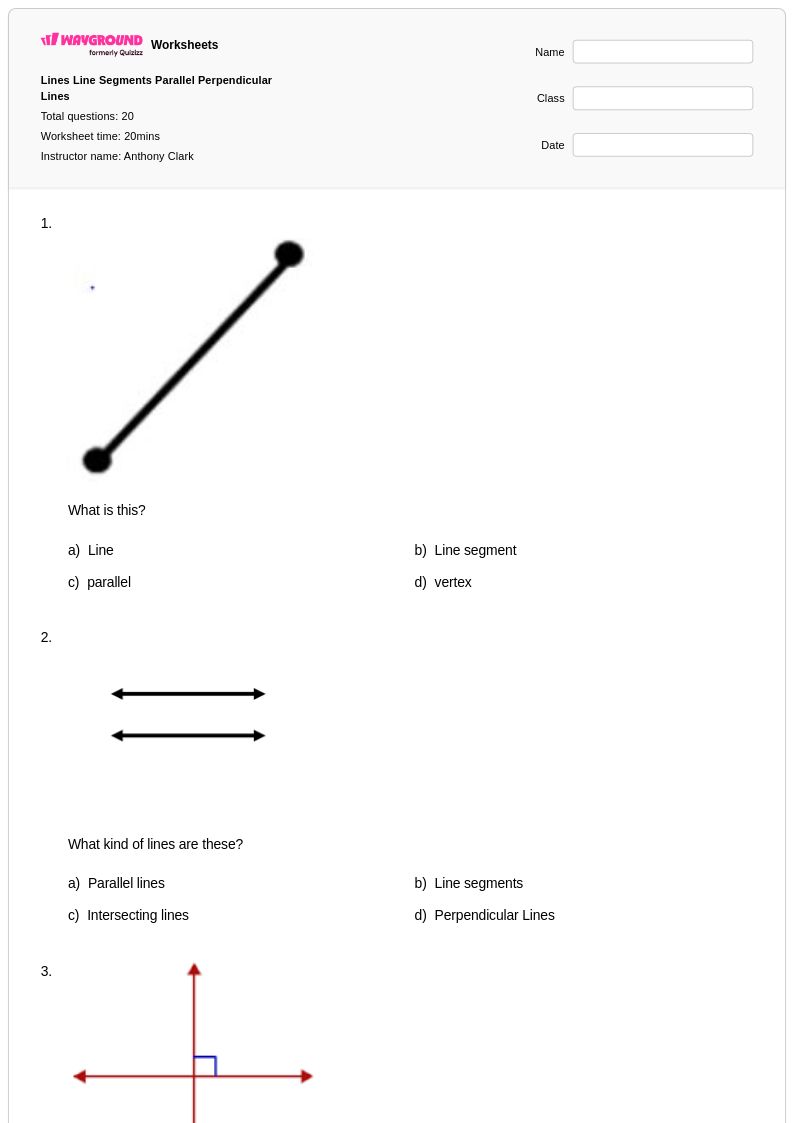
20 Q
4th - Uni
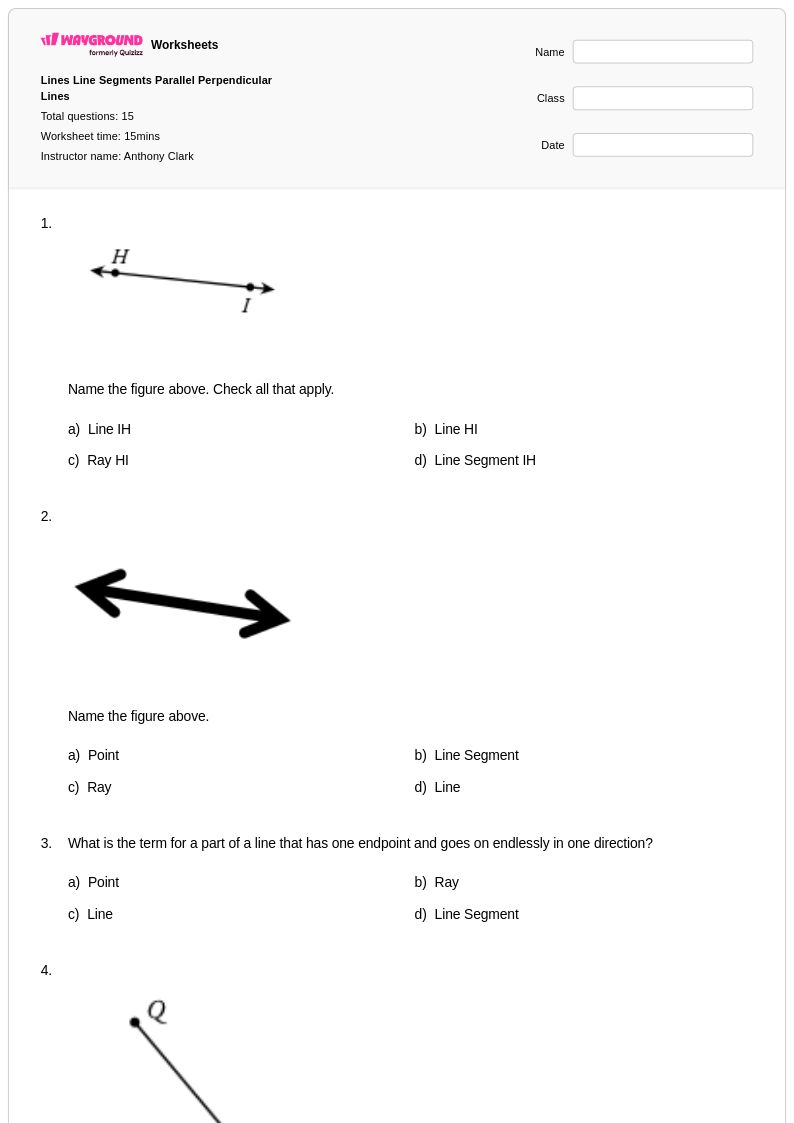
15 Q
4th - Uni
20 Q
4th - Uni

20 Q
6th
14 Q
4th - Uni
16 Q
4th - Uni
42 Q
6th - 9th
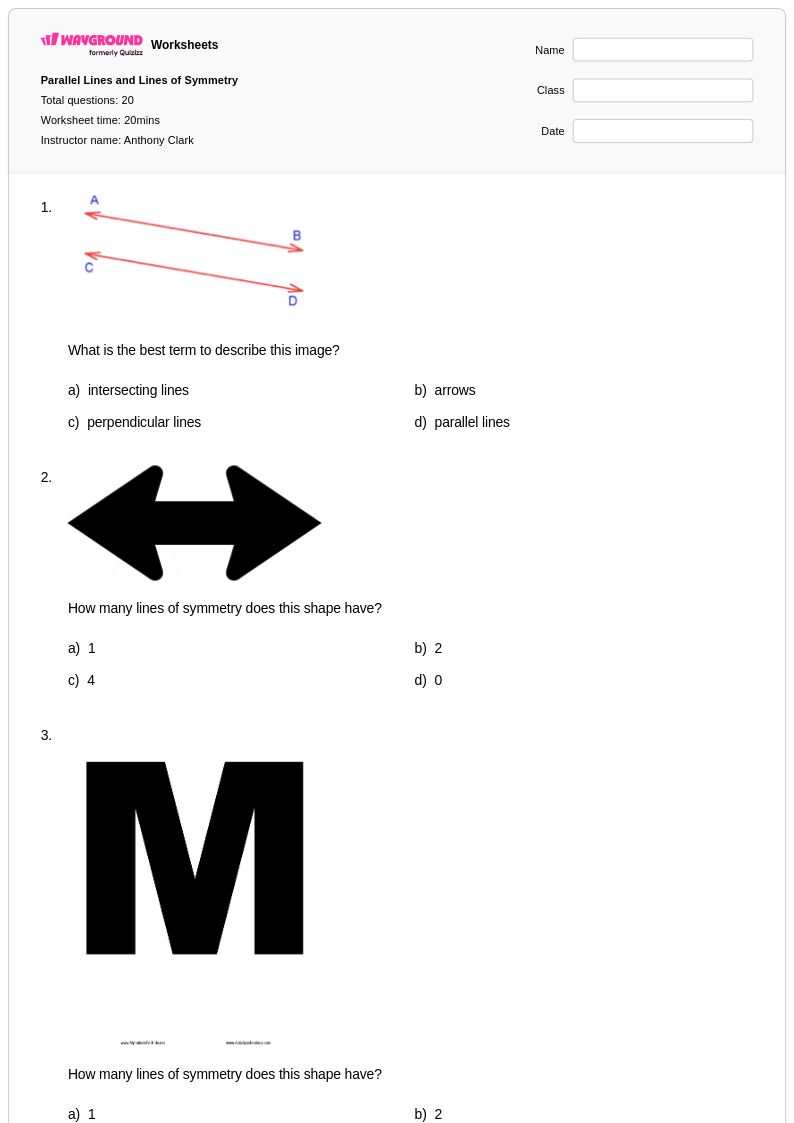
20 Q
4th - Uni
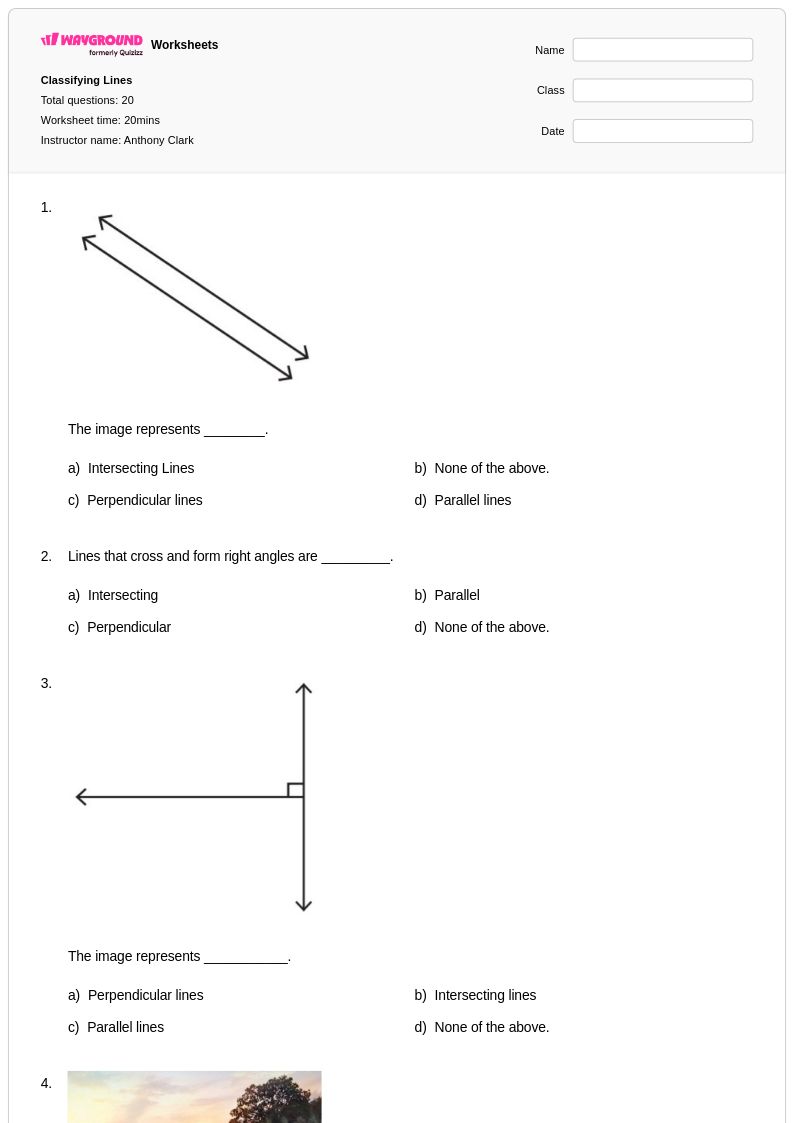
20 Q
4th - Uni
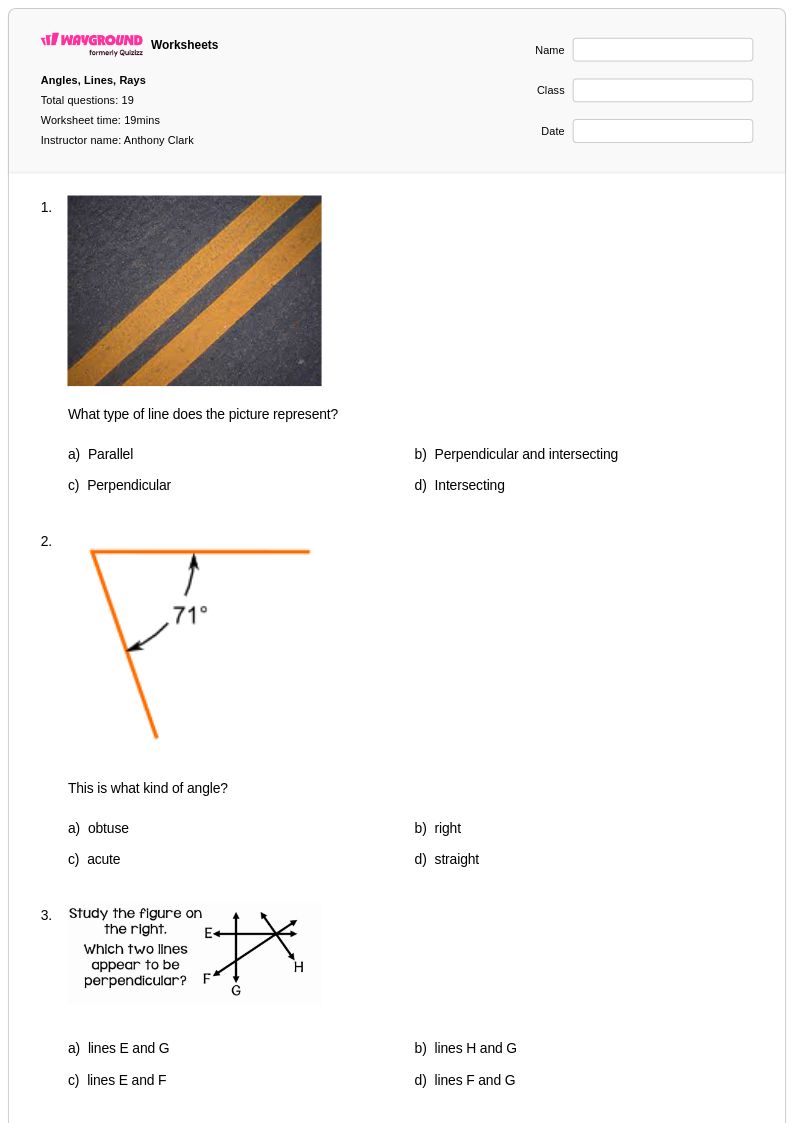
19 Q
4th - Uni
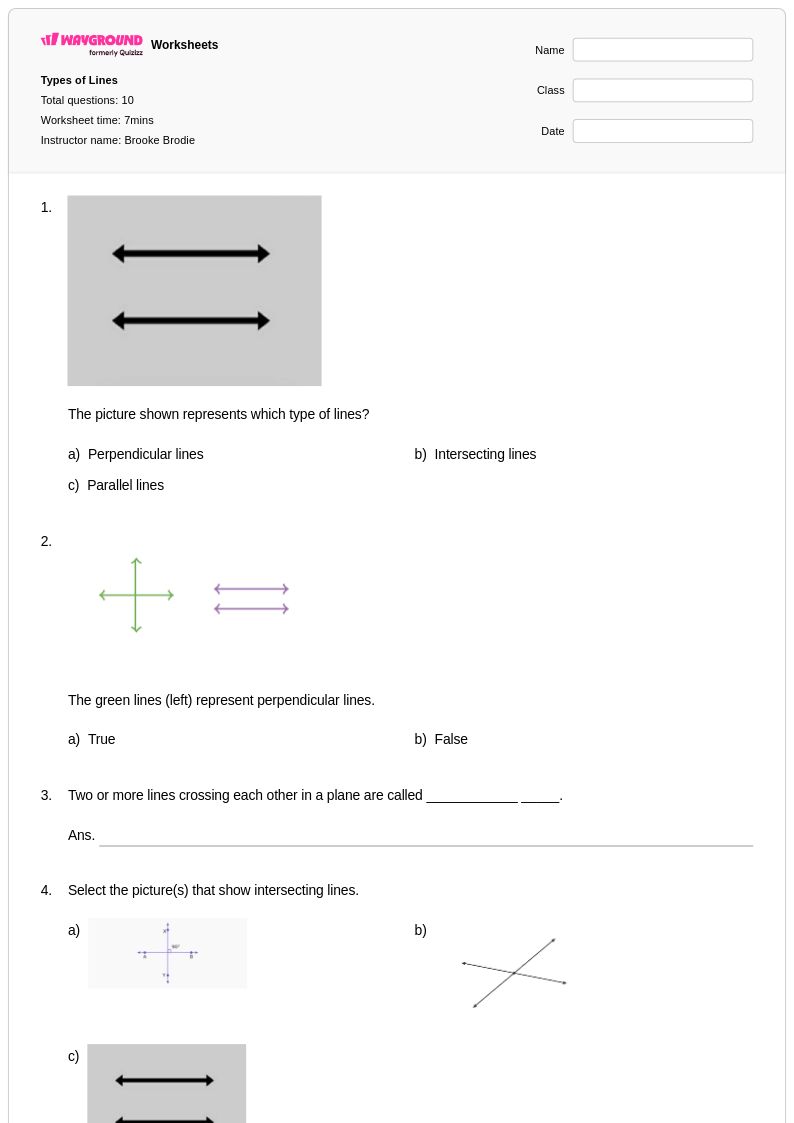
10 Q
3rd - 9th
20 Q
4th - Uni
Explore Parallel and Perpendicular Lines Worksheets by Grades
Explore Other Subject Worksheets for class 6
Explore printable Parallel and Perpendicular Lines worksheets for Class 6
Parallel and perpendicular lines form a fundamental component of Class 6 geometry curriculum, and Wayground's comprehensive worksheet collection provides students with targeted practice to master these essential mathematical relationships. These expertly designed worksheets guide sixth-grade learners through identifying parallel lines that never intersect, recognizing perpendicular lines that meet at right angles, and understanding the geometric properties that define these relationships. Students develop critical spatial reasoning skills through hands-on practice problems that challenge them to classify line pairs, measure angles, and apply geometric principles in various contexts. Each worksheet includes a detailed answer key to support independent learning and self-assessment, while the free printable format ensures accessibility for all classroom environments and home study sessions.
Wayground's extensive library of millions of teacher-created resources empowers educators to deliver differentiated instruction that meets diverse learning needs in Class 6 mathematics. The platform's advanced search and filtering capabilities allow teachers to quickly locate worksheets that align with specific curriculum standards while targeting parallel and perpendicular line concepts at appropriate difficulty levels. These versatile resources are available in both printable PDF format and interactive digital versions, providing flexibility for traditional classroom instruction, remote learning, or blended educational approaches. Teachers can seamlessly customize existing worksheets or create original assessments to support skill remediation, concept enrichment, and ongoing practice, ensuring that every student develops confidence in recognizing and working with these fundamental geometric relationships.
FAQs
What is the focus of parallel and perpendicular lines in Grade 6?
How can I teach parallel and perpendicular lines on the coordinate plane for 6th graders?
What exercises help 6th graders practice this concept on a grid?
What are common errors when students first work with lines on the coordinate plane?
How can I assign and grade this worksheet?
How does this topic extend student learning in 6th grade under Common Core?