
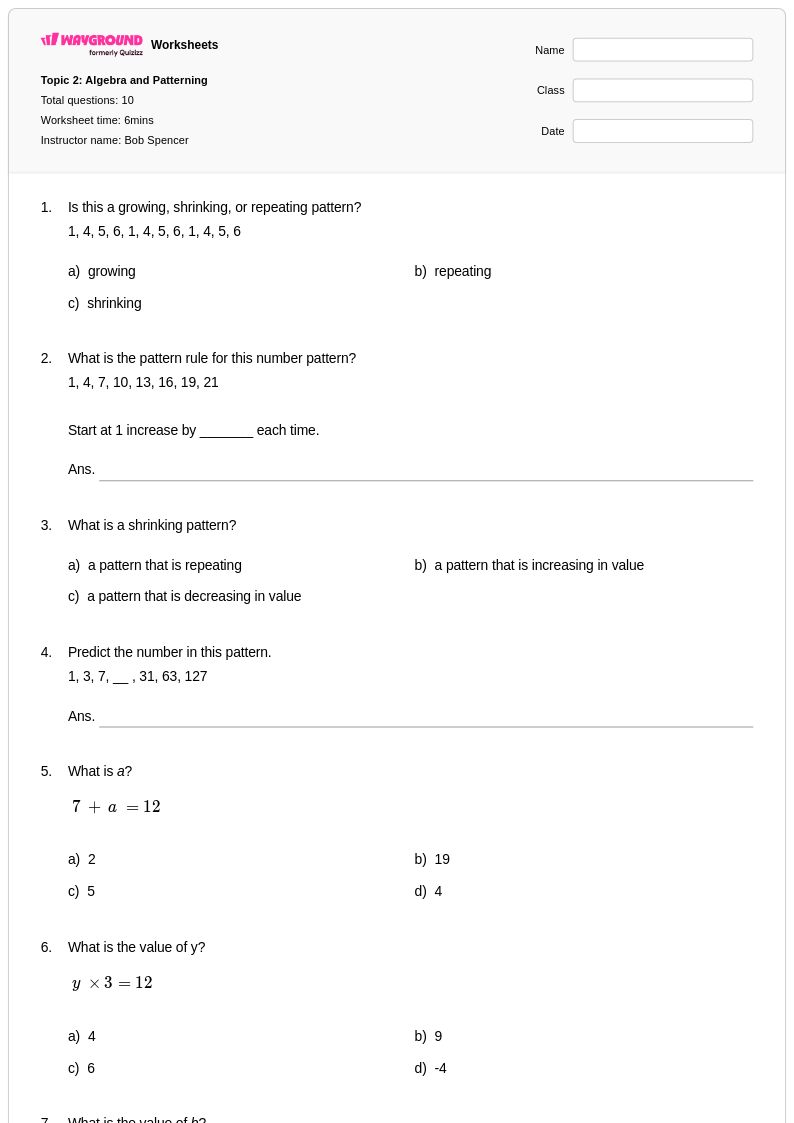
10 Q
3rd - 8th
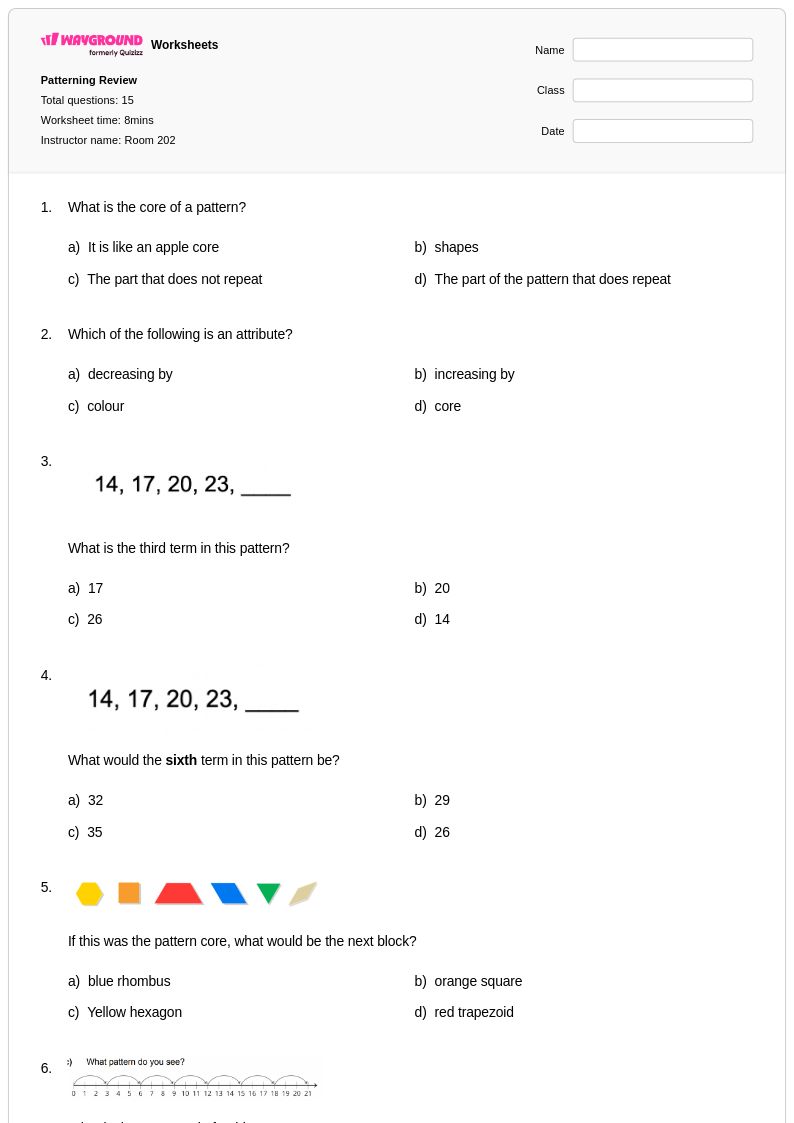
15 Q
3rd
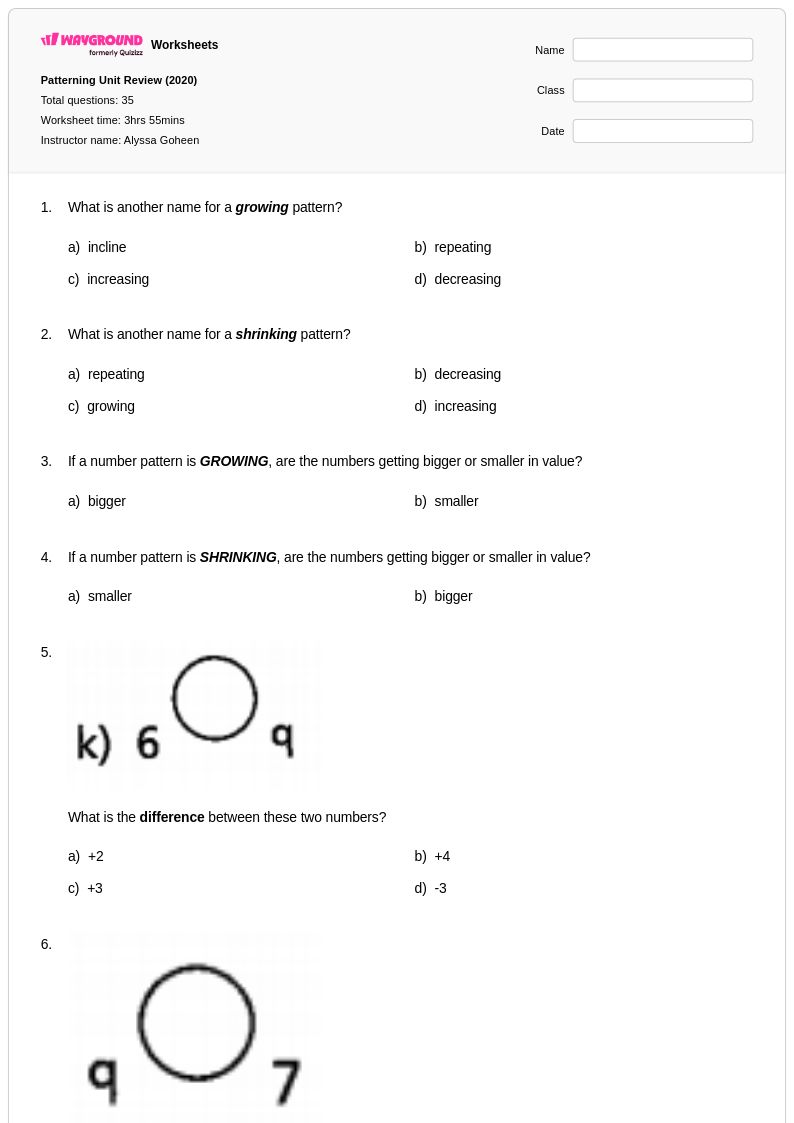
35 Q
3rd
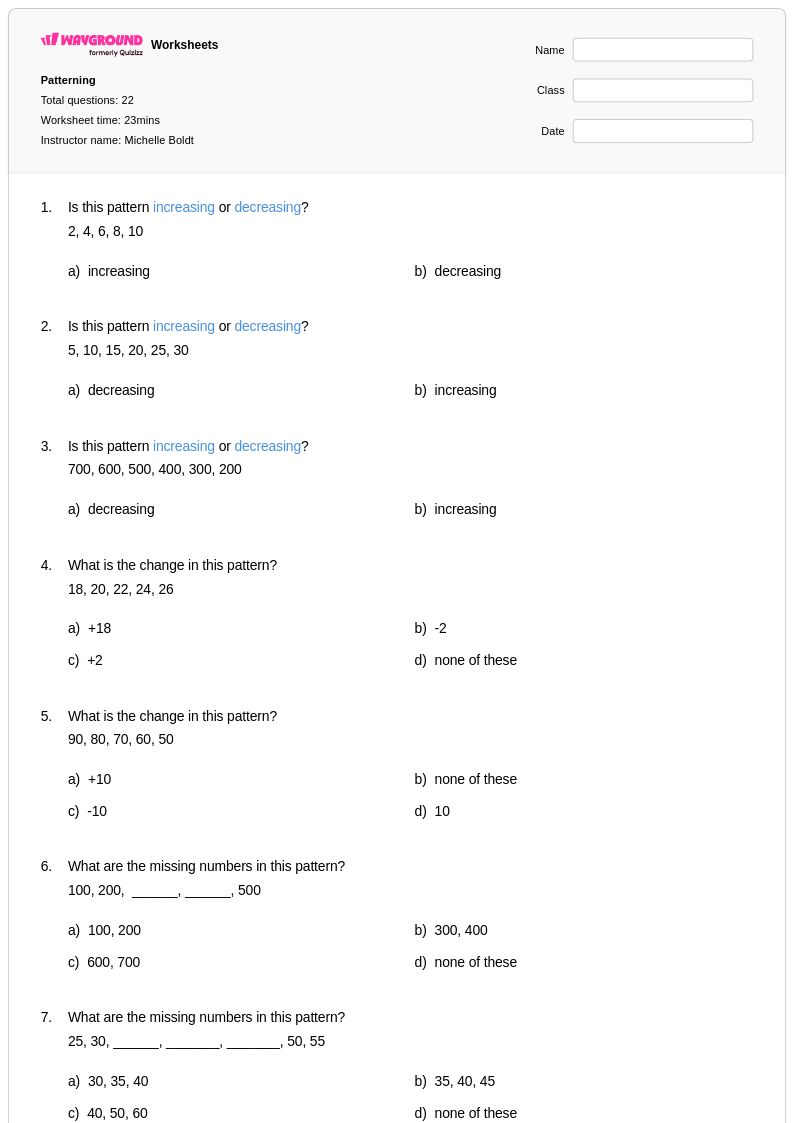
22 Q
3rd
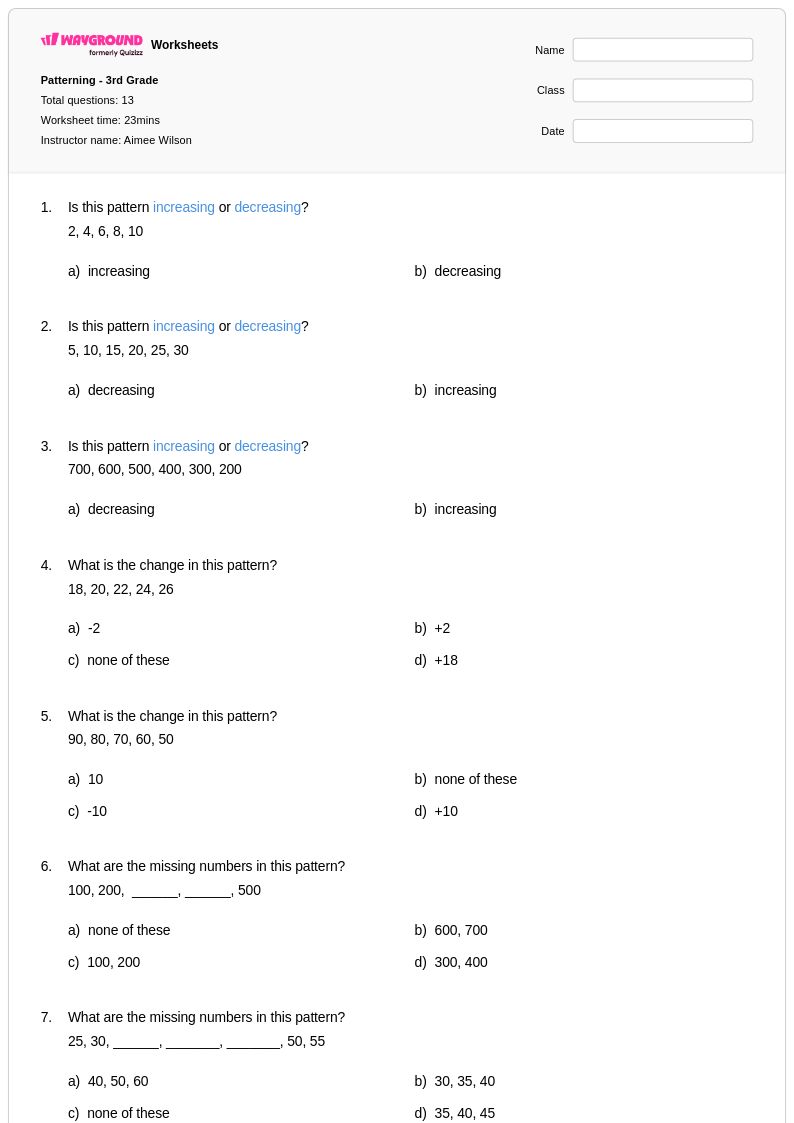
13 Q
2nd - 3rd
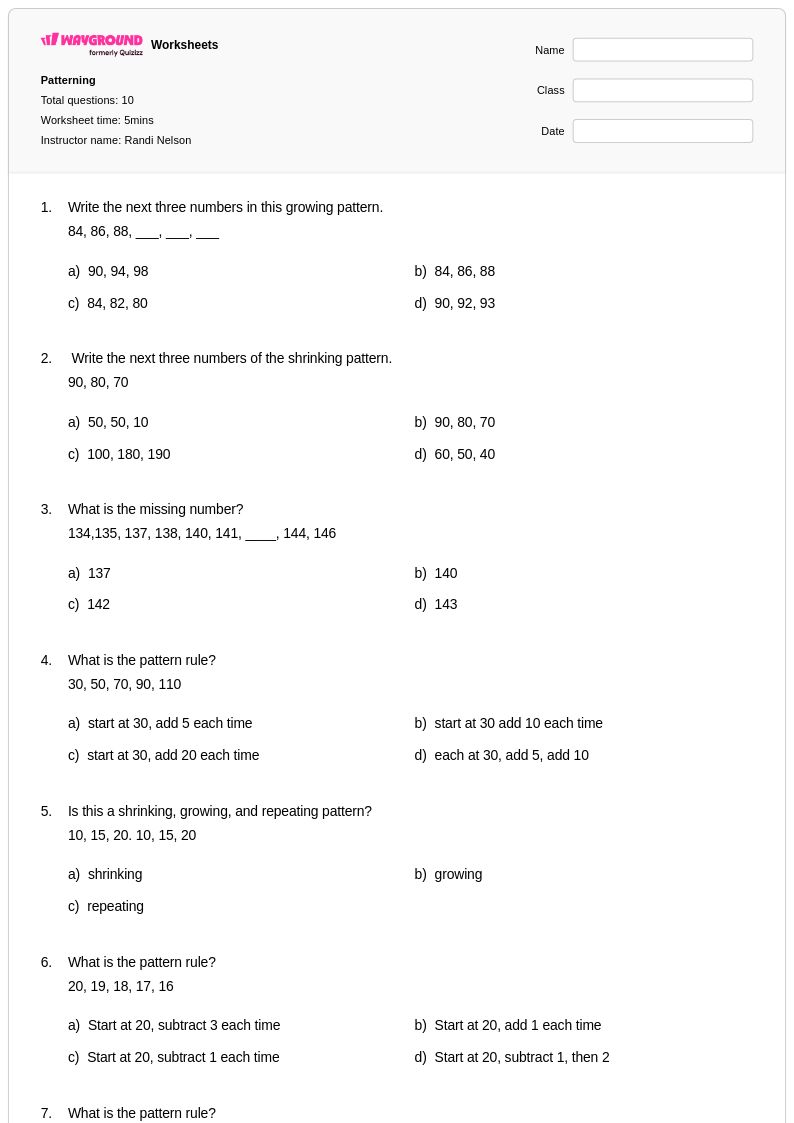
10 Q
3rd
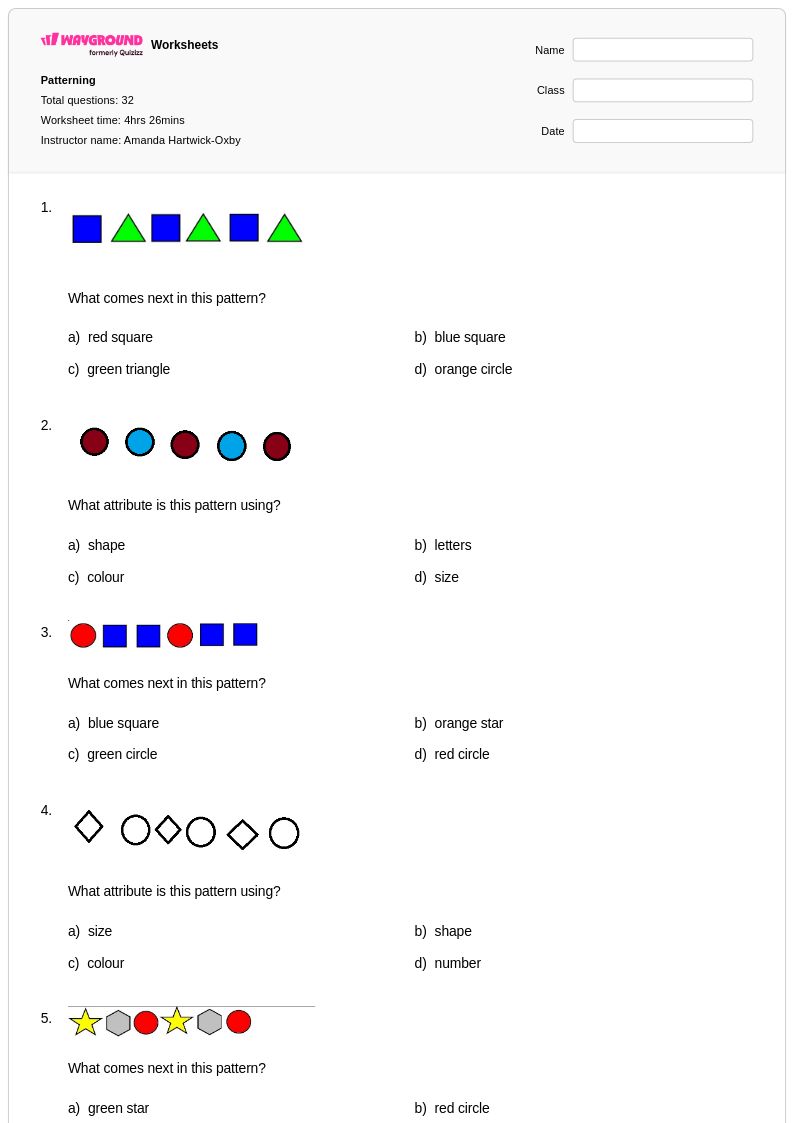
32 Q
1st - 3rd
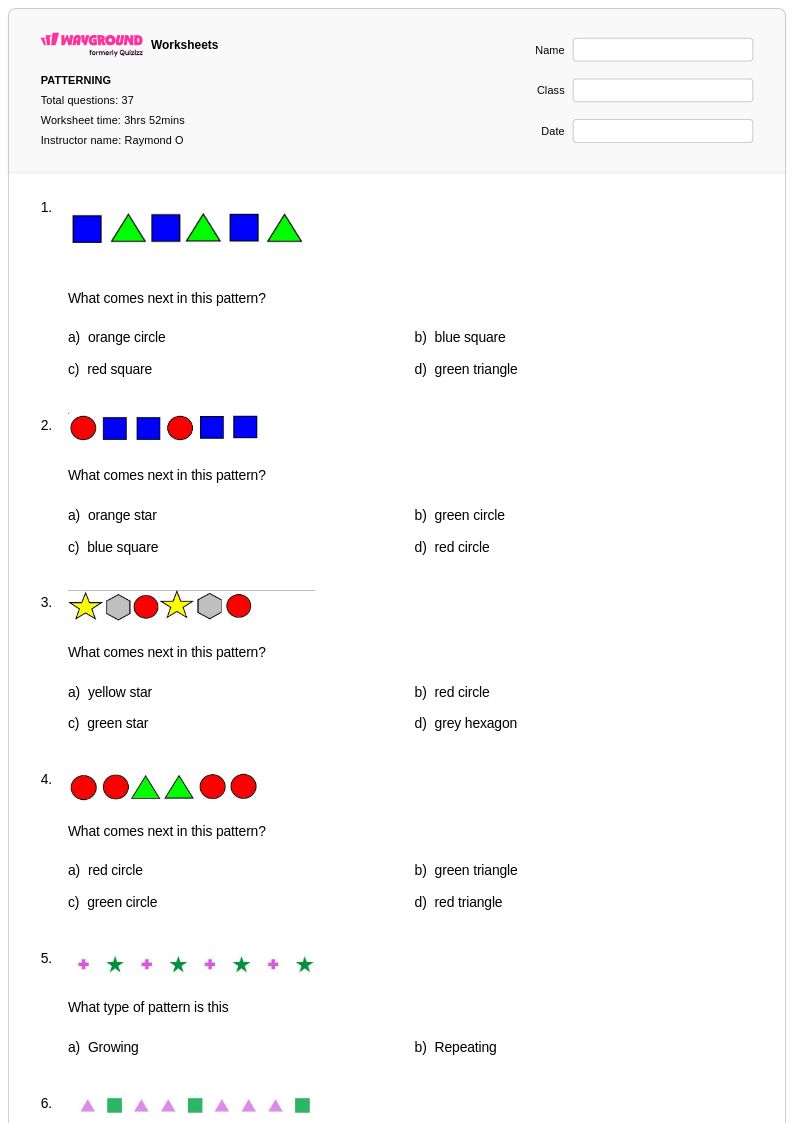
37 Q
1st - 5th
57 Q
2nd - 3rd
22 Q
2nd - 3rd
12 Q
3rd - 5th
20 Q
3rd - 4th
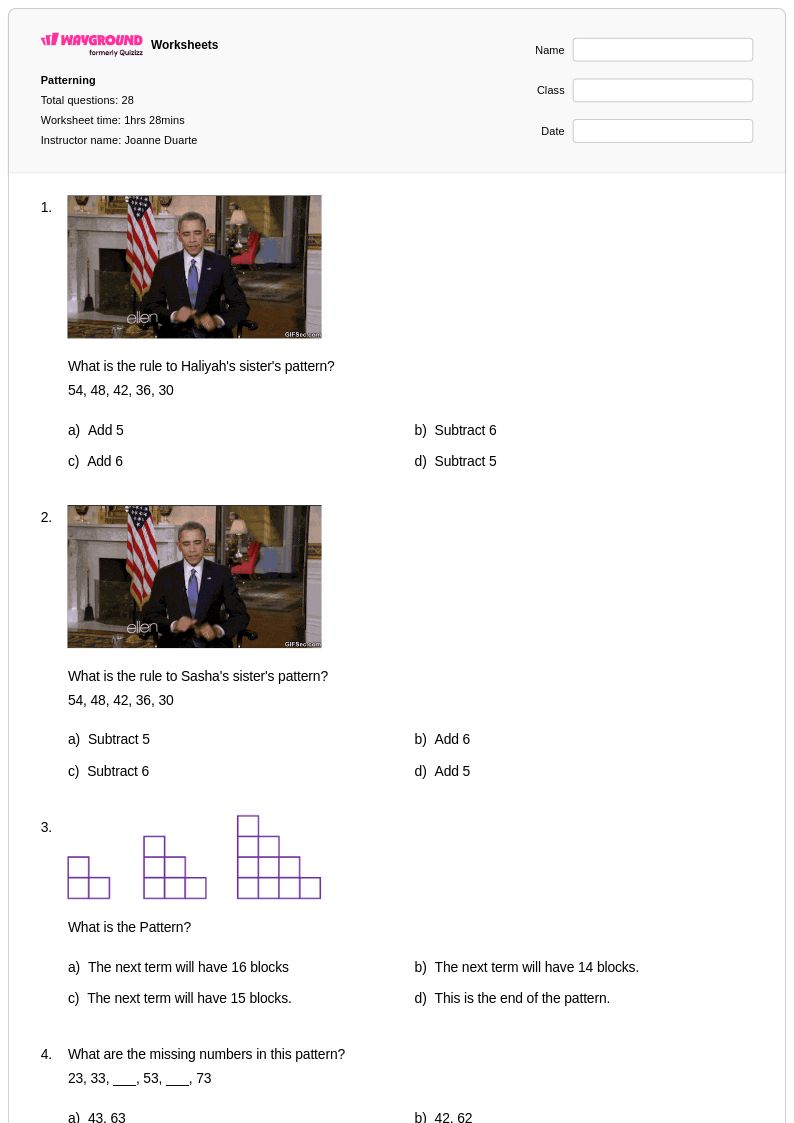
28 Q
2nd - 3rd
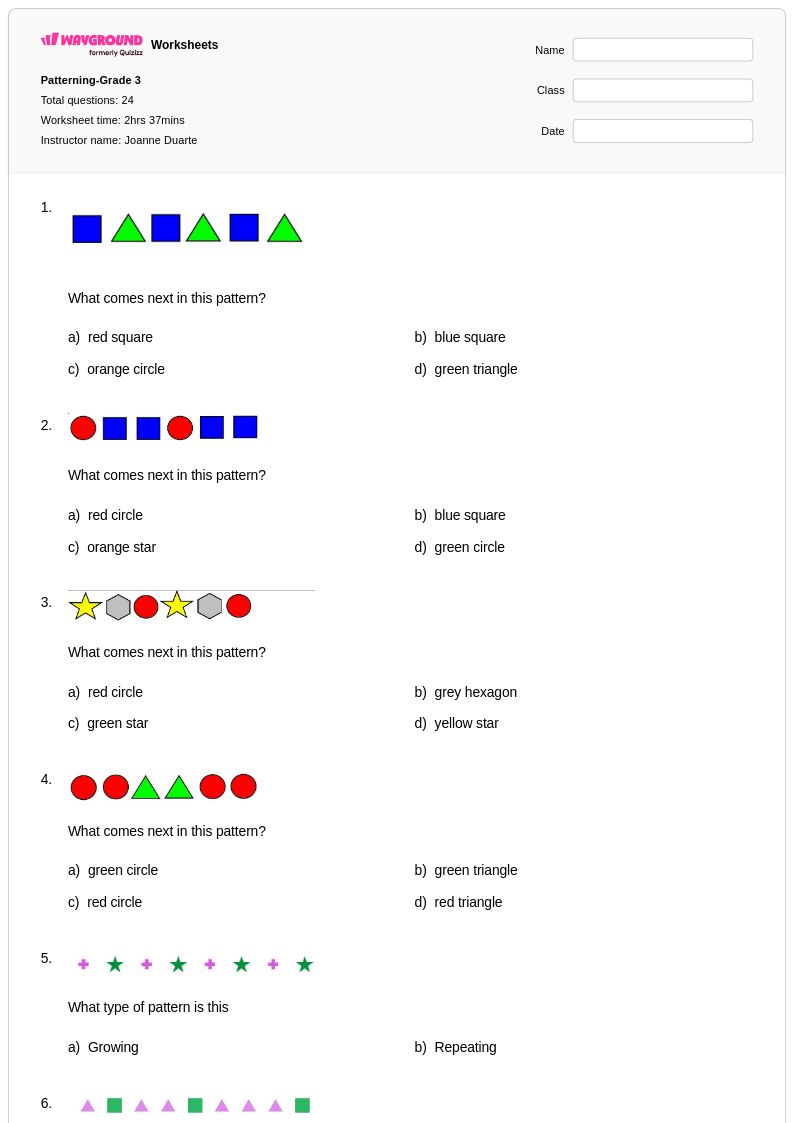
24 Q
2nd - 3rd
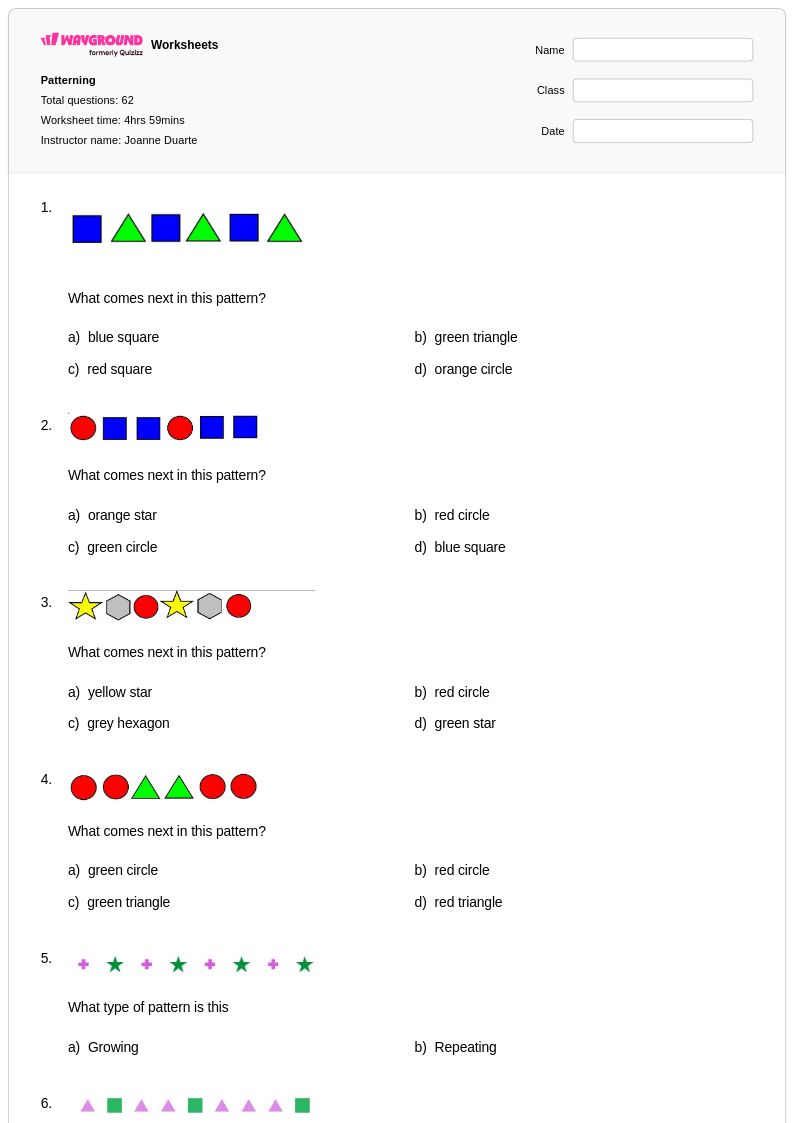
62 Q
1st - 3rd
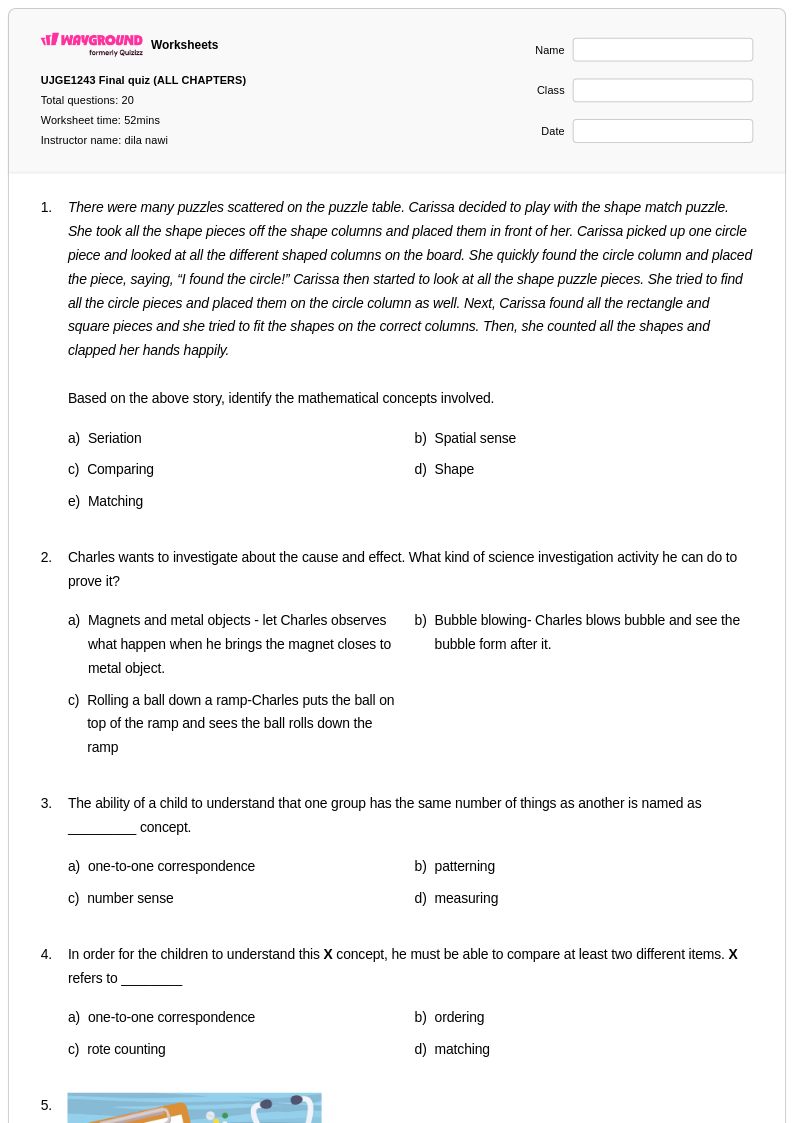
9 Q
1st - 3rd
5 Q
KG - 3rd
10 Q
1st - 5th
Explore Other Subject Worksheets for class 3
Explore printable Patterning worksheets for Class 3
Patterning worksheets for Class 3 students available through Wayground (formerly Quizizz) provide essential practice in recognizing, extending, and creating mathematical patterns that form the foundation of algebraic thinking. These comprehensive resources strengthen students' ability to identify number patterns, geometric sequences, and repeating patterns while developing critical reasoning skills that support broader mathematical understanding. Each worksheet collection includes detailed answer keys and is available as free printables in convenient PDF format, offering educators ready-to-use practice problems that reinforce pattern recognition, prediction skills, and logical thinking. Students work through carefully scaffolded exercises that progress from simple repeating patterns to more complex growing patterns, building confidence in mathematical reasoning and problem-solving strategies.
Wayground (formerly Quizizz) supports educators with millions of teacher-created patterning resources that can be easily searched and filtered to match specific Class 3 learning objectives and standards alignment requirements. The platform's robust differentiation tools allow teachers to customize worksheets for various skill levels, ensuring that struggling students receive appropriate support while advanced learners are challenged with enrichment activities. These flexible resources are available in both printable and digital formats, including downloadable PDFs, making them ideal for classroom instruction, homework assignments, remediation sessions, and independent practice. Teachers can efficiently plan lessons and assessments using the platform's comprehensive filtering system, which helps identify the most relevant patterning activities for their students' specific needs and learning goals.
FAQs
How can I use patterns to teach multiplication in Grade 3?
What types of pattern practice are best for third graders?
What's a common mistake third graders make with arithmetic patterns?
How can I assign these Grade 3 patterning worksheets?
How does this topic align with Grade 3 math standards?