
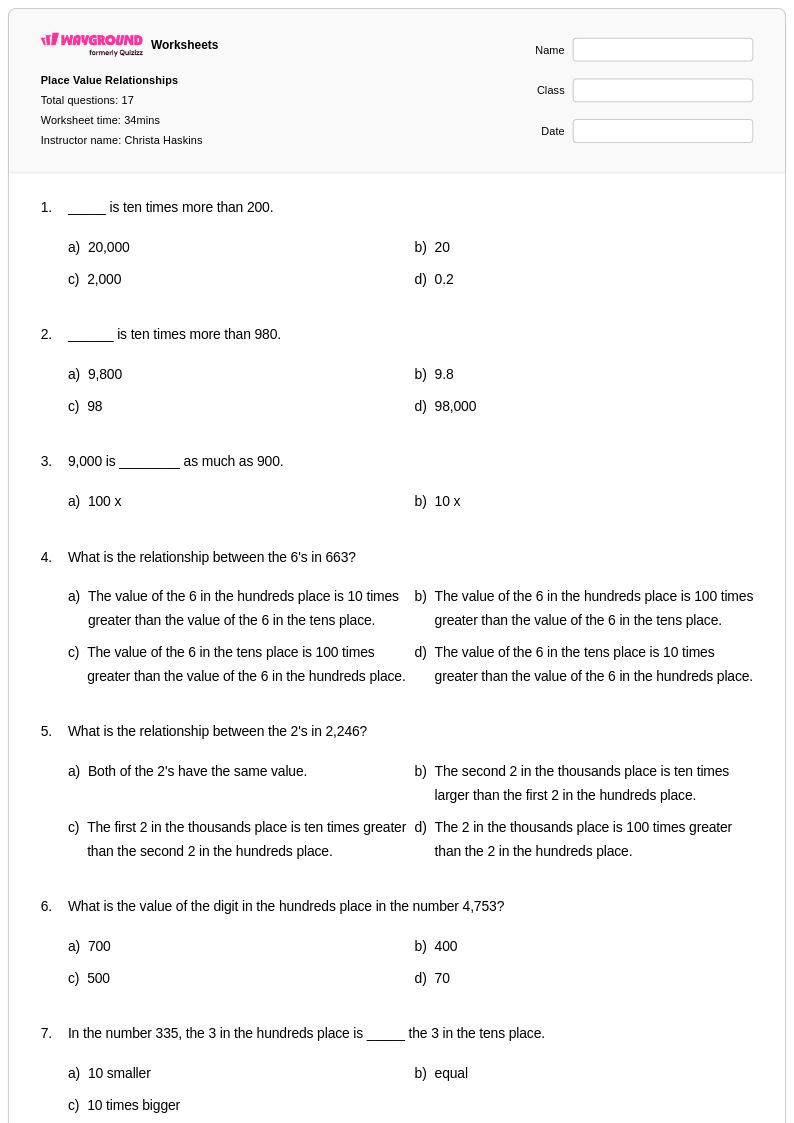
17 Q
3rd
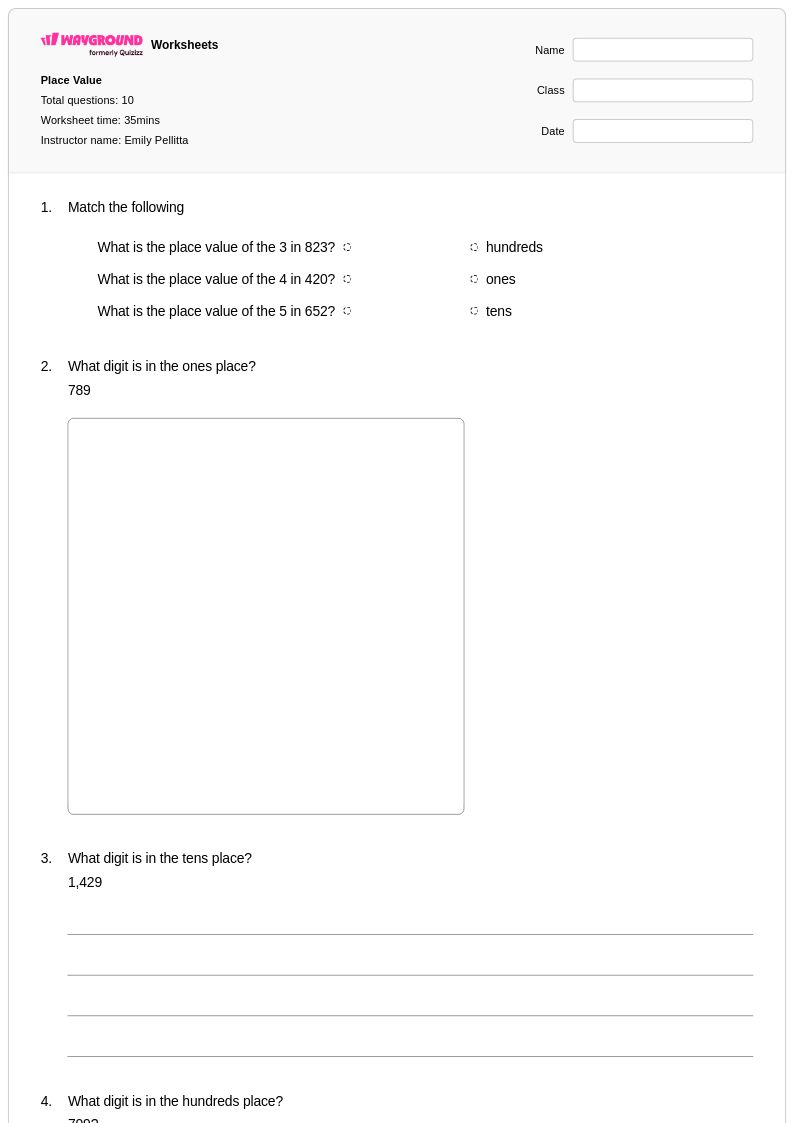
10 Q
3rd
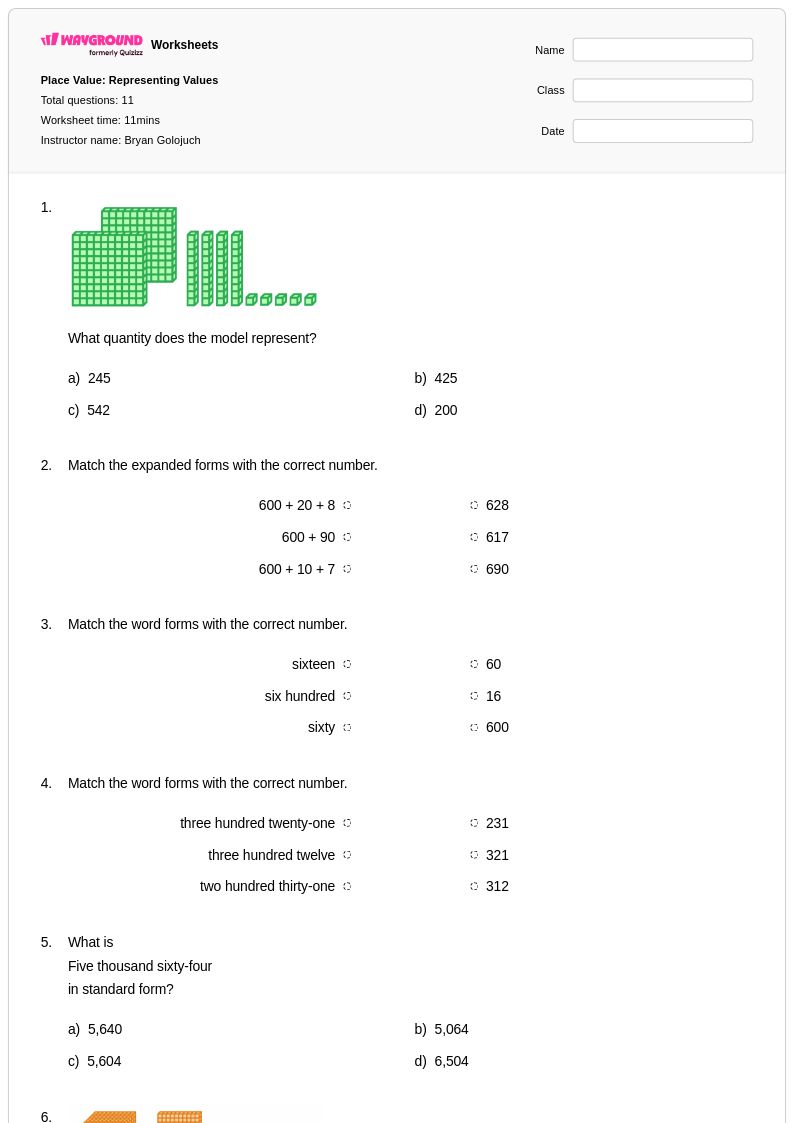
11 Q
3rd
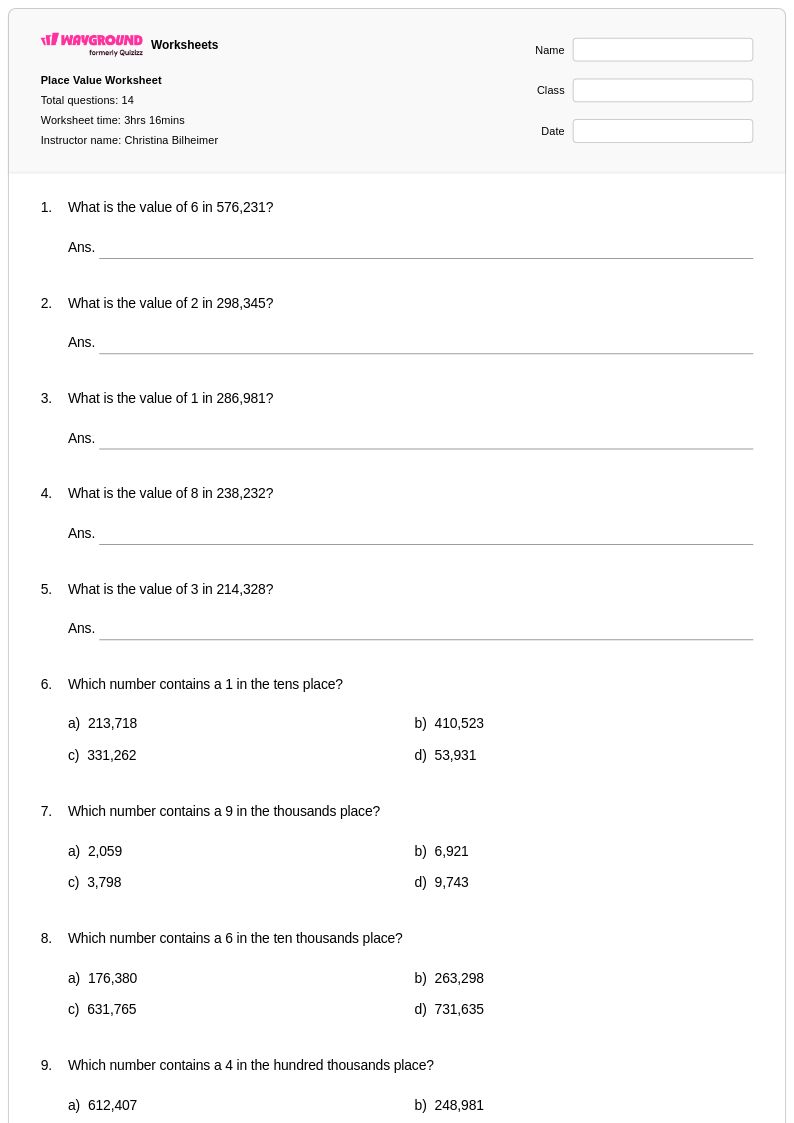
14 Q
3rd
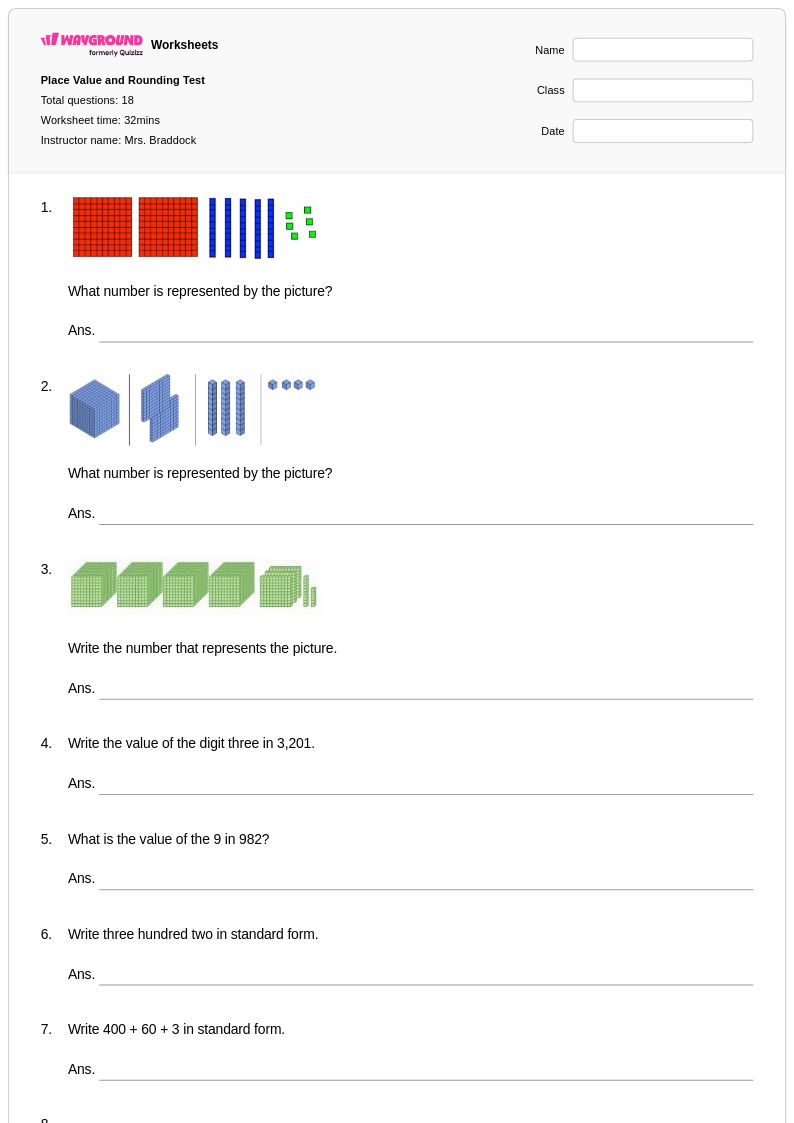
18 Q
3rd
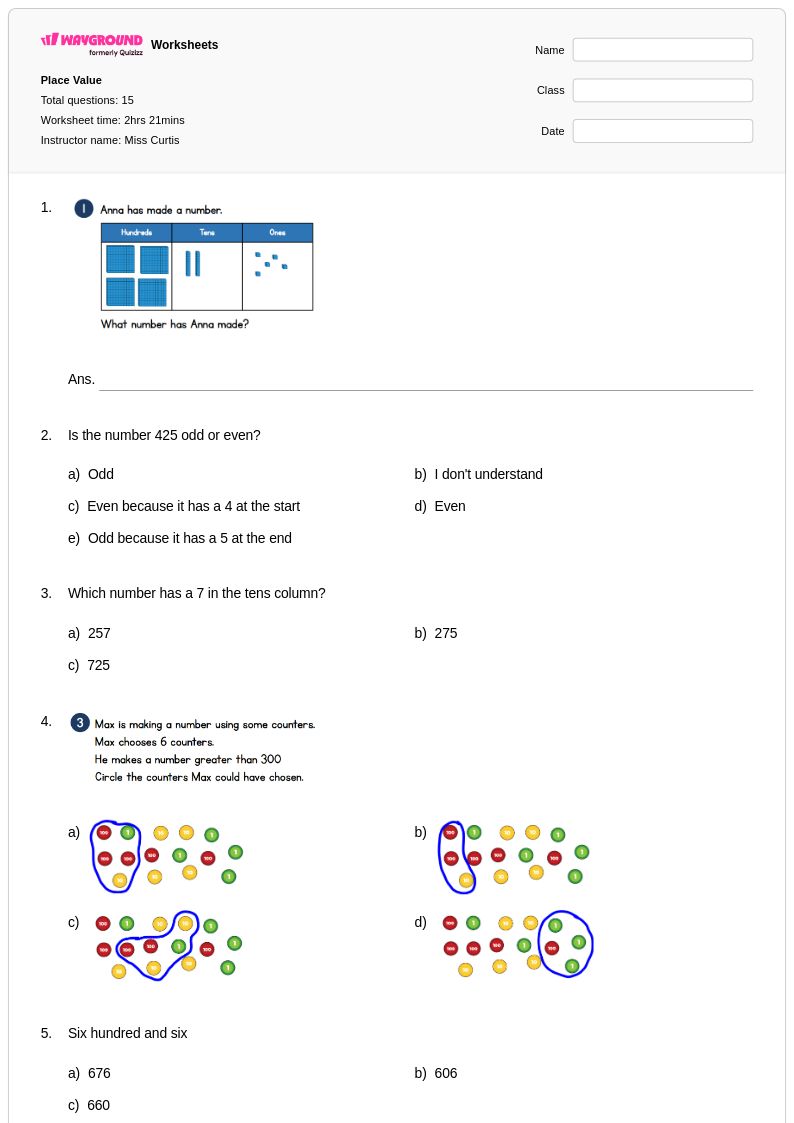
15 Q
3rd
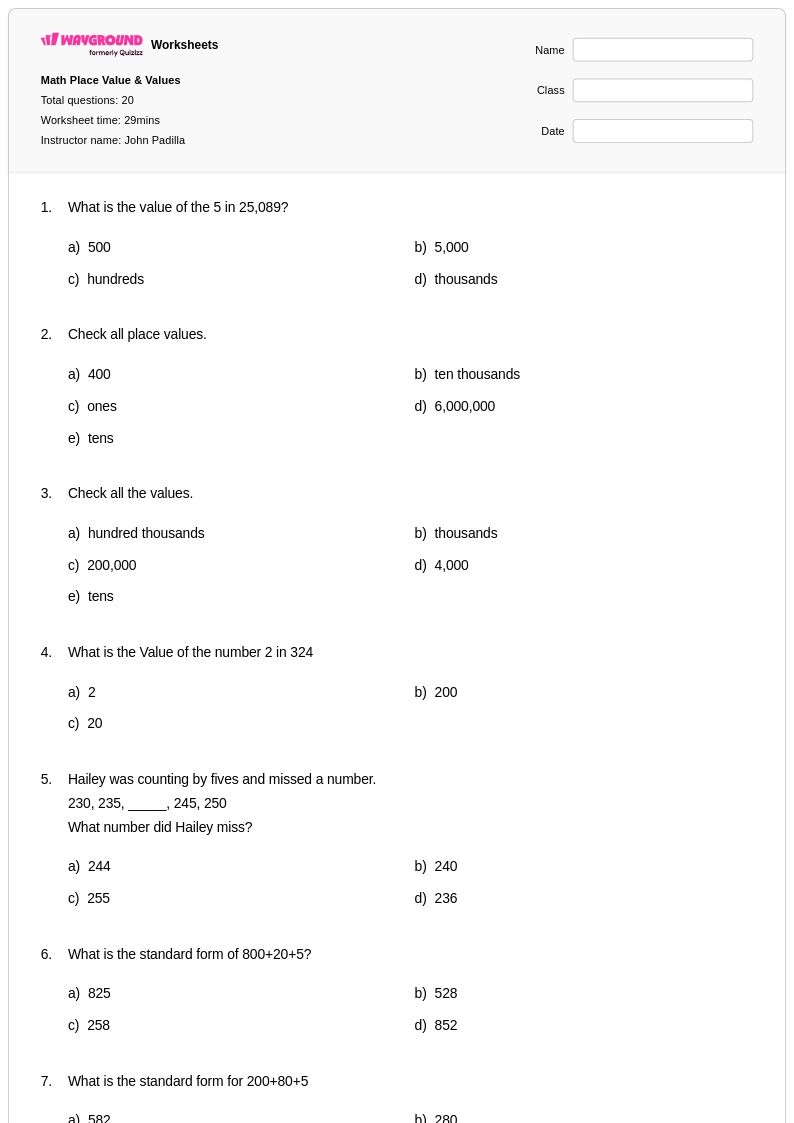
20 Q
3rd
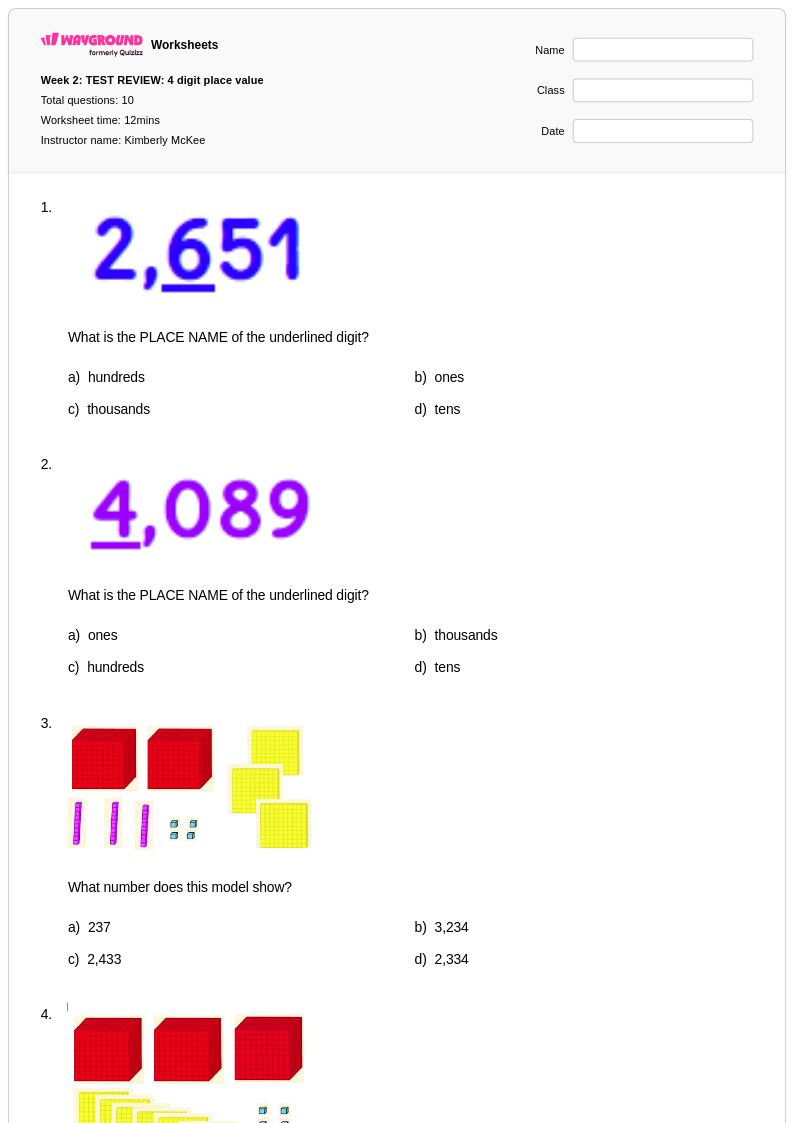
10 Q
3rd
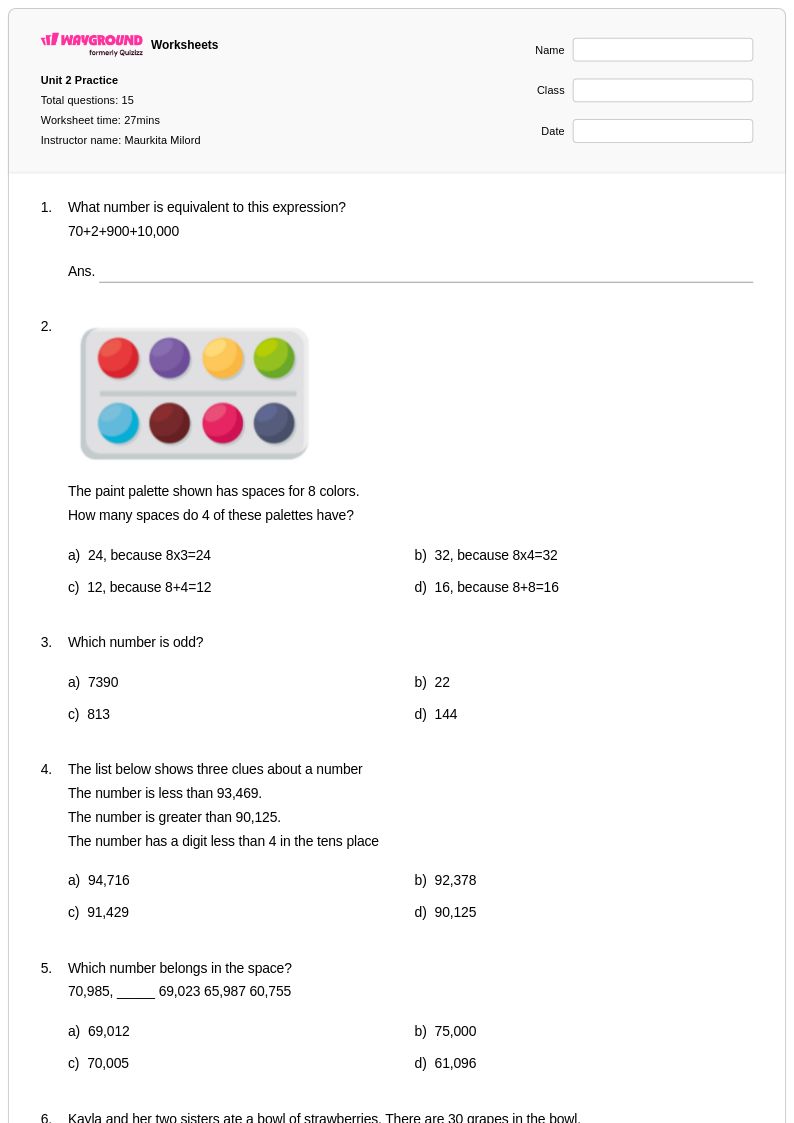
15 Q
3rd
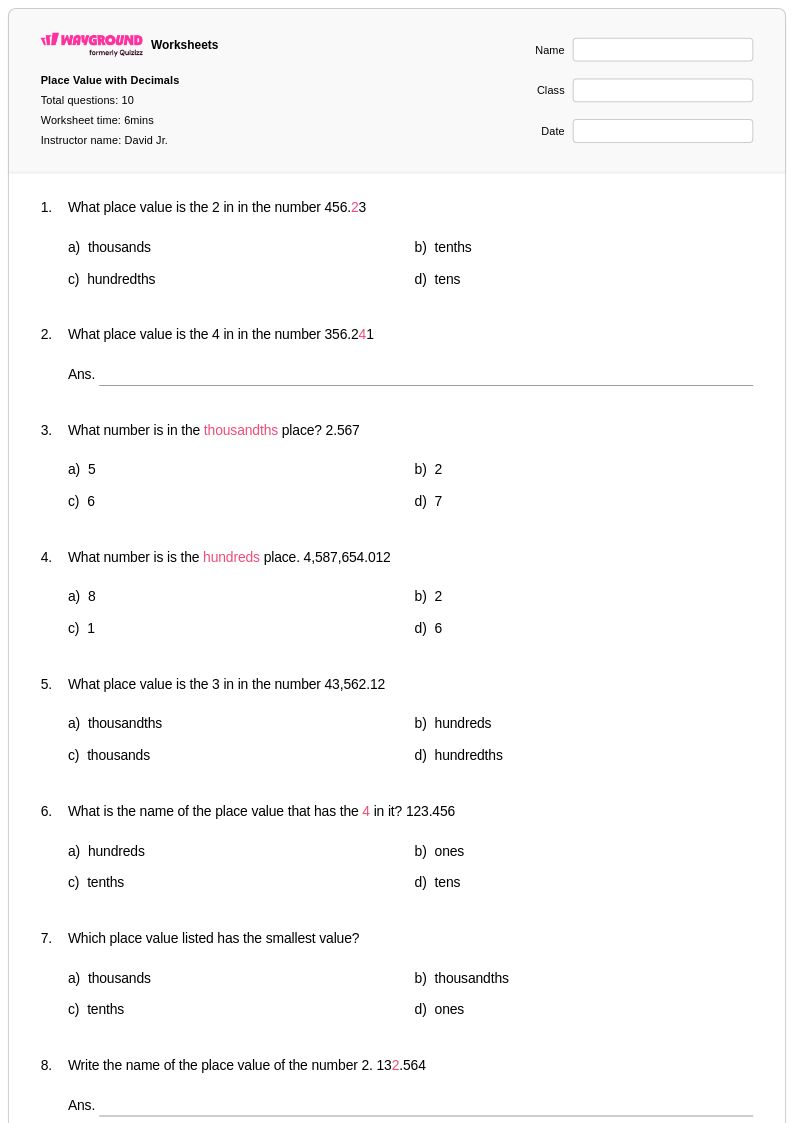
10 Q
3rd - 5th
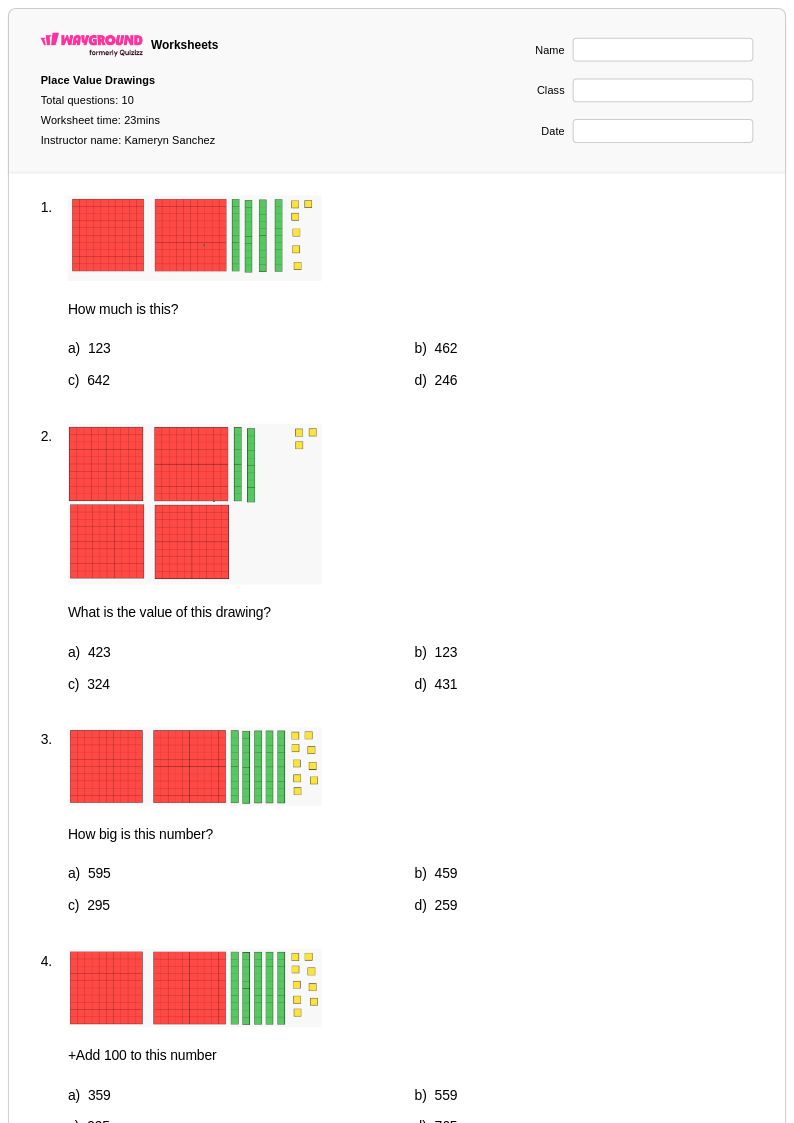
10 Q
2nd - 4th
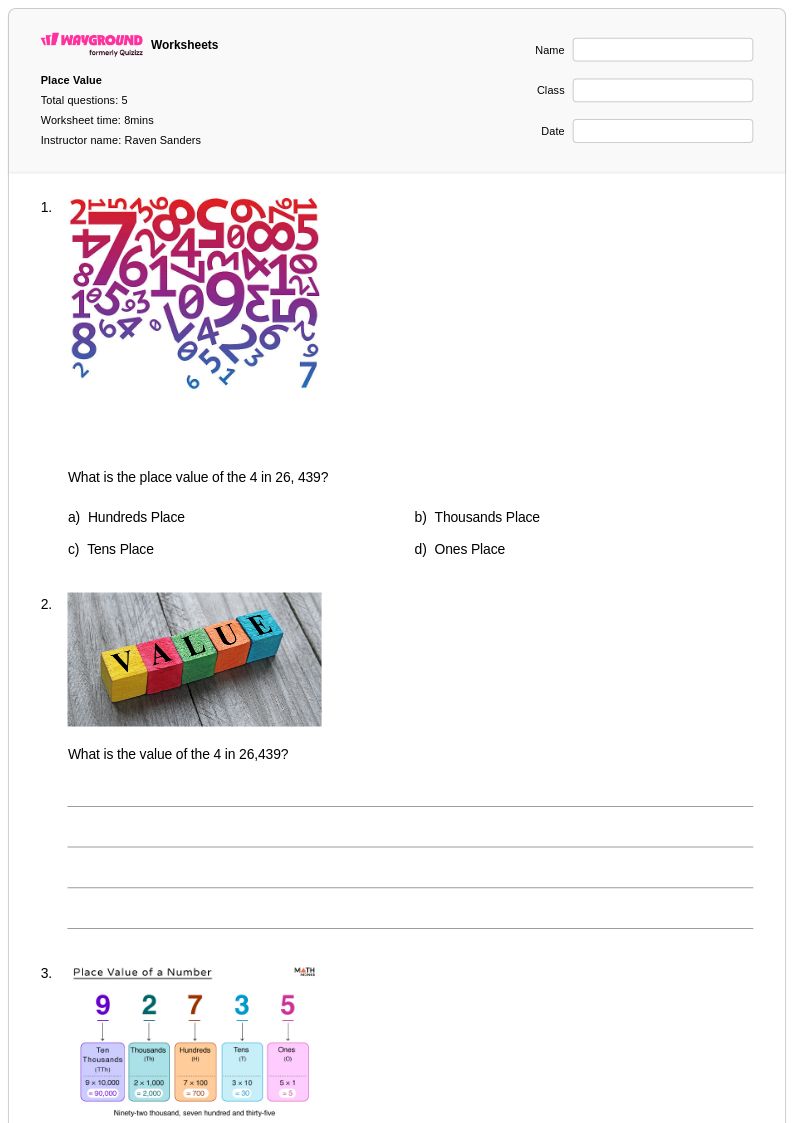
5 Q
3rd
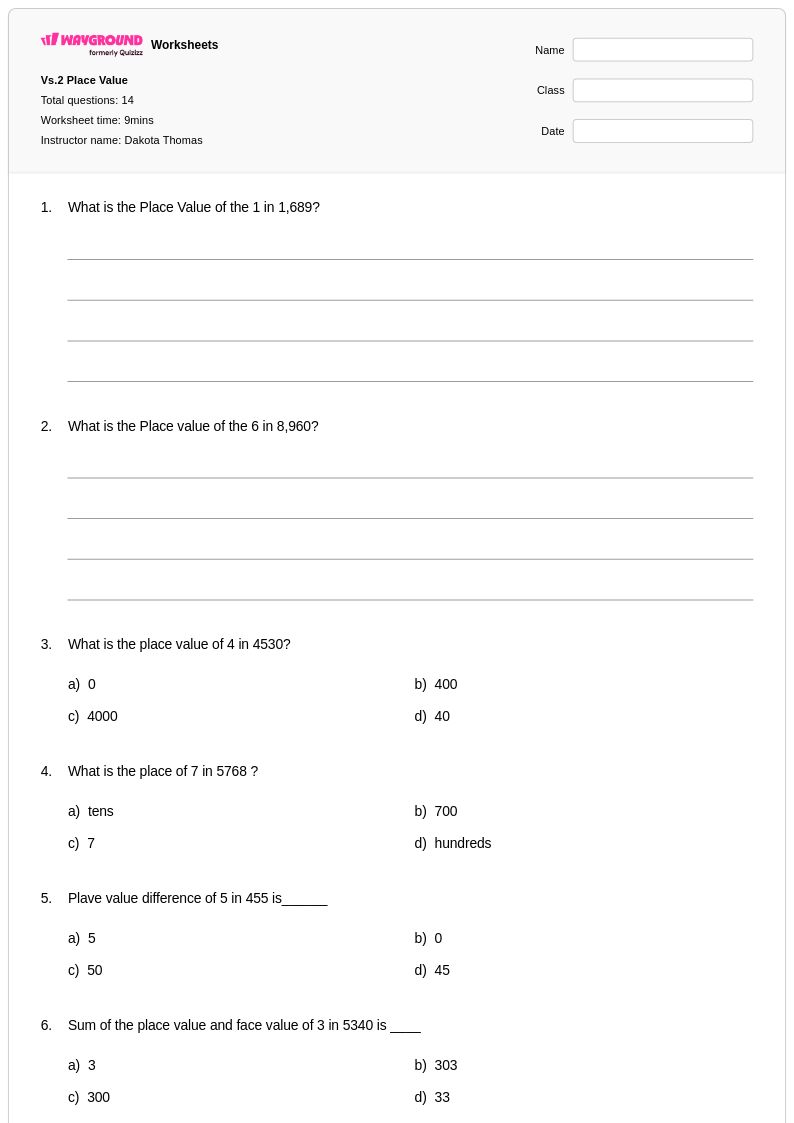
14 Q
2nd - 4th
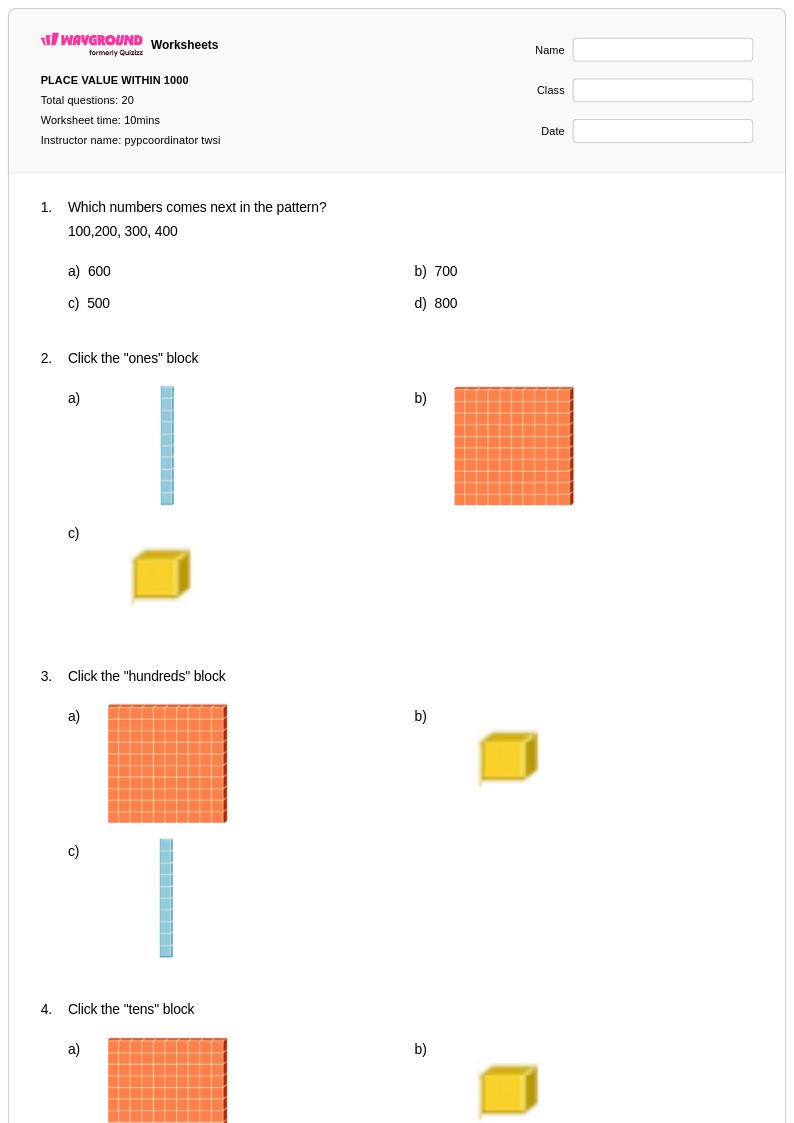
20 Q
3rd
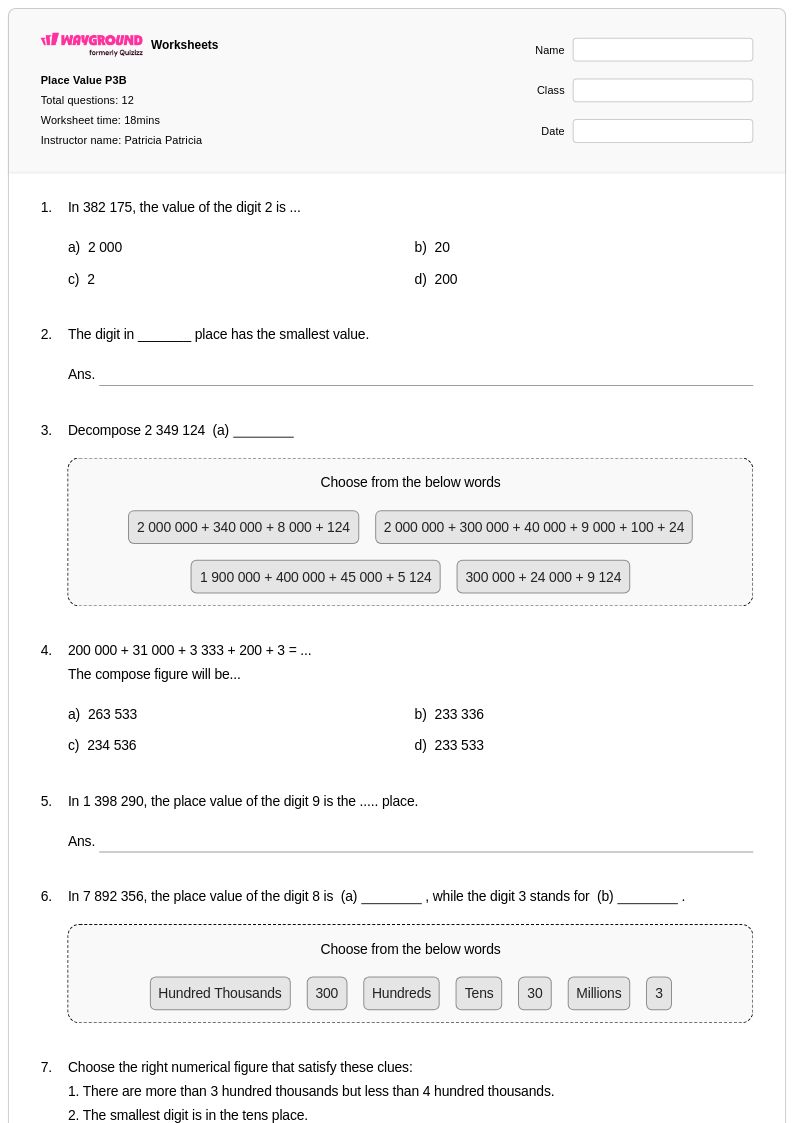
16 Q
3rd
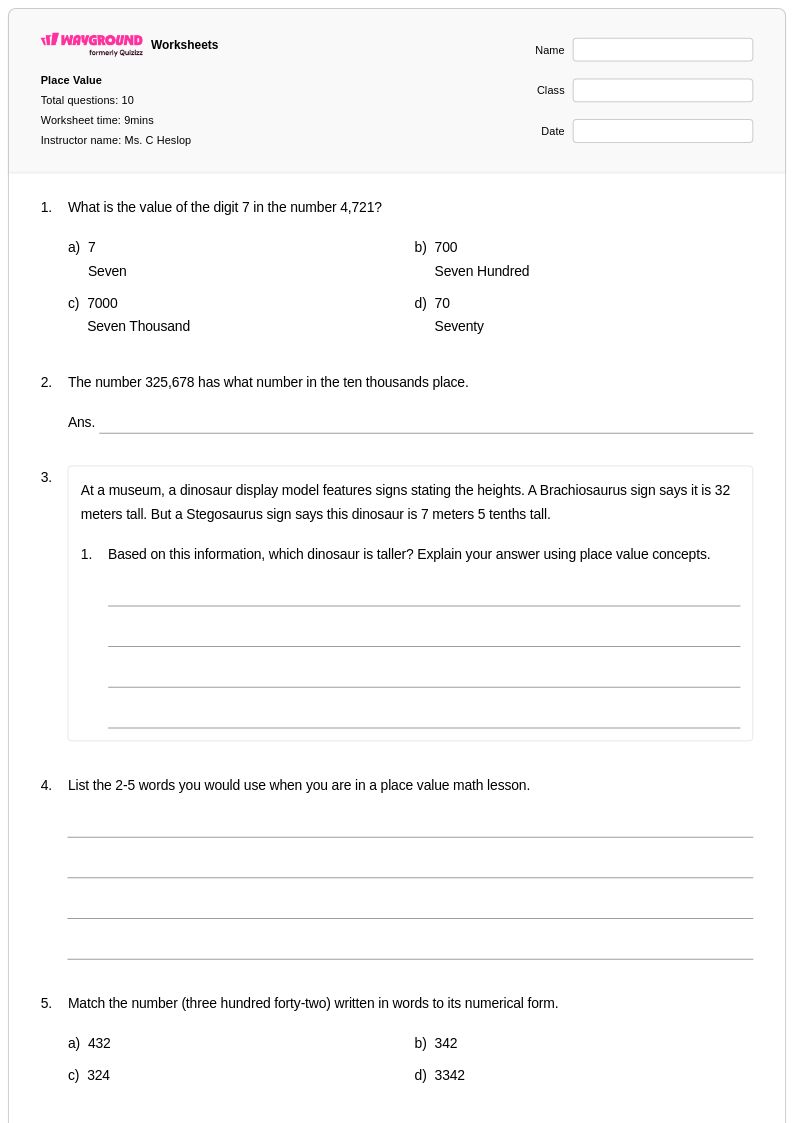
11 Q
3rd
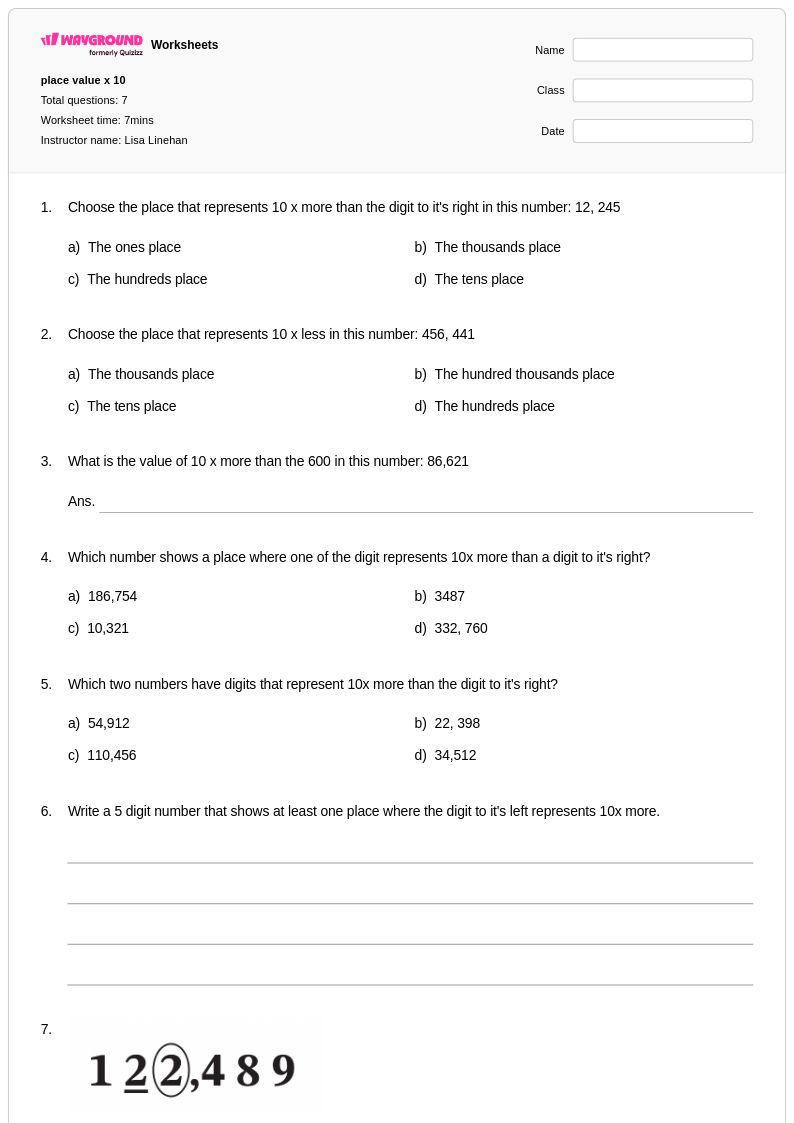
7 Q
3rd
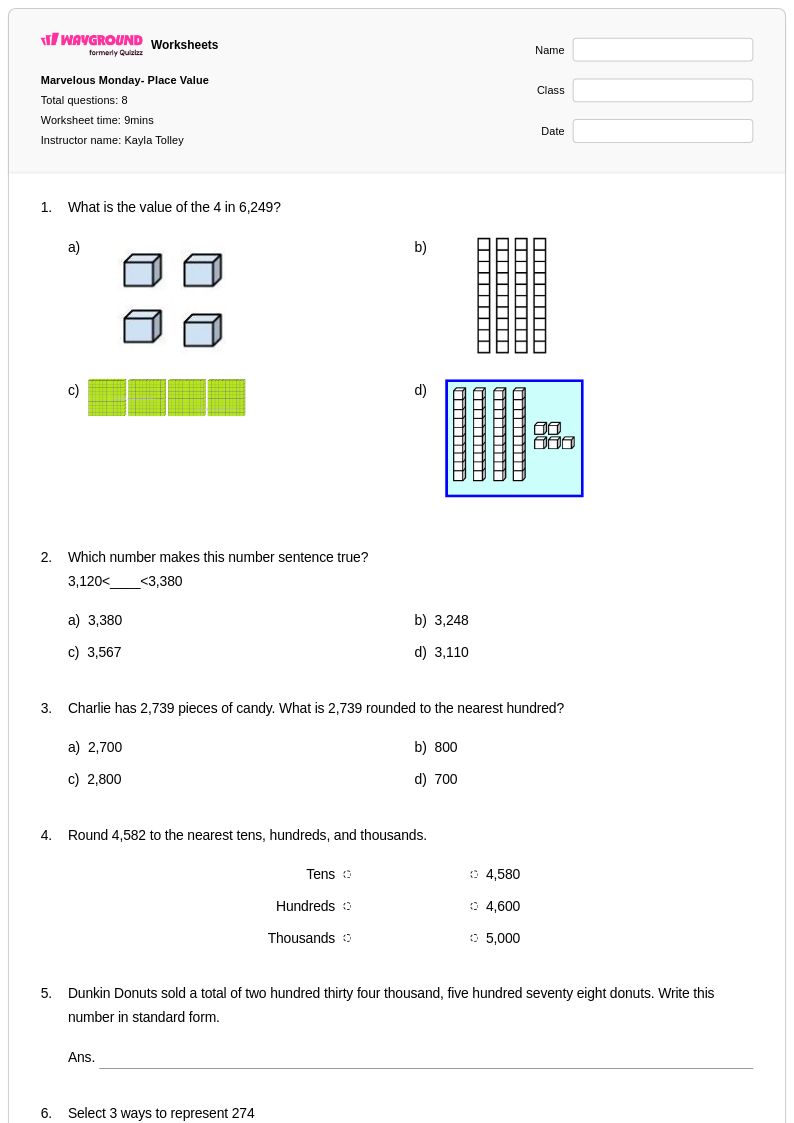
8 Q
3rd
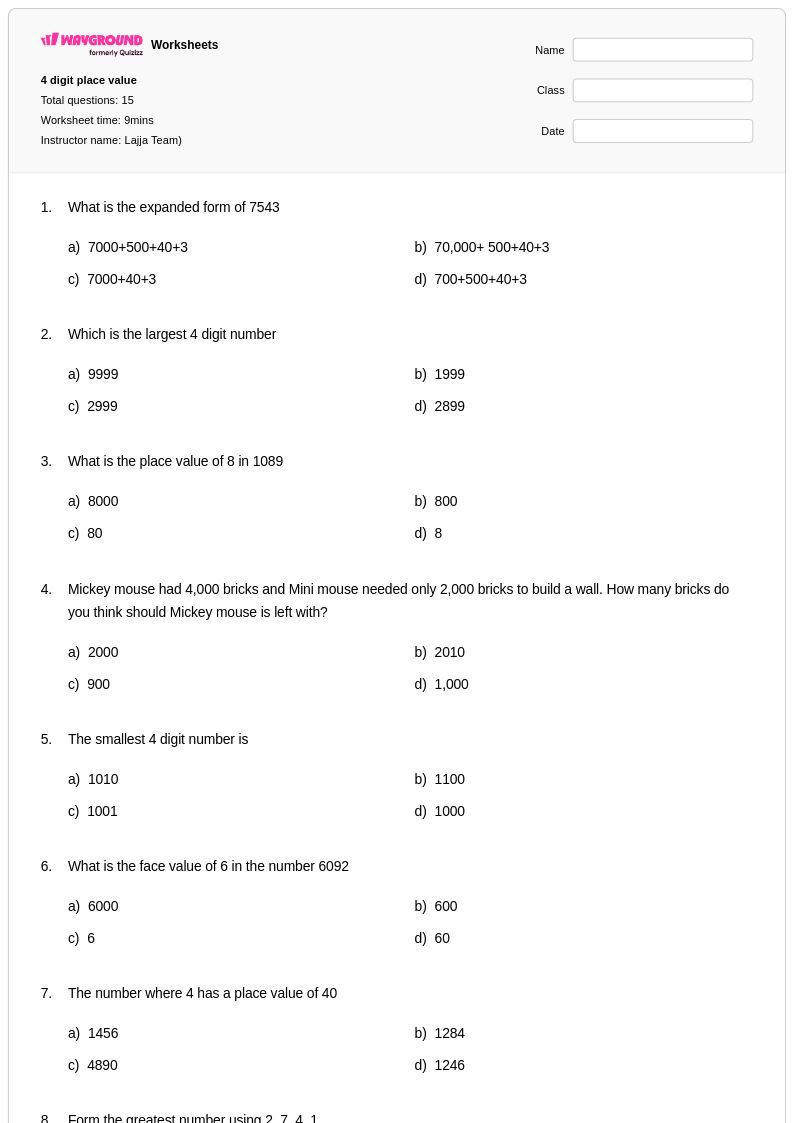
15 Q
3rd
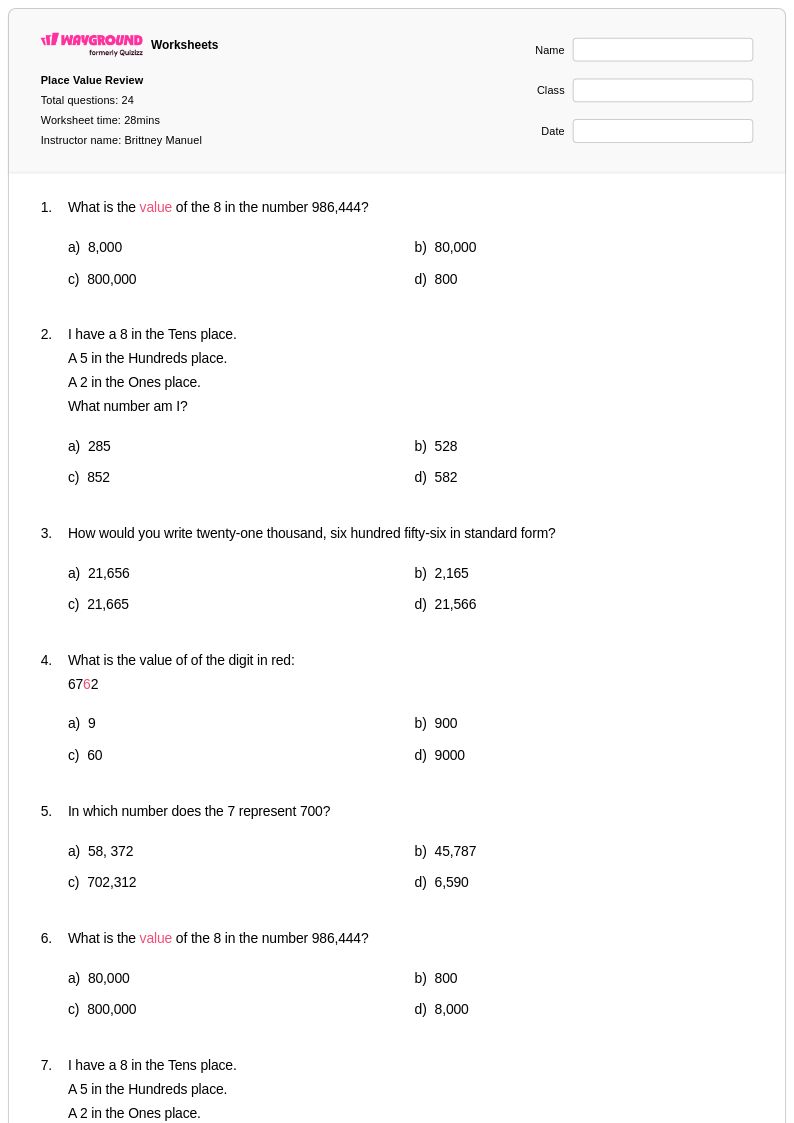
24 Q
3rd
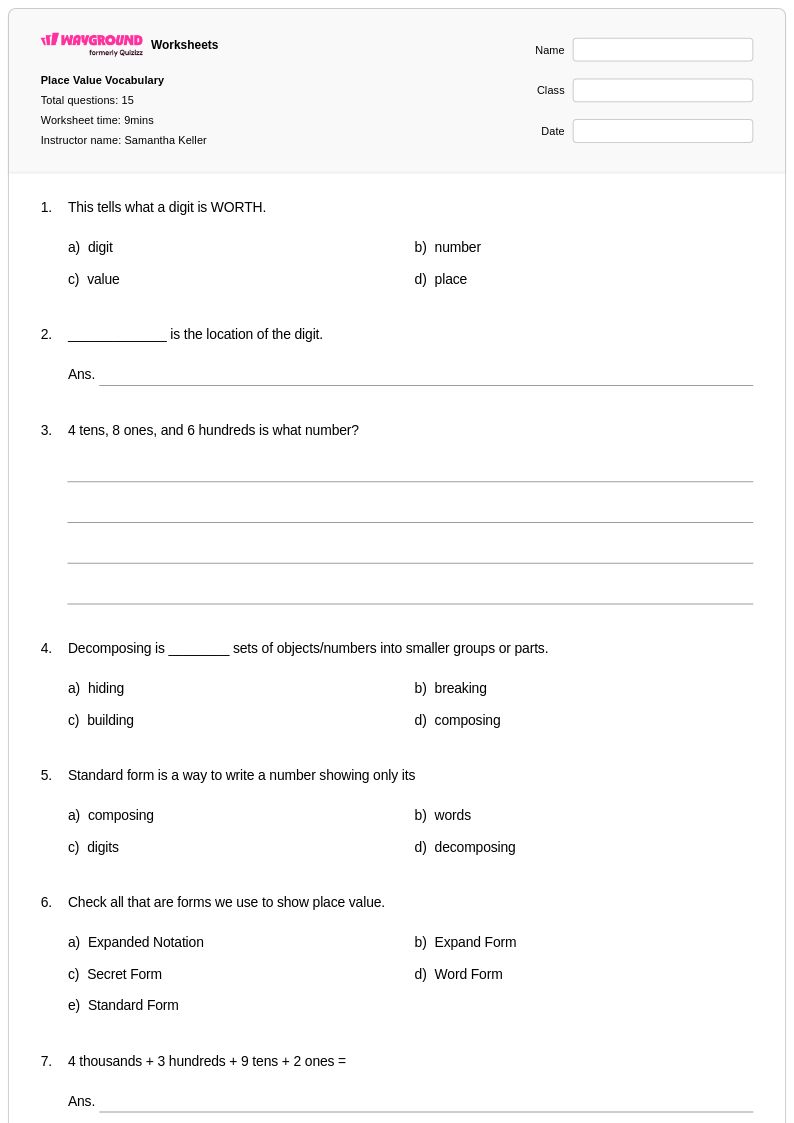
15 Q
3rd
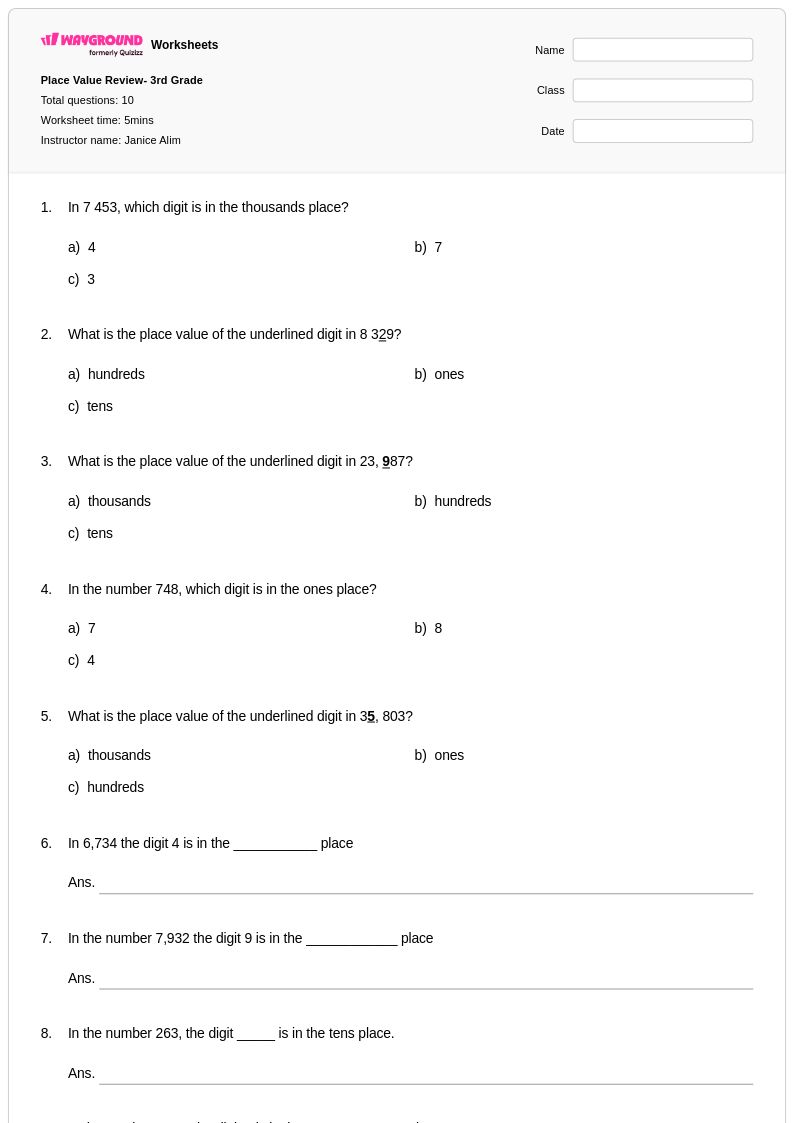
10 Q
3rd
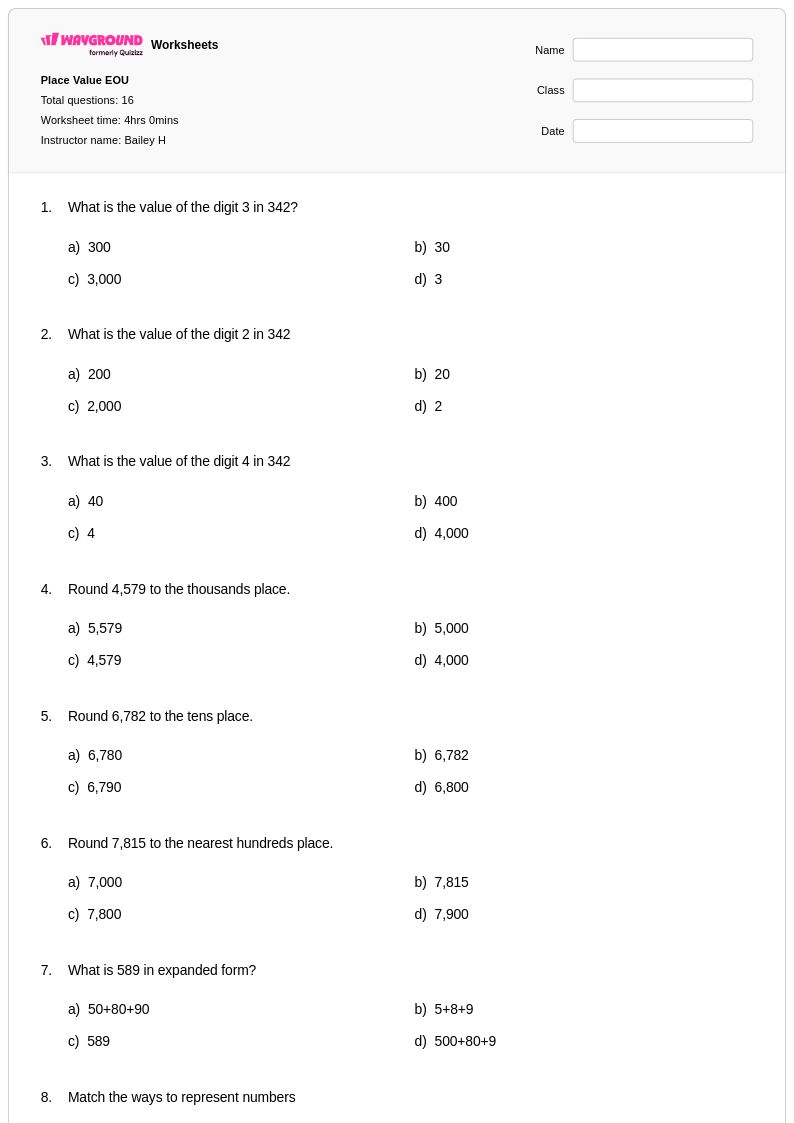
16 Q
1st - 3rd
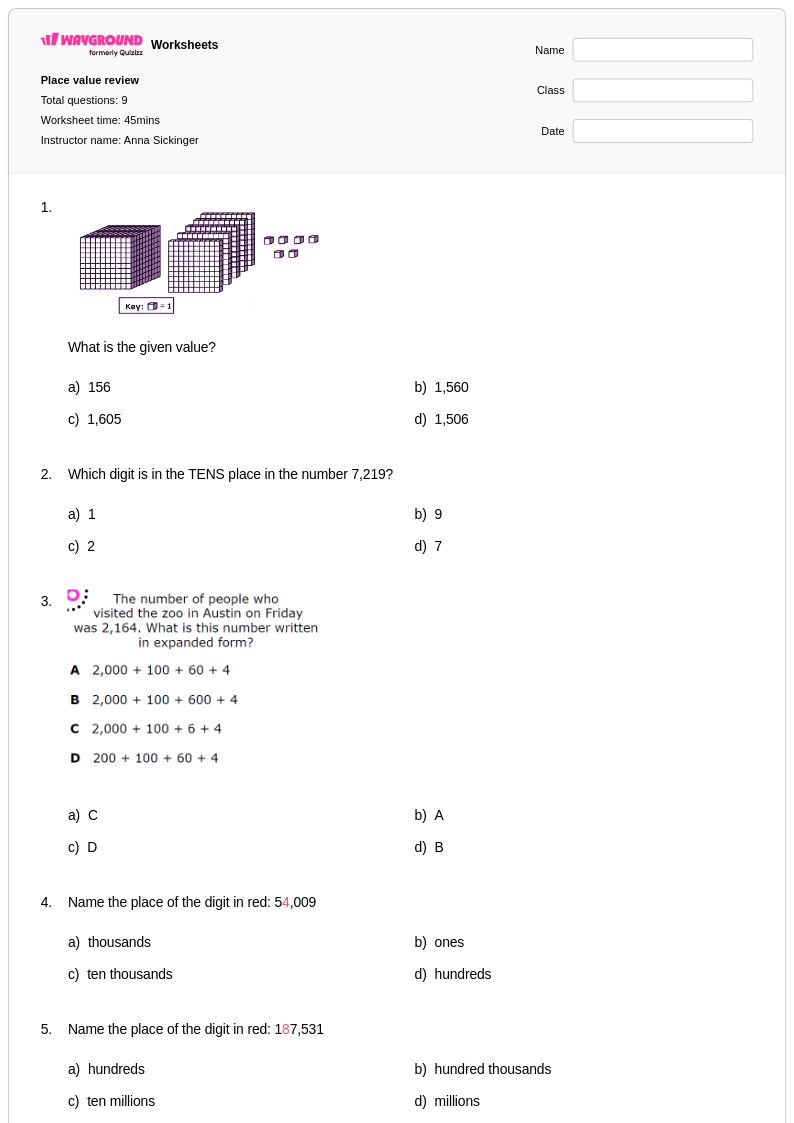
9 Q
3rd
Explore Relationships Between Place Values Worksheets by Grades
Explore Other Subject Worksheets for class 3
Explore printable Relationships Between Place Values worksheets for Class 3
Relationships Between Place Values worksheets for Class 3 students available through Wayground (formerly Quizizz) provide comprehensive practice opportunities for developing critical mathematical understanding of how digits interact within our base-ten number system. These carefully designed printables strengthen students' ability to recognize patterns between neighboring place values, understand the ten-to-one relationships that govern our number system, and apply regrouping concepts essential for multi-digit operations. Each worksheet collection includes detailed answer keys and presents practice problems that guide third-grade learners through discovering how the value of a digit changes based on its position, comparing the relative worth of digits in hundreds, tens, and ones places, and recognizing that each place value represents ten times the value of the place to its right. These free pdf resources systematically build conceptual understanding while providing concrete practice with place value relationships that form the foundation for advanced arithmetic skills.
Wayground (formerly Quizizz) empowers educators with an extensive library of millions of teacher-created resources specifically designed to support place value instruction in Class 3 mathematics curricula. The platform's robust search and filtering capabilities allow teachers to quickly locate worksheets aligned with specific standards and learning objectives, while differentiation tools enable customization for diverse student needs and learning levels. These comprehensive worksheet collections are available in both printable pdf format and interactive digital versions, providing flexibility for various instructional settings and learning preferences. Teachers can efficiently plan targeted lessons, design remediation activities for struggling learners, create enrichment opportunities for advanced students, and establish consistent skill practice routines that reinforce the fundamental place value relationships essential for mathematical fluency and conceptual understanding in elementary mathematics.
FAQs
What do 3rd graders learn about place value relationships?
How can I teach place value relationships to 3rd graders?
What kind of practice helps 3rd graders with place value?
What's a common place value error in 3rd grade?
How does this topic align with 3rd grade math standards?
How do I assign this 3rd grade place value worksheet?