
Recommended Topics for you
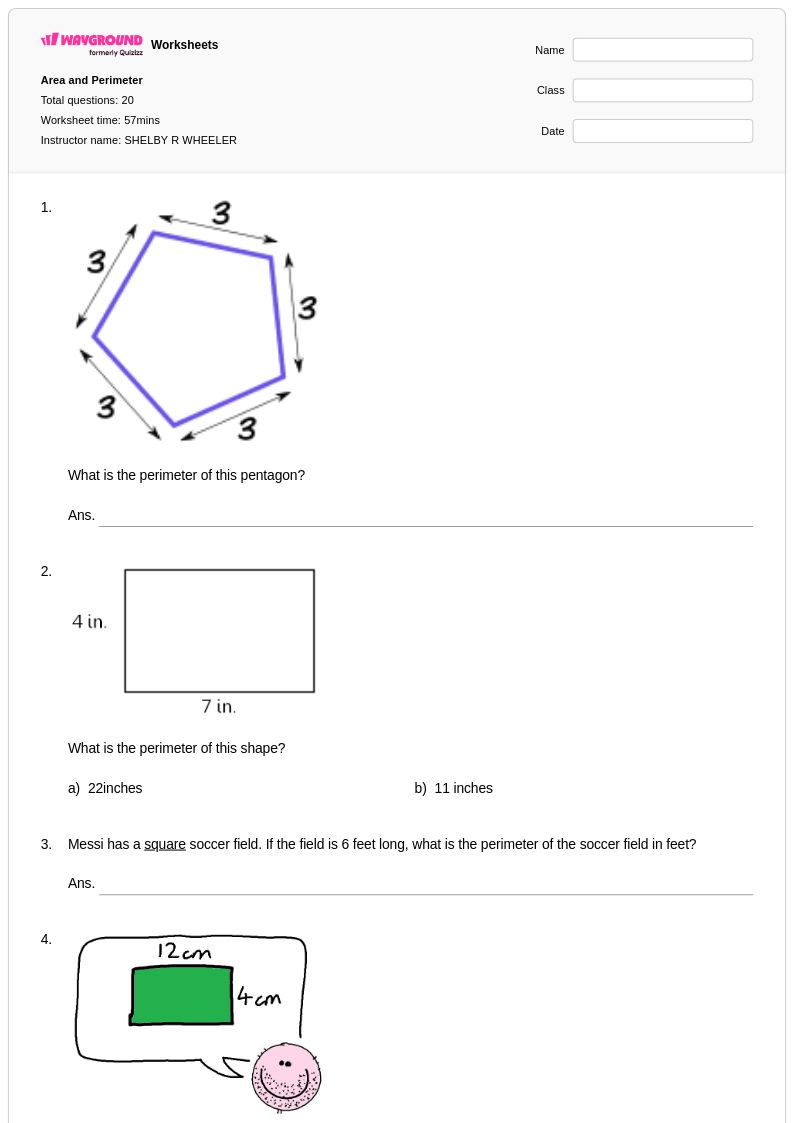
20 Q
3rd
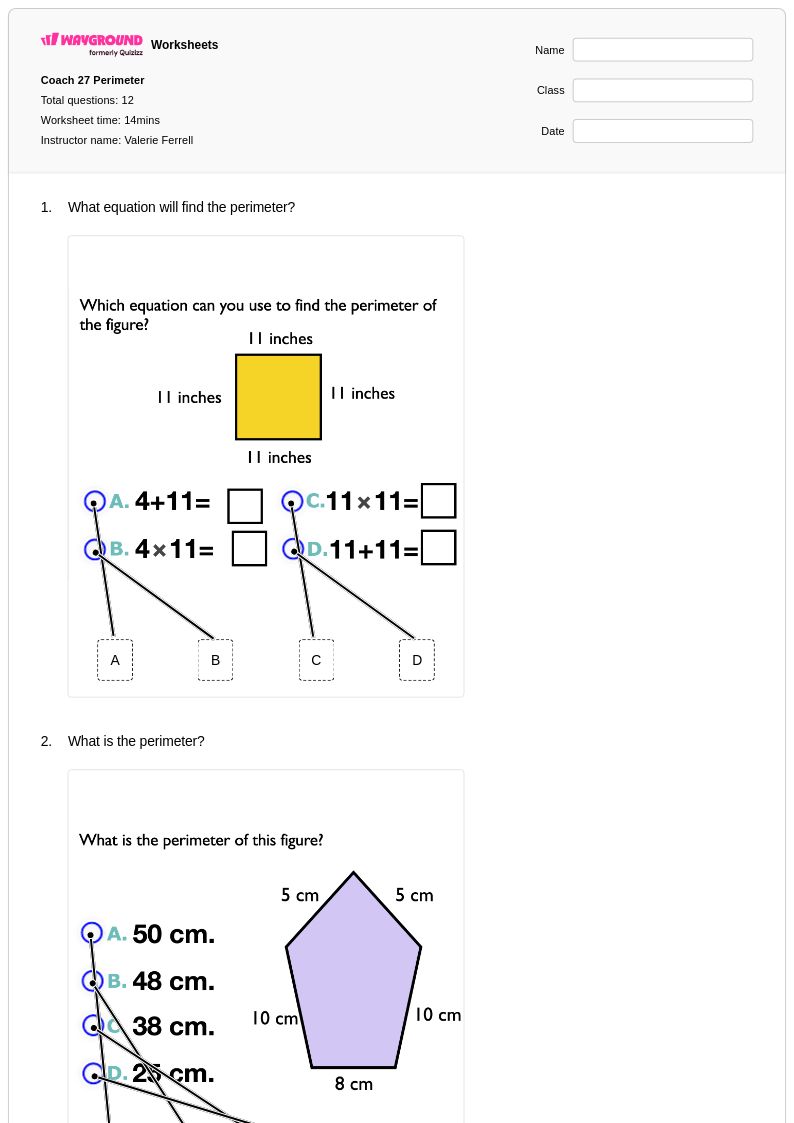
12 Q
3rd
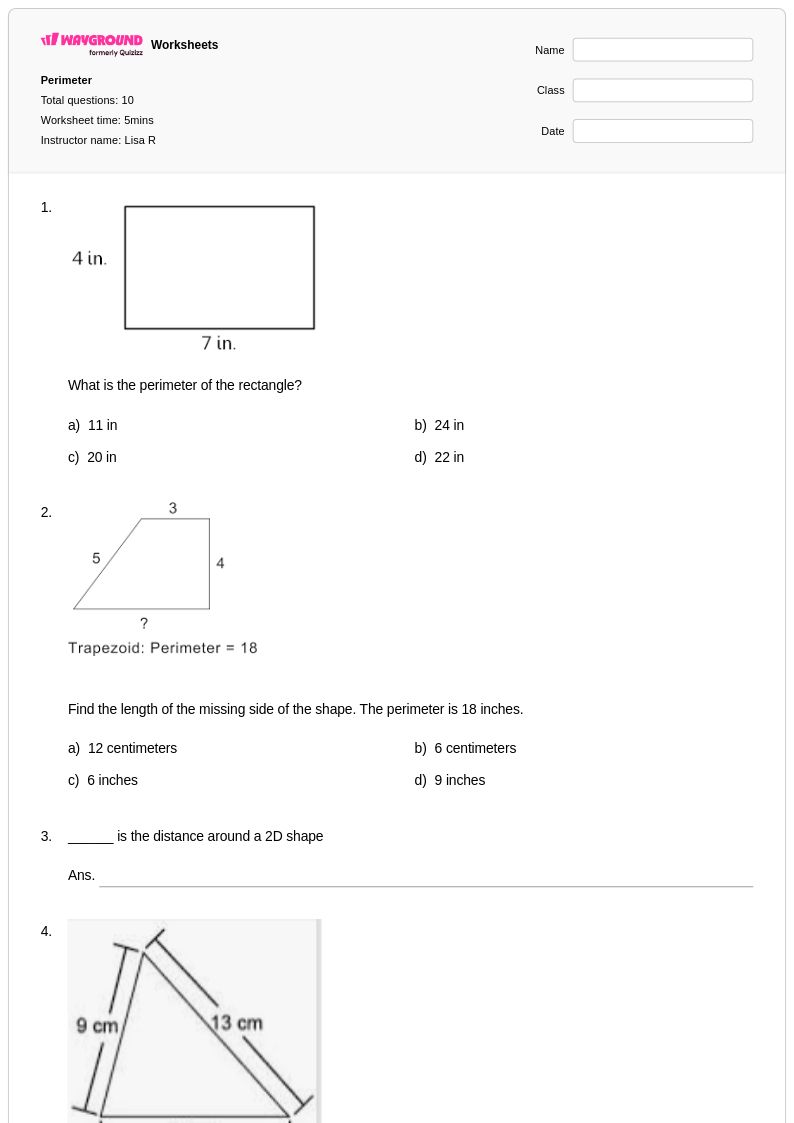
10 Q
3rd
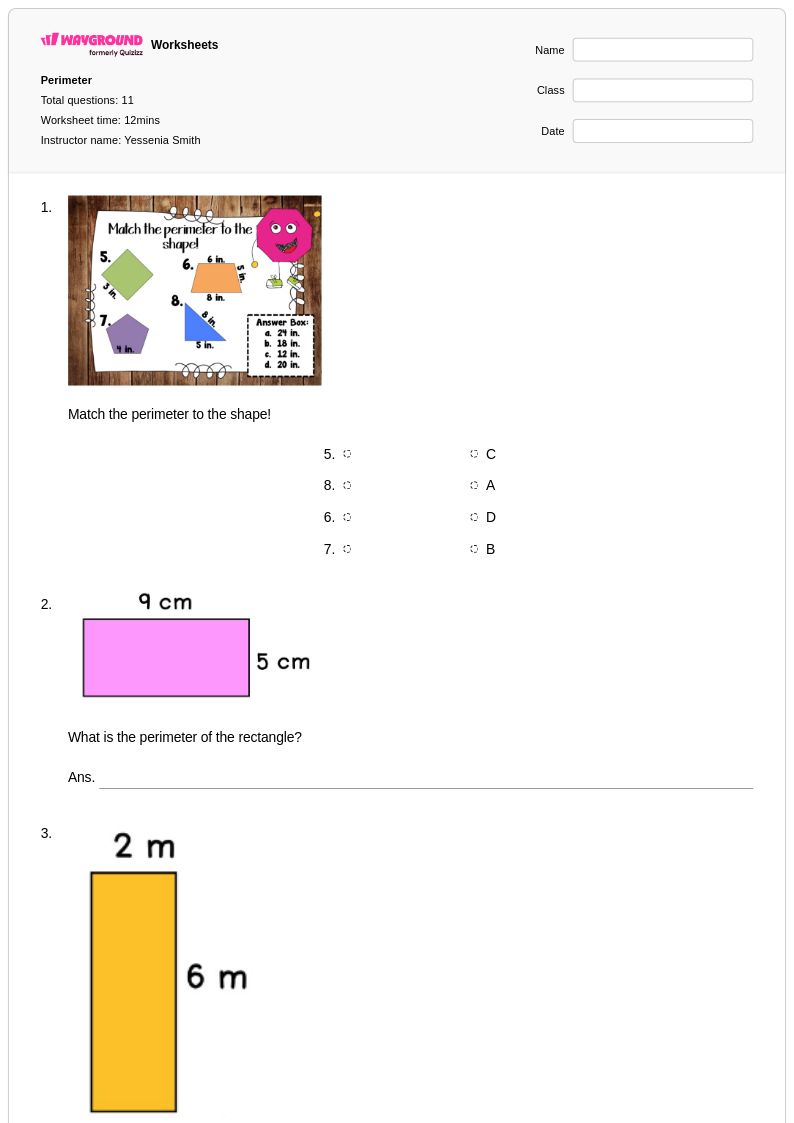
11 Q
3rd
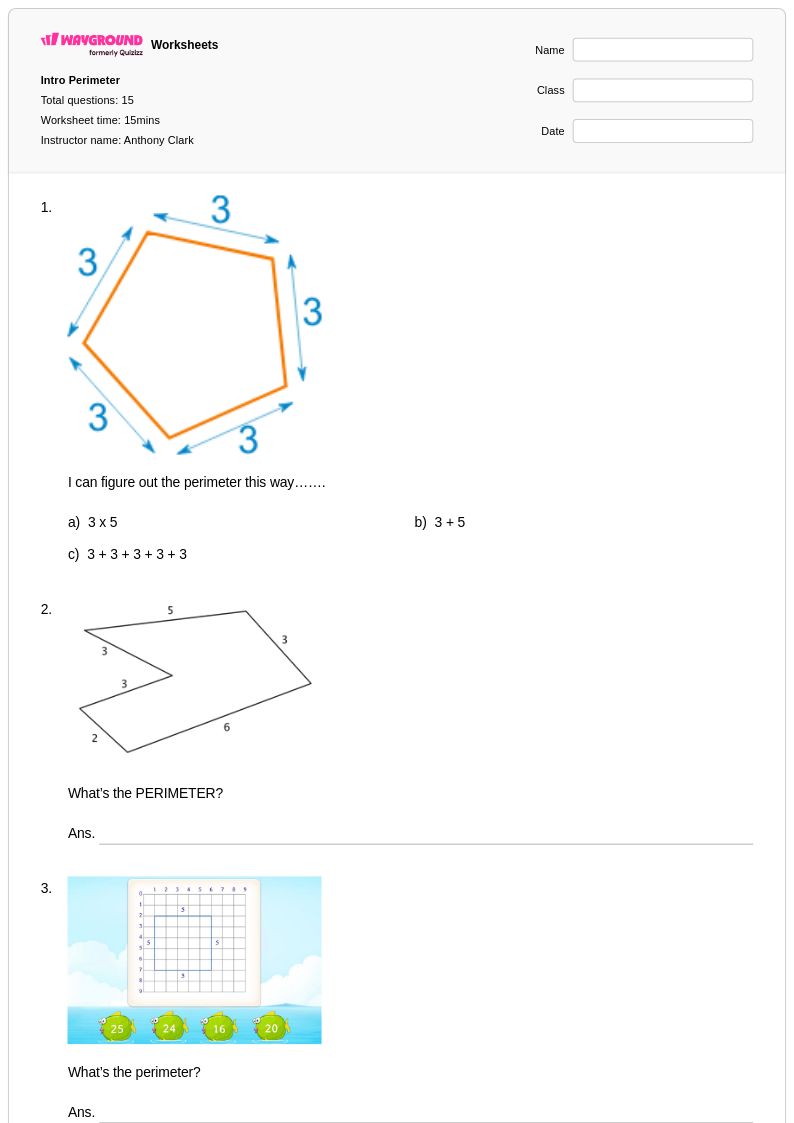
15 Q
3rd - Uni
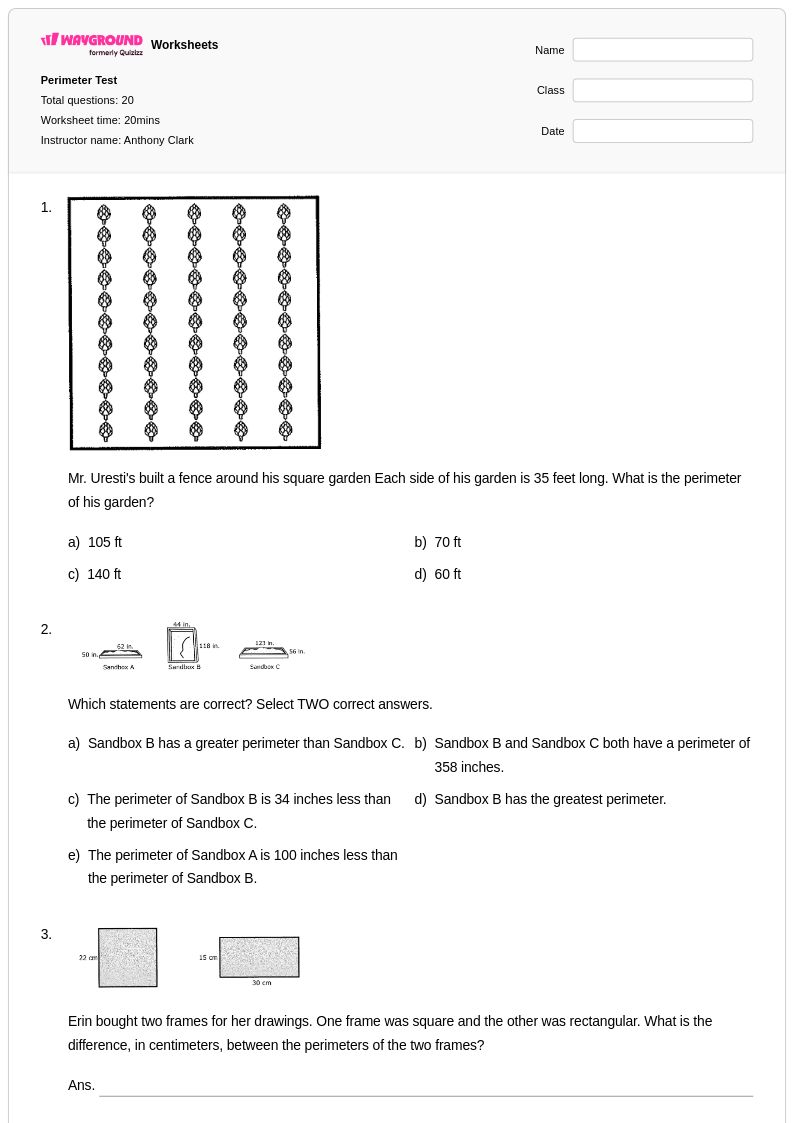
20 Q
3rd - Uni
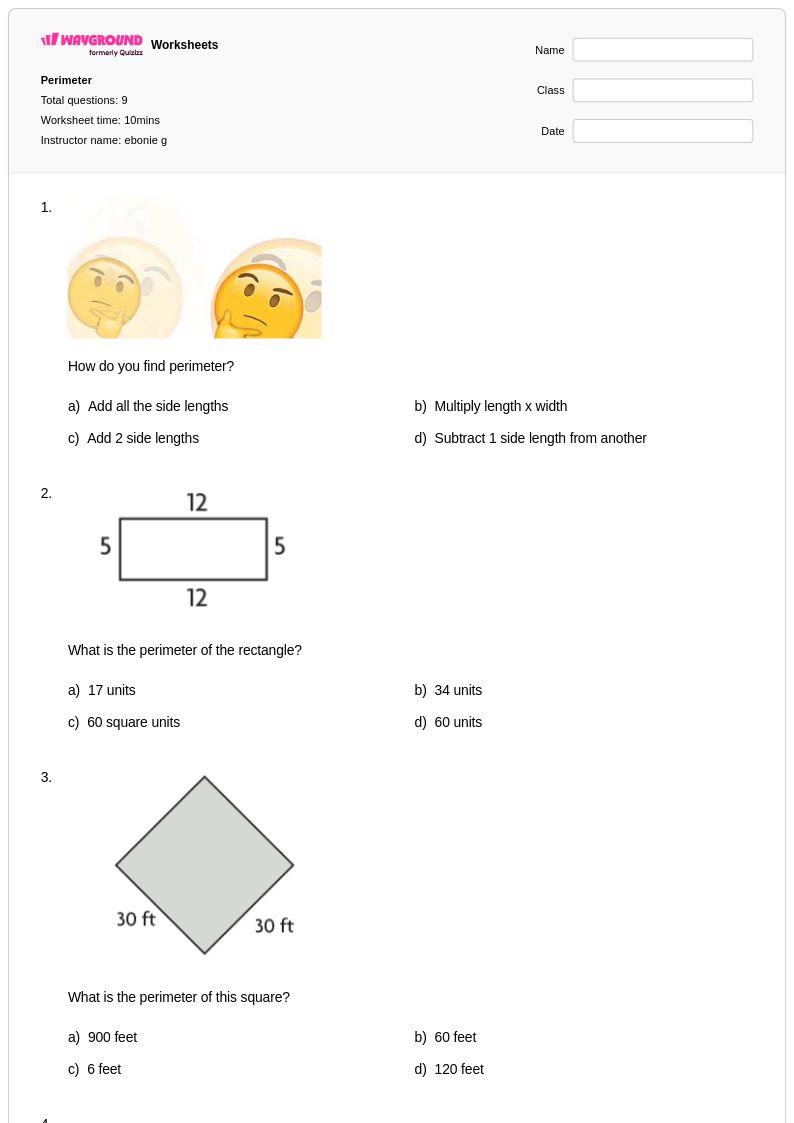
9 Q
3rd - 5th
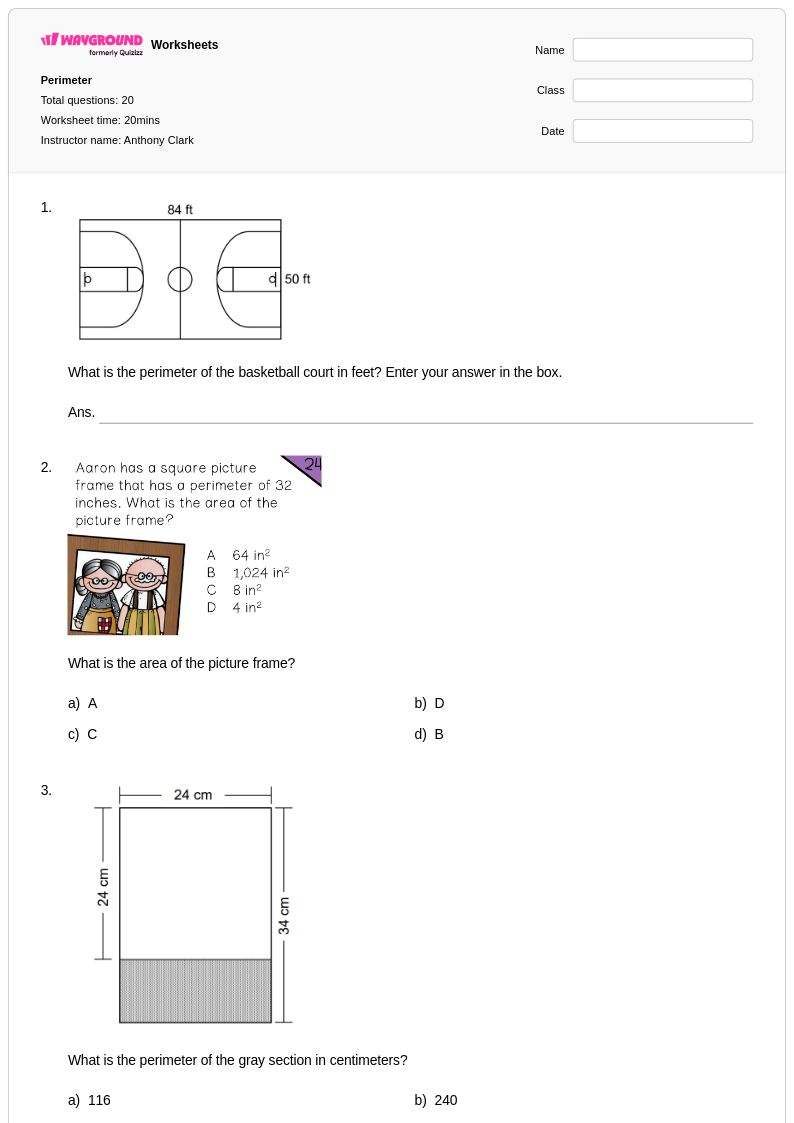
20 Q
3rd - Uni
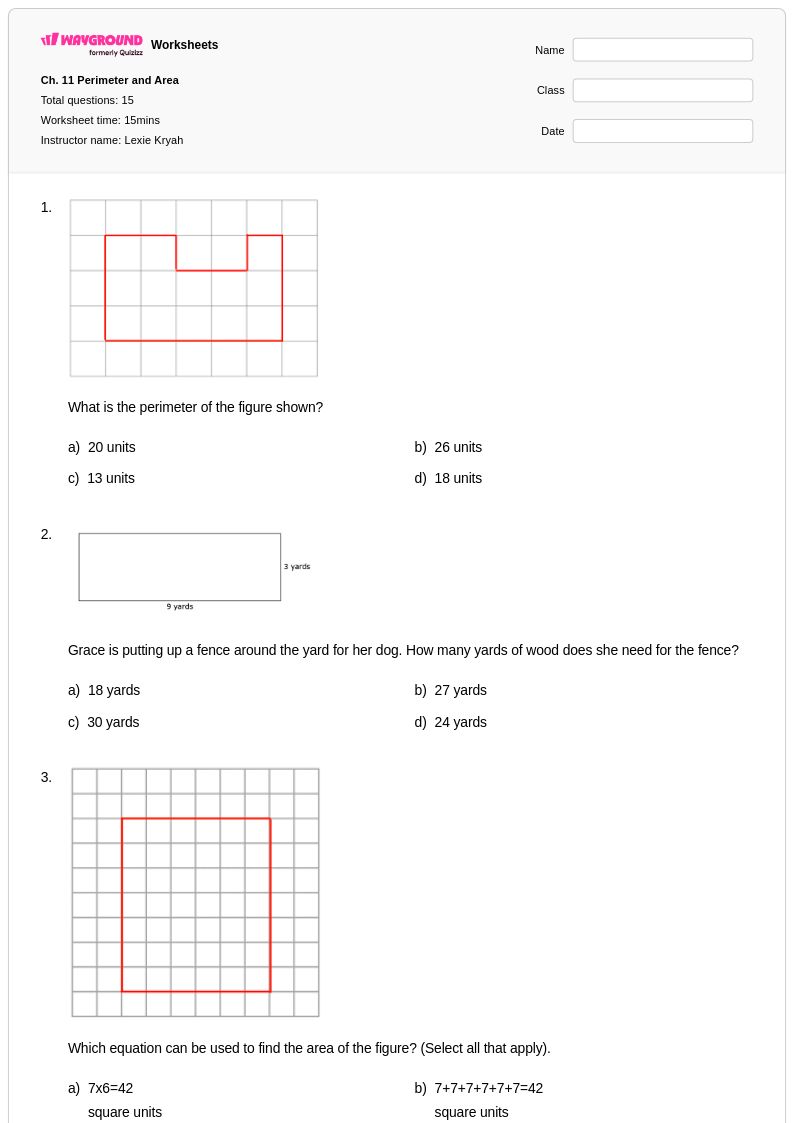
15 Q
3rd
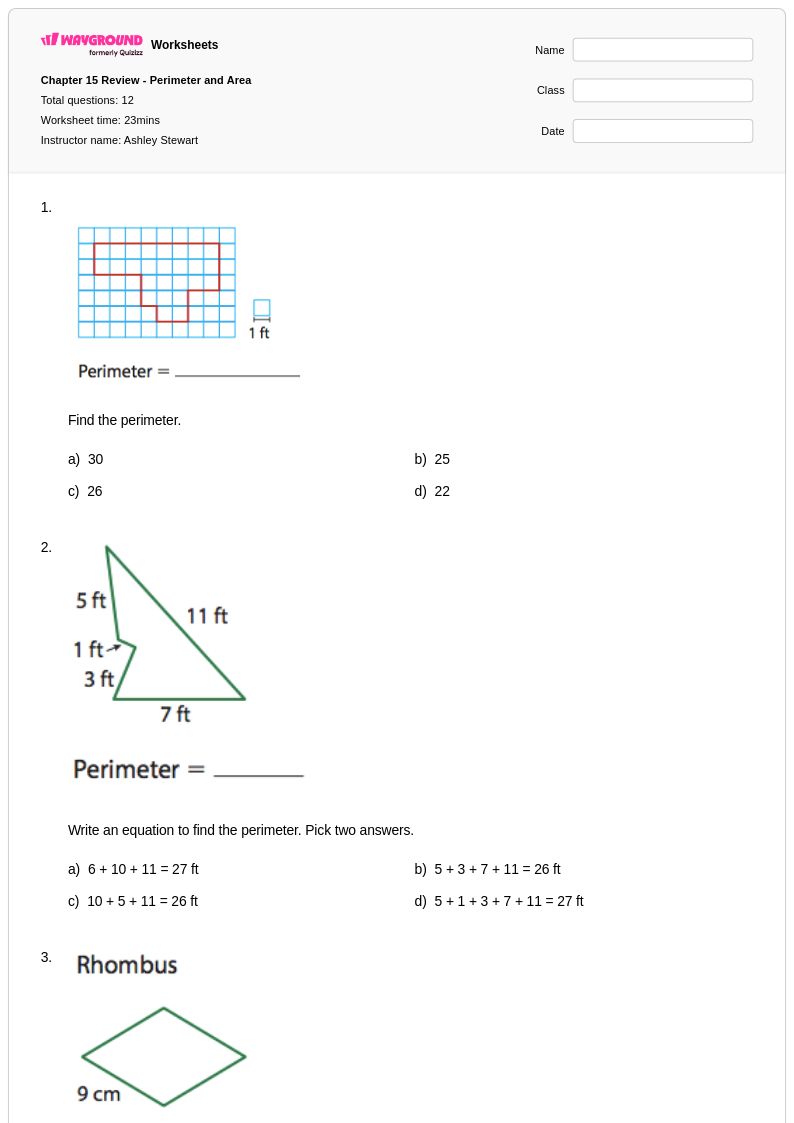
12 Q
3rd
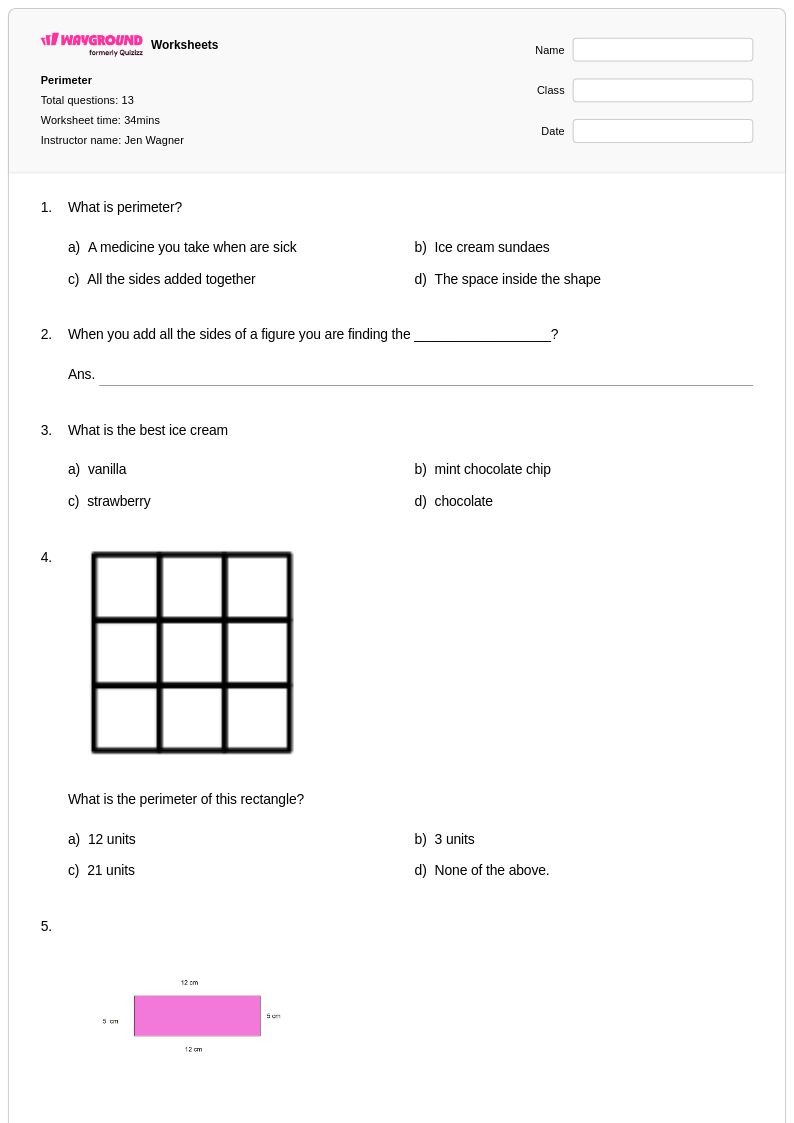
13 Q
3rd
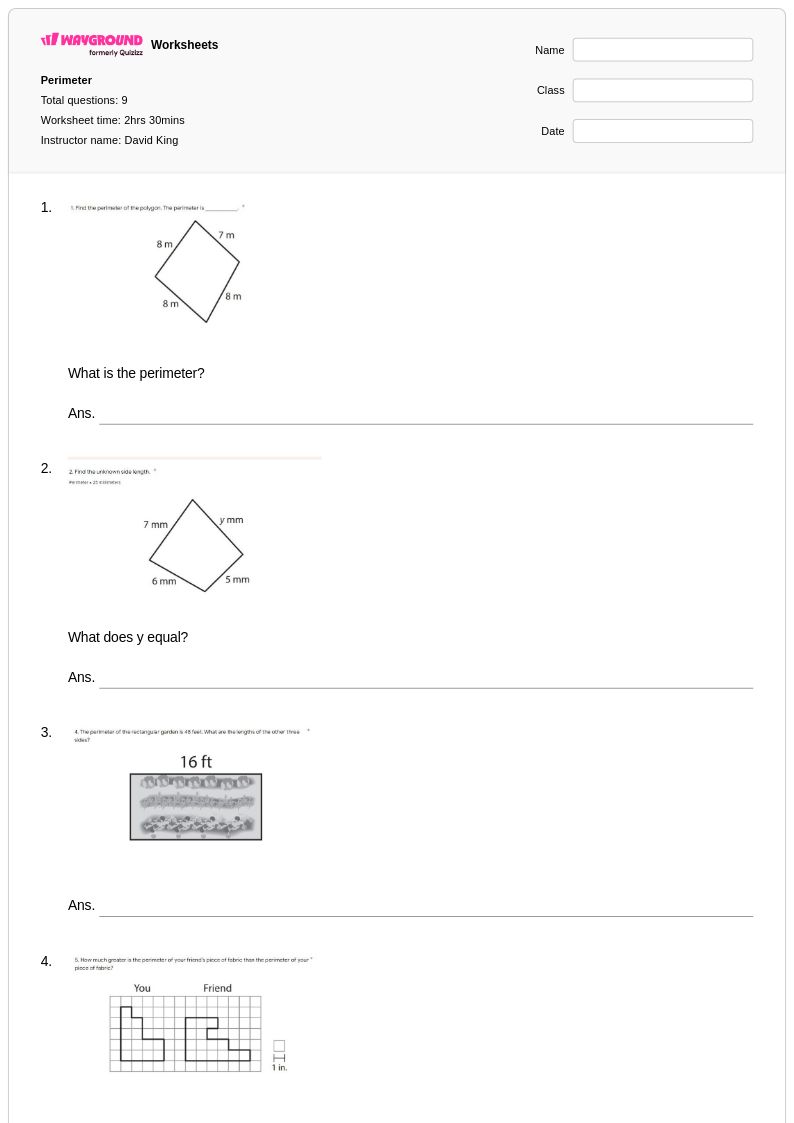
9 Q
3rd
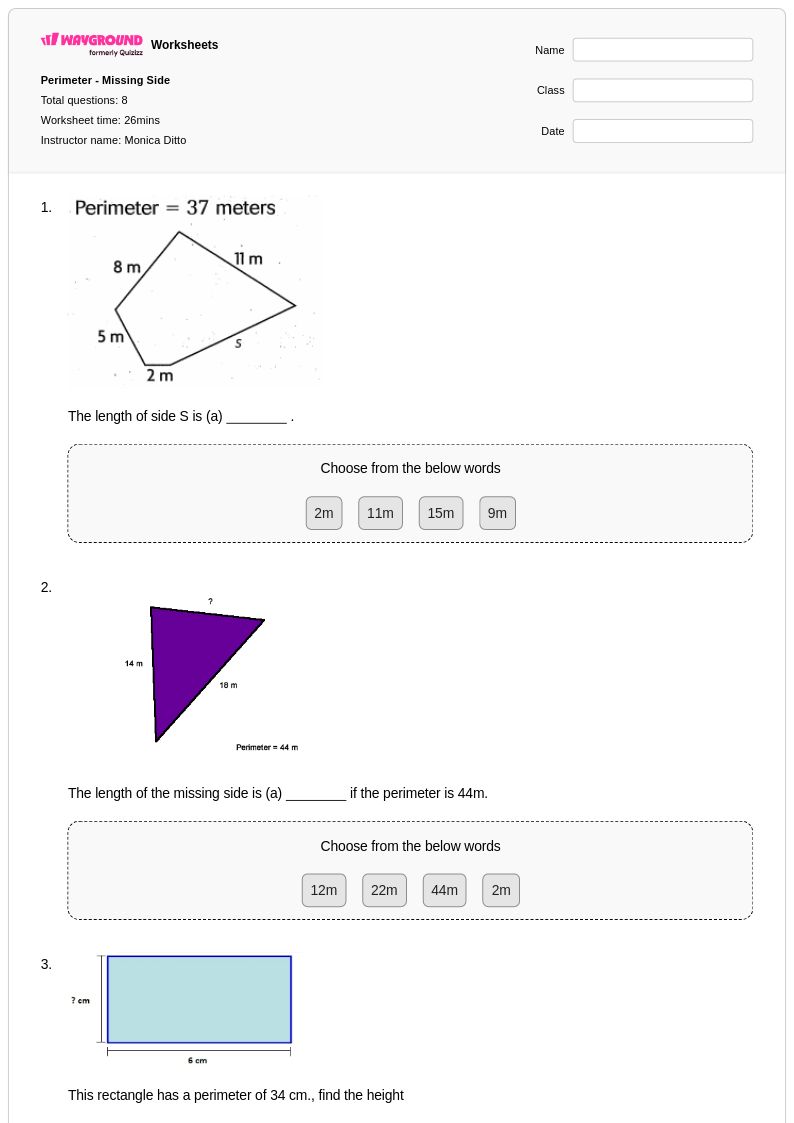
8 Q
3rd
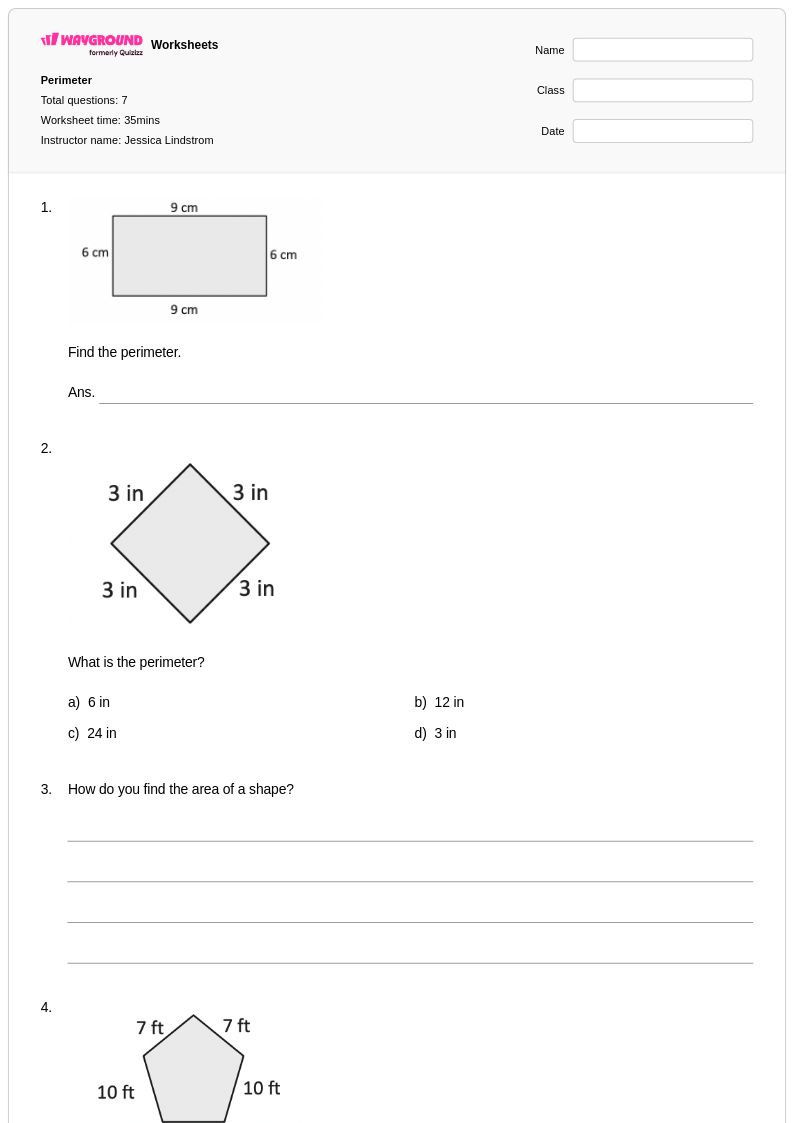
7 Q
2nd - 3rd
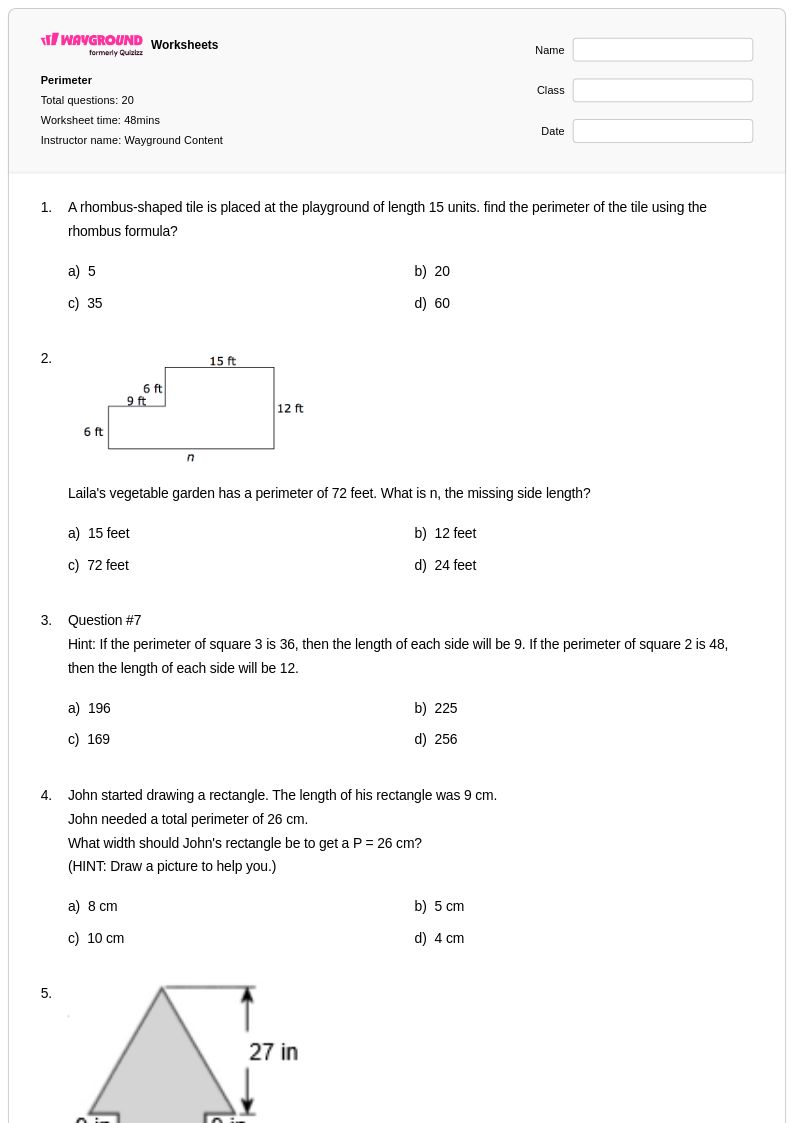
20 Q
3rd
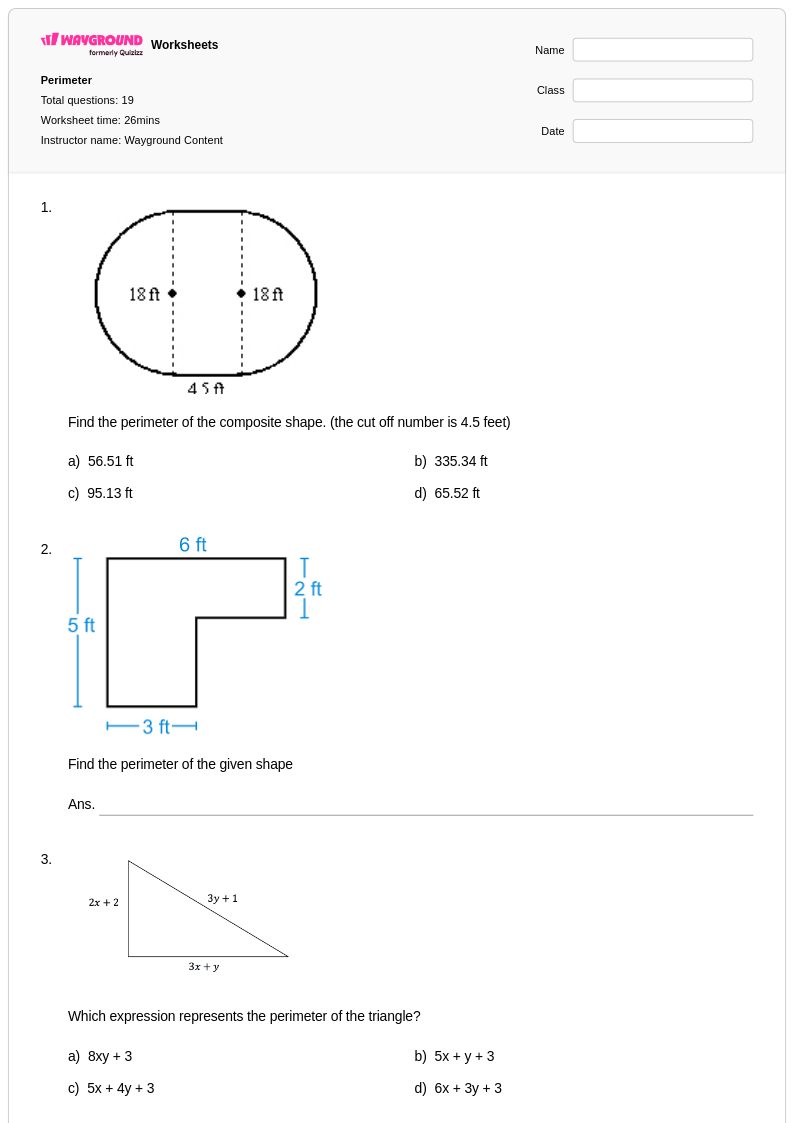
19 Q
3rd
8 Q
3rd
12 Q
3rd
7 Q
3rd
20 Q
3rd
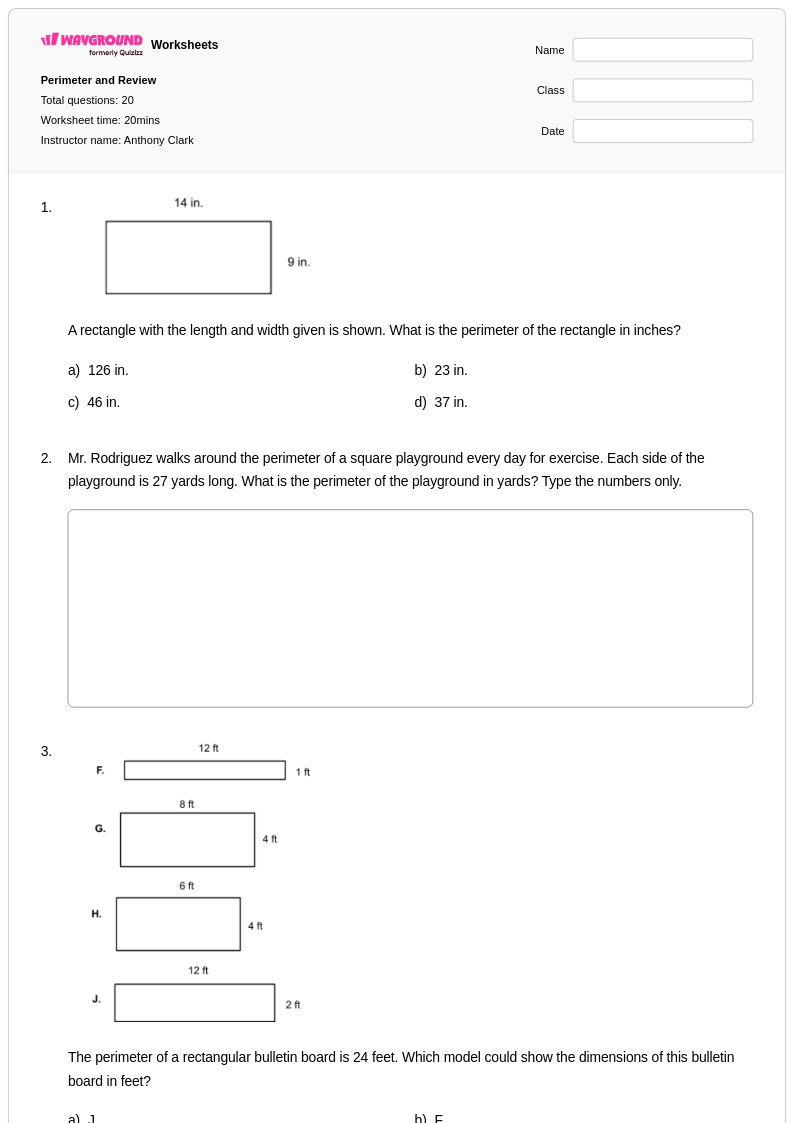
20 Q
3rd - Uni
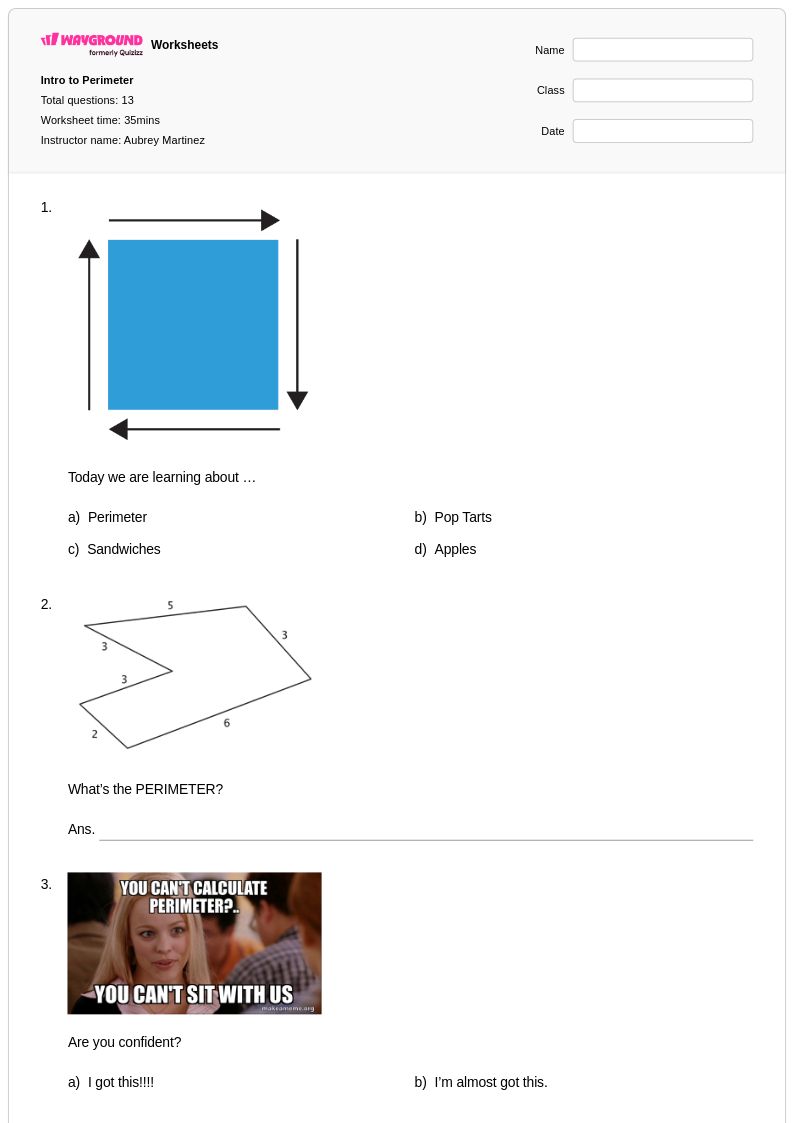
13 Q
3rd
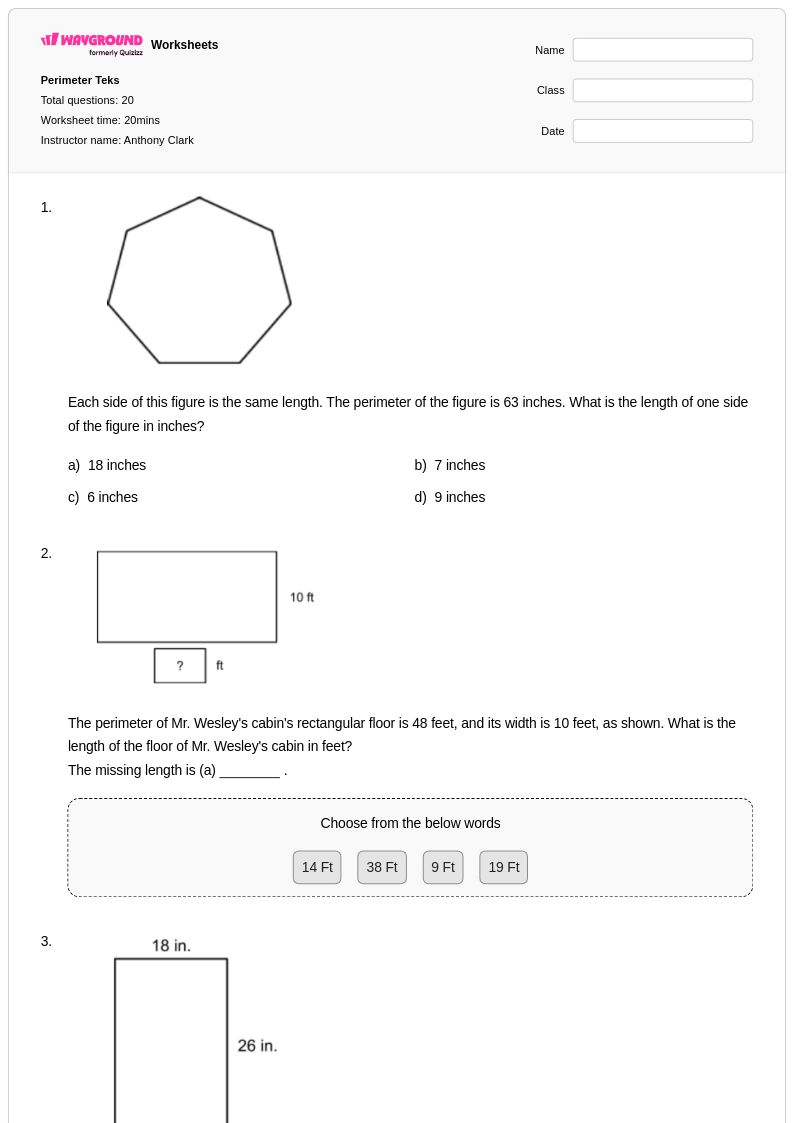
20 Q
3rd - Uni
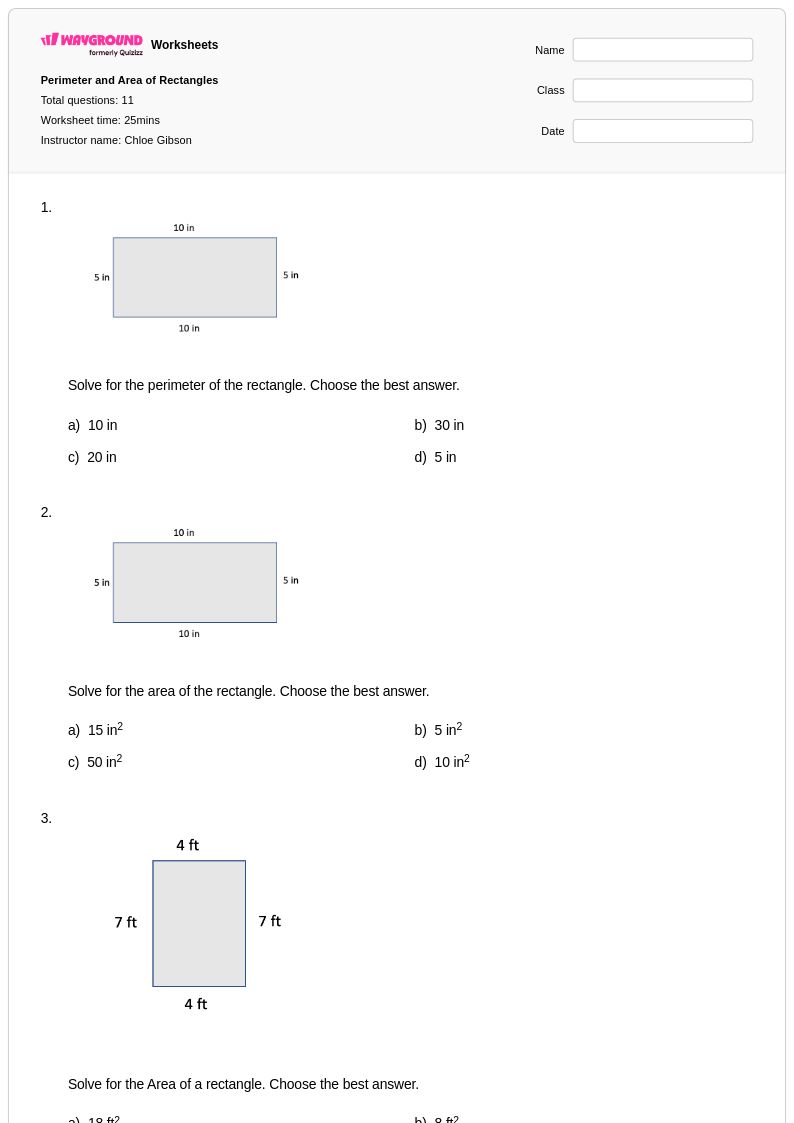
11 Q
3rd
Explore Perimeter Worksheets for class 3 by Topic
Explore Other Subject Worksheets for class 3
Explore printable Perimeter worksheets for Class 3
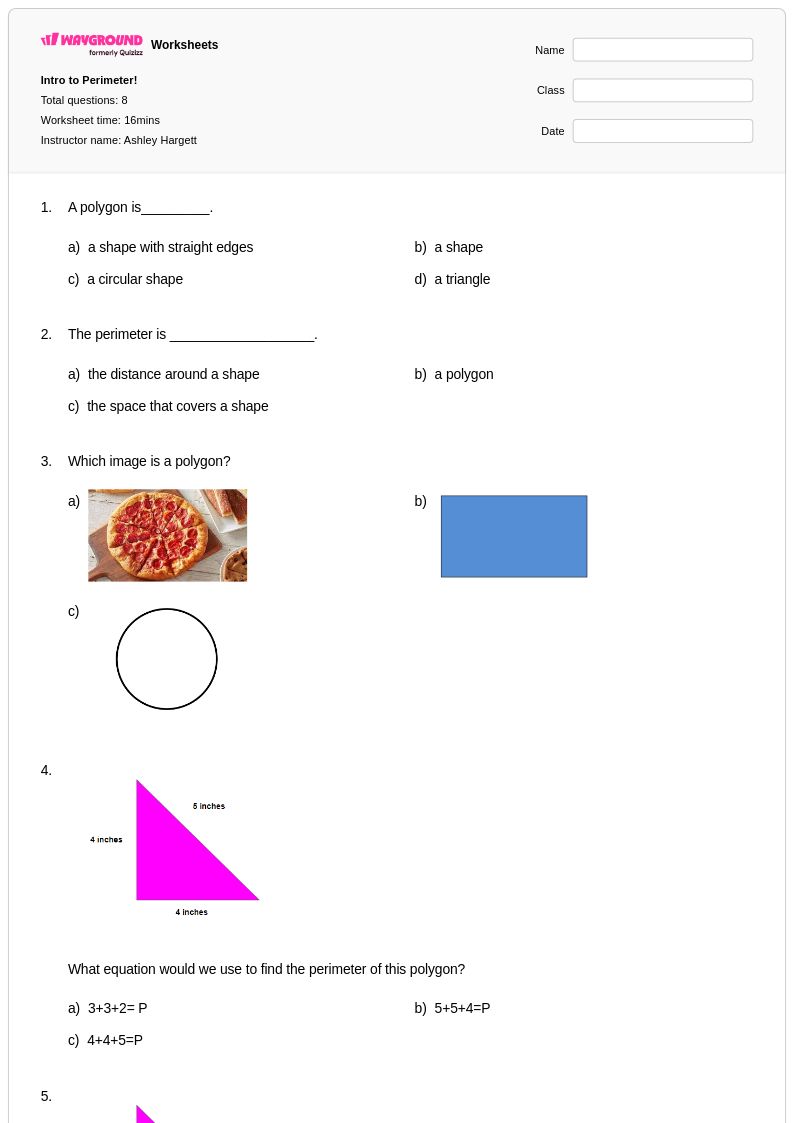
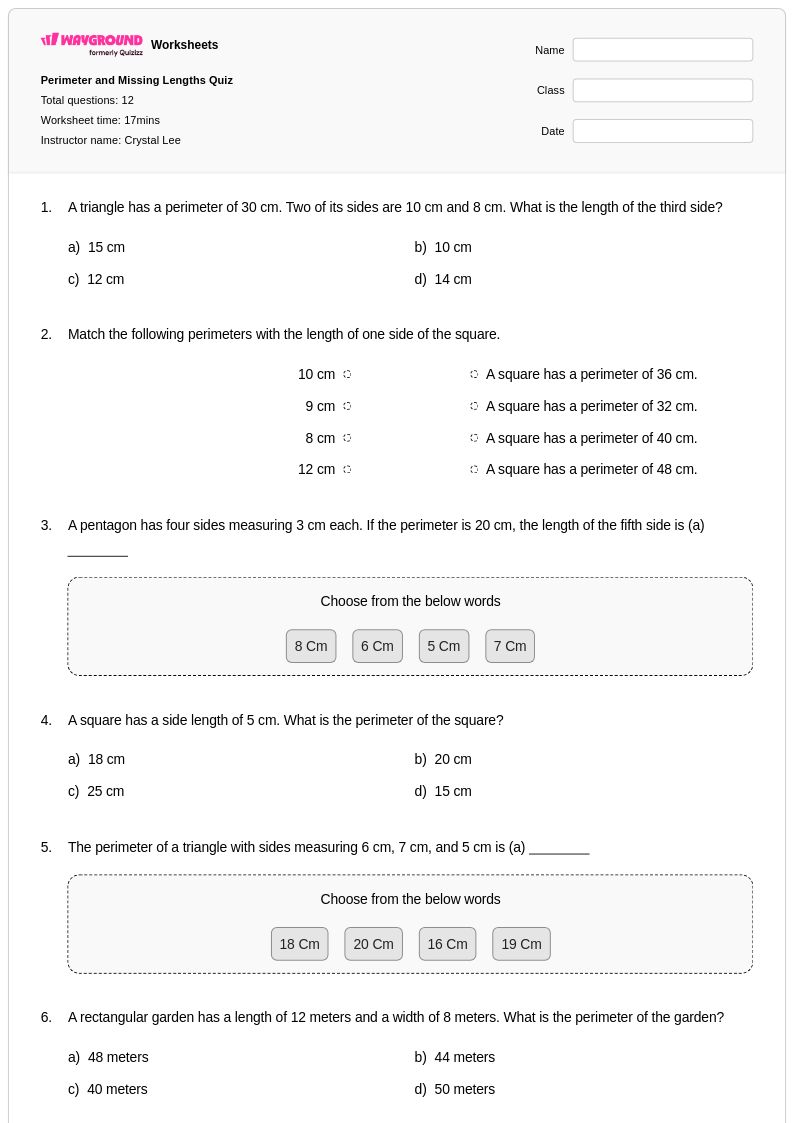
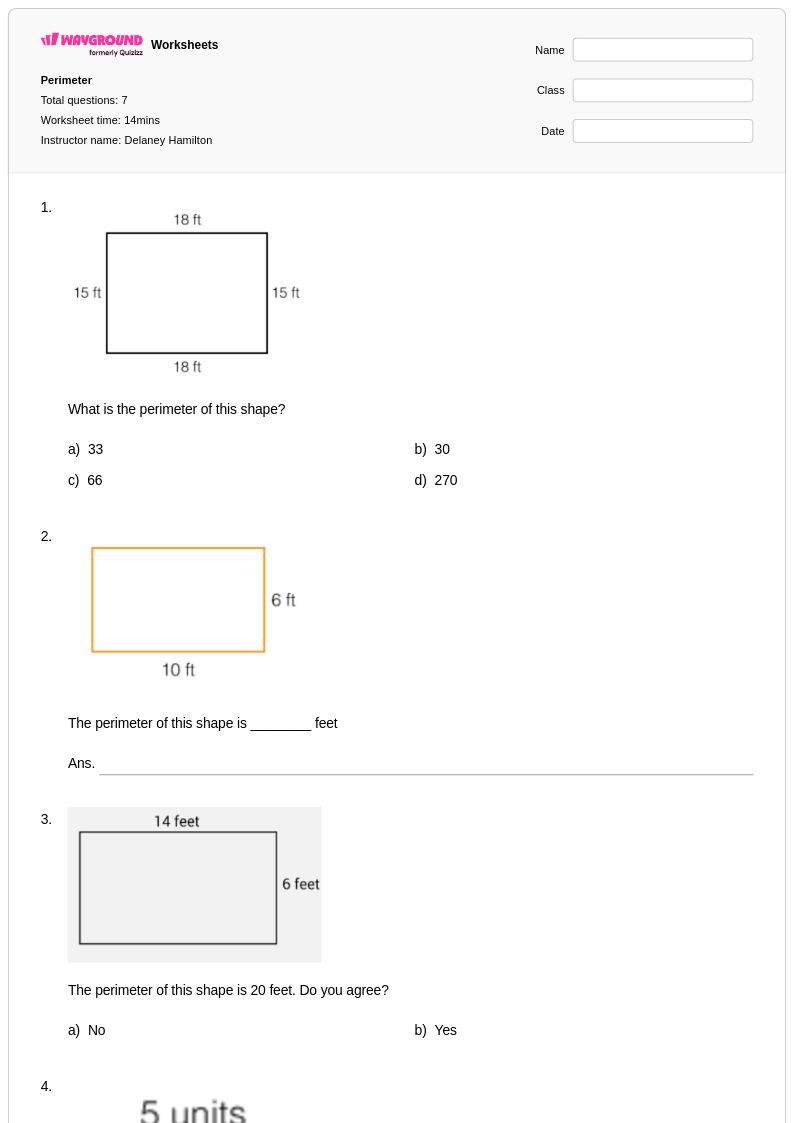
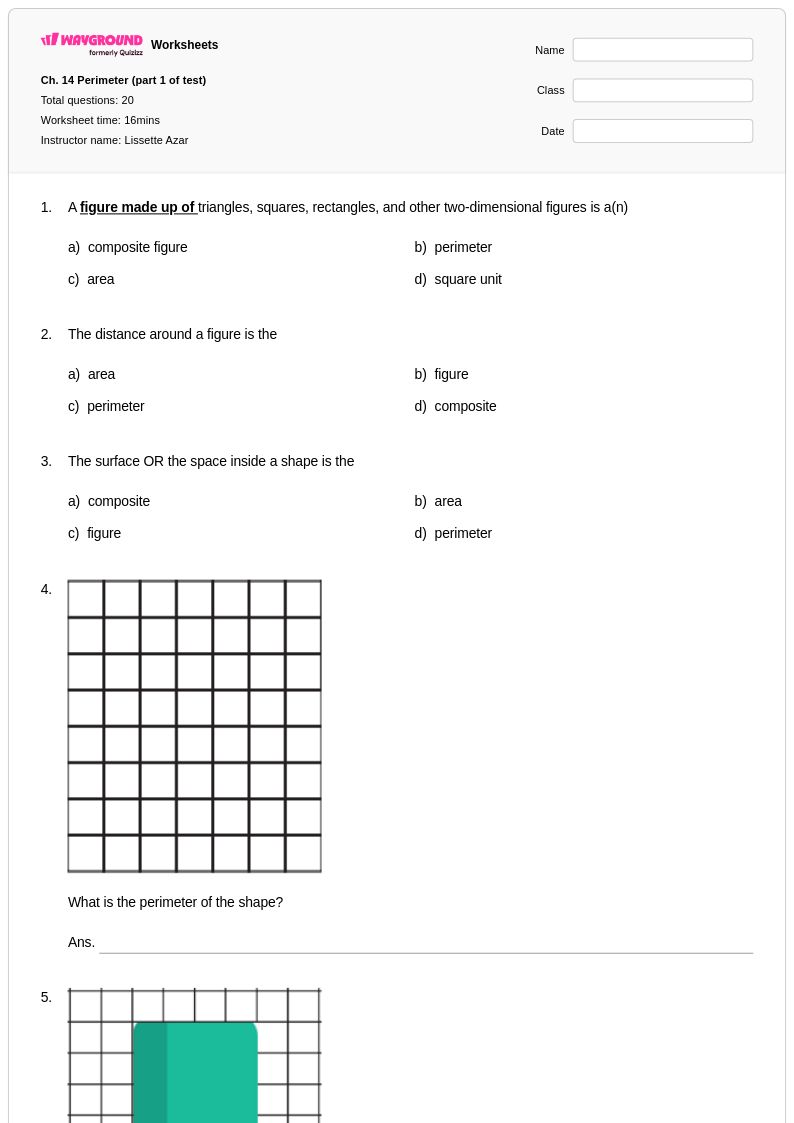
Perimeter worksheets for Class 3 students available through Wayground (formerly Quizizz) provide essential foundational practice in measuring and calculating the distance around two-dimensional shapes. These comprehensive worksheets strengthen students' understanding of perimeter concepts by guiding them through systematic measurement of polygon sides, introduction to perimeter formulas for basic shapes like rectangles and squares, and real-world applications involving fences, borders, and boundaries. Each worksheet collection includes detailed answer keys that support both independent learning and teacher-guided instruction, while the free printable format ensures accessibility for classroom and home use. The carefully structured practice problems progress from simple counting units along shape edges to more complex calculations, helping third-grade students develop spatial reasoning and measurement skills that form the foundation for advanced geometric concepts.
Wayground (formerly Quizizz) empowers educators with millions of teacher-created perimeter resources specifically designed for Class 3 mathematics instruction, featuring robust search and filtering capabilities that allow teachers to locate worksheets aligned with specific curriculum standards and learning objectives. The platform's differentiation tools enable teachers to customize worksheet difficulty levels, modify problem types, and adjust visual complexity to meet diverse student needs, whether for remediation support or enrichment challenges. Teachers can access these perimeter worksheets in both printable PDF format for traditional paper-based learning and digital formats for interactive classroom activities, making lesson planning more efficient and flexible. This extensive collection supports systematic skill practice through varied problem formats, visual representations, and progressive complexity levels that help teachers address individual learning gaps while building confident problem-solvers who can apply perimeter concepts across mathematical contexts.
FAQs
What do 3rd graders learn about perimeter?
How do I teach the difference between perimeter and area?
What types of perimeter problems are appropriate for 3rd grade?
What is the most common misconception for 3rd graders learning perimeter?
How can I use these 3rd-grade perimeter worksheets in my class?
How does the 3rd-grade perimeter curriculum align with Common Core?
How can I support struggling students with 3rd-grade perimeter concepts?