Free Printable Directional Concepts Worksheets for Class 3
Explore Wayground's free Class 3 directional concepts worksheets featuring printable PDFs with practice problems and answer keys to help students master spatial relationships and positional vocabulary in geometry.
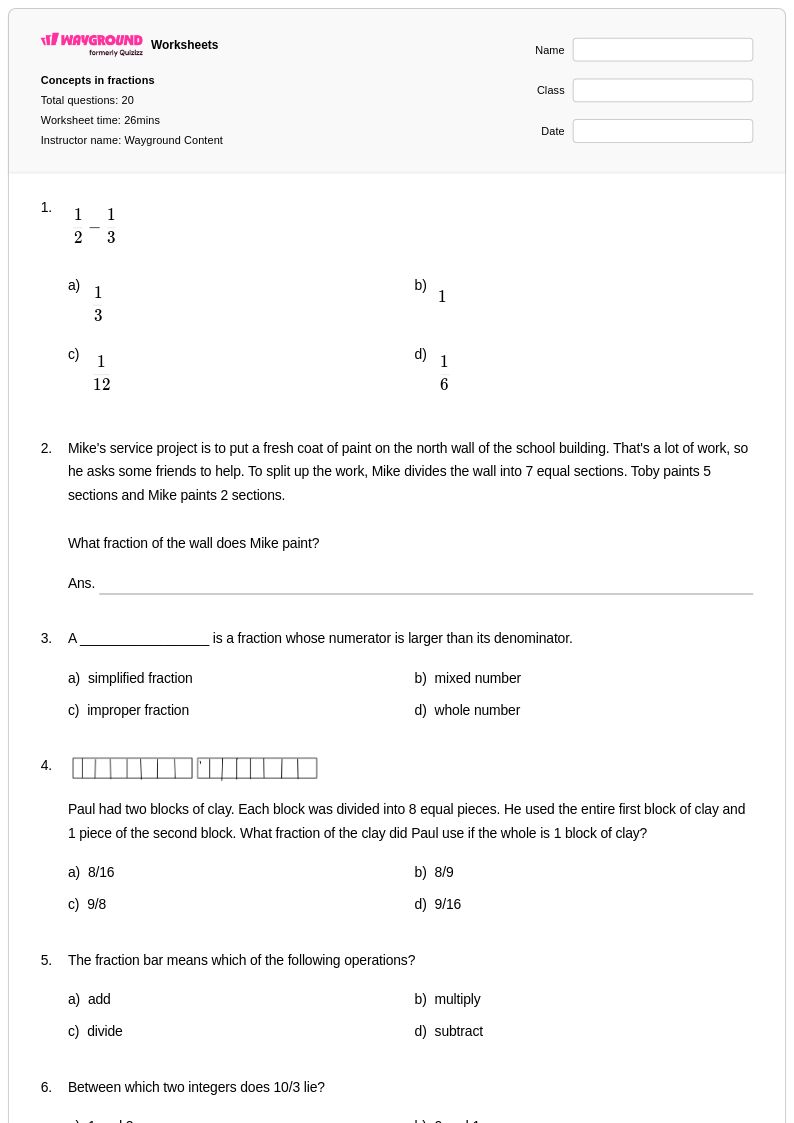
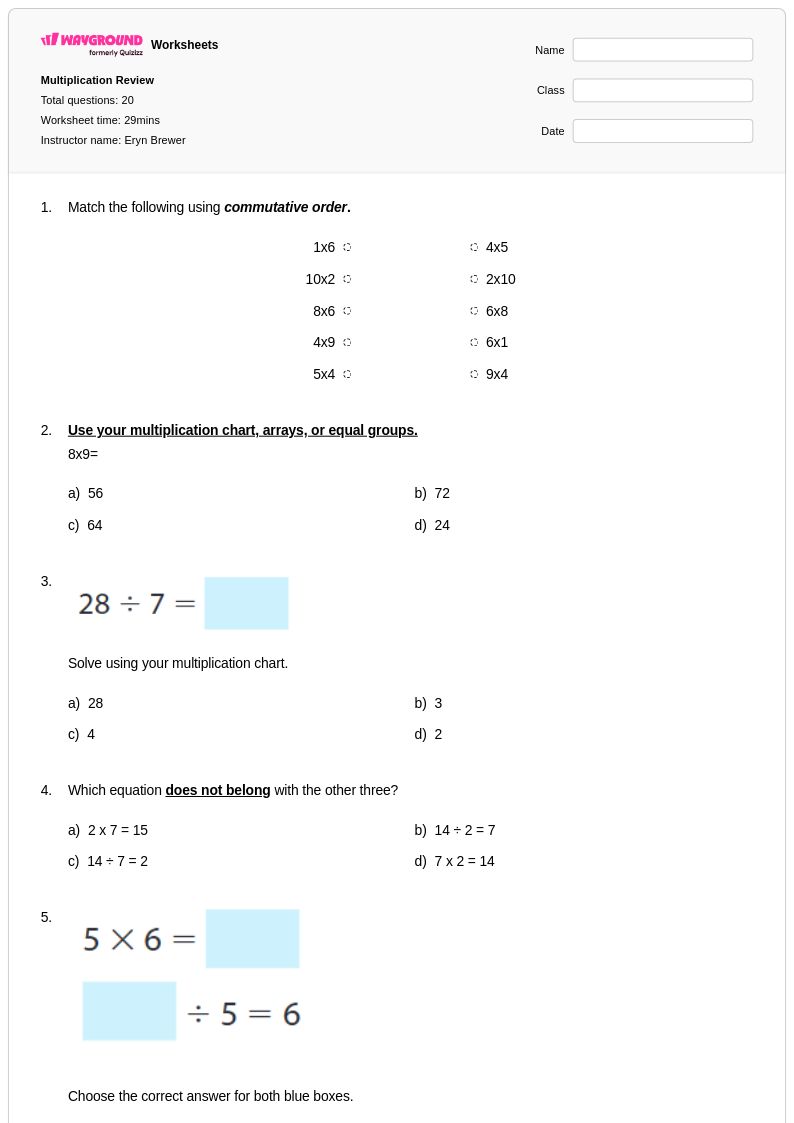
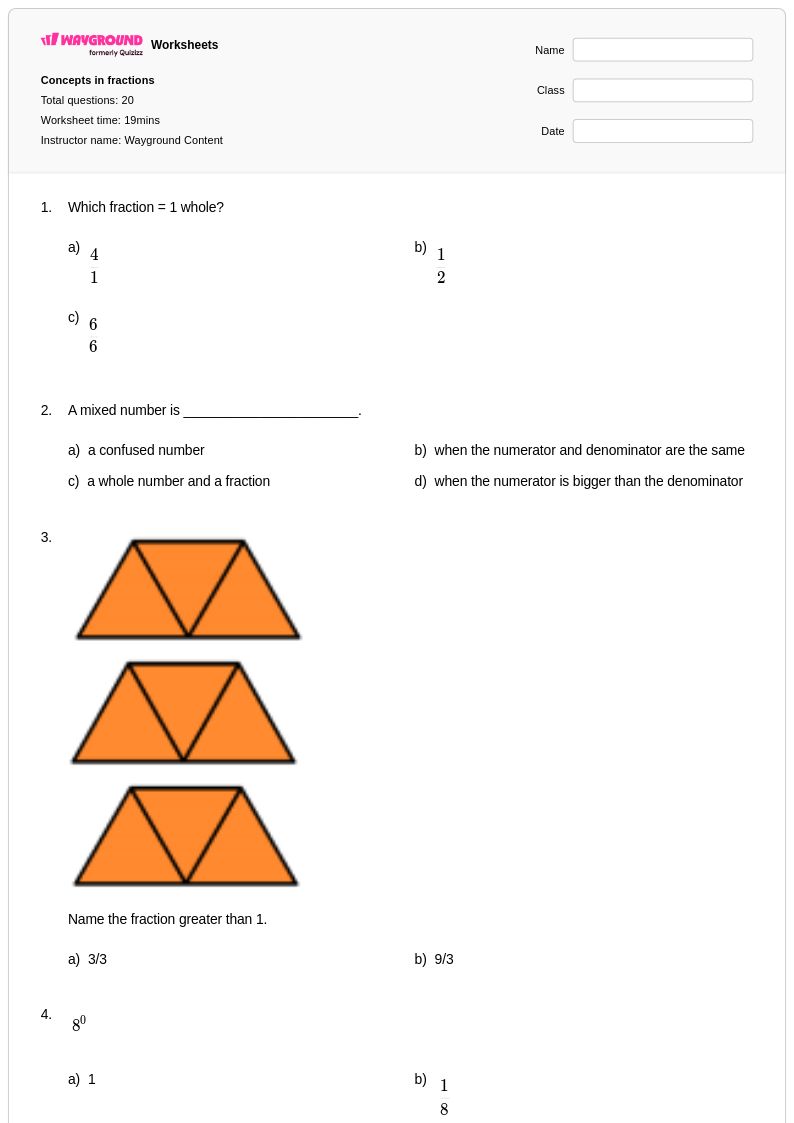
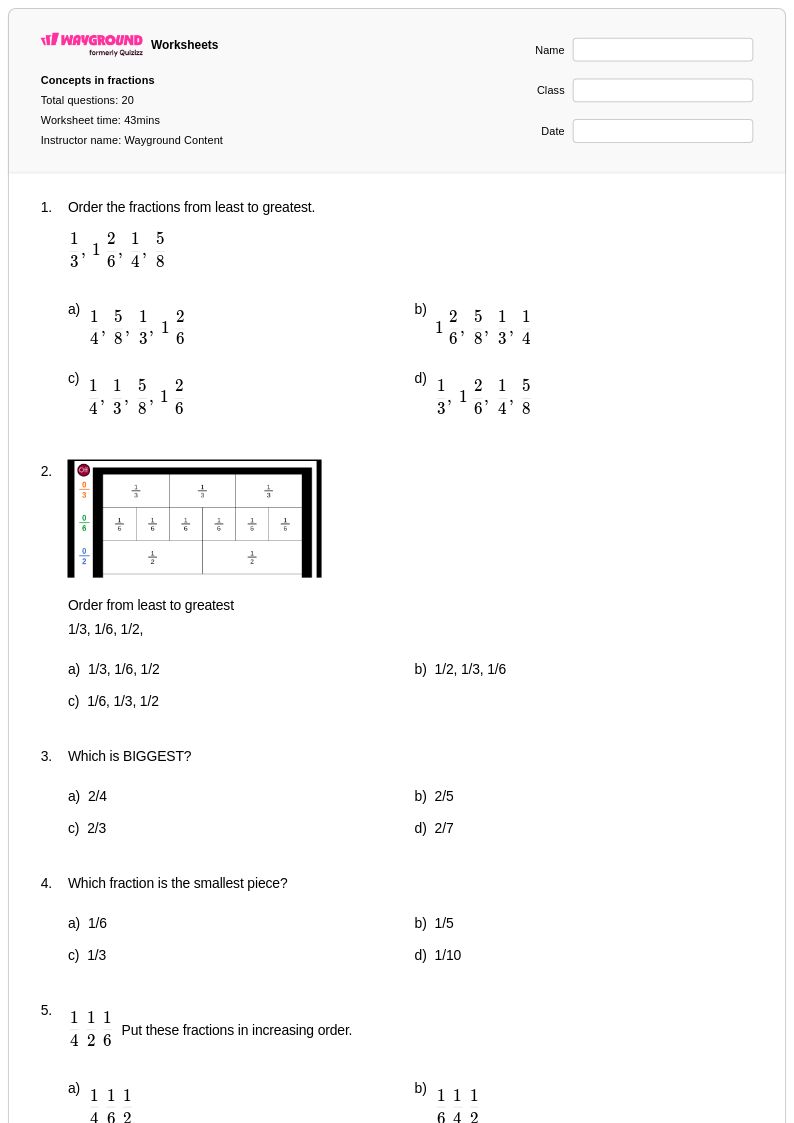
Explore printable Directional Concepts worksheets for Class 3
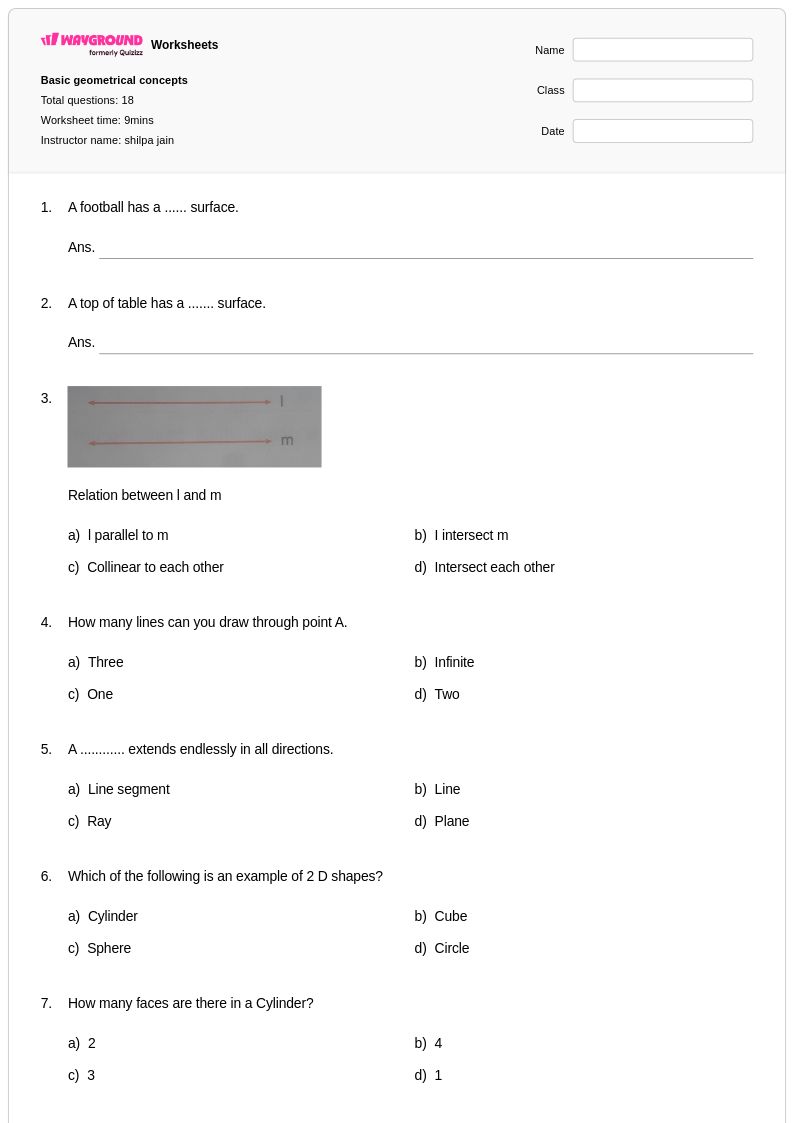
Directional concepts form a fundamental component of Class 3 geometry education, helping young learners develop spatial reasoning skills that serve as building blocks for more advanced mathematical thinking. Wayground's comprehensive collection of directional concepts worksheets provides third-grade students with engaging practice problems that reinforce understanding of positional vocabulary, including terms like above, below, left, right, behind, in front of, near, and far. These free printables systematically guide students through exercises that strengthen their ability to describe object locations, follow directional instructions, and interpret spatial relationships in both two-dimensional and three-dimensional contexts. Each worksheet includes a detailed answer key, making it simple for educators to assess student progress and identify areas requiring additional support, while the pdf format ensures consistent formatting across different devices and printing scenarios.
Wayground, formerly Quizizz, empowers teachers with access to millions of educator-created resources specifically designed to support Class 3 directional concepts instruction. The platform's robust search and filtering capabilities enable teachers to quickly locate worksheets that align with specific learning standards and match their students' diverse skill levels. These differentiation tools prove invaluable for planning lessons that accommodate varying abilities within the classroom, whether teachers need remediation materials for struggling learners or enrichment activities for advanced students. The flexible customization options allow educators to modify existing worksheets or combine elements from multiple resources to create targeted practice sessions, while the availability of both printable and digital formats, including downloadable pdfs, ensures seamless integration into any teaching environment, from traditional classrooms to hybrid learning models.
FAQs
How do I teach directional concepts to third graders?
By Grade 3, most students have the basic vocabulary — the instructional work shifts to applying directional language in more complex spatial contexts. This means using positional terms to describe relationships on grids, interpret diagrams, and follow multi-step directions accurately. If students are still shaky on left/right or relative terms like between and beside, address those gaps directly before moving to grid-based or 3D spatial tasks, where unresolved confusion compounds quickly.
What exercises help third graders practice directional concepts?
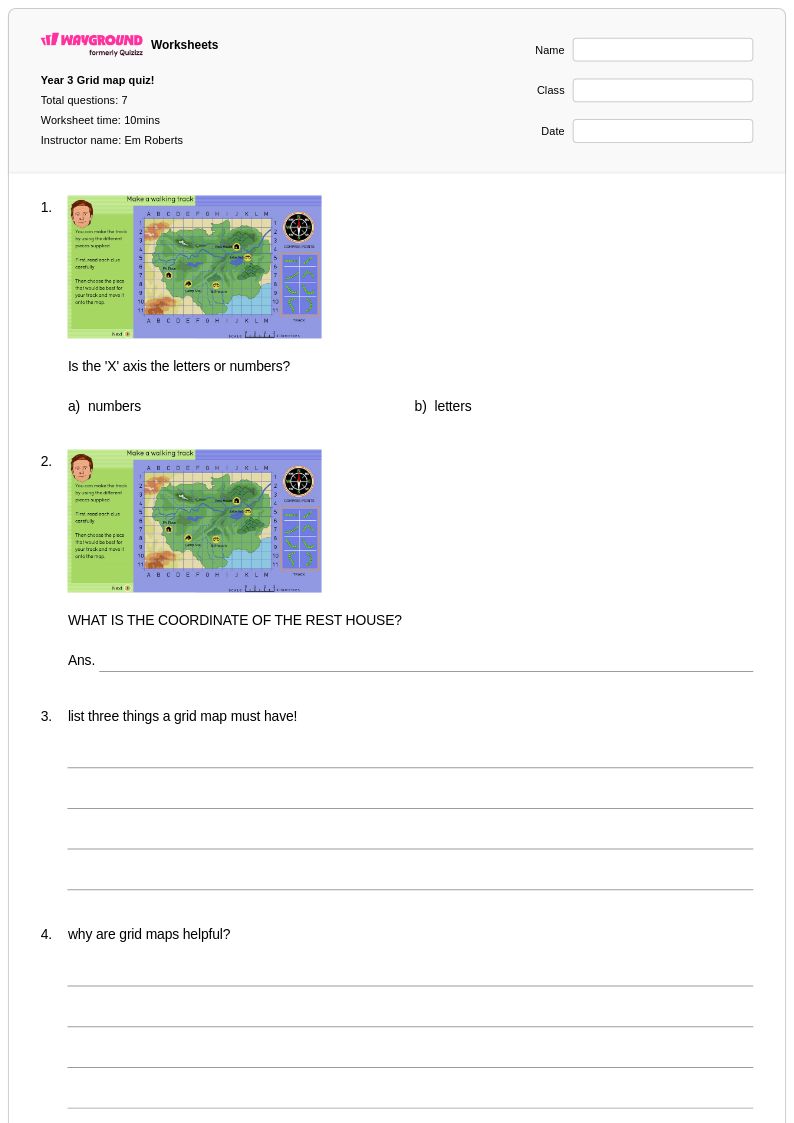
At Grade 3, the most productive practice involves applying directional language to interpret and describe spatial arrangements — not just identify a single position. Multi-step grid navigation, map-reading tasks, and problems that ask students to describe the relationship between multiple objects at once all push beyond vocabulary recall into genuine spatial reasoning. These also connect naturally to the geometry and measurement work students are doing elsewhere in Grade 3 math.
What directional concept mistakes are common in Grade 3?
The errors that surface most in Grade 3 are perspective-related: students correctly identify positions when they're the observer but make errors when asked to take the perspective of a figure in a diagram. 'Left' and 'right' flip when a character faces the viewer, and students who haven't been explicitly taught to adjust for perspective will get these wrong consistently. A second common issue is imprecise use of 'near' and 'between' in multi-object scenes — students describe proximity loosely rather than using the most accurate term.
How do I use Wayground's Grade 3 directional concepts worksheets?
Each worksheet includes a complete answer key, making it easy to use for independent practice, centers, or homework without additional prep. You can print the PDF for paper-based work — and grade submissions using the Wayground for Teachers app by scanning student work rather than marking by hand — or assign it digitally as a hosted quiz on Wayground if students are working on devices.
Are Grade 3 directional concepts worksheets aligned to Common Core?
Common Core's Grade 3 geometry strand focuses on understanding shapes, their categories, and spatial relationships — and directional language is the vocabulary students use to reason about and communicate those relationships. By Grade 3, students are expected to describe positions and movements with precision, which feeds directly into Grade 4 work on coordinate systems and drawing lines and angles. Students who reach Grade 4 without reliable command of directional terms will struggle to place and describe points on a coordinate plane.
How can I differentiate Grade 3 directional concepts practice for mixed-ability classes?
For students who need scaffolding, Wayground's reduced answer choices accommodation narrows the options displayed, which helps students who understand the concept but get overwhelmed by too many similar-looking choices. For students ready for more challenge, multi-step navigation and perspective-based problems in the worksheet collection provide meaningful extension without requiring a separate assignment. Worksheet-level tools like font size adjustment and dyslexia-friendly font are available for students who need them, applied individually so the rest of the class isn't affected.