Free Printable Directional Concepts Worksheets for Class 1
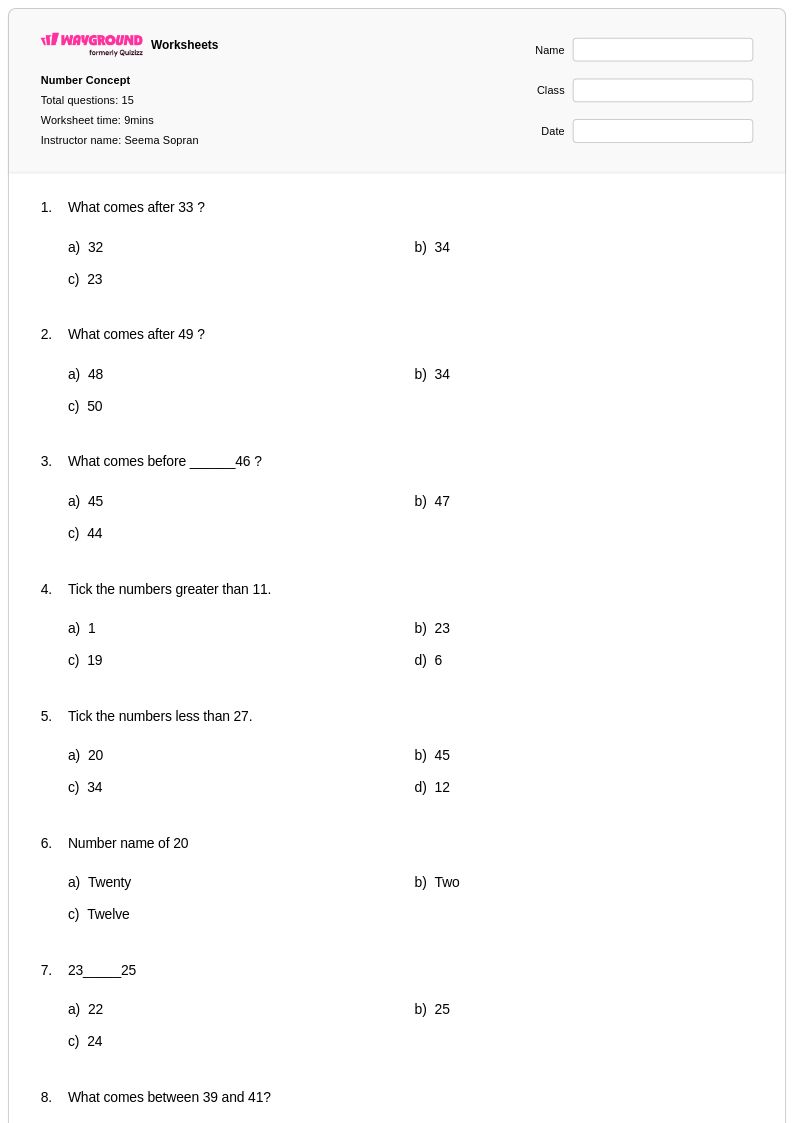
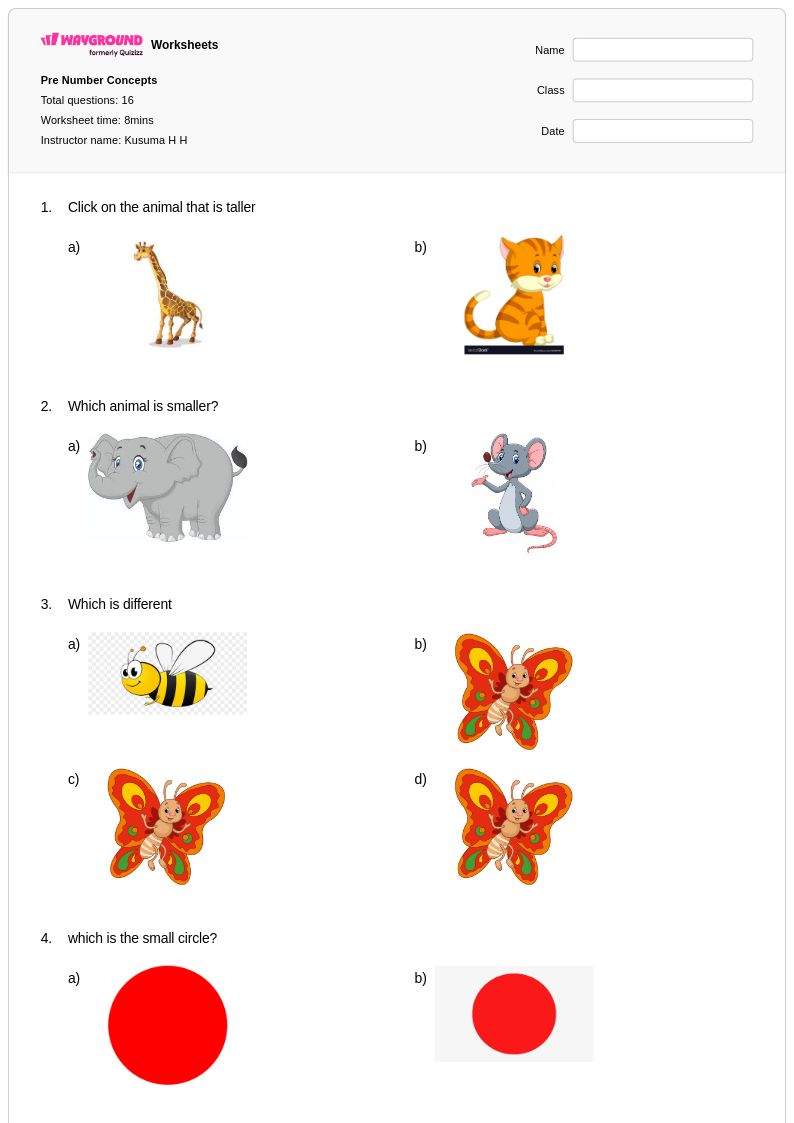
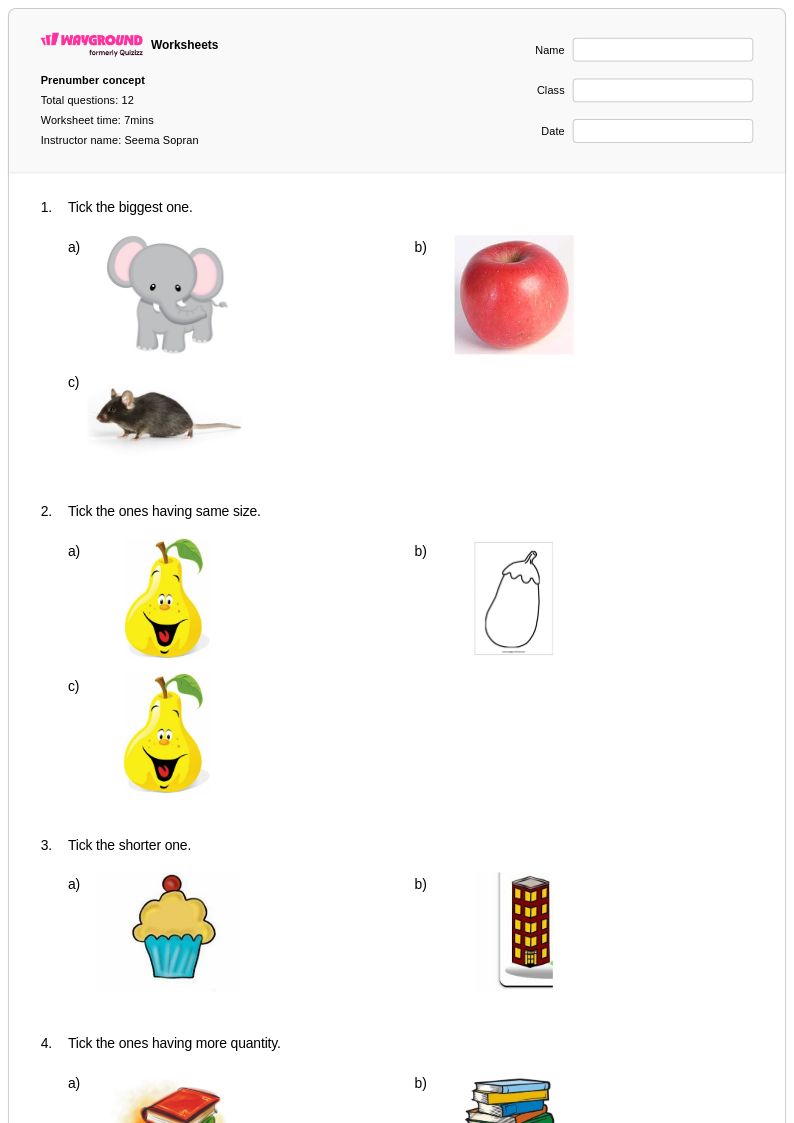
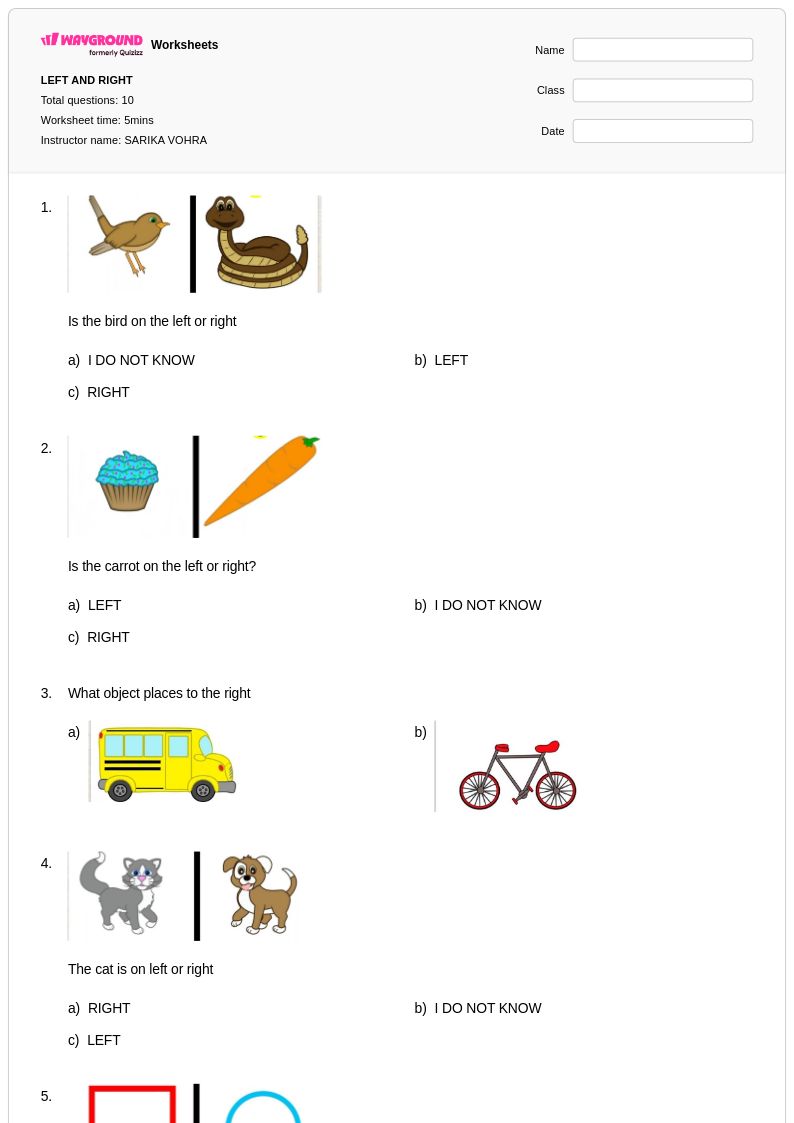
Class 1 directional concepts worksheets help young learners master spatial vocabulary and position words through engaging printables featuring practice problems with answer keys available as free PDF downloads.
Explore printable Directional Concepts worksheets for Class 1
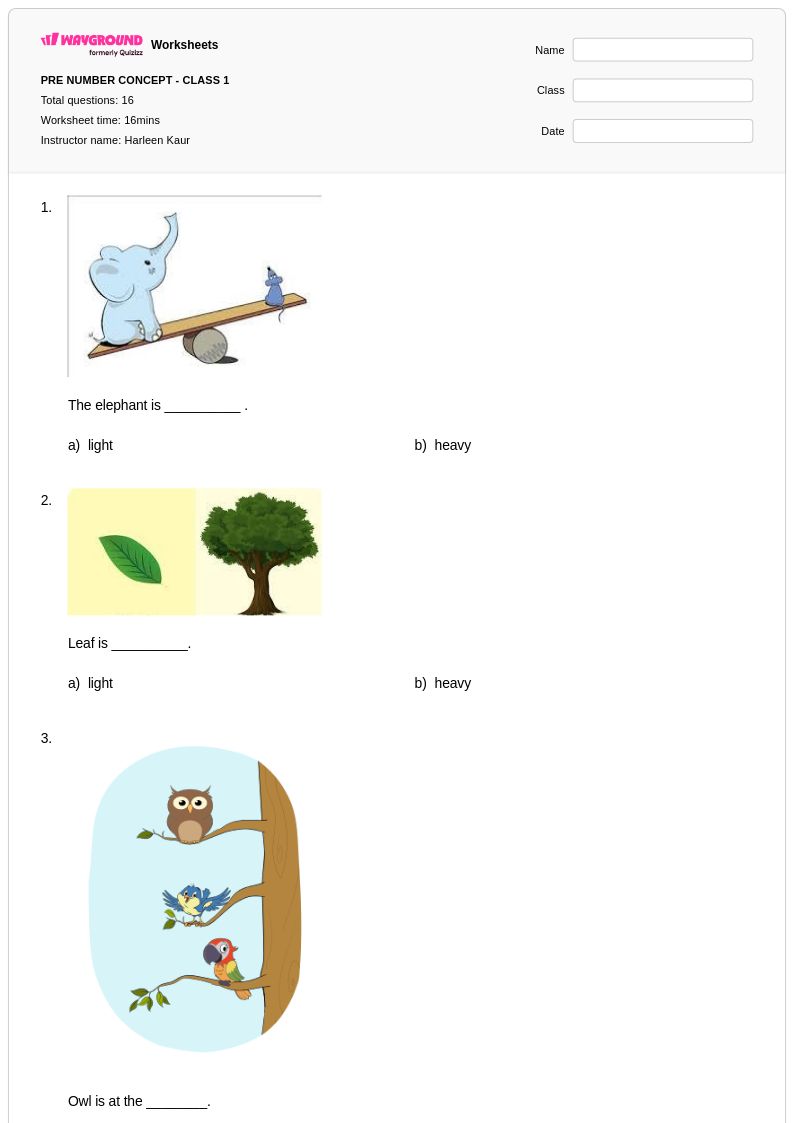
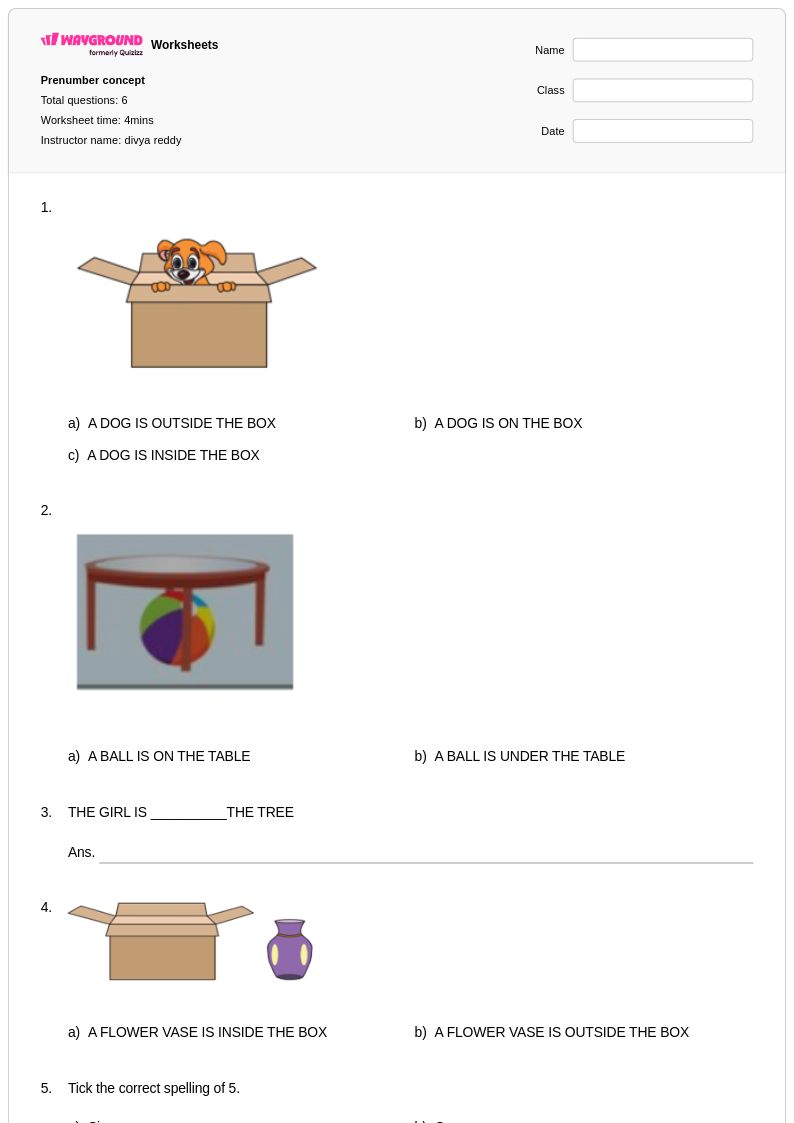
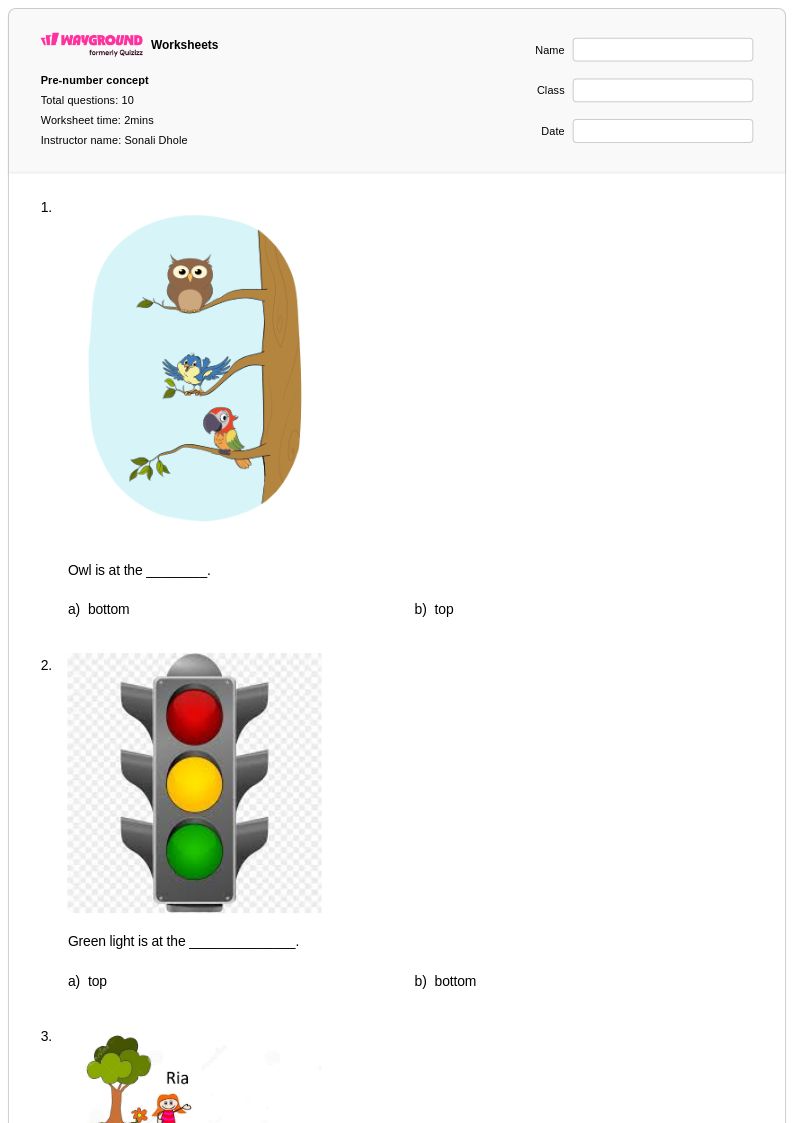
Directional concepts form the foundation of spatial reasoning in Class 1 mathematics, and Wayground's comprehensive worksheet collection provides young learners with engaging opportunities to master essential positional vocabulary and spatial relationships. These carefully designed worksheets help first-grade students develop crucial skills in identifying and using directional terms such as above, below, beside, in front of, behind, left, right, near, and far through interactive practice problems that connect abstract concepts to concrete visual representations. Each worksheet includes detailed answer keys to support both independent learning and guided instruction, while the free printable format ensures accessibility for classroom use, homework assignments, and additional skill reinforcement at home.
Wayground, formerly Quizizz, empowers educators with millions of teacher-created directional concepts resources that can be easily discovered through robust search and filtering capabilities aligned to curriculum standards. The platform's differentiation tools allow teachers to customize worksheets based on individual student needs, whether providing remediation for struggling learners or enrichment activities for advanced students ready to explore more complex spatial relationships. Available in both printable PDF format and interactive digital versions, these directional concepts worksheets seamlessly integrate into lesson planning workflows while supporting flexible implementation across diverse learning environments, ensuring that every Class 1 student can build confidence in fundamental geometric reasoning through targeted practice and skill development.
FAQs
How do I teach directional concepts to first graders?
By Grade 1, most students have heard left, right, up, and down — the work is making that knowledge reliable and extending it to relational terms like beside, near, far, in front of, and behind. Concrete-to-representational sequencing works well: use physical objects first, then move to pictures, then to simple diagrams. Consistently asking students to explain their reasoning ('how do you know it's beside and not in front of?') builds the precision that later geometry work requires.
What exercises help first graders practice directional concepts?
Grid-based activities are a strong fit for Grade 1 — students follow a path or place an object at a described location, which requires holding multiple directional terms in mind at once. Paired activities where one student describes and another places an object are especially effective because they force students to use the vocabulary productively, not just recognize it.
What directional concept errors should I watch for in first grade?
Left/right reversal is still common in Grade 1 and usually resolves with practice rather than intervention. The more instructionally useful errors to catch are perspective-dependent mistakes: students who correctly identify 'above' in one orientation but fail when the picture is rotated, or who apply their own left/right to a figure facing them. These reveal that the student has memorized a response rather than understood the relational nature of the term.
How do I use Wayground's Grade 1 directional concepts worksheets?
Every worksheet includes a complete answer key, so independent or center-based use is straightforward. You can assign the worksheet digitally as a hosted quiz on Wayground, or print the PDF and have students complete it on paper — then grade submissions quickly using the Wayground for Teachers app, which lets you scan student work rather than mark each page by hand.
Are Grade 1 directional concepts worksheets aligned to Common Core?
Common Core's Grade 1 geometry strand asks students to describe the defining attributes of shapes and their relative positions — which depends directly on having solid positional vocabulary. Directional concepts in Grade 1 bridge the kindergarten introduction of positional words to the Grade 2 expectation that students can partition shapes and describe spatial relationships with precision. Students who leave Grade 1 without reliable command of terms like beside, near, and in front of will struggle to follow geometric reasoning in later grades.
How can I differentiate directional concepts practice for my Grade 1 class?
Students who are still shaky on basic left/right benefit from reduced answer choices, which keeps the focus on the spatial concept rather than managing too many options at once. For English language learners or students with decoding challenges, enabling Read Aloud ensures the vocabulary instruction isn't blocked by reading difficulty. Wayground also lets you translate worksheets into another language, which is useful when a student's spatial reasoning is ahead of their English vocabulary.