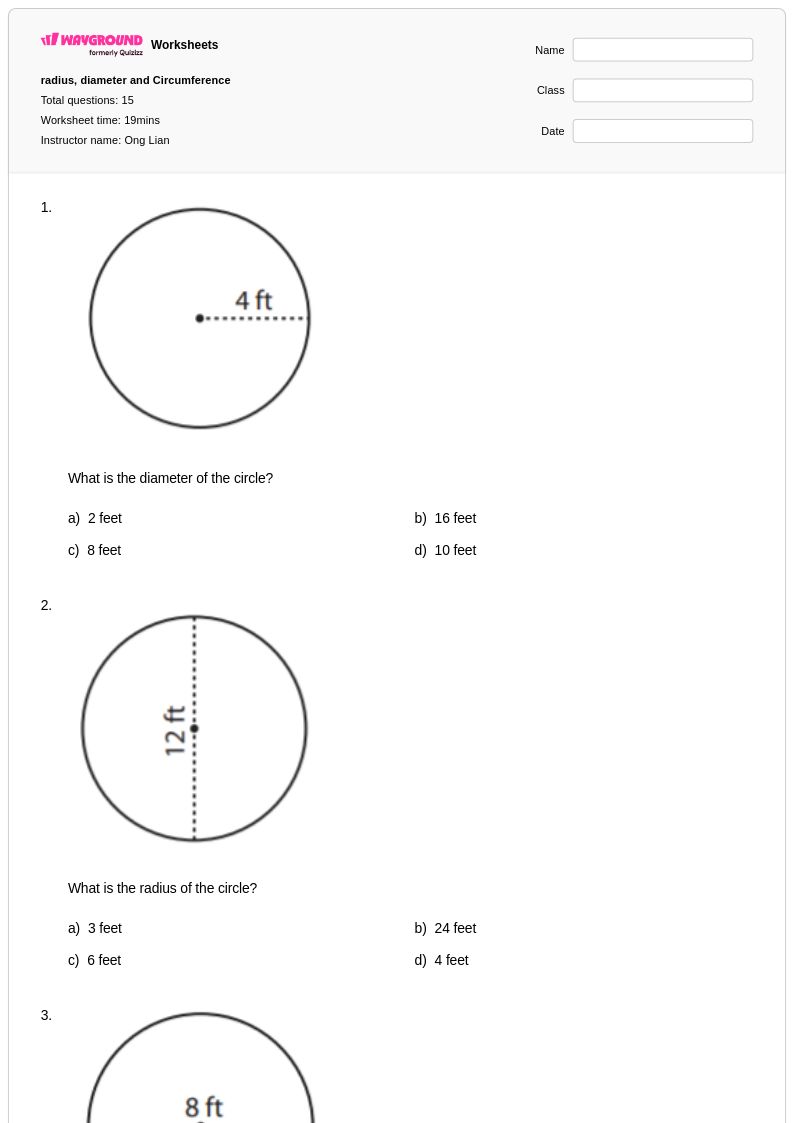
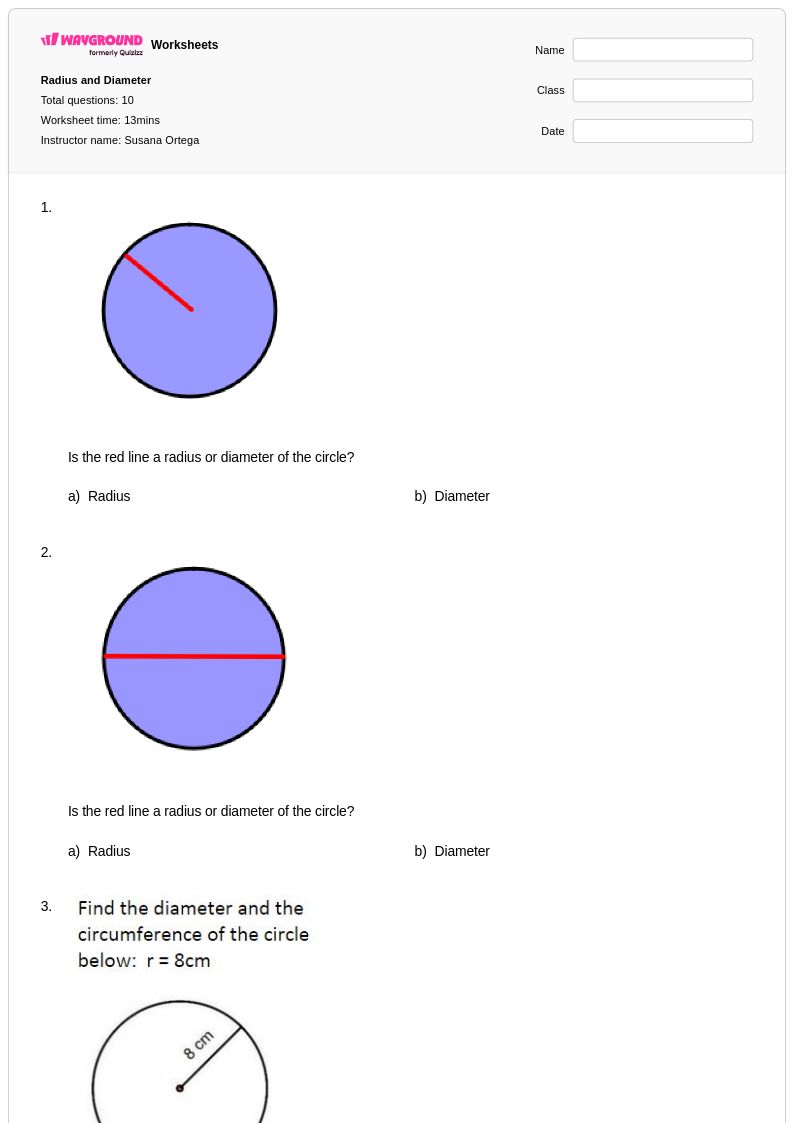
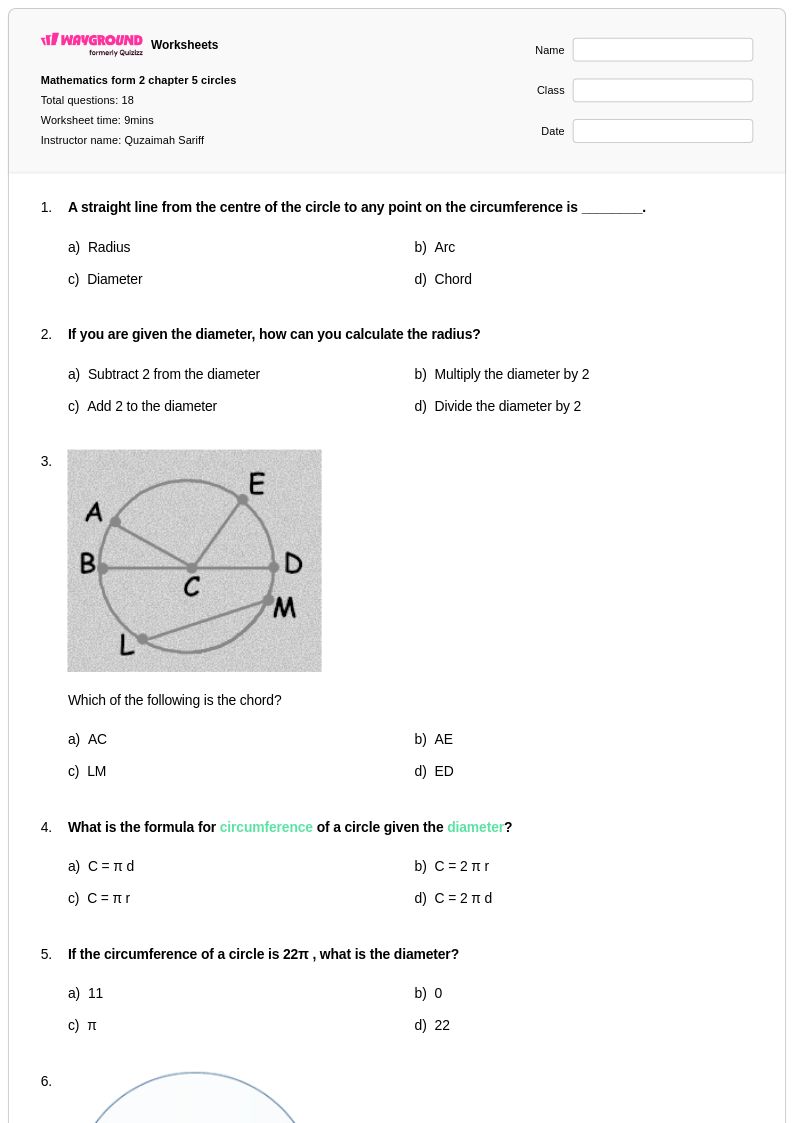
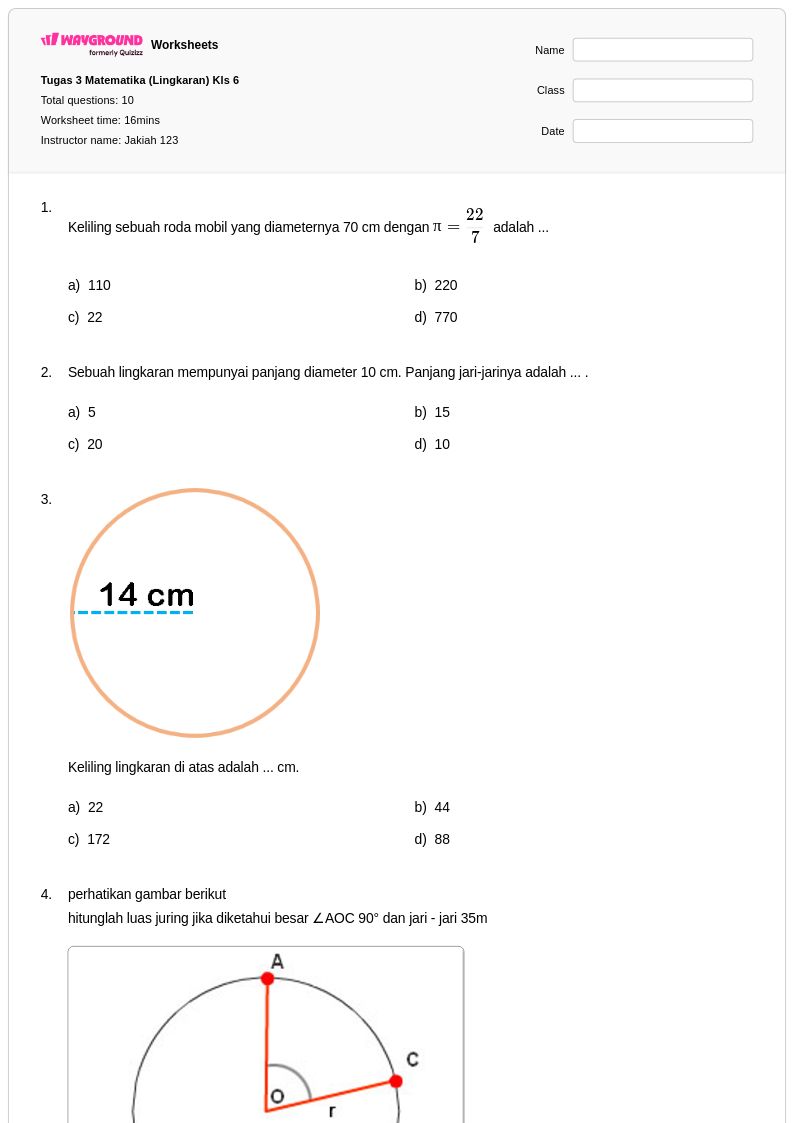
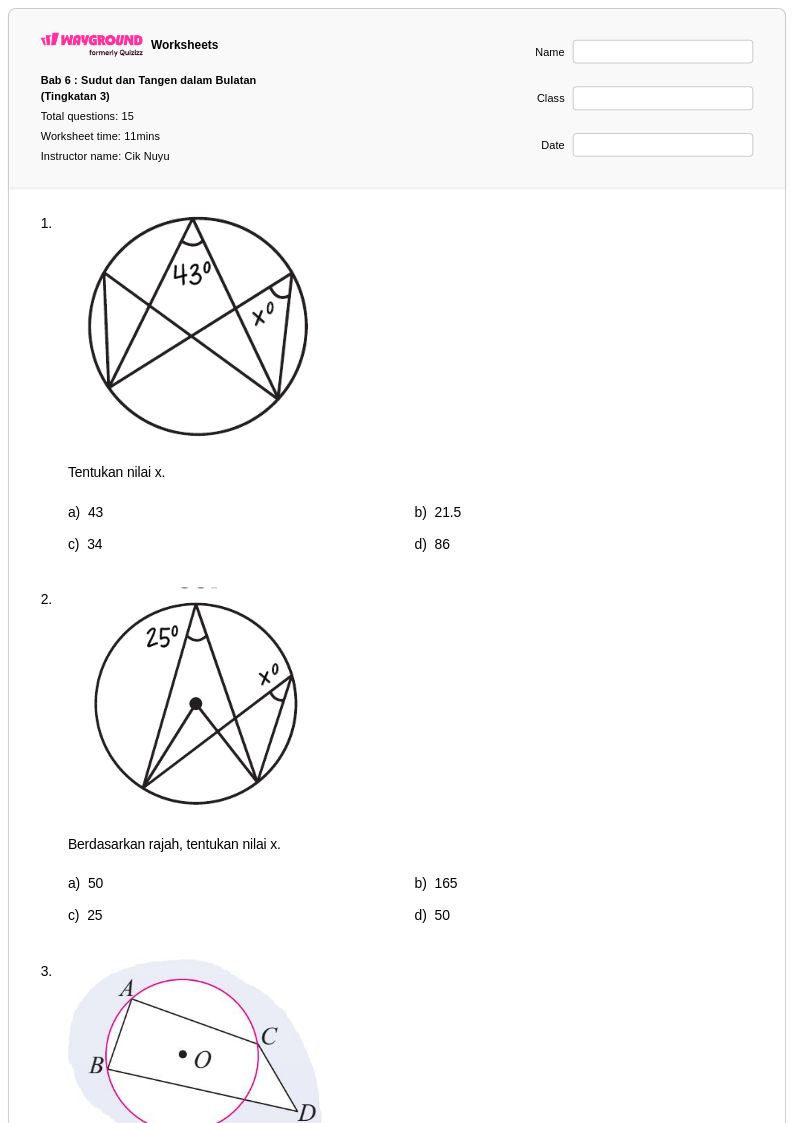
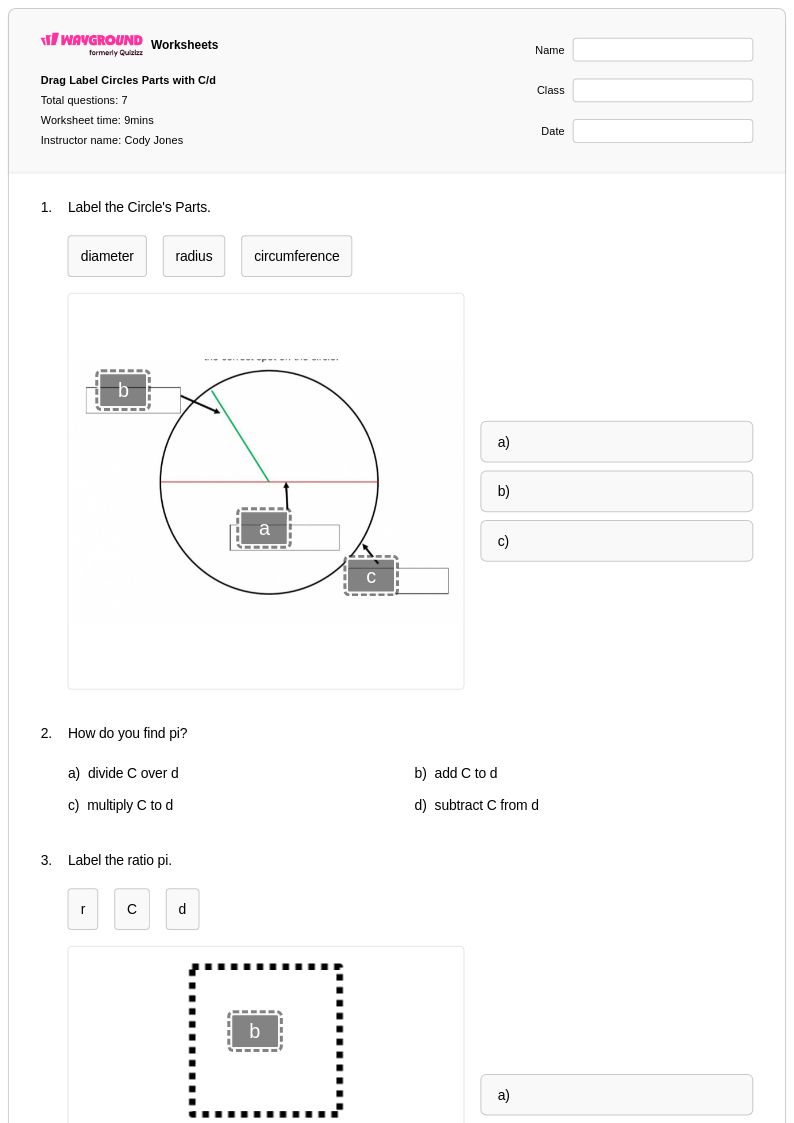
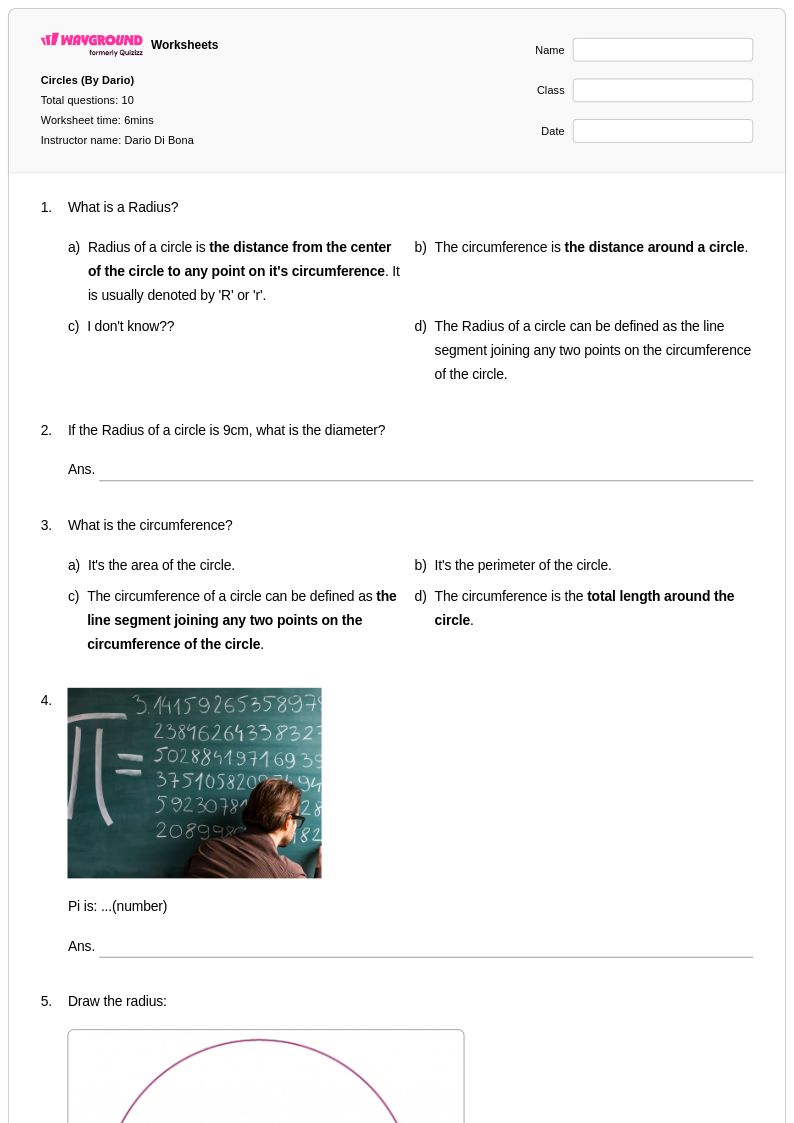
Explore Wayground's free Class 1 diameter worksheets and printables that help young students practice identifying and measuring diameters in circles through engaging problems with complete answer keys.
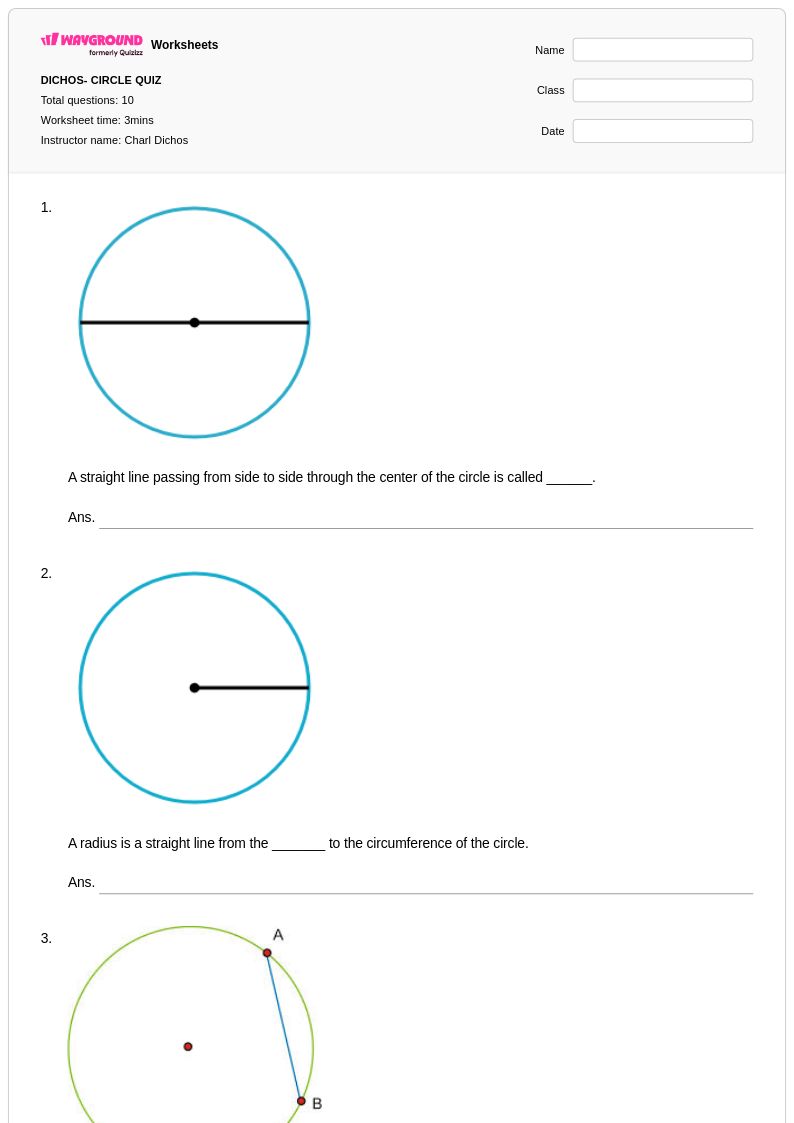
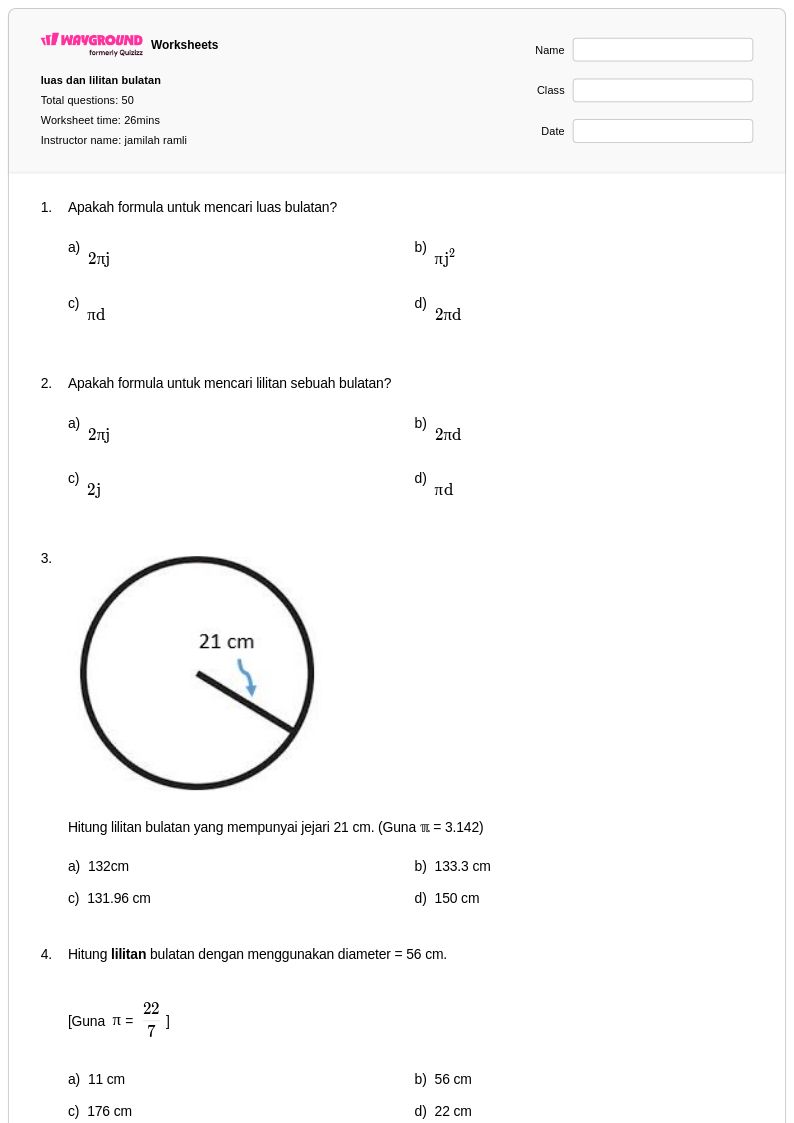
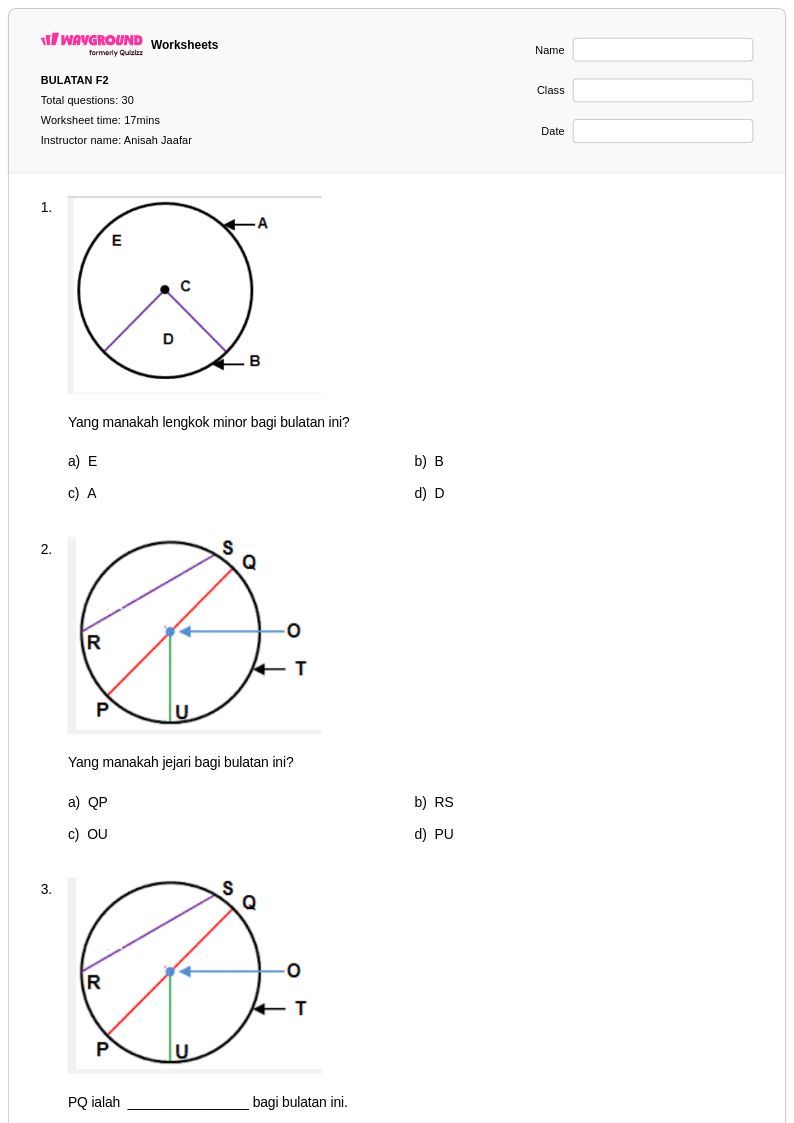
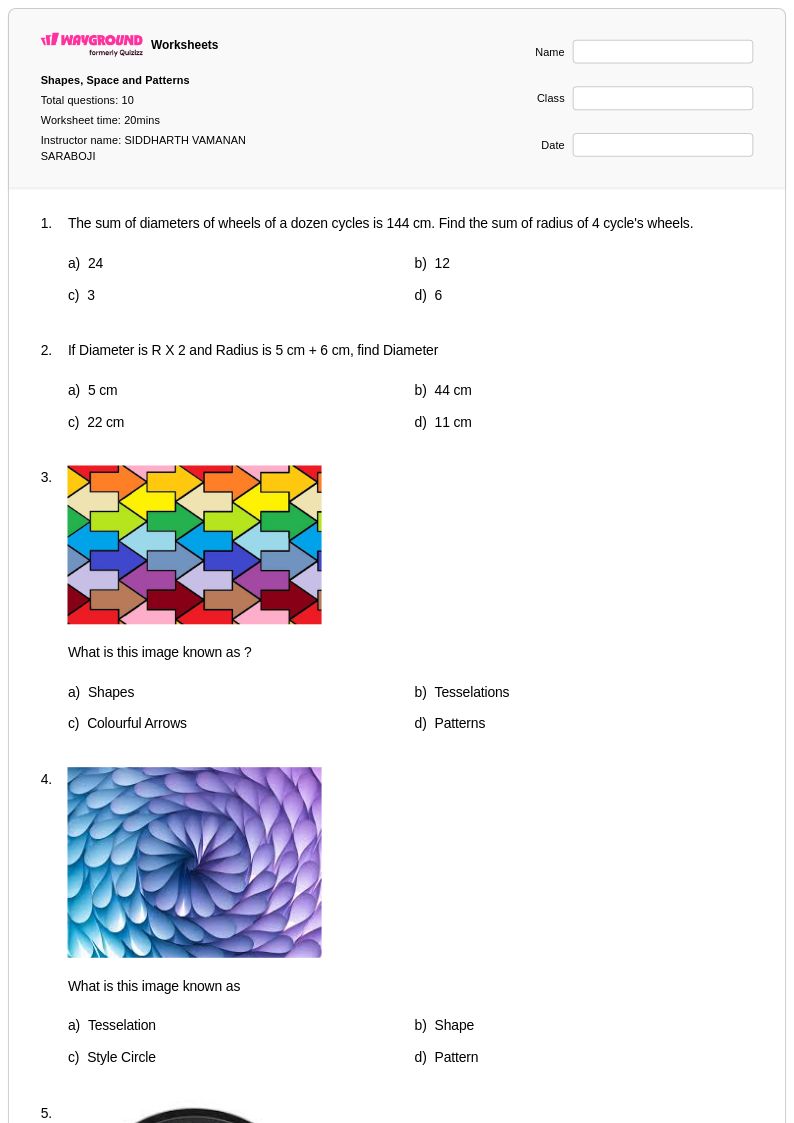
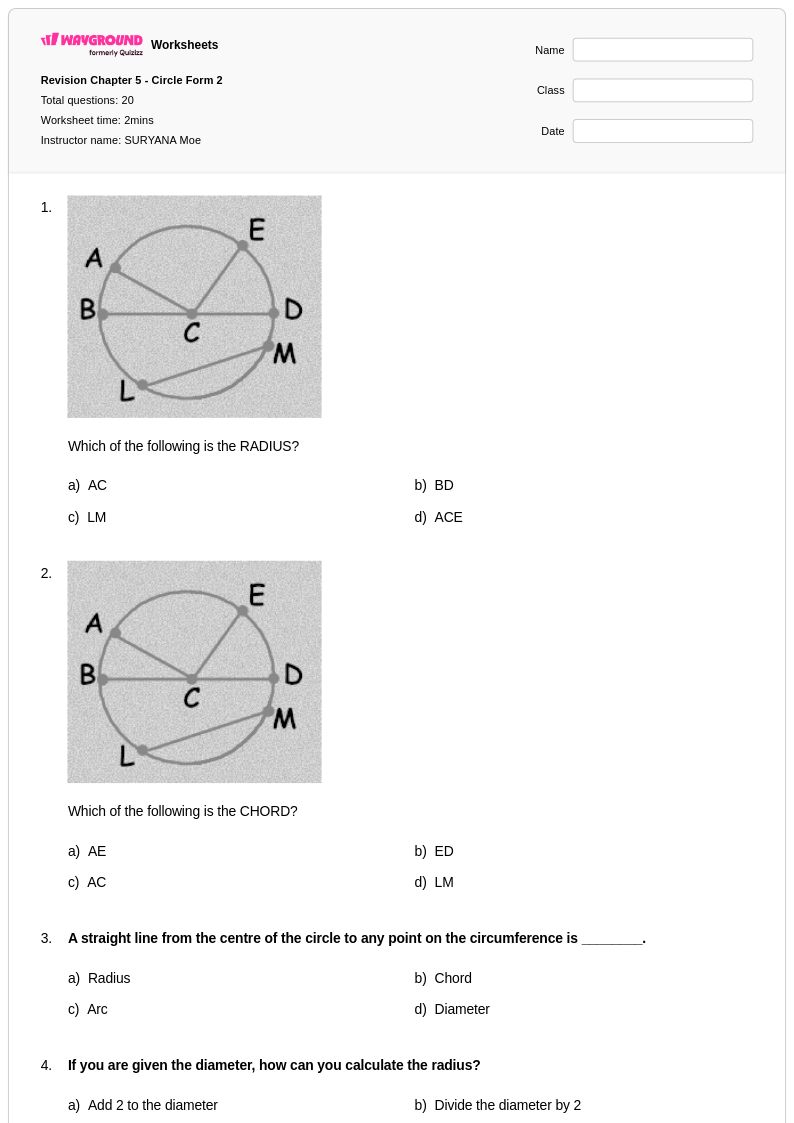
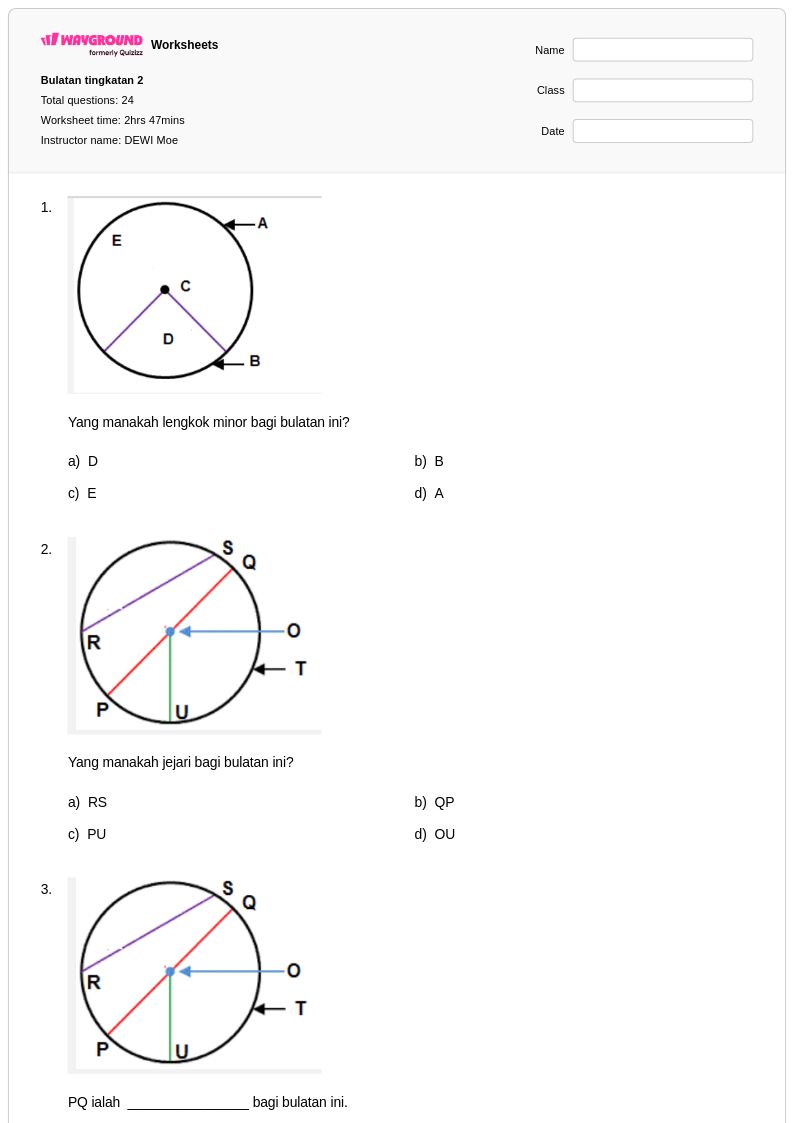
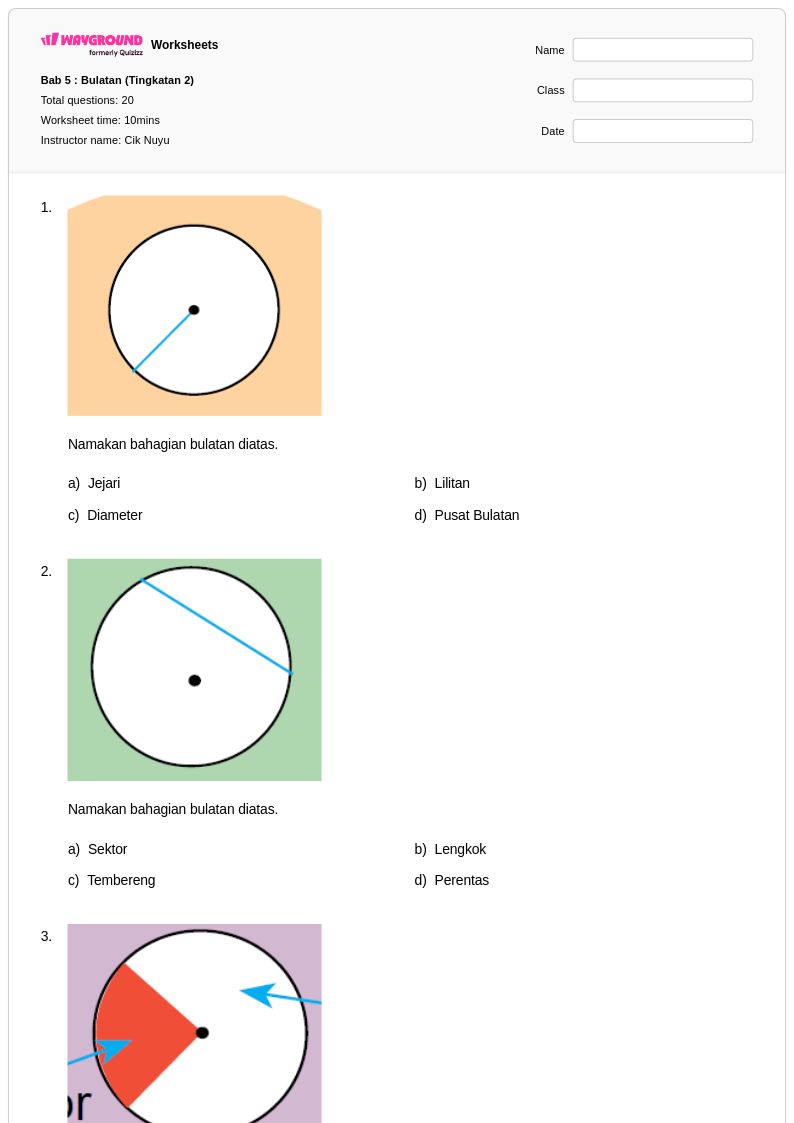
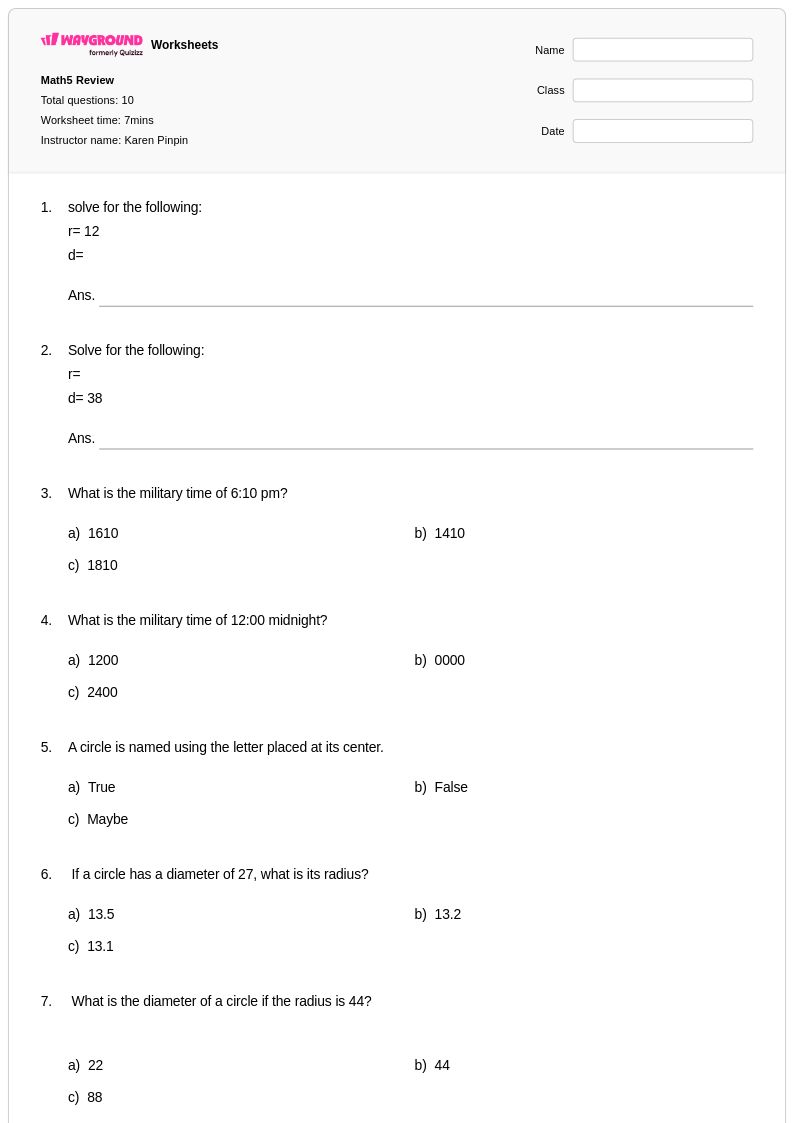
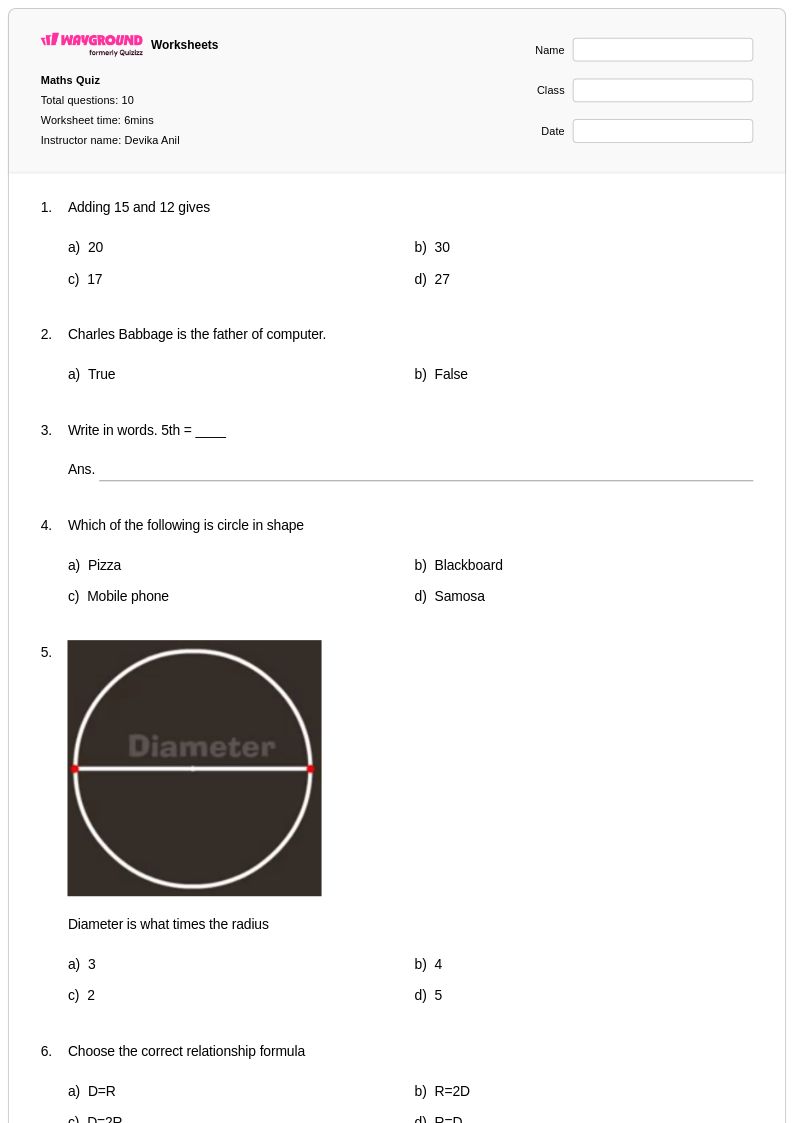
Diameter worksheets for Class 1 students through Wayground (formerly Quizizz) introduce young learners to this fundamental geometric concept through age-appropriate visual exercises and hands-on activities. These carefully crafted worksheets help first graders develop spatial reasoning skills by identifying the diameter as the straight line that passes through the center of a circle from one side to the other. The practice problems feature colorful circles with clearly marked center points, allowing students to trace and measure diameters using rulers or by counting grid squares. Each printable worksheet includes an answer key for immediate feedback, and the free pdf format ensures easy access for both classroom and home learning environments. These foundational exercises strengthen measurement skills, geometric vocabulary, and visual discrimination abilities essential for future mathematical success.
Wayground (formerly Quizizz) empowers educators with an extensive collection of teacher-created diameter worksheets specifically designed for Class 1 mathematics instruction. The platform's millions of resources include standards-aligned materials that support differentiated learning through customizable difficulty levels and varied presentation formats. Teachers can efficiently search and filter diameter worksheets based on specific learning objectives, skill levels, and instructional needs, making lesson planning more streamlined and effective. The flexible digital and printable pdf formats accommodate diverse classroom environments, whether teachers need immediate projection capabilities or take-home practice sheets. These comprehensive tools enable educators to provide targeted remediation for struggling students, offer enrichment opportunities for advanced learners, and deliver consistent skill practice that builds geometric understanding progressively throughout the school year.
FAQs
How do I teach diameter to first graders?
First graders are ready to connect diameter to measurement, not just recognition. Start by having students identify the center point on a circle, then draw a line from edge to edge through that point. From there, have them measure that line using a ruler or by counting grid squares on graph-paper circles. Pairing the action of measuring with the vocabulary, "this is the diameter", builds both the concept and the language at the same time.
What exercises help first graders practice diameter?
Three types of practice work well at this level: tracing the diameter on pre-drawn circles with the center marked, drawing the diameter themselves on circles where only the center is given, and measuring diameter using a ruler or grid. Wayground's Grade 1 diameter worksheets include colorful circle diagrams with clearly marked center points, making it easy for students to move from tracing to independent measurement.
What errors do first graders commonly make when learning diameter?
Two errors come up most often. First, students draw a line across the circle that misses the center — they understand "across" but not "through the middle." Second, when measuring, they start from the wrong point, measuring from an edge to the center rather than edge to edge. Having students mark both endpoints of the diameter before measuring catches the second error before it becomes a habit.
How do I use Wayground's Grade 1 diameter worksheets?
Every worksheet includes an answer key for quick feedback. For paper practice, useful when you want students working hands-on with rulers, download the PDF and print it. You can then grade submissions using the Wayground for Teachers app by scanning student work. If you're in a 1:1 device classroom, the same worksheet runs as a digital activity on Wayground without any extra setup.
What grade level is diameter typically taught?
Diameter is formally introduced as a measurement concept in Grade 7 under Common Core, where students calculate circumference using diameter. However, foundational exposure, identifying the diameter as the line through a circle's center, is commonly introduced in Grades 1 through 3 to build the geometric vocabulary students need before the formulas arrive. Grade 1 work focuses on recognition and basic measurement rather than calculation.
How can I differentiate diameter worksheets for my Grade 1 class?
For students still developing fine motor skills or print awareness, increasing the font size and applying wider line spacing on the worksheet gives them more room to work. For students who need reading support, the Read Aloud accommodation handles question text so they can focus on the circle diagrams. Advanced students who finish early can be challenged to measure multiple circles and compare diameters — a natural extension that doesn't require a separate worksheet.