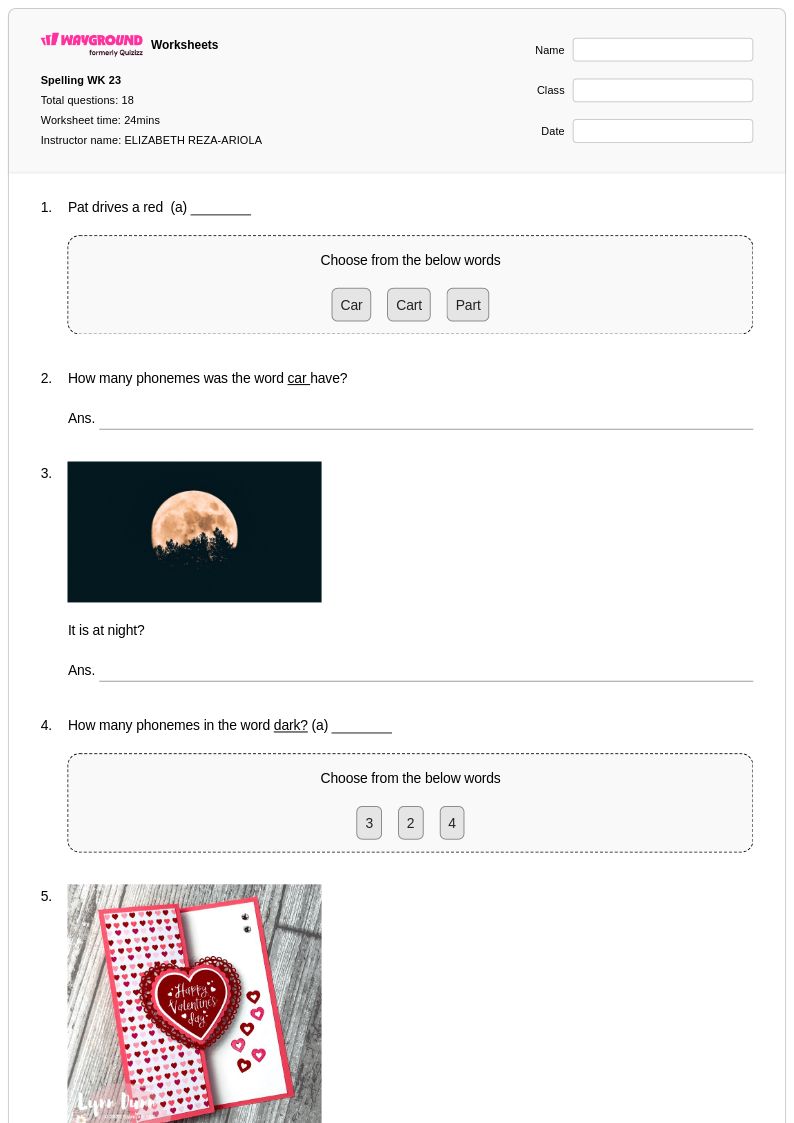
Free Printable Phoneme Substitution Worksheets for Class 2
Class 2 phoneme substitution worksheets from Wayground help students master sound manipulation skills through engaging printables and practice problems, complete with answer keys for effective phonics learning.
Explore printable Phoneme Substitution worksheets for Class 2
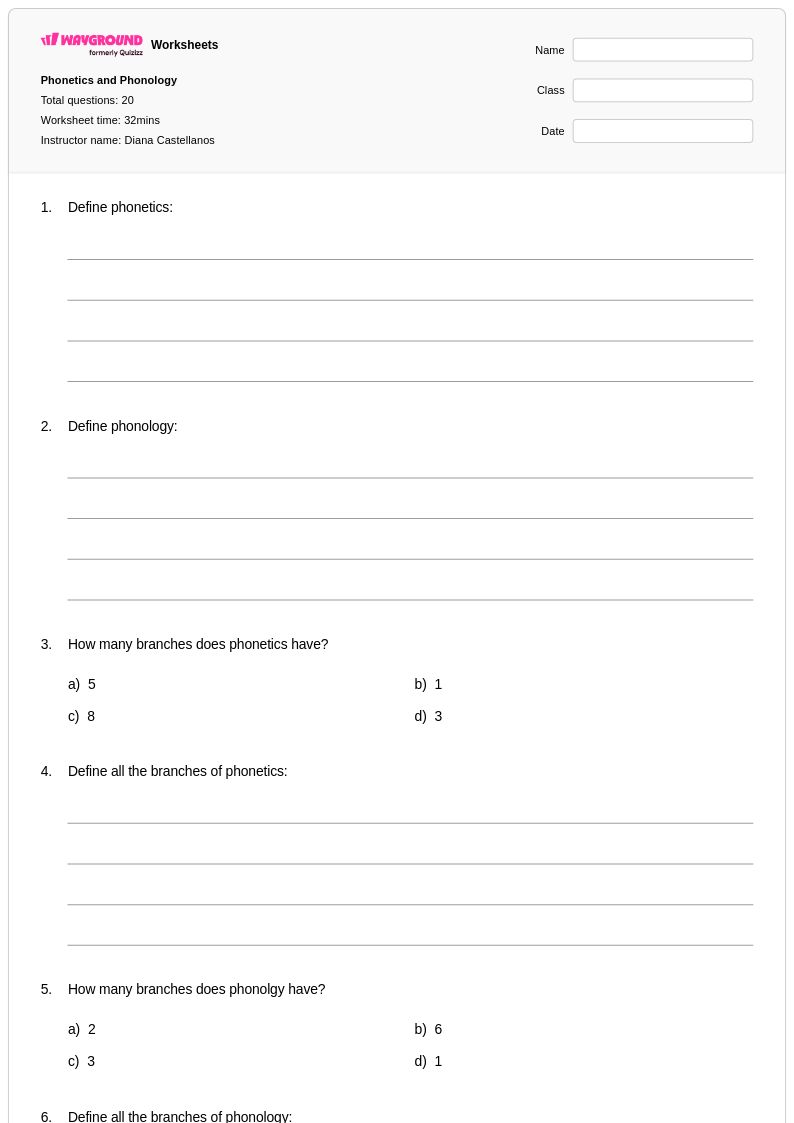
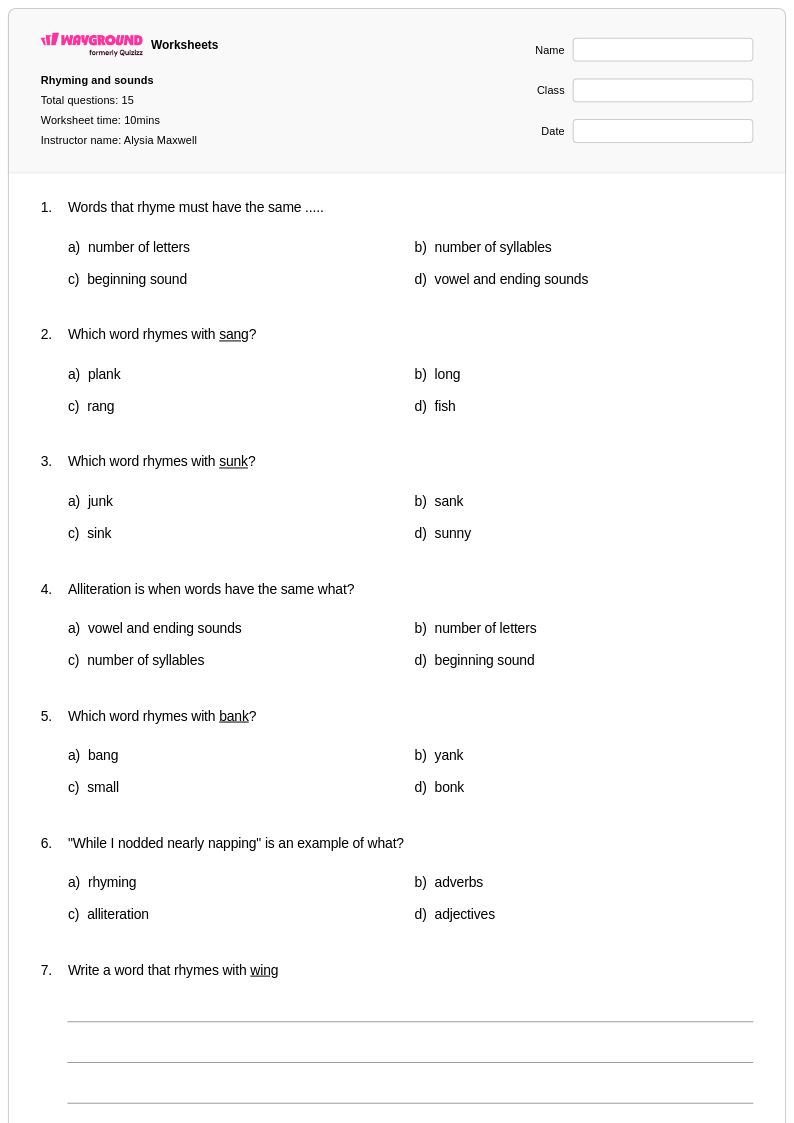
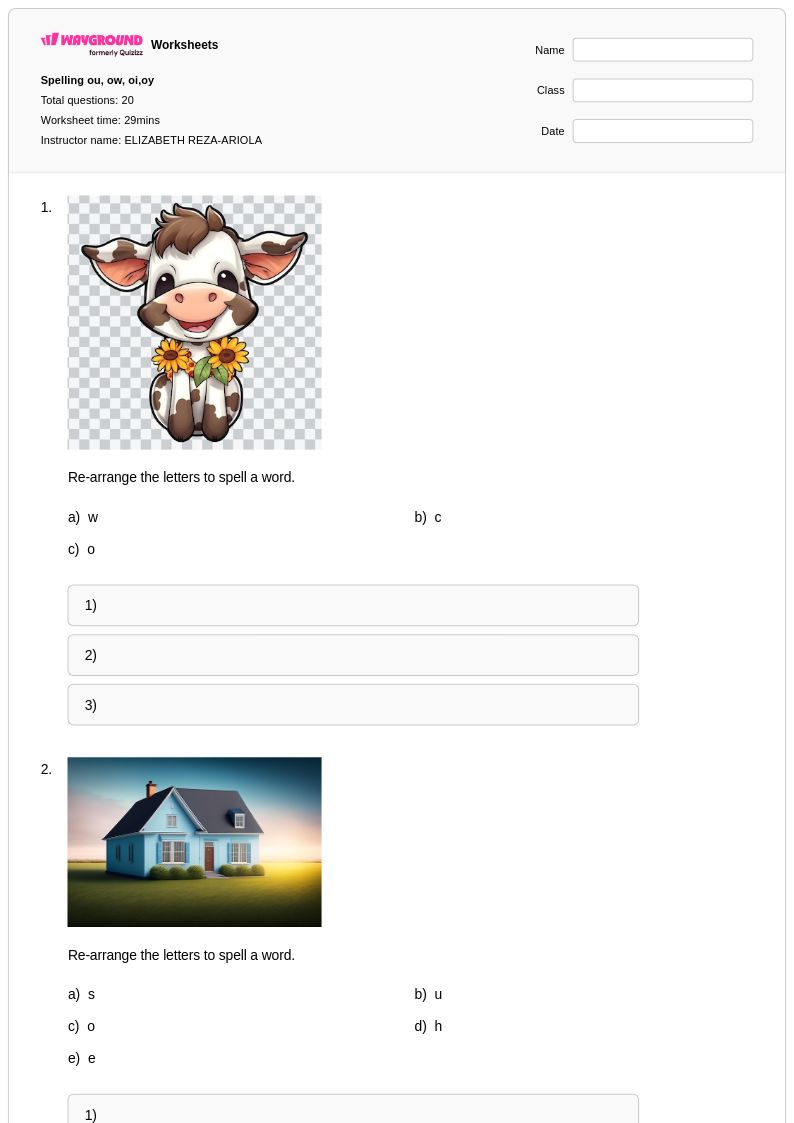
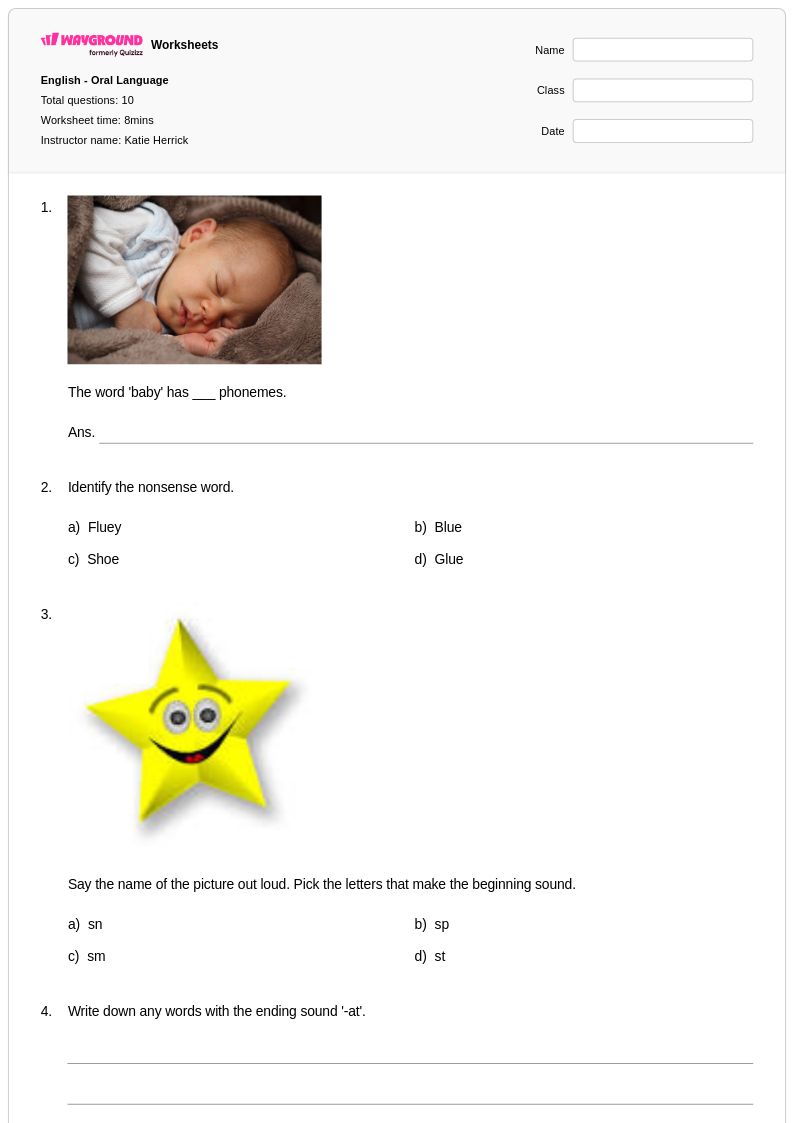
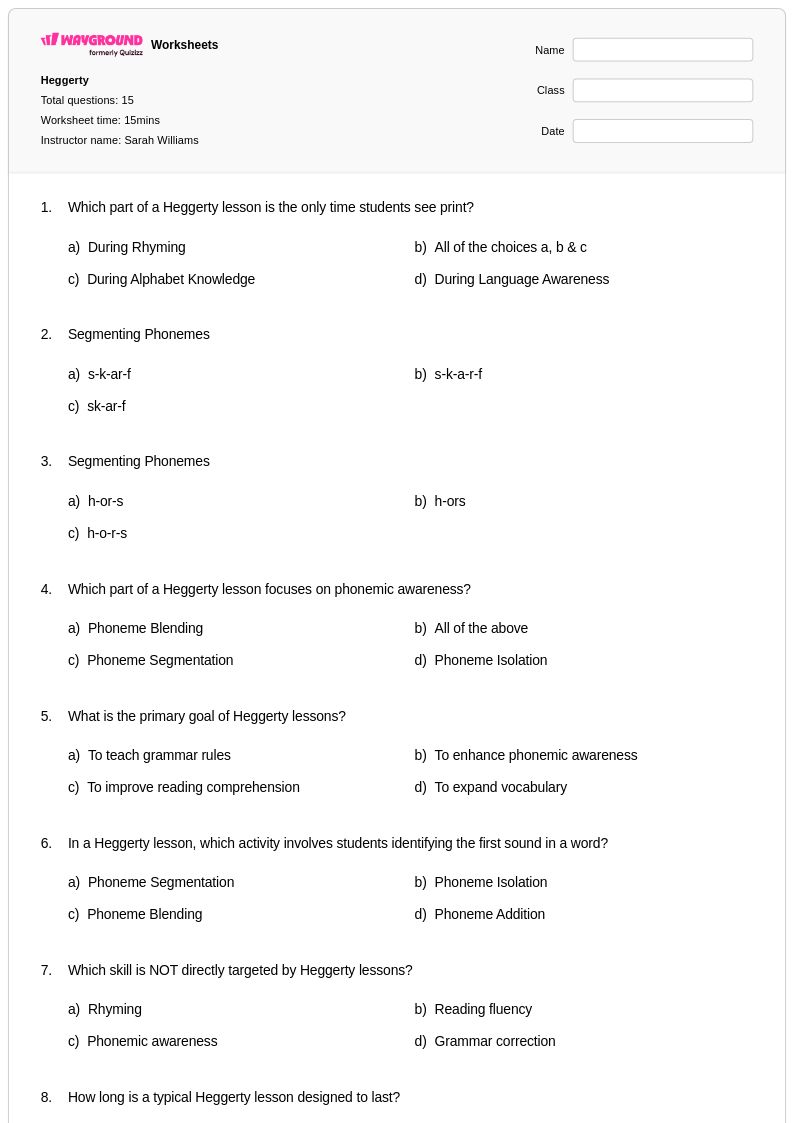
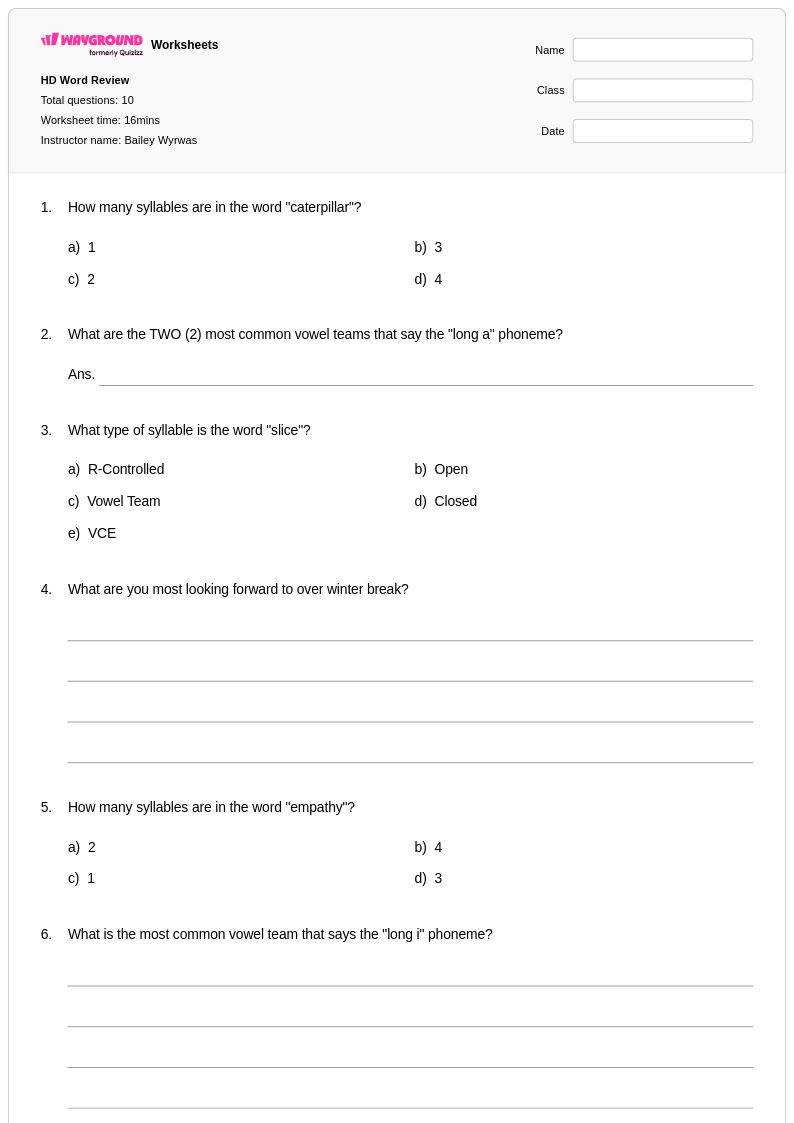
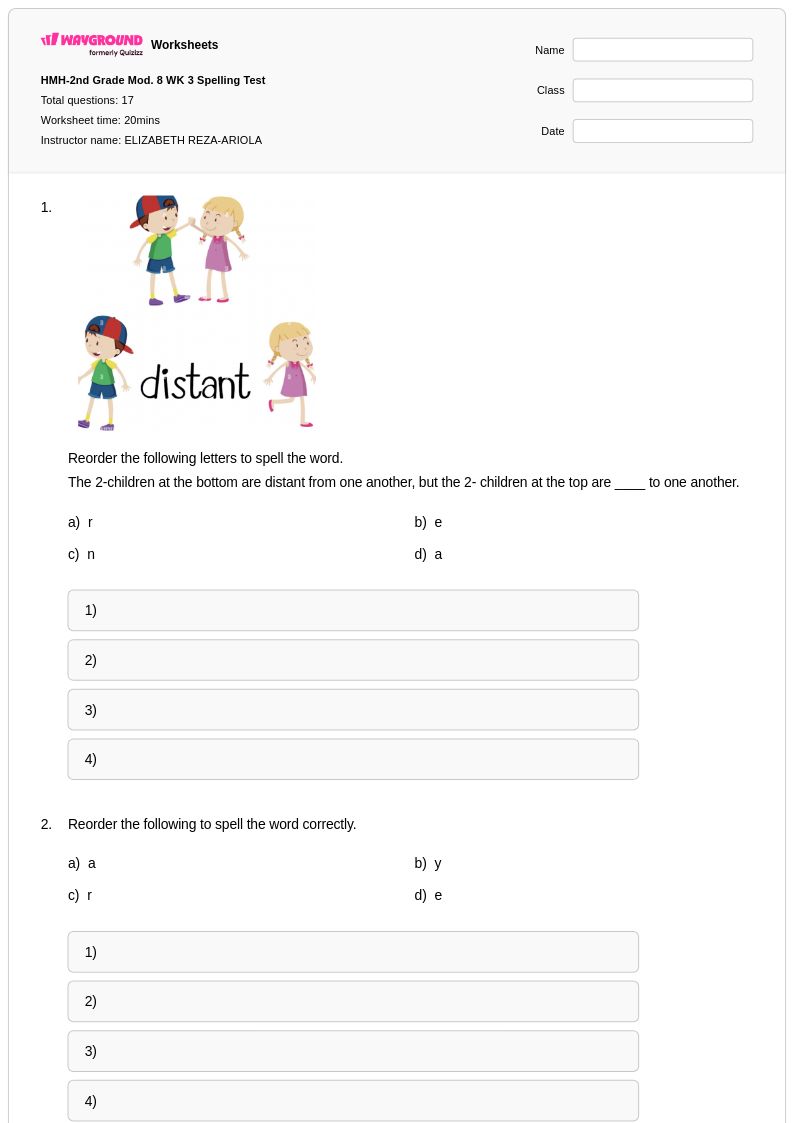
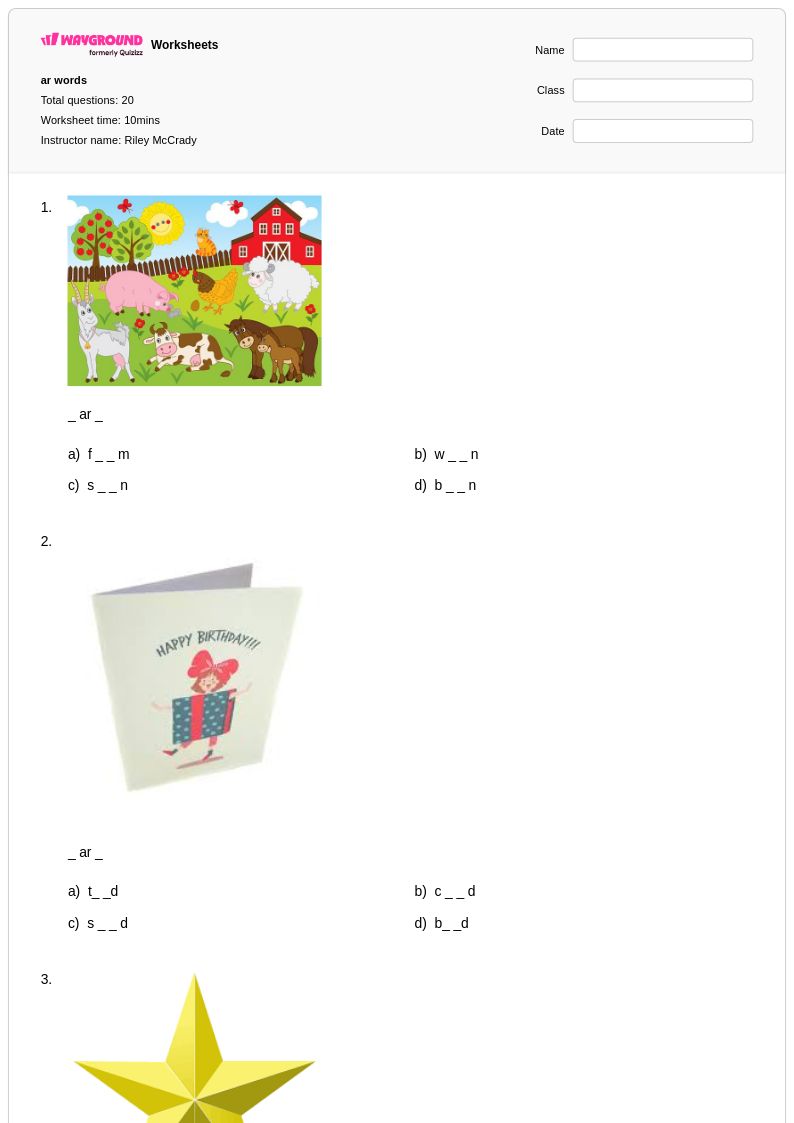
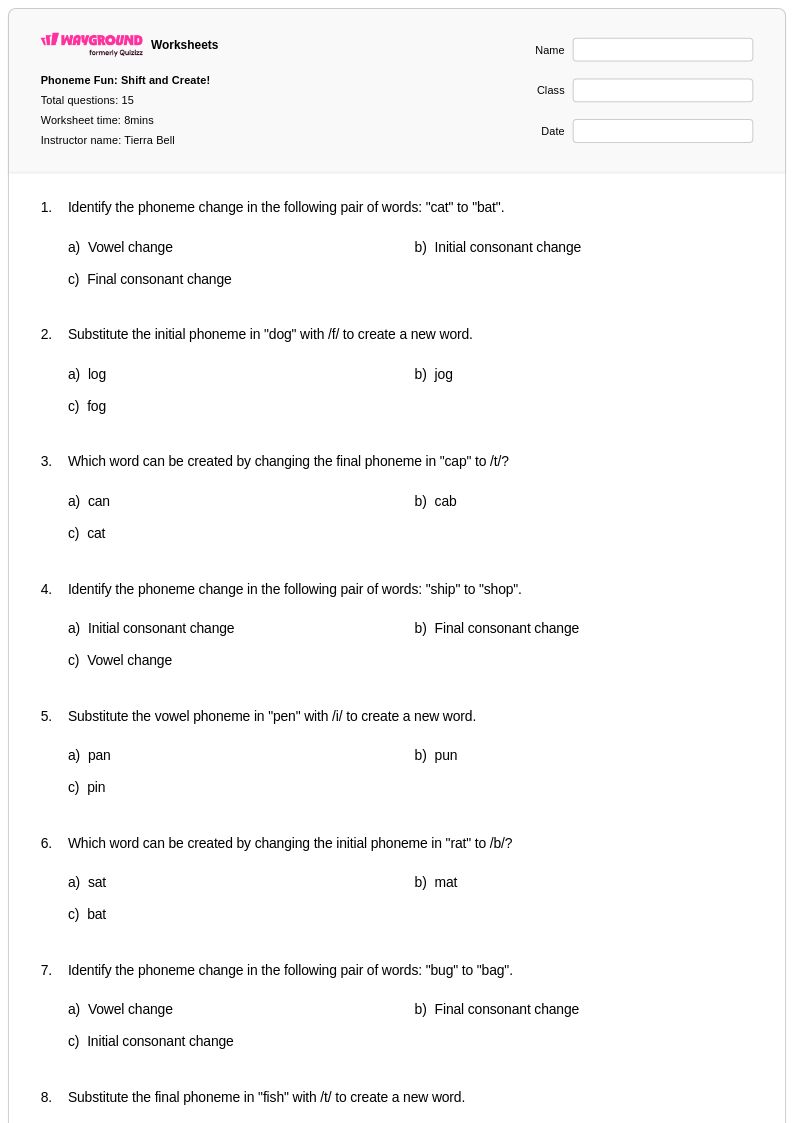
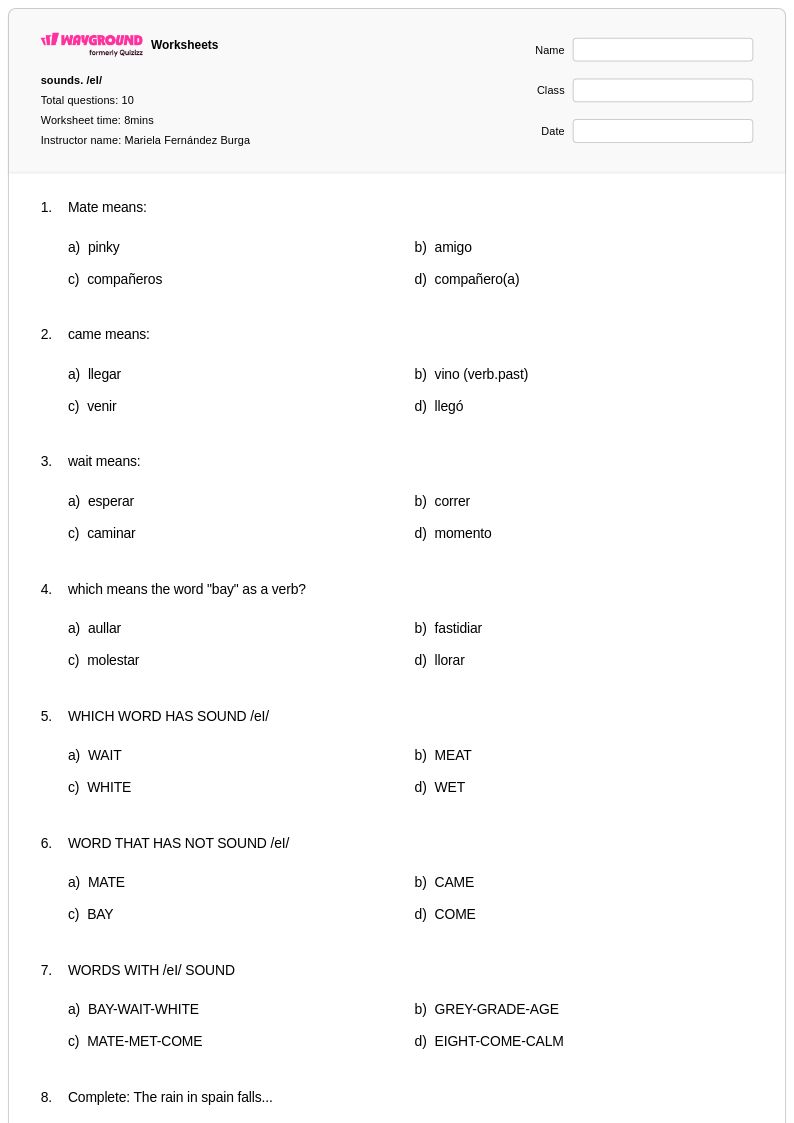
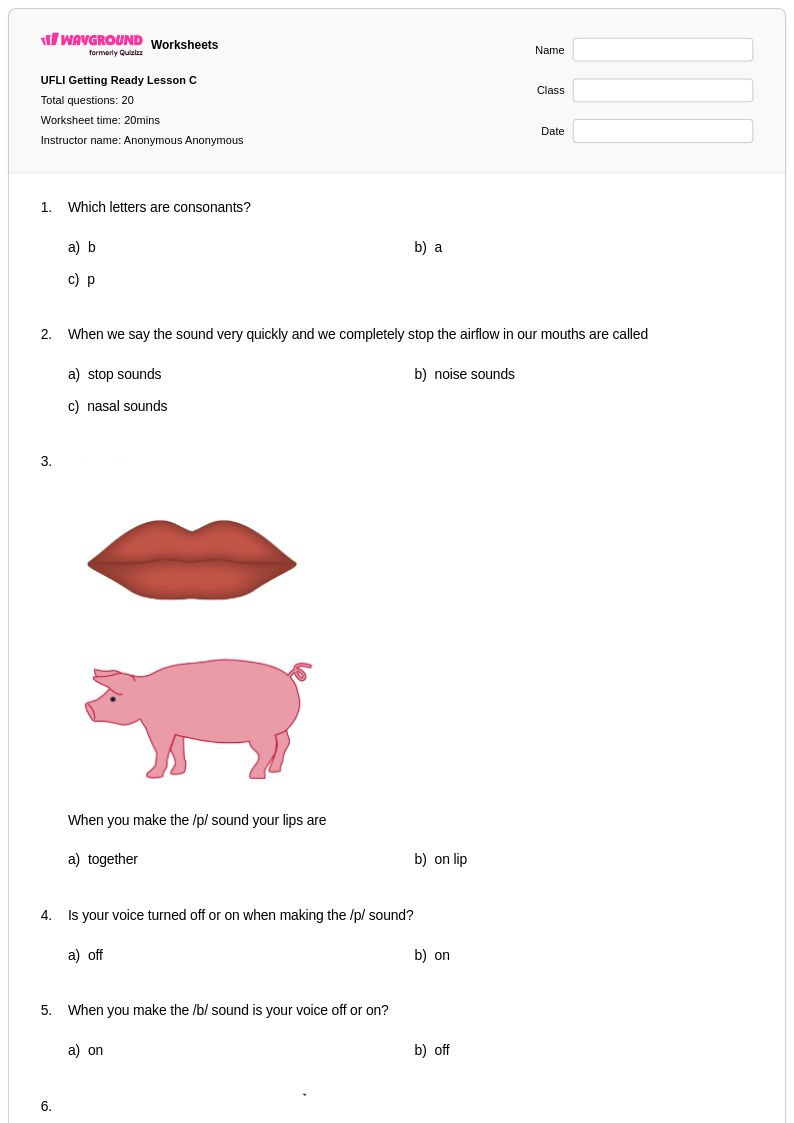
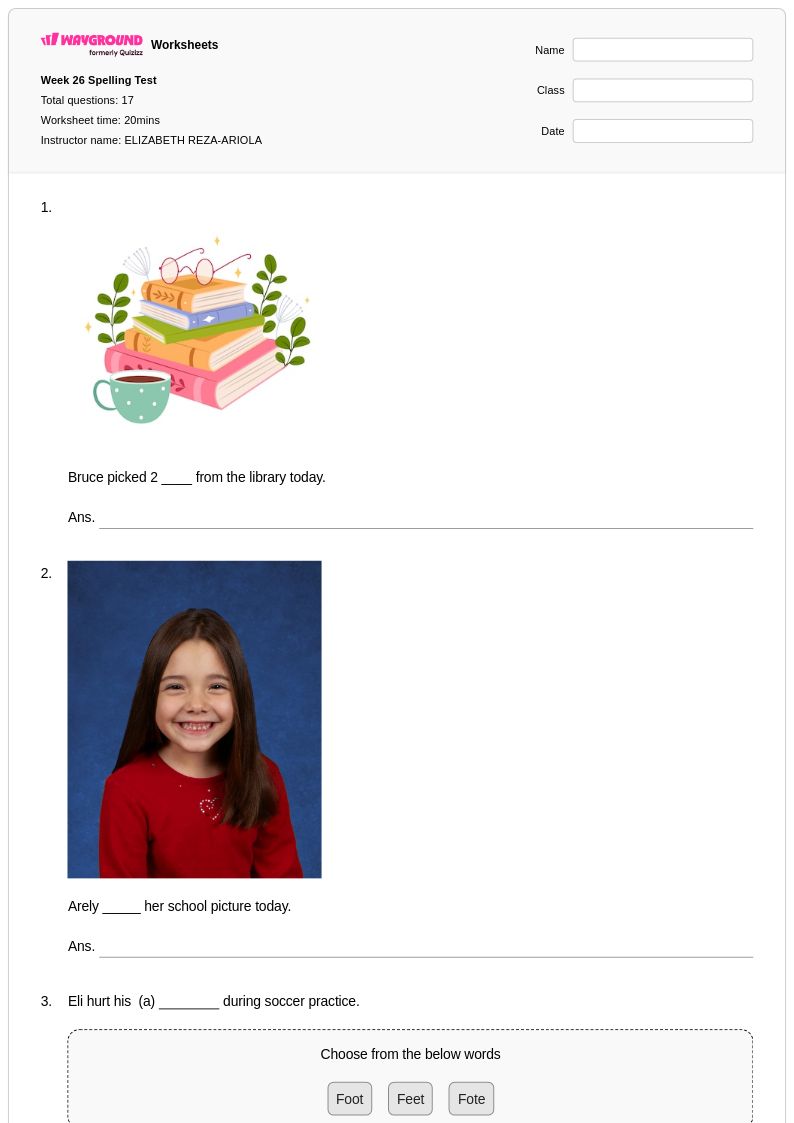
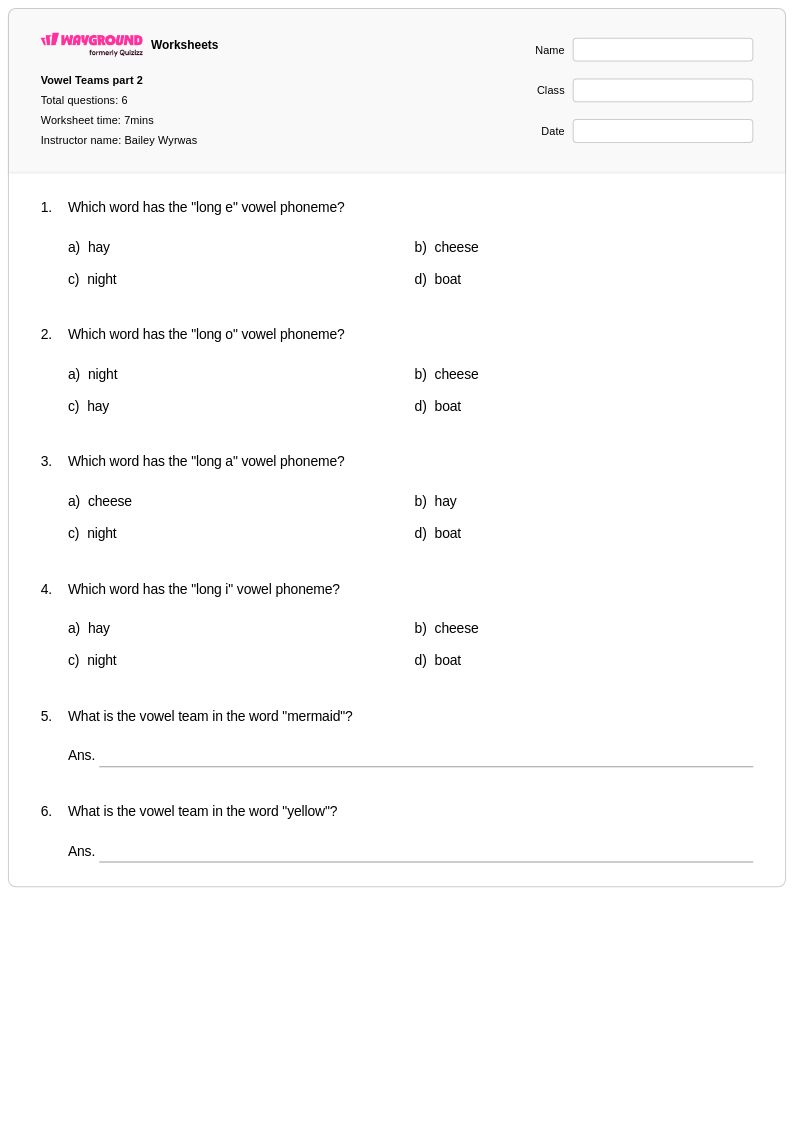
Phoneme substitution worksheets for Class 2 students available through Wayground (formerly Quizizz) provide essential practice in manipulating individual sounds within words to create new words. These comprehensive resources strengthen students' phonological awareness by teaching them to systematically replace beginning, middle, or ending sounds in familiar words, such as changing the /c/ in "cat" to /b/ to make "bat" or substituting the /o/ in "hop" to /i/ to create "hip." Each worksheet collection includes structured practice problems that guide second-grade learners through increasingly complex sound substitution patterns, complete with answer keys to support independent learning and teacher assessment. These free printable resources offer systematic skill-building opportunities that help students develop the foundational phonemic awareness necessary for advanced reading and spelling proficiency.
Wayground (formerly Quizizz) empowers educators with access to millions of teacher-created phoneme substitution worksheets specifically designed for Class 2 instruction, featuring robust search and filtering capabilities that allow teachers to locate materials aligned with specific learning standards and student needs. The platform's differentiation tools enable instructors to customize worksheets for various skill levels, supporting both remediation for struggling readers and enrichment activities for advanced learners. Teachers can access these resources in flexible formats, including downloadable PDF printables for traditional classroom use and interactive digital versions for technology-integrated learning environments. This comprehensive worksheet collection streamlines lesson planning while providing targeted skill practice opportunities that help educators address individual student needs in phonological awareness development through systematic, engaging phoneme manipulation activities.
FAQs
How do I teach phoneme substitution to early readers?
Phoneme substitution is best taught through explicit, sequential instruction that begins with initial sounds before moving to final and medial sounds. Start by modeling aloud — say a word, identify the target phoneme, replace it, and blend the new word — then guide students to do the same with support. Using manipulatives like letter tiles or sound boxes helps make the abstract process of swapping sounds concrete and visible for beginning readers.
What exercises help students practice phoneme substitution?
Effective practice exercises include word chain activities where students change one sound at a time to build a sequence of new words (e.g., cat → bat → bit → sit), fill-in-the-blank tasks that prompt students to write the new word after a sound swap is described, and minimal pair drills that reinforce how a single phoneme change creates a different word. Repeated, structured practice with immediate feedback is key to building automaticity in sound manipulation.
What mistakes do students commonly make with phoneme substitution?
A common error is confusing phoneme substitution with phoneme deletion — students may drop the target sound entirely rather than replacing it with the new one. Others struggle with medial vowel substitution because short vowel sounds are acoustically similar, leading to substitutions like replacing /ĕ/ with /ĭ/ incorrectly. Some students also blend the new word incorrectly after substitution, which signals that segmenting and blending skills need additional reinforcement alongside substitution practice.
How do I differentiate phoneme substitution instruction for struggling readers?
For struggling readers, begin substitution practice exclusively at the initial phoneme position before introducing final or medial changes, since initial sounds are easiest to isolate. Reduce the cognitive load by pairing the auditory task with visual support, such as showing the written word while students manipulate the sounds. On Wayground, teachers can enable accommodations like Read Aloud so questions are read to students, and Reduced Answer Choices to limit options for students who need additional scaffolding — settings that can be assigned per student without alerting the rest of the class.
How do I use Wayground's phoneme substitution worksheets in my classroom?
Wayground's phoneme substitution worksheets are available as printable PDFs, making them easy to use as independent practice, homework, or small-group work in a traditional classroom. They are also available in digital formats, so they can be assigned in technology-integrated settings and hosted as a quiz directly on Wayground. All worksheets include complete answer keys, which streamlines grading and allows teachers to use them for quick formative checks or structured practice centers.
At what reading stage should students work on phoneme substitution?
Phoneme substitution is typically introduced after students have a solid grasp of phoneme isolation and phoneme blending, making it appropriate for kindergartners and first graders who are in the early stages of formal reading instruction. It is also a valuable remediation target for second graders or older students who struggle with decoding, as weak phoneme manipulation skills are a common underlying factor in reading difficulties. Phoneme substitution bridges phonological awareness and phonics by helping students understand the direct relationship between sounds and the words they produce.