Free Printable Political Maps Worksheets for Class 3
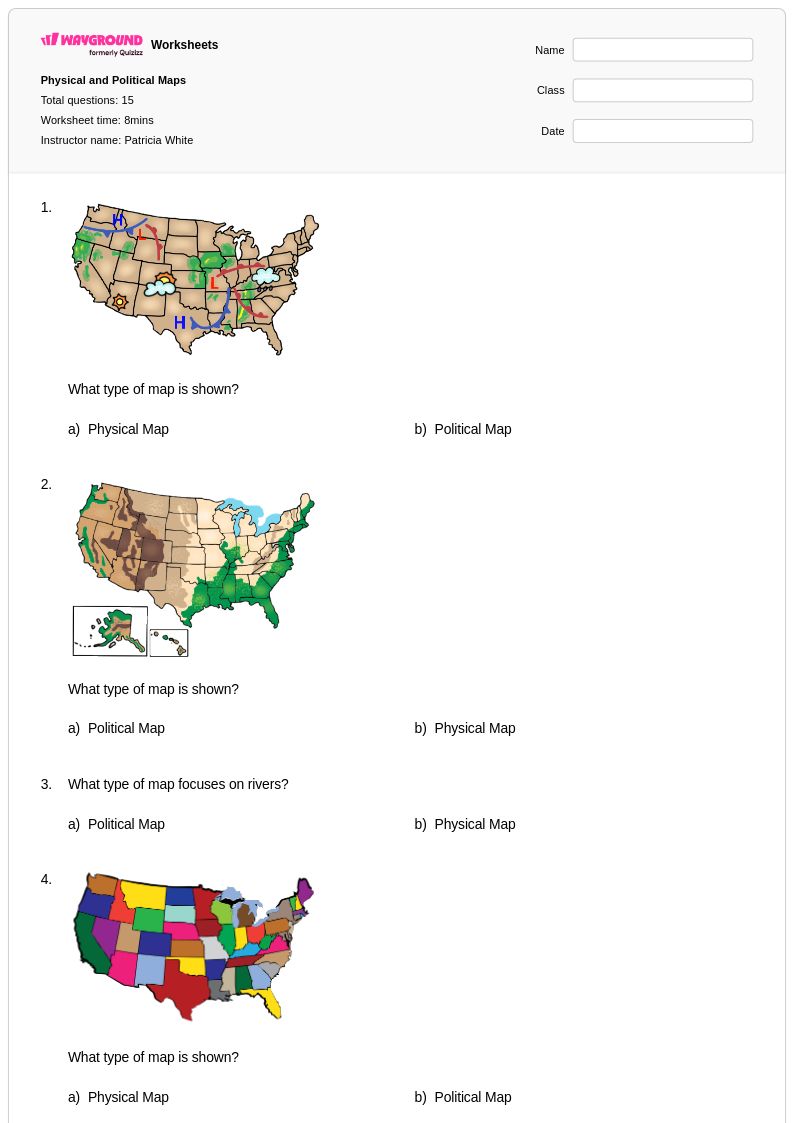
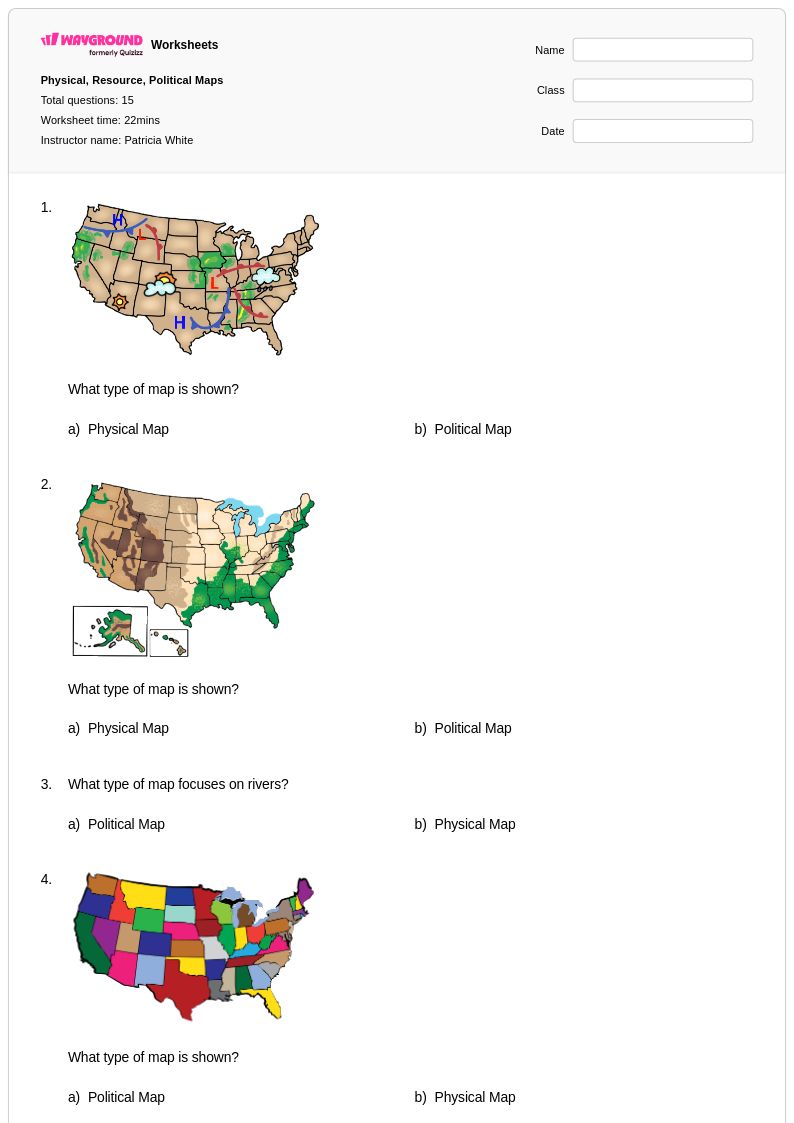
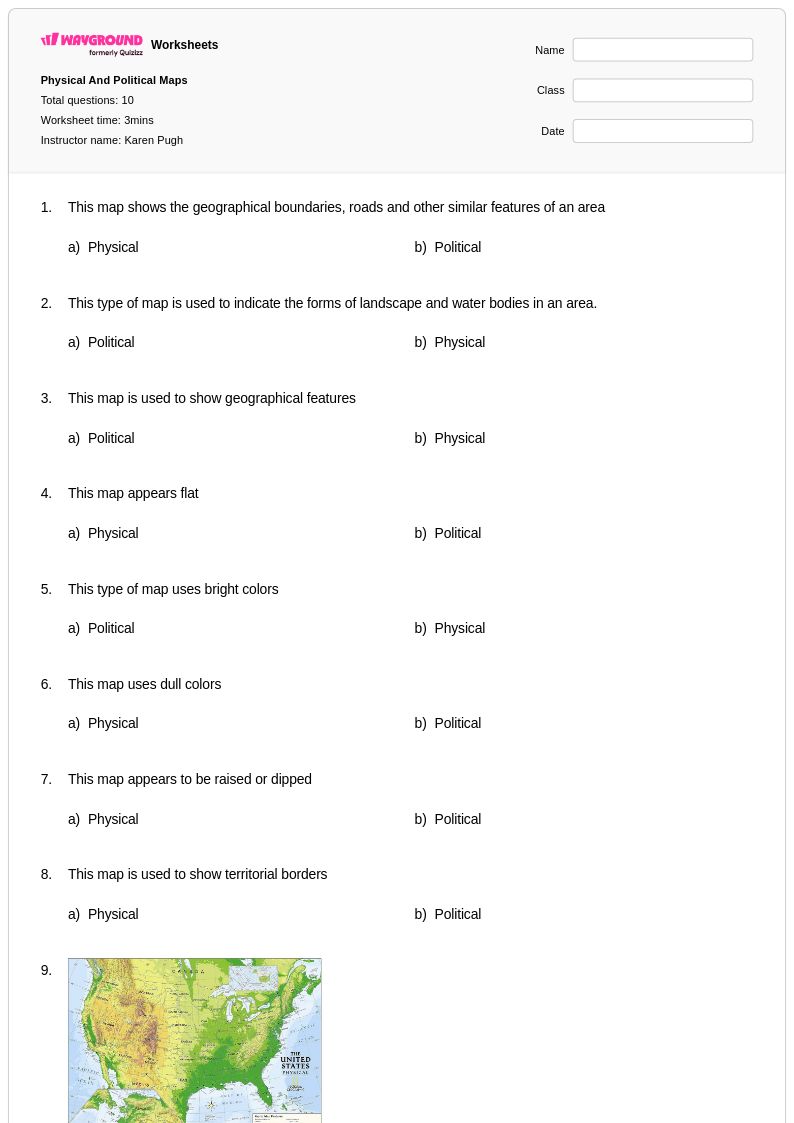
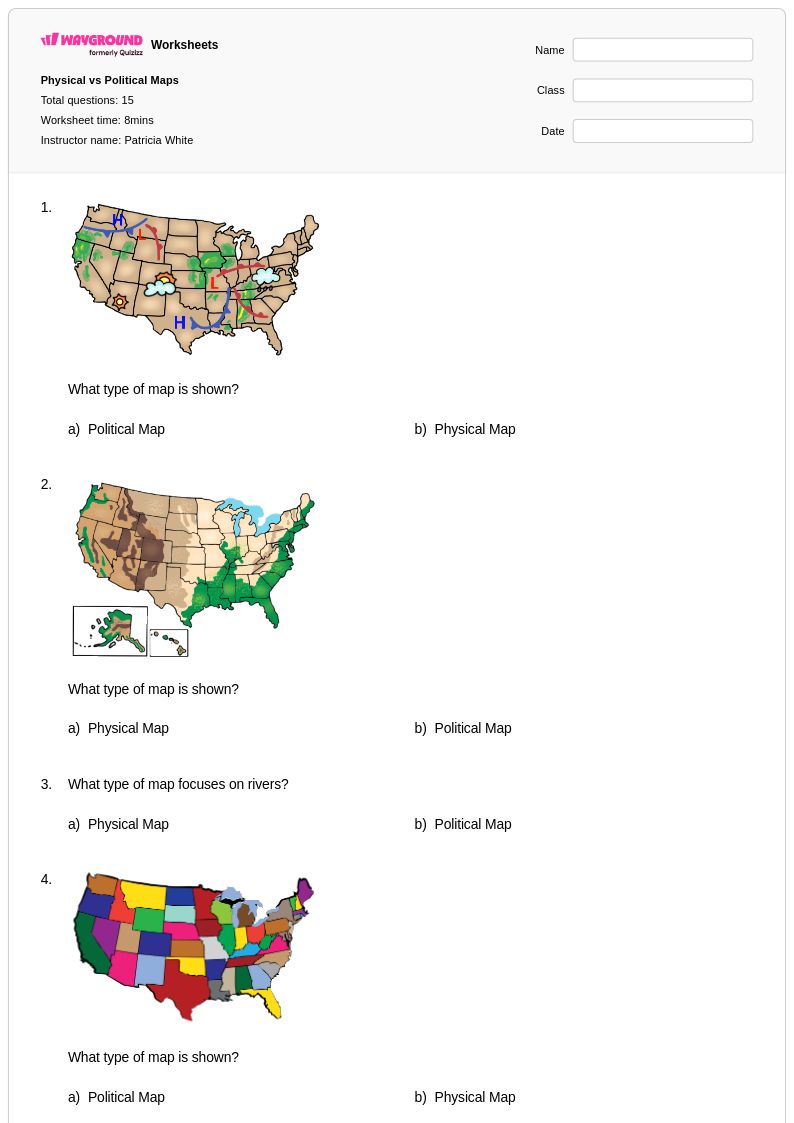
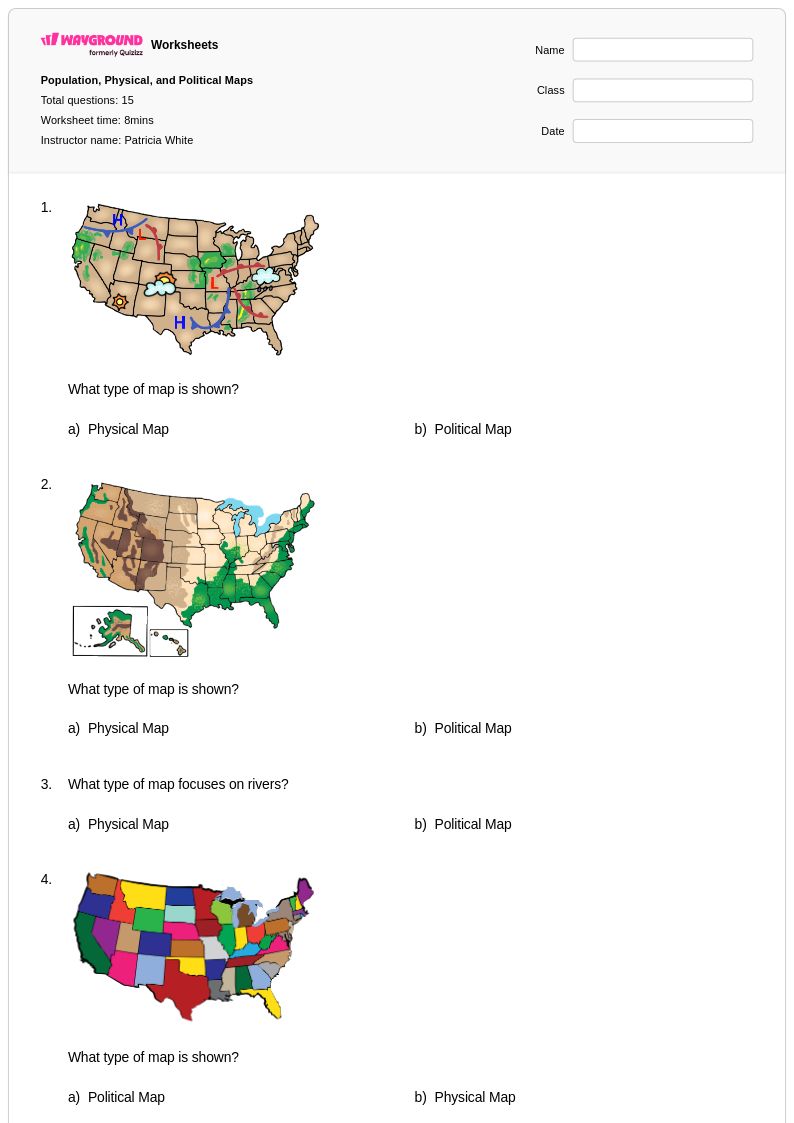
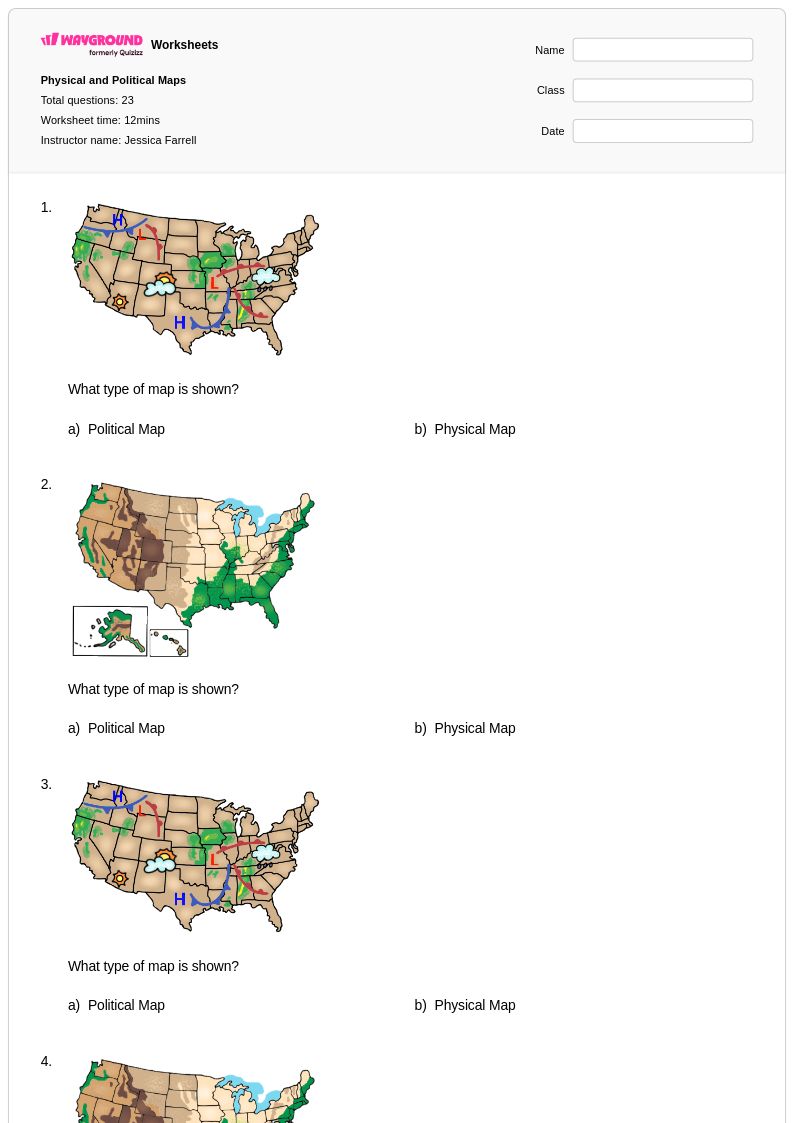
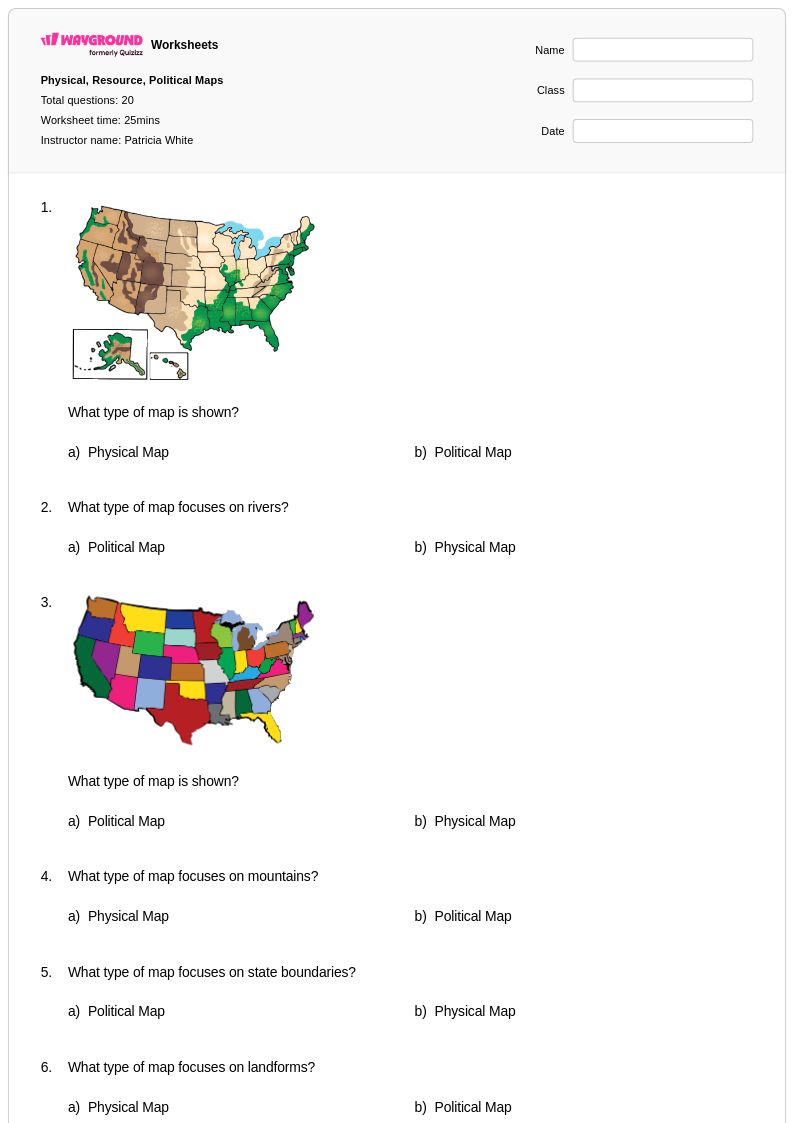
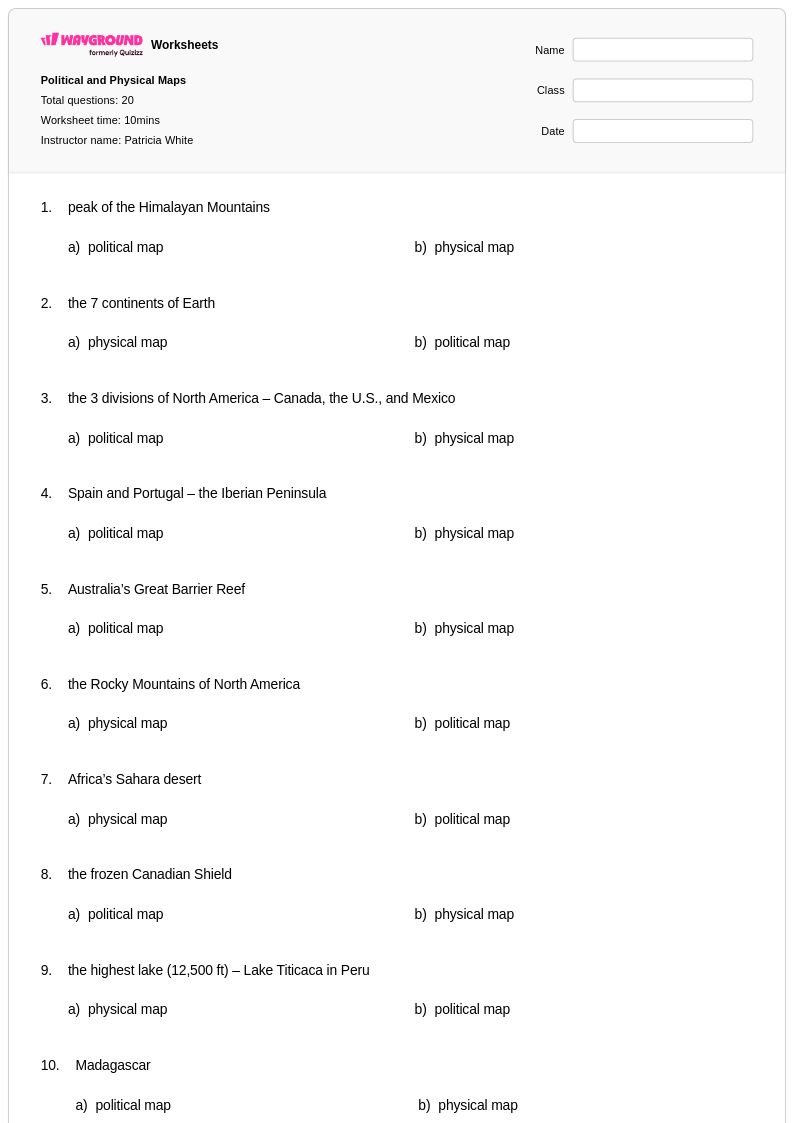
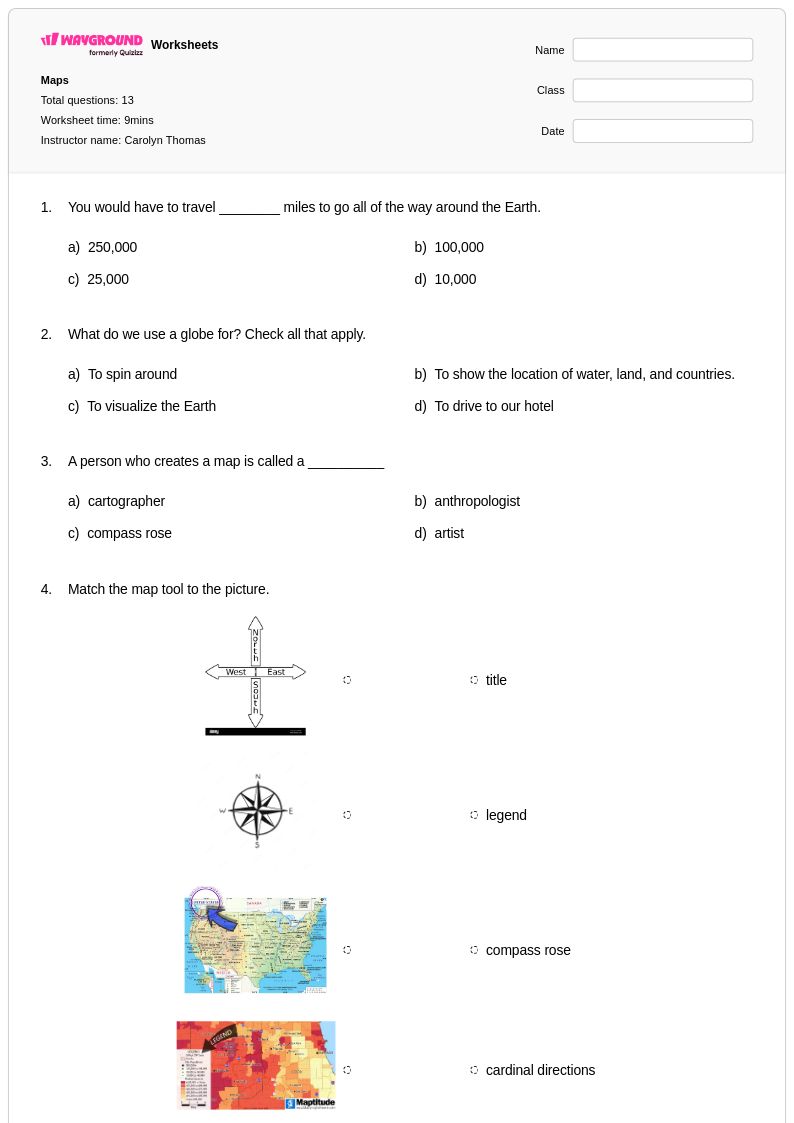
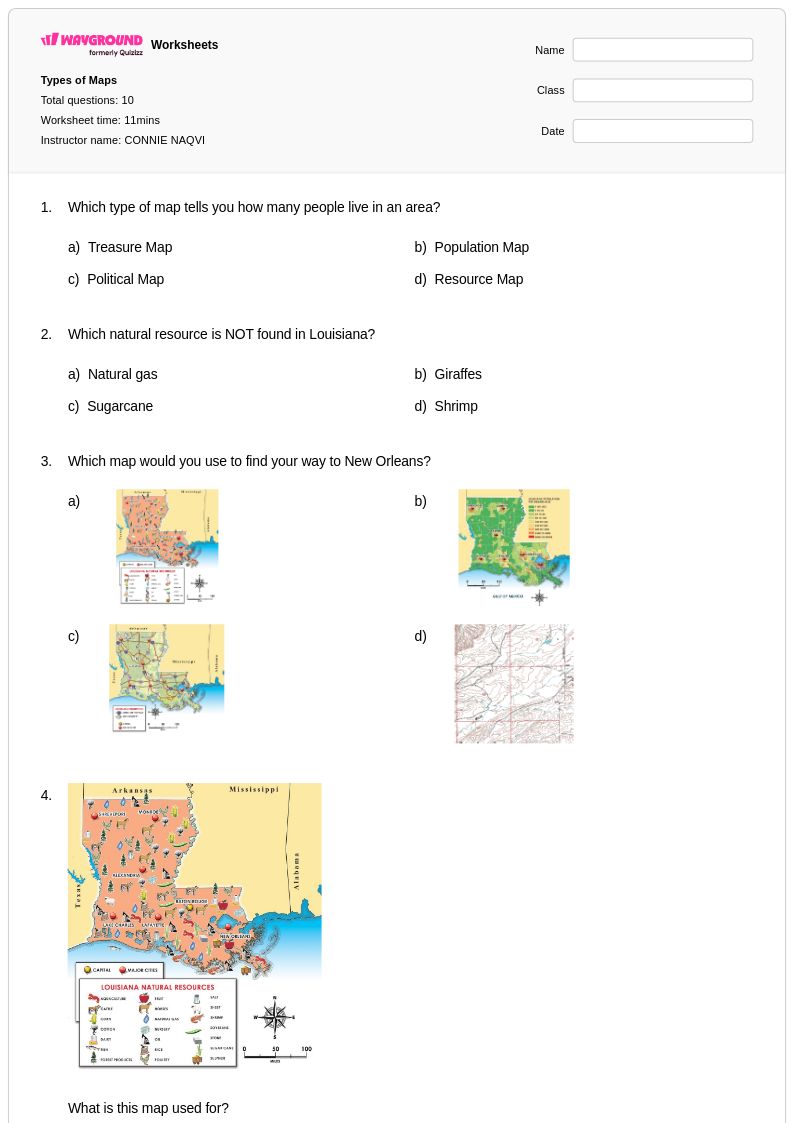
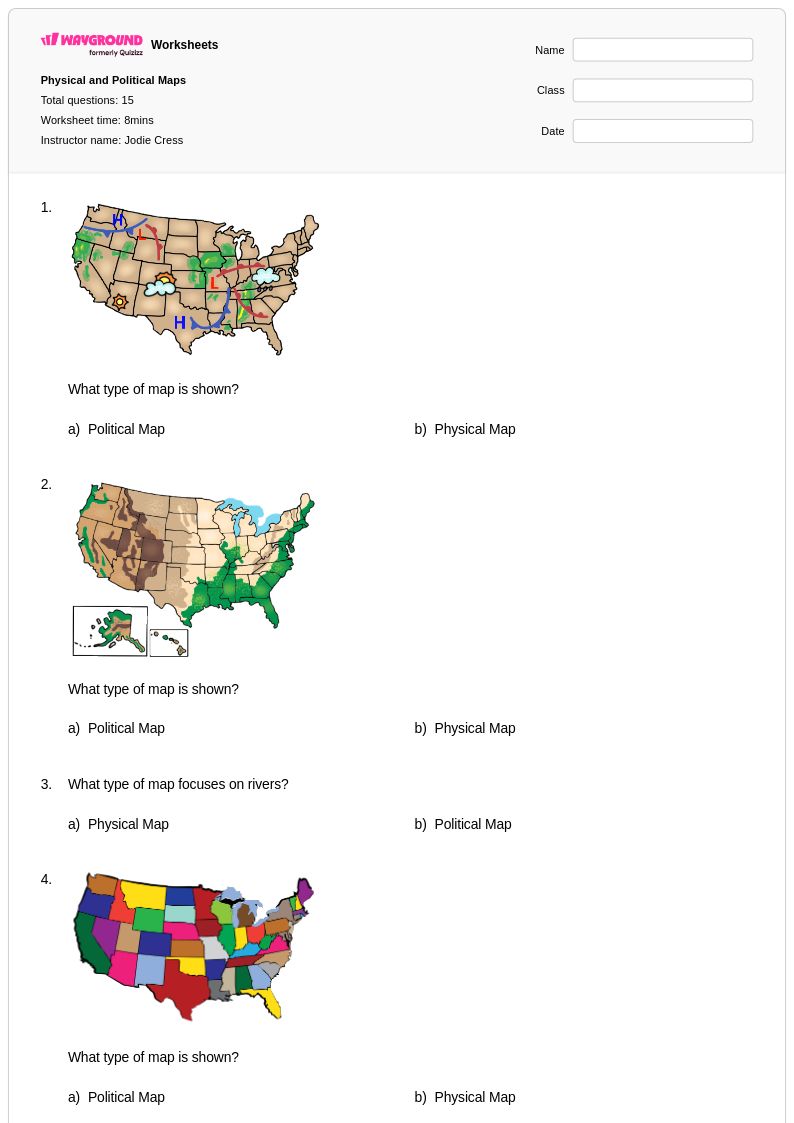
Class 3 political maps worksheets help students learn to identify countries, states, and capitals through engaging printables and practice problems with comprehensive answer keys available as free PDF downloads.
Explore printable Political Maps worksheets for Class 3
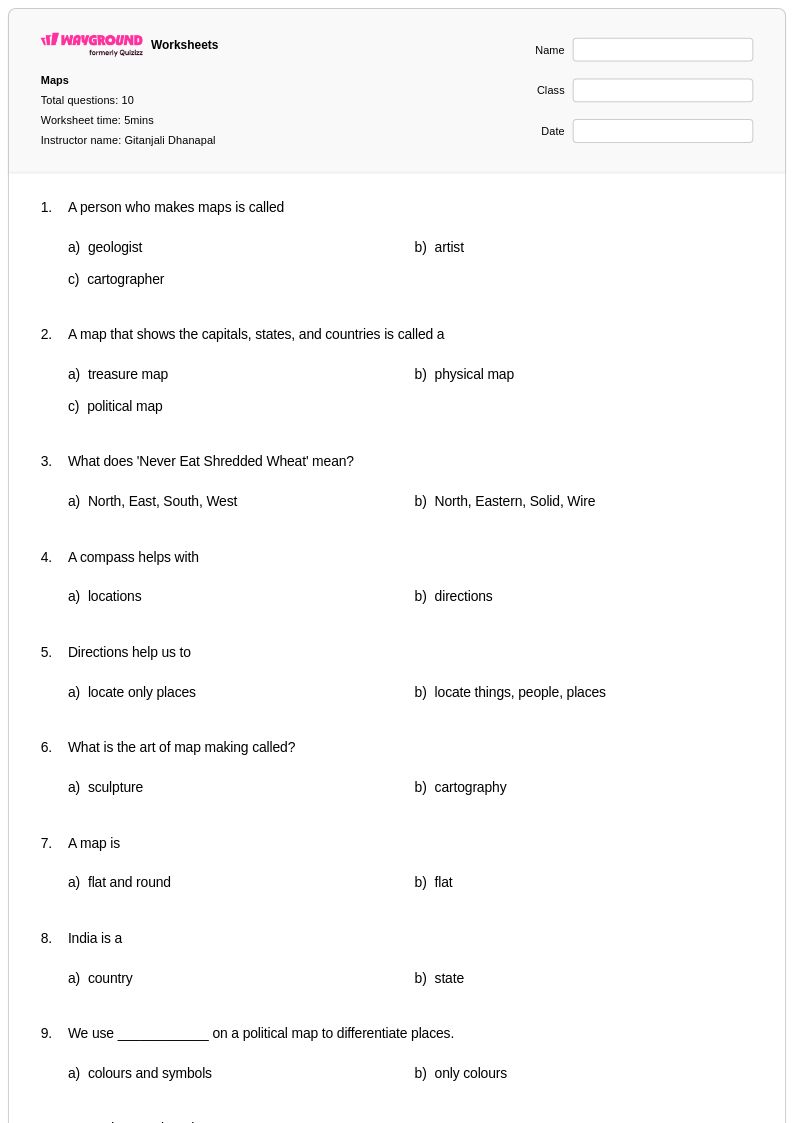
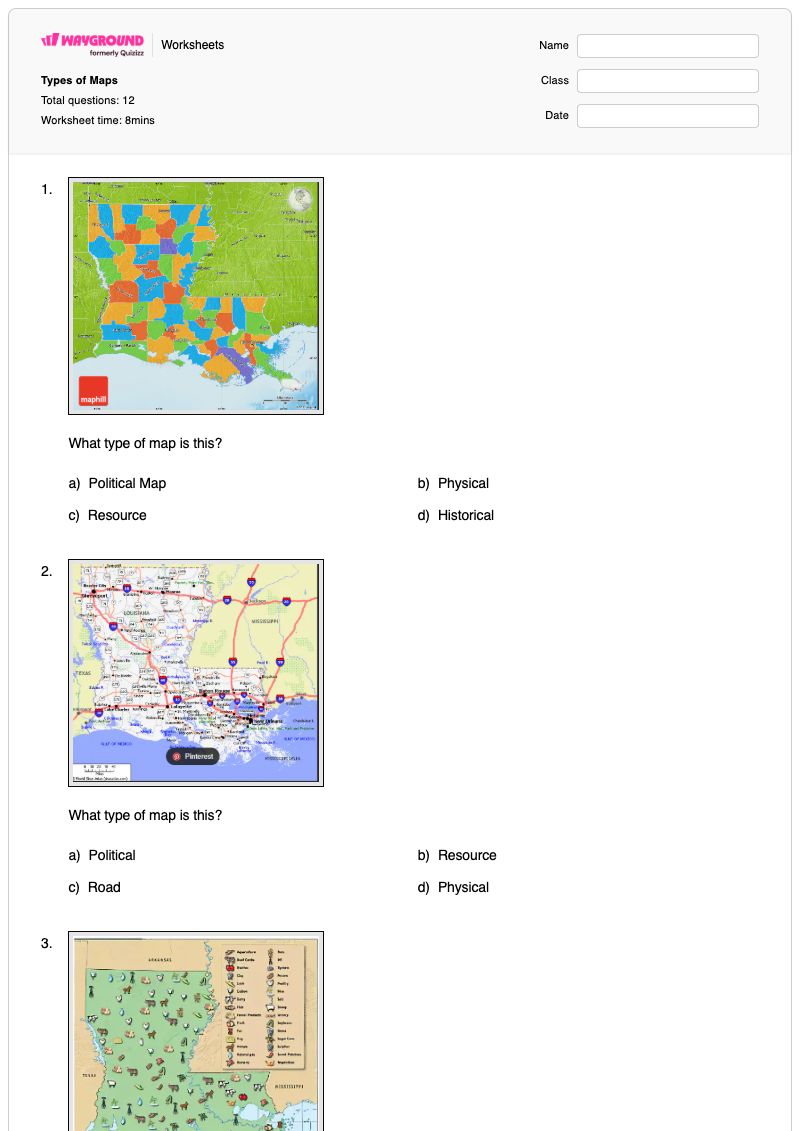
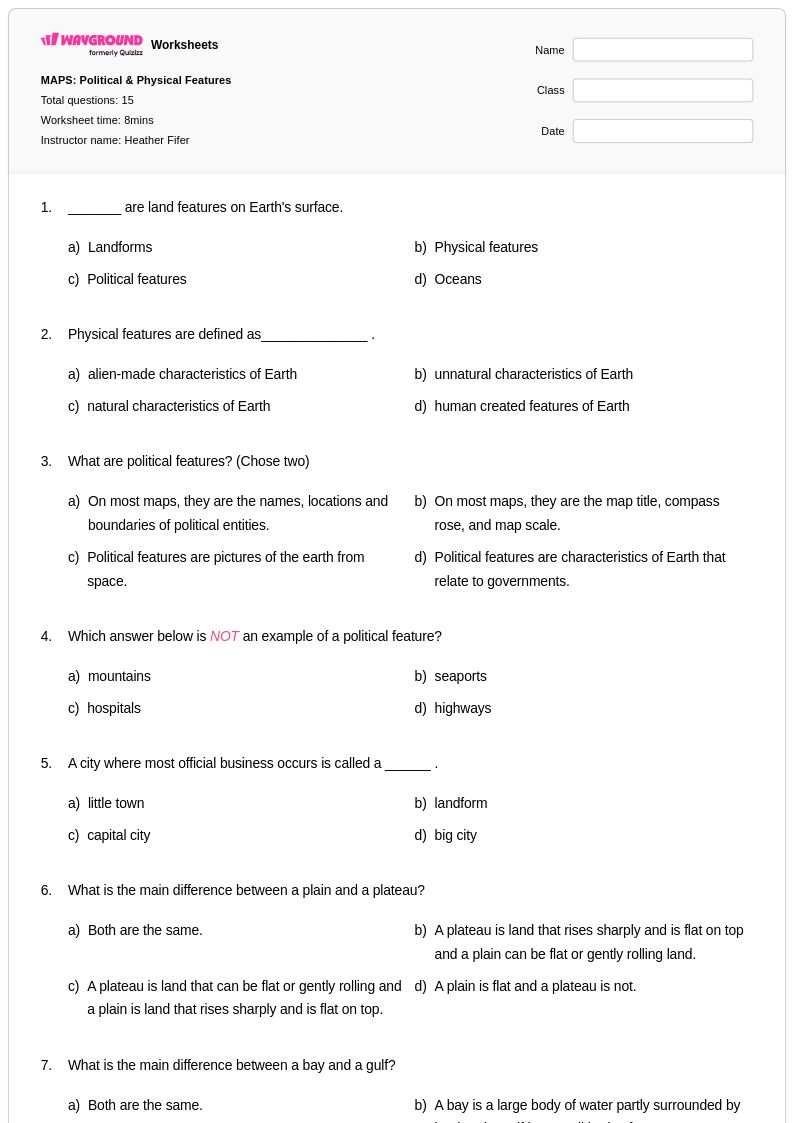
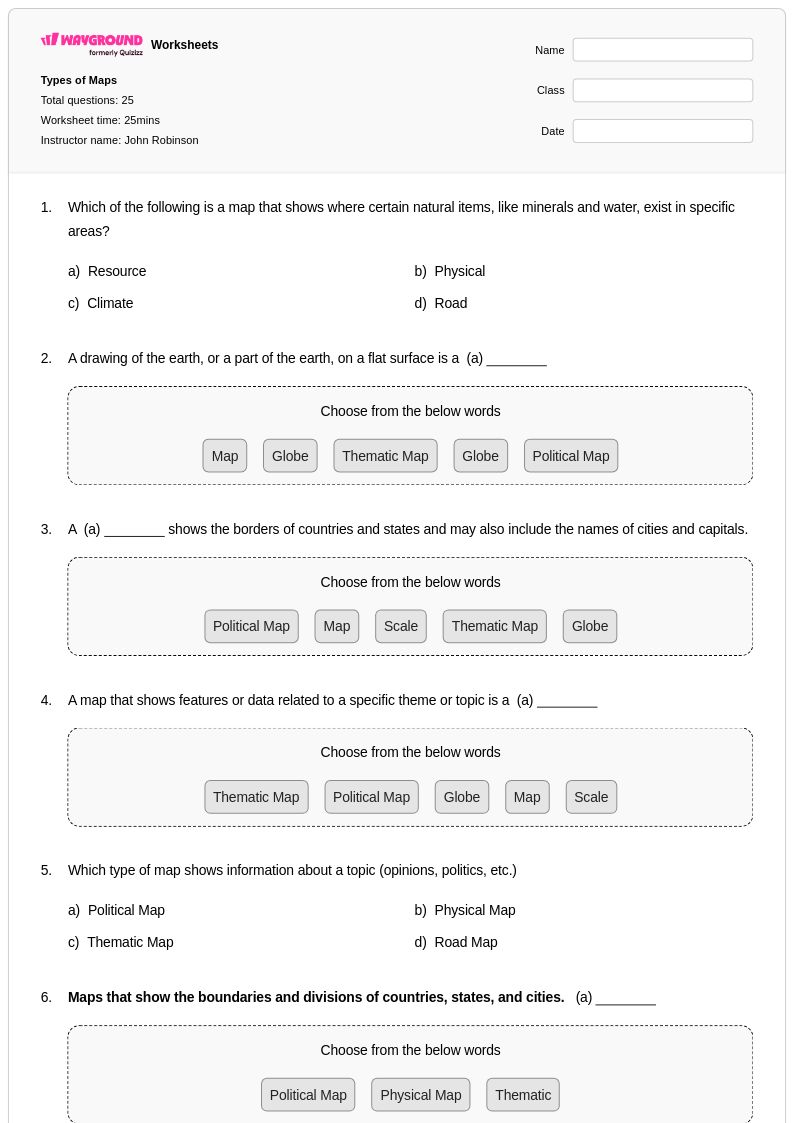
Political maps worksheets for Class 3 through Wayground provide young learners with essential practice in understanding the boundaries, countries, states, and capitals that define our world's political landscape. These carefully crafted printables help third-grade students develop fundamental map reading skills while learning to identify key political features such as national borders, state lines, and major cities. Each worksheet comes with a comprehensive answer key to support both independent learning and teacher-guided instruction, offering free access to high-quality practice problems that reinforce geographic literacy. Students work with age-appropriate political map activities that build their ability to locate places, understand political divisions, and recognize the relationship between geography and government structures.
Wayground's extensive collection of political maps resources draws from millions of teacher-created materials, ensuring educators have access to diverse, standards-aligned worksheets that meet varied classroom needs. The platform's robust search and filtering capabilities allow teachers to quickly locate Class 3 political maps content that matches specific learning objectives, whether for initial instruction, skill remediation, or enrichment activities. These customizable resources are available in both printable pdf format and digital versions, providing flexibility for different teaching environments and learning preferences. Teachers can easily differentiate instruction by selecting worksheets that target specific political geography concepts, from basic state identification to more complex activities involving capital cities and regional divisions, making lesson planning more efficient while ensuring every student receives appropriate practice opportunities.
FAQs
How do I teach political maps to students?
Start by distinguishing political maps from physical maps — political maps show human-made boundaries like country borders, state lines, and capital cities, while physical maps show landforms and terrain. Introduce real-world examples by having students compare political maps at local, national, and global scales so they can see how governmental divisions are organized hierarchically. From there, connect map reading to broader concepts like sovereignty and jurisdiction, helping students understand that political boundaries reflect decisions made by governments, not natural features of the landscape.
What activities help students practice reading political maps?
Effective practice activities include labeling blank political maps with country names, capital cities, and borders; matching political subdivisions to their administrative regions; and interpreting map keys to identify territorial boundaries. Students also benefit from comparing historical and current political maps to see how borders have shifted over time, which reinforces that political boundaries are dynamic rather than fixed. Worksheets that combine identification tasks with short-answer analysis questions push students to move beyond memorization toward spatial reasoning.
What mistakes do students commonly make when reading political maps?
One of the most frequent errors is confusing political boundaries with physical features — students often assume borders follow rivers, mountains, or coastlines when many are straight lines drawn by treaty or legislation. Students also struggle to distinguish between different levels of political organization, such as confusing countries, states or provinces, and capitals. Another common mistake is misreading map keys, which leads to misidentifying territories, disputed regions, or dependent areas as fully sovereign nations.
How do I use political maps worksheets from Wayground in my classroom?
Wayground's political maps worksheets are available as printable PDFs for traditional classroom use and in digital formats for technology-integrated environments, including the option to host them as a quiz directly on Wayground. Teachers can use printable versions for independent practice, map-labeling stations, or homework assignments, while digital formats work well for self-paced review or formative assessment. All worksheets include answer keys, so teachers can use them efficiently without additional preparation time.
How can I differentiate political maps instruction for students at different skill levels?
For students who are still building foundational map skills, reduce cognitive load by starting with regional or national maps before moving to global scales, and provide partially labeled maps so students can focus on identifying a smaller set of features. Advanced learners can be challenged with open-ended analysis tasks, such as explaining why a specific border exists or how a boundary change affected surrounding regions. On Wayground, teachers can apply individual accommodations such as reduced answer choices or read-aloud support for students who need additional accessibility features.
How do I assess whether students understand political maps?
Effective assessment of political map skills goes beyond simple identification and should include tasks that require students to explain the significance of boundaries, not just locate them. Look for whether students can distinguish between types of political divisions — such as countries, states, provinces, and territories — and whether they understand concepts like capital cities and administrative regions in context. Common gaps include difficulty interpreting map keys accurately and an inability to explain how political decisions, rather than geography alone, determine where borders are drawn.