Free Printable Types of Maps Worksheets for Class 3
Class 3 students explore different types of maps through engaging free worksheets and printables that teach political, physical, and thematic map identification with comprehensive answer keys and practice problems.
Explore printable Types of Maps worksheets for Class 3
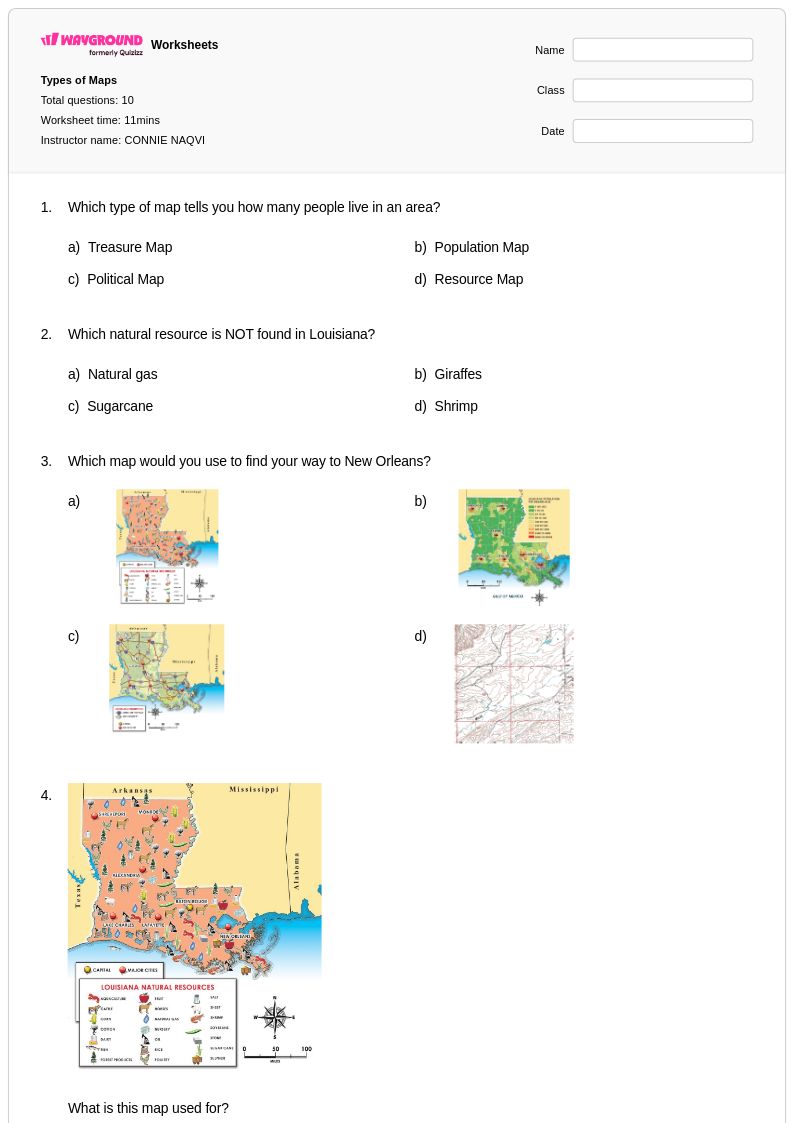
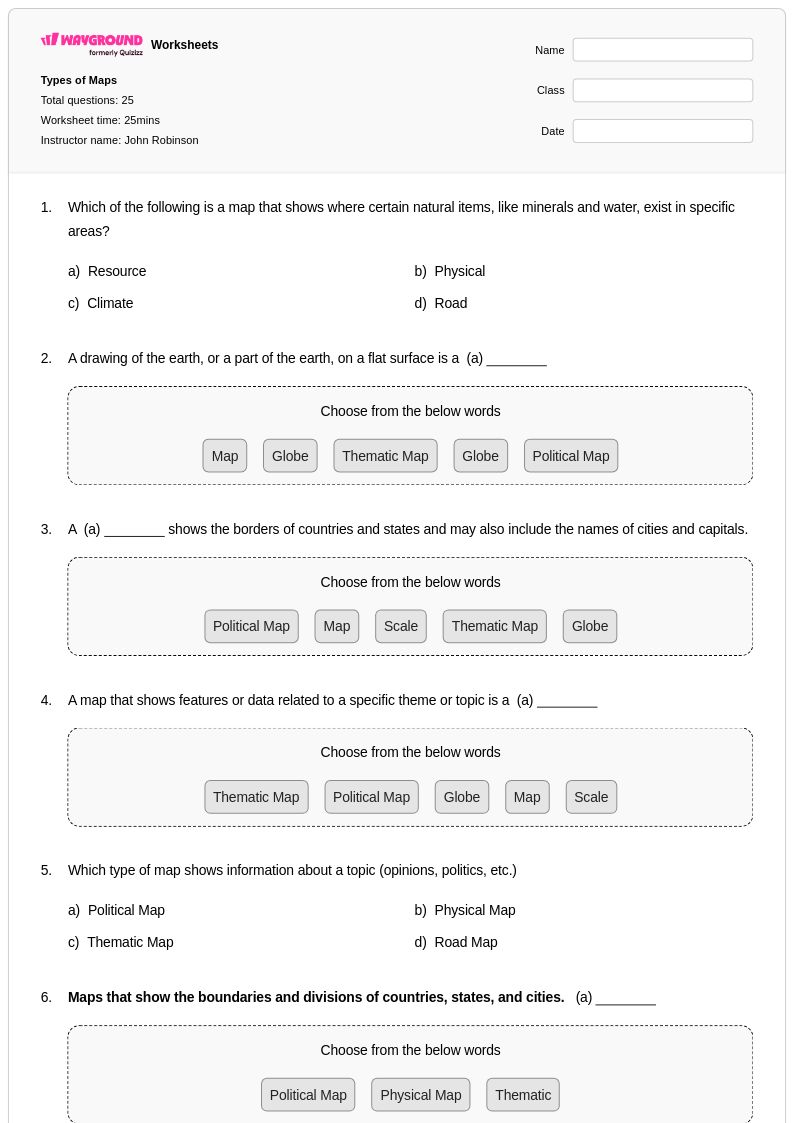
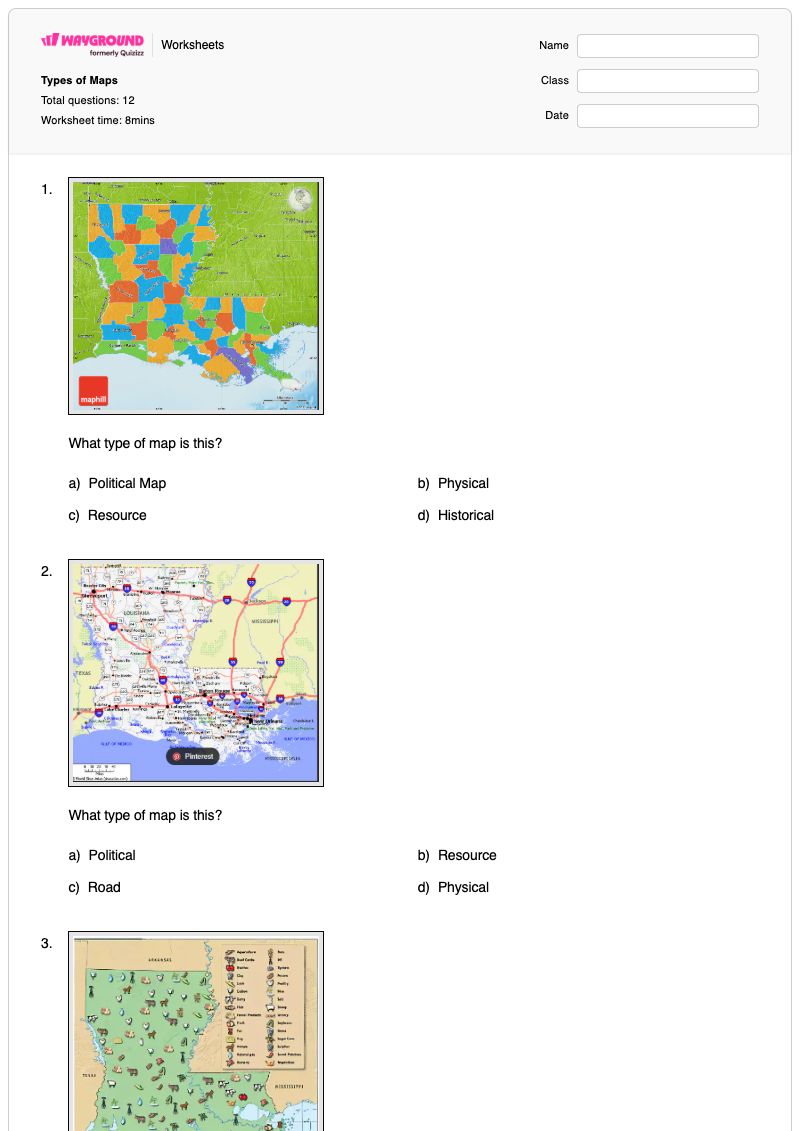
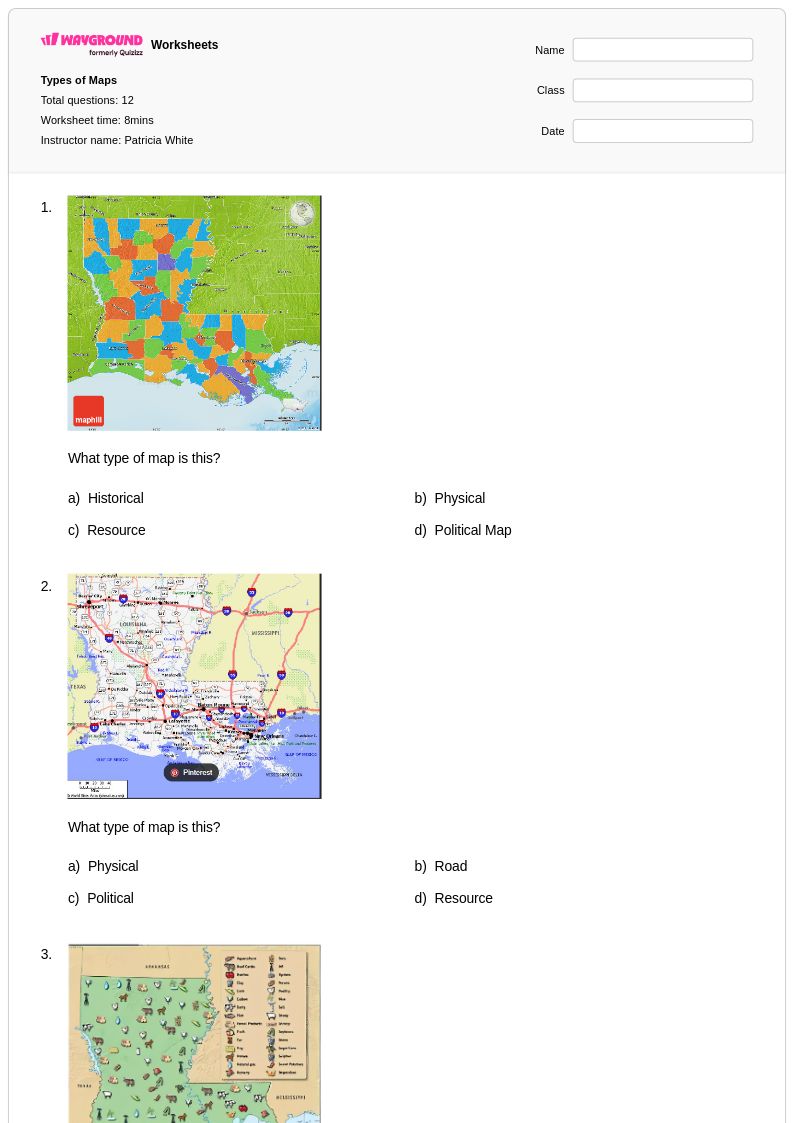
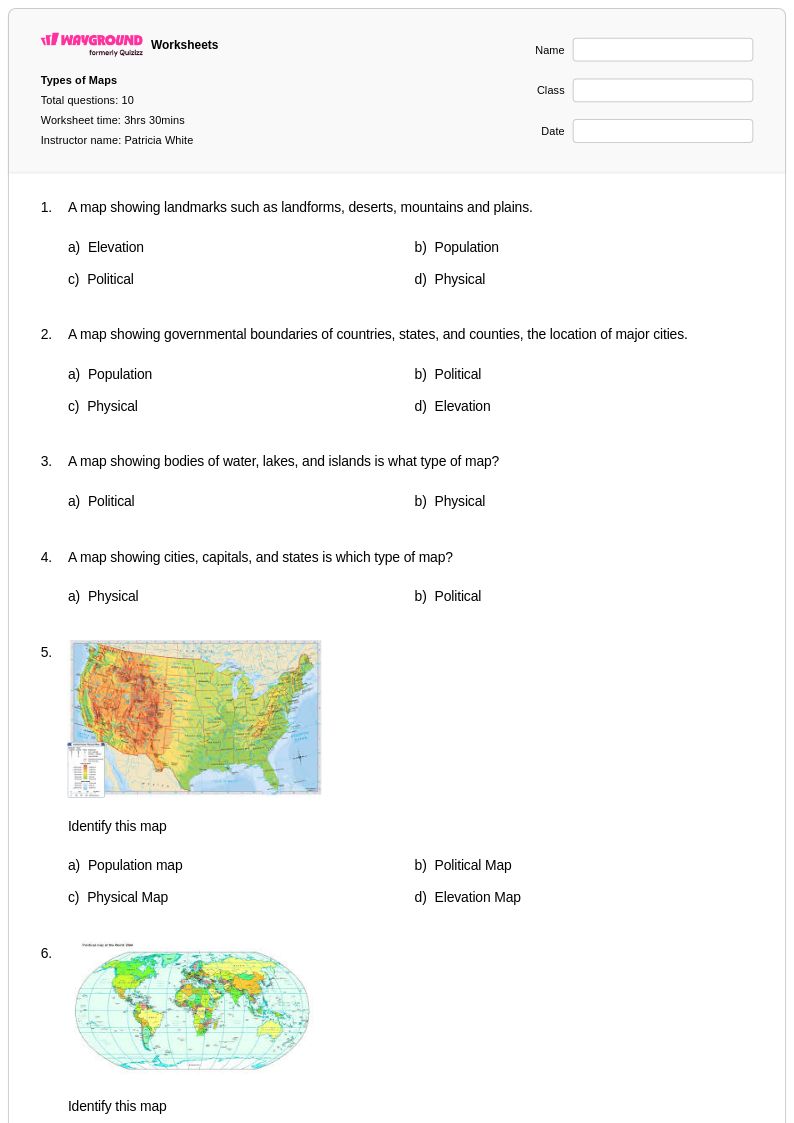
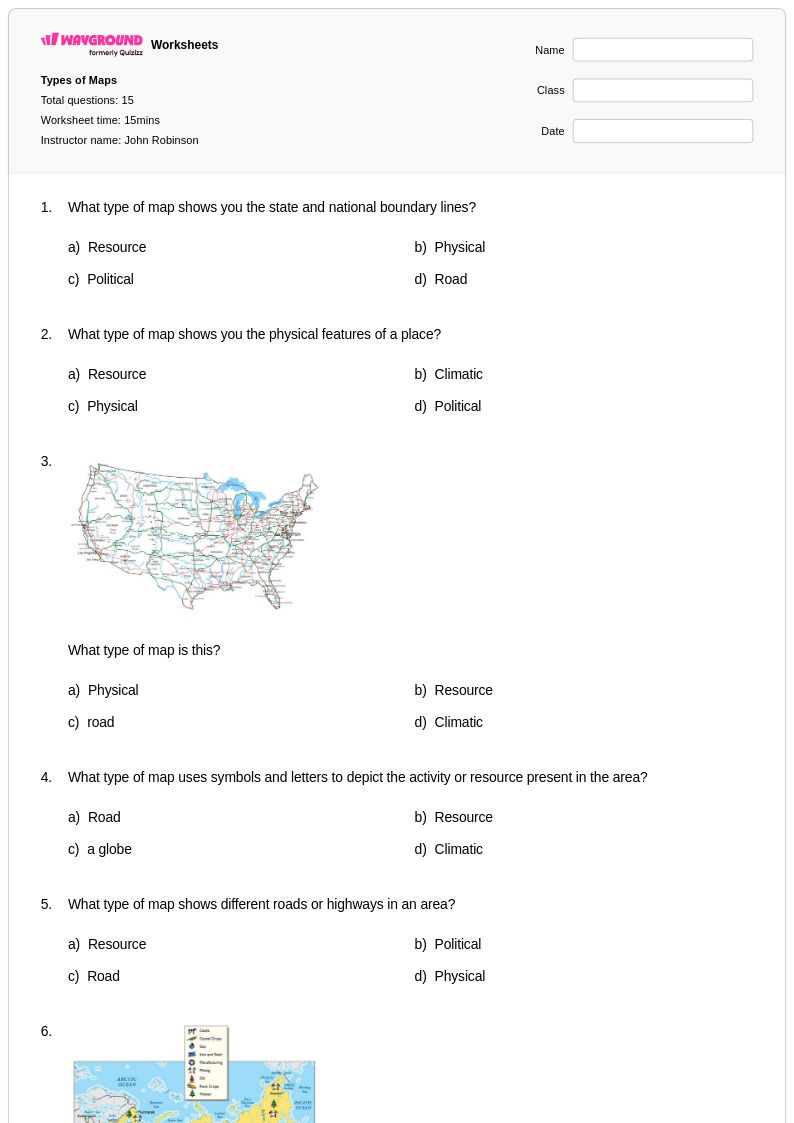
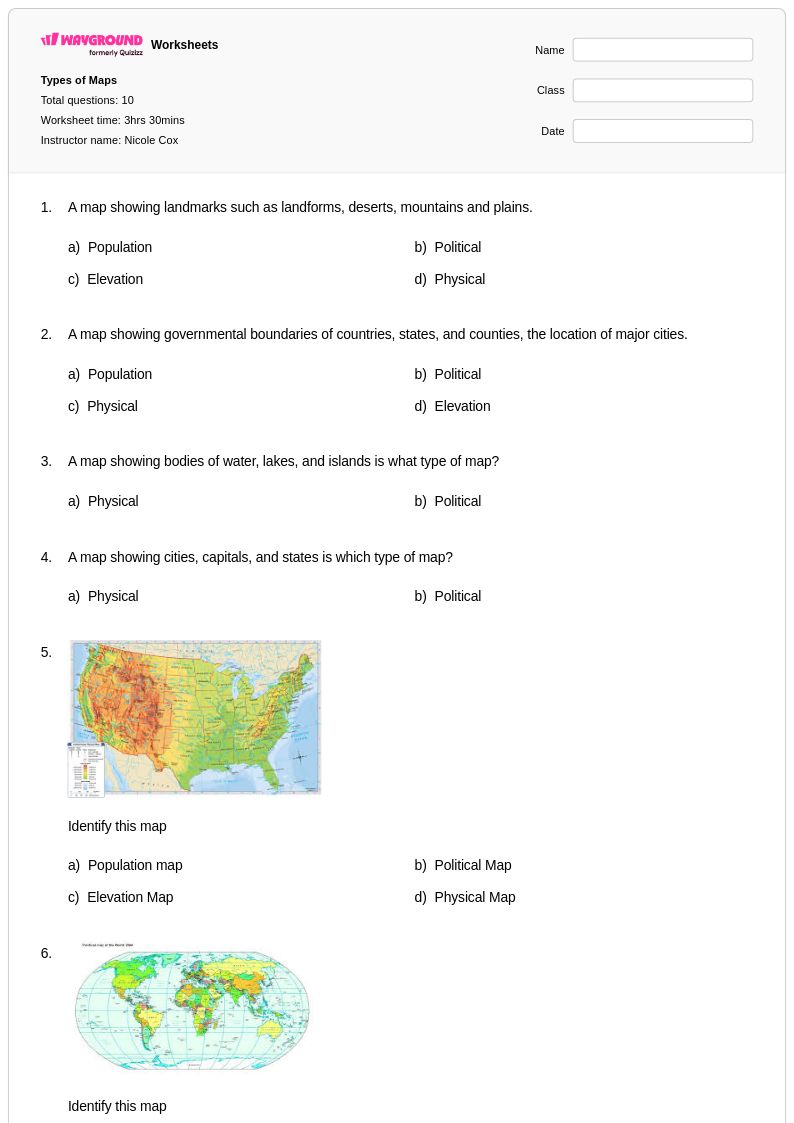
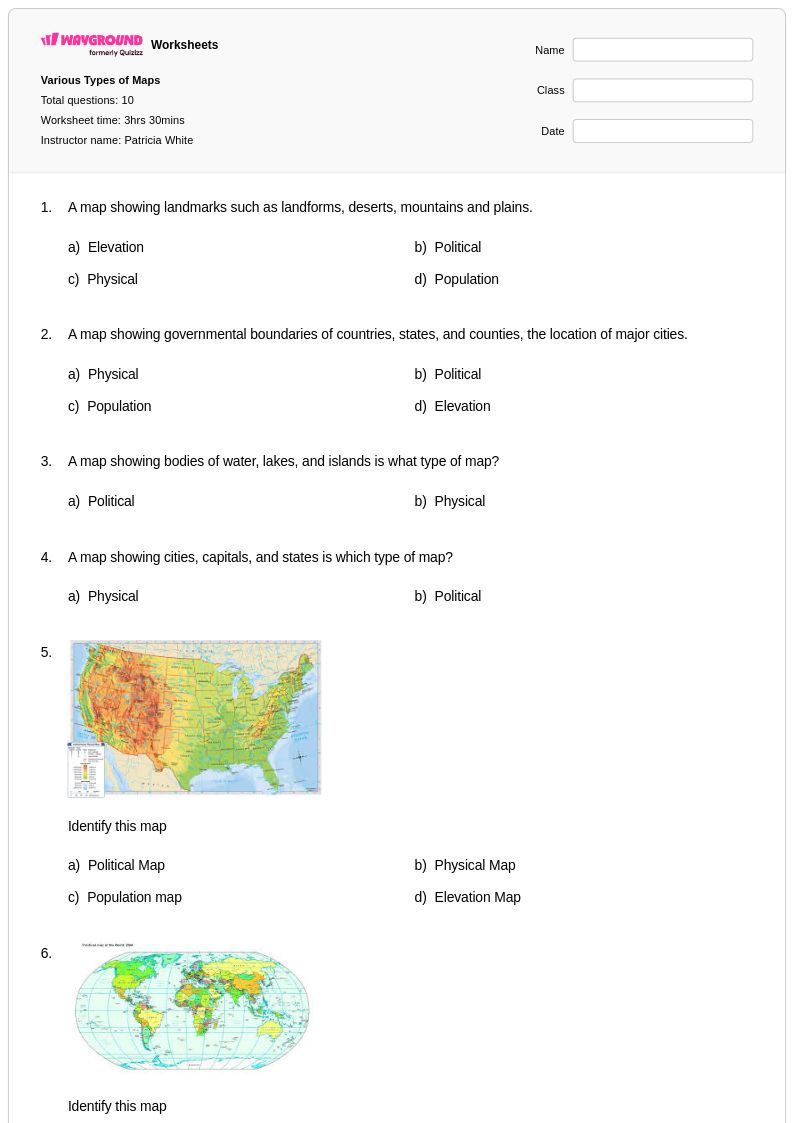
Types of maps worksheets for Class 3 students available through Wayground (formerly Quizizz) provide comprehensive practice with essential cartographic concepts that form the foundation of geographic literacy. These carefully designed printables help young learners distinguish between physical maps, political maps, road maps, and thematic maps while developing critical map-reading skills such as interpreting symbols, understanding scale, and using legends effectively. Each worksheet collection includes varied practice problems that challenge students to identify different map types based on their specific features and purposes, with complete answer key resources enabling both independent study and guided instruction. The free pdf format ensures accessibility for all classrooms, allowing teachers to seamlessly integrate these materials into lessons focused on spatial thinking and geographic reasoning skills that are crucial for elementary social studies success.
Wayground (formerly Quizizz) empowers educators with millions of teacher-created resources specifically designed to support comprehensive instruction in types of maps and related geographic concepts for Class 3 learners. The platform's robust search and filtering capabilities enable teachers to quickly locate worksheets that align with state and national social studies standards, while built-in differentiation tools allow for easy customization to meet diverse learning needs within the classroom. These digital and printable resources support effective lesson planning by providing ready-to-use materials for skill practice, targeted remediation for struggling students, and enrichment opportunities for advanced learners. Teachers can seamlessly adapt worksheet content to focus on specific map types or combine multiple resources to create comprehensive assessment tools, ensuring that every student develops strong foundational knowledge of how different maps serve distinct purposes in understanding our world.
FAQs
How do I teach students the difference between types of maps?
Start by anchoring each map type to a clear purpose: political maps show borders and place names, physical maps show landforms and elevation, topographic maps show terrain using contour lines, climate maps show weather patterns, and thematic maps represent a single variable like population or land use. Use side-by-side comparisons of the same region on different map types so students can see how the same geographic area looks different depending on what the map is designed to communicate. Asking students 'What question does this map answer?' is an effective framing strategy that builds interpretive thinking rather than simple identification.
What exercises help students practice identifying and interpreting different map types?
Effective practice exercises include map-type sorting tasks where students categorize unlabeled maps, legend analysis activities where students decode symbols and keys, and purpose-matching tasks where students pair real-world scenarios with the most appropriate map type. Worksheets that ask students to read contour lines on a topographic map or interpret a thematic map's color gradient build the analytical skills that go beyond simple recognition. Repeated exposure to diverse map examples reinforces that map type is always determined by purpose, not appearance alone.
What mistakes do students commonly make when learning about types of maps?
The most common misconception is that physical maps are the 'default' or most accurate maps, leading students to undervalue the purpose of thematic or political maps. Students also frequently confuse topographic maps with physical maps because both relate to terrain, not recognizing that topographic maps use precise contour lines to show elevation change rather than shaded relief. Another frequent error is misreading map legends, particularly on thematic maps where color gradients represent quantitative ranges rather than discrete categories.
How do I use types of maps worksheets in my classroom?
Types of maps worksheets on Wayground are available as printable PDFs for traditional classroom use and in digital formats for technology-integrated environments, including the option to host them as a quiz directly on Wayground. Printable versions work well for independent practice, map annotation activities, and formative assessments, while digital formats support self-paced review and immediate feedback. Each worksheet includes a complete answer key, making it straightforward to use for in-class work, homework, or targeted small-group instruction.
How can I differentiate types of maps instruction for students at different skill levels?
For students who are still building map literacy, simplify by focusing on two or three map types with clear, labeled examples before expanding to the full range. Advanced students can be challenged with activities that require them to select the most appropriate map type for a given research question or to critique the limitations of a specific map type. On Wayground, teachers can apply accommodations such as reduced answer choices for students who need lower cognitive load, or enable Read Aloud so that map questions and instructions are accessible to students with reading difficulties.
How do I help students understand why different map types exist?
Frame the lesson around audience and purpose: a geologist needs a topographic map, a traveler needs a road map, and a policy analyst needs a thematic map showing income or population data. When students understand that every map is a selective representation designed to answer a specific question, they stop looking for a single 'correct' map and start evaluating maps critically. Having students design a simple thematic map of their classroom or school grounds is a concrete activity that makes this concept tangible.