Free Printable Possessive Apostrophe Worksheets for Class 5
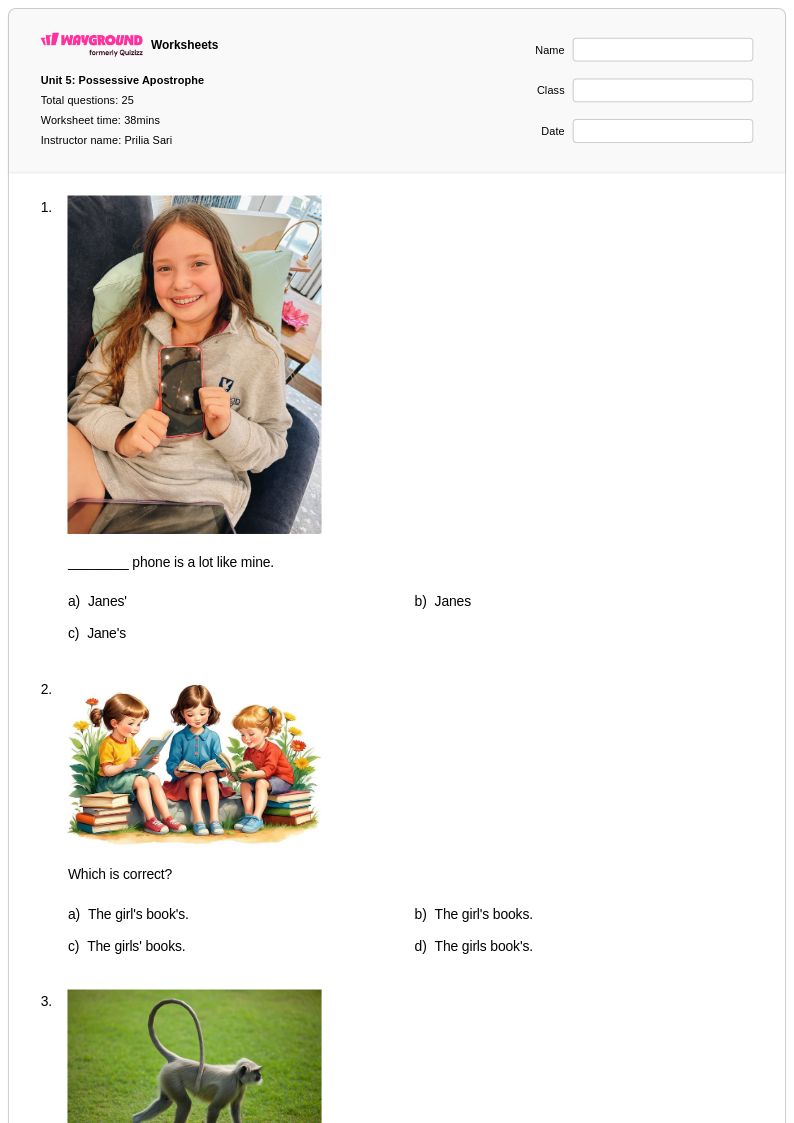
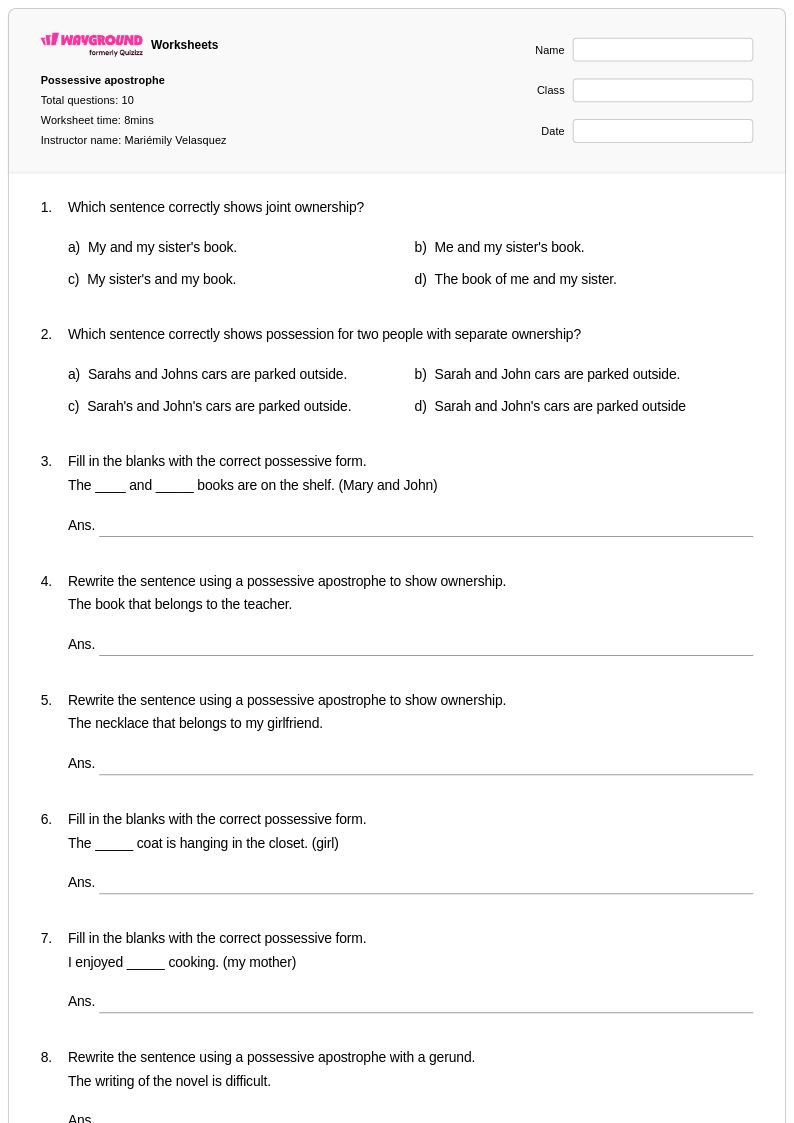
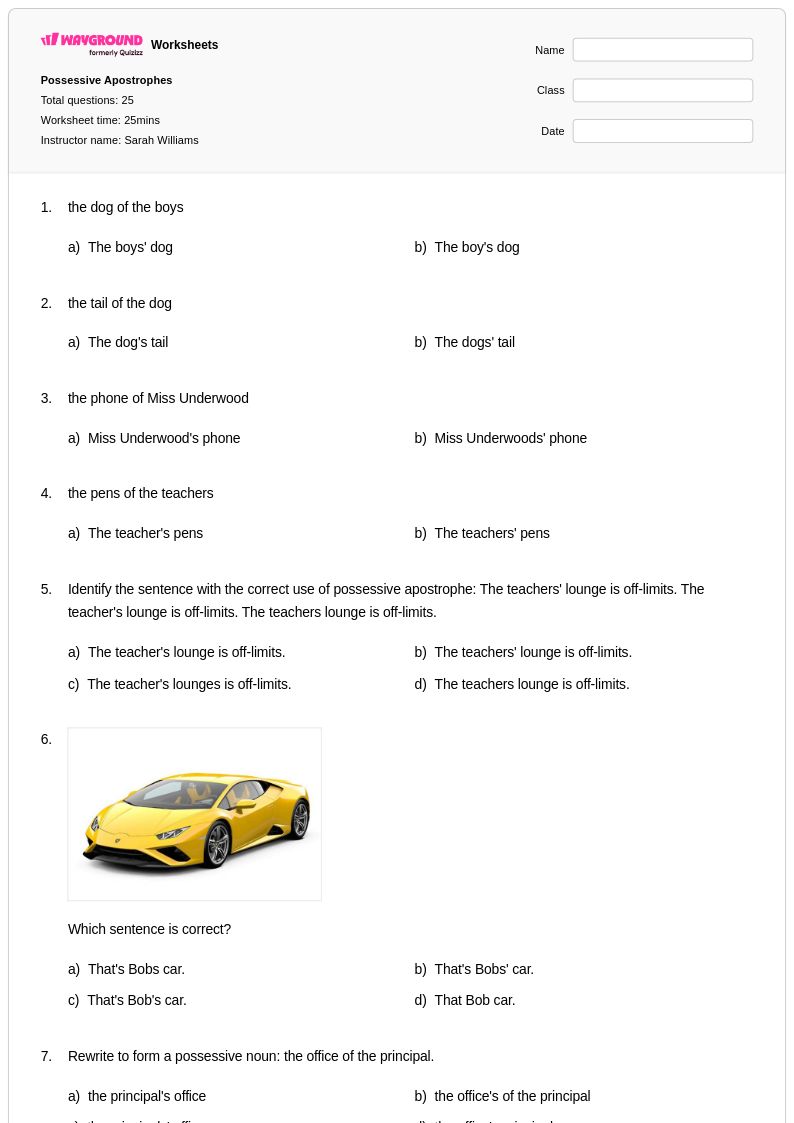
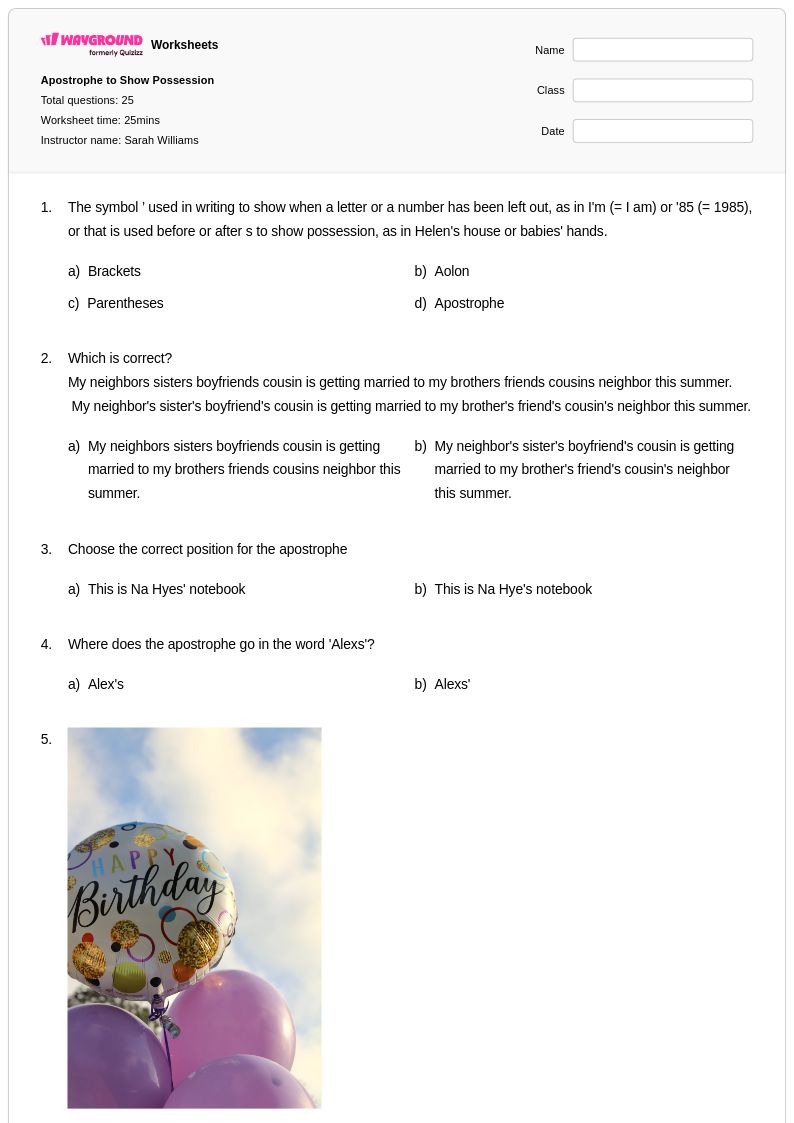
Class 5 possessive apostrophe worksheets from Wayground help students master proper apostrophe placement in possessive nouns through engaging printables, practice problems, and comprehensive answer keys for effective grammar learning.
Explore printable Possessive Apostrophe worksheets for Class 5
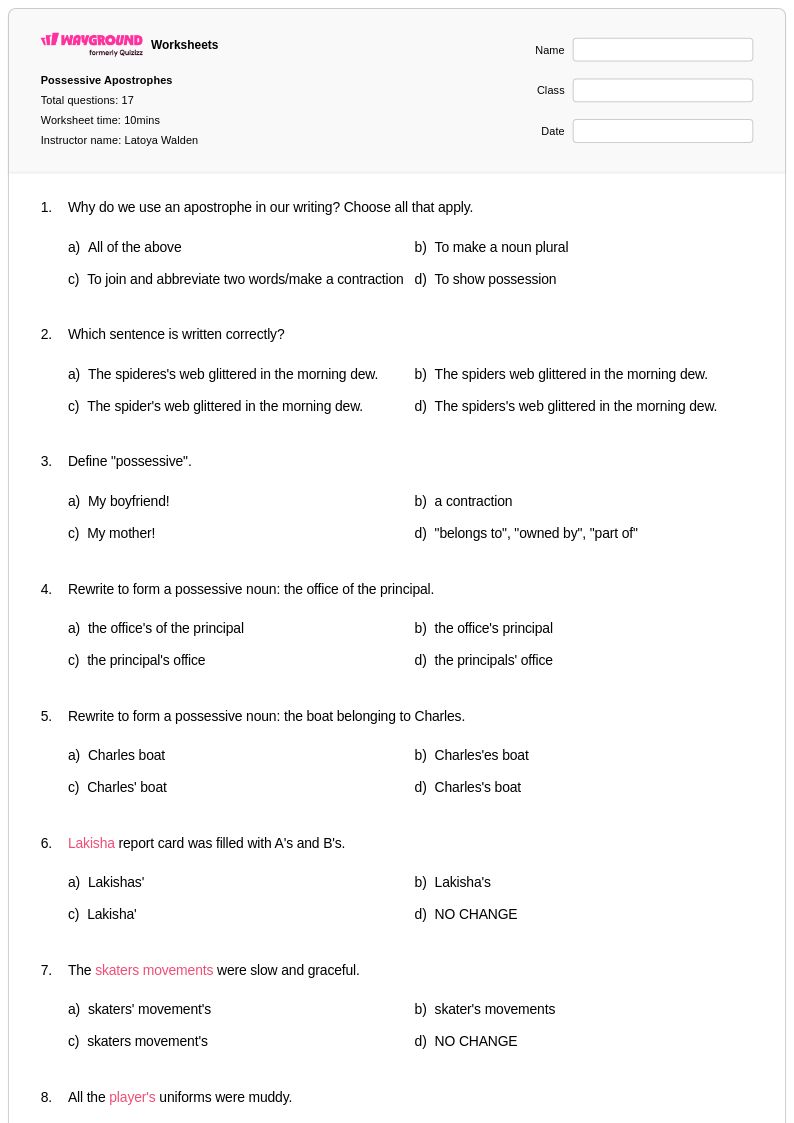
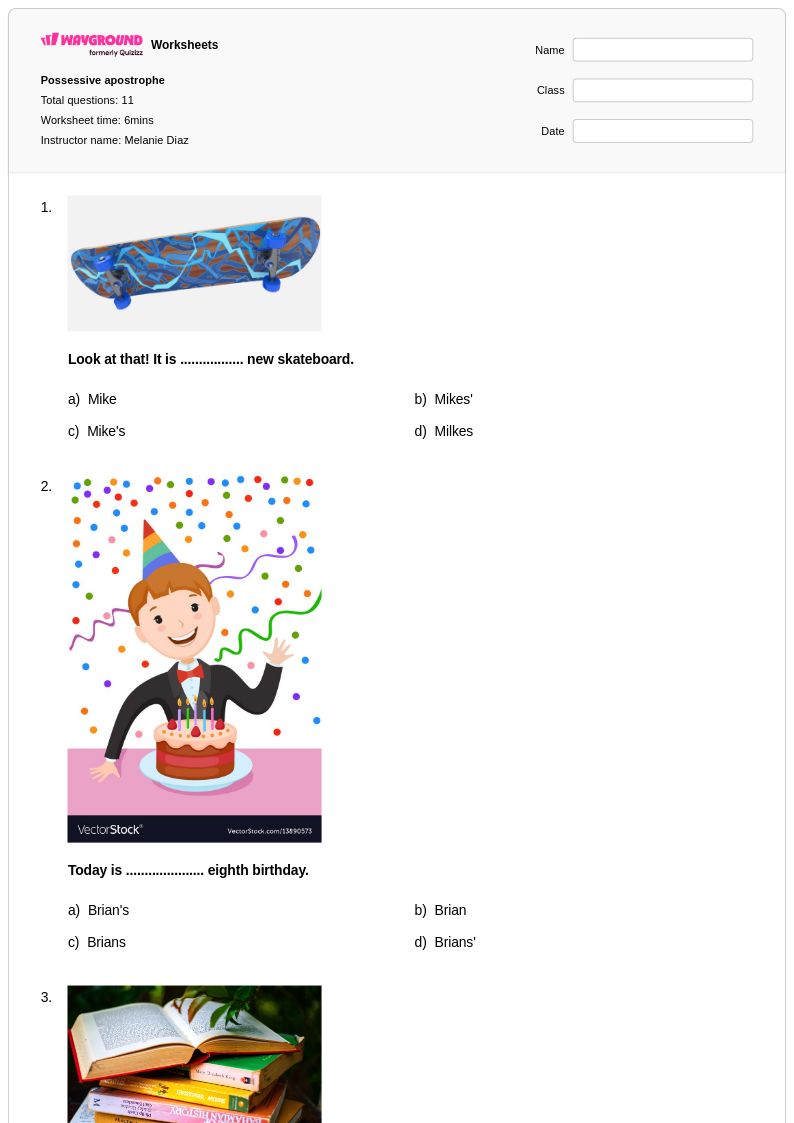
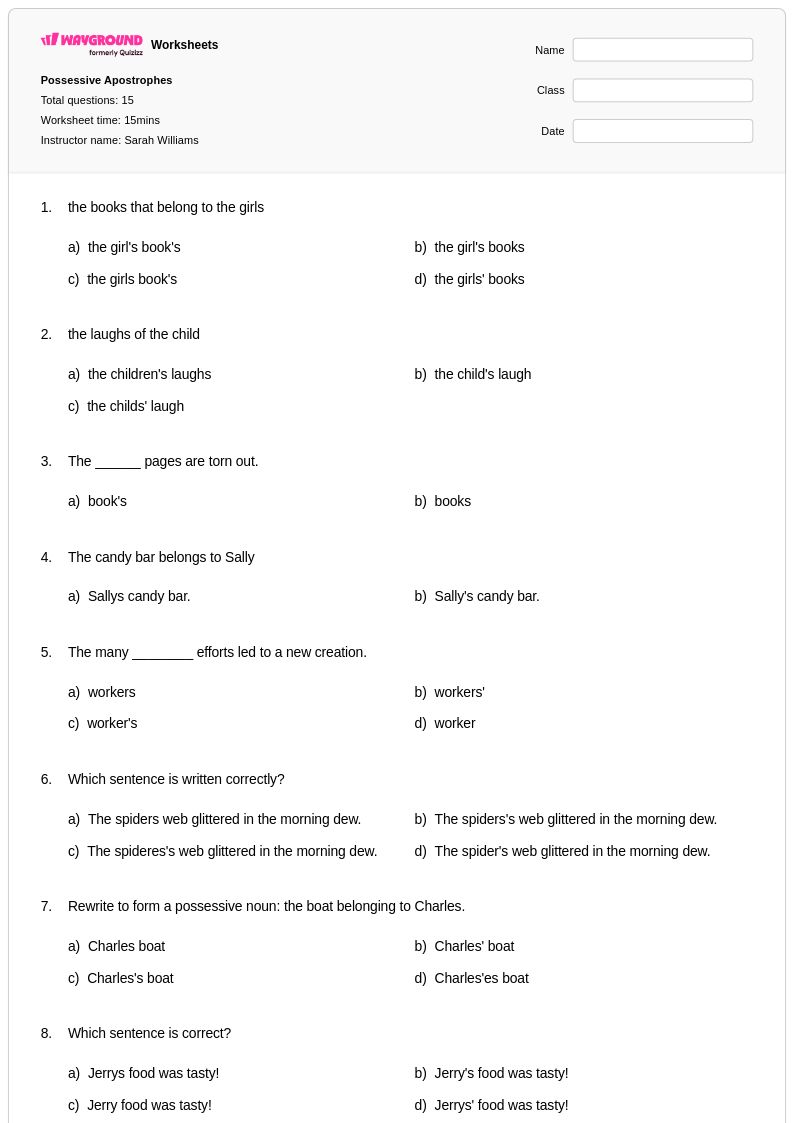
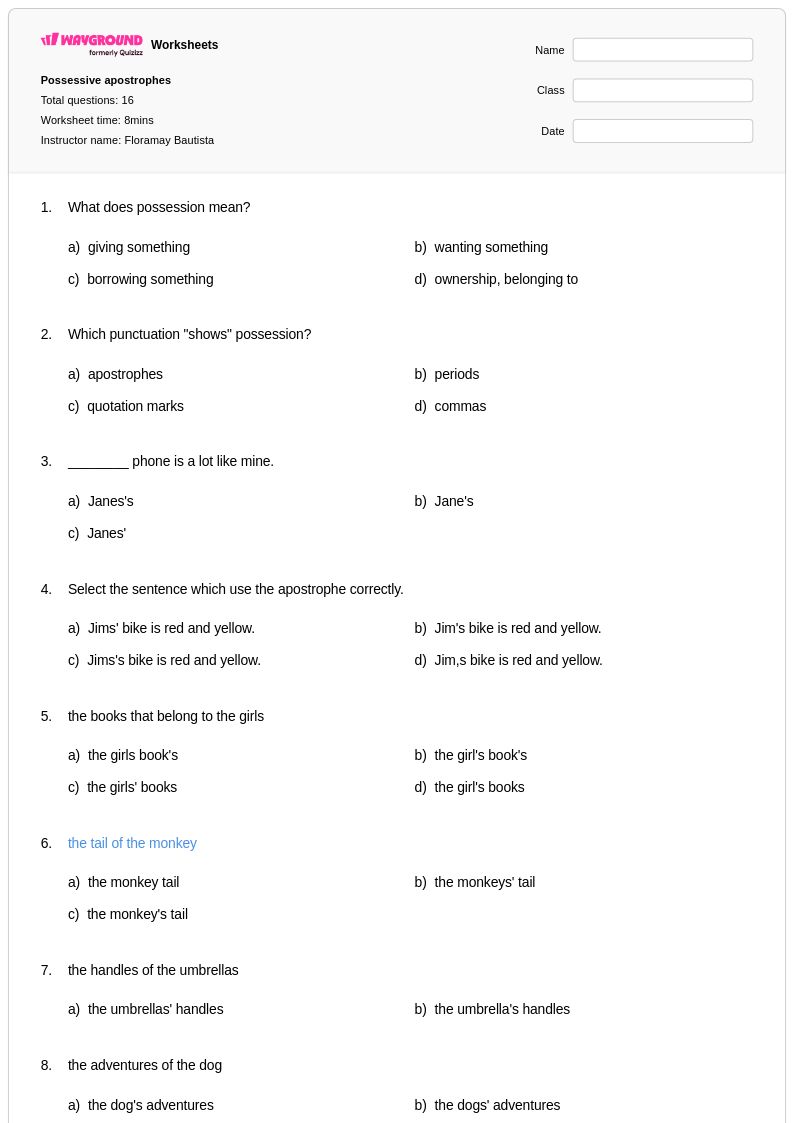
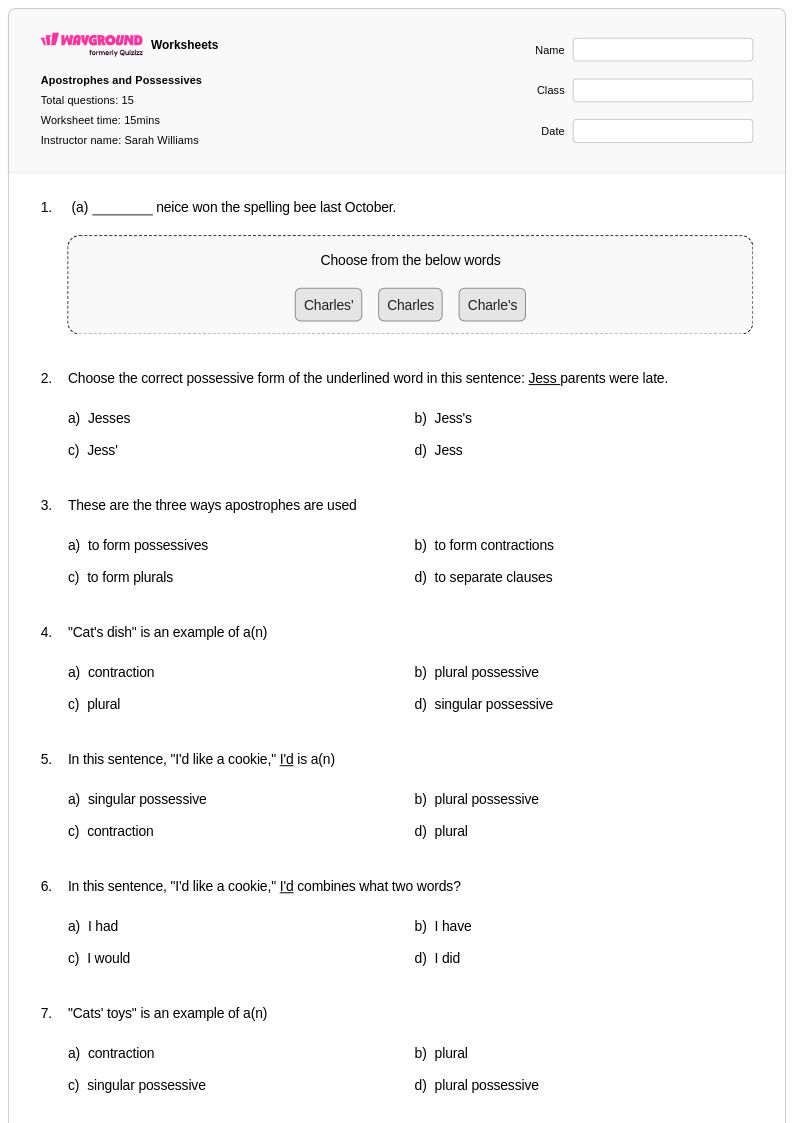
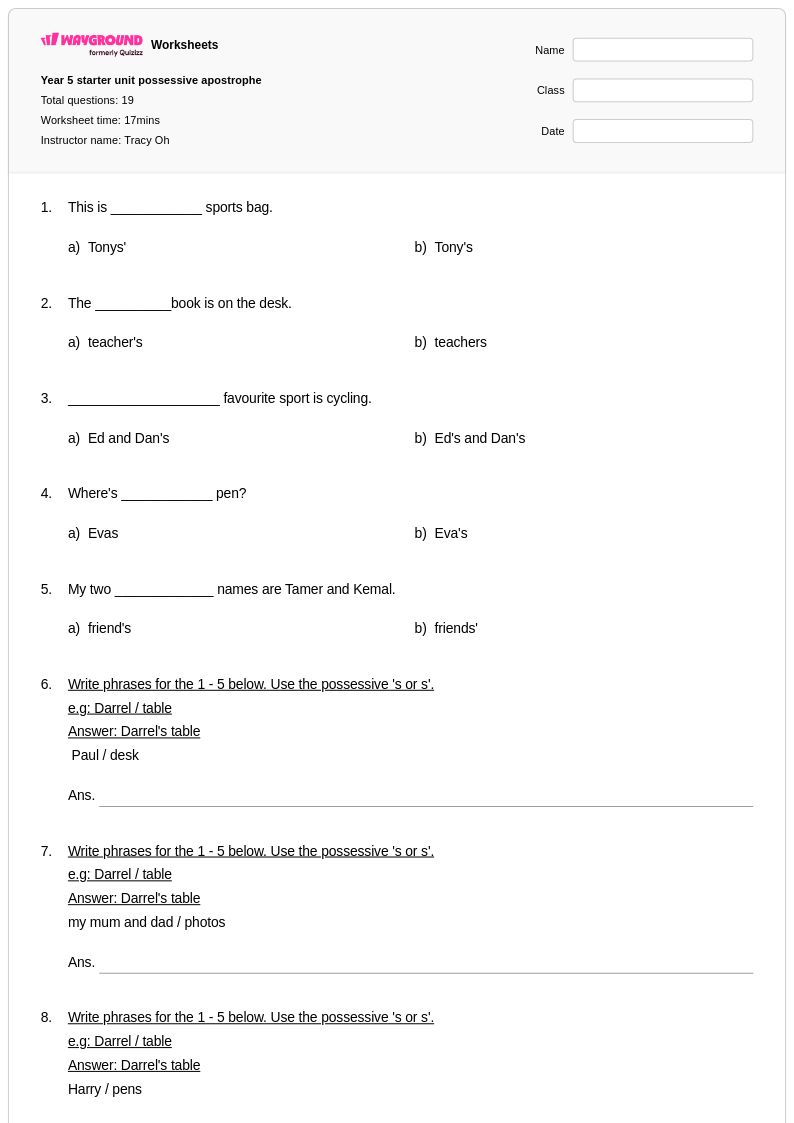
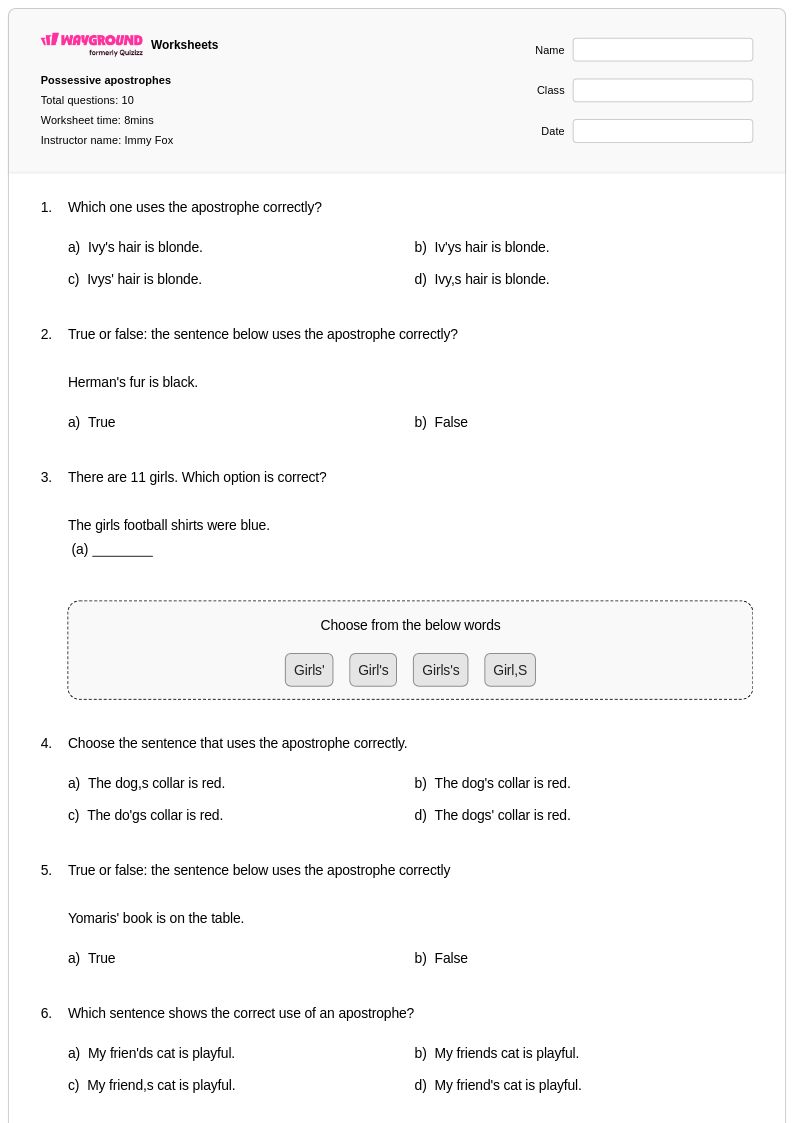
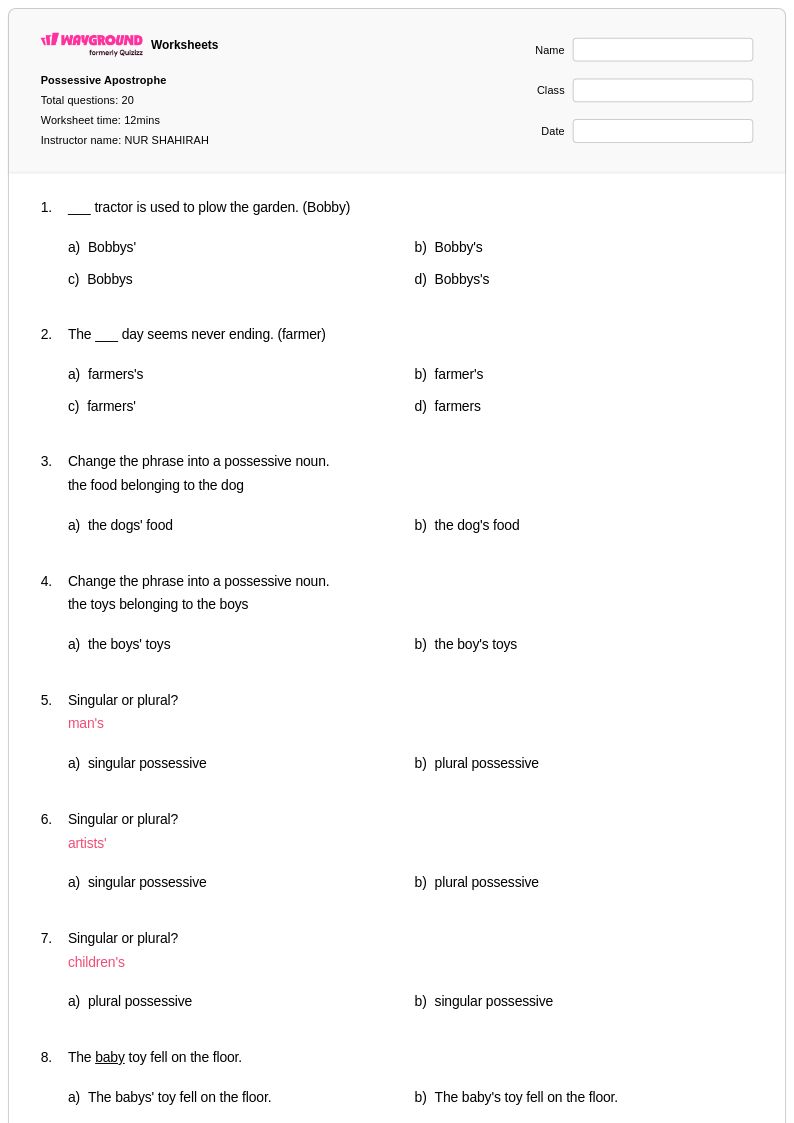
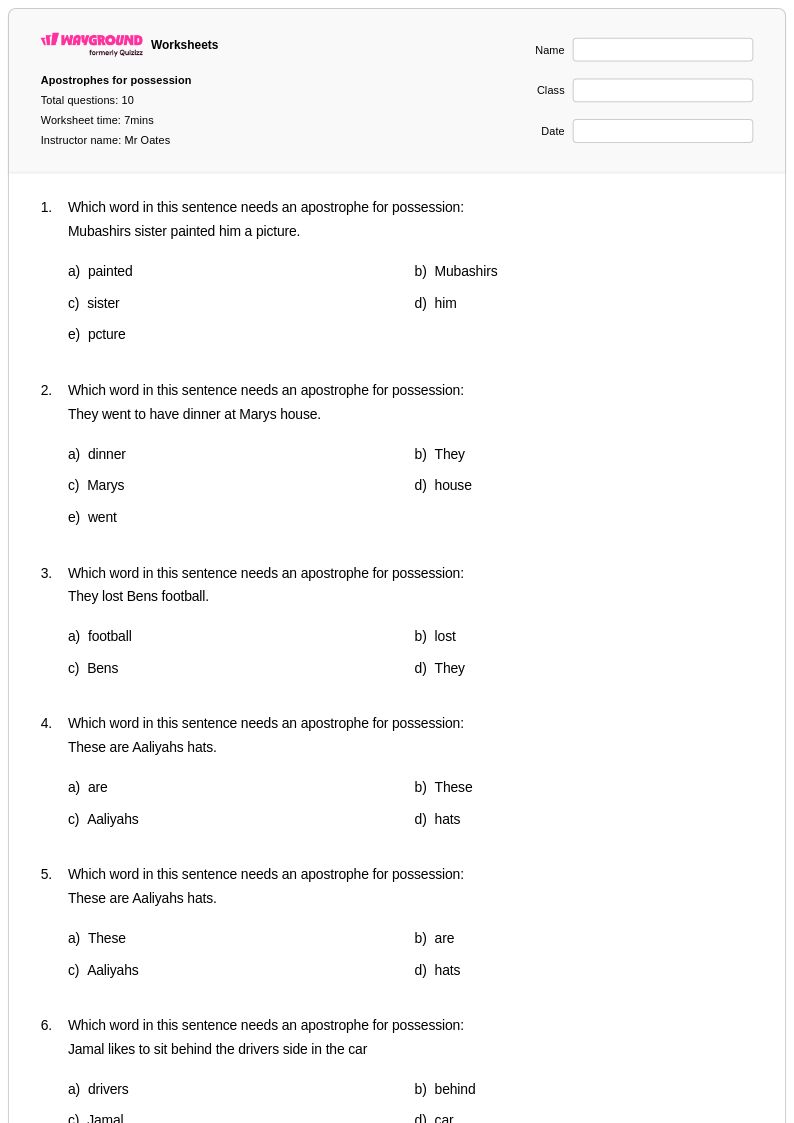
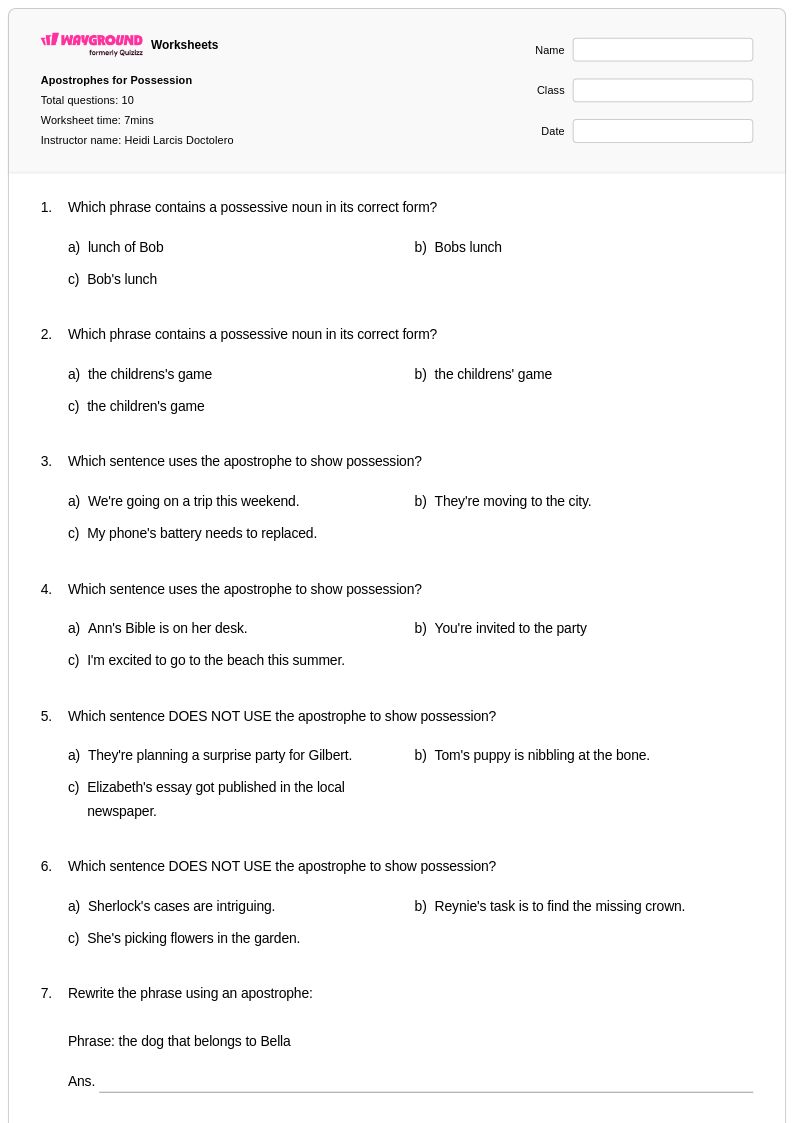
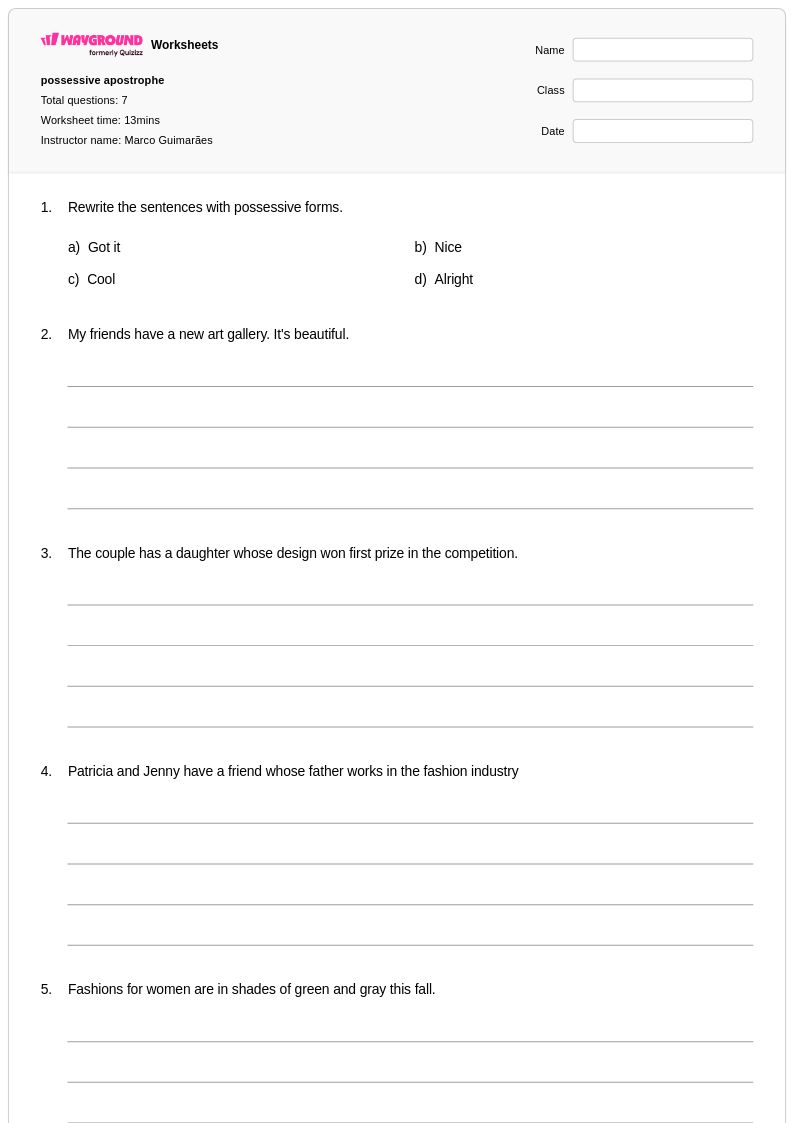
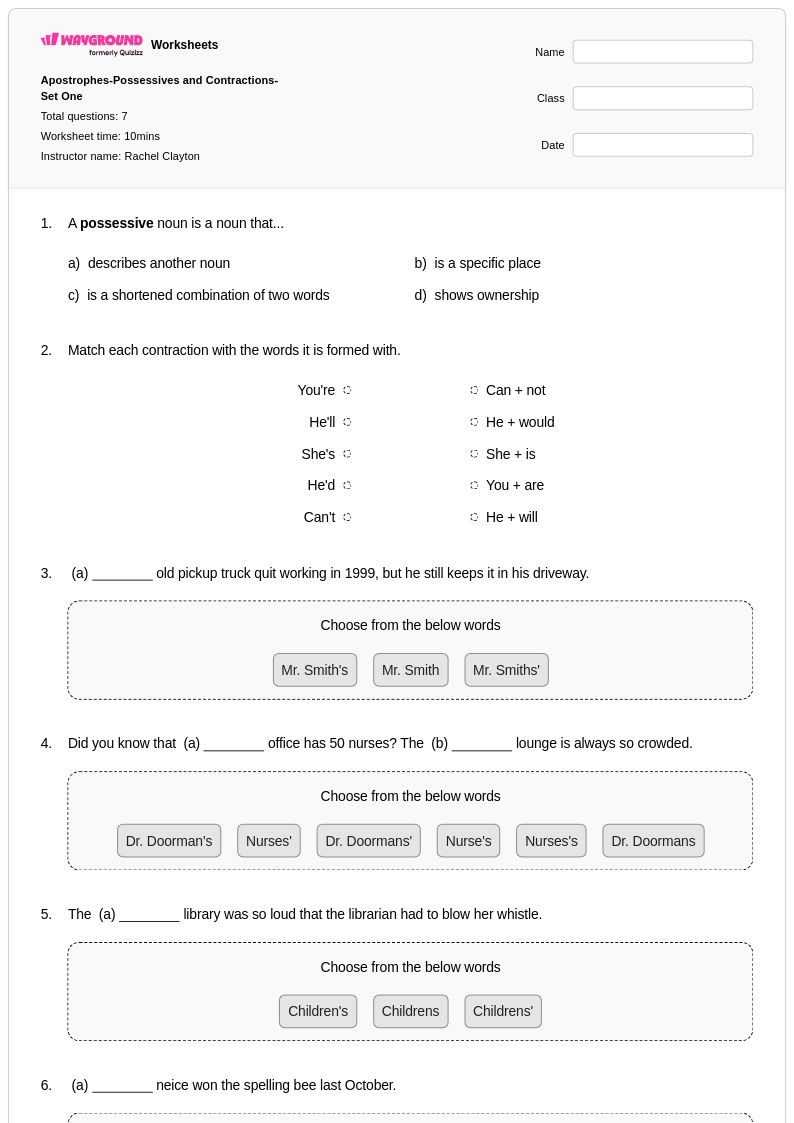
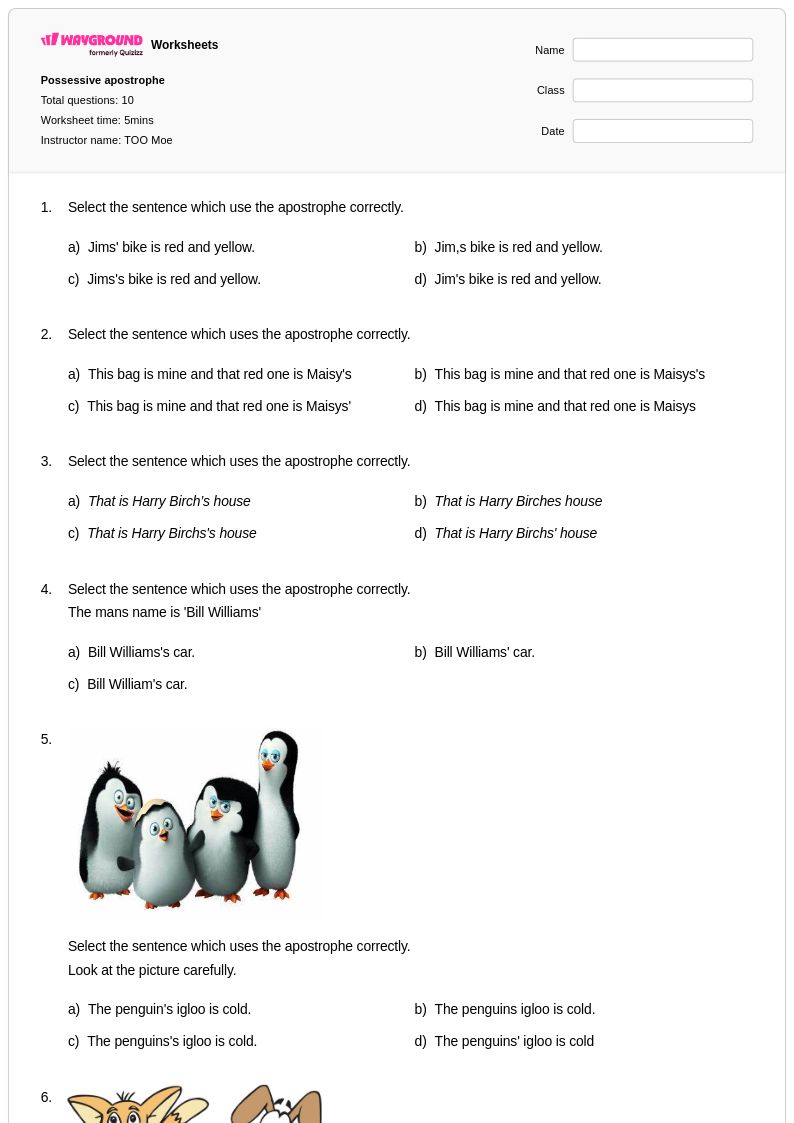
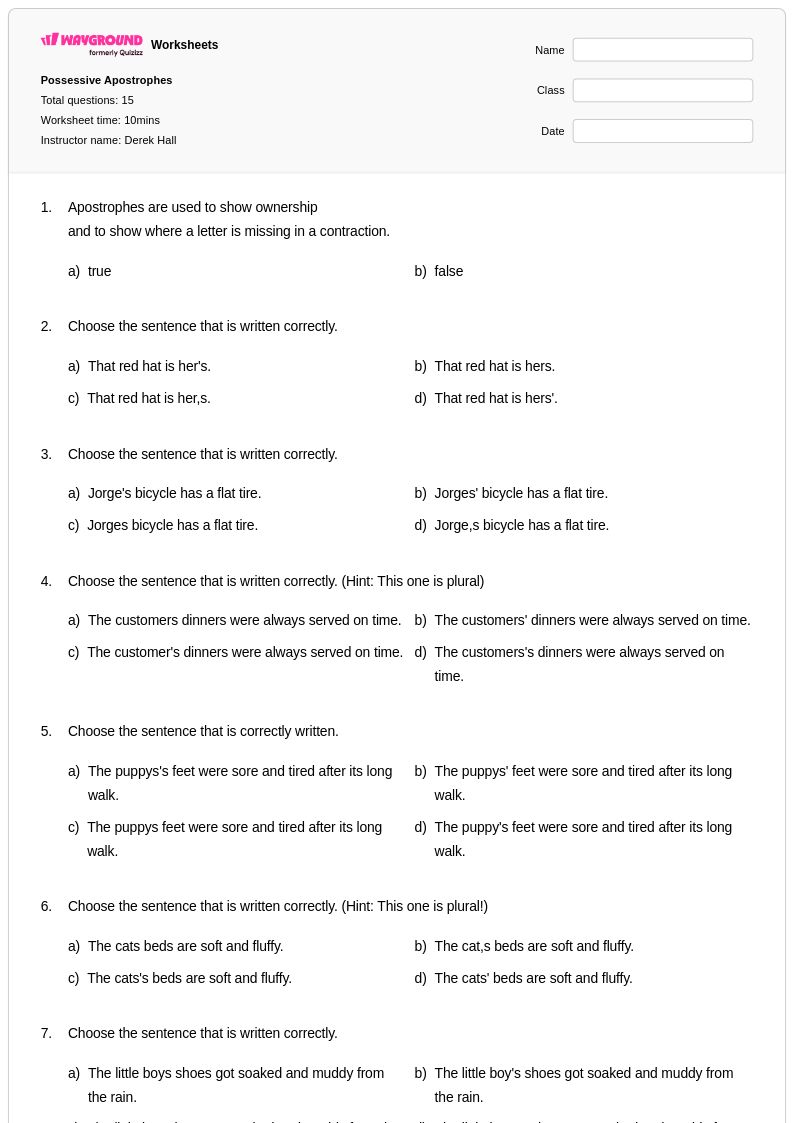
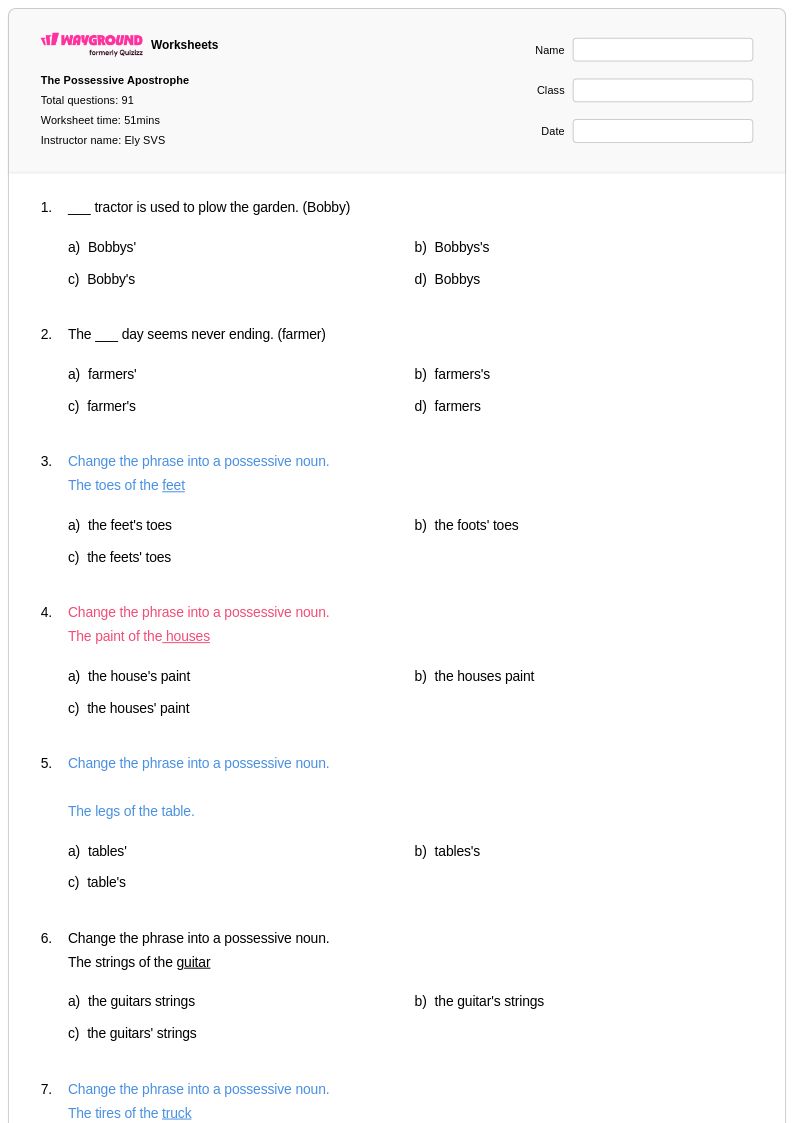
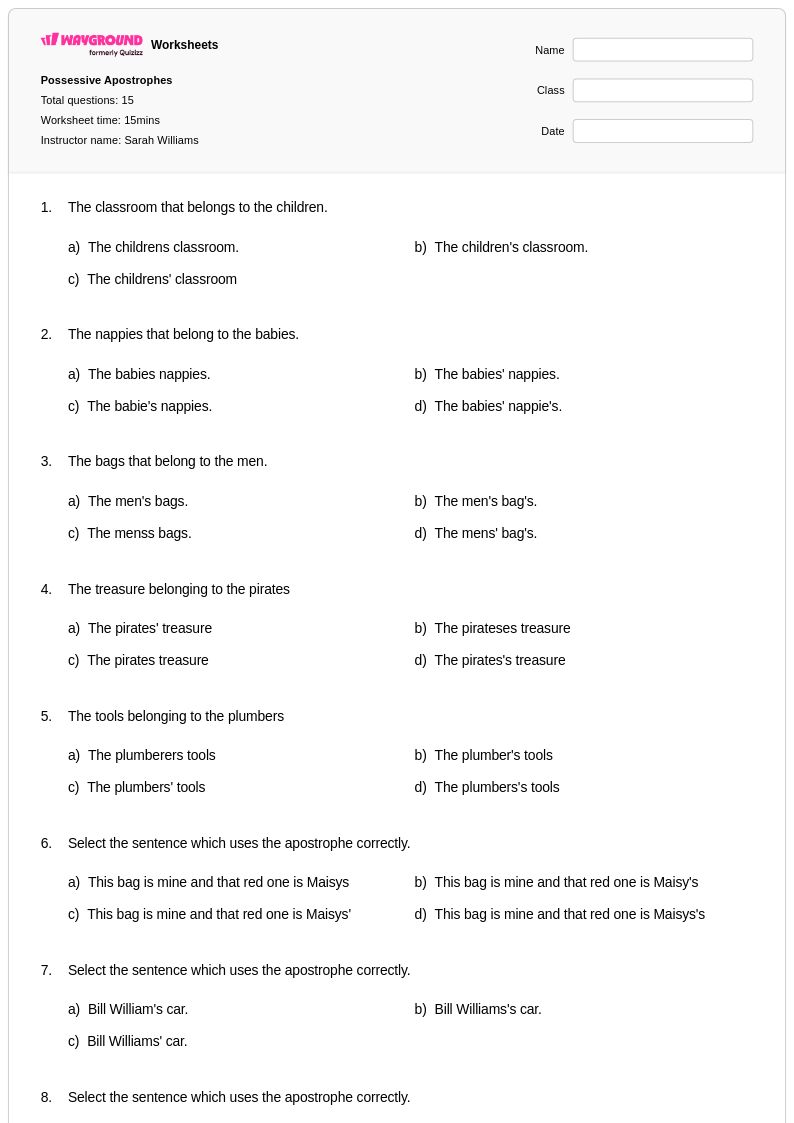
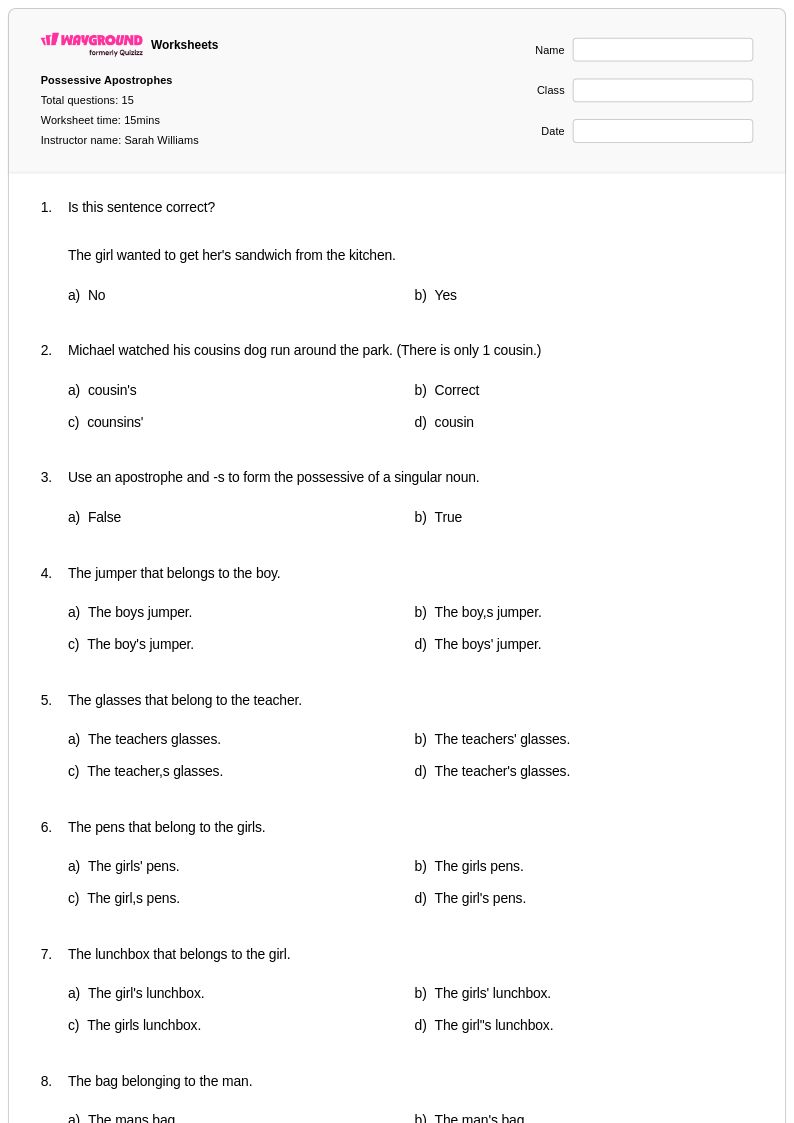
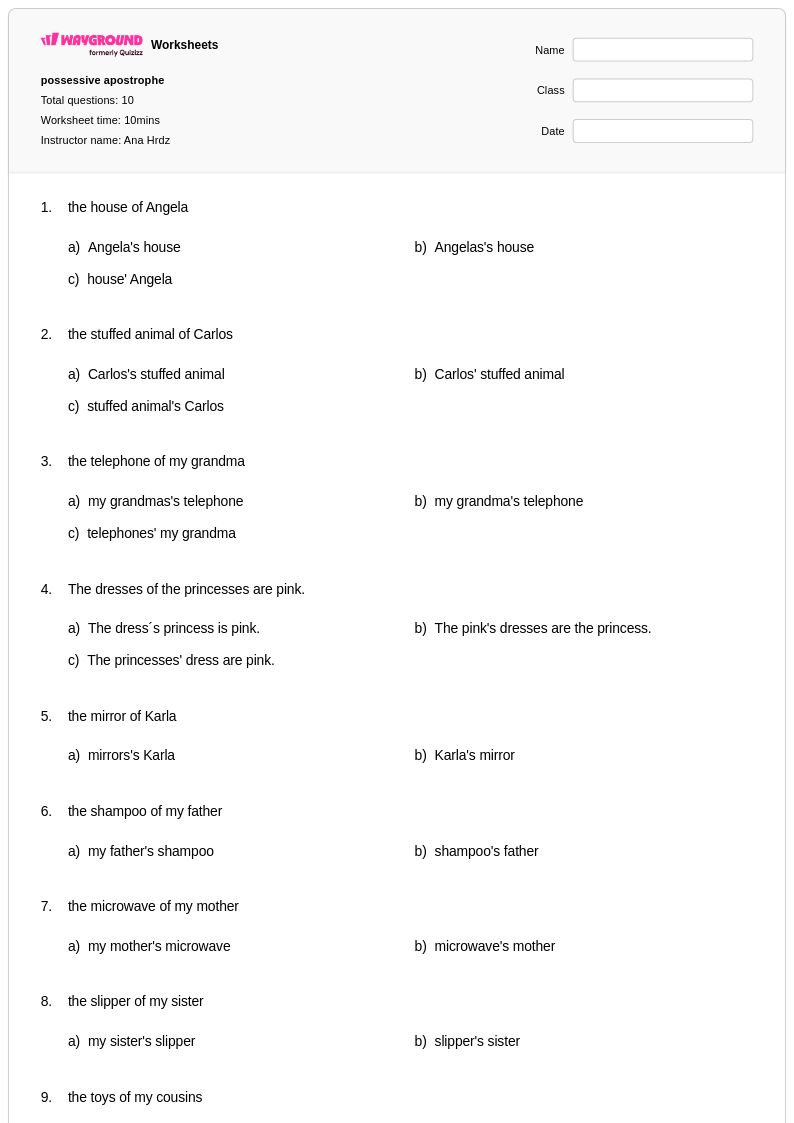
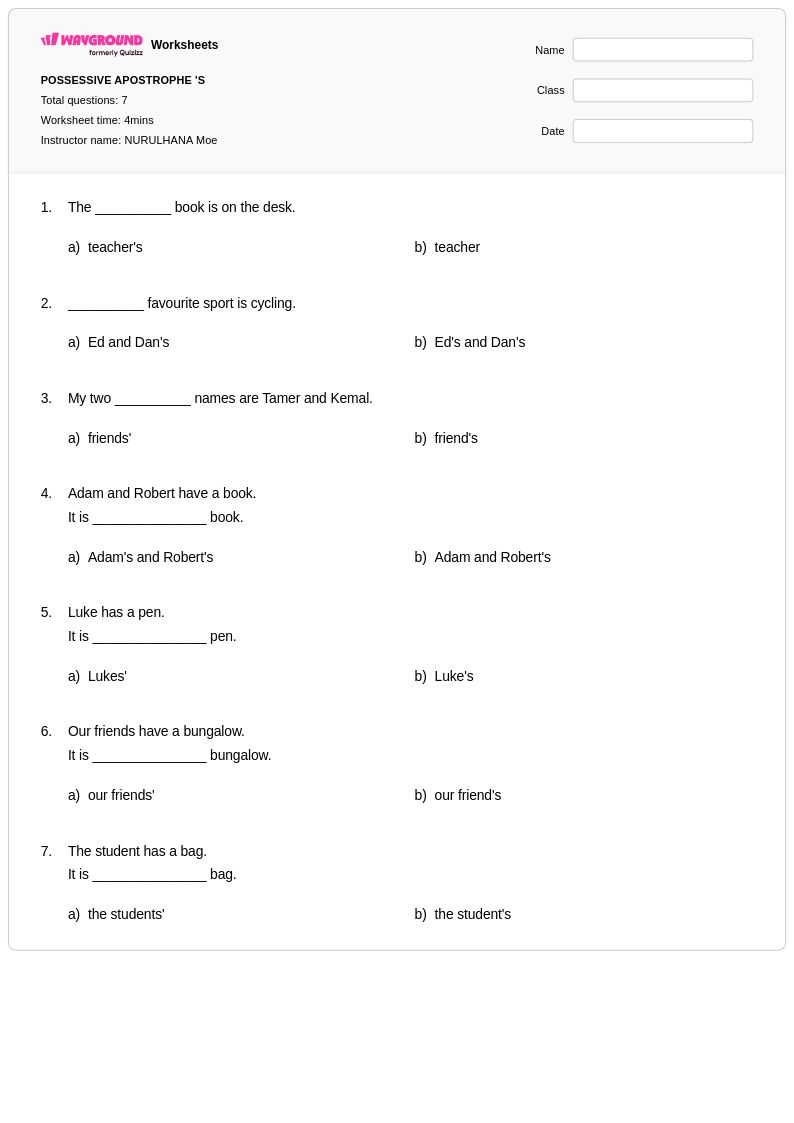
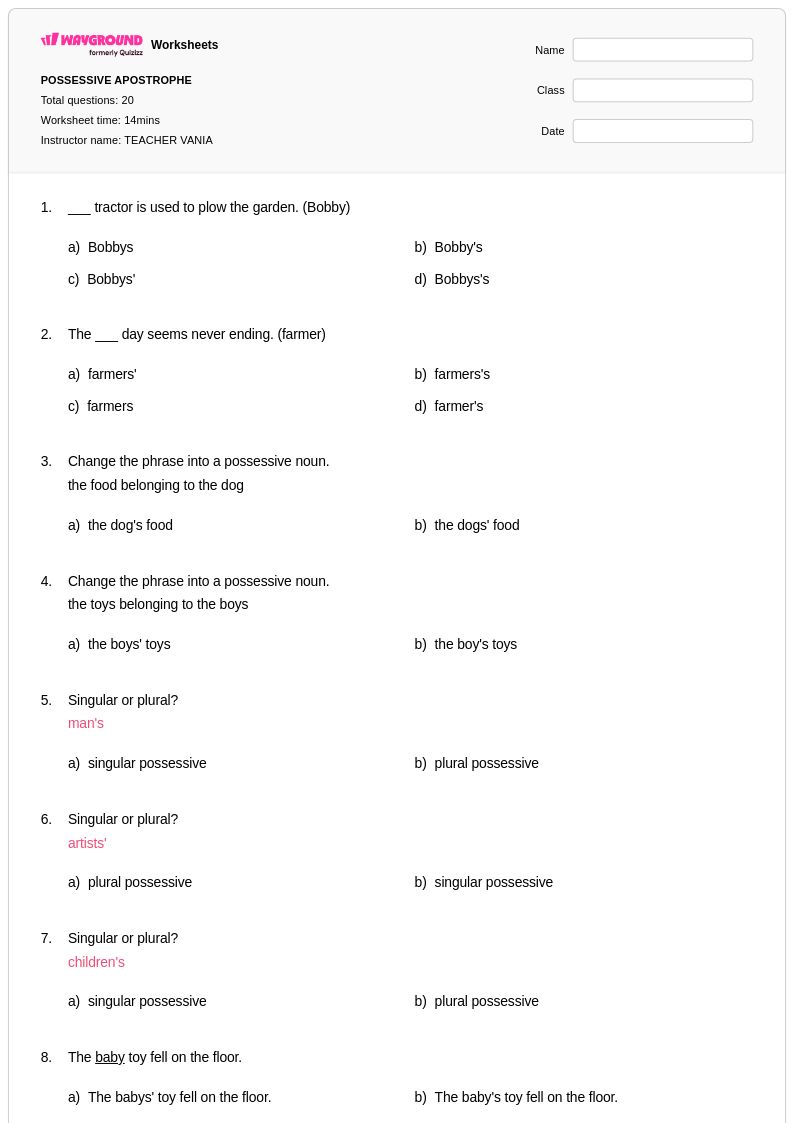
Possessive apostrophe worksheets for Class 5 available through Wayground (formerly Quizizz) provide comprehensive practice in one of the most challenging punctuation concepts students encounter at this level. These carefully designed resources help fifth-grade students master the rules for showing ownership through apostrophes, including singular possessives, plural possessives, and irregular plural forms. Students work through systematic practice problems that build understanding of when to add 's versus when to add only an apostrophe, strengthening their ability to distinguish between possessive nouns, contractions, and simple plurals. Each worksheet includes detailed answer keys and clear explanations, making these free printables valuable tools for both independent practice and guided instruction in essential grammar mechanics.
Wayground (formerly Quizizz) empowers teachers with millions of teacher-created possessive apostrophe resources that support differentiated instruction and flexible lesson planning. The platform's robust search and filtering capabilities allow educators to quickly locate worksheets aligned with specific standards and tailored to varying skill levels within their Class 5 classrooms. Teachers can customize existing materials or create new practice sets, with all resources available in both printable PDF format and interactive digital versions to accommodate diverse learning preferences and classroom technology setups. These comprehensive worksheet collections enable teachers to provide targeted remediation for students struggling with apostrophe placement, offer enrichment activities for advanced learners, and deliver consistent skill practice that reinforces proper possessive noun formation across multiple contexts and complexity levels.
FAQs
How do I teach possessive apostrophes to students who keep confusing them with plurals?
The most effective approach is to explicitly contrast the two rules side by side: plurals add -s to show more than one, while possessives add apostrophe-s to show ownership. Use anchor sentences like 'The dog's leash' versus 'Two dogs ran' to help students internalize the distinction. Consistently asking 'Does this word own something?' before adding an apostrophe trains students to pause and apply the rule rather than defaulting to habit.
What exercises help students practice possessive apostrophe placement?
Sentence-level rewriting exercises are highly effective — for example, transforming 'the bike that belongs to Marcus' into 'Marcus's bike' reinforces both the rule and its practical application. Error correction tasks, where students identify and fix incorrect apostrophe use in context, build editing skills alongside rule knowledge. Mixing singular possessives, plural possessives, and irregular plural forms within a single exercise set ensures students can distinguish between the different formation rules rather than applying one pattern automatically.
What are the most common mistakes students make with possessive apostrophes?
The most persistent error is adding an apostrophe to possessive pronouns — students frequently write 'it's' when they mean 'its' or 'their's' instead of 'theirs', because these words sound like they should follow the apostrophe-s pattern. A second common mistake is placing the apostrophe before the -s on plural possessives — writing 'the student's projects' when referring to multiple students, rather than 'the students' projects'. Students also frequently struggle with names ending in -s, such as whether to write 'James' bike' or 'James's bike', because both forms can be grammatically acceptable depending on style guide.
How do I differentiate possessive apostrophe instruction for students at different skill levels?
Begin with singular possessives using simple, concrete nouns before introducing plural and irregular forms, so struggling learners can build confidence on the foundational rule first. For advanced students, introduce compound noun possessives and style guide debates around names ending in -s to deepen their understanding. On Wayground, teachers can apply accommodations such as reduced answer choices for students who need support, or read-aloud features for those with reading challenges, ensuring all learners can access the same content at an appropriate level.
How do I use Wayground's possessive apostrophe worksheets in my classroom?
Wayground's possessive apostrophe worksheets are available as printable PDFs for traditional classroom use and in digital formats for technology-integrated environments, making them flexible for homework, in-class practice, or assessment. Teachers can also host the worksheets as a quiz directly on Wayground, allowing for interactive student engagement and automatic scoring. Each worksheet includes a complete answer key, so teachers can use them for independent practice, peer review, or self-assessment with minimal prep time.
How do I address possessive apostrophe rules with irregular plural nouns like 'children' or 'men'?
Irregular plurals follow a different rule than regular plural possessives: because words like 'children' and 'men' do not end in -s, you add apostrophe-s to form the possessive, just as you would with a singular noun — 'the children's classroom', 'the men's locker room'. This trips up students who have learned that plural possessives simply add an apostrophe after the -s, because that rule only applies to regular plurals. Sorting exercises that ask students to categorize nouns as regular plural, irregular plural, or singular before forming the possessive can make this distinction concrete and memorable.