
21 Q
7th
25 Q
7th
15 Q
7th - Uni
19 Q
7th
17 Q
7th
14 Q
7th
20 Q
7th
20 Q
7th - Uni
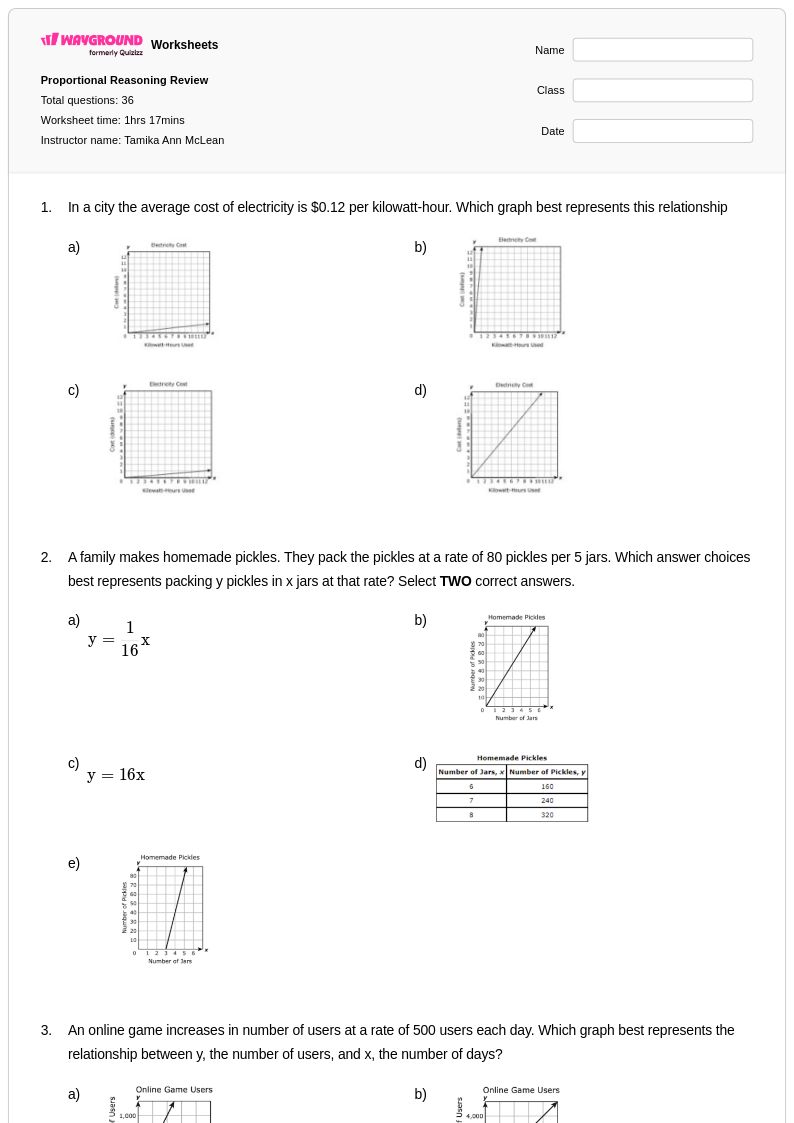
36 Q
7th
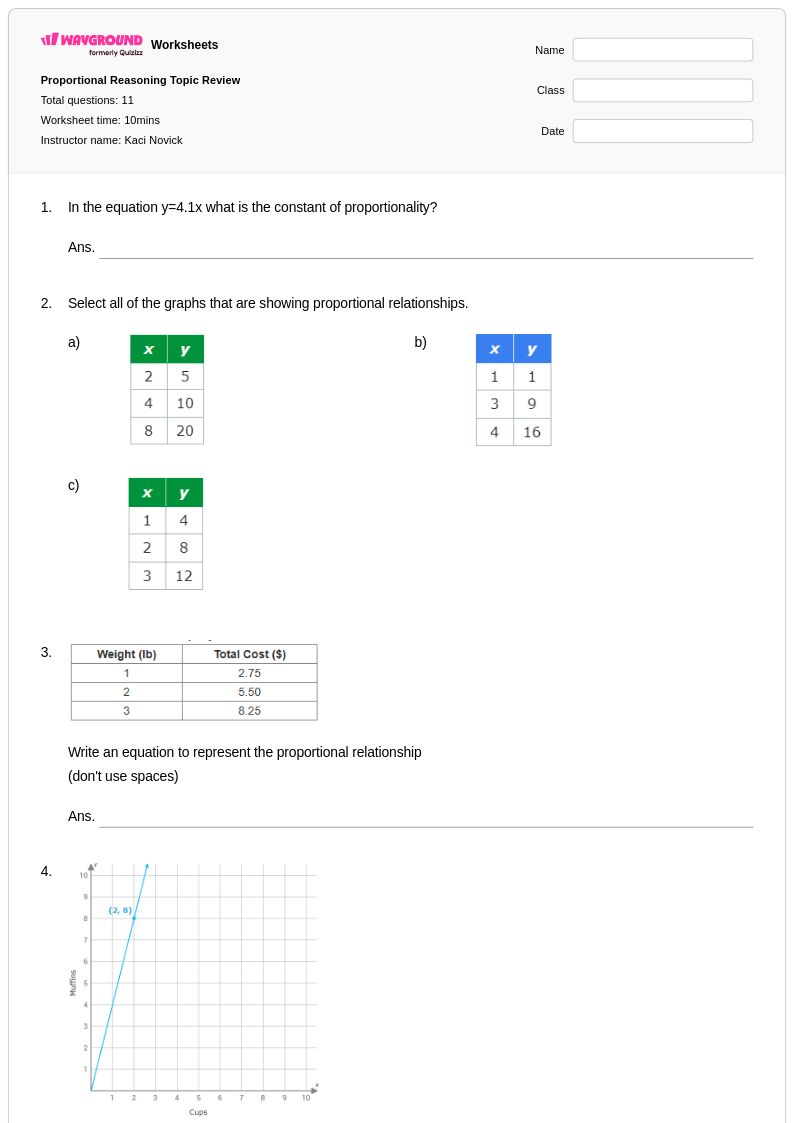
11 Q
7th
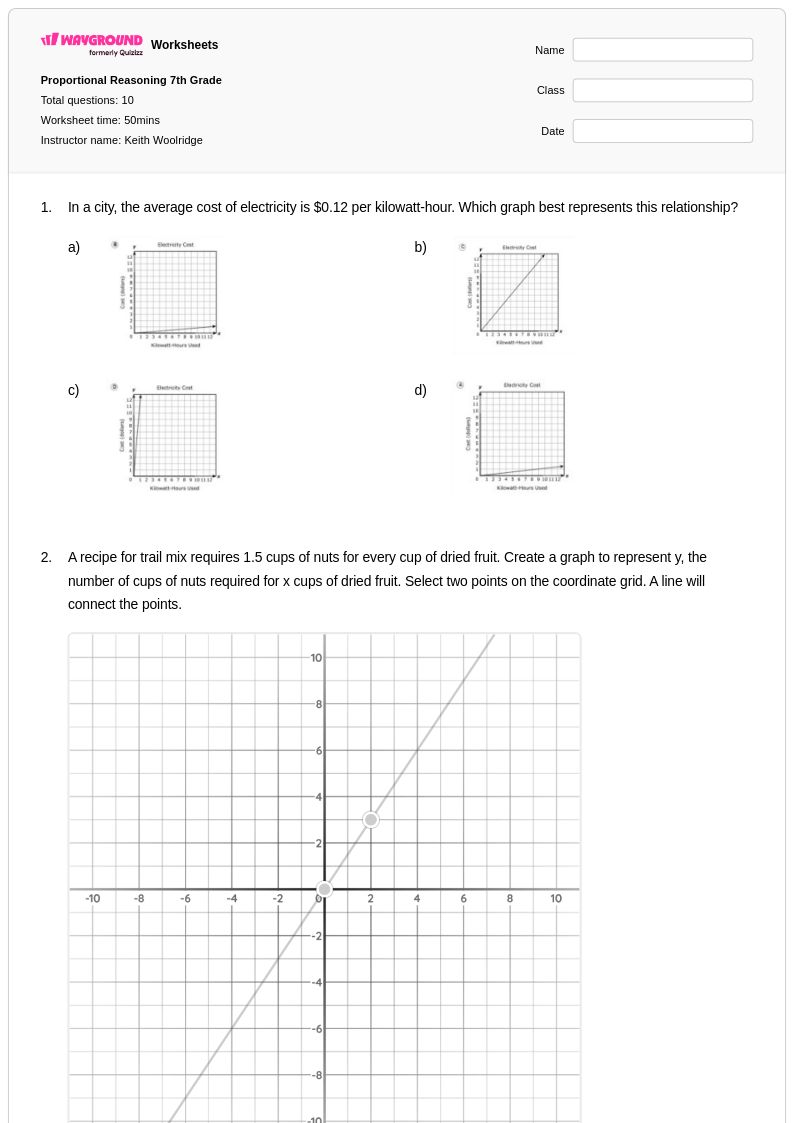
10 Q
7th
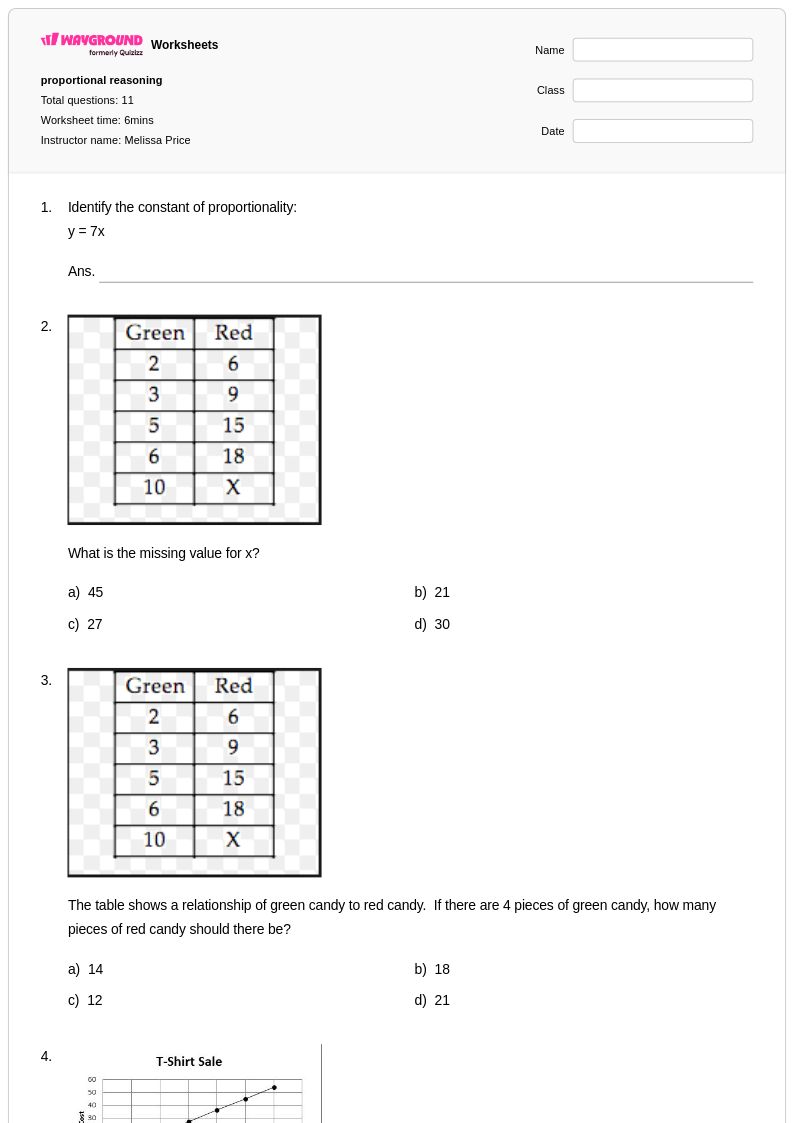
11 Q
7th
14 Q
7th - Uni
28 Q
6th - Uni
10 Q
7th
40 Q
7th
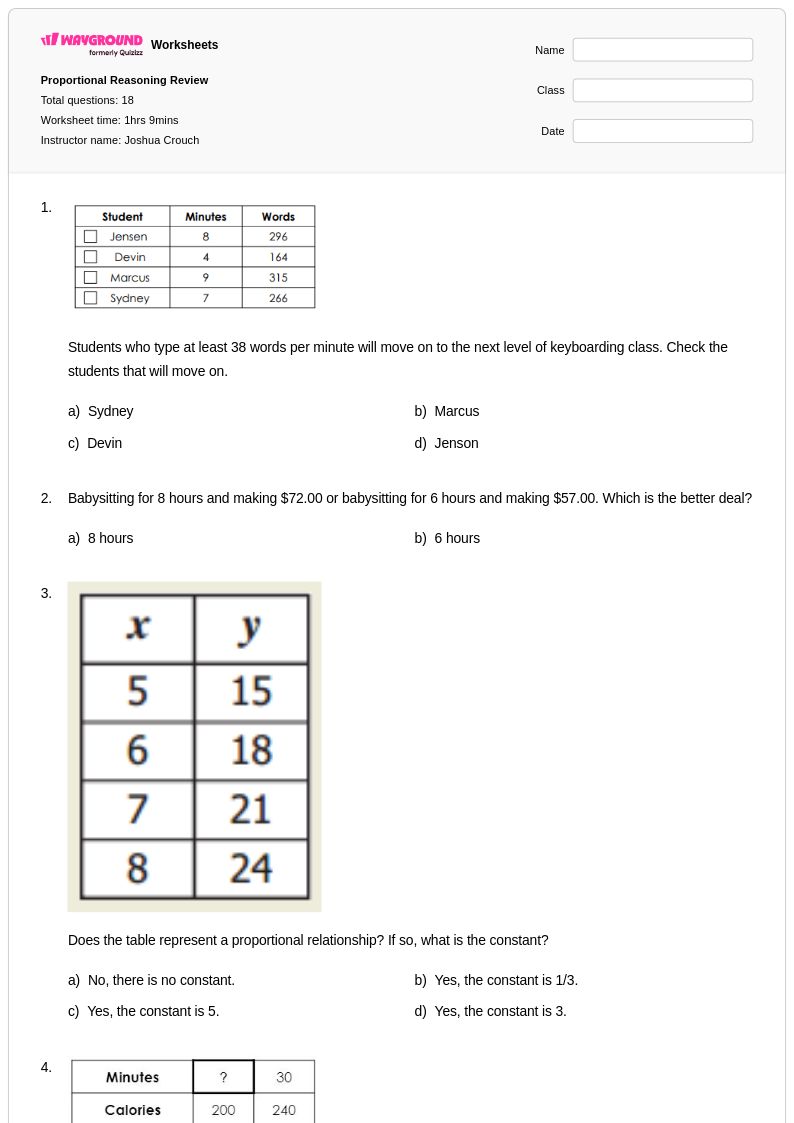
18 Q
6th - Uni
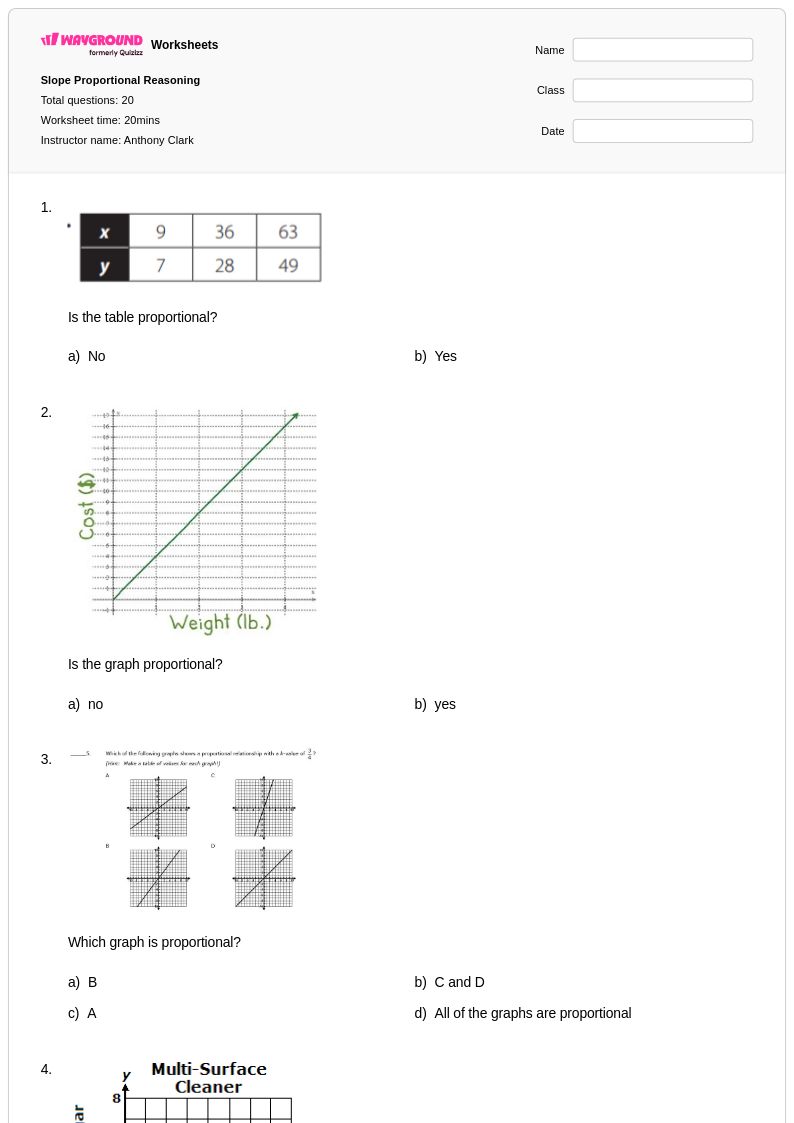
20 Q
7th - Uni
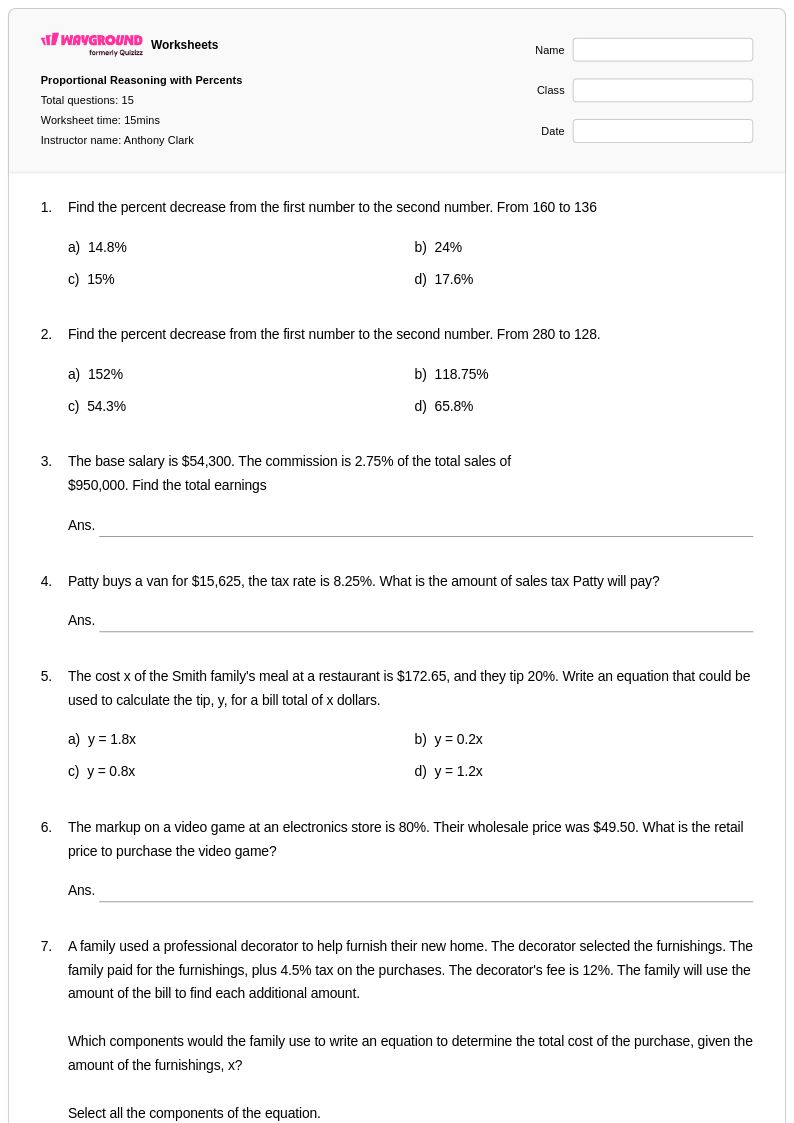
15 Q
7th - Uni
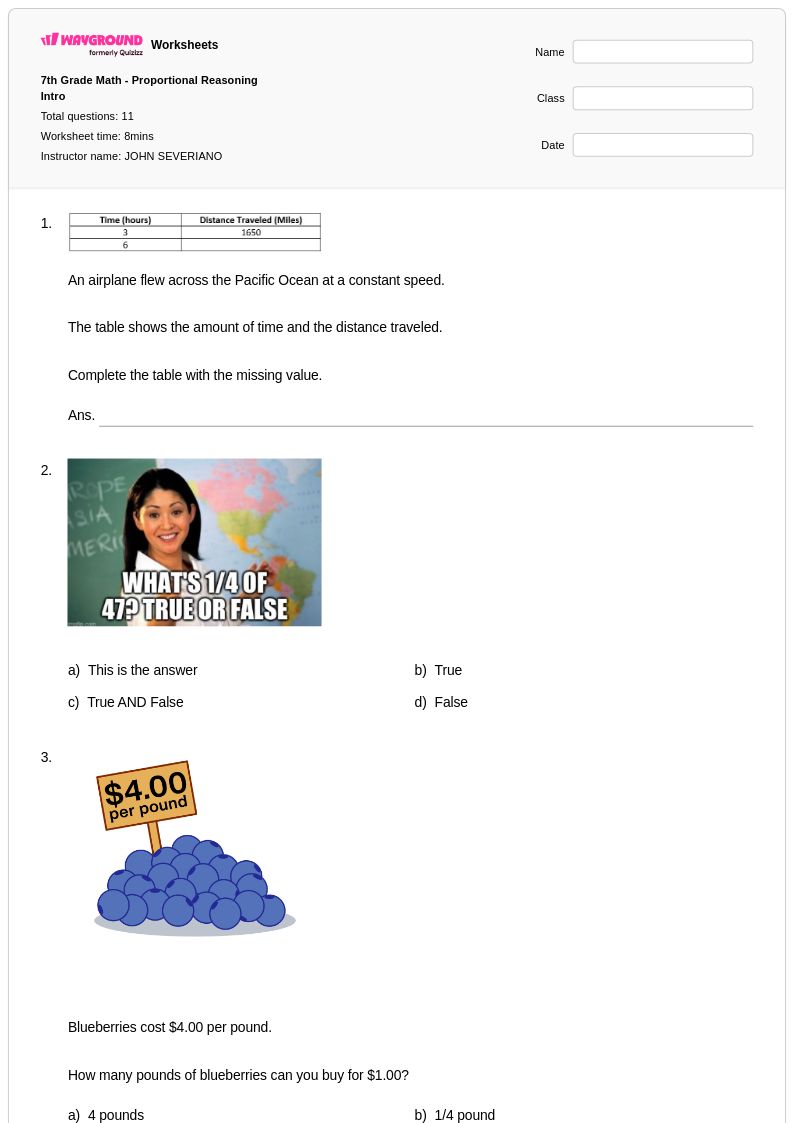
11 Q
7th
25 Q
7th - 8th
15 Q
7th
20 Q
7th - Uni
19 Q
7th - 8th
Explore Proportional Reasoning Worksheets by Grades
Explore Other Subject Worksheets for class 7
Explore printable Proportional Reasoning worksheets for Class 7
Proportional reasoning worksheets for Class 7 students available through Wayground (formerly Quizizz) provide comprehensive practice with one of the most fundamental mathematical concepts that bridges arithmetic and algebra. These carefully designed resources help students develop critical thinking skills as they learn to identify, analyze, and solve problems involving equivalent ratios, unit rates, and proportional relationships. Students work through practice problems that require them to recognize when two quantities are proportional, set up and solve proportions, and apply proportional reasoning to real-world scenarios involving scale factors, similar figures, and rate comparisons. Each worksheet comes with a detailed answer key that supports both independent study and classroom instruction, and the free printable pdf format ensures easy access for teachers and students alike.
Wayground's extensive collection draws from millions of teacher-created resources, giving educators access to diverse proportional reasoning materials that align with Class 7 mathematics standards and learning objectives. The platform's robust search and filtering capabilities allow teachers to quickly locate worksheets that match their specific instructional needs, whether they're introducing basic proportion concepts or advancing to complex multi-step proportional reasoning problems. Teachers can customize these digital and printable resources to differentiate instruction for various learning levels, making them invaluable for targeted skill practice, remediation for struggling students, and enrichment opportunities for advanced learners. The flexibility to use these materials in both traditional classroom settings and digital learning environments supports comprehensive lesson planning while ensuring students receive consistent practice with proportional relationships across different mathematical contexts.
FAQs
What's the main focus when teaching proportional reasoning in 7th grade?
What kinds of problems do these 7th-grade worksheets cover?
What mistake do 7th graders make when solving proportions?
How can I assign these 7th-grade proportion worksheets?
How does this align with 7th-grade Common Core math standards?