
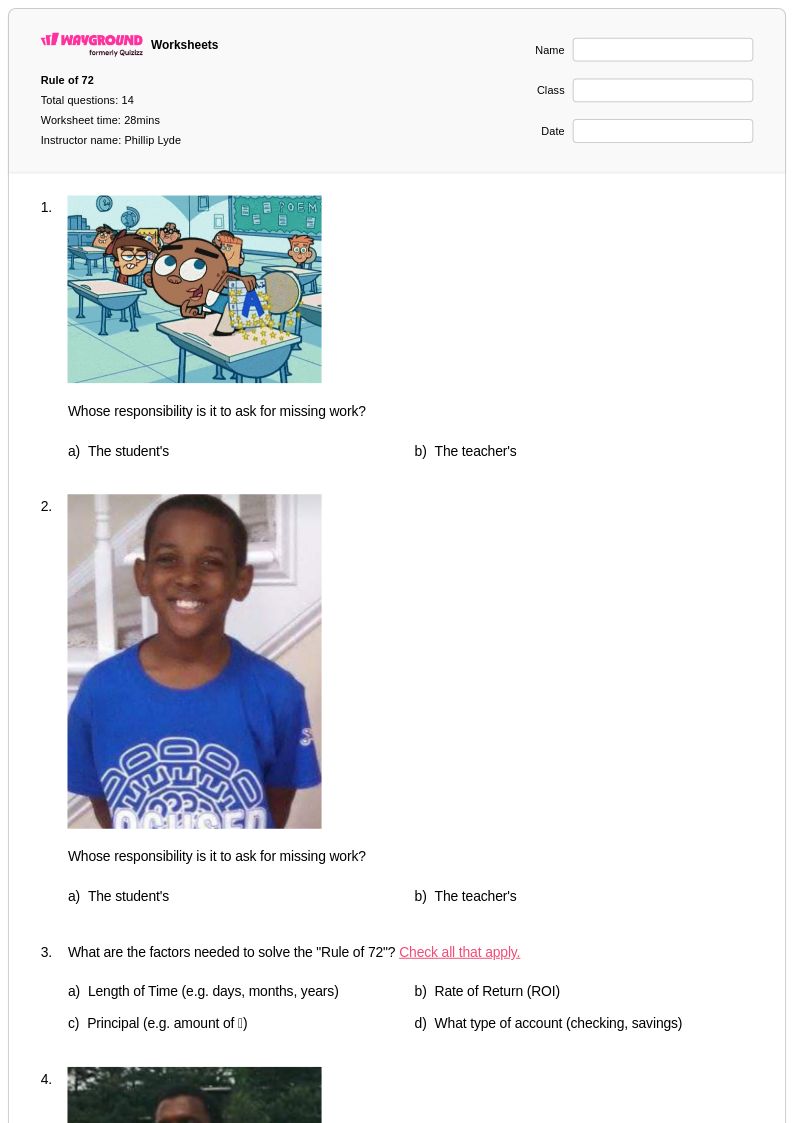
14 Q
3rd - Uni
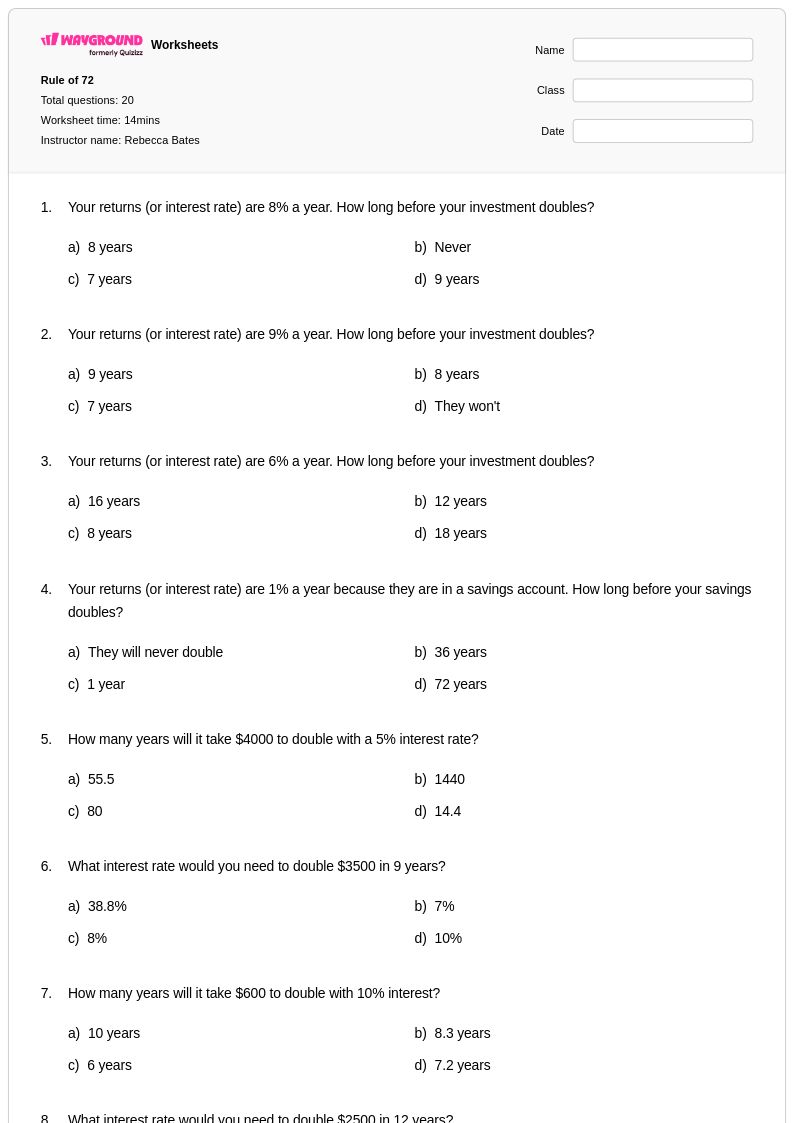
20 Q
10th - 12th
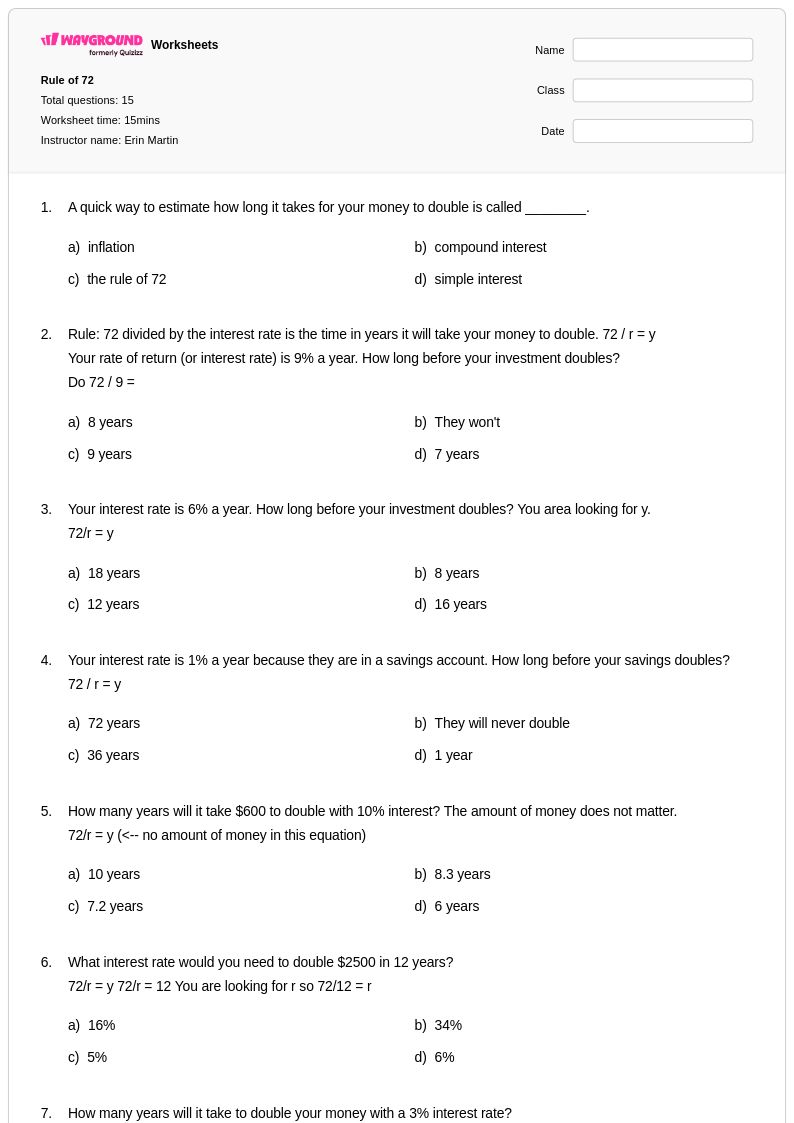
15 Q
9th - 12th
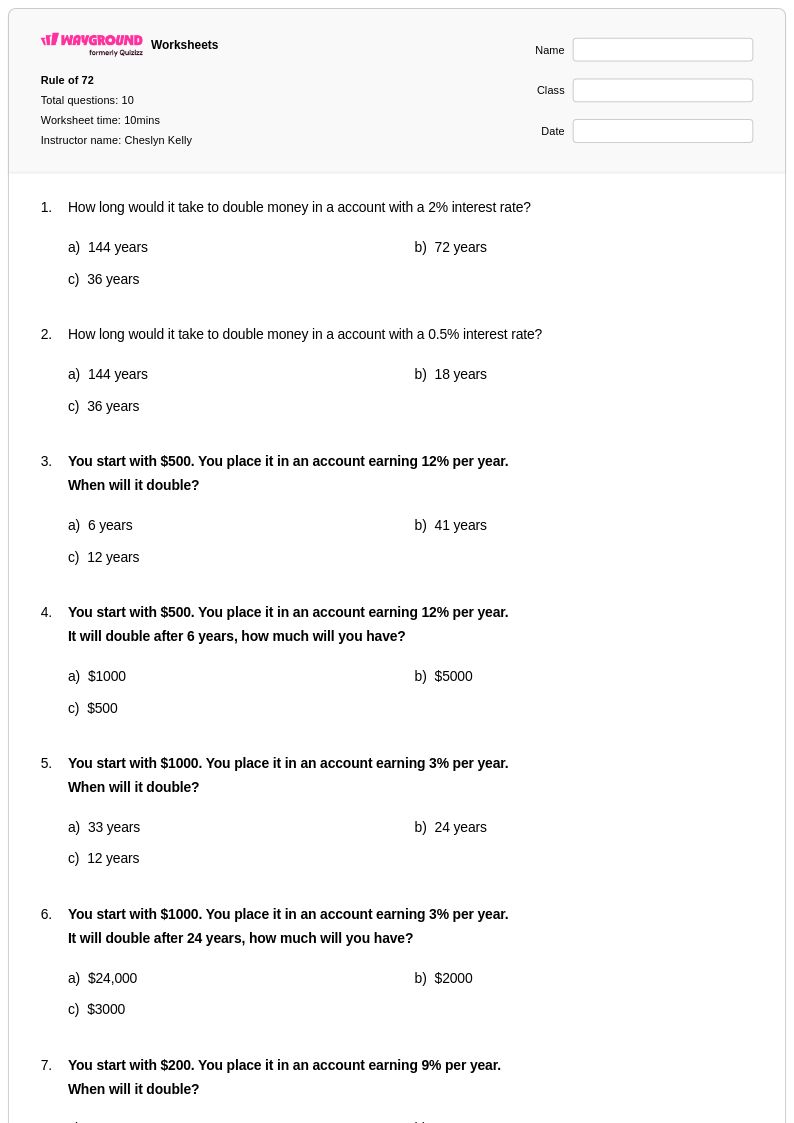
10 Q
9th - 12th
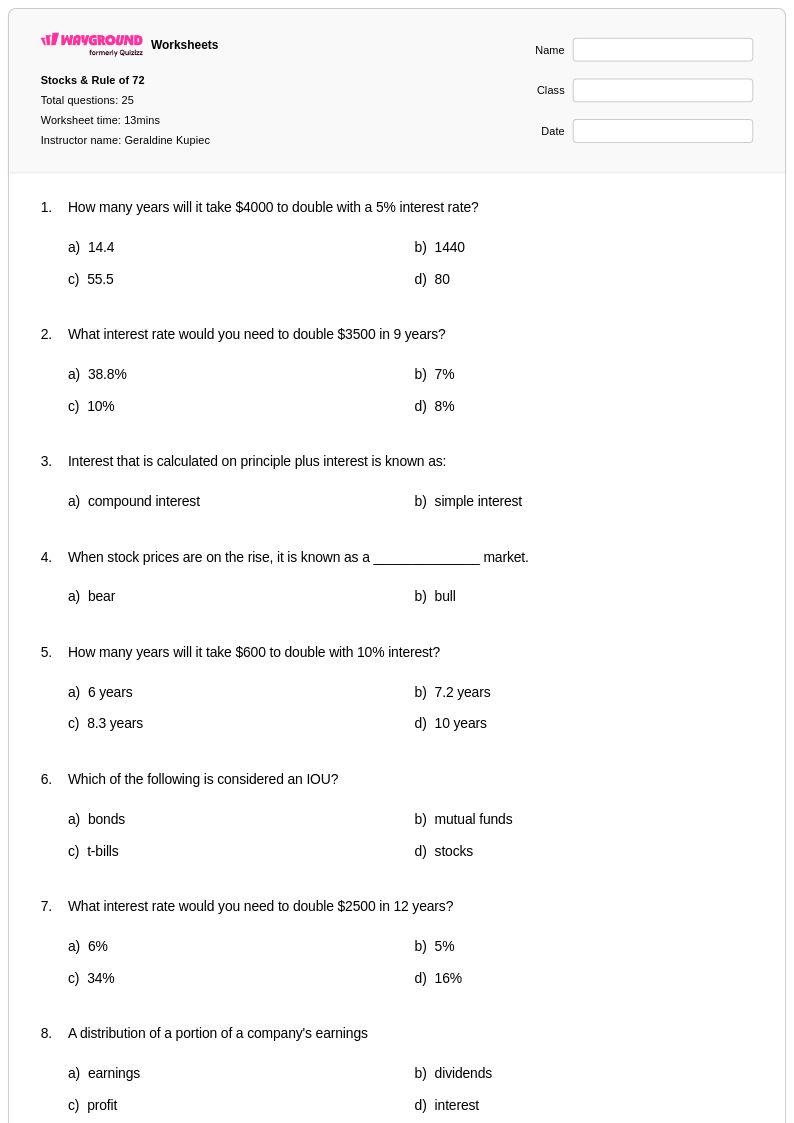
25 Q
12th
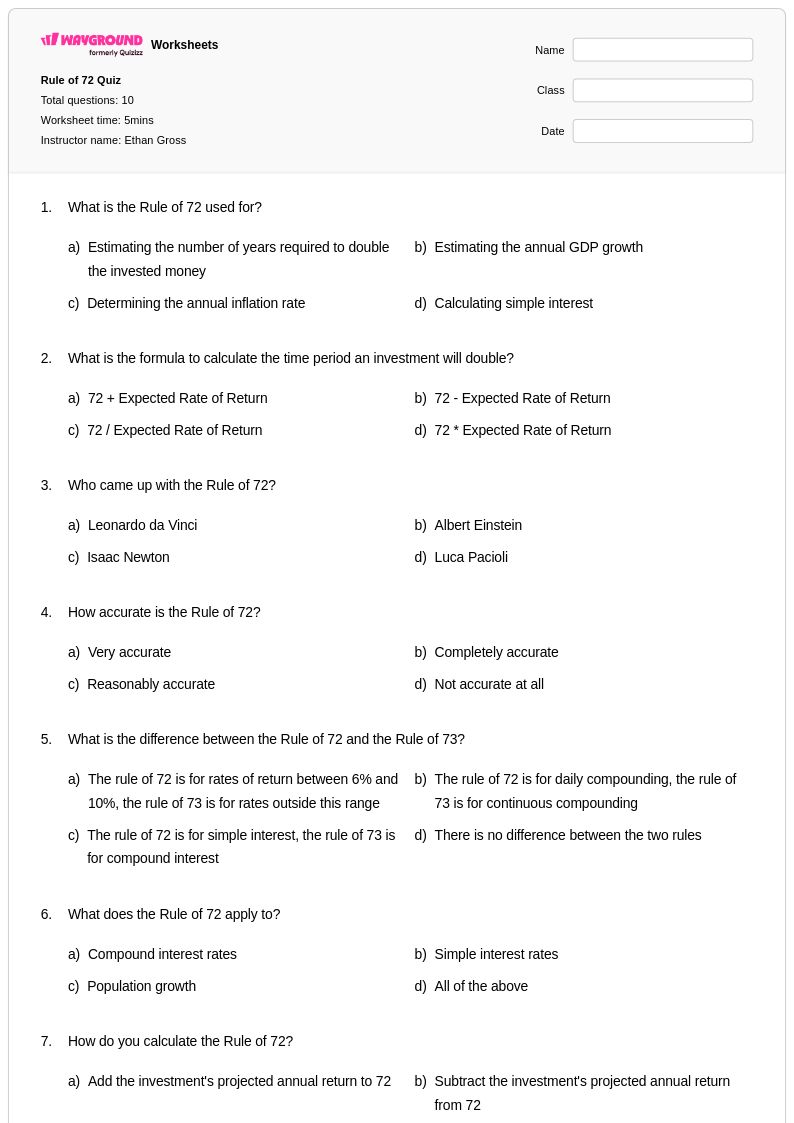
10 Q
12th
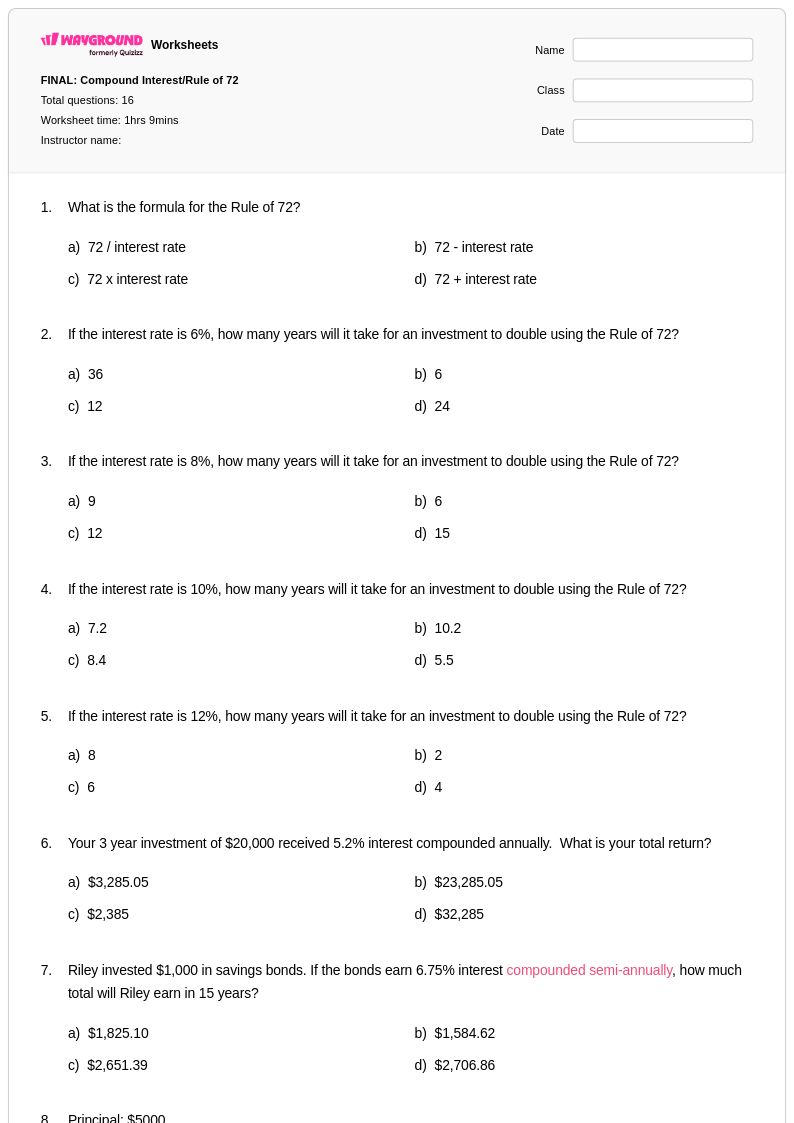
16 Q
12th
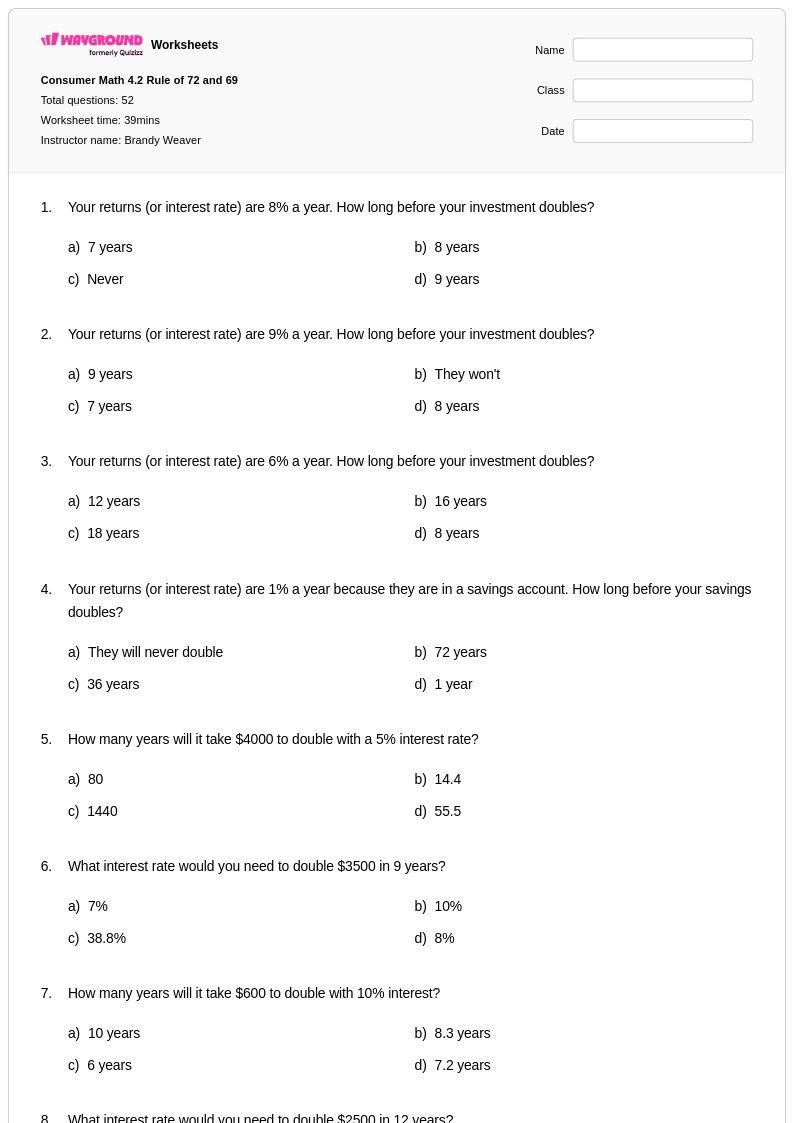
52 Q
9th - 12th
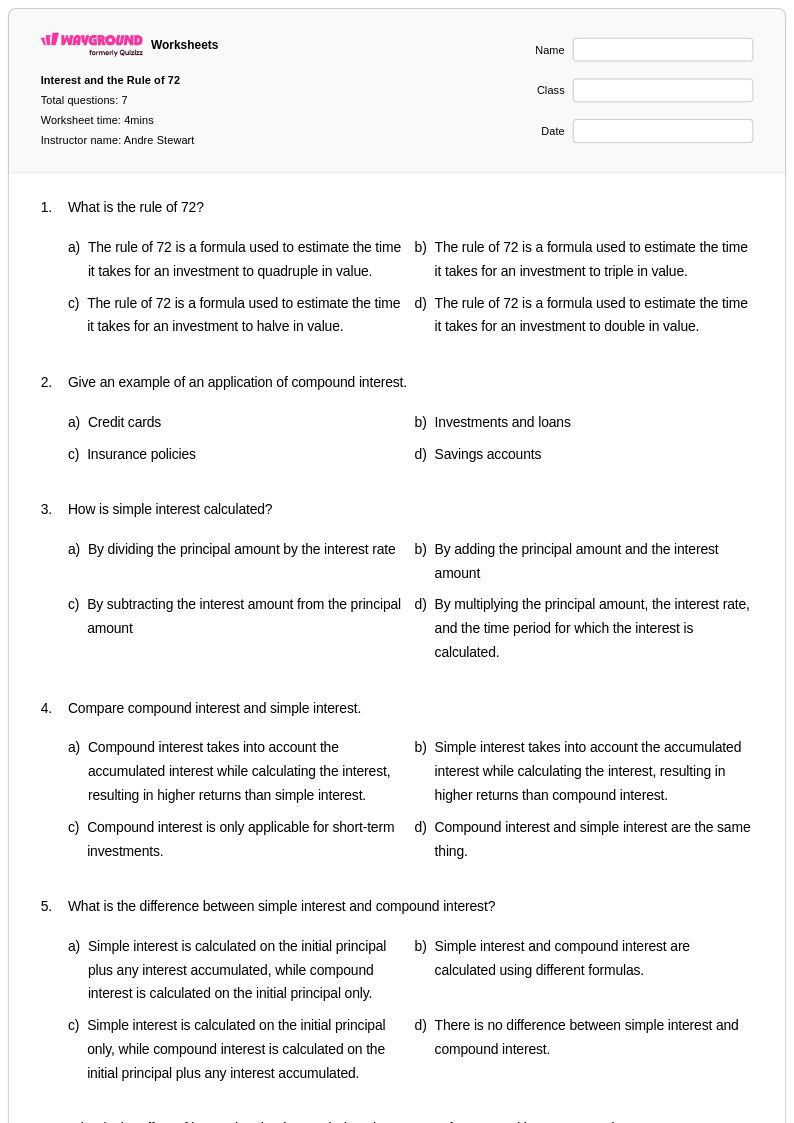
7 Q
12th
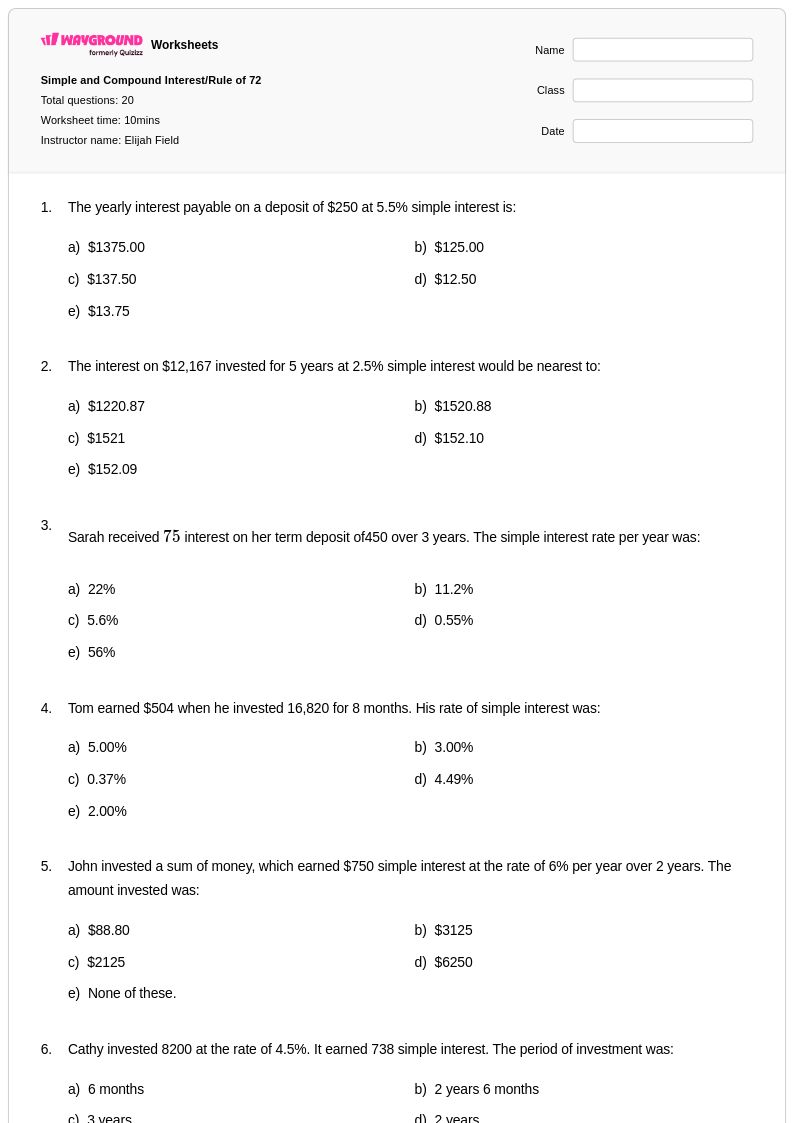
20 Q
12th
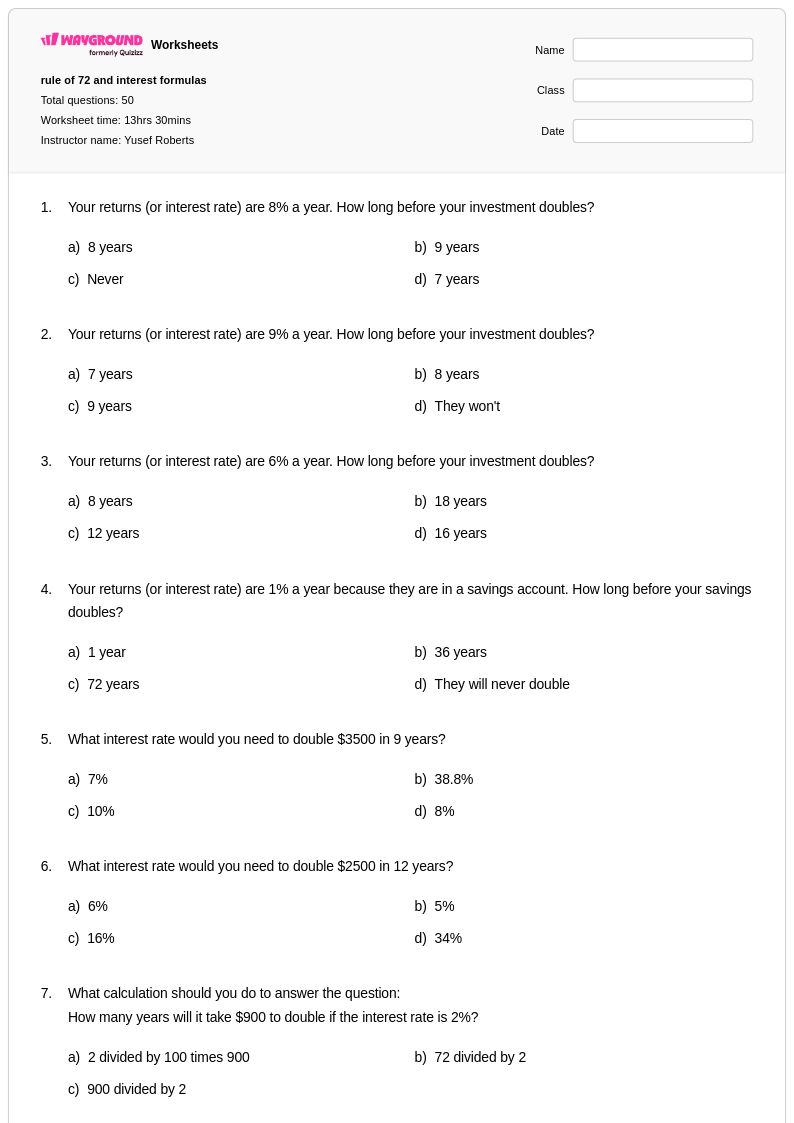
50 Q
12th
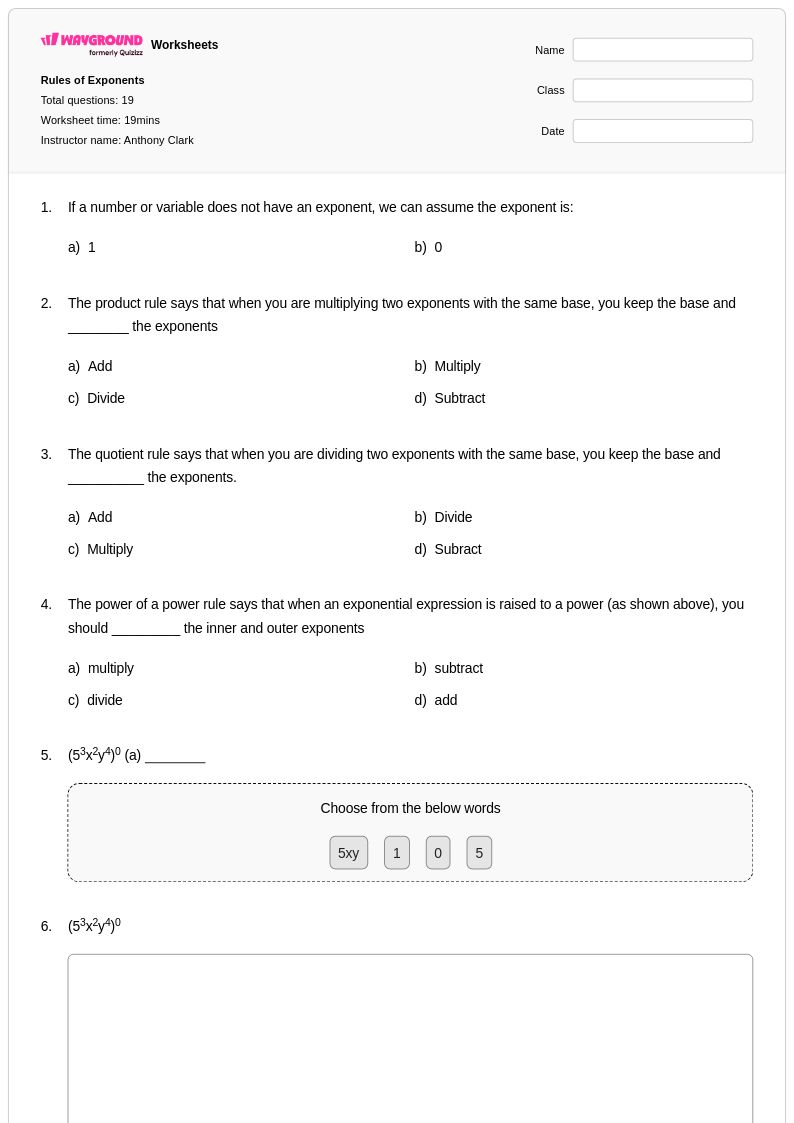
19 Q
8th - Uni
10 Q
1st - 12th
20 Q
5th - Uni
20 Q
3rd - Uni
19 Q
8th - Uni
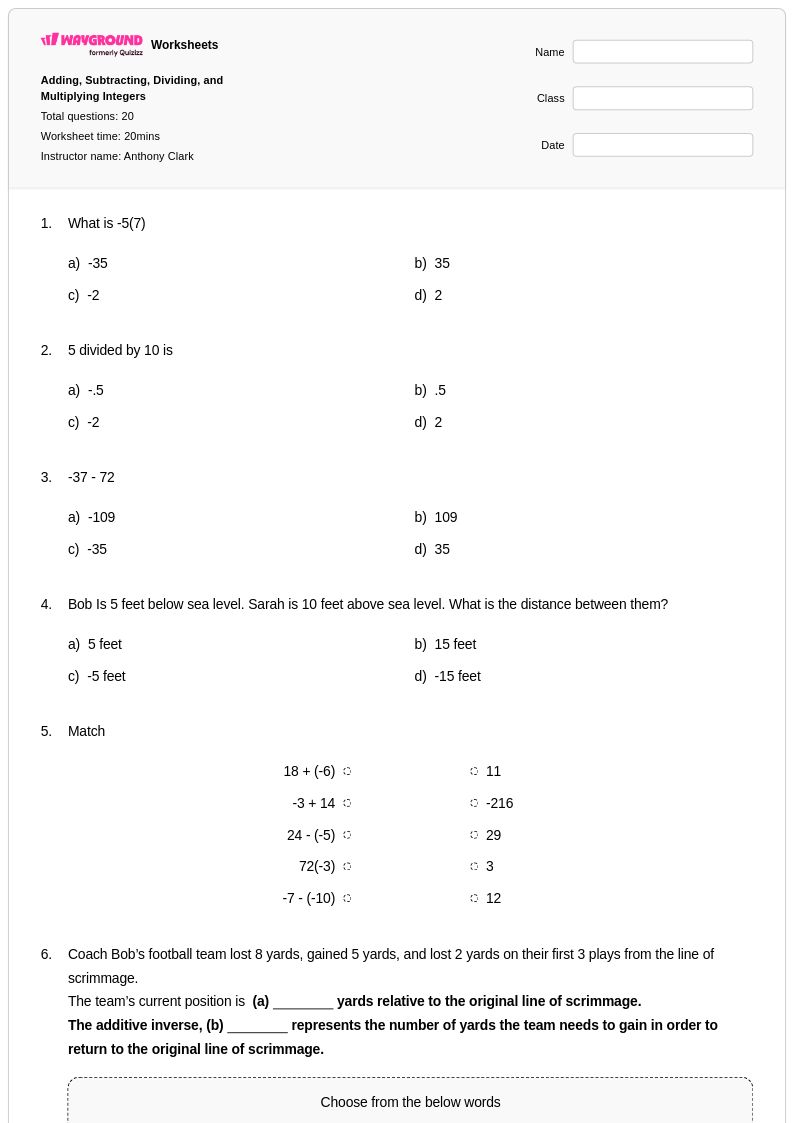
20 Q
7th - Uni
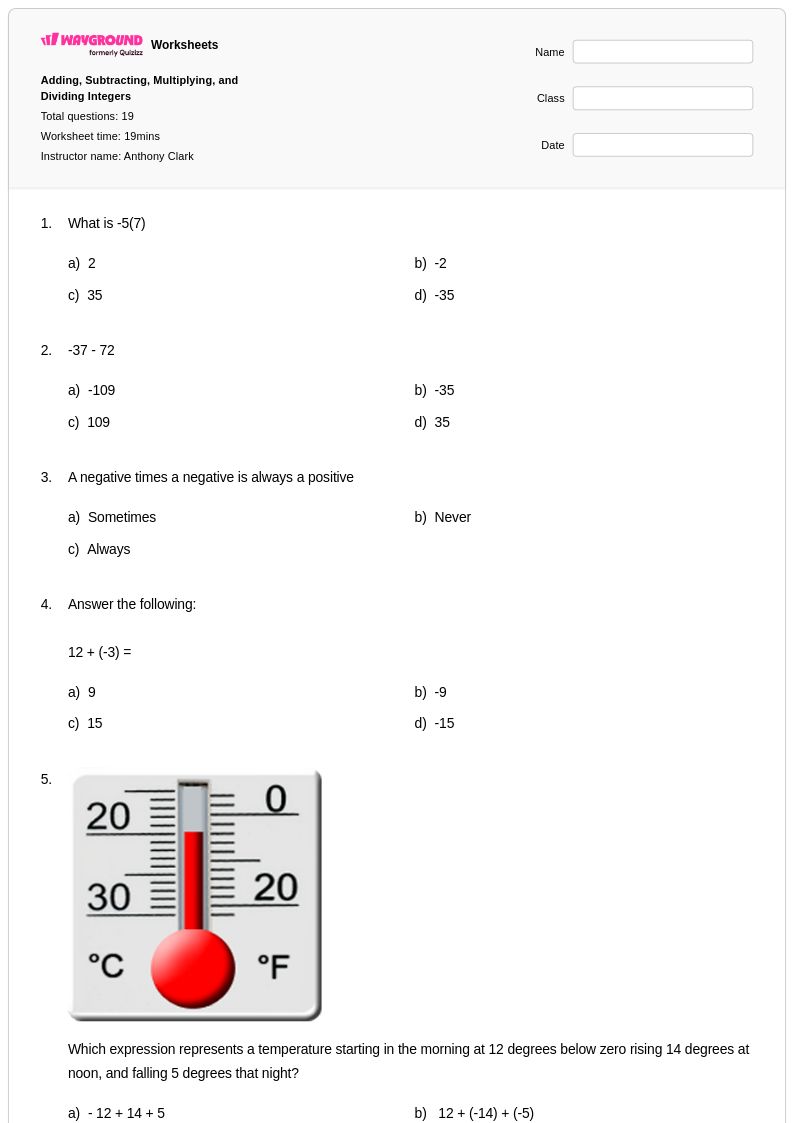
19 Q
7th - Uni
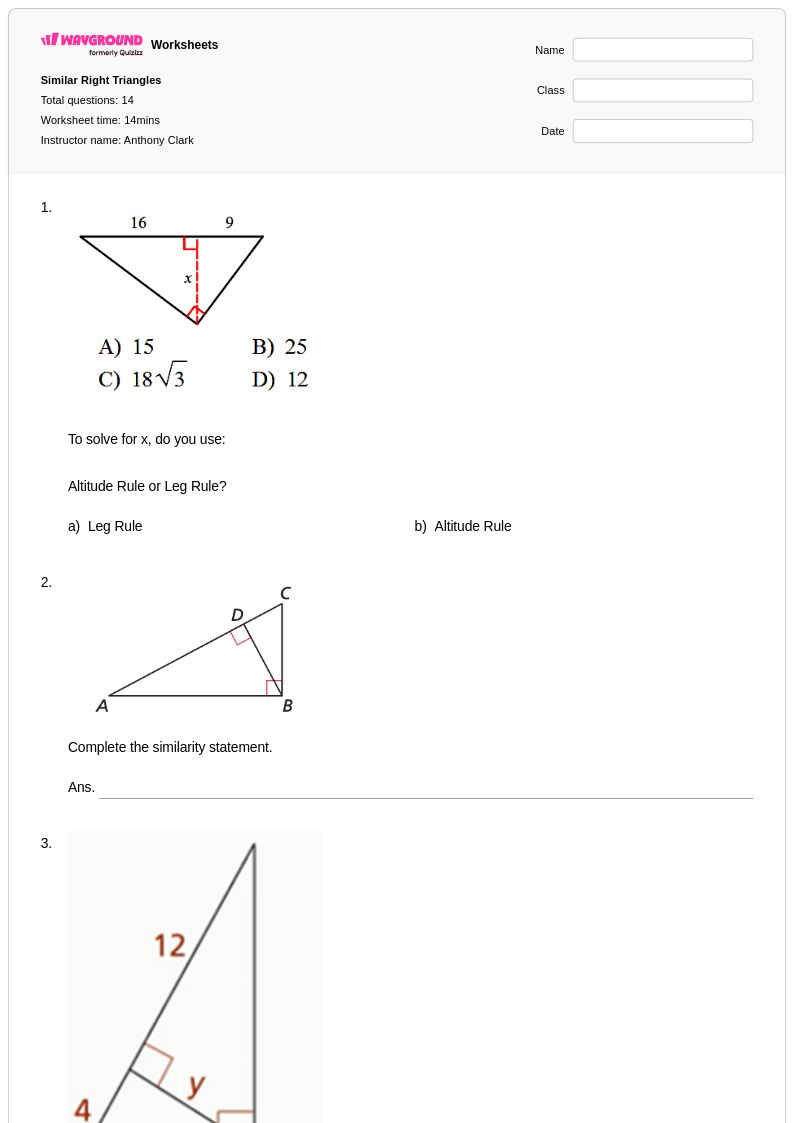
14 Q
10th - Uni
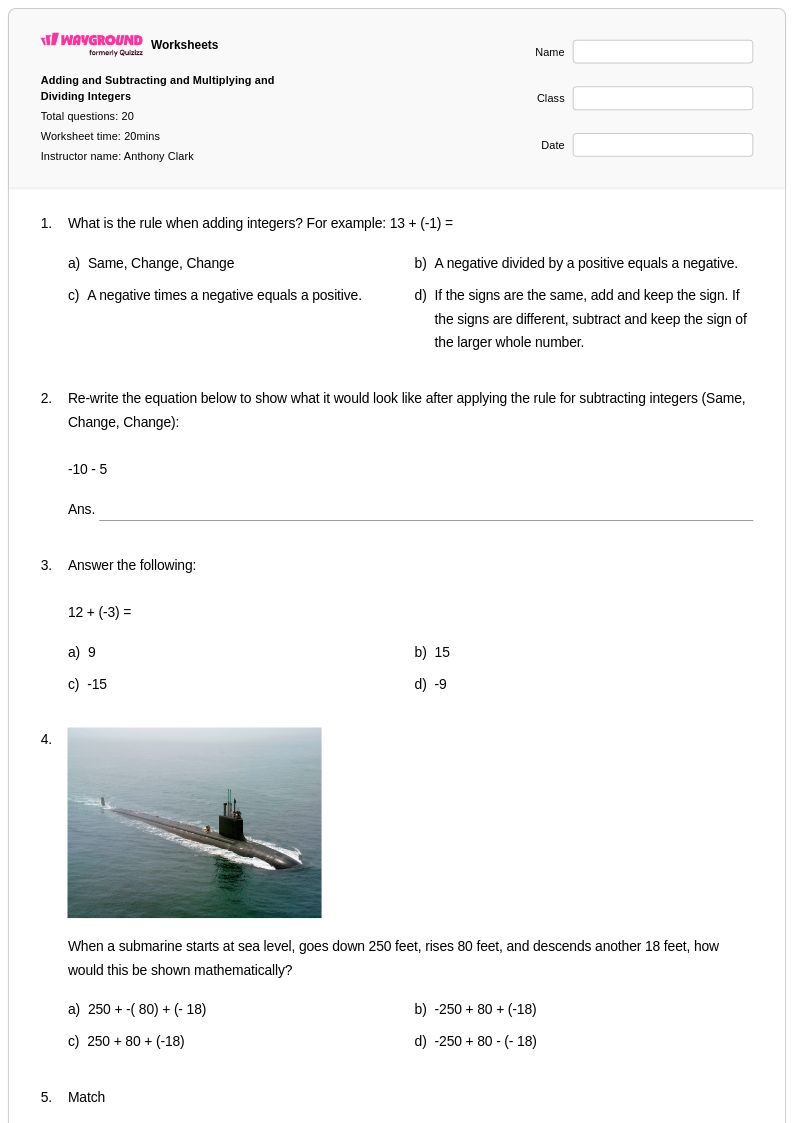
20 Q
7th - Uni
20 Q
7th - Uni
14 Q
5th - Uni
20 Q
4th - Uni
Explore Other Subject Worksheets for class 12
Explore printable Rule of 72 worksheets for Class 12
Rule of 72 worksheets for Class 12 students provide essential practice with this powerful financial calculation tool that estimates how long it takes for an investment to double at a given interest rate. These comprehensive worksheets strengthen critical mathematical and financial literacy skills by guiding students through step-by-step applications of the Rule of 72 formula, helping them understand compound interest concepts and make informed investment decisions. Students work through diverse practice problems that cover various scenarios including calculating doubling time for different interest rates, determining required rates of return, and comparing investment options using this fundamental principle. Each worksheet collection includes detailed answer keys and is available as free printable pdf resources, enabling students to master this essential financial concept through guided practice and independent study.
Wayground (formerly Quizizz) supports mathematics educators with an extensive collection of Rule of 72 worksheets created by millions of teachers who understand the importance of practical financial literacy education. The platform's robust search and filtering capabilities allow instructors to quickly locate age-appropriate materials that align with Class 12 mathematics standards and financial literacy curricula. Teachers can easily differentiate instruction by selecting from various difficulty levels and problem types, then customize worksheets to meet specific classroom needs or individual student requirements. These versatile resources are available in both printable pdf format and interactive digital versions, making them ideal for lesson planning, targeted remediation for students struggling with compound interest concepts, enrichment activities for advanced learners, and comprehensive skill practice that prepares students for real-world financial decision making.
FAQs
What is the goal of teaching the Rule of 72 to 12th graders?
How can I make the Rule of 72 relevant for graduating seniors?
What practice problems are appropriate for a 12th-grade financial math class?
How can I assess a 12th grader's understanding of the Rule of 72?
How can I use this Rule of 72 worksheet with my 12th graders?
How can I support diverse learners in my 12th-grade class with this topic?