
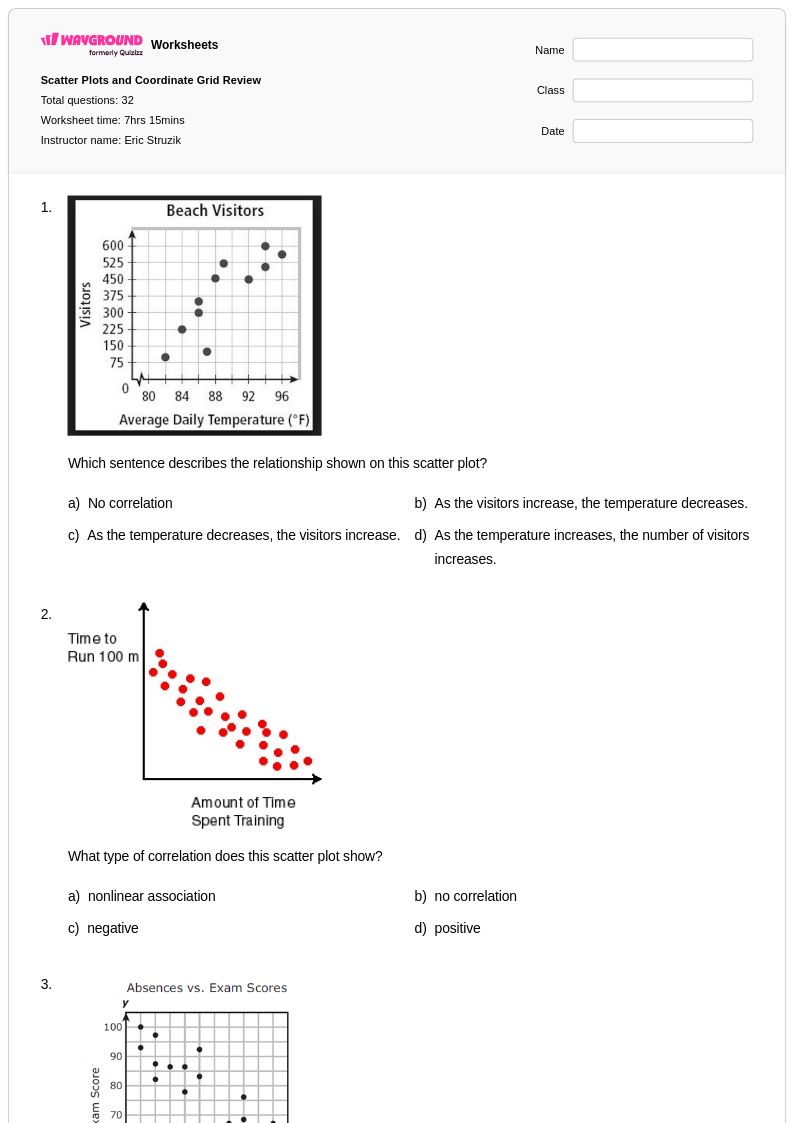
32 Q
7th
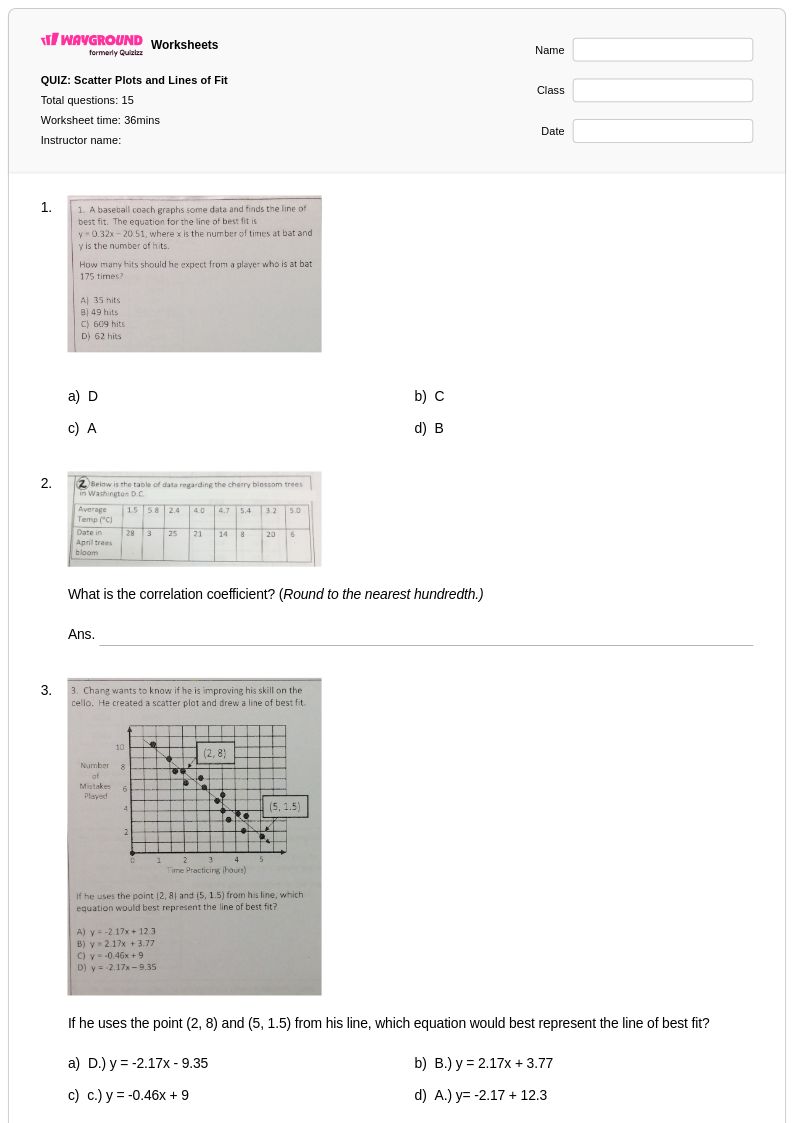
15 Q
7th - 10th
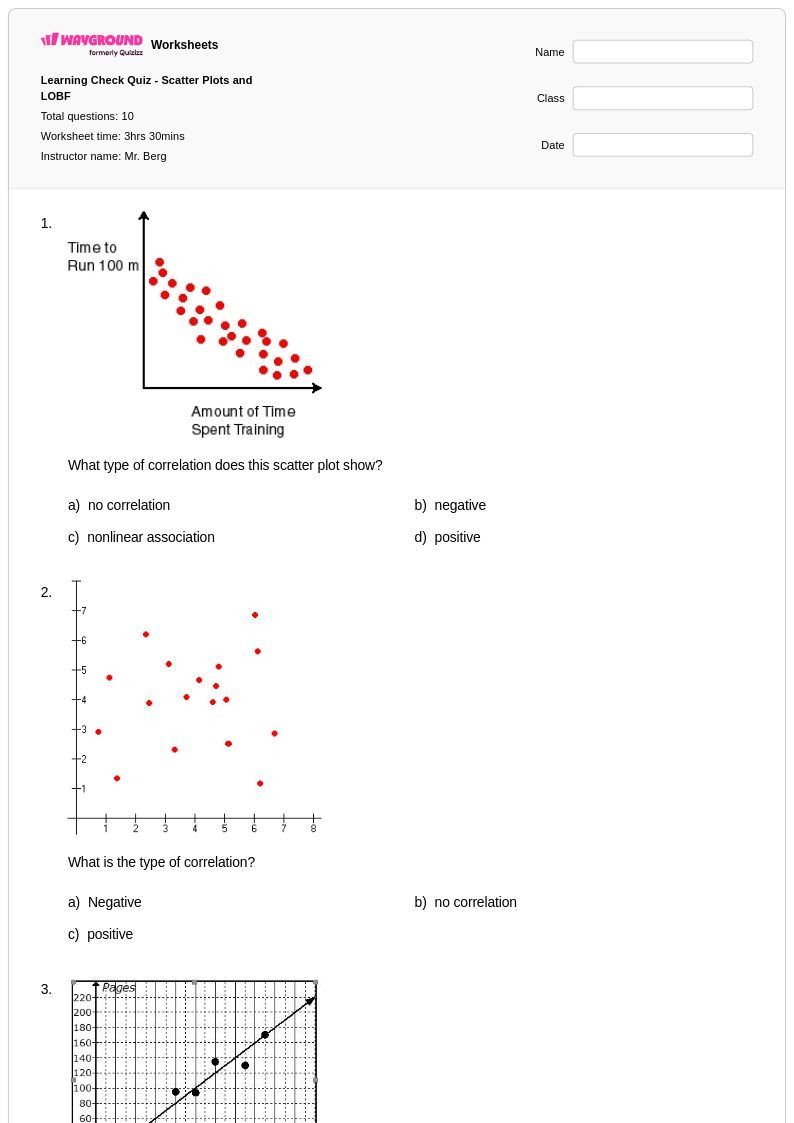
10 Q
7th - 8th
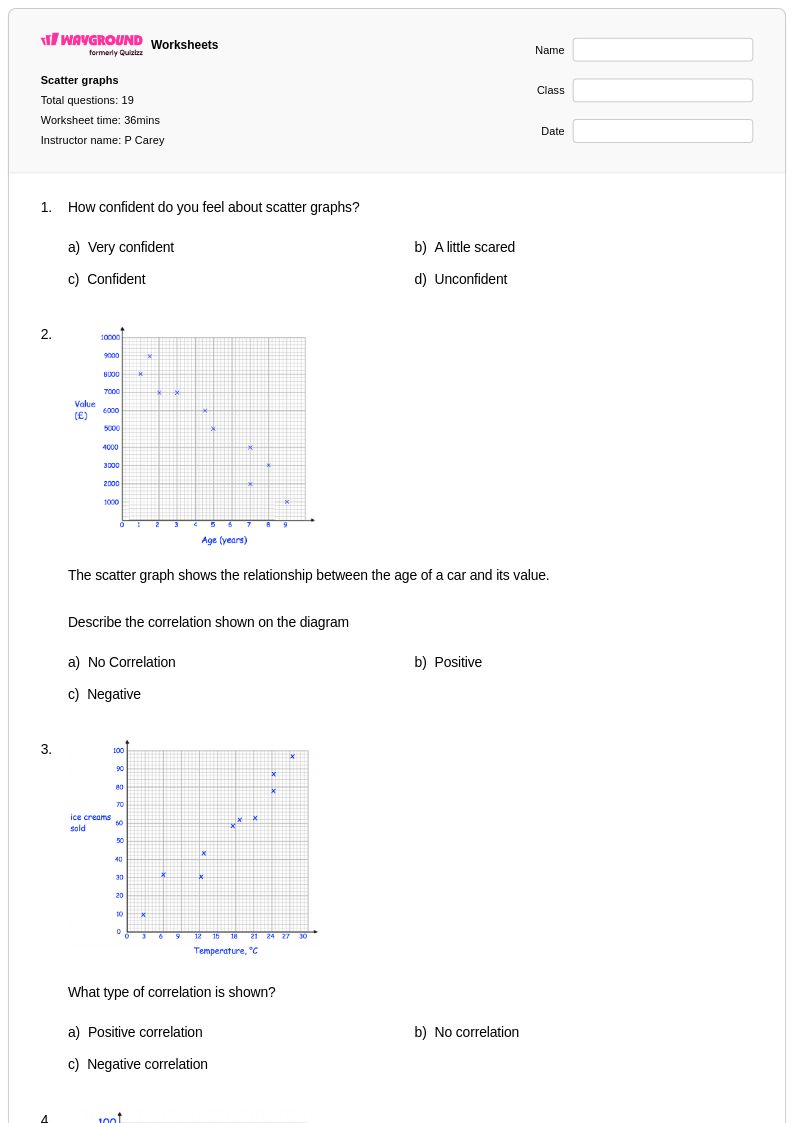
19 Q
7th - 12th
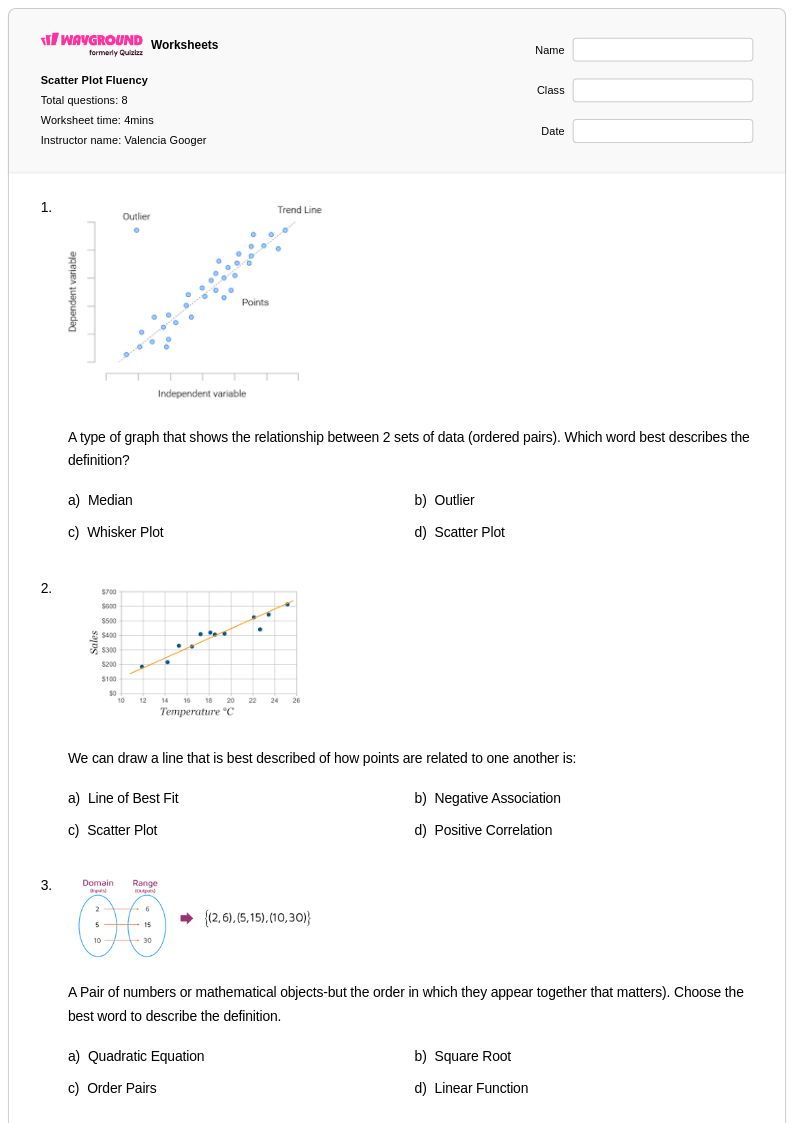
8 Q
7th - 8th
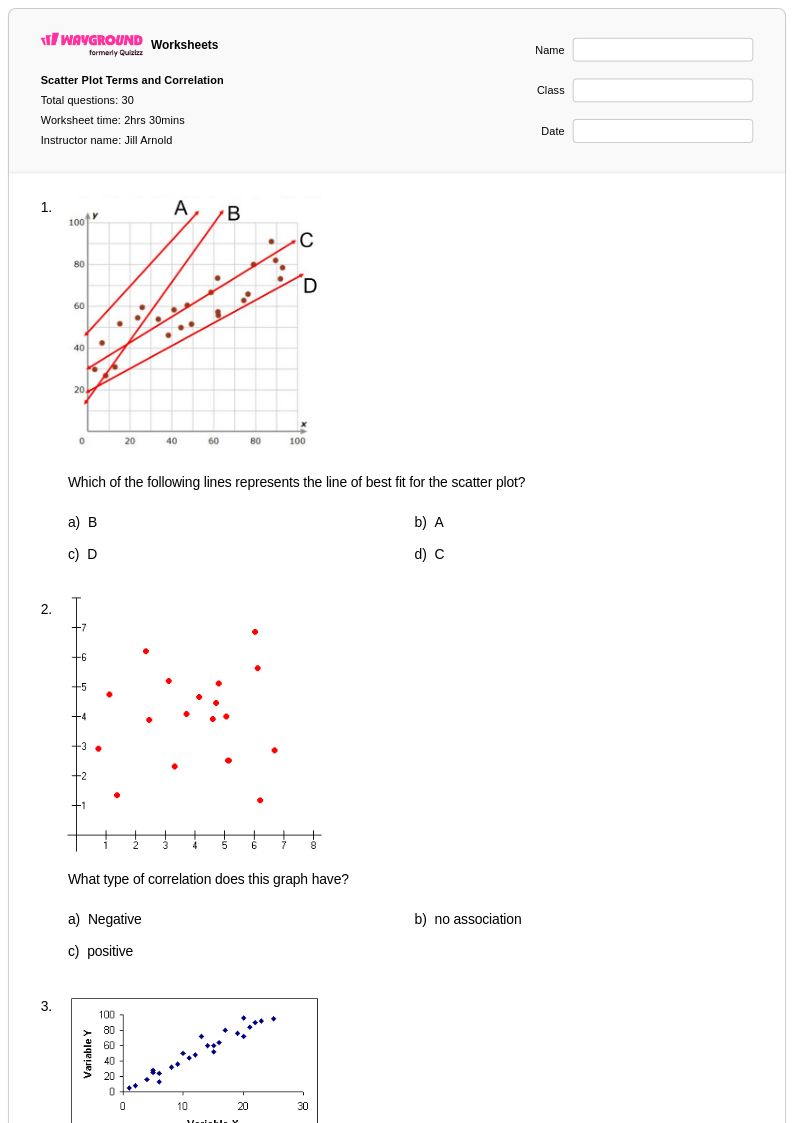
30 Q
7th - 8th
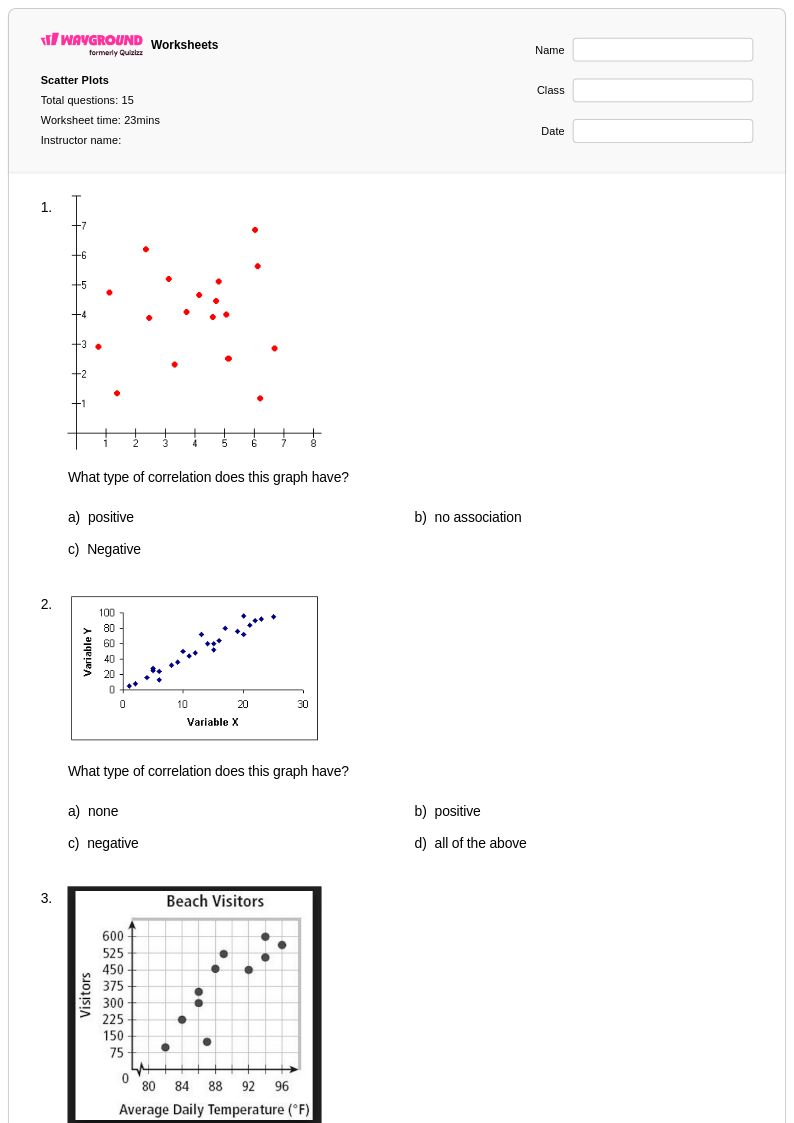
15 Q
7th
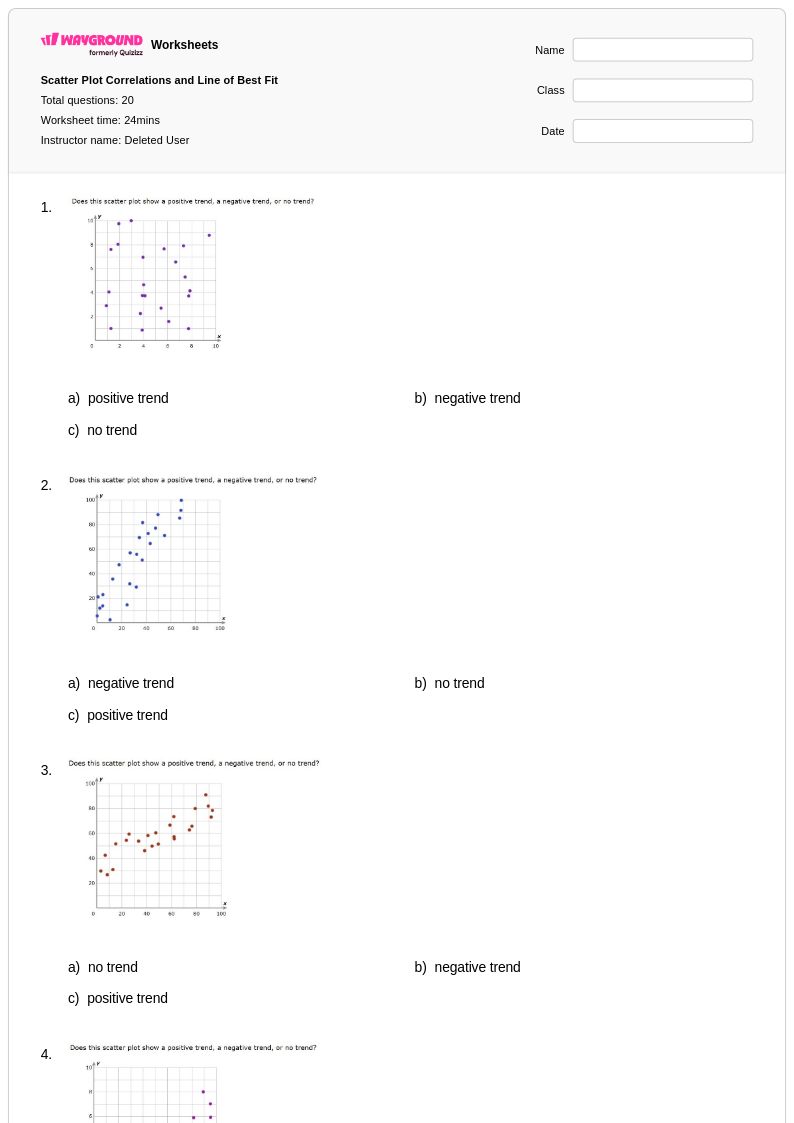
20 Q
6th - 8th
38 Q
7th - 12th
13 Q
6th - 8th
20 Q
7th
22 Q
6th - 8th
14 Q
6th - 8th
16 Q
6th - 8th
20 Q
7th - Uni
15 Q
6th - Uni
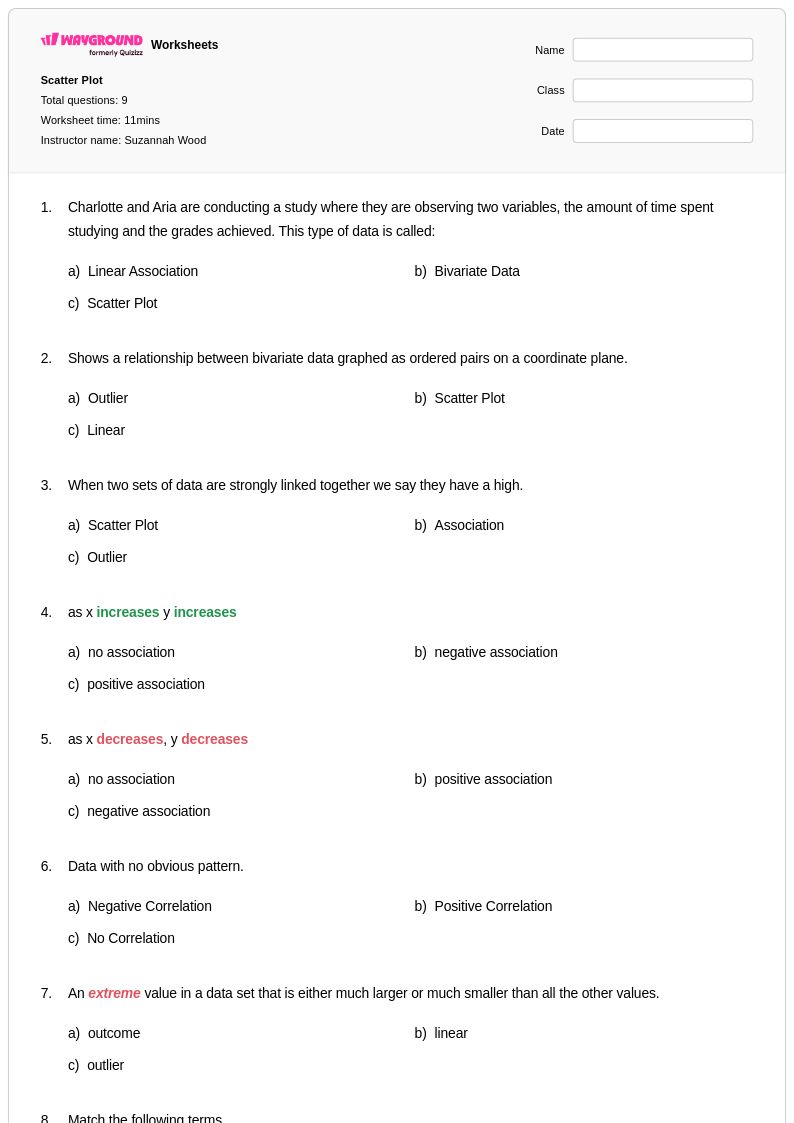
9 Q
7th - 12th
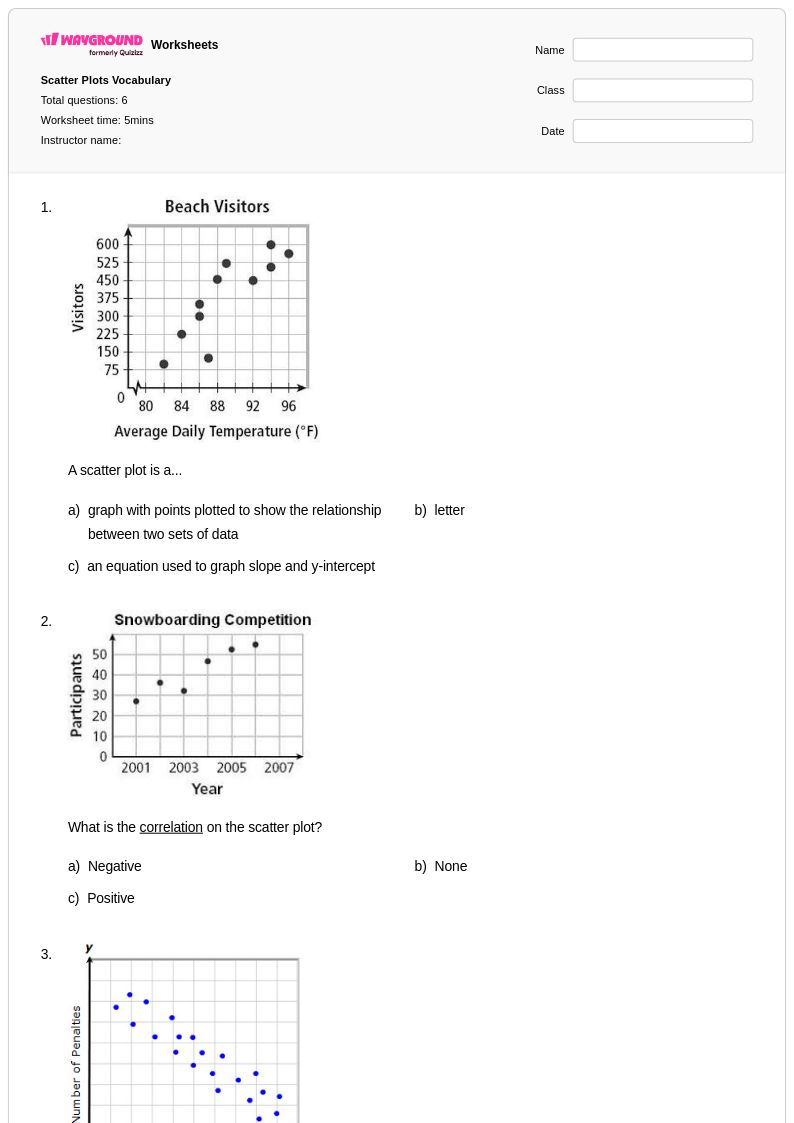
6 Q
6th - 8th
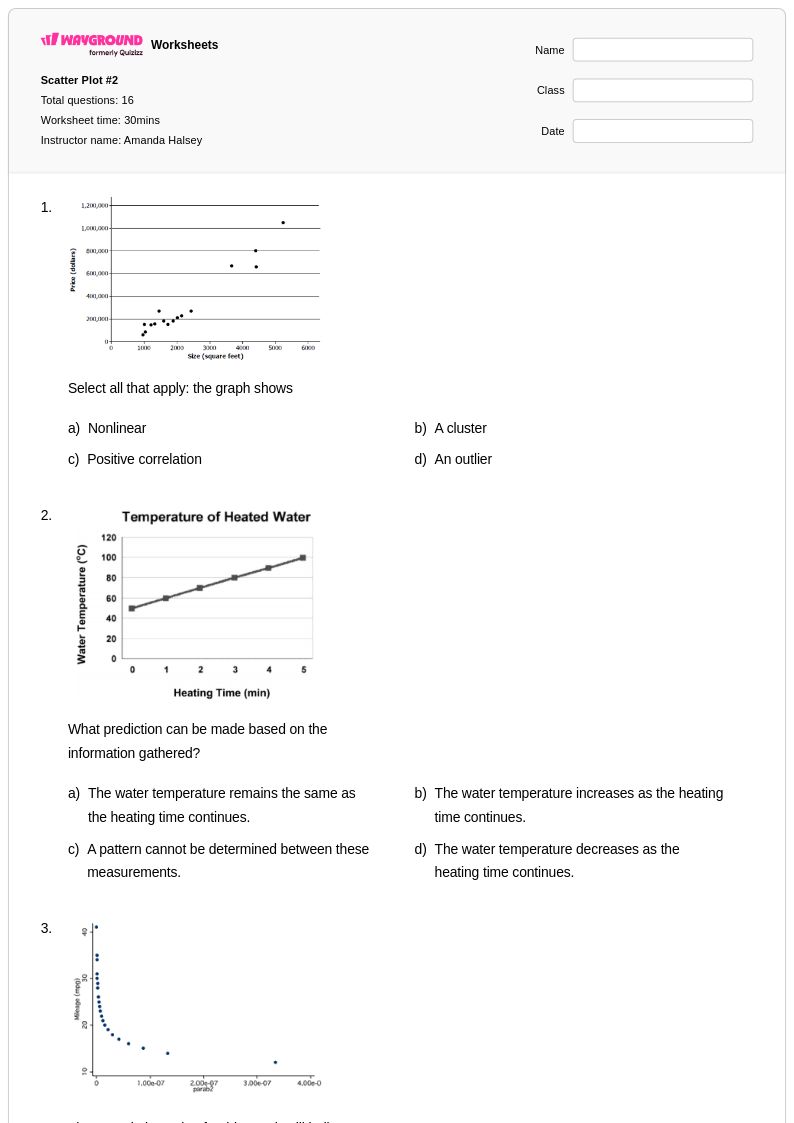
16 Q
6th - 8th
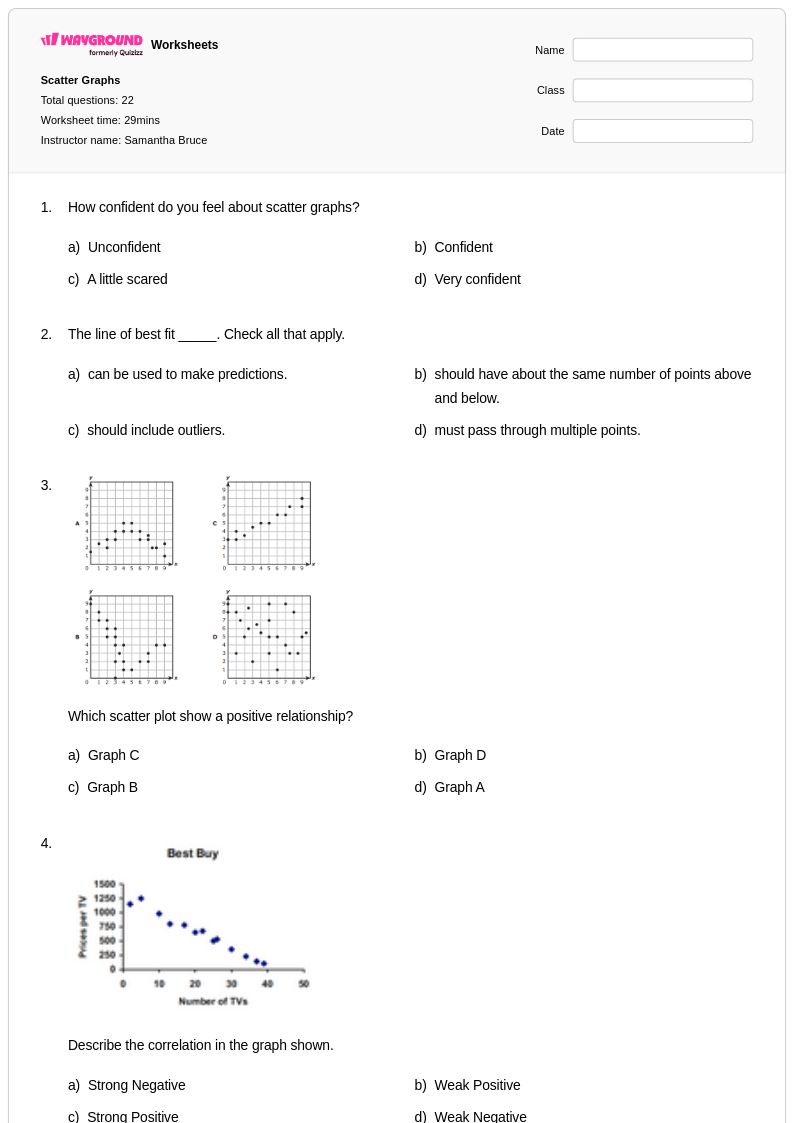
22 Q
6th - 8th
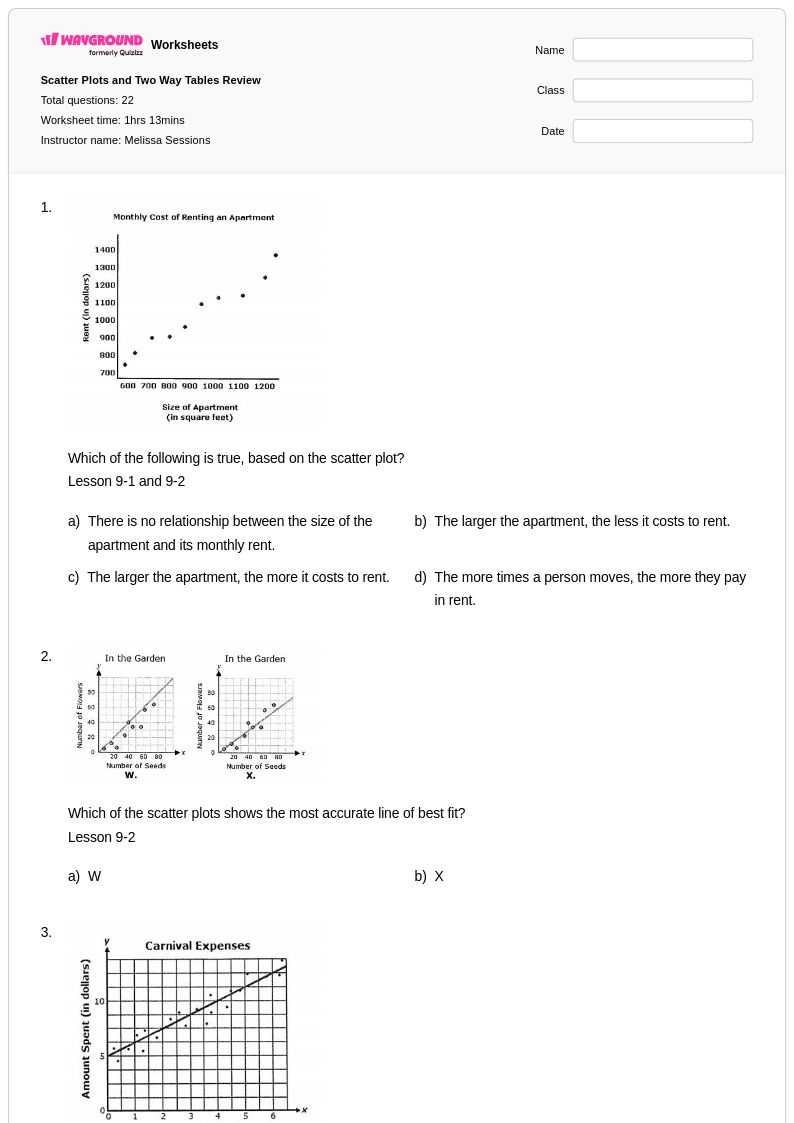
18 Q
6th - 8th
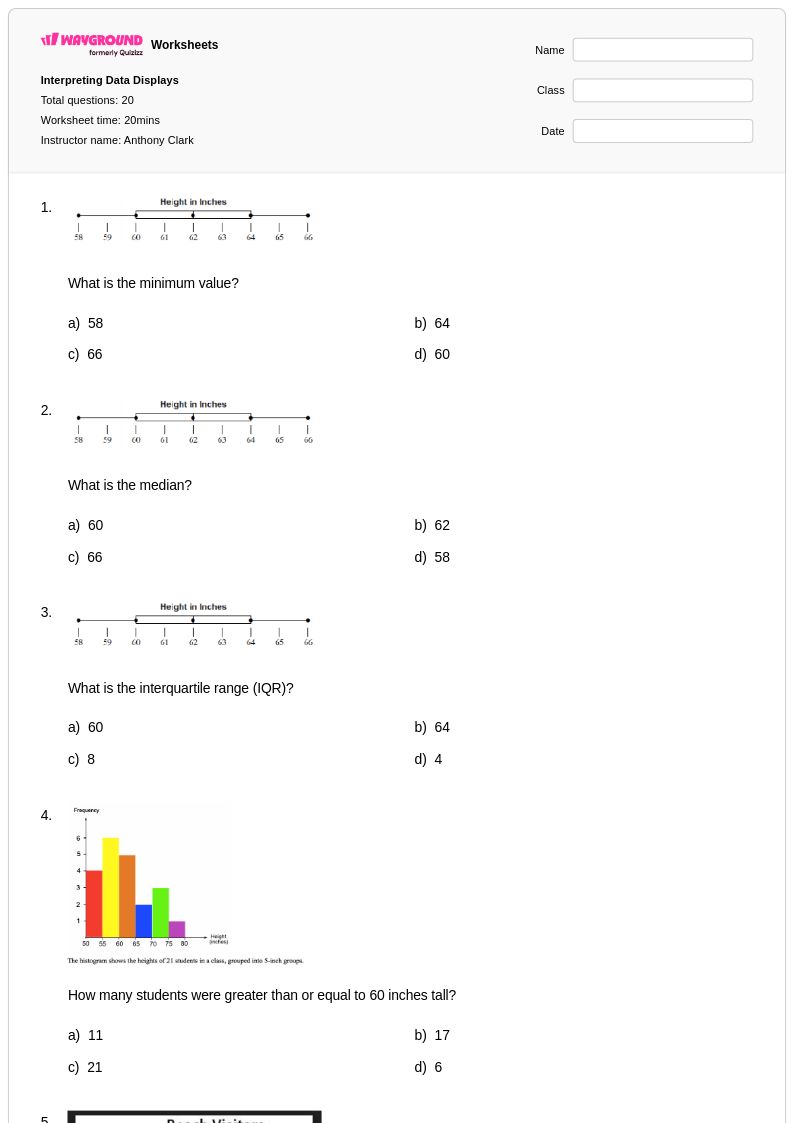
20 Q
6th - Uni
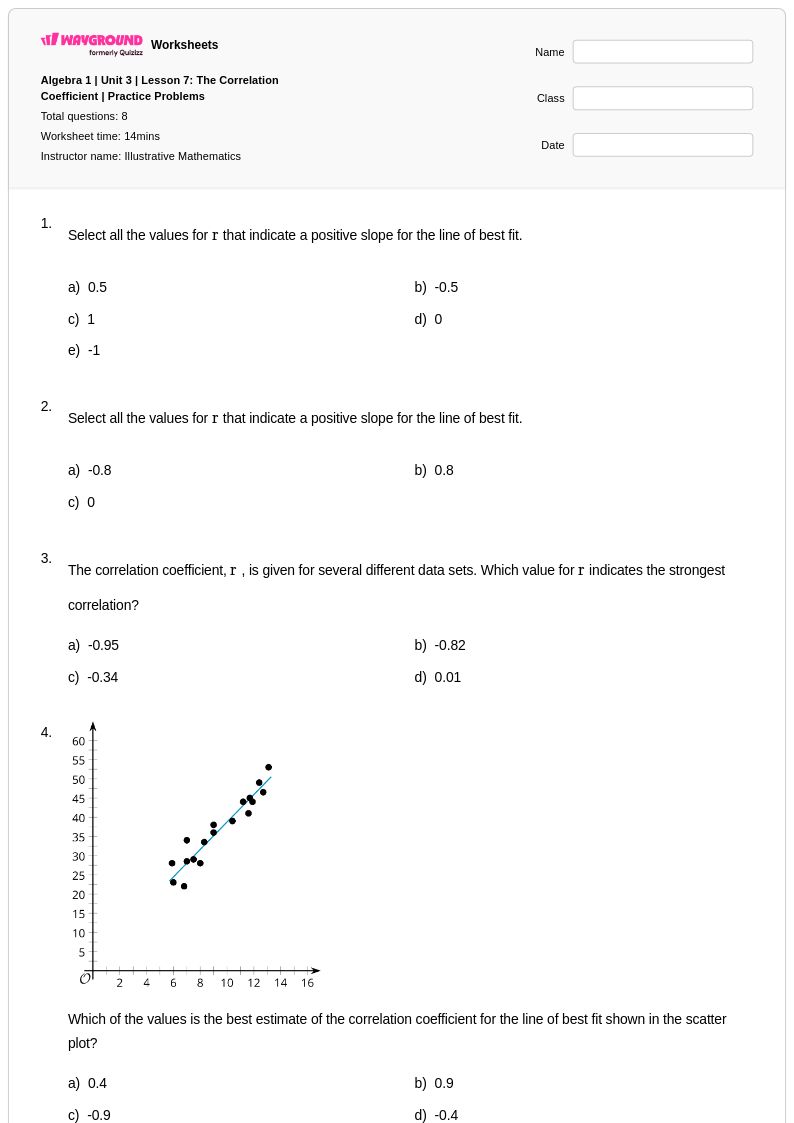
8 Q
6th - Uni
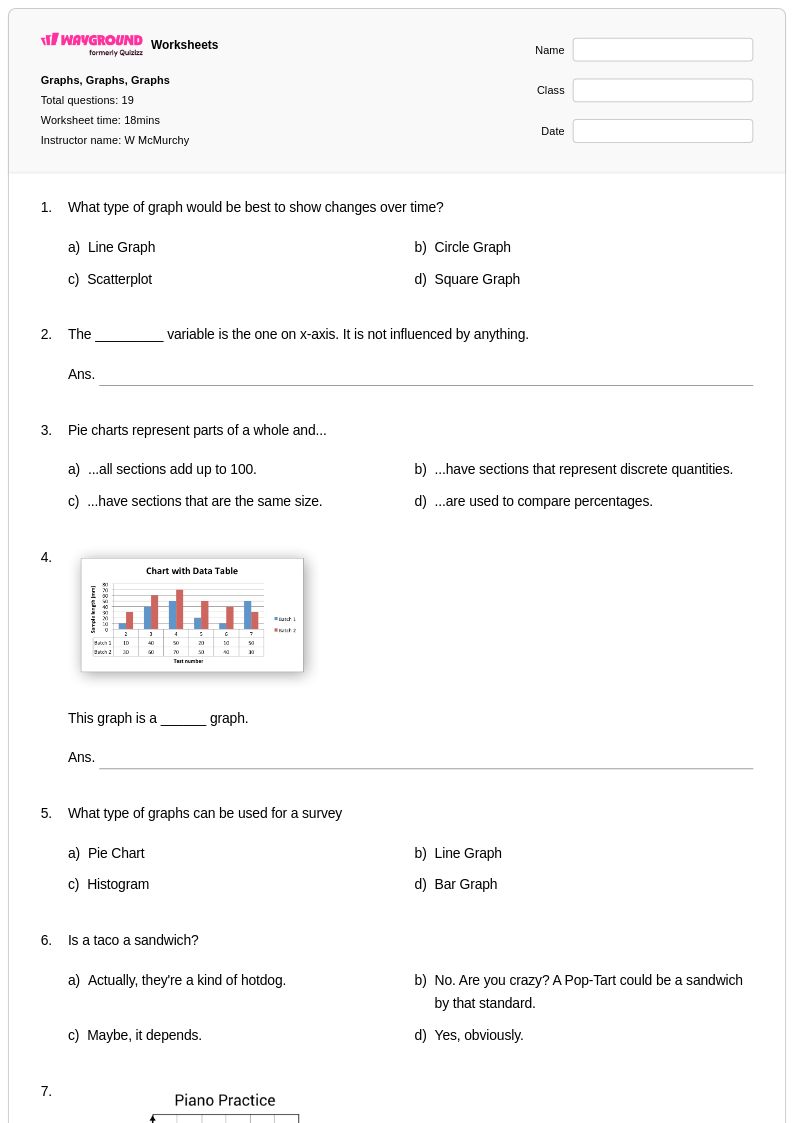
19 Q
7th - 8th
Explore Scatter Plot Correlation Worksheets by Grades
Explore Other Subject Worksheets for class 7
Explore printable Scatter Plot Correlation worksheets for Class 7
Scatter plot correlation worksheets for Class 7 students available through Wayground (formerly Quizizz) provide comprehensive practice in analyzing the relationship between two variables through visual data representation. These expertly designed worksheets strengthen essential mathematical skills including identifying positive, negative, and no correlation patterns, interpreting scatter plot trends, and drawing lines of best fit to make predictions from data sets. Students work through carefully structured practice problems that progress from basic plot reading to advanced correlation analysis, with each worksheet including a detailed answer key to support independent learning and self-assessment. The free printable resources are available in convenient PDF format, making them easily accessible for classroom use, homework assignments, or additional skill reinforcement at home.
Wayground (formerly Quizizz) empowers educators with an extensive collection of millions of teacher-created scatter plot correlation worksheets specifically designed for Class 7 mathematics instruction. The platform's robust search and filtering capabilities allow teachers to quickly locate resources aligned with curriculum standards and student ability levels, while built-in differentiation tools enable seamless customization of content difficulty and complexity. These versatile worksheets are available in both printable PDF and interactive digital formats, providing flexible options for diverse learning environments and teaching preferences. Teachers can efficiently plan targeted lessons, implement remediation strategies for struggling learners, offer enrichment opportunities for advanced students, and provide consistent skill practice that builds mathematical confidence in data analysis and graphical interpretation.
FAQs
What is the focus of scatter plots in 7th grade?
How do I teach the "line of best fit" informally?
What skills do these 7th-grade scatter plot worksheets build?
What misconceptions might 7th graders have about trend lines?
How can I use this worksheet for classwork or homework?