Free Printable Social studies Worksheets for Class 3
Explore Wayground's free Class 3 social studies worksheets and printables that help students develop essential citizenship skills, historical thinking, and cultural awareness through engaging practice problems with comprehensive answer keys.
Explore printable Social studies worksheets for Class 3
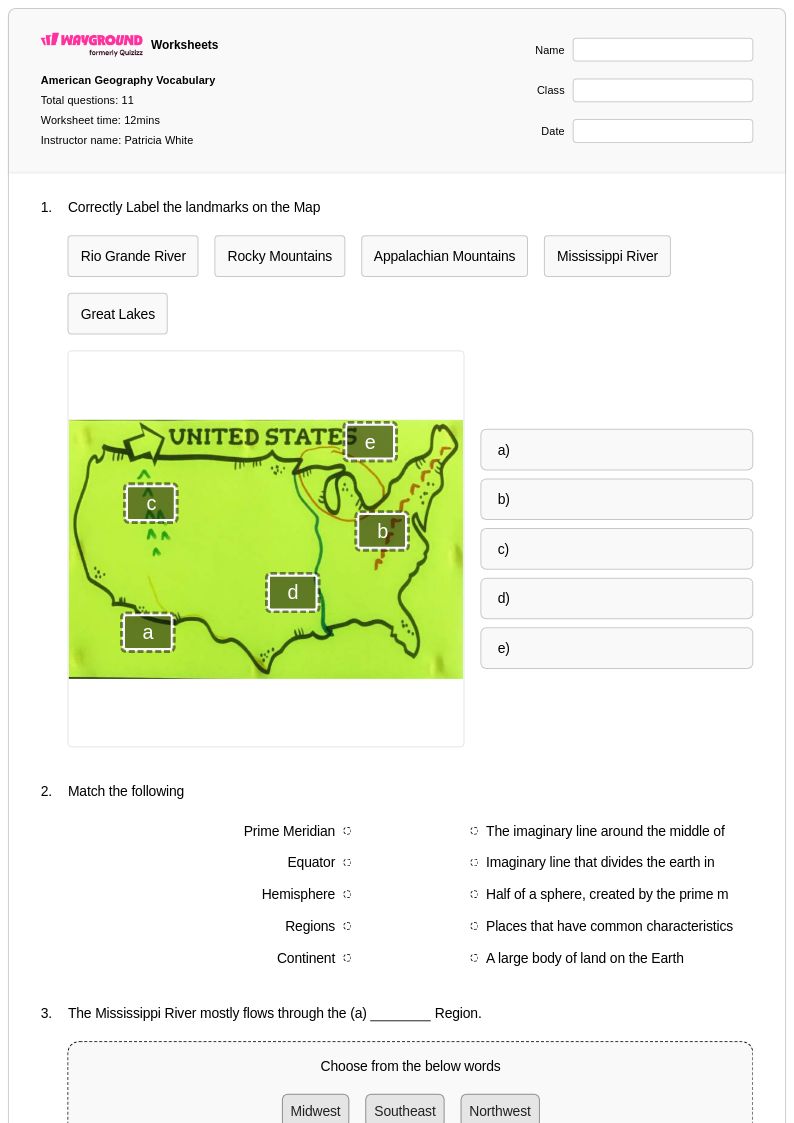
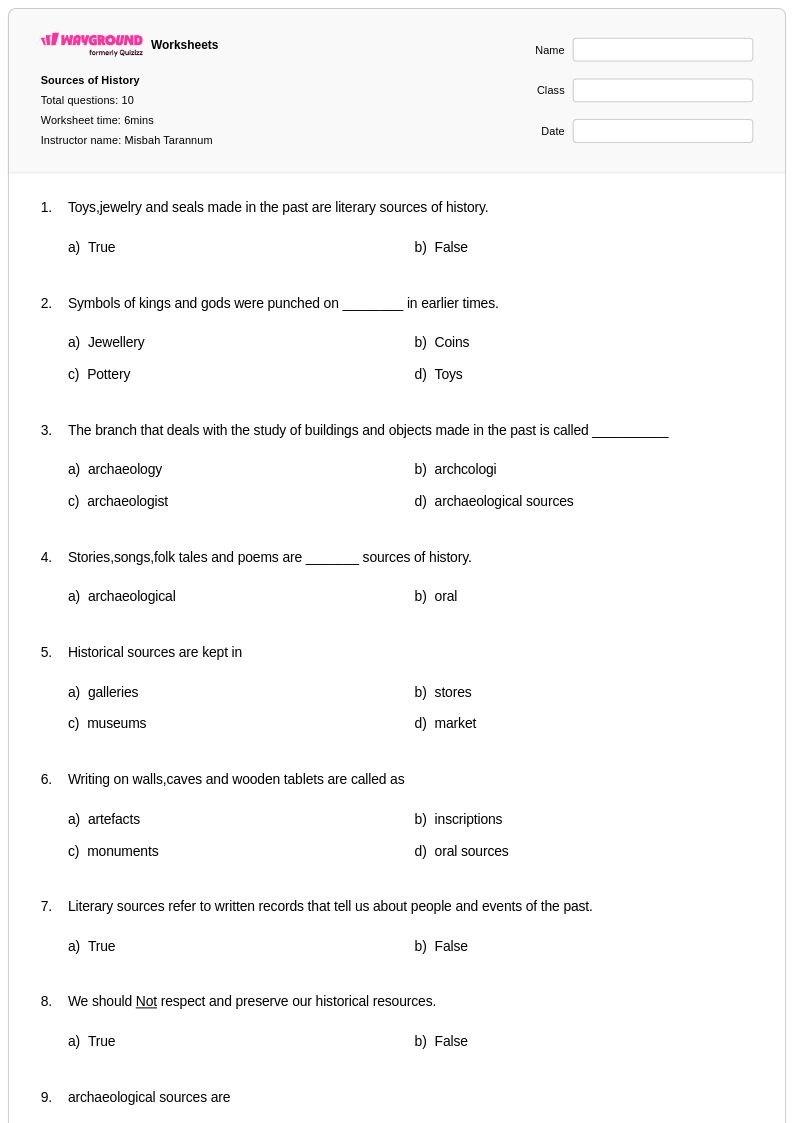
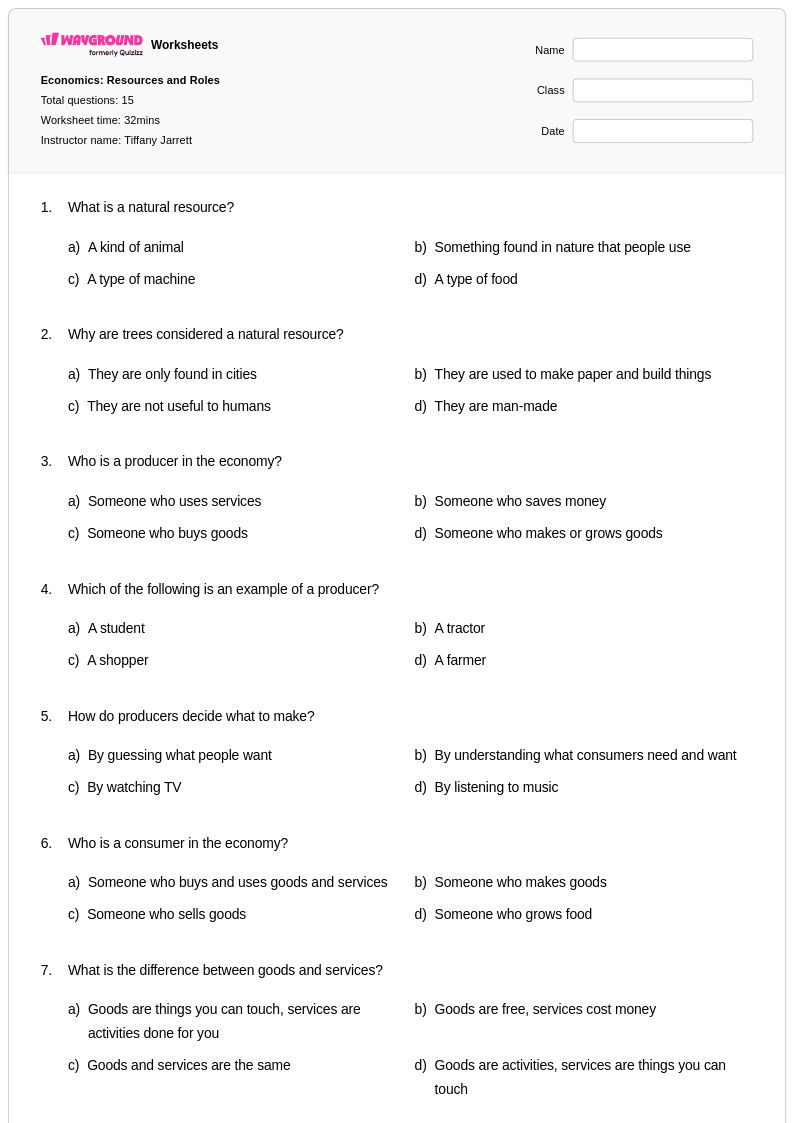
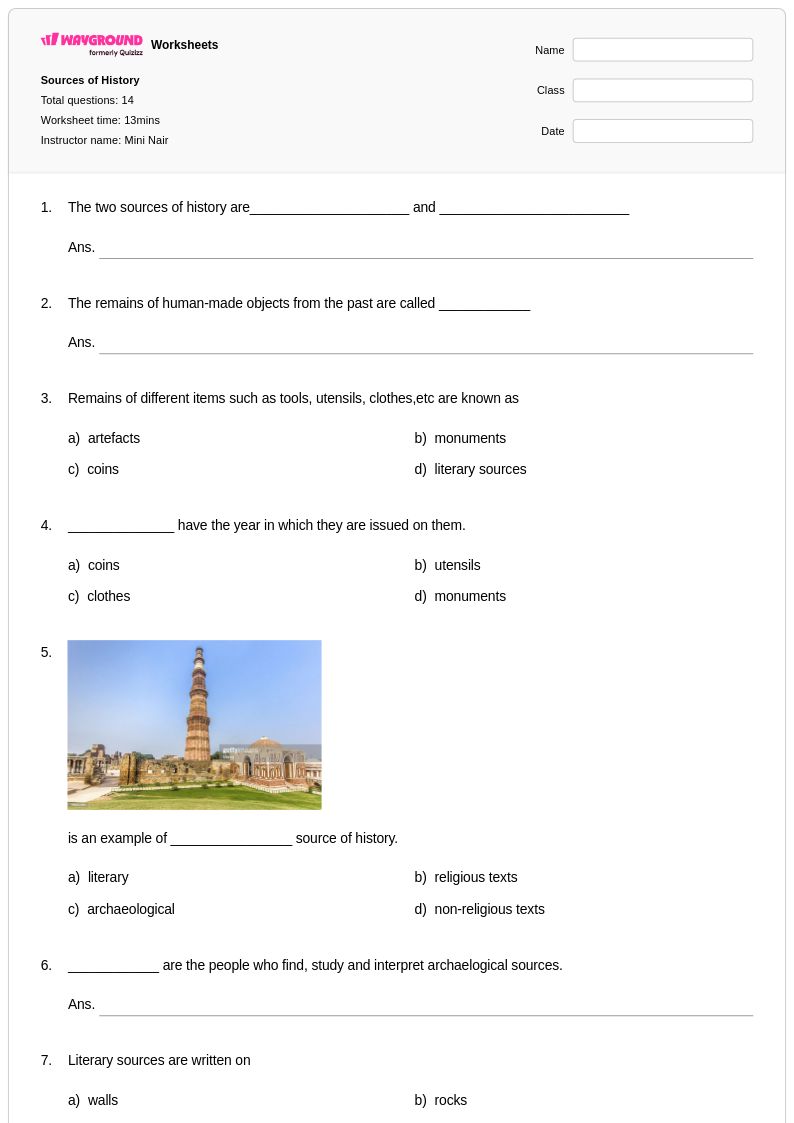
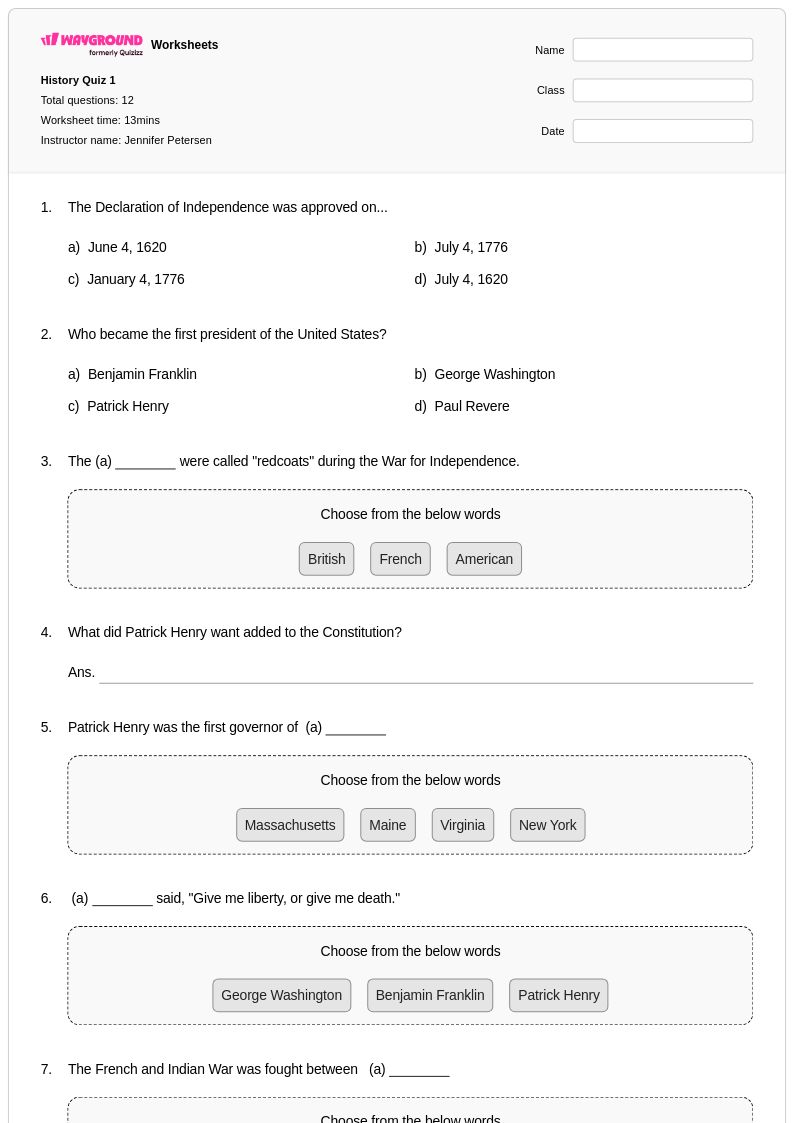
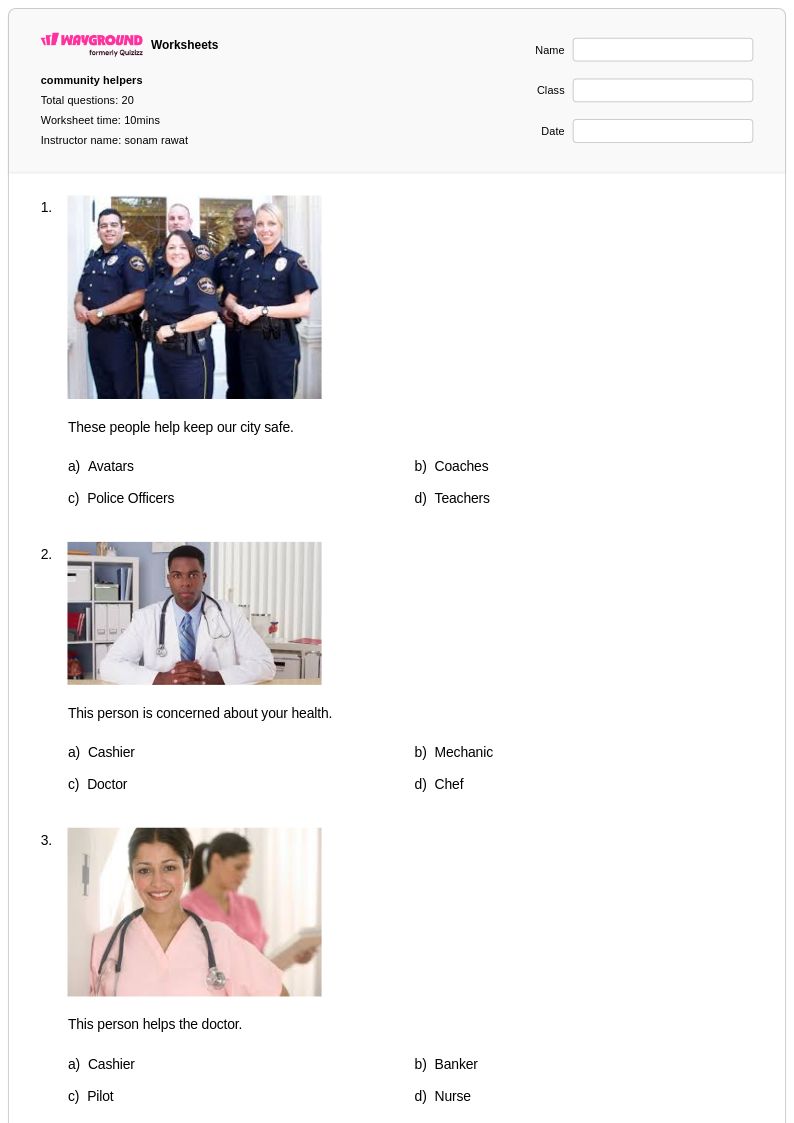
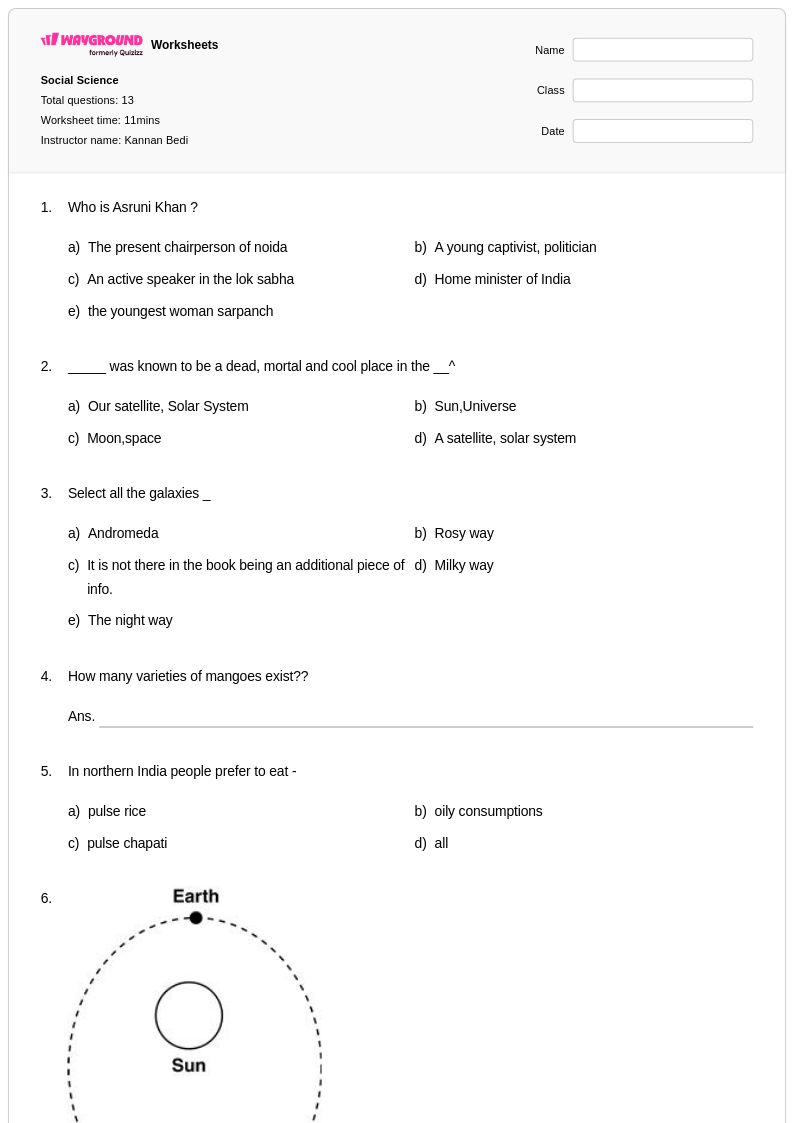
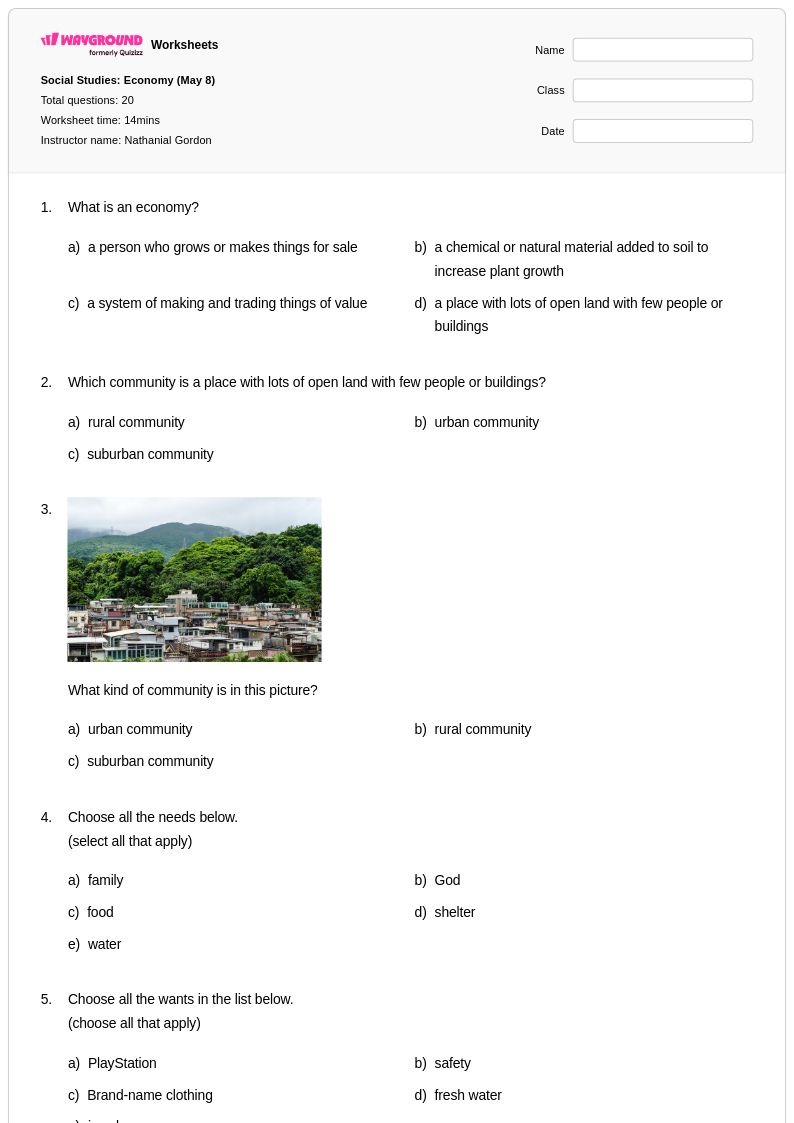
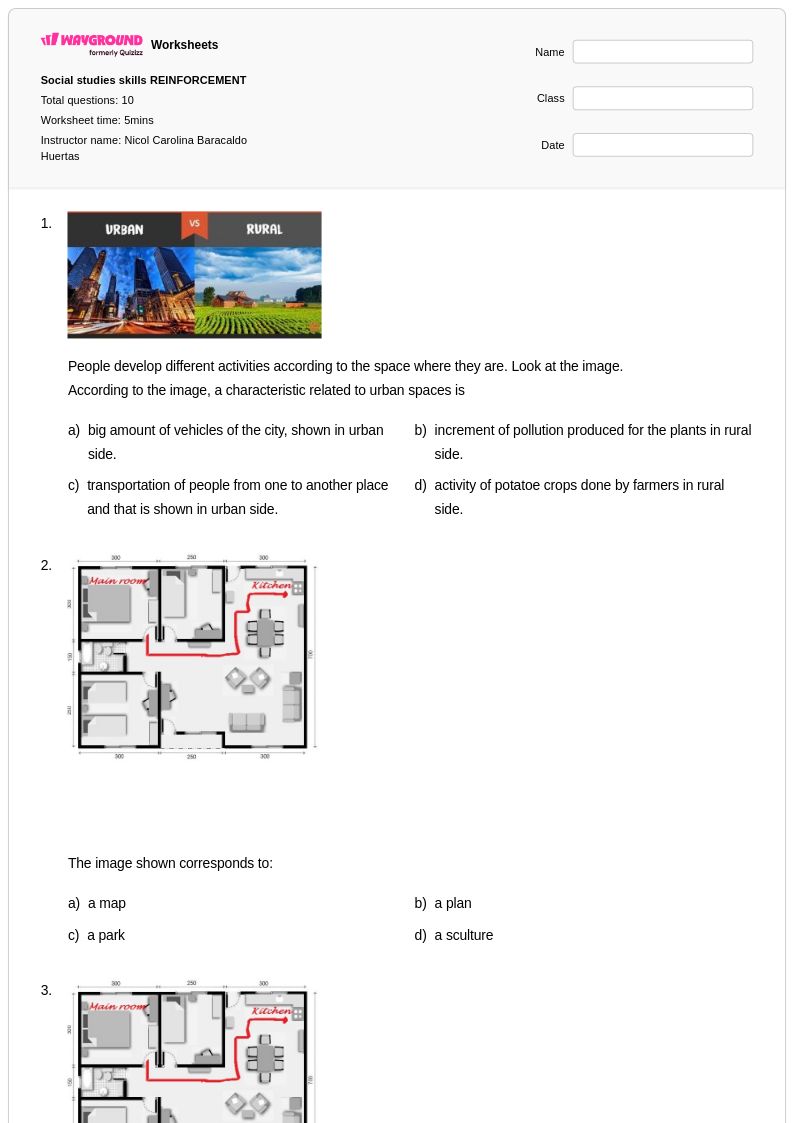
Class 3 social studies worksheets available through Wayground (formerly Quizizz) provide comprehensive educational resources that build foundational understanding of communities, citizenship, geography, and cultural awareness. These expertly designed printables strengthen essential skills including map reading, understanding basic economic concepts, identifying community helpers and their roles, and recognizing important historical figures and events. Students engage with practice problems that develop critical thinking about their place in the world, from understanding family structures and neighborhood dynamics to exploring different cultures and traditions. Each worksheet collection includes detailed answer keys and is available as free pdf downloads, making them accessible for both classroom instruction and independent study while supporting diverse learning needs through varied question formats and visual elements.
Wayground (formerly Quizizz) empowers educators with millions of teacher-created social studies resources specifically designed for third-grade learners, featuring robust search and filtering capabilities that allow quick identification of materials aligned with state and national social studies standards. Teachers benefit from comprehensive differentiation tools that enable customization of worksheets to meet individual student needs, whether for remediation of foundational concepts or enrichment activities for advanced learners. The platform's flexible format options, including both printable pdf versions and digital interactive formats, streamline lesson planning while supporting diverse classroom environments and learning preferences. These extensive collections facilitate targeted skill practice in areas such as civic responsibility, geographic literacy, and historical thinking, enabling educators to provide consistent, high-quality social studies instruction that builds engaged and informed young citizens.
FAQs
How do I teach social studies effectively across multiple topics like history, geography, and civics?
Effective social studies instruction builds connections across disciplines by developing skills like source analysis, map interpretation, chronological thinking, and civic reasoning simultaneously rather than in isolation. Teachers should anchor lessons in primary sources and real-world contexts, then use structured practice to reinforce analytical skills. Rotating between topics — such as pairing a geography unit with an economics concept — helps students see how history, place, and society are interconnected.
What types of exercises help students practice social studies skills like map reading and source analysis?
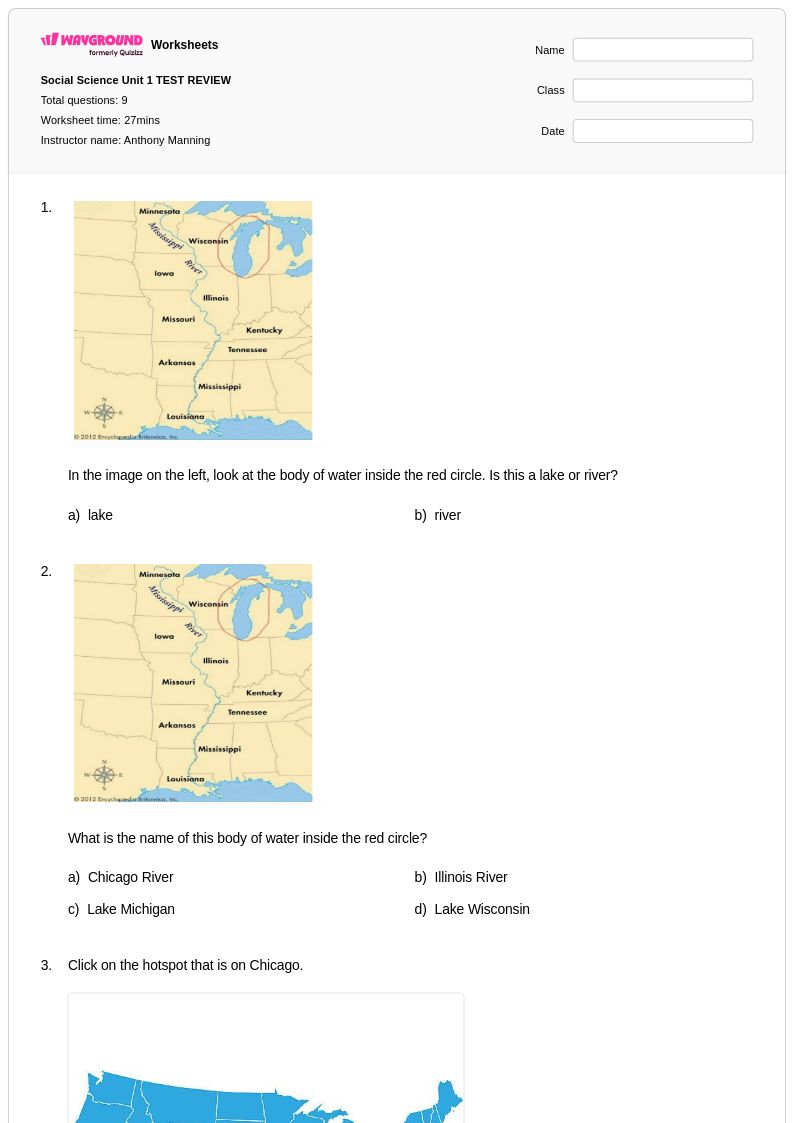
Students build social studies competency through targeted practice with map interpretation exercises, document-based questions, timeline activities, and structured reading tasks that require them to evaluate evidence and draw conclusions. Worksheets that present primary sources alongside guiding questions are especially effective because they train students to analyze rather than just recall information. Regular exposure to these exercise types builds the analytical habits students need across all social studies subfields, from world history to civics and economics.
What are the most common mistakes students make in social studies?
Students frequently confuse correlation with causation in historical events, struggle to distinguish between primary and secondary sources, and apply present-day values when evaluating past cultures or decisions. In geography and economics, a common error is memorizing facts without understanding the underlying systems — for example, knowing country capitals without grasping how location shapes trade or governance. Addressing these misconceptions explicitly through guided analysis tasks helps students develop more accurate and transferable social studies reasoning.
How can I differentiate social studies instruction for students at different learning levels?
Differentiation in social studies works best when the core concept remains consistent but the complexity of the source material or task scaffolding varies by learner. Advanced students can engage with more complex primary sources or open-ended analysis prompts, while struggling learners benefit from graphic organizers, reduced reading loads, and guided question sequences. On Wayground, teachers can apply accommodations such as read aloud support, reduced answer choices, and extended time to individual students, allowing the same worksheet to serve diverse learners without disrupting the rest of the class.
How do I use Wayground's social studies worksheets in my classroom?
Wayground's social studies worksheets are available as printable PDFs for traditional classroom use and in digital formats for technology-integrated or remote learning environments, and teachers can also host them as a live or assigned quiz directly on the Wayground platform. Each worksheet includes a complete answer key, making them practical for independent practice, homework, or formative assessment without requiring additional teacher preparation. The platform's search and filtering tools allow teachers to quickly find resources by topic, such as civics, world history, geography, or economics, and assign them to specific classes or student groups.
How can I use social studies worksheets to assess student understanding of civics and history?
Social studies worksheets that include practice problems aligned to specific learning objectives are effective low-stakes assessment tools for gauging whether students can apply skills like source analysis, map reading, or chronological reasoning rather than simply recall facts. Teachers can use completed worksheets to identify recurring misconceptions — for instance, if multiple students misread a political map or misidentify cause-and-effect relationships in a historical event — and adjust instruction accordingly. Answer keys included with each worksheet allow for efficient review and targeted feedback.