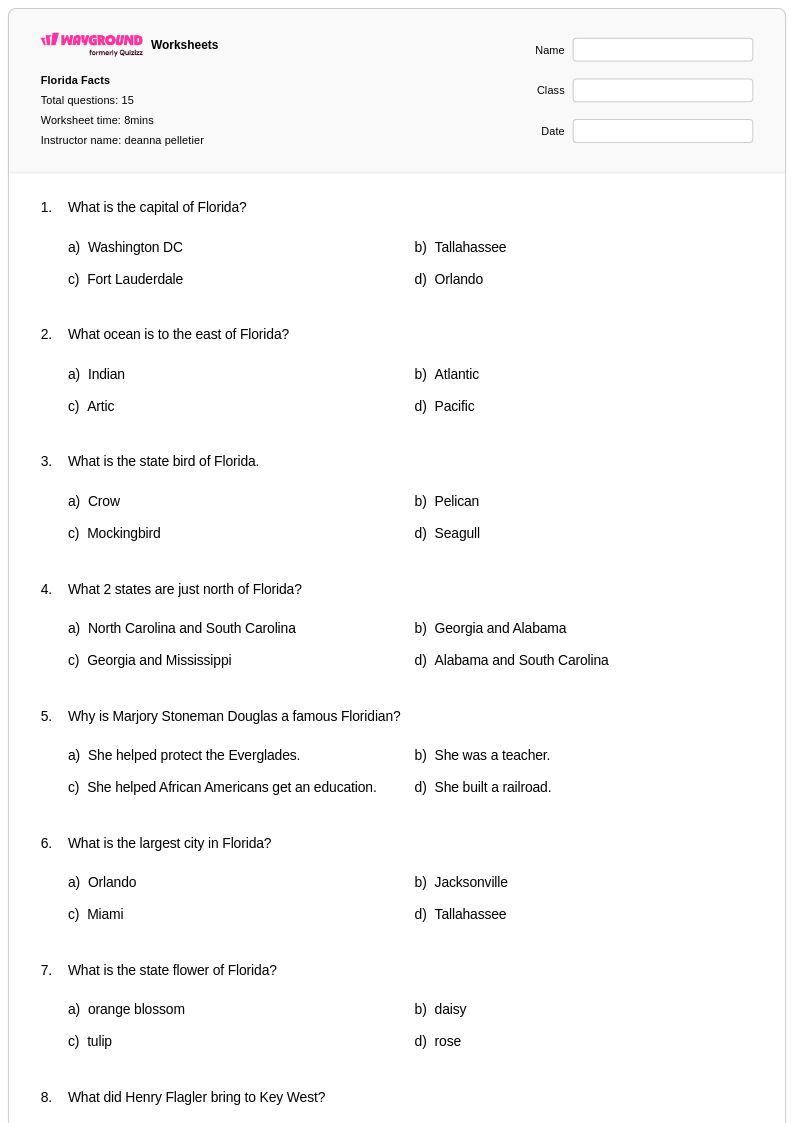
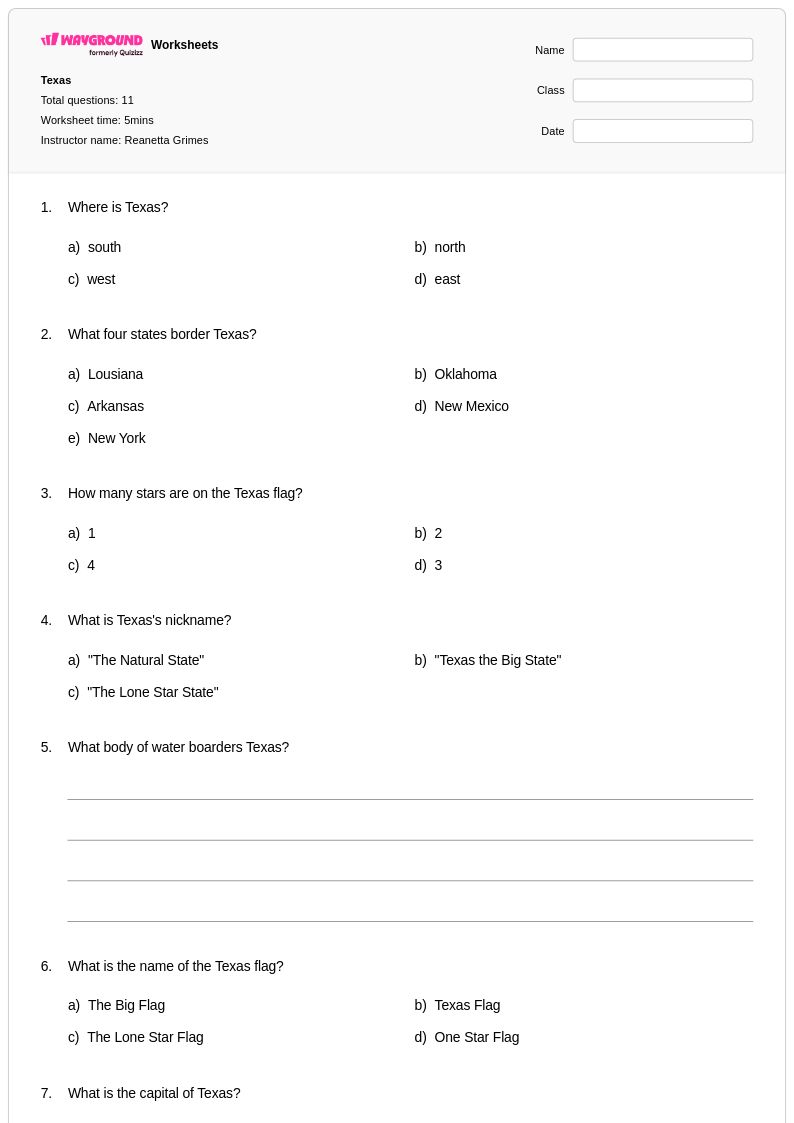
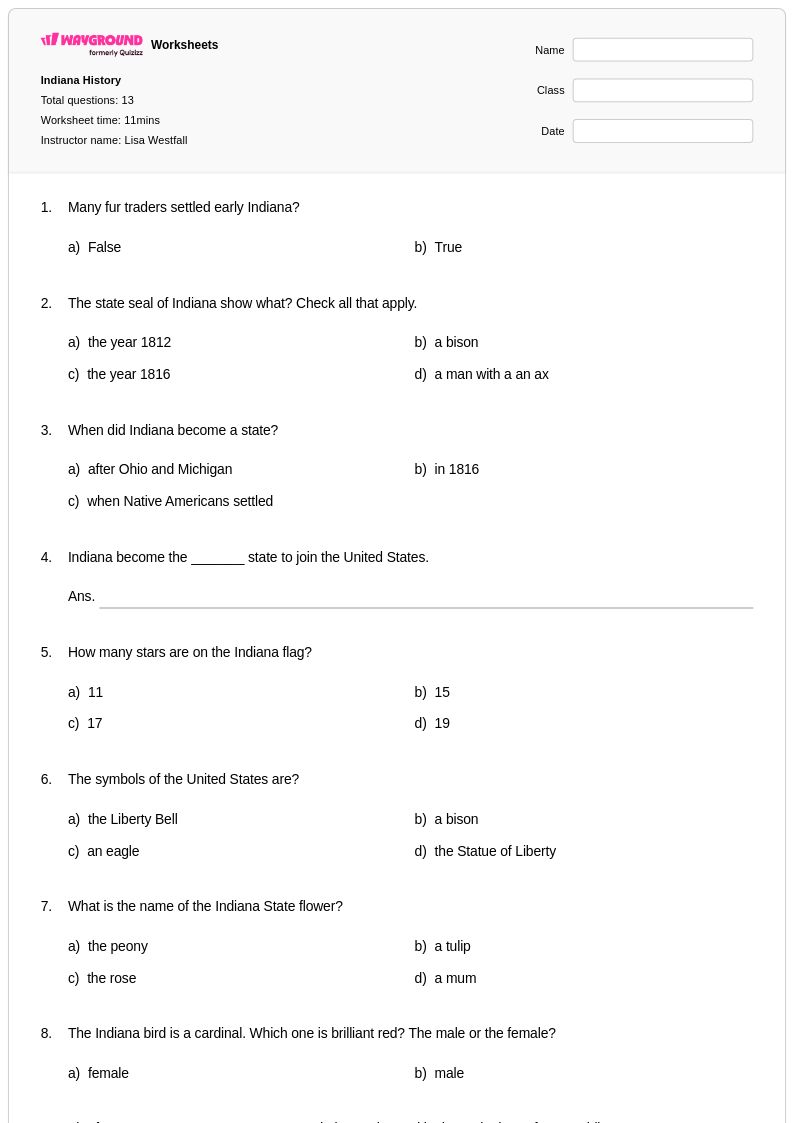
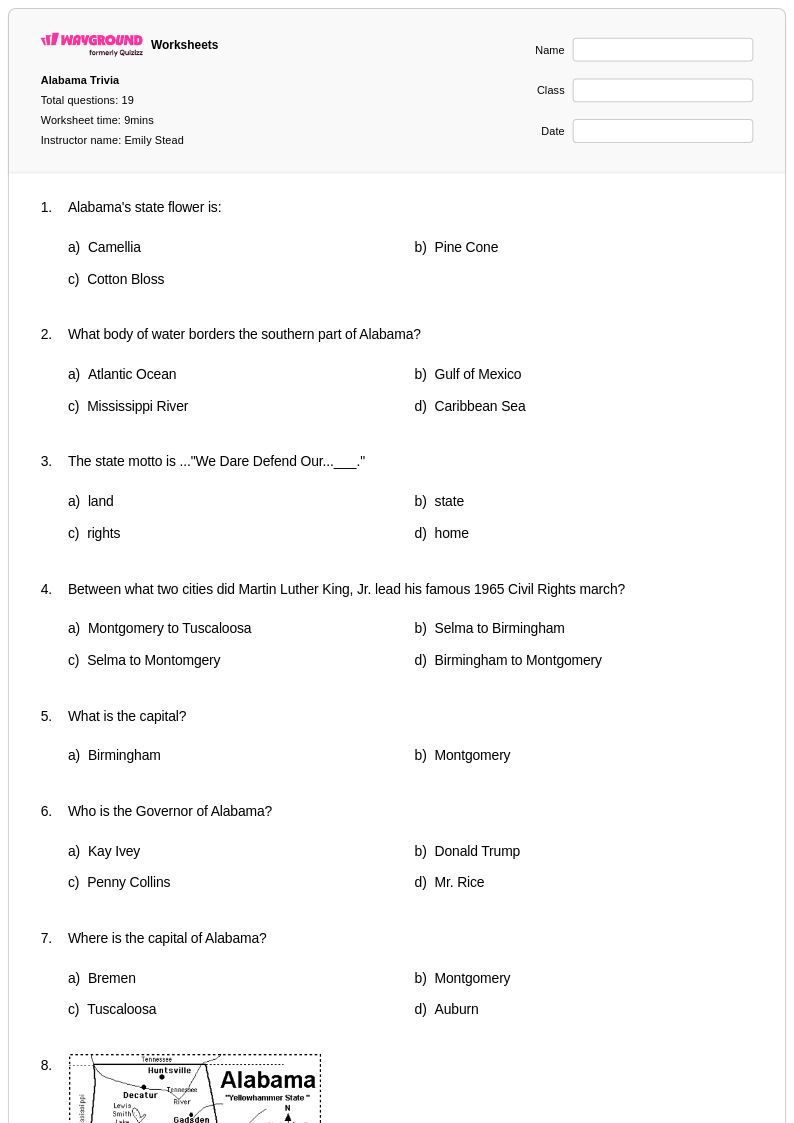
Explore Class 4 state facts worksheets and printables from Wayground that help students learn essential geography information about U.S. states through engaging practice problems, free PDF resources, and comprehensive answer keys.
Explore printable State Facts worksheets for Class 4
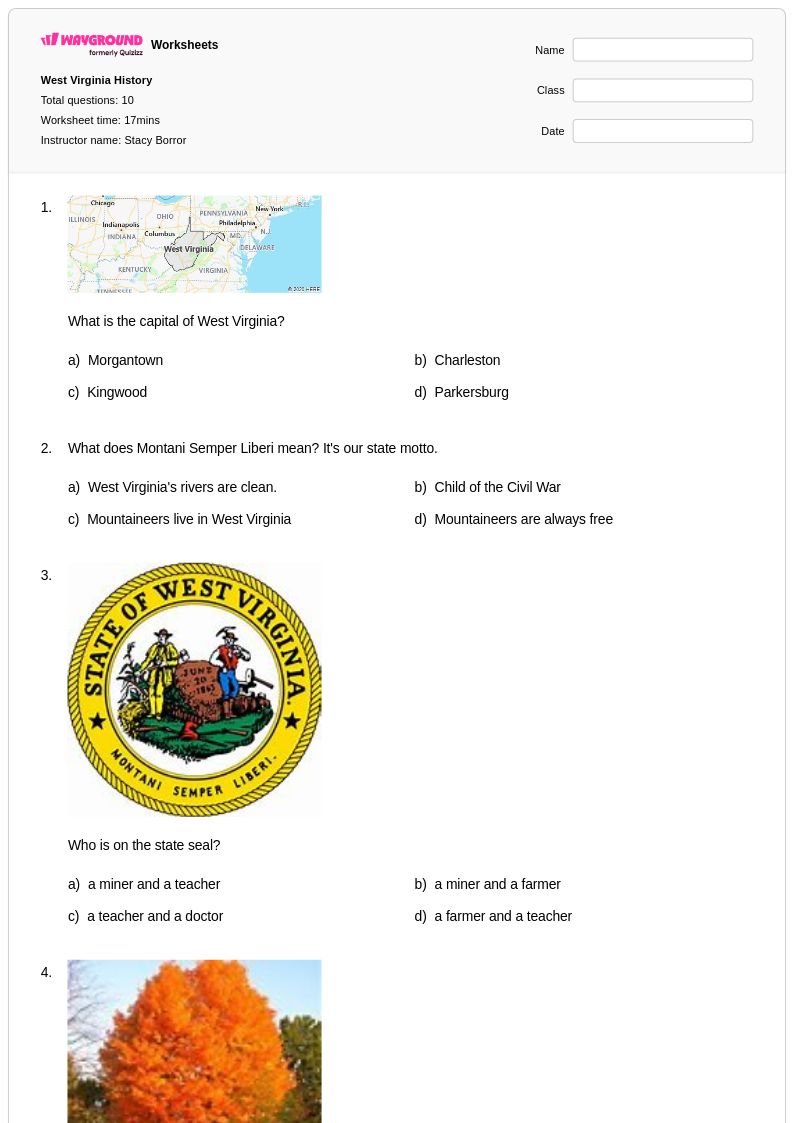
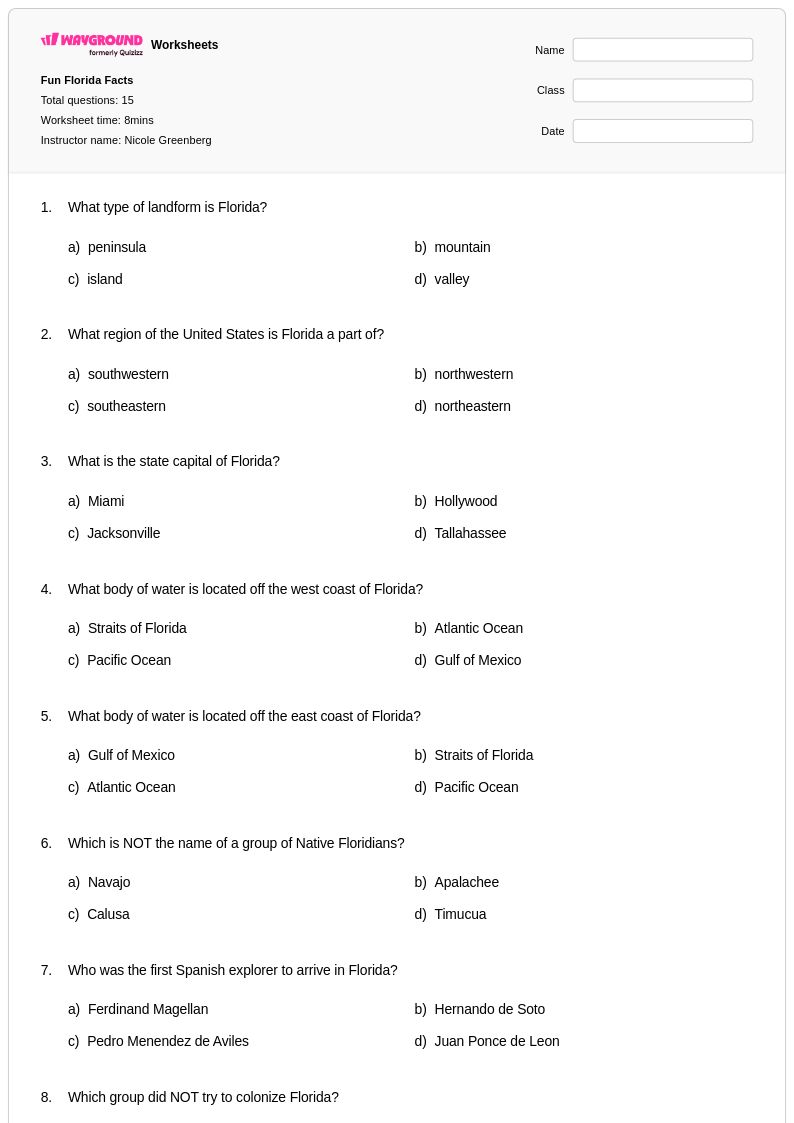
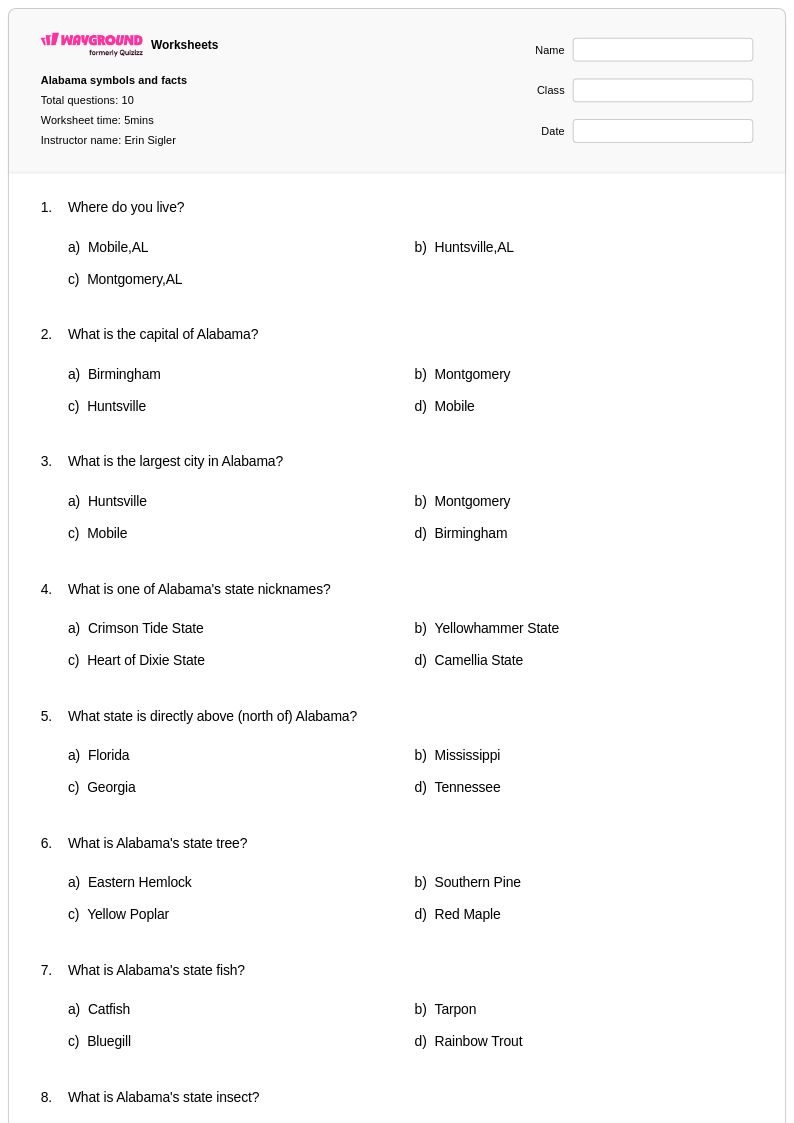
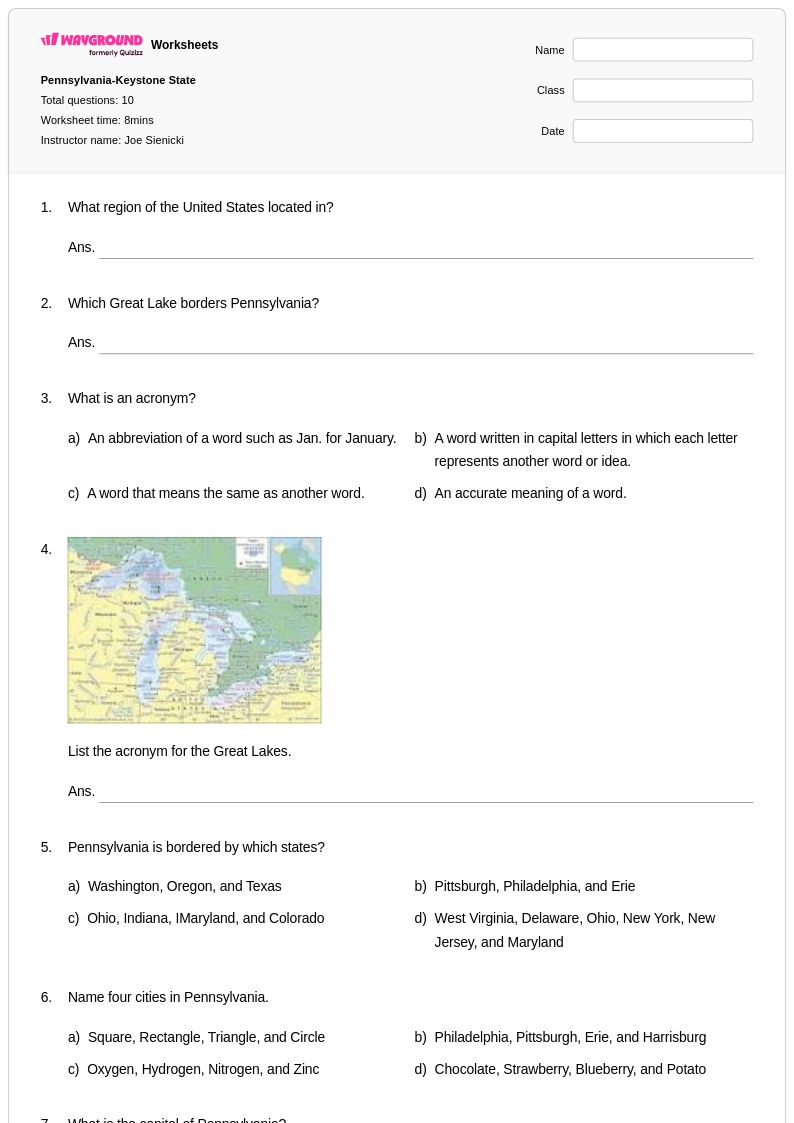
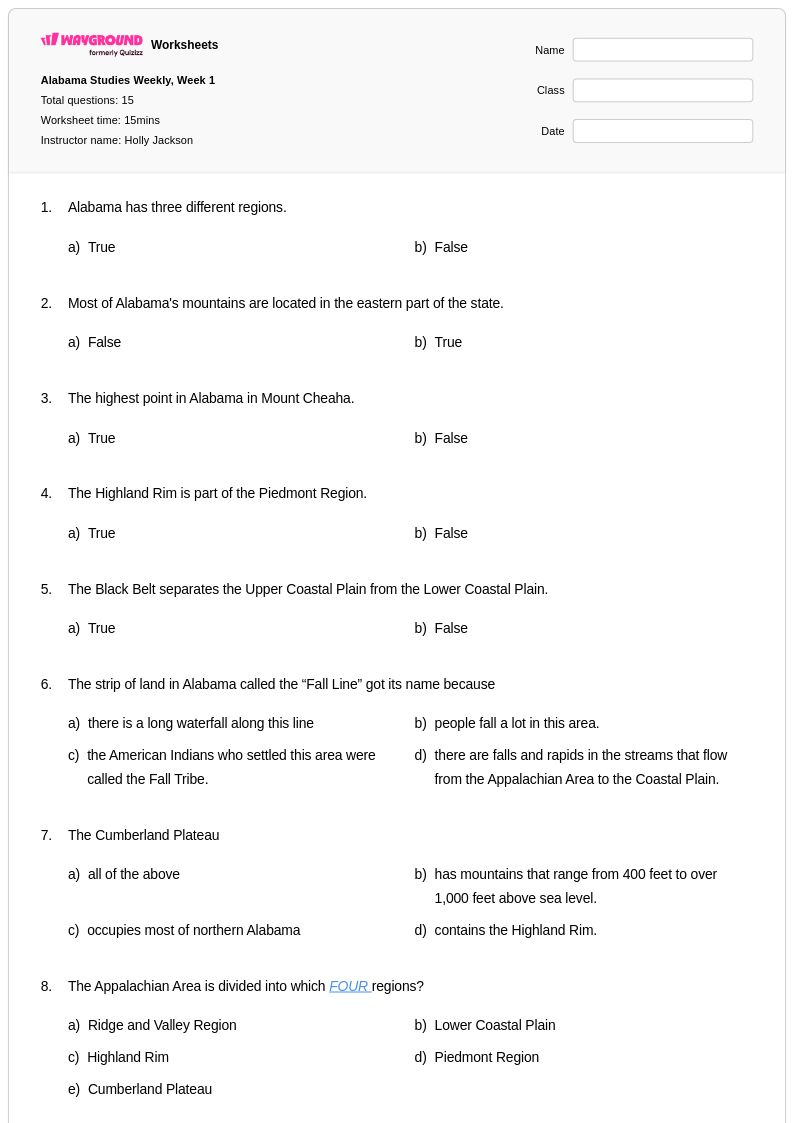
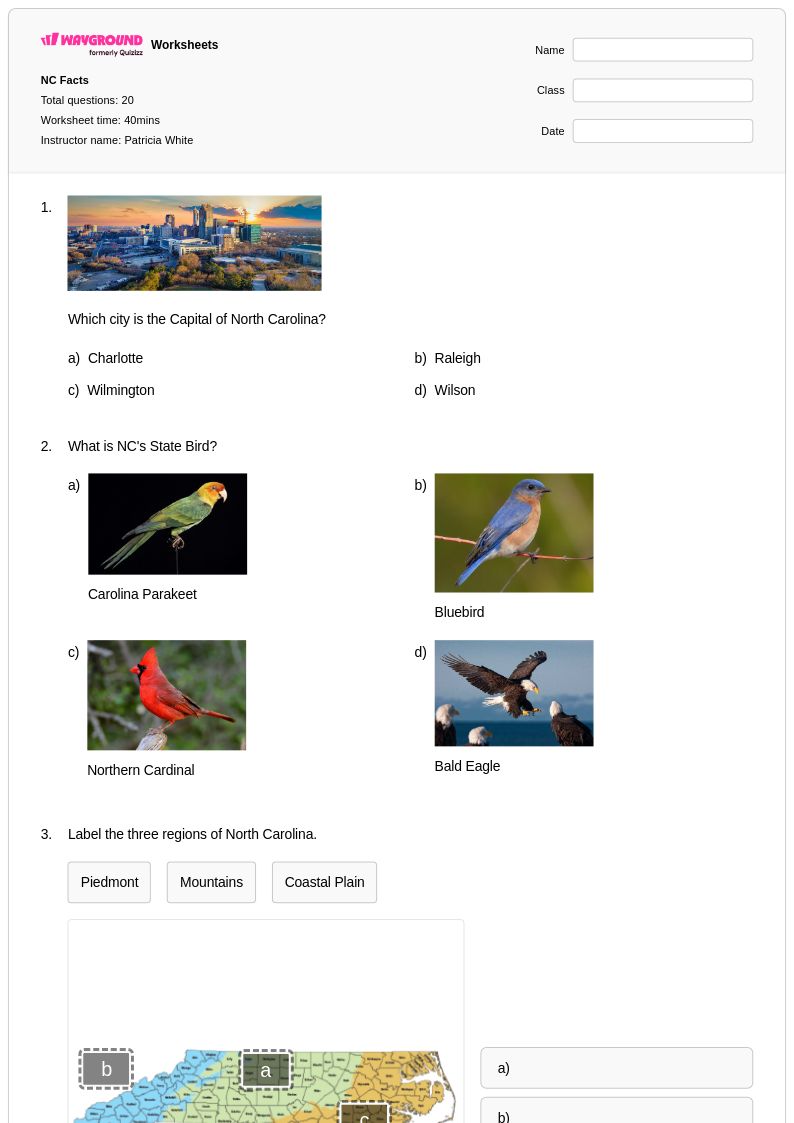
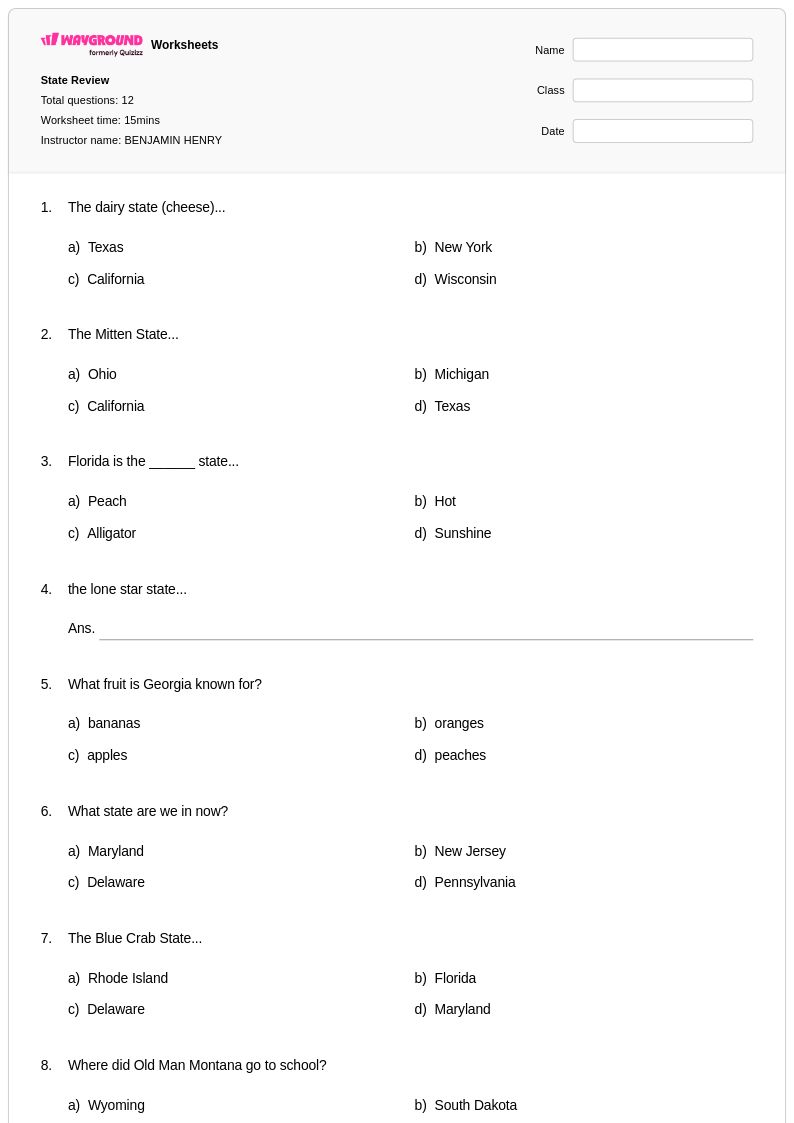
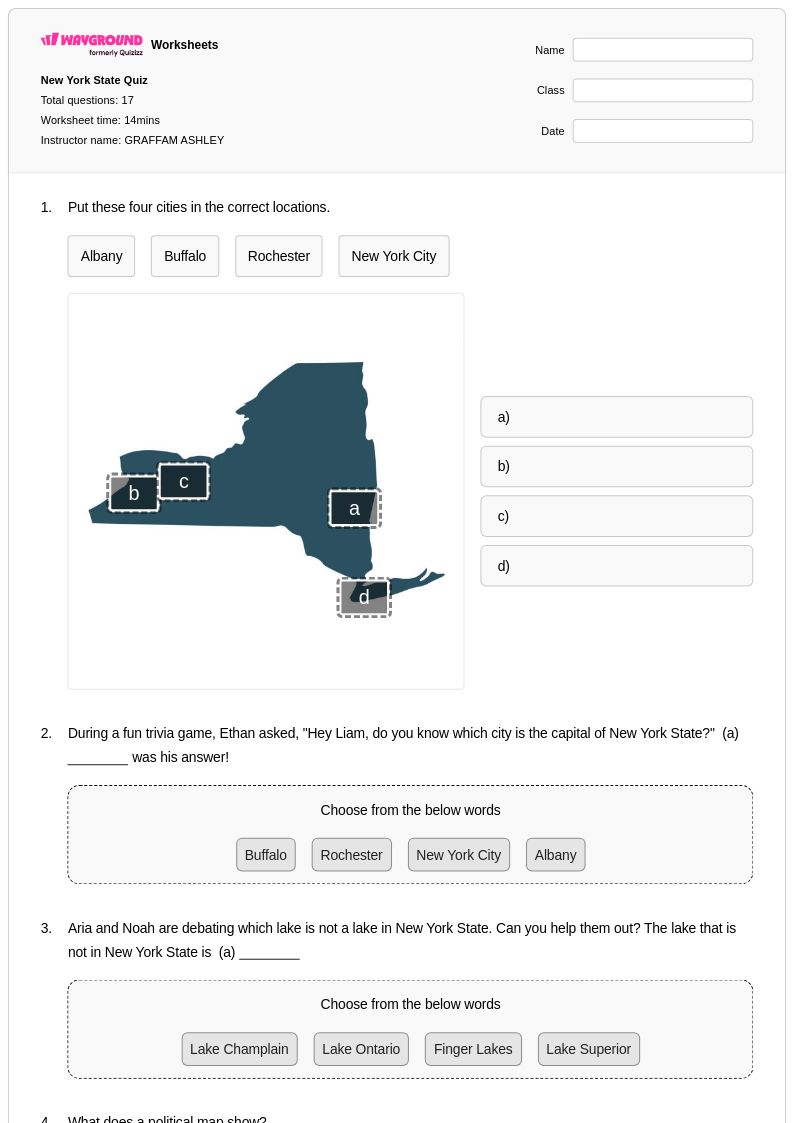
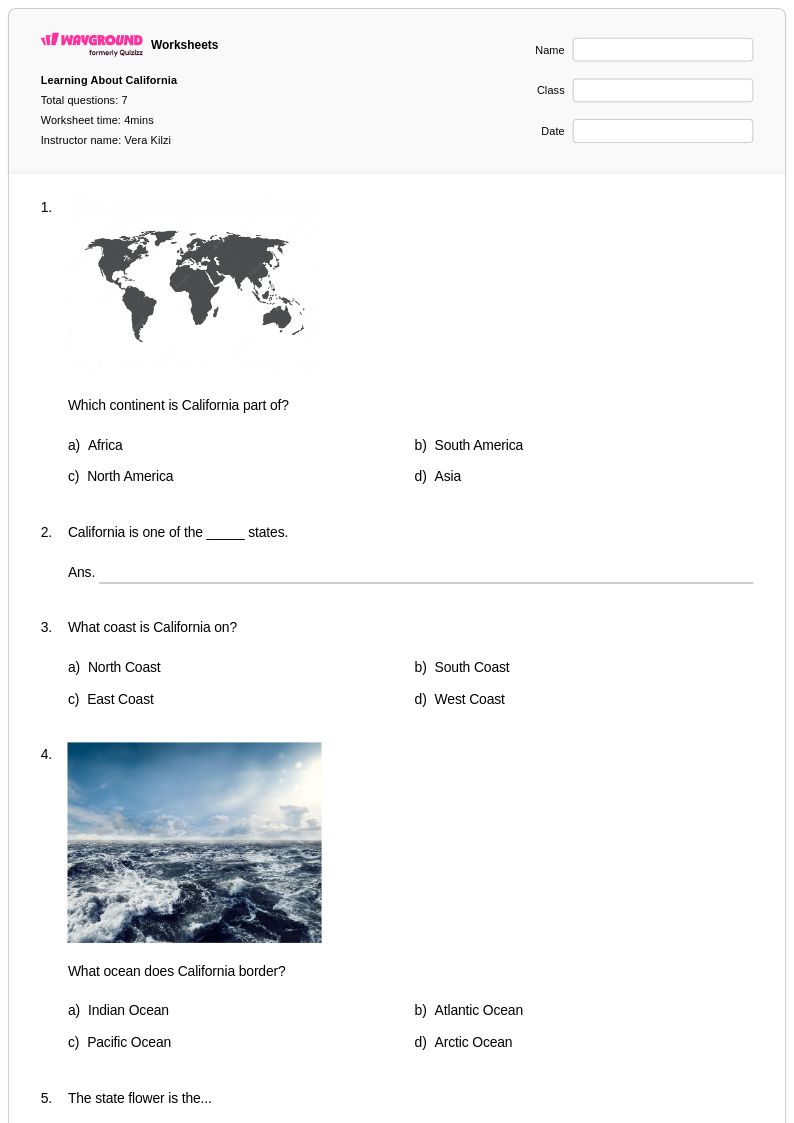
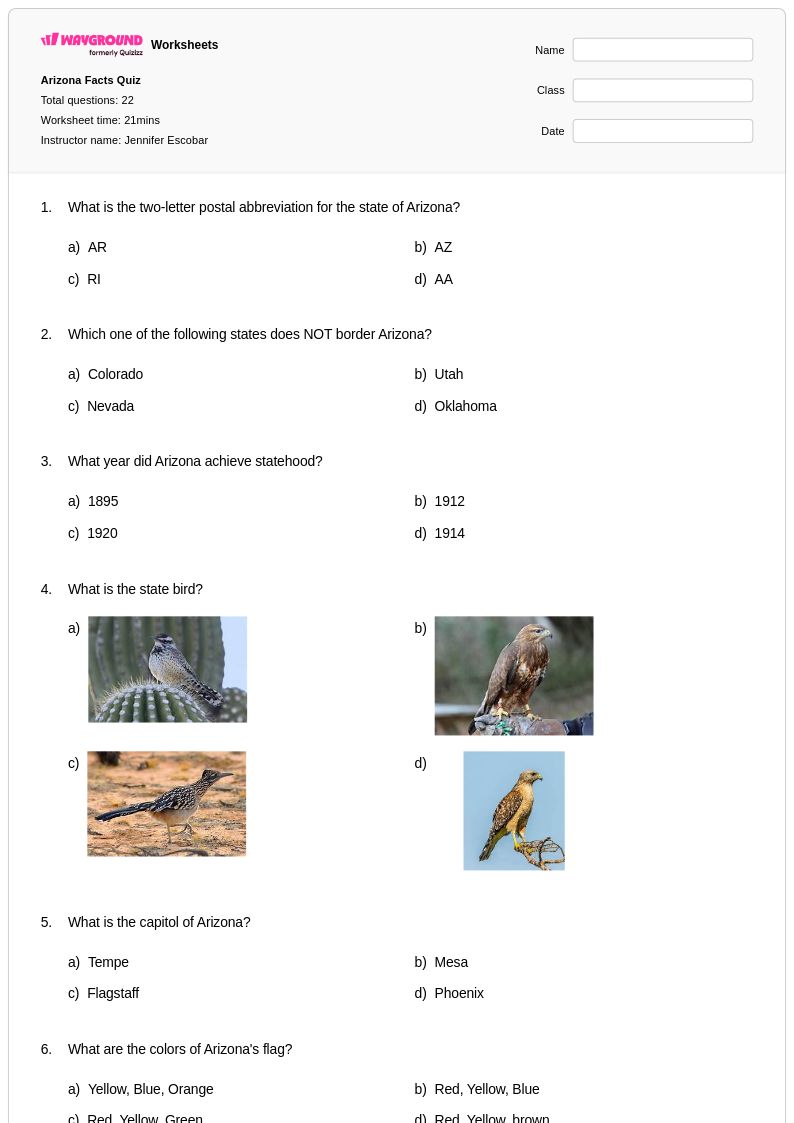
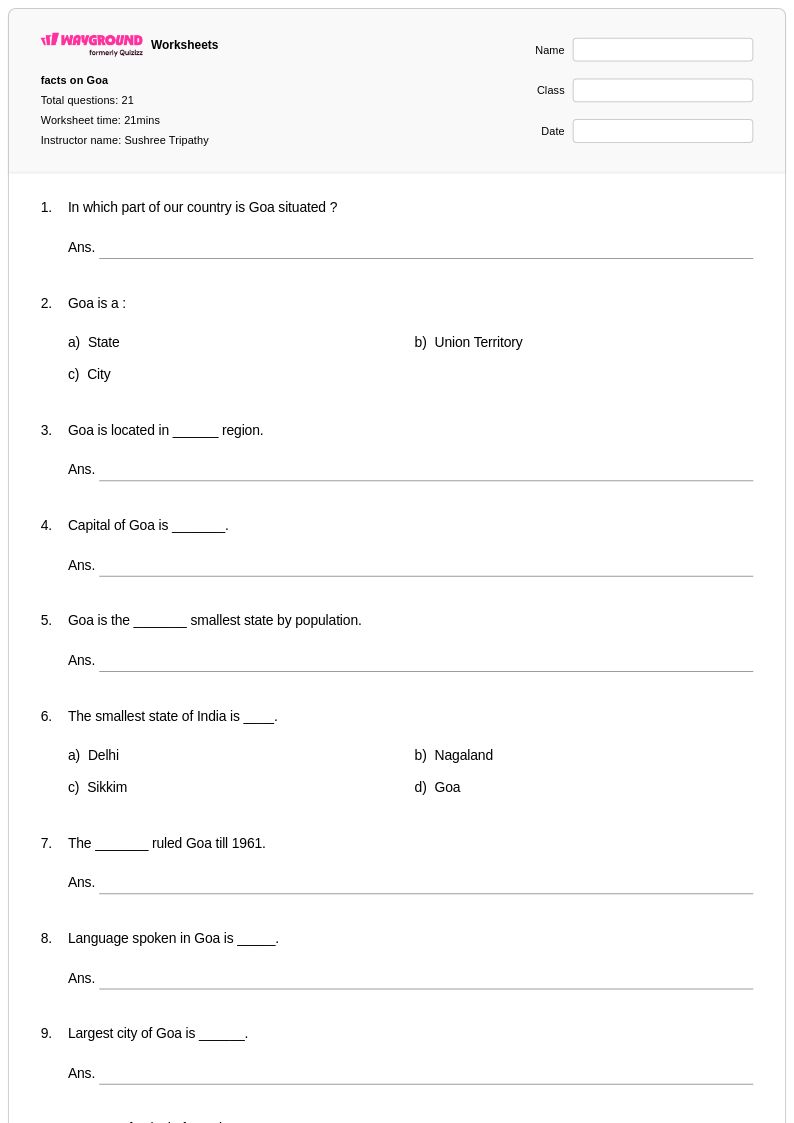
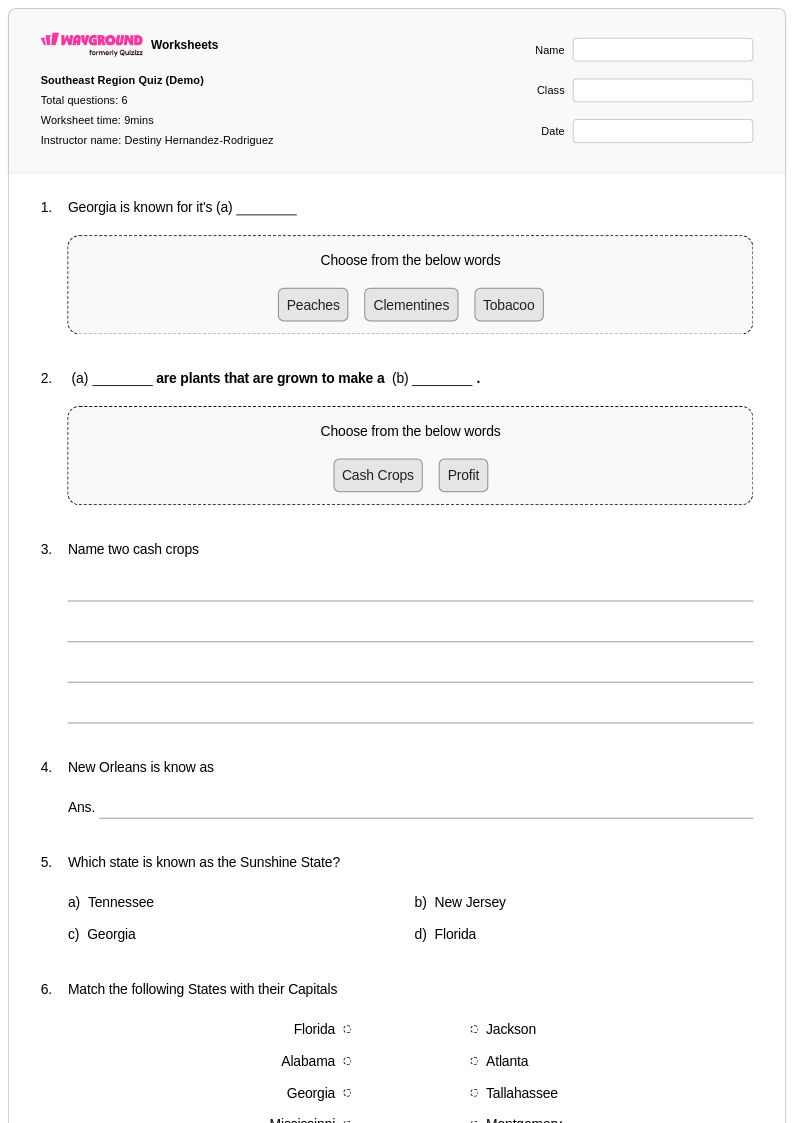
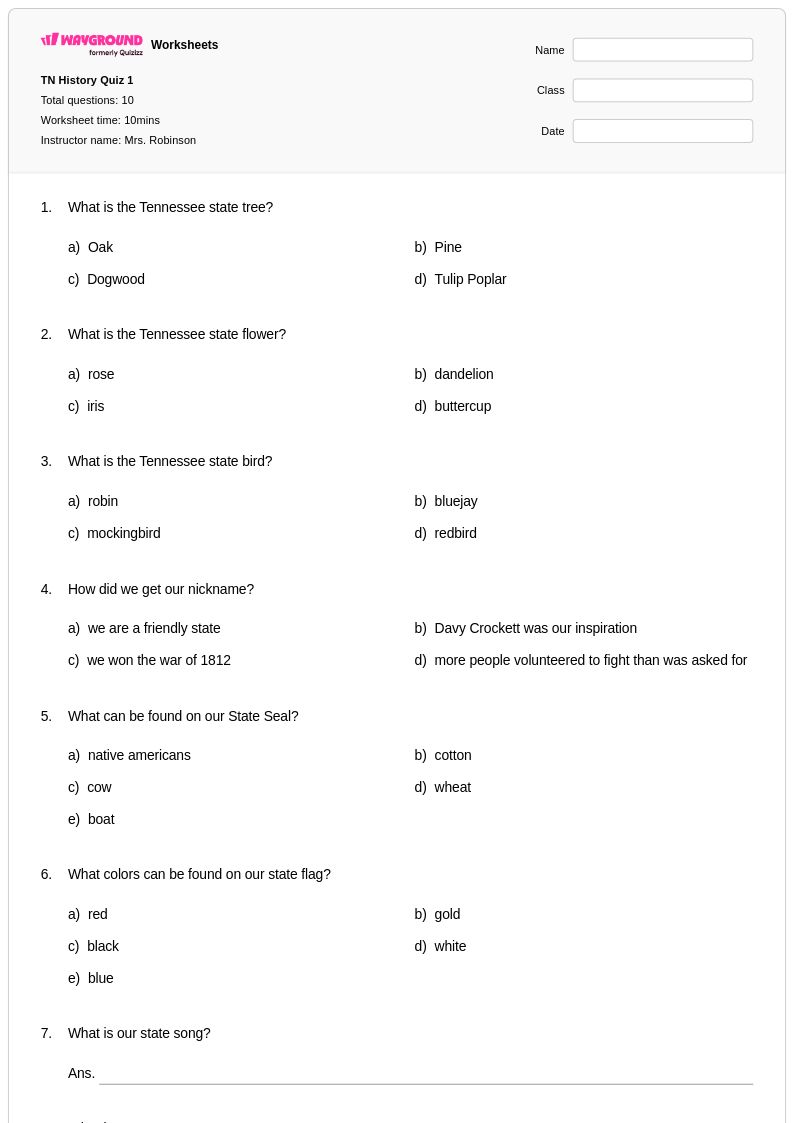
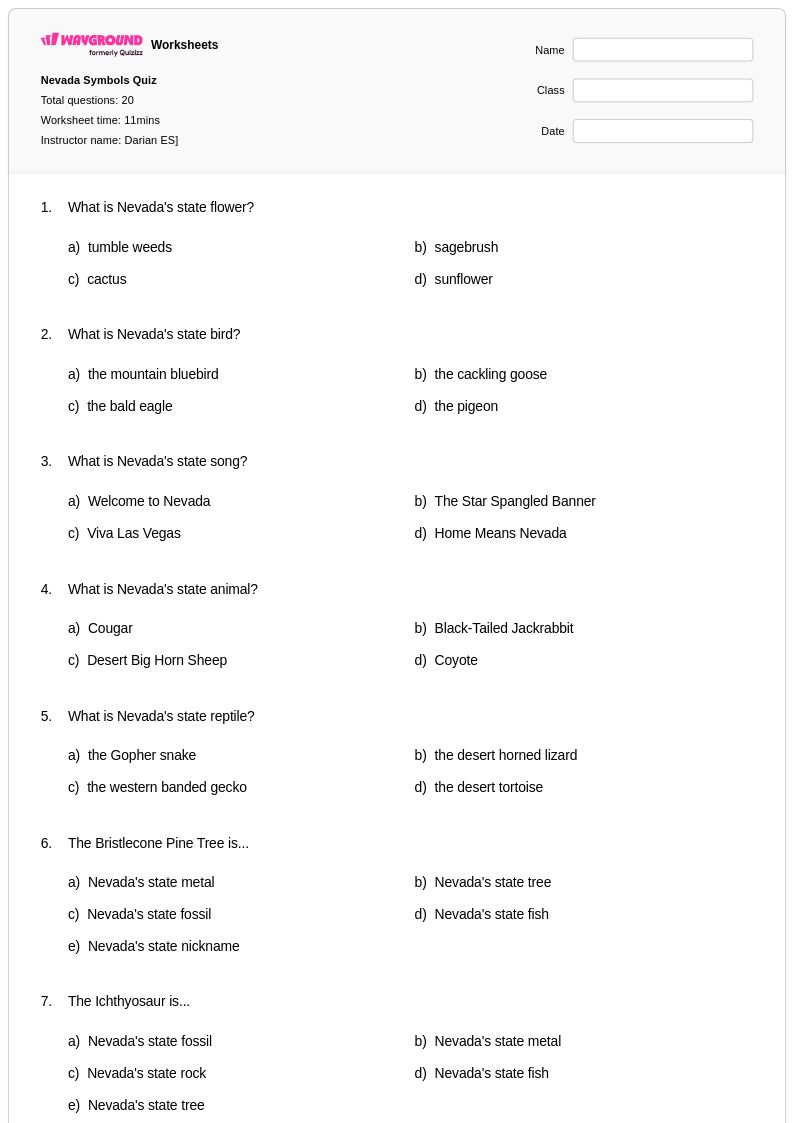
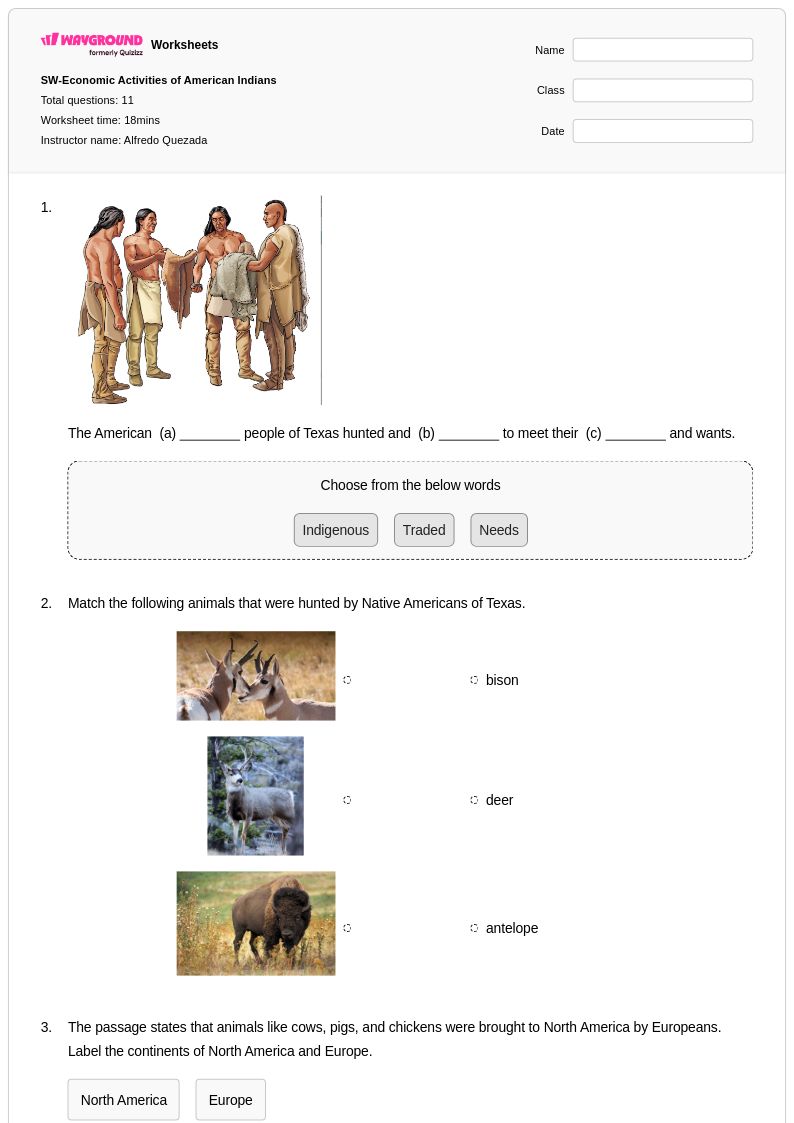
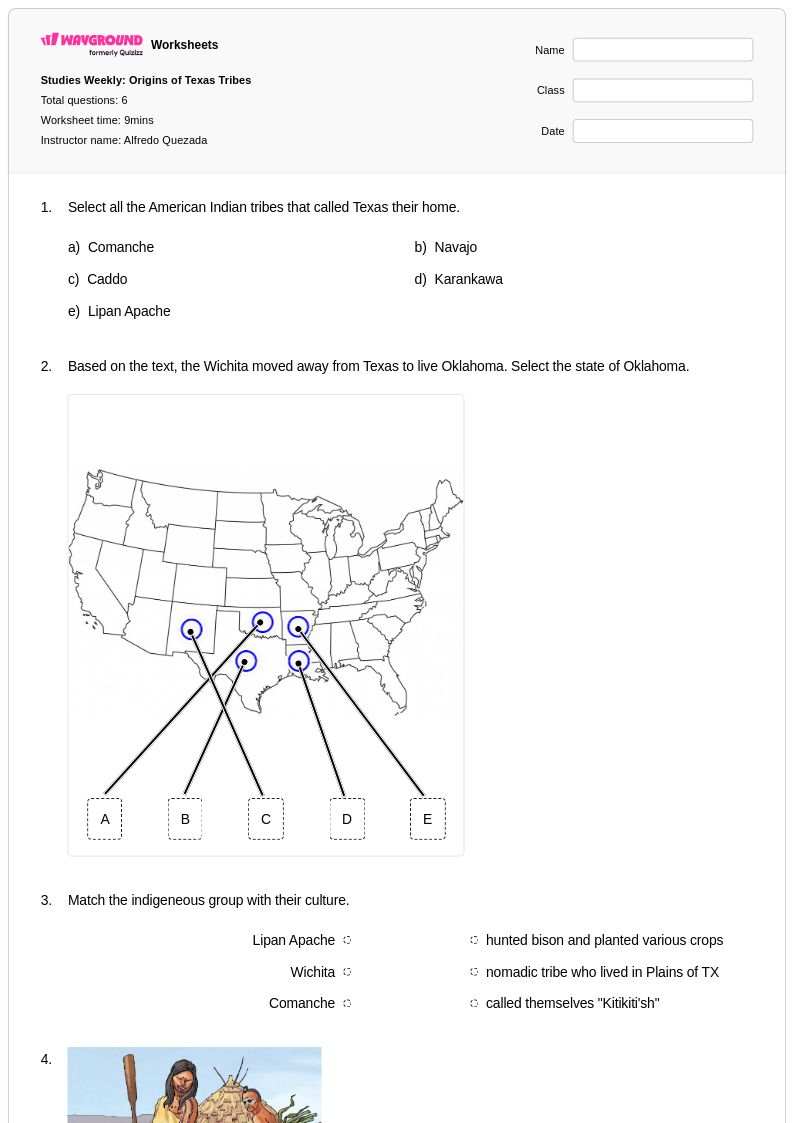
State facts worksheets for Class 4 provide students with engaging opportunities to explore and memorize essential information about the 50 United States, building foundational geography knowledge that supports broader social studies learning. These comprehensive printables challenge fourth-grade learners to identify state capitals, recognize state shapes and locations, understand regional characteristics, and discover unique historical and cultural features that define each state. Through structured practice problems, students develop critical map skills, spatial reasoning abilities, and factual recall that forms the backbone of geographic literacy. Each worksheet comes with a complete answer key, allowing teachers to efficiently assess student progress while providing immediate feedback on areas requiring additional support. These free resources transform state geography from abstract concepts into concrete, memorable learning experiences that prepare students for more advanced geographic studies.
Wayground, formerly Quizizz, empowers educators with an extensive collection of state facts worksheets created by millions of teachers nationwide, ensuring access to diverse, classroom-tested materials that align with state social studies standards. The platform's robust search and filtering capabilities enable teachers to quickly locate worksheets targeting specific states, regions, or geographic concepts, while differentiation tools support varied learning needs within Class 4 classrooms. These customizable resources are available in both printable pdf format and digital versions, providing flexibility for traditional classroom instruction, homework assignments, remediation sessions, and enrichment activities. Teachers can modify existing worksheets or combine multiple resources to create comprehensive state geography units that reinforce map skills, boost factual knowledge retention, and accommodate different learning styles, making state facts instruction both systematic and engaging for elementary students.
FAQs
How do I teach state facts to elementary and middle school students?
Teaching state facts works best when students build knowledge incrementally, starting with state locations and capitals before moving to symbols, physical features, and demographic data. Anchor each lesson in a region rather than trying to cover all fifty states at once, since regional groupings give students a geographic framework that makes individual facts easier to retain. Pairing map activities with factual recall tasks reinforces both spatial and content knowledge simultaneously.
What exercises help students practice identifying state capitals and geographic features?
Effective practice exercises include matching capitals to states, labeling blank US maps with state names and major cities, and comparing physical features across regions. Tasks that require students to analyze population trends or identify bordering states build geographic literacy beyond simple memorization. Rotating between identification, matching, and short-answer formats prevents rote learning and keeps practice purposeful.
What mistakes do students commonly make when learning state facts?
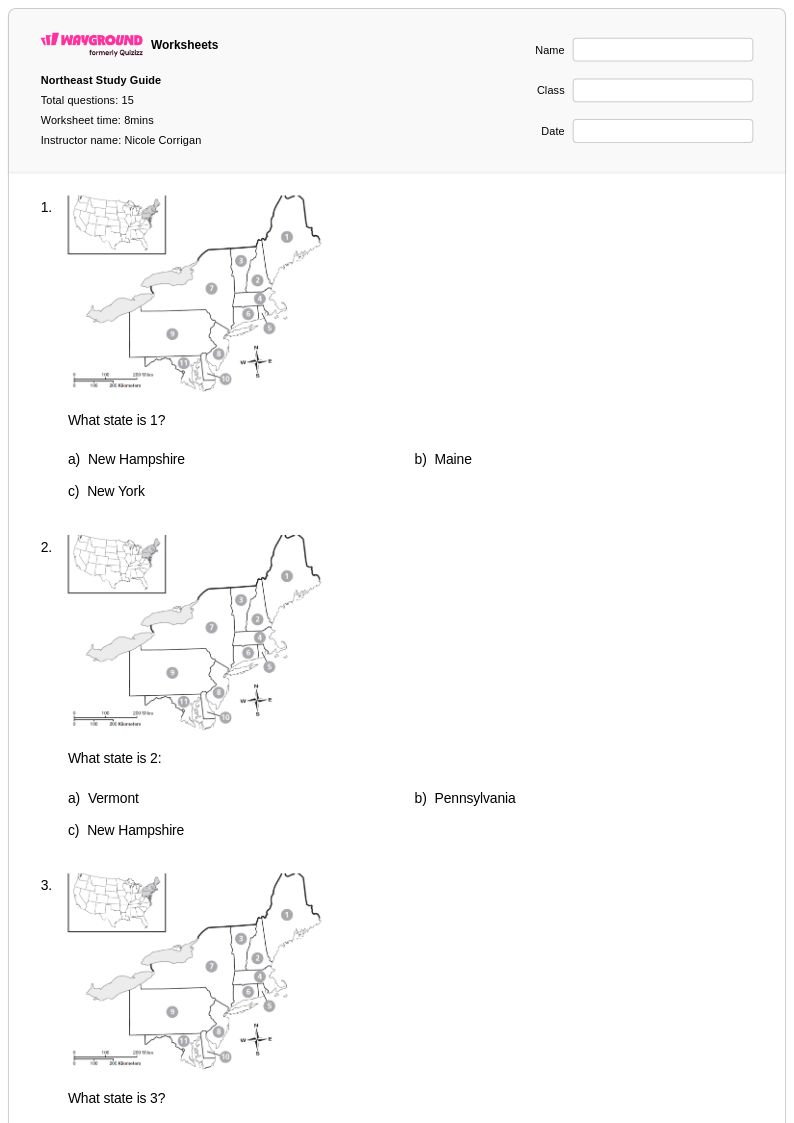
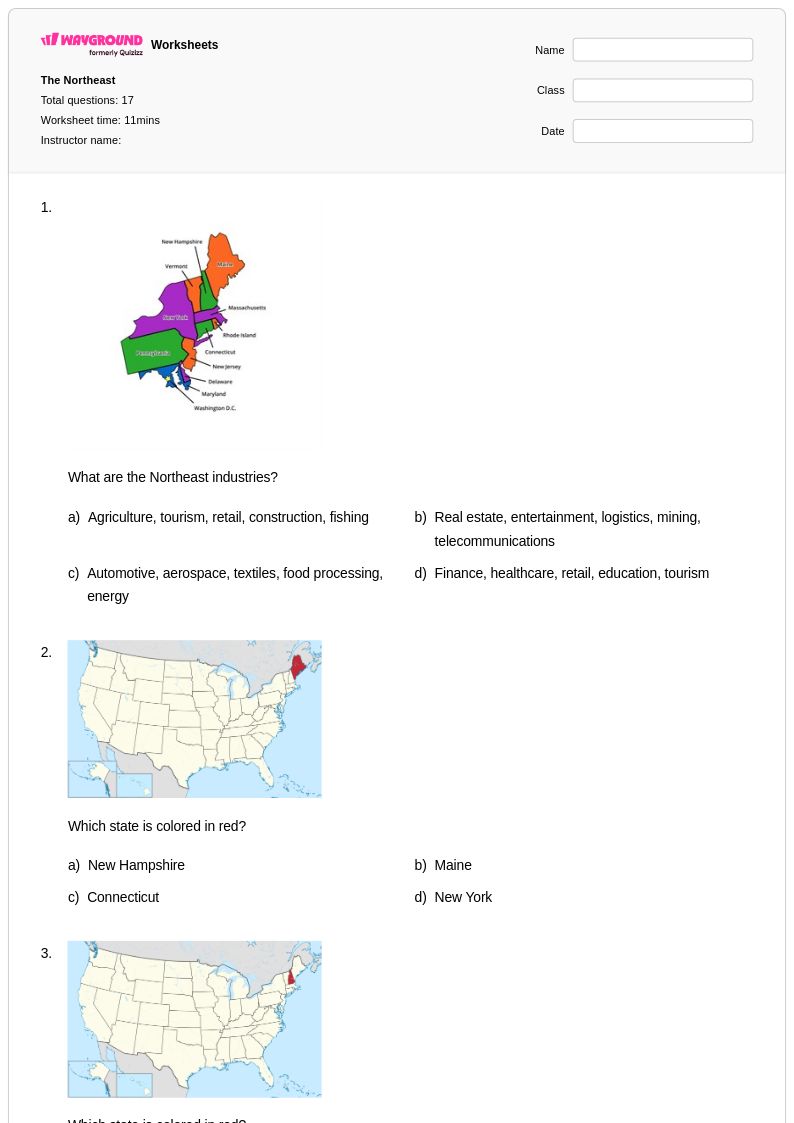
Students frequently confuse states that share similar names, borders, or geographic characteristics, such as mixing up Vermont and New Hampshire or misplacing Midwestern states on a map. Another common error is conflating a state's largest city with its capital, since many state capitals are not the most populous city in the state. Regular low-stakes practice with blank maps and capital-matching tasks helps correct these patterns before they become entrenched.
How can I differentiate state facts instruction for students with different ability levels?
For students who need additional support, reduce the number of states covered at one time and focus on high-frequency facts such as capitals and regions before introducing symbols or demographic data. Wayground allows teachers to assign individual accommodations including read-aloud support for students who struggle with text-heavy content, reduced answer choices to lower cognitive load, and extended time for students who need it. These settings apply per student without notifying the rest of the class, so differentiation happens seamlessly within a shared assignment.
How do I use Wayground's state facts worksheets in my classroom?
Wayground's state facts worksheets are available as printable PDFs for traditional classroom use and in digital formats for technology-integrated instruction, giving teachers flexibility depending on their setup. Teachers can assign worksheets digitally as a quiz hosted on Wayground, use printed versions for independent practice or homework, or incorporate them into lesson reviews and remediation sessions. Each worksheet includes a detailed answer key, so students can self-check during independent work or teachers can use them for fast formative assessment.
How do I assess whether students have mastered state facts?
Assessment should go beyond recall and ask students to apply their knowledge, for example by analyzing why certain states have particular geographic or demographic characteristics or comparing two states across multiple categories. Common indicators of mastery include accurately locating states on a blank map, correctly matching capitals without prompting, and explaining the significance of physical features or state symbols in context. Short written responses asking students to describe a state using three or more fact categories reveal whether knowledge is connected or isolated.