
Recommended Topics for you
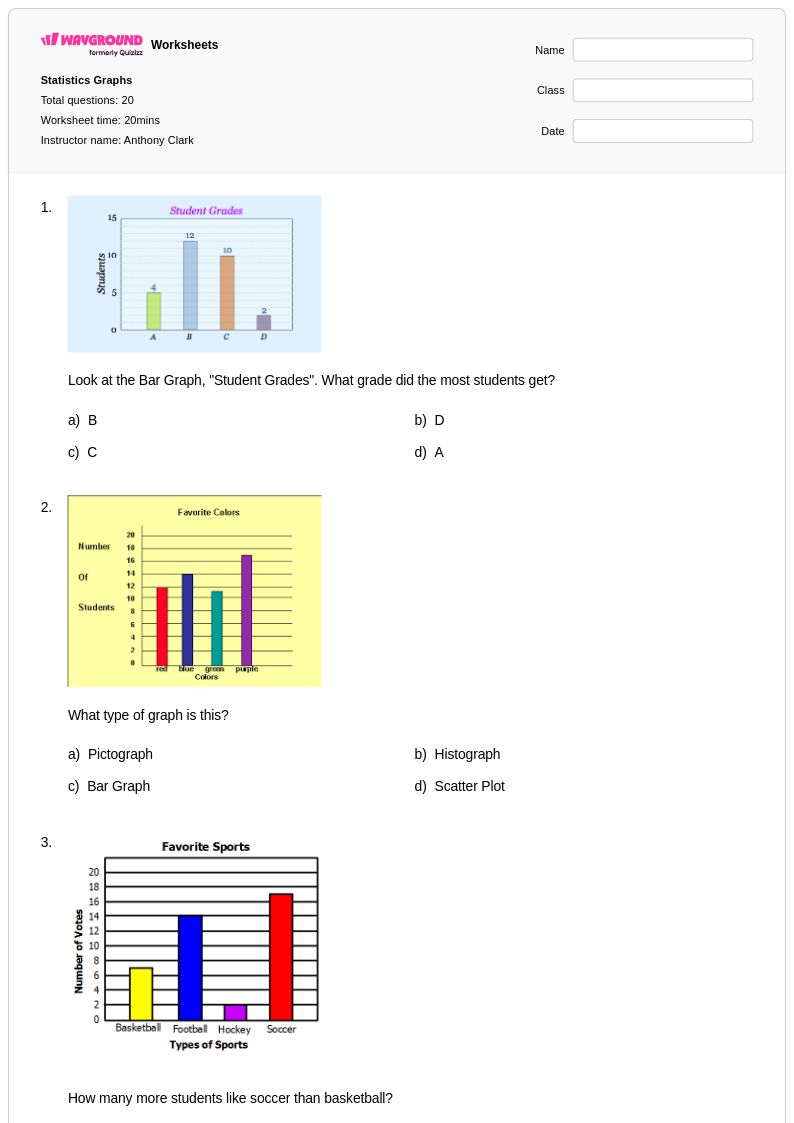
20 Q
6th - Uni
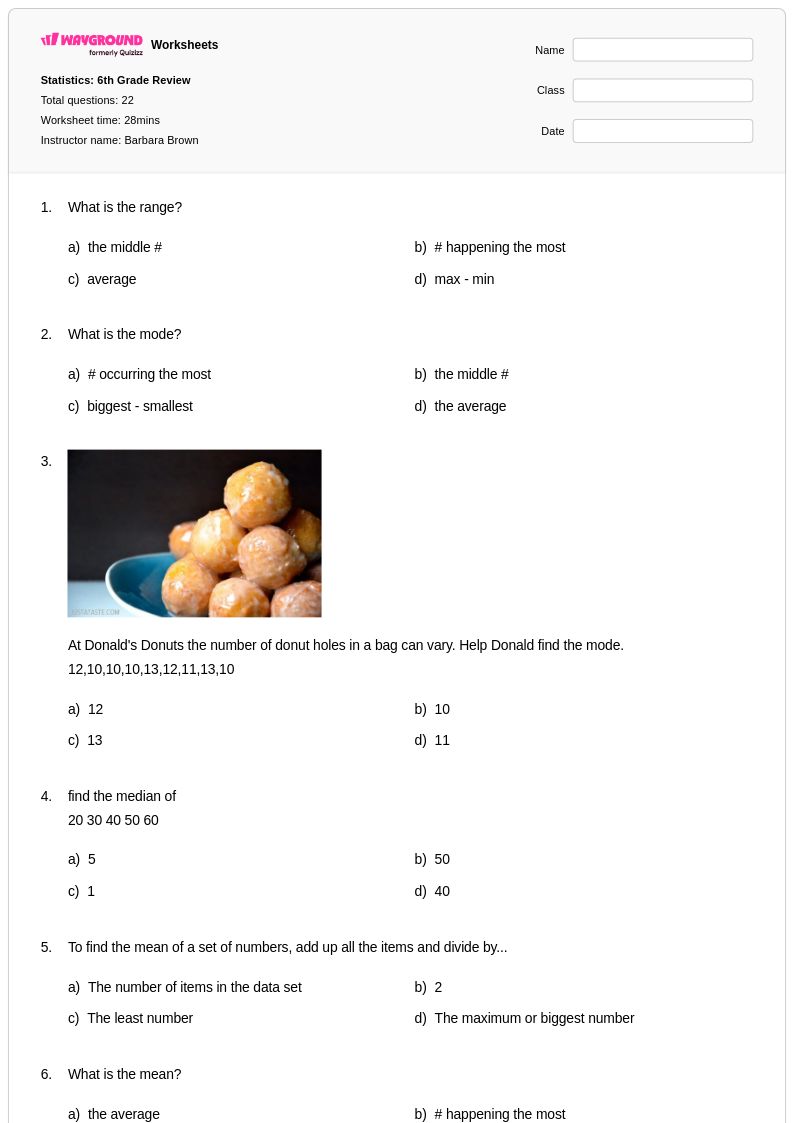
22 Q
6th
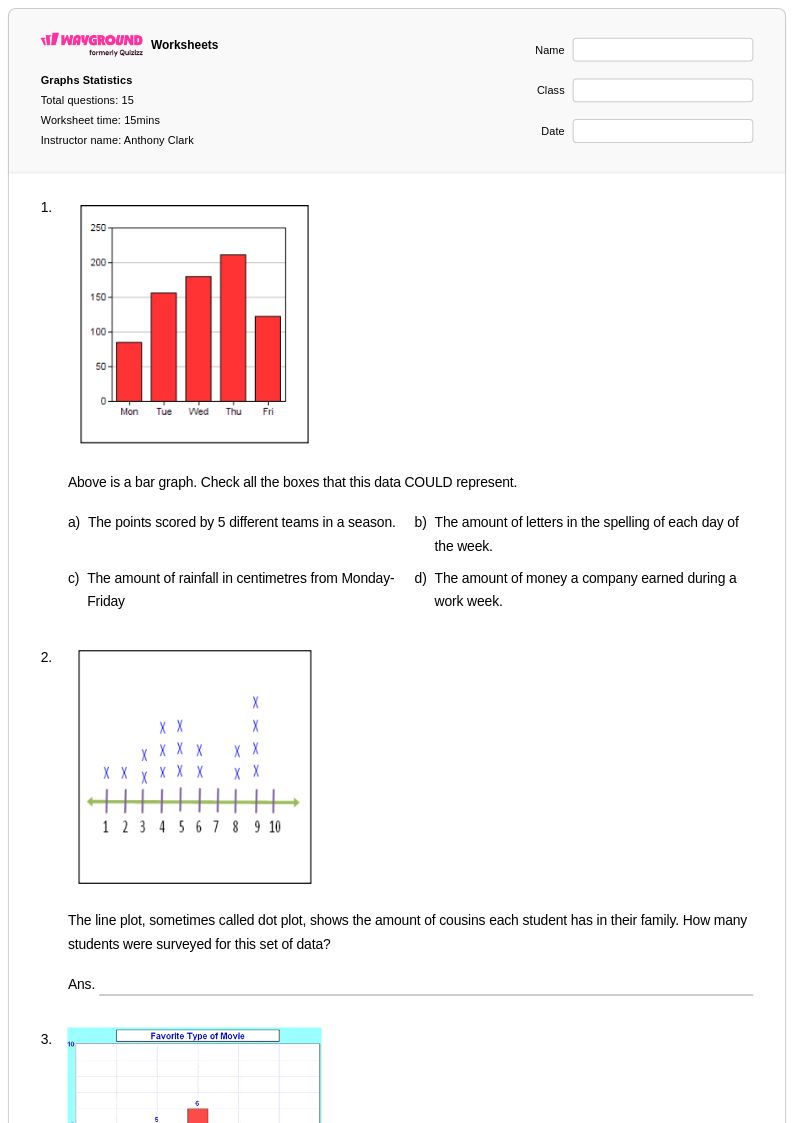
15 Q
6th - Uni
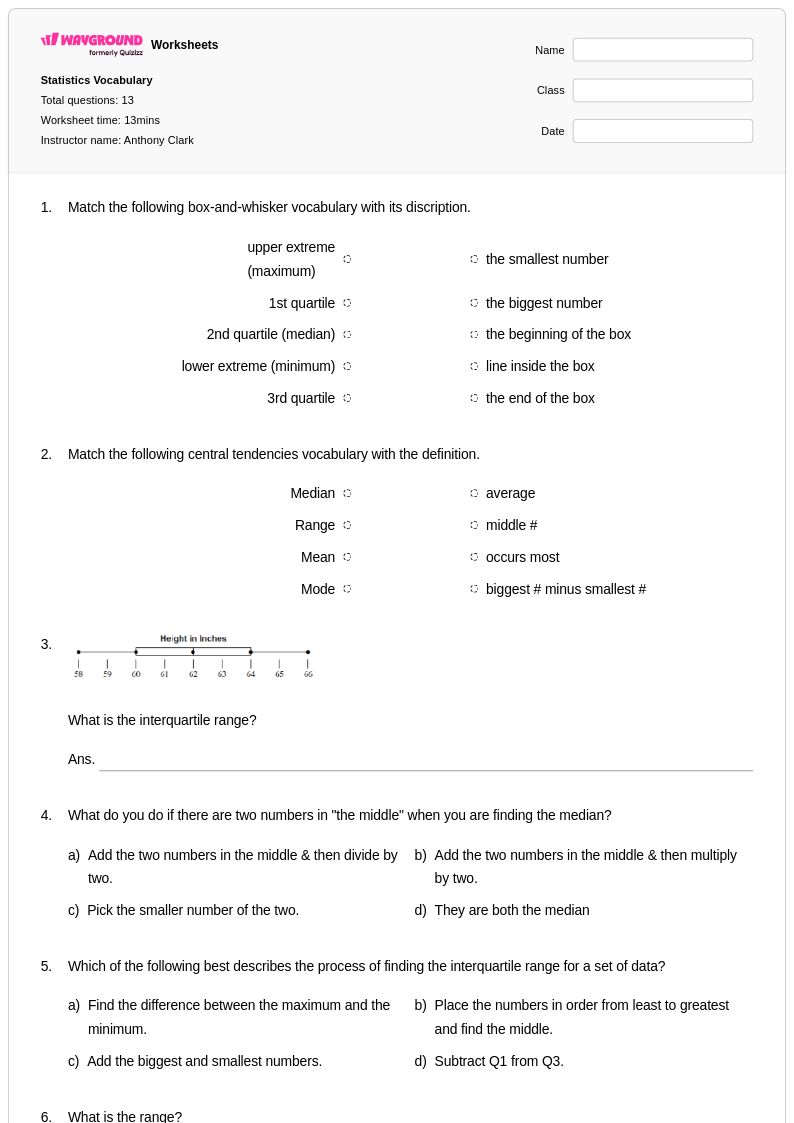
13 Q
6th - Uni

19 Q
6th
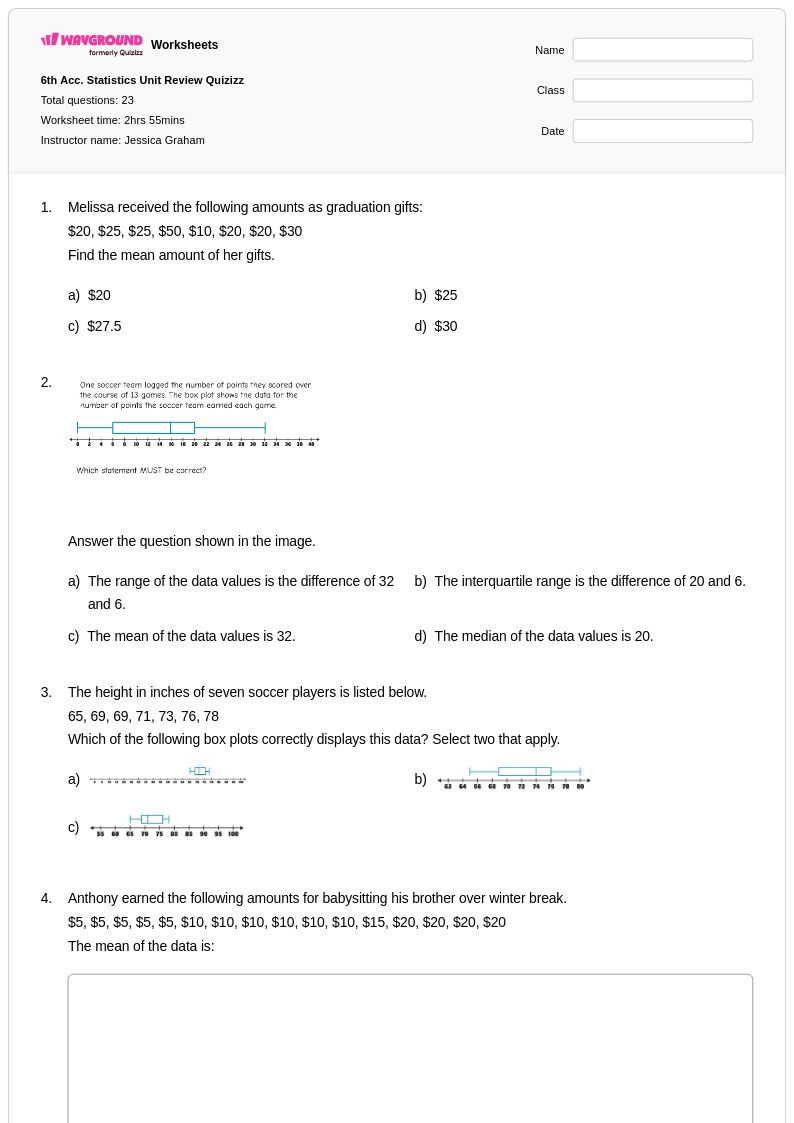
26 Q
6th
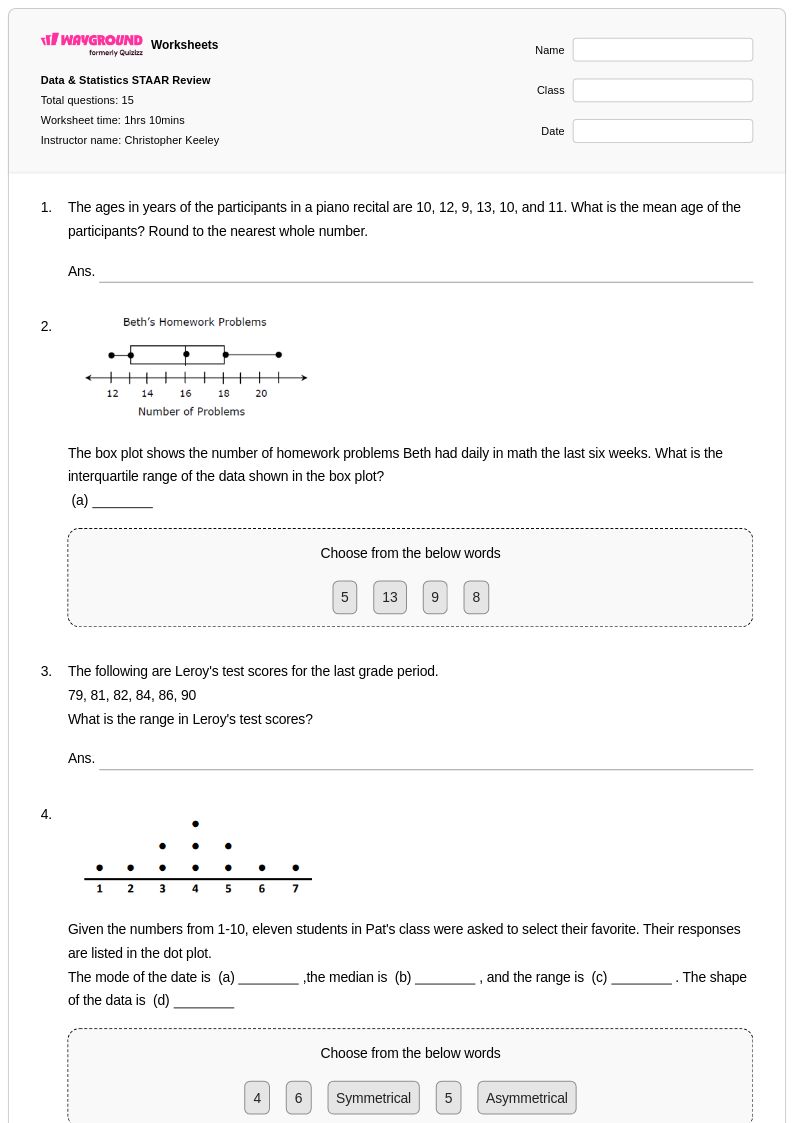
15 Q
6th
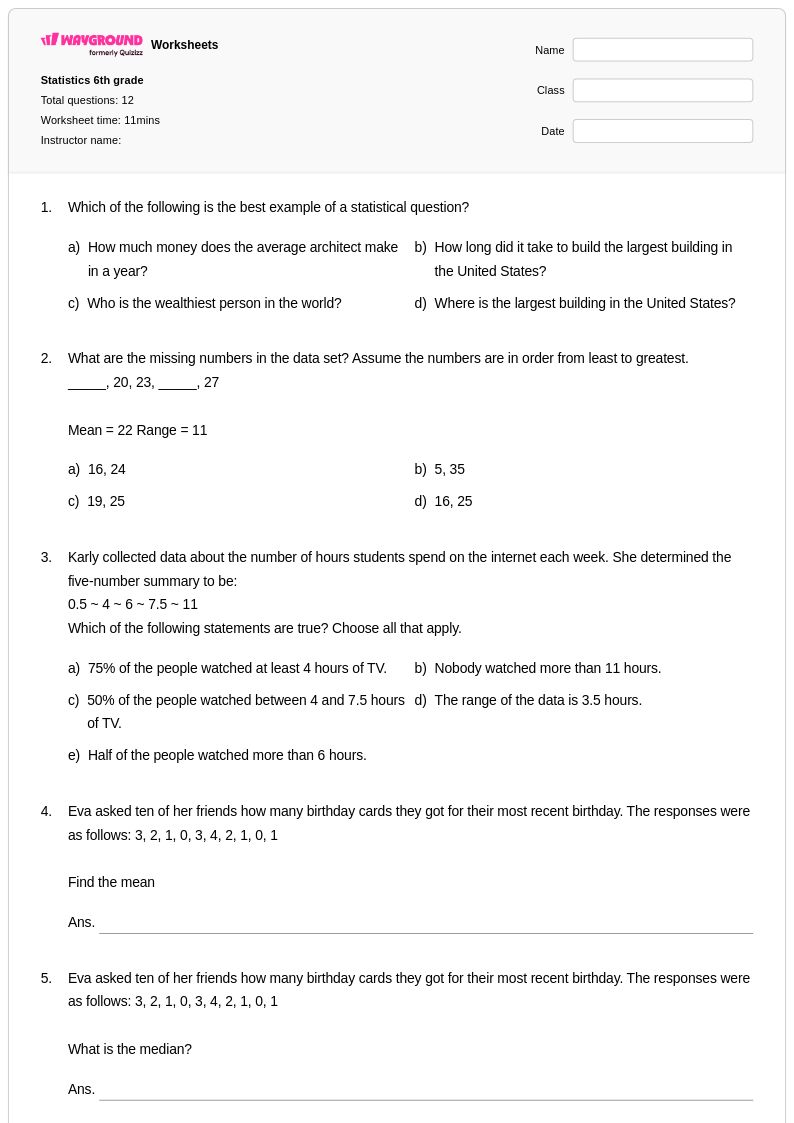
12 Q
6th - 7th
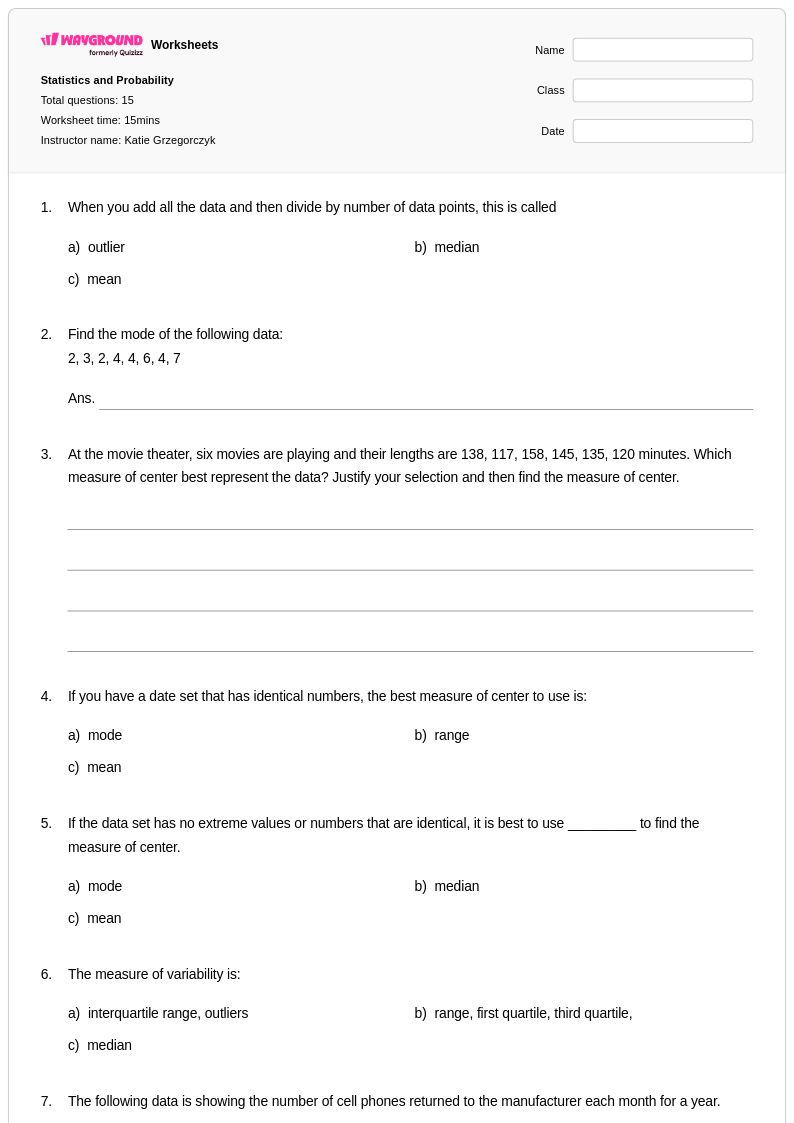
15 Q
6th - 8th
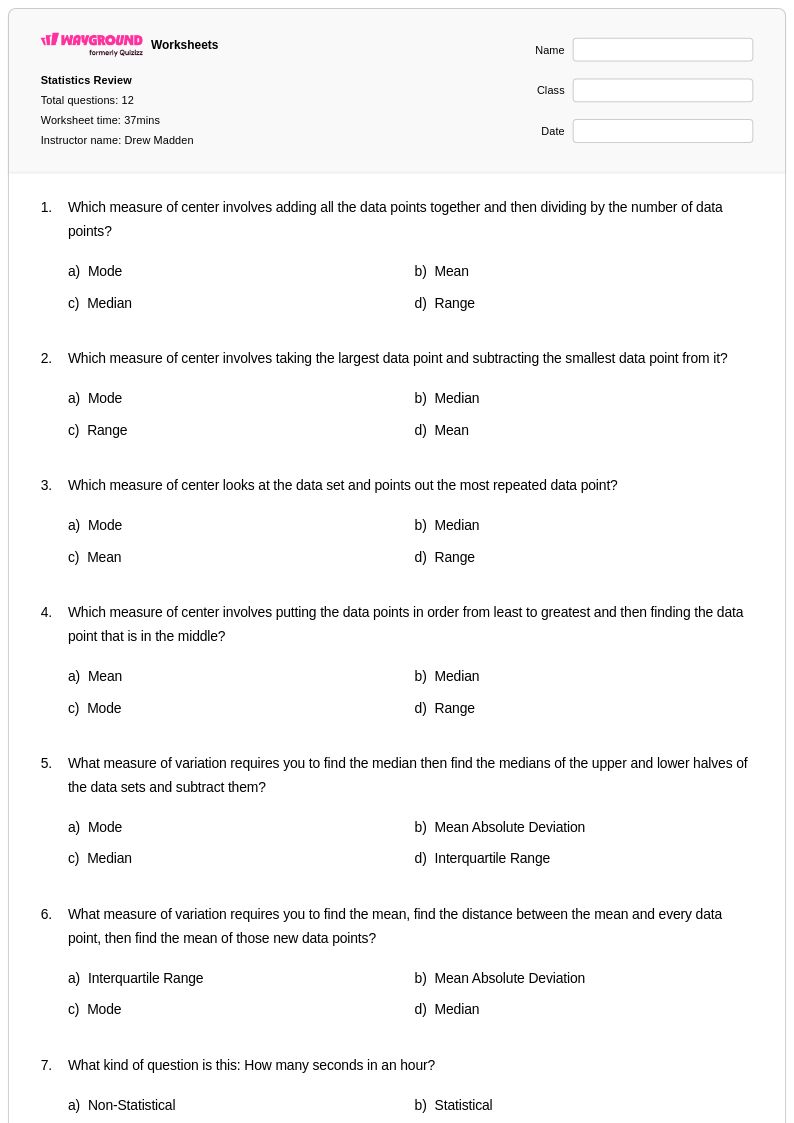
12 Q
6th
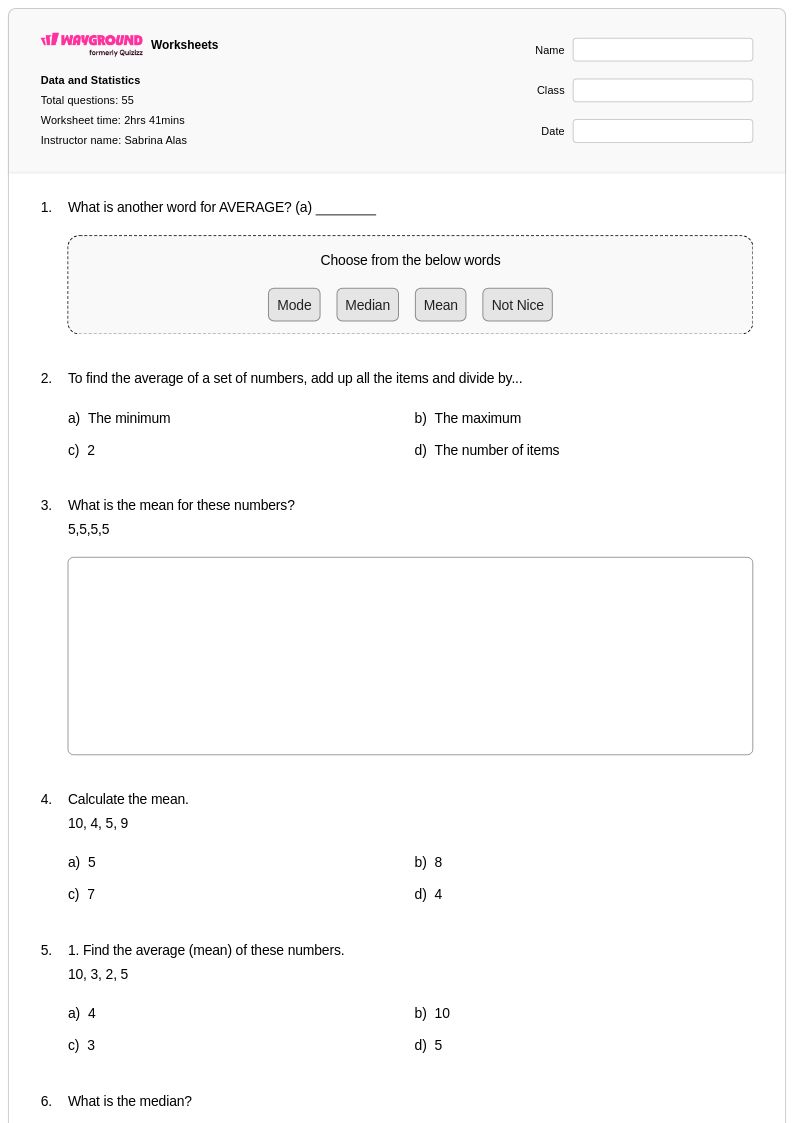
55 Q
6th
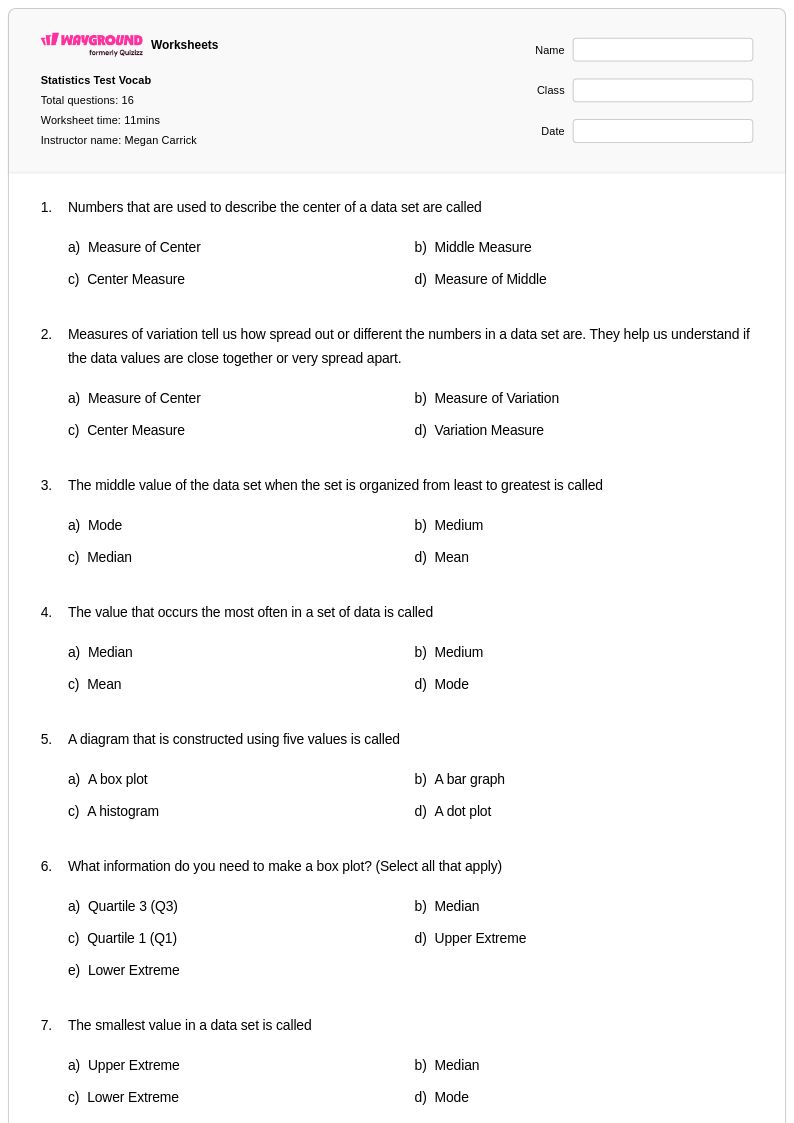
16 Q
6th
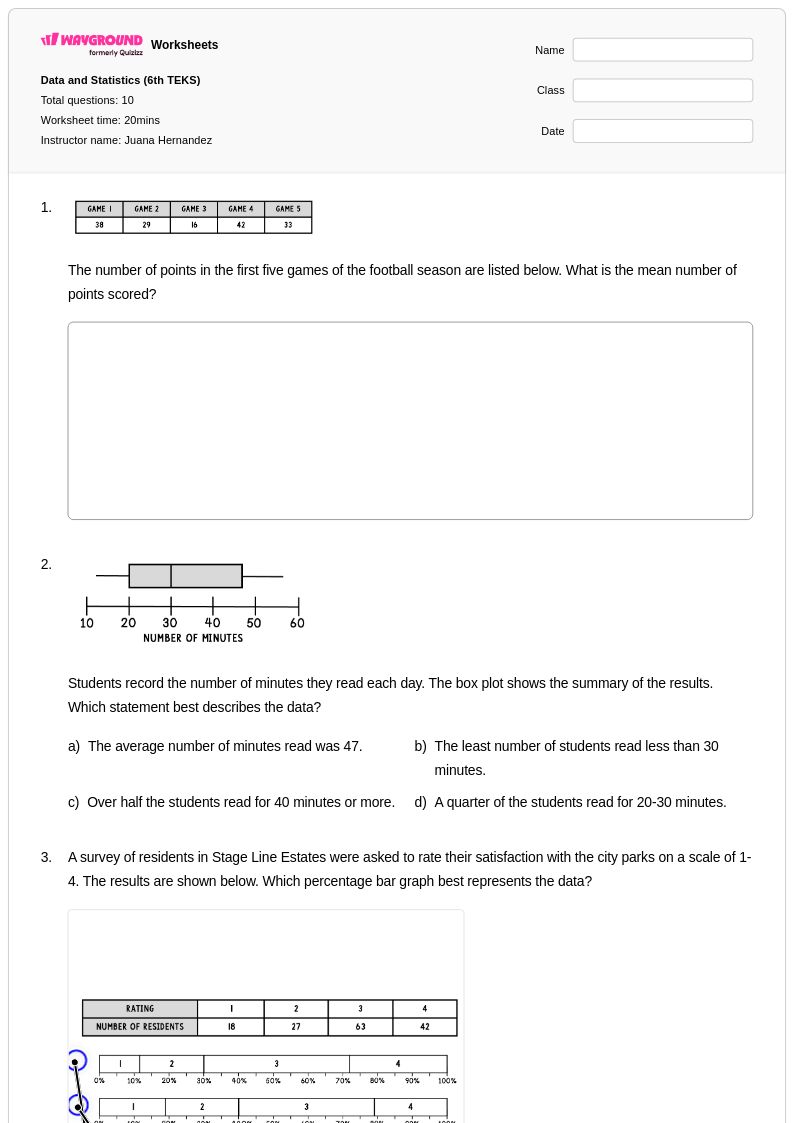
10 Q
6th
10 Q
6th - 8th
16 Q
6th - 8th
12 Q
6th
50 Q
6th
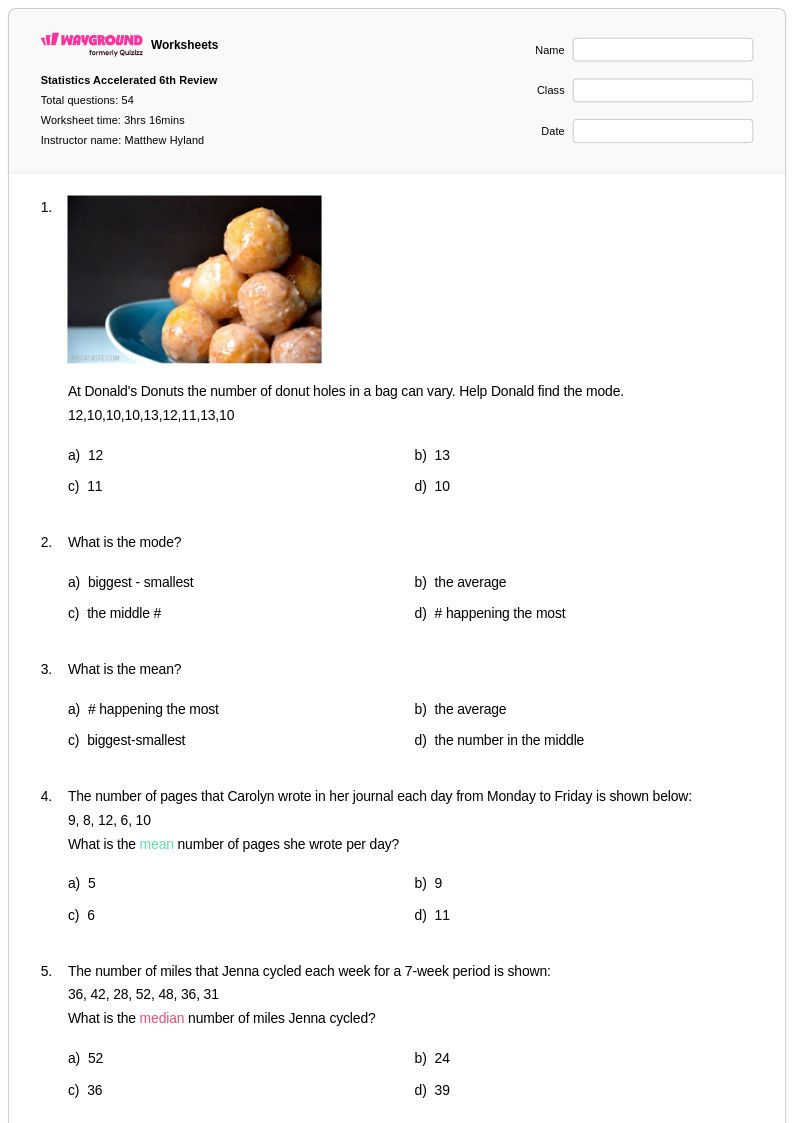
54 Q
6th - 8th
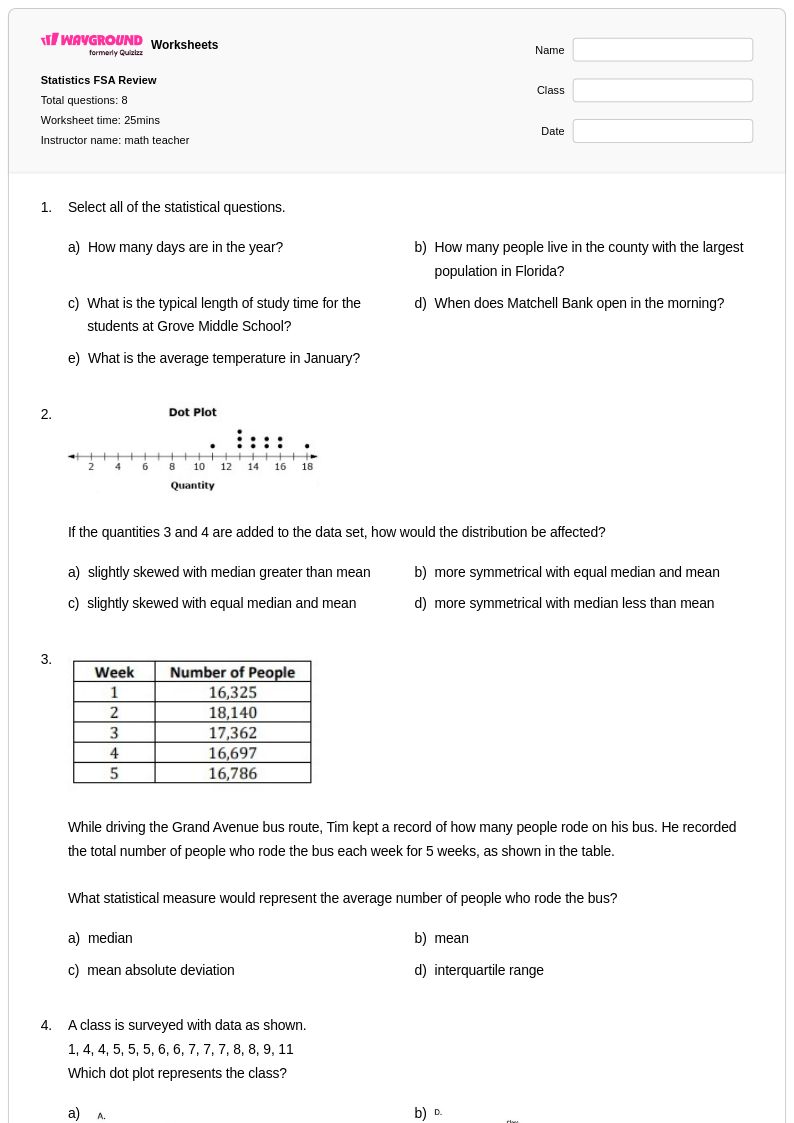
8 Q
6th
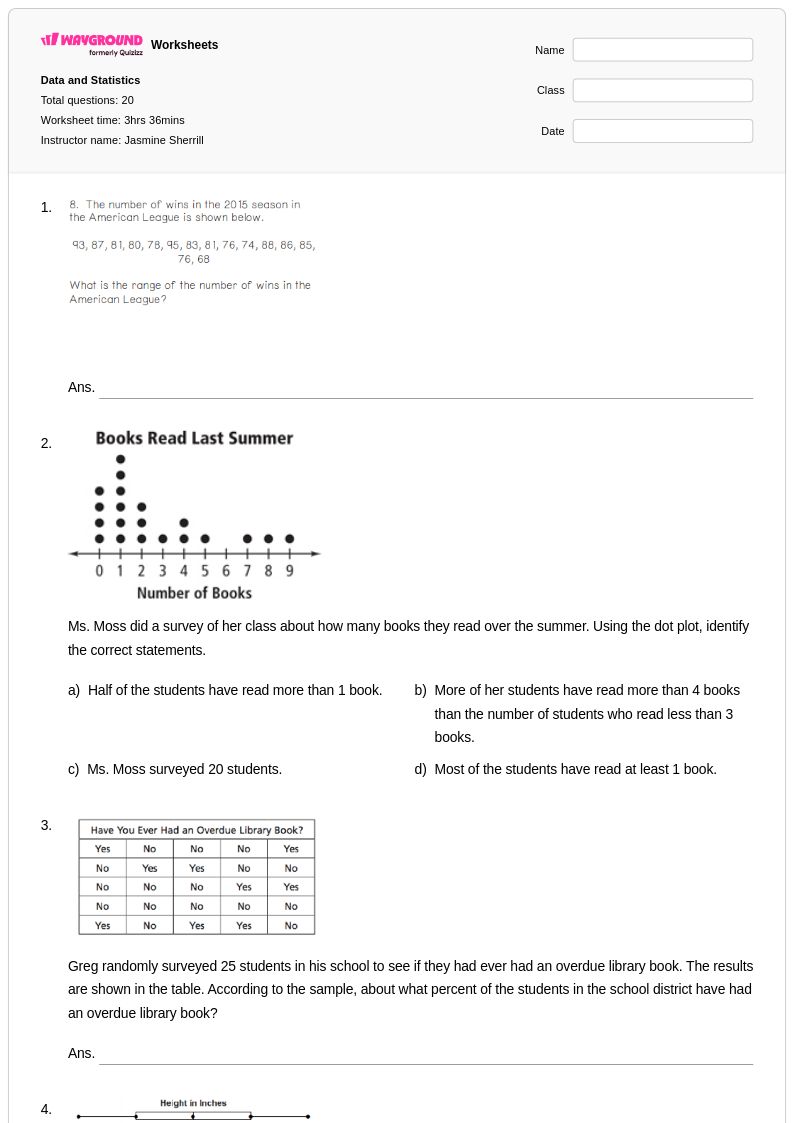
20 Q
6th
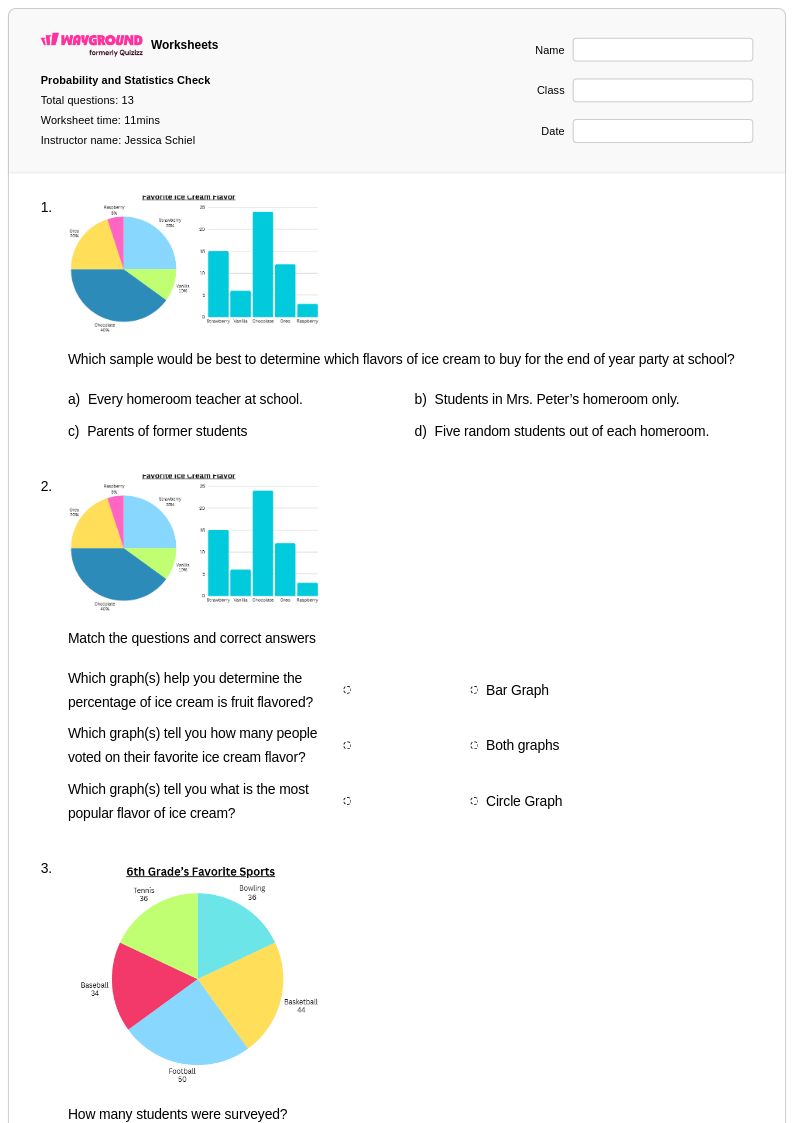
16 Q
6th
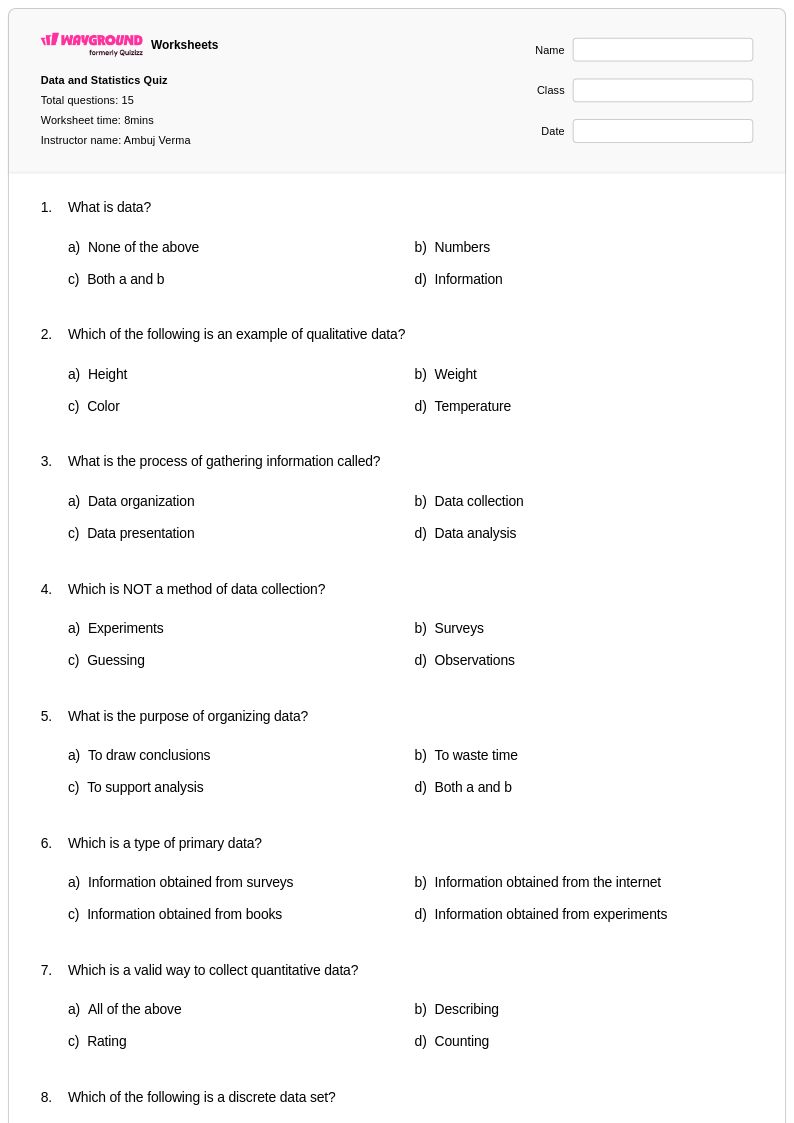
15 Q
6th
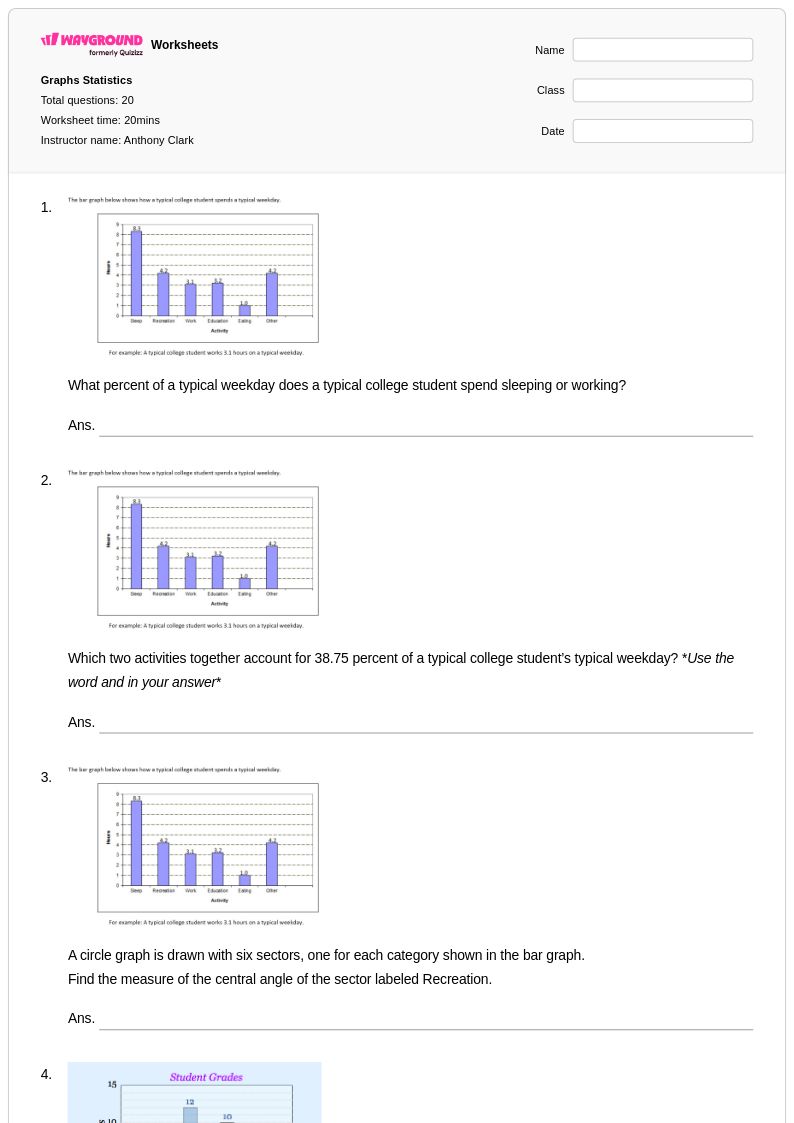
20 Q
6th - Uni
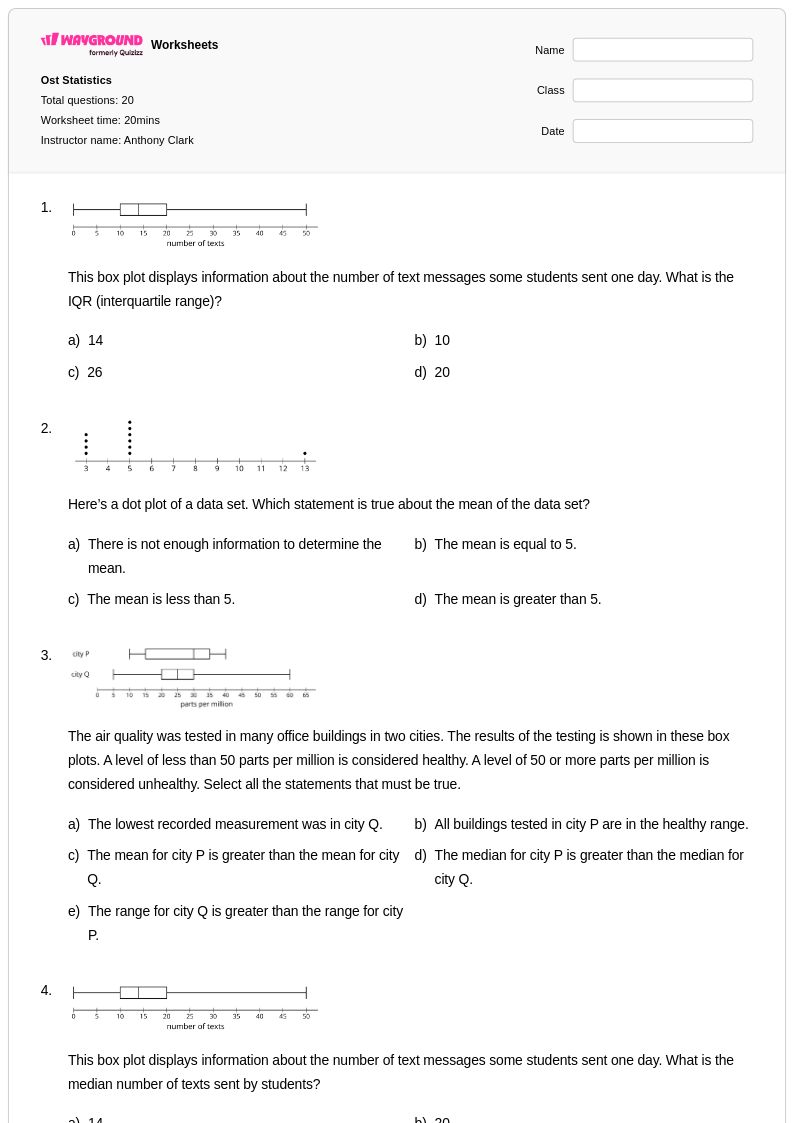
20 Q
6th - Uni
Explore Statistics Worksheets by Grades
Explore Statistics Worksheets for class 6 by Topic
Explore Other Subject Worksheets for class 6
Explore printable Statistics worksheets for Class 6
Class 6 statistics worksheets available through Wayground (formerly Quizizz) provide comprehensive practice opportunities for students developing foundational data analysis skills. These carefully crafted worksheets focus on essential statistical concepts including measures of central tendency, data interpretation, frequency tables, and basic probability principles that form the cornerstone of mathematical reasoning. Students engage with practice problems that require them to calculate mean, median, and mode from various data sets, interpret statistical displays, and draw meaningful conclusions from numerical information. Each worksheet comes with a complete answer key, making them valuable resources for both classroom instruction and independent study, while the free printables in pdf format ensure accessibility for diverse learning environments.
Wayground (formerly Quizizz) empowers educators with millions of teacher-created statistics resources that streamline lesson planning and support differentiated instruction for Class 6 mathematics. The platform's robust search and filtering capabilities allow teachers to quickly locate worksheets aligned with specific learning standards and tailored to varying skill levels within their classrooms. These customizable materials are available in both printable and digital formats, including downloadable pdf versions that facilitate seamless integration into existing curricula. Teachers can efficiently identify appropriate resources for remediation when students struggle with statistical concepts, provide enrichment activities for advanced learners, and offer targeted skill practice that addresses individual learning needs, ultimately creating a more personalized and effective mathematics education experience.
FAQs
How do I teach statistics in Grade 6?
What exercises help sixth graders practice statistics?
What mistakes do Grade 6 students commonly make in statistics?
How can I use Grade 6 statistics worksheets on Wayground?
How does Grade 6 statistics align with Common Core math?
How can I differentiate Grade 6 statistics worksheets?
What statistics concepts are taught in Grade 6?