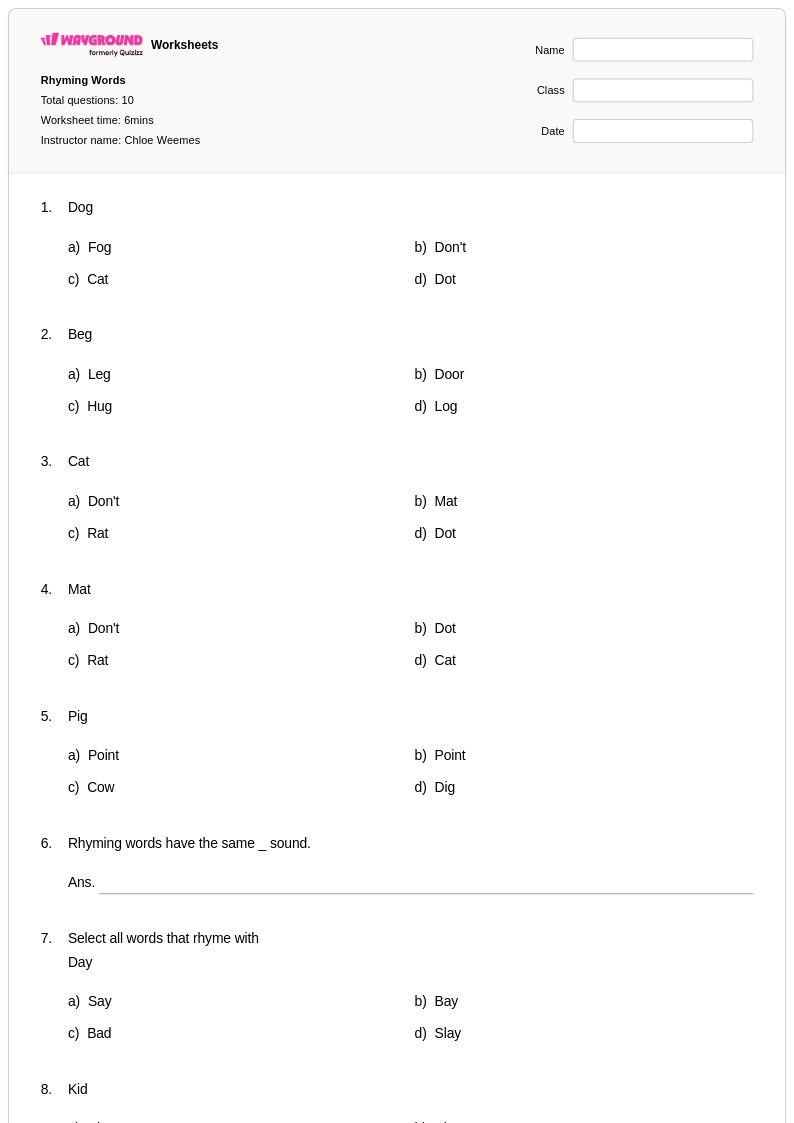
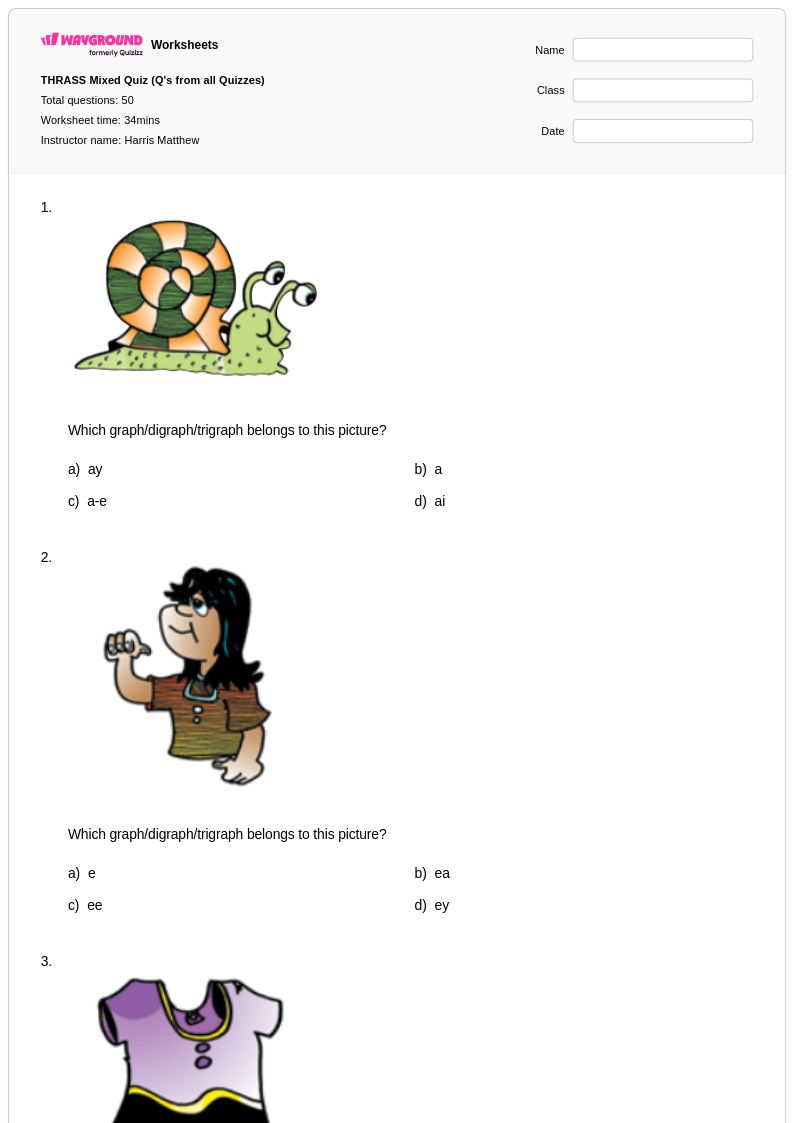
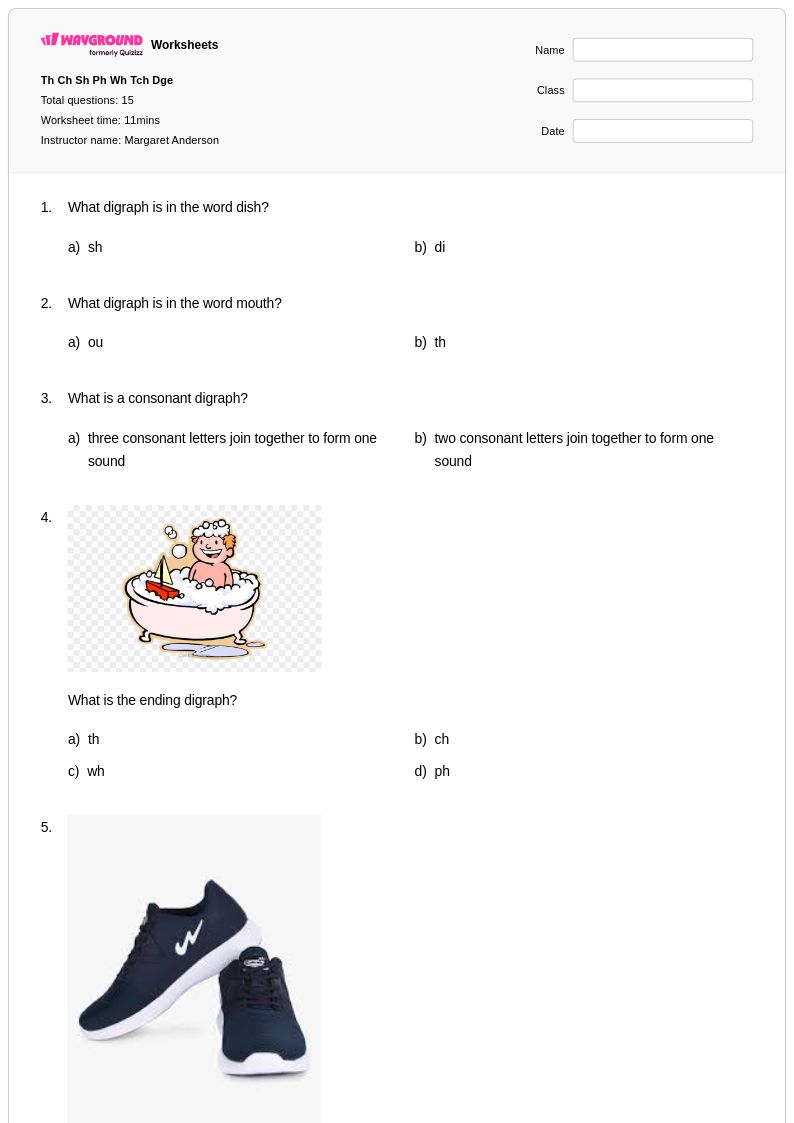
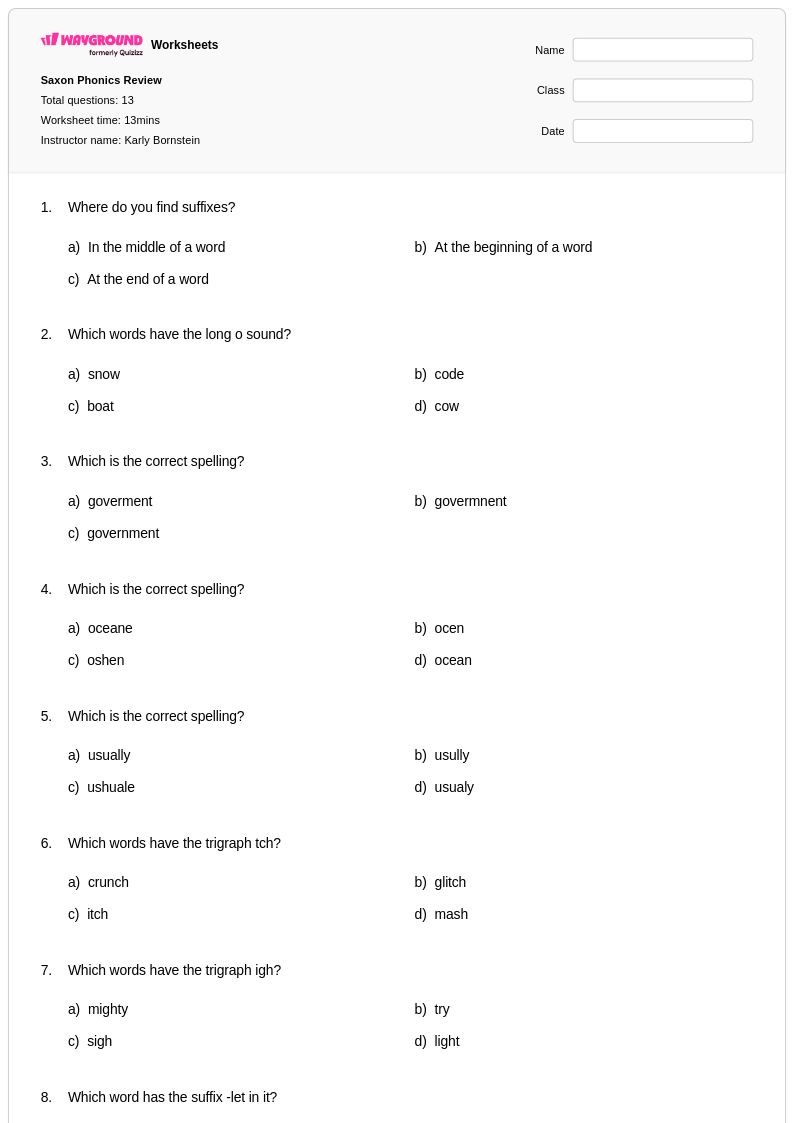
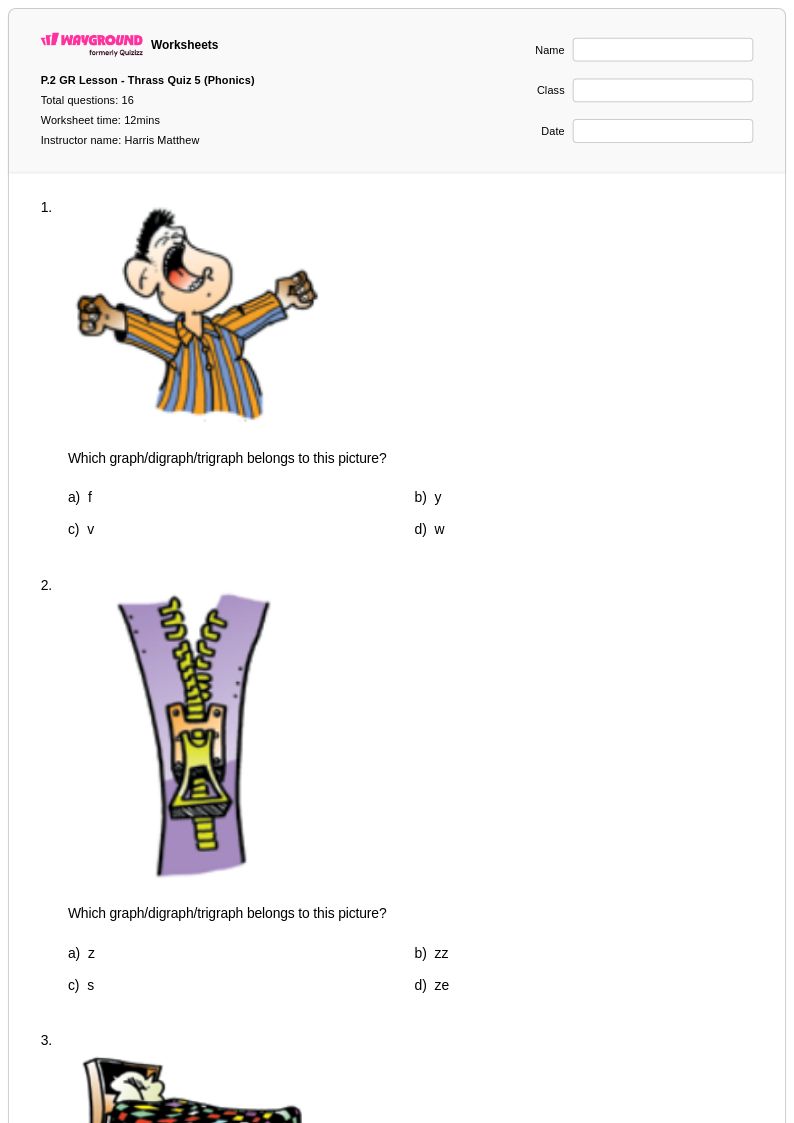
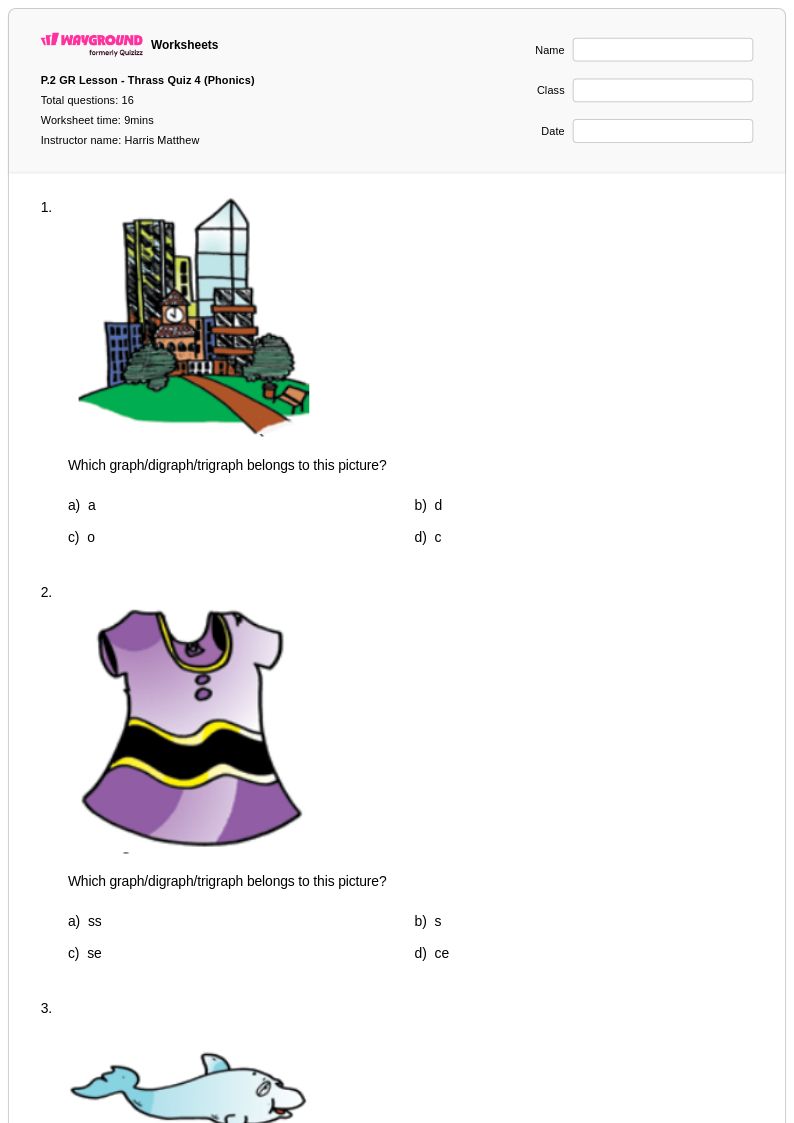
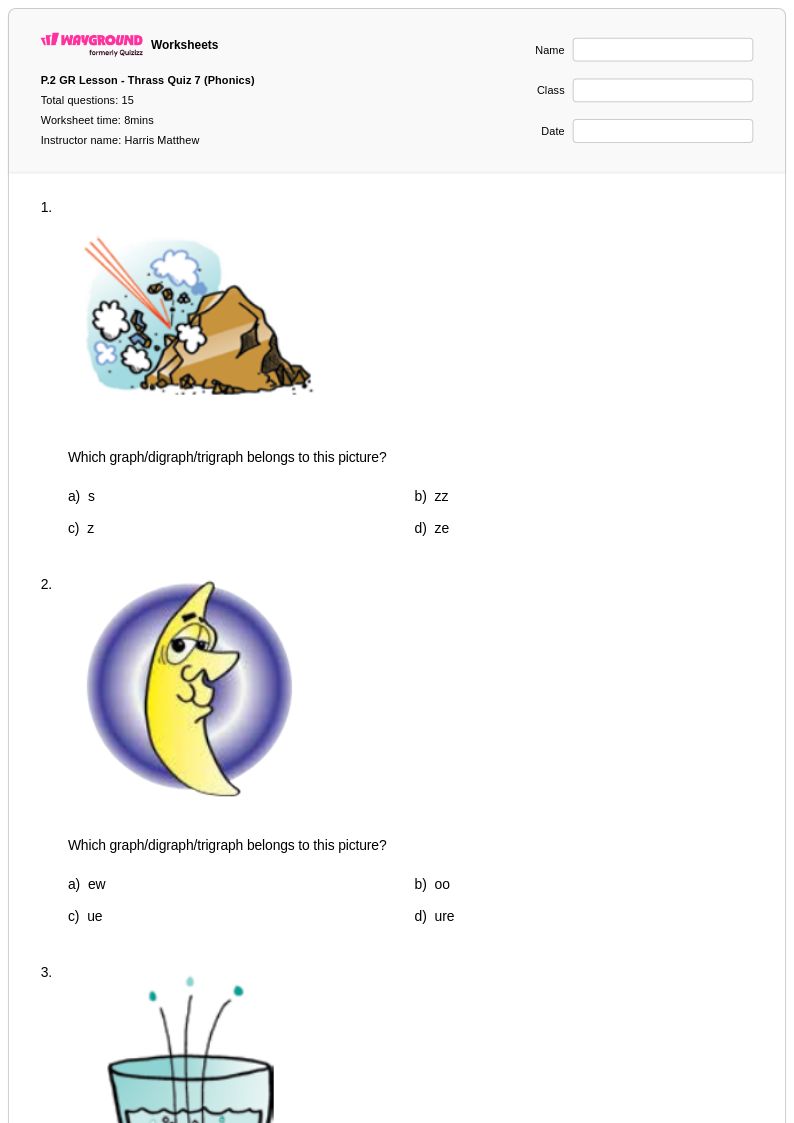
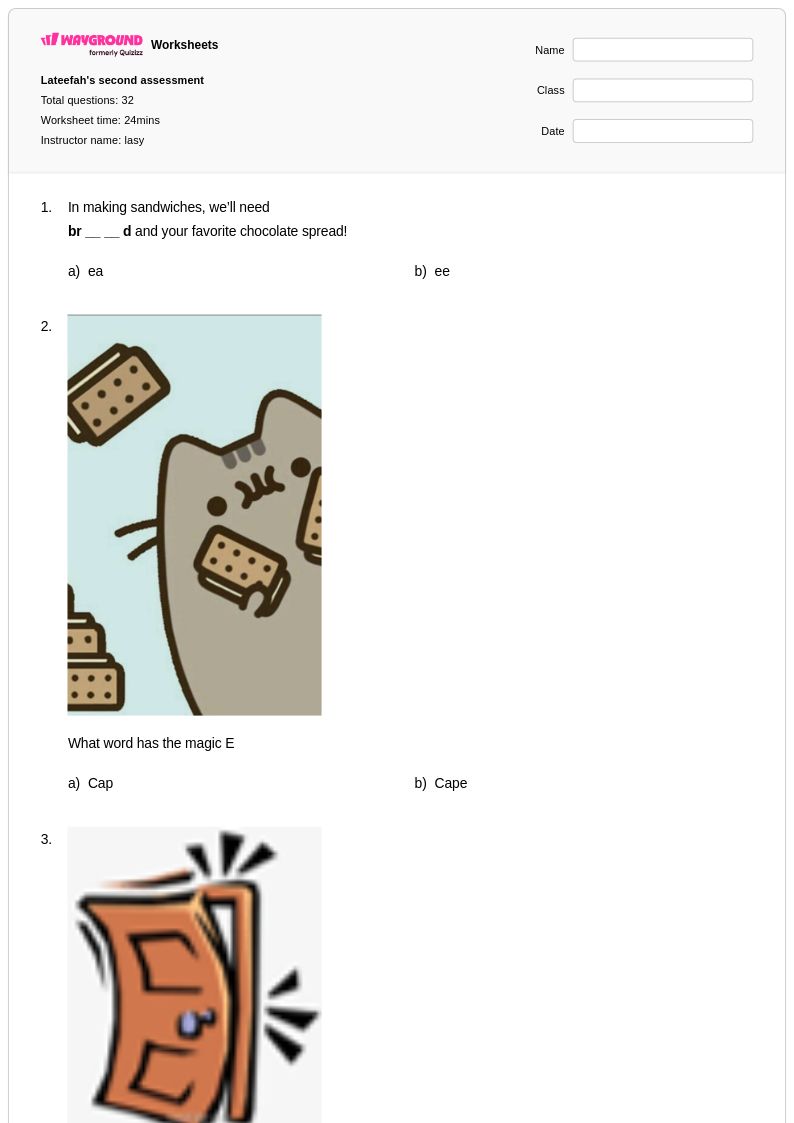
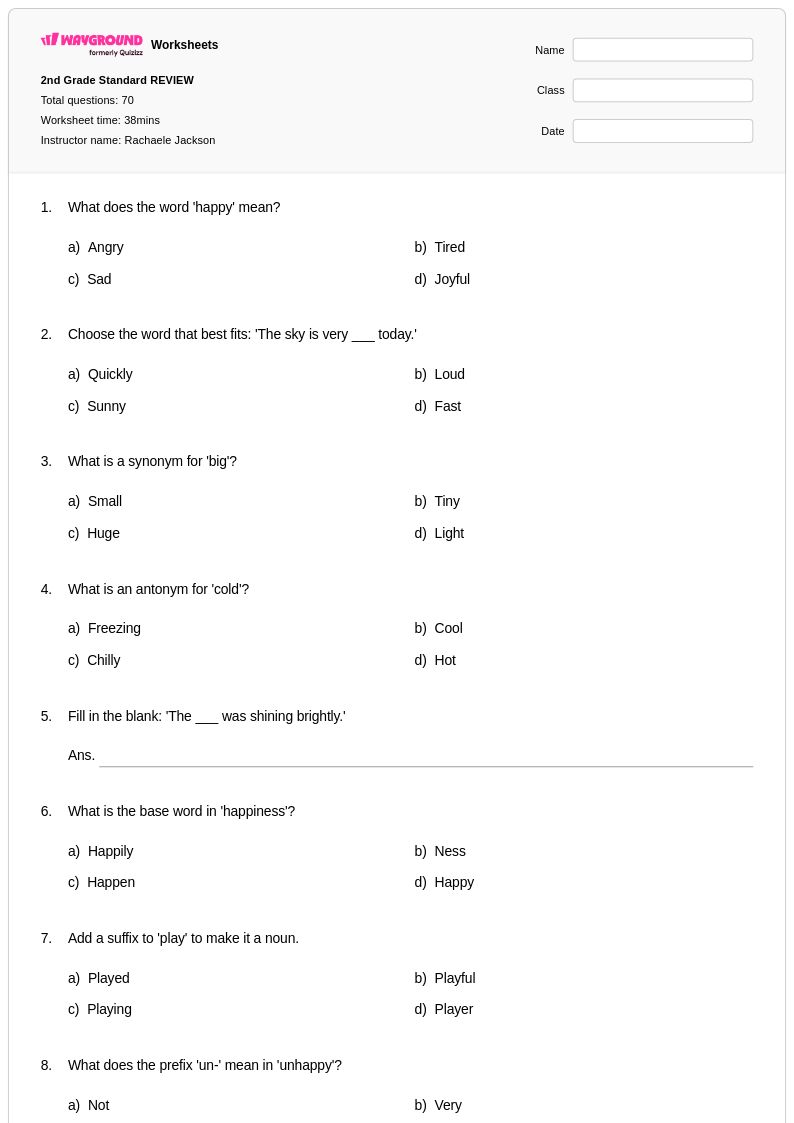
Class 2 trigraphs worksheets and printables help students master three-letter sound combinations through engaging practice problems, featuring free PDF resources with comprehensive answer keys for effective phonics learning.
Explore printable Trigraphs worksheets for Class 2
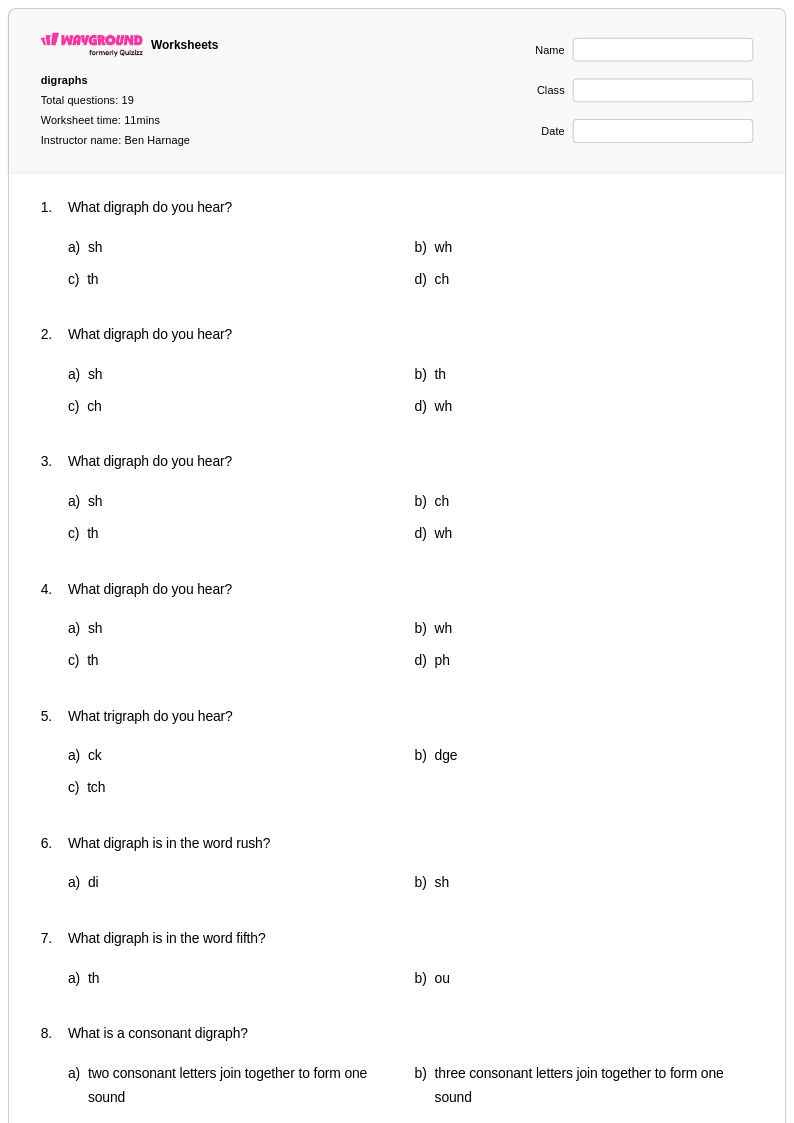
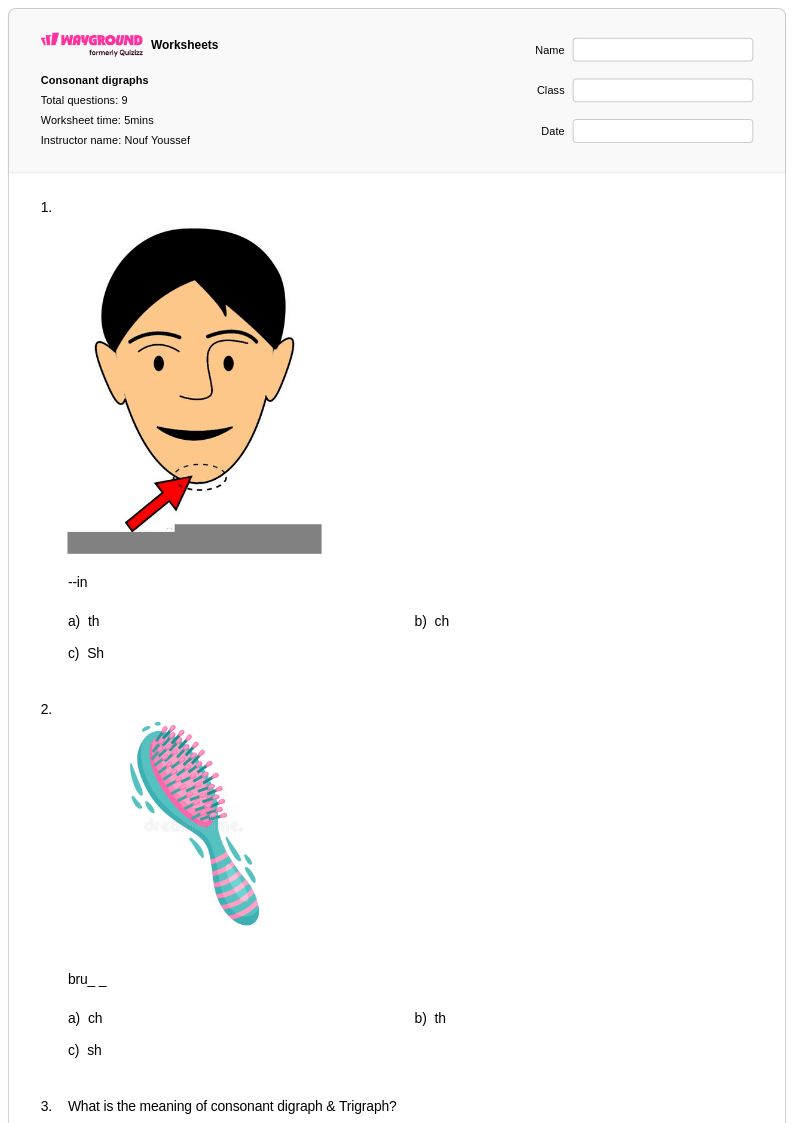
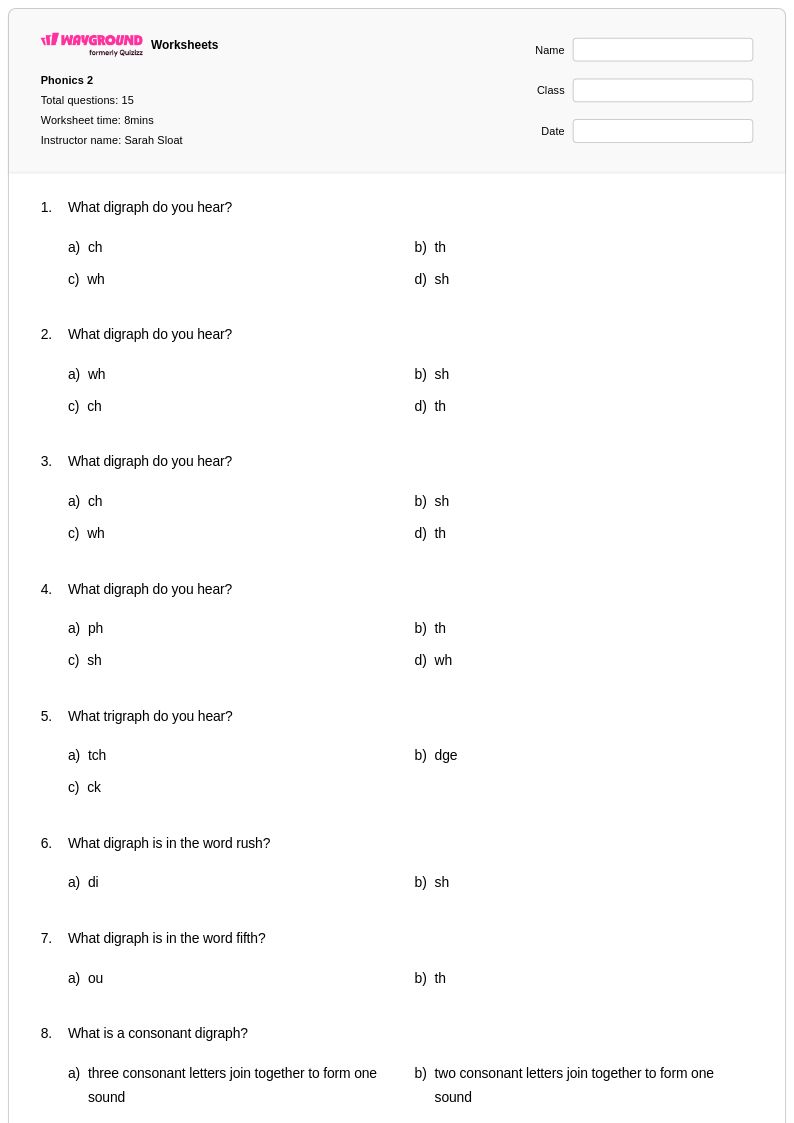
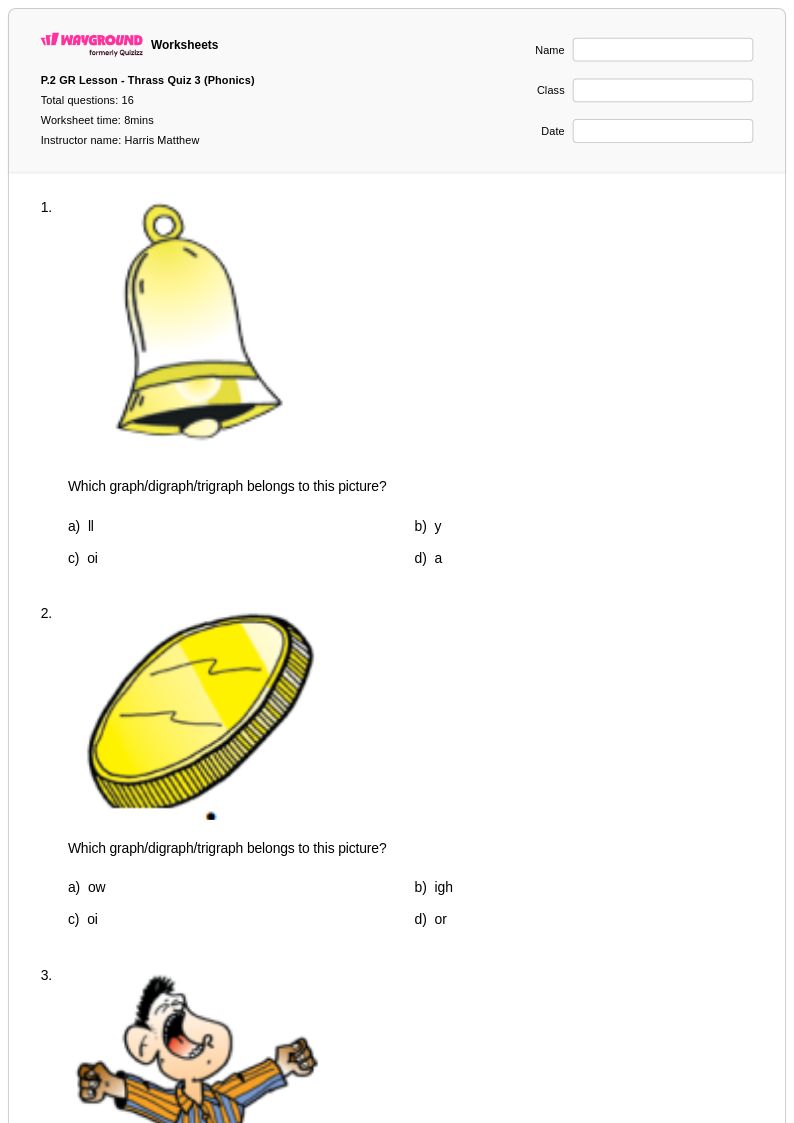
Trigraphs represent a crucial phonetic concept for Class 2 students, involving three-letter combinations that produce a single sound, such as "tch" in "watch" or "dge" in "bridge." Wayground's comprehensive trigraph worksheets provide systematic practice opportunities that help young learners master these complex sound patterns through engaging exercises and structured repetition. These educational resources strengthen decoding skills, spelling accuracy, and reading fluency by offering diverse practice problems that range from word identification to sentence completion activities. Each worksheet comes with a complete answer key, making assessment straightforward for educators, while the free printable format ensures accessibility for classroom use and home practice sessions.
Wayground's extensive collection draws from millions of teacher-created resources, providing educators with robust search and filtering capabilities to locate trigraph worksheets that align with specific curriculum standards and student needs. The platform's differentiation tools enable teachers to customize content difficulty levels, ensuring appropriate challenge levels for diverse learners within the same Class 2 classroom. These versatile materials are available in both printable PDF format and interactive digital versions, supporting flexible lesson planning whether for whole-class instruction, small group remediation, or individual enrichment activities. The comprehensive nature of these resources streamlines preparation time while providing consistent, high-quality practice opportunities that reinforce trigraph recognition and application across various learning contexts.
FAQs
How do I teach trigraphs to early readers?
Introduce trigraphs after students have a solid grasp of digraphs, since trigraphs extend the same concept of letters working together to produce a single sound. Start with the most common patterns: 'tch' as in 'watch,' 'dge' as in 'bridge,' and 'igh' as in 'light.' Use word sorting activities and explicit phonics instruction to help students recognize these patterns in context before applying them to reading and spelling tasks.
What exercises help students practice trigraphs?
Effective trigraph practice includes word identification tasks where students circle or underline trigraph patterns within words, word building exercises that isolate the three-letter combination, and sentence-level reading activities that embed trigraph words in context. Repeated exposure through structured worksheets reinforces the sound-spelling relationship until recognition becomes automatic, which is essential for fluent decoding.
What mistakes do students commonly make with trigraphs?
A common error is students treating the individual letters in a trigraph separately rather than as a single phoneme unit — for example, trying to blend 'i,' 'g,' and 'h' independently in 'light' rather than reading 'igh' as one sound. Students may also confuse 'tch' with 'ch,' omitting the 't,' or misread 'dge' words by applying a hard 'g' sound. Targeted practice that isolates each trigraph pattern and contrasts it with similar letter combinations helps correct these misconceptions.
How do I use Wayground's trigraphs worksheets in my classroom?
Wayground's trigraphs worksheets are available as printable PDFs for traditional classroom use and in digital formats for technology-integrated learning environments, giving you flexibility depending on your setup. You can also host them as a quiz directly on Wayground, which allows for interactive student engagement and easy progress tracking. Each worksheet includes a complete answer key, supporting both independent student practice and teacher-led assessment.
How do I differentiate trigraph instruction for struggling readers?
For struggling readers, focus on one trigraph pattern at a time rather than introducing multiple patterns in a single lesson, and pair written practice with read-aloud support so students can hear the target sound while seeing the spelling. On Wayground, teachers can enable accommodations such as Read Aloud — which reads questions and content aloud to individual students — and reduced answer choices to lower cognitive load, making trigraph practice more accessible without singling those students out in front of the class.
At what point in phonics instruction should trigraphs be introduced?
Trigraphs are typically introduced after students have internalized consonant digraphs (two-letter combinations like 'sh,' 'ch,' and 'th'), since both concepts share the principle of letters combining to represent a single phoneme. Most phonics sequences place trigraph instruction in late kindergarten through second grade, depending on student readiness. Introducing trigraphs too early, before digraph patterns are secure, can lead to confusion and decoding errors.