Free Printable Underground Railroad Worksheets for Class 5
Class 5 students can explore the Underground Railroad through Wayground's comprehensive collection of free worksheets and printables, featuring engaging practice problems and complete answer keys to deepen understanding of this pivotal U.S. History topic.
Explore printable Underground Railroad worksheets for Class 5
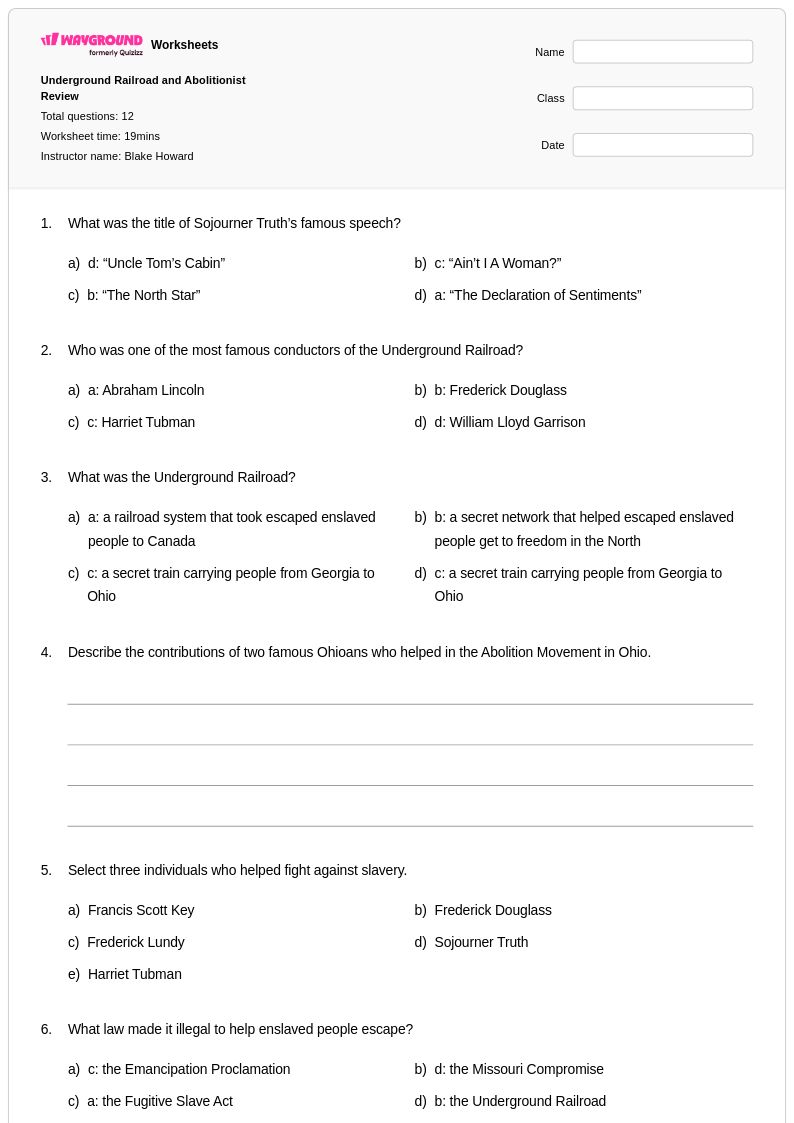
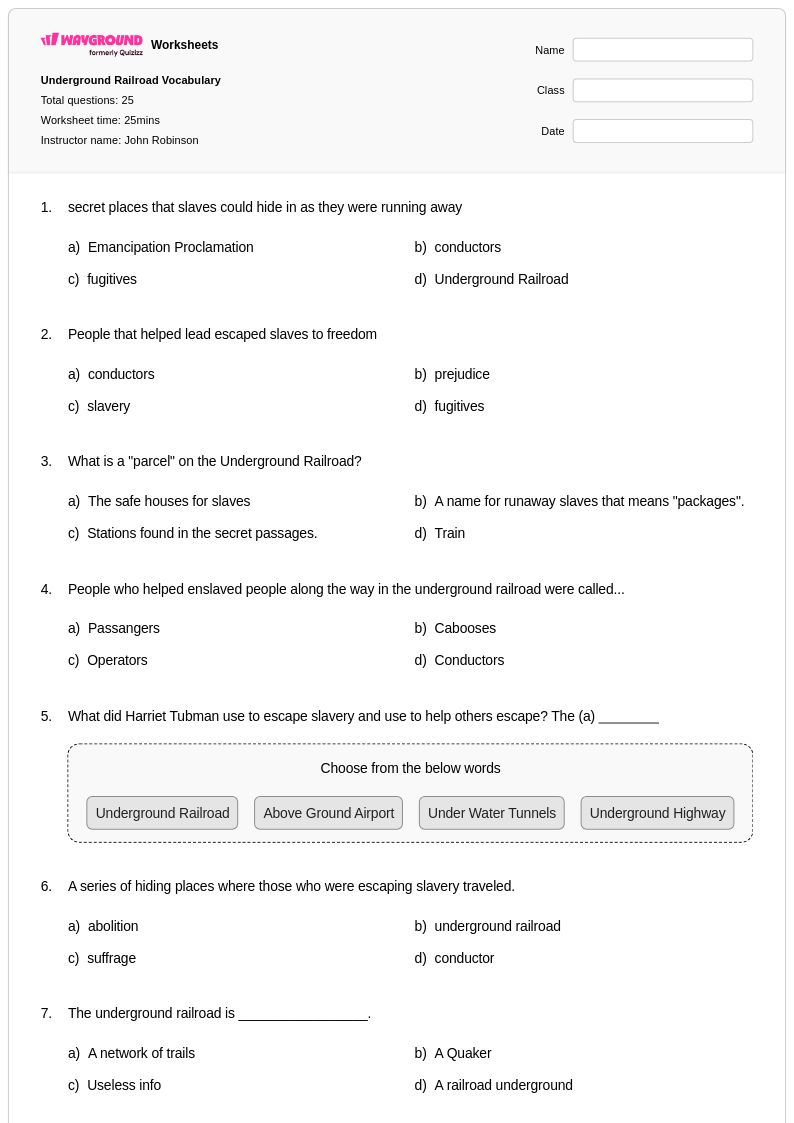
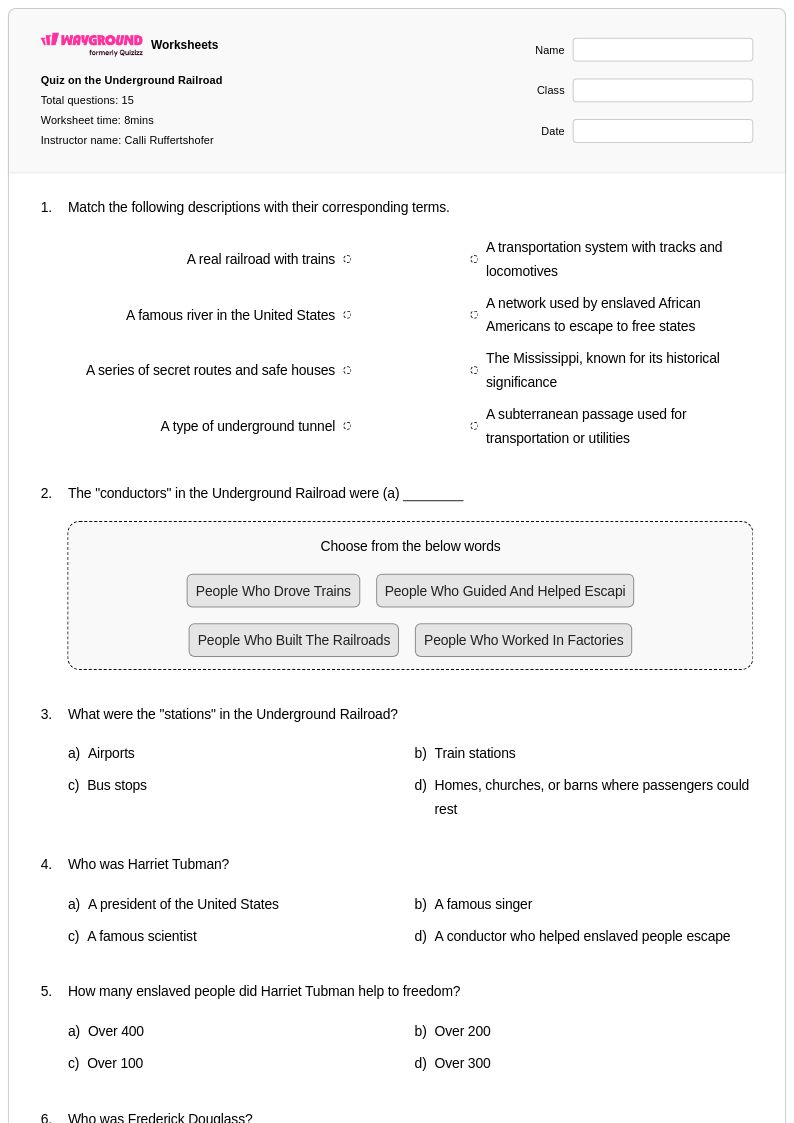
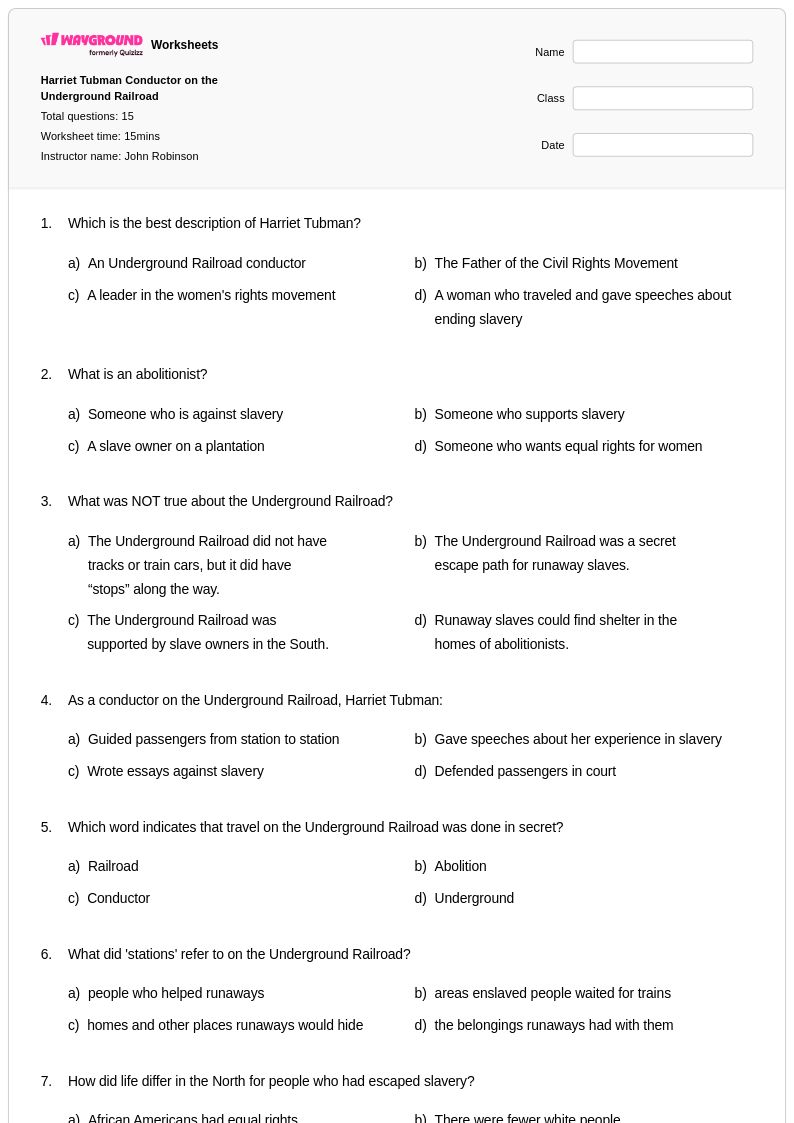
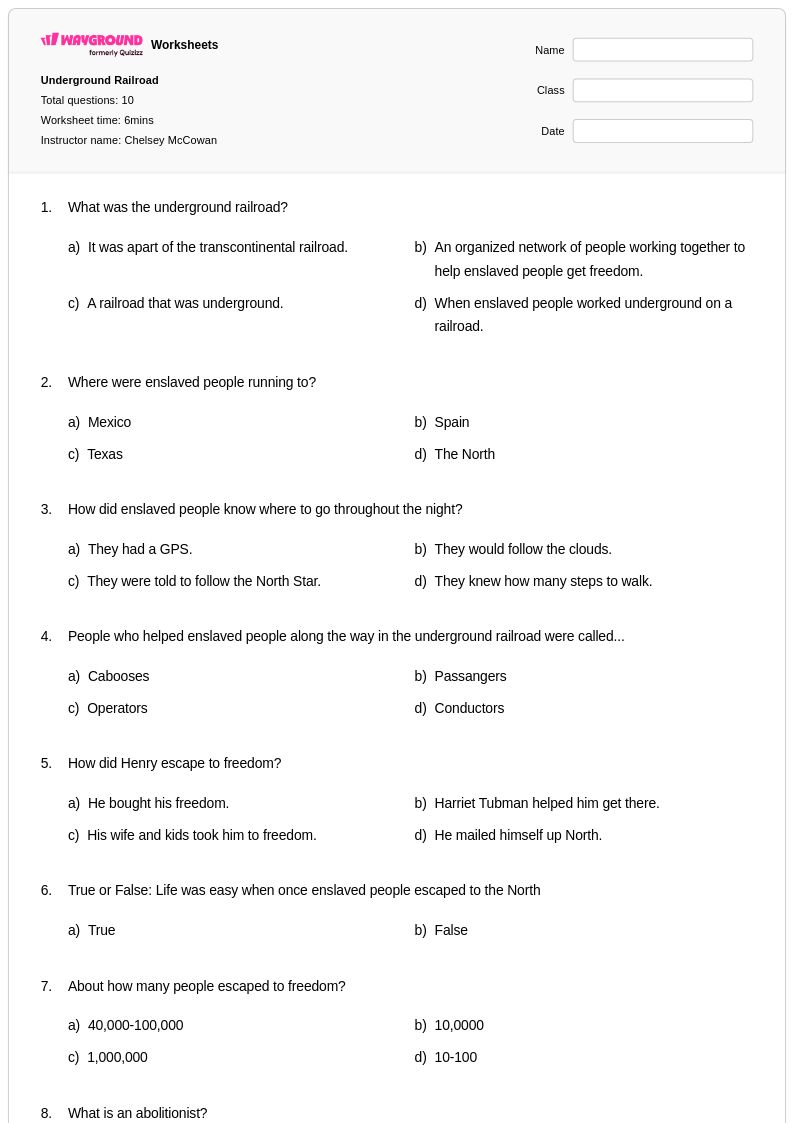
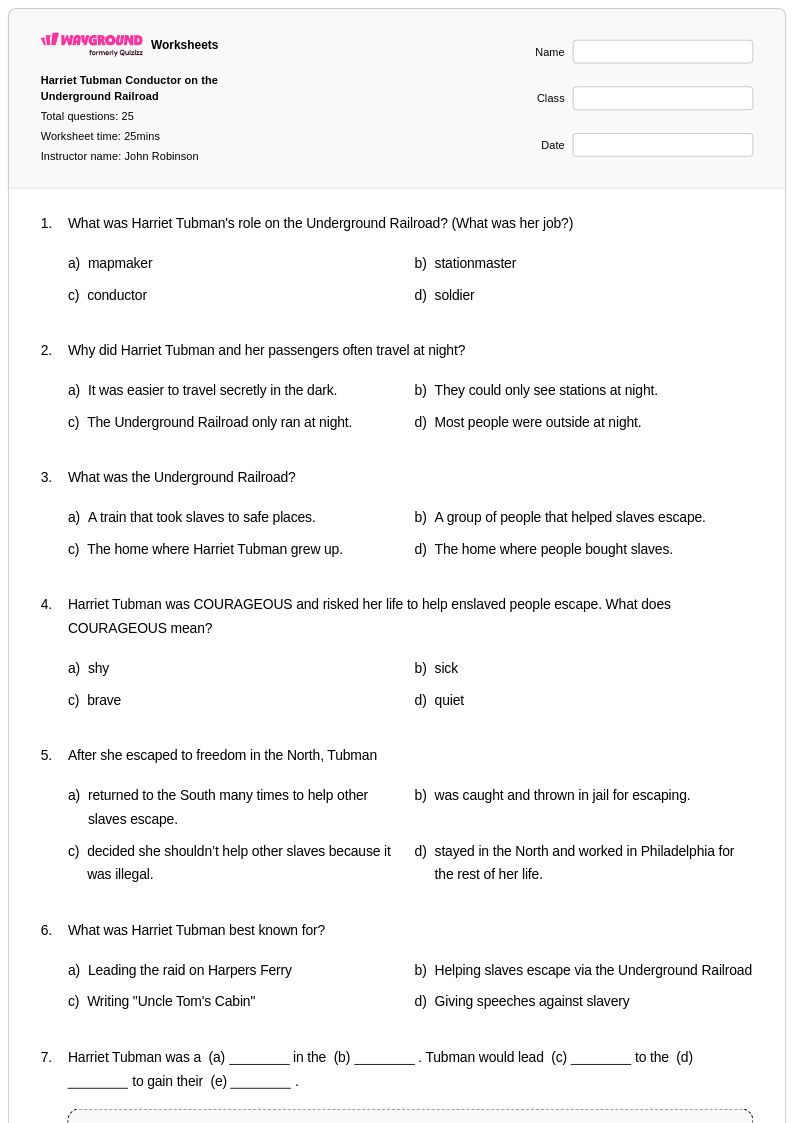
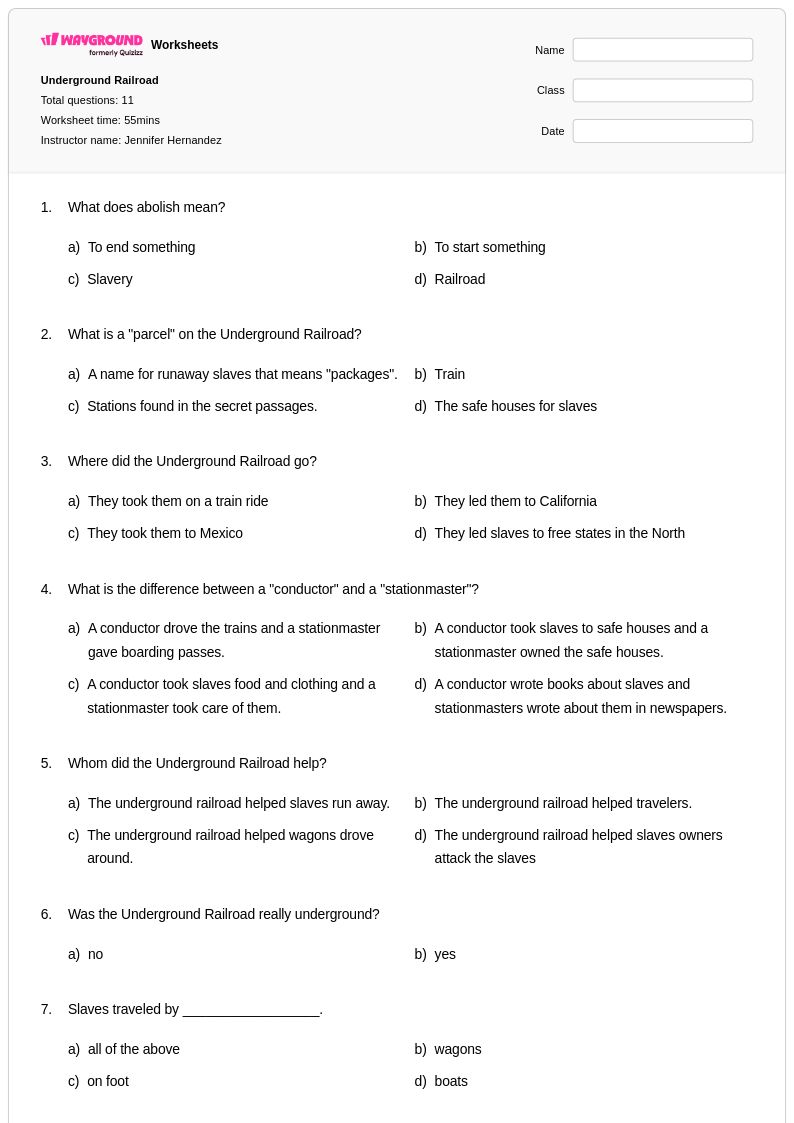
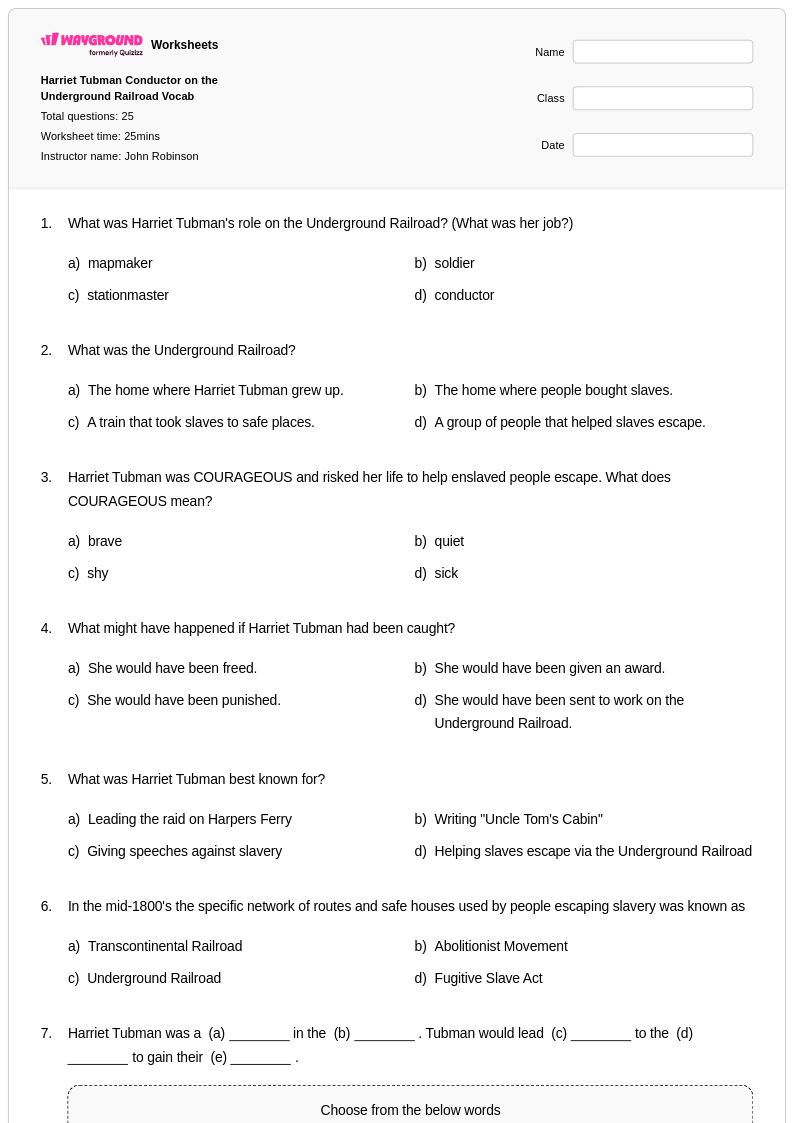
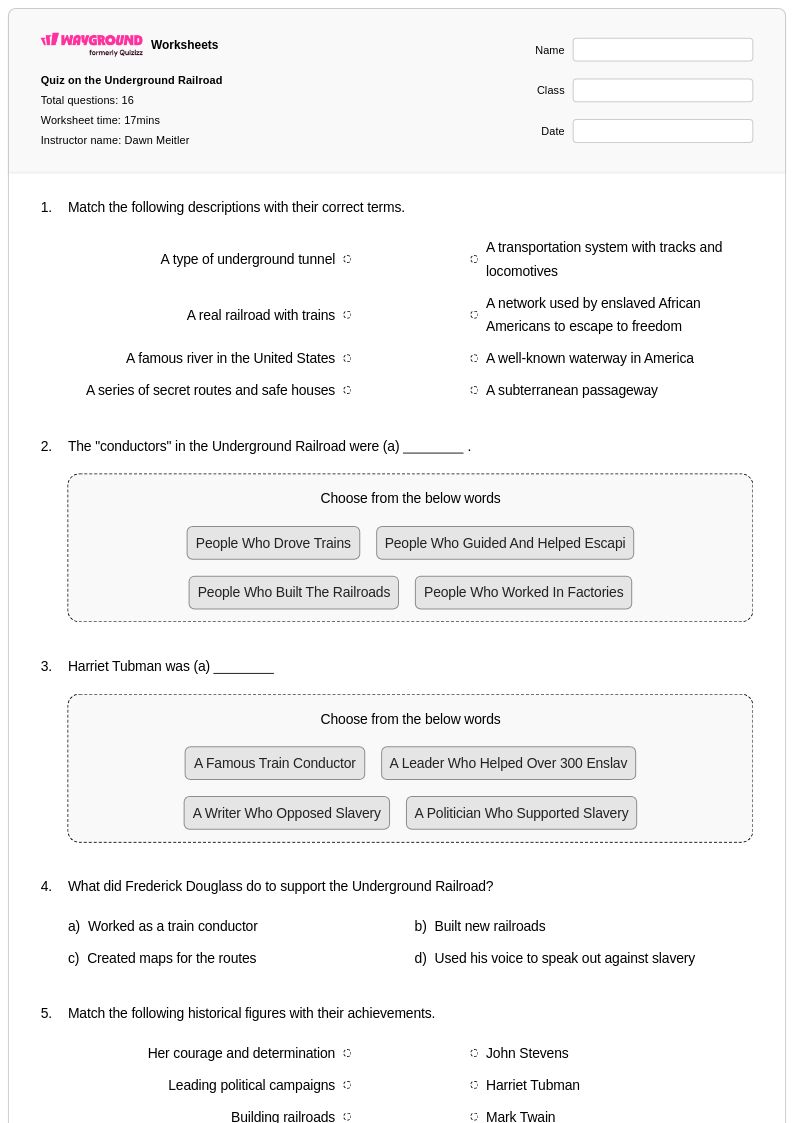
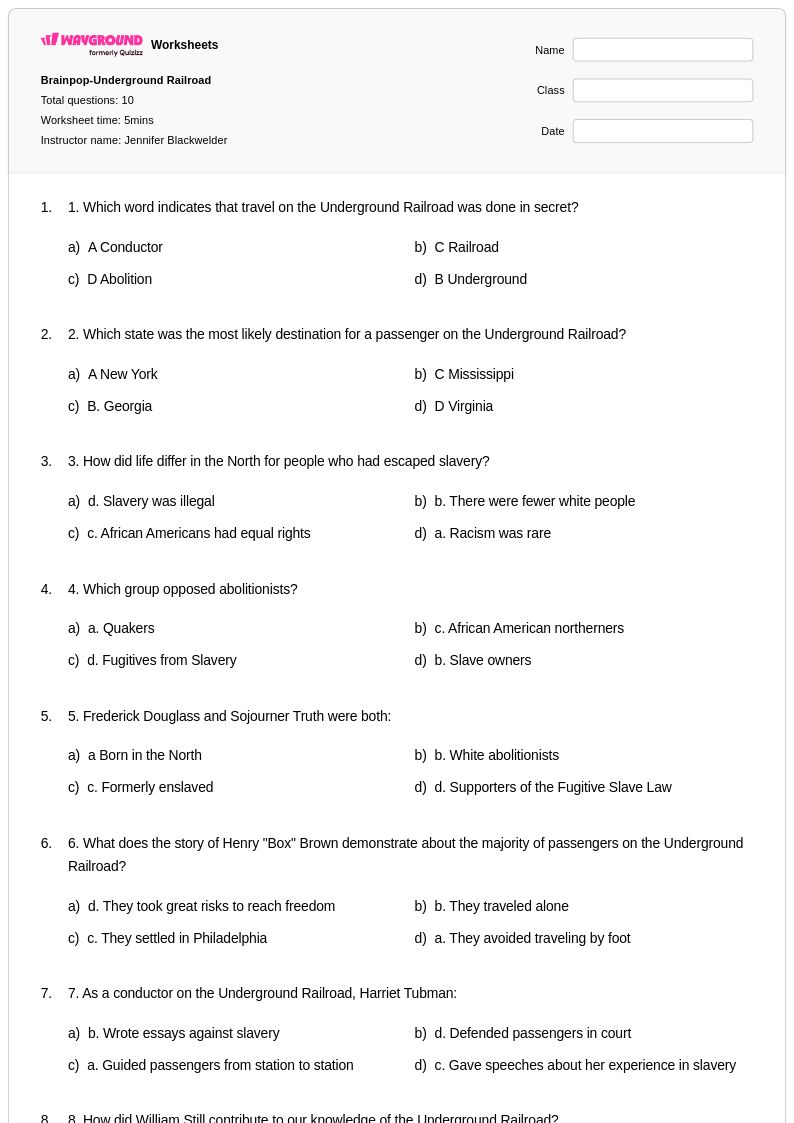
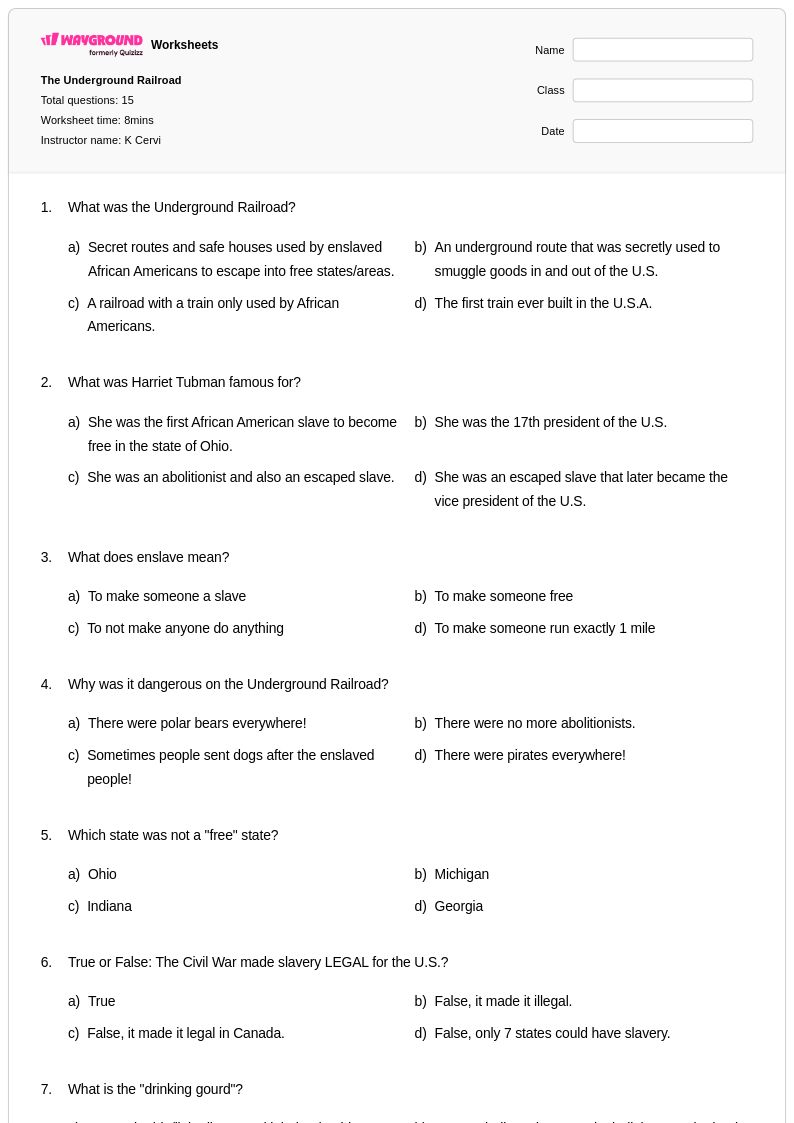
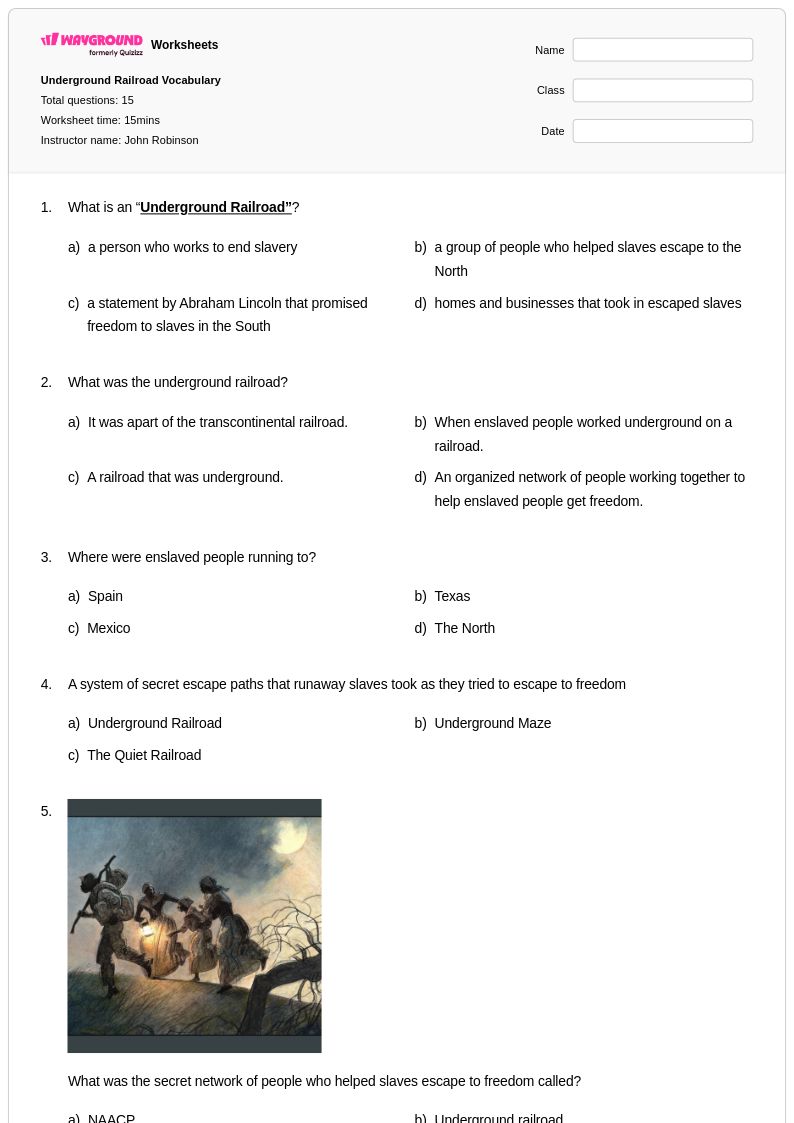
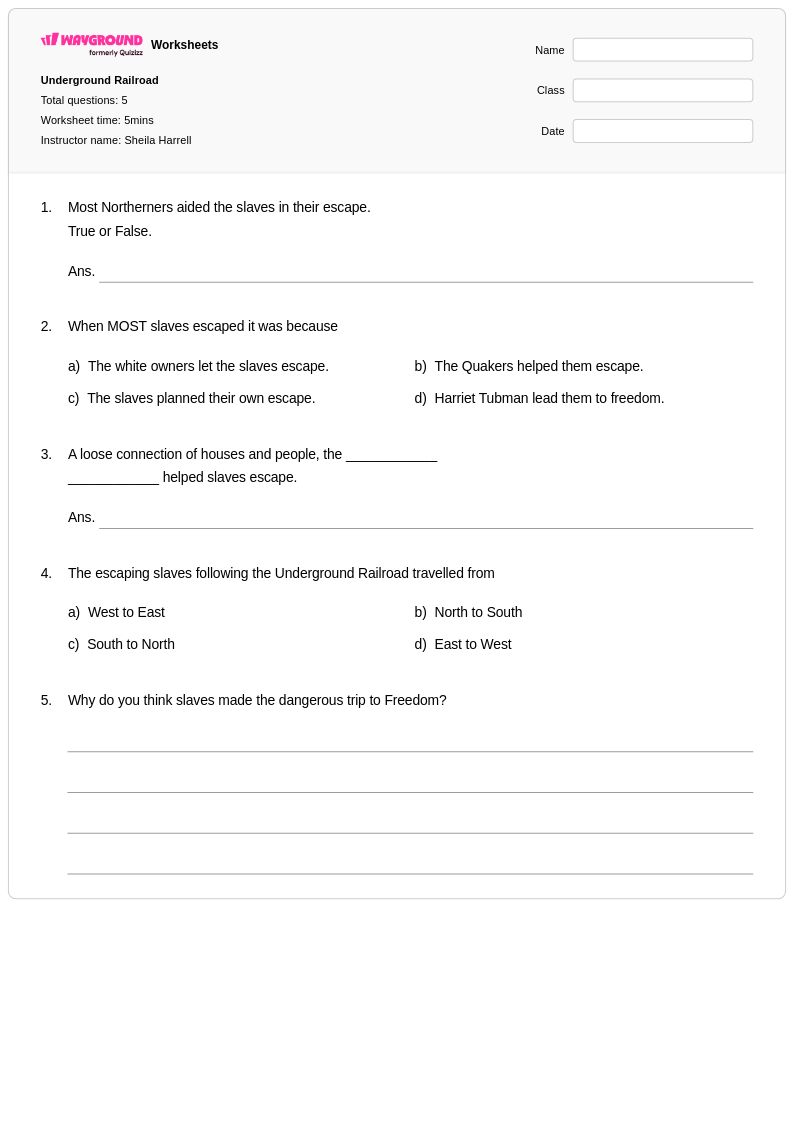
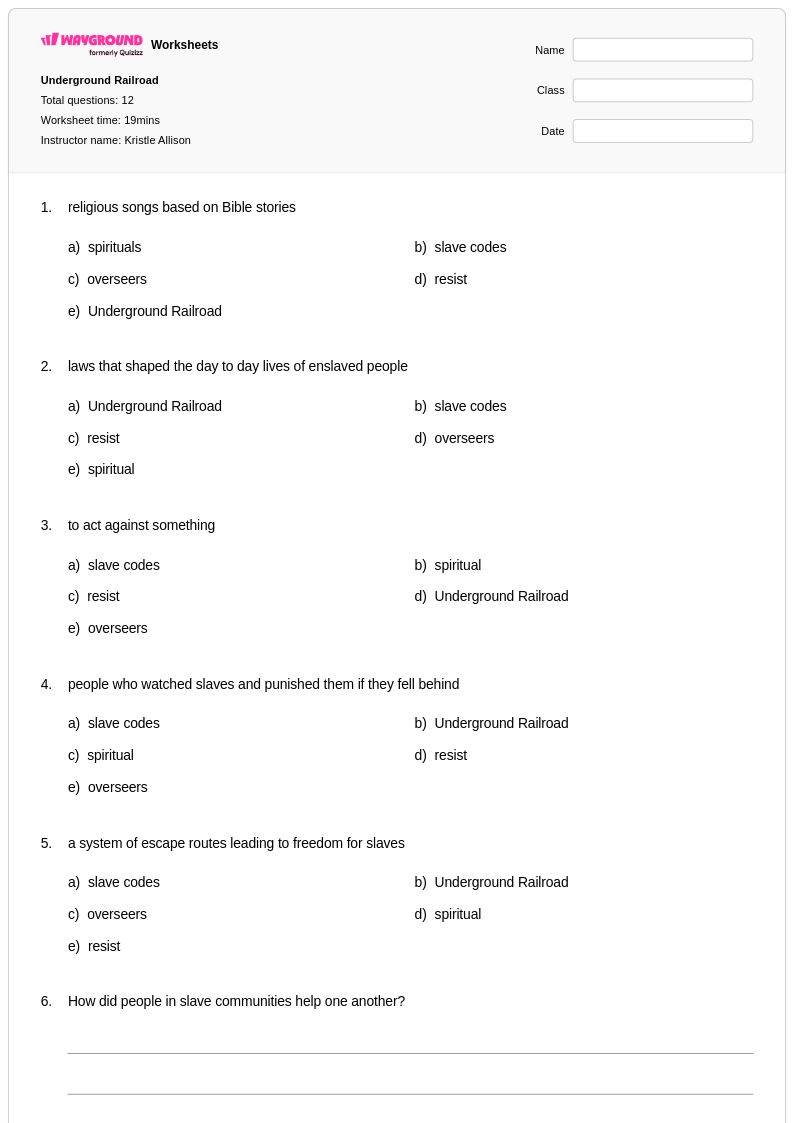
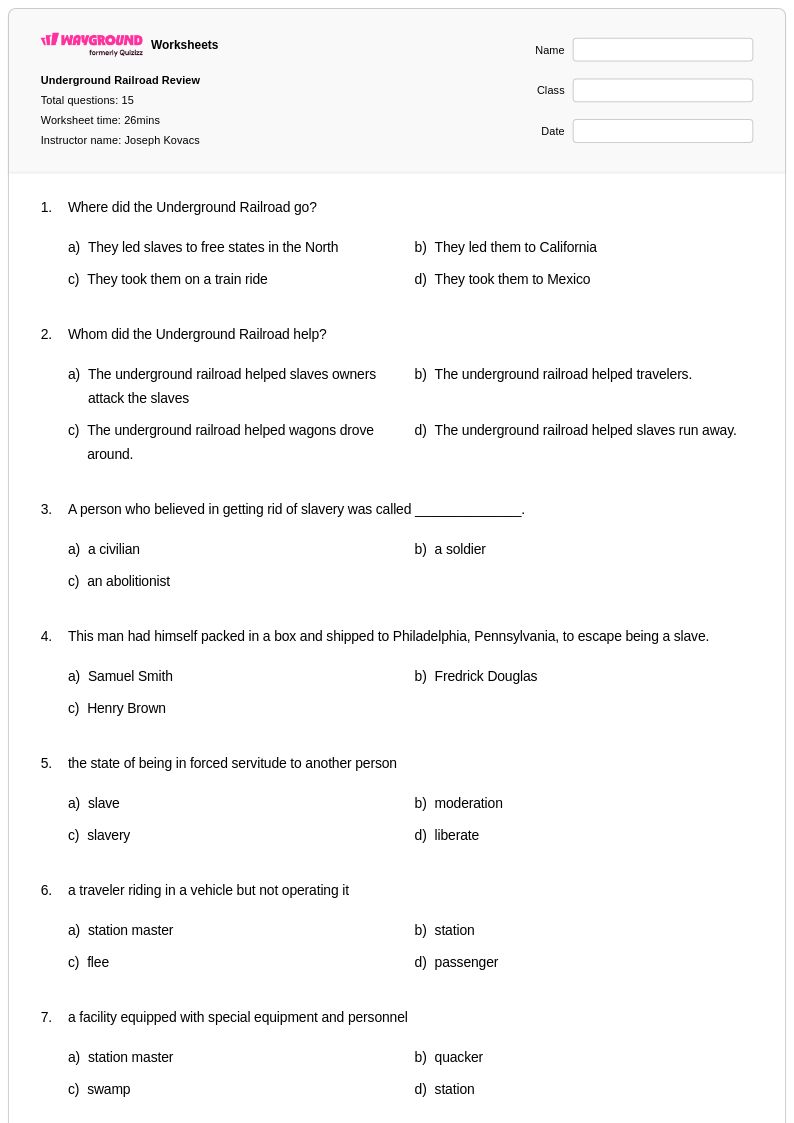
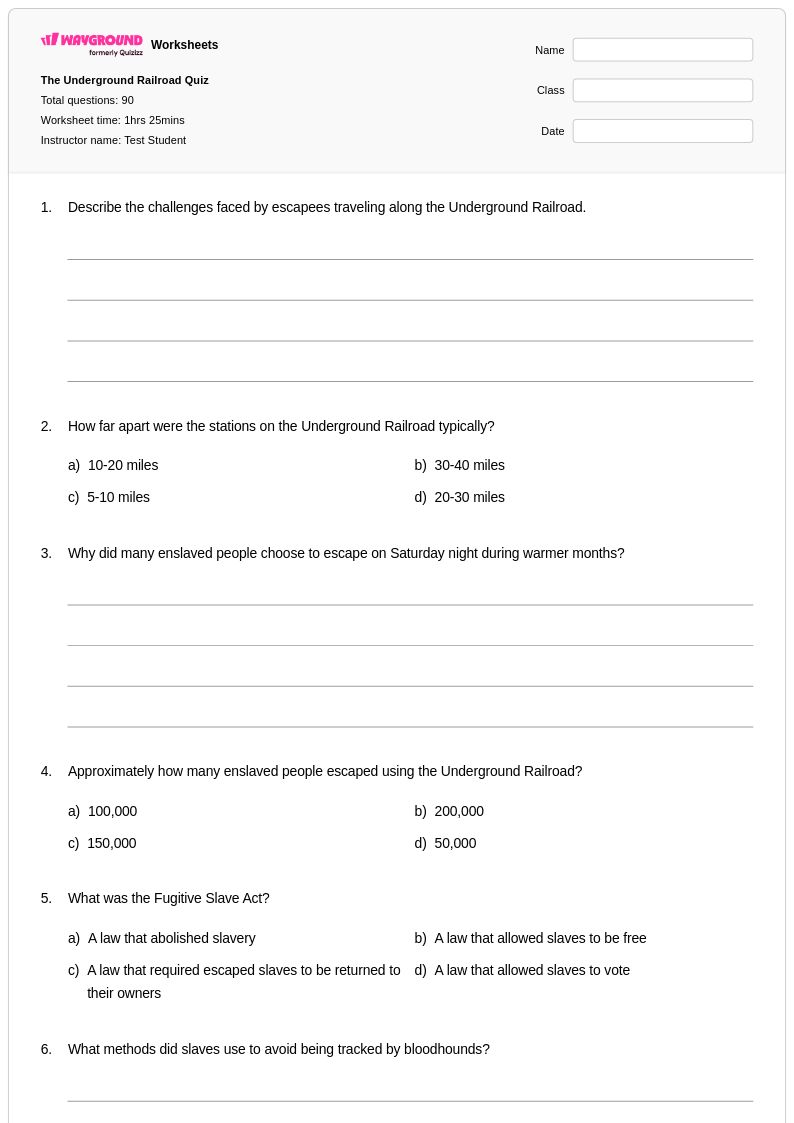
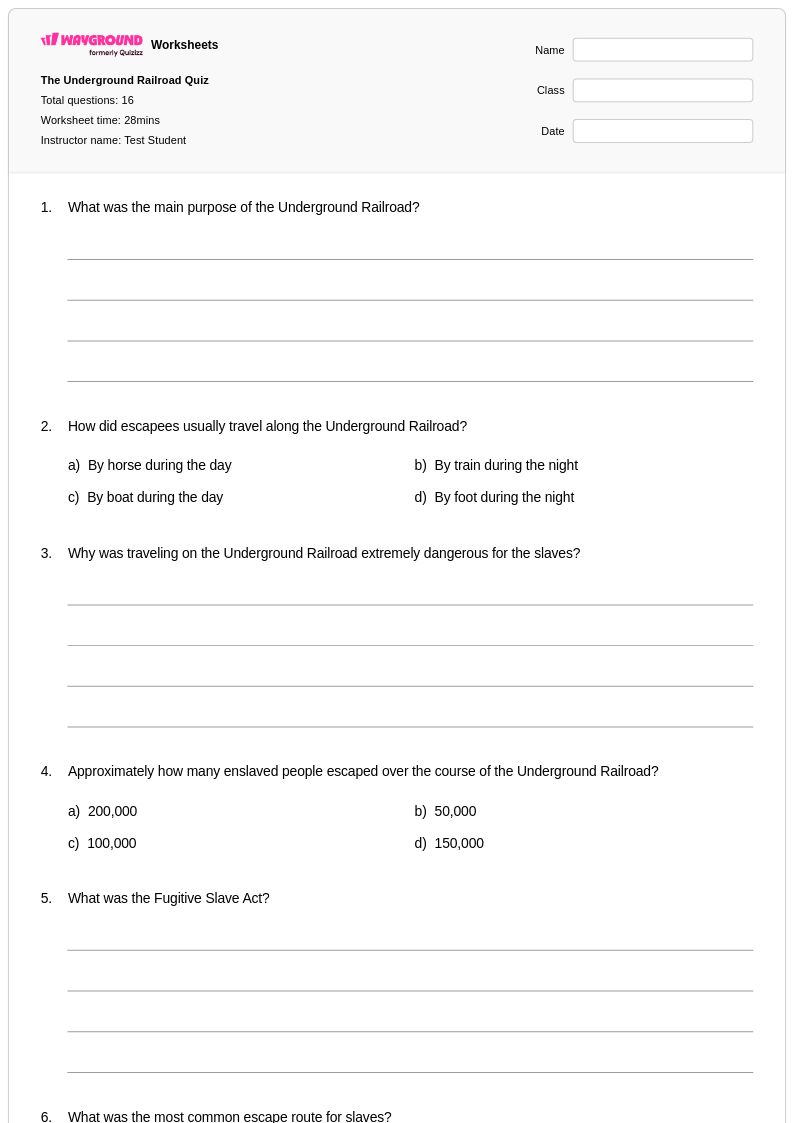
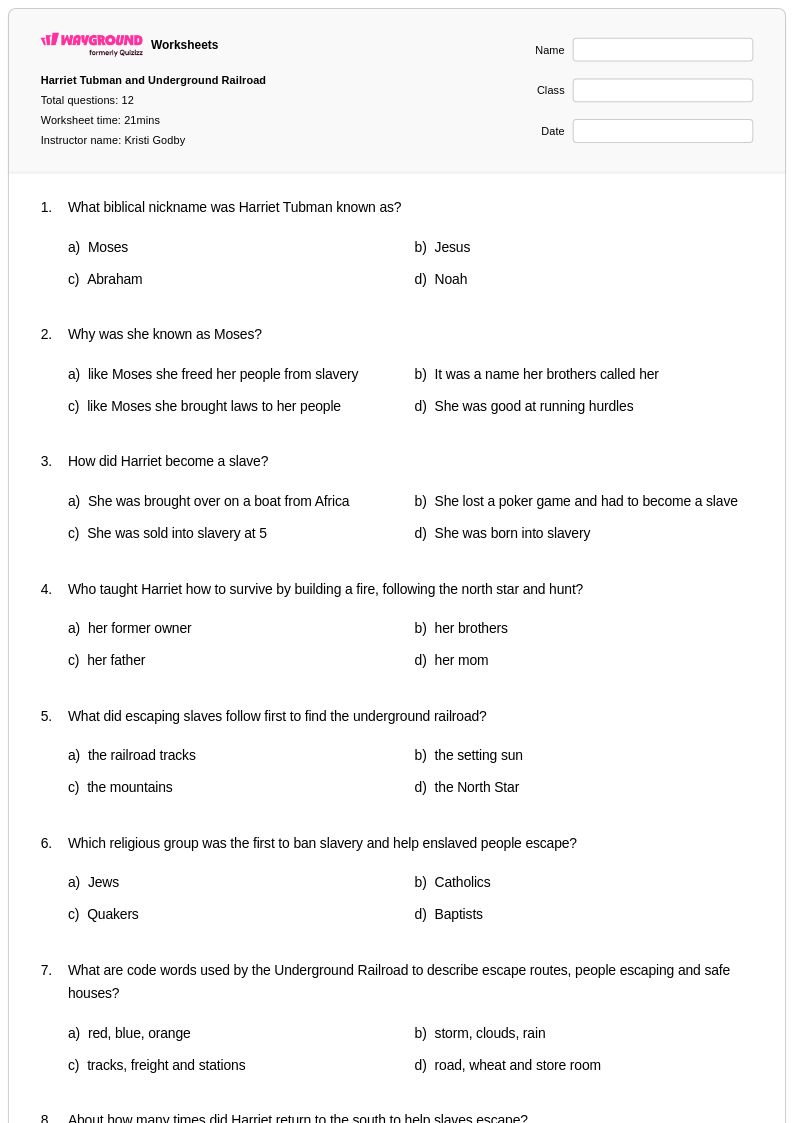
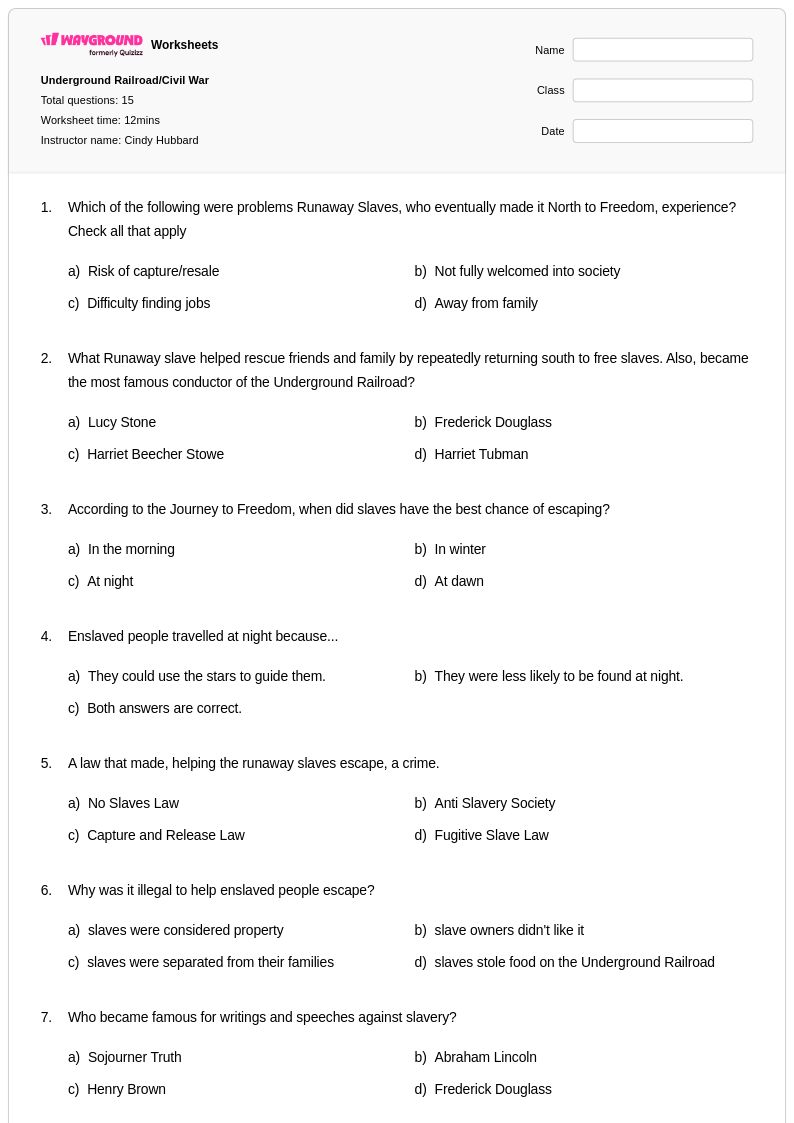
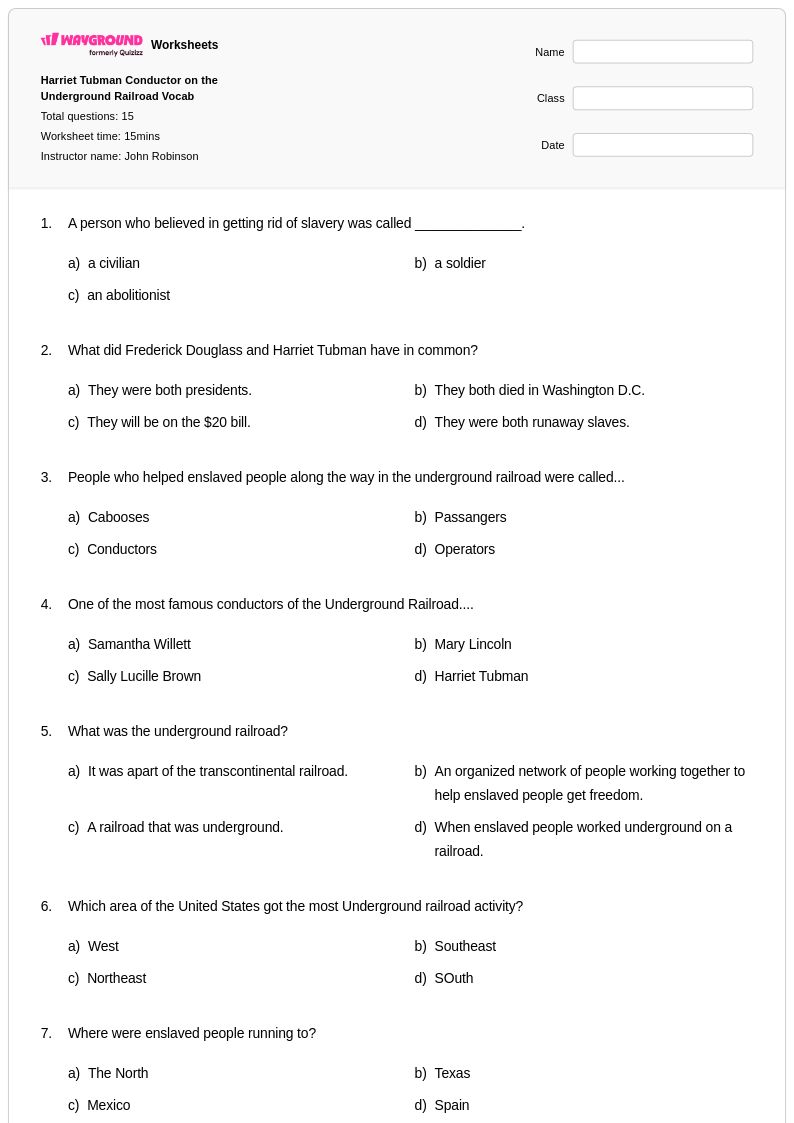
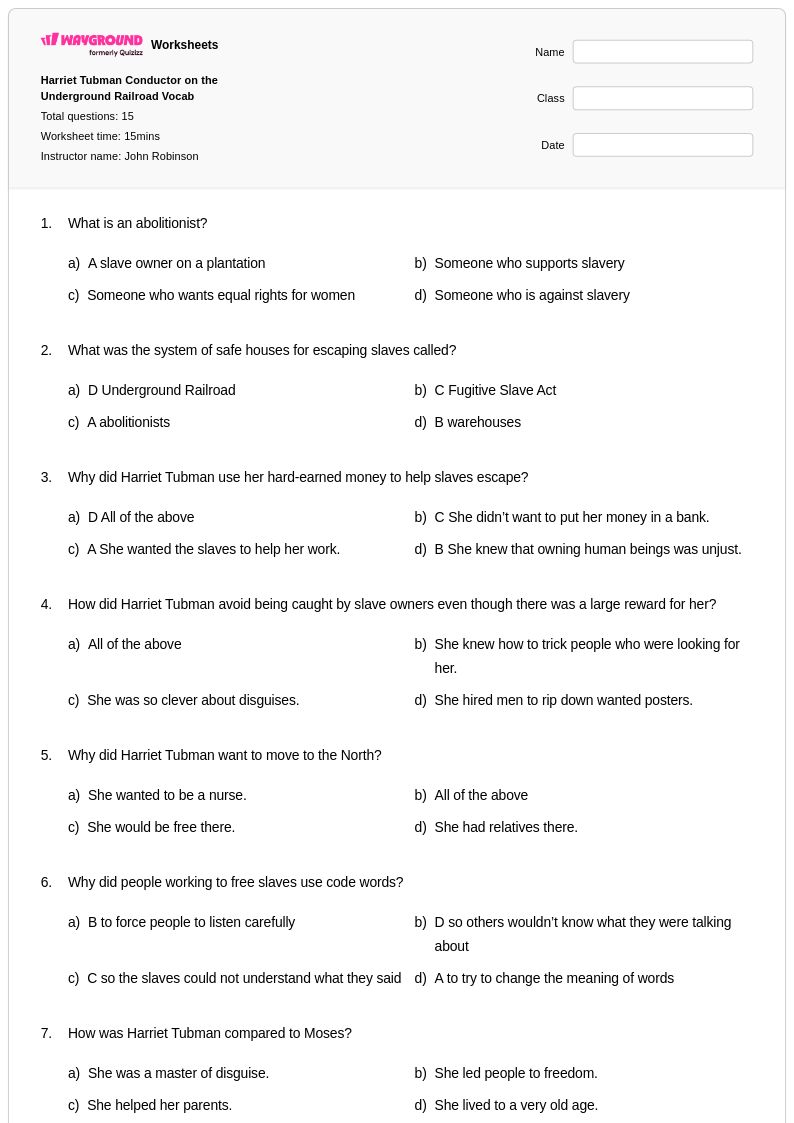
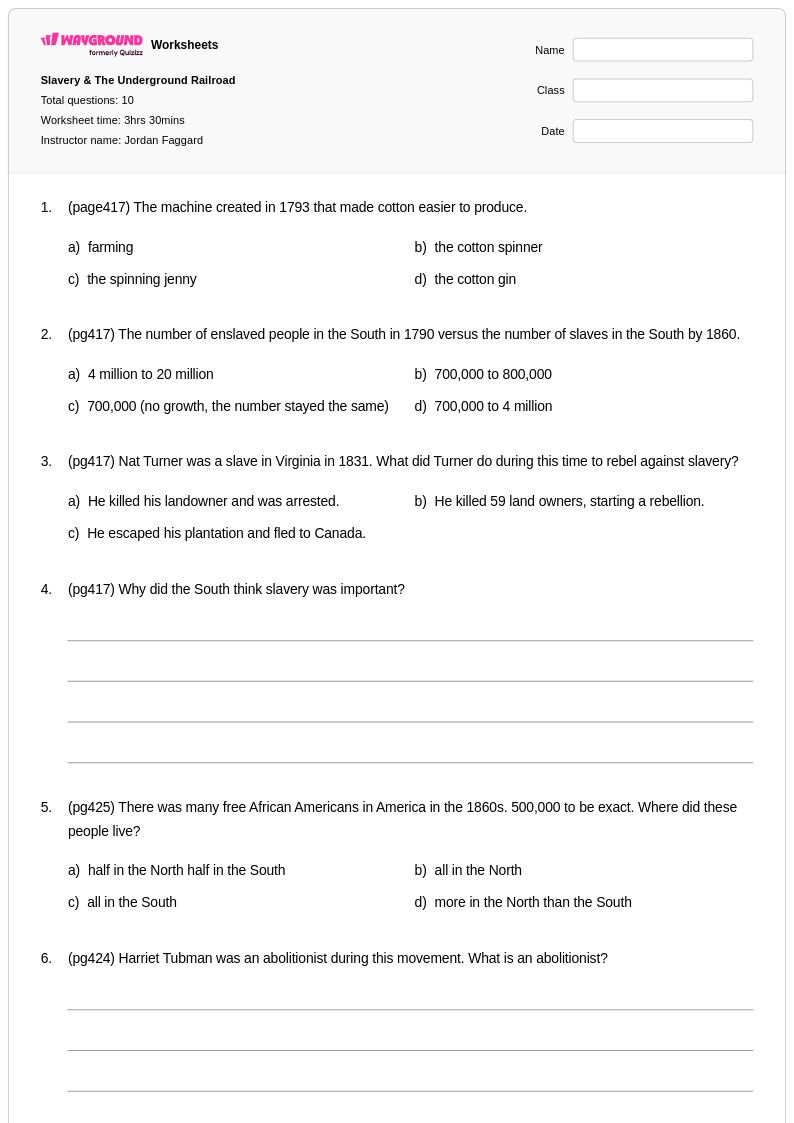
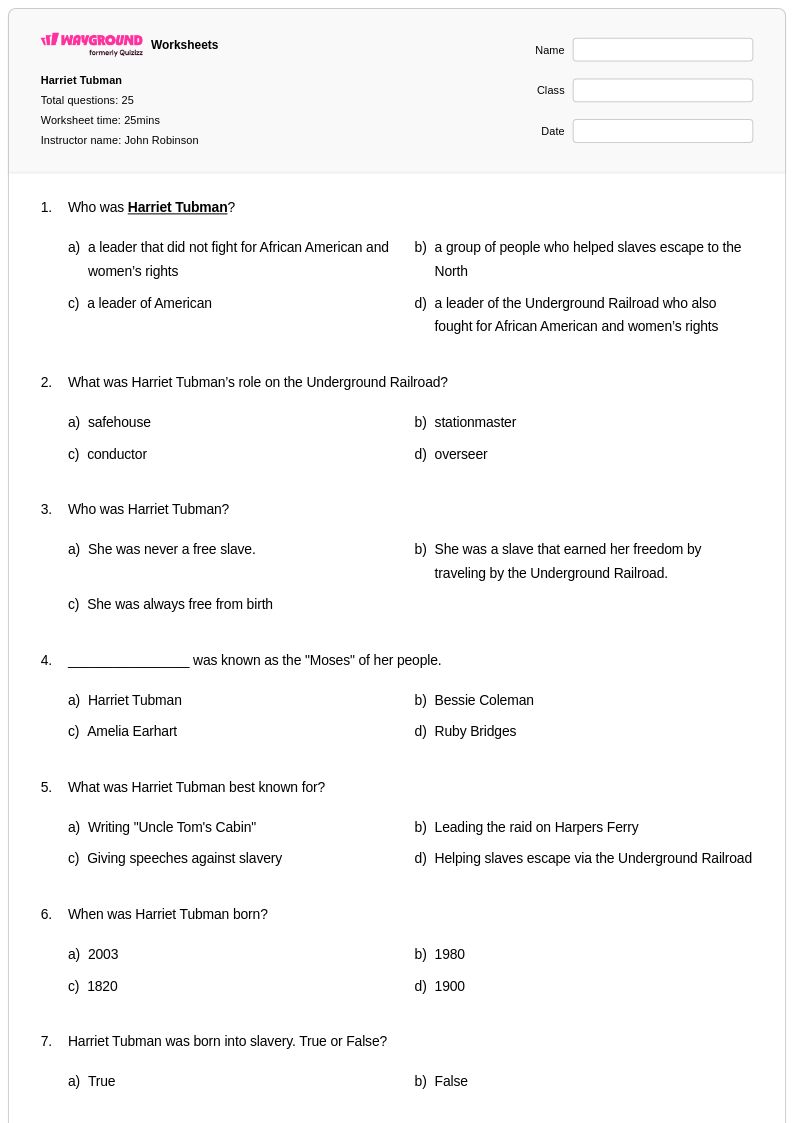
Underground Railroad worksheets for Class 5 students available through Wayground (formerly Quizizz) provide comprehensive educational resources that bring this pivotal chapter of American history to life in age-appropriate ways. These carefully crafted materials help fifth-grade learners understand the complex network of secret routes and safe houses that enslaved people used to escape to freedom in the North and Canada during the 19th century. The worksheets strengthen critical thinking skills as students analyze primary source documents, maps, and historical accounts while developing reading comprehension through engaging narratives about conductors like Harriet Tubman and the brave individuals who risked everything for freedom. Each resource includes detailed answer keys to support both independent study and guided instruction, with free printables offering practice problems that reinforce key concepts about abolitionists, station masters, and the coded language used to maintain secrecy along these dangerous journeys.
Wayground (formerly Quizizz) empowers educators with millions of teacher-created Underground Railroad resources specifically designed for Class 5 social studies instruction, featuring robust search and filtering capabilities that help teachers quickly locate materials aligned with state and national history standards. The platform's differentiation tools enable instructors to customize worksheets based on individual student needs, supporting both remediation for struggling learners and enrichment opportunities for advanced students ready to explore more complex aspects of this resistance movement. Teachers can access these resources in both printable pdf formats for traditional classroom use and digital formats for interactive learning experiences, making lesson planning more efficient while providing flexible options for skill practice. The extensive collection supports various instructional approaches, from whole-class discussions about freedom seekers and their journeys to small-group activities that examine the geographical routes and the network of supporters who made escape possible.
FAQs
How do I teach the Underground Railroad to students?
Teaching the Underground Railroad effectively means grounding students in both the human stories and the historical systems involved. Start by establishing context around the institution of slavery before introducing the clandestine network of routes, conductors, and stations. Incorporate primary sources such as firsthand accounts, maps of escape routes, and coded spirituals and quilt patterns to build historical empathy alongside factual understanding. Structuring lessons around key figures like Harriet Tubman helps students connect broader historical forces to individual acts of moral courage.
What are good classroom activities for teaching the Underground Railroad?
Effective activities include timeline construction that sequences major events and legislation alongside escape narratives, character studies of conductors and freedom seekers, and analysis of coded communication systems embedded in spirituals and quilts. Map-based activities tracing escape routes from the South to the North and Canada help students grasp the geographic and logistical realities of the network. Primary source analysis and examination of the political and social conditions that made the Underground Railroad both necessary and dangerous deepen historical thinking skills.
What common mistakes do students make when learning about the Underground Railroad?
Students frequently mischaracterize the Underground Railroad as a literal railroad with fixed infrastructure rather than a loosely organized, ever-shifting network of secret routes and safe houses. Another common misconception is overly simplifying the movement around a single figure like Harriet Tubman, which obscures the thousands of ordinary people, both Black and white, who risked severe consequences to participate. Students also sometimes underestimate the danger involved or treat escape as a common occurrence, when in reality most enslaved people who attempted escape faced recapture.
How do I use Underground Railroad worksheets in my classroom?
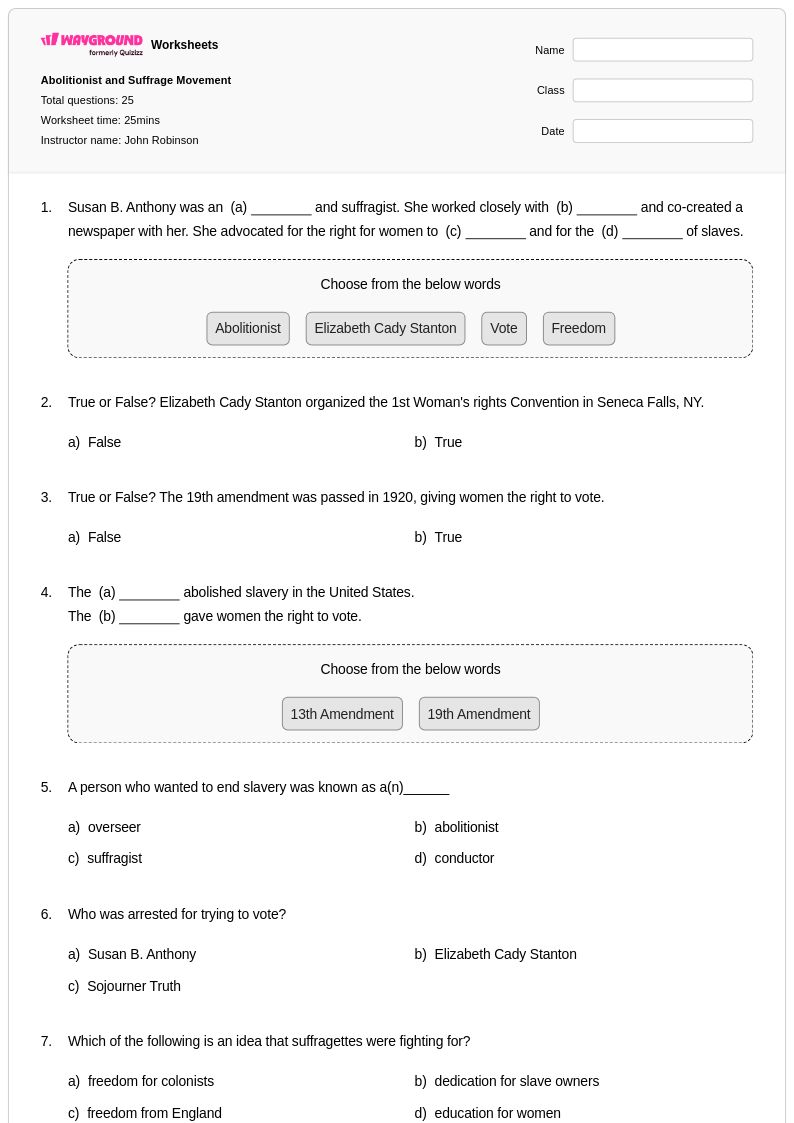
Underground Railroad worksheets on Wayground are available as printable PDFs for traditional classroom use and in digital formats for technology-integrated learning environments, including the option to host them as a quiz directly on Wayground. This flexibility makes them suitable for whole-class instruction, small group work, independent study, or remote learning assignments. Teachers can use them for initial concept introduction, skill-building practice, or targeted review depending on where students are in their study of the topic.
How can I support diverse learners when teaching the Underground Railroad?
Wayground's accommodation tools allow teachers to differentiate instruction for individual students without disrupting the rest of the class. Features such as Read Aloud support, reduced answer choices, extended time, and adjustable reading modes can be assigned per student and are saved for reuse across future sessions. For a topic as content-dense and emotionally layered as the Underground Railroad, these tools help ensure that all learners, regardless of reading level or learning need, can access the historical material with appropriate support.
How does teaching the Underground Railroad connect to broader U.S. history standards?
The Underground Railroad connects directly to social studies standards around slavery, antebellum America, the Civil War era, and the ongoing struggle for civil rights. It also supports standards tied to primary source analysis, historical empathy, and civic values. Because the network involved political, geographic, social, and moral dimensions, it is well-suited to interdisciplinary instruction that touches on literature, geography, and ethics alongside U.S. history.