
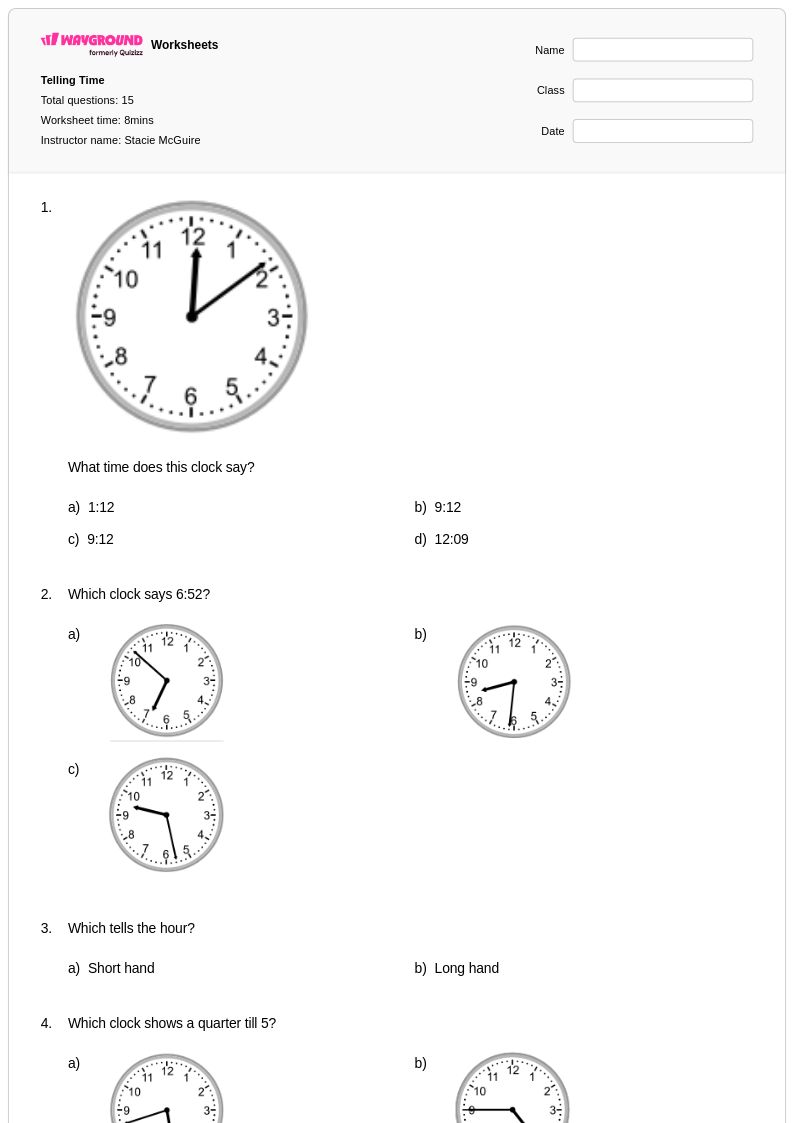
15 Q
3rd
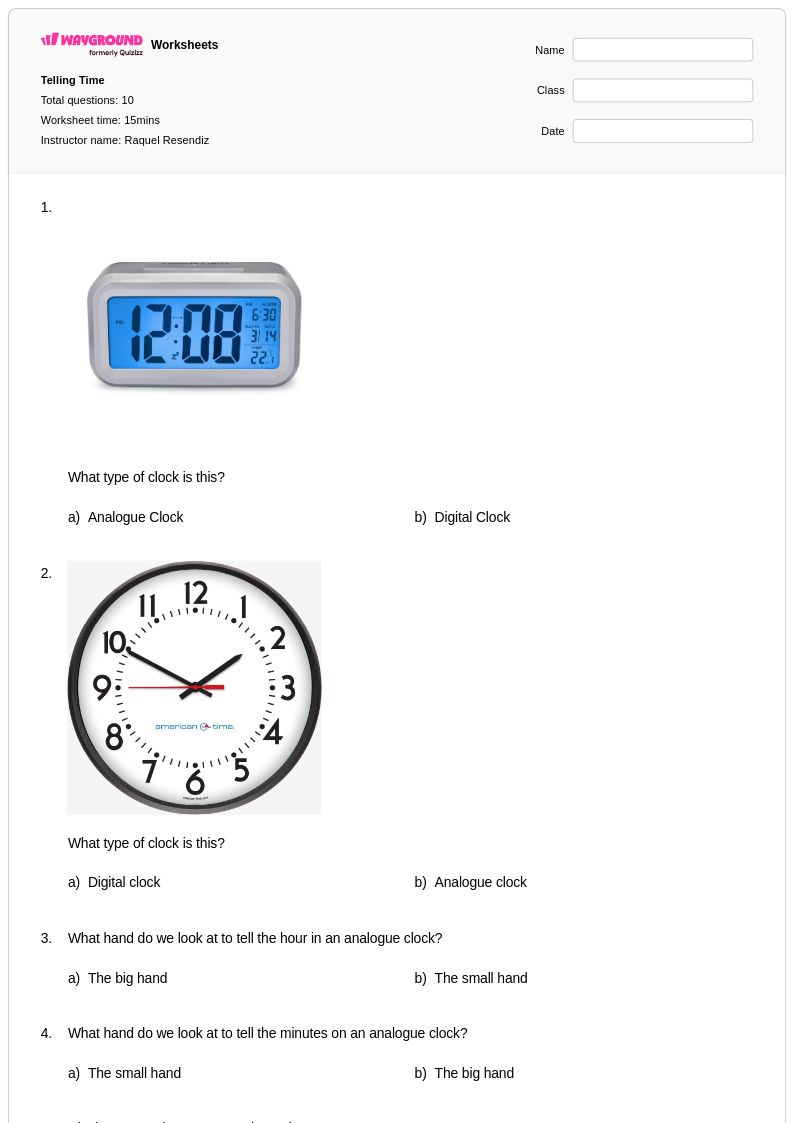
10 Q
2nd - 3rd
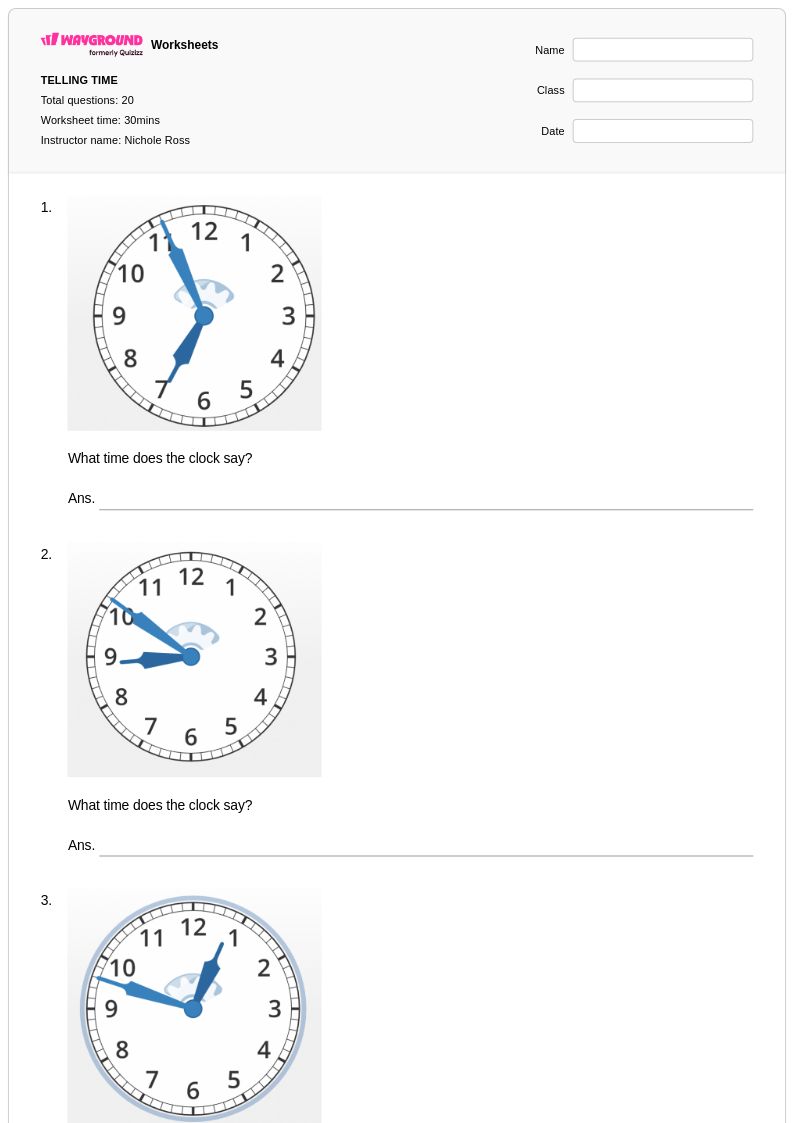
20 Q
3rd
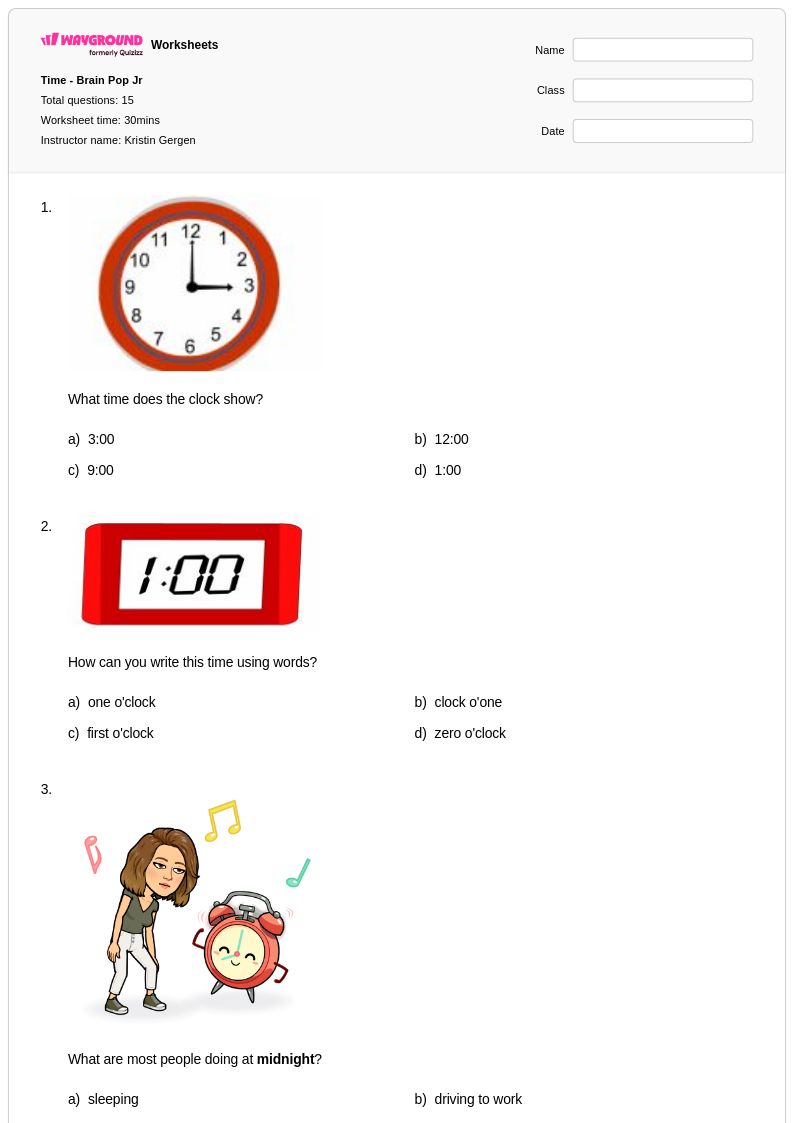
15 Q
2nd - 5th
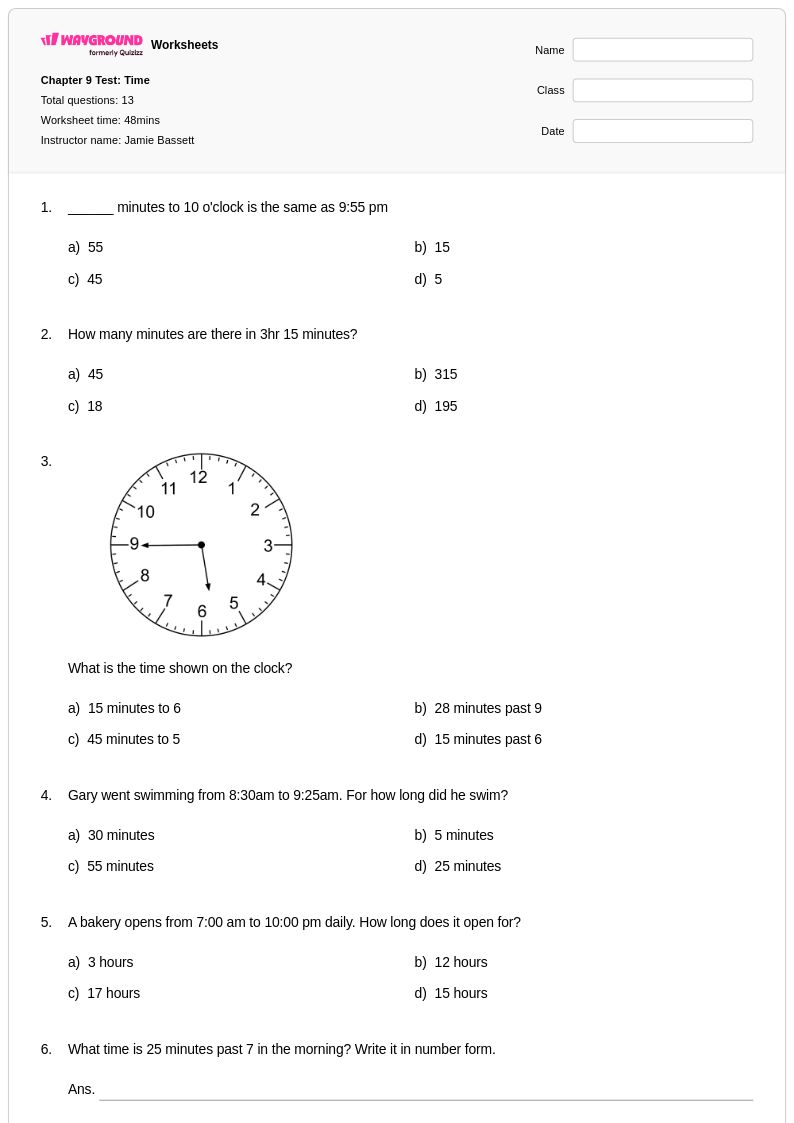
13 Q
3rd
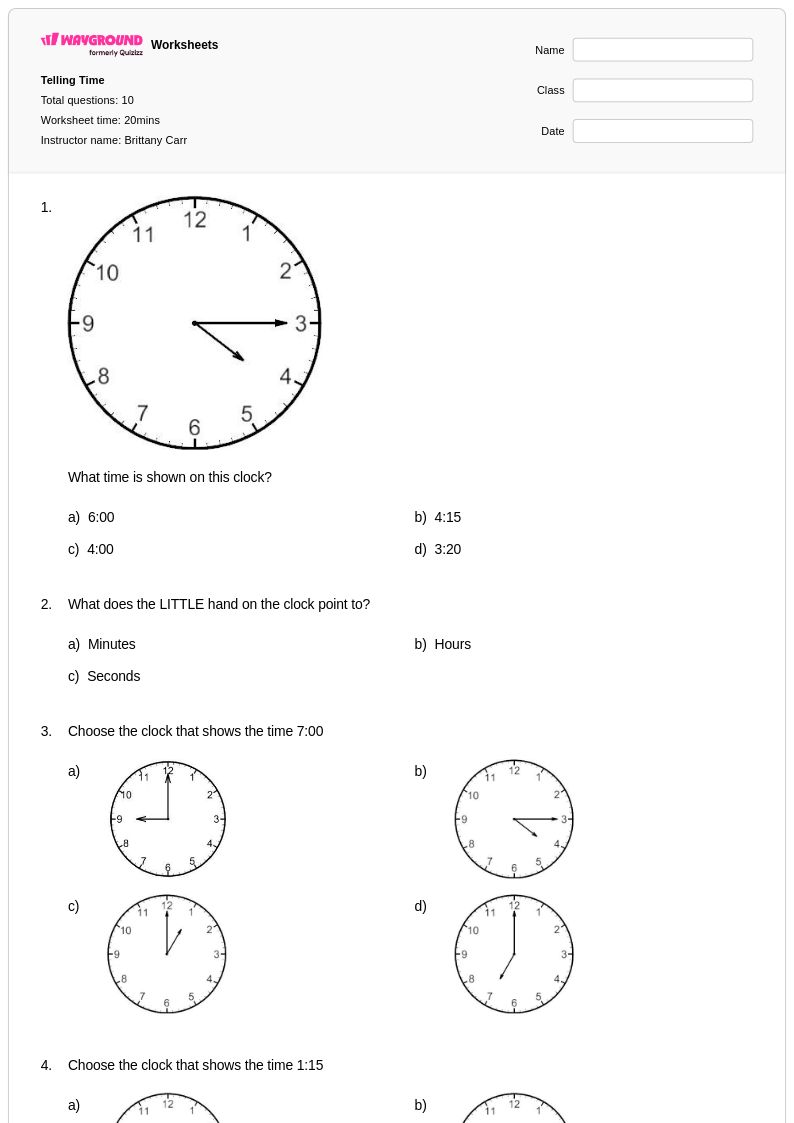
10 Q
2nd - 3rd
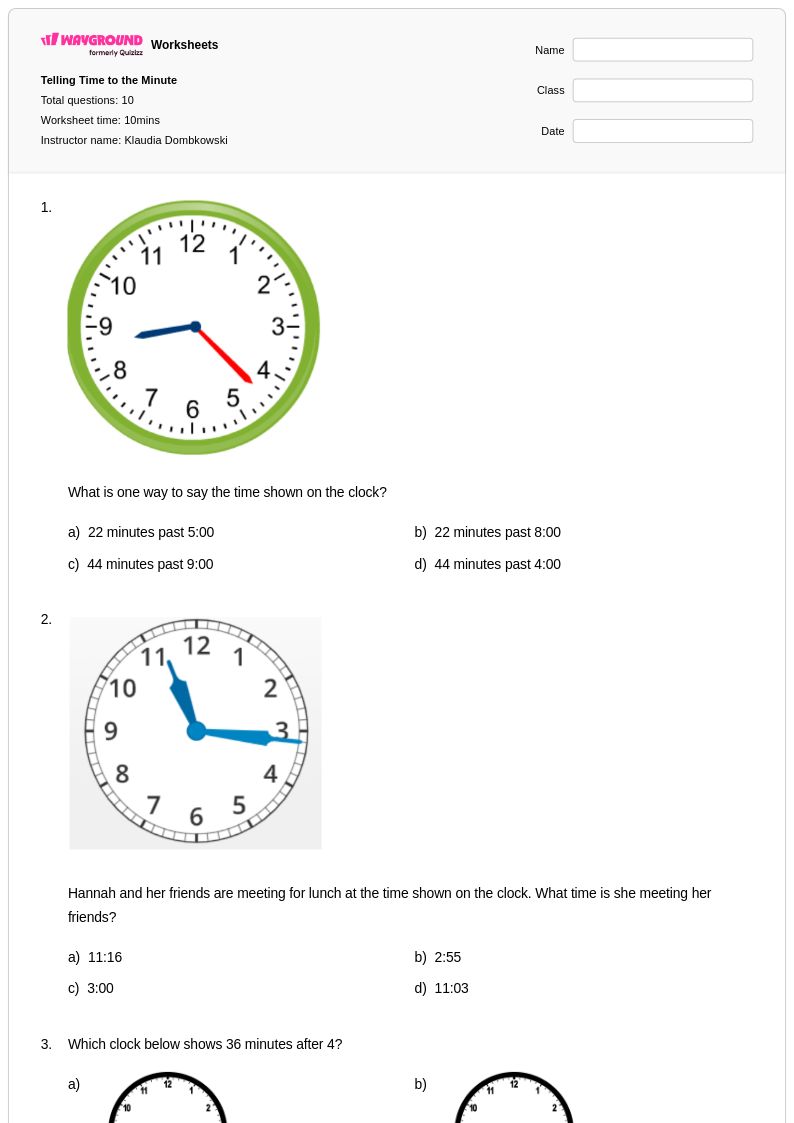
10 Q
3rd
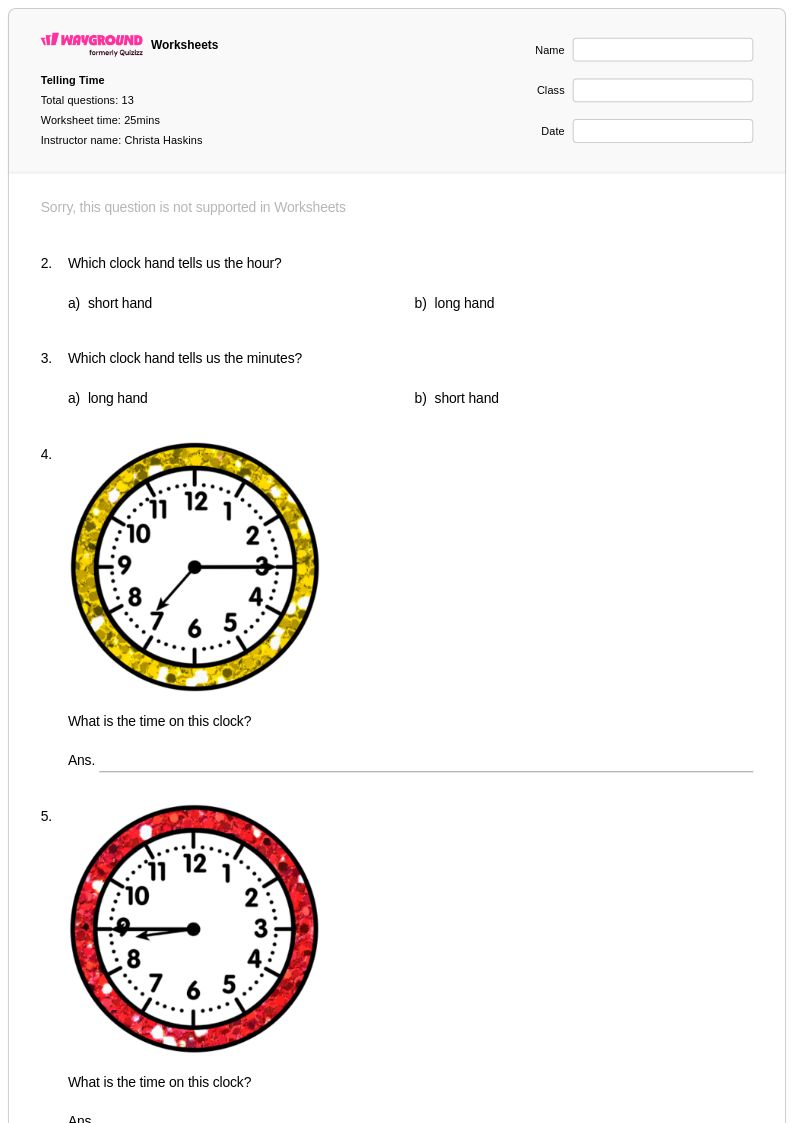
18 Q
3rd
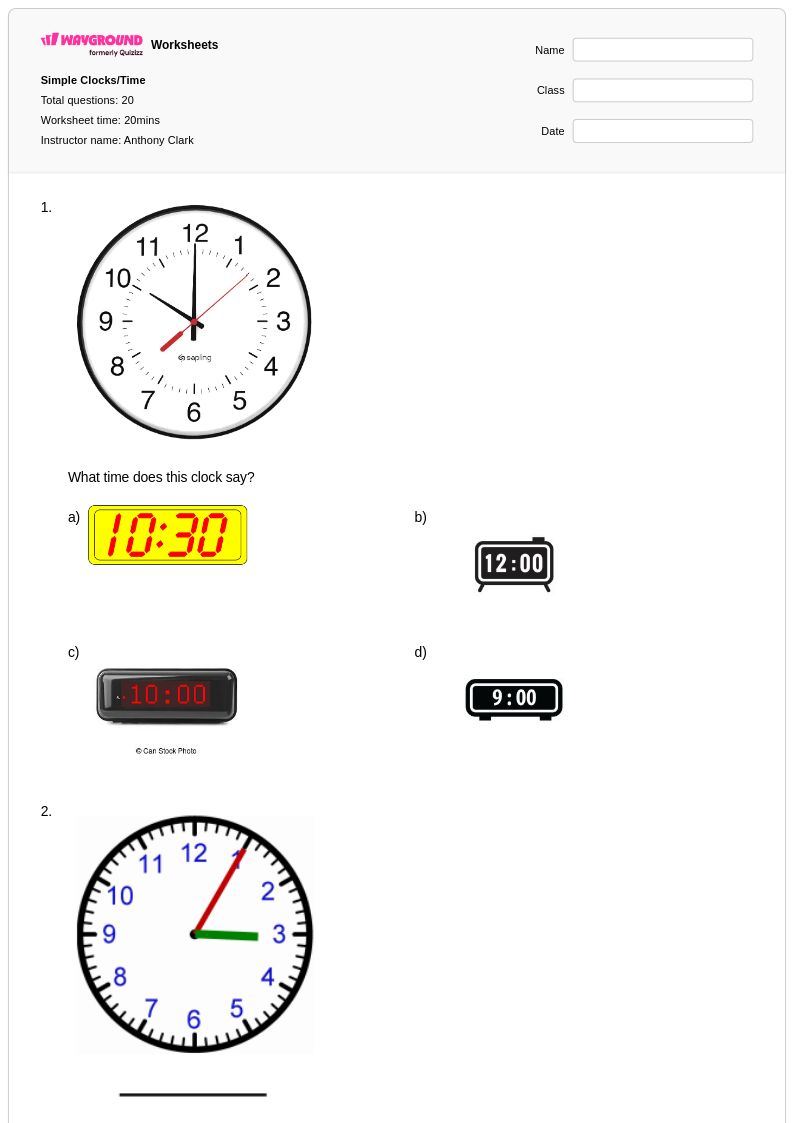
20 Q
2nd - Uni
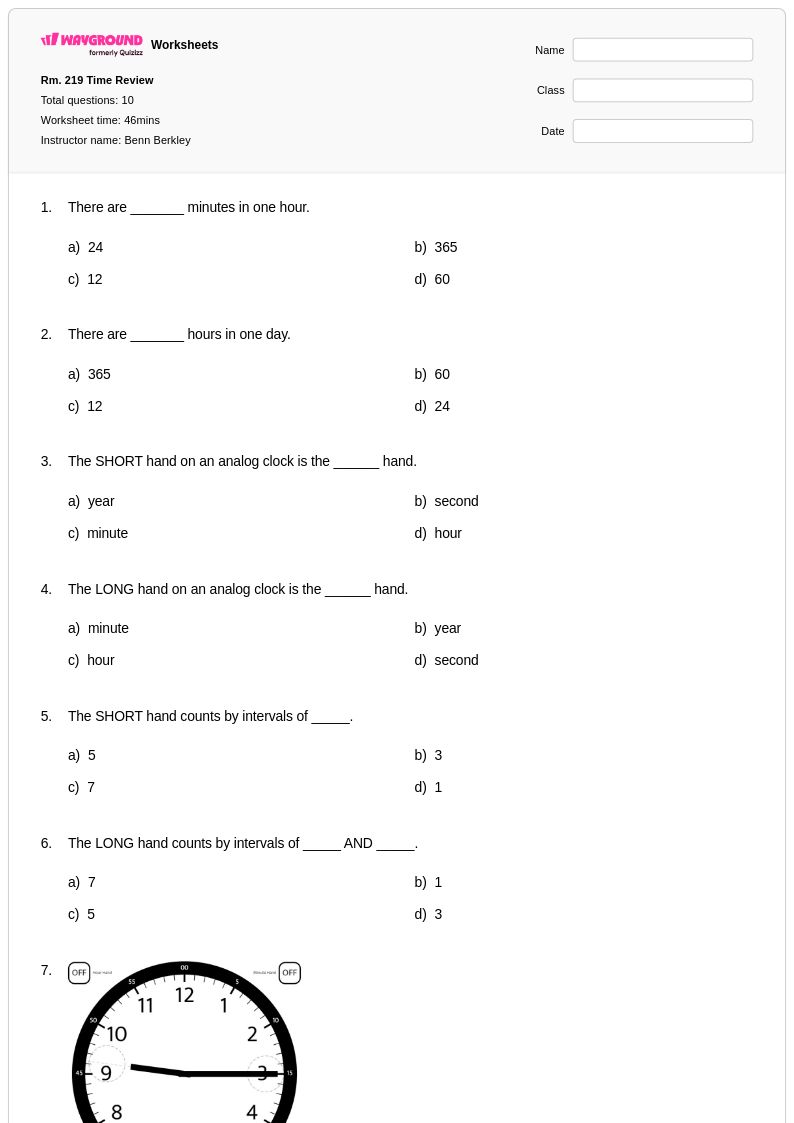
10 Q
2nd - 4th
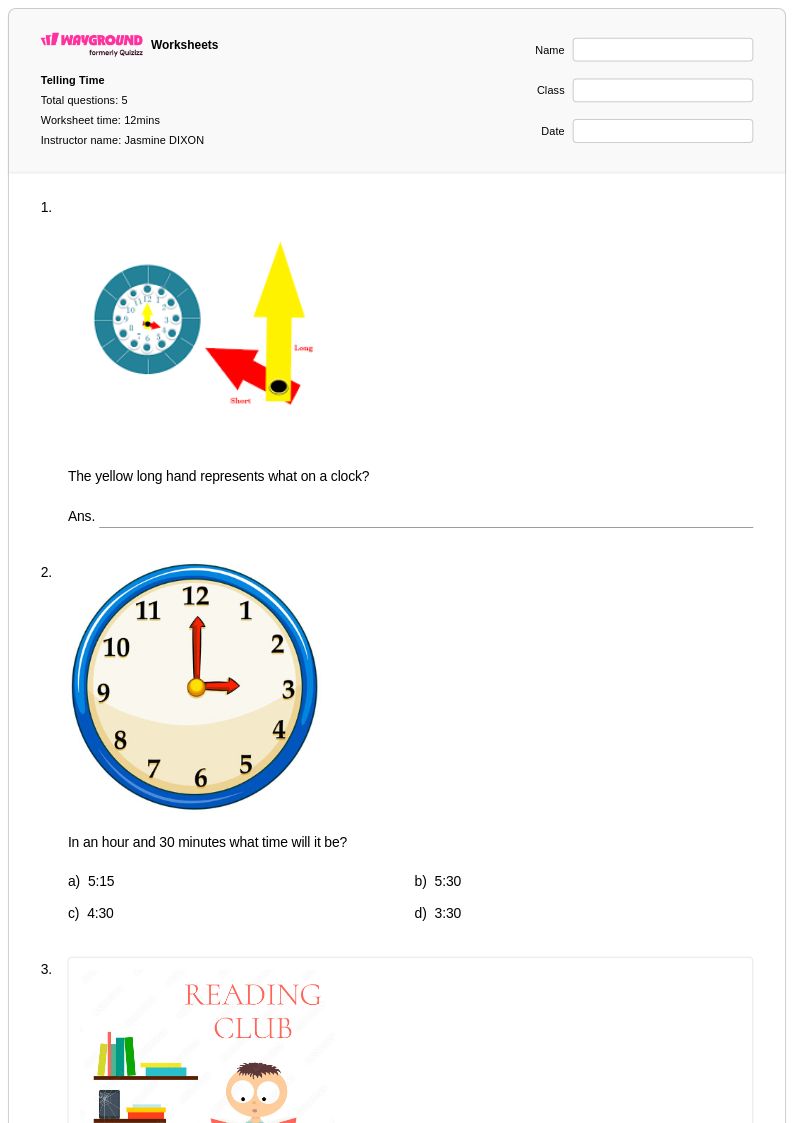
6 Q
3rd
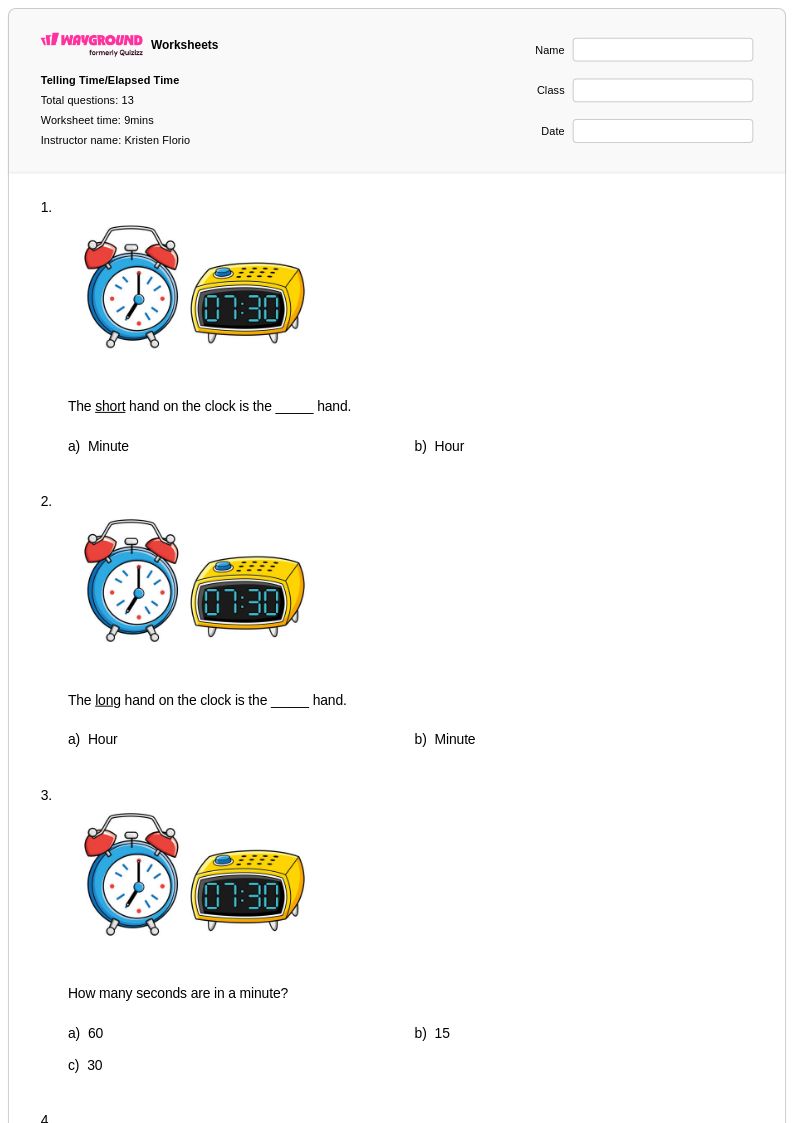
13 Q
3rd - 4th
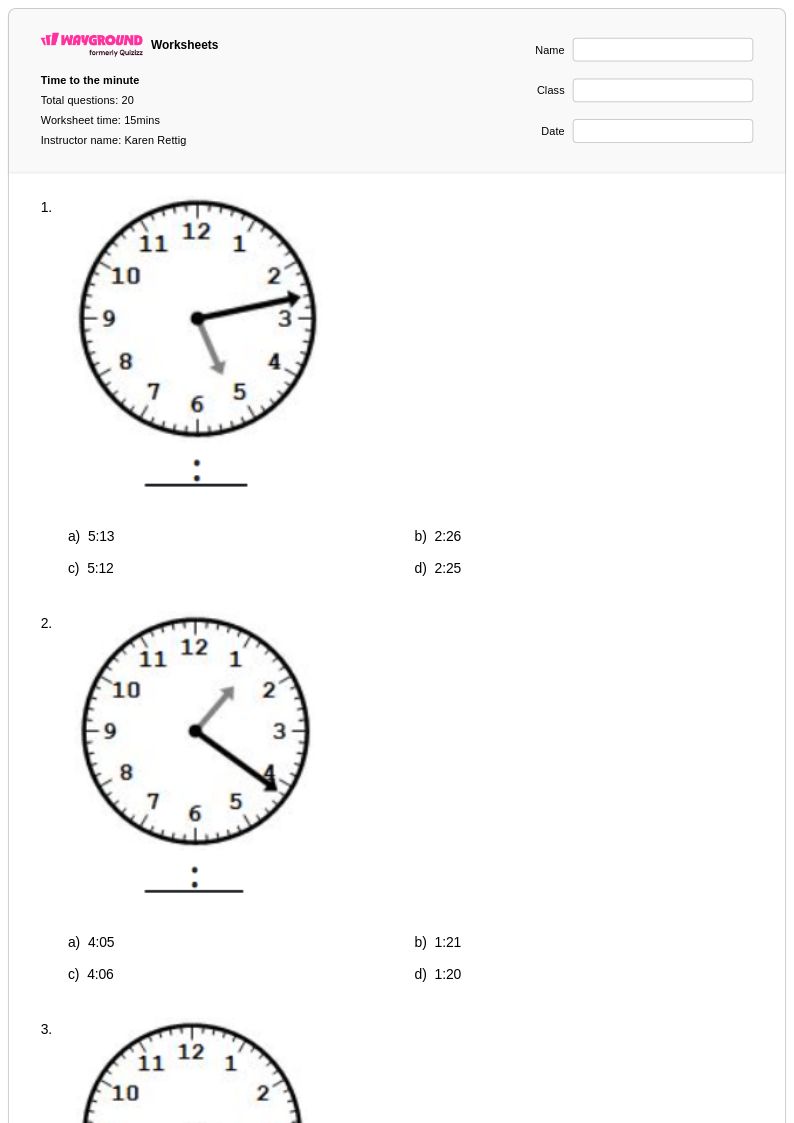
20 Q
2nd - 4th

11 Q
3rd
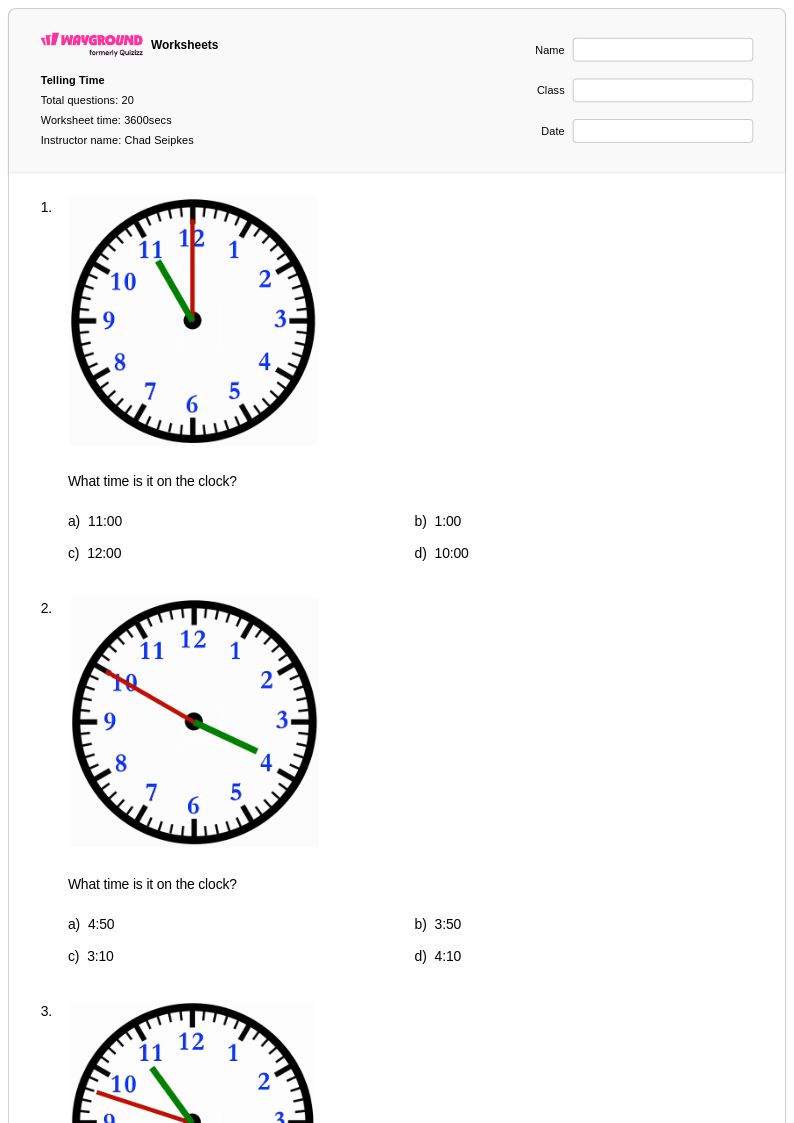
20 Q
3rd - 4th
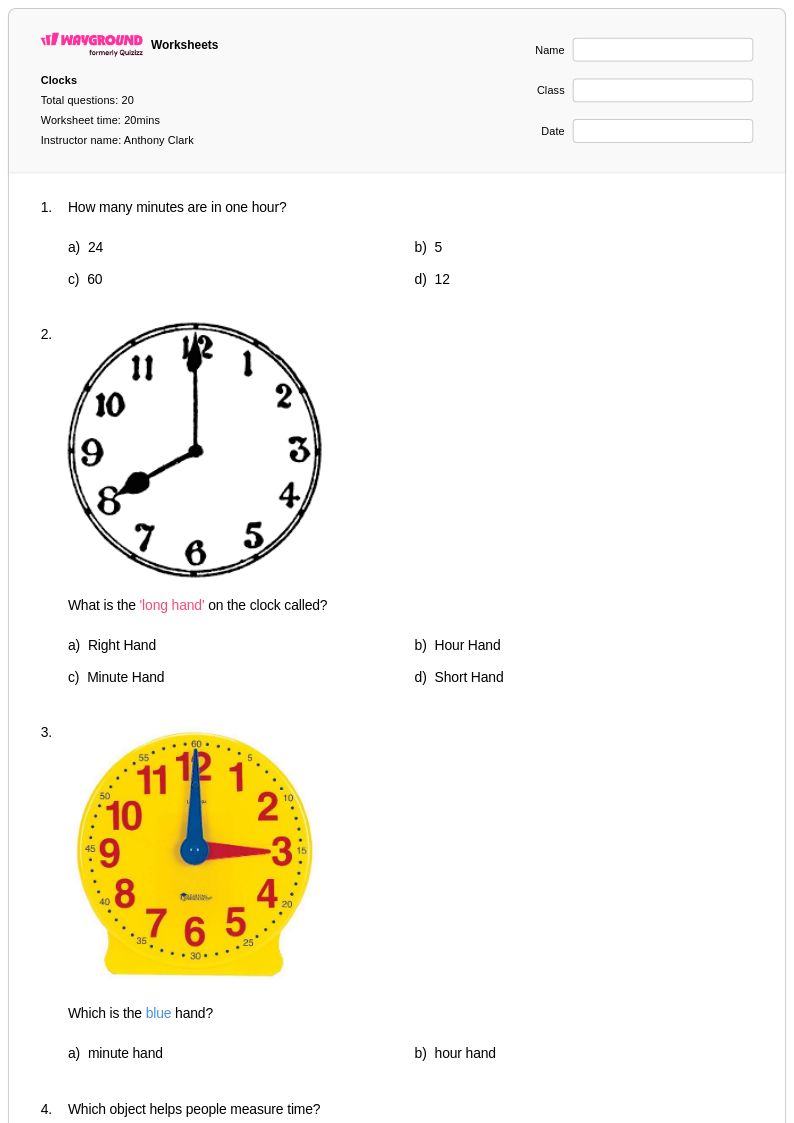
20 Q
1st - Uni
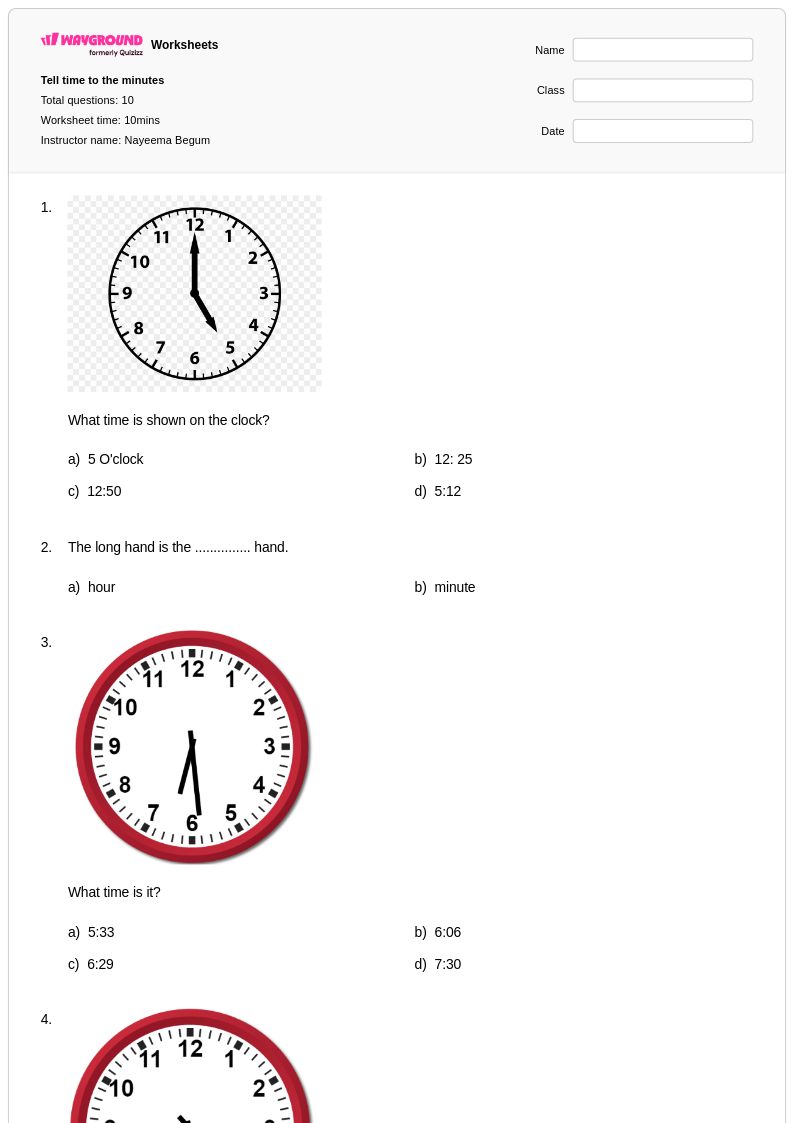
10 Q
3rd
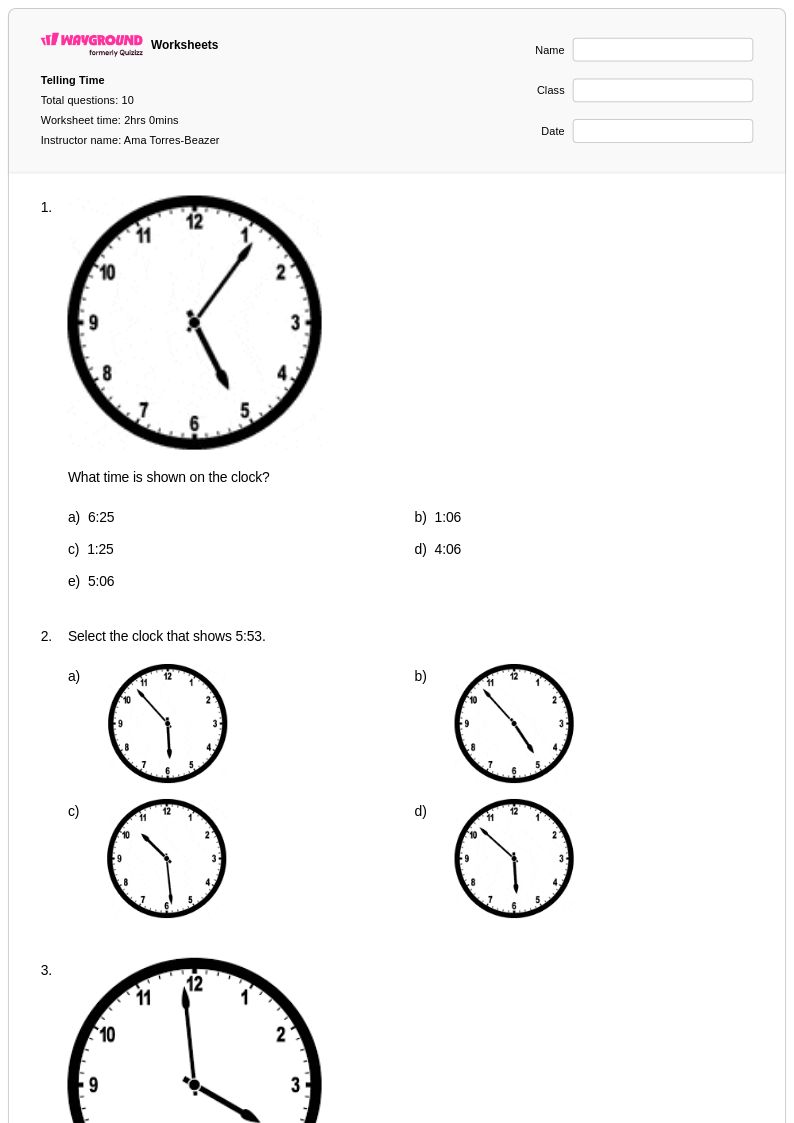
10 Q
3rd - 4th
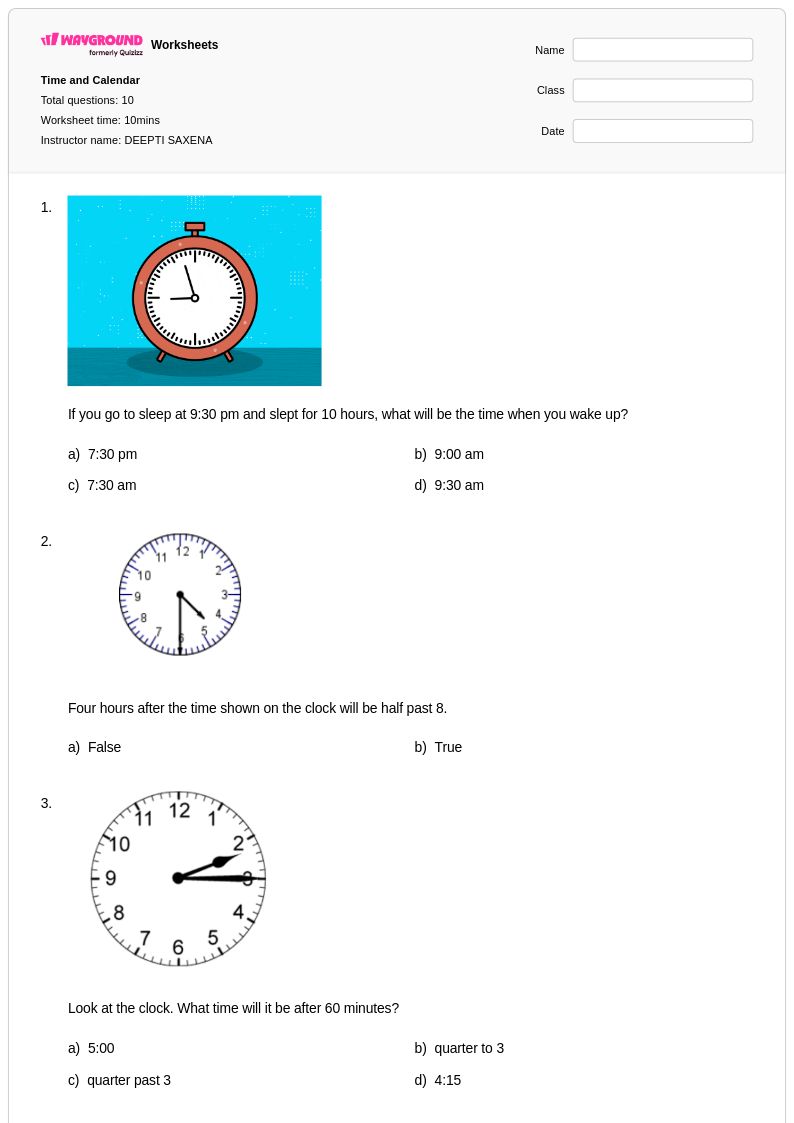
10 Q
3rd - 4th
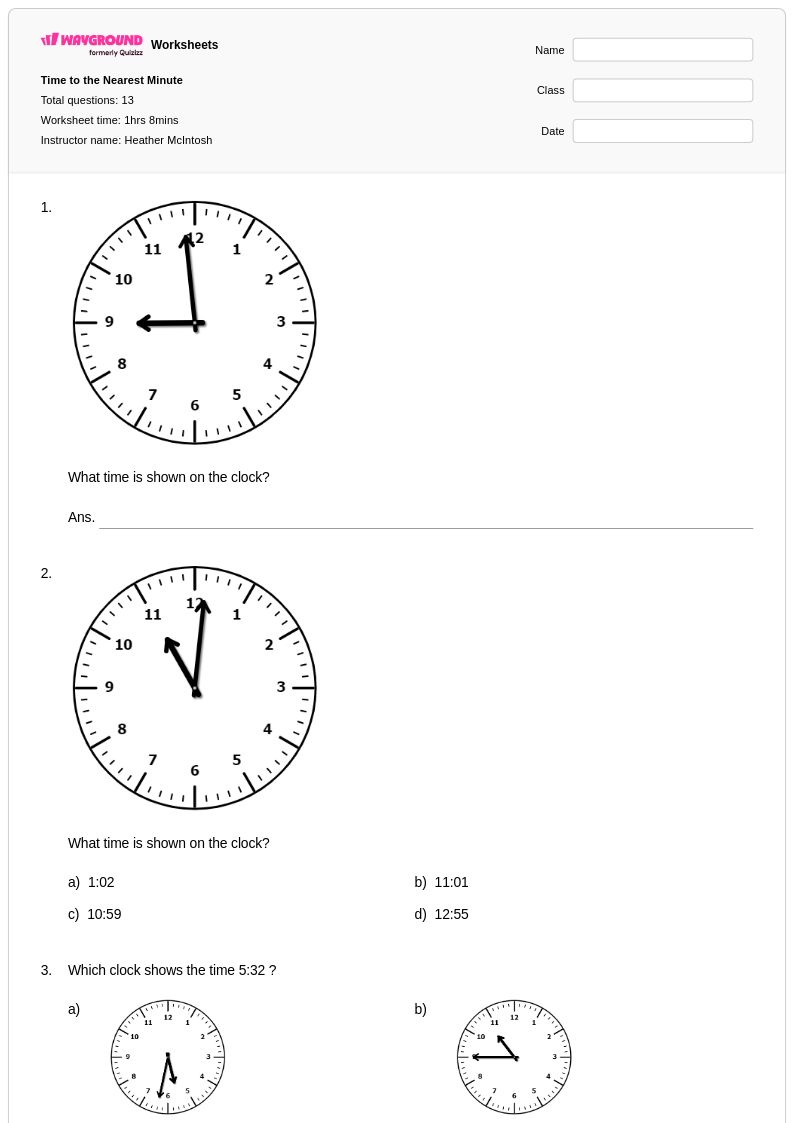
13 Q
3rd
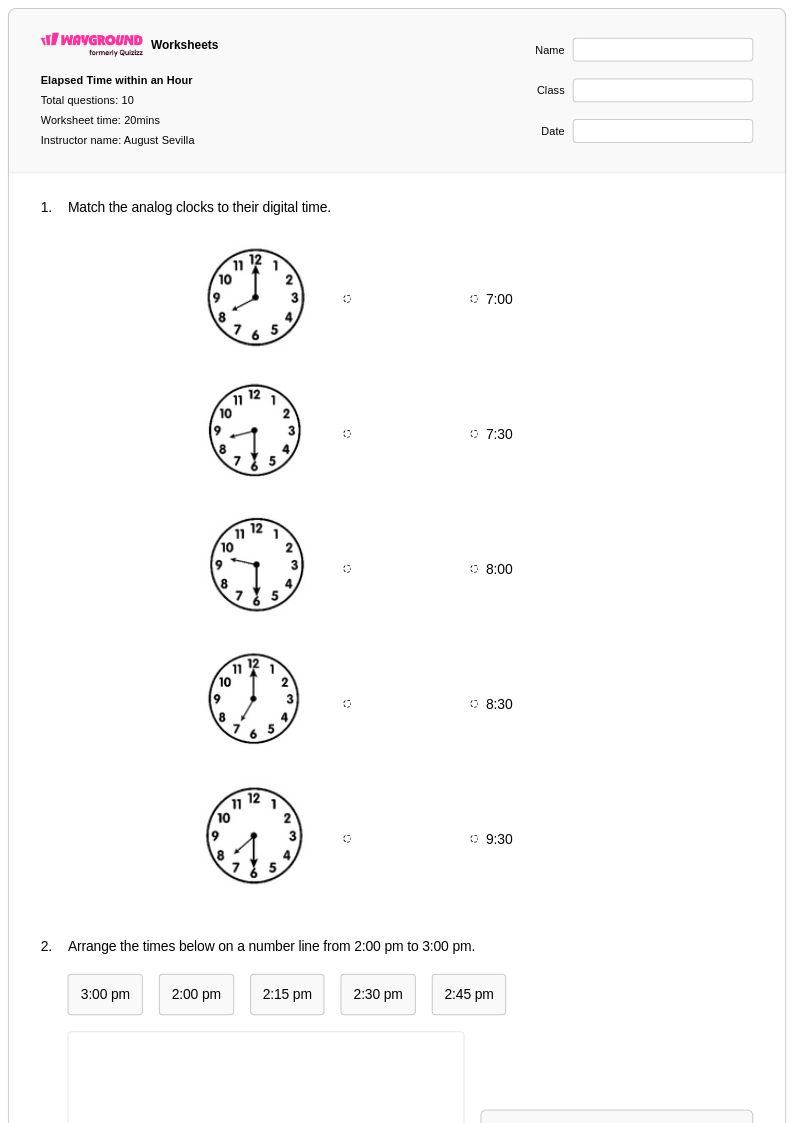
10 Q
3rd
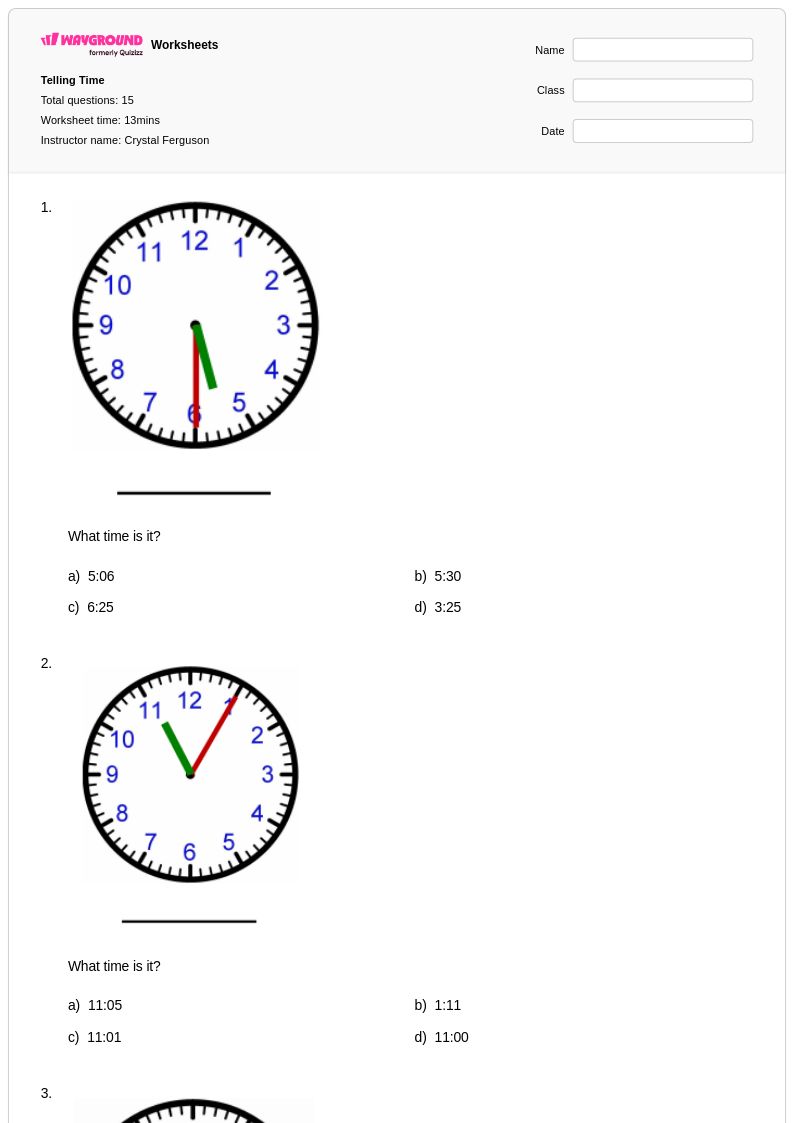
15 Q
3rd
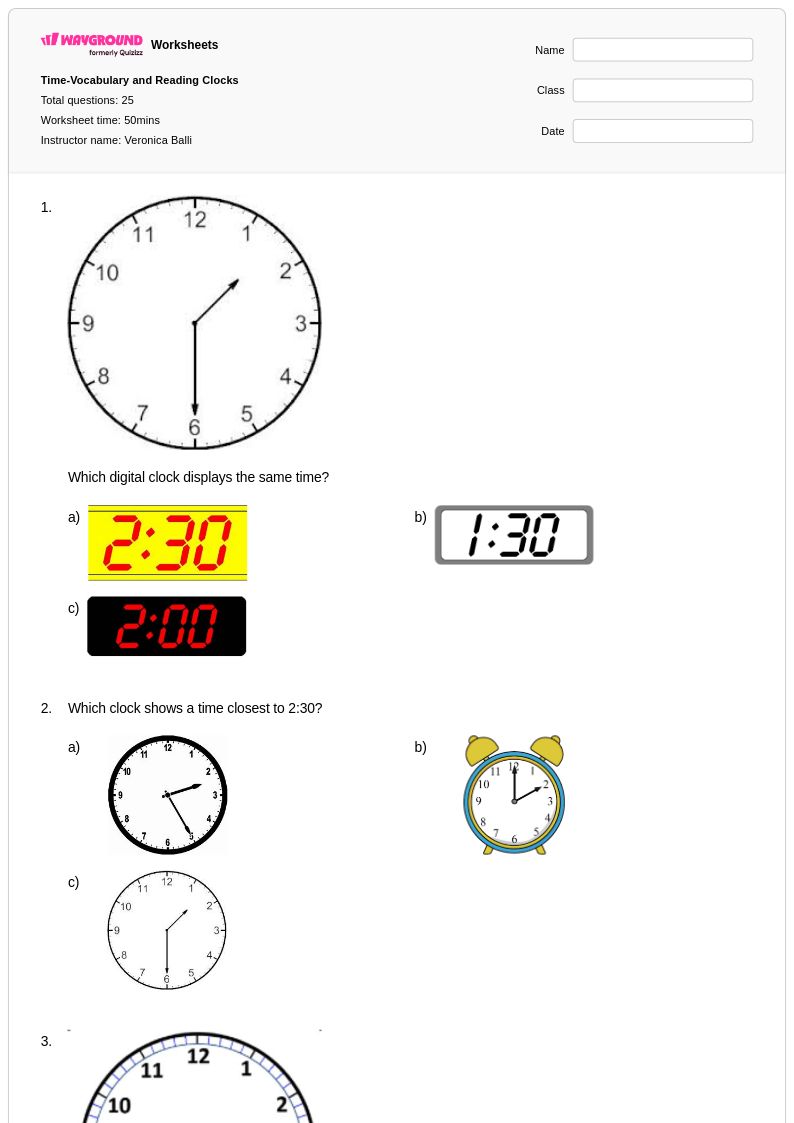
25 Q
3rd
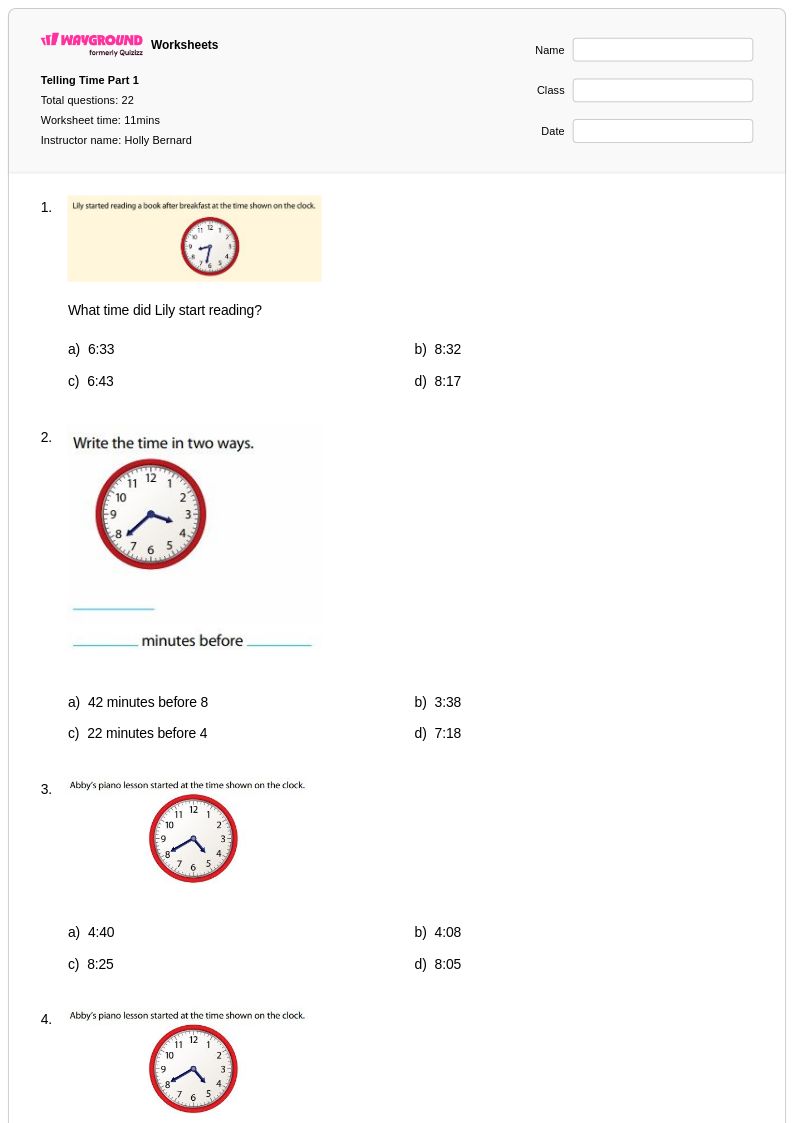
22 Q
3rd
Explore Other Subject Worksheets for class 3
Explore printable Understanding Clocks worksheets for Class 3
Understanding clocks represents a fundamental milestone in Class 3 mathematics education, and Wayground's comprehensive worksheet collection provides educators with expertly designed resources to master this essential time-telling skill. These meticulously crafted worksheets guide third-grade students through the complexities of analog and digital clock reading, covering everything from identifying hour and minute hands to understanding the relationship between different time formats. Each worksheet incorporates carefully sequenced practice problems that build confidence systematically, moving from basic hour recognition to more advanced concepts like reading time to the nearest five minutes and understanding elapsed time. Teachers can access these free printables with complete answer keys, ensuring efficient grading and immediate feedback opportunities that reinforce learning objectives and help students develop fluency in time interpretation.
Wayground's extensive library of teacher-created resources transforms how educators approach clock comprehension instruction for Class 3 students, offering millions of high-quality materials that can be easily searched and filtered to match specific classroom needs. The platform's robust differentiation tools enable teachers to customize worksheets based on individual student abilities, providing scaffolded support for struggling learners while offering enrichment opportunities for advanced students ready to tackle more complex time concepts. These versatile resources are available in both printable PDF formats for traditional classroom use and digital formats for technology-integrated learning environments, making them ideal for lesson planning, targeted remediation sessions, and skill-building practice activities. The comprehensive collection aligns with educational standards while providing the flexibility teachers need to address diverse learning styles and create engaging, effective instruction that builds lasting mathematical understanding.