
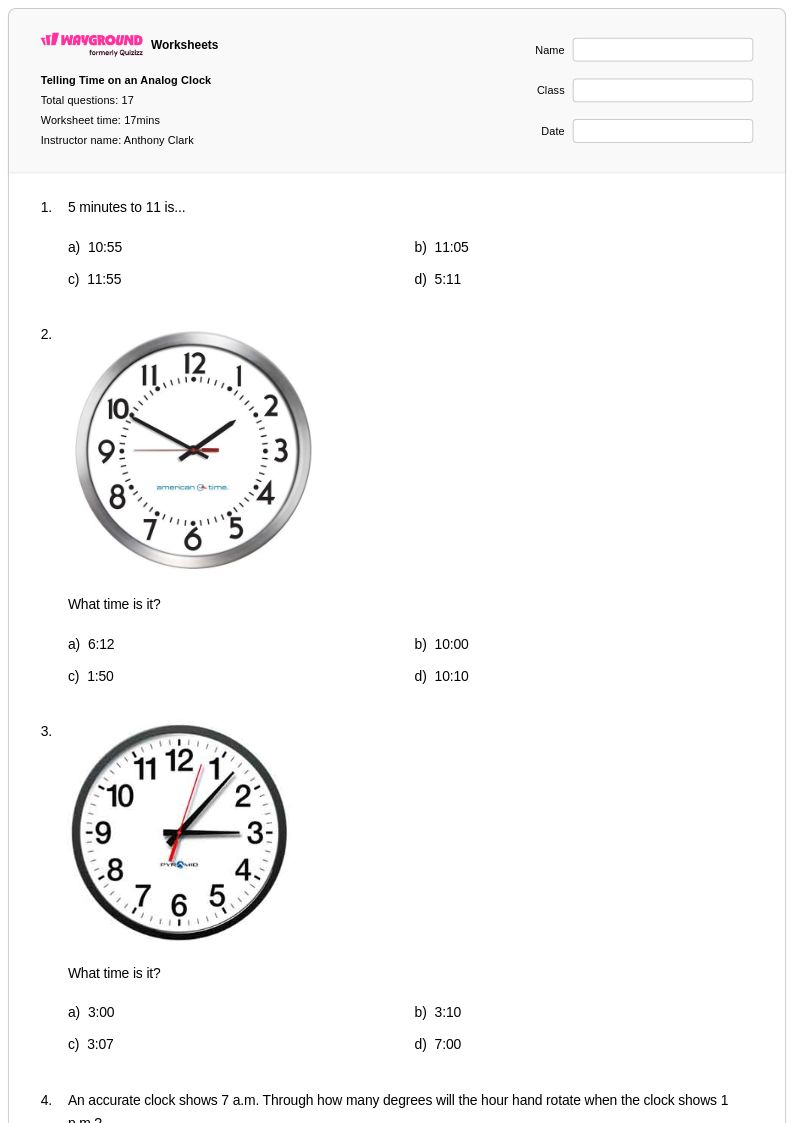
17 Q
3rd - Uni
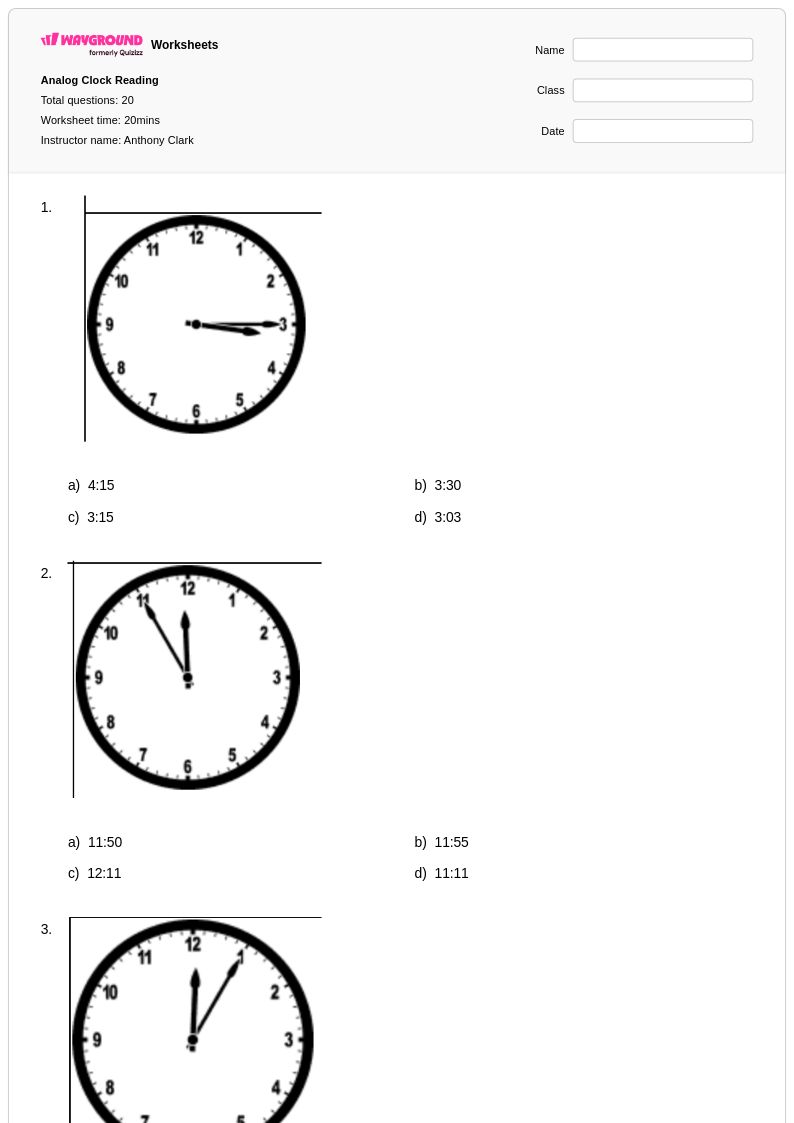
20 Q
2nd - Uni
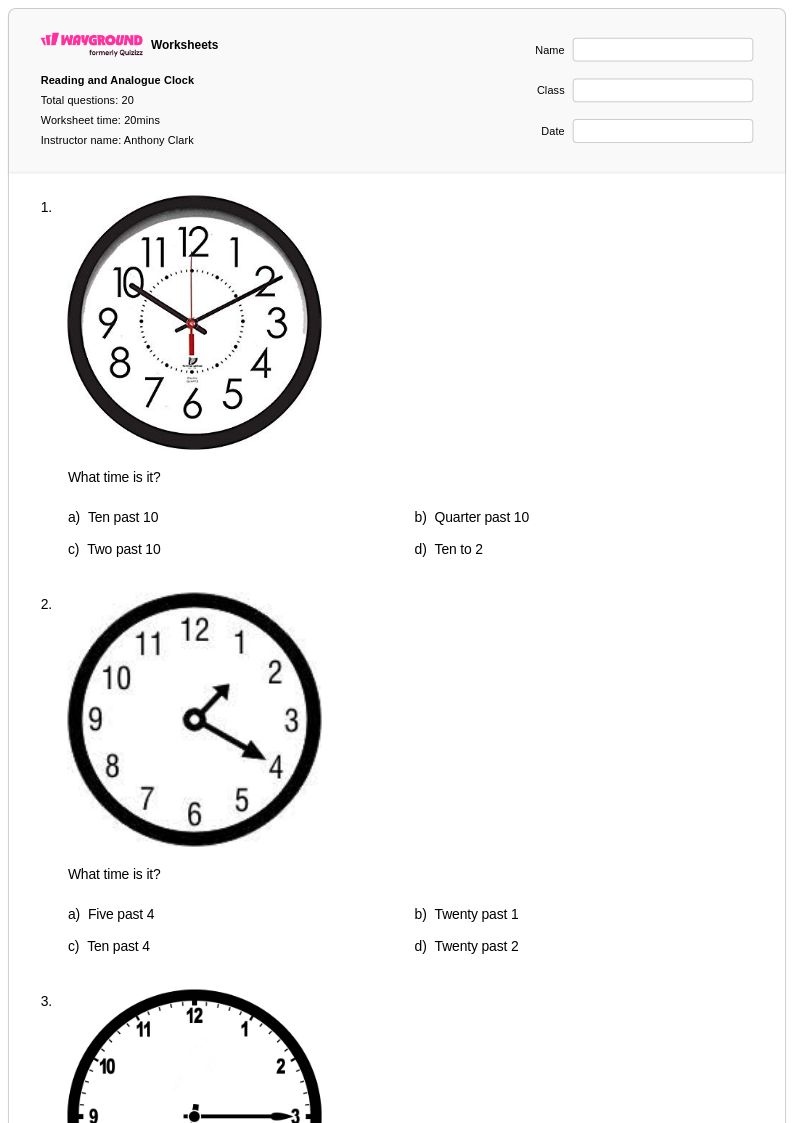
20 Q
2nd - Uni
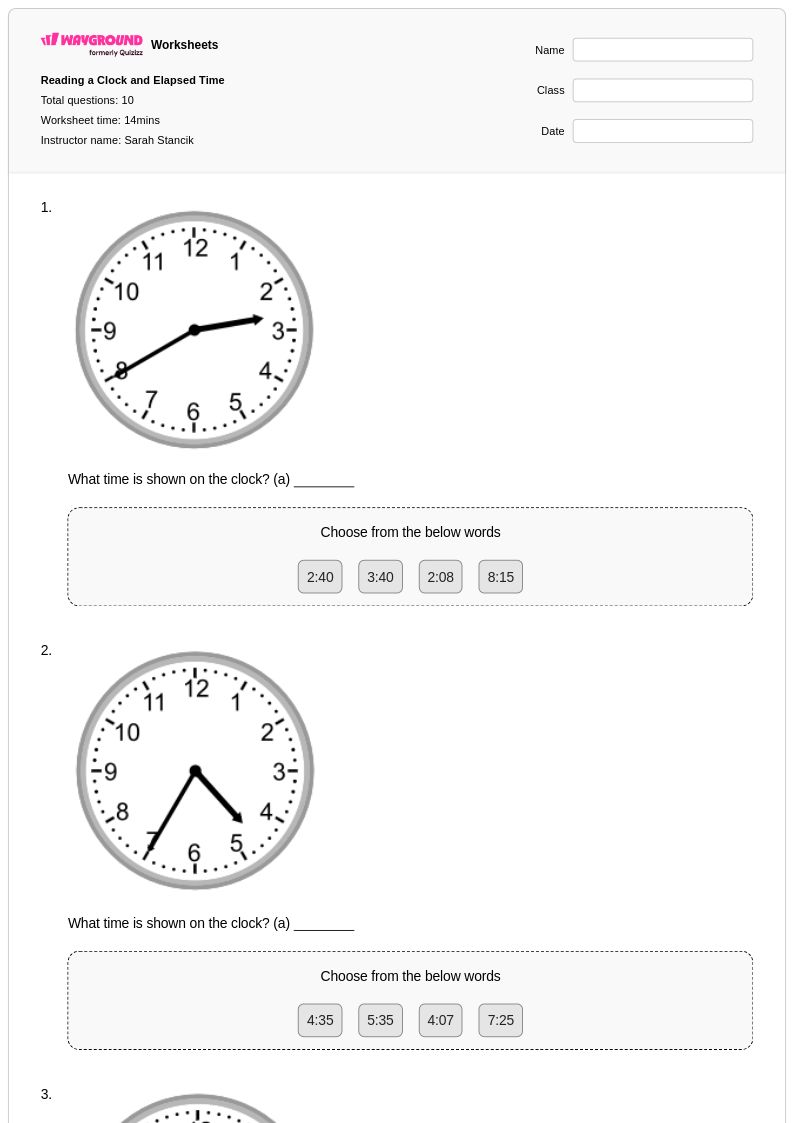
10 Q
3rd
11 Q
3rd
14 Q
2nd - Uni
20 Q
2nd - Uni
20 Q
2nd - Uni
20 Q
2nd - Uni
10 Q
3rd
20 Q
2nd - Uni
20 Q
2nd - 4th
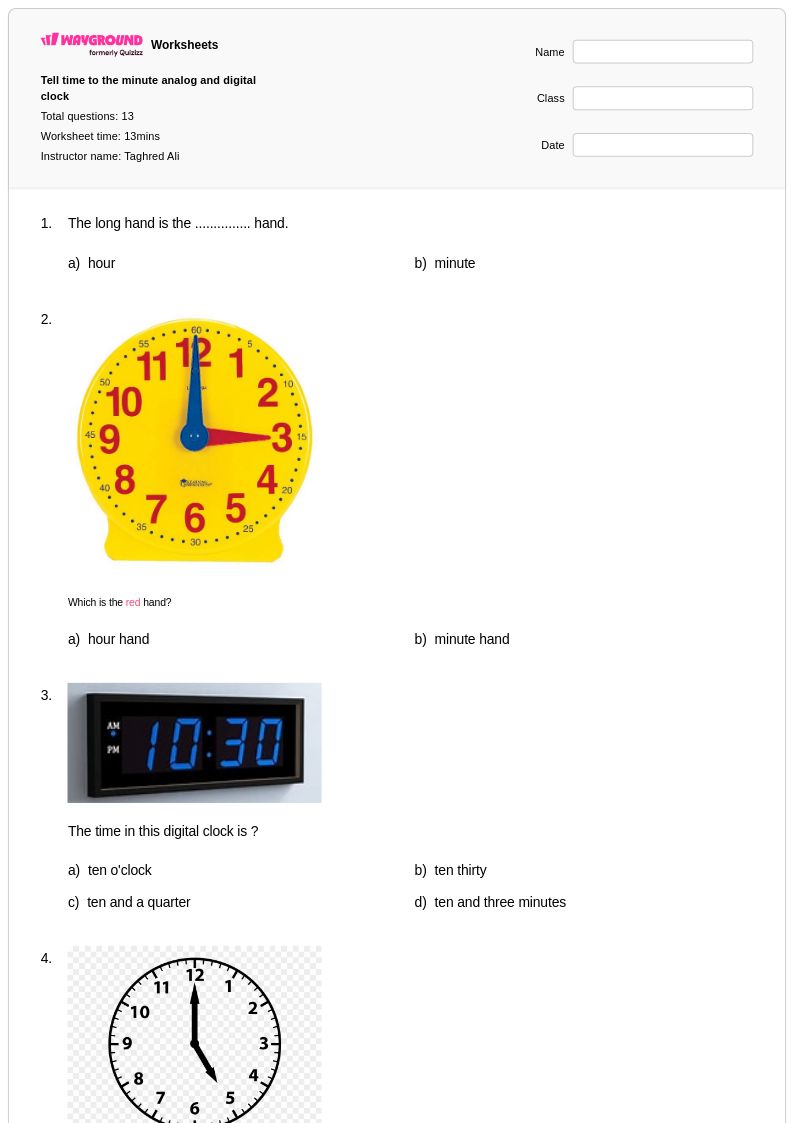
13 Q
3rd
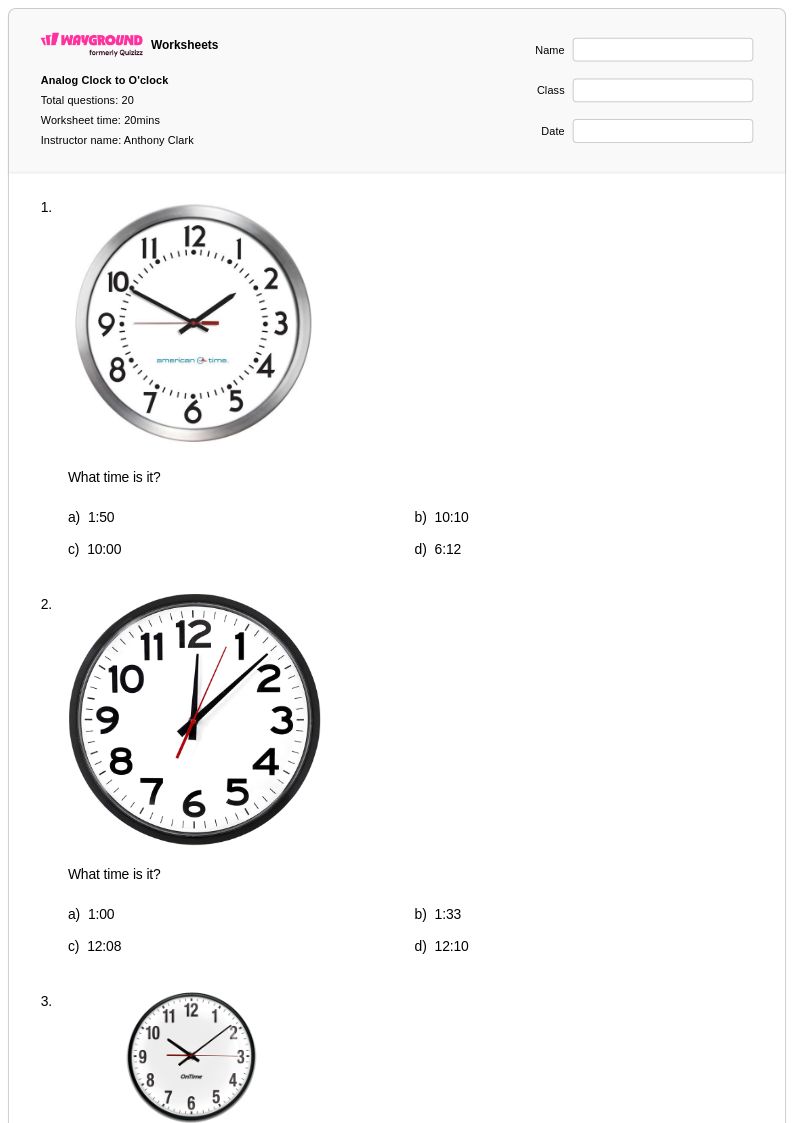
20 Q
2nd - Uni
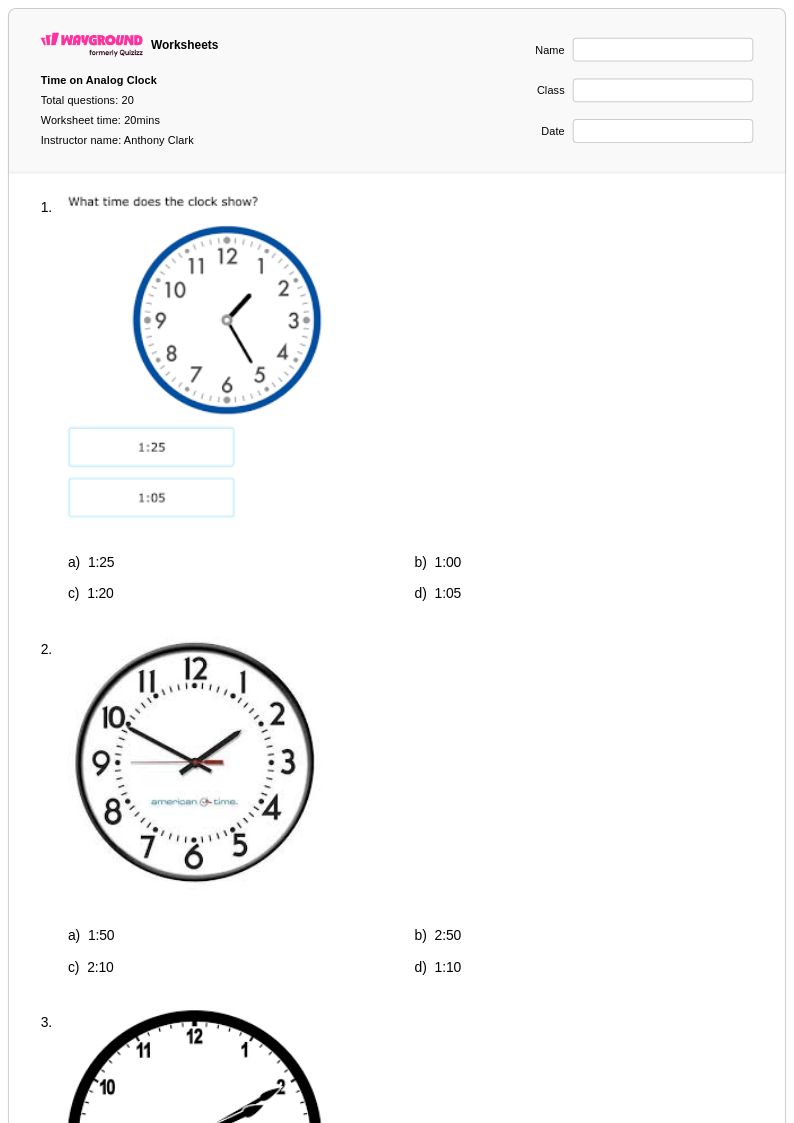
20 Q
2nd - Uni
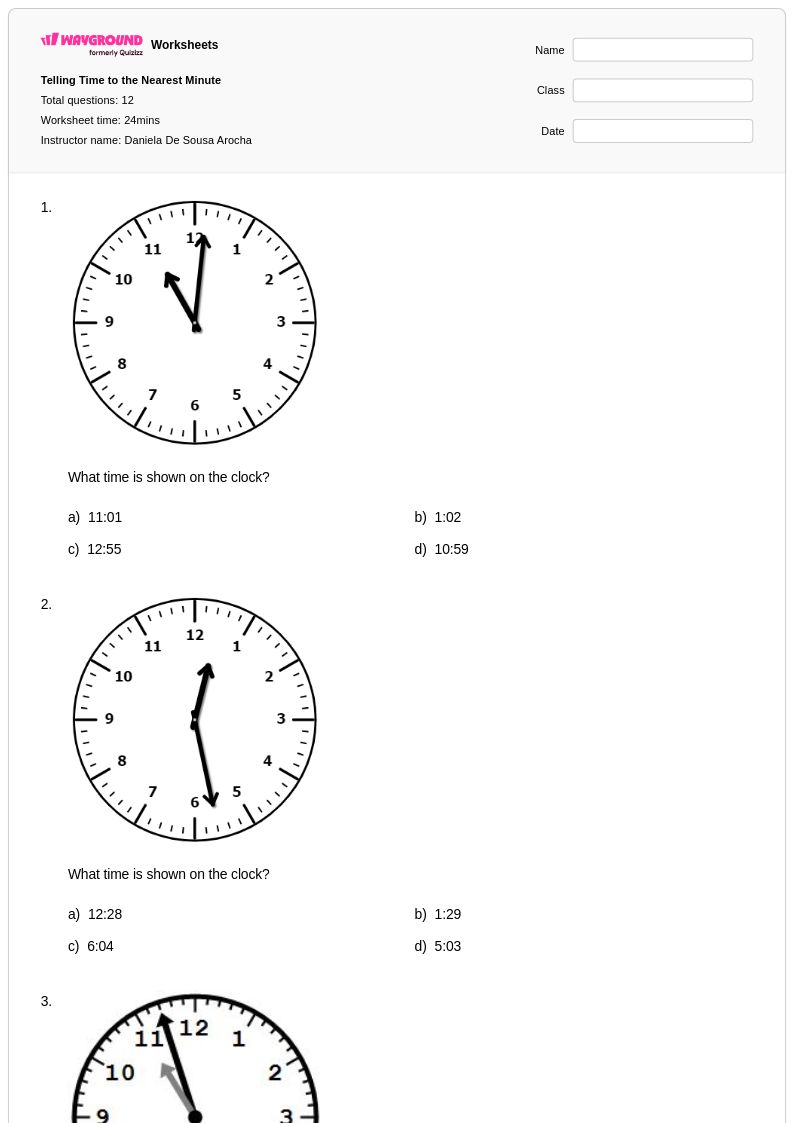
12 Q
3rd
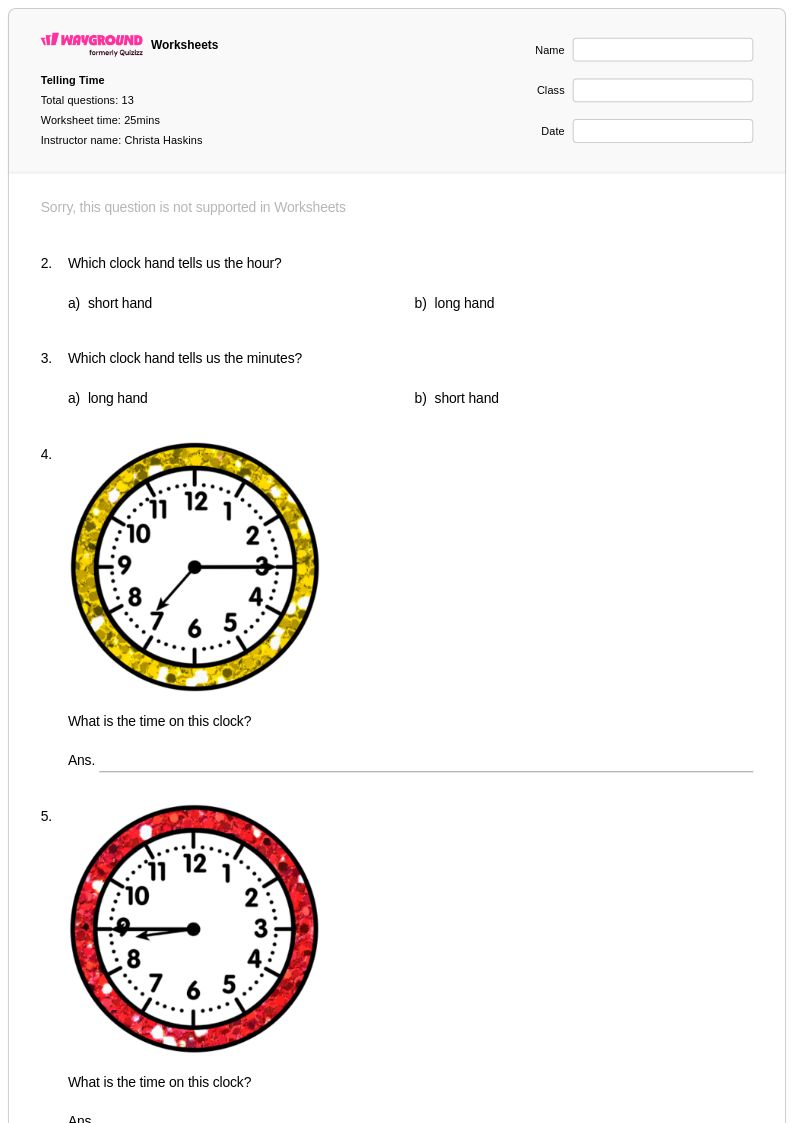
18 Q
3rd
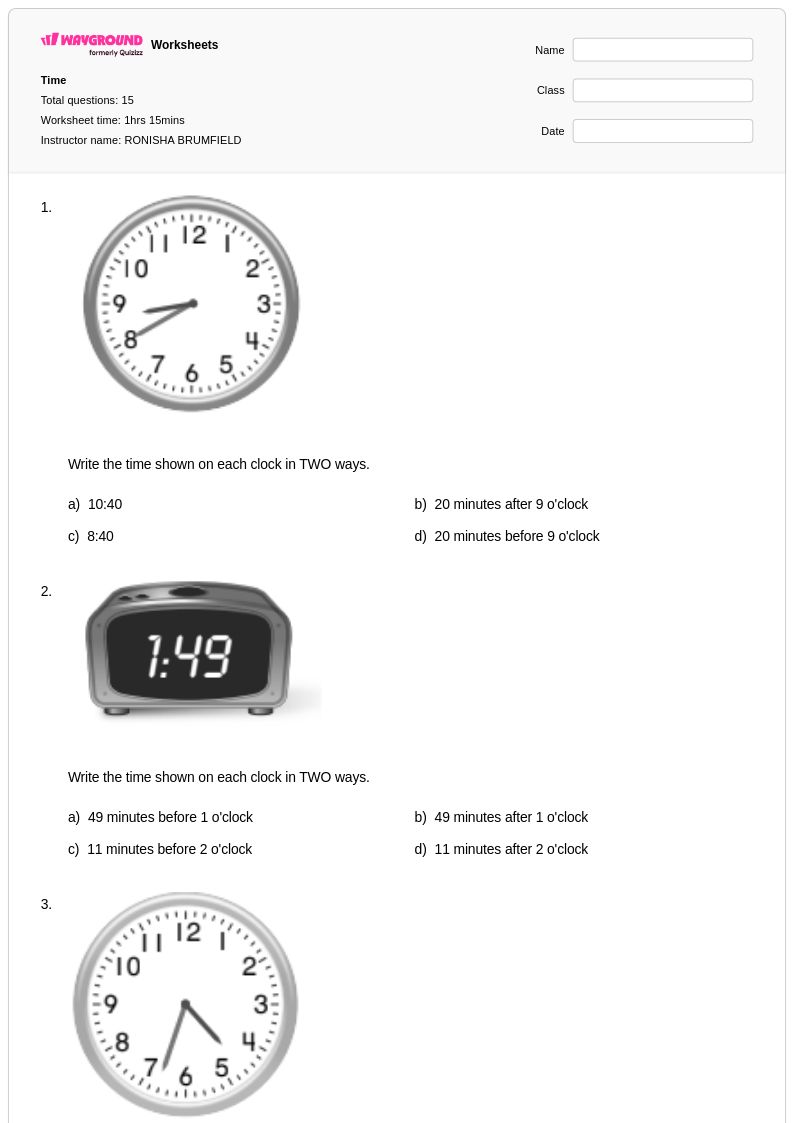
15 Q
3rd
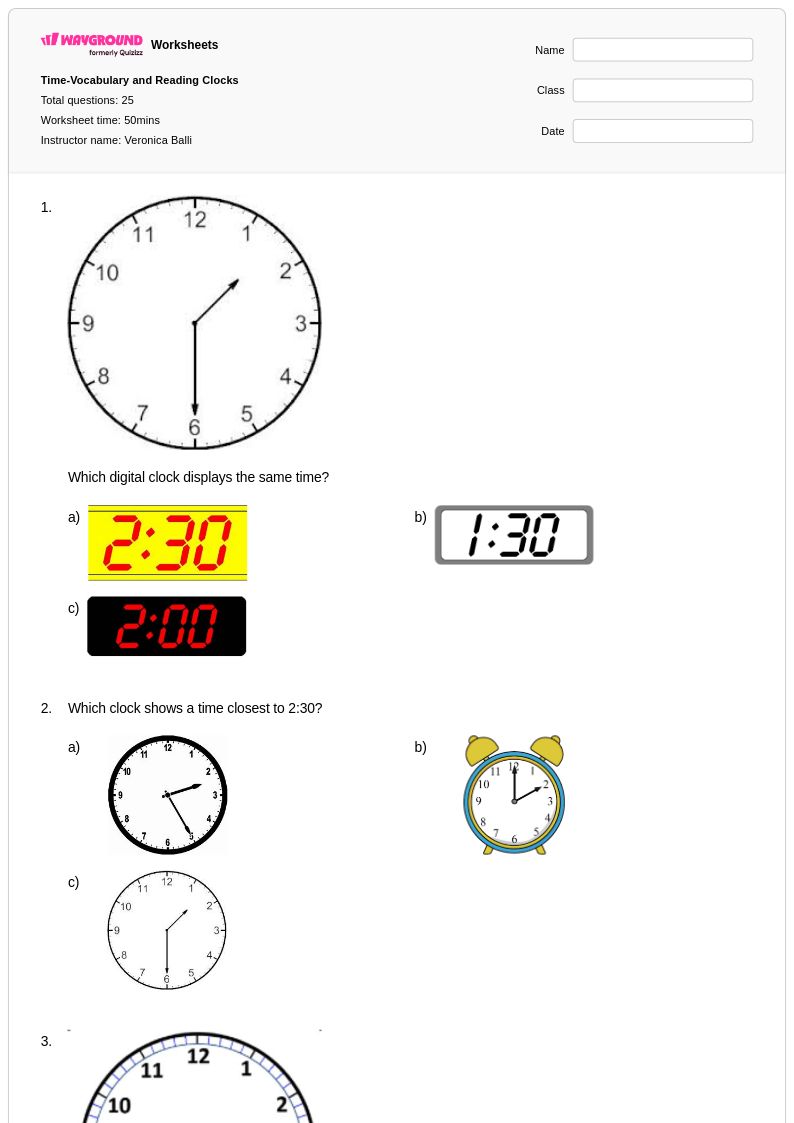
25 Q
3rd
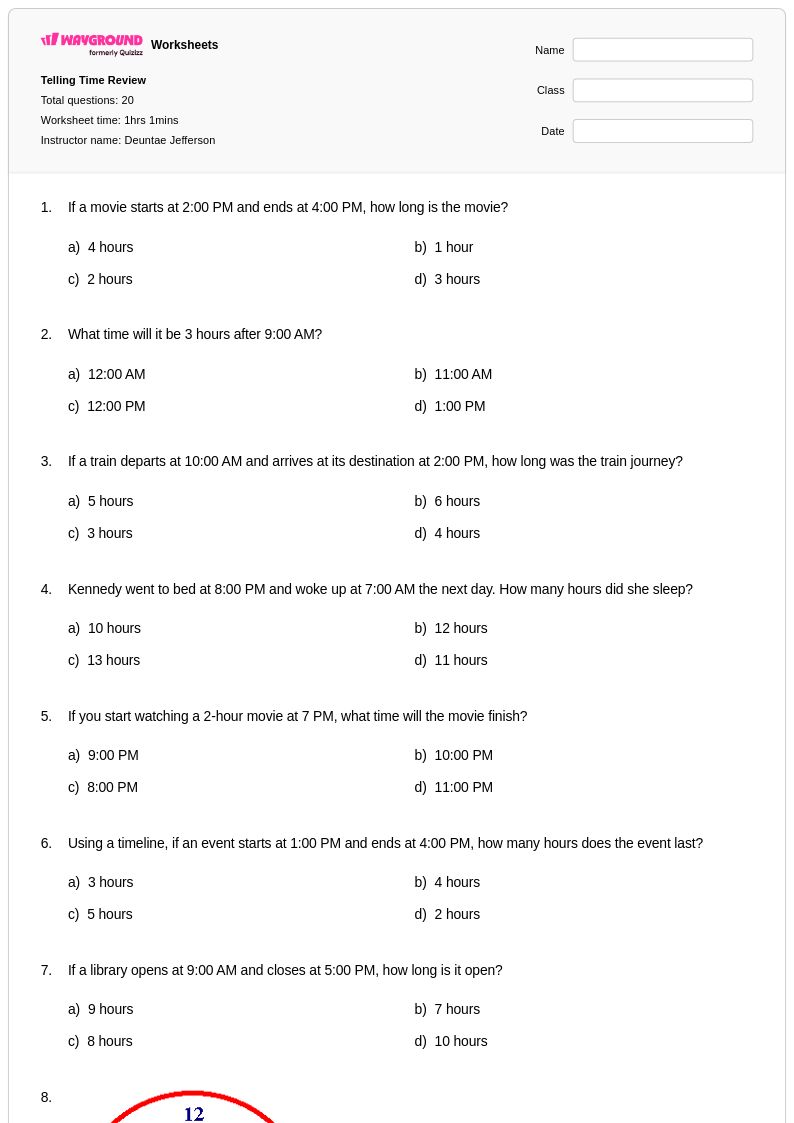
20 Q
3rd
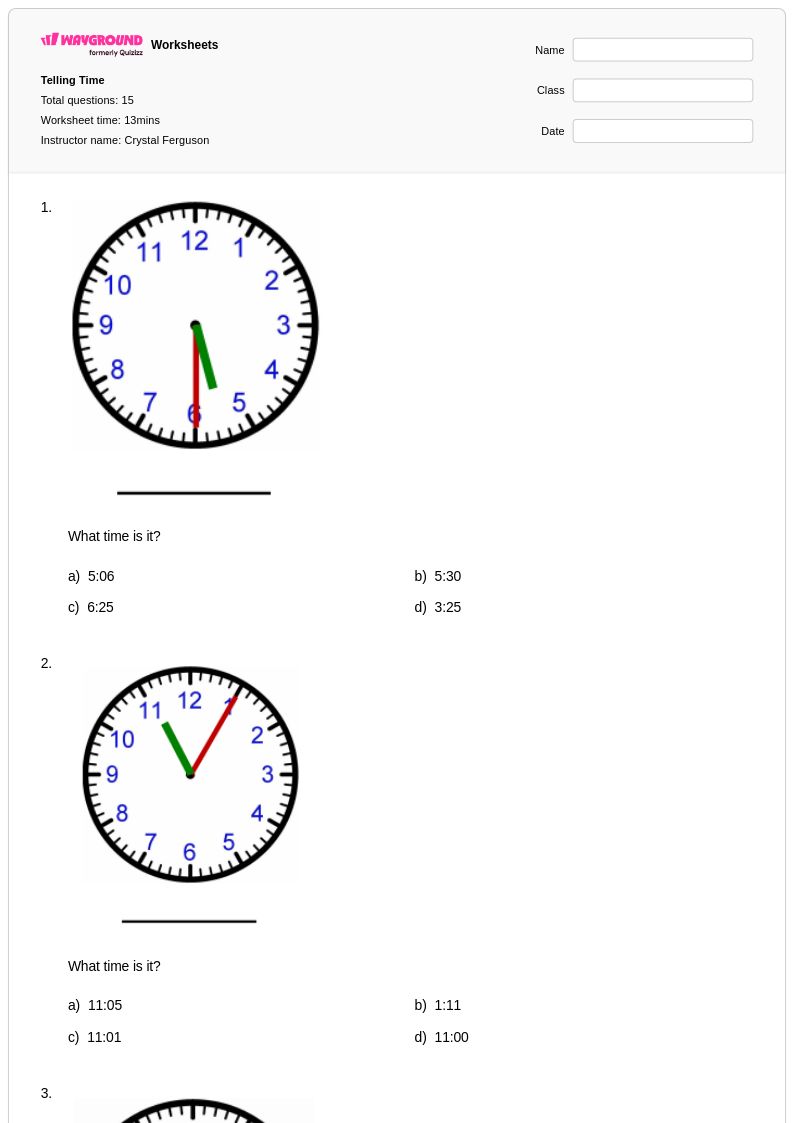
15 Q
3rd
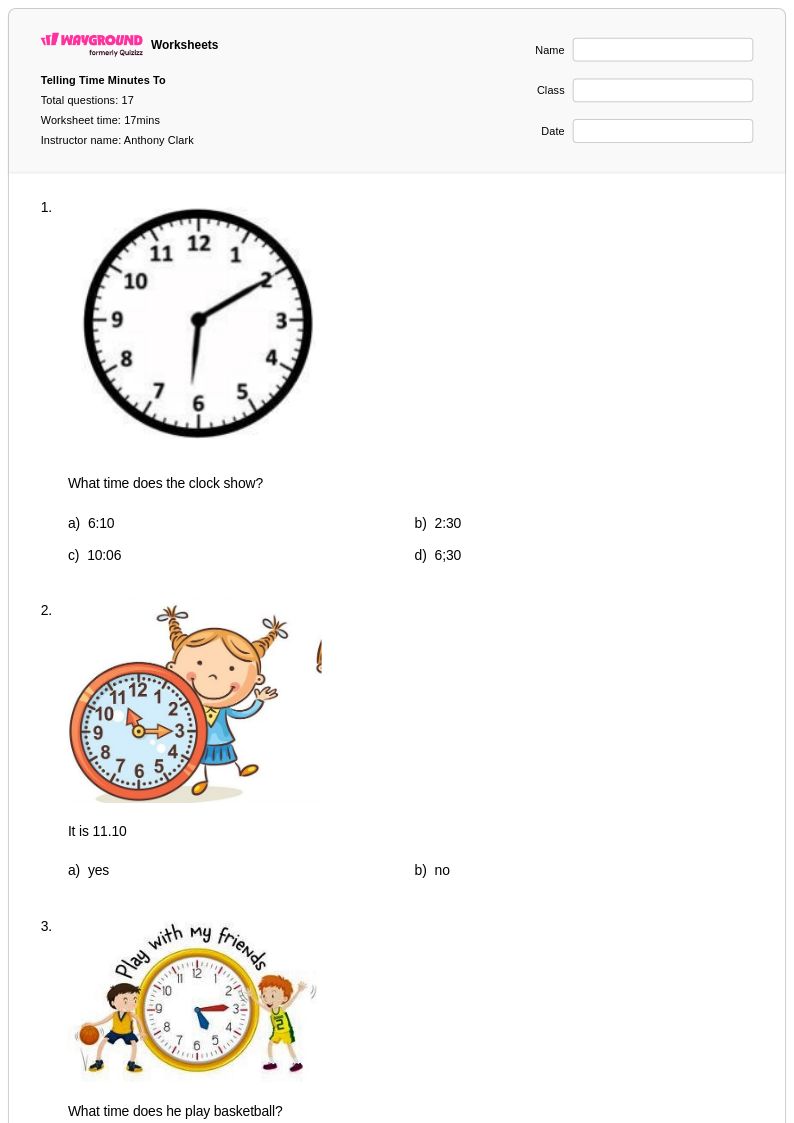
17 Q
2nd - Uni
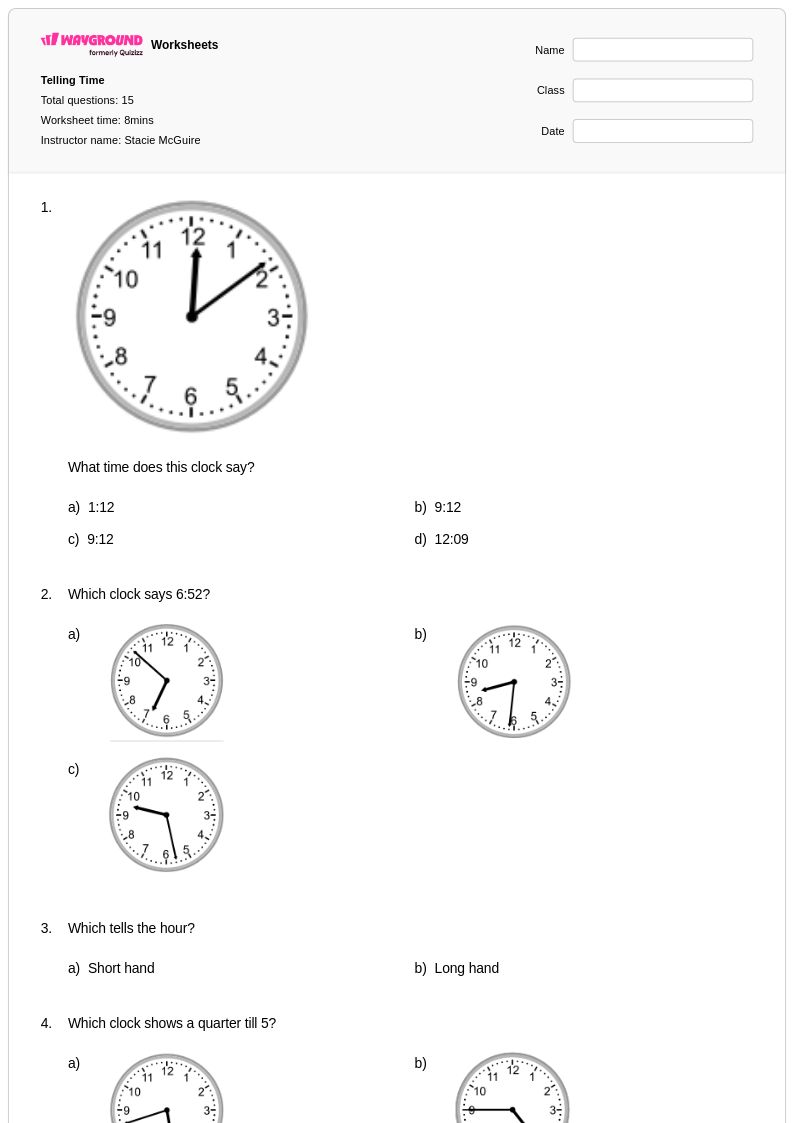
15 Q
3rd
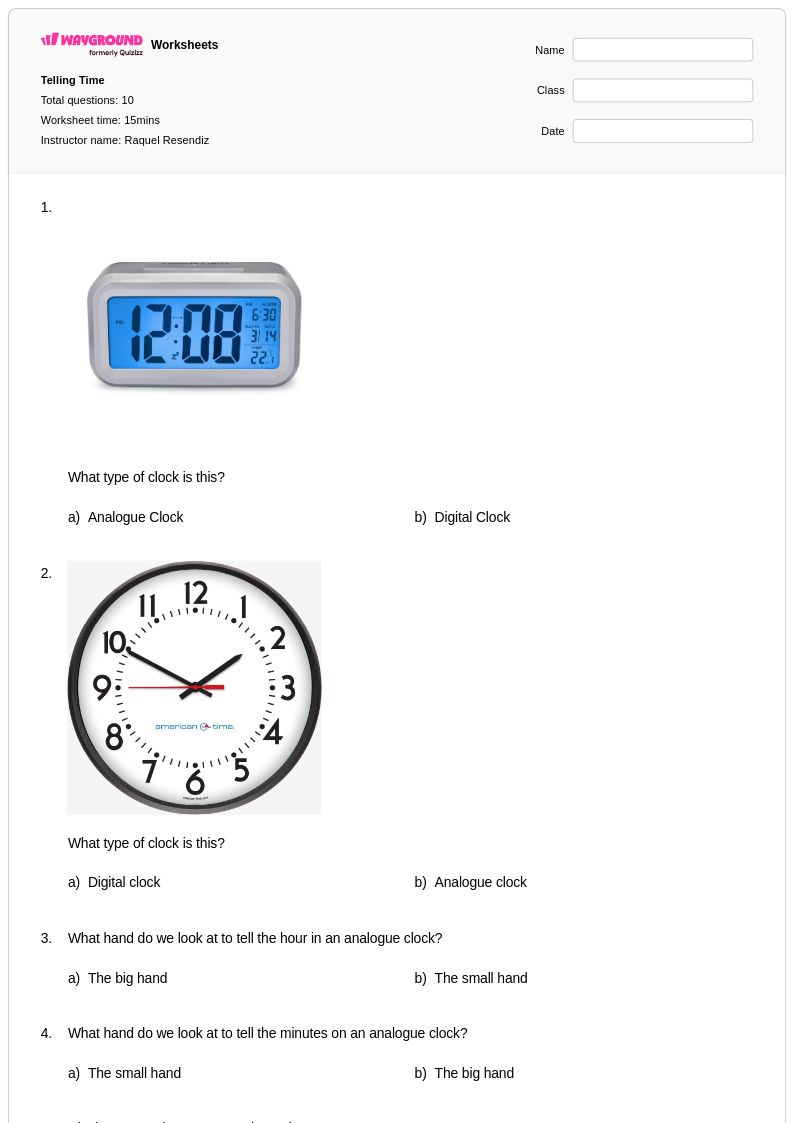
10 Q
2nd - 3rd
Explore Reading an Analog Clock Worksheets by Grades
Explore Other Subject Worksheets for class 3
Explore printable Reading an Analog Clock worksheets for Class 3
Reading an analog clock worksheets for Class 3 students available through Wayground (formerly Quizizz) provide comprehensive practice in developing essential time-telling skills that form the foundation of mathematical understanding. These carefully crafted worksheets focus on helping third-grade students master the ability to interpret hour and minute hands, understand the relationship between digital and analog time displays, and accurately read clock faces showing various times throughout the day. Each worksheet includes a complete answer key and is available as a free printable pdf, making it simple for educators to incorporate these practice problems into daily instruction, homework assignments, or assessment activities. The exercises progress systematically from basic hour recognition to more complex time-reading scenarios, ensuring students build confidence while strengthening their analytical thinking and number sense skills.
Wayground (formerly Quizizz) empowers teachers with access to millions of teacher-created resources specifically designed for Class 3 analog clock reading instruction, featuring robust search and filtering capabilities that allow educators to quickly locate materials aligned with specific learning standards and student needs. The platform's differentiation tools enable teachers to customize worksheets for various skill levels within their classroom, while the flexible format options support both printable pdf distribution for traditional paper-based learning and digital implementation for interactive instruction. These comprehensive worksheet collections facilitate targeted skill practice, remediation for struggling learners, and enrichment opportunities for advanced students, while the organized structure and alignment features streamline lesson planning and help teachers efficiently address individual learning gaps in time-telling concepts.
FAQs
What new time-telling skills are introduced in third grade?
How can I teach students to read time to the nearest minute?
What is the most common error when calculating elapsed time?
How can I use this worksheet with my third-grade class?
How does this align with Common Core for Grade 3?
What kinds of problems are included in this third-grade worksheet?