
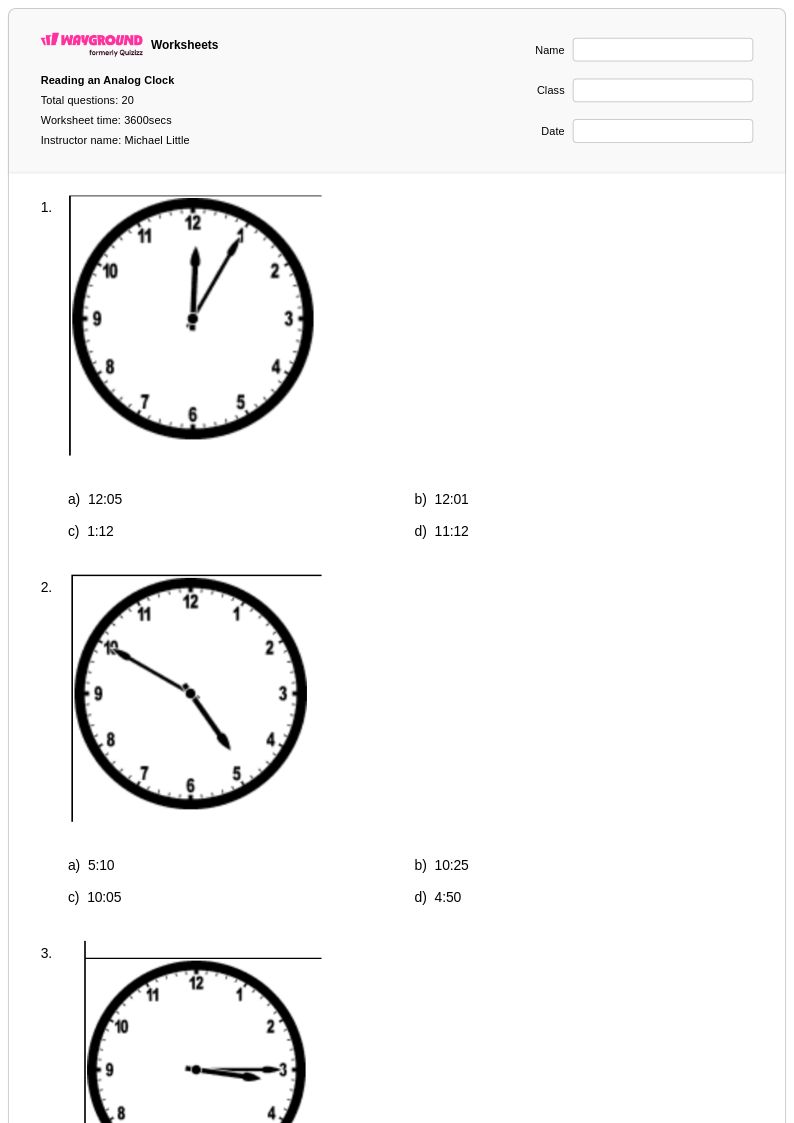
20 Q
4th - 6th
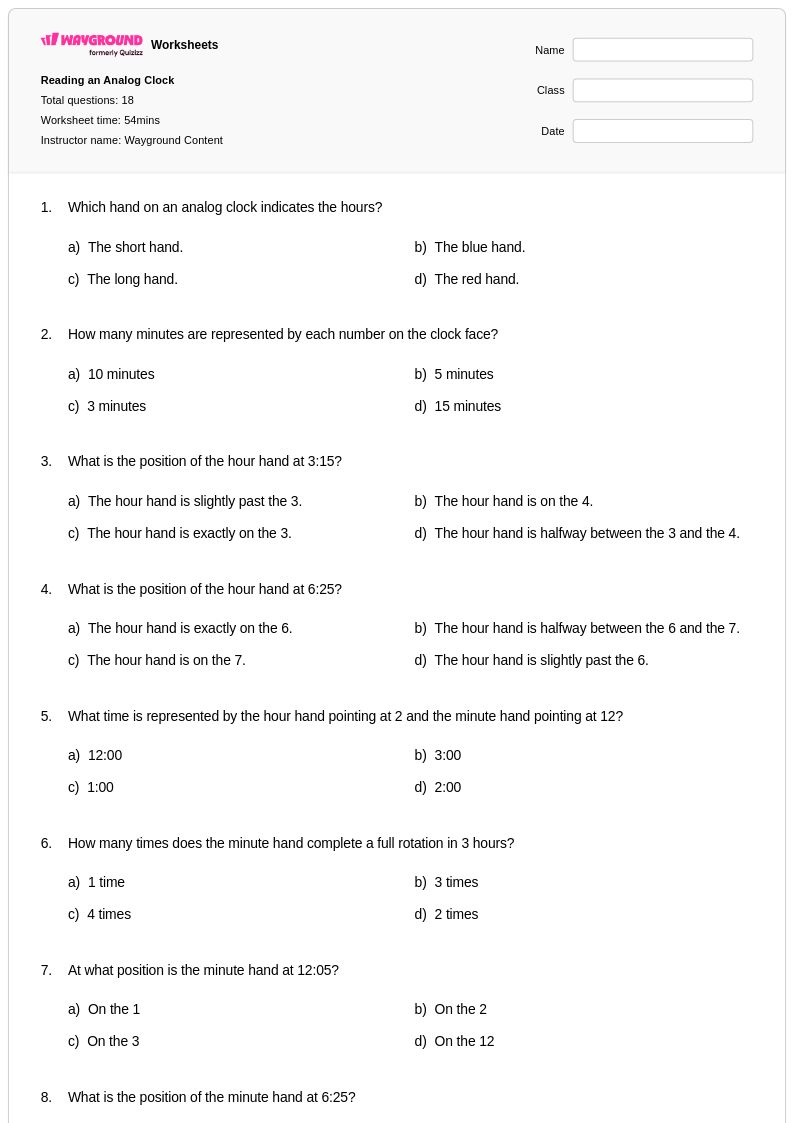
18 Q
4th - 6th
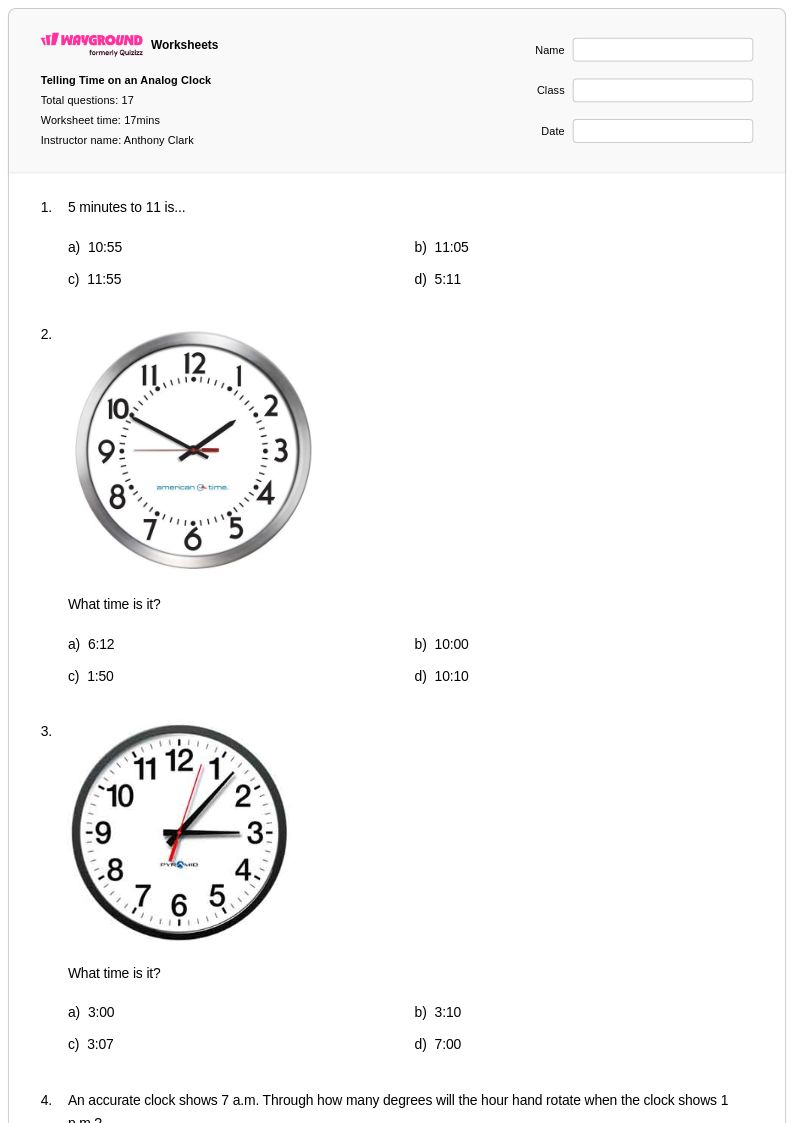
17 Q
3rd - Uni
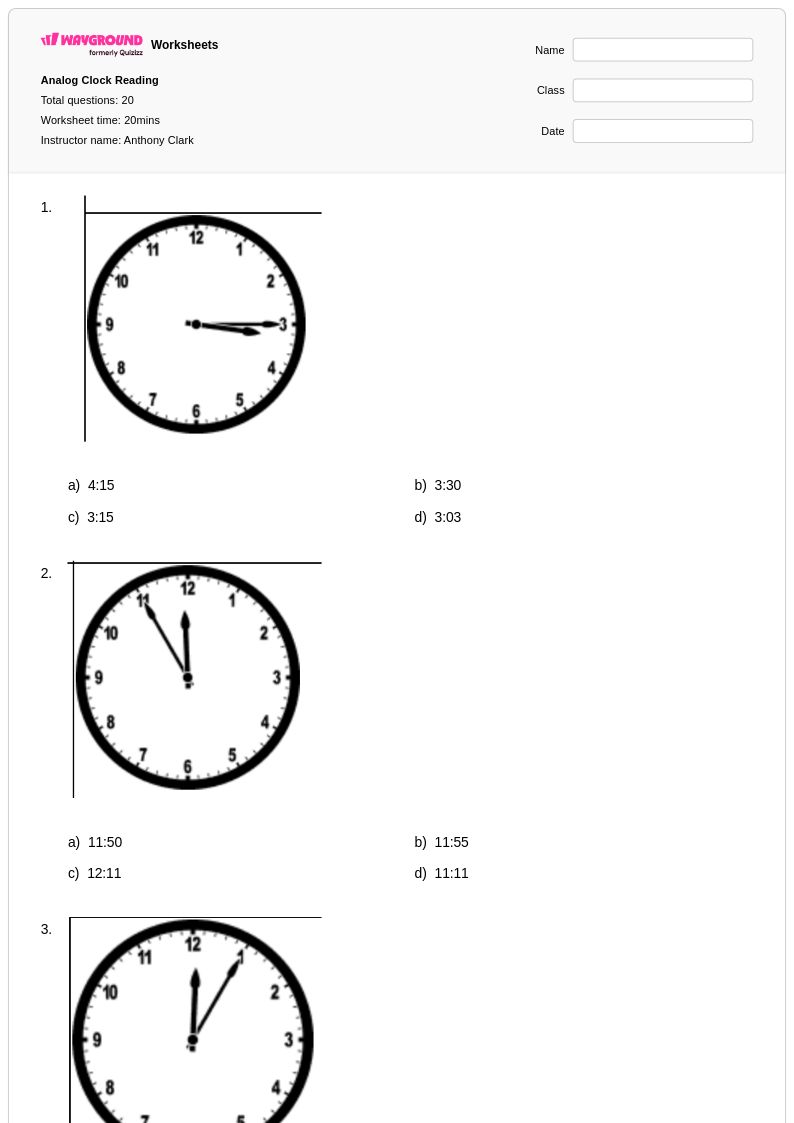
20 Q
2nd - Uni
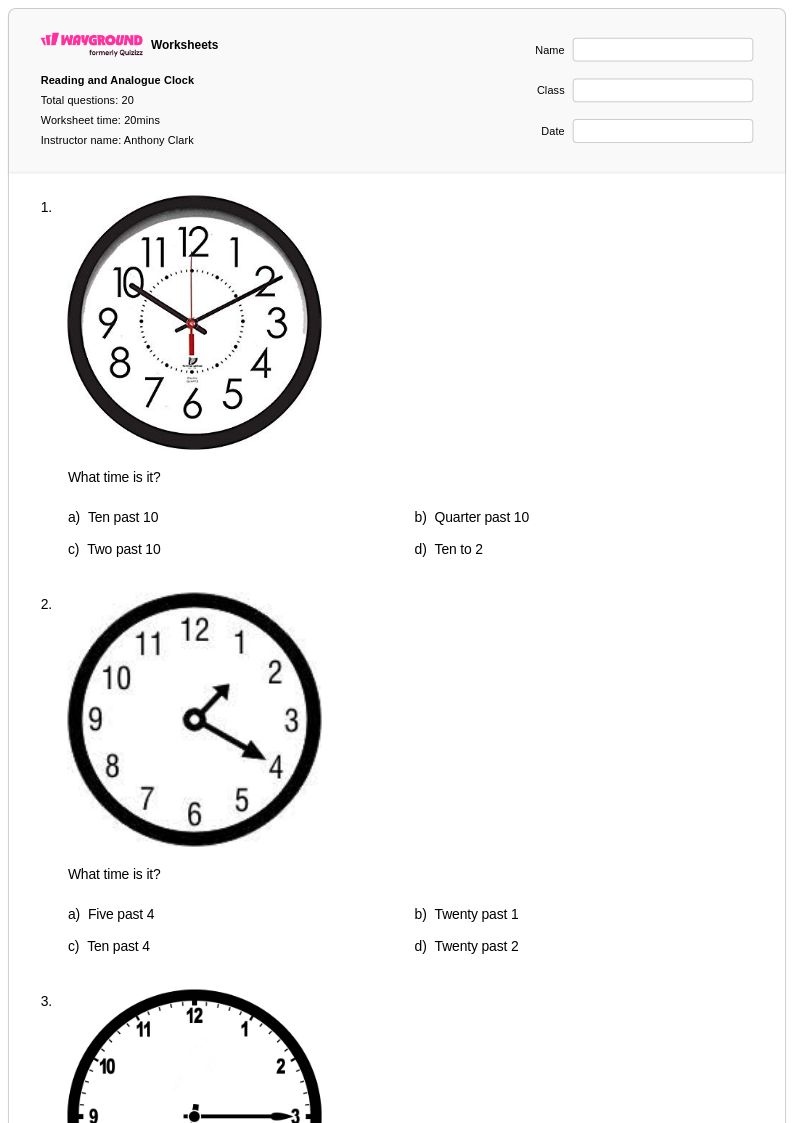
20 Q
2nd - Uni
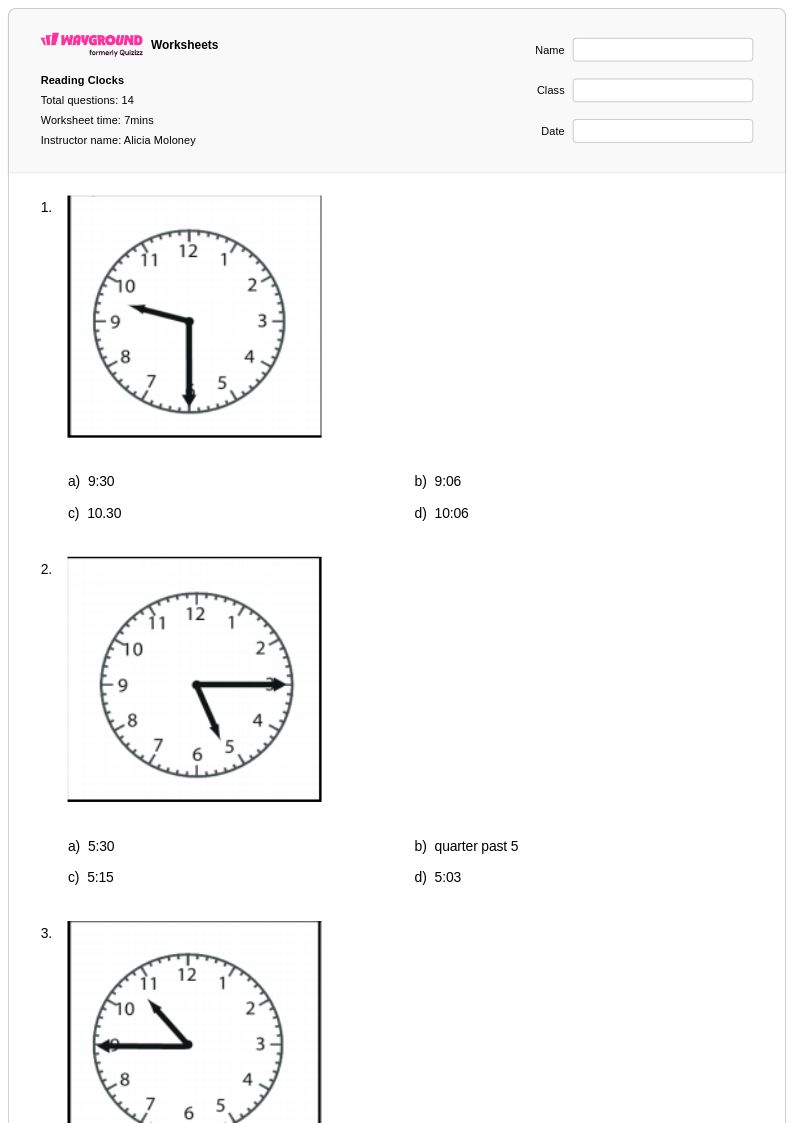
14 Q
4th - 6th
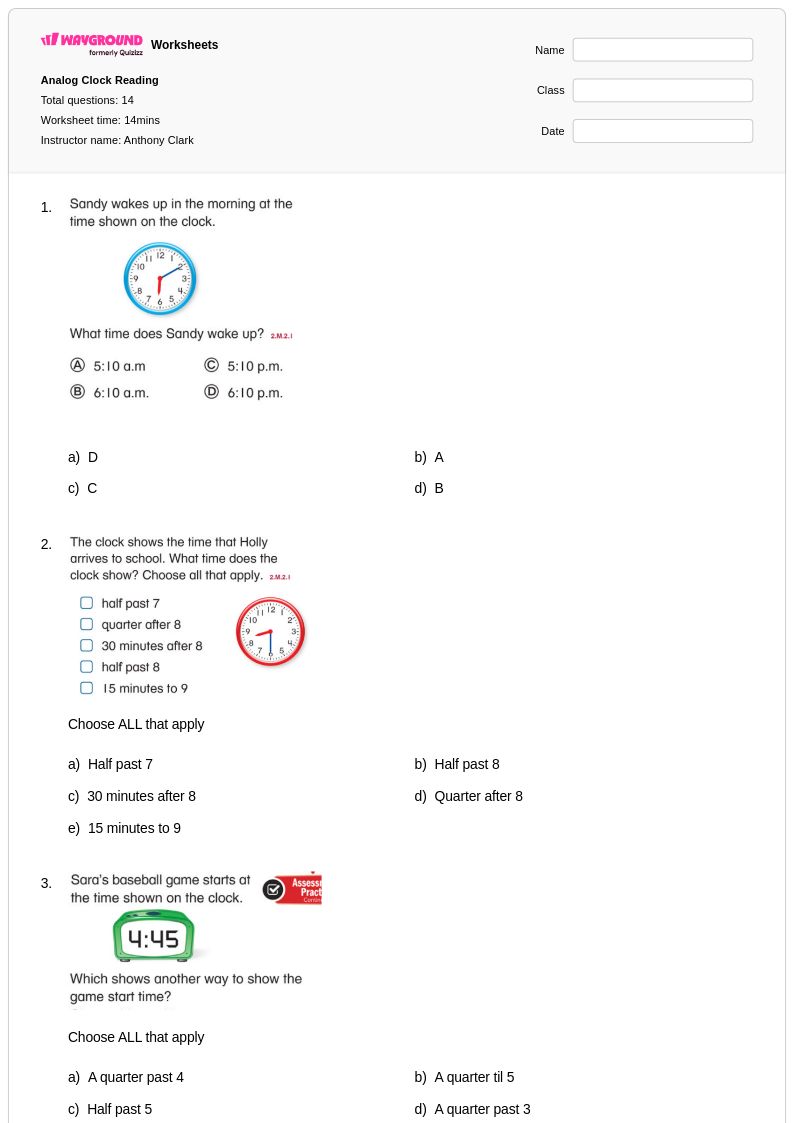
14 Q
2nd - Uni
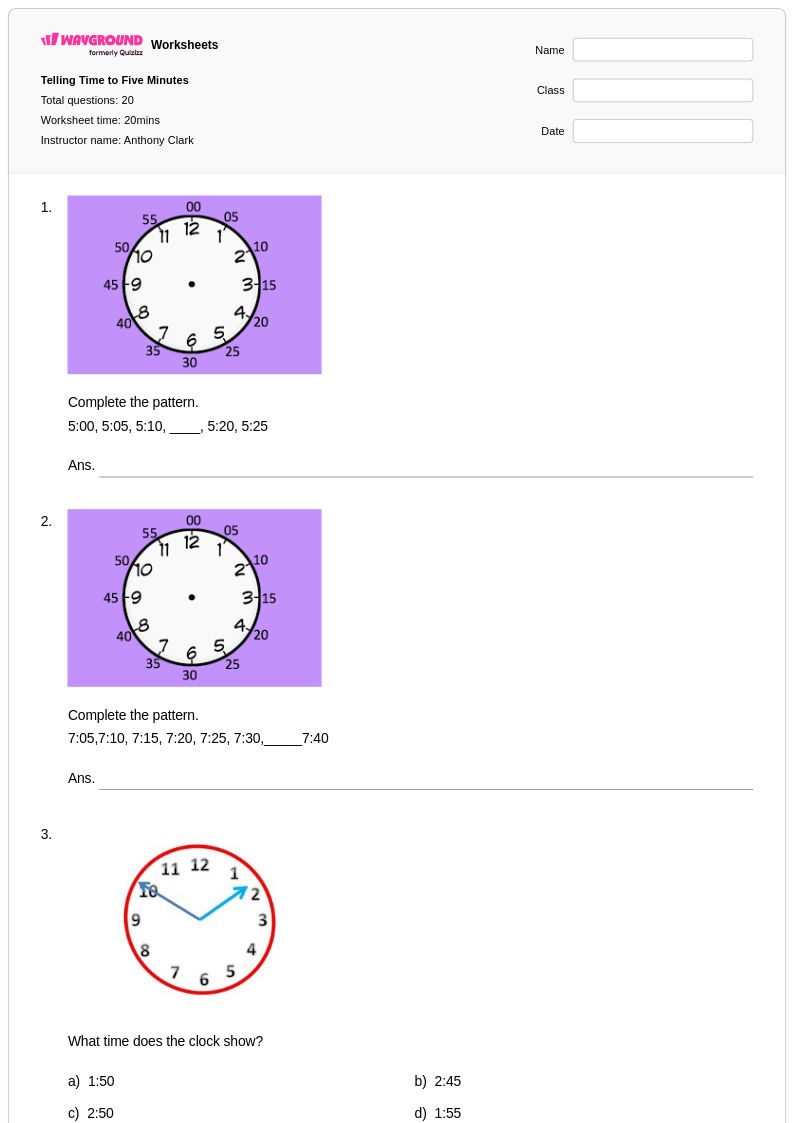
20 Q
2nd - Uni
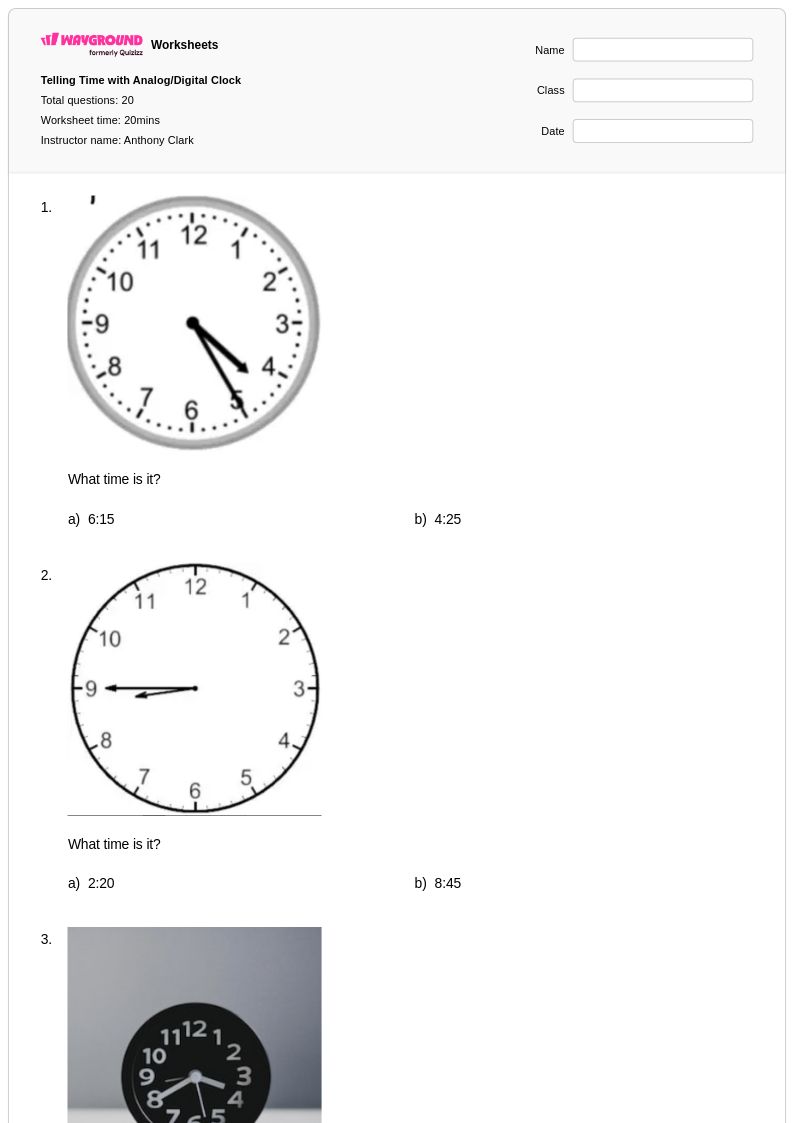
20 Q
2nd - Uni
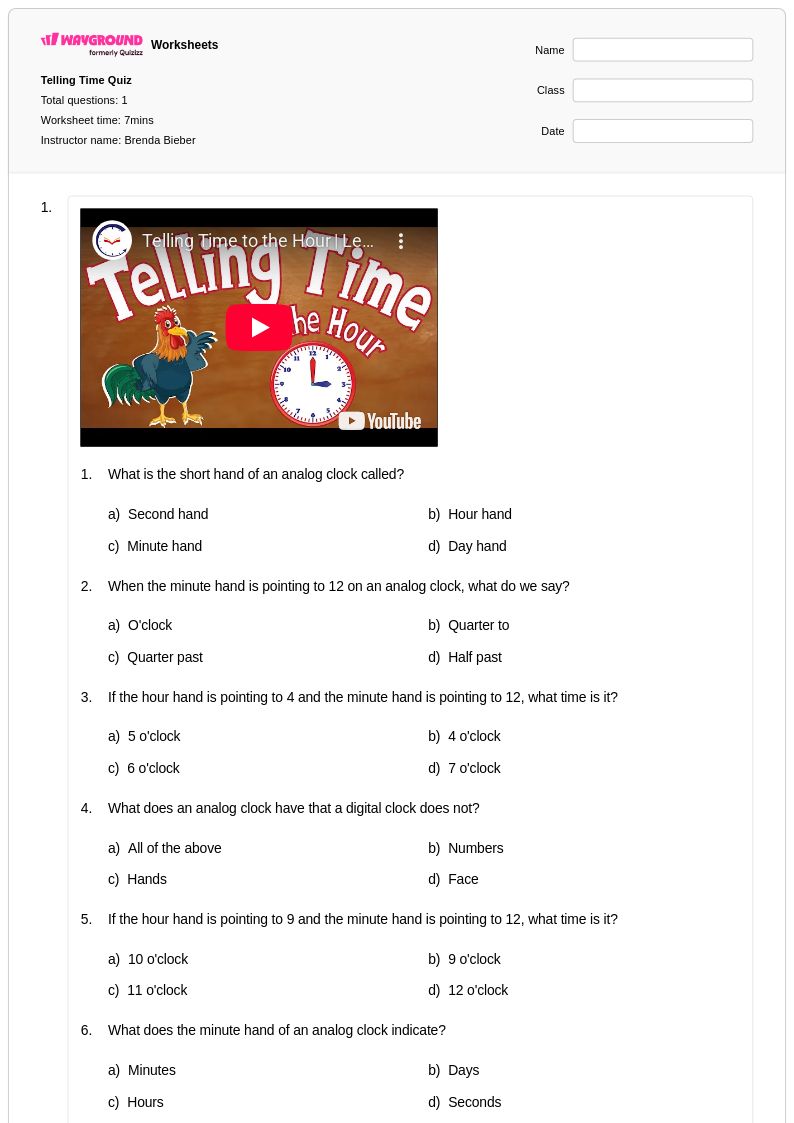
11 Q
5th
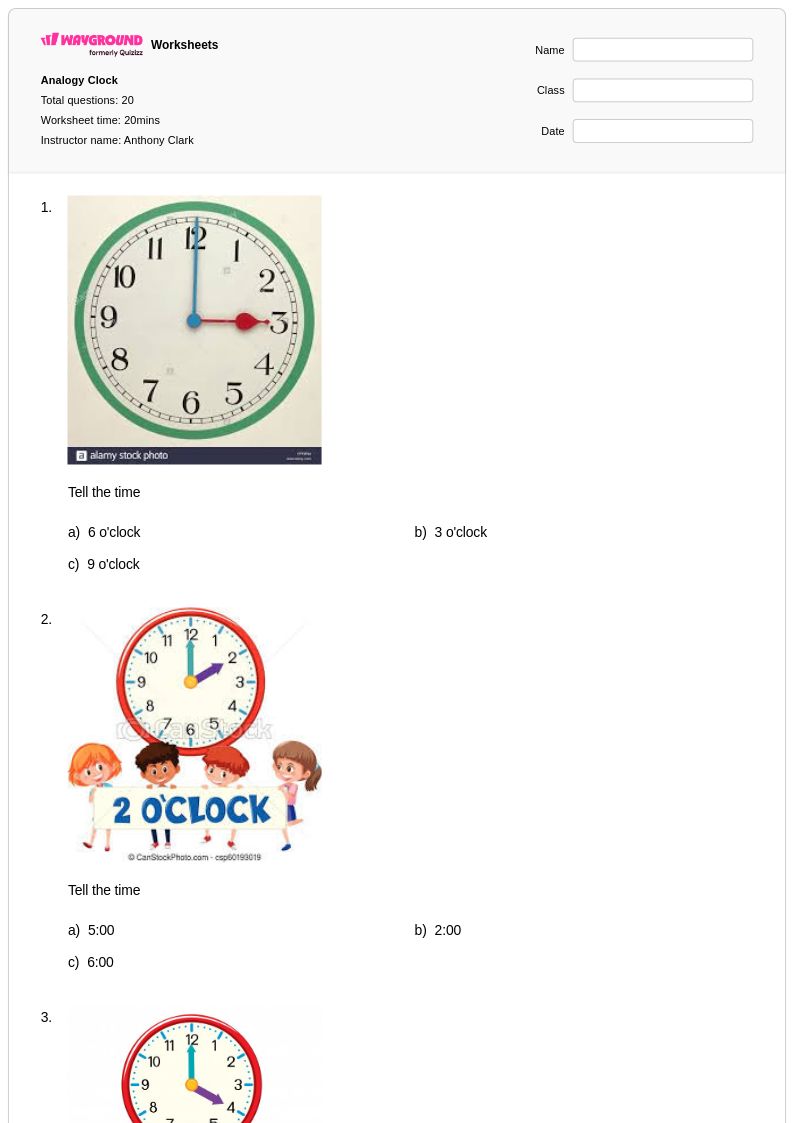
20 Q
2nd - Uni
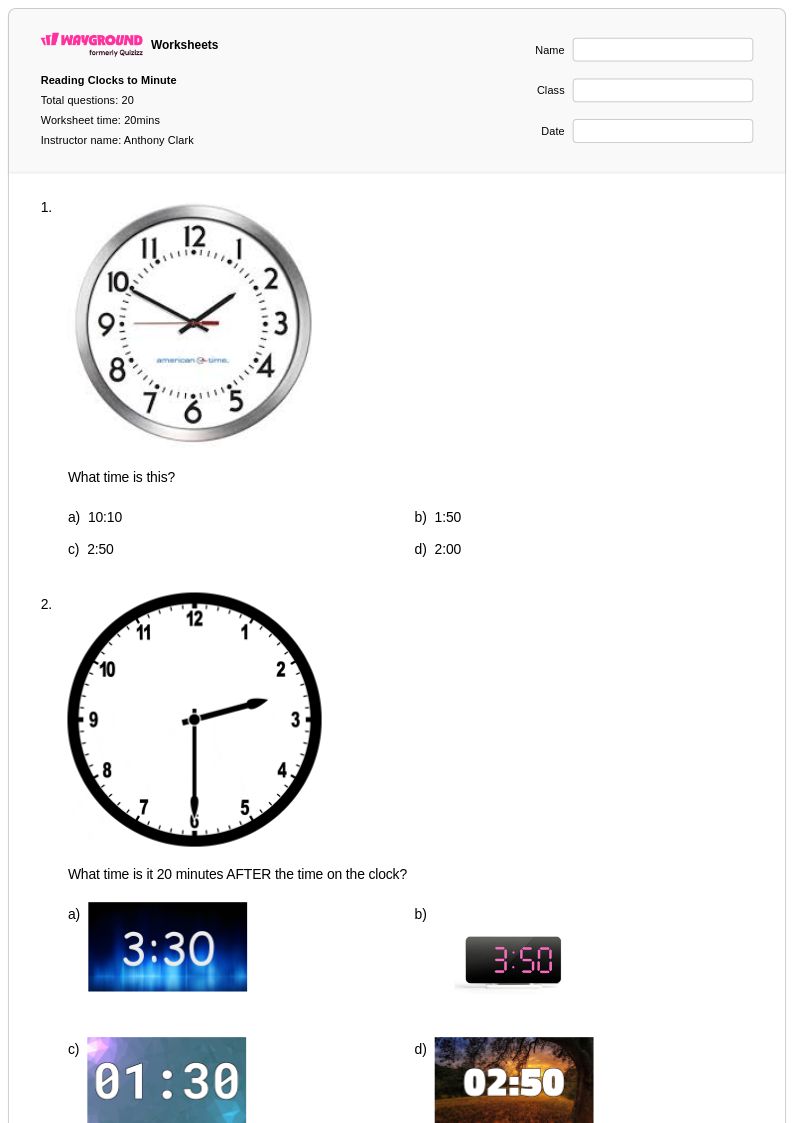
20 Q
3rd - Uni
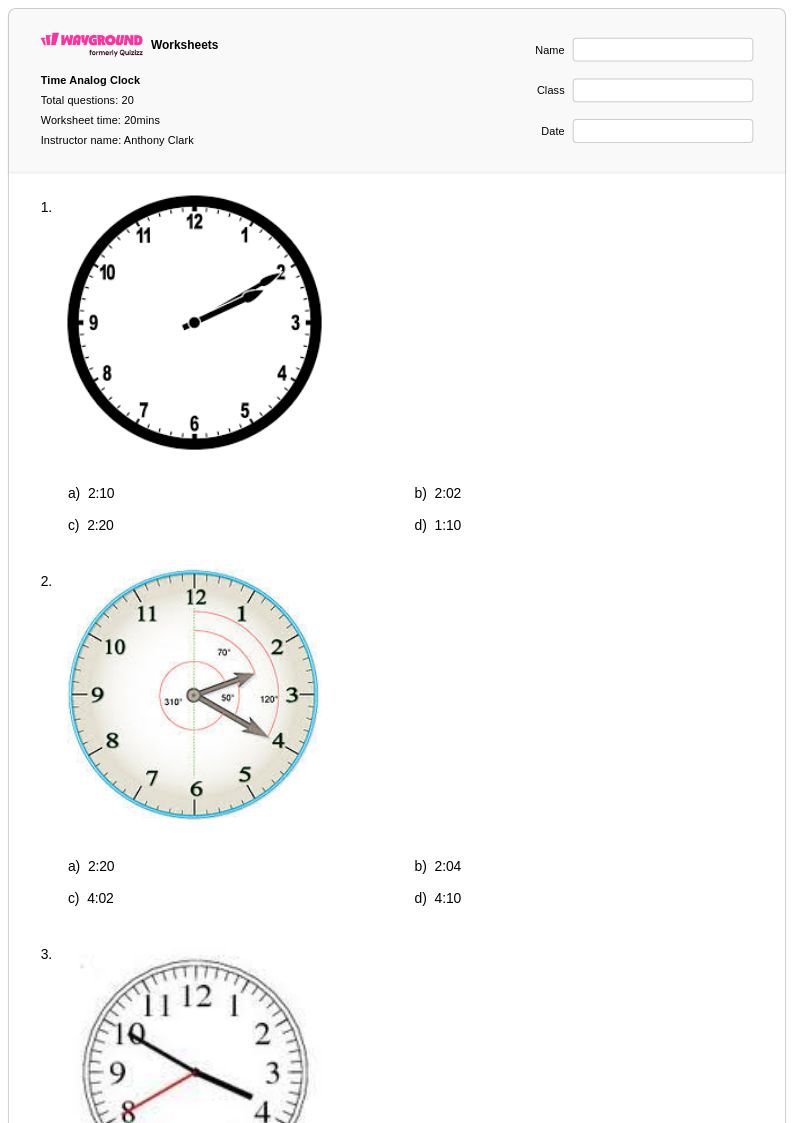
20 Q
2nd - Uni
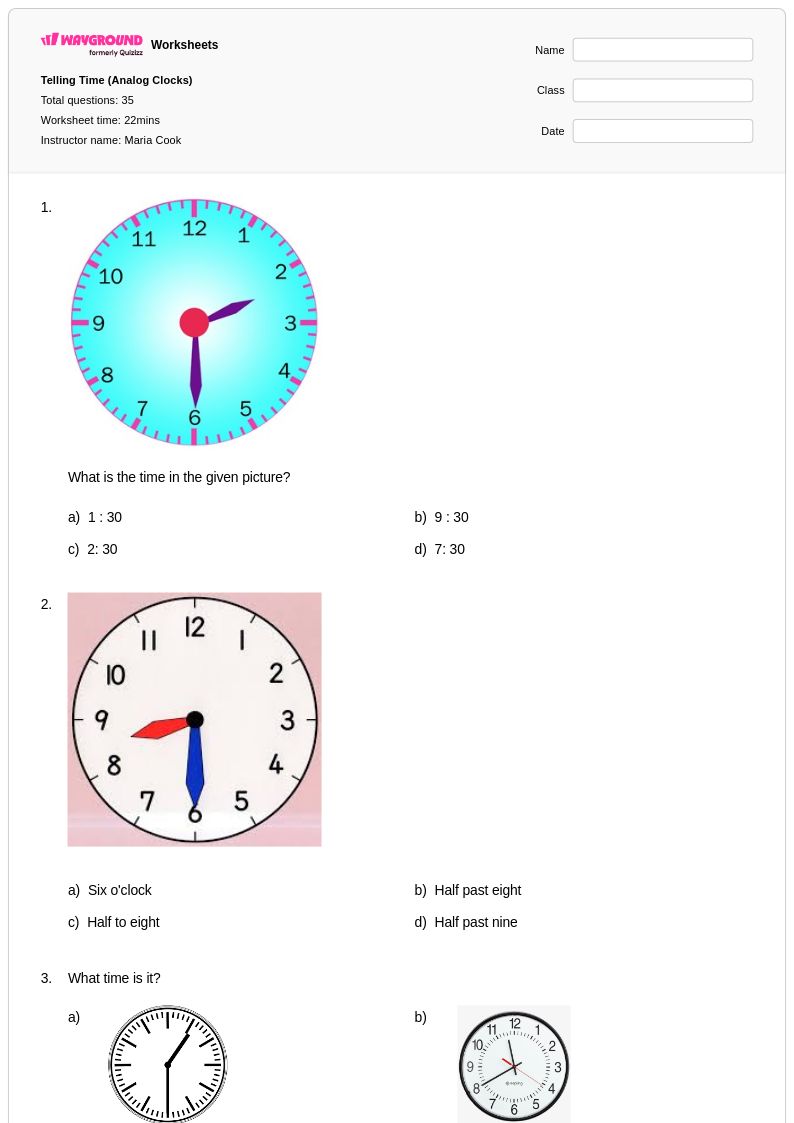
35 Q
3rd - 6th
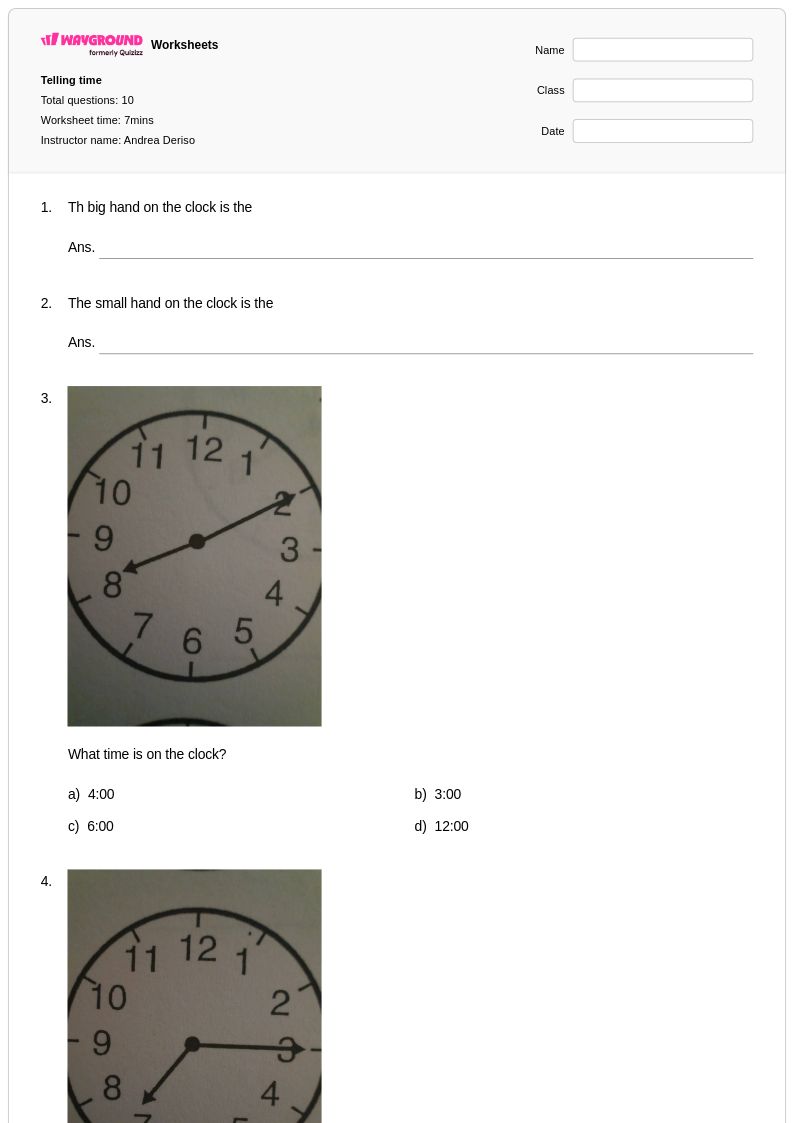
10 Q
5th - 6th
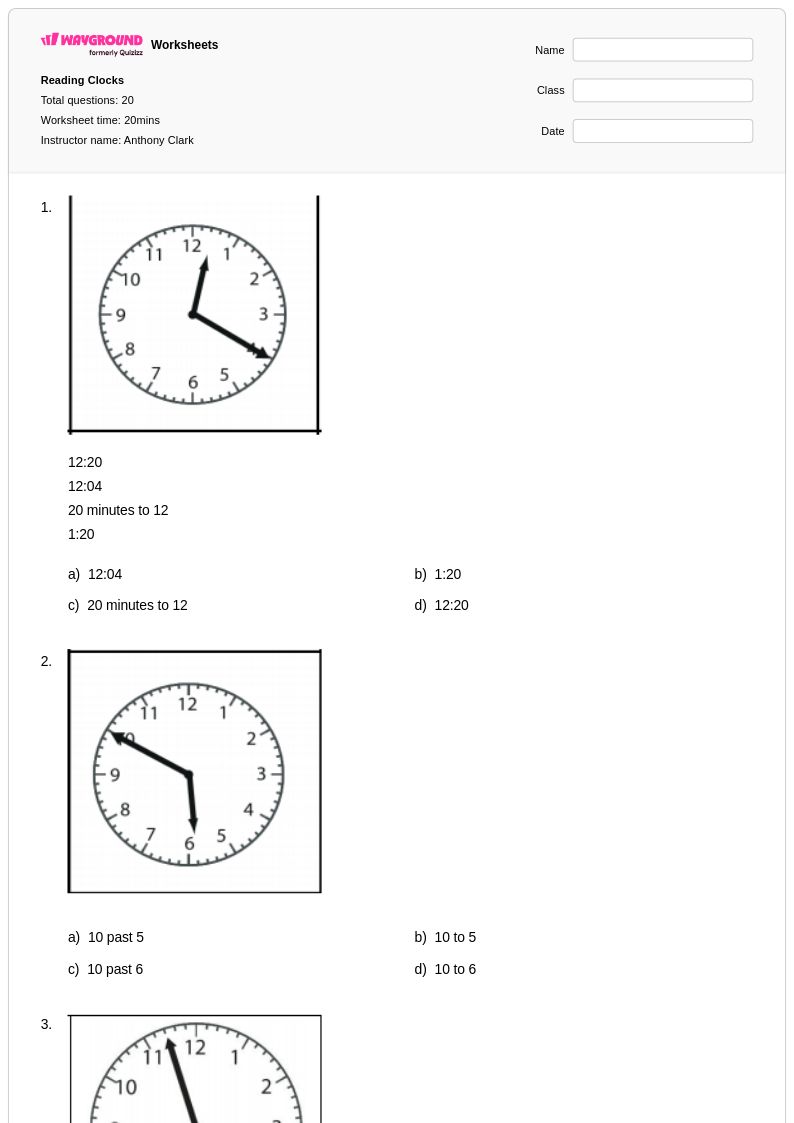
20 Q
3rd - Uni
20 Q
2nd - Uni
20 Q
2nd - Uni
12 Q
4th - 5th
20 Q
2nd - Uni
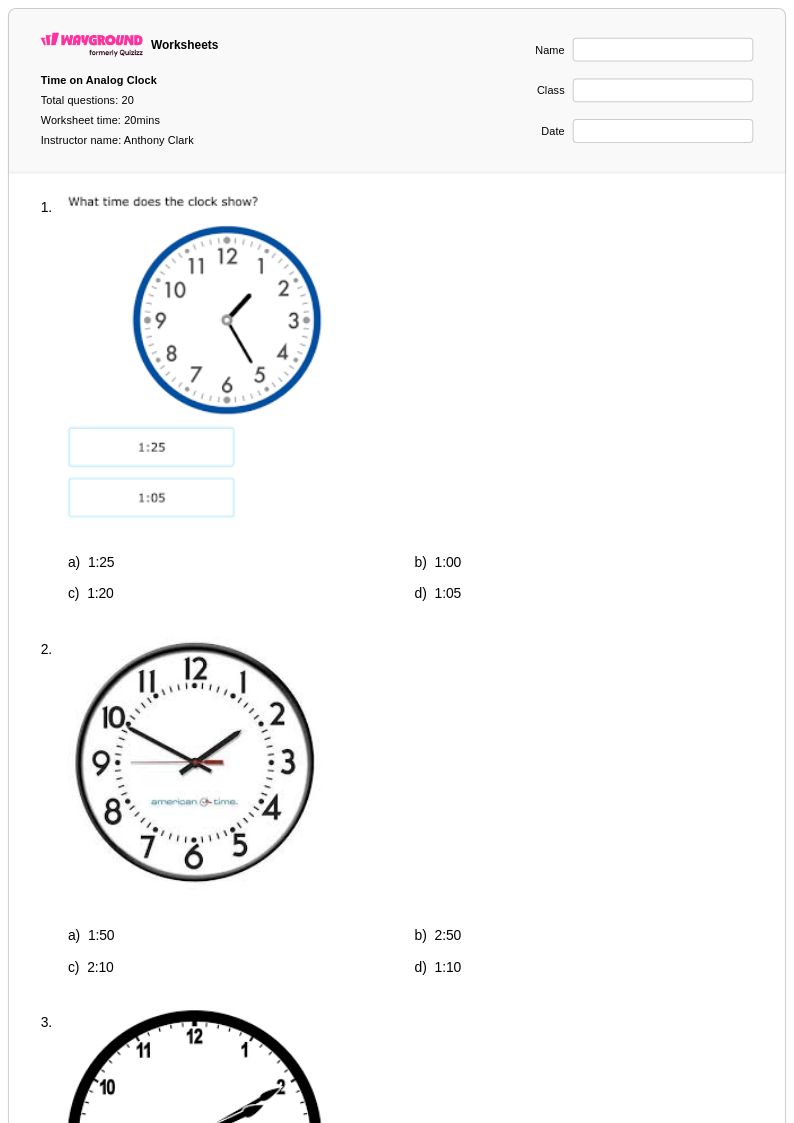
20 Q
2nd - Uni
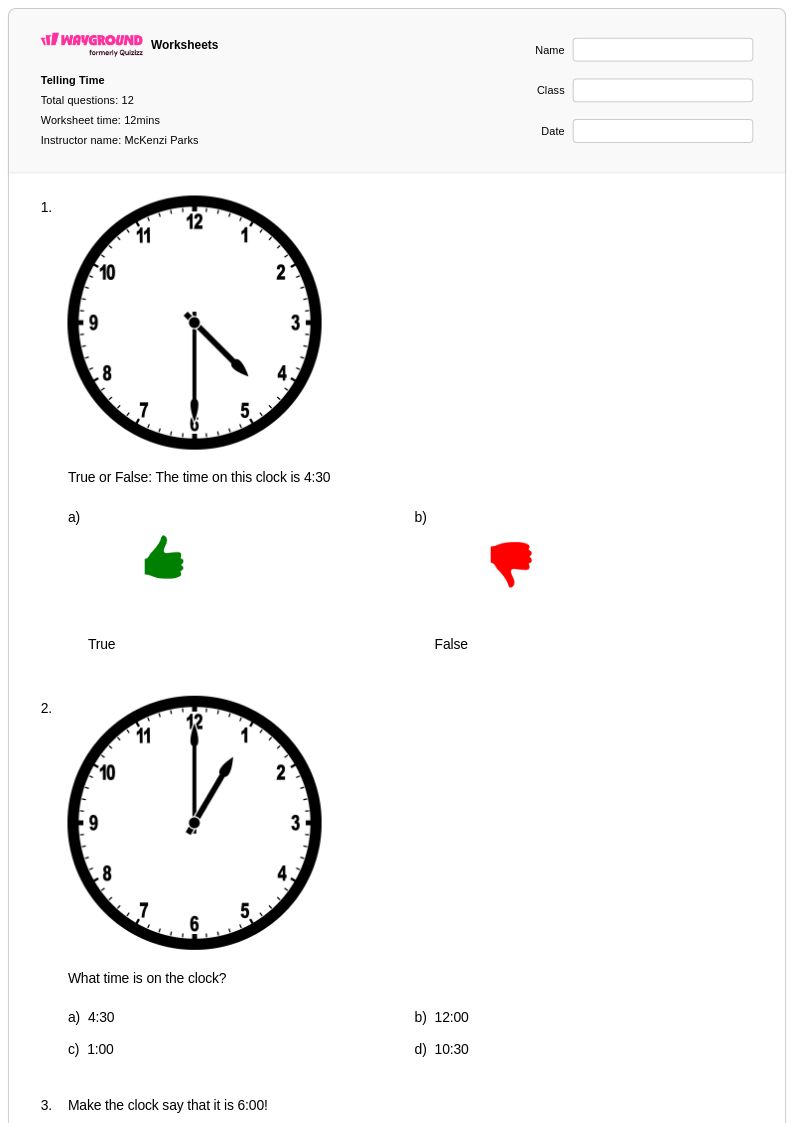
12 Q
5th
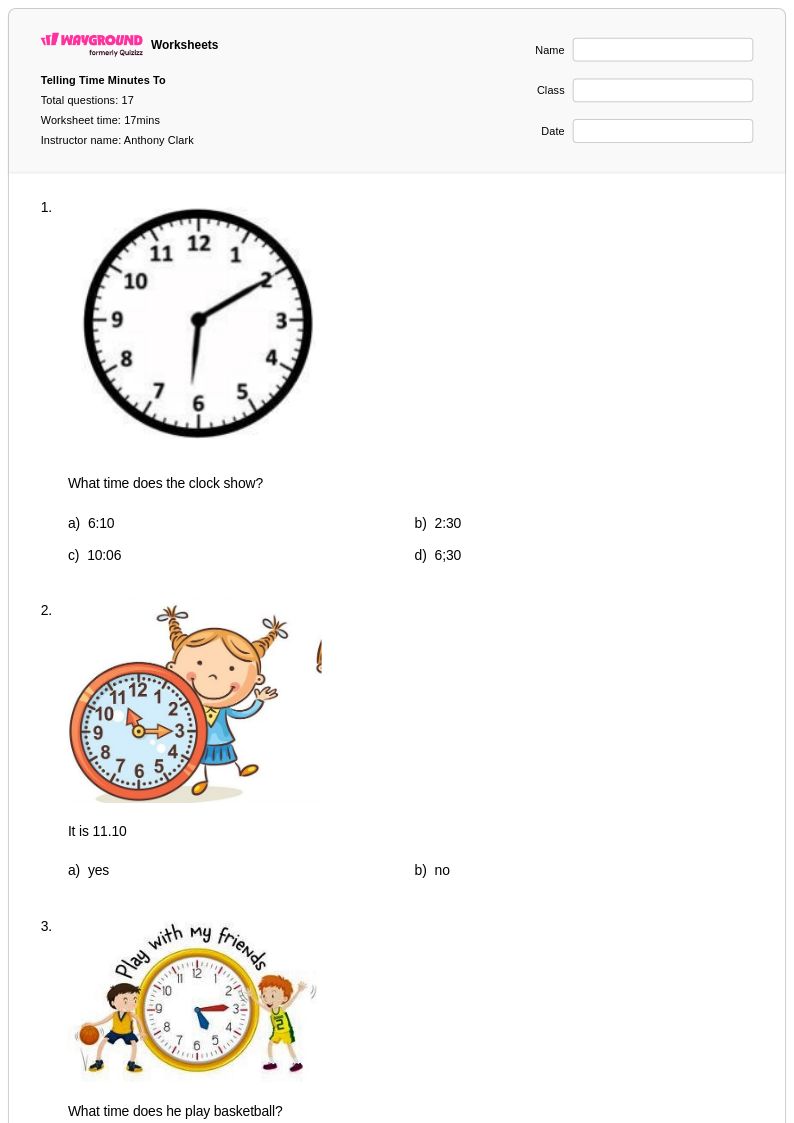
17 Q
2nd - Uni
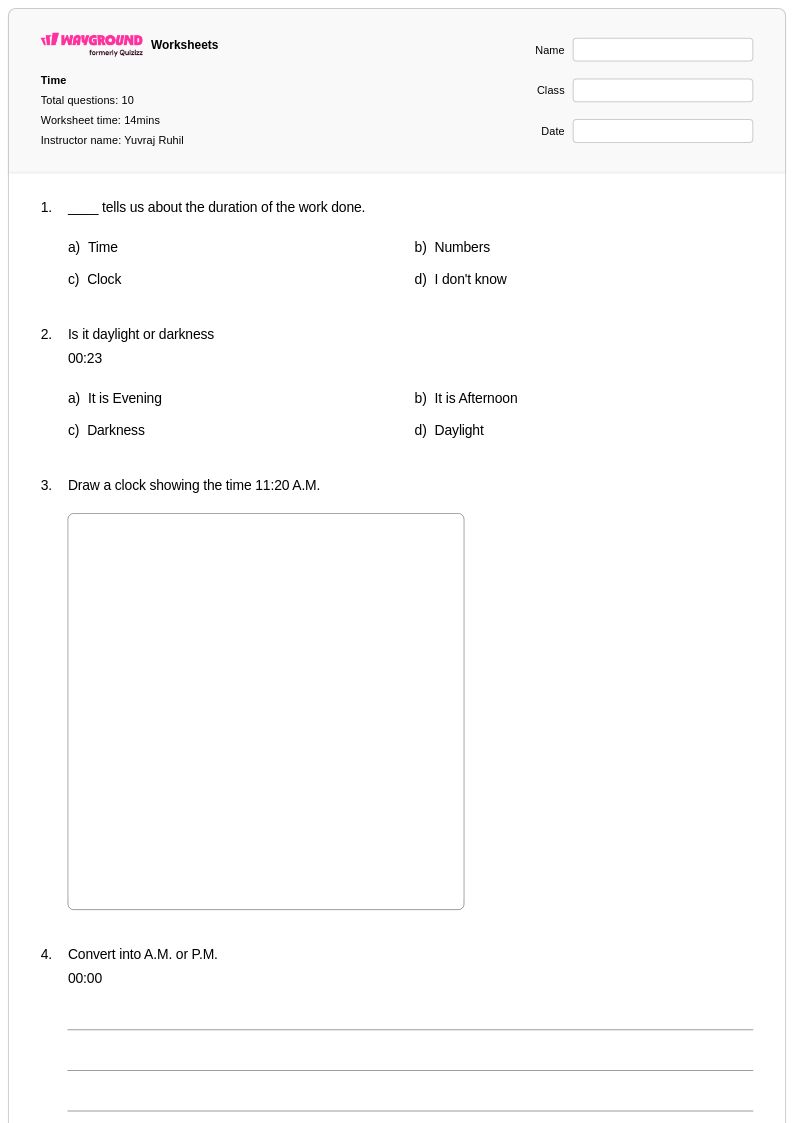
10 Q
4th - 5th
Explore Reading an Analog Clock Worksheets by Grades
Explore Other Subject Worksheets for class 5
Explore printable Reading an Analog Clock worksheets for Class 5
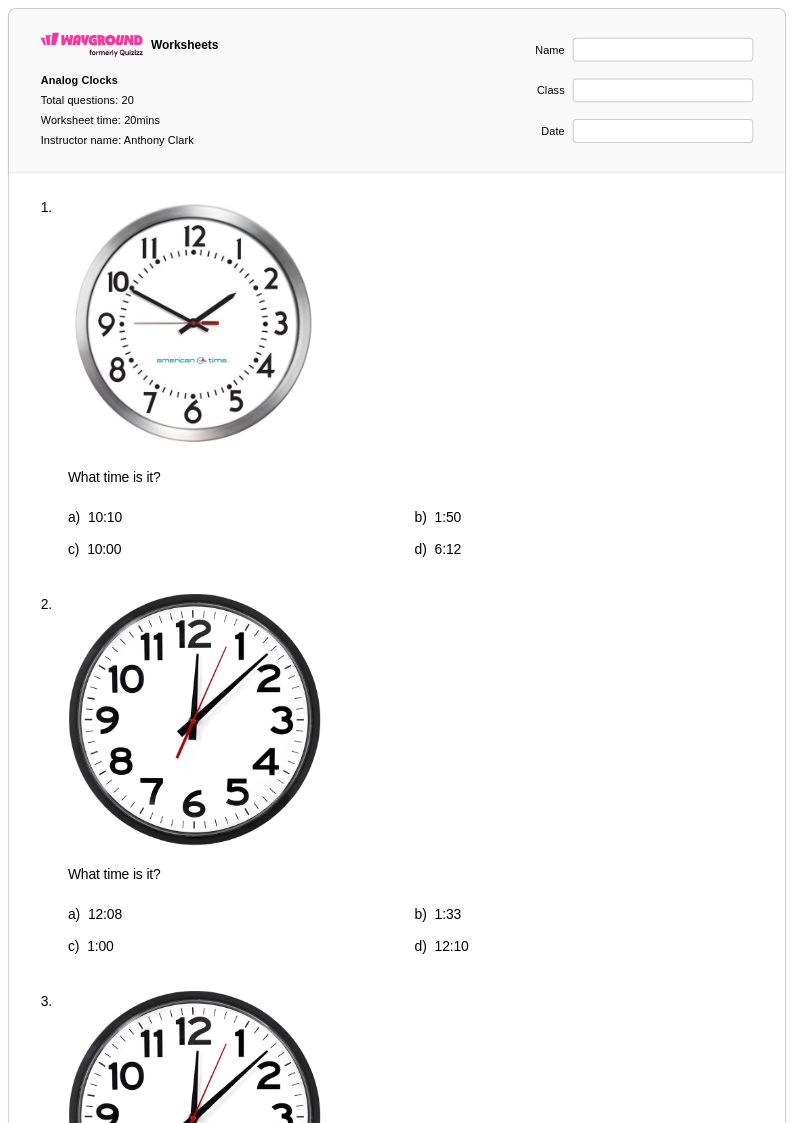
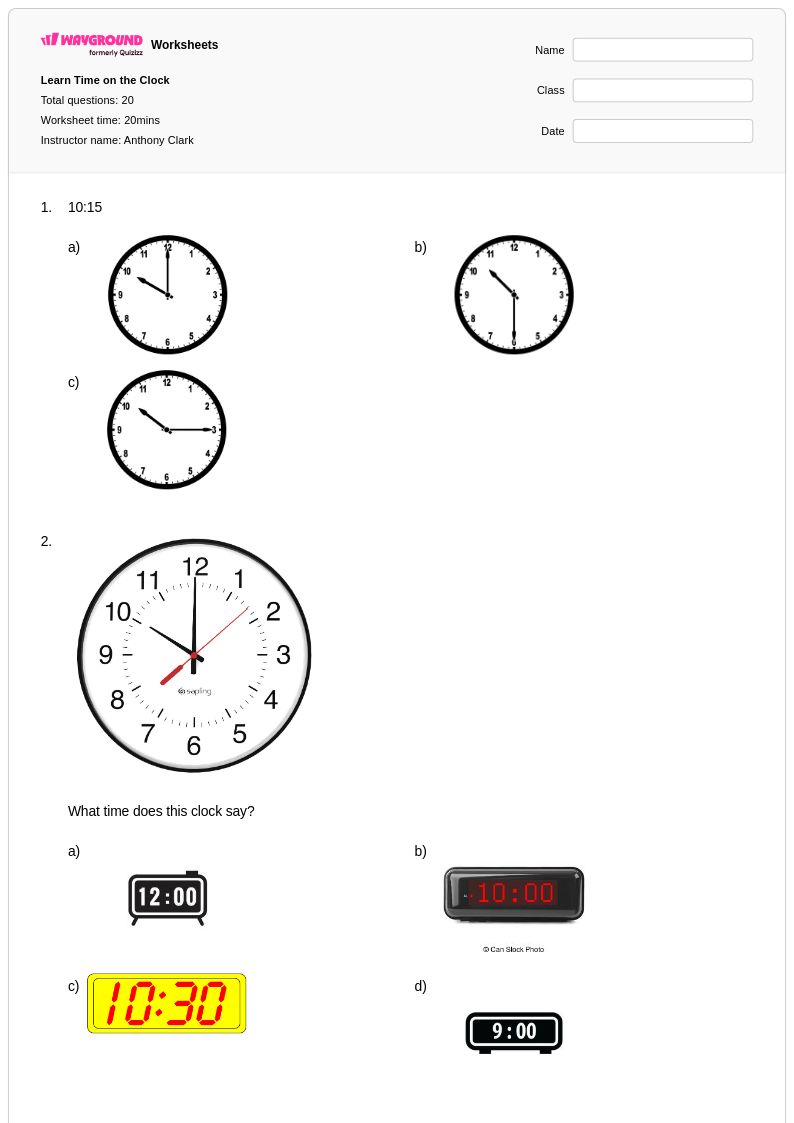
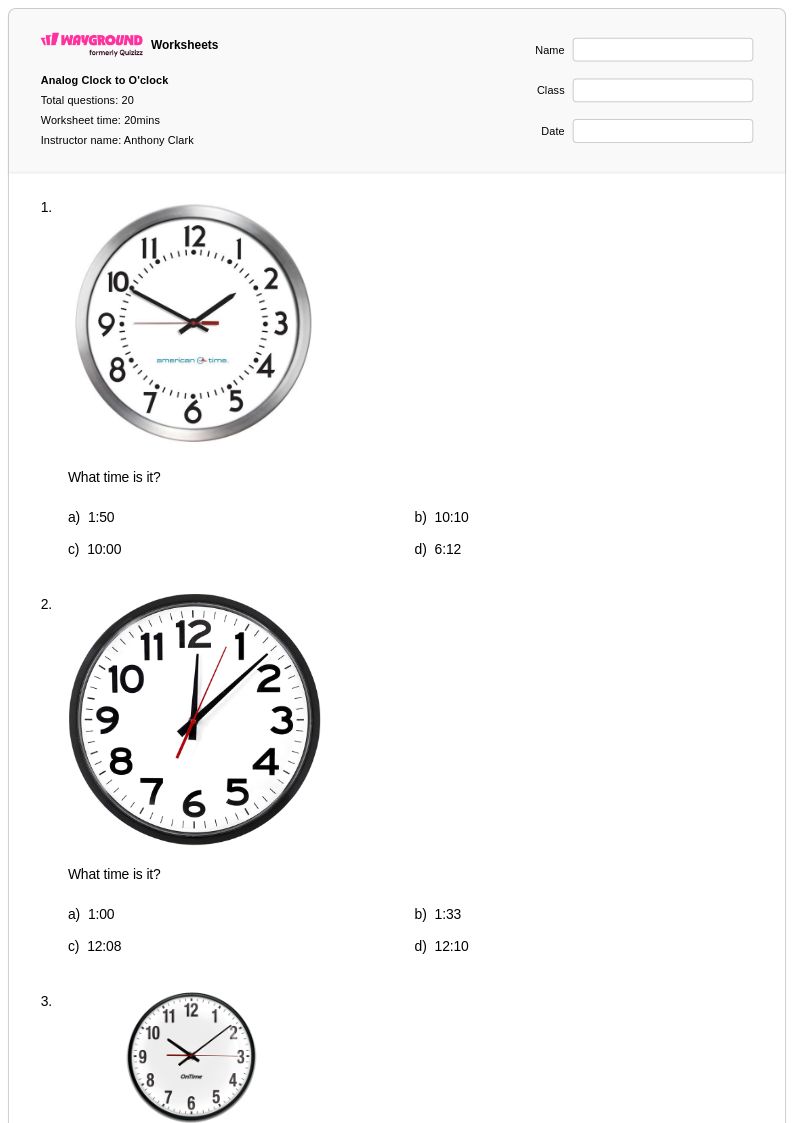
Reading an analog clock worksheets for Class 5 students through Wayground (formerly Quizizz) provide comprehensive practice in interpreting traditional timepieces with precision and confidence. These carefully designed resources strengthen essential time-telling skills including identifying hour and minute hand positions, understanding the relationship between clock face numbers and time intervals, and accurately reading times to the nearest minute. Students engage with practice problems that progress from basic hour and half-hour recognition to more complex scenarios involving quarter hours, five-minute intervals, and precise minute readings. Each worksheet collection includes detailed answer keys that support independent learning and self-assessment, while the free printable format ensures accessibility for classroom instruction, homework assignments, and targeted skill reinforcement.
Wayground (formerly Quizizz) empowers teachers with millions of educator-created analog clock reading resources specifically aligned to Class 5 mathematics standards and learning objectives. The platform's robust search and filtering capabilities allow instructors to quickly locate worksheets that match their students' current skill levels, from foundational clock concepts to advanced time-reading challenges. Teachers can customize these digital and printable materials to accommodate diverse learning needs, creating differentiated instruction opportunities for remediation and enrichment activities. The comprehensive pdf format options ensure seamless integration into existing lesson plans, while the extensive variety of practice problems supports systematic skill development throughout the academic year. This flexible resource collection enables educators to provide consistent, standards-based time-telling instruction that builds mathematical fluency and real-world application skills.