Free Printable Visualizing and Verbalizing Worksheets for Kindergarten
Discover free kindergarten visualizing and verbalizing worksheets and printables from Wayground that help young learners develop essential reading comprehension skills through interactive practice problems and detailed answer keys.
Explore printable Visualizing and Verbalizing worksheets for Kindergarten
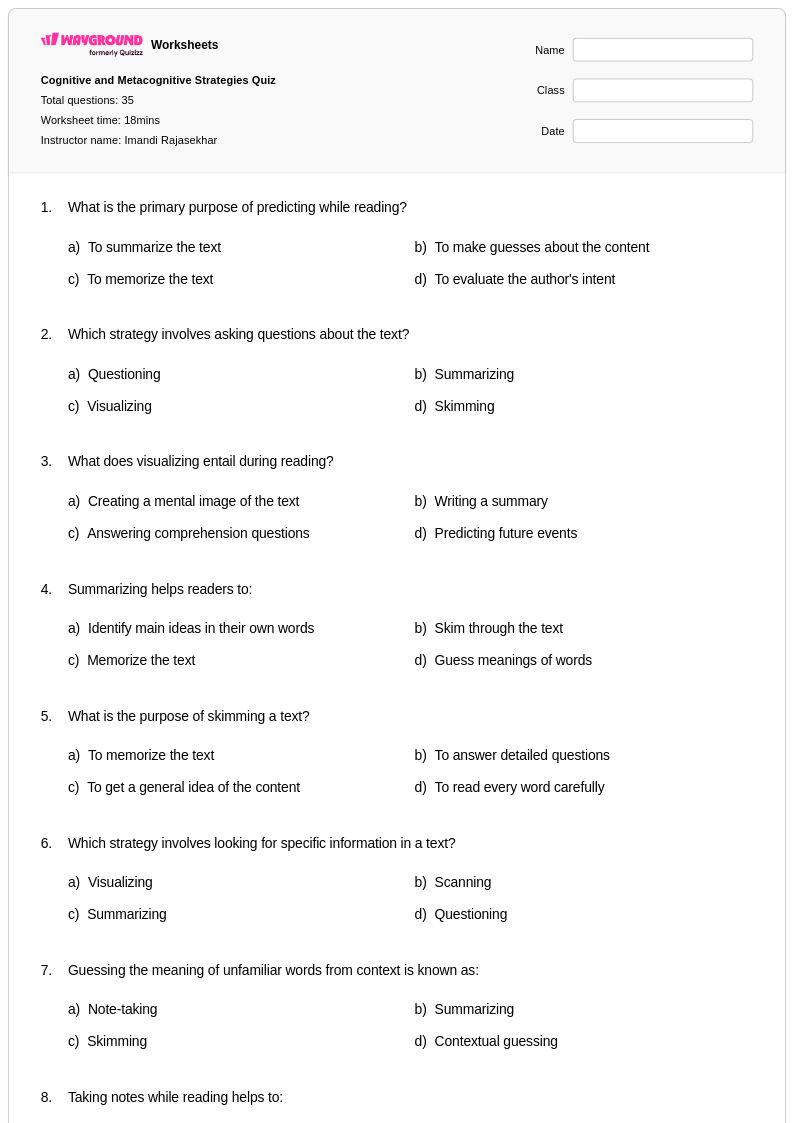
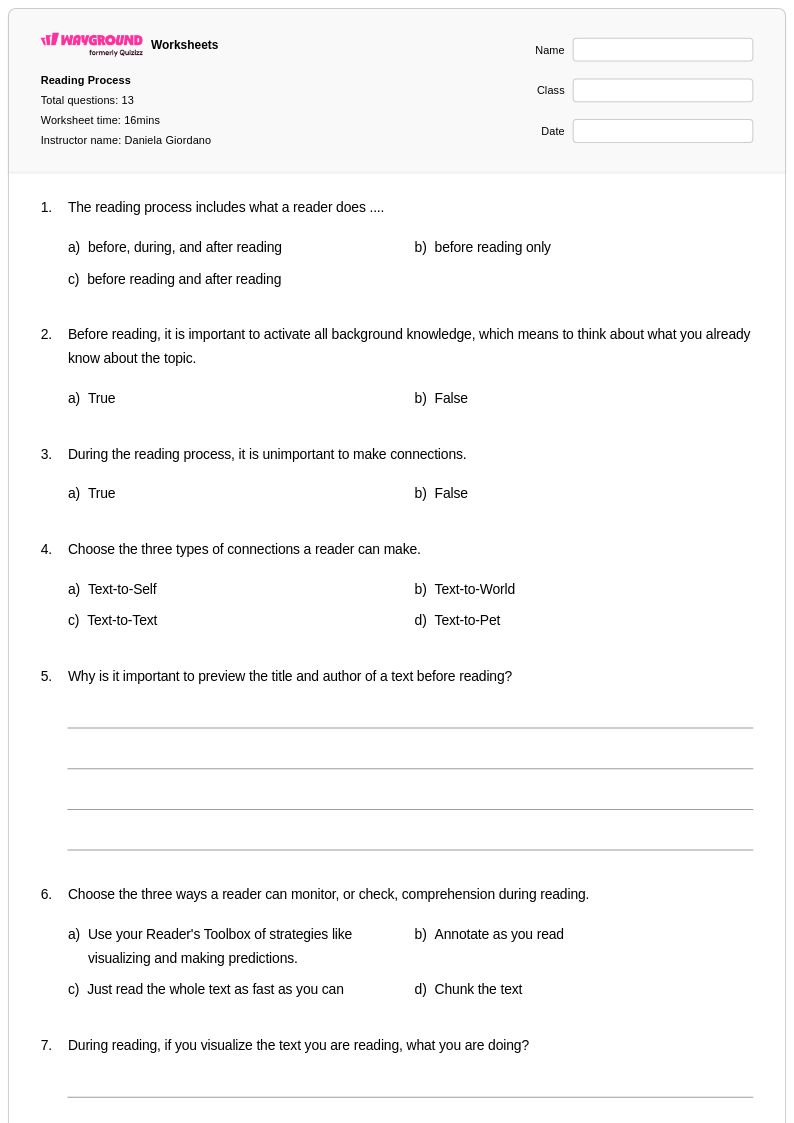
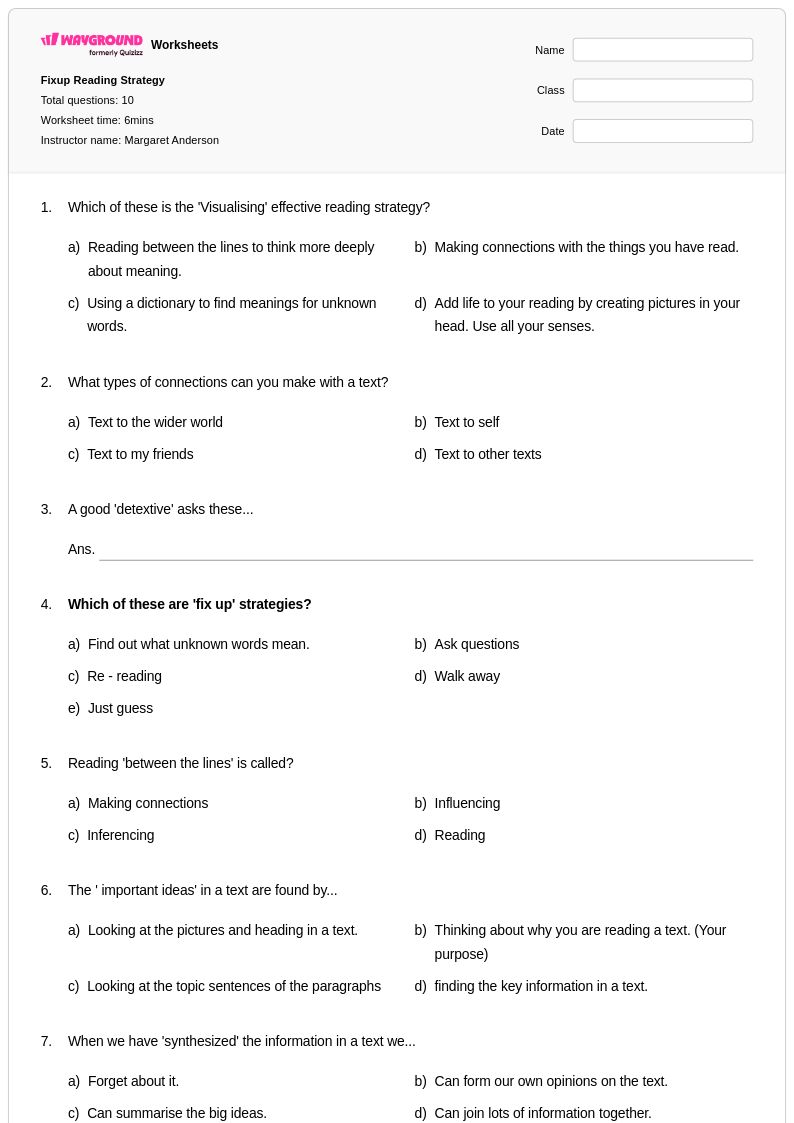
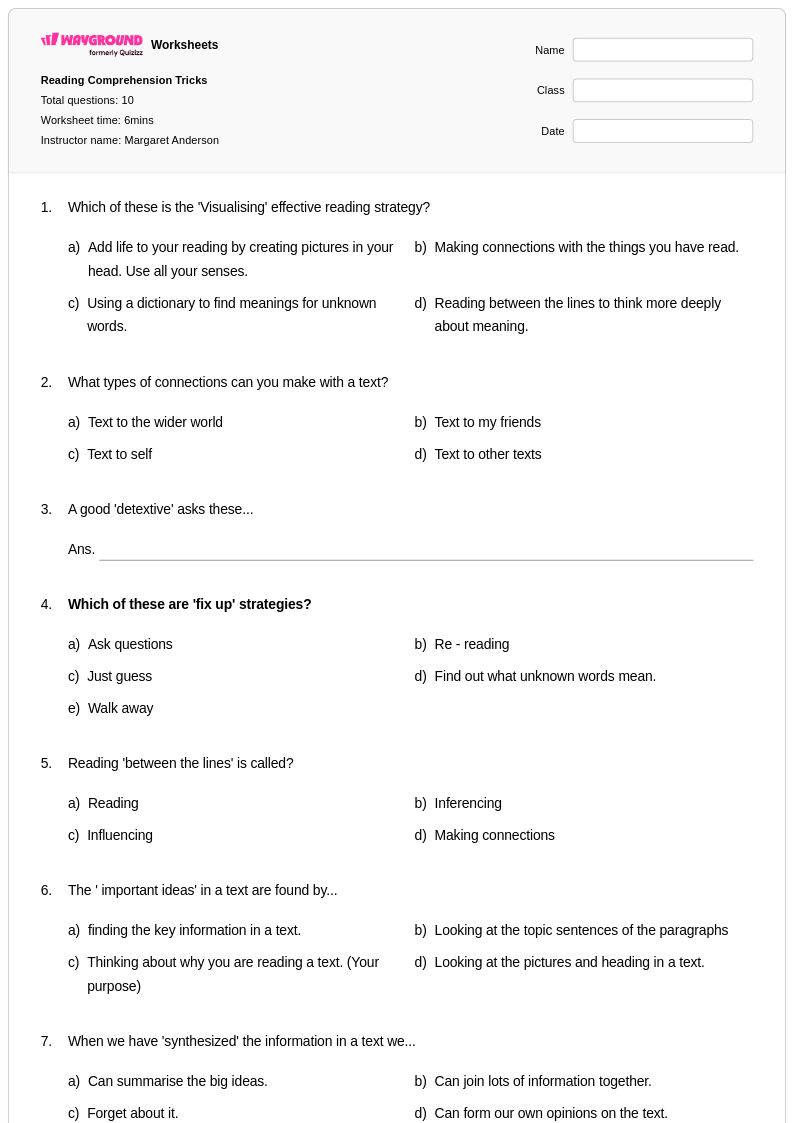
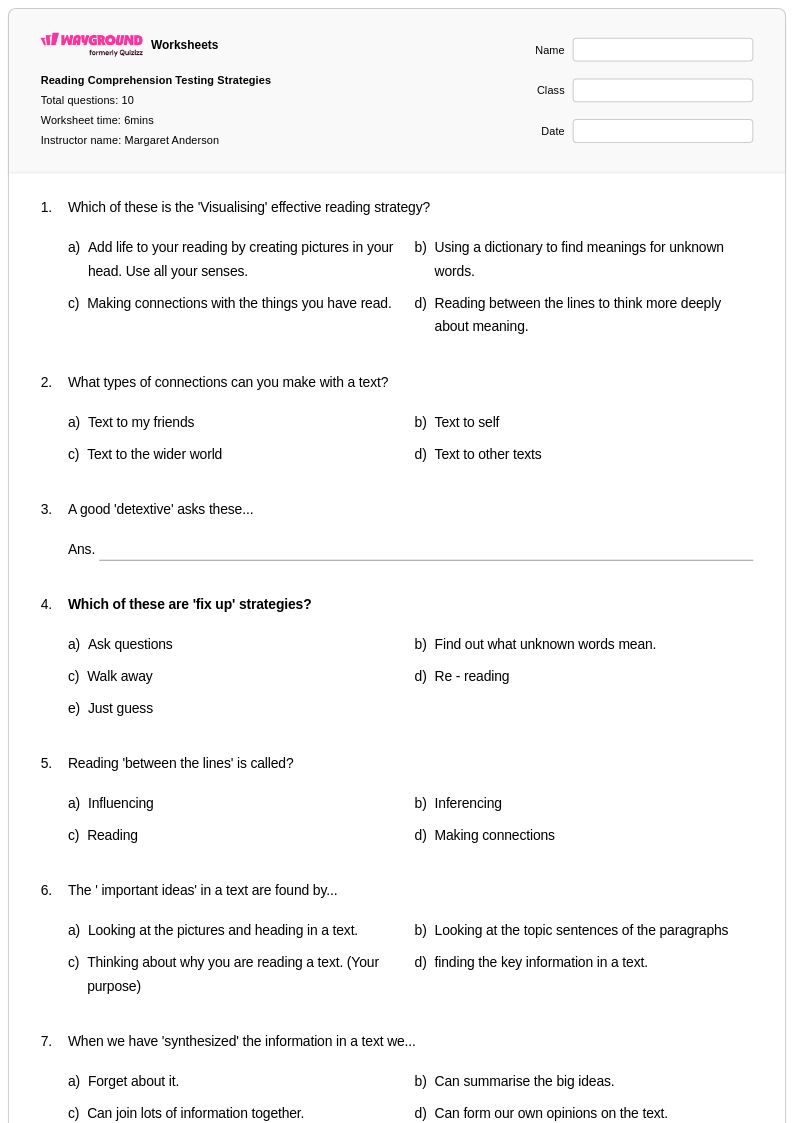
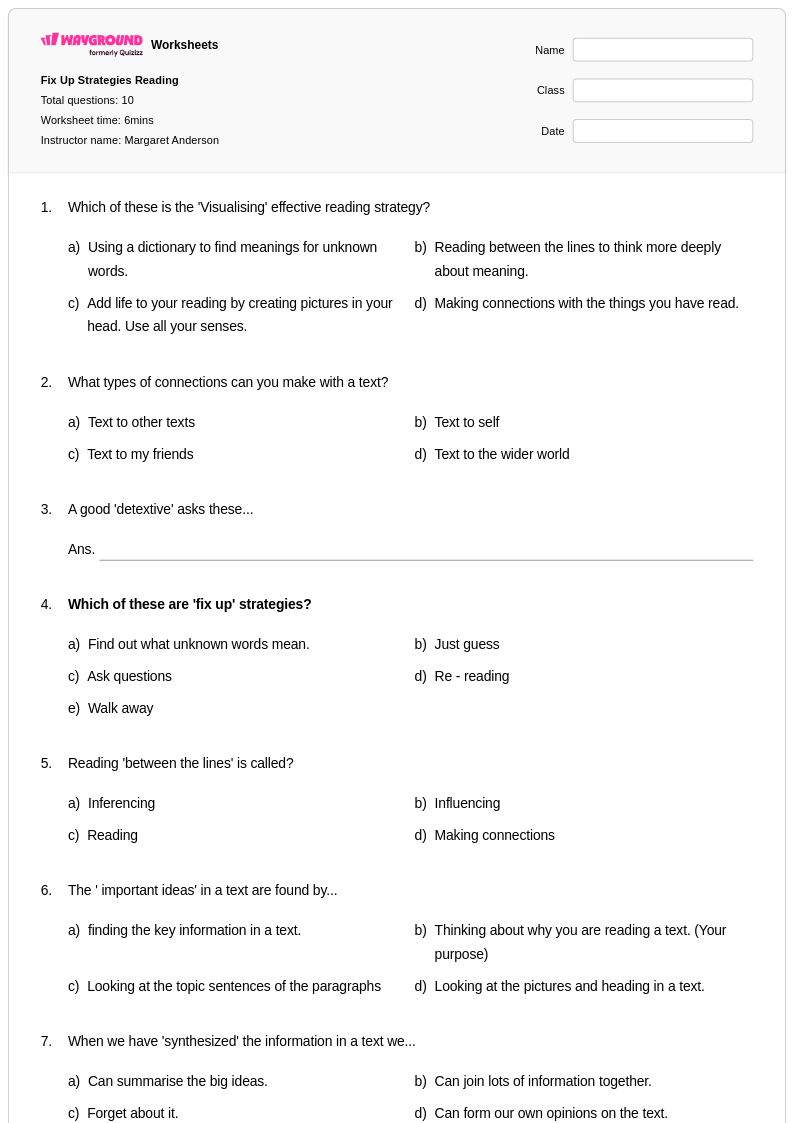
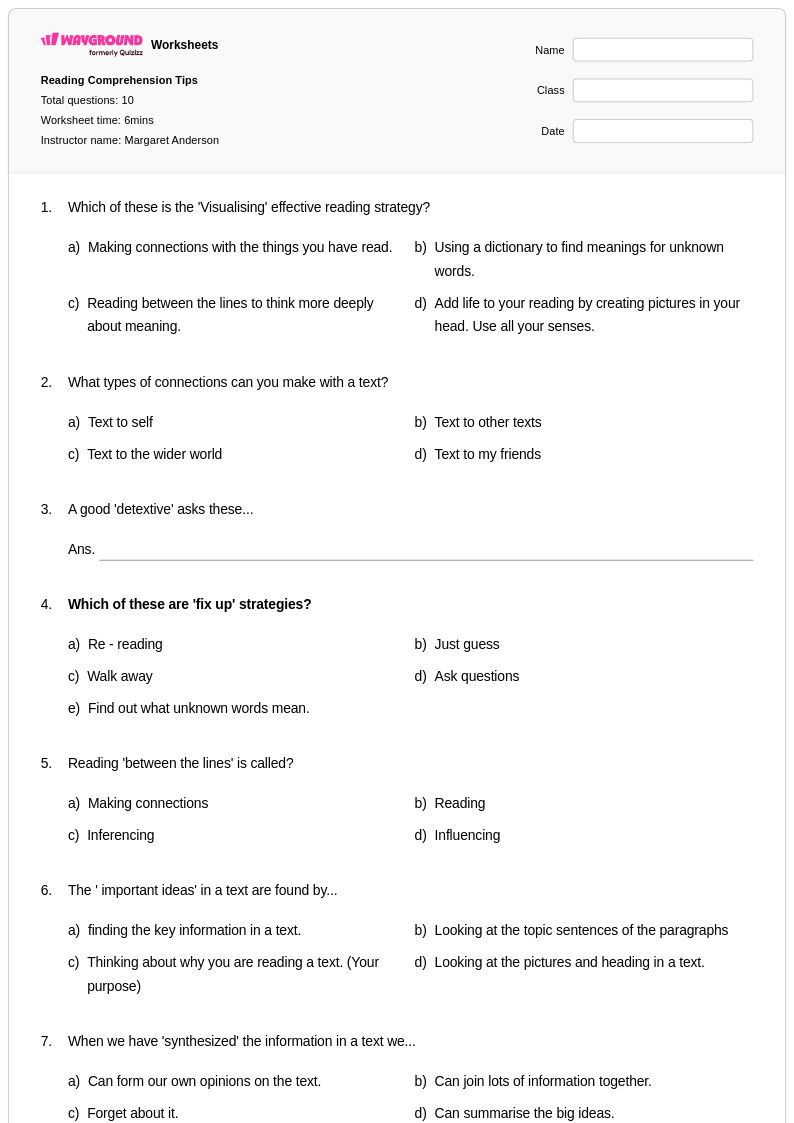
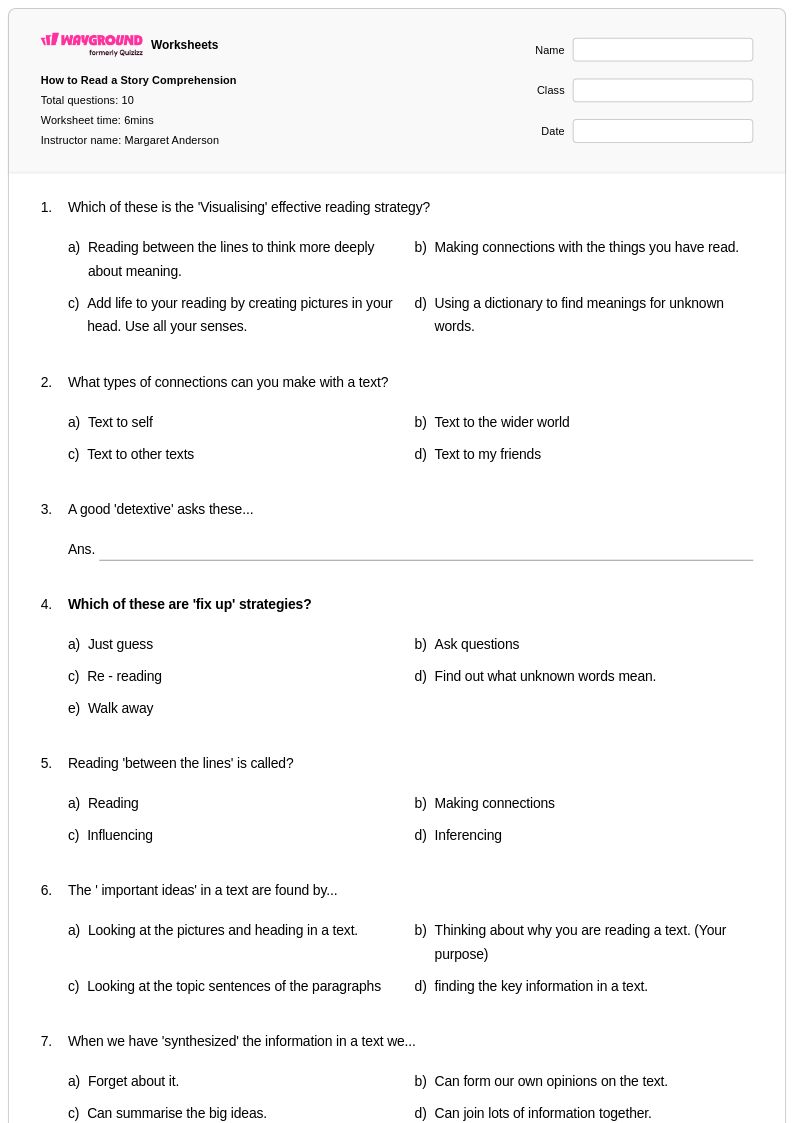
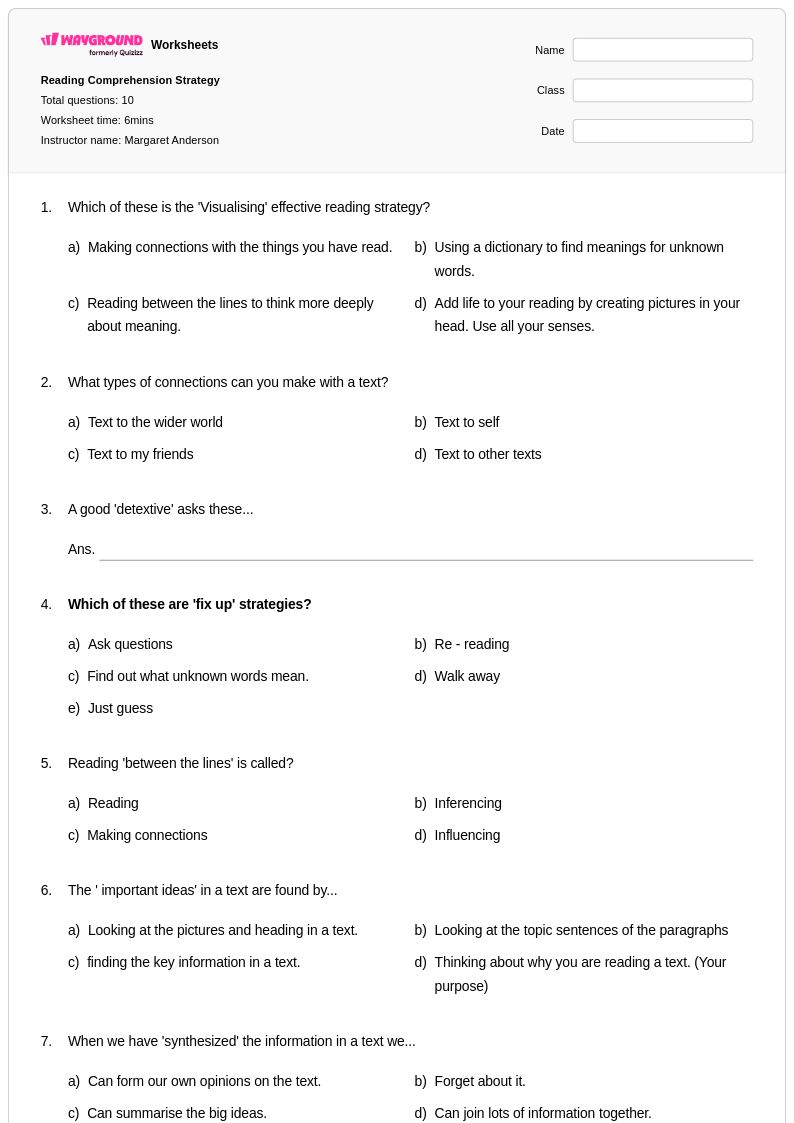
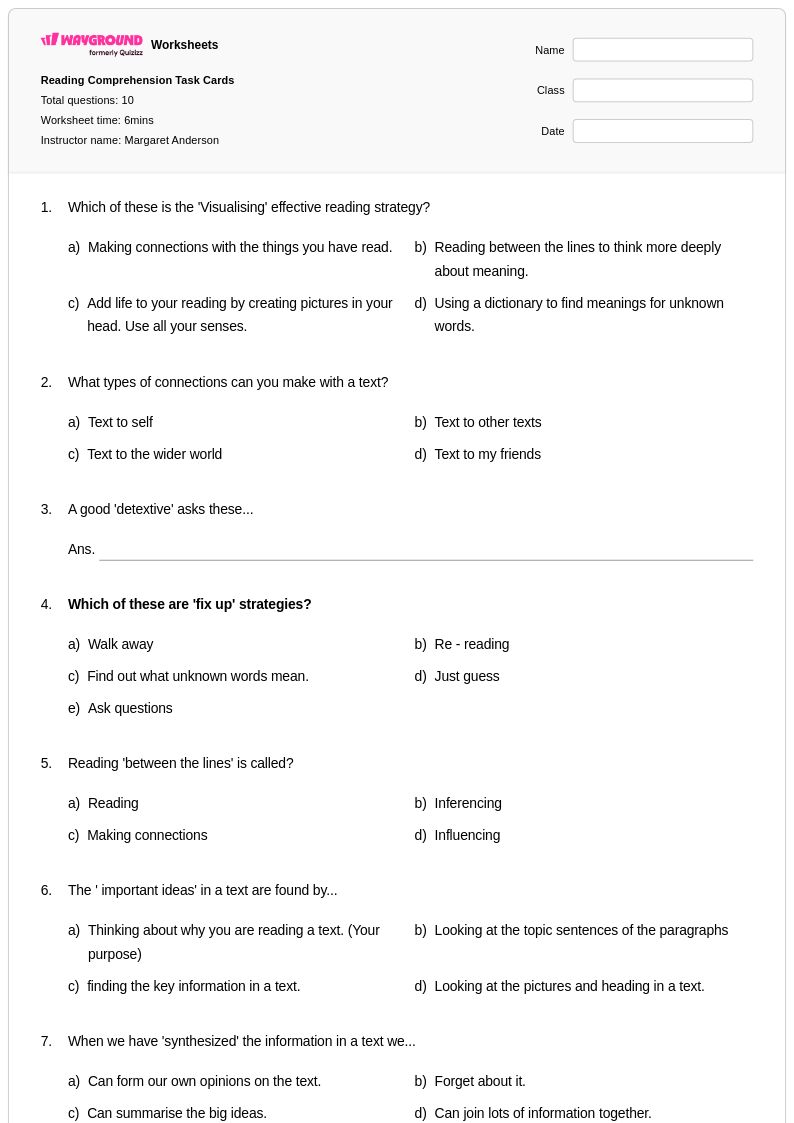
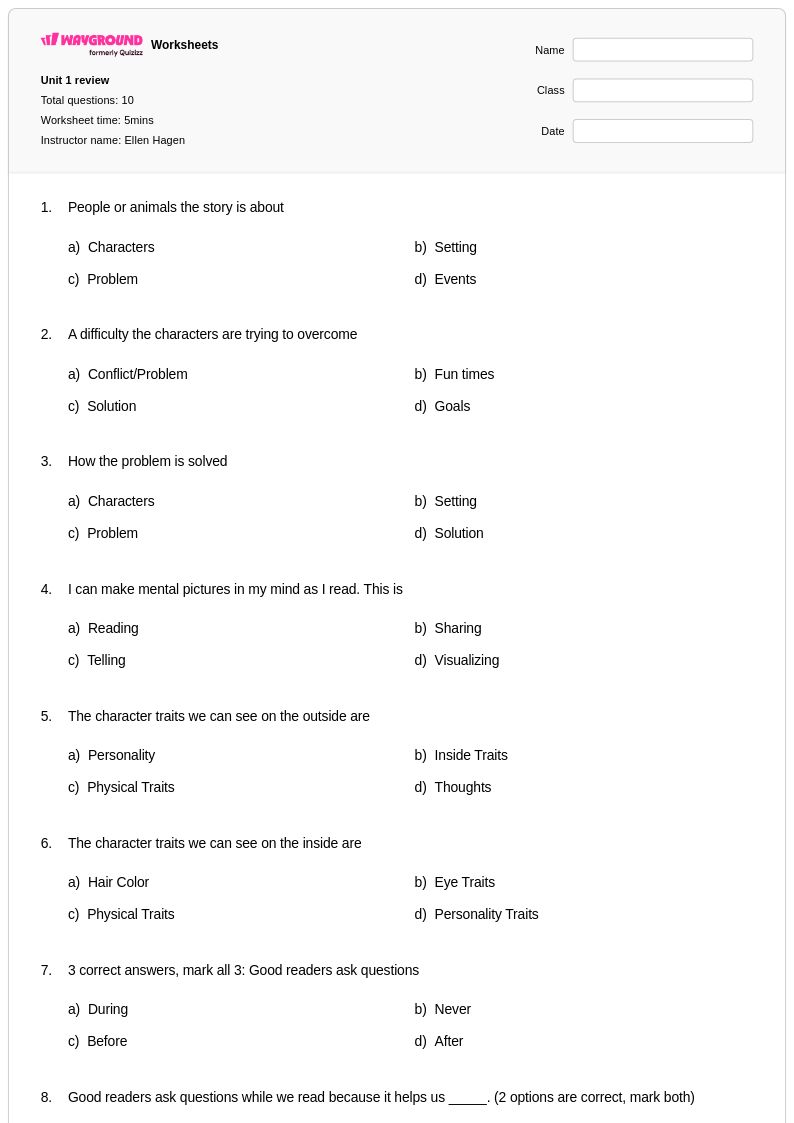
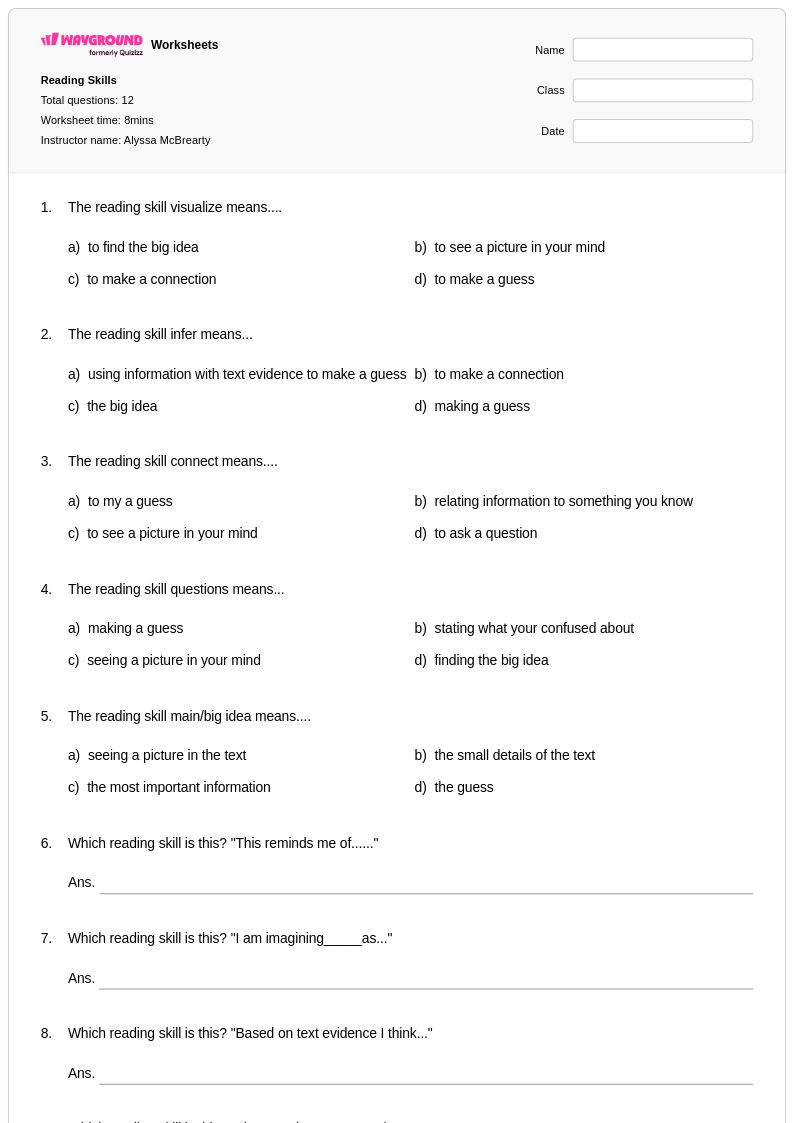
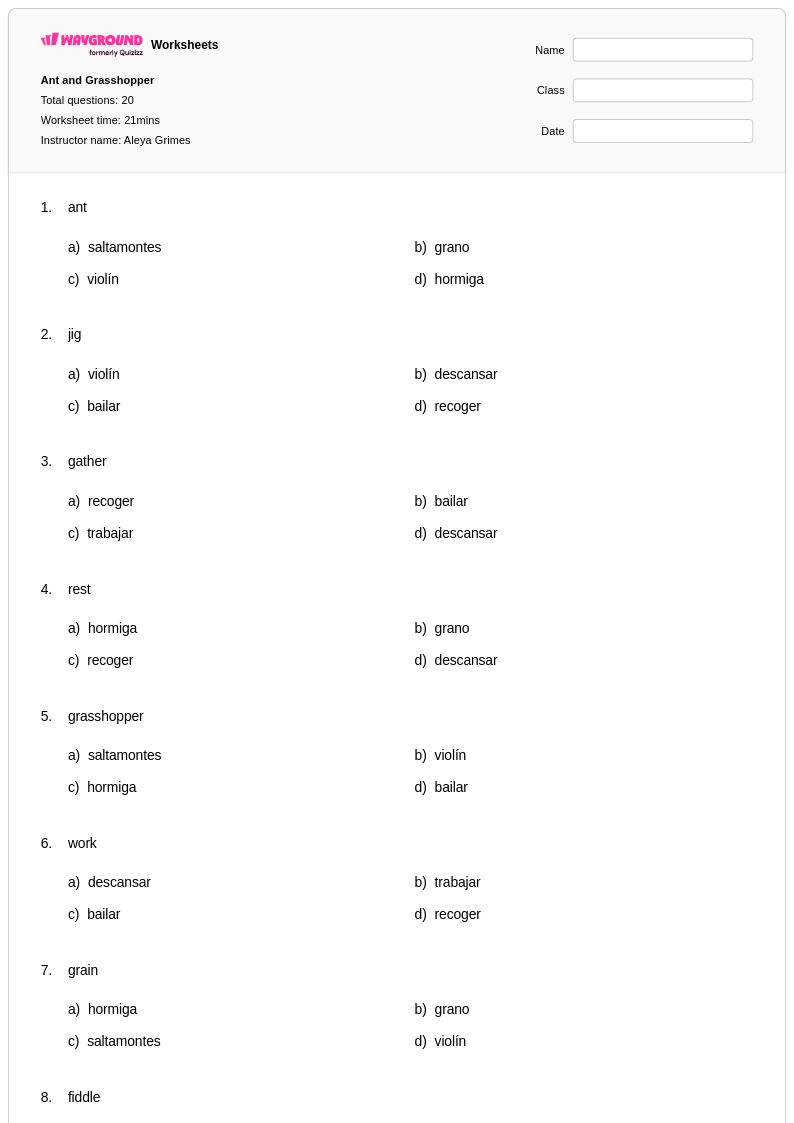
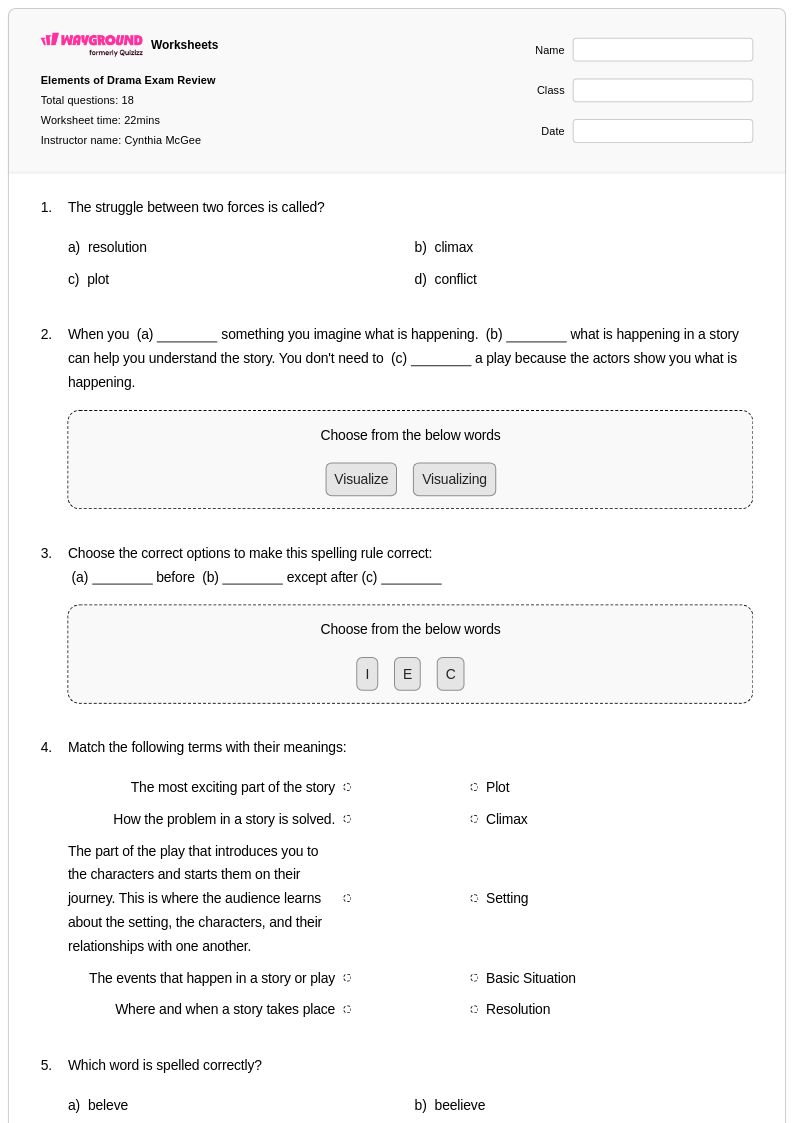
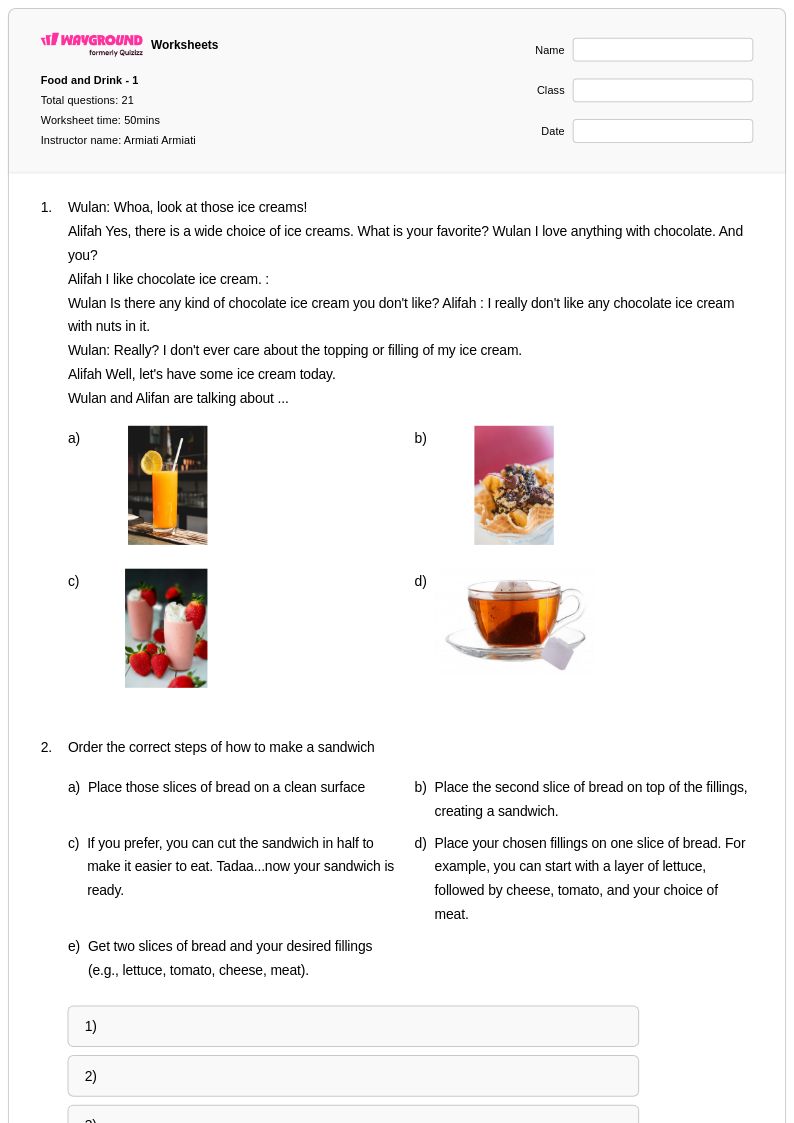
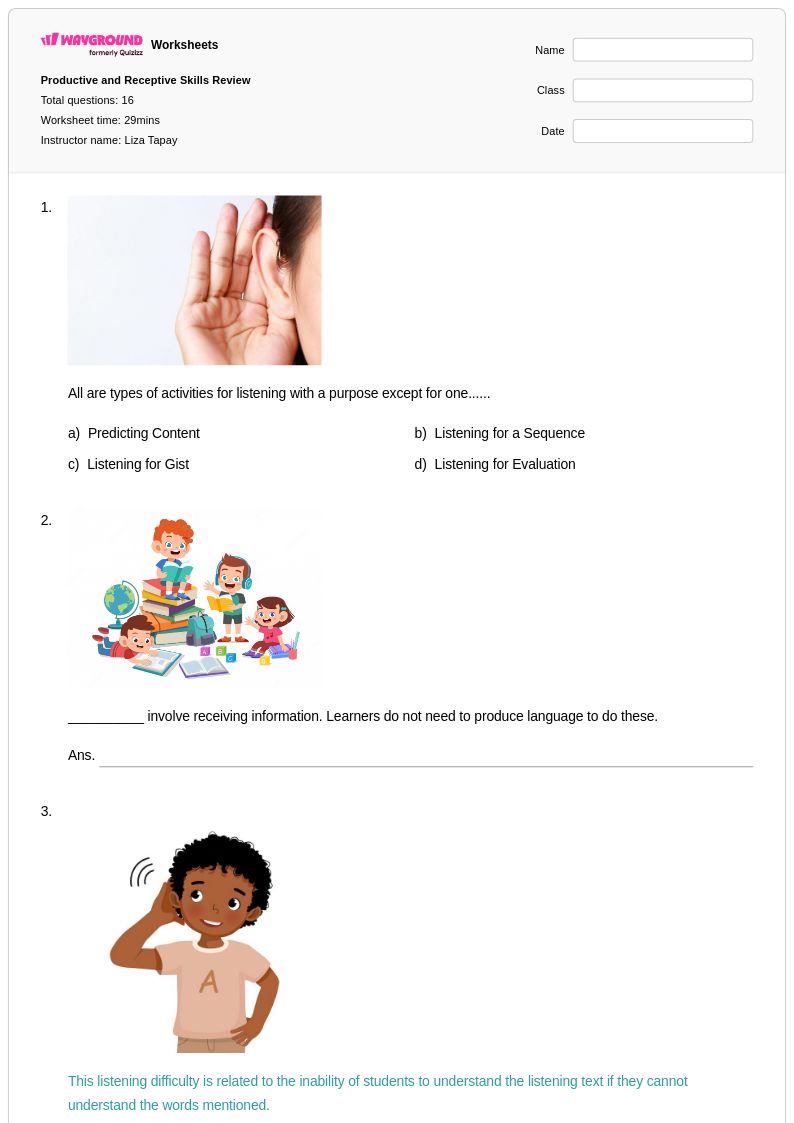
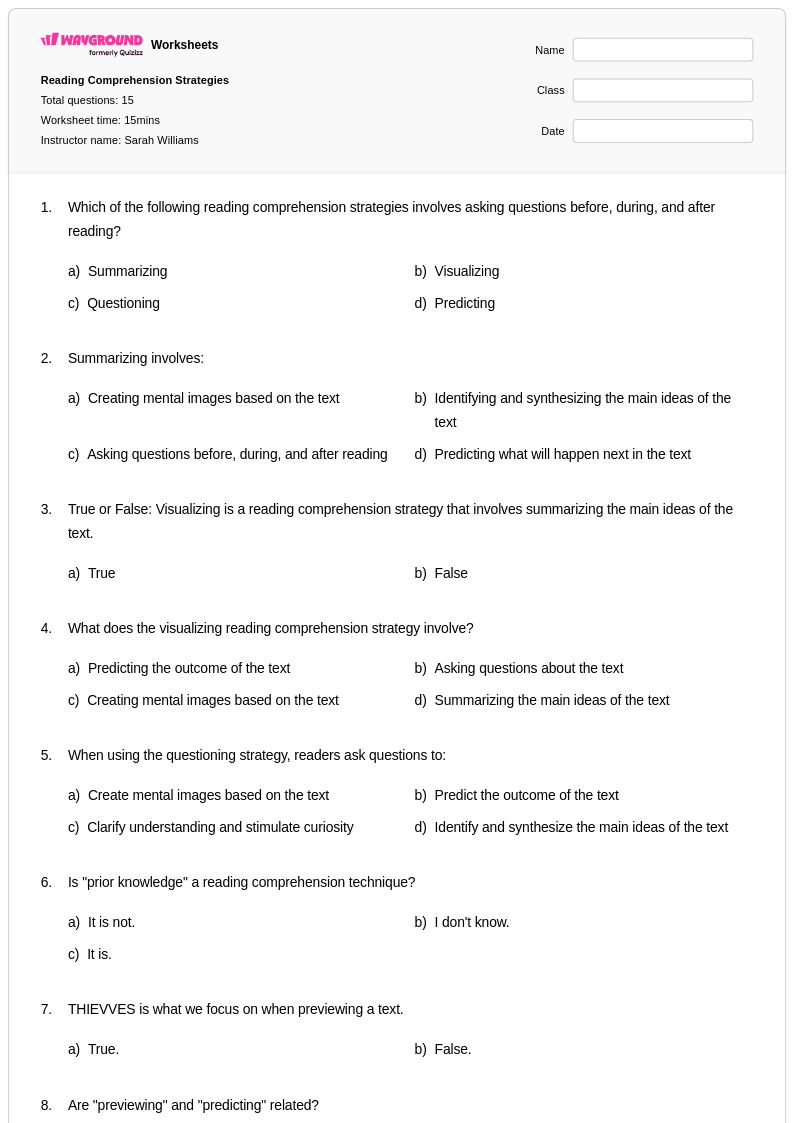
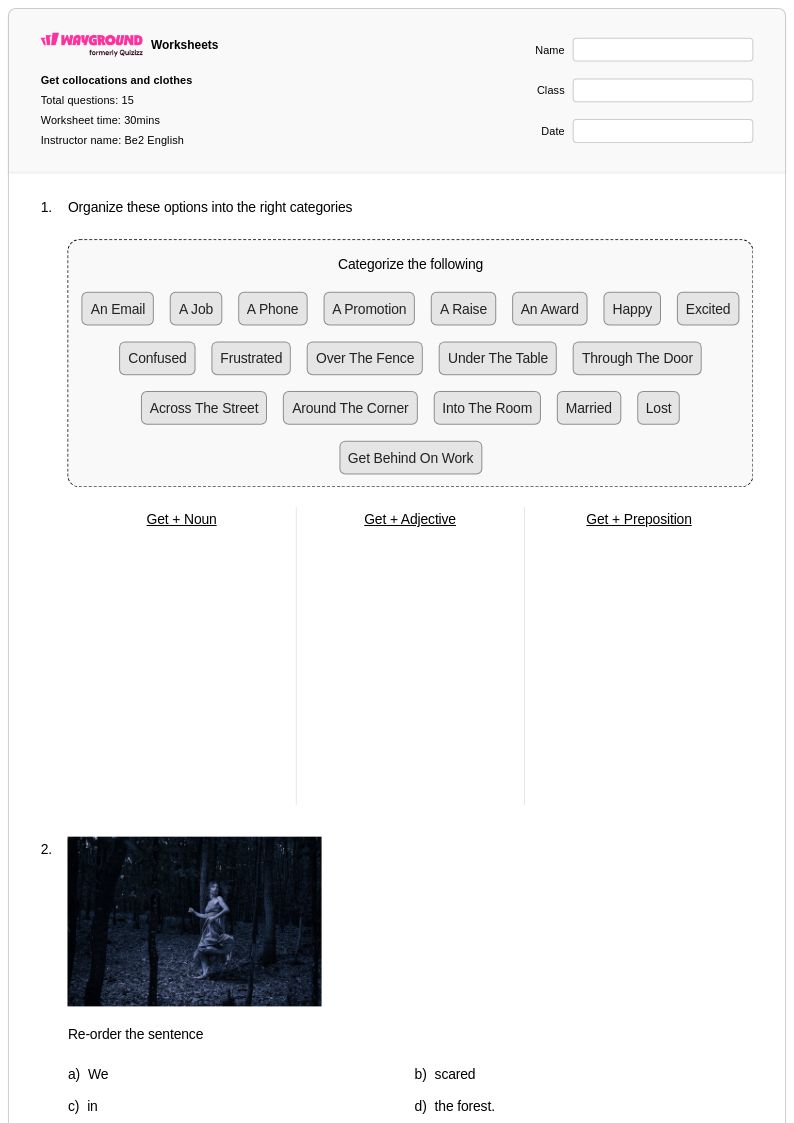
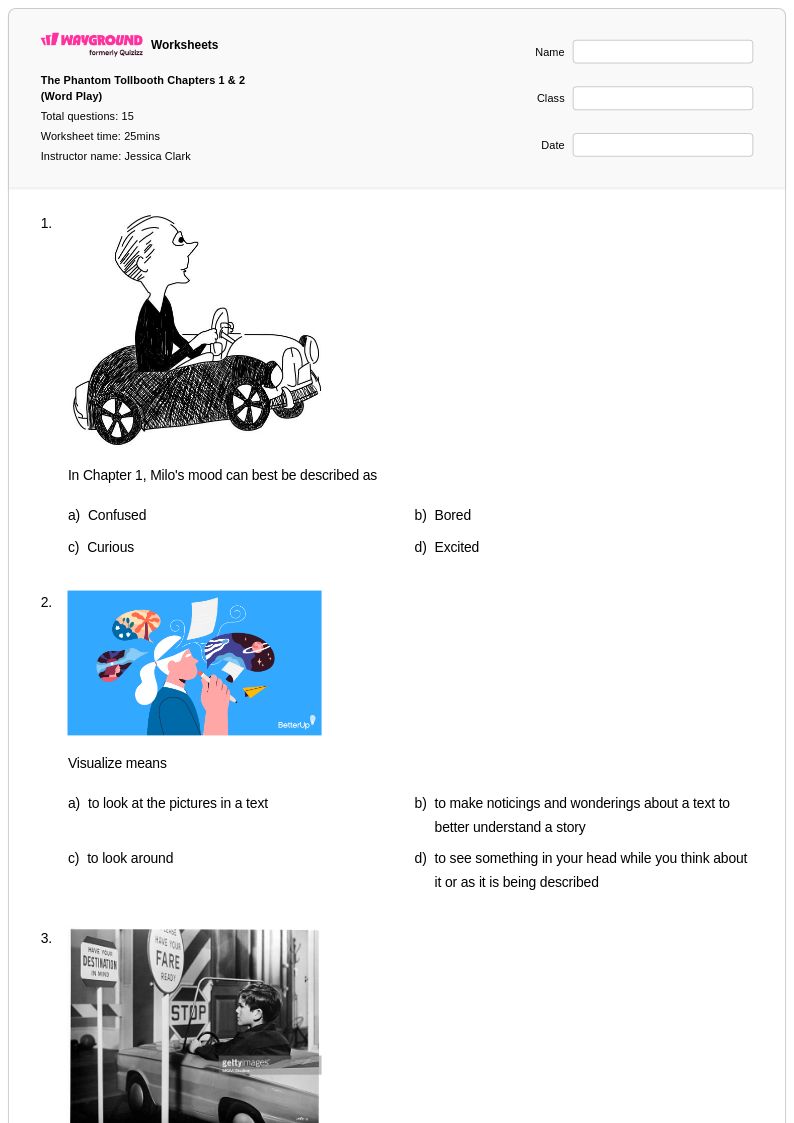
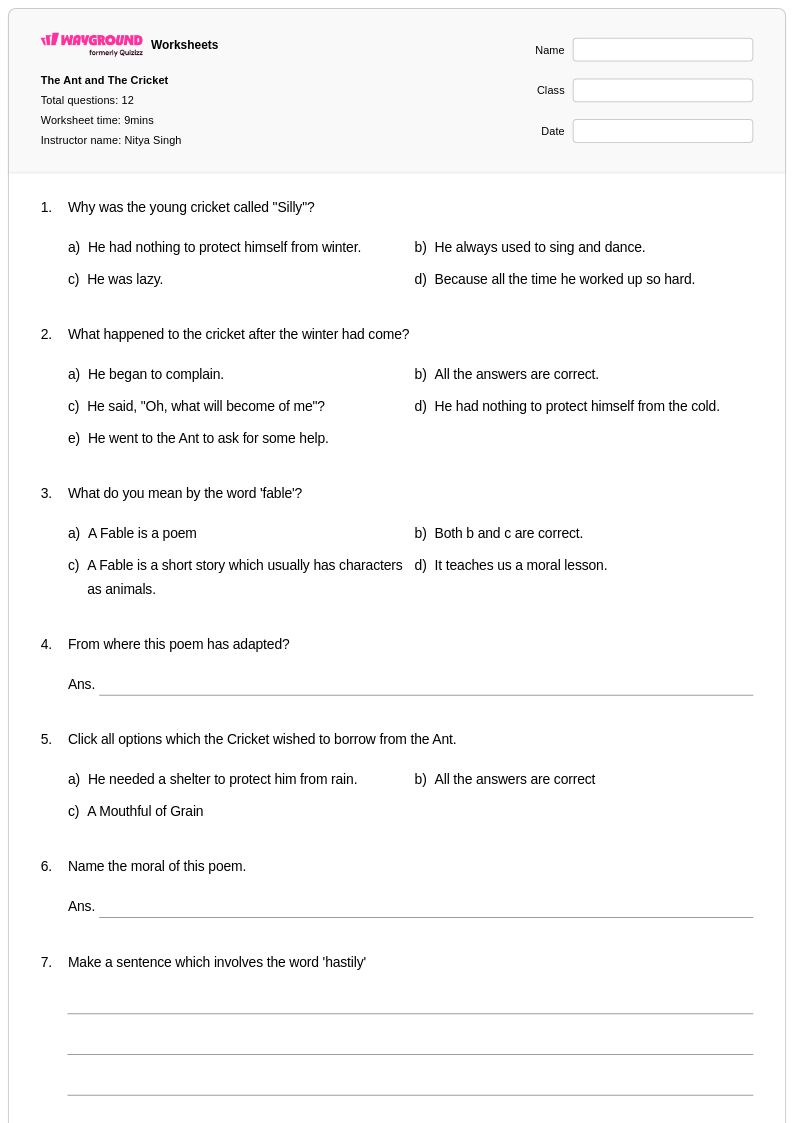
Visualizing and verbalizing worksheets for kindergarten students available through Wayground (formerly Quizizz) provide essential foundation-building resources that help young learners develop critical reading comprehension strategies. These carefully designed printables focus on teaching kindergarteners how to create mental images while reading and express their thoughts verbally about stories and texts. The worksheets strengthen key cognitive skills including mental imagery formation, vocabulary development, and oral expression through engaging practice problems that feature age-appropriate content such as simple stories, picture sequences, and guided visualization exercises. Each worksheet collection includes comprehensive answer keys and is available in convenient pdf format, making them accessible as free printables that support both classroom instruction and home practice sessions.
Wayground (formerly Quizizz) empowers teachers with an extensive collection of millions of teacher-created resources specifically designed to support visualizing and verbalizing instruction for kindergarten students. The platform's robust search and filtering capabilities allow educators to quickly locate worksheets that align with specific learning standards and match their students' developmental needs, while built-in differentiation tools enable seamless customization for diverse learning levels within the same classroom. These flexible resources are available in both printable and digital formats, including downloadable pdf options, making them ideal for various instructional settings and learning environments. Teachers can effectively utilize these materials for lesson planning, targeted skill remediation, enrichment activities for advanced learners, and consistent practice opportunities that reinforce the critical connection between mental imagery and reading comprehension success.
FAQs
How do I teach visualizing and verbalizing to struggling readers?
Start by modeling the process explicitly: read a short passage aloud, pause, and describe the mental image you form in detail, including sensory details like color, size, movement, and mood. Then guide students to do the same with scaffolded sentence starters like 'I picture...' or 'In my mind I see...' before gradually releasing responsibility to them. Pairing this with short, high-interest texts helps struggling readers build the habit of forming images as they decode, which directly improves comprehension and retention.
What exercises help students practice visualizing and verbalizing?
Effective practice exercises include read-and-draw tasks where students illustrate a passage after reading it, followed by written descriptions of their images in their own words. Sentence-by-sentence image building, where students pause after each sentence to update their mental picture, reinforces the connection between text and imagery. Structured worksheets that prompt students to describe setting, characters, mood, and action force both the visualization and the verbalization steps, making the cognitive process visible and assessable.
What mistakes do students commonly make when learning to visualize and verbalize?
The most common error is surface-level visualization, where students form only vague or incomplete images rather than detailed mental scenes that reflect the text's actual content. Students also tend to skip the verbalization step, assuming comprehension is sufficient without articulating what they visualized, which limits their ability to clarify and deepen understanding. Another frequent mistake is illustrating prior knowledge instead of the text itself, meaning their mental image reflects what they already know about a topic rather than what the author has specifically described.
How do I use visualizing and verbalizing worksheets in my classroom?
Visualizing and verbalizing worksheets from Wayground are available as printable PDFs for traditional classroom use and in digital formats for technology-integrated environments, including the option to host them as an interactive quiz on Wayground. In a print setting, students can annotate directly on the page, sketching images alongside written descriptions, which reinforces both the visual and verbal components of the strategy. In digital settings, teachers can assign worksheets as independent practice, use them for guided group instruction, or leverage Wayground's accommodation features, such as read aloud and extended time, to support diverse learners within the same session.
How does visualizing and verbalizing improve reading comprehension across subjects?
Visualizing and verbalizing strengthens reading comprehension by forcing readers to actively construct meaning rather than passively decode words, because forming a detailed mental image requires understanding relationships between ideas, sequence, and detail. This process supports inferencing and prediction, which are critical skills not just in ELA but in science, social studies, and any content area where students must interpret complex text. When students can articulate what they visualize, they also reveal gaps in understanding that would otherwise remain hidden, giving teachers actionable data for instruction.
How can I differentiate visualizing and verbalizing practice for students at different reading levels?
For below-level readers, use shorter passages with concrete, highly descriptive language so the imagery is more accessible, and provide sentence frames to scaffold the verbalization step. On-level students can work with grade-appropriate passages and open-ended prompts, while advanced learners benefit from complex or figurative texts where the imagery must be inferred. On Wayground, teachers can apply individual accommodations such as read aloud, extended time, or reduced answer choices to specific students within the same assignment, so the whole class can work on the same worksheet while each student receives appropriately adjusted support.