
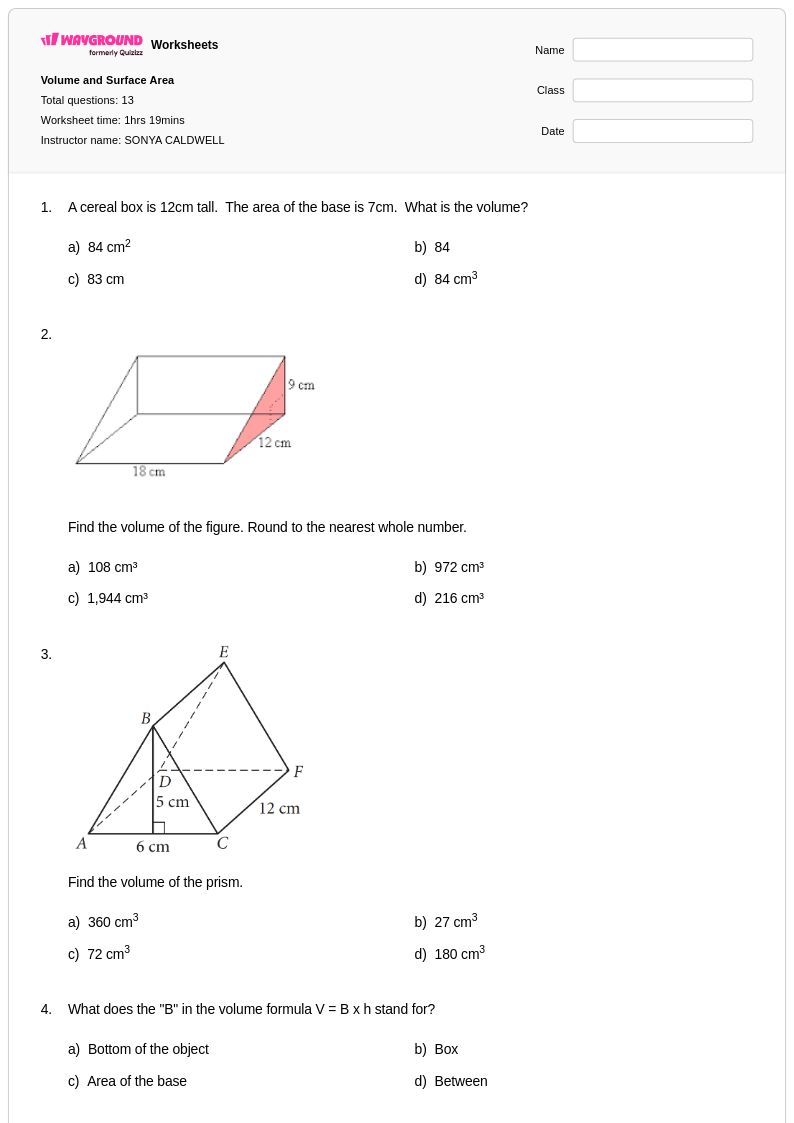
13 Q
6th - 7th
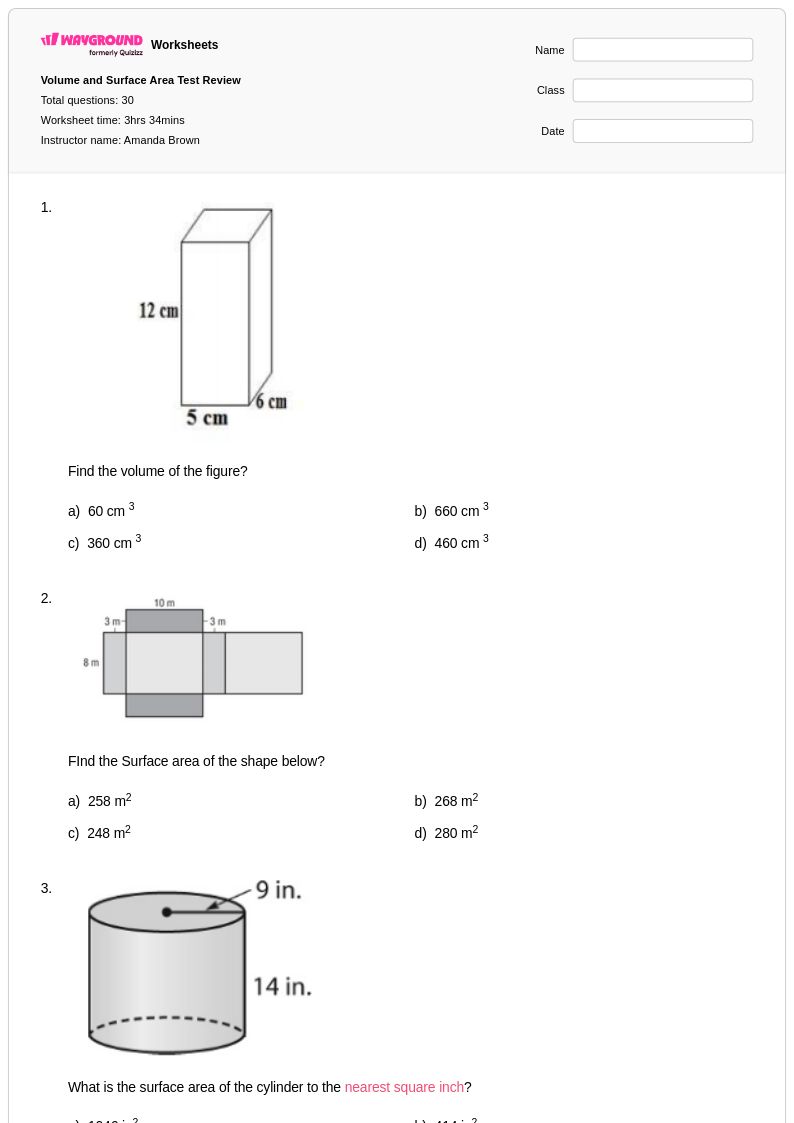
30 Q
6th - 7th
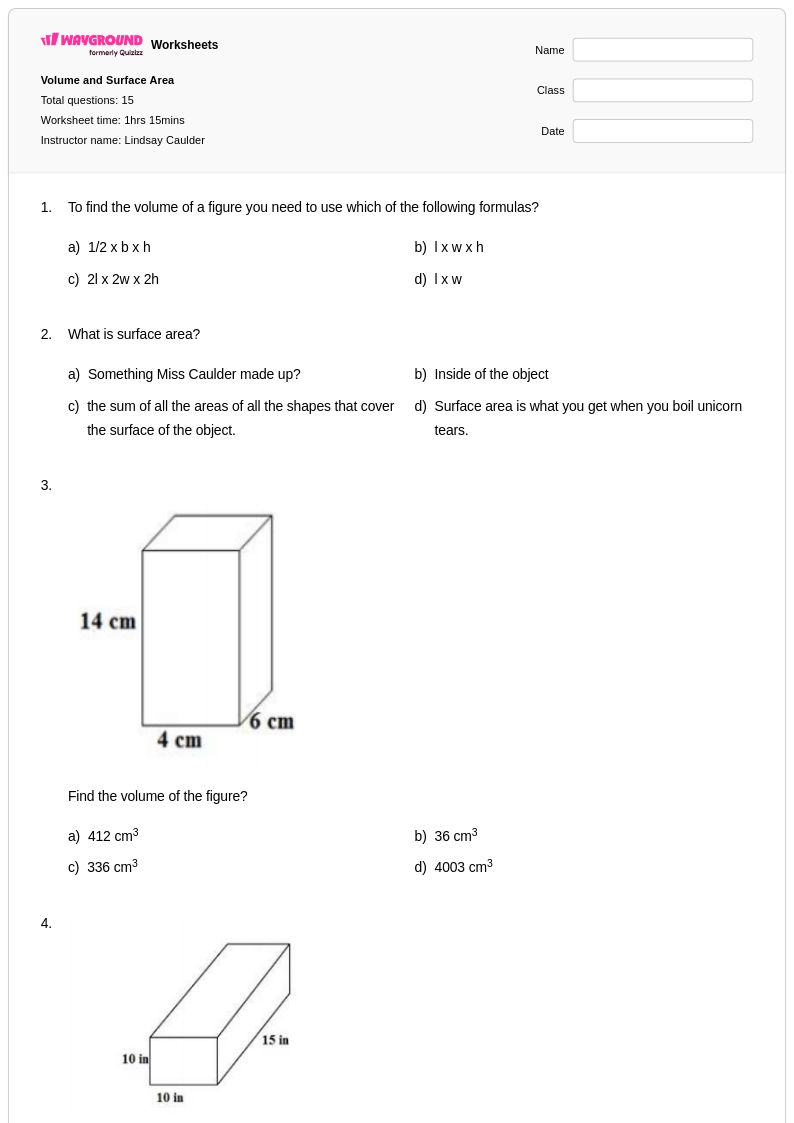
15 Q
6th - 8th
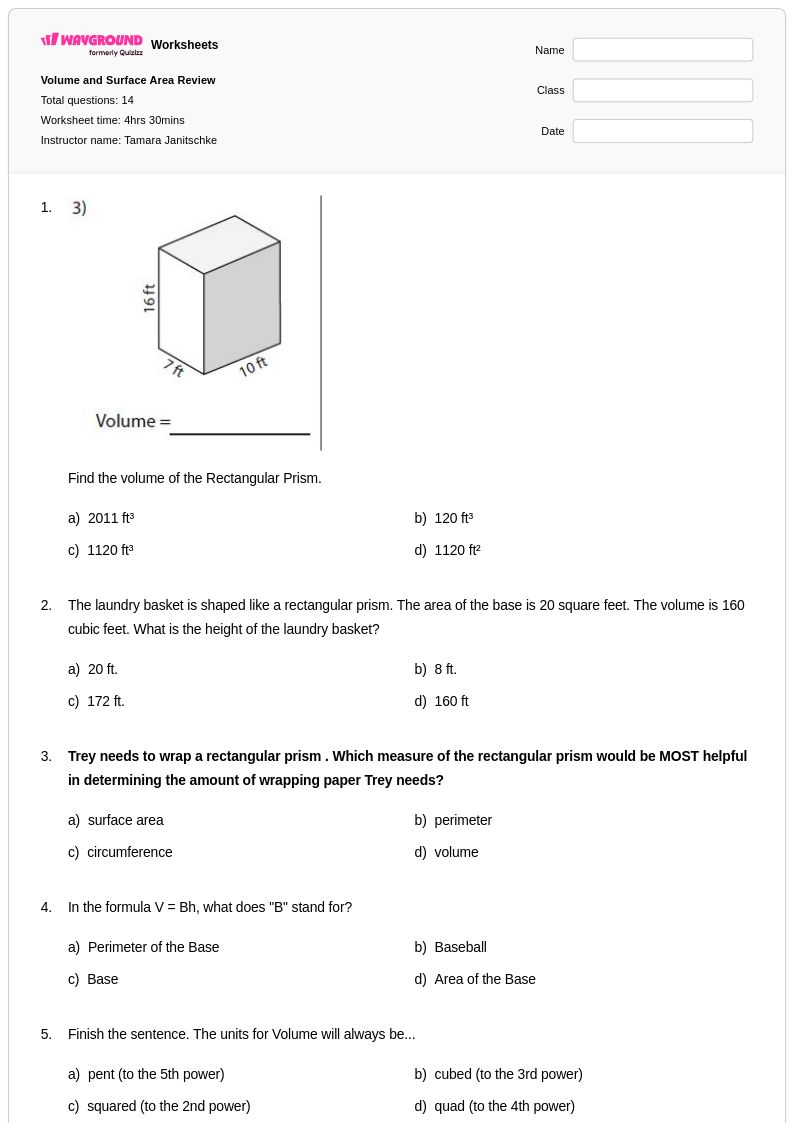
14 Q
6th
20 Q
6th
24 Q
6th - 8th
10 Q
6th - Uni
20 Q
6th
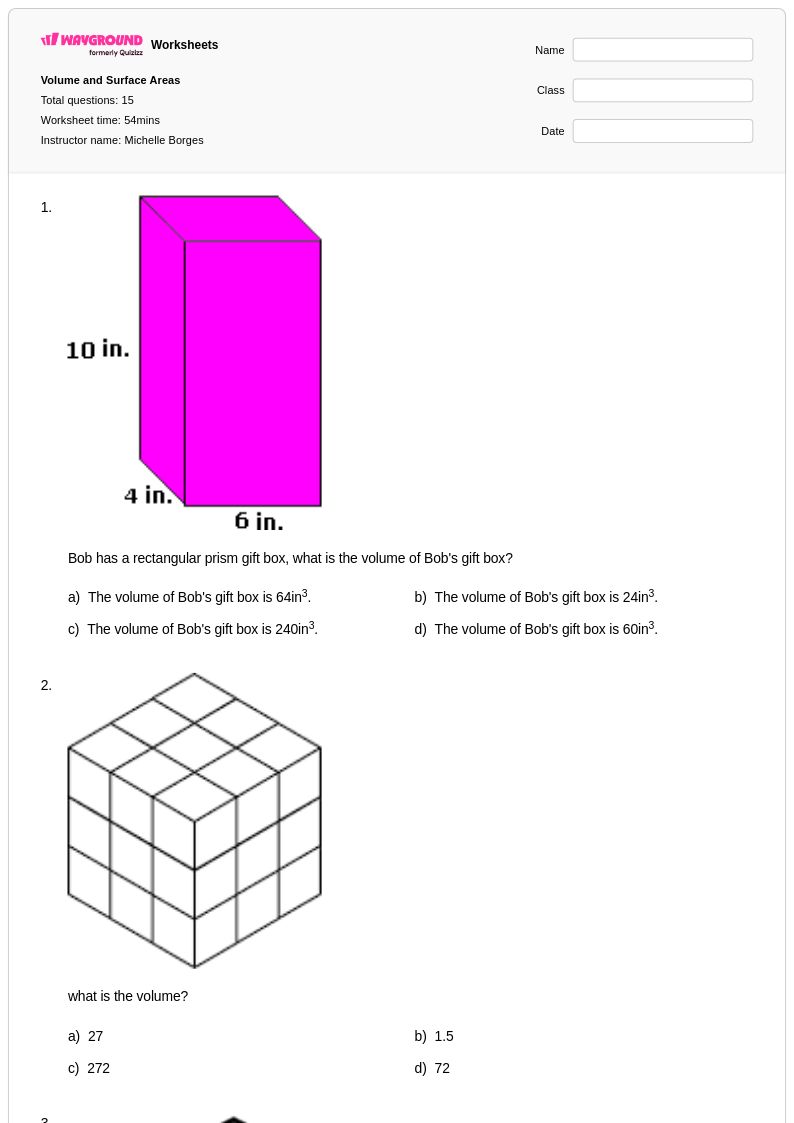
15 Q
6th
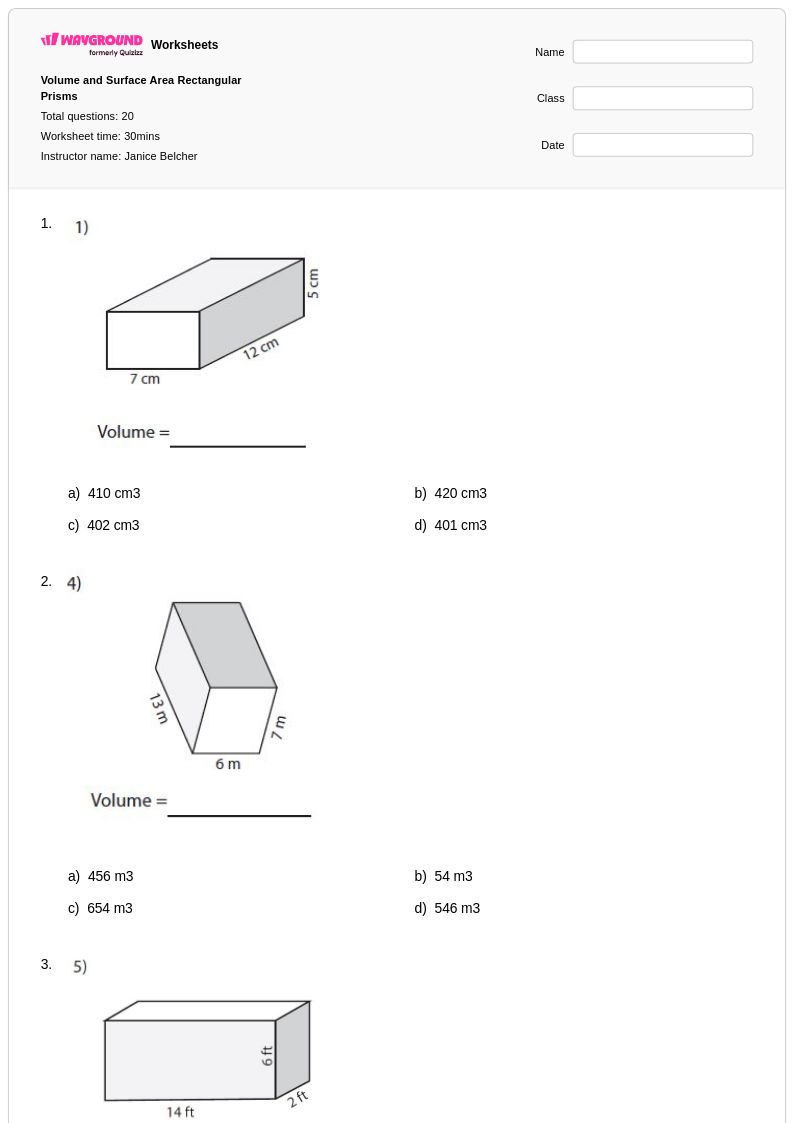
20 Q
6th

11 Q
6th - 10th

11 Q
6th - 10th
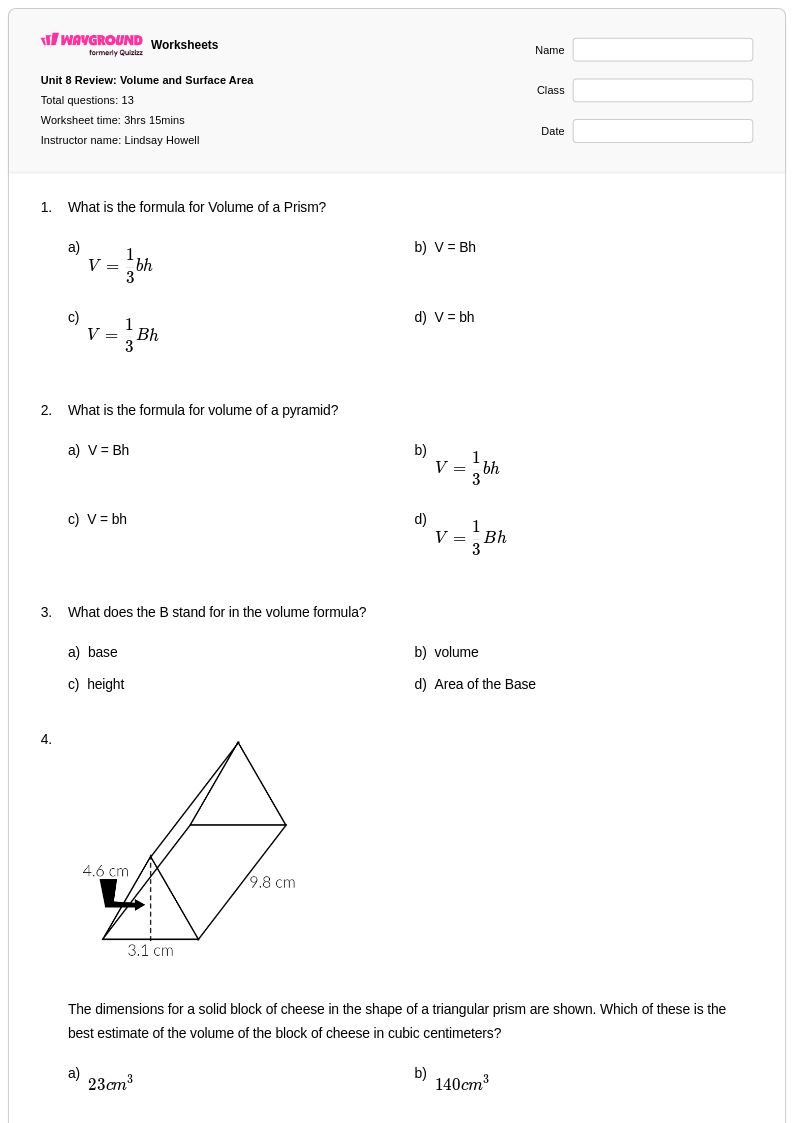
13 Q
6th - 8th
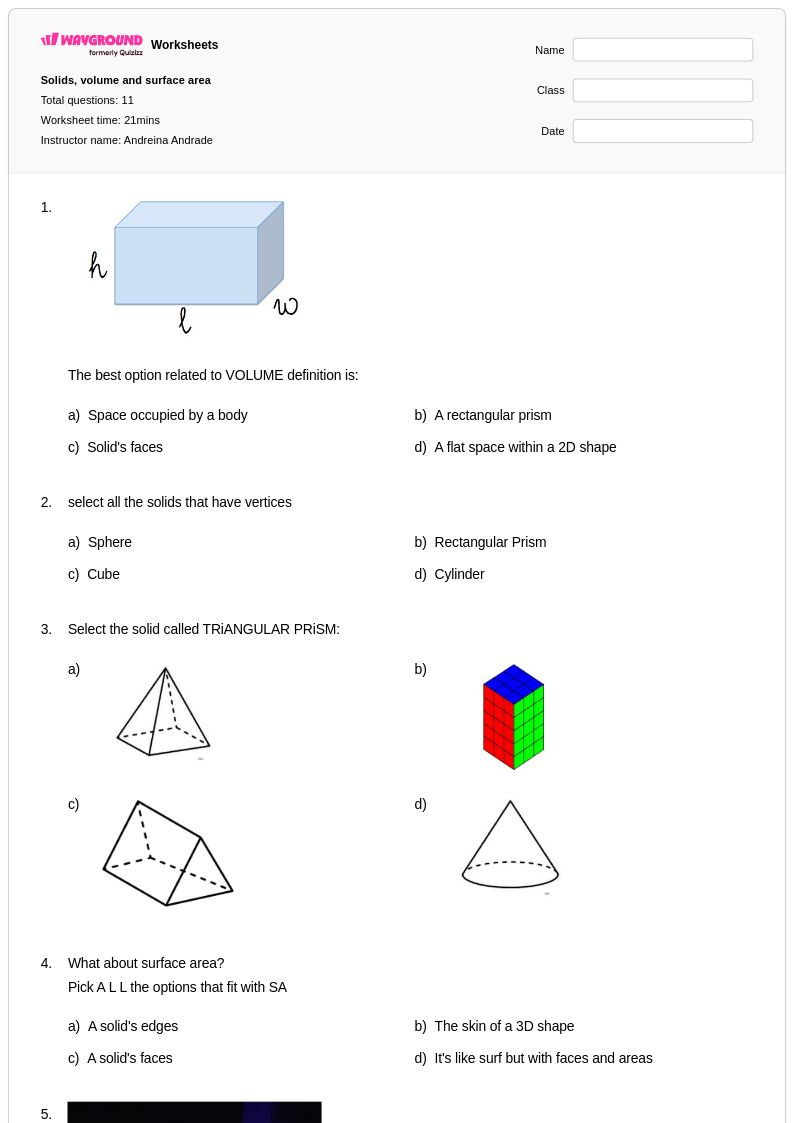
11 Q
5th - 6th
15 Q
6th
22 Q
6th
19 Q
6th - Uni
19 Q
6th - Uni
9 Q
6th - Uni
21 Q
6th - 9th
15 Q
6th
14 Q
6th - Uni
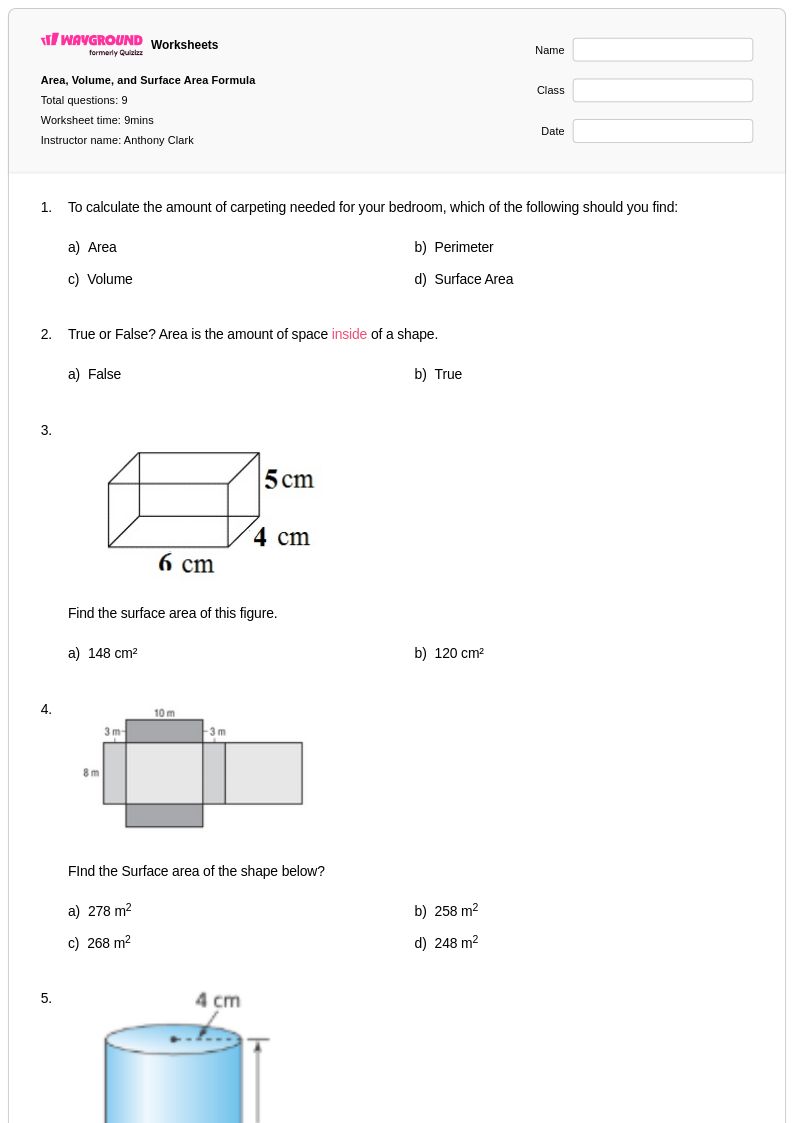
9 Q
6th - Uni
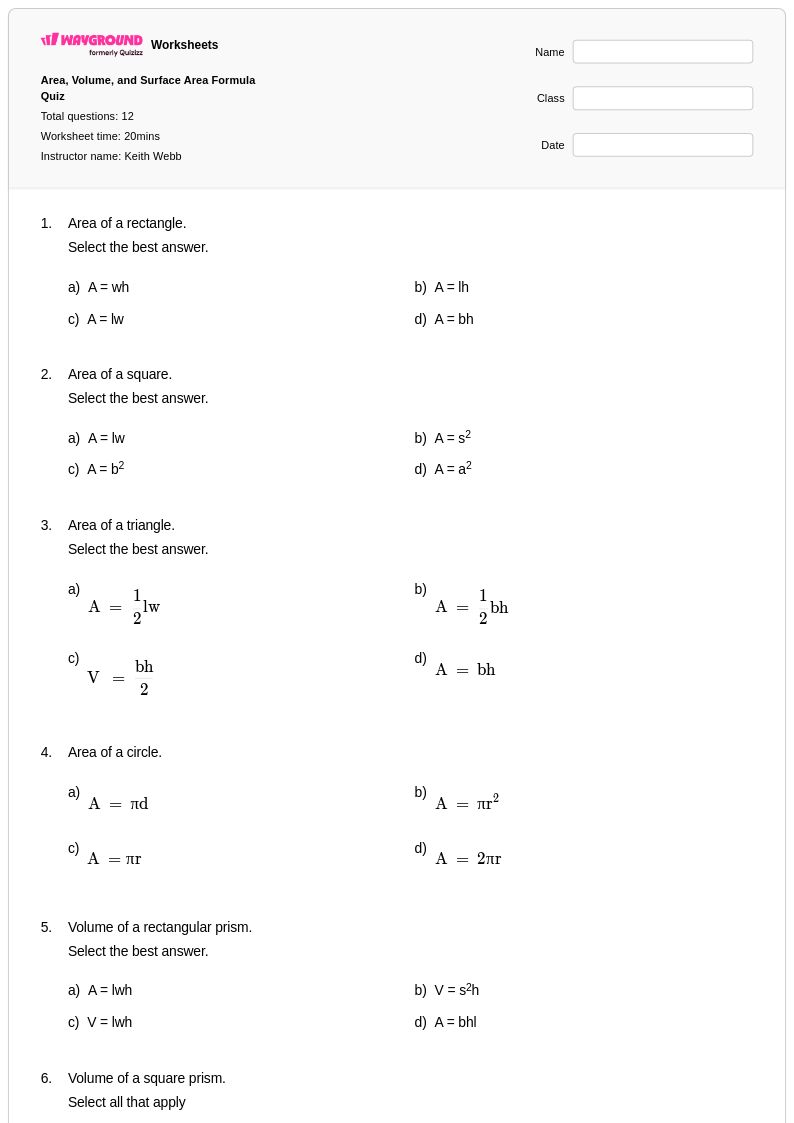
12 Q
6th - Uni
Explore Volume and Surface Area Worksheets by Grades
Explore Other Subject Worksheets for class 6
Explore printable Volume and Surface Area worksheets for Class 6
Volume and surface area worksheets for Class 6 students available through Wayground (formerly Quizizz) provide comprehensive practice with three-dimensional geometric concepts that form the foundation of spatial reasoning skills. These carefully designed resources help students master calculating the volume of rectangular prisms, triangular prisms, and other fundamental solids while simultaneously developing proficiency in determining surface area through net diagrams and formula applications. The worksheet collections include varied practice problems that progress from basic cube calculations to more complex composite figures, ensuring students build confidence with both conceptual understanding and computational accuracy. Each printable resource comes with a detailed answer key, making these free materials ideal for independent study, homework assignments, and classroom assessments in pdf format.
Wayground's extensive collection draws from millions of teacher-created resources specifically focused on Class 6 volume and surface area concepts, offering educators powerful search and filtering capabilities to locate materials that align with specific curriculum standards and learning objectives. The platform's differentiation tools enable teachers to customize worksheets for diverse learning needs, whether providing additional scaffolding for struggling students or offering enrichment challenges for advanced learners. These flexible resources are available in both printable and digital formats, allowing seamless integration into traditional classroom instruction, hybrid learning environments, or remote teaching situations. Teachers can efficiently plan targeted skill practice sessions, design remediation activities for students who need additional support, and create comprehensive assessment materials that accurately measure student progress in three-dimensional geometry concepts.