
20 Q
6th - 9th
10 Q
6th
15 Q
5th - 8th
7 Q
6th - 9th
20 Q
5th - Uni
8 Q
6th - Uni
6 Q
6th - 8th
12 Q
6th
13 Q
6th
16 Q
6th
20 Q
6th - Uni
25 Q
6th - 8th
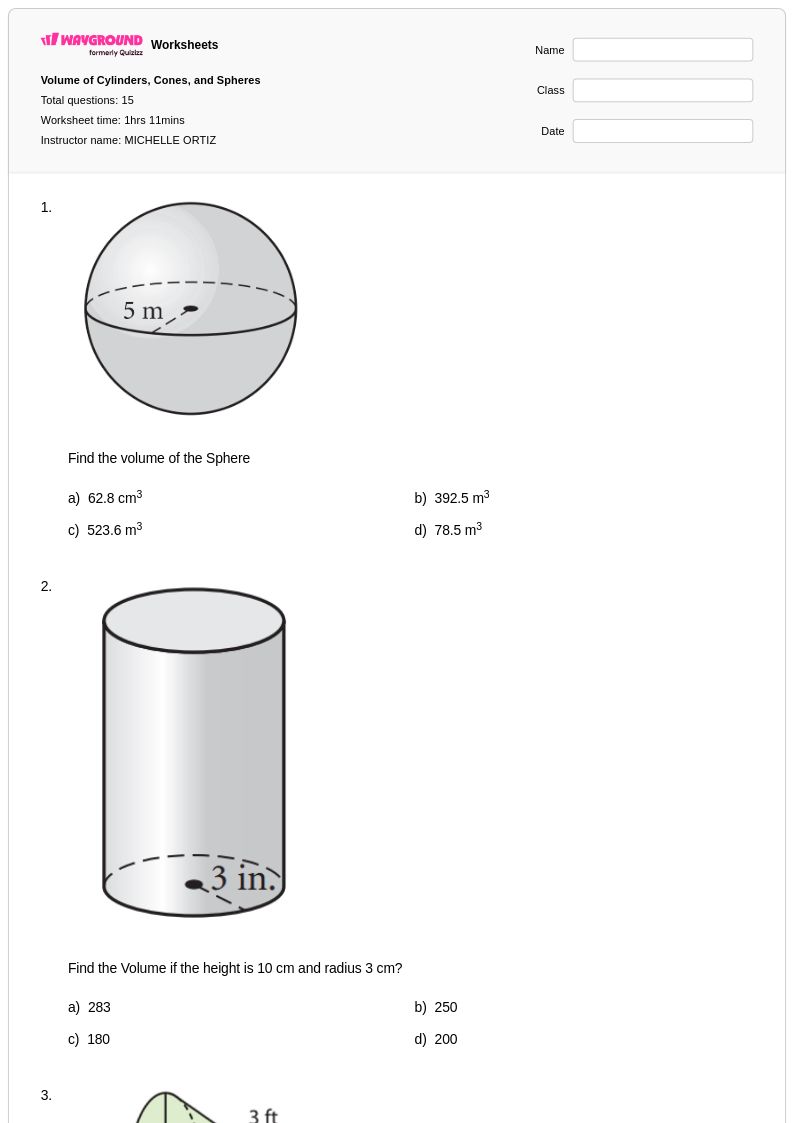
15 Q
6th - 8th
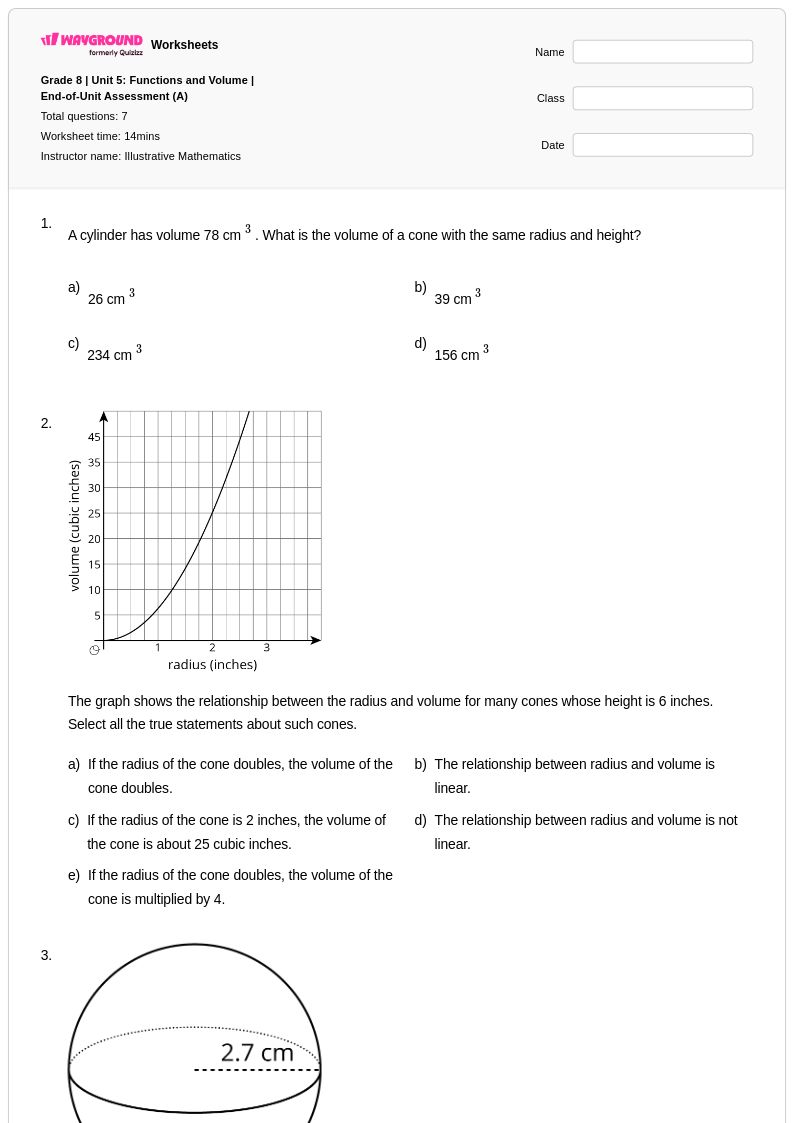
7 Q
6th - Uni
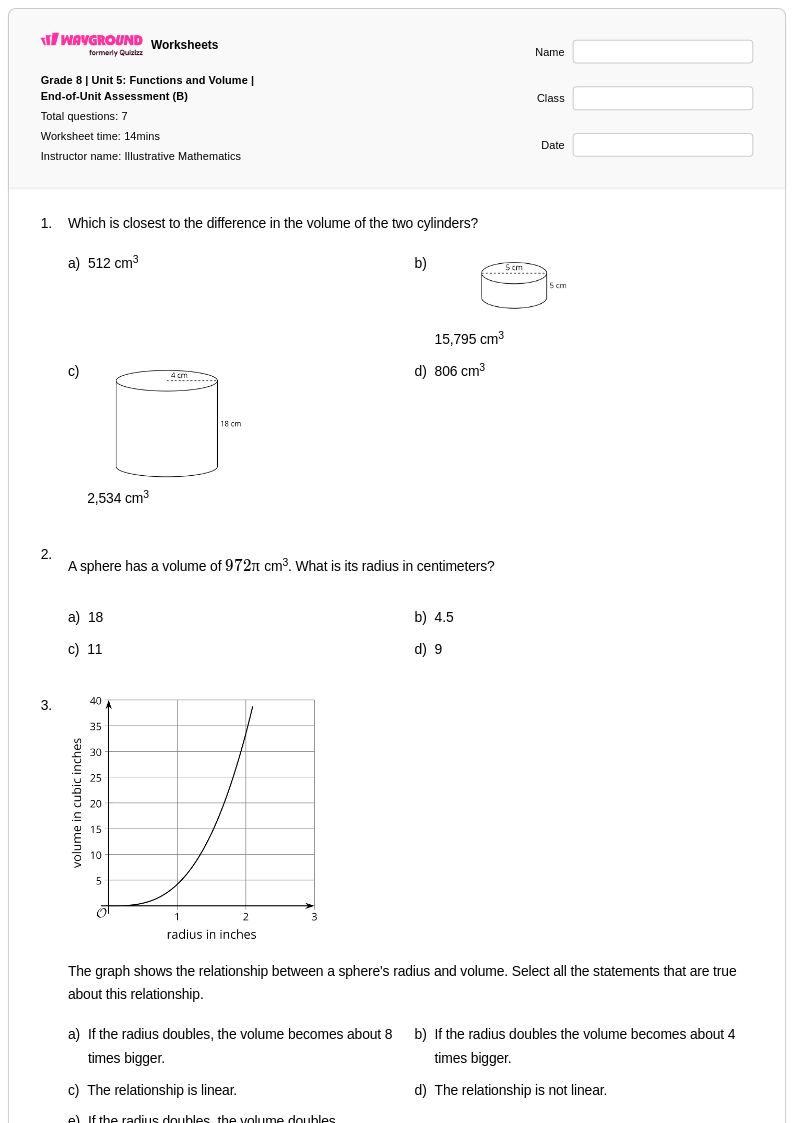
7 Q
6th - Uni
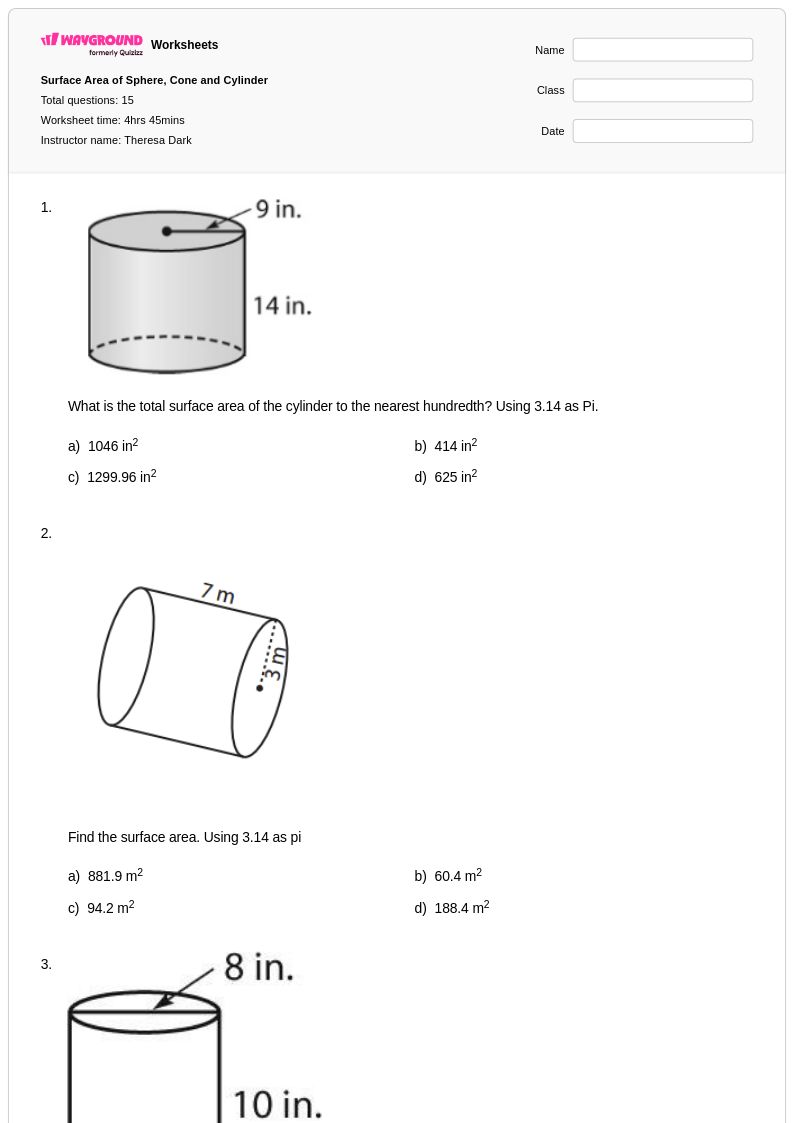
15 Q
6th - 8th
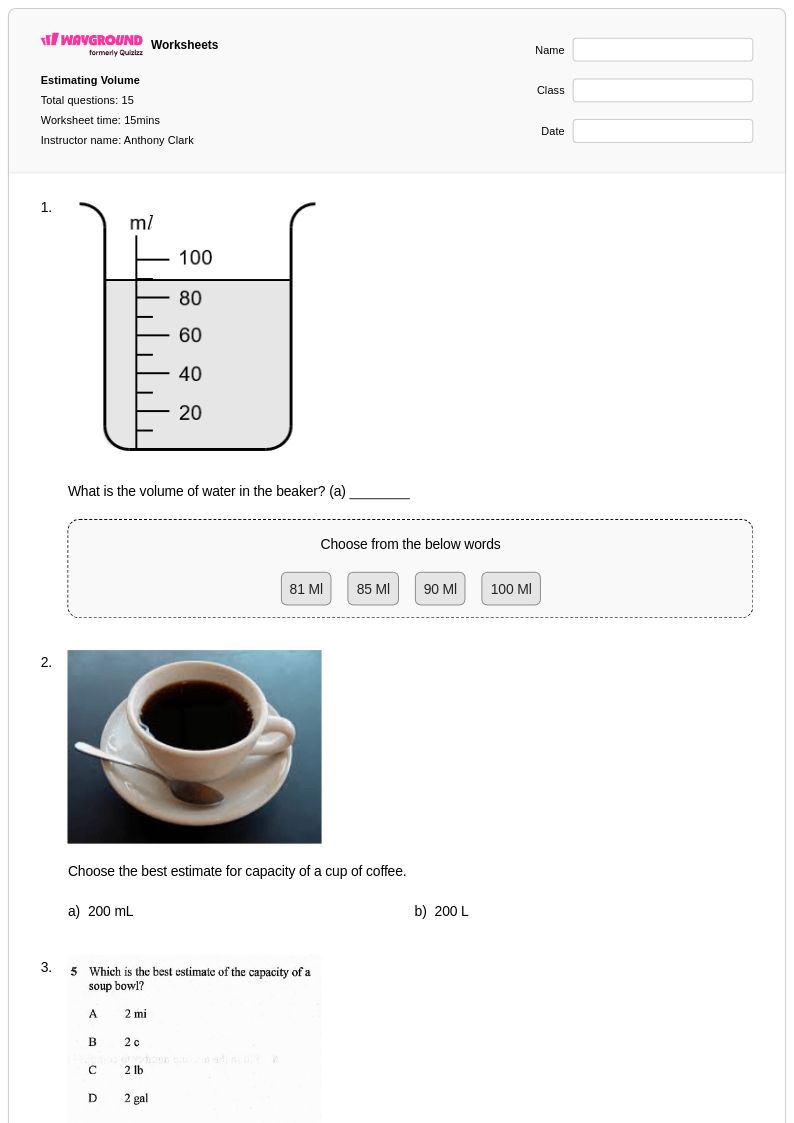
15 Q
3rd - Uni
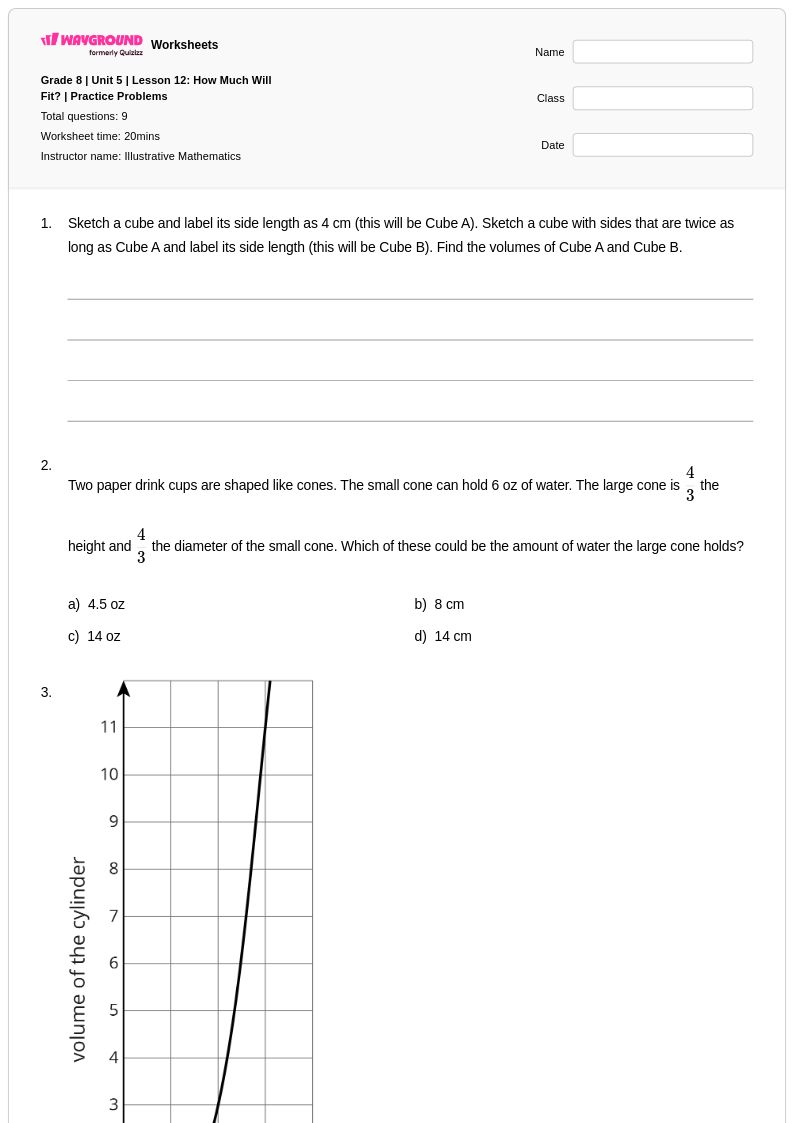
9 Q
6th - Uni
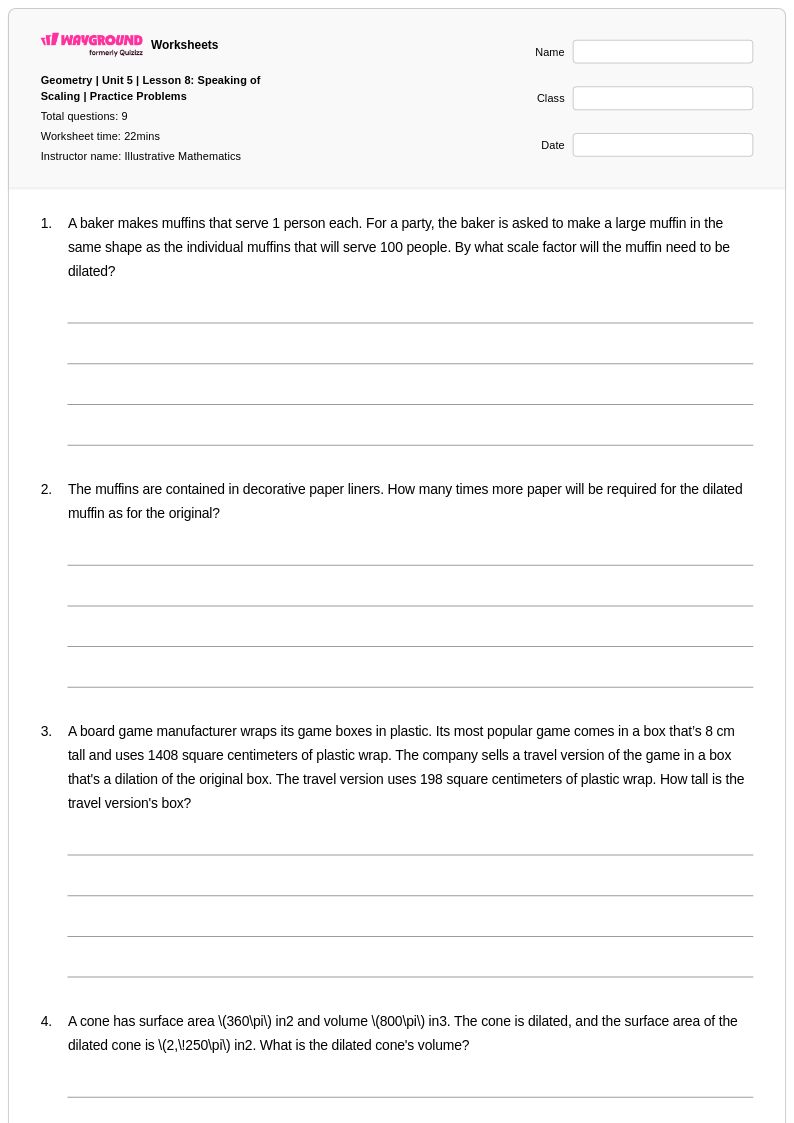
9 Q
6th - Uni
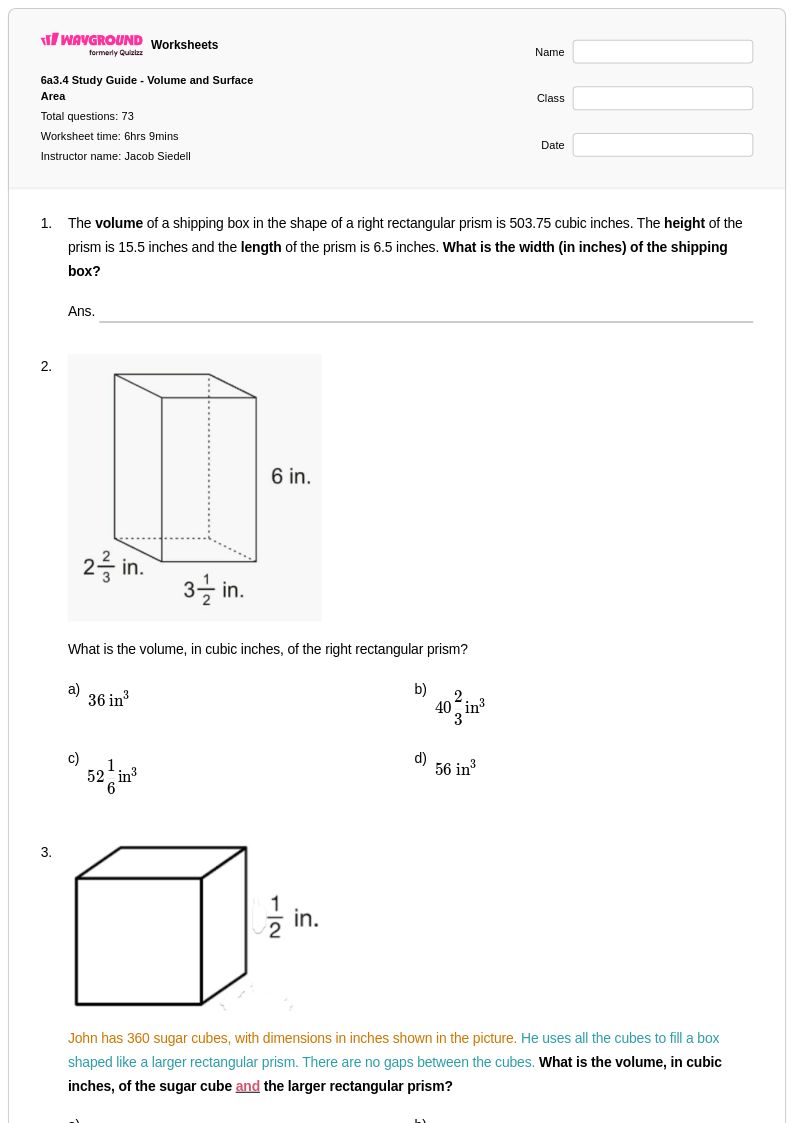
73 Q
6th
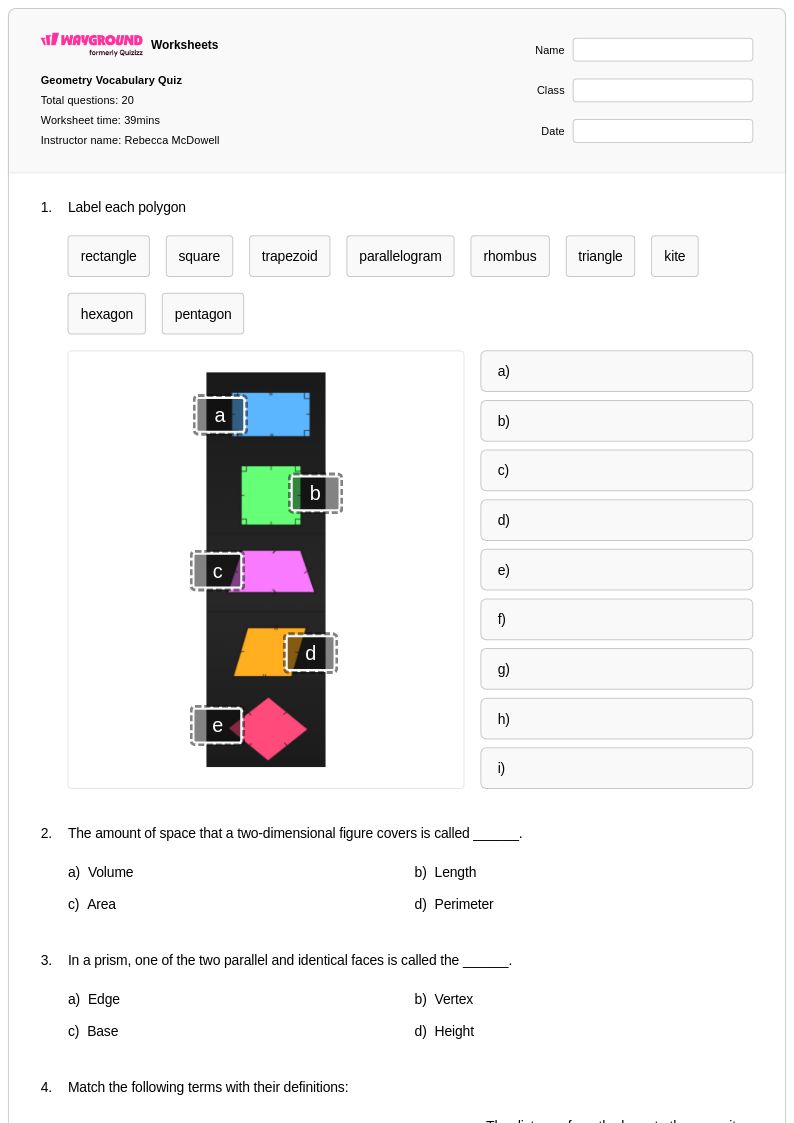
20 Q
6th - 8th
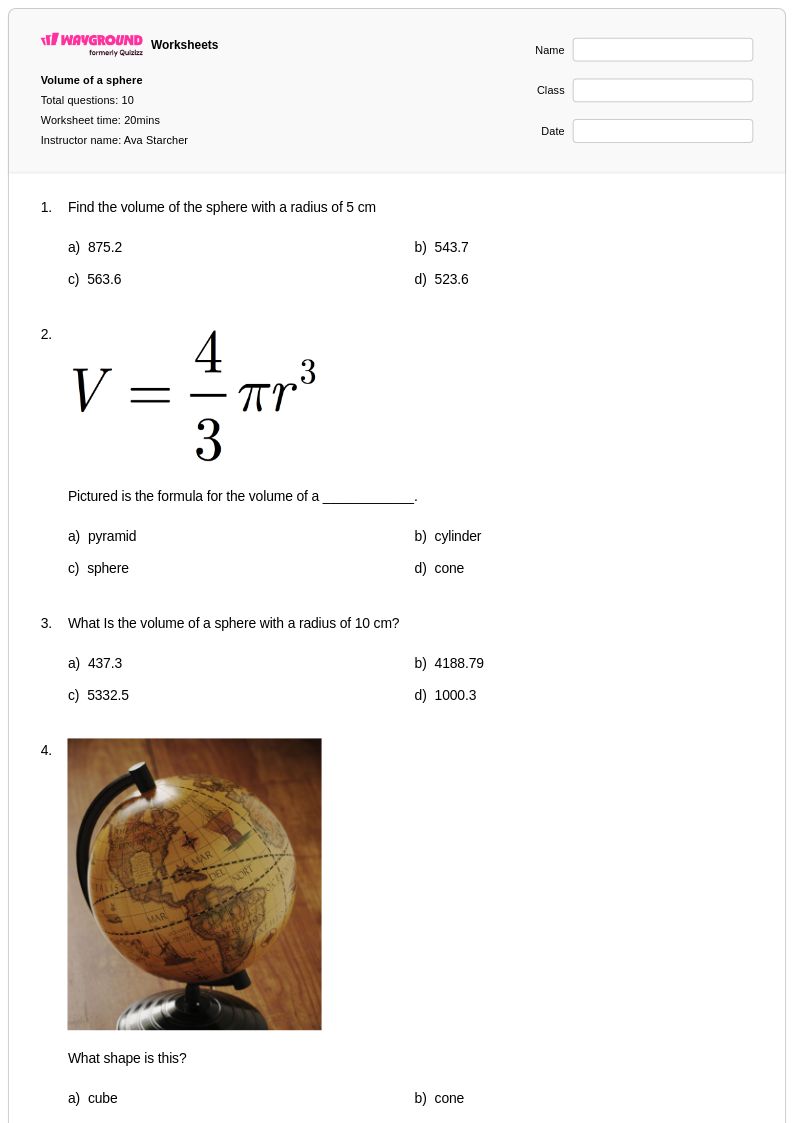
10 Q
6th - 8th
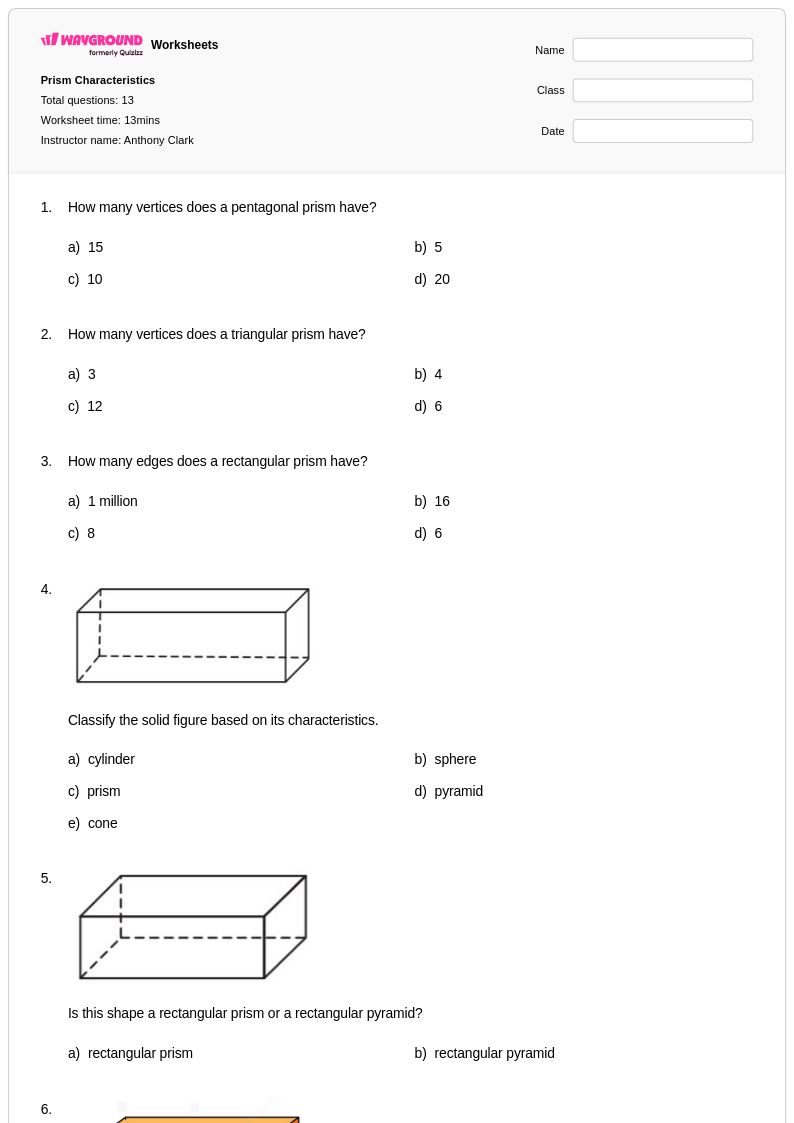
13 Q
6th - Uni
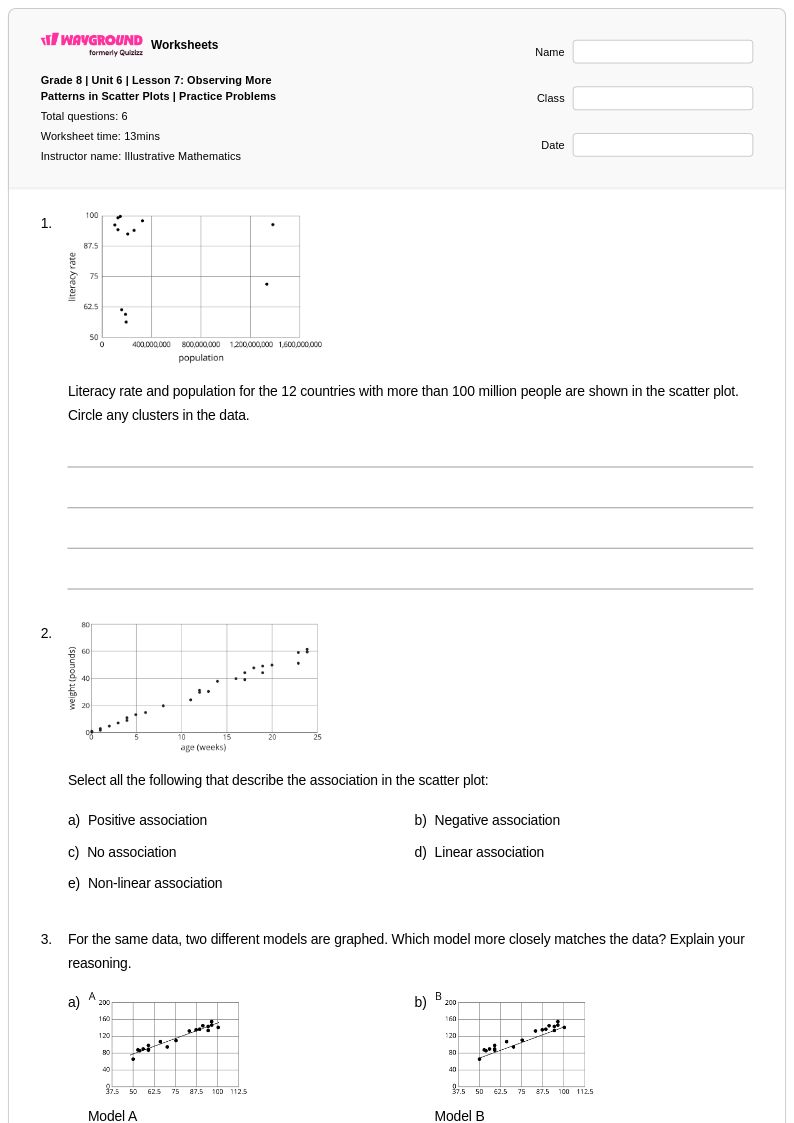
6 Q
6th - Uni
Explore Other Subject Worksheets for class 6
Explore printable Volume of a Cone worksheets for Class 6
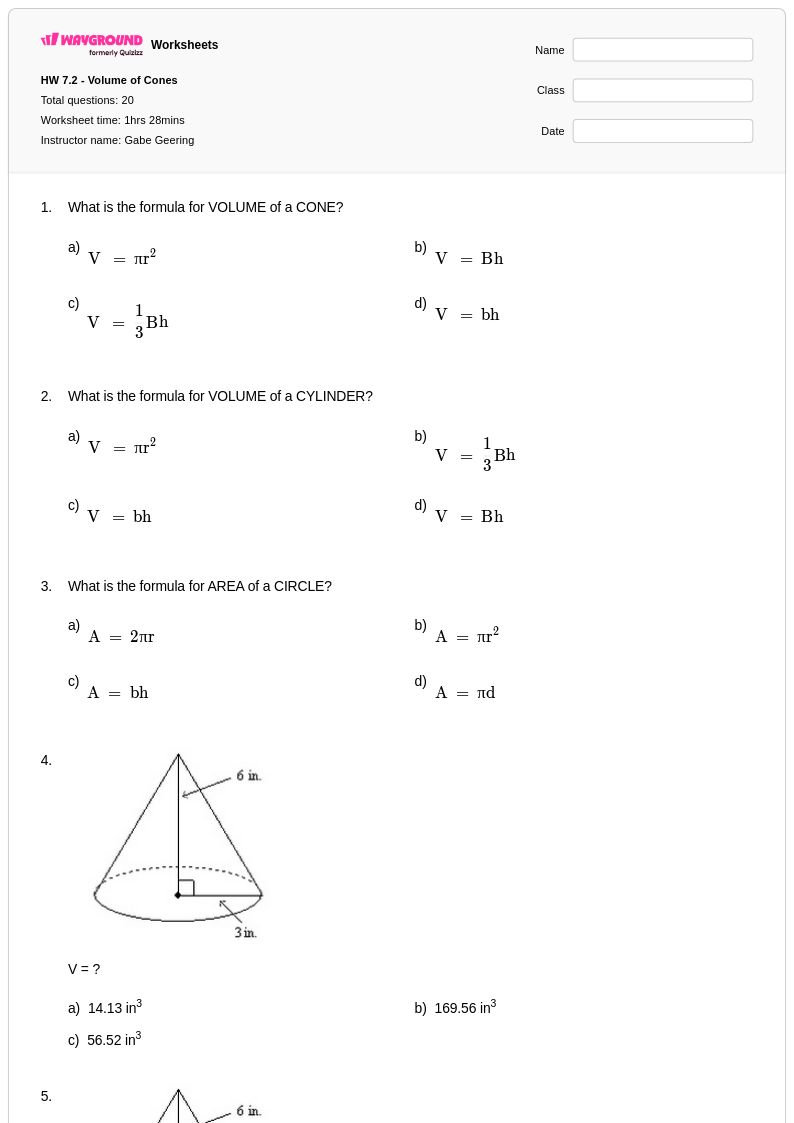
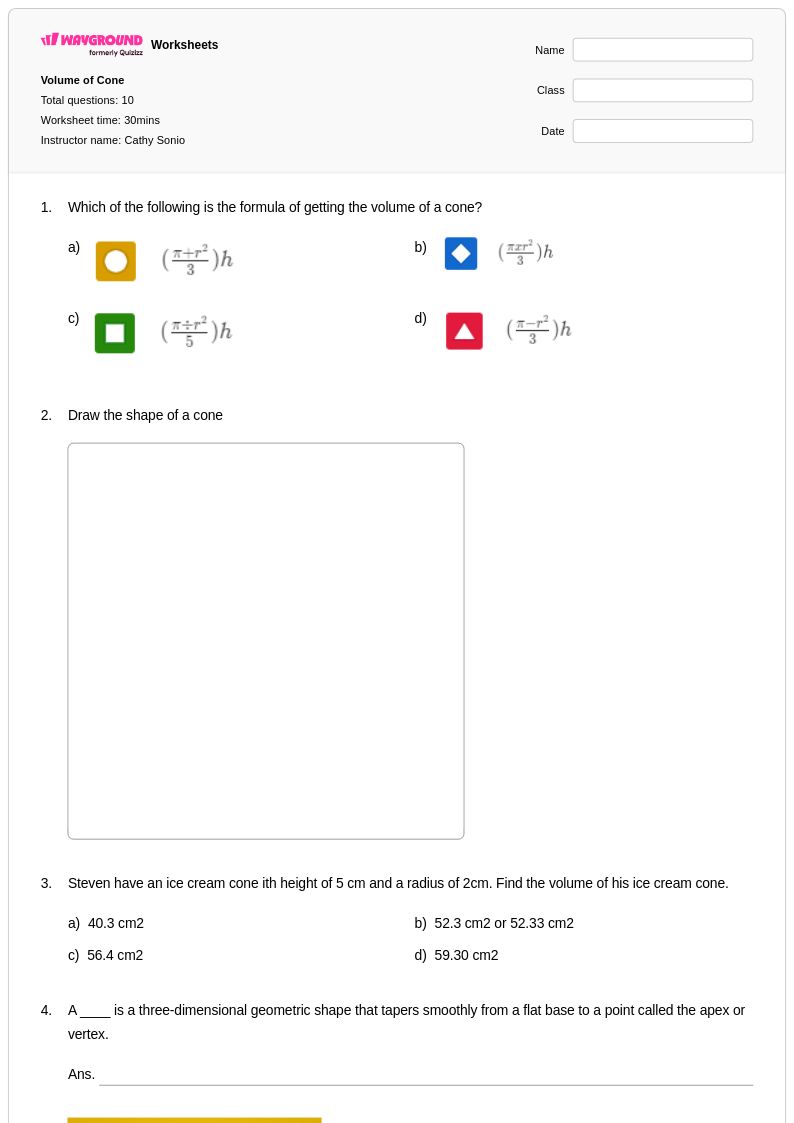
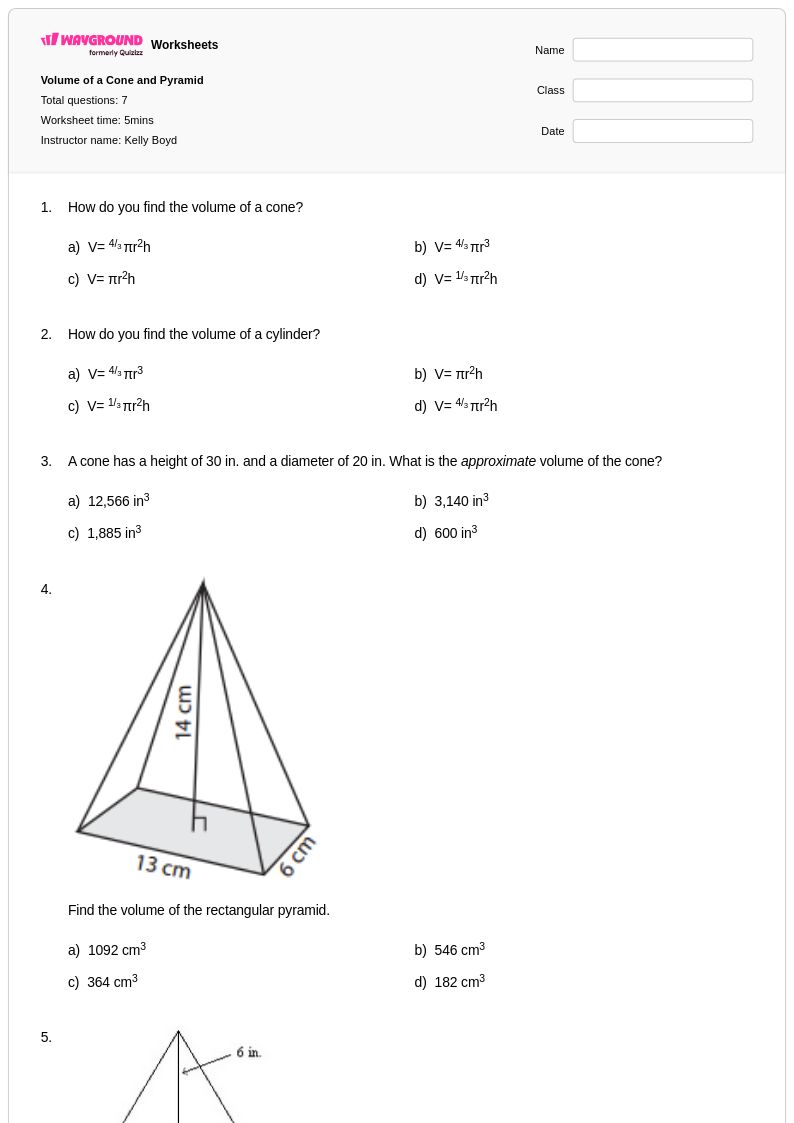
Volume of a cone worksheets for Class 6 students available through Wayground (formerly Quizizz) provide comprehensive practice with this essential three-dimensional geometry concept. These carefully crafted resources help students master the cone volume formula V = (1/3)πr²h, guiding them through step-by-step calculations involving radius, height, and pi. The worksheets strengthen critical mathematical skills including formula application, decimal operations, and spatial reasoning while building confidence with geometric problem-solving. Each printable resource includes varied practice problems that progress from basic calculations to more complex real-world applications, and many collections feature detailed answer keys that support independent learning and allow students to verify their understanding of cone volume concepts through structured practice.
Wayground (formerly Quizizz) empowers educators with an extensive library of millions of teacher-created volume of a cone worksheets specifically designed for Class 6 mathematics instruction. The platform's robust search and filtering capabilities allow teachers to quickly locate resources aligned with curriculum standards and student ability levels, while built-in differentiation tools enable seamless customization for diverse learning needs. These flexible worksheet collections are available in both printable pdf formats for traditional classroom use and digital formats for technology-integrated instruction, making them invaluable for lesson planning, targeted remediation, and enrichment activities. Teachers can efficiently adapt these resources to support varying skill levels within their classrooms, ensuring that all students receive appropriate practice opportunities to develop proficiency with calculating the volume of cones and applying this knowledge to geometric problem-solving scenarios.