
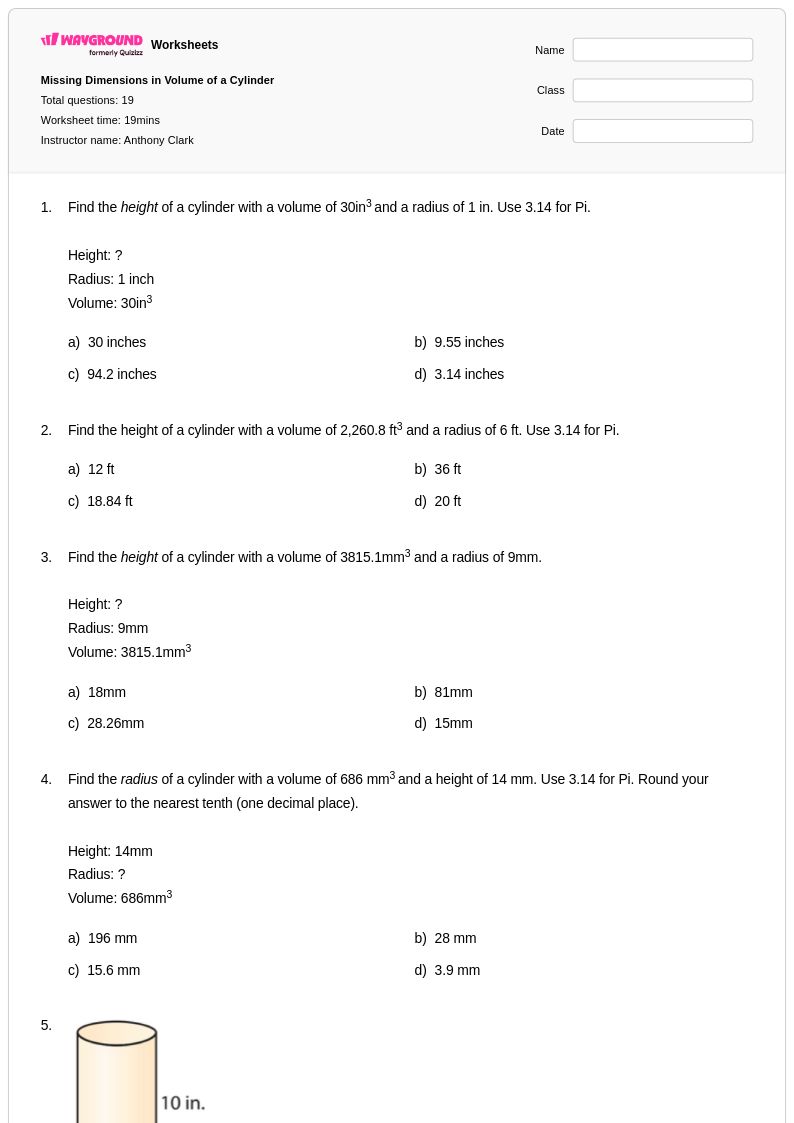
19 T
8th - Uni
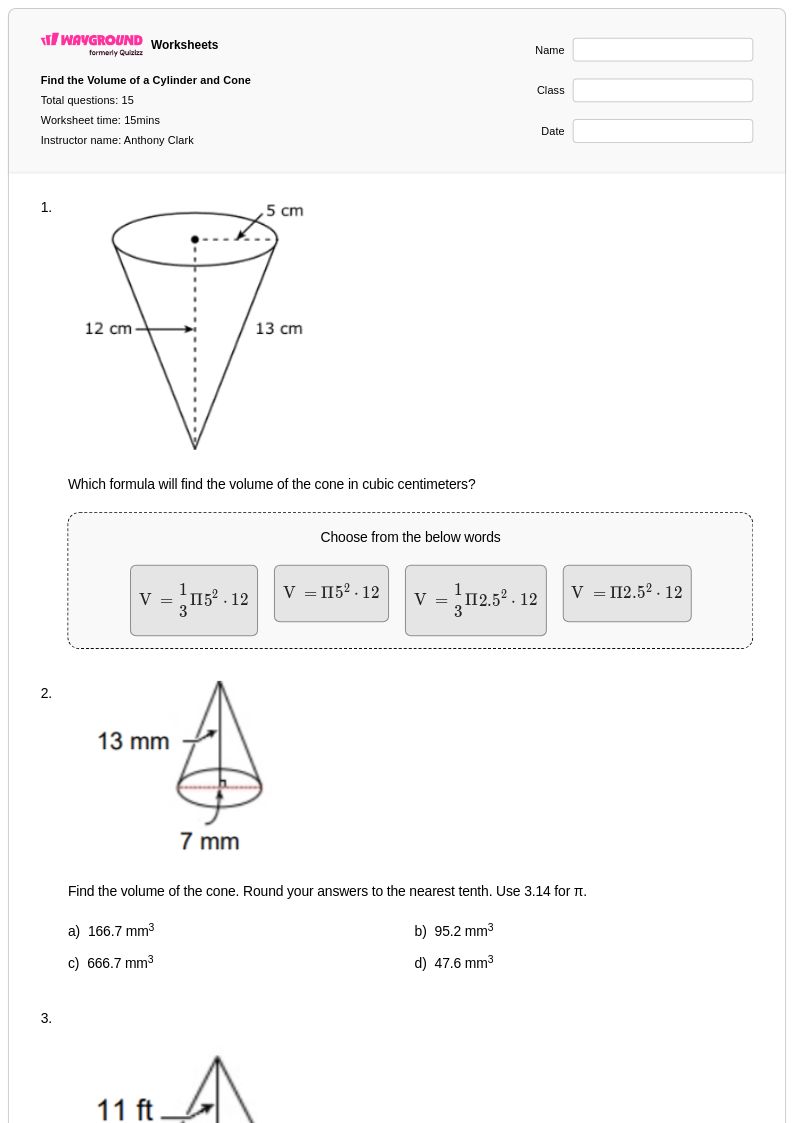
15 T
8th - Uni
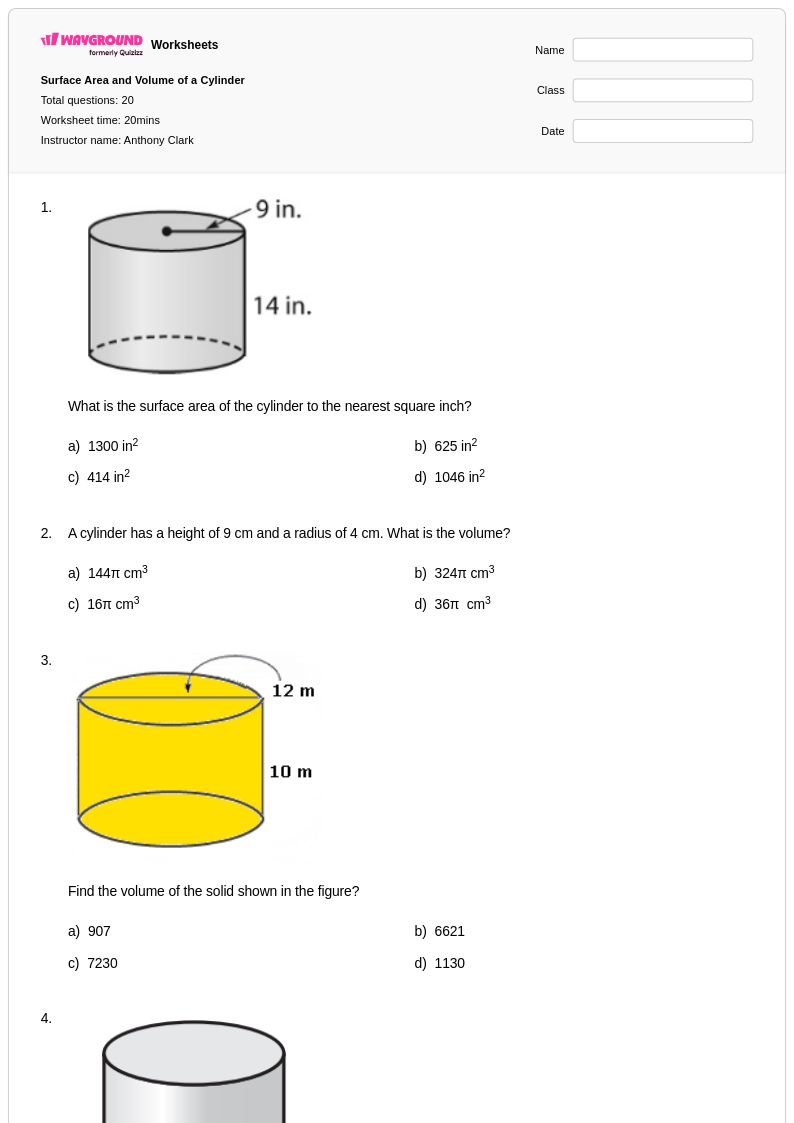
20 T
8th - Uni
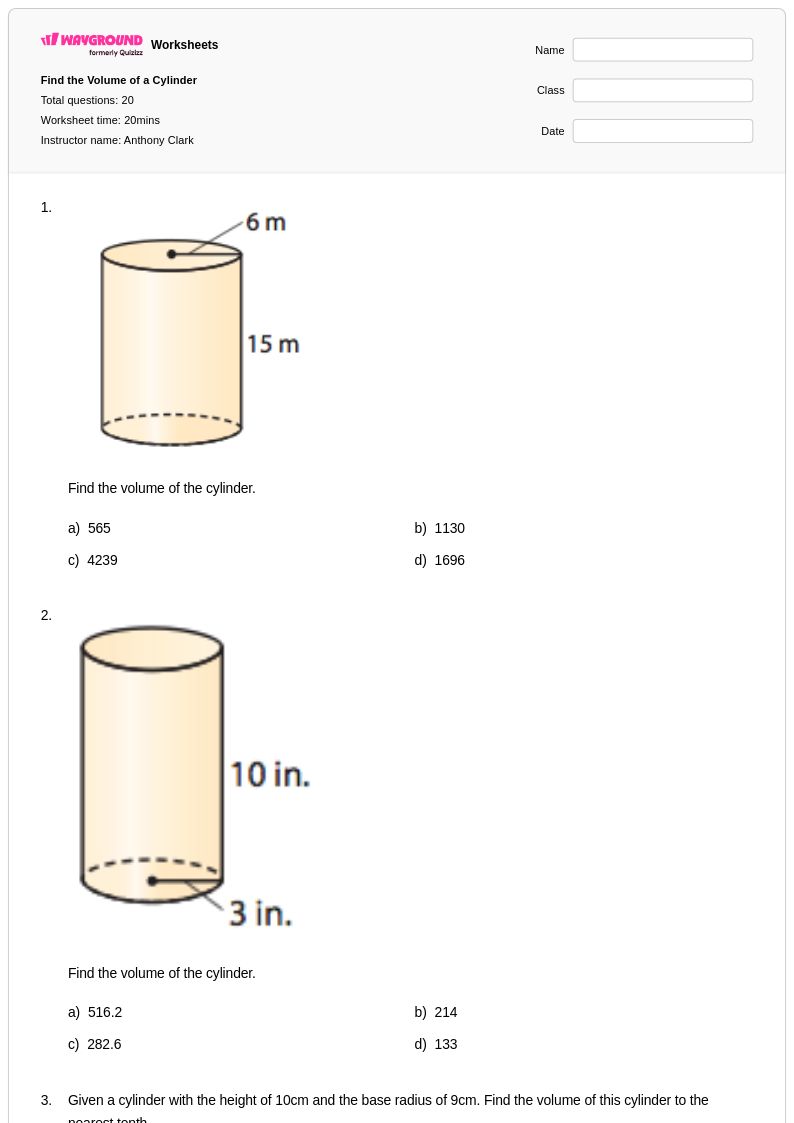
20 T
8th - Uni
20 T
8th - Uni
20 T
8th - Uni
16 T
9th - 12th
10 T
9th - 12th
25 T
9th - 12th
9 T
8th - Uni
15 T
9th - 12th
20 T
8th - Uni
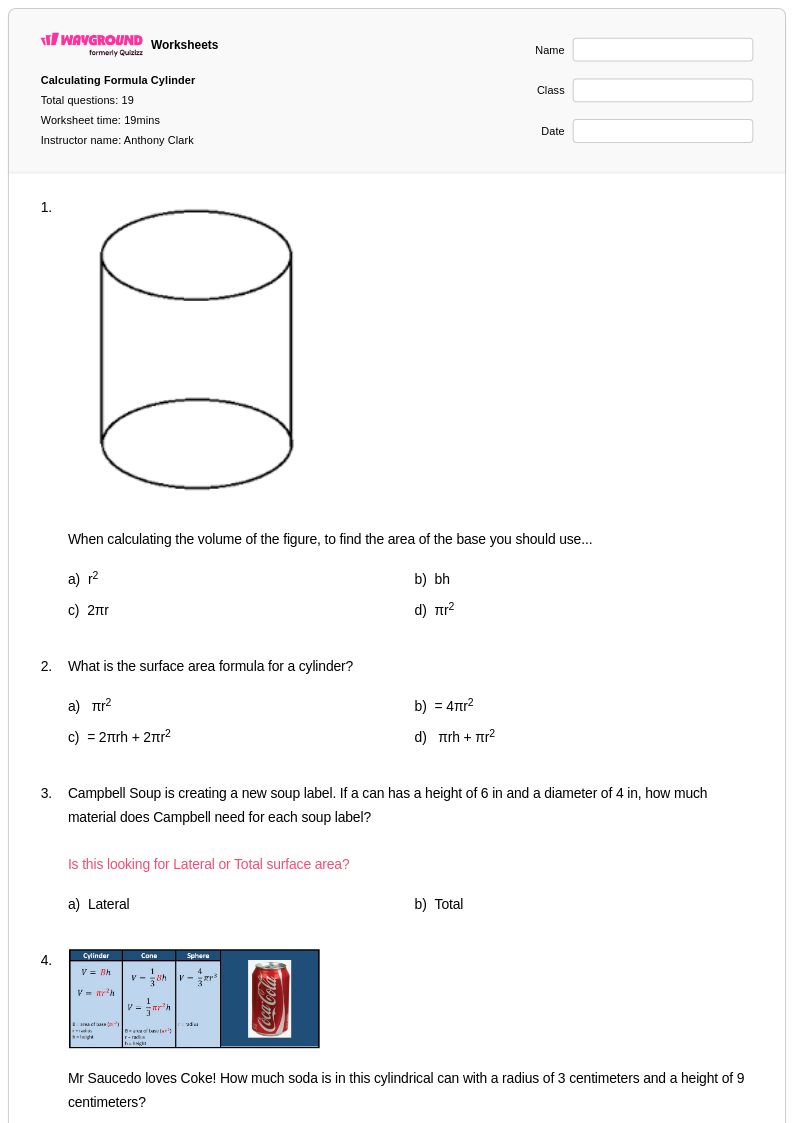
19 T
8th - Uni
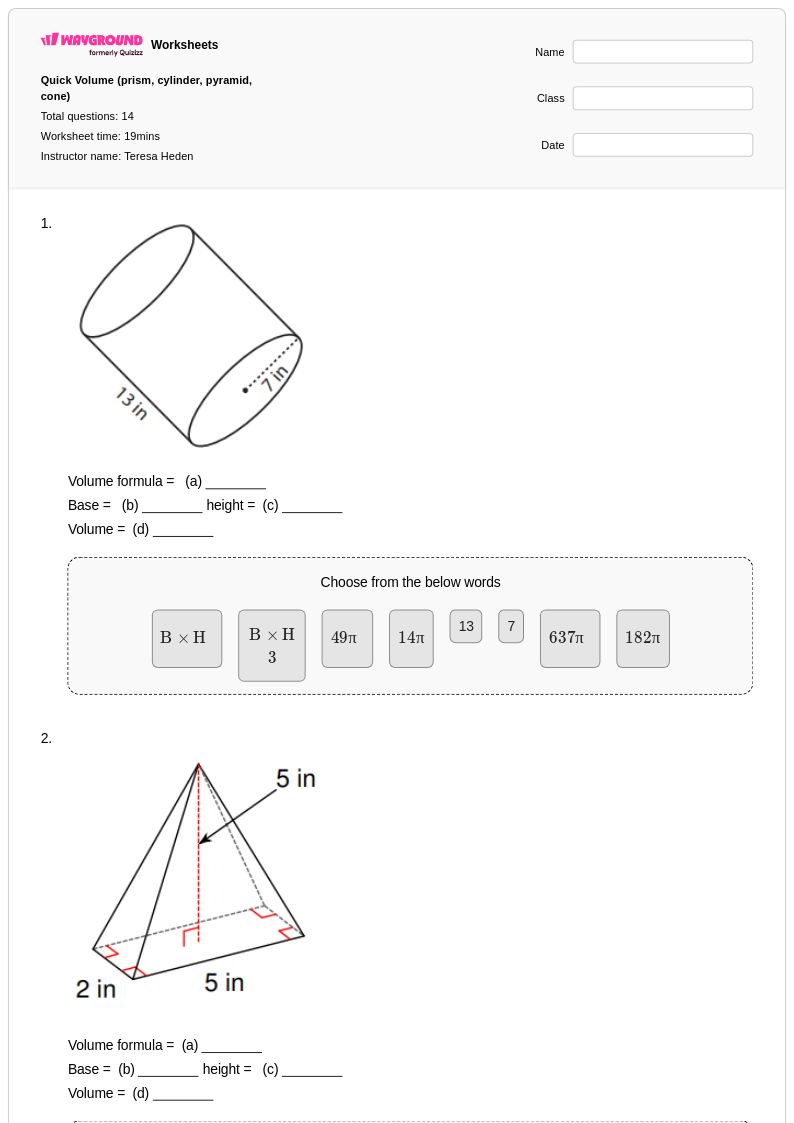
20 T
9th - 12th
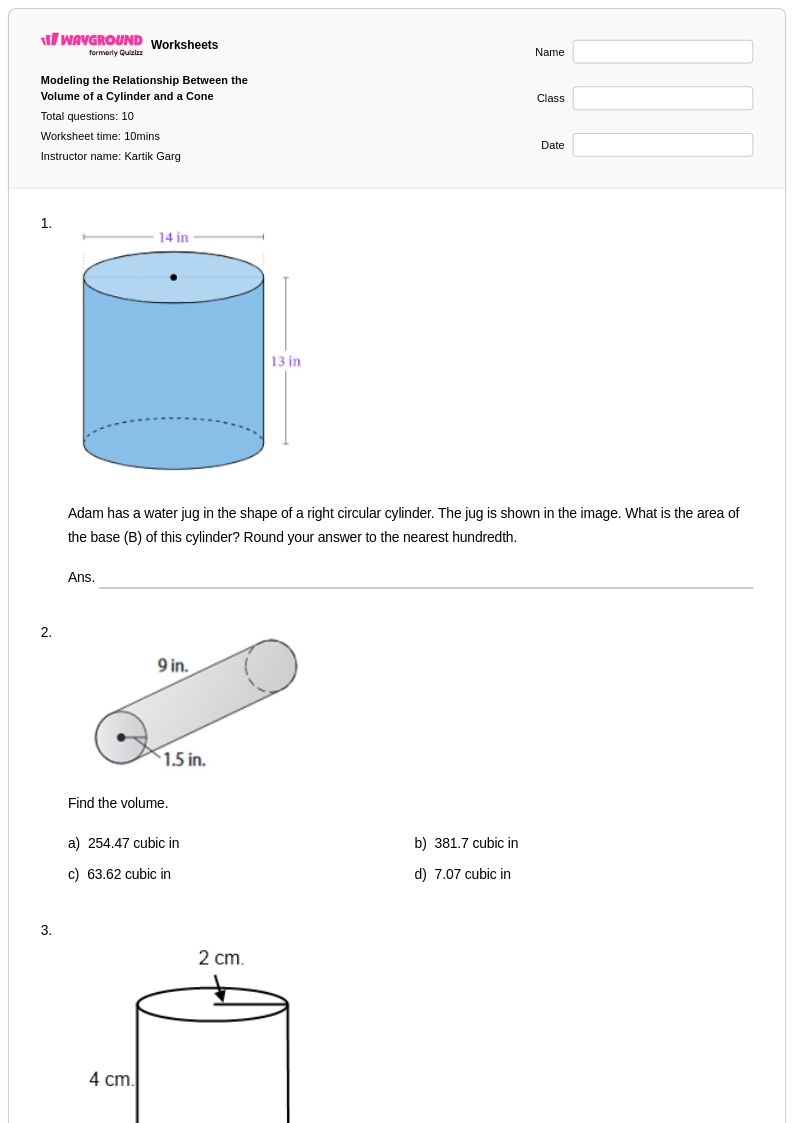
10 T
8th - Uni
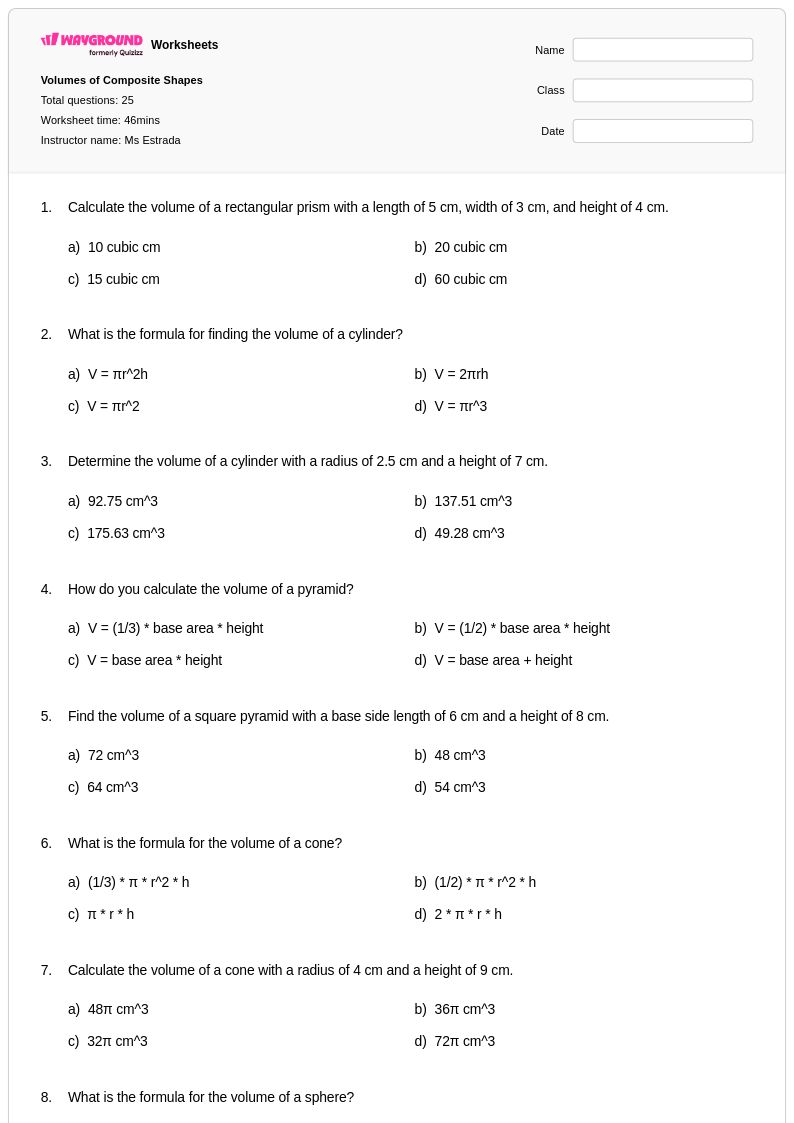
25 T
11th
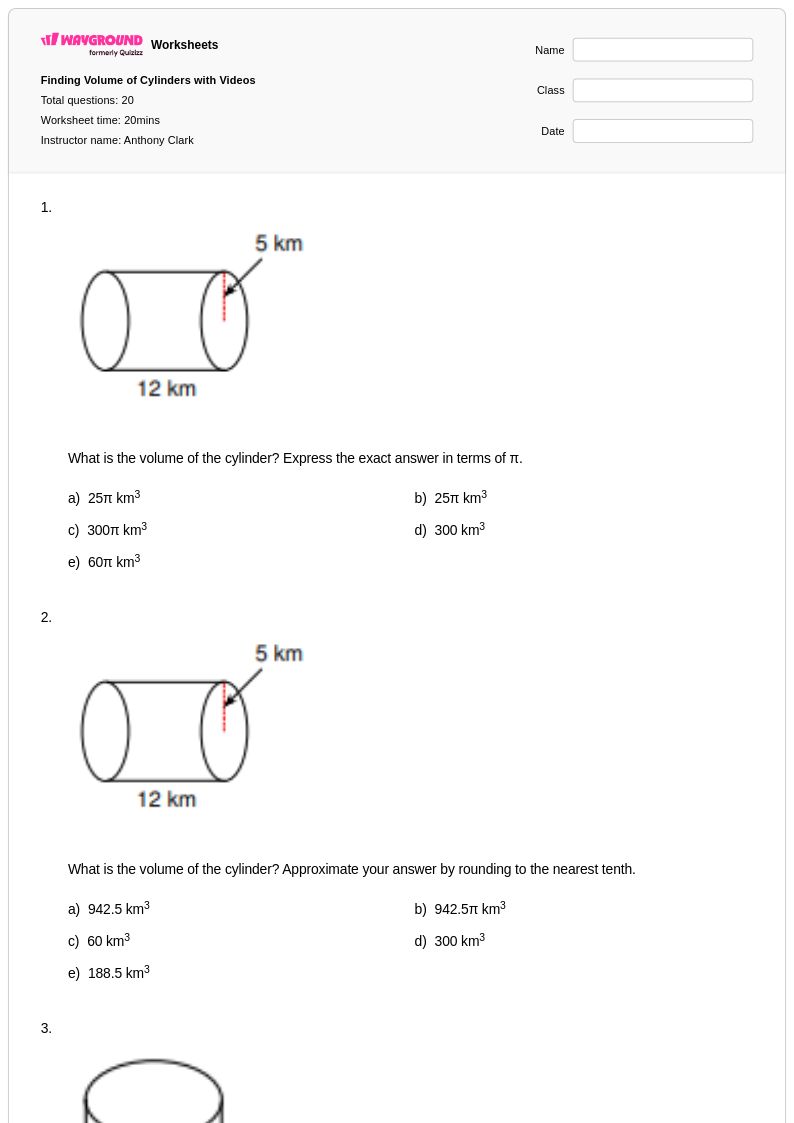
20 T
8th - Uni
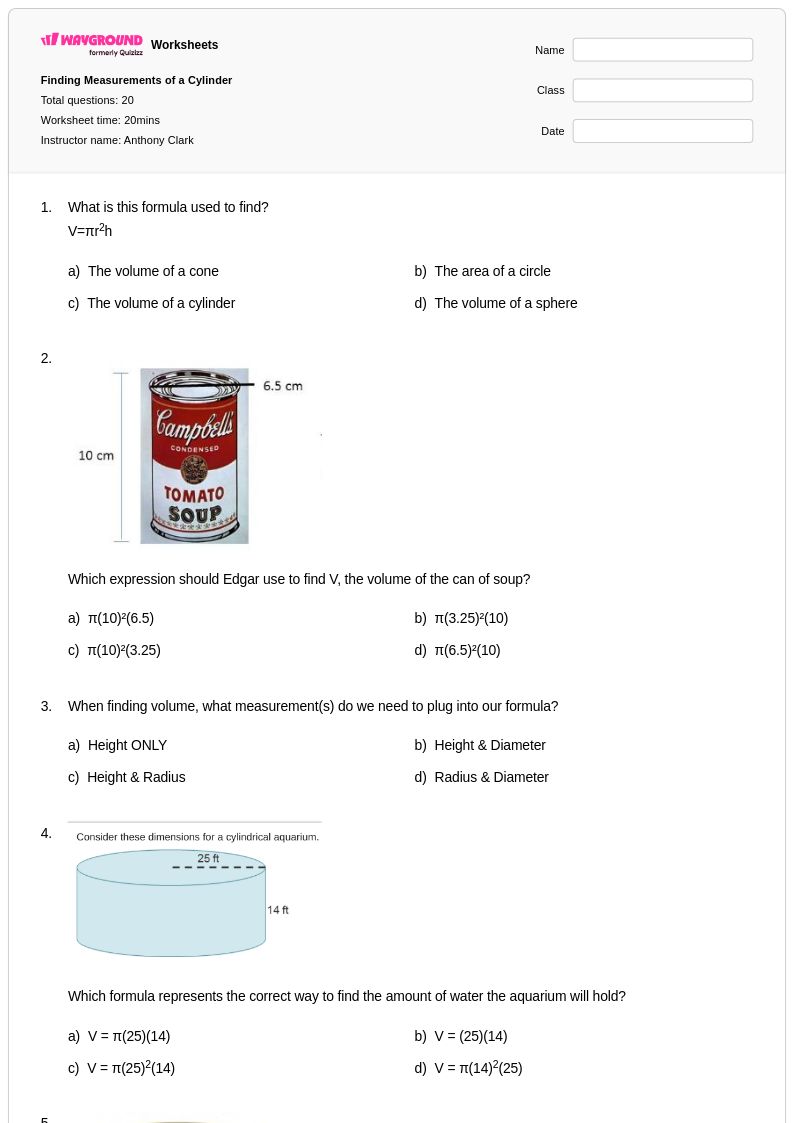
20 T
8th - Uni
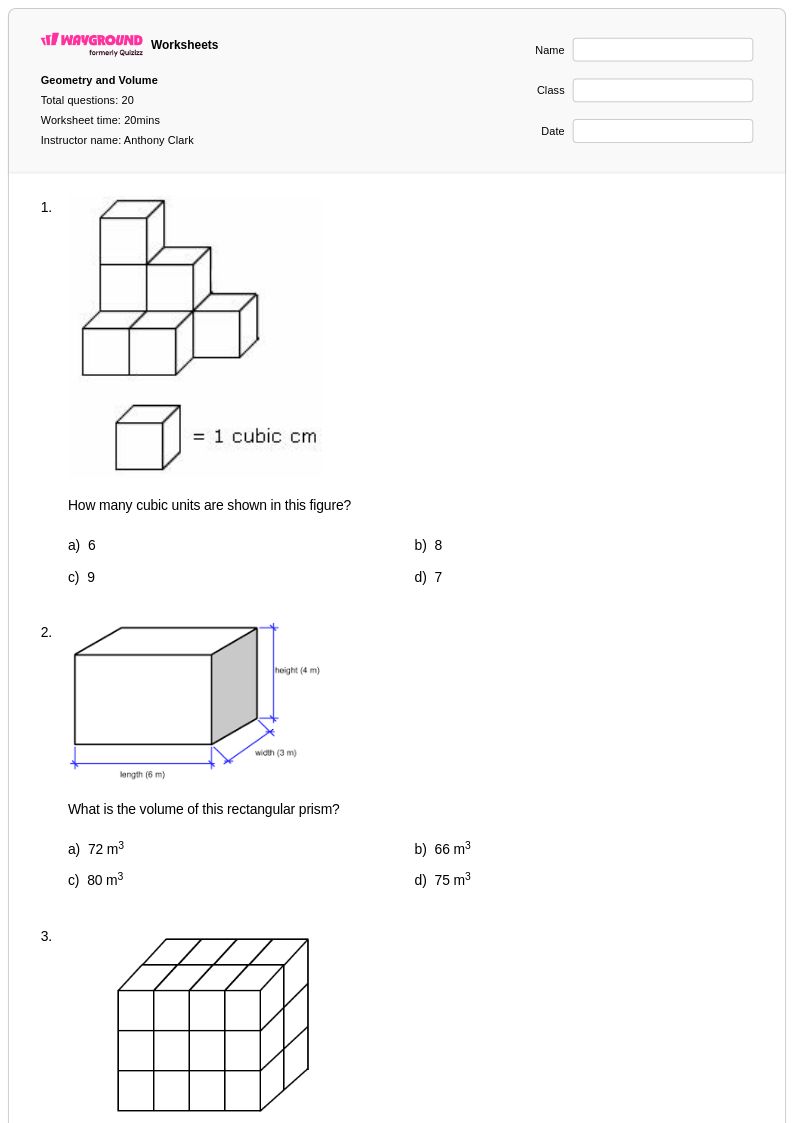
20 T
5th - Uni
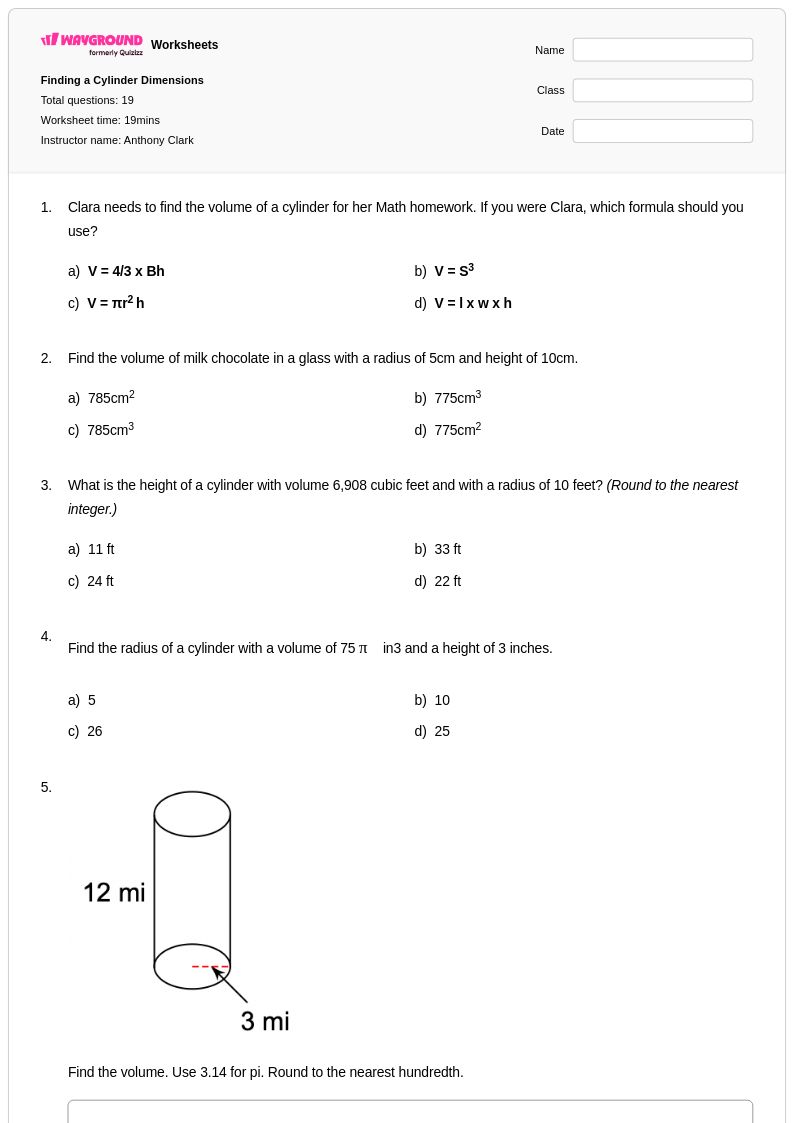
19 T
8th - Uni
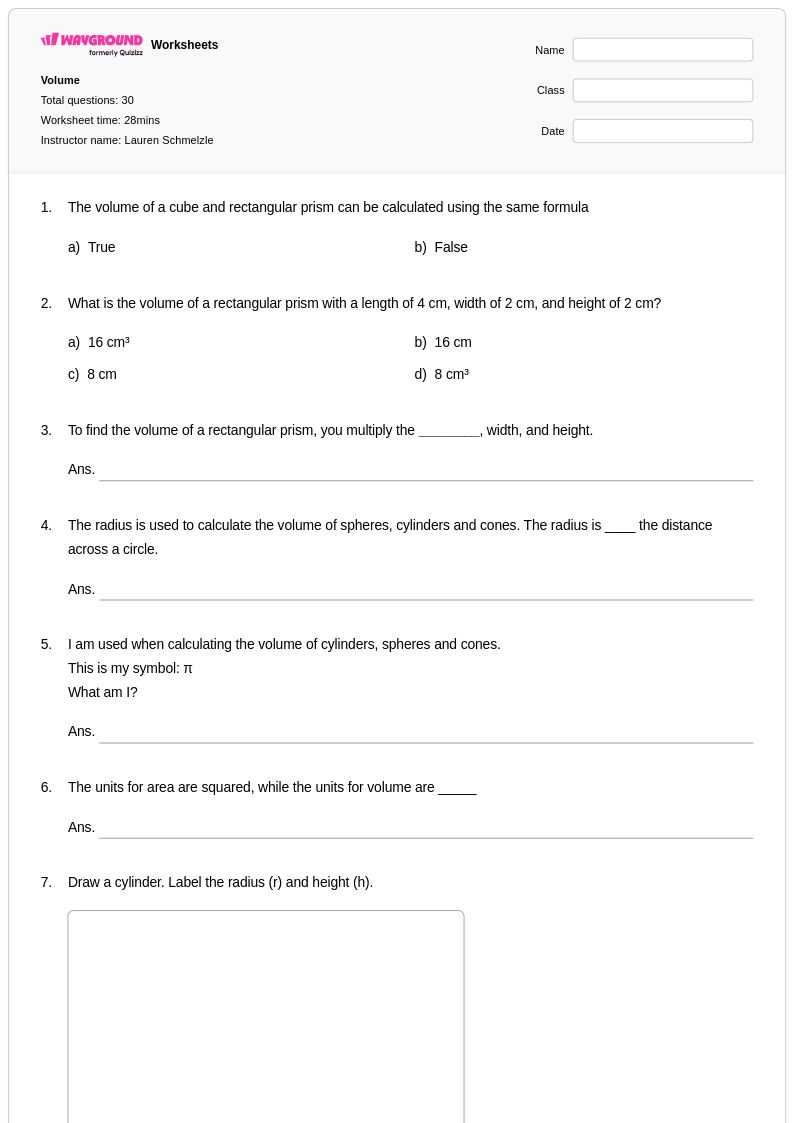
30 T
11th
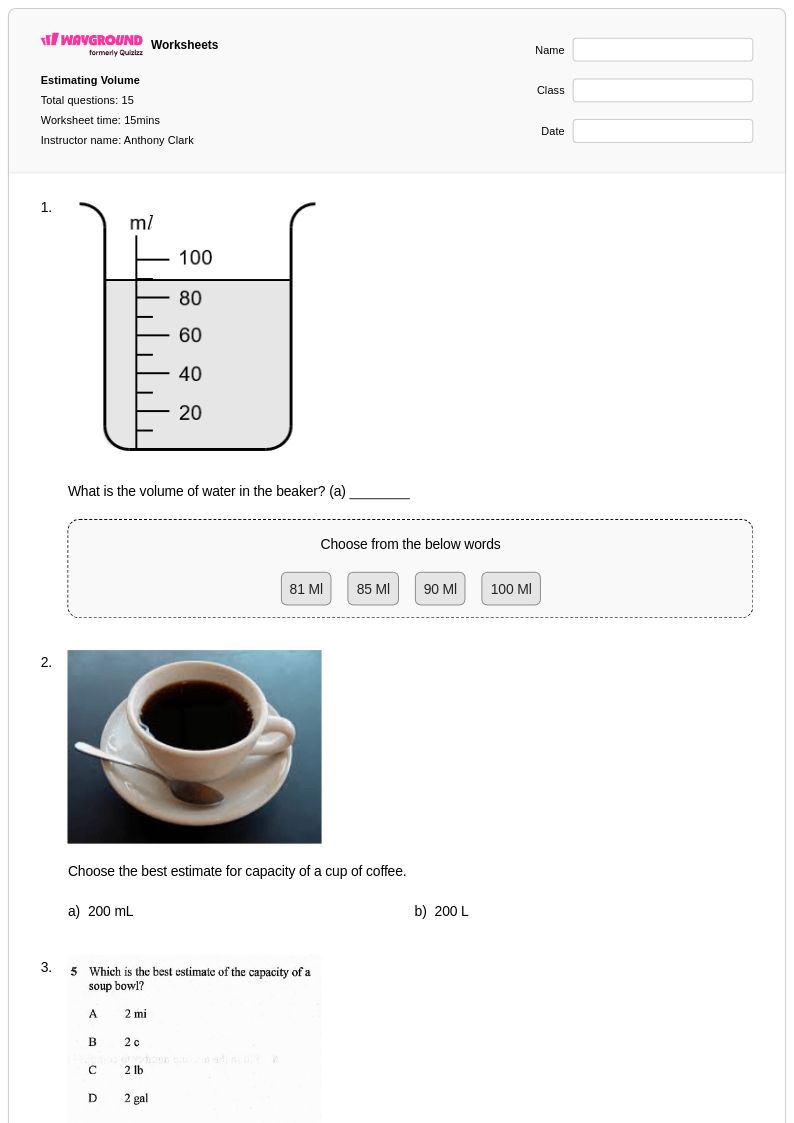
15 T
3rd - Uni
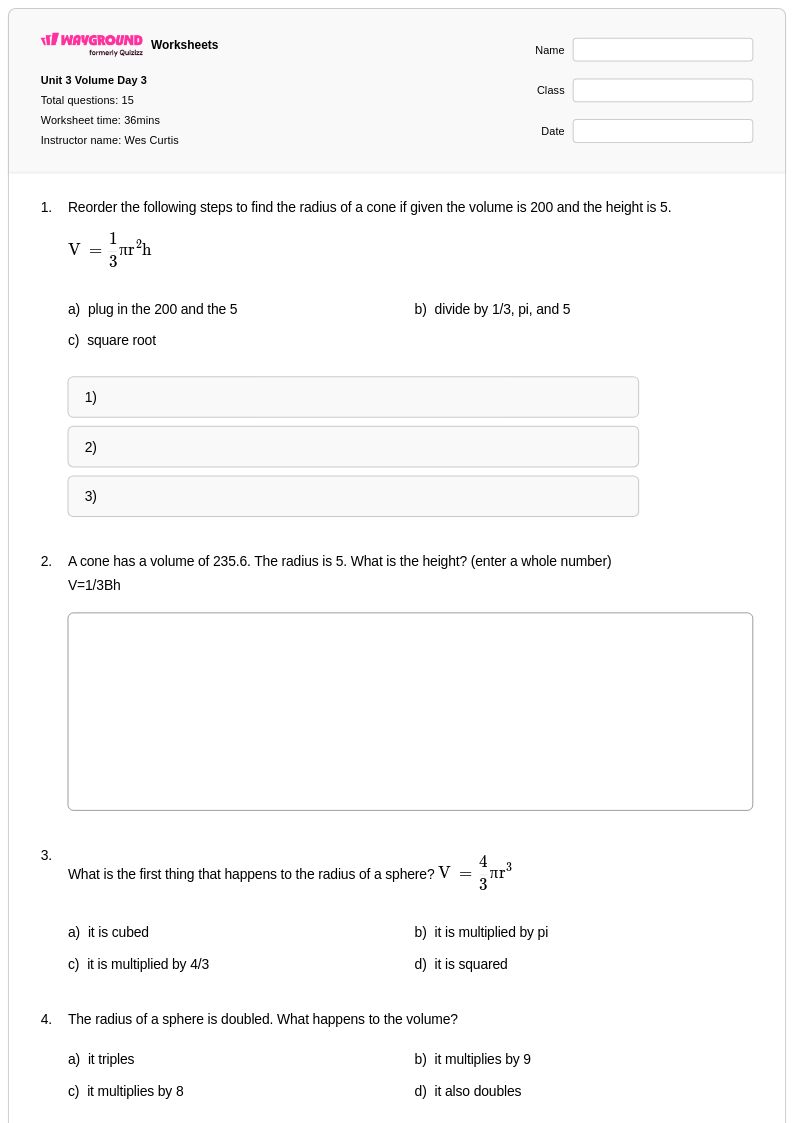
10 T
9th - 12th
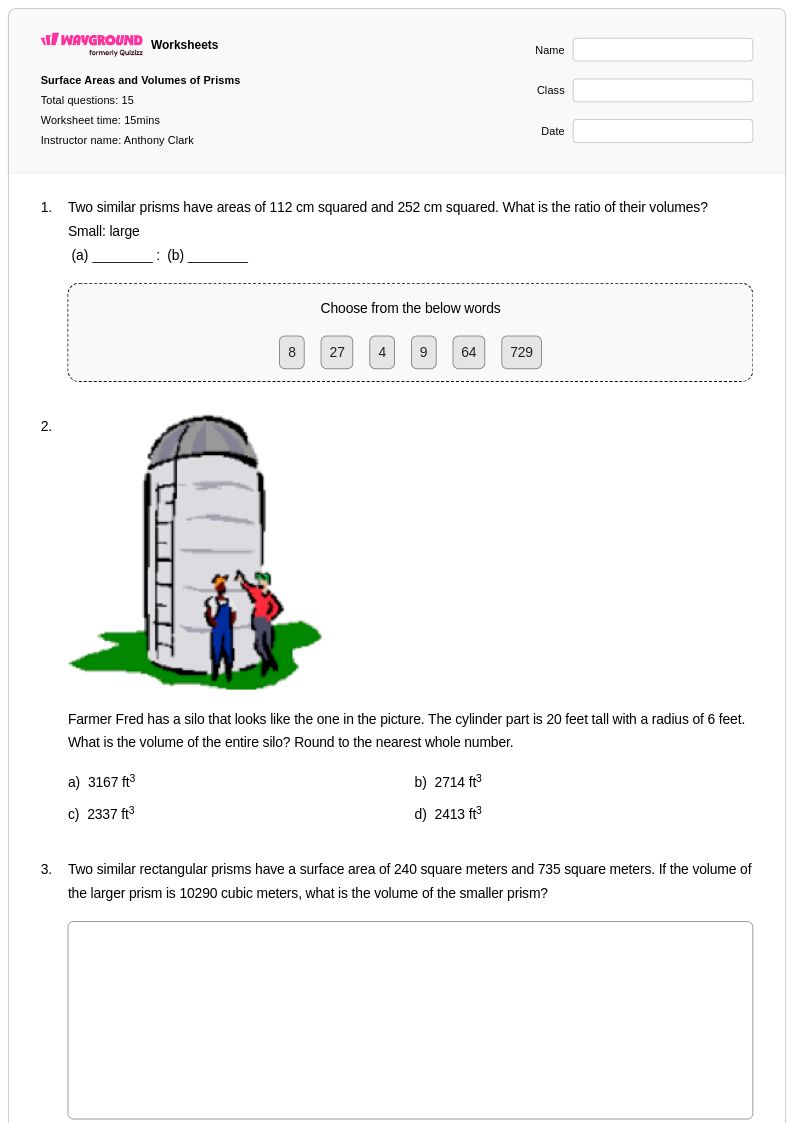
15 T
10th - Uni
Jelajahi Volume of a Cylinder Lembar Kerja berdasarkan Nilai
Jelajahi Lembar Kerja Mata Pelajaran Lainnya untuk class 11
Explore printable Volume of a Cylinder worksheets for Class 11
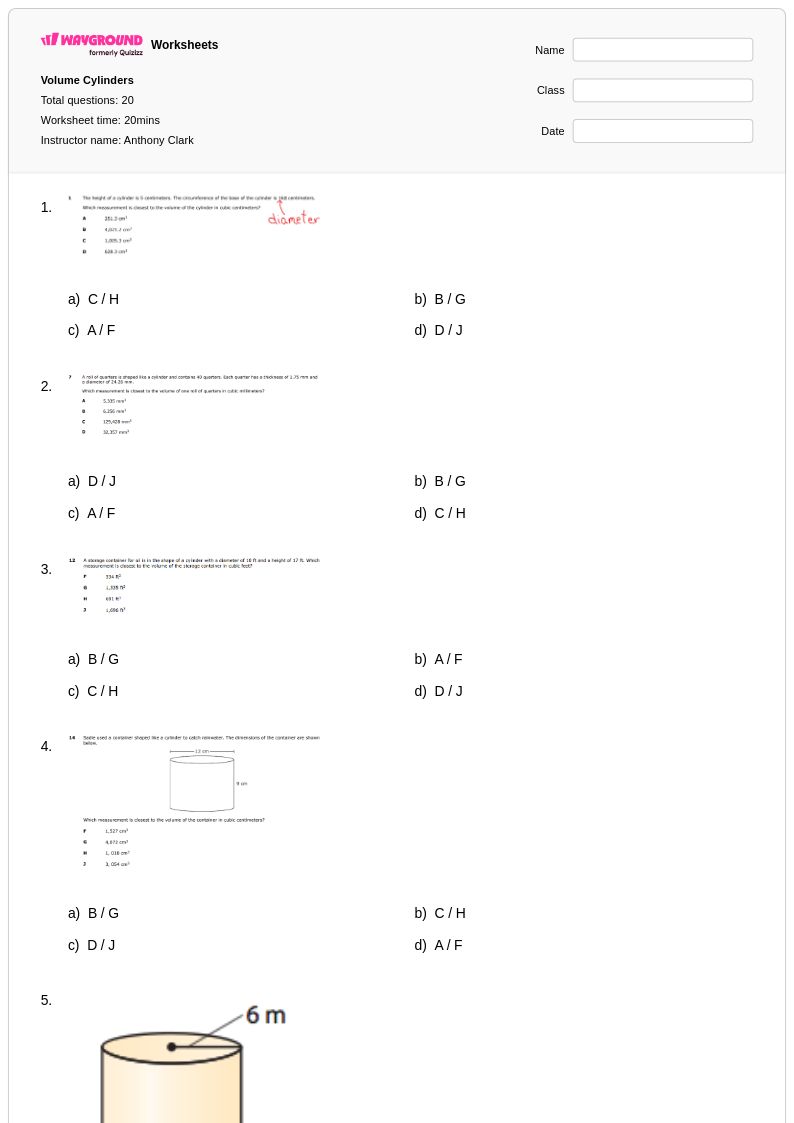
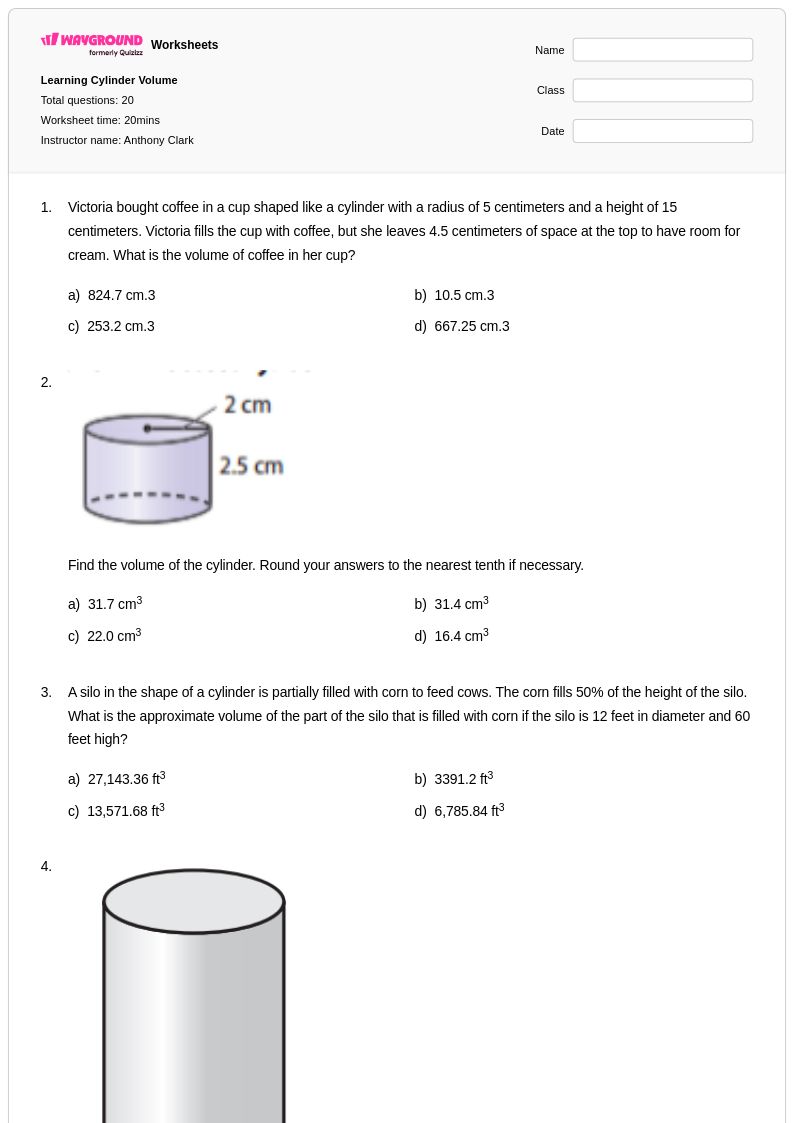
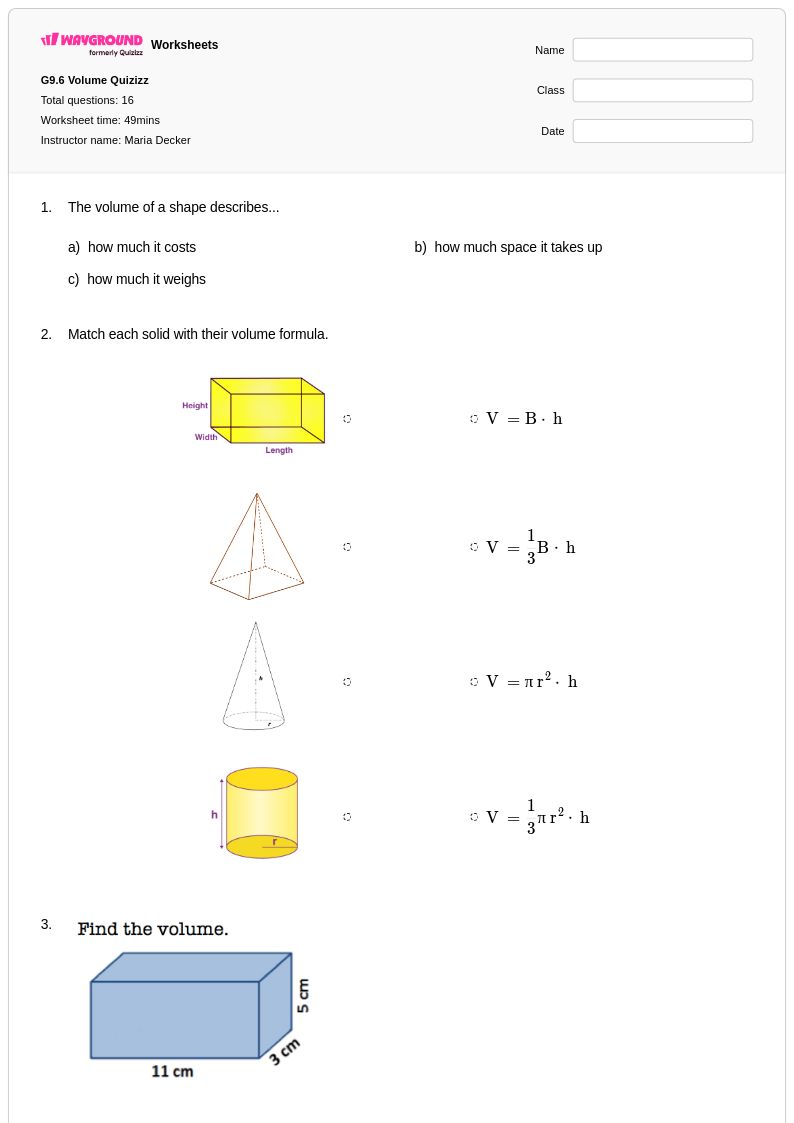
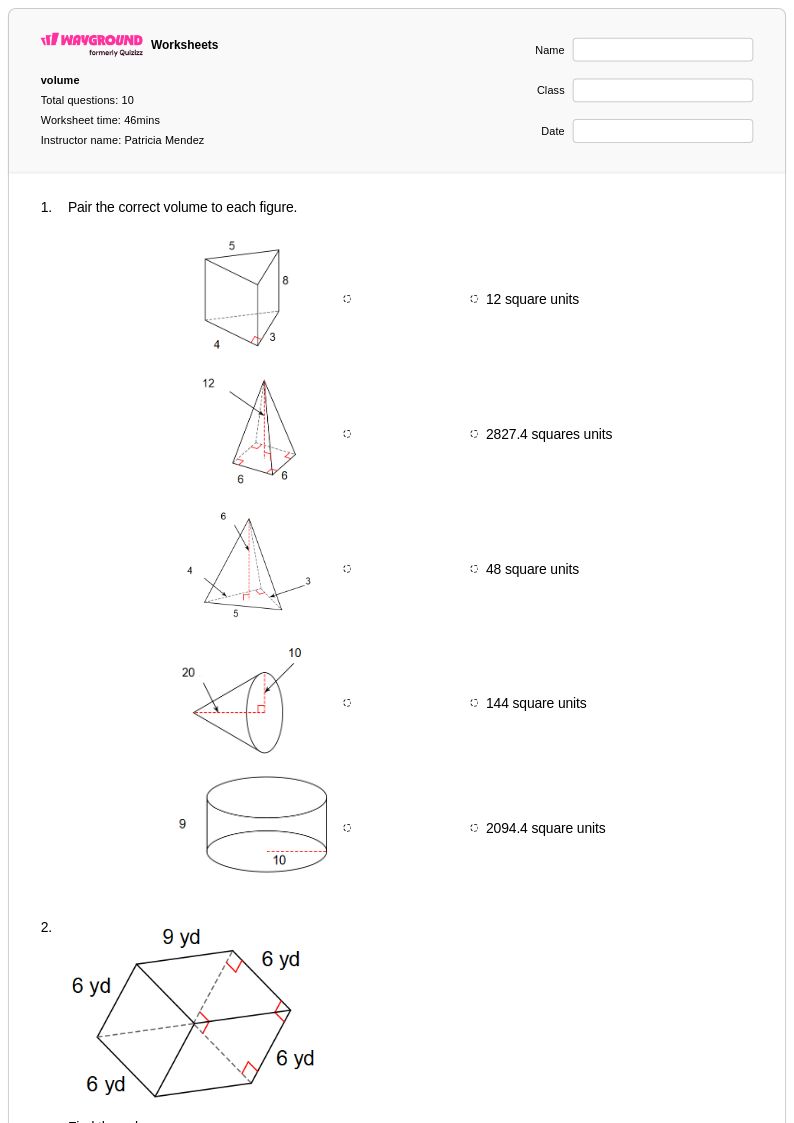
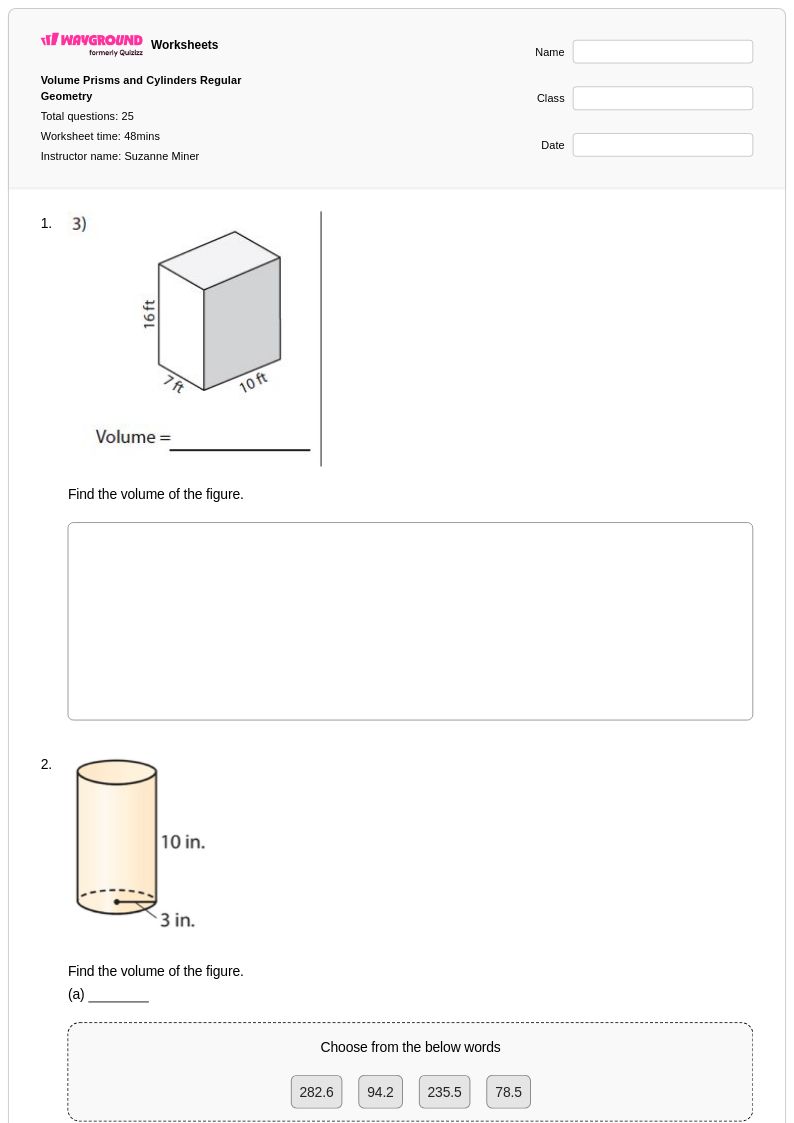
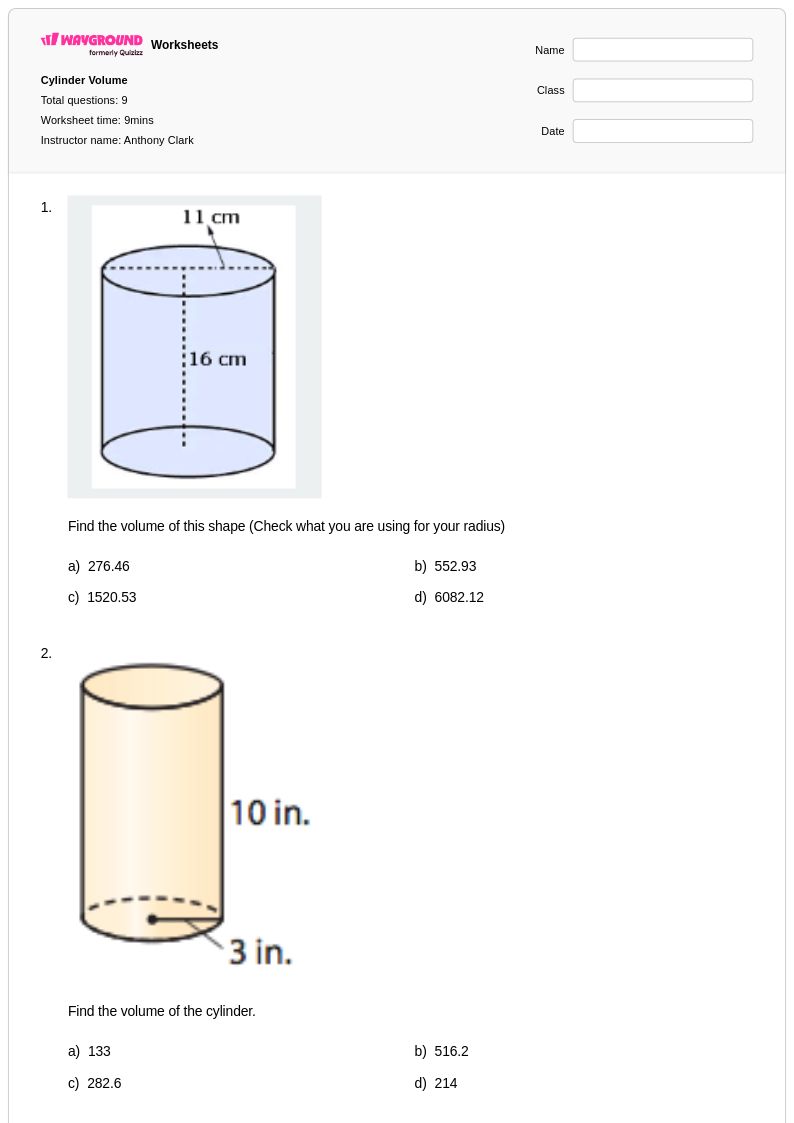
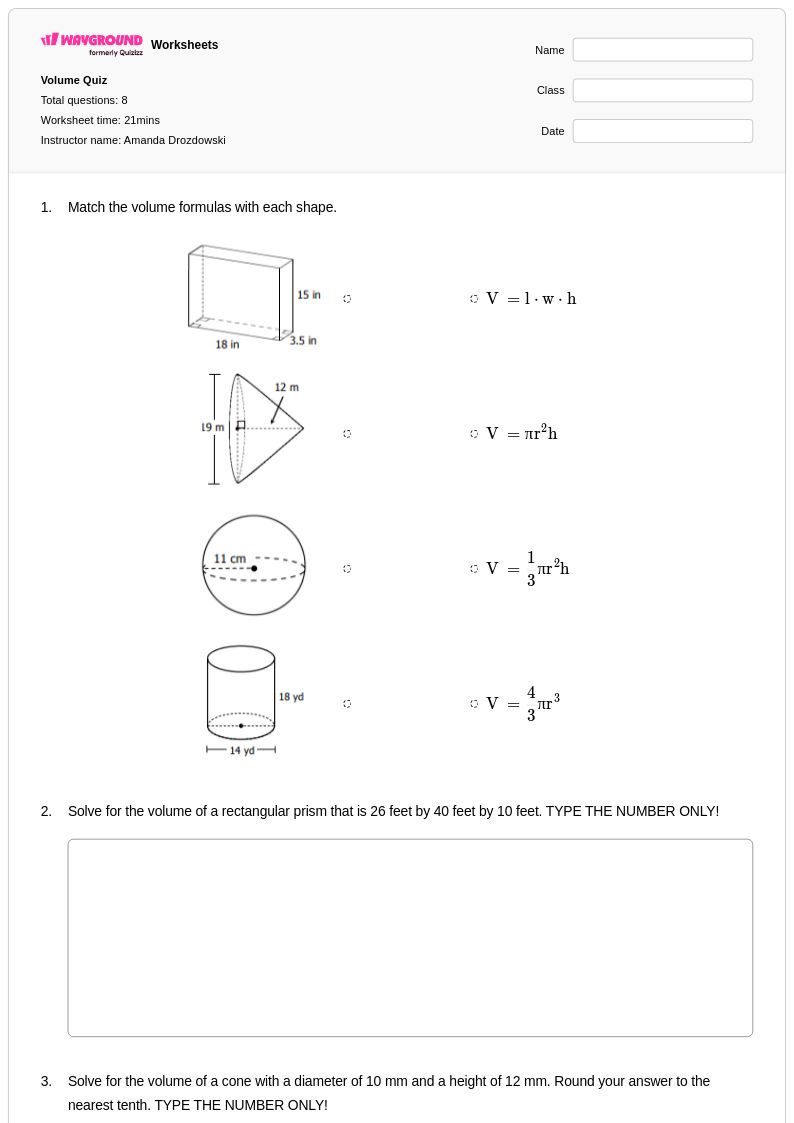
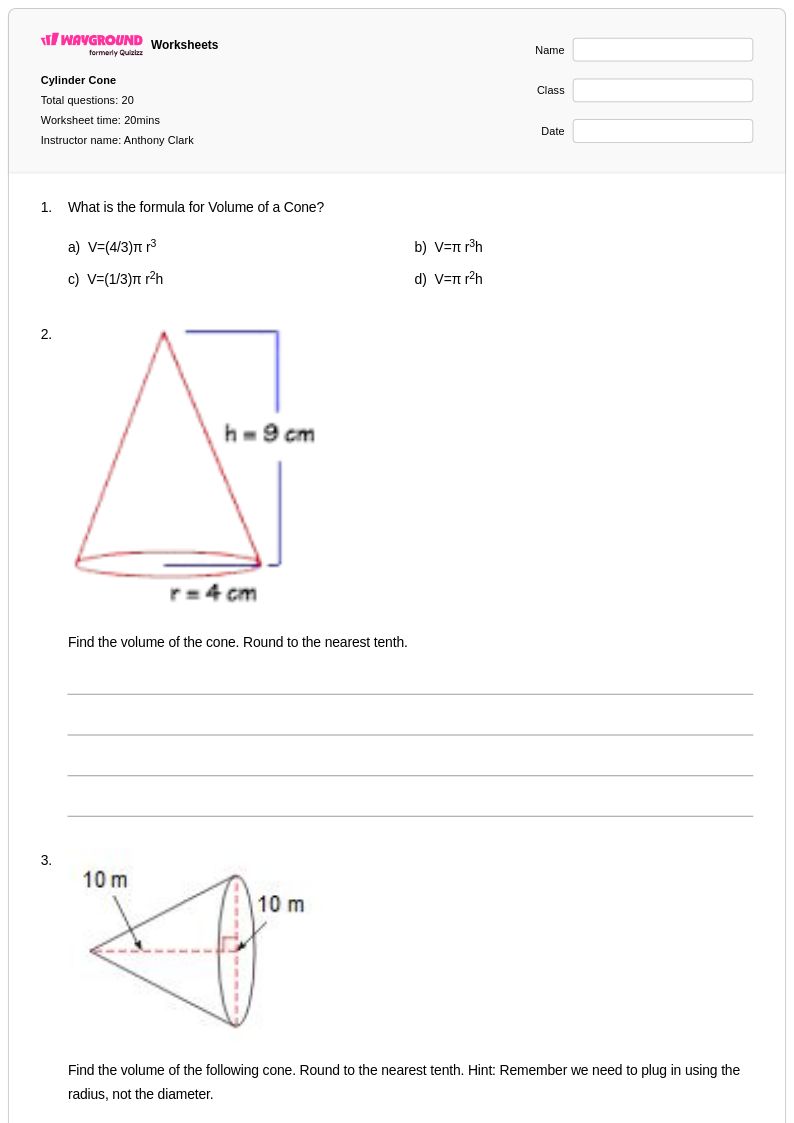
Volume of a cylinder worksheets for Class 11 students provide comprehensive practice with calculating the space inside cylindrical objects using the fundamental formula V = πr²h. These mathematical resources strengthen essential geometric skills including identifying radius and height measurements, applying the pi constant accurately, and performing multi-step calculations involving squares and products. Students work through diverse practice problems ranging from basic cylinder volume computations to complex real-world applications involving storage tanks, pipes, and cylindrical containers. Each worksheet includes detailed answer keys that allow students to verify their calculations and understand proper problem-solving techniques, while the free printable format makes these resources accessible for both classroom instruction and independent study sessions.
Wayground (formerly Quizizz) supports mathematics educators with an extensive collection of cylinder volume worksheets created by millions of teachers who understand the specific learning needs of Class 11 students. The platform's advanced search and filtering capabilities enable instructors to quickly locate resources that align with curriculum standards and match their students' skill levels, while built-in differentiation tools allow for seamless customization of difficulty levels and problem types. Teachers can access these materials in both printable pdf format for traditional paper-based assignments and digital formats for technology-integrated learning environments. This flexibility proves invaluable for lesson planning, targeted remediation for struggling students, enrichment activities for advanced learners, and consistent skill practice that builds computational fluency with three-dimensional geometric concepts.