
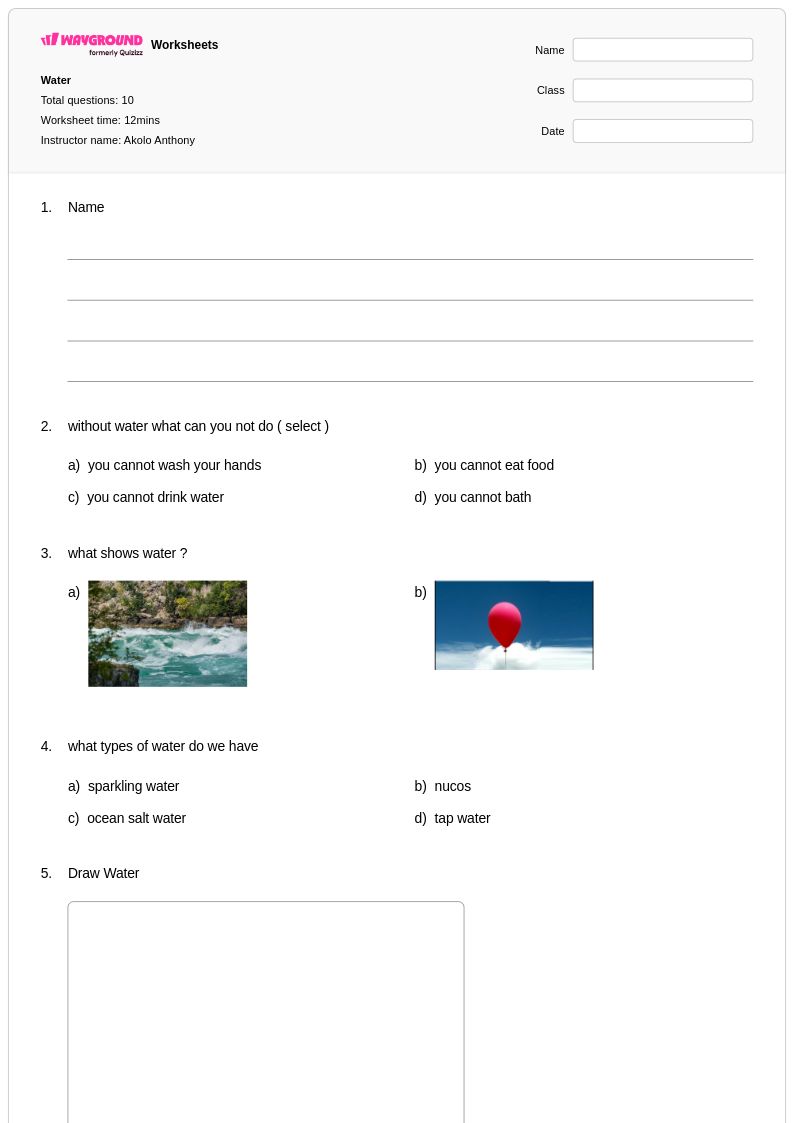
10 Q
2nd
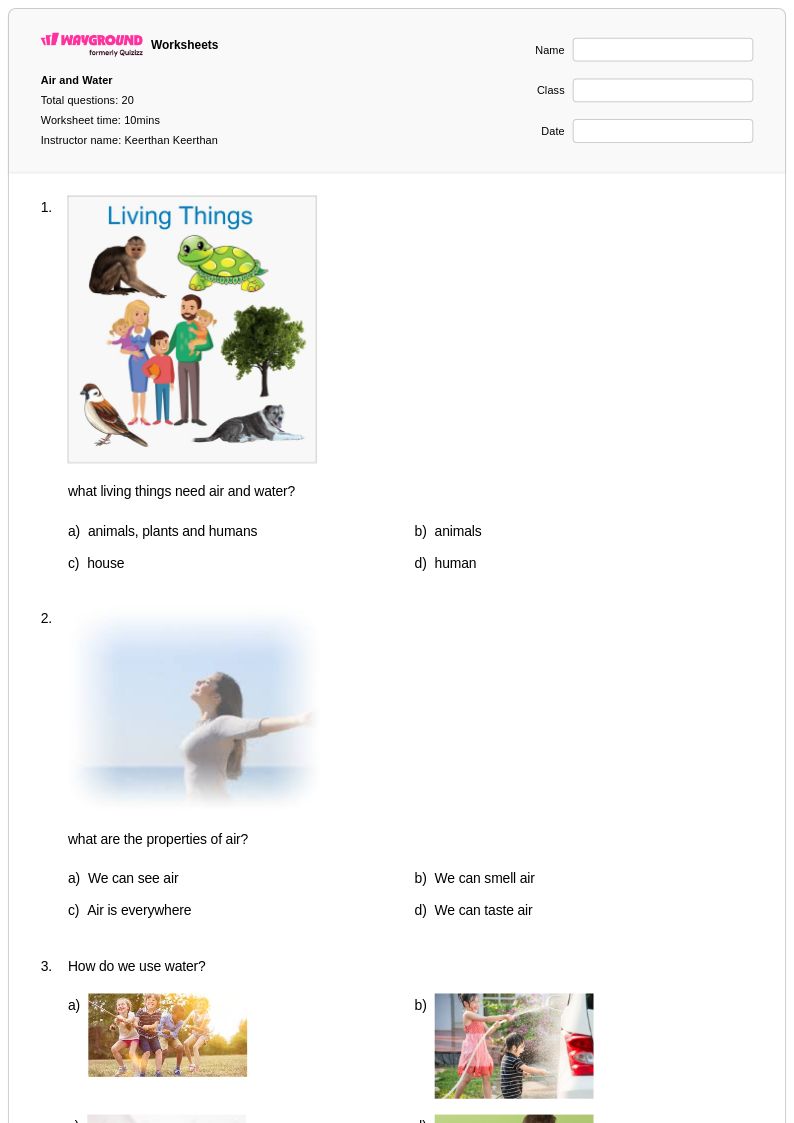
20 Q
2nd
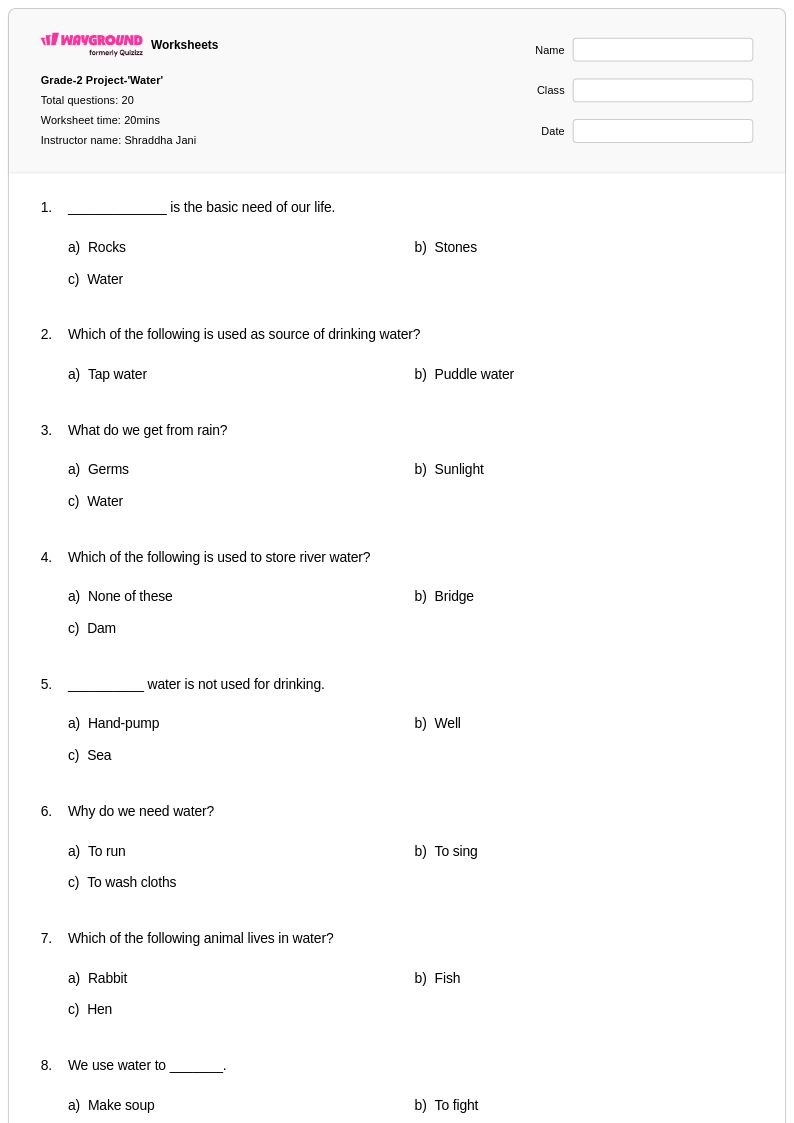
20 Q
2nd
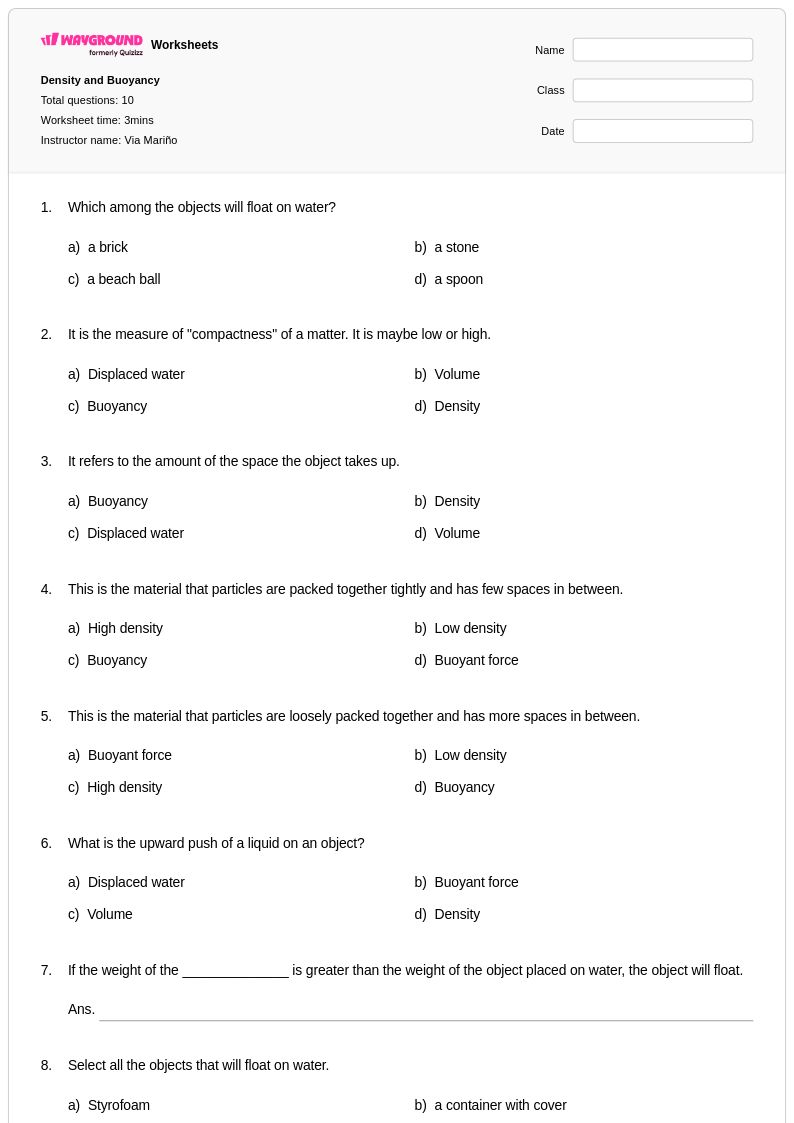
10 Q
1st - 6th
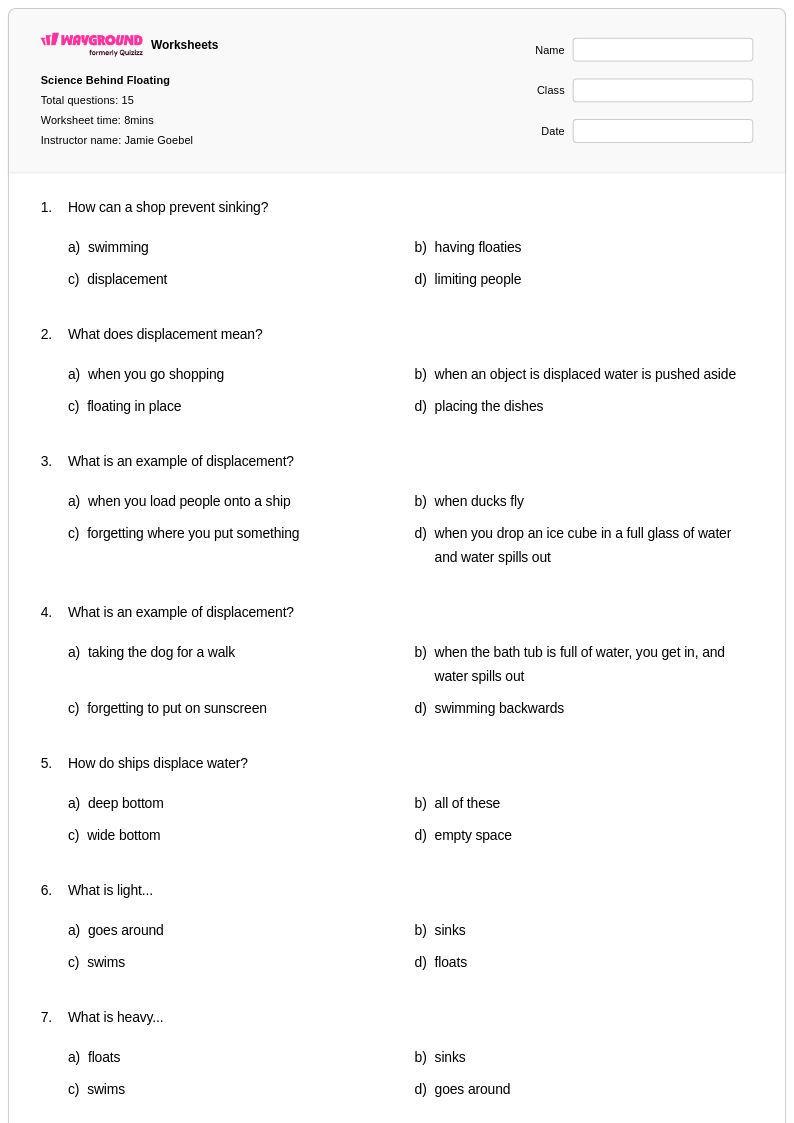
15 Q
2nd - 4th
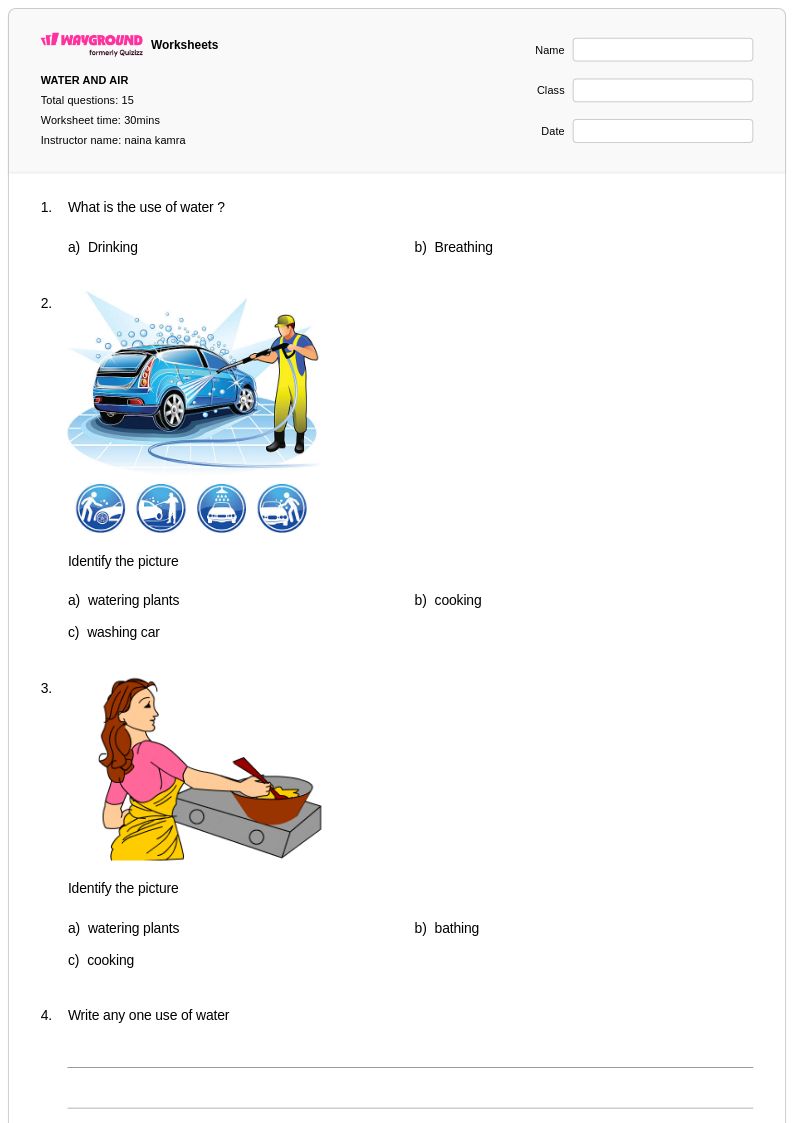
15 Q
2nd
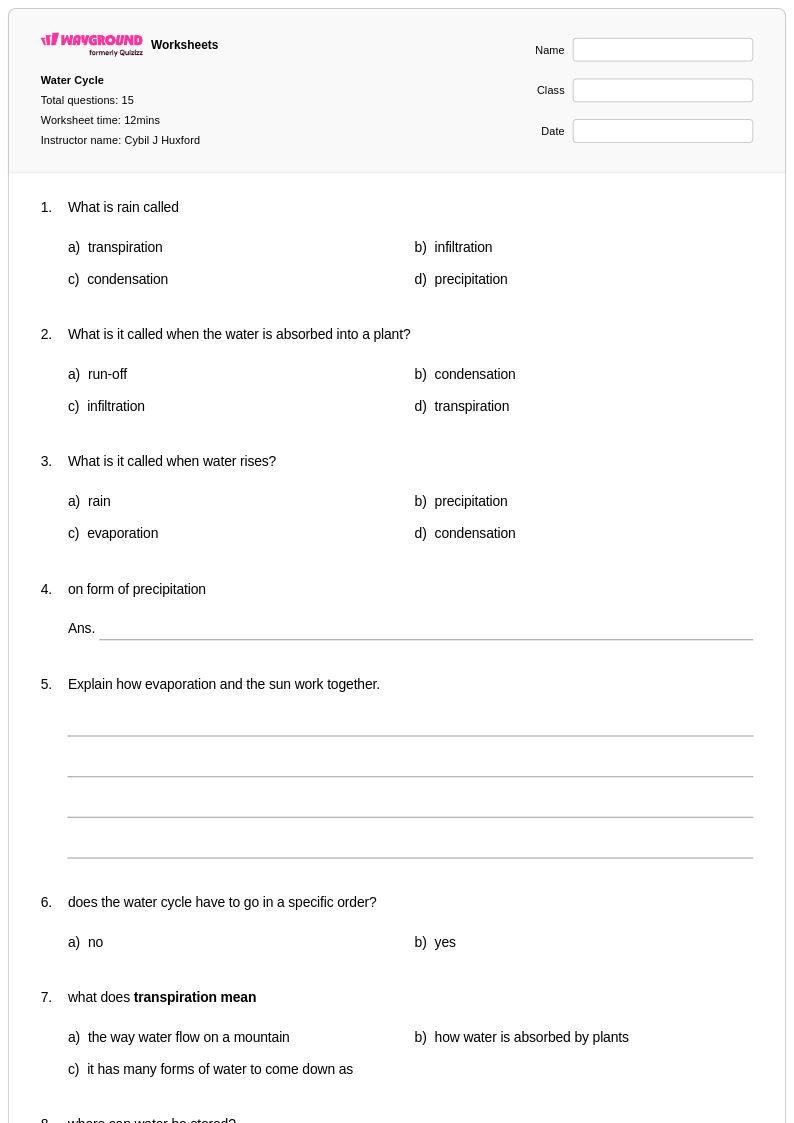
15 Q
2nd - 6th
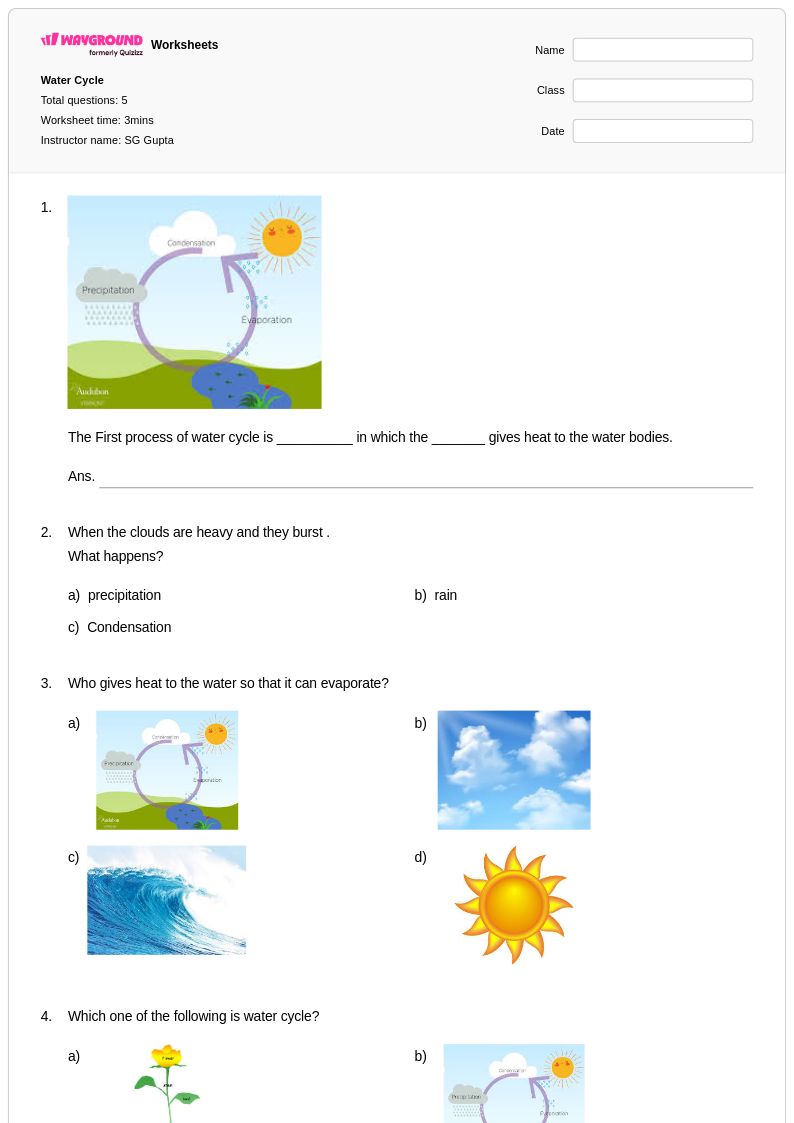
5 Q
KG - 3rd
10 Q
2nd - 3rd
8 Q
2nd
10 Q
2nd
12 Q
2nd - 5th
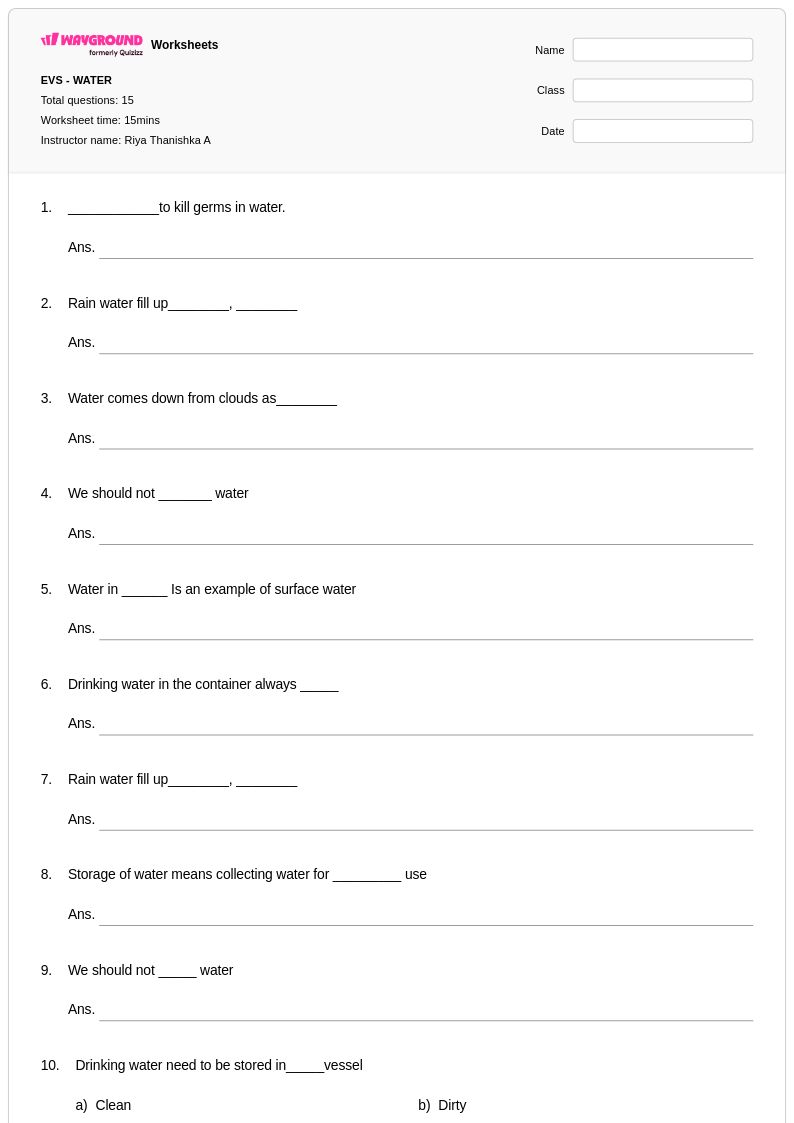
15 Q
2nd
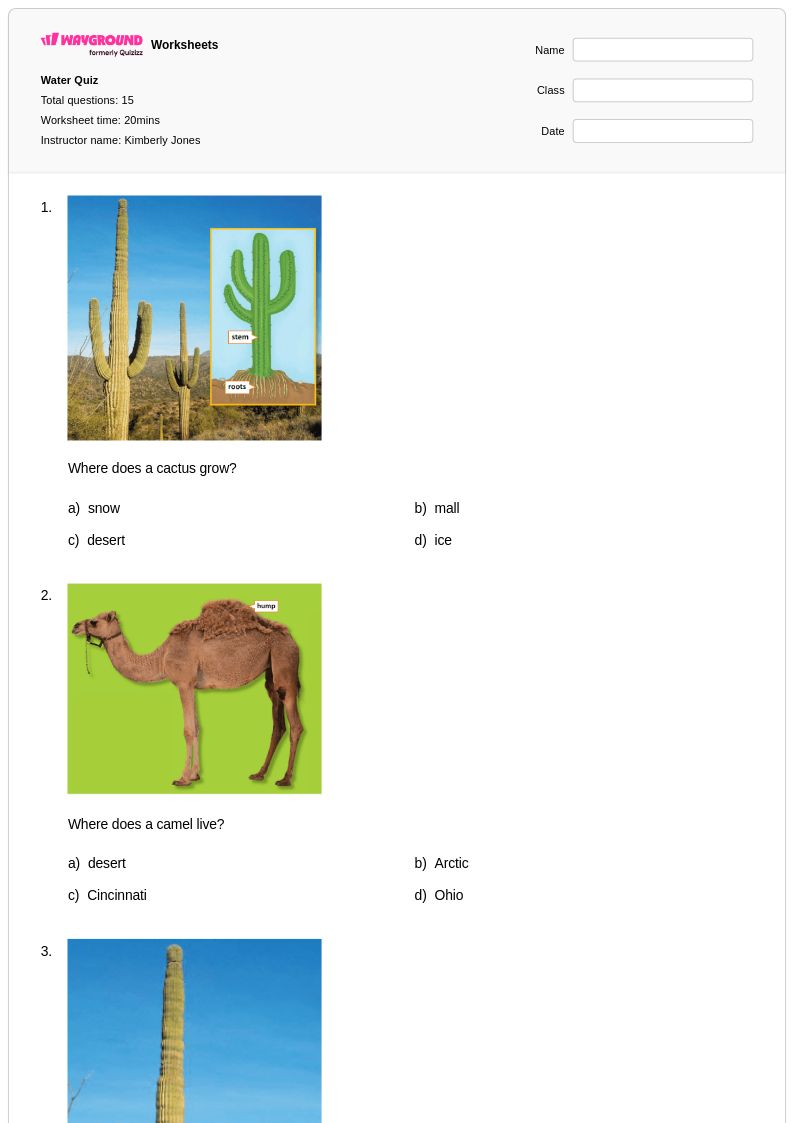
15 Q
2nd
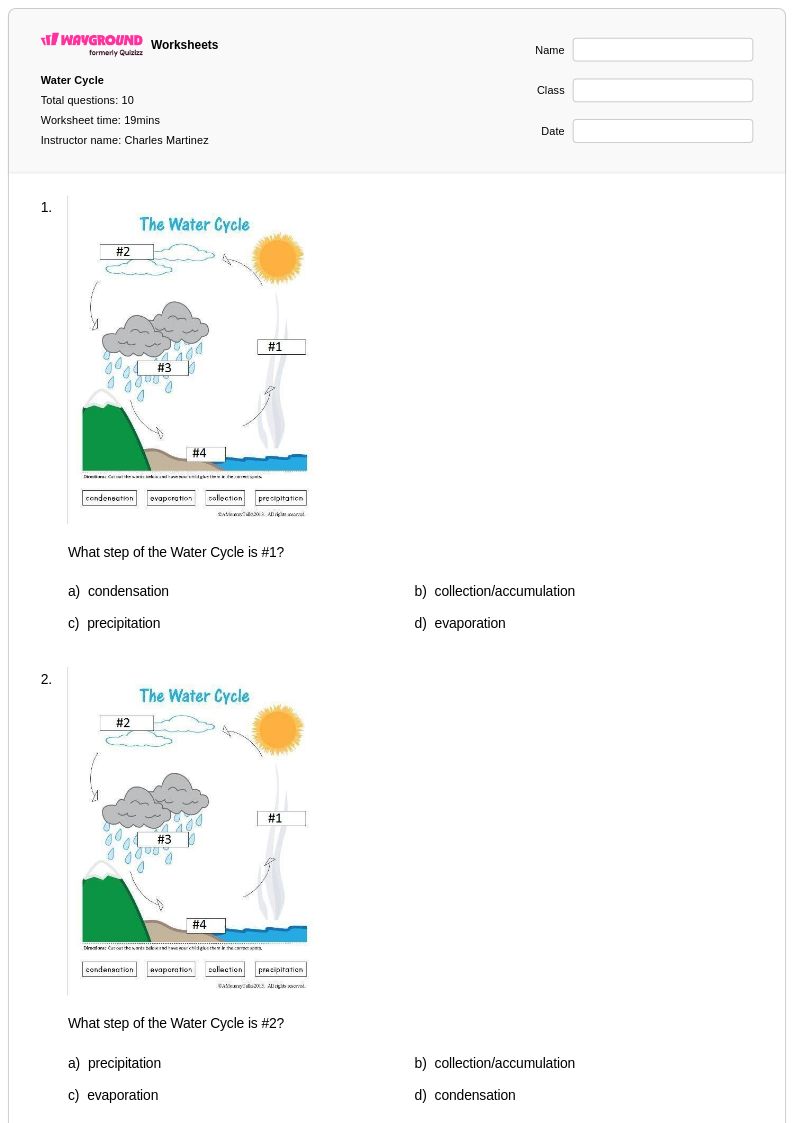
10 Q
2nd
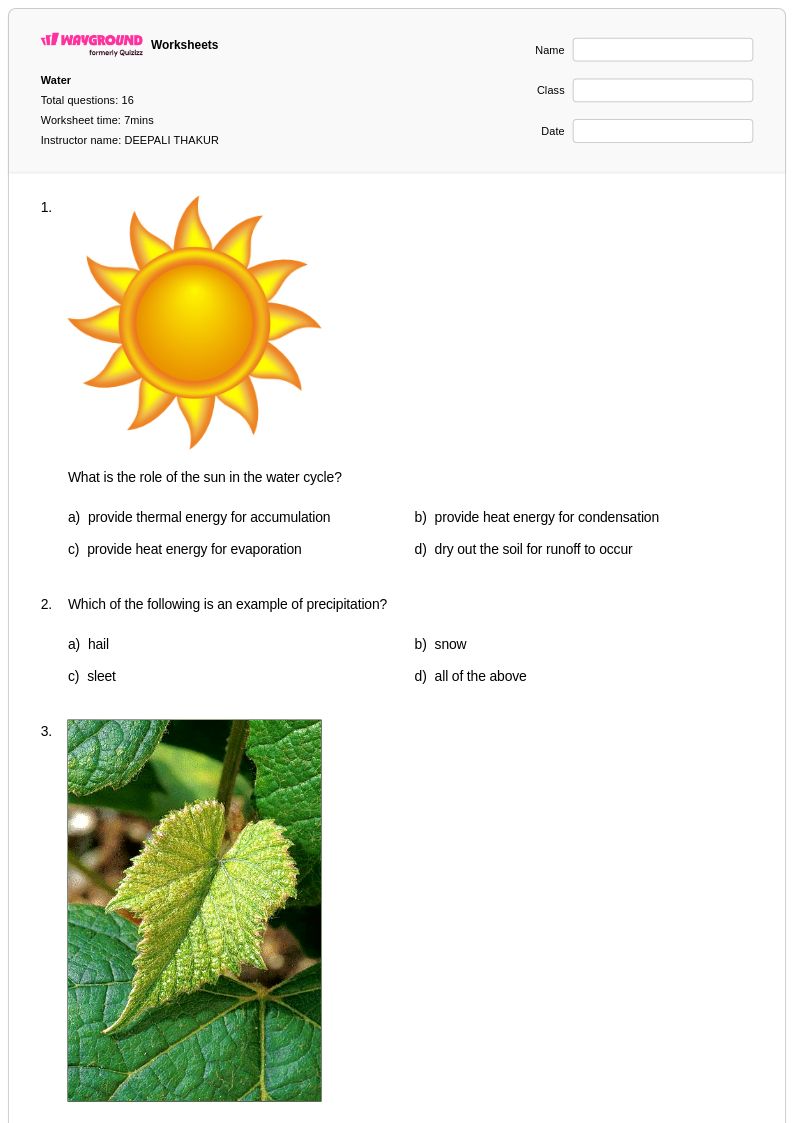
16 Q
2nd - 4th
10 Q
2nd
15 Q
1st - Uni
19 Q
1st - 2nd
10 Q
1st - 5th
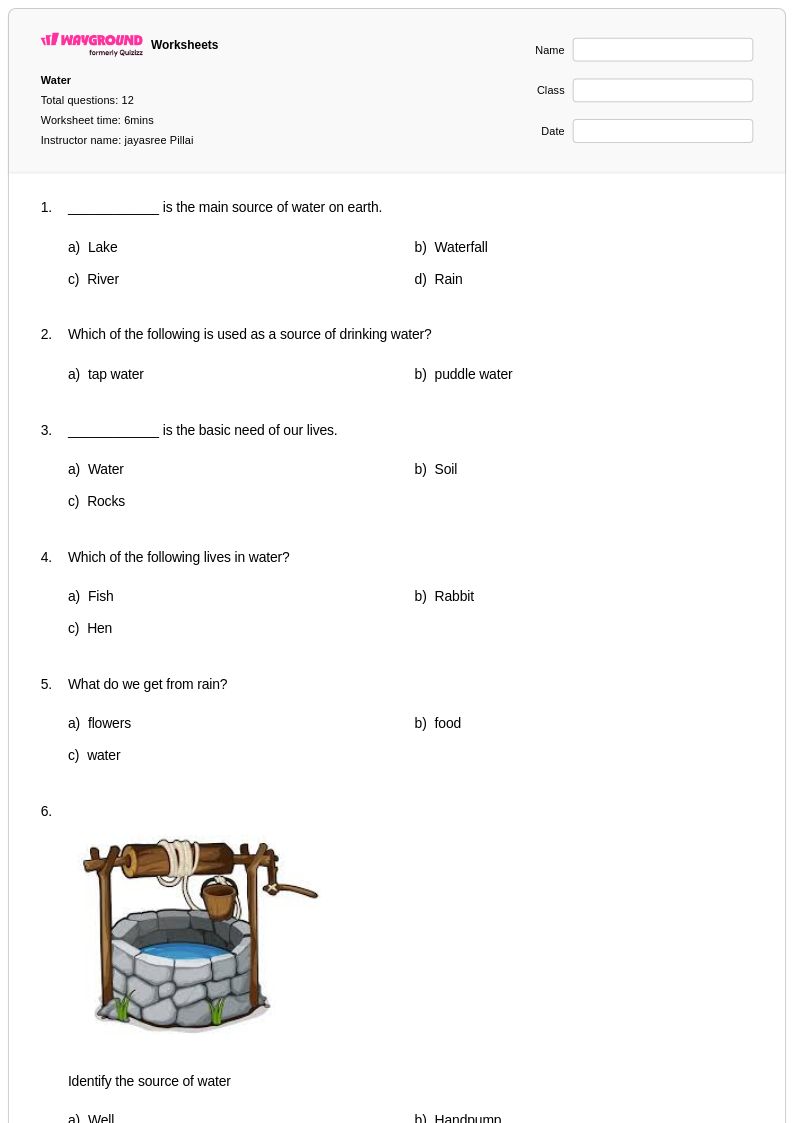
12 Q
2nd - 3rd
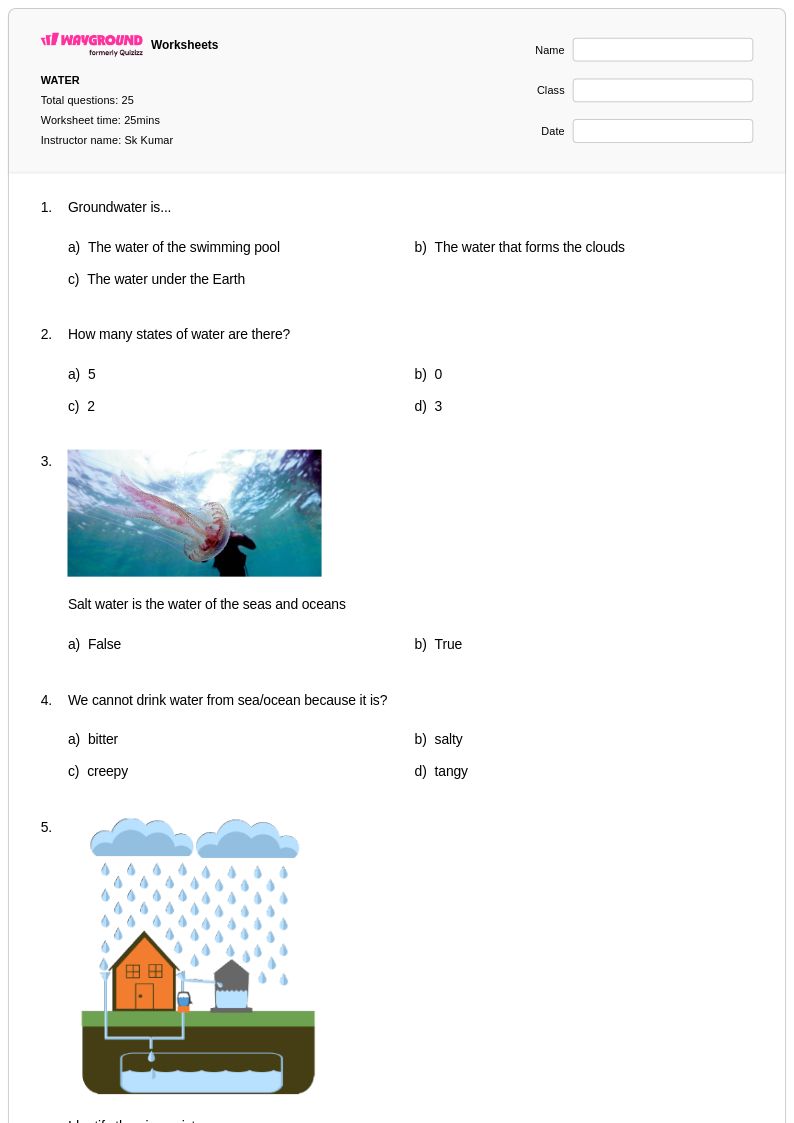
25 Q
2nd
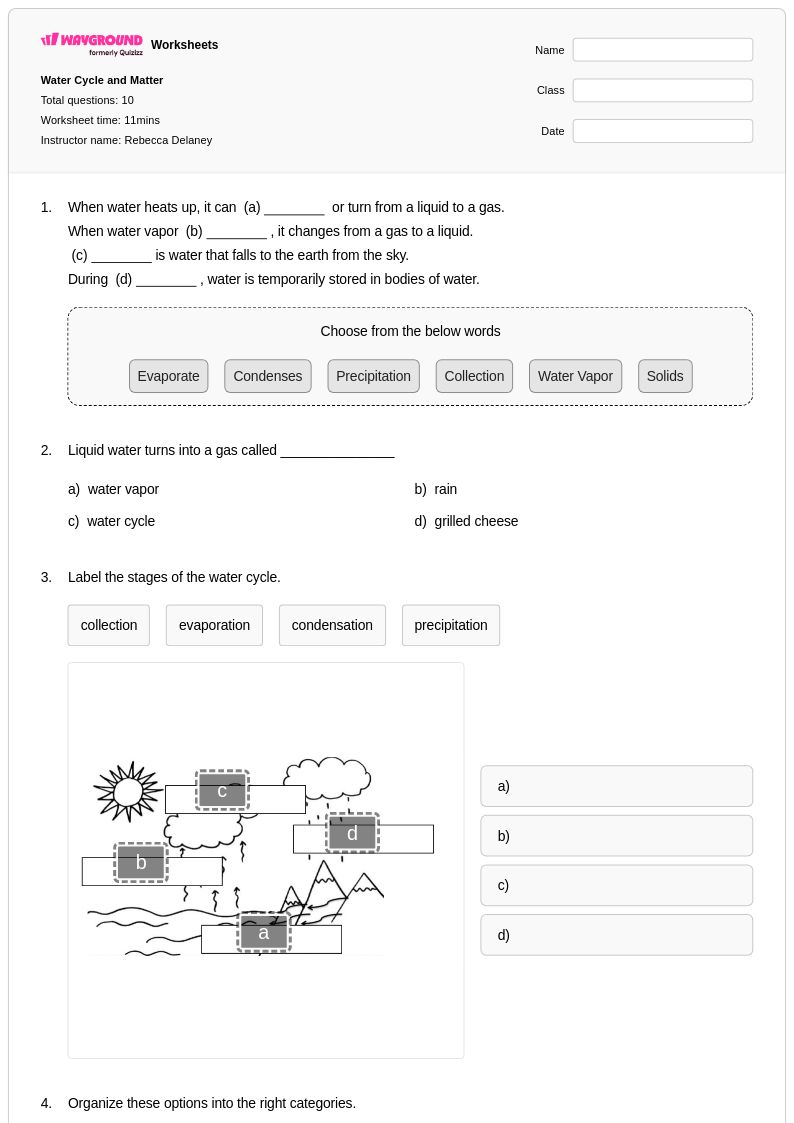
10 Q
2nd
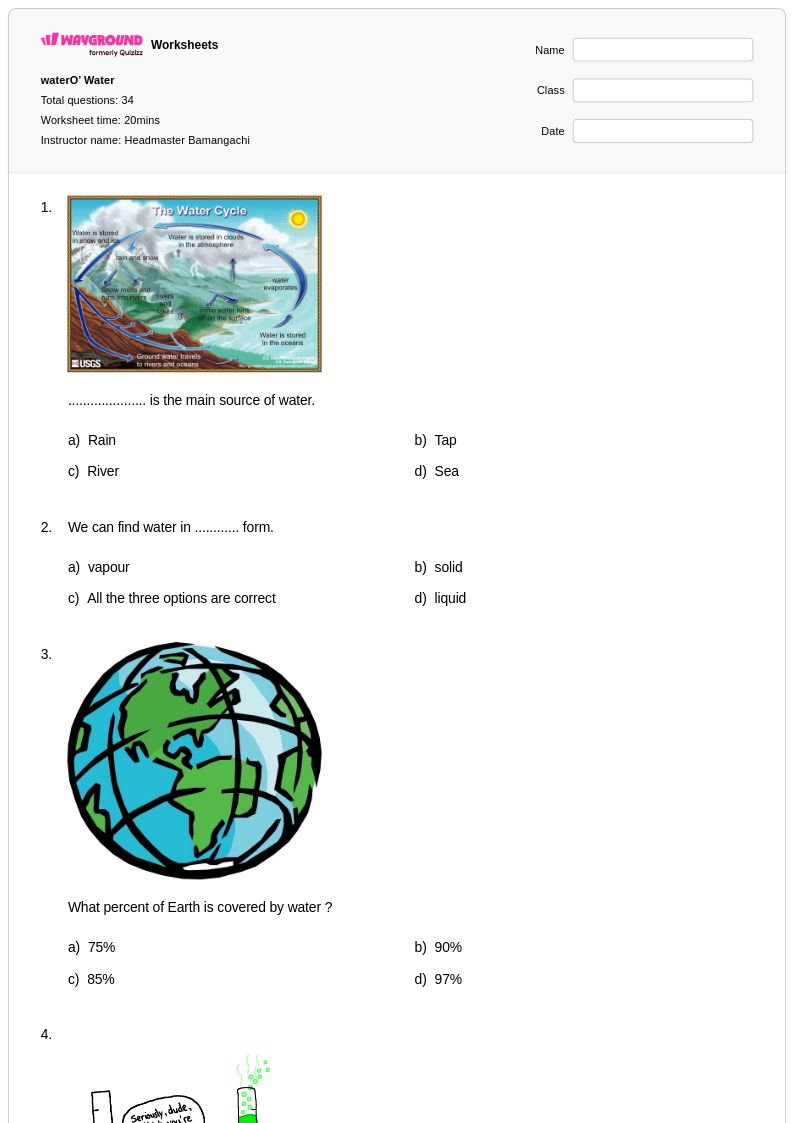
34 Q
1st - 5th
Explore Other Subject Worksheets for class 2
Explore printable Water Displacement worksheets for Class 2
Water displacement worksheets for Class 2 students available through Wayground (formerly Quizizz) introduce young learners to this fundamental physics concept through hands-on exploration and observation activities. These carefully designed educational materials help second-grade students understand how objects take up space when placed in water, building essential scientific thinking skills through guided practice problems that encourage prediction, observation, and measurement. The comprehensive worksheet collection includes engaging exercises where students predict water level changes, record their observations, and draw conclusions about volume and space, with each printable resource featuring clear instructions and answer keys to support both independent learning and teacher-guided instruction. These free educational materials strengthen critical thinking abilities while introducing foundational physics principles through age-appropriate experiments and visual demonstrations that make abstract concepts concrete and accessible.
Wayground (formerly Quizizz) empowers educators with millions of teacher-created resources specifically designed to support Class 2 water displacement instruction across diverse classroom environments. The platform's robust search and filtering capabilities enable teachers to quickly locate worksheets that align with specific learning objectives and state science standards, while built-in differentiation tools allow for seamless customization to meet varying student ability levels and learning styles. These comprehensive collections are available in both printable pdf formats for traditional classroom use and digital formats for interactive learning experiences, providing educators with flexible options for lesson planning, targeted remediation, and enrichment activities. Teachers can efficiently organize skill practice sessions, assess student understanding, and adapt instruction based on individual needs, ensuring that every second-grade student develops a solid foundation in basic physics concepts through structured, evidence-based learning experiences.
FAQs
How do I teach water displacement to my students?
What kinds of practice problems help students understand water displacement?
What mistakes do students commonly make when solving water displacement problems?
How can I use water displacement worksheets to support students at different skill levels?
How do I use Wayground's water displacement worksheets in my classroom?
How do I find water displacement worksheets that match my physics standards?