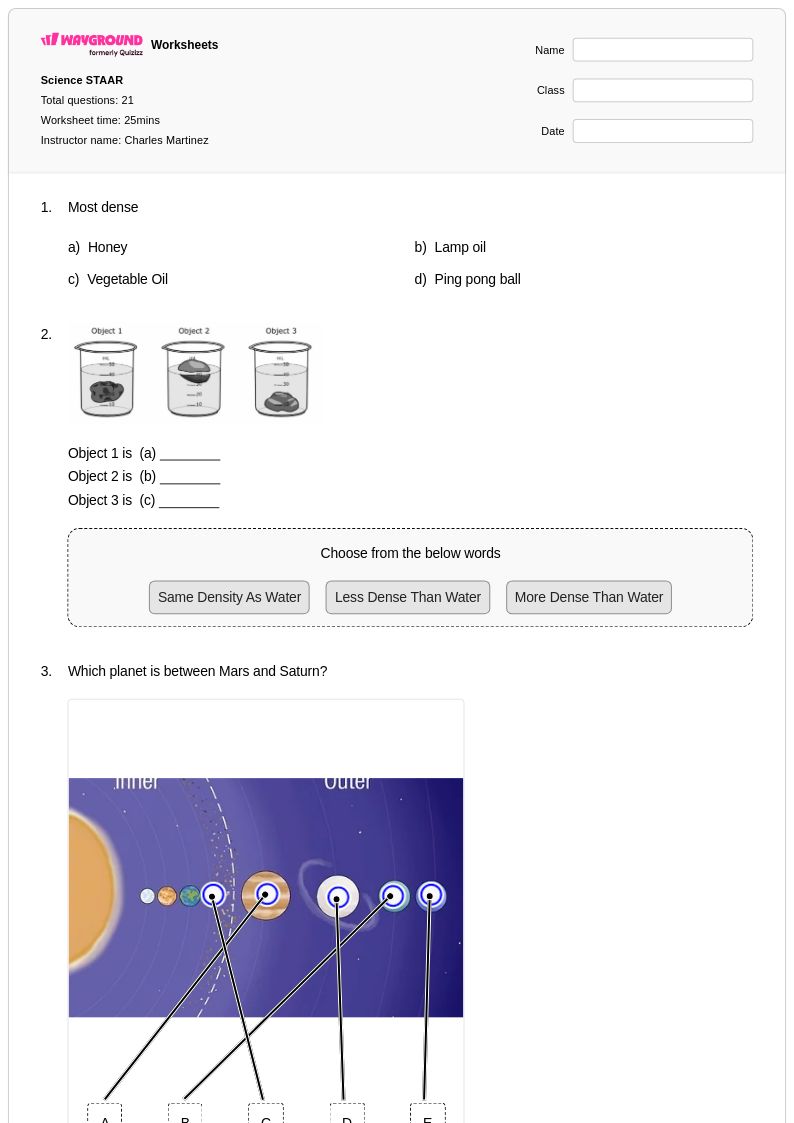
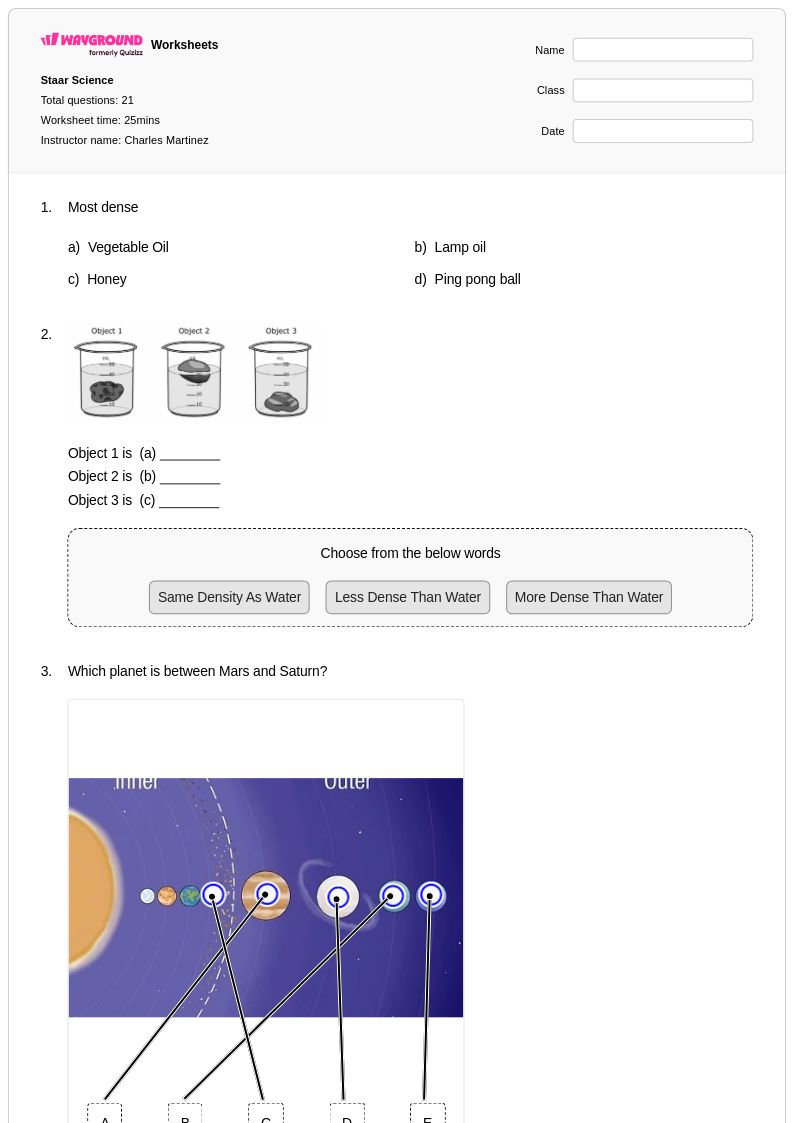
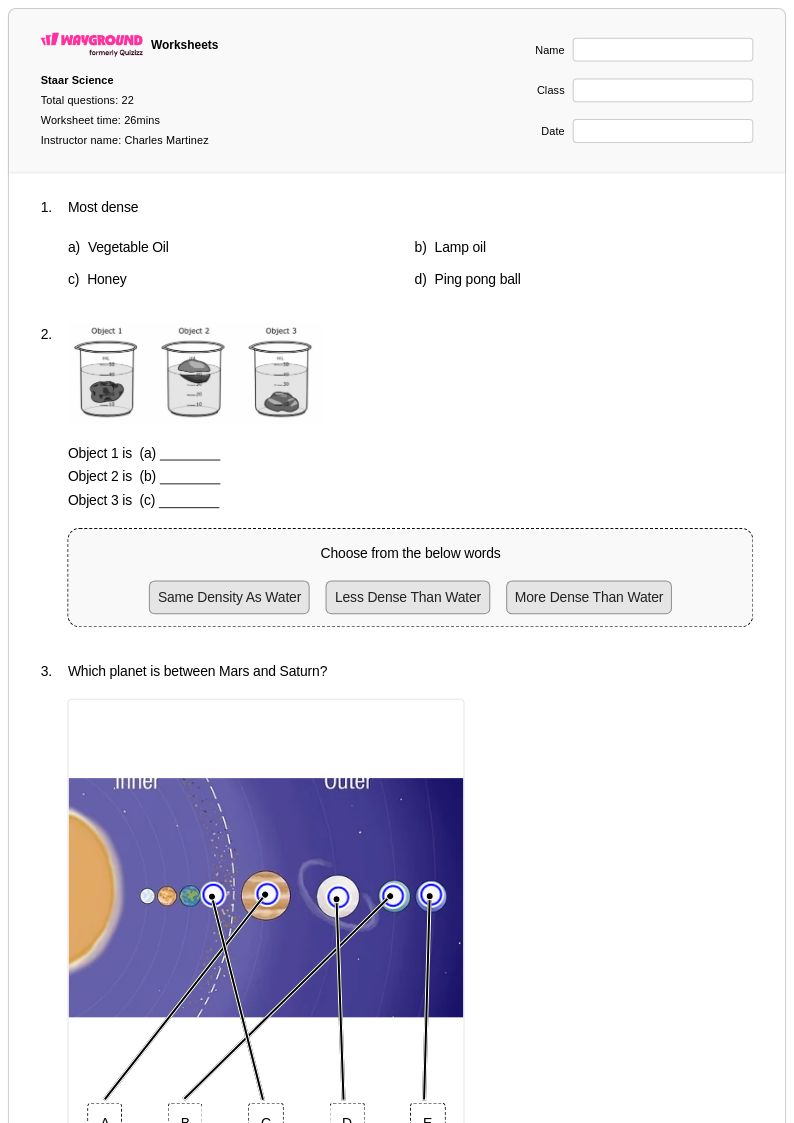
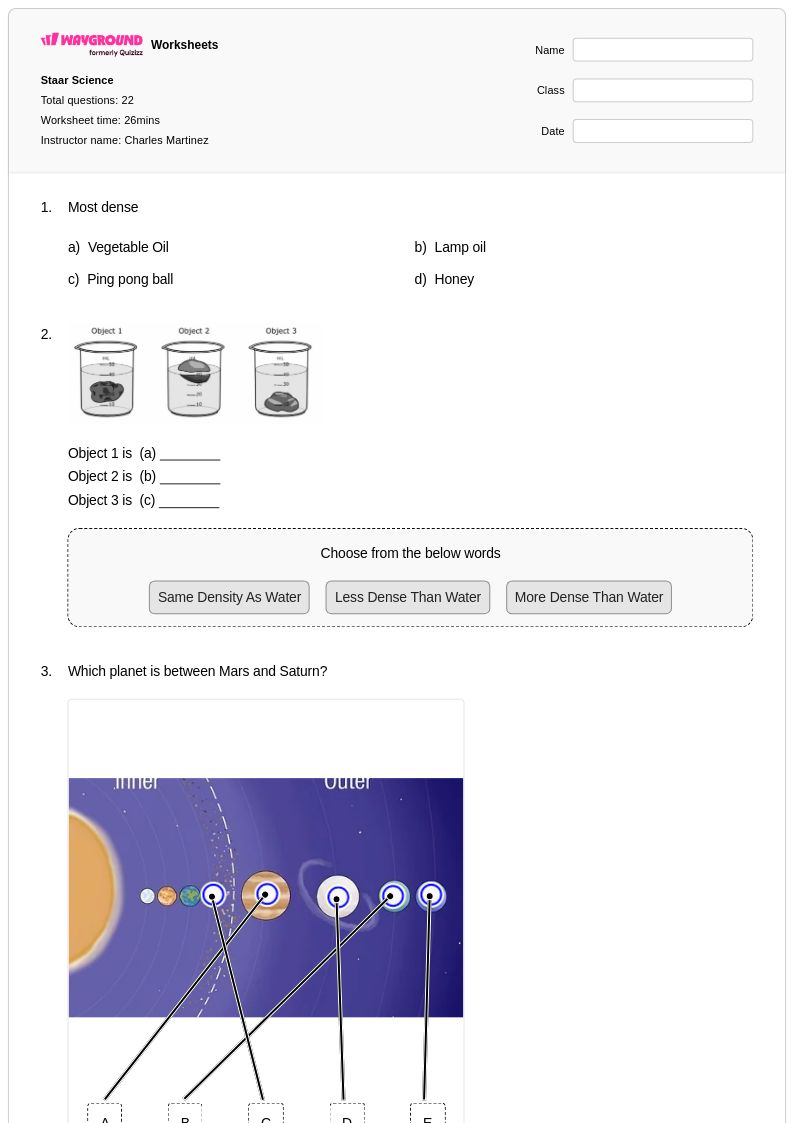
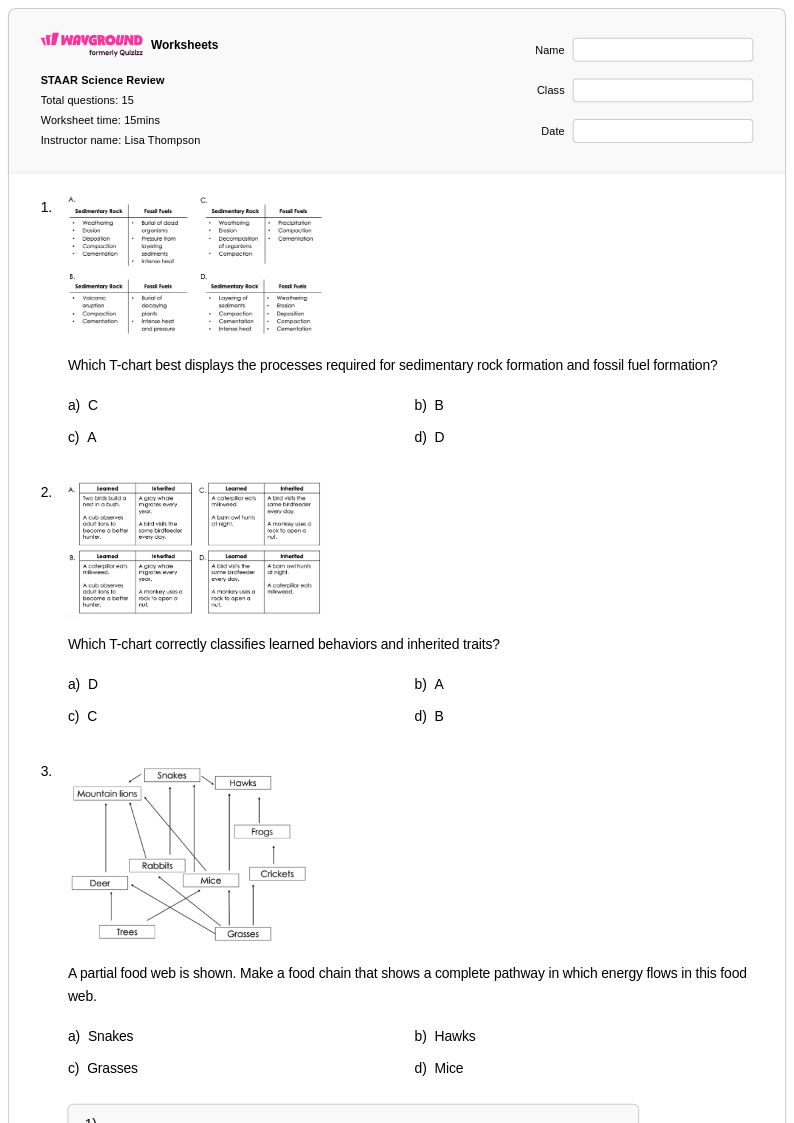
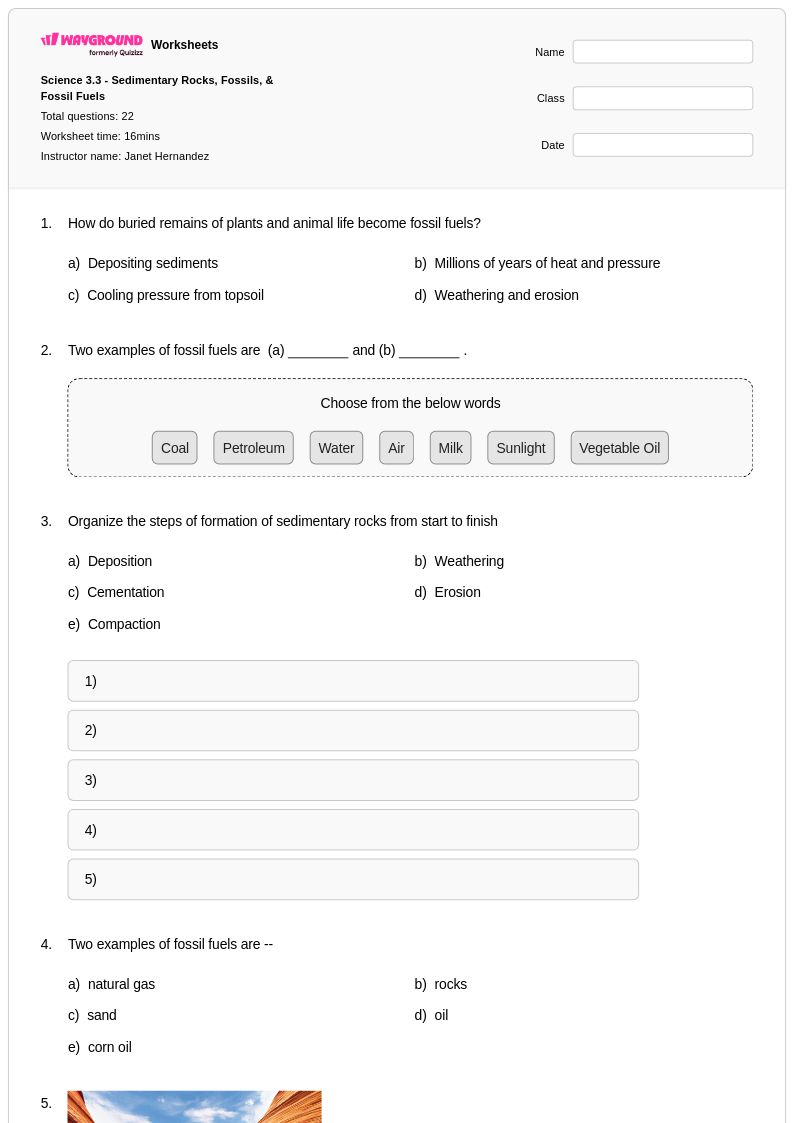
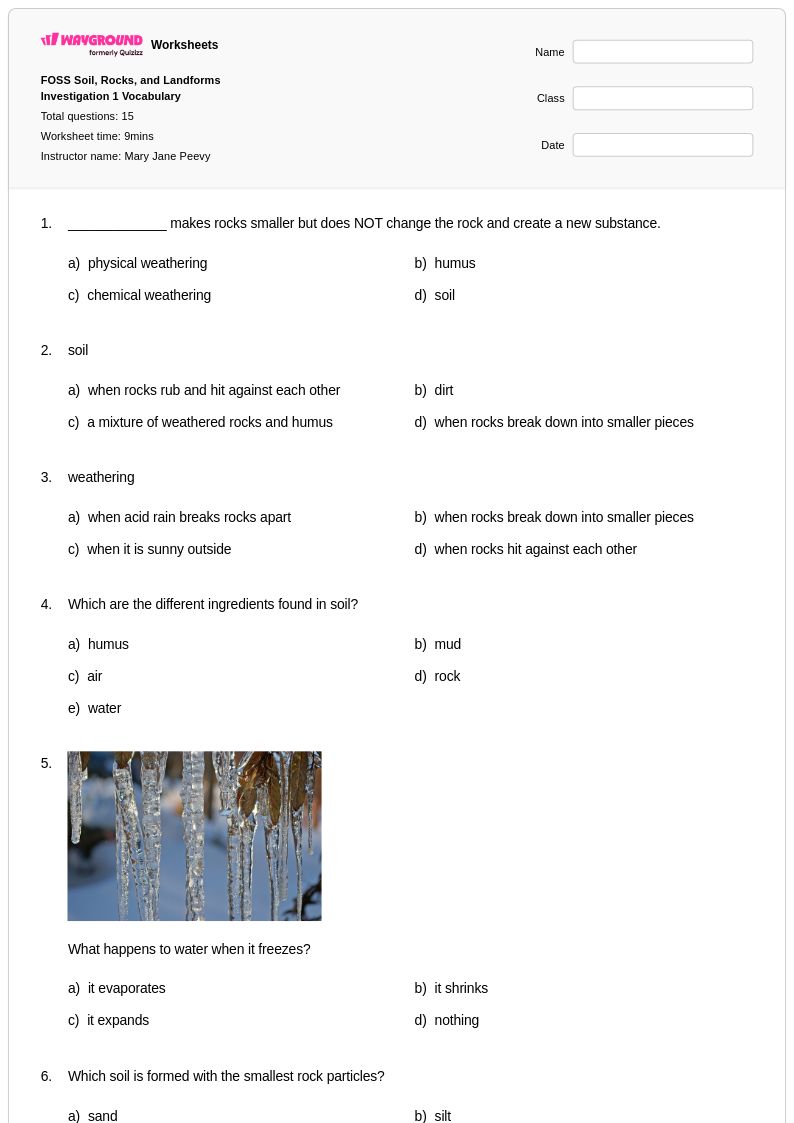
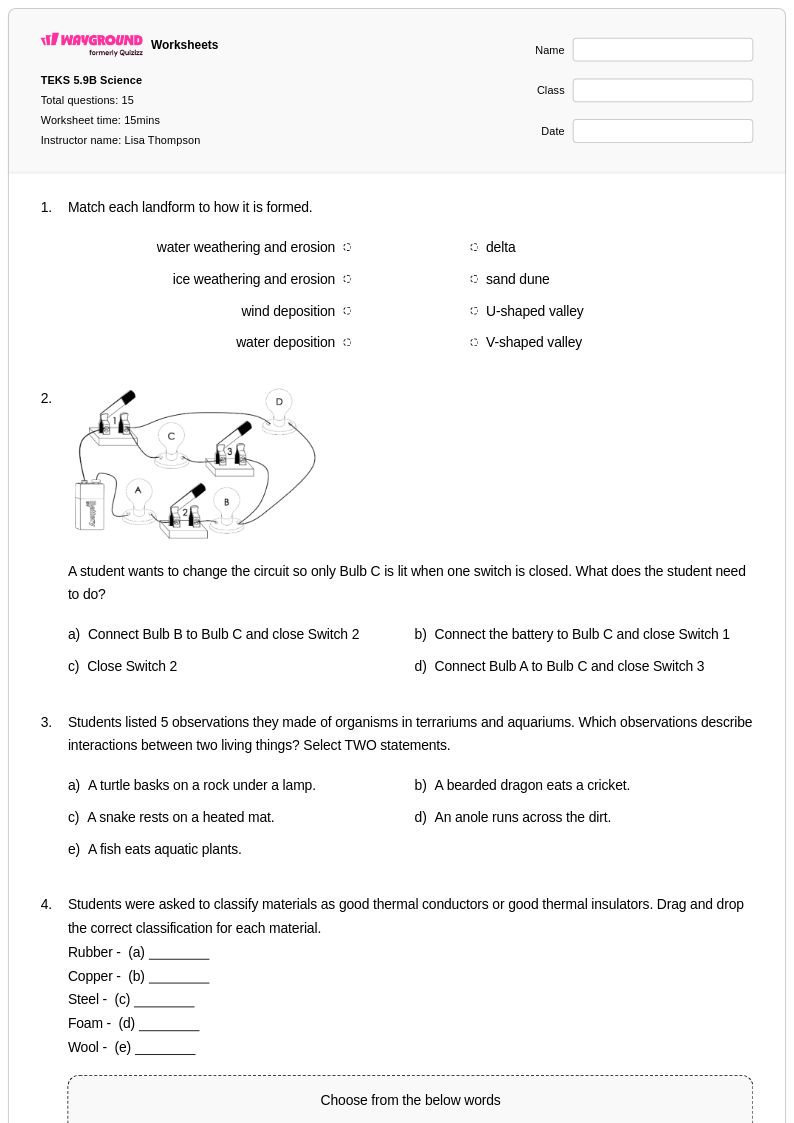
Discover comprehensive Class 5 weathering worksheets and printables from Wayground that help students explore how rocks and minerals break down through practice problems, free PDF resources, and detailed answer keys.
Explore printable Weathering worksheets for Class 5
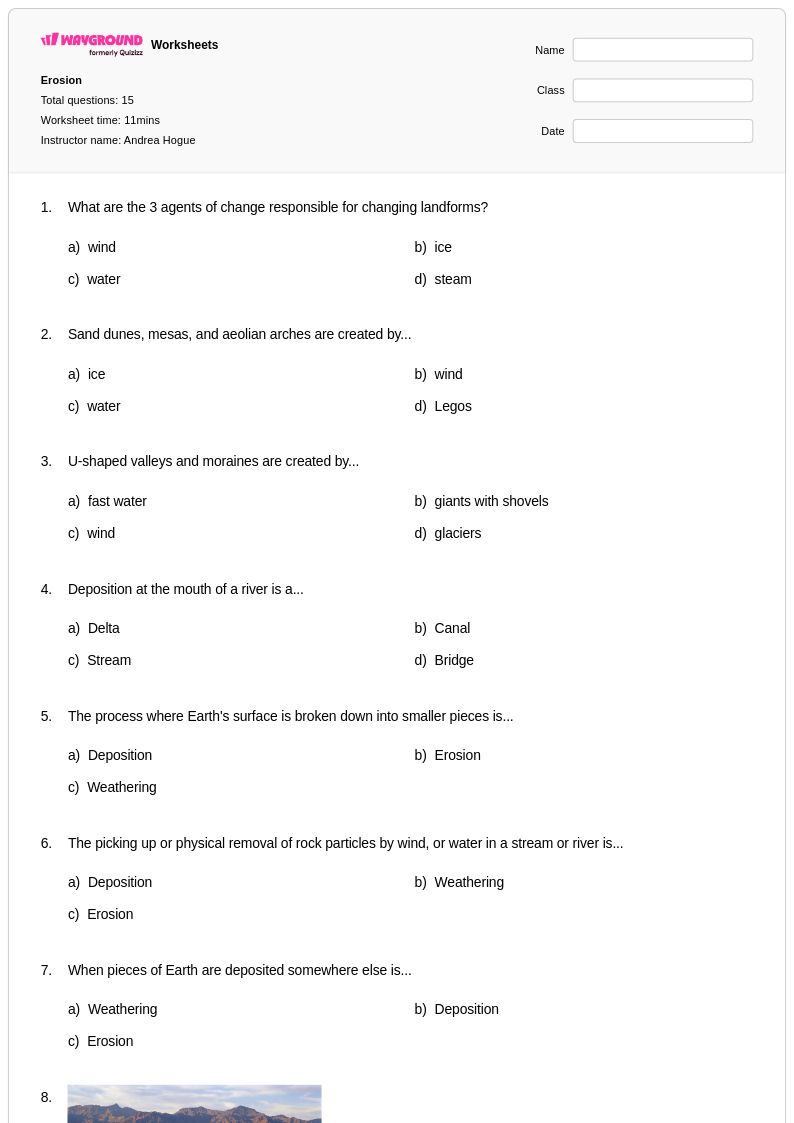
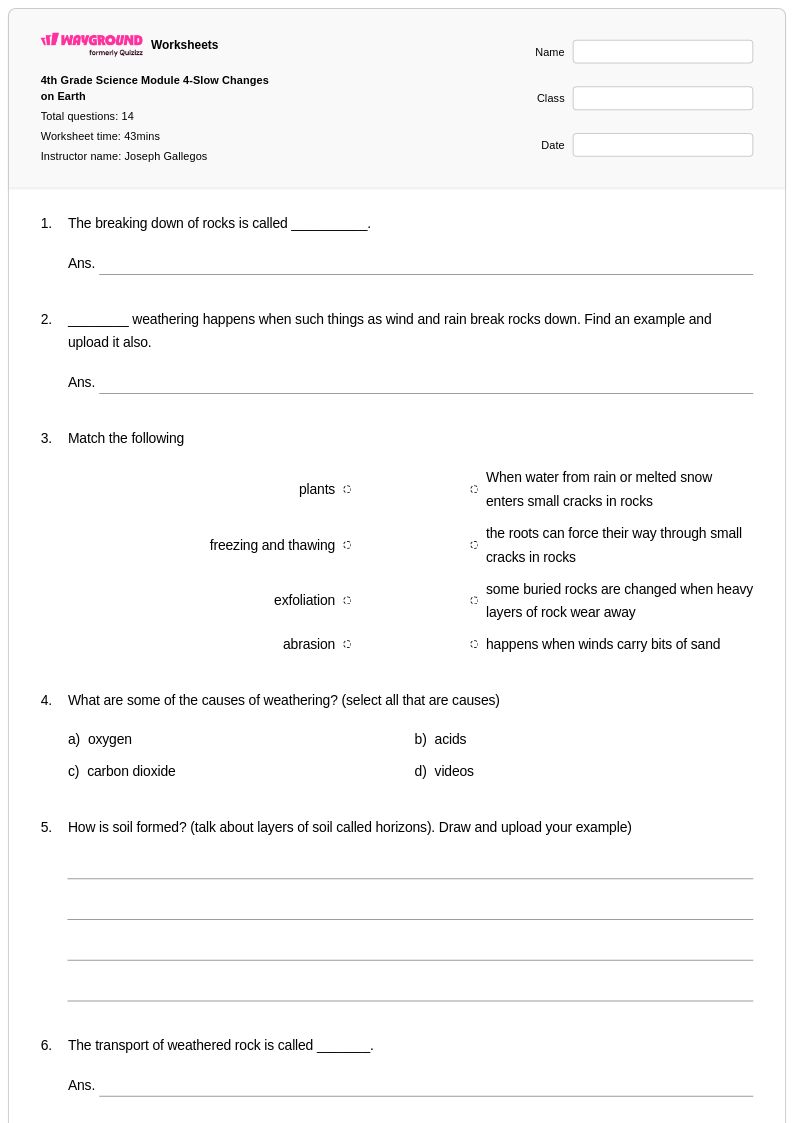
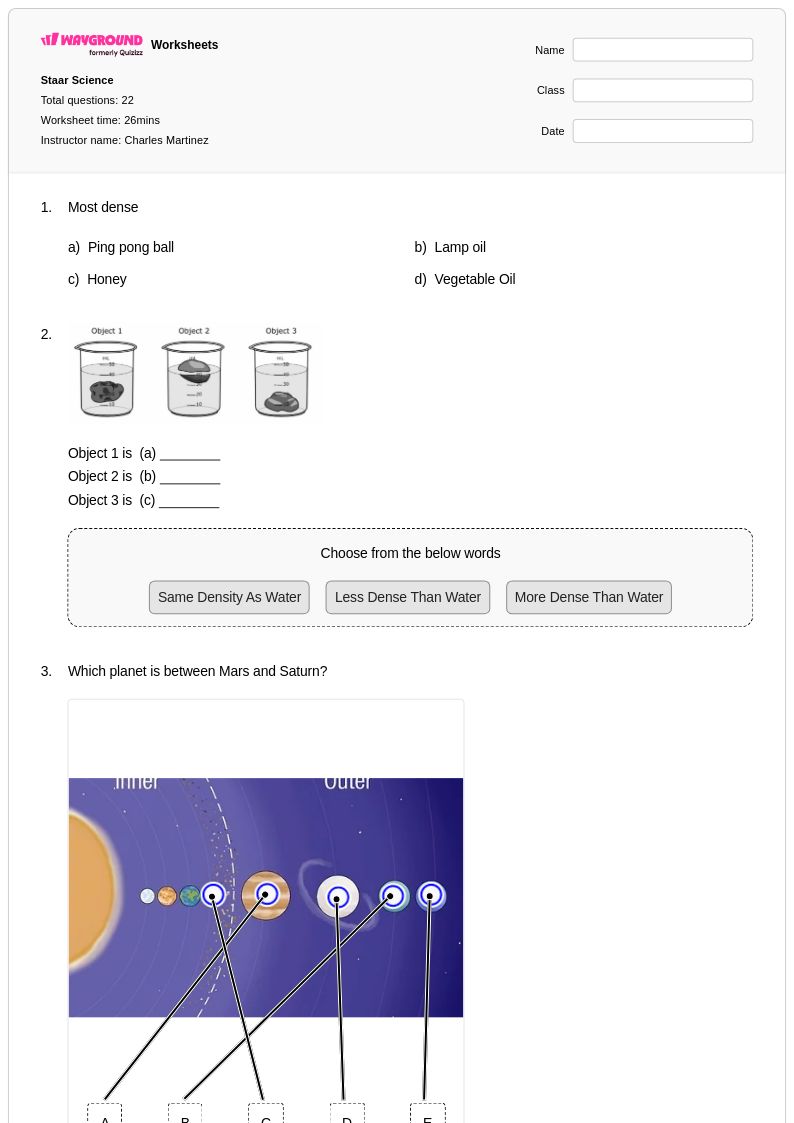
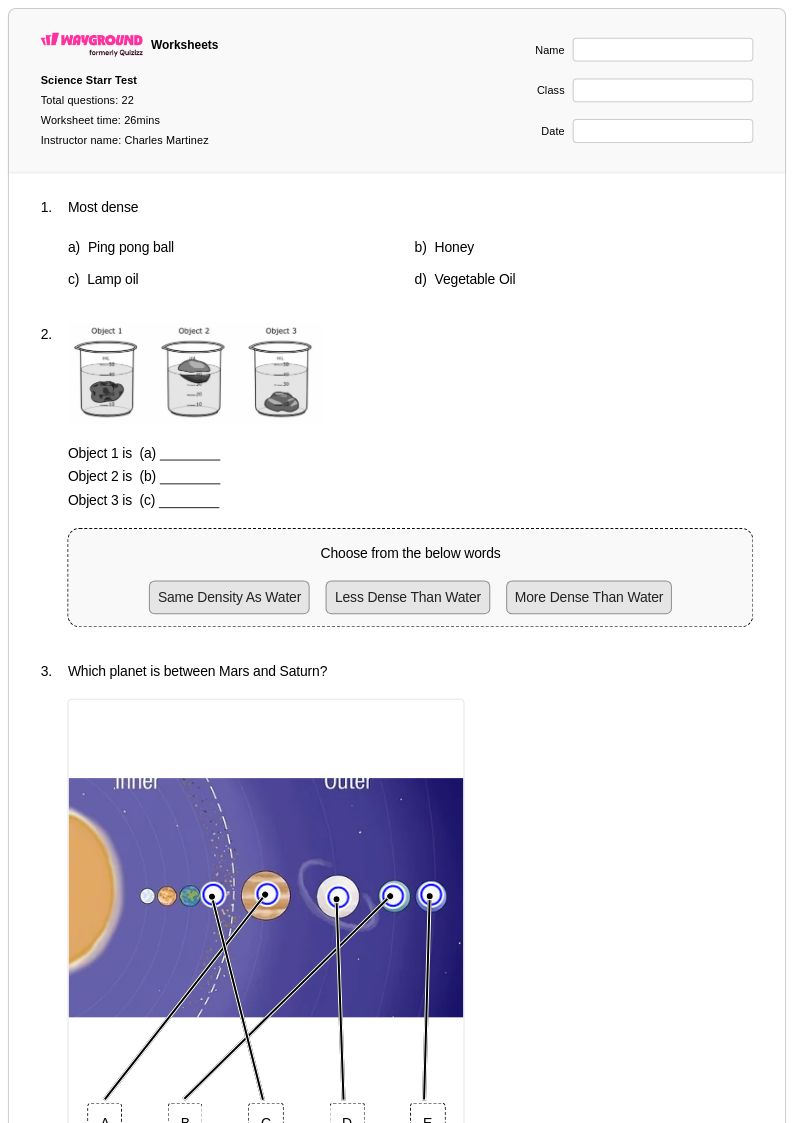
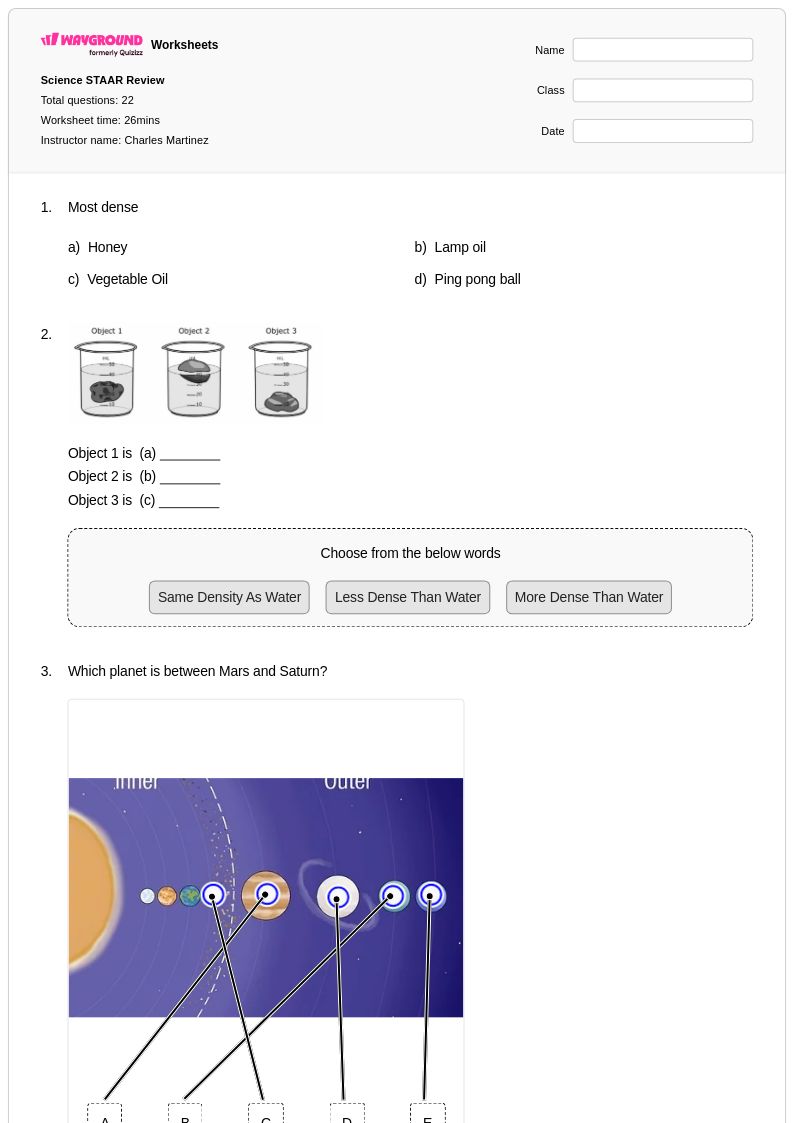
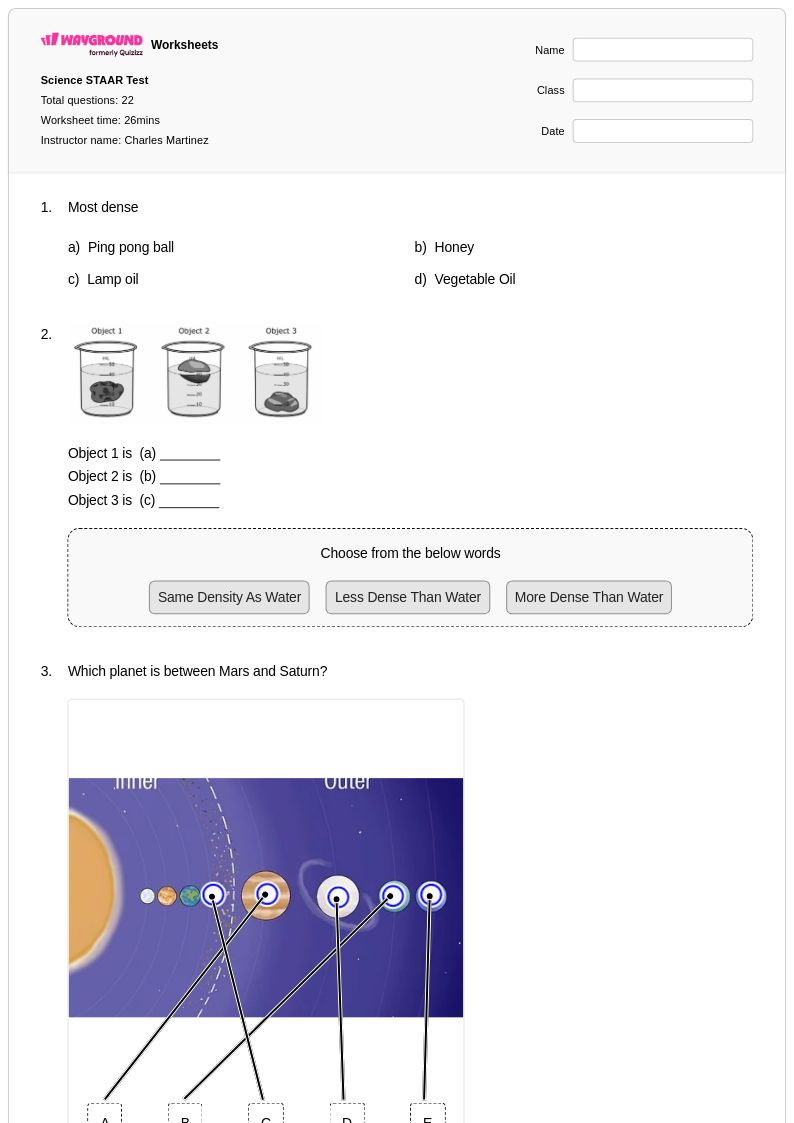
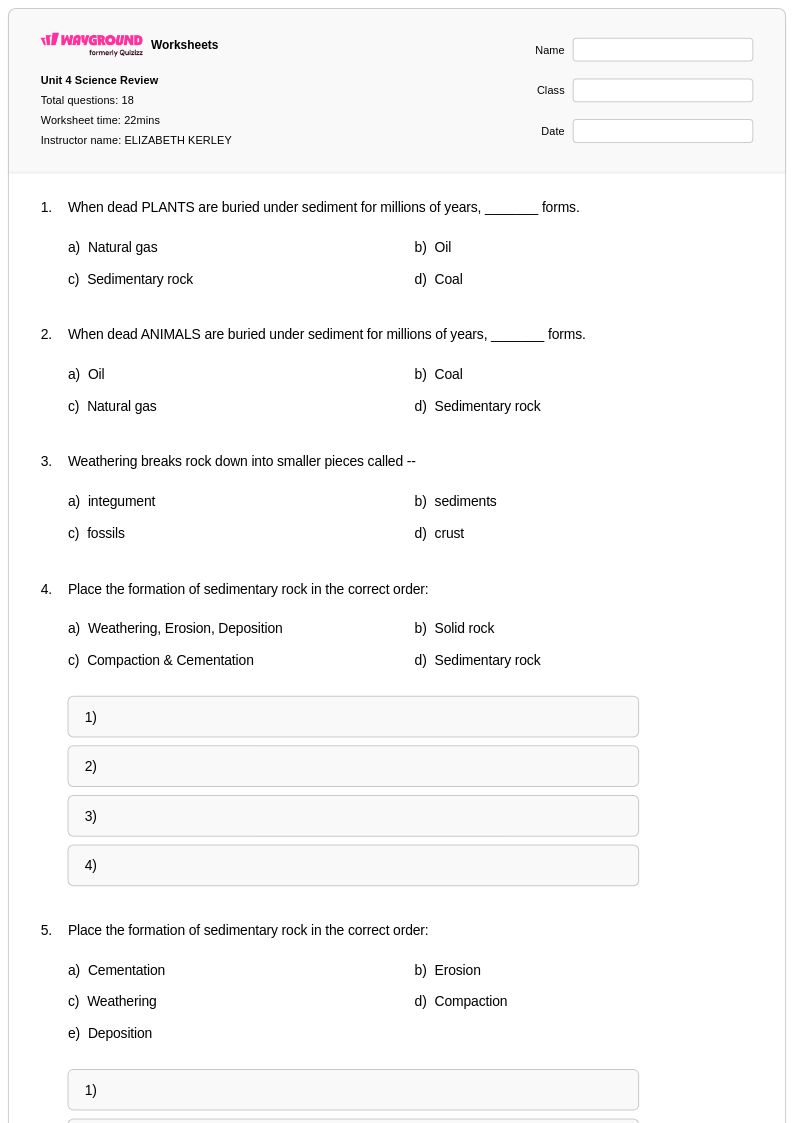
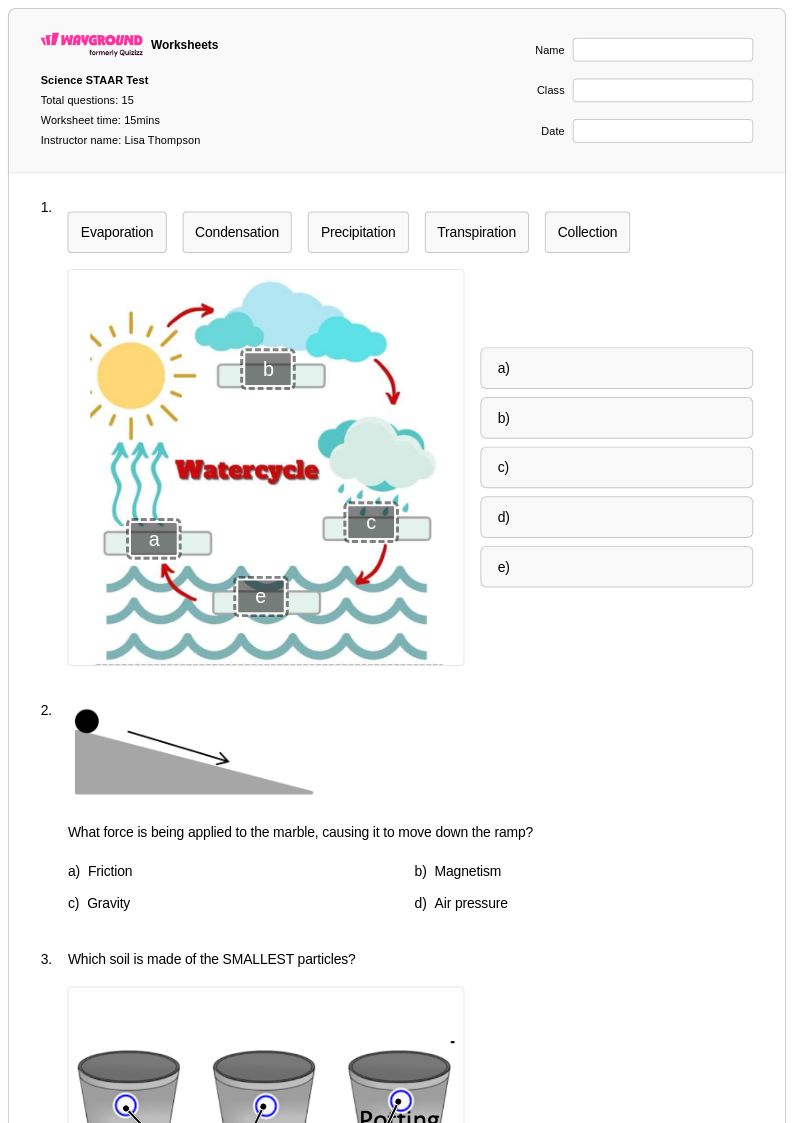
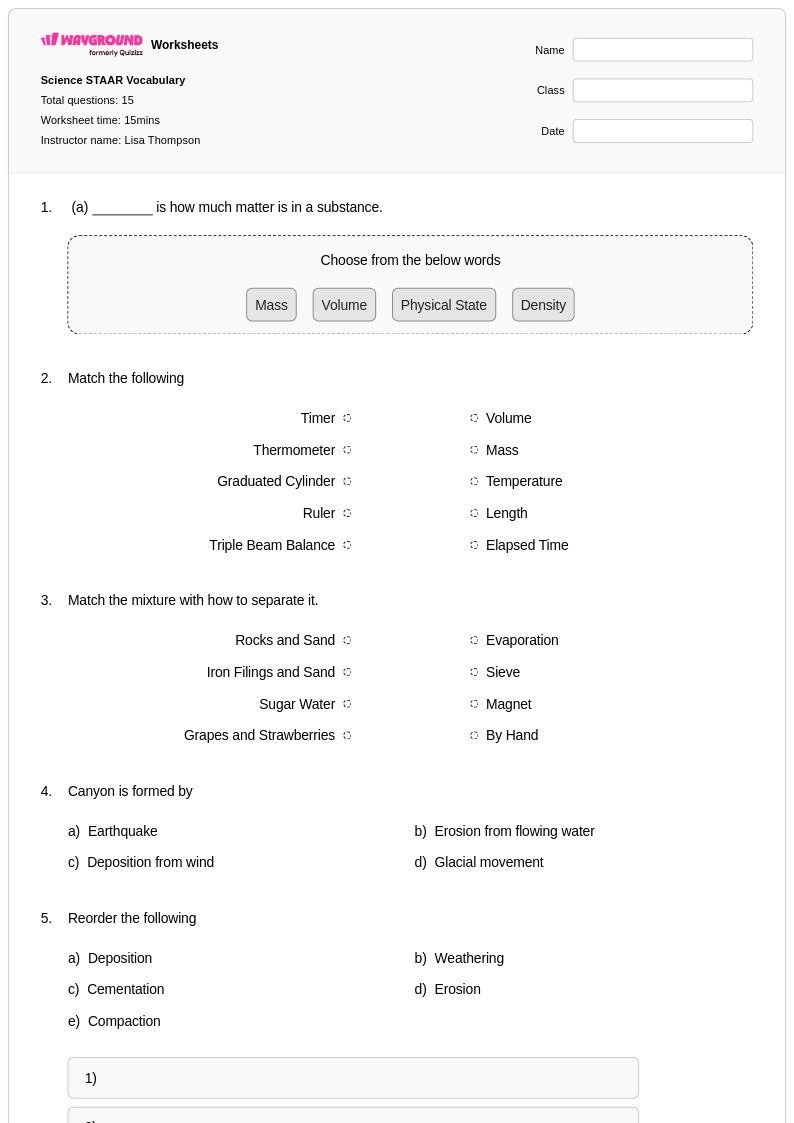
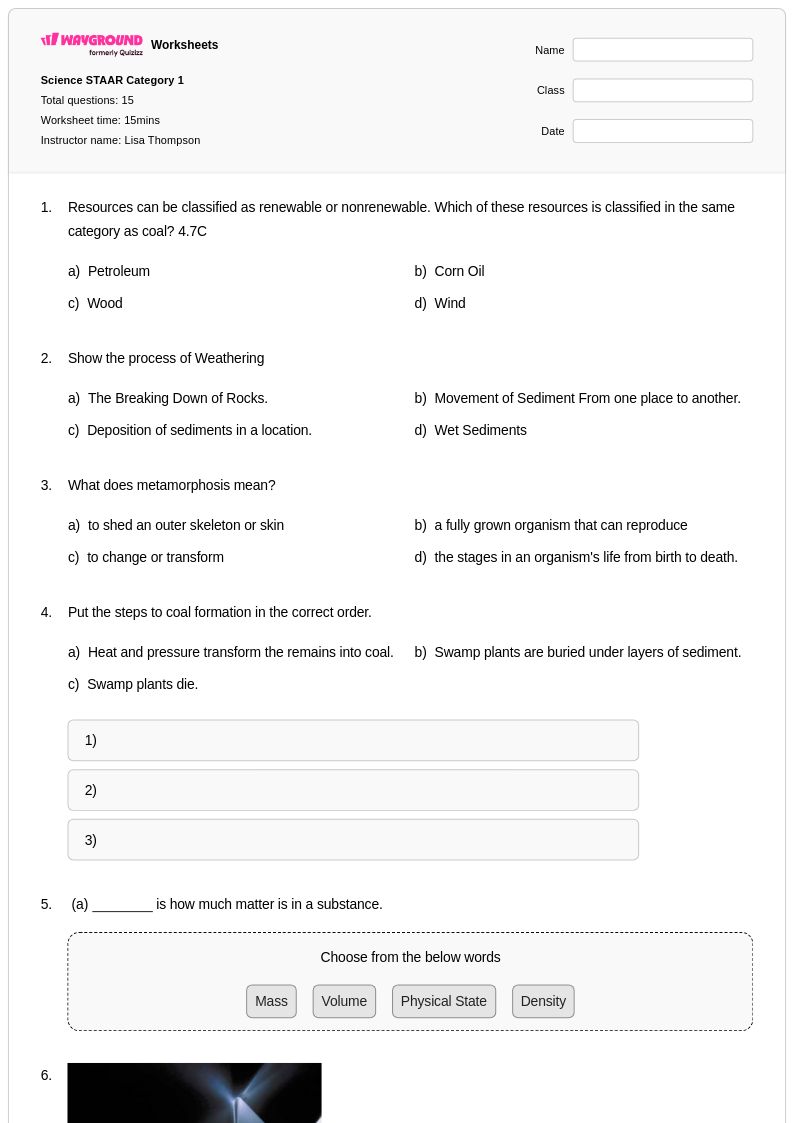
Weathering worksheets for Class 5 students available through Wayground (formerly Quizizz) provide comprehensive coverage of how rocks and minerals break down through physical and chemical processes. These educational resources strengthen students' understanding of mechanical weathering caused by temperature changes, frost action, and abrasion, while also exploring chemical weathering through oxidation, carbonation, and acid rain effects. The worksheet collection includes practice problems that challenge students to identify different types of weathering in real-world scenarios, analyze before-and-after photographs of weathered rock formations, and predict weathering patterns based on climate conditions. Each printable resource comes with a detailed answer key, making it simple for educators to assess student comprehension, and the free pdf format ensures easy distribution whether for classroom use or homework assignments.
Wayground (formerly Quizizz) empowers teachers with millions of educator-created weathering resources that can be filtered by specific learning objectives, difficulty levels, and curriculum standards alignment. The platform's robust search functionality allows instructors to quickly locate worksheets targeting particular aspects of weathering, from basic rock breakdown concepts to more complex interactions between weathering and erosion processes. Teachers benefit from flexible customization tools that enable modification of existing worksheets to match their students' needs, supporting both remediation for struggling learners and enrichment activities for advanced students. These weathering materials are available in both printable pdf format for traditional classroom use and digital formats for interactive learning experiences, streamlining lesson planning while providing diverse options for skill practice and formative assessment throughout the unit.
FAQs
How do I teach weathering to middle school students?
Start by distinguishing mechanical weathering from chemical weathering with concrete examples students can visualize, such as ice cracking a sidewalk versus rust forming on metal. Use before-and-after scenarios showing how rocks change over time to anchor abstract geological processes in observable reality. Connecting weathering patterns to local climate conditions and familiar rock types helps students see the concept as relevant rather than purely textbook-based.
What are good practice exercises for teaching mechanical and chemical weathering?
Effective practice exercises ask students to identify the specific weathering agent at work in a given scenario, such as distinguishing freeze-thaw cycles from root wedging or abrasion. Exercises that pair a weathering process with its environmental conditions, such as linking carbonation to limestone regions or oxidation to iron-rich rocks, deepen conceptual understanding beyond simple memorization. Structured problem sets that move from identification to analysis build the reasoning skills students need for assessments.
What mistakes do students commonly make when learning about weathering?
The most common misconception is confusing weathering with erosion. Students often use the terms interchangeably, not recognizing that weathering is the breakdown of rock in place while erosion involves the transport of that broken material. Another frequent error is assuming all weathering is mechanical; students may overlook chemical processes like hydrolysis and carbonation because they are less visually obvious. Targeted practice that asks students to classify and explain specific processes directly addresses both of these gaps.
How do climate and rock type affect weathering rates?
Climate is one of the primary controls on weathering rate because temperature and moisture directly drive both mechanical and chemical processes. Freeze-thaw weathering is most intense in climates with frequent temperature oscillations around 0°C, while chemical weathering accelerates in warm, humid environments where water and organic acids are abundant. Rock composition matters equally since minerals like calcite dissolve readily under acidic conditions while quartz-rich rocks are far more resistant, which is why limestone landscapes weather so differently from granite ones.
How can I use Wayground's weathering worksheets in my classroom?
Wayground's weathering worksheets are available as printable PDFs for traditional classroom use and in digital formats for technology-integrated or remote learning environments, giving teachers flexibility in how they assign and collect work. Teachers can also host worksheets as a live quiz directly on Wayground, making them suitable for whole-class instruction, formative checks, or independent practice. Each worksheet includes a complete answer key, so grading and immediate feedback are straightforward whether used in print or digital form.
How can I differentiate weathering instruction for students with different learning needs?
On Wayground, teachers can apply individual accommodations such as read-aloud support for students who need questions read to them, reduced answer choices to lower cognitive load, and extended time per question for students who need it. These settings can be configured per student and saved for reuse across future sessions, so the setup investment pays off over an entire unit. Other students in the class receive default settings without any notification, keeping accommodations discreet and the classroom experience consistent.