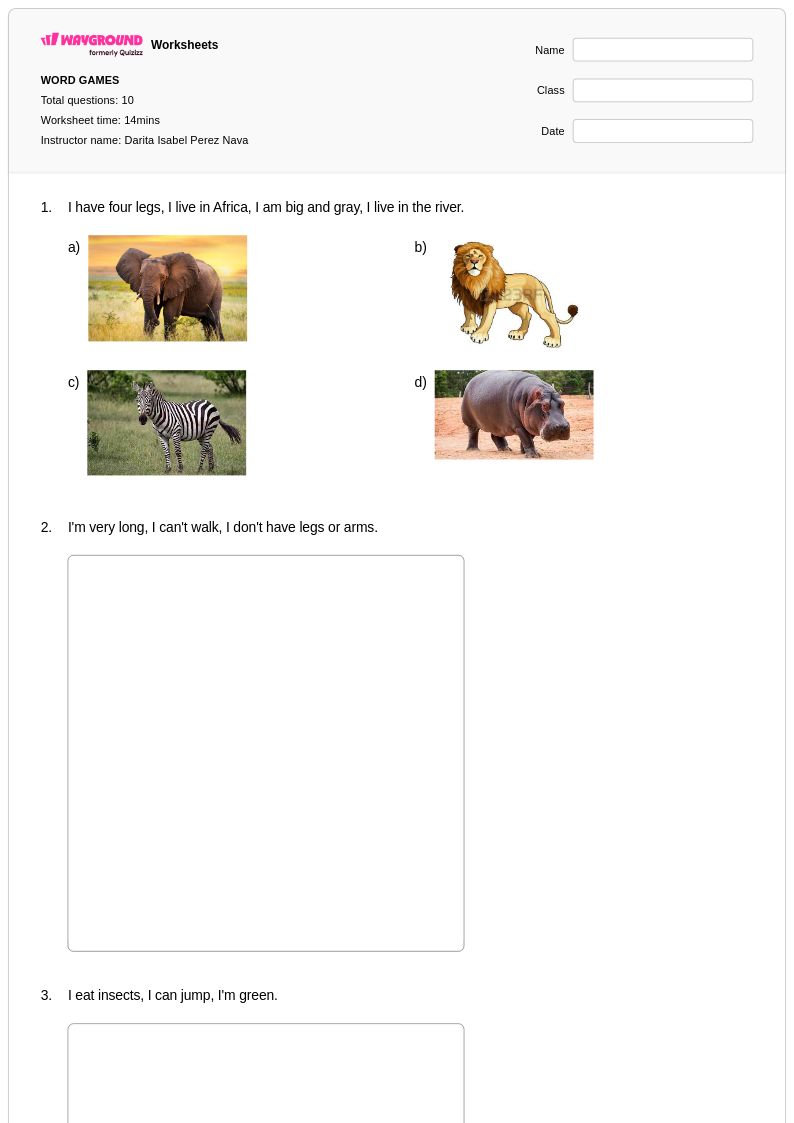
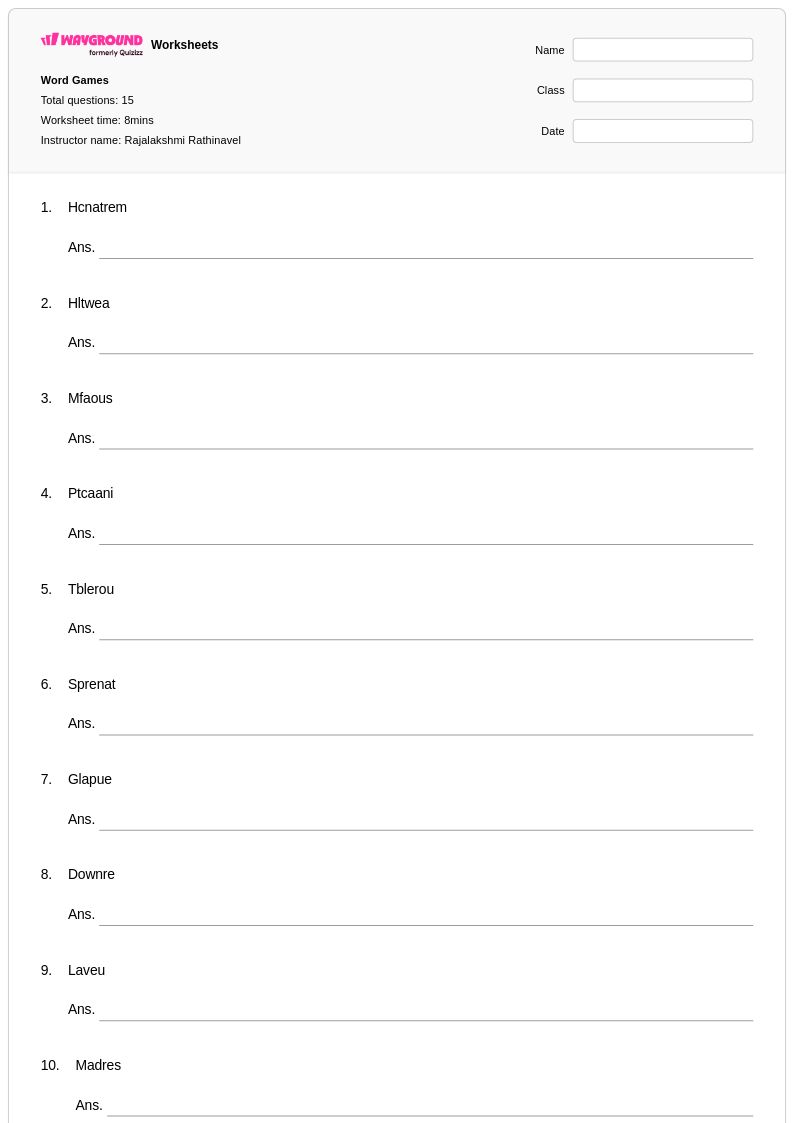
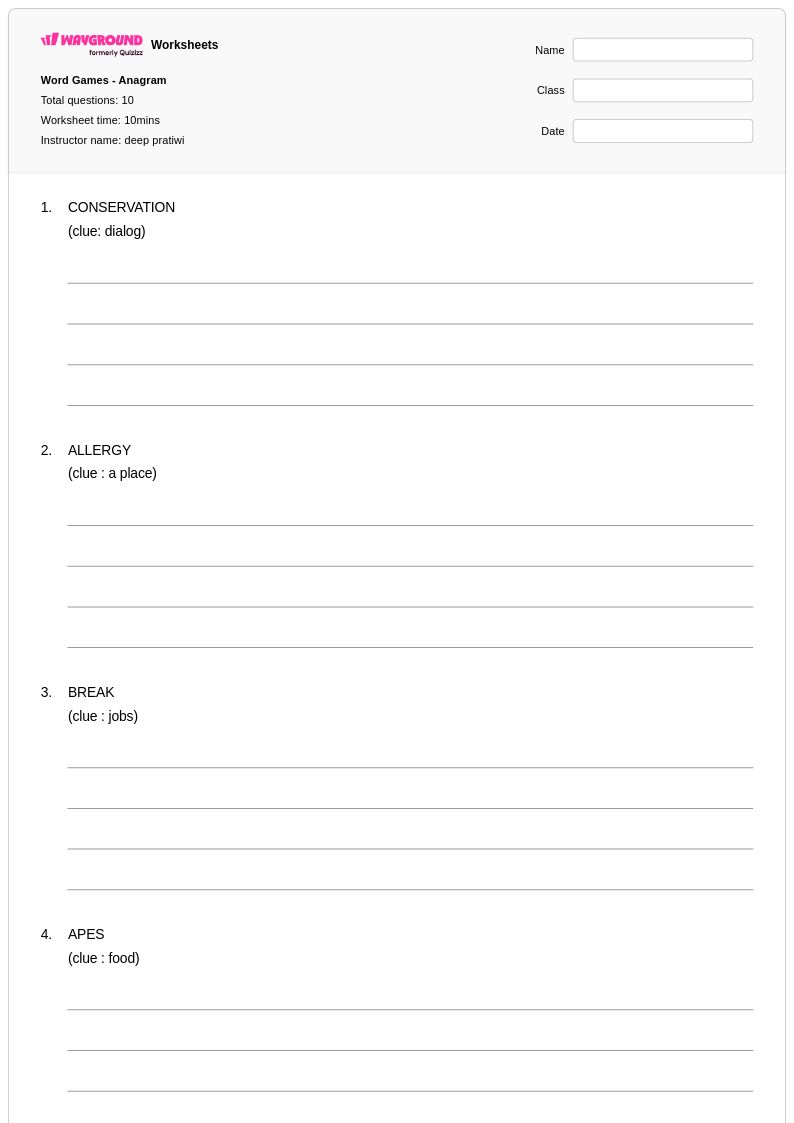
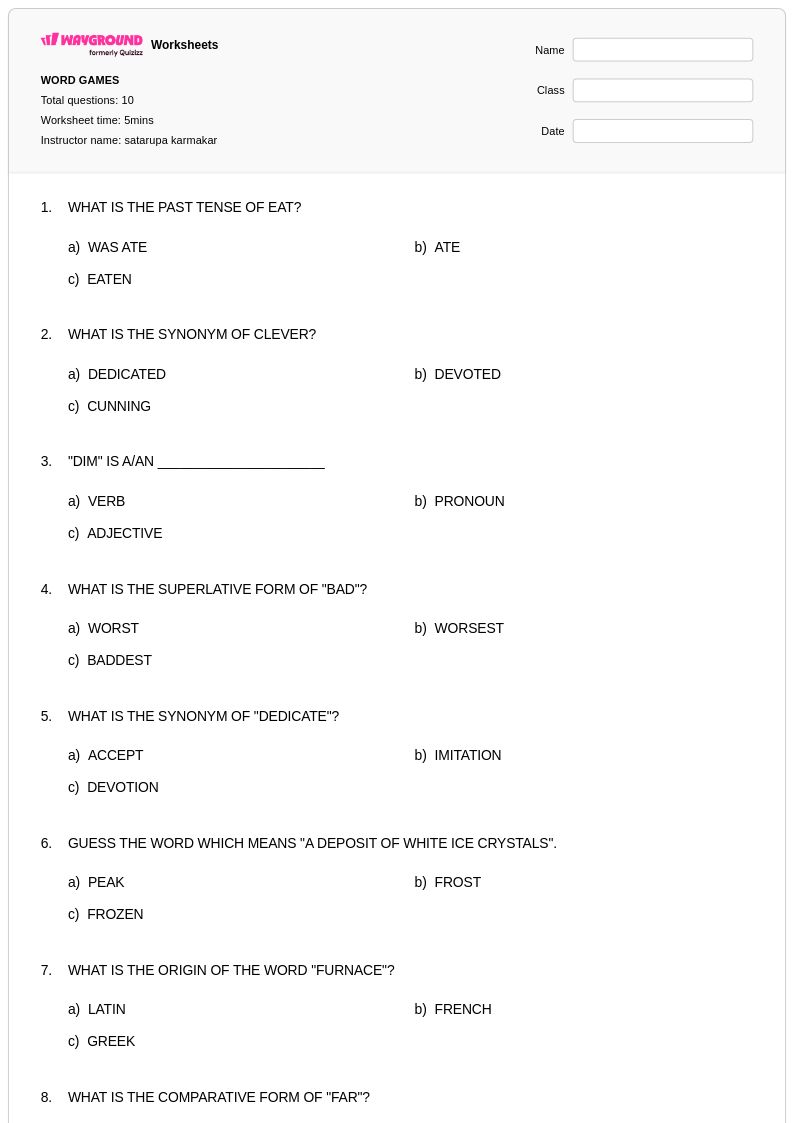
Class 5 Word Games worksheets from Wayground provide engaging printables and free PDF practice problems that help students strengthen vocabulary skills through fun activities, complete with comprehensive answer keys.
Explore printable Word Games worksheets for Class 5
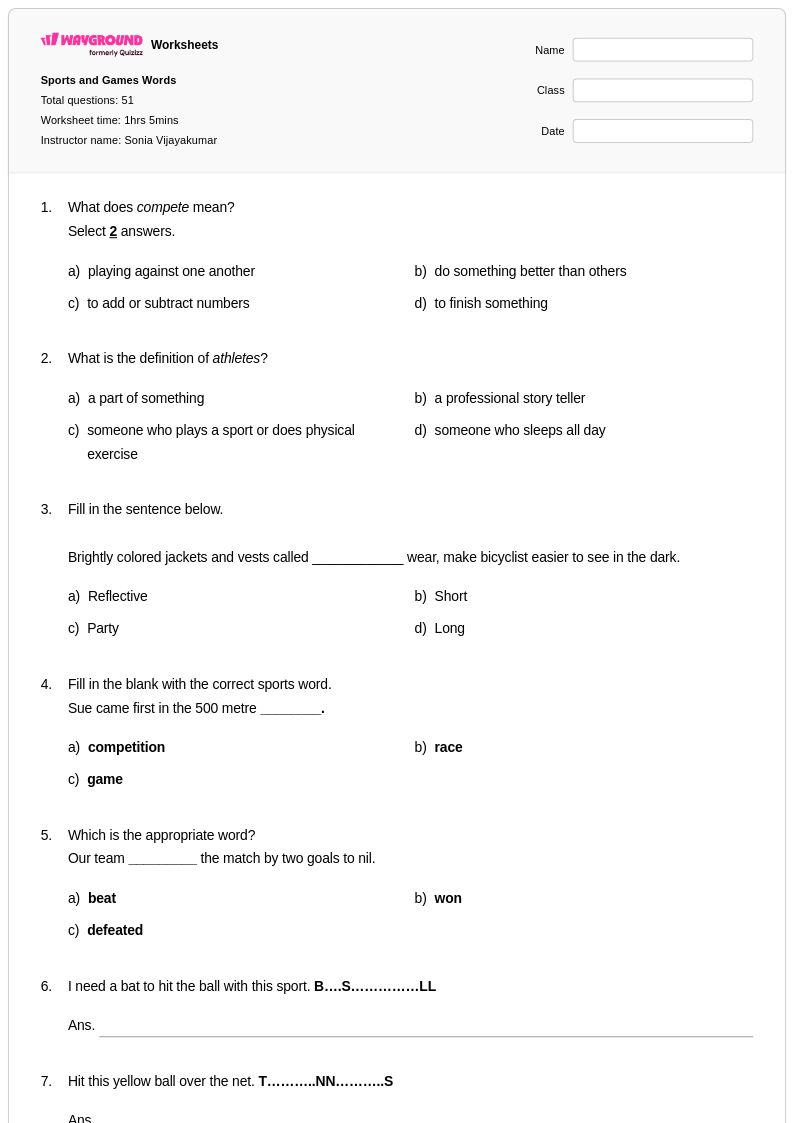
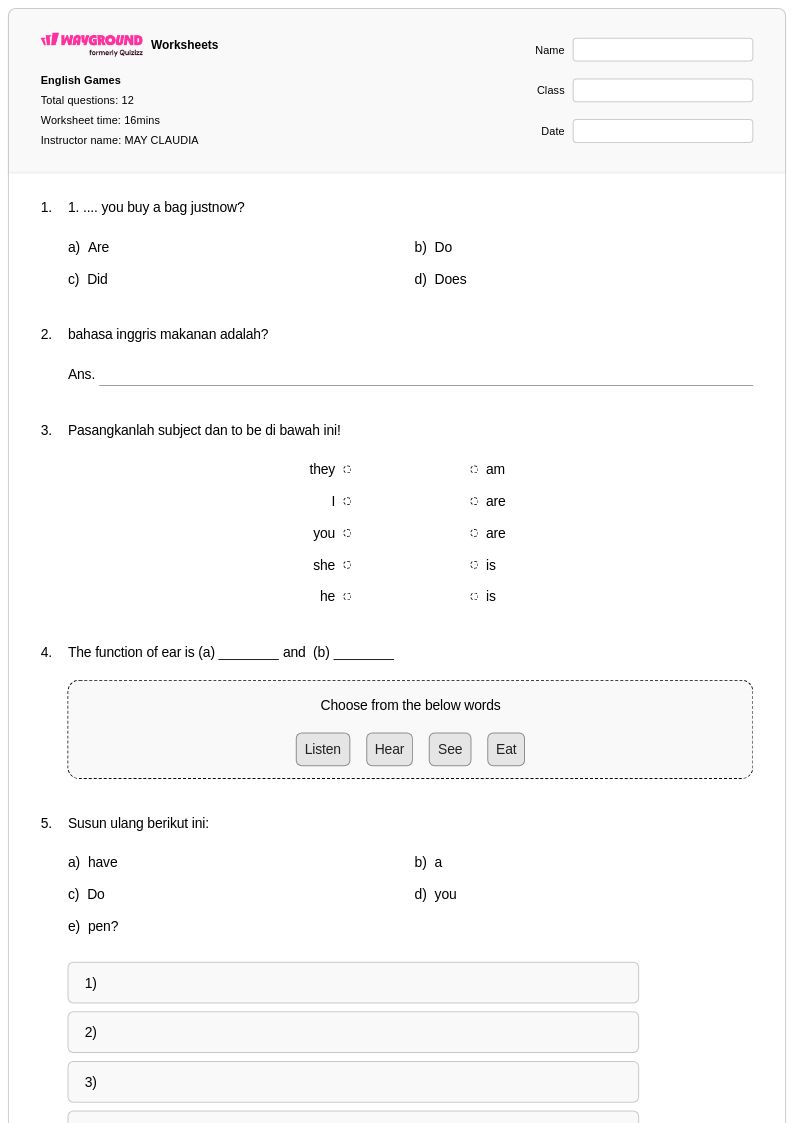
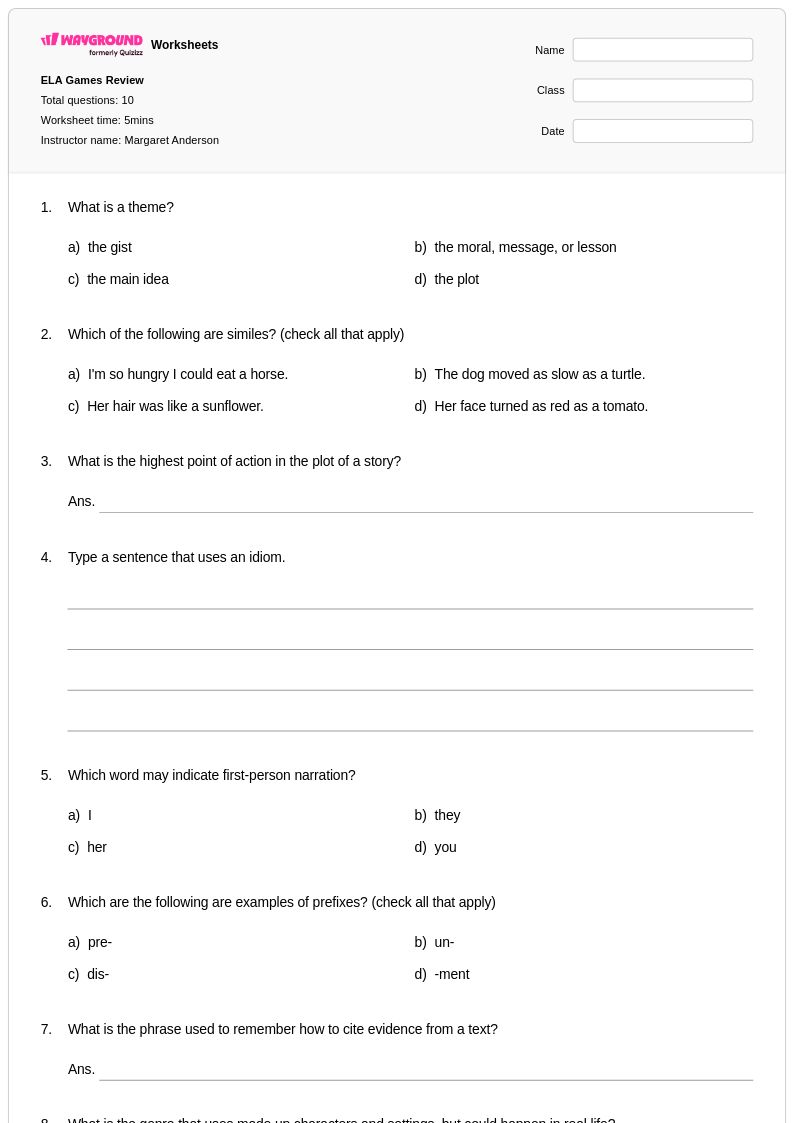
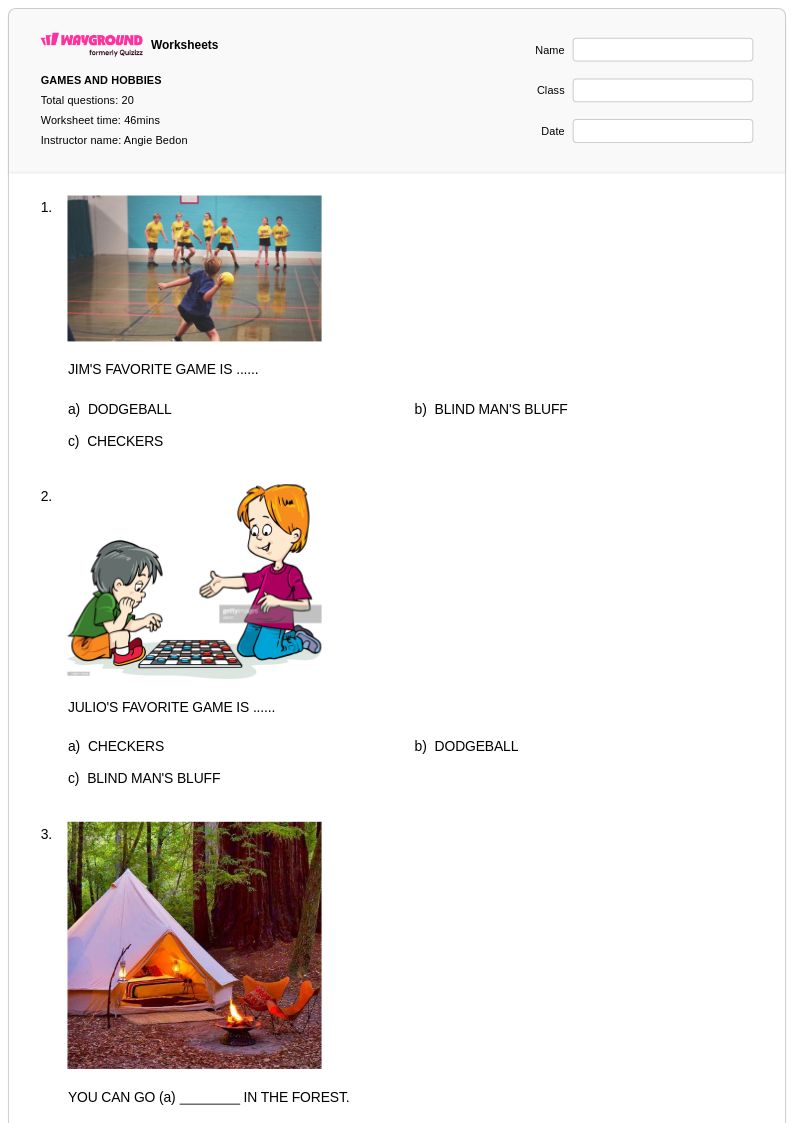
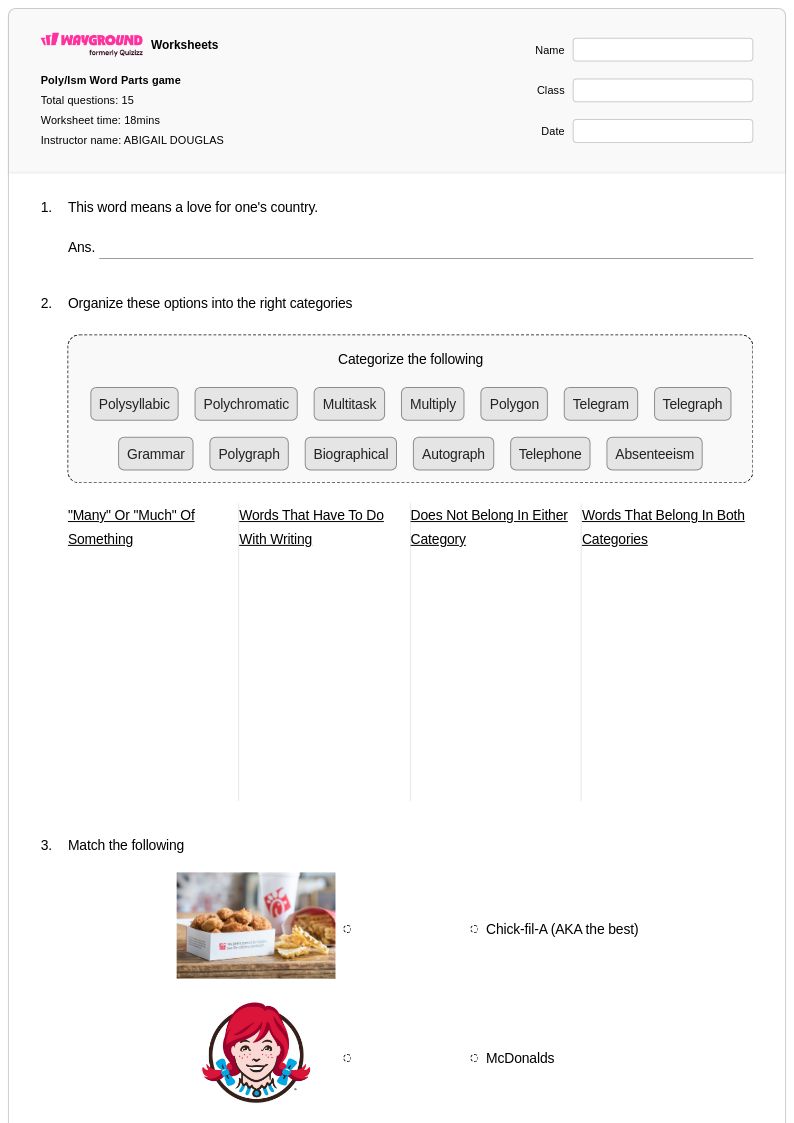
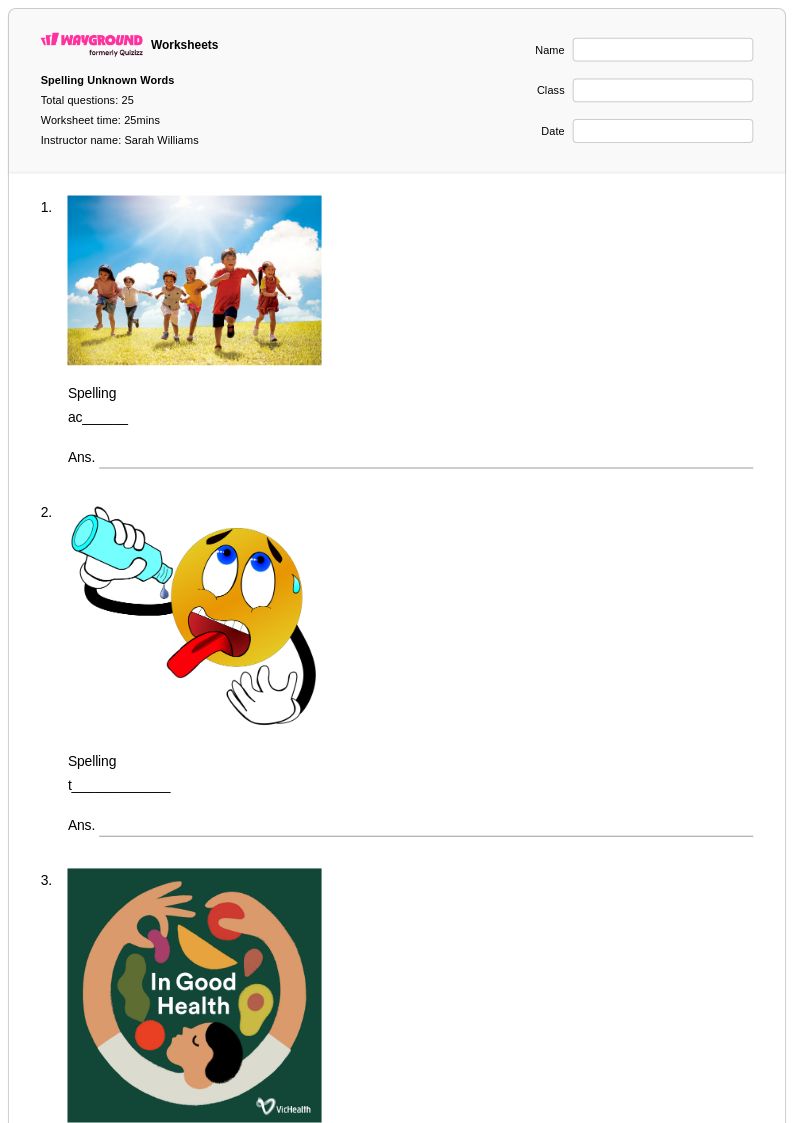
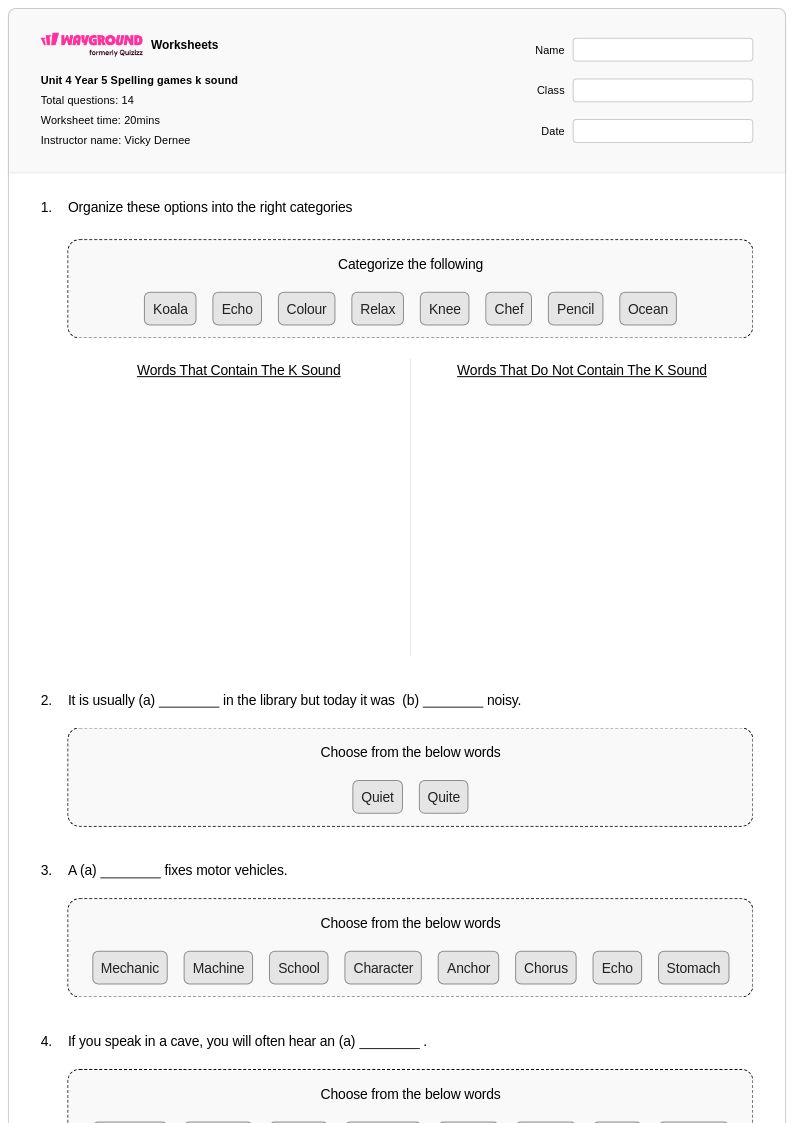
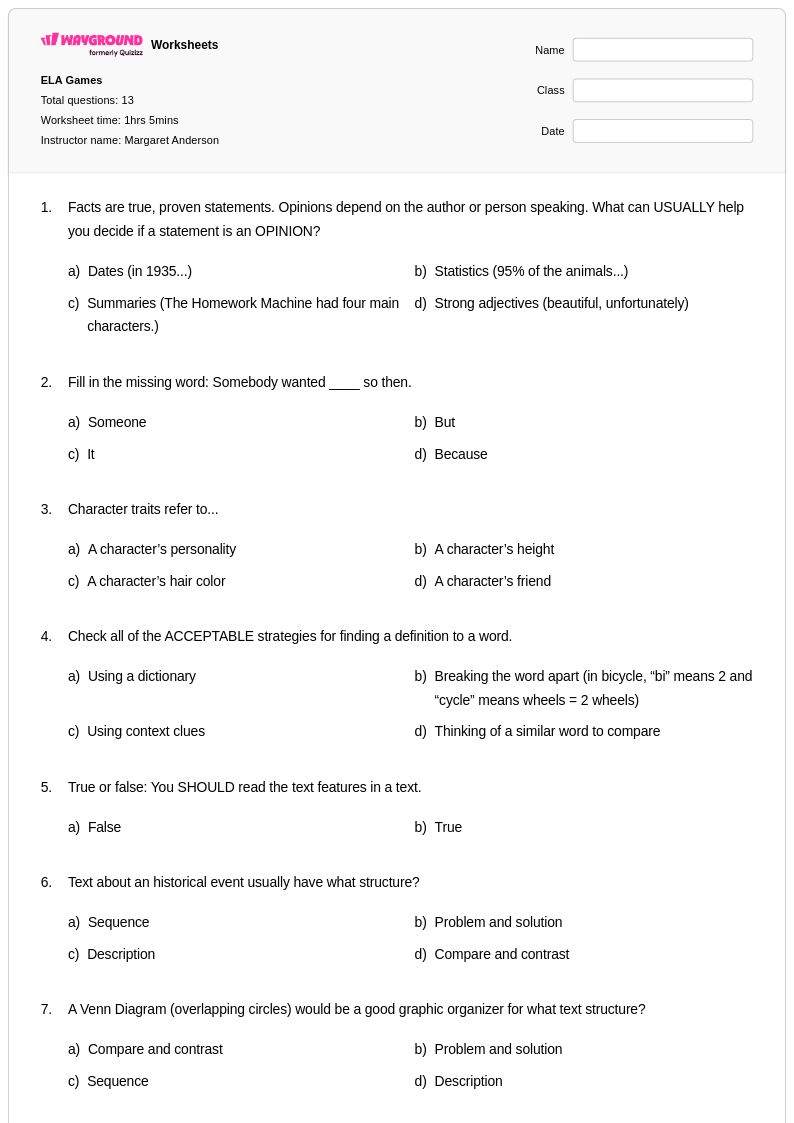
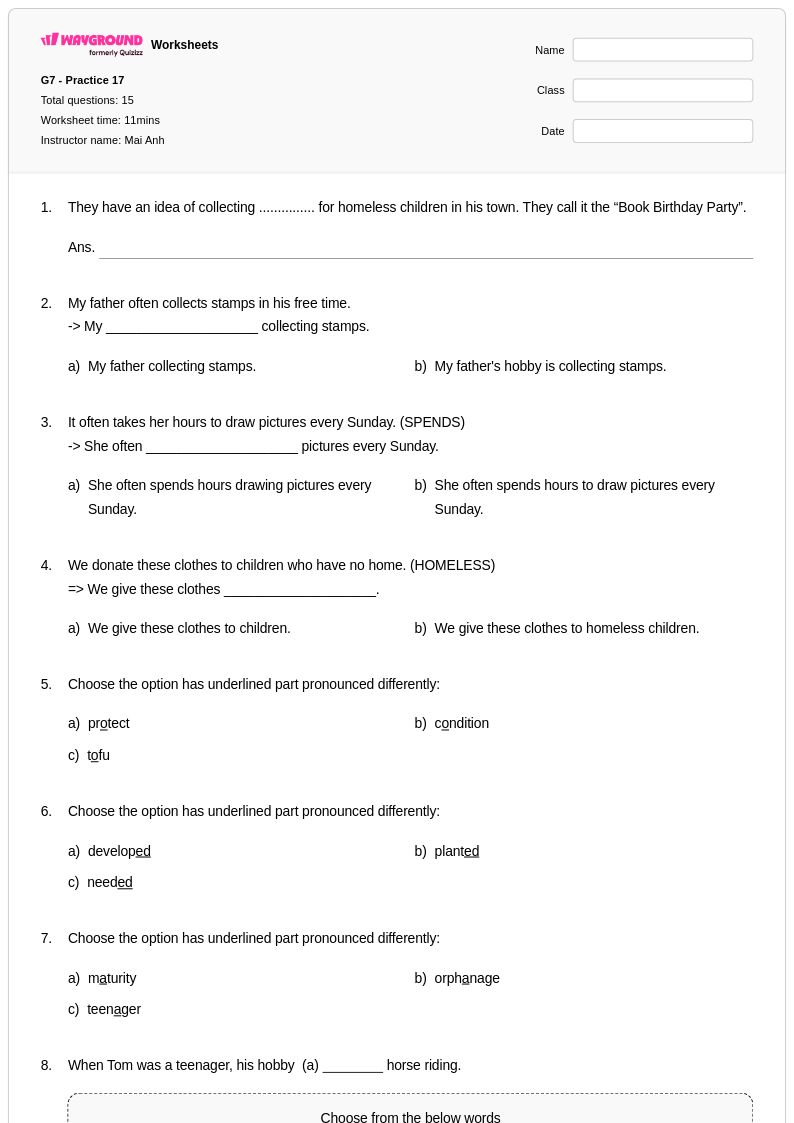
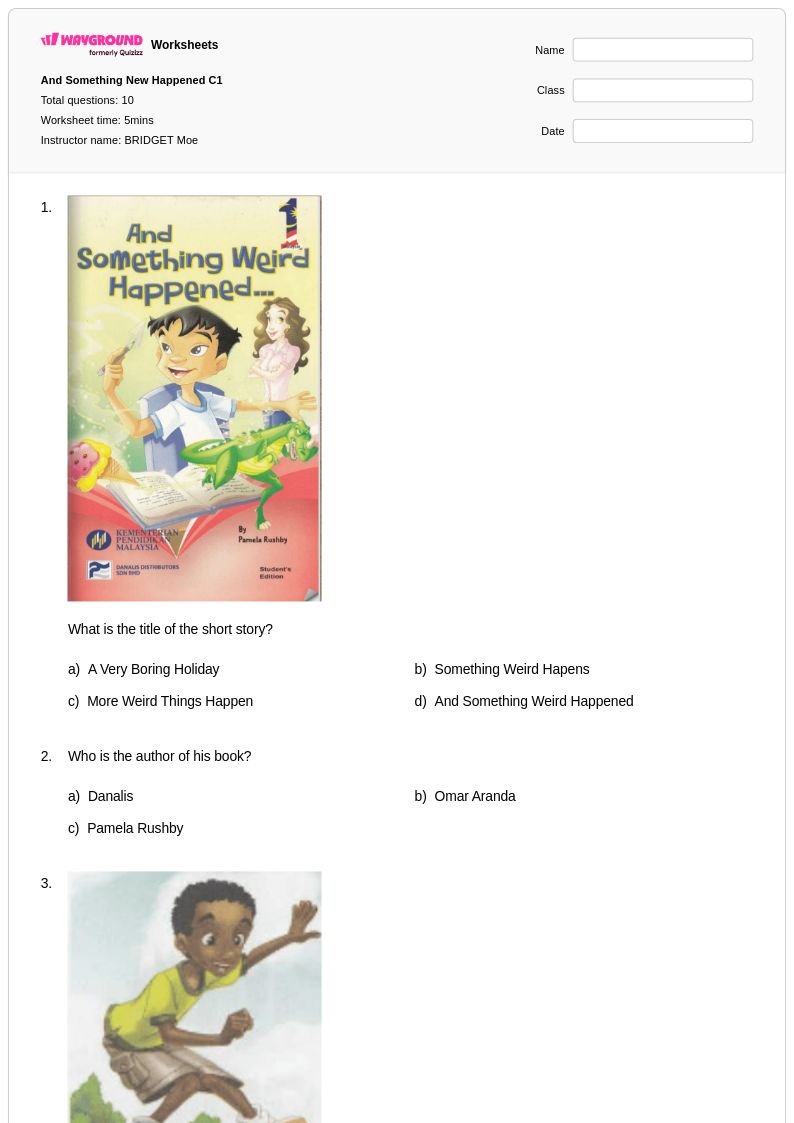
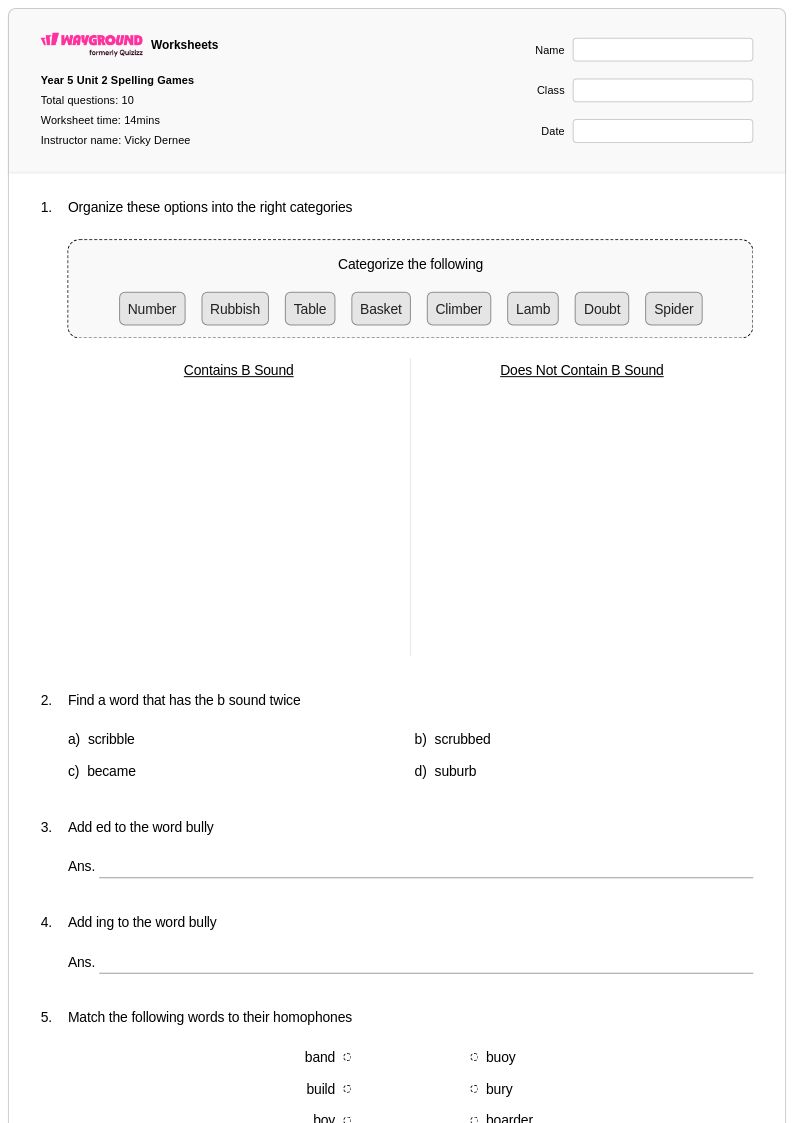
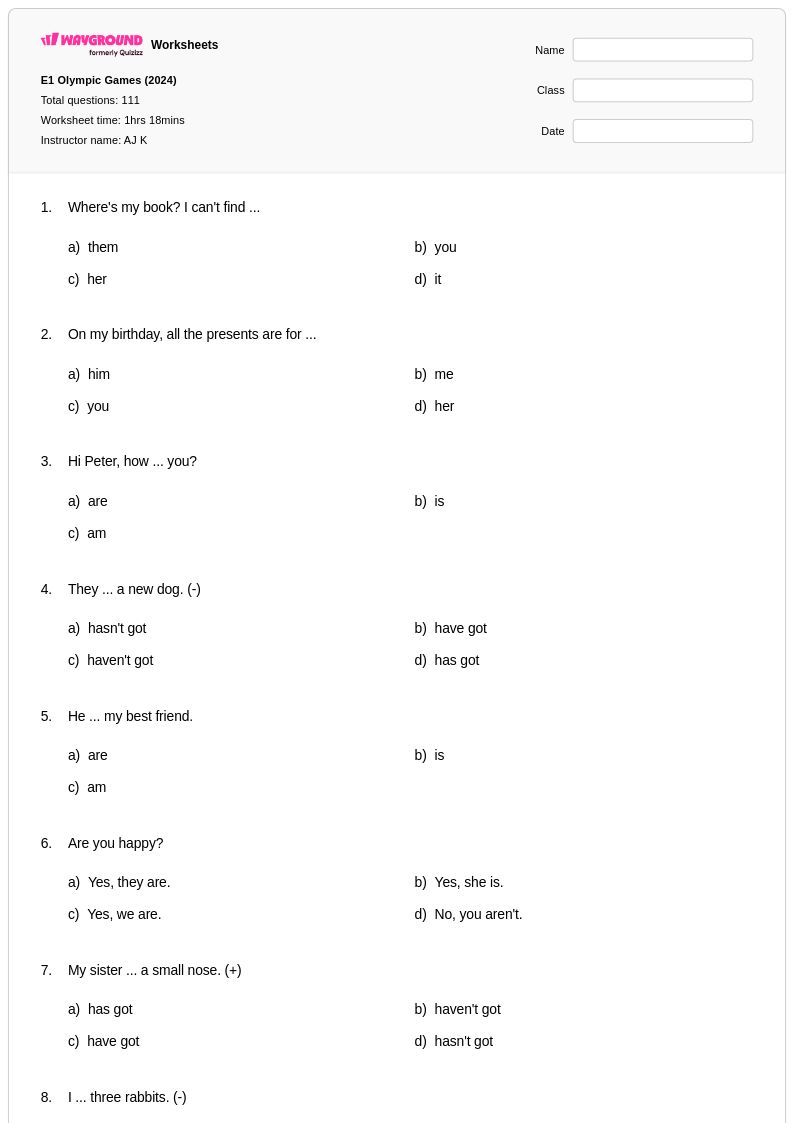
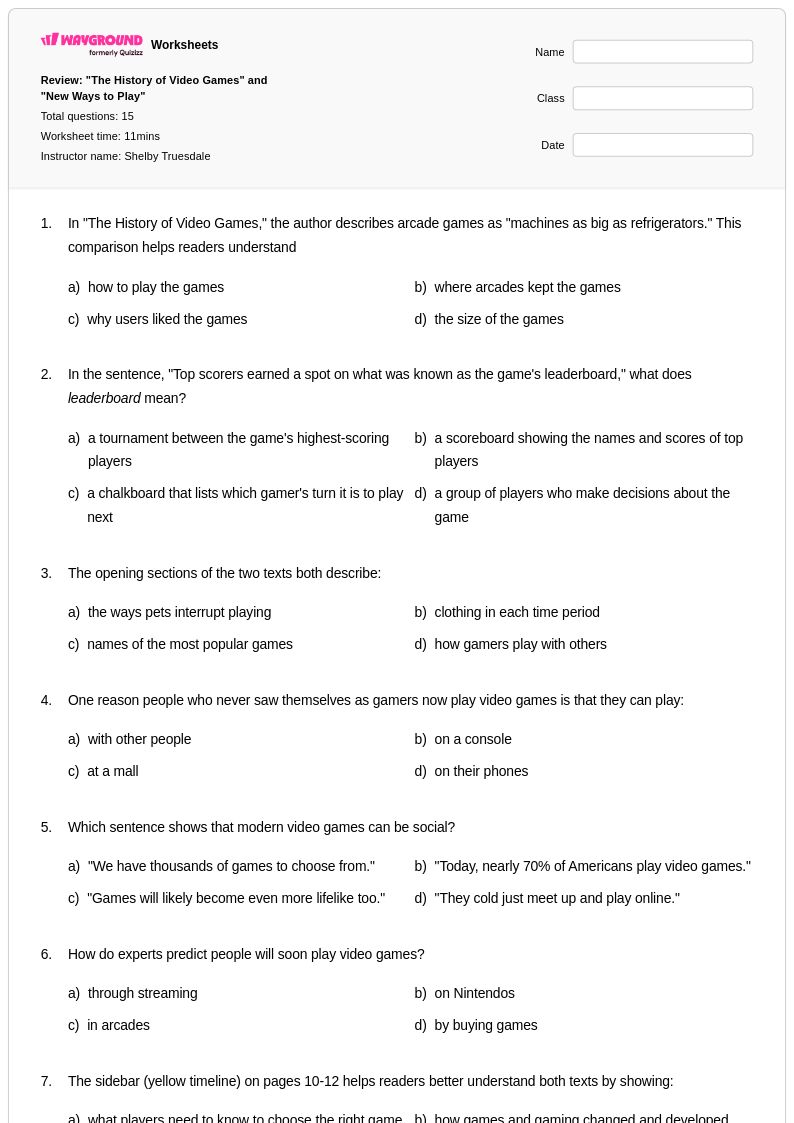
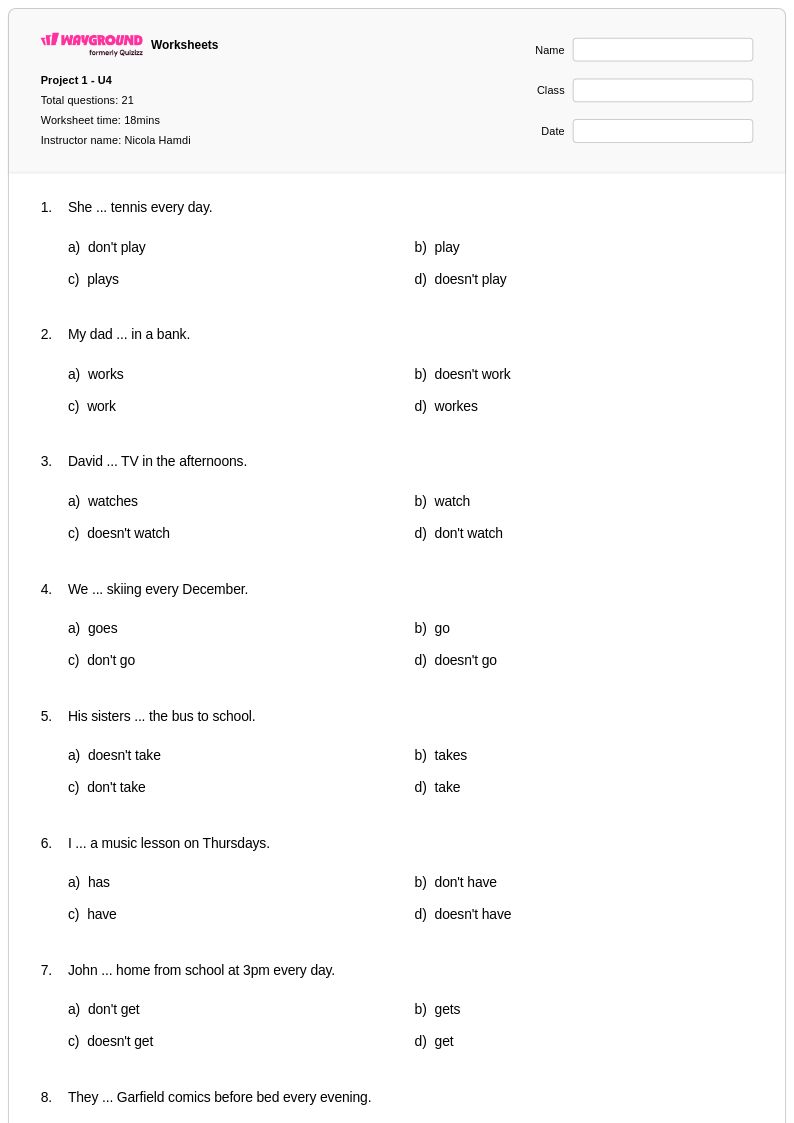
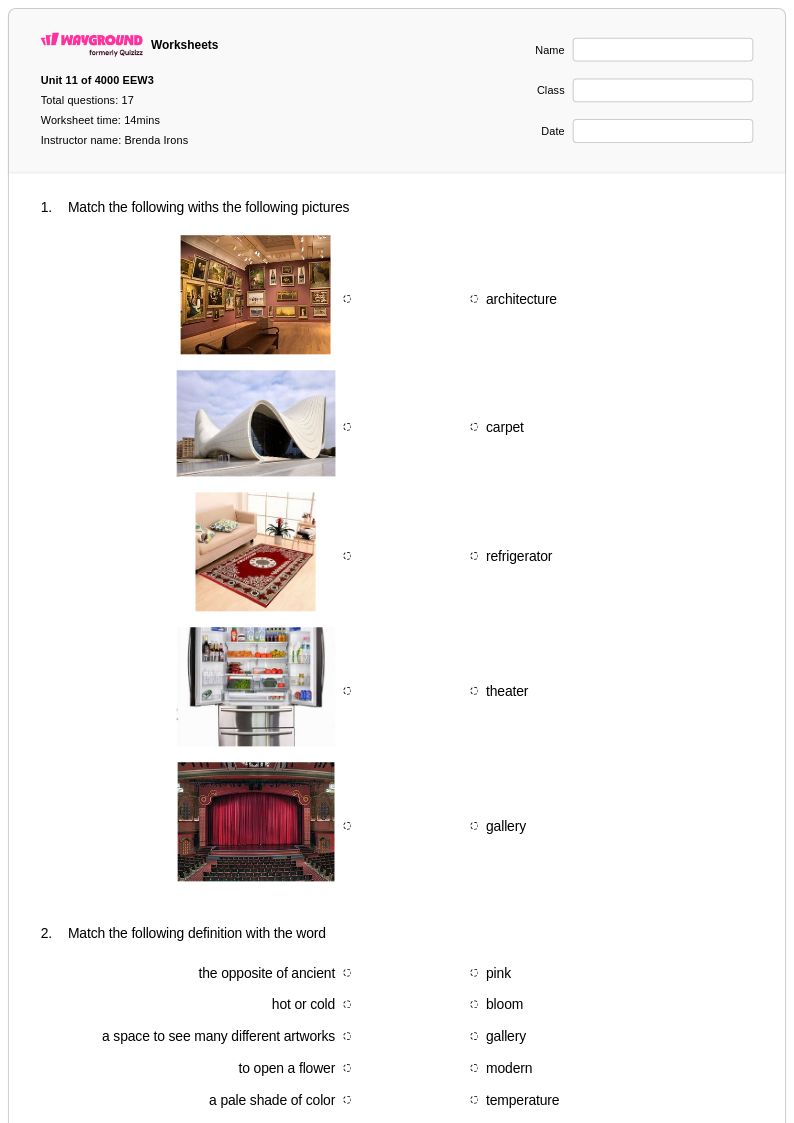
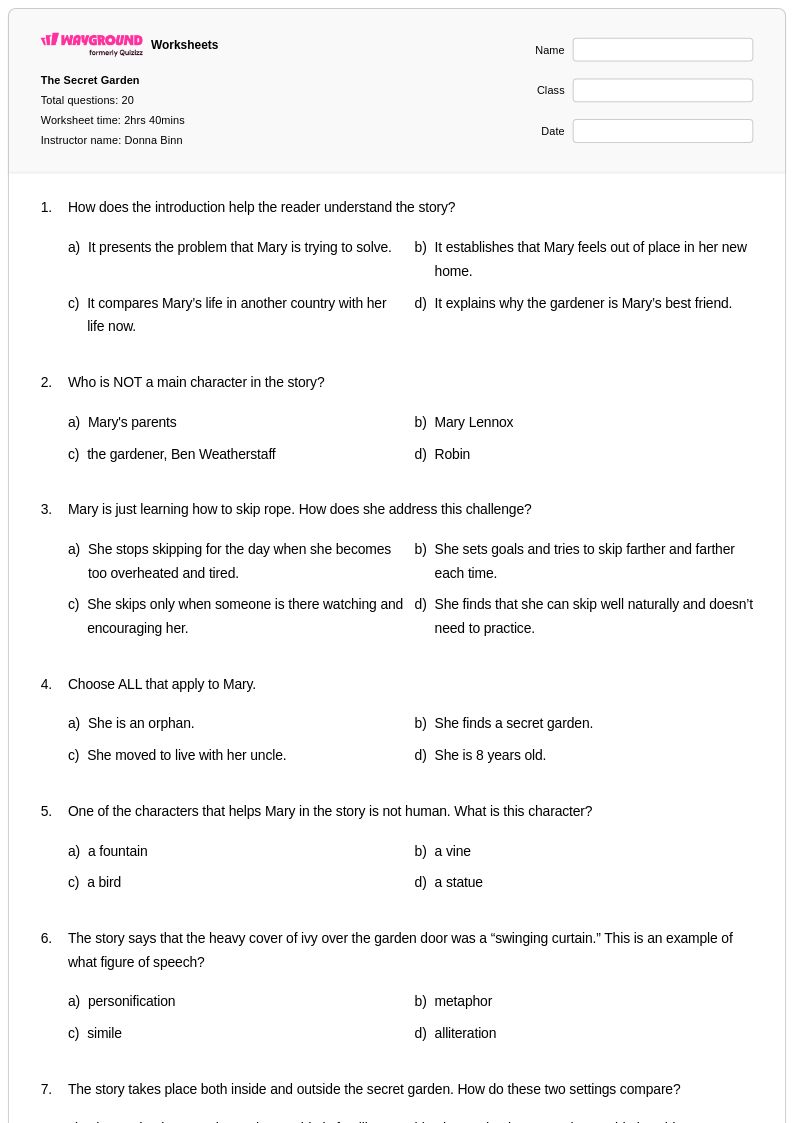
Class 5 word games worksheets available through Wayground (formerly Quizizz) provide engaging and educational activities that transform vocabulary learning into interactive play. These comprehensive printable resources focus on developing critical language skills through puzzles, crosswords, word searches, scrambles, and riddles that challenge students to think creatively about spelling patterns, definitions, and word relationships. Each worksheet collection includes detailed answer keys and practice problems designed to strengthen phonemic awareness, expand vocabulary retention, and enhance reading comprehension abilities. The free pdf formats make these materials easily accessible for both classroom instruction and independent study, allowing students to build confidence with language concepts through enjoyable game-based learning experiences that reinforce essential Class 5 vocabulary standards.
Wayground (formerly Quizizz) empowers educators with millions of teacher-created word game resources that streamline lesson planning and support differentiated instruction across diverse learning needs. The platform's robust search and filtering capabilities enable teachers to quickly locate standards-aligned materials that match specific vocabulary objectives, reading levels, and curriculum requirements. These versatile worksheet collections are available in both printable pdf and digital formats, providing flexibility for traditional classroom activities, homework assignments, remediation sessions, and enrichment opportunities. Teachers can easily customize existing word games or create original activities using the platform's intuitive tools, ensuring that vocabulary practice remains engaging and appropriately challenging while addressing individual student skill gaps and learning preferences.
FAQs
How do I teach vocabulary through word games in the classroom?
Word games are most effective when they are embedded directly into vocabulary instruction rather than used as standalone filler activities. Start by introducing target words explicitly, then use games like crosswords, anagrams, and word searches to reinforce spelling, meaning, and usage in context. This sequence moves students from passive recognition to active retrieval, which deepens retention and builds transferable language skills.
What types of word game worksheets are best for building vocabulary skills?
Crosswords, word searches, and anagram puzzles each target different aspects of vocabulary development. Crosswords reinforce definitions and contextual usage, word searches build automatic word recognition and spelling familiarity, and anagrams challenge students to think analytically about letter patterns and word structure. Using a variety of formats within a unit ensures students practice vocabulary from multiple cognitive angles.
What common mistakes do students make when completing word game worksheets?
Students often match words by visual pattern rather than meaning, especially in word searches and crossword clues, which can lead to incorrect answers that look plausible on the surface. In anagram activities, students may fixate on their first guess and fail to consider alternative arrangements. Prompting students to verify their answers against definitions, rather than just letter matches, helps correct these habits before they become ingrained.
How can word game worksheets support differentiated instruction?
Word game worksheets can be differentiated by selecting puzzles at varied difficulty levels, such as offering simpler word searches with fewer decoys for struggling readers while giving advanced students anagrams or multi-step vocabulary challenges. On Wayground, teachers can also apply individual accommodations including Read Aloud support for students who need questions read to them, reduced answer choices to lower cognitive load, and adjustable font sizes through reading mode, all configurable per student without notifying the rest of the class.
How do I use word game worksheets from Wayground in my classroom?
Wayground's word game worksheets are available as free printable PDFs for traditional classroom use and in digital formats for technology-integrated environments, including the option to host them as a quiz directly on Wayground. Each worksheet includes a complete answer key, so teachers can distribute them for independent practice, small group work, or homework and check results efficiently. The flexibility of both print and digital formats means the same resource can be used across different instructional settings without additional preparation.
At what grade levels are word game worksheets appropriate?
Word game worksheets span multiple grade levels, from early elementary students building foundational phonics and sight word recognition to middle and high school students expanding academic vocabulary and linguistic analysis skills. The key is matching puzzle complexity and vocabulary tier to the instructional level, using simpler word patterns for younger learners and discipline-specific or multi-syllabic vocabulary for older students. Wayground's collection includes worksheets at various difficulty levels to support this range.