Free Printable Word Matching Worksheets for Class 1
Class 1 Word Matching worksheets from Wayground offer free printables and PDF practice problems that help young learners develop vocabulary skills by connecting words with pictures, meanings, and corresponding terms through engaging exercises with answer keys.
Explore printable Word Matching worksheets for Class 1
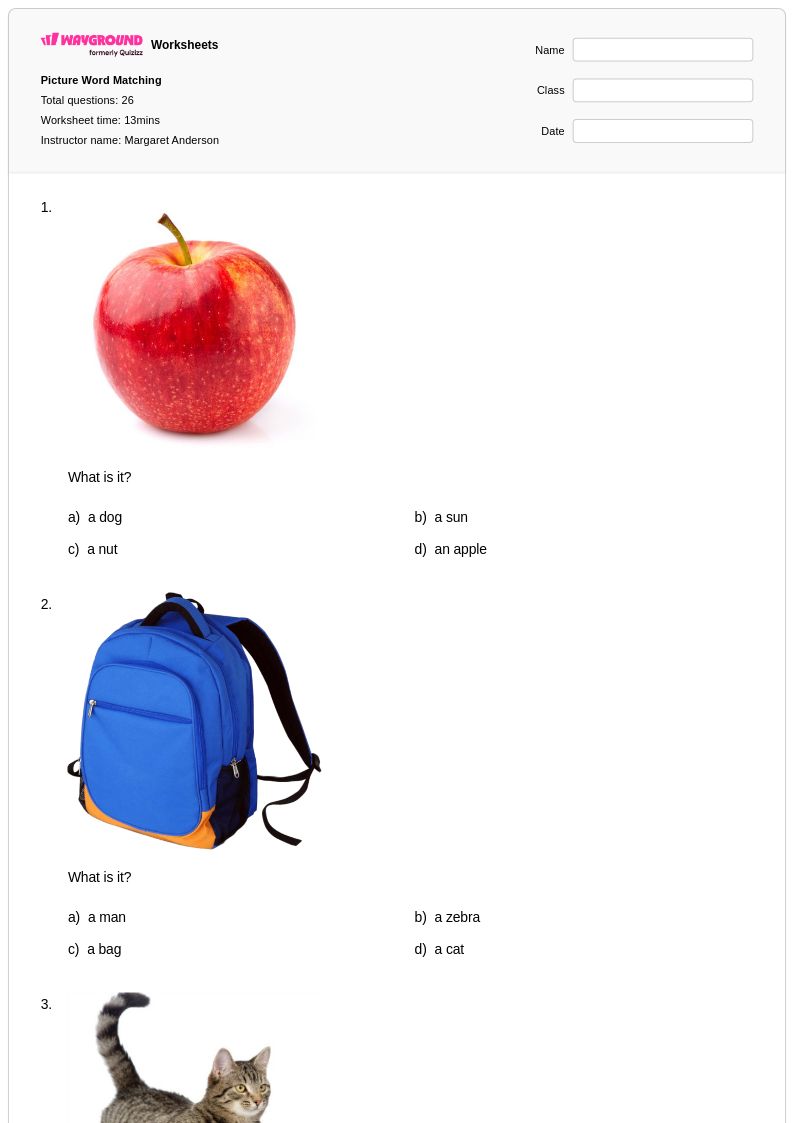
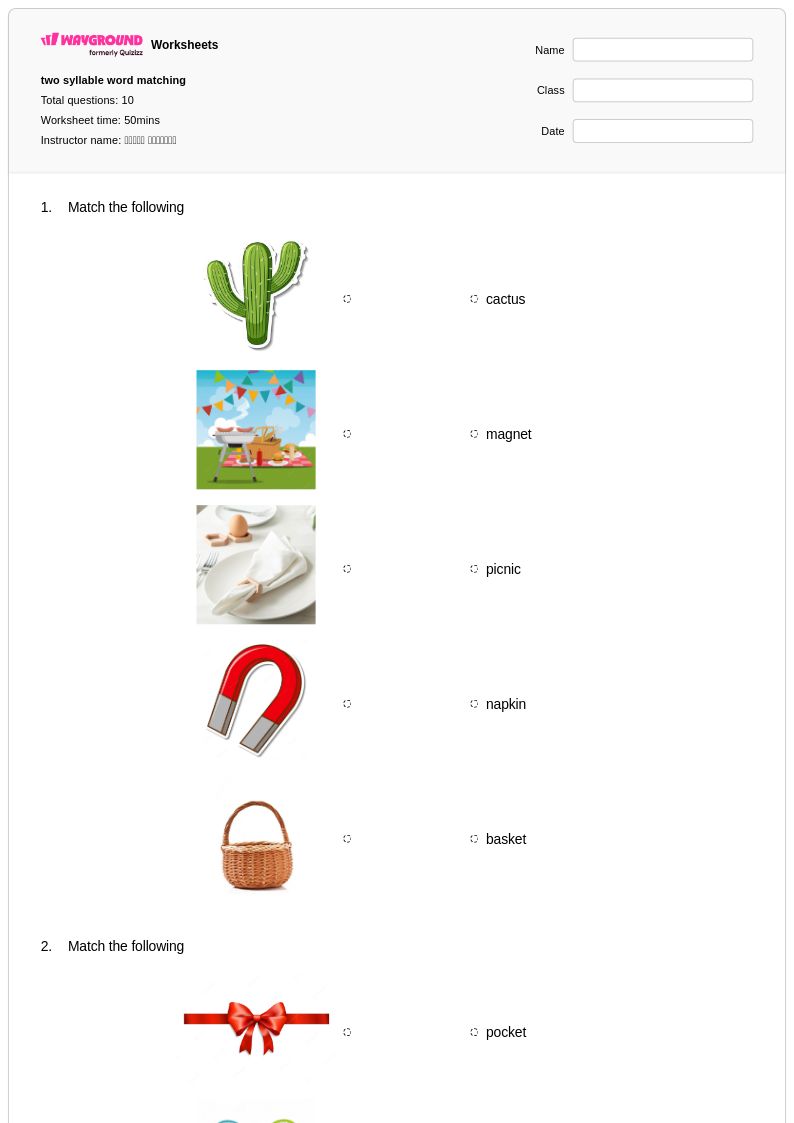
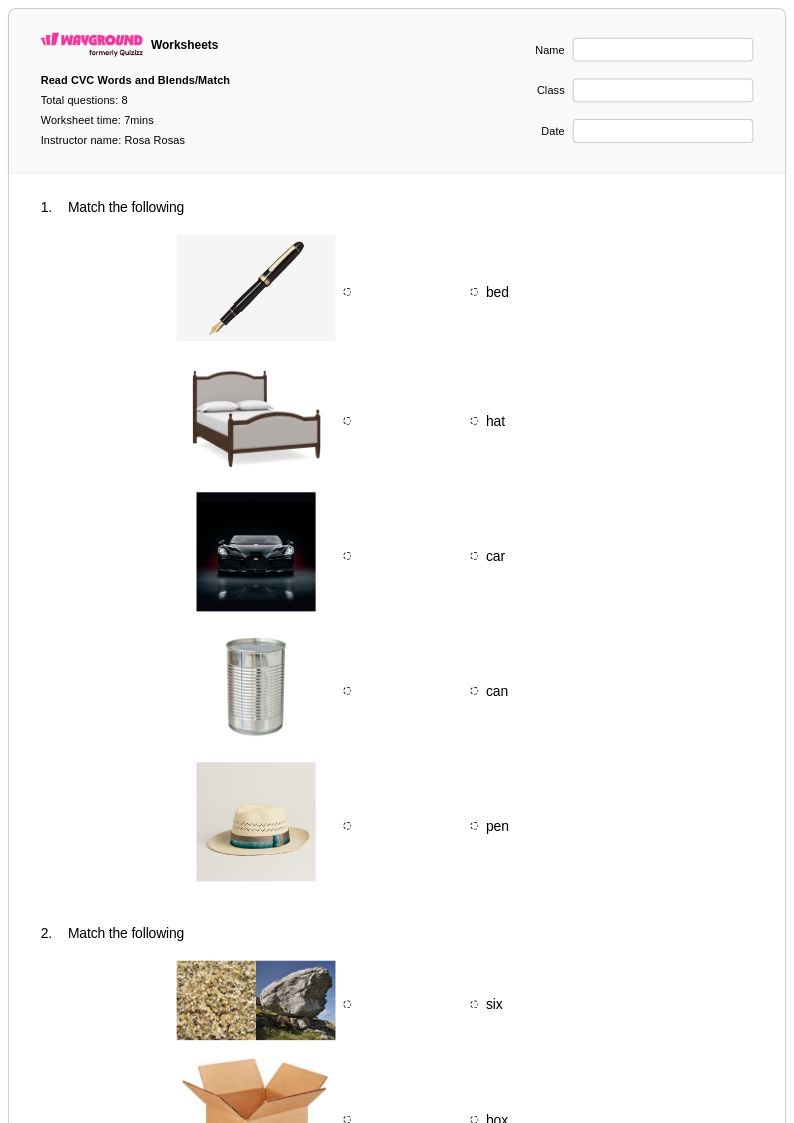
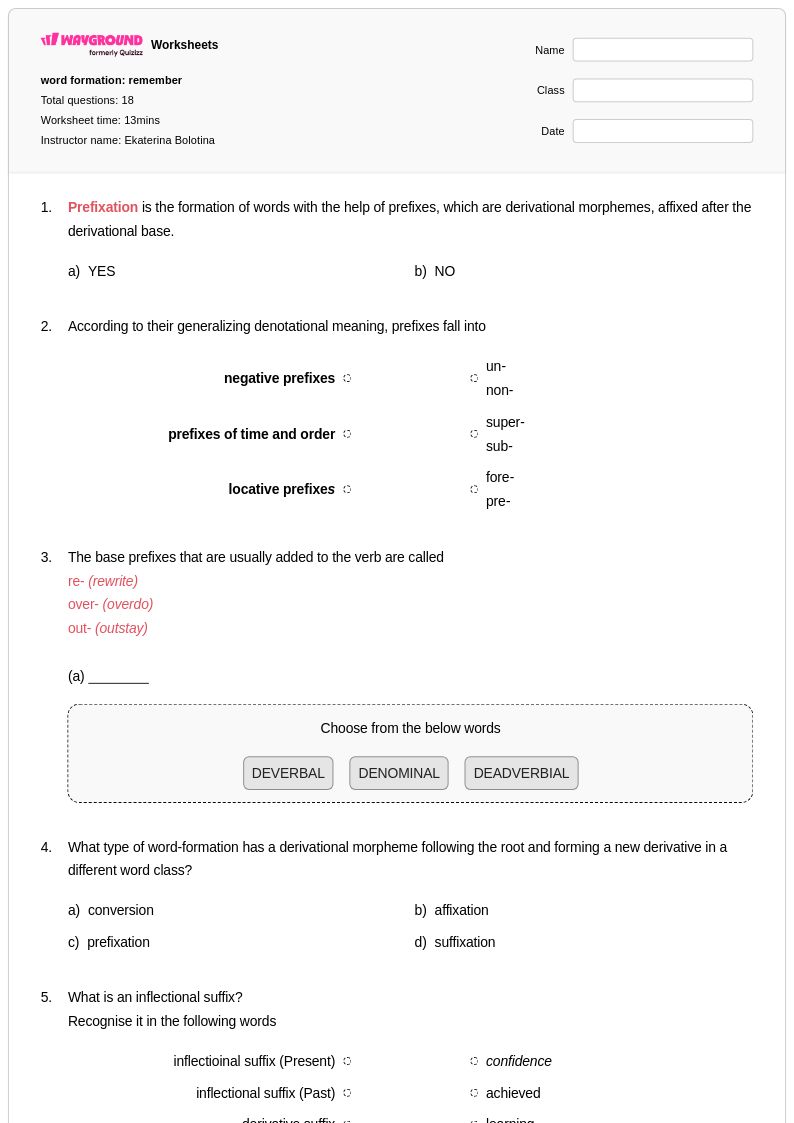
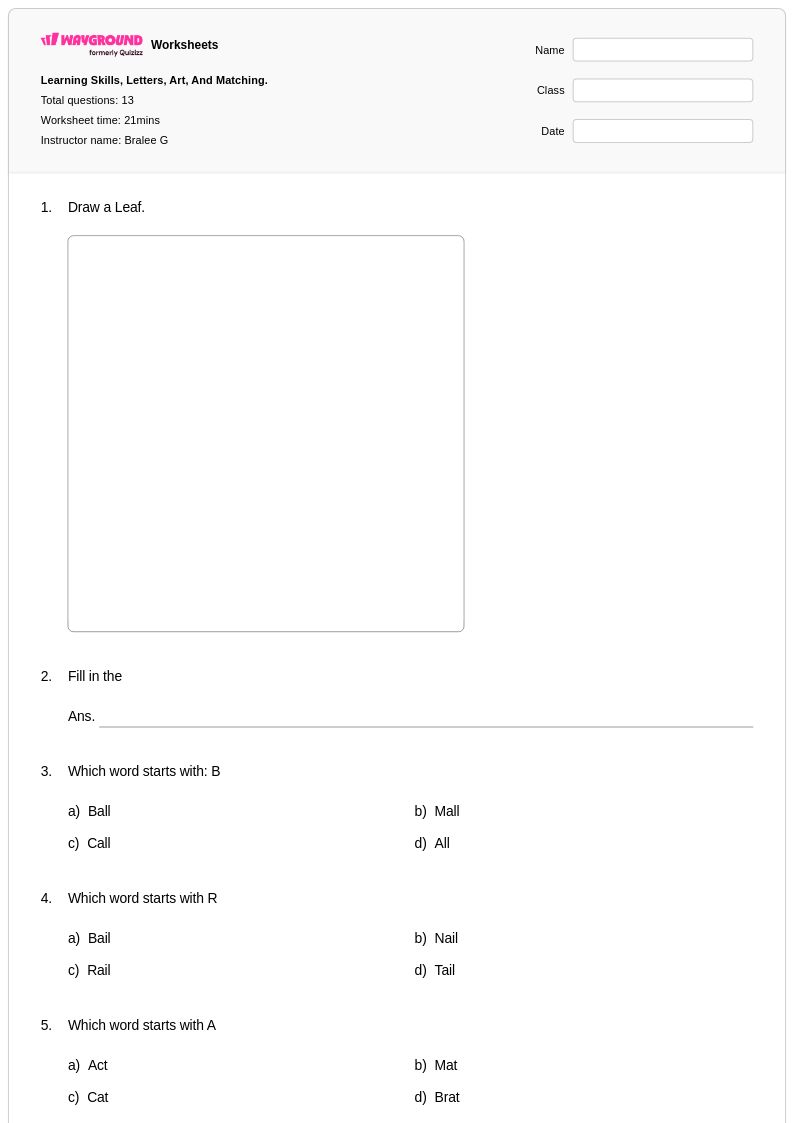
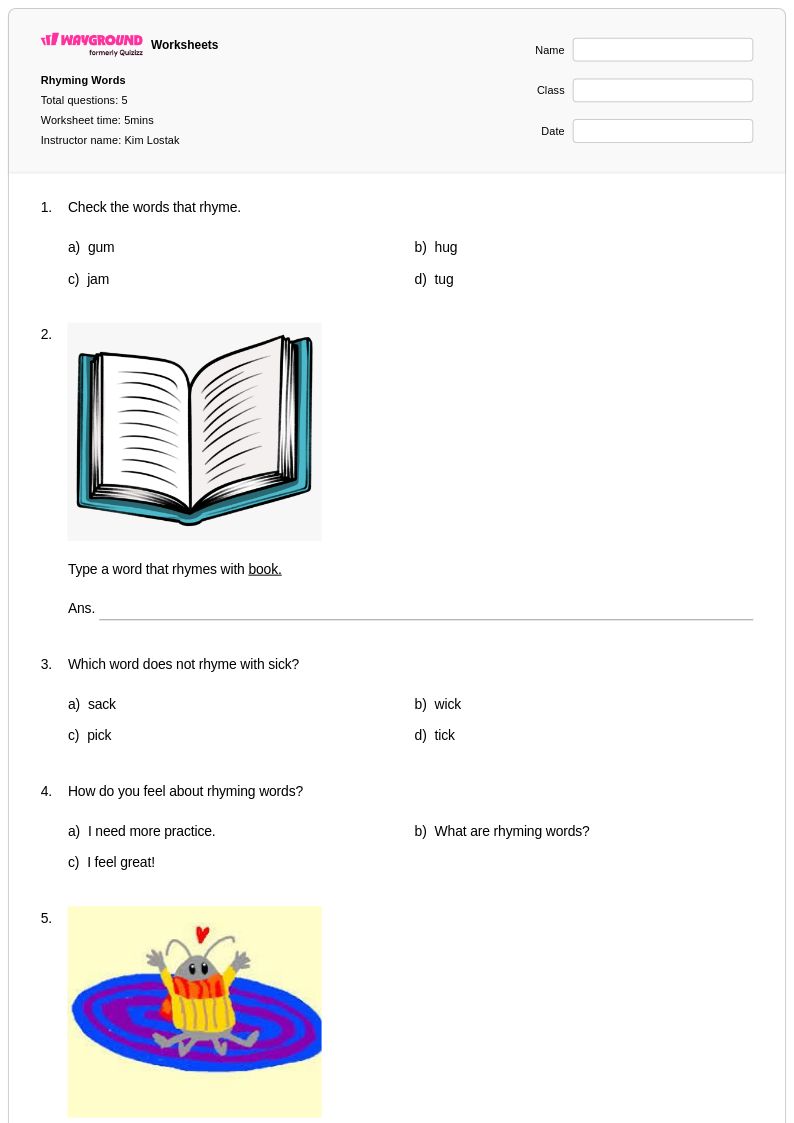
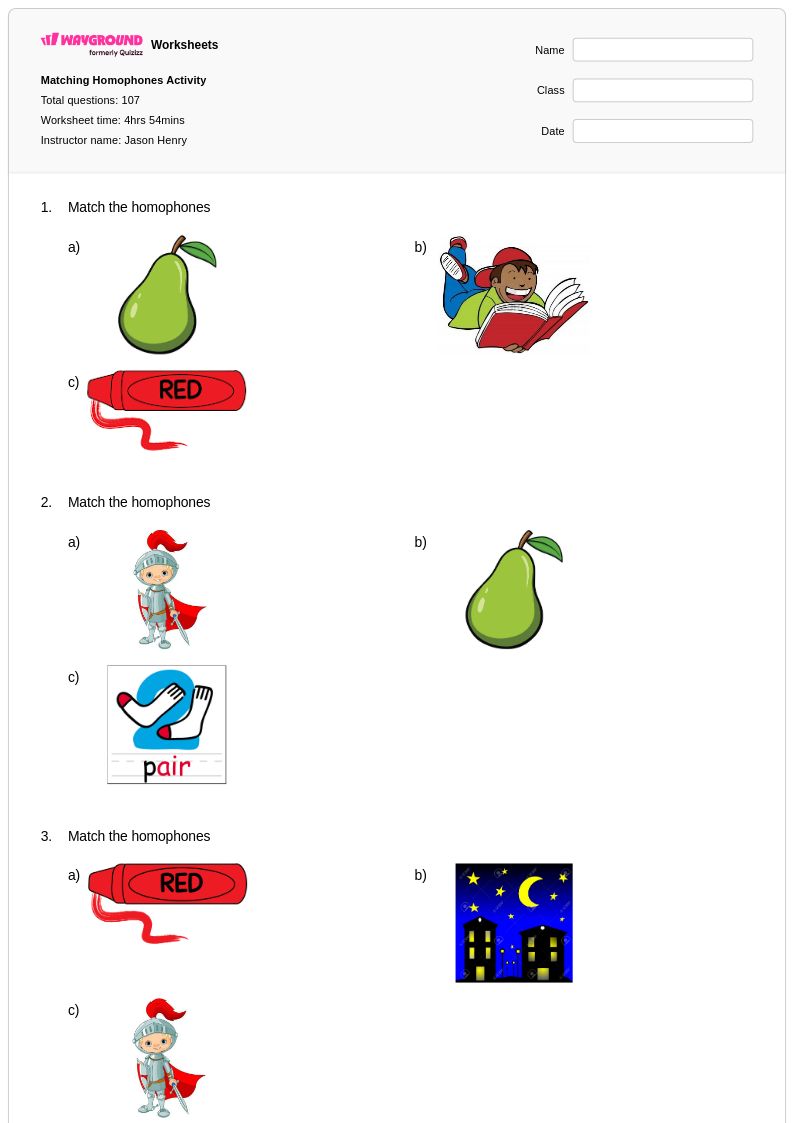
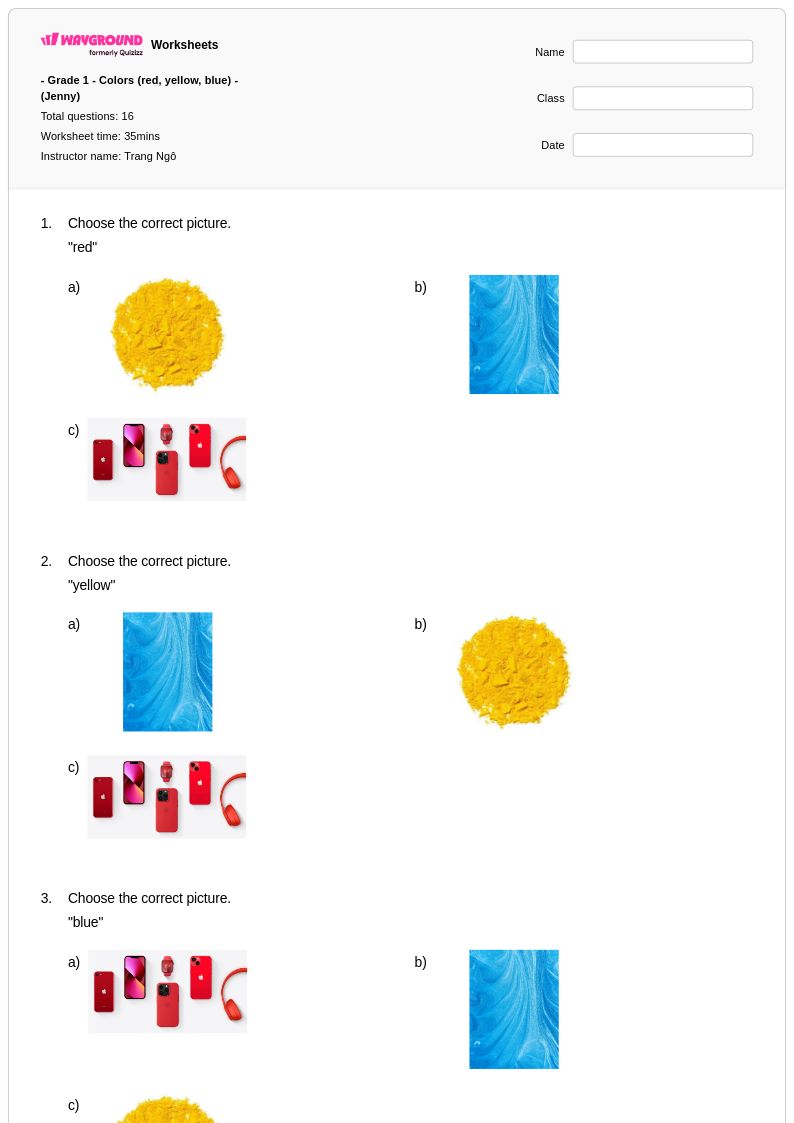
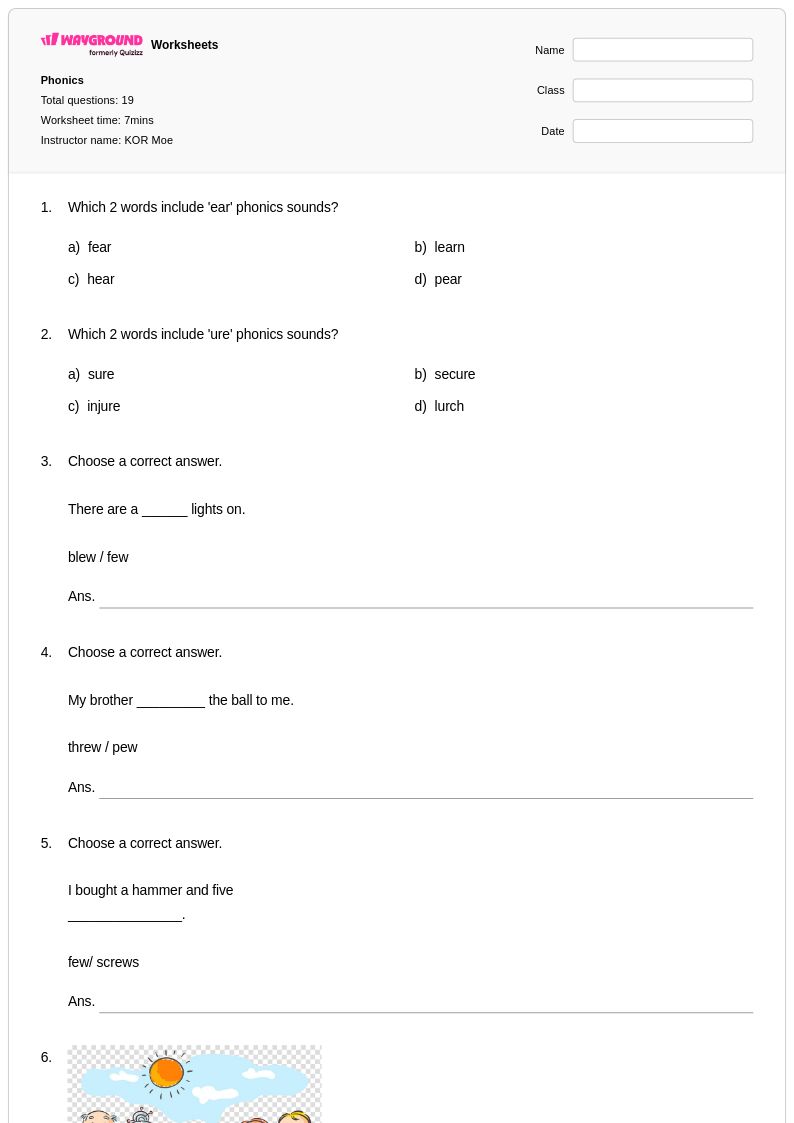
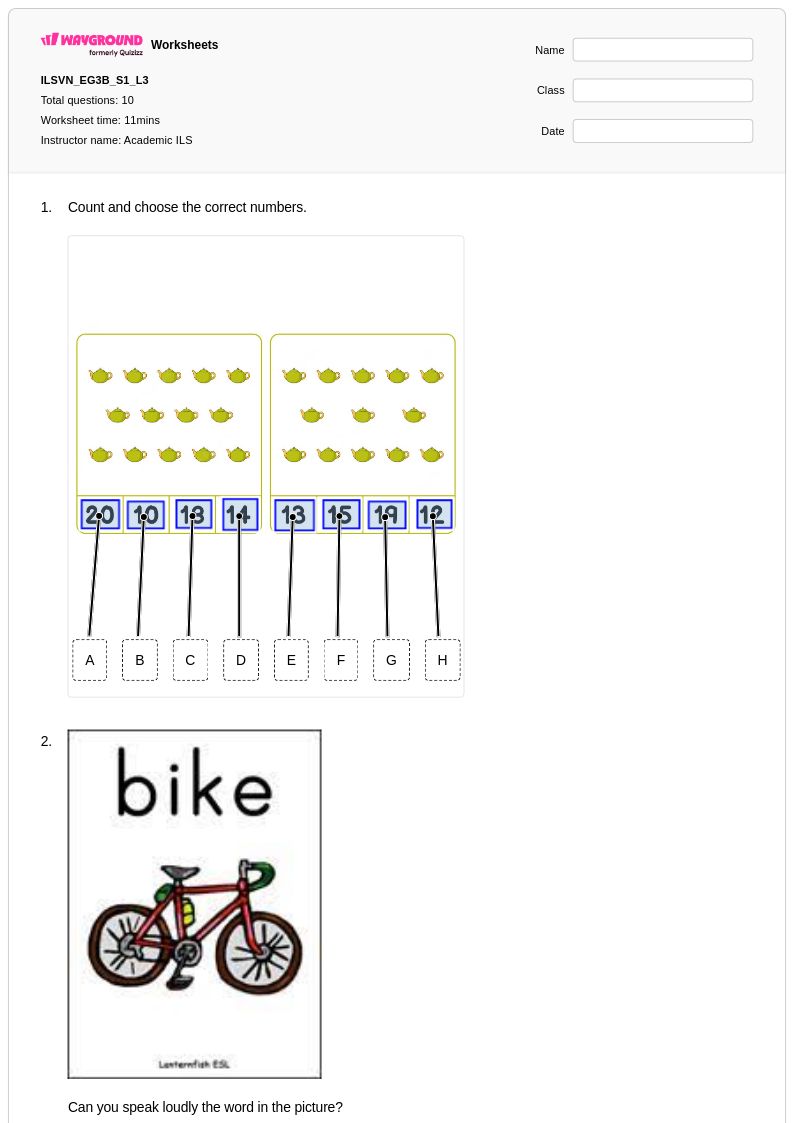
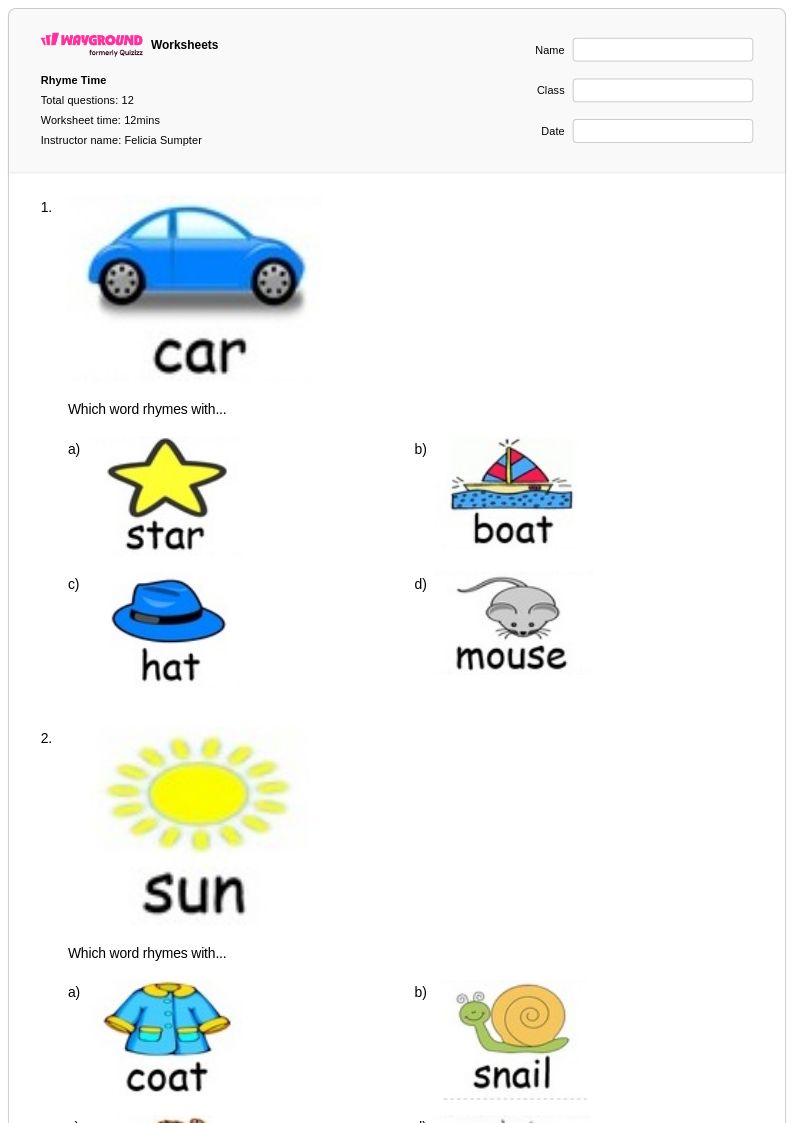
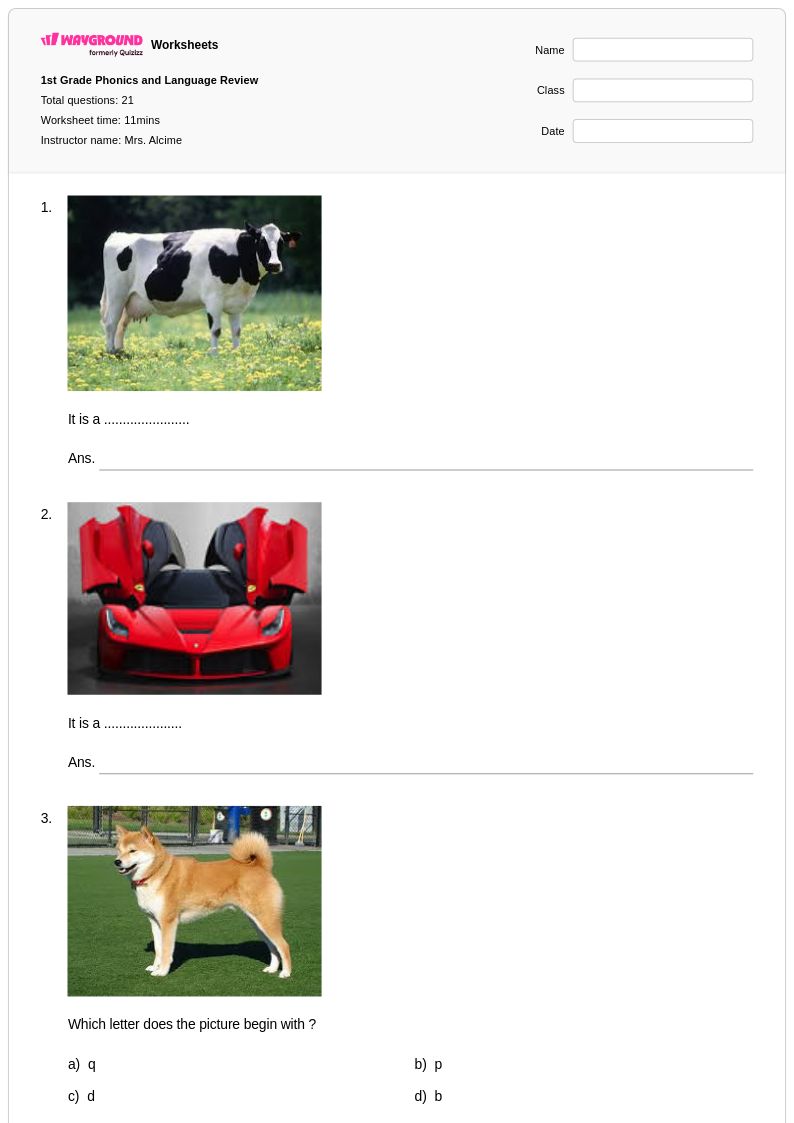
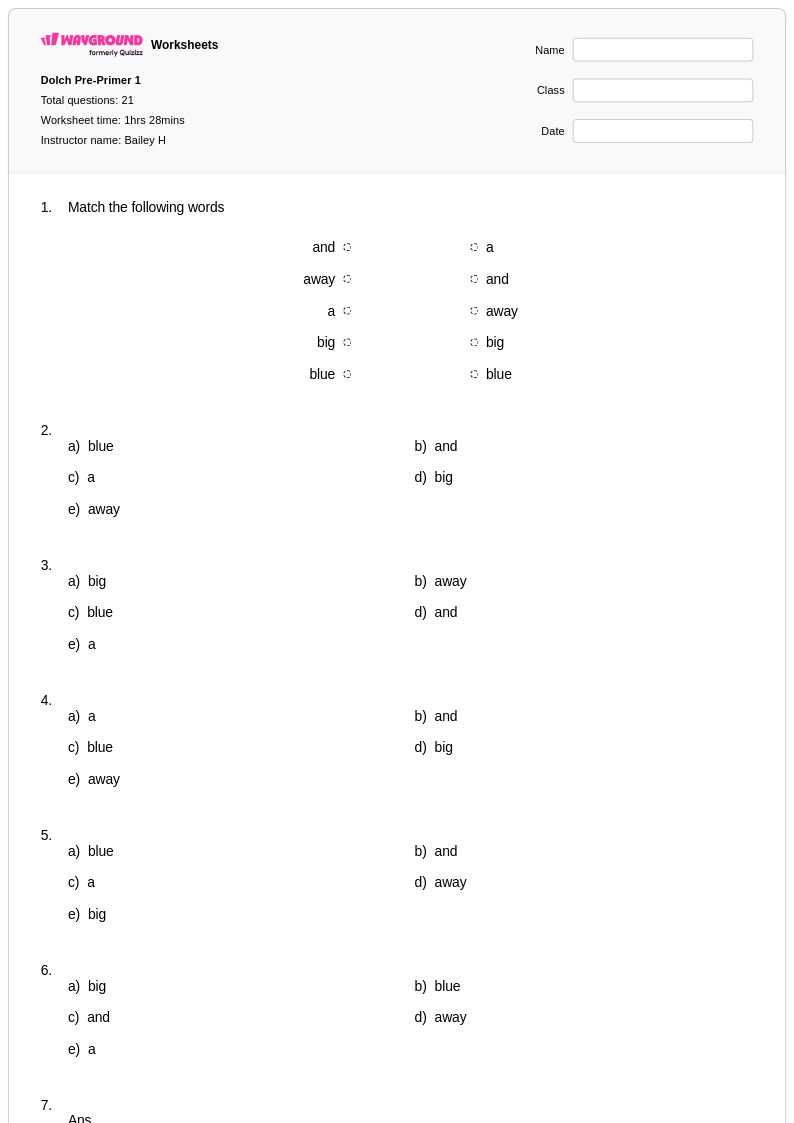
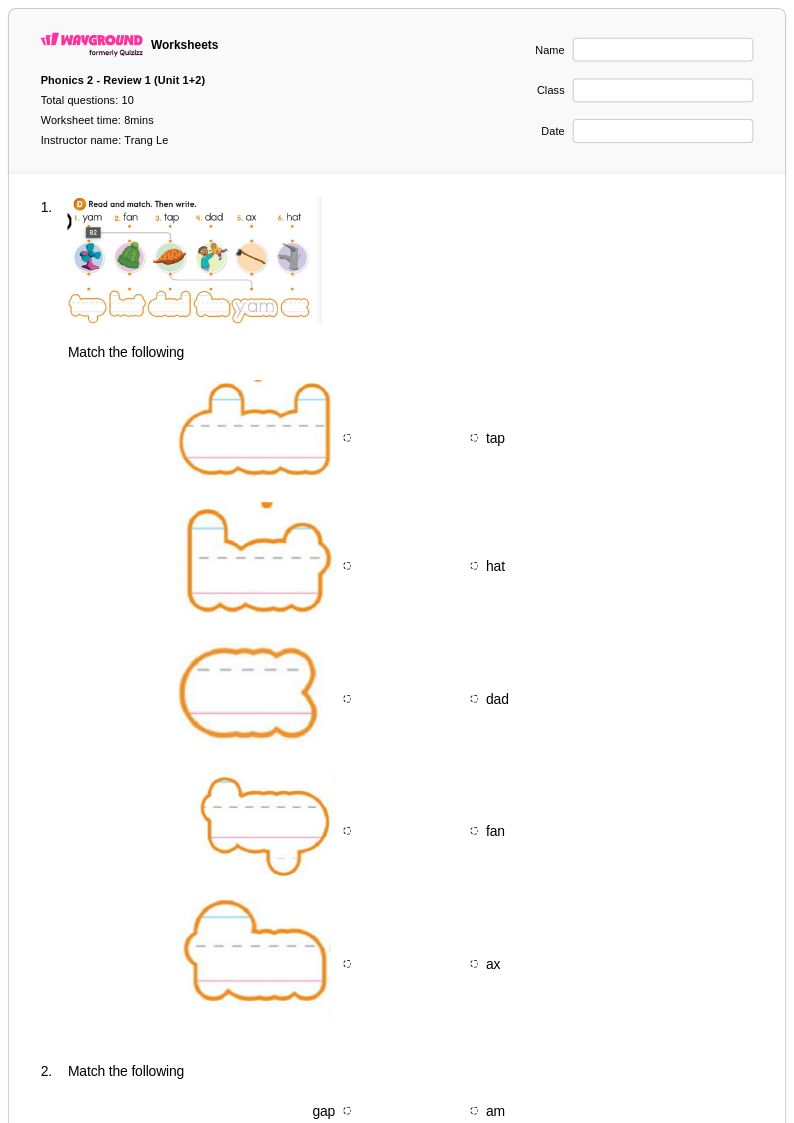
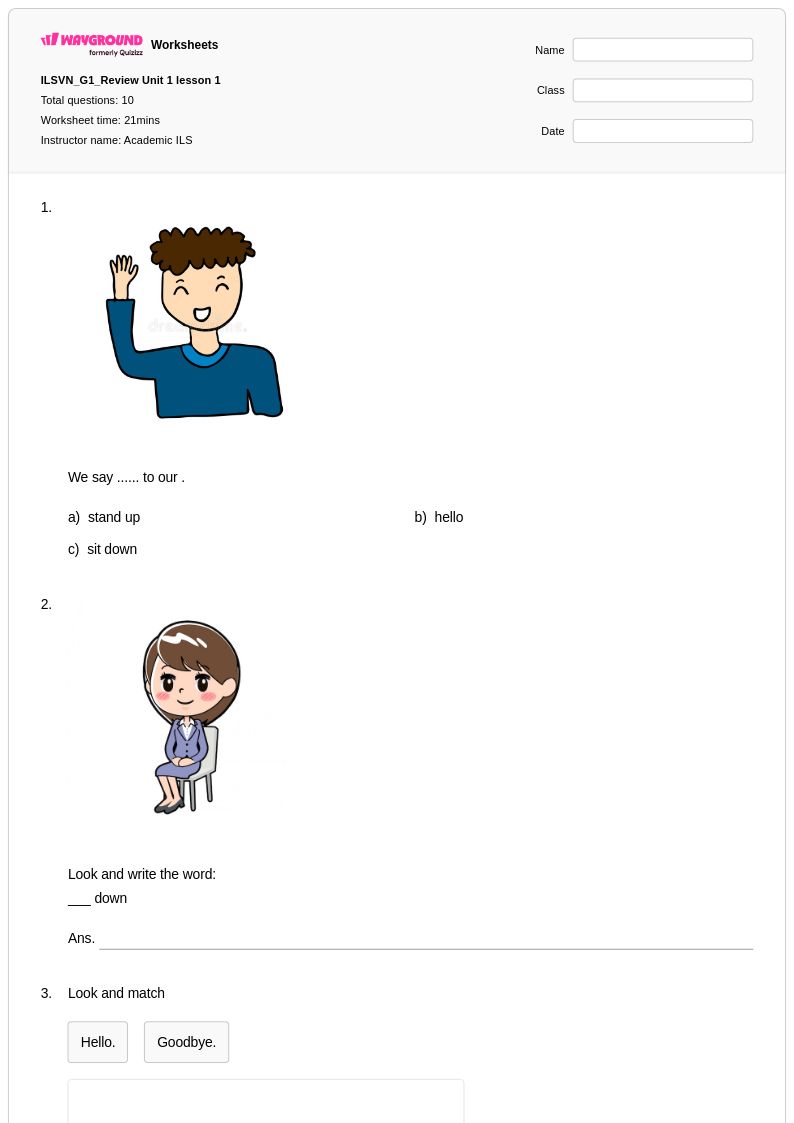
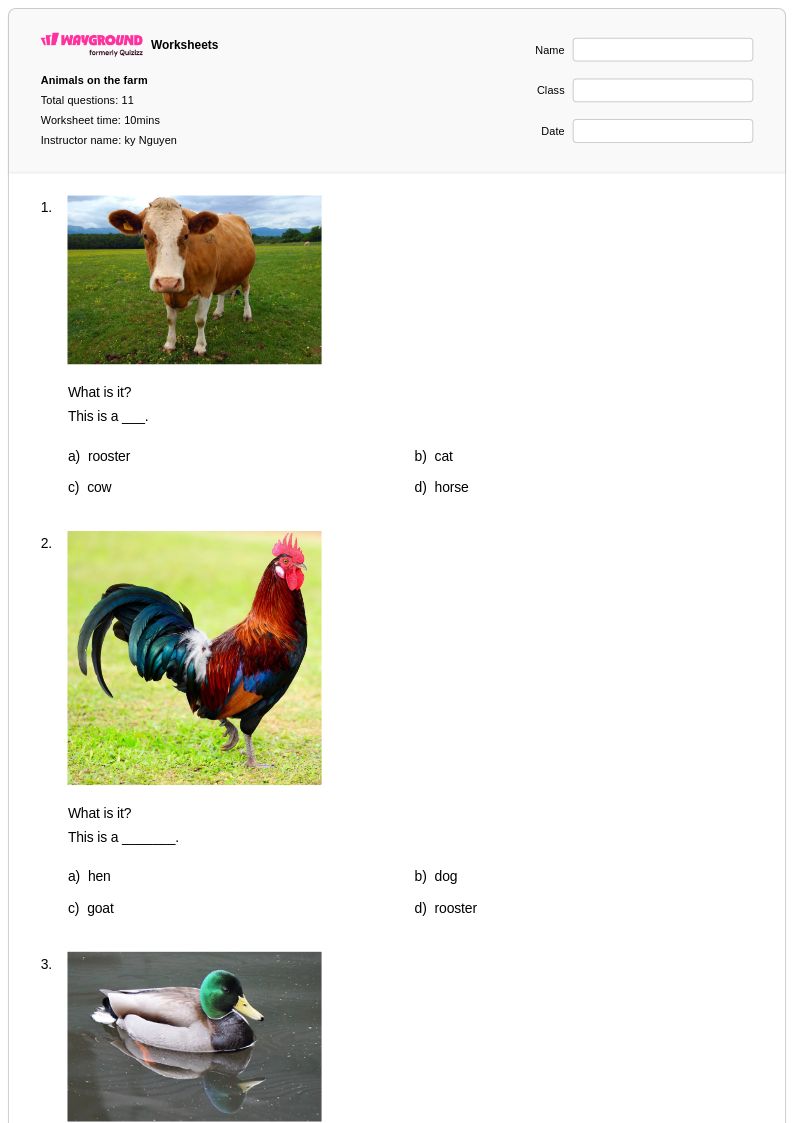
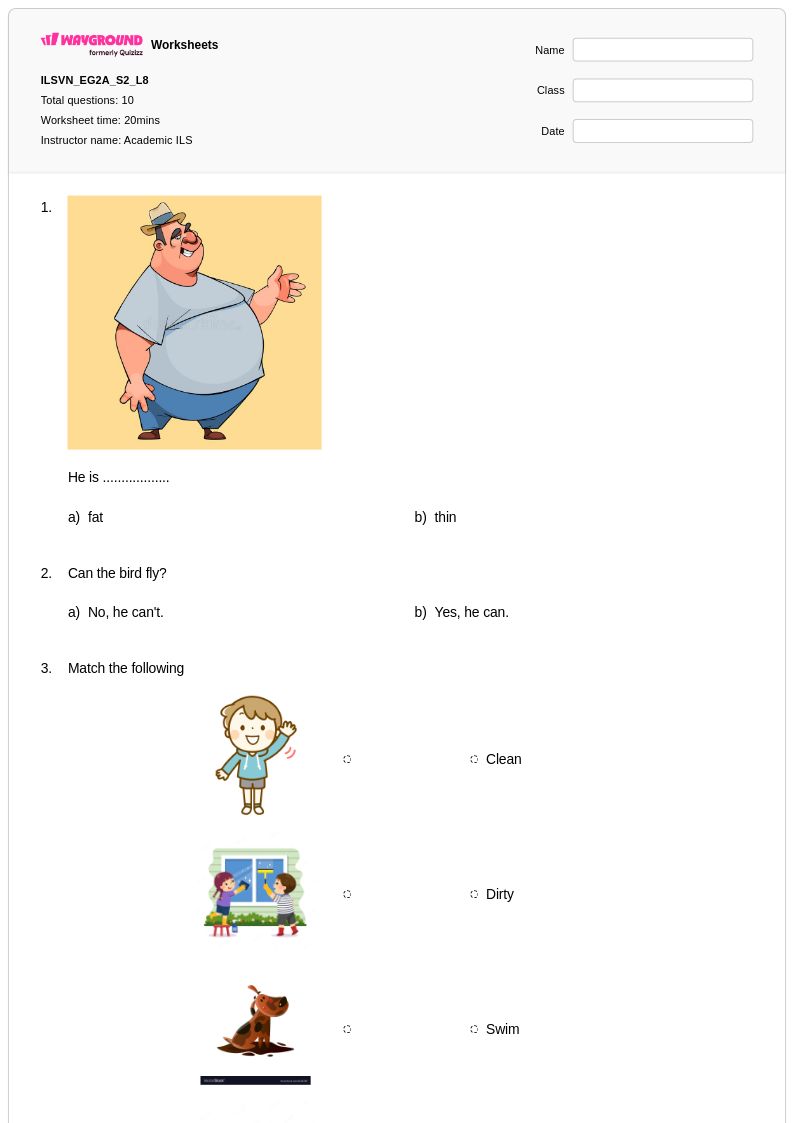
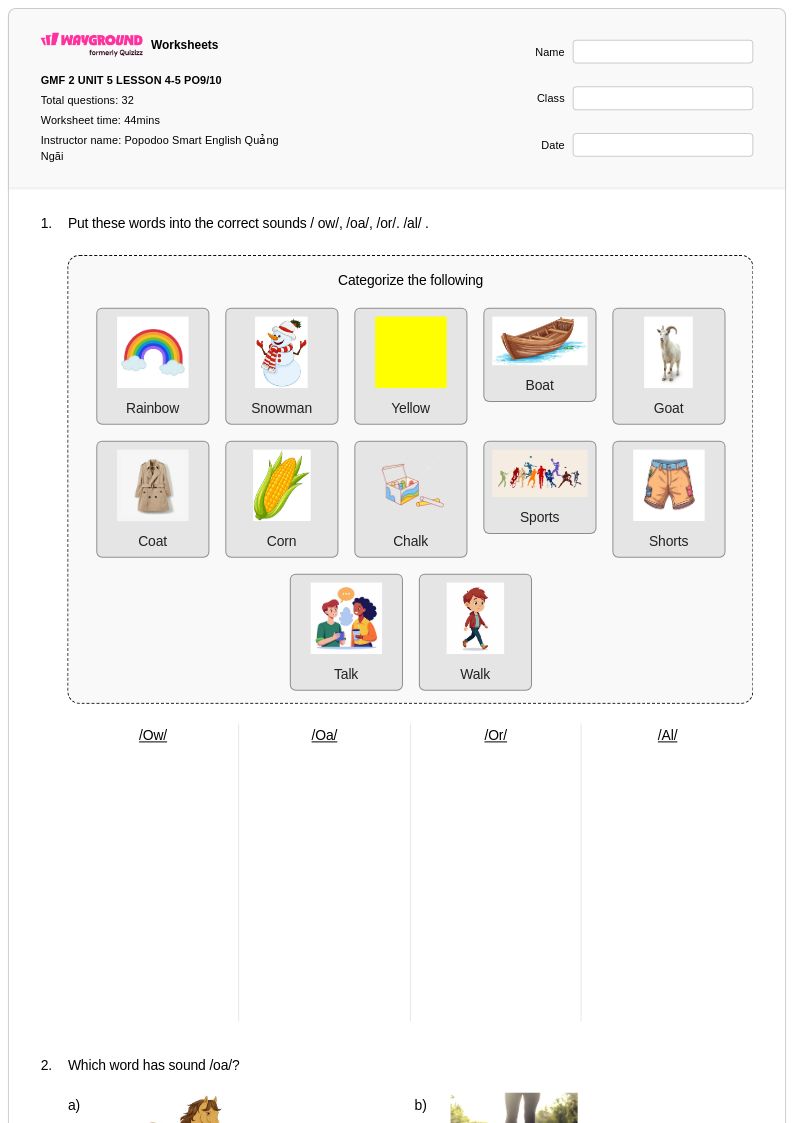
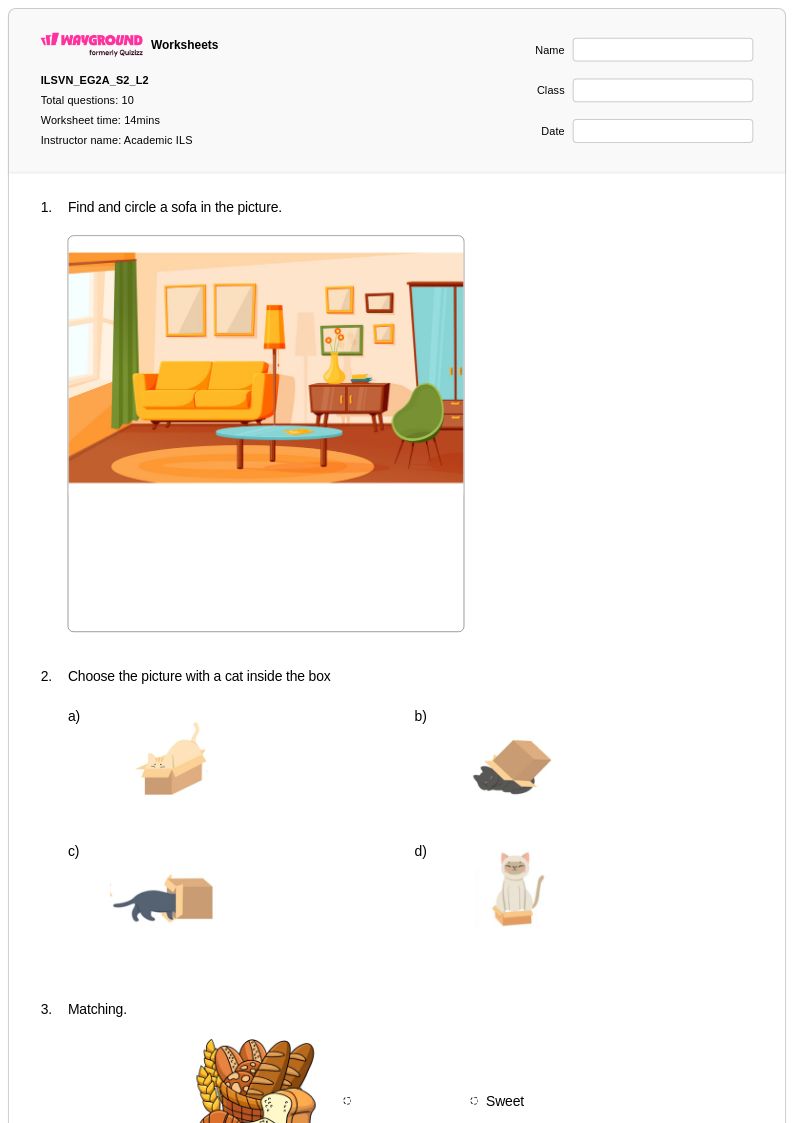
Word matching worksheets for Class 1 students available through Wayground (formerly Quizizz) provide essential practice for developing foundational vocabulary and reading recognition skills. These carefully designed printables focus on helping young learners connect words with corresponding images, meanings, or related terms through engaging visual exercises. The worksheets strengthen critical pre-reading abilities including visual discrimination, phonetic awareness, and semantic understanding while building confidence in word recognition patterns. Each free resource includes comprehensive answer keys and practice problems that allow students to work independently while teachers can easily assess progress and identify areas needing additional support through structured pdf formats.
Wayground (formerly Quizizz) empowers educators with access to millions of teacher-created word matching resources specifically designed for early elementary instruction. The platform's robust search and filtering capabilities enable teachers to quickly locate materials aligned with curriculum standards and differentiated for various learning levels within Class 1 classrooms. Teachers can customize existing worksheets or modify difficulty levels to support both remediation for struggling readers and enrichment opportunities for advanced students. The flexible delivery options include both printable pdf formats for traditional classroom use and digital versions for interactive learning, making these word matching exercises adaptable for homework assignments, center rotations, assessment preparation, and targeted skill practice sessions throughout the academic year.
FAQs
How do I teach word matching to students who struggle with vocabulary recognition?
Start by introducing word matching with high-frequency or thematically grouped words students already encounter in context, such as unit vocabulary or sight words, before moving to abstract pairings like synonyms and antonyms. Use visual anchors — pictures, color coding, or categorized columns — to help students build mental connections between words and meanings. Gradual release works well here: model the matching process aloud, then have students attempt guided practice before working independently.
What types of word matching exercises are most effective for building vocabulary?
The most effective word matching exercises vary the relationship type being matched — definitions, synonyms, antonyms, and thematic groupings each build different aspects of vocabulary knowledge. Mixing these formats across practice sessions prevents rote memorization and pushes students to genuinely process word meaning rather than pattern-match visually. Exercises that use words in context sentences before asking students to match them independently tend to produce stronger retention.
What mistakes do students commonly make on word matching worksheets?
The most frequent error is visual or phonetic guessing — students match words that look or sound similar rather than analyzing meaning, particularly with synonym and antonym pairs. Students also tend to default to process of elimination once they've made one confident match, which can cascade into multiple incorrect answers if the first match is wrong. Reviewing incorrect matches as a class and asking students to explain their reasoning helps surface these misconceptions quickly.
How can I use word matching worksheets to differentiate instruction in a mixed-ability classroom?
Word matching worksheets are well-suited for differentiation because the difficulty can be adjusted by changing word complexity, the number of pairs, or the type of relationship being matched — basic sight words for emerging readers, academic vocabulary for on-level students, and nuanced synonym discrimination for advanced learners. On Wayground, teachers can apply student-level accommodations such as reduced answer choices to lower cognitive load for struggling students, or enable Read Aloud so that students with decoding difficulties can still access vocabulary-level practice. These settings can be assigned to individual students without affecting the rest of the class.
How do I use Wayground's word matching worksheets in my classroom?
Wayground's word matching worksheets are available as printable PDFs for traditional classroom use and in digital formats for technology-integrated learning environments, including the option to host them as a quiz directly on Wayground. Teachers can distribute printed versions for homework, intervention sessions, or independent practice, while the digital format supports remote or hybrid settings. Each worksheet includes an answer key, making self-assessment and quick grading straightforward for both teachers and students.
Can word matching worksheets be used for reading intervention or remediation?
Yes, word matching is a targeted intervention strategy for students who struggle with vocabulary recognition and reading comprehension because it isolates the word-meaning connection without requiring extended reading or writing. It works particularly well during small-group instruction where a teacher can monitor how students reason through matches and address misconceptions in real time. For students receiving reading support, pairing word matching with read-aloud practice reinforces both decoding and meaning simultaneously.