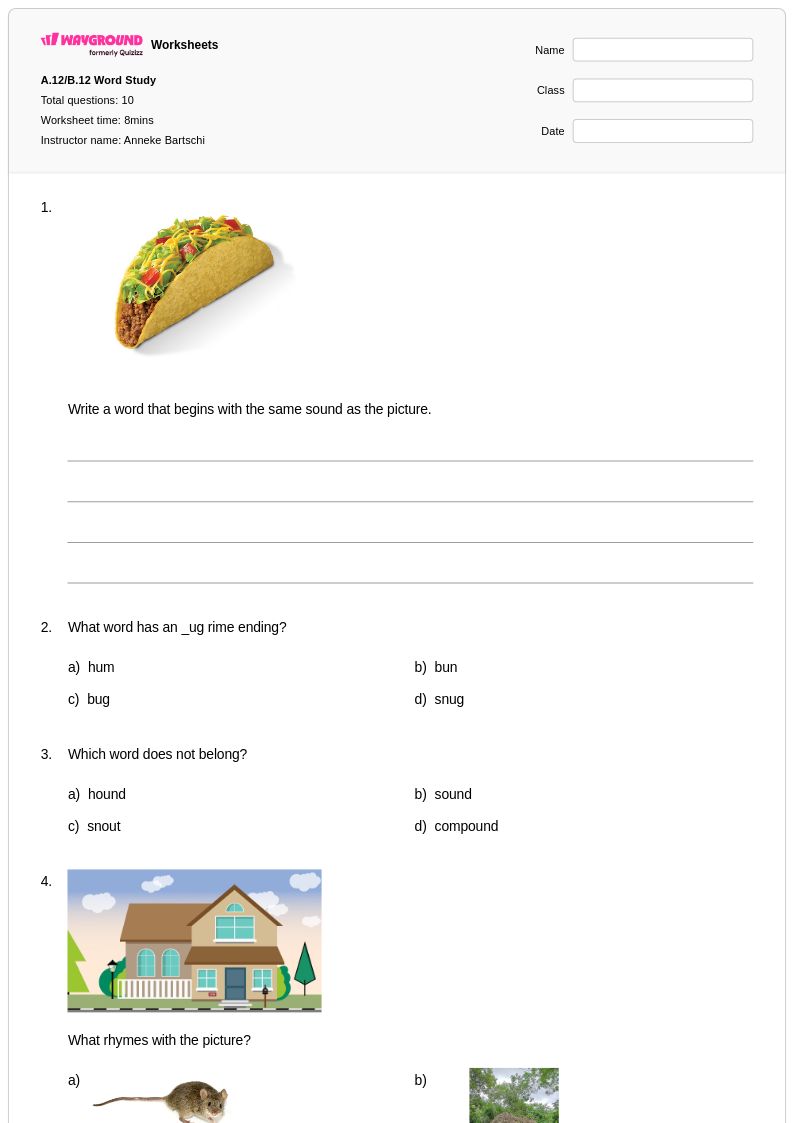
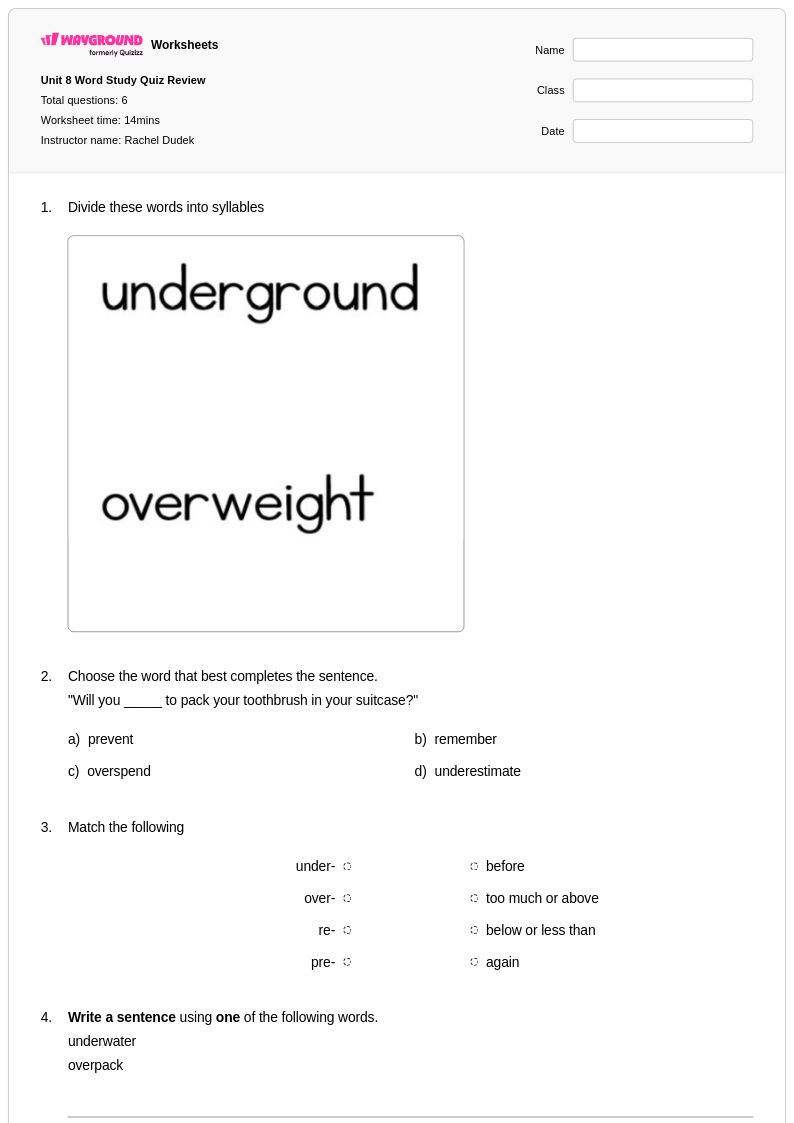
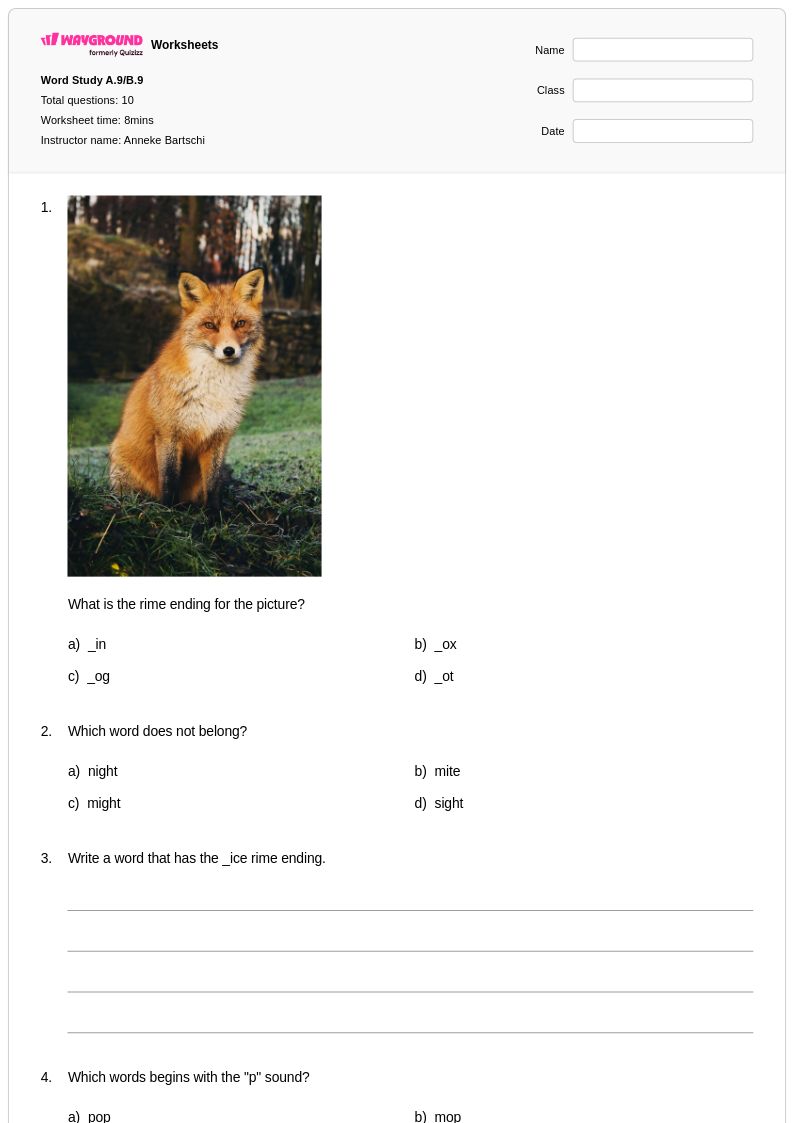
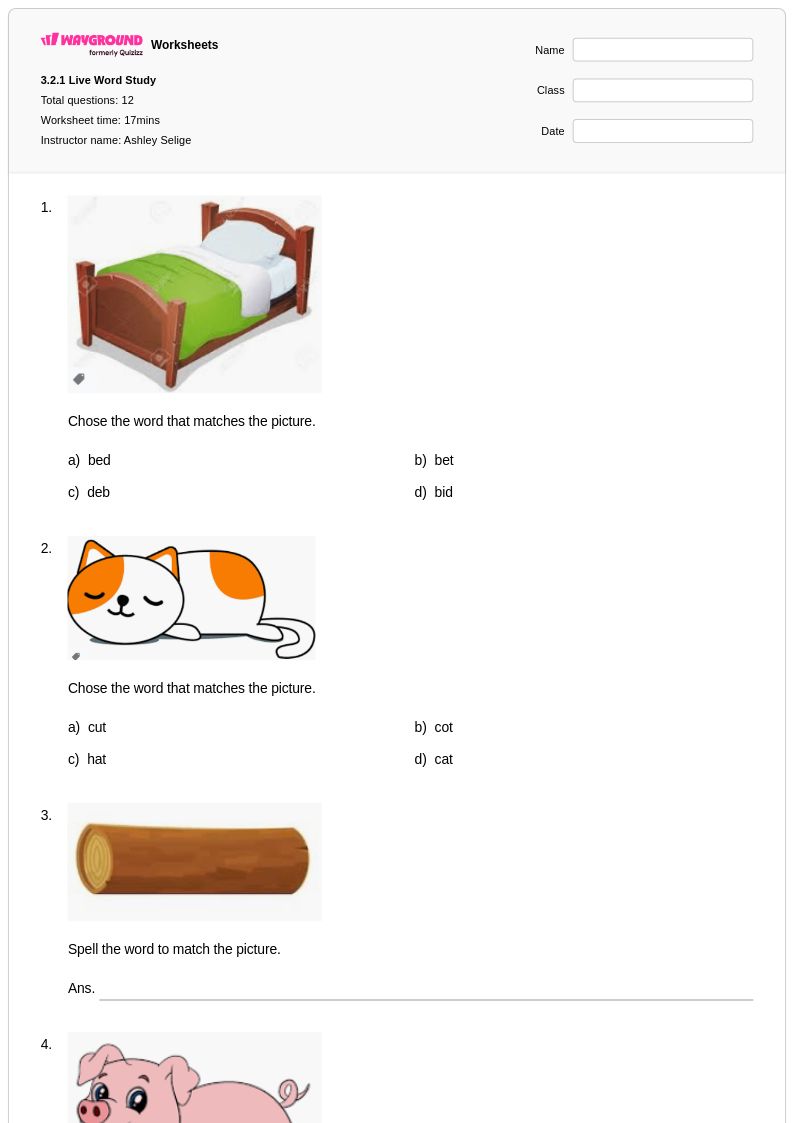
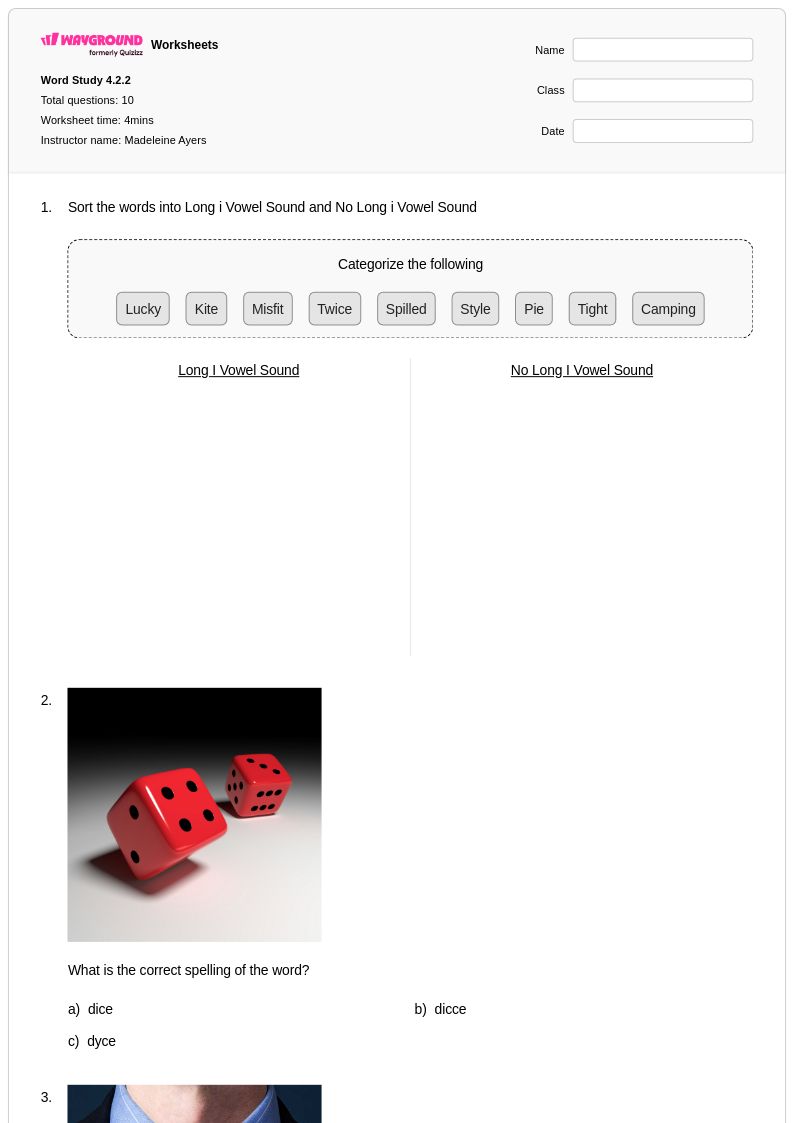
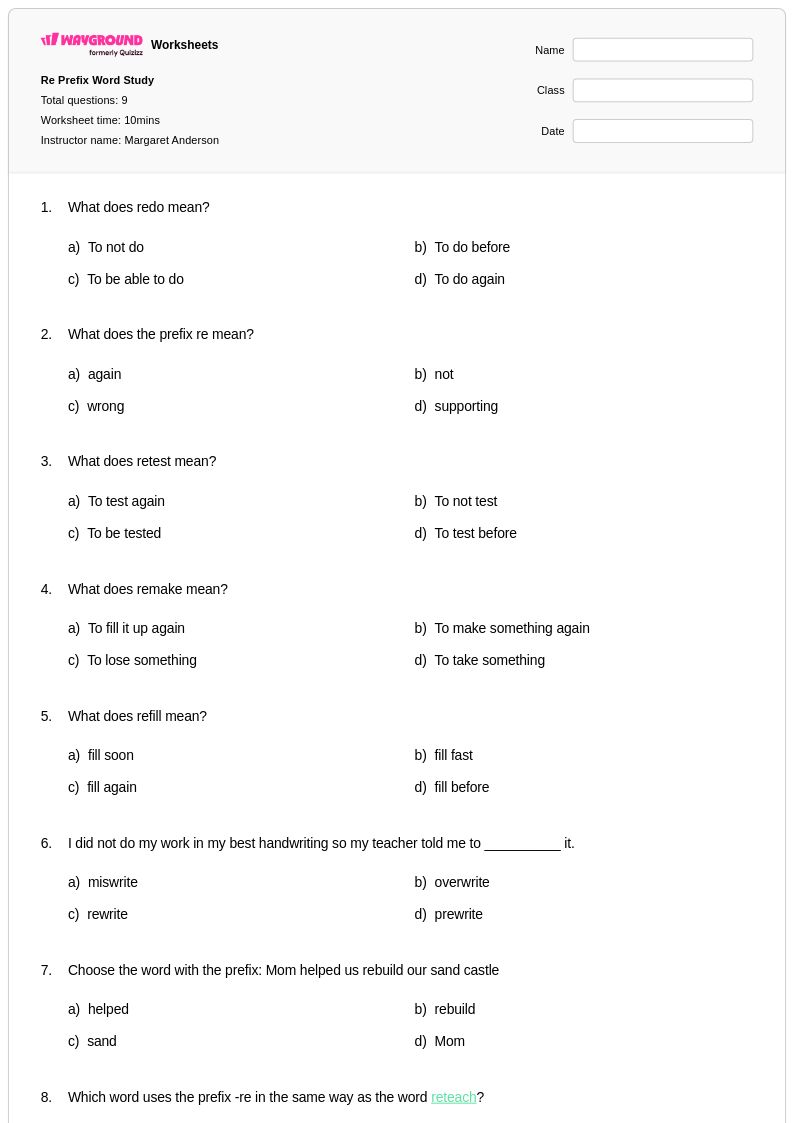
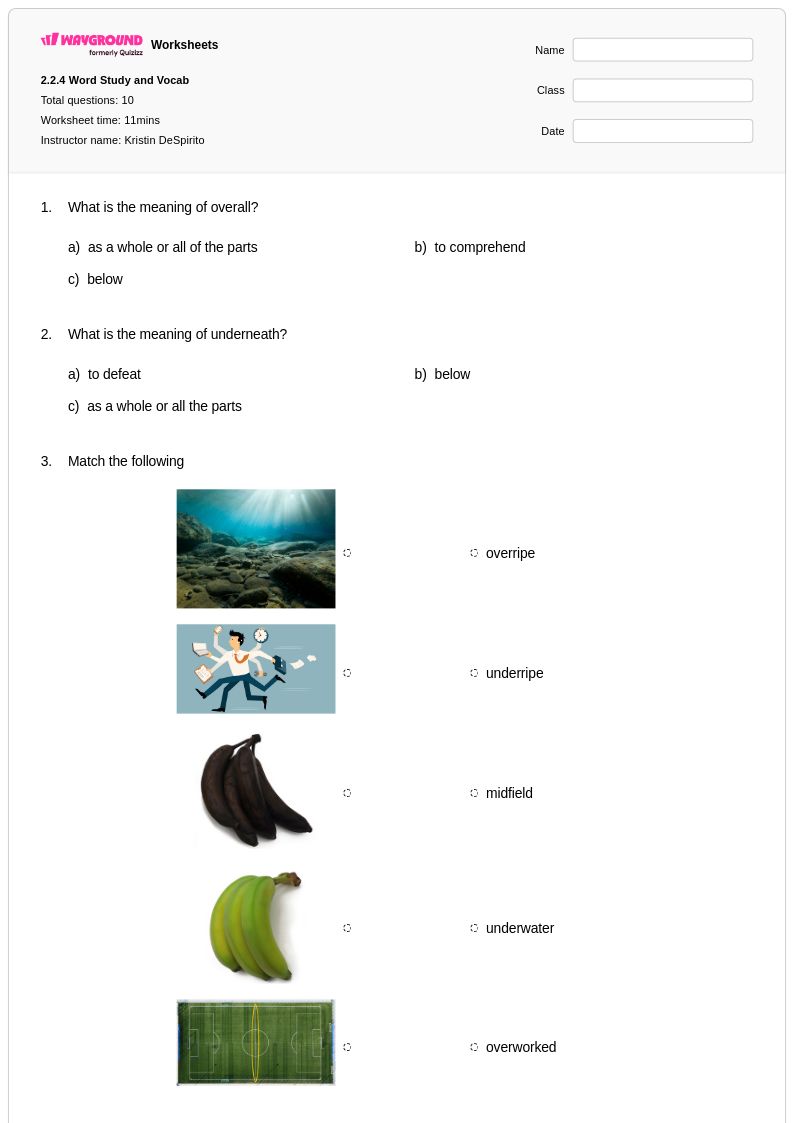
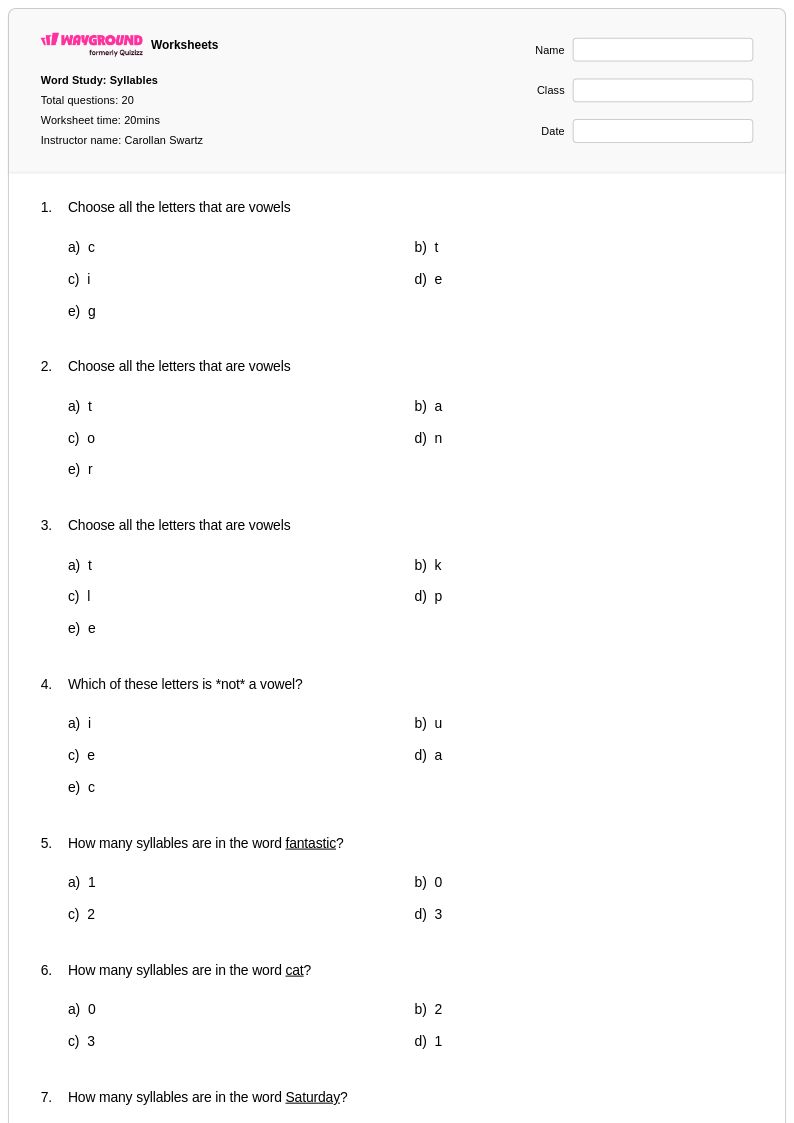
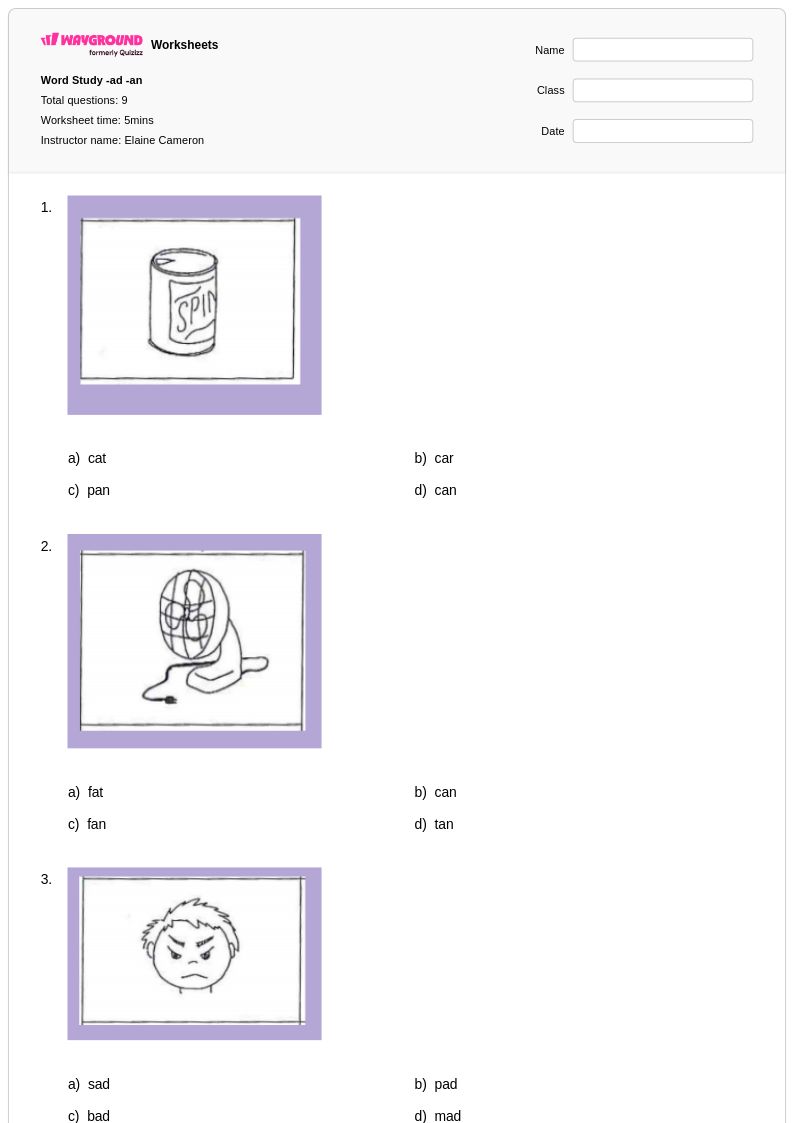
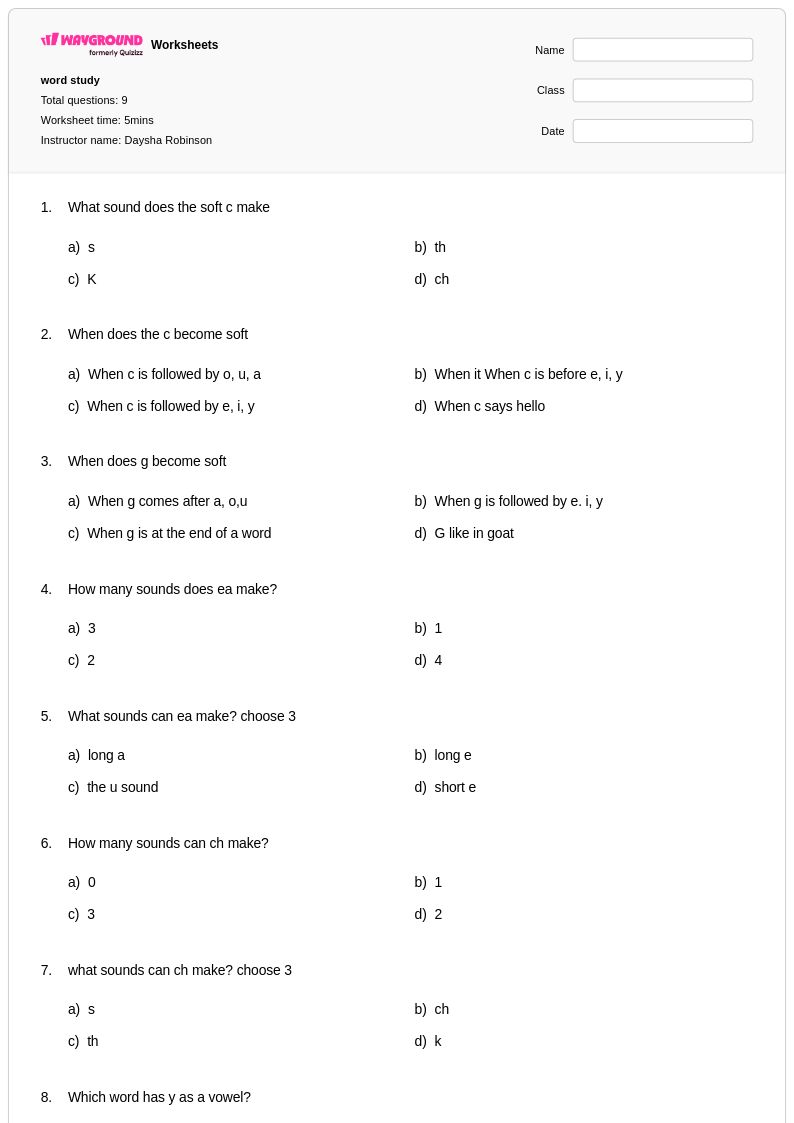
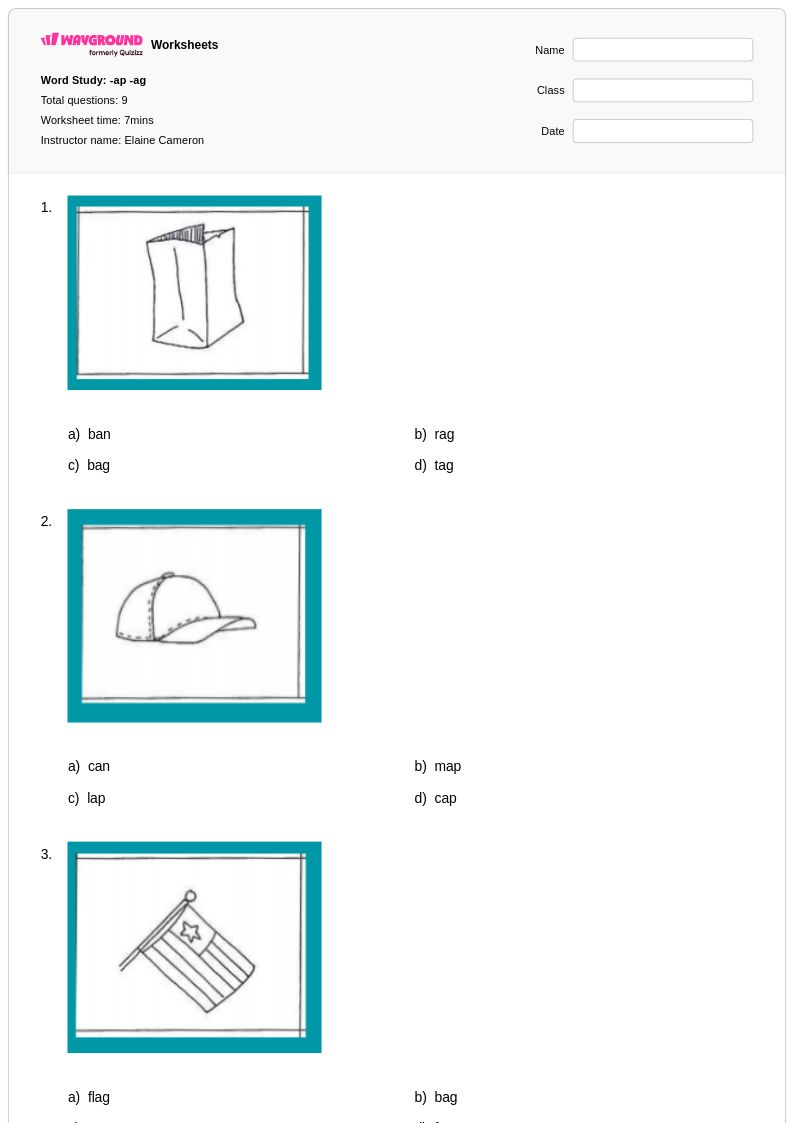
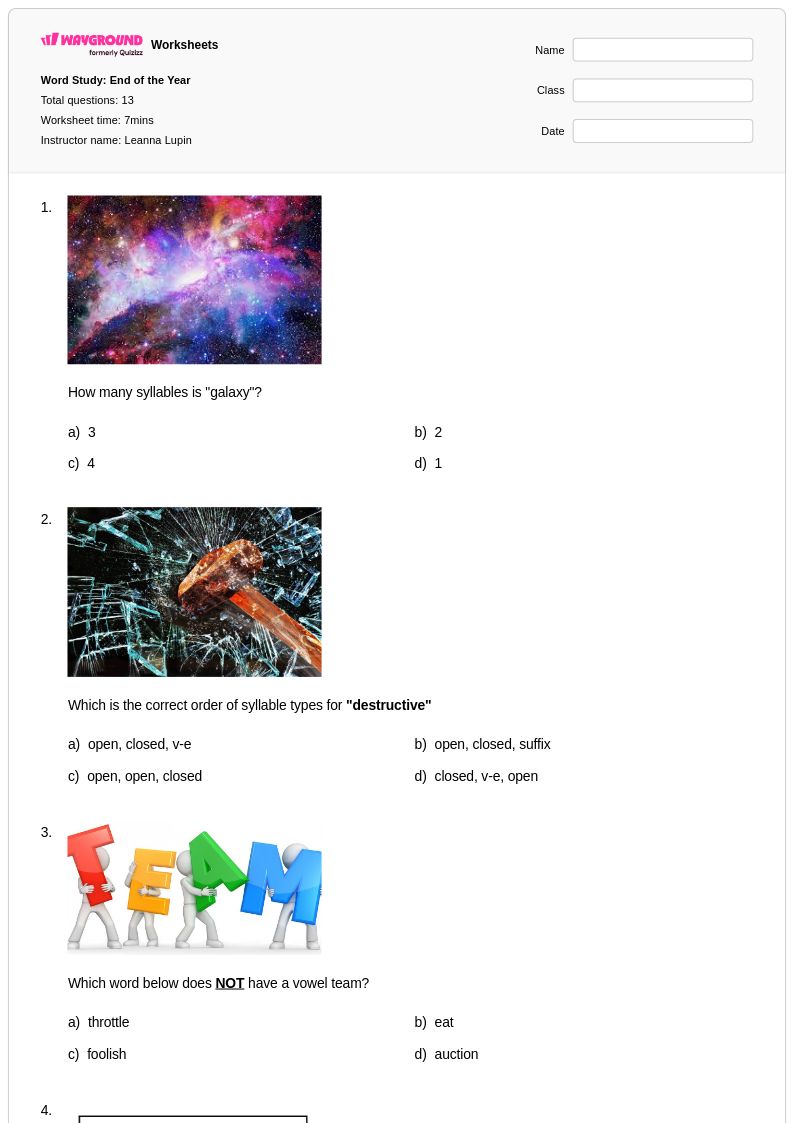
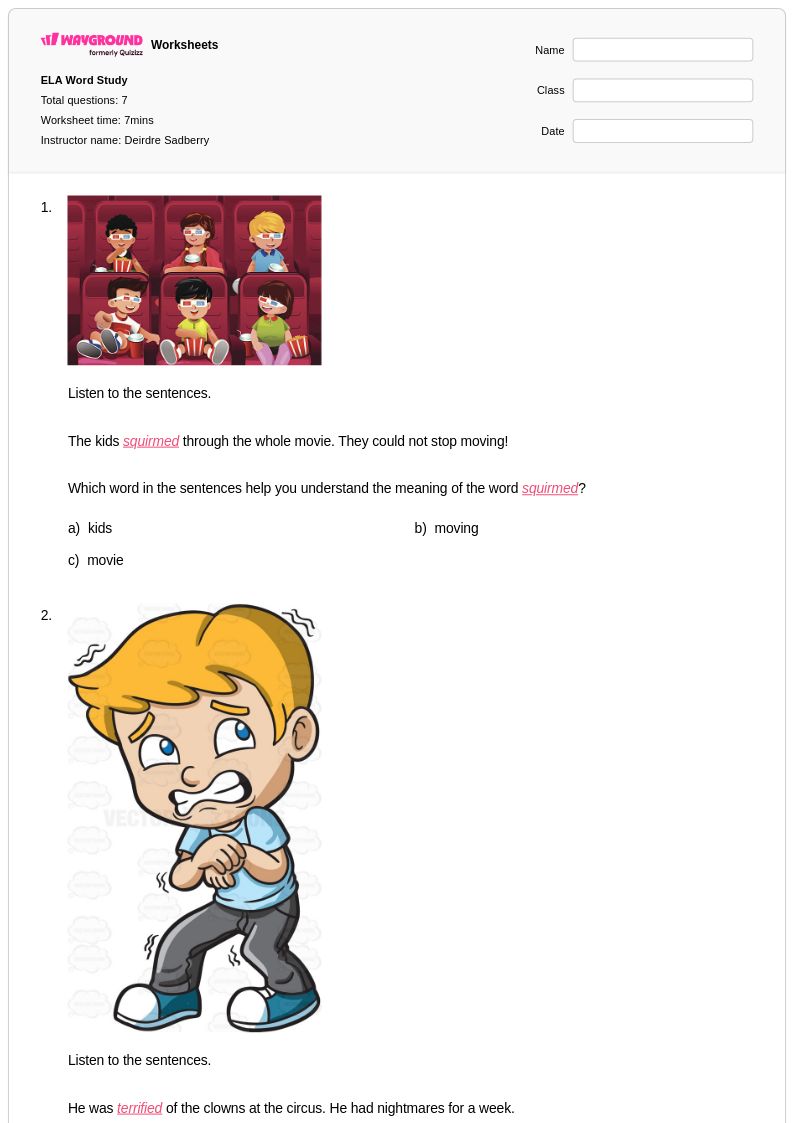
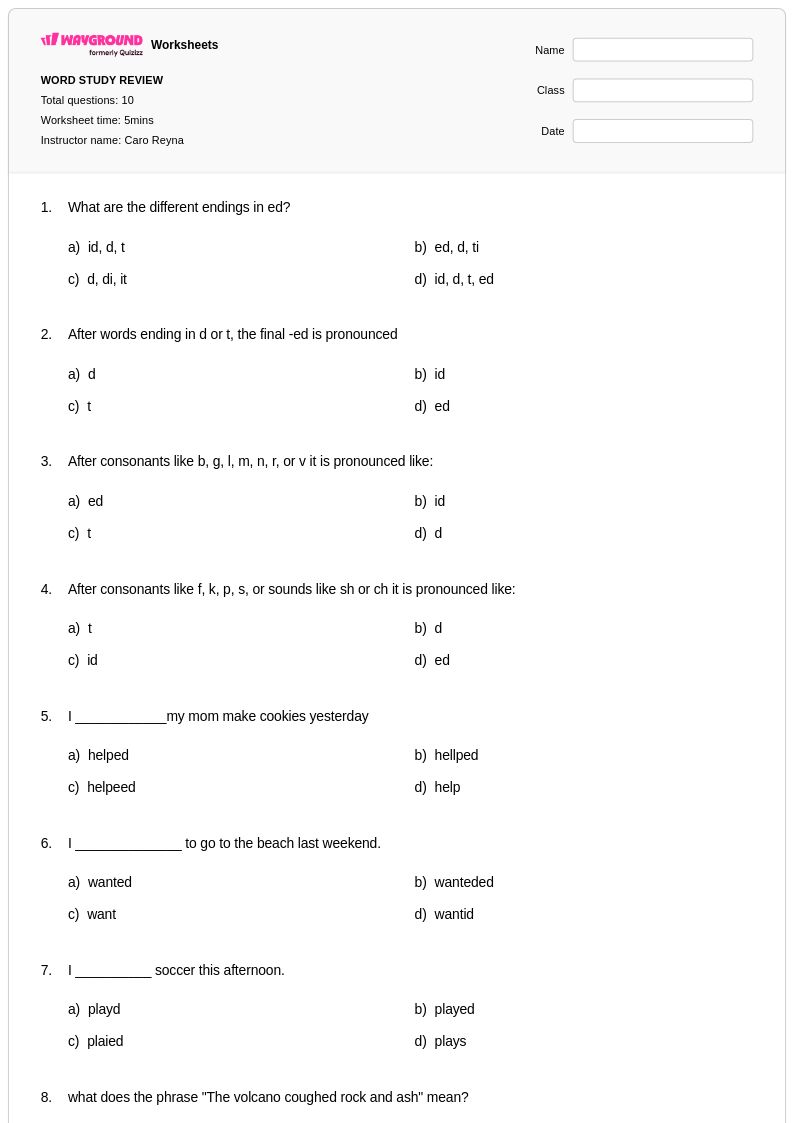
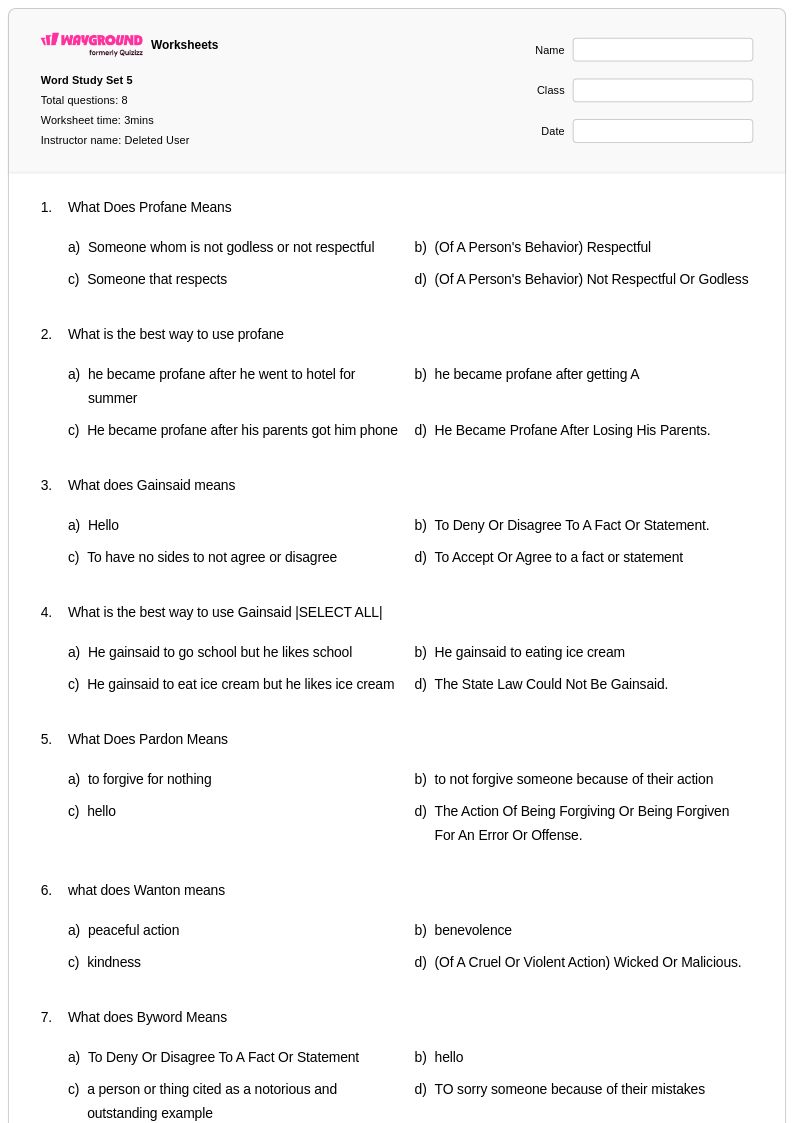
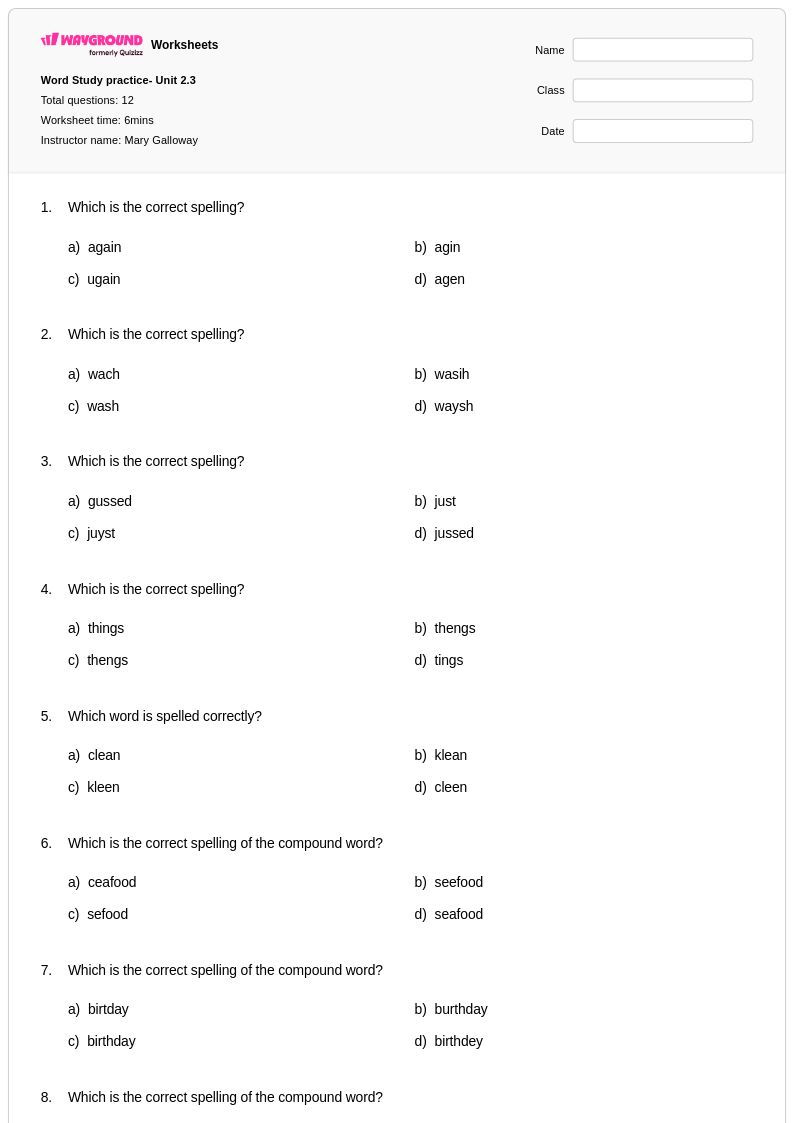
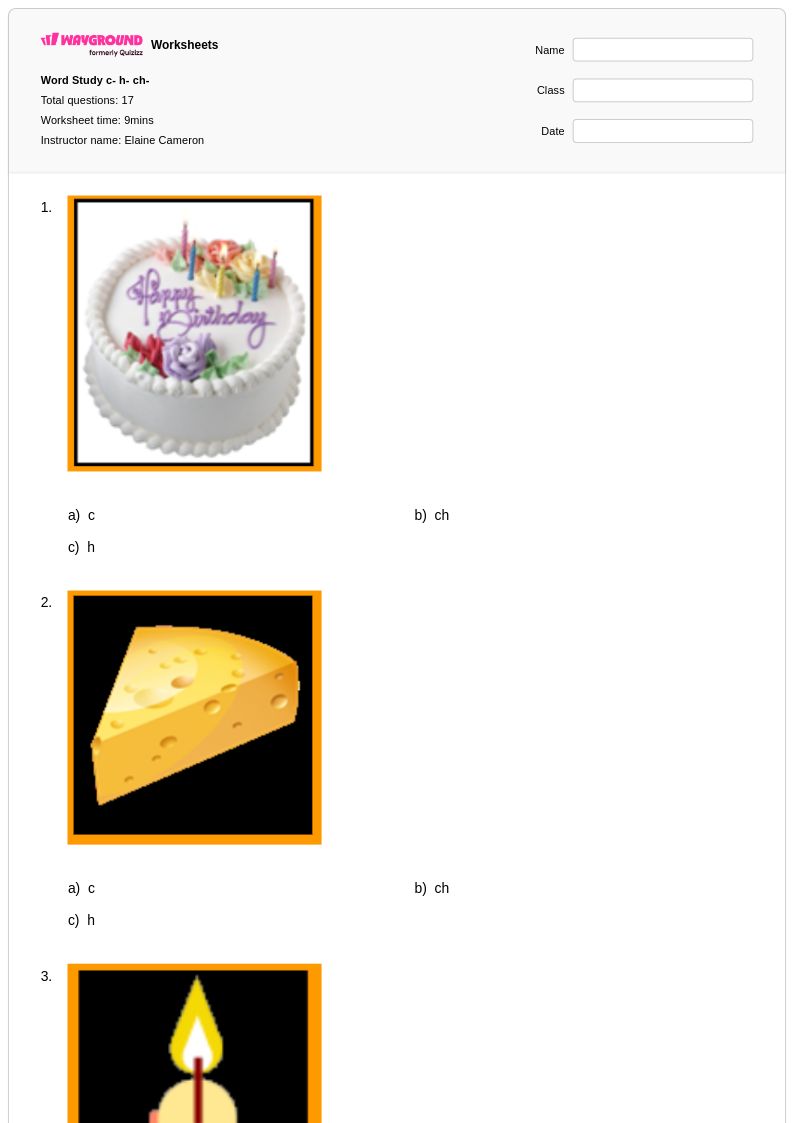
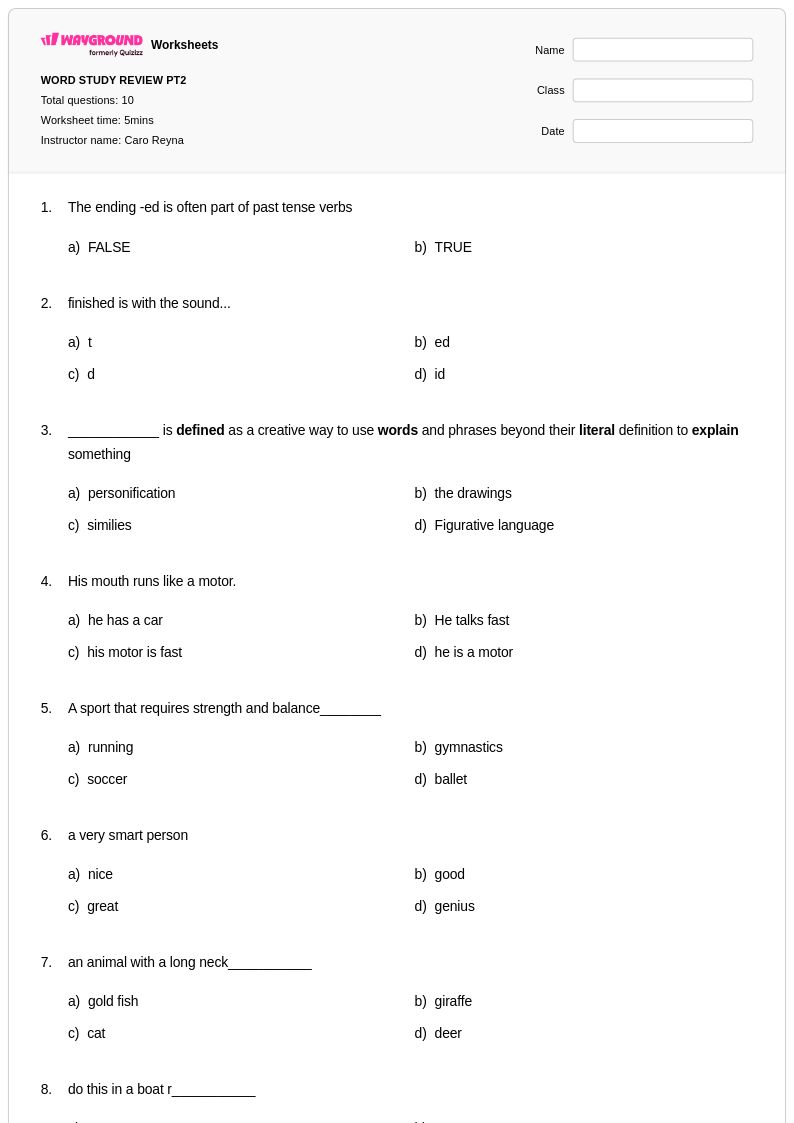
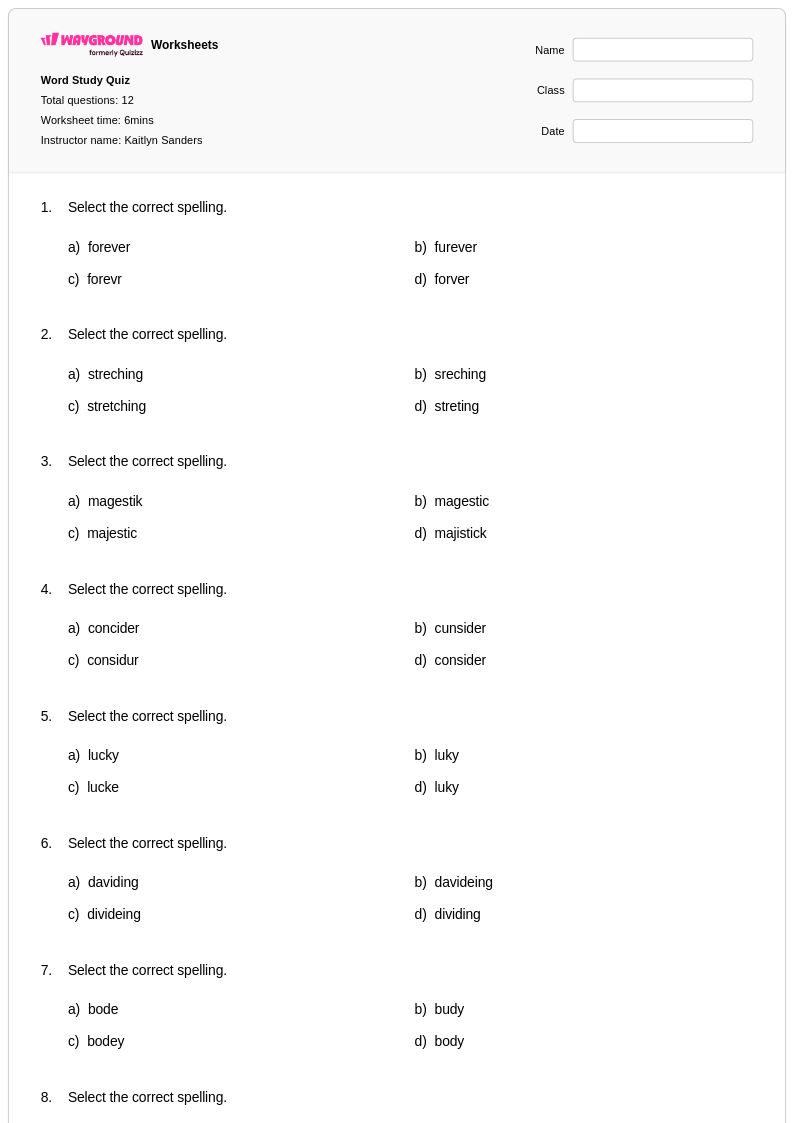
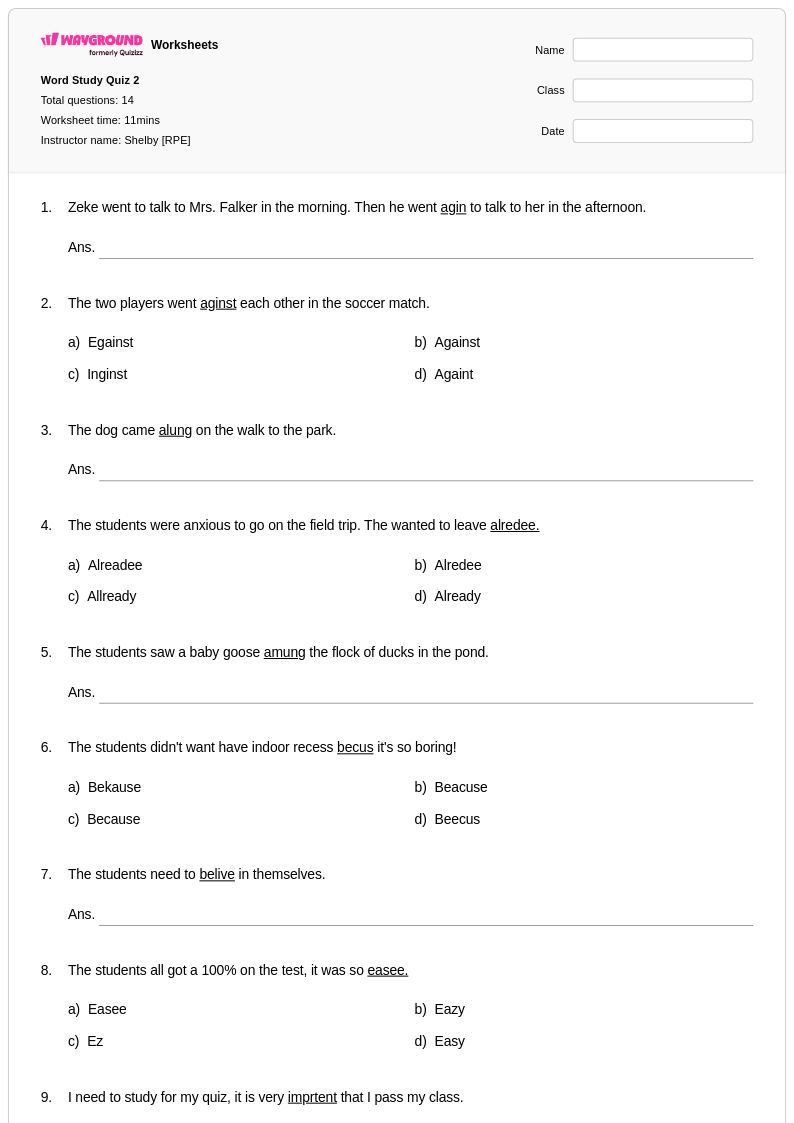
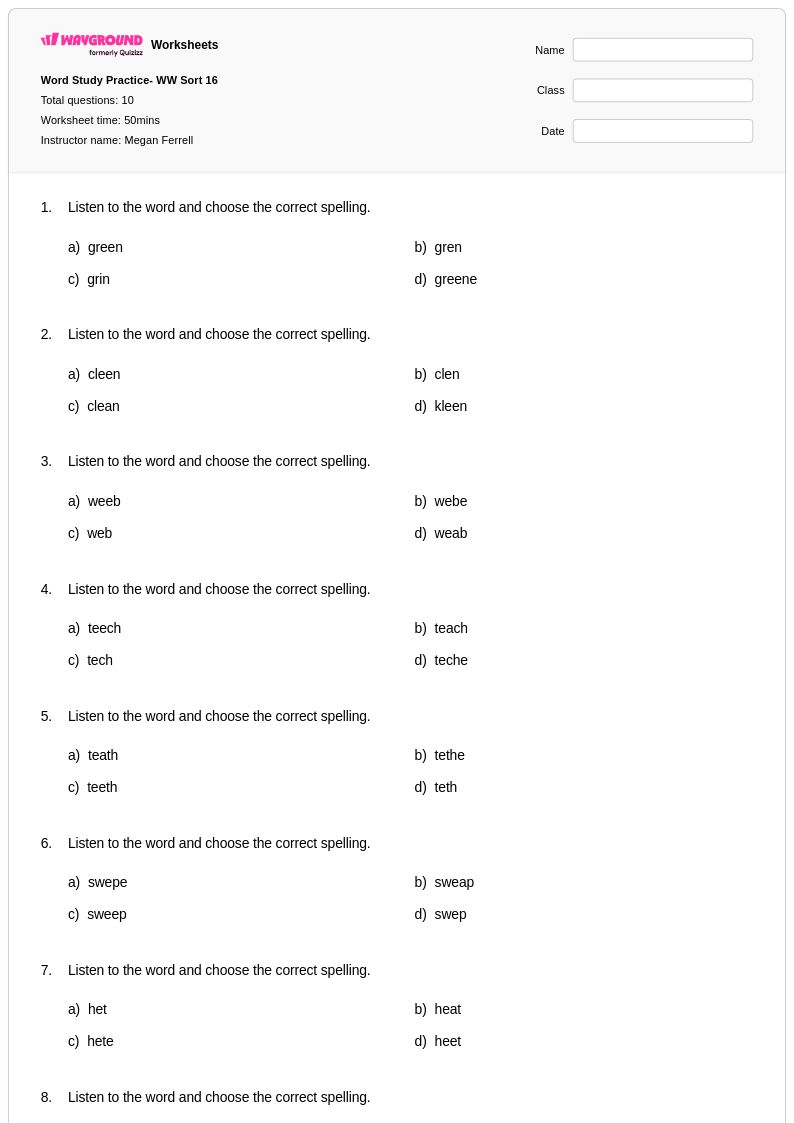
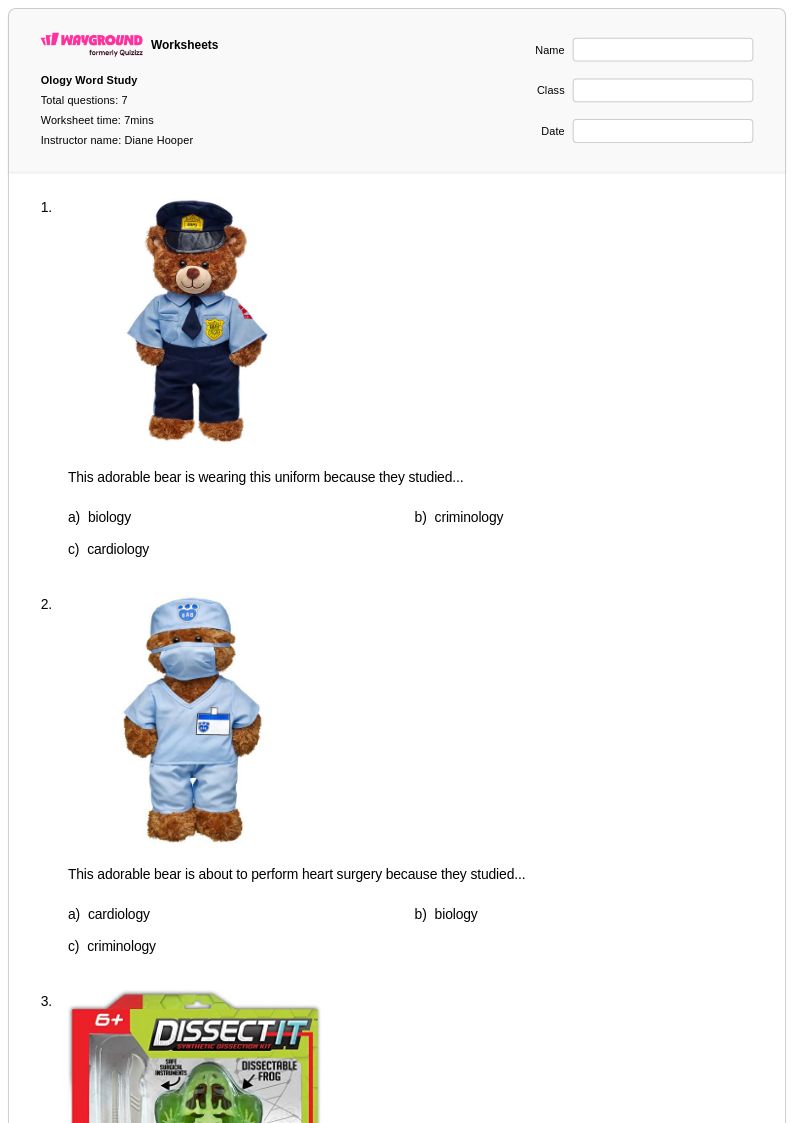
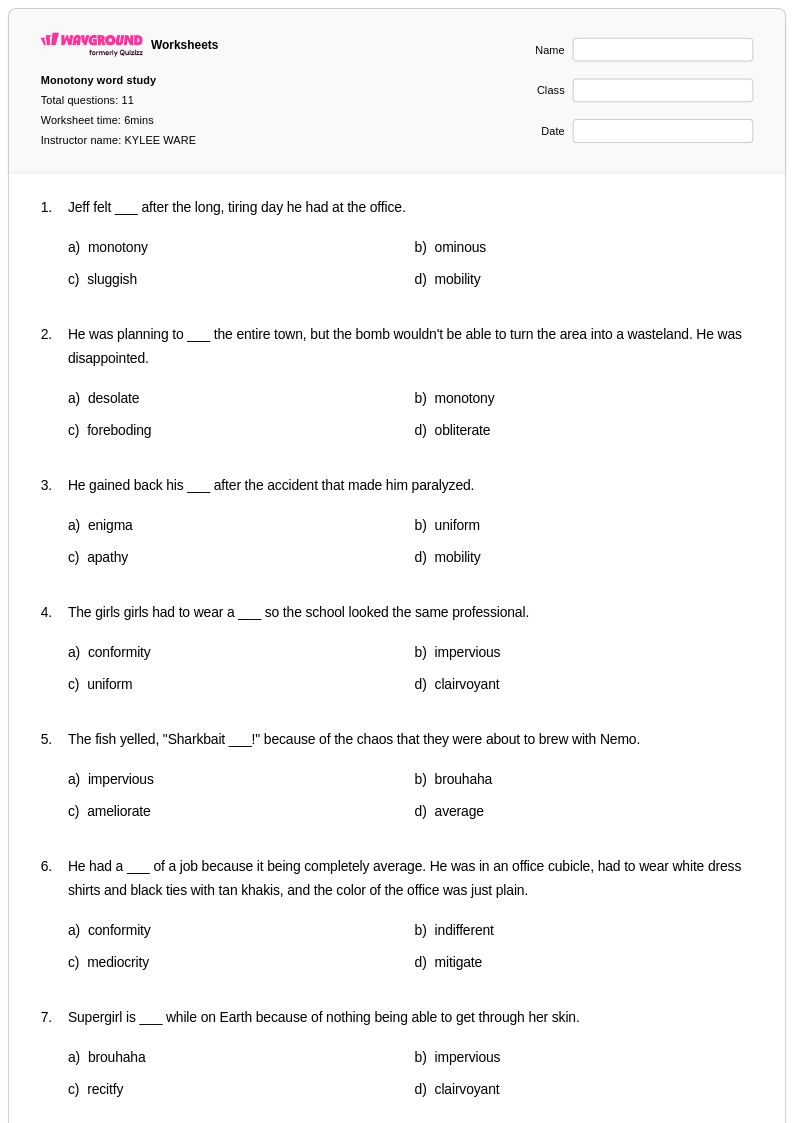
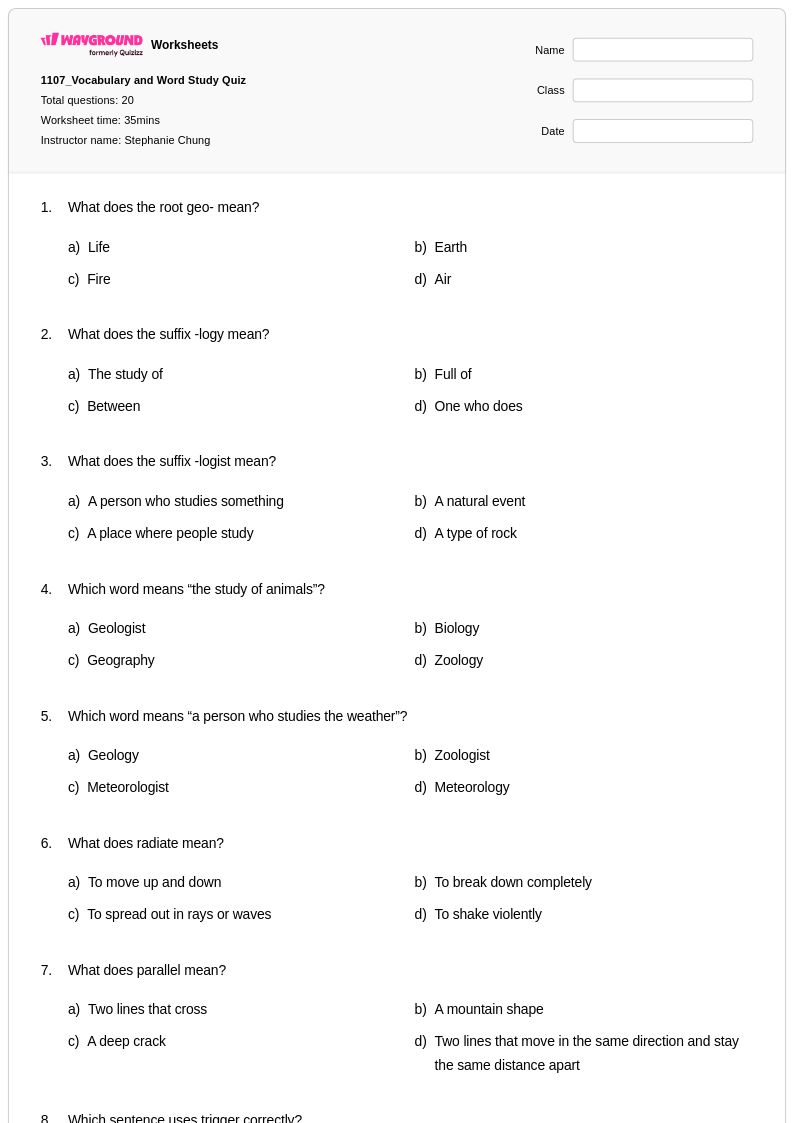
Explore Class 1 Word Study worksheets from Wayground that help young learners master letter patterns, phonics, and vocabulary through engaging printable activities with answer keys for effective practice.
Explore printable Word Study worksheets for Class 1
Class 1 word study worksheets available through Wayground (formerly Quizizz) provide foundational literacy instruction that builds essential reading and spelling skills for beginning learners. These comprehensive practice materials focus on phonemic awareness, letter-sound relationships, sight word recognition, and basic spelling patterns that form the cornerstone of early literacy development. Each worksheet systematically introduces age-appropriate concepts such as consonant and vowel sounds, simple word families, and high-frequency words through engaging activities that reinforce decoding strategies. Teachers can access complete answer keys alongside these free printables, enabling efficient assessment and immediate feedback to support student progress in fundamental word recognition skills.
Wayground (formerly Quizizz) empowers educators with millions of teacher-created word study resources specifically designed for Class 1 instruction, featuring robust search and filtering capabilities that align with curriculum standards and learning objectives. The platform's differentiation tools allow teachers to customize worksheets based on individual student needs, whether providing remediation for struggling readers or enrichment activities for advanced learners. These versatile materials are available in both printable pdf format and interactive digital versions, giving educators flexibility in lesson planning and skill practice delivery. The extensive collection supports systematic phonics instruction while accommodating diverse learning styles, making it an invaluable resource for building the word recognition automaticity essential for reading fluency development.
FAQs
How do I teach word study effectively in my classroom?
Effective word study instruction is built around systematic, explicit teaching of word patterns rather than rote memorization. Teachers should organize instruction around phonics patterns, morphology, and etymology, moving from simpler concepts like CVC patterns and common prefixes to more complex structures like Latin and Greek roots. Sorting activities, word walls, and regular word study notebooks help students internalize patterns and apply them independently during reading and writing.
What exercises help students practice word study skills?
The most effective word study practice activities include word sorts, pattern hunts in connected text, and morpheme analysis tasks where students break words into prefixes, roots, and suffixes. Exercises that ask students to generate new words from a known root or apply a spelling rule to unfamiliar words are especially valuable because they build transferable decoding strategies rather than isolated memorization. Regular low-stakes practice with immediate feedback accelerates skill retention and application.
What are the most common mistakes students make during word study?
One of the most frequent errors is overgeneralizing a spelling rule, such as applying a doubling pattern where it does not belong, because students learn the rule before fully understanding its conditions. Students also commonly confuse homophones and near-homophones, and they struggle to recognize the same root across different word forms, such as failing to connect 'photograph' and 'photosynthesis.' Targeted practice that requires students to explain why a rule applies, not just apply it, helps address these gaps directly.
How can I differentiate word study instruction for students at different levels?
Differentiation in word study starts with placing students at their instructional level based on a spelling inventory or phonics screener, then providing tiered word lists and tasks that match each group's current pattern knowledge. For struggling students, reducing the number of answer choices and using read-aloud support can lower cognitive load while keeping them engaged with grade-appropriate concepts. On Wayground, teachers can apply individual accommodations such as extended time, read aloud, and reduced answer choices to specific students, while the rest of the class receives standard settings without disruption.
How do I use Wayground's word study worksheets in my classroom?
Wayground's word study worksheets are available as printable PDFs for use in traditional classroom settings and in digital formats for technology-integrated instruction, making them flexible for both in-person and remote learning. Teachers can also host worksheets as an interactive quiz directly on Wayground, allowing for real-time student responses and streamlined grading. Each worksheet includes a complete answer key, so they work equally well for guided practice, homework, or independent centers.
How do I help students apply word study skills to their reading and writing?
Students transfer word study skills most reliably when instruction explicitly connects pattern knowledge to decoding during reading and editing during writing. After a lesson on a specific prefix or root, teachers should prompt students to notice and flag those patterns in their independent reading texts and use them as a spelling resource during drafting. Consistent cross-context practice, where the same morpheme appears in a worksheet, a mentor text, and a writing assignment within the same week, significantly increases retention and application.