
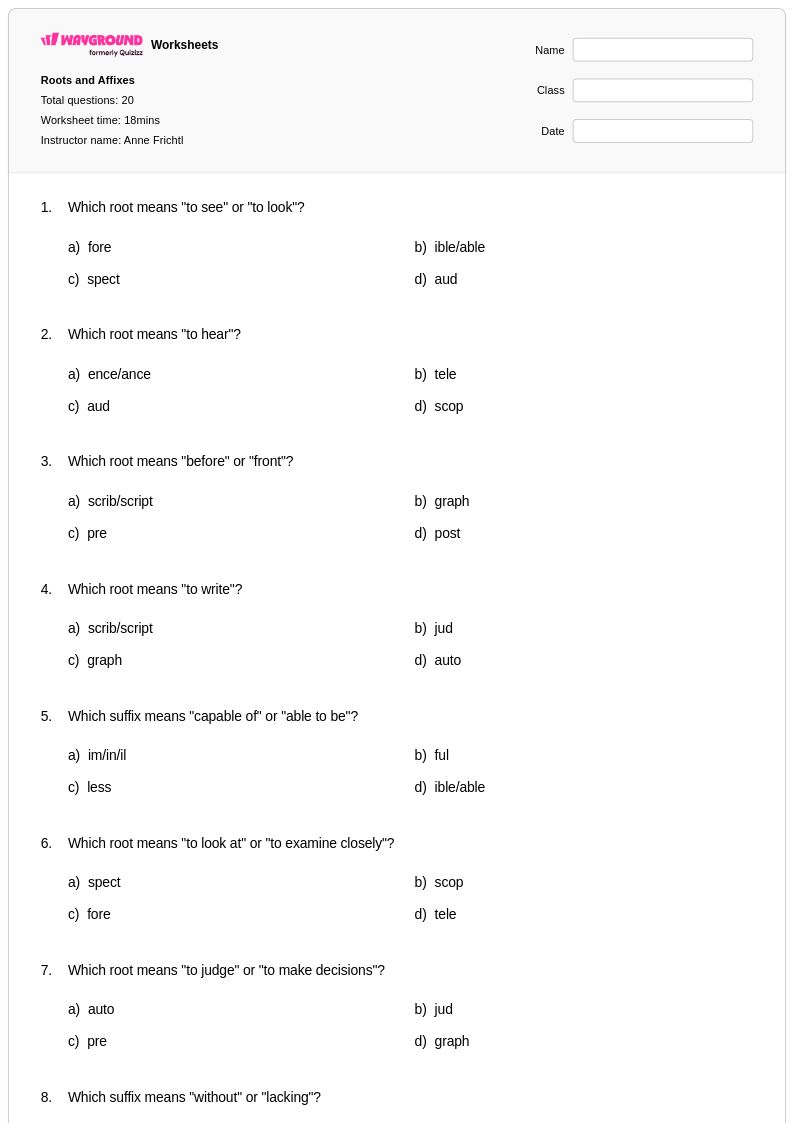
20 Q
7th
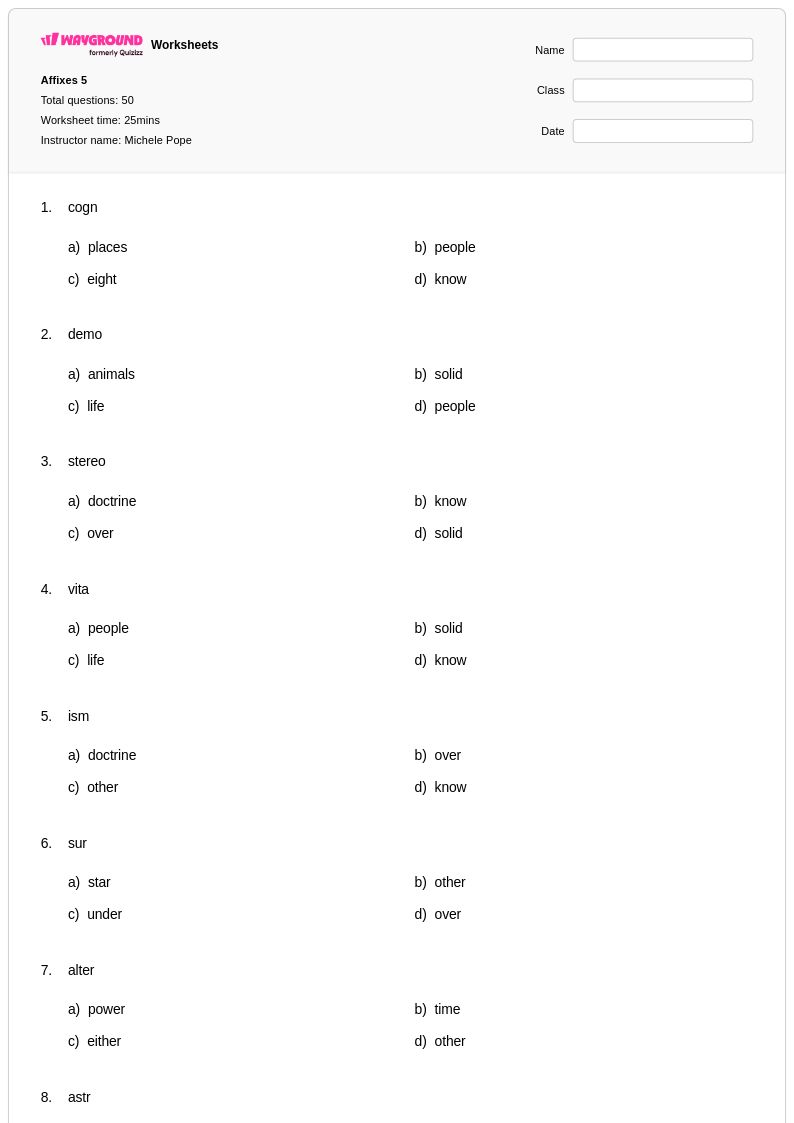
50 Q
8th
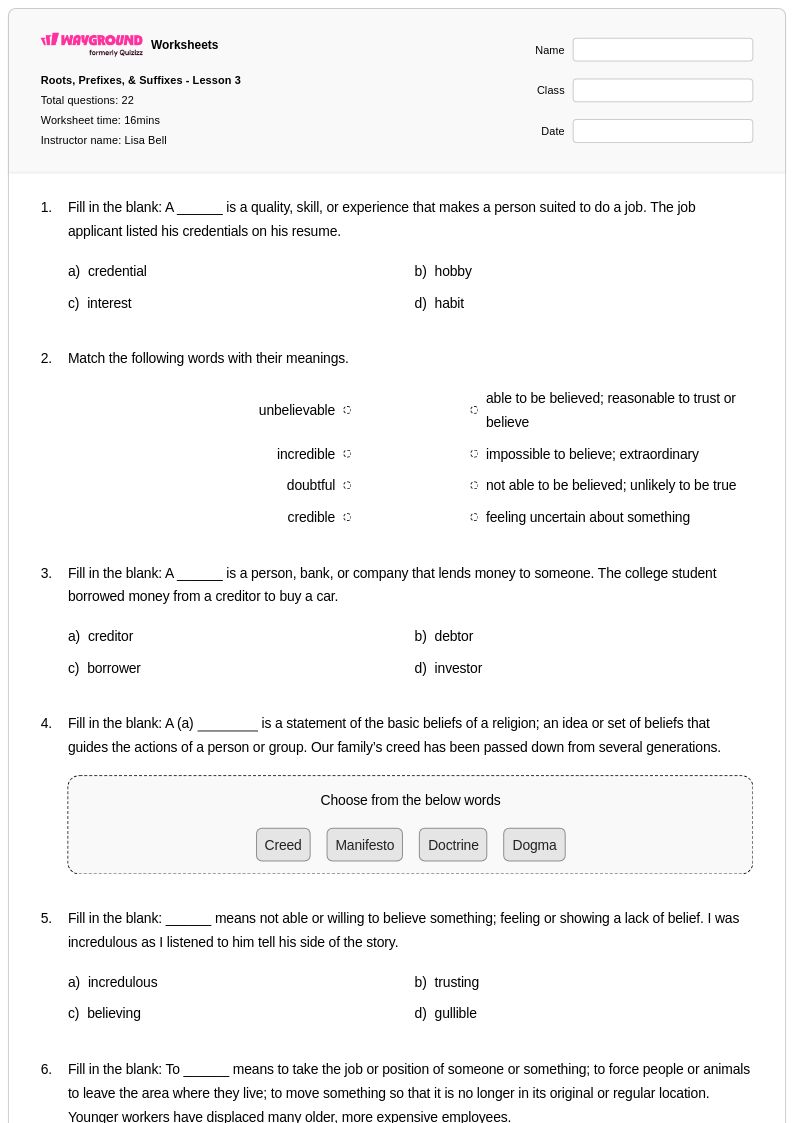
22 Q
6th - Uni
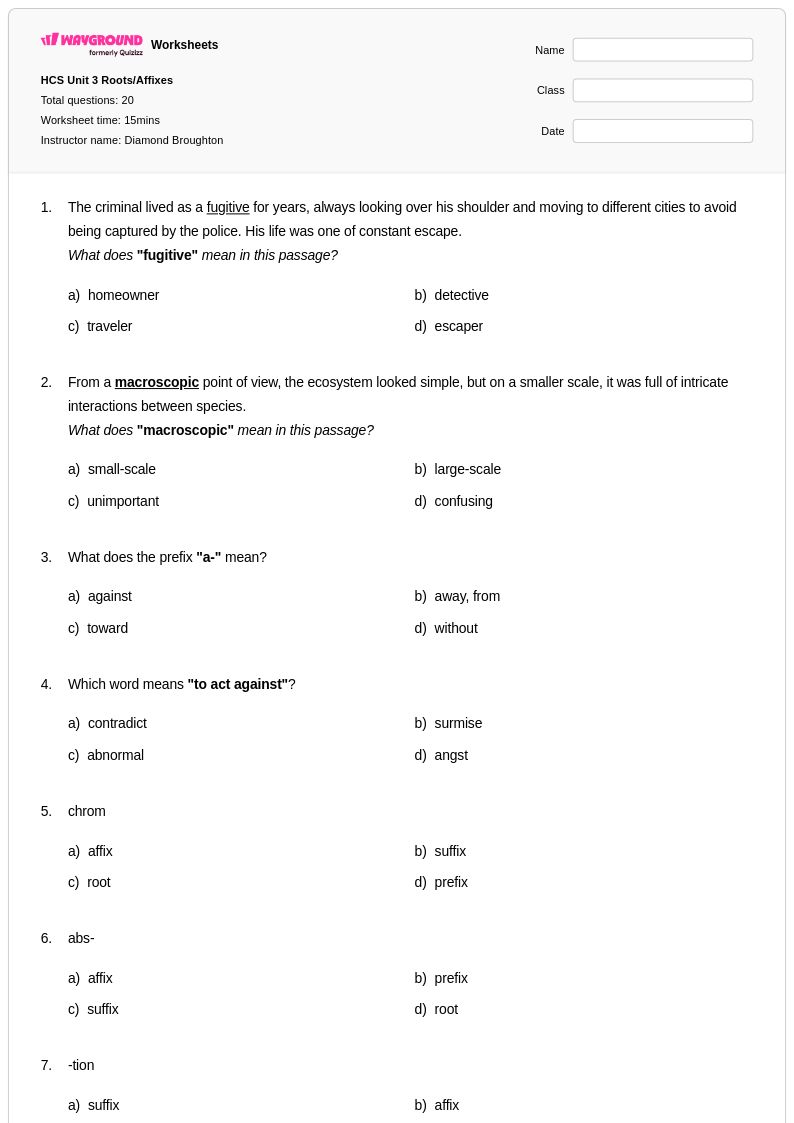
20 Q
6th - 8th
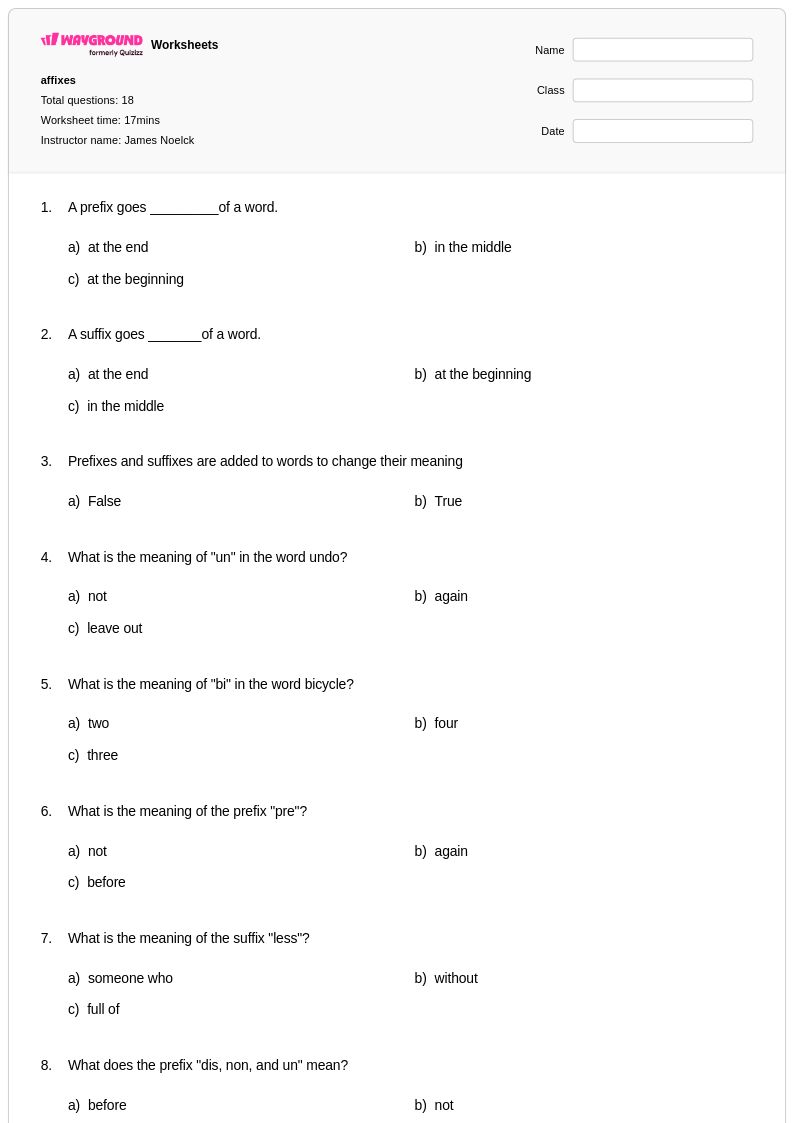
18 Q
4th
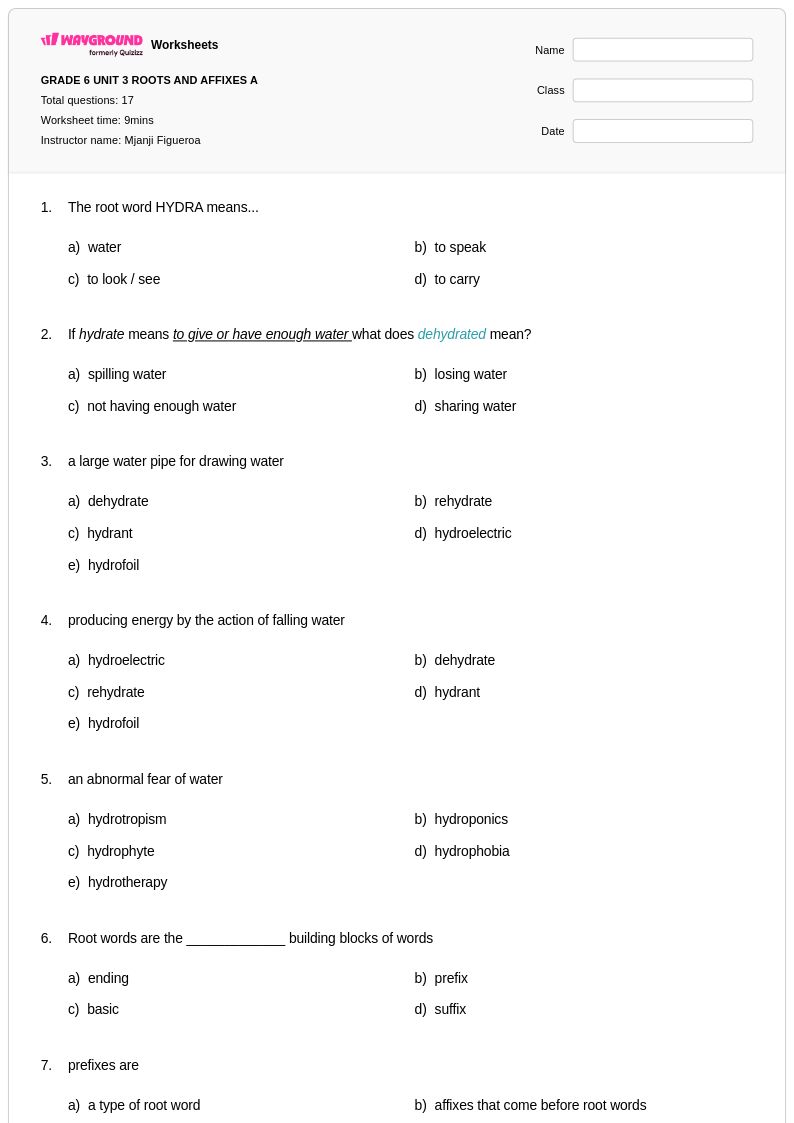
17 Q
5th - 9th
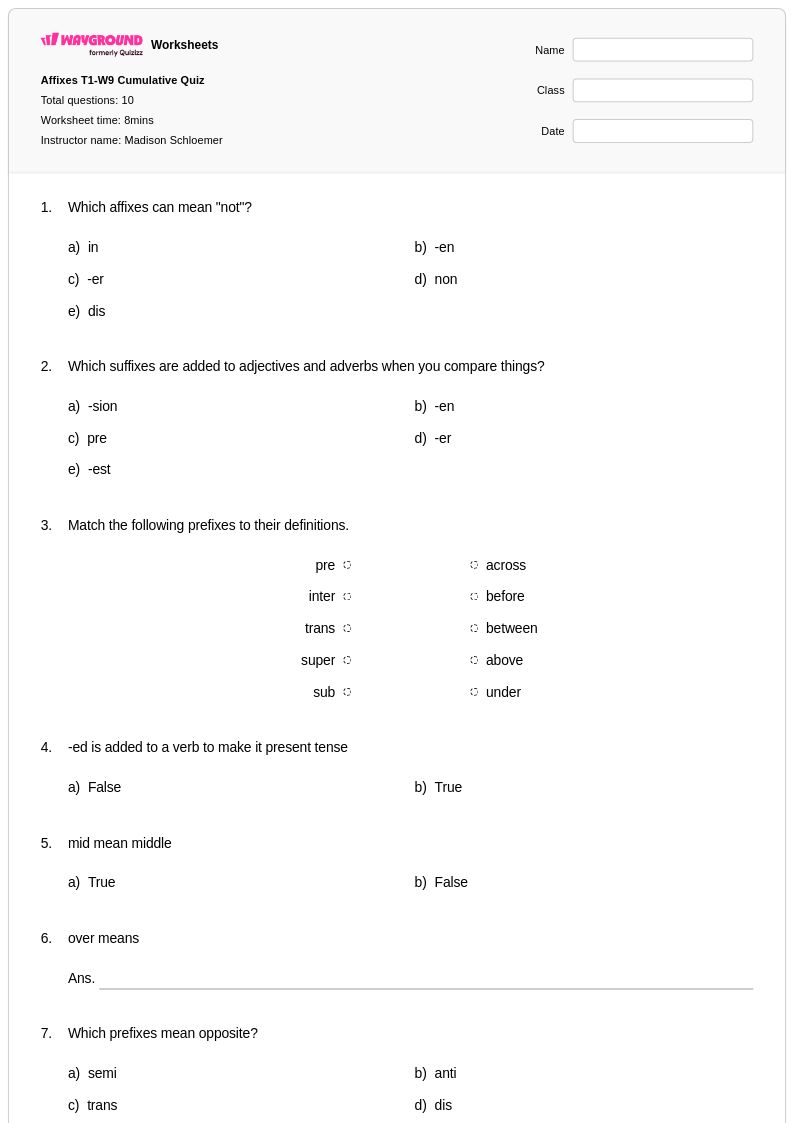
10 Q
4th
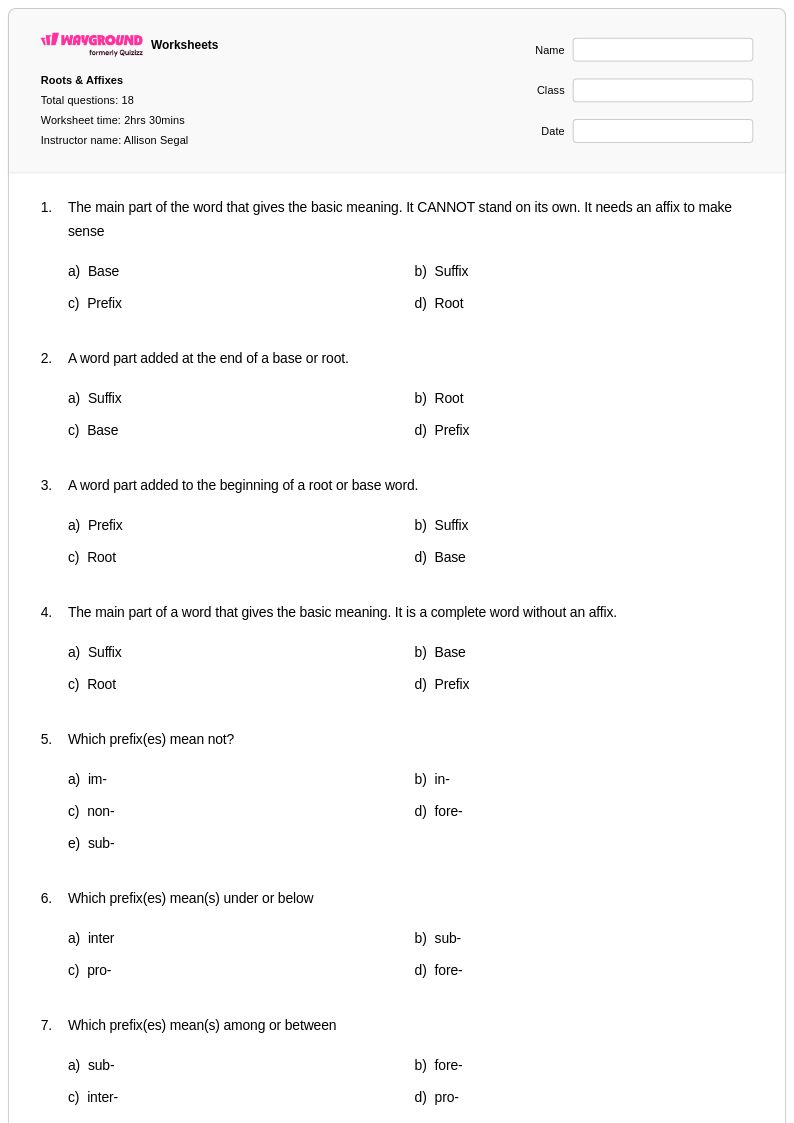
18 Q
5th
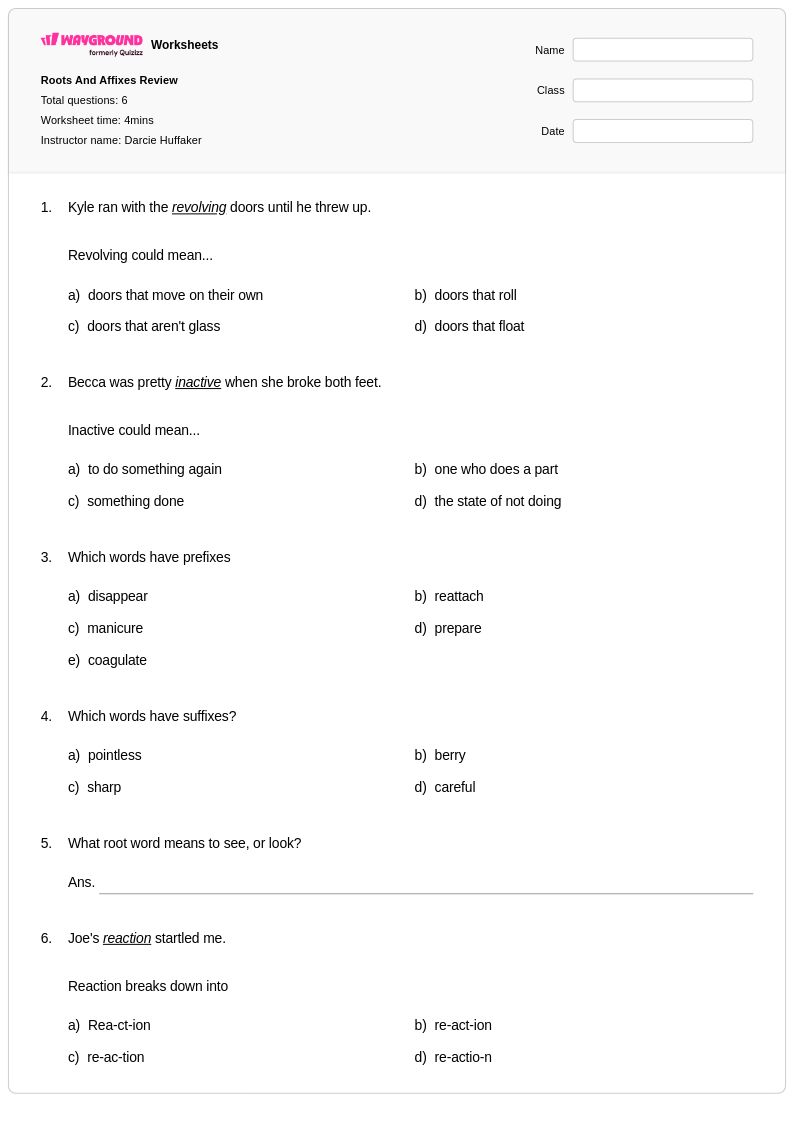
6 Q
7th
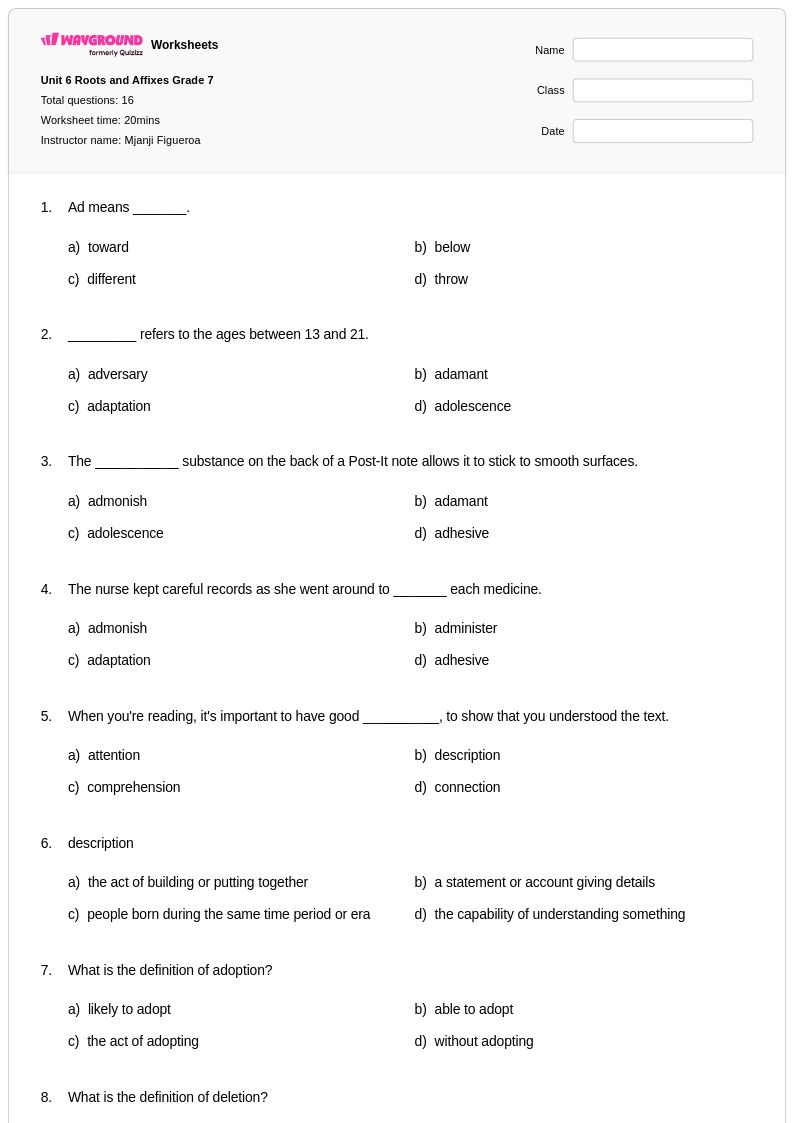
16 Q
5th - 9th
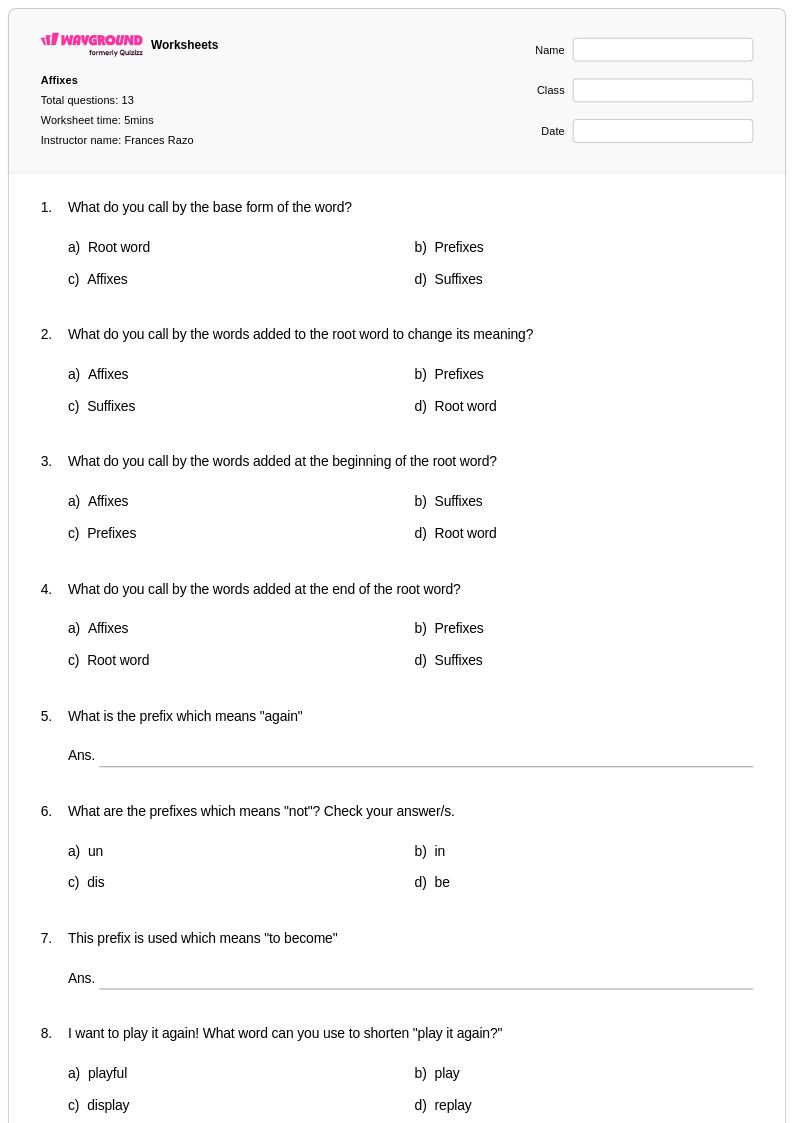
13 Q
4th
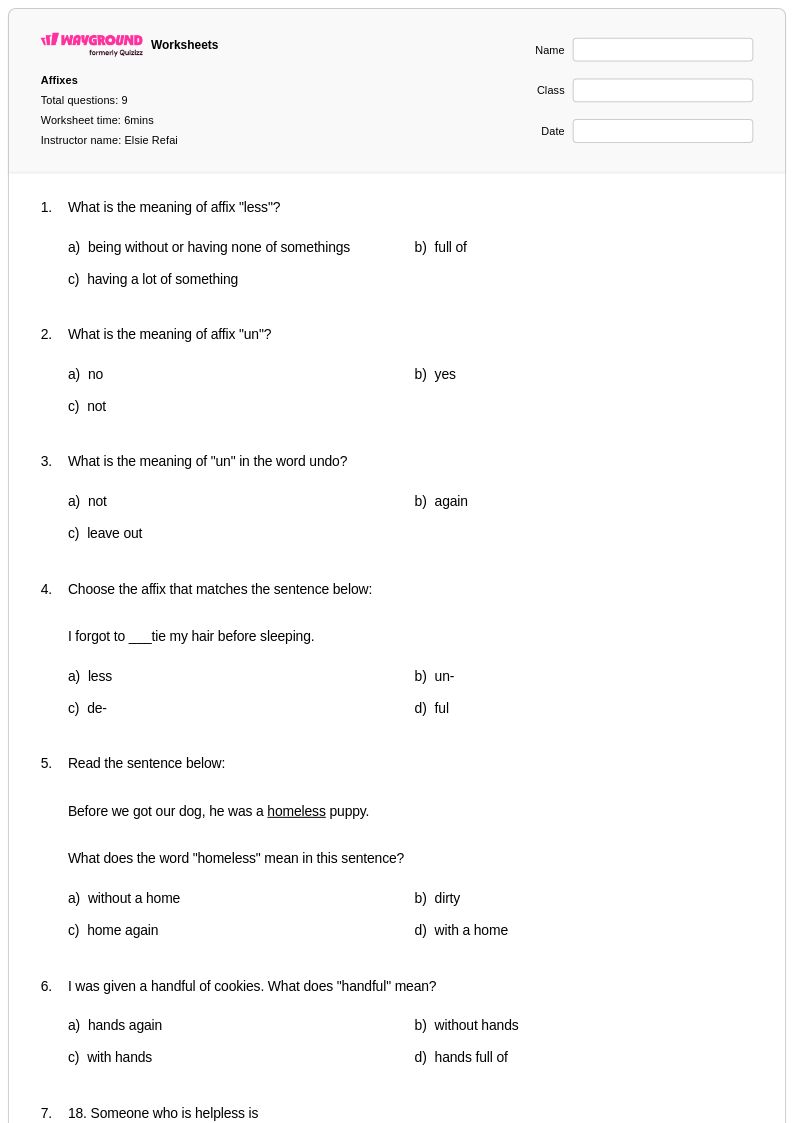
9 Q
1st
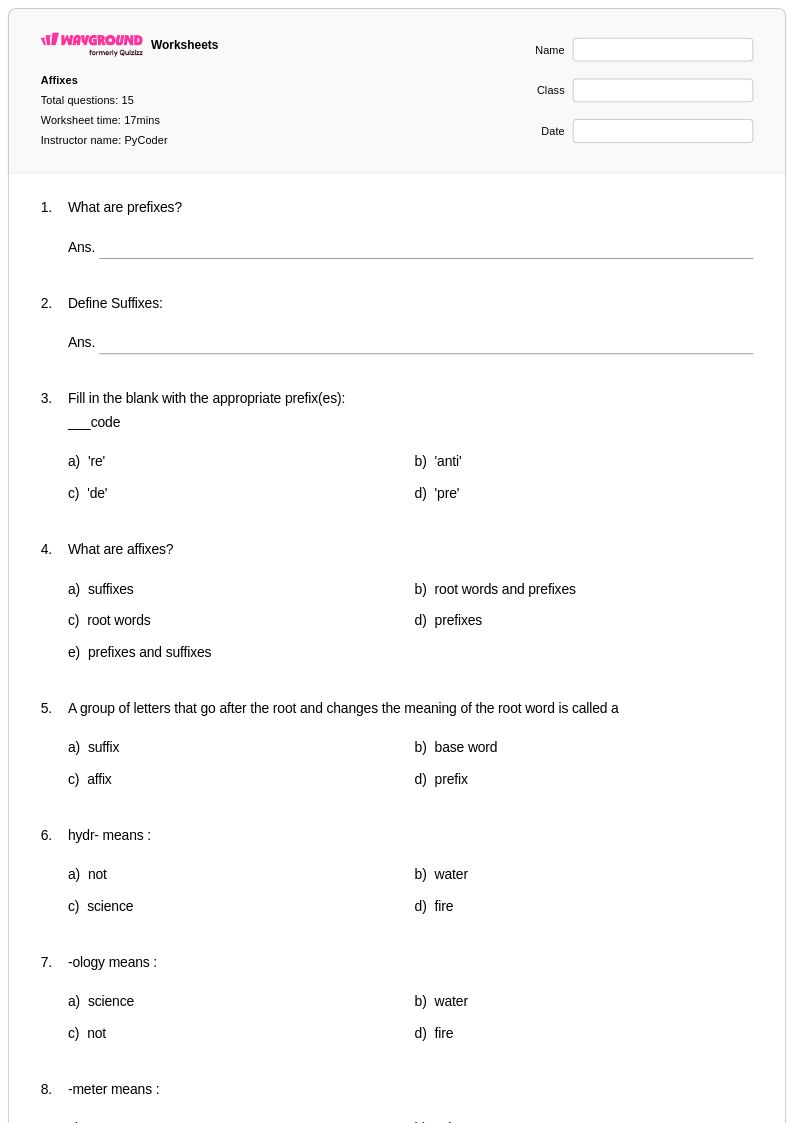
15 Q
6th
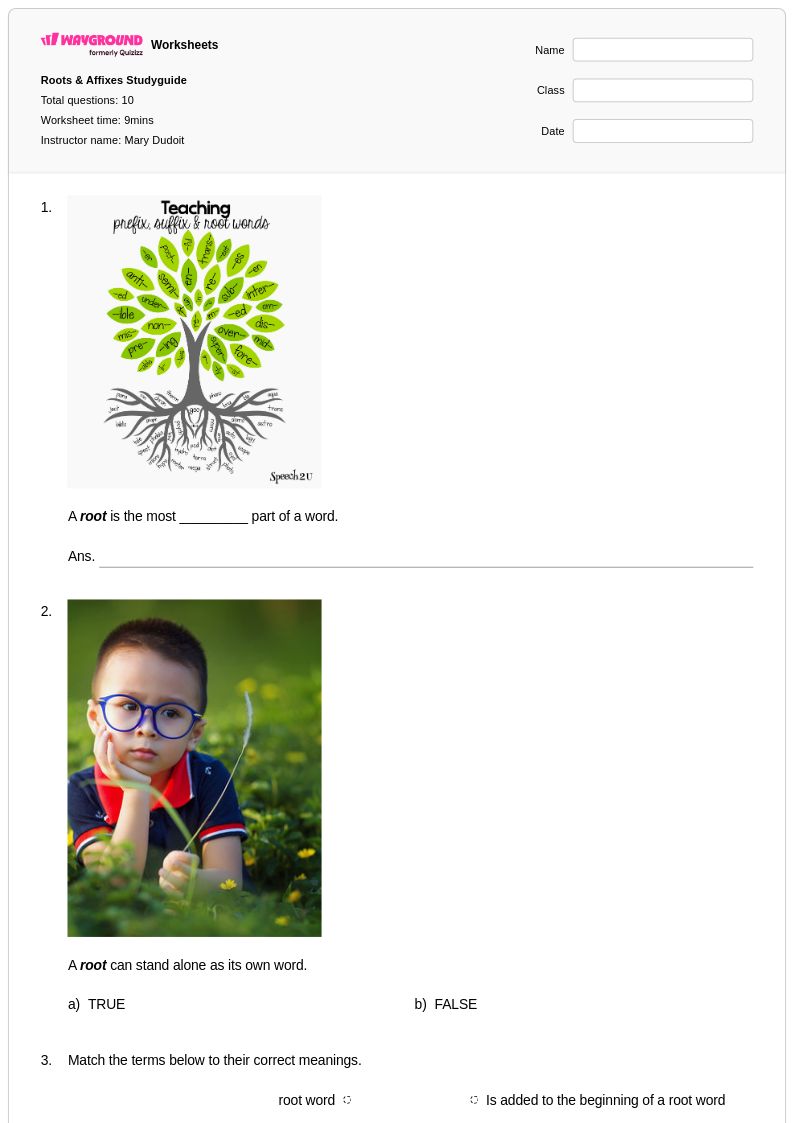
10 Q
7th
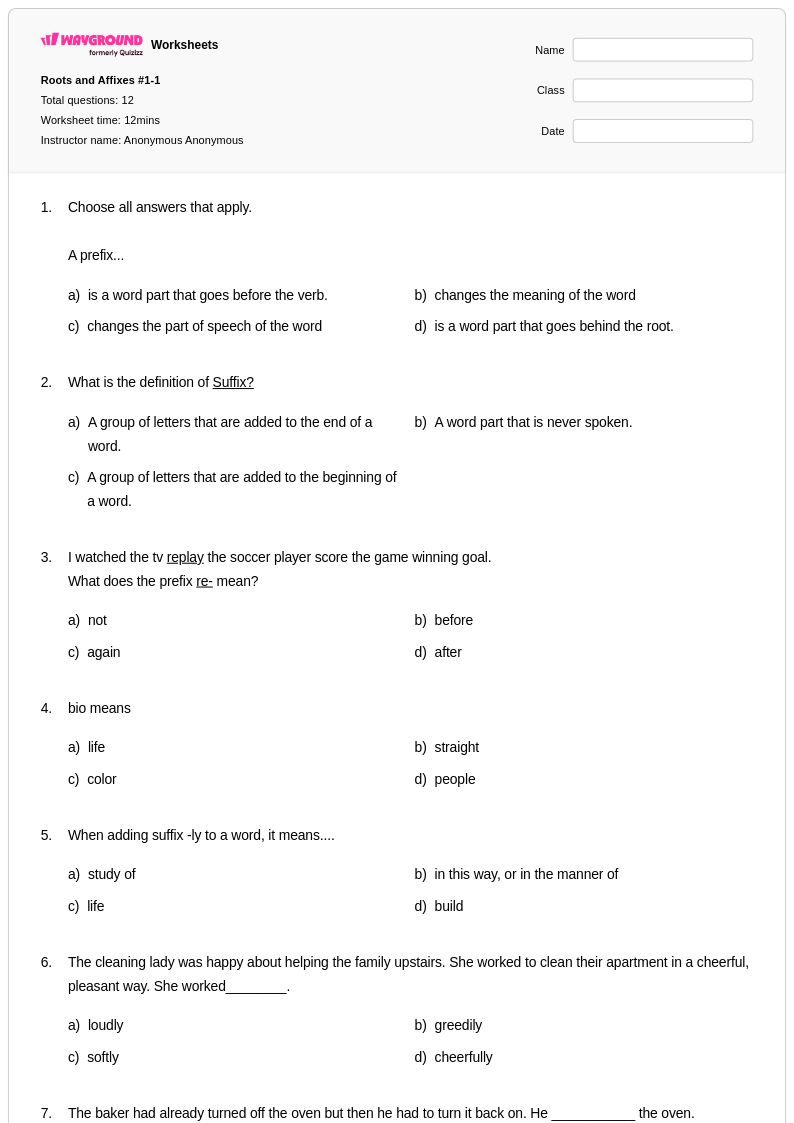
12 Q
6th
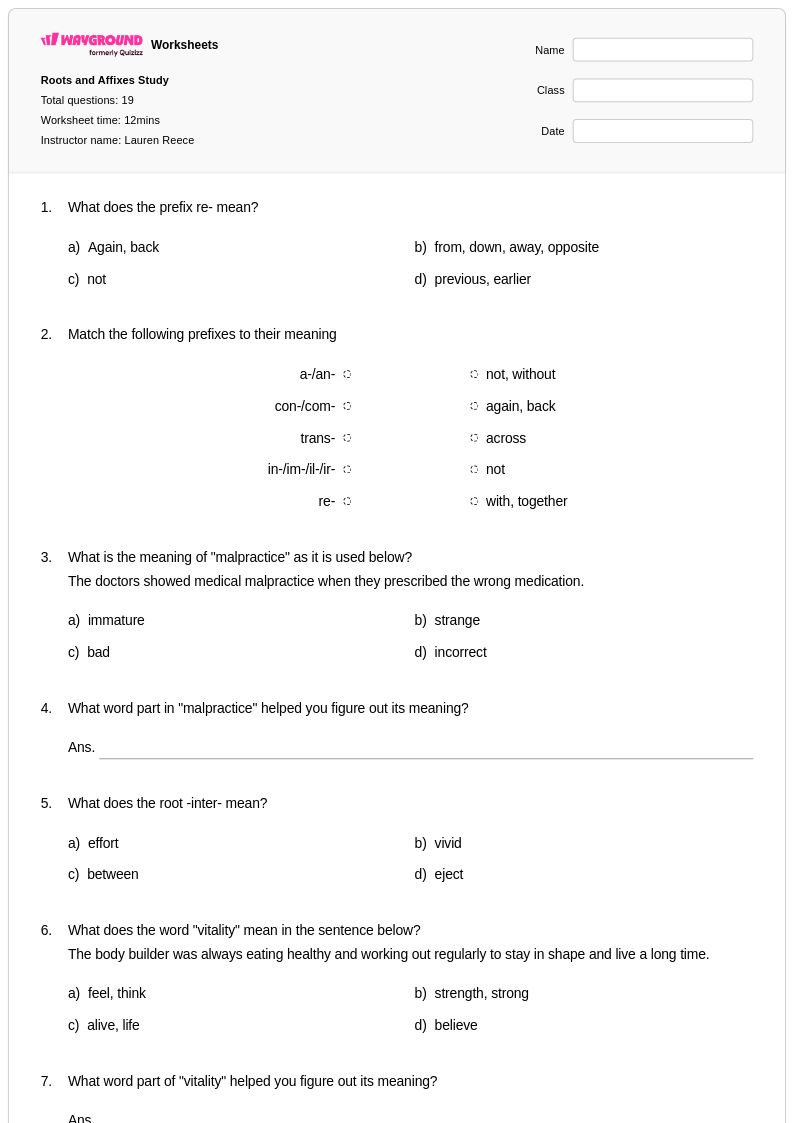
19 Q
7th
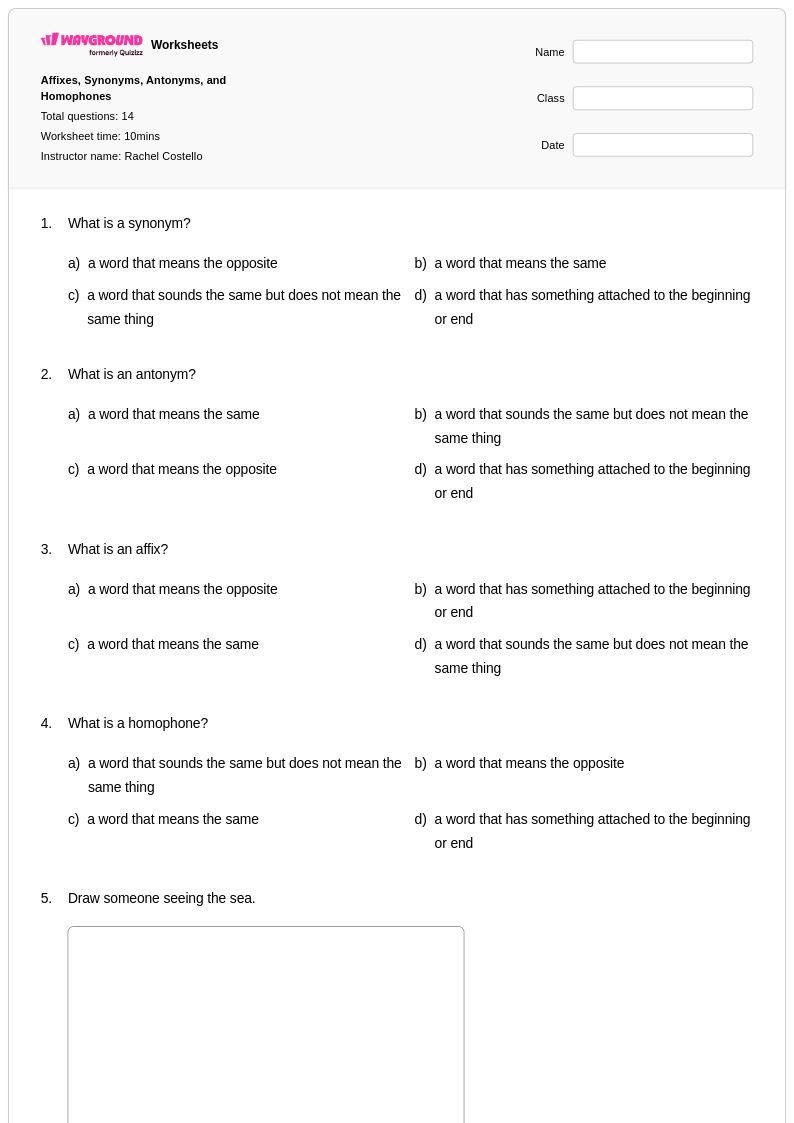
14 Q
4th
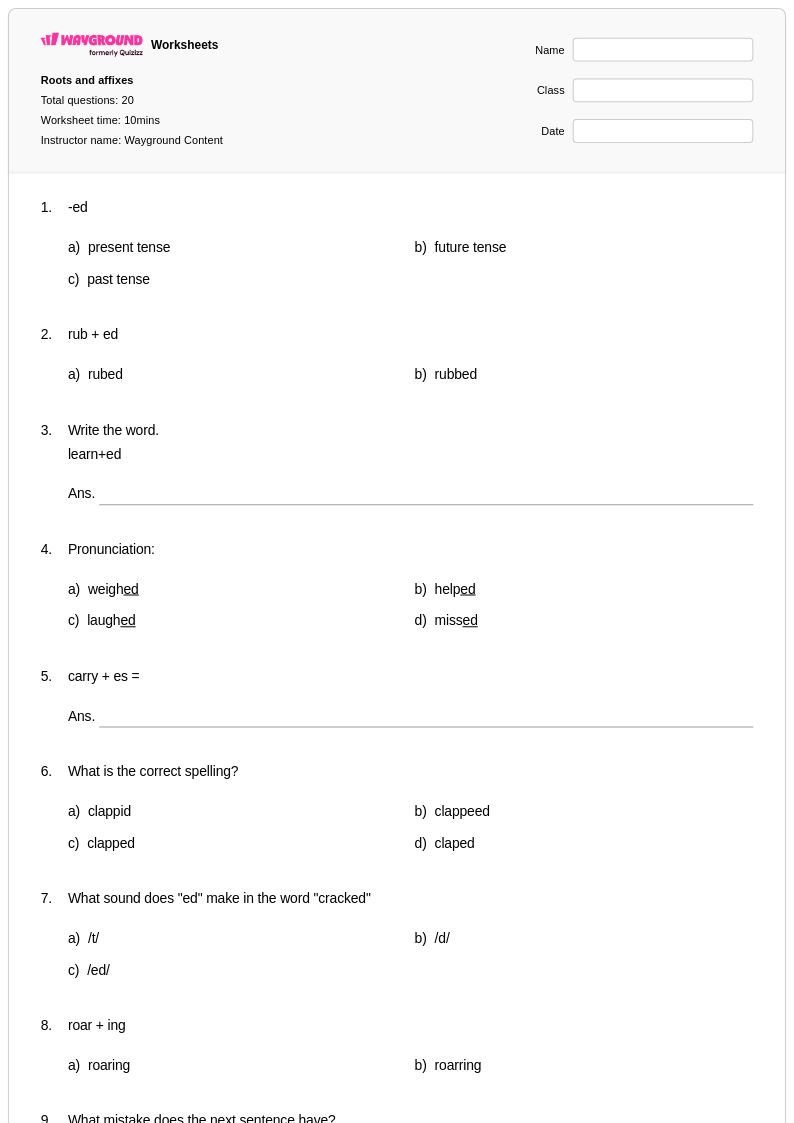
20 Q
3rd
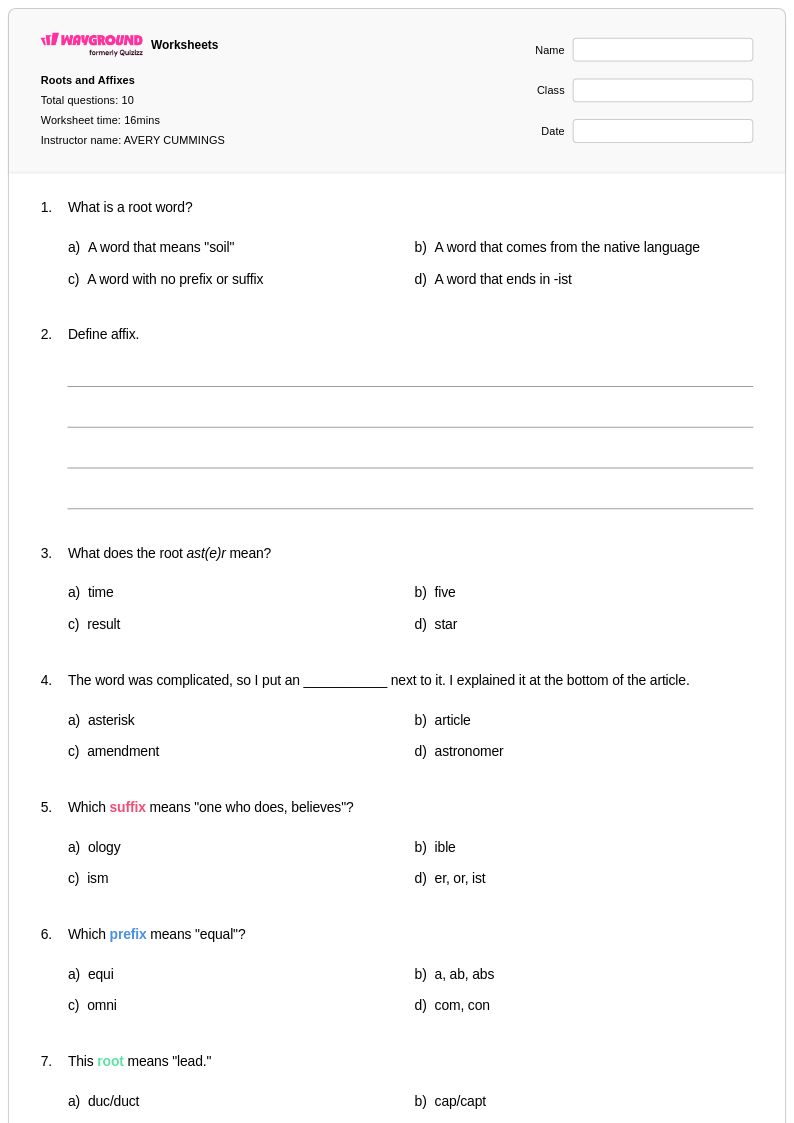
10 Q
8th
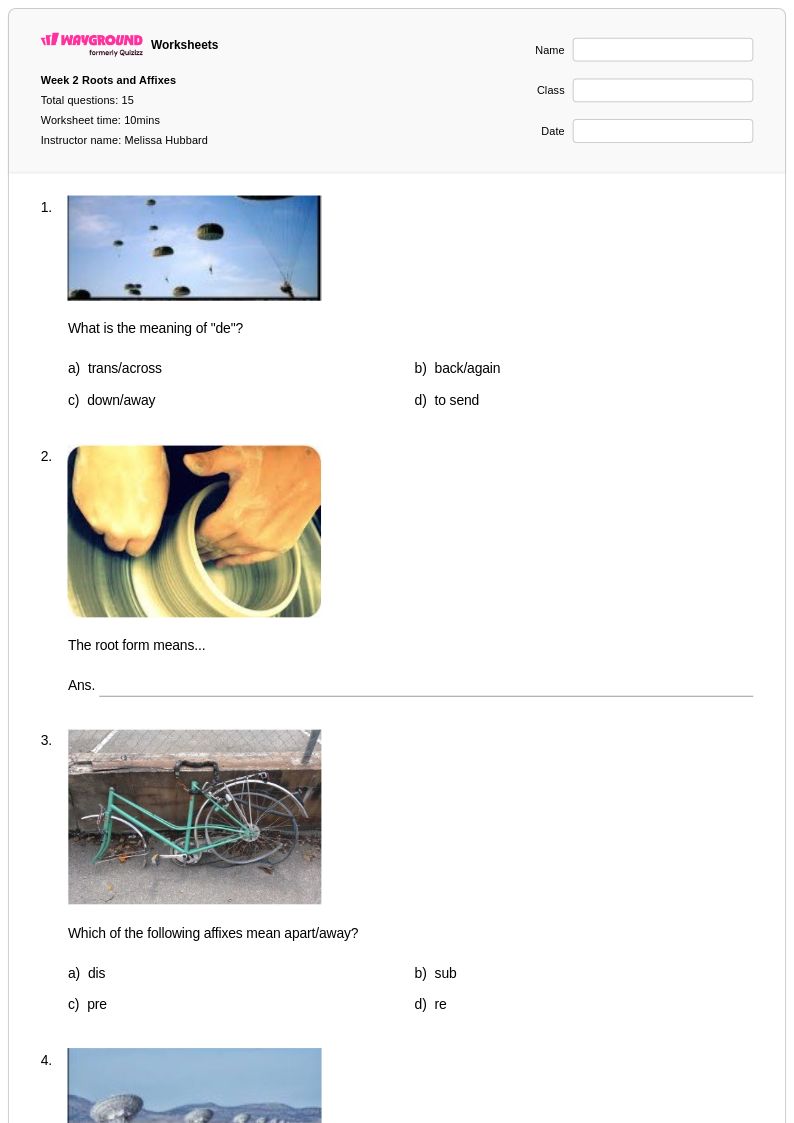
15 Q
4th - 7th
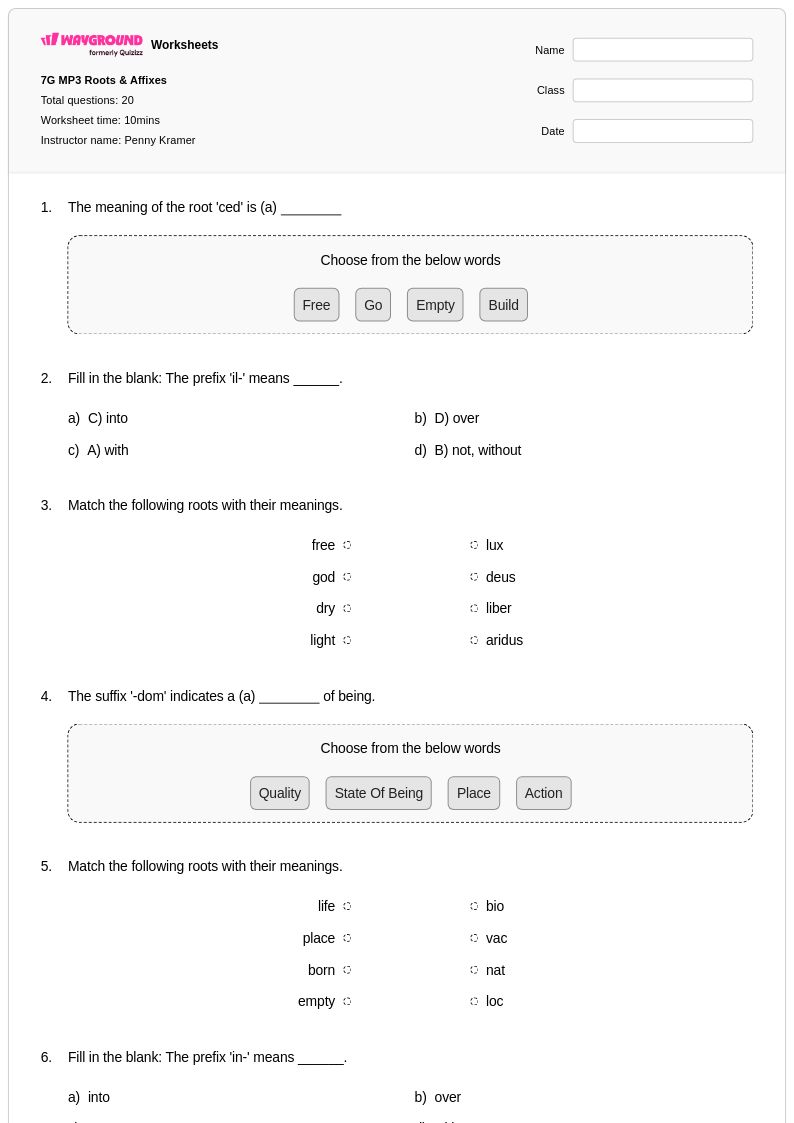
20 Q
7th
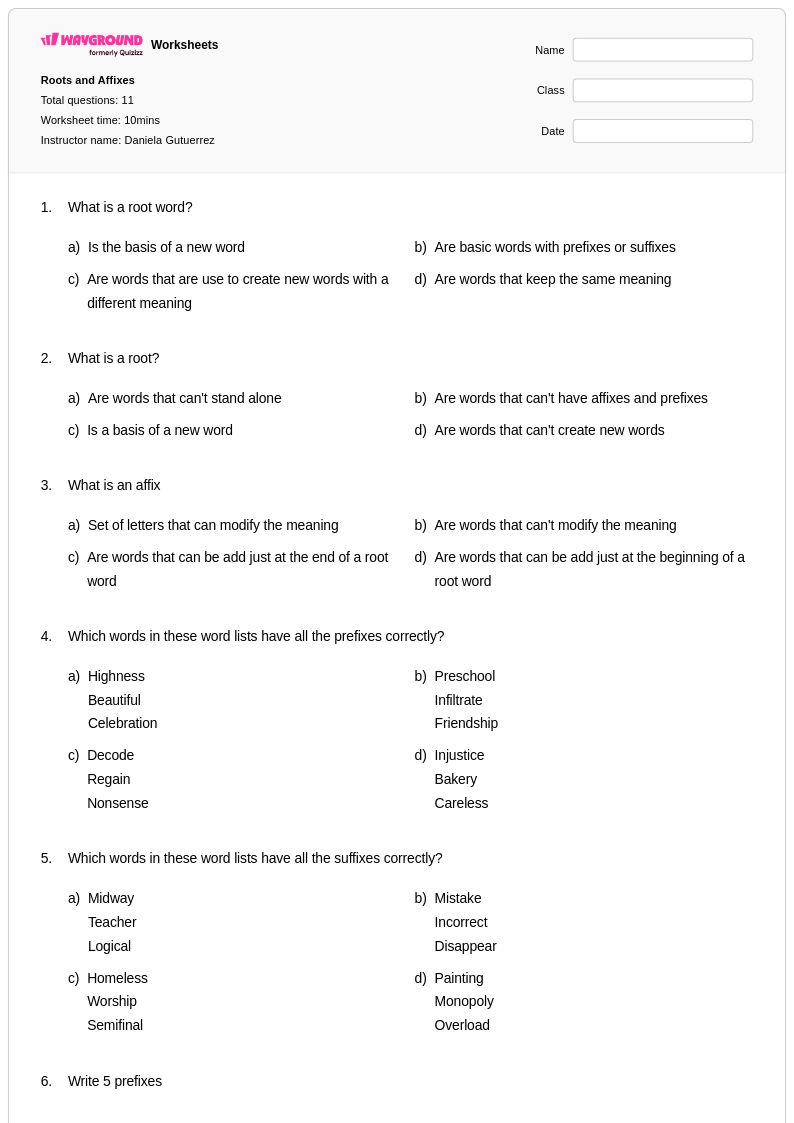
11 Q
Uni
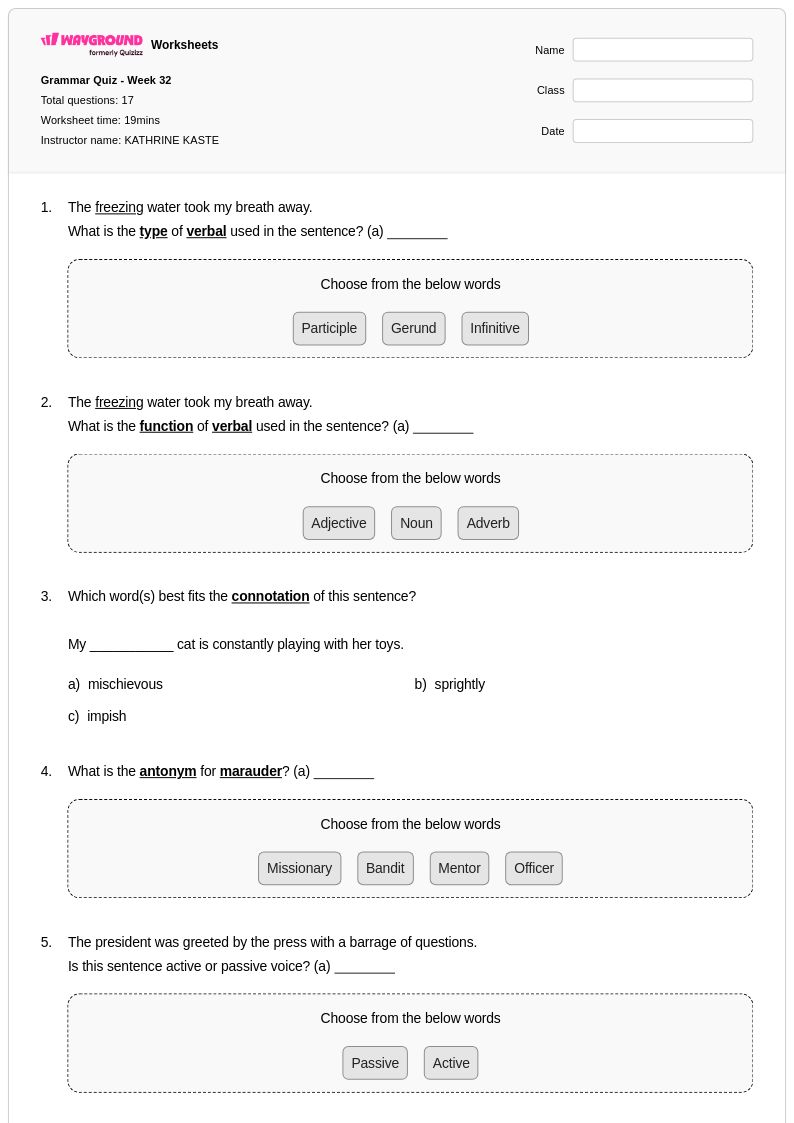
17 Q
8th
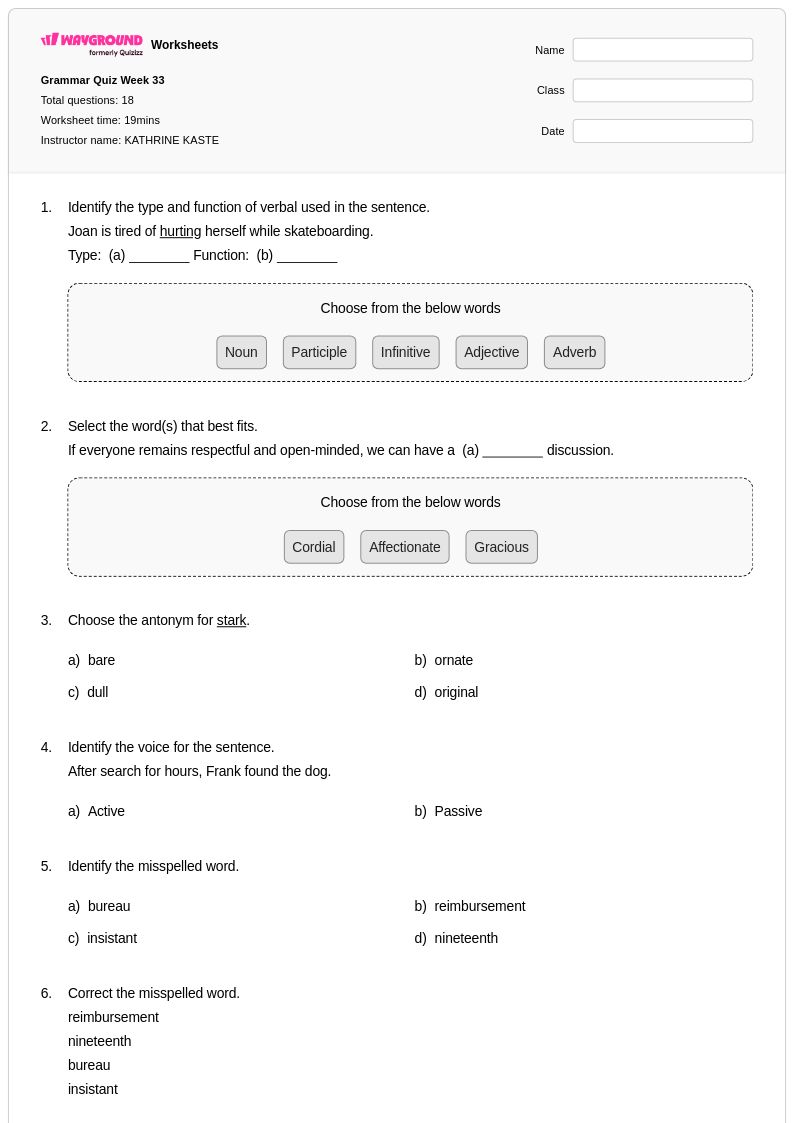
18 Q
8th
Explore Other Subject Worksheets for kindergarten
Explore printable Affixes worksheets for Kindergarten
Affixes worksheets for kindergarten students through Wayground (formerly Quizizz) introduce young learners to the foundational building blocks of word formation through engaging, age-appropriate activities. These carefully designed printables focus on simple prefixes and suffixes that kindergarteners can grasp, such as adding "-s" for plurals, "-ing" for action words, and basic prefixes like "un-" to create opposite meanings. Each worksheet strengthens phonemic awareness, vocabulary development, and early reading comprehension skills by helping students recognize how word parts change meaning and pronunciation. The practice problems progress systematically from visual recognition activities to hands-on manipulation exercises, with comprehensive answer keys provided to support both independent learning and guided instruction. These free resources emphasize interactive elements like matching games, picture associations, and simple word building exercises that make abstract concepts concrete for developing readers.
Wayground (formerly Quizizz) empowers educators with an extensive collection of millions of teacher-created affix worksheets specifically tailored for kindergarten phonics instruction. The platform's robust search and filtering capabilities allow teachers to quickly locate resources aligned with state standards and curriculum objectives, while differentiation tools enable seamless customization for diverse learning needs and abilities. Teachers can access these materials in both printable pdf formats for traditional classroom use and digital versions for interactive learning experiences, supporting flexible lesson planning across various teaching environments. The comprehensive worksheet library facilitates targeted skill practice, systematic remediation for struggling readers, and enrichment opportunities for advanced students, while built-in assessment features help educators track progress and identify areas requiring additional support. This streamlined approach to resource management allows teachers to focus on instruction rather than material creation, ensuring consistent, high-quality phonics education that builds essential literacy foundations.
FAQs
How do I teach affixes to students effectively?
What exercises help students practice identifying prefixes and suffixes?
What mistakes do students commonly make when working with affixes?
How can affix worksheets help students improve reading comprehension?
How do I use Wayground's affixes worksheets in my classroom?
How can I differentiate affix instruction for students at different skill levels?